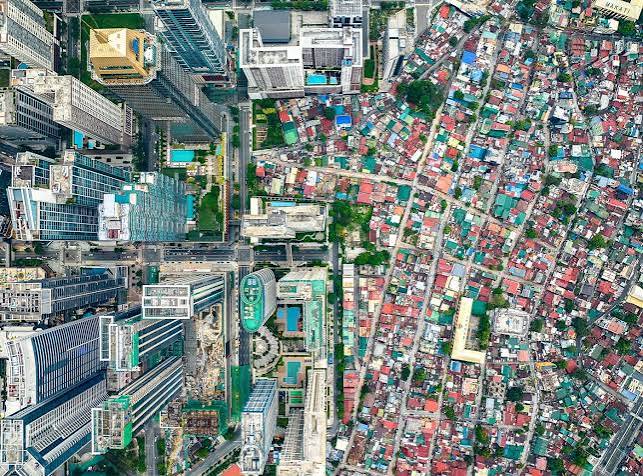
Pakistan’s cities are growing faster than ever, and thoughtful urban planning has never been more critical. At Chakor, our Urban Developments and Planning section explores the master plans, zoning decisions, infrastructure investments, and community projects shaping how Pakistan’s urban centres evolve.
For developers, investors, and citizens alike, understanding how cities are being planned today is the key to knowing where value will be created tomorrow.
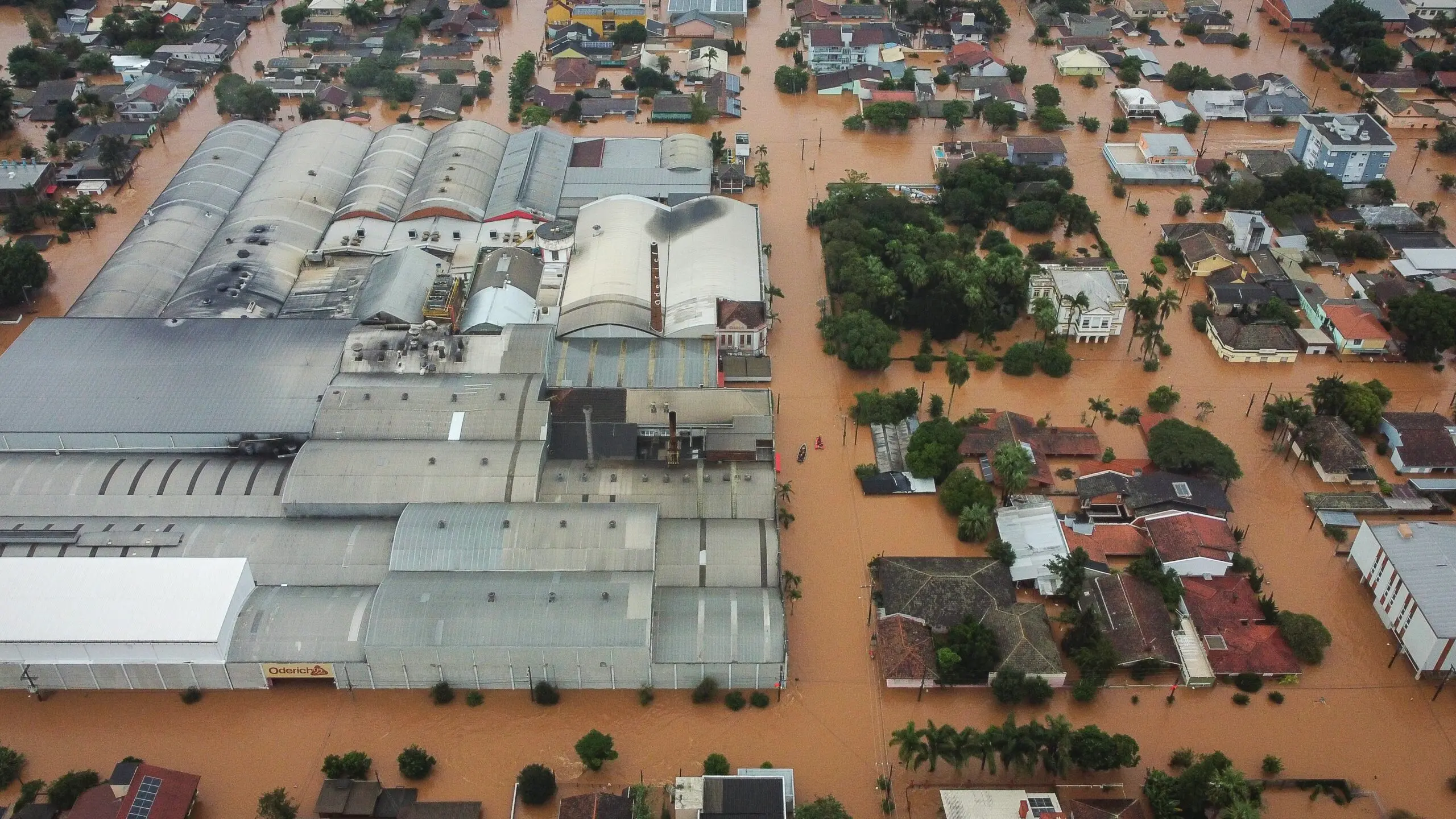
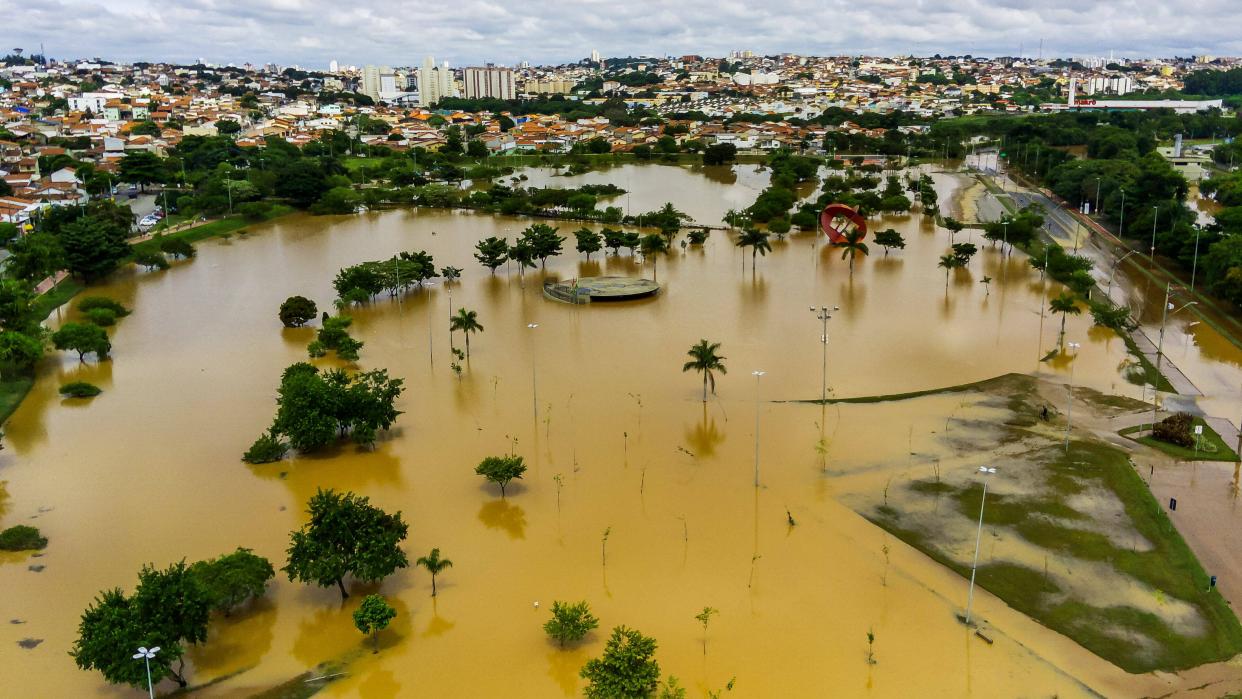
Pakistan’s real estate sector is entering a new era, one where climate-resilient real estate is no longer a niche concept but a market necessity. The 2022 floods submerged nearly a third of the country and caused an estimated $40 billion in damage, a stark reminder that the built environment cannot ignore climate risk any longer. Today, buyers, investors, and developers are rethinking how homes and commercial spaces are designed, built, and certified. Climate-resilient real estate now sits at the center of that shift, supported by sustainable real estate development practices and growing demand for green building certification across major cities.
This blog explains what climate-resilient real estate means for Pakistan, why it matters, and how the market is adapting.
What Is Climate-Resilient Real Estate?
Climate-resilient real estate refers to properties designed and constructed to withstand climate-related stressors such as flooding, extreme heat, and unpredictable rainfall, while protecting the wellbeing of residents and maintaining long-term asset value. It goes beyond aesthetics or energy savings. It is about ensuring a building can function safely and efficiently even as weather patterns become more extreme.
In Pakistan, this is not a distant concern. The housing sector faces a significant shortfall alongside growing climate risks, and most existing structures were never built to handle the intensity of floods, heatwaves, or storms the country now experiences. Climate-resilient real estate addresses this gap through better materials, smarter design, and disaster-aware planning.
Why Climate-Resilient Real Estate Matters for Pakistan
Pakistan ranks among the countries most vulnerable to climate change, yet much of its housing stock was never designed with resilience in mind. A few reasons this matters now more than ever:
Rising climate risk affects property value. Buildings that perform better against flooding, heat, and extreme weather tend to command higher rents and stronger resale value, while vulnerable properties face higher insurance and maintenance costs over time.
Urban flooding is a recurring threat. Karachi, Lahore, and other major cities regularly face monsoon flooding, making resilient drainage, elevated foundations, and flood-resistant materials essential rather than optional.
Energy and water demand keep rising. Passive design, insulation, and efficient systems reduce strain on an already stressed power grid while lowering utility bills for residents.
Investor expectations are shifting. Global capital increasingly favours developments that can demonstrate climate resilience and sustainability credentials, particularly as international investors look at Pakistan’s property sector.
Sustainable Real Estate Development
Climate-resilient real estate does not happen by accident. It is the outcome of deliberate sustainable real estate development, a process that integrates energy efficiency, resource-conscious design, and disaster resilience from the earliest planning stages rather than as an afterthought.
In practice, sustainable real estate development in Pakistan increasingly includes:
Low-carbon construction materials, such as autoclaved aerated concrete (AAC) blocks and interlocking bricks, which studies show can meaningfully reduce cooling energy demand and construction costs compared to conventional materials.
Passive design strategies, including solar orientation, natural ventilation, and shading, which reduce dependence on mechanical cooling in Pakistan’s hot climate.
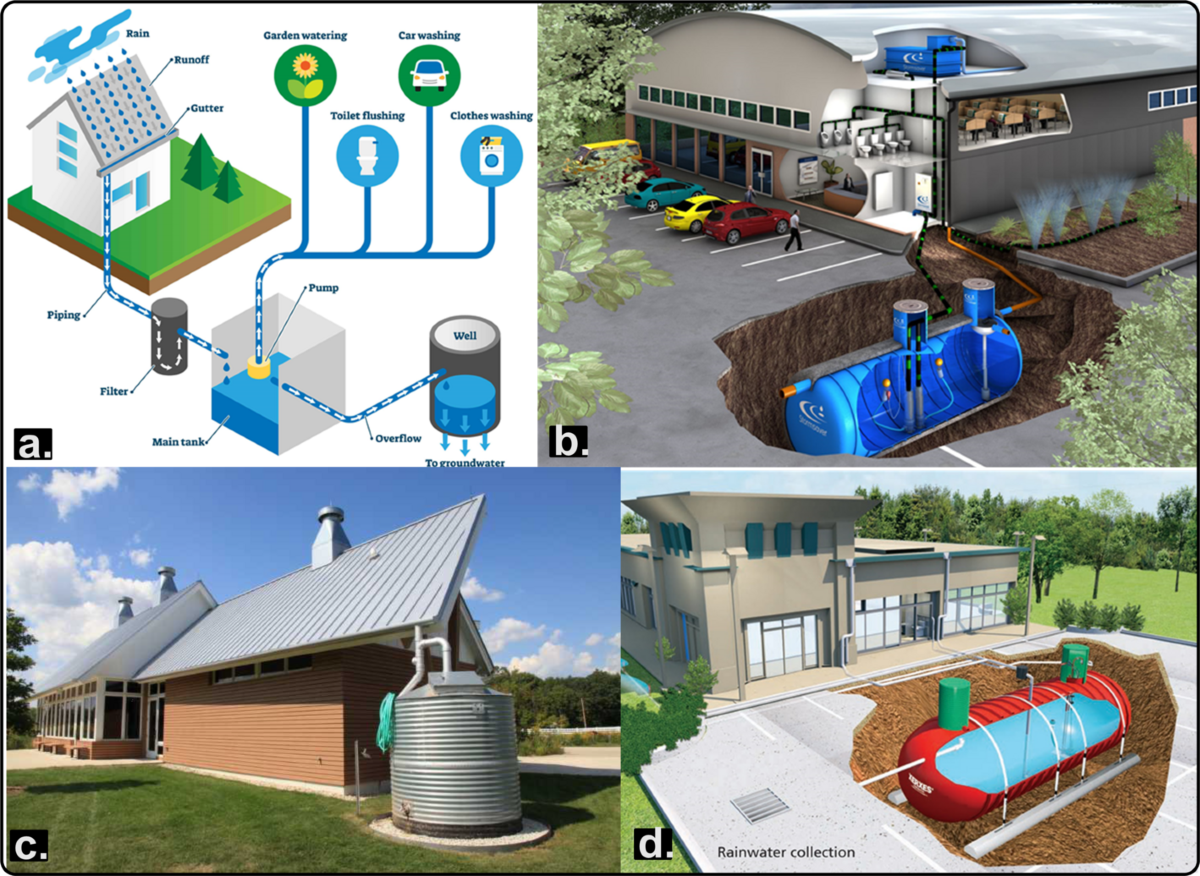
Water conservation systems, such as rainwater harvesting and greywater recycling, which help offset the country’s growing water scarcity.
Renewable energy integration, particularly solar panels, which take advantage of Pakistan’s abundant sunlight to cut electricity costs and reduce grid dependence.
Resilient infrastructure planning, including improved drainage, elevated site design, and flood-conscious layouts for master-planned communities.
Developers who commit to sustainable real estate development are not just responding to climate risk; they are also meeting a clear shift in buyer expectations, especially among younger, environmentally conscious purchasers and overseas Pakistanis evaluating long-term investments.
The Role of Green Building Certification
Green building certification has become one of the clearest ways for developers to prove that a project meets recognised sustainability and resilience standards, rather than simply claiming it. Two frameworks are shaping this conversation in Pakistan:
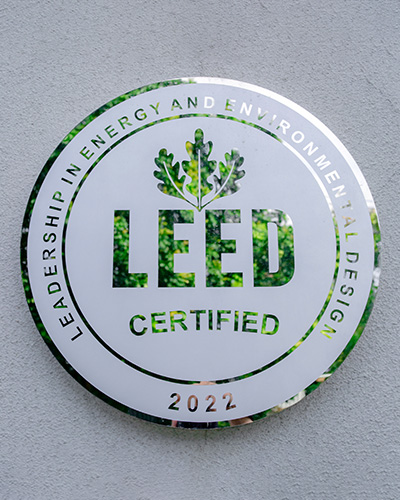
LEED (Leadership in Energy and Environmental Design), developed by the U.S. Green Building Council, remains the world’s most widely used green building rating system. It evaluates projects on energy efficiency, water conservation, material selection, and indoor environmental quality, awarding certification levels from Certified up to Platinum. LEED-certified buildings can cut electricity and water bills significantly, an important advantage in a market facing rising energy costs.
EDGE (Excellence in Design for Greater Efficiencies), an IFC-backed certification, simplifies green building design and focuses on resource efficiency and net-zero performance. EDGE also supports a Building Resilience Index, giving developers, banks, insurers, and governments a way to assess and disclose climate resilience across a portfolio.
Green building certification is gaining real traction in Pakistan. Institutions and urban development authorities have started pursuing LEED and EDGE recognition for major projects, signalling that certification is moving from a rare achievement to an expected standard for large-scale developments.
For developers, pursuing certification demonstrates credibility to both local buyers and international investors, while positioning a project ahead of regulatory trends that are likely to tighten in the coming years.
How Pakistan’s Property Market Is Responding
The shift toward climate-resilient real estate is visible across Pakistan’s major cities. In Karachi, new projects increasingly feature solar power, rainwater harvesting, and green building certification as standard offerings rather than premium add-ons.
In Lahore and Islamabad, urban development authorities and private developers are integrating resilient infrastructure, smart mobility, and green public spaces into master-planned communities.
This momentum is also being supported at the policy level. Recent reforms, including reductions in withholding tax and the removal of Federal Excise Duty on certain property transactions, have lowered the cost of developing and investing in real estate, creating more room for developers to invest in sustainable features without passing steep costs onto buyers.
For overseas Pakistanis and institutional investors, climate-resilient real estate offers a practical advantage: lower long-term operating costs, stronger asset protection against extreme weather, and greater alignment with the sustainability standards increasingly demanded by global capital.
What Buyers and Investors Should Look For
When evaluating a property or project for climate resilience, a few practical indicators are worth checking:
Certification status — Is the project pursuing or holding LEED, EDGE, or an equivalent green building certification?
Drainage and flood planning — Does the site design account for monsoon flooding and urban drainage capacity?
Material choices — Are low-carbon, insulating materials used to reduce cooling demand?
Water and energy systems — Does the development include rainwater harvesting, solar power, or greywater recycling?
Long-term maintenance plans — Is there a clear strategy for monitoring and maintaining resilience features after handover?
Final Thoughts
Climate-resilient real estate is fast becoming the defining standard for Pakistan’s property market, not a future ambition but a present-day requirement. As climate risks intensify, sustainable real estate development and green building certification are giving developers a credible framework to build safer, more efficient, and more valuable properties. For buyers and investors alike, understanding these standards is no longer optional. It is central to making sound, future-focused property decisions in Pakistan.
As one of Pakistan’s leading real estate developers, Chakor continues to track these shifts closely, ensuring its projects reflect the standards that today’s buyers and international investors expect.
Frequently Asked Questions
What does climate-resilient real estate mean?
It refers to properties built to withstand climate-related risks such as flooding, extreme heat, and storms, while protecting resident wellbeing and long-term property value.
Why is green building certification important in Pakistan?
Green building certification, such as LEED or EDGE, verifies that a project meets recognised standards for energy efficiency, water conservation, and resilience, giving buyers and investors measurable proof of sustainability rather than unverified claims.
How does sustainable real estate development reduce costs?
Sustainable real estate development uses passive design, efficient materials, and renewable energy to lower a building’s energy and water consumption, which reduces utility costs for owners and occupants over the property’s lifetime.
Is climate-resilient real estate more expensive to build?
Some resilient materials and certification processes involve upfront investment, but they typically deliver long-term savings through lower utility bills, reduced maintenance, and stronger resale value.
BBC-featured Content Specialist with a sharp eye for search intent and a proven ability to turn content into a growth engine. I leverage cutting-edge digital marketing tools to craft strategies that fuel organic traffic, amplify brand growth, and own the local SEO landscape, particularly across the competitive real estate market. I help brands dominate search rankings and convert visibility into measurable business success.
LAHORE: Punjab’s Minister for Housing, Urban Development and Public Health Engineering, Bilal Yaseen, has identified vertical construction as a critical pillar of Pakistan’s urban future, arguing that high-rise development is now indispensable given the country’s expanding population and diminishing land resources.
Speaking at a live podcast session held as part of Pakistan’s first Real Estate CEOs Conference featuring a sitting provincial housing minister, Yaseen said that rising urbanisation pressures leave little alternative to building upward.
He noted that carefully planned high-rise projects allow cities to expand sustainably while making the most of existing infrastructure, and reaffirmed that government policy would prioritise developments meeting modern construction benchmarks to support organised urban growth.
He further underlined the importance of ongoing coordination between government bodies and private developers, suggesting that collaborative policy-making is essential to build investor trust and sustain momentum in the real estate sector.
The conference, organised by Alif Holdings, drew together policymakers, developers, investors and media figures to deliberate on housing policy, urban planning reforms, the investment climate and prospects for public-private partnership.
The discussion was moderated by veteran journalist Mansoor Ali Khan, with television anchors Waseem Badami and Shahzeb Iqbal in attendance alongside senior figures from the real estate industry.
Alif Holdings CEO Ahmed Saljouk described the real estate sector as a significant contributor to Pakistan’s economy, stressing that its long-term prospects hinge on sustained dialogue between industry and government.
He said the conference was designed to give stakeholders a shared platform to raise concerns and shape workable solutions, adding that his company intends to continue hosting similar forums.
Participants at the event echoed calls for more consistent policy frameworks, greater regulatory transparency, and deeper public-private cooperation measures, which they said would be key to strengthening investor confidence and supporting sustainable urban expansion across Pakistan.
Dedicated and detail-oriented SEO Content Writer, Real Estate Writer, and Research Analyst based in Islamabad, with proven expertise in developing accurate, valuable, and well-researched content. Skilled in analytical writing, market research, and reporting, with the ability to turn insights into clear, professional, and impactful content. Passionate about exploring new ideas, analyzing industry trends, and contributing to high-quality writing and research-driven projects.
ISLAMABAD: Banks have approved housing finance worth Rs204 billion under the Prime Minister’s Apna Ghar Scheme, with Rs27 billion already disbursed to beneficiaries, a high-level review meeting was informed on Tuesday.
Chairing the meeting, Prime Minister Shehbaz Sharif said the scheme was designed to enable low- and middle-income households to own homes, describing affordable housing as one of the government’s foremost priorities.
The prime minister directed authorities to accelerate work on the scheme and called on public and private sector banks to expand financing support, aiming to widen access to housing loans for eligible families.
He further instructed relevant departments to devise a comprehensive strategy for both vertical and horizontal housing developments under the initiative, emphasising the need for practical and sustainable solutions to meet the demands of a growing population.
Reaffirming the government’s commitment to providing shelter for disadvantaged and middle-income citizens, the prime minister stressed that close coordination among all stakeholders remains essential for the scheme’s timely and successful execution.
The meeting was attended by Federal Minister for Finance and Revenue Muhammad Aurangzeb, Federal Minister for Housing and Works Riaz Pirzada, Minister of State for Finance and Railways Bilal Kayani, and senior government officials.
The Apna Ghar Scheme aims to finance 150,000 homes by June 2027, as part of the government’s broader affordable housing agenda.
BBC-featured Content Specialist with a sharp eye for search intent and a proven ability to turn content into a growth engine. I leverage cutting-edge digital marketing tools to craft strategies that fuel organic traffic, amplify brand growth, and own the local SEO landscape, particularly across the competitive real estate market. I help brands dominate search rankings and convert visibility into measurable business success.
Water is essential to life, yet the world faces a growing paradox: some regions struggle with too little water, while others are increasingly overwhelmed by too much. Both scenarios fall under one critical concept: water security. While most people associate this with drought and scarcity, it equally concerns the destructive risks of excess water, particularly flooding.
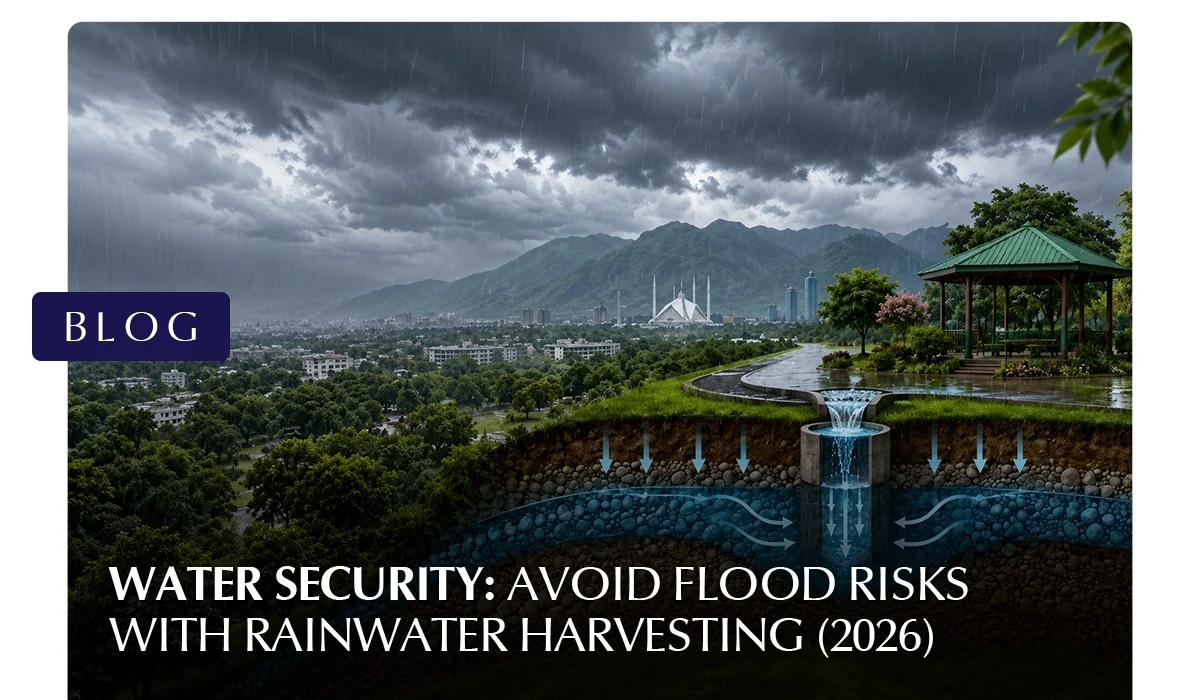
This article explores what water security truly means, why urban flooding is becoming a growing threat, and how a simple, time-tested solution, rainwater harvesting, can help communities strengthen their security of water while reducing flood risks.
What Is Water Security?
Water security refers to the reliable availability of an acceptable quantity and quality of water for health, livelihoods, and economic production, combined with an acceptable level of water-related risk.
In simpler terms, water sustainability isn’t just about having enough water; it’s about managing water safely, sustainably, and resiliently, so that it neither runs out nor causes harm.
According to UN-Water, security of water is “the capacity of a population to safeguard sustainable access to adequate quantities of acceptable quality water for sustaining livelihoods, human well-being, and socio-economic development, while ensuring protection against water-related disasters.”
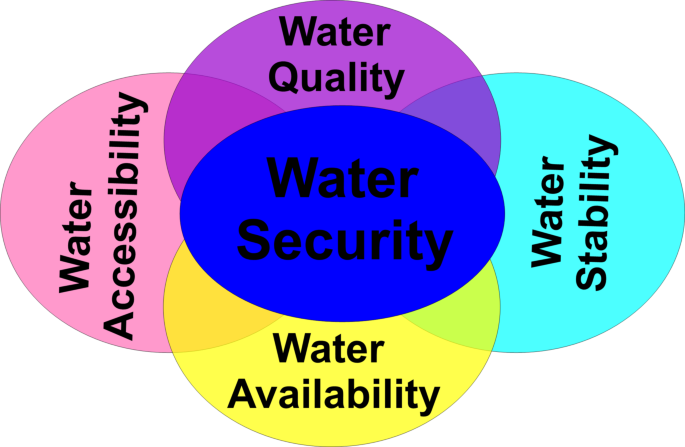
This definition highlights an important truth: water security is a balancing act. It requires managing the following things at once:
Water scarcity – ensuring enough water is available to meet demand
Water quality – keeping that water safe and free from contamination
Water-related disasters – protecting communities from floods, droughts, and other water-driven shocks
Achieving security of water also means addressing risk at every level of society:
Household level – reliable, safe access for daily drinking, cooking, and sanitation needs
Community level – shared infrastructure like wells, pipelines, and local drainage systems functioning safely
City level – stormwater management, treatment plants, and supply networks built to handle demand and extreme weather
National level – policies, investment, and coordination across regions and river basins
When any one of these levels fails to manage water risk effectively, the consequences can be severe:
Contaminated drinking water
Damaged infrastructure
Displaced communities
Long-term economic setbacks
The Three Pillars of Water Security
To fully understand water security, it helps to break it down into three interconnected pillars:
Availability – Having enough water to meet the needs of people, agriculture, industry, and ecosystems.
Quality – Ensuring that available water is safe, clean, and free from harmful contaminants.
Risk Management – Protecting communities from water-related disasters, including flash floods, droughts, and infrastructure failures.
Most conversations around security of water focus heavily on scarcity and rightly so, given that millions of people worldwide lack reliable access to clean water. However, the risk management pillar of water security is just as important, and it’s here that flooding becomes a central concern.
A community can have abundant water resources and still suffer a severe water security crisis if a flood destroys its water infrastructure or contaminates its drinking supply.
Urban Flooding, Climate Change, and Water Security
One of the most pressing challenges to water security today is the rise of urban flooding driven by climate change. As global temperatures increase, rainfall patterns are becoming more erratic and extreme.
Instead of steady, predictable precipitation, many regions are now experiencing short bursts of intense rainfall that overwhelm drainage systems within minutes.
Why Cities Are Especially Vulnerable
Cities are particularly vulnerable to this shift. Urban landscapes are dominated by concrete, asphalt, and rooftops impervious surfaces that prevent rainwater from soaking into the ground.
Instead of being absorbed naturally, rainwater rushes across these hard surfaces, collecting pollutants and rapidly overwhelming stormwater drains.
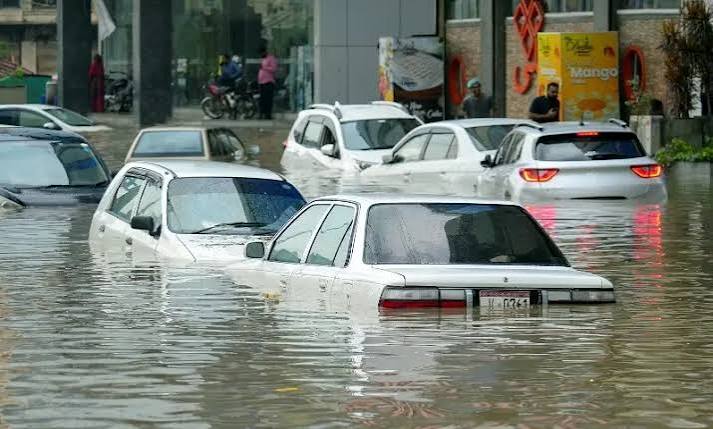
The result is urban flooding: streets submerged in water, basements flooded, and in severe cases, contaminated water supplies and displaced families.
When Flooding Becomes a Water Security Crisis
This connection between urban flooding, climate change, and security of water cannot be overstated. When floodwaters mix with sewage or industrial runoff, they compromise drinking water quality, turning what should be a water abundance problem into a water security crisis.
In coastal and low-lying urban areas, monsoon-driven flooding has been shown to pollute municipal water supplies, forcing communities to rely on unsafe water sources in the flood’s aftermath.
This is a clear example of how flooding, even when it brings excess water, directly undermines water security rather than improving it.
The Role of Poor Urban Planning
Urban planning plays a central role in shaping how effectively a city manages its water resources and protects itself from flood risk. Poor urban planning compounds the issue. Rapid, unregulated urbanisation often outpaces the development of adequate drainage and stormwater infrastructure.
As more green spaces are paved over, natural water absorption capacity disappears, and the risk of flash flooding grows.
Without deliberate intervention, water security in fast-growing cities will continue to deteriorate as climate change intensifies rainfall extremes.
How Rainwater Harvesting Strengthens Water Security
Fortunately, there is a practical, scalable solution that addresses both sides of the water security equation: rainwater harvesting. Rainwater harvesting is the practice of collecting, storing, and using rainwater rather than allowing it to run off uncontrolled into drains, streets, or waterways.
It can be as simple as a rooftop catchment system connected to a storage tank, or as sophisticated as large-scale urban infrastructure designed to capture and redirect stormwater.
By intercepting rainwater at its source, rainwater harvesting reduces the volume of water that would otherwise contribute to surface runoff and flash flooding. This makes it one of the most effective, low-cost tools for improving security of water in both urban and rural settings.
Rainwater Harvesting Benefits
The rainwater harvesting benefits extend far beyond flood prevention, making it a cornerstone strategy for long-term water security:
Reduces surface runoff and flood peaks – By capturing rainwater before it reaches the ground, harvesting systems lower the volume and speed of runoff, easing pressure on drainage systems during heavy storms.
Recharges groundwater – Excess harvested water can be directed into the ground, replenishing aquifers and supporting long-term security of water for the surrounding region.
Reduces pressure on stormwater infrastructure – Aging or undersized municipal drainage systems benefit significantly when a portion of rainfall is captured before it ever enters the system.
Provides an alternative water source – Harvested rainwater can supplement household and agricultural water use, strengthening security of water during dry spells or supply disruptions.
Improves water quality – By reducing the volume of runoff that picks up pollutants from streets and rooftops, rainwater harvesting helps limit contamination of rivers, lakes, and drinking water sources.
Together, these benefits illustrate why rainwater harvesting is not just an environmental nicety; it’s a direct, actionable contributor to water security at the household, community, and city level.
Rainwater Harvesting as a Flood Risk Mitigation Strategy
While large-scale flood infrastructure like levees, dams, and stormwater drains remain essential, they are not always sufficient on their own, especially as climate change pushes rainfall intensity beyond the design capacity of aging systems.
Rainwater harvesting offers a complementary, decentralised approach to flood risk management that strengthens overall water security.
Several practical methods make this possible:
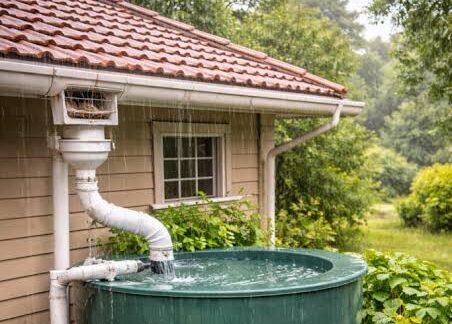
Rooftop rainwater harvesting systems: Gutters and downspouts direct roof runoff into storage tanks instead of the street, reducing the immediate burden on drainage systems.
Rain gardens and bioswales: These landscaped depressions absorb and filter runoff before it reaches storm drains, slowing the flow of water during heavy rain.
Permeable pavements: Unlike traditional concrete, permeable surfaces allow rainwater to seep into the ground rather than running off, reducing flood volume in parking lots, driveways, and walkways.
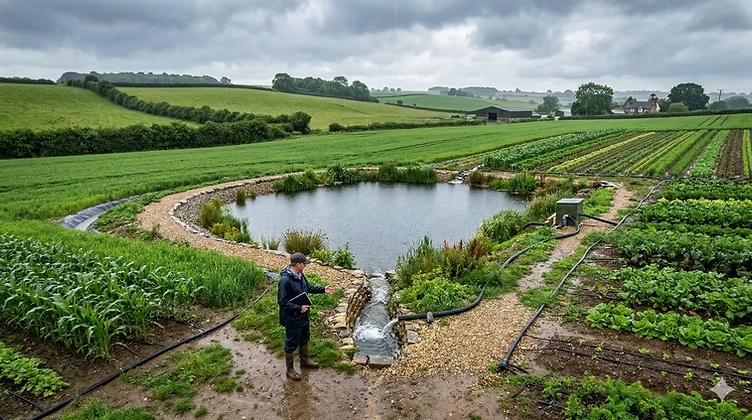
Retention and detention ponds: These structures temporarily hold large volumes of stormwater, releasing it gradually to prevent sudden surges downstream.
When implemented at scale across households, neighbourhoods, and municipal planning, these rainwater harvesting techniques can meaningfully reduce flood peaks during extreme weather events.
They don’t eliminate the need for traditional flood infrastructure, but they significantly ease the burden on it, creating a more resilient, multi-layered defence system. This is precisely the kind of integrated approach that strengthens water security over the long term.
How Individuals and Communities Can Start Rainwater Harvesting
You don’t need to wait for large-scale government infrastructure to start improving water security in your own home or neighbourhood. Here’s a practical starting checklist:
Assess your rooftop catchment area – Larger roofs can capture more rainwater, giving you a sense of your harvesting potential.
Install gutters and downspouts – Direct roof runoff toward a designated collection point rather than the street or drain.
Choose appropriate storage – Options range from simple rain barrels to large underground cisterns, depending on your space and water needs.
Add a first-flush diverter – This component discards the initial, dirtiest runoff before clean water enters your storage tank.
Check local building codes – Many municipalities have specific guidelines or incentives for rainwater harvesting systems.
Consider a rain garden – If a full harvesting system isn’t feasible, even a small rain garden can absorb runoff and support local security of water.
Adopting these steps at a household level, combined with community-wide adoption, can meaningfully reduce local flood risk while contributing to broader water security goals.
Frequently Asked Questions
Water scarcity is simply a shortage of available water, while security of water is broader; it also covers water quality and protection from disasters like floods. A region can even face water security risks despite having abundant water.
Yes. It captures rainwater at the source, reducing runoff volume and speed, which lowers flood peaks during heavy storms.
Absolutely. Urban areas benefit the most, since rainwater harvesting directly addresses the runoff problem caused by concrete and rooftops.
Climate change intensifies rainfall extremes, driving both severe droughts and more frequent flooding, making security of water harder to maintain.
Conclusion
Water security means more than just having access to water; it’s about managing it wisely, protecting its quality, and reducing risks from both scarcity and excess. As urban flooding intensifies with climate change, rainwater harvesting offers a practical, scalable way to reduce flood risk, recharge groundwater, and strengthen security of water at every level.
By treating security of water as a holistic goal, individuals, communities, and governments can build a more flood-resilient, water-secure future for generations to come.
Dedicated and detail-oriented SEO Content Writer, Real Estate Writer, and Research Analyst based in Islamabad, with proven expertise in developing accurate, valuable, and well-researched content. Skilled in analytical writing, market research, and reporting, with the ability to turn insights into clear, professional, and impactful content. Passionate about exploring new ideas, analyzing industry trends, and contributing to high-quality writing and research-driven projects.
Pakistan’s cities are entering a golden era for flexible, tech-enabled travel accommodation, and nowhere is this more visible than in the growing appetite for a short term rental city view apartment Pakistan travellers can book for a few nights, a few weeks, or a few months. This guide walks you through everything you need to know about booking a genuine short term rental city view apartment Pakistan in 2026: what actually counts as a “view,” where to find the best options, how much to budget, who these stays suit, and what to check before you hit “confirm booking.”
City View Apartment
Not every listing that advertises a “city view” actually delivers one. Just like long-term buyers get fooled by glossy renders, short-stay travellers booking a short term rental city view apartment Pakistan listing can end up facing a parking lot instead of a skyline. A handful of practical factors separate a real view from a marketing photo taken at a flattering angle:
Floor level – In most Pakistani cities, buildings top out at two to four storeys, so anything below the 5th or 6th floor is usually blocked by neighbouring rooftops or trees.
Orientation – North- or east-facing units in Islamabad typically catch the Margalla Hills and skyline without harsh afternoon glare.
Balcony depth – A shallow, decorative balcony is not the same as one you can actually sit on and enjoy the view from.
Building height relative to surroundings – A tower needs to clear the low-rise fabric around it, not just be “tall” on paper.
Before booking any listing, ask the host for recent, unedited photos taken directly from the balcony or window, not just the promotional shots used in the gallery.
Why Islamabad Leads This Market
If you’re comparing cities, Islamabad is the clear frontrunner for view-driven short stays, and the geography explains why. The capital was master-planned in the 1960s with wide avenues, sector-based zoning, and generous green belts, so height rarely results in a wall of concrete.
From a high-floor unit in the Blue Area, you’re typically looking at tree canopy, the white dome of the Faisal Mosque, the green expanse of F-9 Park, and the permanent ridgeline of the Margalla Hills behind it all.
This is precisely why Airbnb Islamabad listings that mention “Margalla view” or “city view” tend to command a premium over otherwise identical units without one; travellers are willing to pay more for a window that actually earns its keep.
Lahore and Karachi offer their own charms (boulevard lighting, sea views in Clifton), but for a genuinely elevated, panoramic short term rental city view apartment Pakistan experience, Islamabad’s Blue Area and Jinnah Avenue corridor remains the benchmark.
Who Should Book a Short Term Rental City View Apartment?
Not every traveller needs the same thing, and matching your profile to the right stay saves both money and hassle:
Business travellers and corporate visitors benefit most from Blue Area units near Jinnah Avenue, where meetings, embassies, and commercial offices are within walking distance.
Families and groups tend to do better in F-11, E-11, or Bahria Town, where 2- and 3-bedroom units offer more space per dollar and quieter surroundings.
Digital nomads and remote workers should prioritise buildings with reliable Wi-Fi and power backup over views alone, since a few hours of load shedding can disrupt a workday.
Diaspora visitors on extended trips often find that booking a short term rental city view apartment Pakistan option for several weeks works out cheaper per night than a hotel, while offering a kitchen and laundry facilities they’d otherwise miss.
Knowing which category you fall into makes it much easier to filter listings, rather than scrolling through hundreds of options that don’t meet your actual needs.
Best Neighbourhoods to Compare
Location determines the view, the commute, and the overall experience of your stay. Here’s how the main areas compare for anyone shopping for a short term rental city view apartment Pakistan option:
Area
View Profile
Best For
Blue Area / Jinnah Avenue
Skyline, Faisal Mosque, Margalla Hills
Business travellers, luxury short stays
F-11 / E-11
Tree-lined residential views, partial hill views
Families, mid-budget travelers
DHA Phase 2
Mall proximity, hill views from higher floors
Couples, short weekend stays
Bahria Town
Landscaped community views
Families, longer stays
Gulberg Greens
Golf course and greenery views
Quiet getaways
Price Guide: What It Actually Costs in 2026
Pricing for short stays varies widely by unit size, furnishing quality, and the authenticity of the view. Based on current listings across major booking platforms, here’s a realistic breakdown:
Unit Type
Nightly Rate (No View)
Nightly Rate (City/Margalla View)
Studio
$20 – $35
$35 – $60
1-Bedroom
$30 – $50
$50 – $90
2-Bedroom
$45 – $75
$75 – $150
3-Bedroom / Penthouse
$80 – $150
$150 – $500+
Weekly and monthly stays typically bring the per-night rate down by 15–30%, so if you’re planning a longer visit, it’s worth asking hosts directly about a discounted rate rather than booking night by night.
A well-positioned short term rental city view apartment Pakistan listing booked for a full month can end up costing less per night than a budget hotel room, while offering considerably more space and a kitchen.
Short Term vs. Long Term: Which Should You Choose?
This is one of the most common points of confusion for first-time visitors.
A short term rental city view apartment Pakistan booking is fully furnished, includes utilities and often housekeeping, and can be booked for a single night up to a few months, ideal for travellers, corporate postings, or anyone testing out a neighbourhood before committing further.
A long-term rental, by contrast, usually requires a lease agreement, a security deposit, separate utility connections, and often unfurnished or semi-furnished space. It’s better suited to residents planning to stay a year or more.
The rule of thumb: if your stay is under three months, a short-term option is almost always more convenient and often cheaper once you factor in furnishing costs, utility setup fees, and the flexibility to leave without penalty.
Amenities Worth Looking For
Beyond the view itself, certain amenities make or break the experience of a short term rental city view apartment Pakistan stay:
Backup power (UPS or generator)
High-speed Wi-Fi
In-unit washing machine
Secure parking
24/7 security or CCTV
Elevator access
Listings that tick most of these boxes tend to justify a slightly higher nightly rate, and they’re usually the ones with the strongest repeat-guest reviews.
Citadel One3: A New Benchmark for Short Stay City View Living
One project worth knowing about if you’re researching the short term rental city view apartment Pakistan market is Citadel One3, a premium residential and commercial tower by Chakor rising 40+ floors along Jinnah Avenue in Islamabad’s Blue Area. It’s a useful real-world example of exactly the kind of view-led, amenity-rich building this guide has been describing.
Citadel One3 sits on one of Islamabad’s most prominent addresses, with sightlines directly toward the Faisal Mosque and F-9 Park, and the Margalla Hills forming a permanent backdrop.
What makes it particularly relevant to short-stay travellers is its built-in rental stay management service rather than relying on third-party hosts; the building itself facilitates short-term bookings for guests who want a hotel-level experience with genuine apartment-style space and a real view.
A few details that stand out:
Location: Jinnah Avenue, Blue Area, Islamabad’s dominant commercial and diplomatic core.
Scale: 40+ floors and roughly 27,500 sq ft of combined commercial and residential space, ensuring upper floors deliver unobstructed, elevated views rather than aspirational ones.
Amenities: Gym, sports and kids’ play area, a culinary court, smart parking for 350+ cars, advanced firefighting systems, secure entry points, and 24/7 surveillance.
Guest-ready model: The rental stay management structure bridges the gap between an investment property and a genuine short-stay product, which is exactly the kind of offering travellers researching a short term rental city view apartment Pakistan option should keep an eye on as it comes to market.
Projects like Citadel One3 signal where the Islamabad short-stay market is heading: fewer ad-hoc sublets, more professionally managed, view-driven buildings built with visitors in mind from day one.
What to Check Before You Book
Whether you’re booking through Airbnb, a local portal, or a developer-managed building, a few checks apply universally to any short term rental city view apartment Pakistan listing:
Verified reviews and host responsiveness – A handful of recent, detailed reviews matter more than a high rating with no comments.
Power backup – Islamabad and other cities experience periodic load-shedding, especially in summer. Confirm the unit has generator or UPS backup before booking.
Actual view photos – Ask for a photo taken from the balcony itself, not just the marketing image.
Security and building access – CCTV, secure entry points, and on-site staff matter more for short stays than for long-term rentals, since you won’t have time to build familiarity with the building.
Cancellation policy – Especially important if you’re booking a short term rental city view apartment Pakistan listing months in advance for a trip that might shift.
Frequently Asked Questions
Blue Area and Jinnah Avenue in Islamabad offer the most reliable combination of skyline, Margalla Hills views, and central location.
Yes, though it’s worth verifying view claims through recent guest photos rather than relying solely on the listing gallery.
Rates typically range from $35 for a studio to $150+ for a 2-bedroom unit with a genuine city or Margalla view, with premium penthouses going higher.
In most Pakistani cities, the 6th floor and above typically clears surrounding rooftops enough to deliver an unobstructed view.
Final Word
Booking a short term rental city view apartment Pakistan for a 2026 stay comes down to matching the right neighbourhood, floor level, and building type to your budget, travel purpose, and length of stay. Islamabad’s Blue Area corridor, anchored by projects like Citadel One3, is setting a new standard for what a professionally managed, view-led short stay can look like.
Wherever you book, always verify the view, check the power backup, and read recent reviews before confirming. Do that, and your next short term rental city view apartment Pakistan booking will actually deliver the skyline you paid for.
Dedicated and detail-oriented SEO Content Writer, Real Estate Writer, and Research Analyst based in Islamabad, with proven expertise in developing accurate, valuable, and well-researched content. Skilled in analytical writing, market research, and reporting, with the ability to turn insights into clear, professional, and impactful content. Passionate about exploring new ideas, analyzing industry trends, and contributing to high-quality writing and research-driven projects.
LAHORE: The Punjab government has directed all private housing societies across the province to transfer their complete property transaction records to the Housing Society Management System (HSMS) as part of a broader push to strengthen ownership documentation and curb real estate fraud.
Under the new compliance framework, the government has begun issuing Property Certificates for property buying and selling transactions. These certificates will serve as legal proof of ownership across both public and private housing schemes in Lahore, replacing the fragmented documentation practices that have long characterized the sector.
Housing society owners and management have been given until August 31, 2026, to upload their complete purchase and sale records to the HSMS platform. Officials said the initiative is designed to improve transparency in property transactions and secure ownership records against manipulation.
The Property Certificate system will be integrated with NADRA records, digital mapping systems, and the e-Registry platform, an interlinkage authorities say will strengthen ownership verification and significantly reduce the risk of fraudulent transactions.
Housing societies that fail to meet the August deadline face legal consequences under the LDA Act 1975. Enforcement measures under consideration include the sealing of non-compliant societies’ offices and the initiation of legal proceedings against their management.
Officials noted that several private housing schemes in Lahore have already completed the record transfer to HSMS ahead of the deadline, signaling early compliance from parts of the sector even as the broader rollout continues.
The directive follows a series of recent enforcement actions by the Lahore Development Authority against unregistered and non-compliant housing schemes, reflecting a wider provincial effort to formalize property records and tighten oversight of the real estate sector ahead of the new fiscal year’s regulatory cycle.
BBC-featured Content Specialist with a sharp eye for search intent and a proven ability to turn content into a growth engine. I leverage cutting-edge digital marketing tools to craft strategies that fuel organic traffic, amplify brand growth, and own the local SEO landscape, particularly across the competitive real estate market. I help brands dominate search rankings and convert visibility into measurable business success.
PESHAWAR: The Khyber Pakhtunkhwa Public-Private Partnership (PPP) Committee has approved the construction of the 29-kilometre Dir Motorway, connecting Chakdara Interchange to Baroon in Lower Dir District, at an estimated cost of Rs69 billion.
The approval was granted during a committee meeting chaired by Chief Minister Sohail Afridi, held on Saturday. Following the decision, the chief minister directed relevant authorities to immediately initiate land acquisition proceedings for the project.
He further instructed concerned departments to establish clear implementation timelines to ensure the motorway is completed within the stipulated period, enabling the public to benefit from the infrastructure at the earliest opportunity. Authorities were also directed to propose amendments to the existing PPP framework aimed at facilitating faster and more efficient execution of development projects.
The chief minister termed the motorway a significant contribution by the provincial government to the people of Malakand Division, stating that it would substantially reduce travel time, lower fuel consumption and transportation costs, and generate direct economic benefits for residents. He added that the project would play a pivotal role in promoting tourism and strengthening the regional economy, noting that improved connectivity to remote tourist destinations would create new employment opportunities.
The same meeting also reviewed progress on the Peshawar-Dera Ismail Khan Motorway and Swat Motorway Phase-II projects, with participants discussing measures to ensure their timely completion.
The session was attended by cabinet members Aftab Alam Afridi, Shakeel Khan, Shafi Jan and Muzammil Aslam, along with the chief secretary, additional chief secretary (planning and development), principal secretary to the chief minister, and administrative secretaries of the relevant departments.
BBC-featured Content Specialist with a sharp eye for search intent and a proven ability to turn content into a growth engine. I leverage cutting-edge digital marketing tools to craft strategies that fuel organic traffic, amplify brand growth, and own the local SEO landscape, particularly across the competitive real estate market. I help brands dominate search rankings and convert visibility into measurable business success.
PESHAWAR: The KPK government has unveiled a major overhaul of its revenue administration, including plans to digitise land records and introduce a real-time system to detect encroachments on state land.
The announcement came from Provincial Revenue Minister Tariq Mahmood Aryani, who chaired the first policy meeting of the Revenue Department on Thursday to outline a modernisation agenda to improve transparency and public service delivery.
The session was attended by Members of the National Assembly Muhammad Atif Khan and Arbab Sher, revenue expert Daud Khan, Senior Member Board of Revenue Zahir Shah Khan, and other senior officials.
Addressing participants, the minister stressed that the Revenue Department needed to keep pace with global technological trends, arguing that expanded use of digital systems would boost efficiency and make government services more accessible to the public.
He confirmed that the land mutation process, known locally as Intiqal, would be fully digitised and that records of government land would be integrated into a new monitoring platform capable of flagging encroachments as they occur.
Under the proposed framework, designated officers would be automatically notified whenever state land is illegally occupied, while the system would also track any delays in official response to strengthen accountability across the department.
Aryani also announced the creation of a dedicated grievance redressal cell to handle public complaints more efficiently, as well as plans to digitise inquiries and disciplinary proceedings involving revenue officials.
Beyond the technology-driven reforms, the minister instructed officials to prioritise resolving long-pending Khana Kasht disputes and directed the revenue administration to clear outstanding land cases within defined timeframes.
Concluding the meeting, Aryani ordered immediate implementation of the announced measures and asked relevant departments to present a detailed progress report at the next review session.
Dedicated and detail-oriented SEO Content Writer, Real Estate Writer, and Research Analyst based in Islamabad, with proven expertise in developing accurate, valuable, and well-researched content. Skilled in analytical writing, market research, and reporting, with the ability to turn insights into clear, professional, and impactful content. Passionate about exploring new ideas, analyzing industry trends, and contributing to high-quality writing and research-driven projects.
RAWALPINDI: The Rawalpindi Ring Road project has reached 98 percent completion, with installation of the toll plaza the only major work remaining before the highway opens to traffic.
The update was shared during a review meeting chaired by the Rawalpindi Divisional Commissioner. Officials confirmed that the Punjab Ring Road Authority will install and operate the toll plaza, collect tolls at government-approved rates, and oversee traffic management on the route once operational.
Spanning 38.3 kilometres, the Ring Road has completed construction of its main carriageway, flyovers, subways, interchanges, bridges, and other civil infrastructure. Installation of road barriers, lane markings, signboards, and streetlights has also been finalized.
The Punjab government has released more than Rs. 29 billion for the project to date, with the remaining funds expected within one to two weeks, according to officials.
During the review, the commissioner directed authorities to expedite the outstanding work, accelerate landscaping and tree plantation along both sides of the corridor, and establish a dedicated policing and traffic management system ahead of the road’s opening.
Officials further confirmed that construction of the Thalian Interchange will proceed as a separate project once the Ring Road becomes operational.
Once functional, the Ring Road is expected to divert heavy traffic away from Rawalpindi’s urban core, easing congestion on GT Road, Peshawar Road, Murree Road, and other major arteries. Authorities anticipate the project will reduce travel times, cut fuel consumption, and lower vehicular air pollution across the city.
The project marks one of the most significant infrastructure undertakings in the twin cities in recent years, with completion now widely anticipated in the coming weeks.
BBC-featured Content Specialist with a sharp eye for search intent and a proven ability to turn content into a growth engine. I leverage cutting-edge digital marketing tools to craft strategies that fuel organic traffic, amplify brand growth, and own the local SEO landscape, particularly across the competitive real estate market. I help brands dominate search rankings and convert visibility into measurable business success.
Water shortage is a real problem in most cities today. Borewells run dry. Water bills keep rising. Groundwater levels keep falling. A rainwater harvesting system offers a simple, low-cost fix. It collects rain that would otherwise run off your roof or yard and turns it into a usable water source for drinking, irrigation, flushing, or simply topping up the ground beneath your feet.
This guide covers everything about a rainwater harvesting system: what it is, how it works, its components, methods, benefits, cost, water quality standards, and the rules that apply in Pakistan. By the end, you will know exactly how to plan one for your home, office, or institution.
What Is a Rainwater Harvesting System?
According to Encyclopaedia Britannica, a rainwater harvesting system is a technology that collects and stores rainwater for human use. Systems range from simple rain barrels to elaborate structures with pumps, tanks, and purification units. The stored water can irrigate landscaping, flush toilets, launder clothes, or even be purified for drinking.
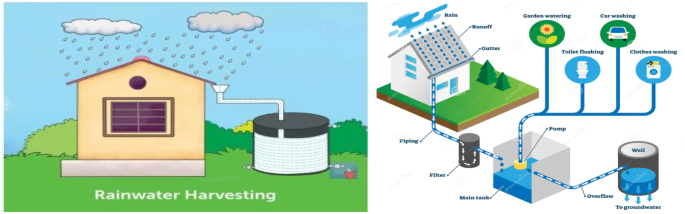
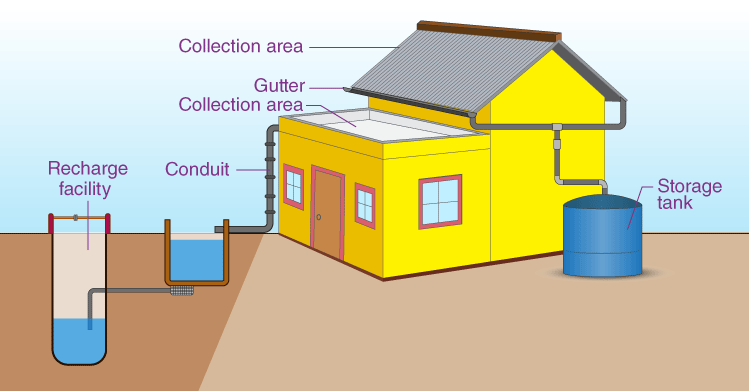
Instead of letting rain run into the street or drain away, a rainwater harvesting system directs it through gutters and pipes into a storage tank or into the ground. Researchers describe every rainwater harvesting system (RWHS) as sharing four core parts: a catchment area, gutters, pipes, and a storage system. Everything else- filters, pumps, recharge wells, treatment units- builds on that basic four-part foundation.
The idea itself is old. People have collected rainwater for thousands of years. Ancient cisterns dating back to 2500 BC have been found in the Middle East, and rainwater harvesting for irrigation dates back to roughly 4500 BC in southern Mesopotamia. Roman cities used rooftop channels and aqueducts long before modern gutters existed.
Farming communities in Balochistan practiced rainwater harvesting around 300 BC. The method has simply been refined with better tanks, filters, and monitoring tools, and in some university research projects today, even Building Information Modeling (BIM) and augmented reality.
Why a Rainwater Harvesting System Matters Right Now
Water stress is no longer a distant concern. Reports cited by industry sources suggest more than half the world’s population will be living in water-stressed regions by 2050.
Pakistan is a clear example. According to Abamet Pakistan, an environmental engineering firm, Pakistan is technically a “water-stressed” country rather than a “water-scarce” one, but it wastes nearly 10 trillion gallons of water every year due to poor conservation.
A rainwater harvesting system is one of the most direct ways to close that gap, because it captures free water at the exact point where it is needed most.
In Semarang, Indonesia, a city badly affected by climate-driven flooding and drought, a rainwater harvesting system built into public schools now channels collected water into daily use and groundwater recharge, directly benefiting more than 20,500 people.
This shows how a single, simple technology can serve two opposite climate problems at once: it eases drought by storing water, and it eases flooding by capturing runoff before it overwhelms drains.
How Does a Rainwater Harvesting System Work?
A rainwater harvesting system works in four simple stages: catchment, conveyance, filtration, and storage or recharge.
Catchment: Rain falls on a roof, terrace, or paved surface. This surface is called the catchment area.
Conveyance: Gutters and downpipes carry the water from the roof to the storage point.
Filtration: Before the water reaches the tank, it passes through a first-flush diverter and a filter. This removes dust, leaves, and bird droppings.
Storage or recharge: Clean water is stored in a tank for reuse, or it is directed into a recharge well or pit so it seeps into the ground and refills the water table.
Gravity does most of the work in a well-designed rainwater harvesting system. Pumps are only needed when water must move uphill, into upper floors, or through pressurised taps.
Methods of Rainwater Harvesting
There are two broad methods used in any rainwater harvesting system, and within each, two purpose-based categories worth knowing.
1. Rooftop Rainwater Harvesting
This is the most common method for homes, apartments, schools, and offices. Rain falling on the roof is captured through gutters and either stored in a tank or directed to a recharge well.
Roof runoff is generally of higher quality than surface runoff and can often be used with only basic treatment. It is simple, affordable, and works well for houses, mosques, factories, hotels, and multi-storey buildings.
2. Surface Runoff Harvesting
This method collects rainwater flowing across the ground, such as from a courtyard, driveway, or open plot. The runoff is channelled into a storage tank or recharge pit below ground level.
It works well for larger plots and is often used alongside rooftop systems to capture every drop of rain falling on a property, while also cutting soil erosion, water pollution, and street flooding.
Domestic vs. Agricultural Rainwater Harvesting
Beyond catchment type, rainwater harvesting is also split by purpose. Domestic rainwater harvesting (DRWH) serves household needs: drinking, washing, gardening, and flushing.
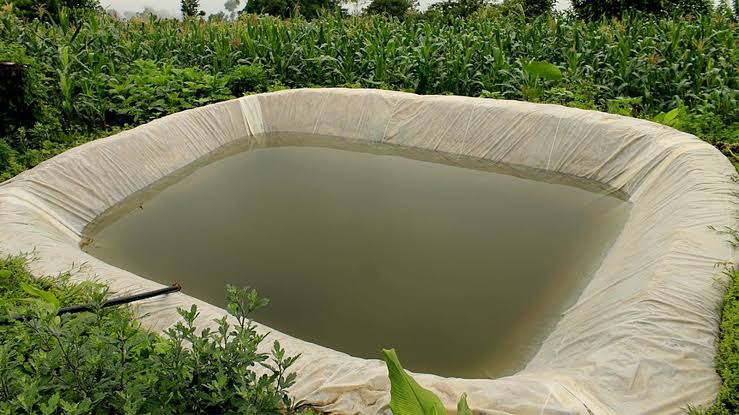
Agricultural and livestock rainwater harvesting (ARWH) serves larger-scale needs through pans, hafir dams, birkads, check dams, sand dams, and agricultural bunds, structures built to trap surface runoff for crops, livestock, and groundwater recharge in arid and semi-arid regions.
Both approaches share the same underlying goal: intercept rain before it is lost, and put it to productive use.
Key Components of a Rainwater Harvesting System
Every rainwater harvesting system, small or large, domestic or industrial, is built from a similar set of parts.
Catchment surface: Usually a roof, terrace, or courtyard. Roofing material affects water quality. Metal sheets and glazed tiles perform well; thatched roofs discolour the water and lower quality.
Coarse mesh: A screen at the roof or tank inlet that prevents leaves and large debris from entering the system.
Gutters: Channels fixed along the roof edge that collect rain and guide it toward a downpipe. Gutters should be sized 10–15% larger than the expected peak flow so they do not overflow, and given a gentle slope of about 10 mm fall per metre to avoid standing water.
Downpipes (conduits): Pipes, usually PVC or galvanised iron, that carry water from the gutter down to ground level. Pipe diameter should match rainfall intensity and roof area; a larger, high-intensity roof needs a wider downpipe to avoid backflow during heavy storms.
First-flush diverter: A valve that discards the initial rainfall, which carries the most dust, pollen, and pollutants washed off a dry roof.
Filter: A chamber filled with sand, gravel, charcoal, or fine mesh that removes suspended particles before water enters the tank. Filter designs range from simple household charcoal and sand filters to advanced multi-chamber units like the Dewas filter, the VARUN drum filter, horizontal roughing and slow sand filters (HRF/SSF), and compact potable-conversion units such as the RainPC, which combines screening, flocculation, and membrane filtration to bring rainwater up to WHO drinking-water standards.
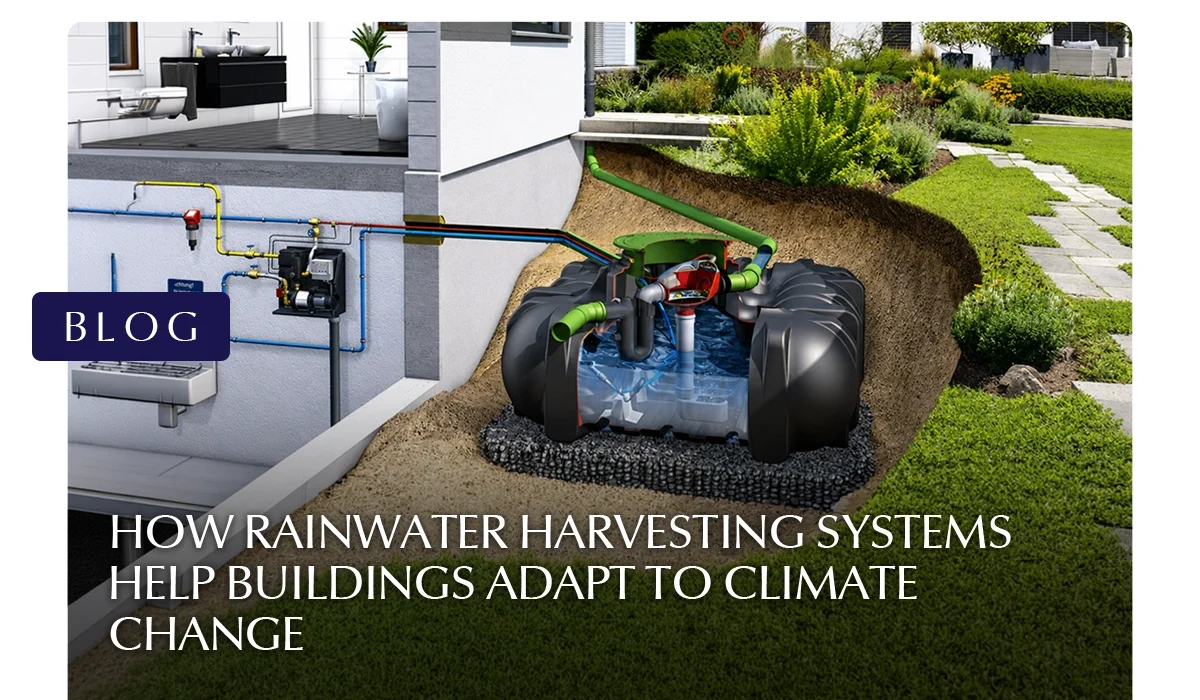
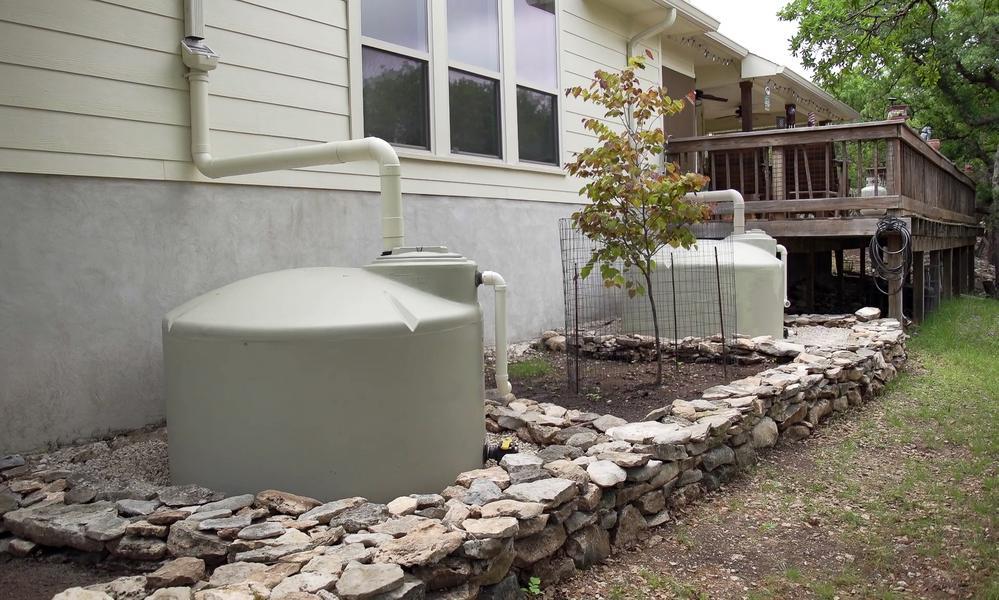
Storage tank: Can be built above ground, underground, or partly buried. Common materials include reinforced concrete, ferrocement, masonry, HDPE plastic, fibreglass, and galvanised steel. Tank scale varies enormously, from small garden water butts of a few hundred litres to large underground commercial tanks holding well over 100,000 litres.
Overflow pipe: Directs excess water away safely once the tank is full, so it does not flood the roof, driveway, or a building’s boundary wall.
Recharge structures: Where storage is not the only goal, surplus filtered water can be sent into recharge wells, recharge pits, recharge trenches, recharge troughs, or modified injection wells, all designed to let water percolate into the ground and restore the local aquifer rather than run to waste.
Pump and controls (optional): Used when water needs to reach upper floors or pressurised taps. A water level indicator and flow meter with a data logger help track usage and detect problems early.
Backflow preventer: Stops rainwater from flowing backwards into a municipal or well water supply under negative pressure, an important safety feature for any hybrid system.
Treatment unit (optional): UV lights, chlorination, or fine membrane filters, needed only if the water will be used for drinking. Full potable treatment typically removes at least 99% of particles 3 microns or larger and includes daily water-quality testing.
Step-by-Step: How to Set Up a Rainwater Harvesting System
Installing an efficient rainwater harvesting system generally follows four practical steps:
Determine and clean your catchment area. Identify the terrace, courtyard, or roof section that will feed the system, and clean it thoroughly to prevent contamination at the very first stage.
Plan the layout. Decide where tanks and pipelines will sit to make the best use of your available collection surfaces. Common layouts include a single large tank or a cluster of smaller linked tanks.
Set up storage. Every drainpipe and collection point should include a mesh filter and first-flush diverter, a filtration stage before the tank, an air gap to prevent backflow, and an overflow route, ideally connected to a recharge system rather than a storm drain.
Install the pipes and tanks. Lay pipes with a single, consistent fall to avoid sediment traps that are hard to clean. Secure the tanks on a stable stand, connect them so they function as a single storage volume, install isolation valves for maintenance, and finish with a tank gauge so water levels can be monitored at a glance.
How Much Water Can You Actually Collect?
You can estimate the water your roof can capture with a simple formula, essentially the same one used by both the U.S. Department of Energy’s Federal Energy Management Program and independent engineering manuals:
Water collected (litres) = Roof area (m²) × Rainfall (mm) × Runoff coefficient
For example, a 300 m² roof catching 25 mm of rain, with a runoff coefficient of 0.9 for a smooth metal or tiled roof, would collect roughly 6,750 litres in a single rain event, before losses from the first-flush diverter and minor leaks. The U.S. Department of Energy recommends applying a collection factor of 75–90% to account for real-world system losses.
The runoff coefficient changes with roof material:
Roof Type
Runoff Coefficient
Metal (GI) sheet
0.8–0.9
Glazed tiles
0.6–0.9
Concrete/RCC roof
0.7–0.8
Asbestos (existing roofs only)
0.8–0.9
Thatched roof
0.2
There are three broad approaches used to size a storage tank:
Common-side approach: Uses mean annual rainfall to estimate how much water a roof can realistically supply, then sizes the tank to meet roughly a quarter’s worth of demand.
Demand-side approach: Bases tank size on daily consumption per person, household size, and the longest expected dry spell, useful where rainfall is plentiful and reliable.
Supply-side approach: Compares monthly rainfall potential against monthly demand across a full year, useful in low-rainfall or uneven-rainfall regions where storage must bridge real seasonal gaps.
Whichever method is used, tank size should reflect realistic demand, not the theoretical maximum a roof could ever collect.
Benefits of a Rainwater Harvesting System
Research reviews covering the environmental, economic, and social aspects of rainwater harvesting systems consistently find the same core advantages, echoed across engineering, government, and NGO sources alike.
Lowers water bills. Once the upfront cost of the system is paid off, harvested rainwater is essentially free. UK homes with rainwater systems commonly cut mains water use by 20–30%, and sometimes by 50% or more, a figure matched by European tank manufacturers who report up to 50% savings on drinking-water demand for homes using underground rainwater harvesting.
Supports groundwater levels. Directing surplus rainwater into recharge wells helps restore water tables that have dropped due to overuse of borewells, and reduces the risk of saltwater or brackish intrusion in coastal and low-lying aquifers.
Reduces flooding and stormwater runoff. Capturing rain before it reaches the street lowers the load on stormwater drains and reduces non-point source pollution reaching rivers and lakes, especially valuable during monsoon downpours.
Improves water security during drought. Stored rainwater acts as a backup source when mains supply is cut, a well runs low, or a drought hits. It can also serve as a main supply for new homes with no access to municipal water.
Requires low maintenance. Once installed, a system needs only routine gutter cleaning and periodic tank inspection; tanks and pipework can last 15 to 30 years with basic upkeep.
Reduces energy use and emissions. Because rainwater is used close to where it falls, it cuts the energy needed to pump and transport water across a city, and lowers the broader carbon footprint of urban water supply.
Adds long-term property value. Buildings with a working rainwater harvesting system often score points under green-building rating programs, and some municipalities offer rebates, tax exemptions, or property-tax reductions for installing one.
Supports climate adaptation. International climate bodies now class rainwater harvesting as a formal adaptation measure: it simultaneously builds drought resilience and reduces flood risk, which is why it appears in UN-backed community projects from Indonesia to Jamaica.
Cuts soil erosion. In open plots and agricultural land, capturing runoff reduces the speed and volume of water that would otherwise wash away topsoil.
Cost of a Rainwater Harvesting System and Return on Investment
Cost depends on tank size, excavation depth, pipe length, filtration quality, and whether the project is new construction or a retrofit. Broadly, price rises with:
Tank material (plastic tanks generally cost less than reinforced concrete)
Underground versus above-ground placement
Filtration and disinfection equipment, especially if the water will be used for drinking
Pump requirements
Site conditions, such as soil type and depth to the water table
Independent studies looking at hospital, residential, and office installations found payback periods of roughly 1 year for a hospital-scale system, up to 8 years for an office block, and around 21 years for a smaller residential system, showing that larger, higher-demand buildings generally see a faster return on a rainwater harvesting system than single homes.
Some cities also offer direct incentives: rebates covering up to half the system cost, sales-tax exemptions on harvesting equipment, and property-tax reductions tied to construction costs, all of which shorten the payback period further.
Retrofitting an existing building costs more than planning the system during original construction, since pipe runs and tank pits must work around finished structures.
Architects and engineers recommend including rainwater harvesting in the design stage, alongside plumbing and drainage drawings, rather than adding it as an afterthought.
Water Quality and Safety
Rainwater itself is naturally low in salinity and, scientifically as well as traditionally, considered one of the cleanest available water sources. However, once it touches a roof, it can pick up dust, bird droppings, moss, airborne pollutants, and even trace pesticides during the first rain after a dry spell. This is why filtration matters at every stage of a rainwater harvesting system.
For non-potable use, such as flushing, gardening, and washing, a first-flush diverter plus a basic sand, charcoal, or mesh filter is usually enough. For drinking water, additional treatment is required: fine filtration down to a few microns, plus disinfection through UV light, chlorination, or ozone, often used in combination.
Health authorities recommend boiling harvested rainwater as an added safety step where treatment systems are basic. Regular water testing is essential if a system is intended to supply drinking water, since contamination can occur even in a well-designed setup, and cisterns should also be checked periodically to prevent mosquito breeding.
Recent engineering research has gone a step further, developing integrated rainwater harvesting units that combine collection with on-site disinfection and mineral fortification to produce drinking water directly at the household level, with reported economic payback periods of around eight years for such compact potable units.
Maintenance of a Rainwater Harvesting System
A rainwater harvesting system needs simple, regular upkeep to keep working well:
Weekly: Clear debris from gutters and the roof surface, especially after storms, and check inlet filters for blockages.
Monthly: Check the first-flush diverter, overflow pipe, water level indicator, and any pumps or controls for proper function.
Annually: Inspect the storage tank for cracks or sediment buildup, and have backflow preventers tested by a qualified professional if the system connects to mains water.
As needed: Replace filter cartridges and UV lamps per the manufacturer’s schedule, particularly for systems used for drinking water, since a UV lamp typically loses effectiveness after about a year.
Storage tanks and pipework typically carry warranties of 15 to 30 years, while pumps last 2 to 10 years depending on use.
Rainwater Harvesting in Pakistan
Pakistan faces serious water stress, and a rainwater harvesting system is increasingly part of the national response, both in cities and in dry rural regions.
In arid zones like the Cholistan Desert, groundwater is often unusable due to salinity, so rainfall is the main source of drinking water for people and livestock. The Pakistan Council of Research in Water Resources (PCRWR) has developed a rainwater harvesting network of 110 specially designed reservoirs spread across 26,000 sq. km of Cholistan, storing around 440 million gallons of water.
Twenty deep tubewells add roughly 1,405 million gallons of annual discharge where groundwater is usable. Together, these measures have significantly cut seasonal migration among nomadic communities searching for water and are estimated to save around Rs. 6 billion a year.
In urban Pakistan, the picture is different but just as urgent. Falling groundwater levels in cities like Lahore, Islamabad, and Rawalpindi have pushed local authorities to act. The Capital Development Authority (CDA) has made rooftop rainwater harvesting mandatory for new buildings in Islamabad under updated building bylaws, aiming to raise groundwater levels and reduce water wastage.
Academic and engineering institutions are also pushing the technology forward locally. A recent civil engineering project at COMSATS University Islamabad’s Wah Campus designed a full rainwater harvesting system using Building Information Modeling (BIM), GIS, and integrated AR/VR technology, drawing on precipitation data from NASA and the Pakistan Meteorological Department, and applying the SCS Curve Number and Rational Method to estimate runoff.
The project paired a designed recharge well and anthracite filtration system with pre- and post-filtration water quality testing, illustrating how modern design tools are now being applied to a very old technology in a Pakistani context.
For homeowners and developers in Pakistan, practical design guidance includes:
Combine a storage tank (for reuse in gardening, washing, and flushing) with a recharge well (to support groundwater levels).
Always install a first-flush diverter and filter chamber before the water reaches a recharge well, so silt and pollutants do not enter the aquifer.
Keep gutters, downpipes, and tanks accessible for regular cleaning and inspection.
Plan the system with the architecture and plumbing drawings, not after construction has already started.
Size storage and recharge separately for different property types. A 5-marla house, a 1-kanal villa, a farmhouse, and an apartment building all need different catchment and storage strategies.
Harvested rainwater in Pakistani homes is generally safe for gardening, car washing, floor cleaning, and toilet flushing. It should not be used for drinking unless it undergoes proper filtration, disinfection, and water quality testing, in accordance with both PCRWR guidance and international drinking-water standards.
Frequently Asked Questions
Is a rainwater harvesting system worth it for a single home?
Yes. Even a basic setup with a storage tank and filter can meaningfully cut water bills and provide backup supply during shortages, especially in areas with unreliable mains water. Studies show payback periods for residential systems can run longer than for commercial buildings, but the system still pays for itself over its 15–30-year lifespan.
Can I drink harvested rainwater directly?
Not without proper treatment. Rainwater needs filtration and disinfection to meet drinking-water standards, ideally with regular testing. Most households use it for non-potable purposes like gardening, washing, and flushing.
Is rainwater harvesting mandatory in Pakistan?
It is mandatory for new buildings in Islamabad under CDA bylaws. Other cities and housing societies are increasingly encouraging or requiring it as groundwater levels continue to fall, echoing similar mandatory rules already applied in several Indian cities.
What is the difference between a storage tank and a recharge well?
A storage tank holds water for direct reuse. A recharge well, recharge pit, or recharge trench sends filtered surplus water underground to restore the water table. Most well-designed systems use both together.
How long does a rainwater harvesting system last?
With regular maintenance, storage tanks and pipework can last 15 to 30 years. Pumps and filters need more frequent servicing or replacement, typically every 2 to 10 years.
Does a rainwater harvesting system help with climate change?
Yes. International climate bodies, including the IPCC, list rainwater harvesting as a recognised adaptation measure, since it builds drought resilience while also reducing flood risk from heavy rainfall events.
Final Thoughts
A rainwater harvesting system turns a free, renewable resource into real savings and long-term water security. Whether it is a small rooftop setup for a single home, a BIM-designed university project, or a large recharge network across a desert region, the basic principle stays the same: catch the rain, filter it, and use every drop wisely. With water stress rising across Pakistan and beyond, installing a rainwater harvesting system is no longer just an environmental choice. It is a practical and increasingly necessary one.
BBC-featured Content Specialist with a sharp eye for search intent and a proven ability to turn content into a growth engine. I leverage cutting-edge digital marketing tools to craft strategies that fuel organic traffic, amplify brand growth, and own the local SEO landscape, particularly across the competitive real estate market. I help brands dominate search rankings and convert visibility into measurable business success.