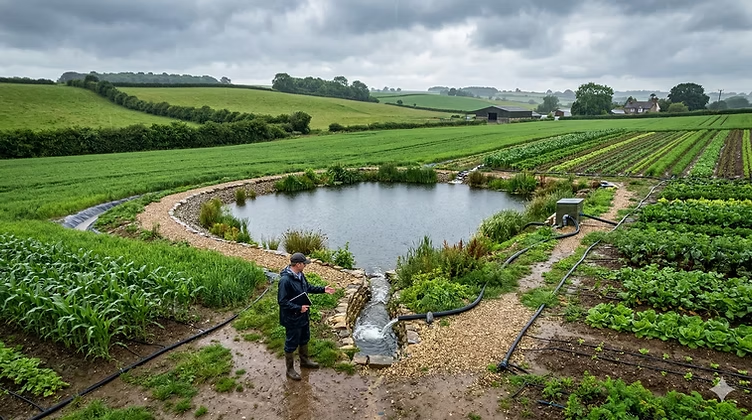
KARACHI: The Sindh government has asked the World Bank for $350 million for the Sindh Flood Resilience Project (SFRP) for fiscal year 2026-27 to protect rural and urban areas from future floods and climate shocks.
The request was presented at a meeting between Sindh Irrigation Minister Jam Khan Shoro and a World Bank delegation, including Lead Urban Specialist Saleem Rouhana and Task Team Leader Bilal Khalid. Provincial officials, including Irrigation Secretary Zarif Khero and Planning & Development Board Chairman Najam Ahmed Shah, also attended.
Mr Shoro said the government wanted to strengthen urban and rural infrastructure. He identified sustainable urban planning, effective drainage, improved governance and modern technology as central to building resilience.
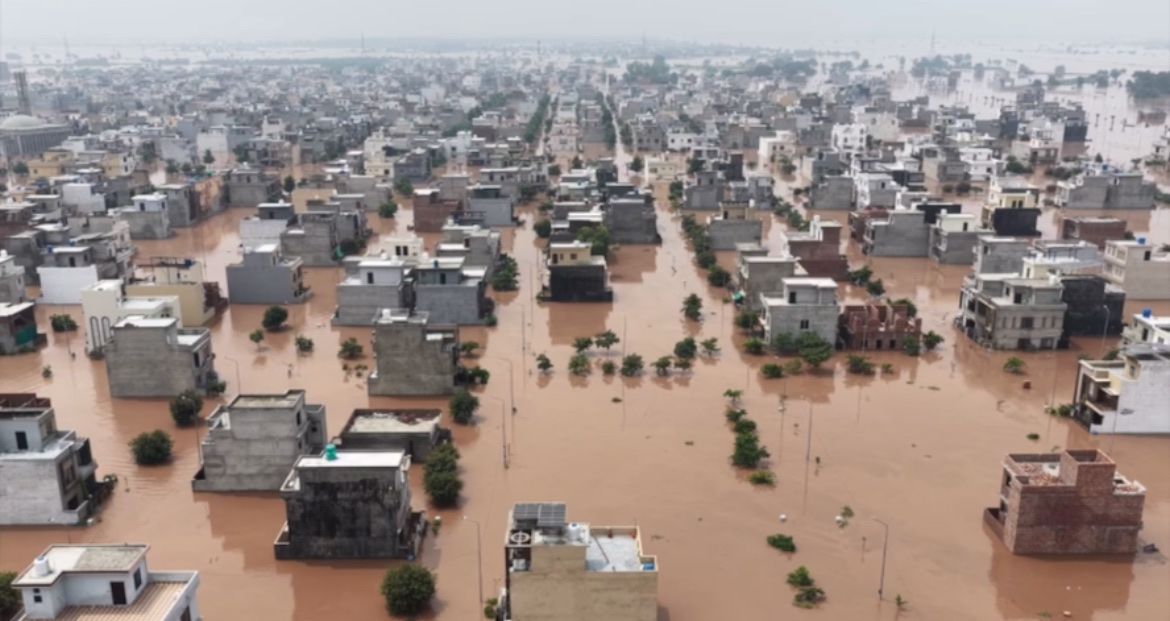
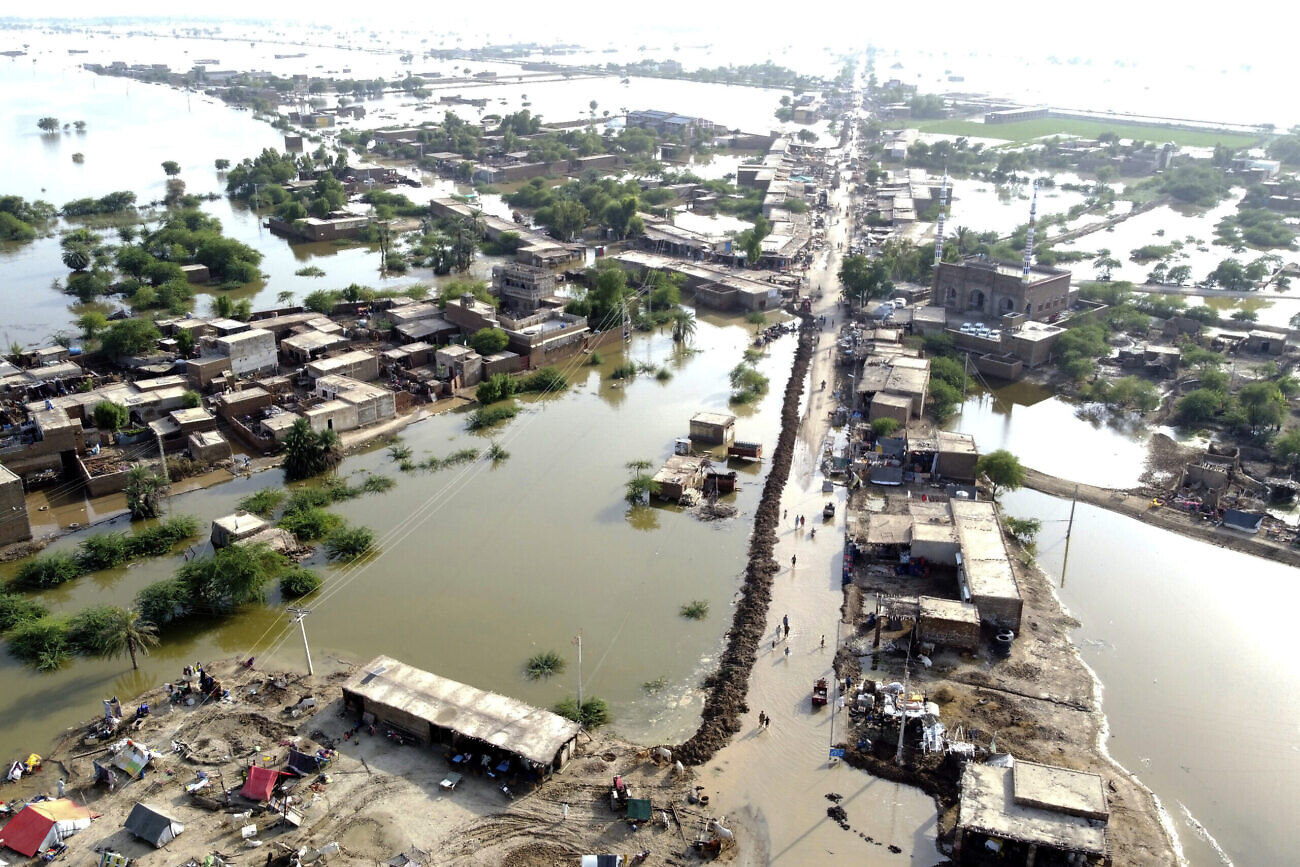
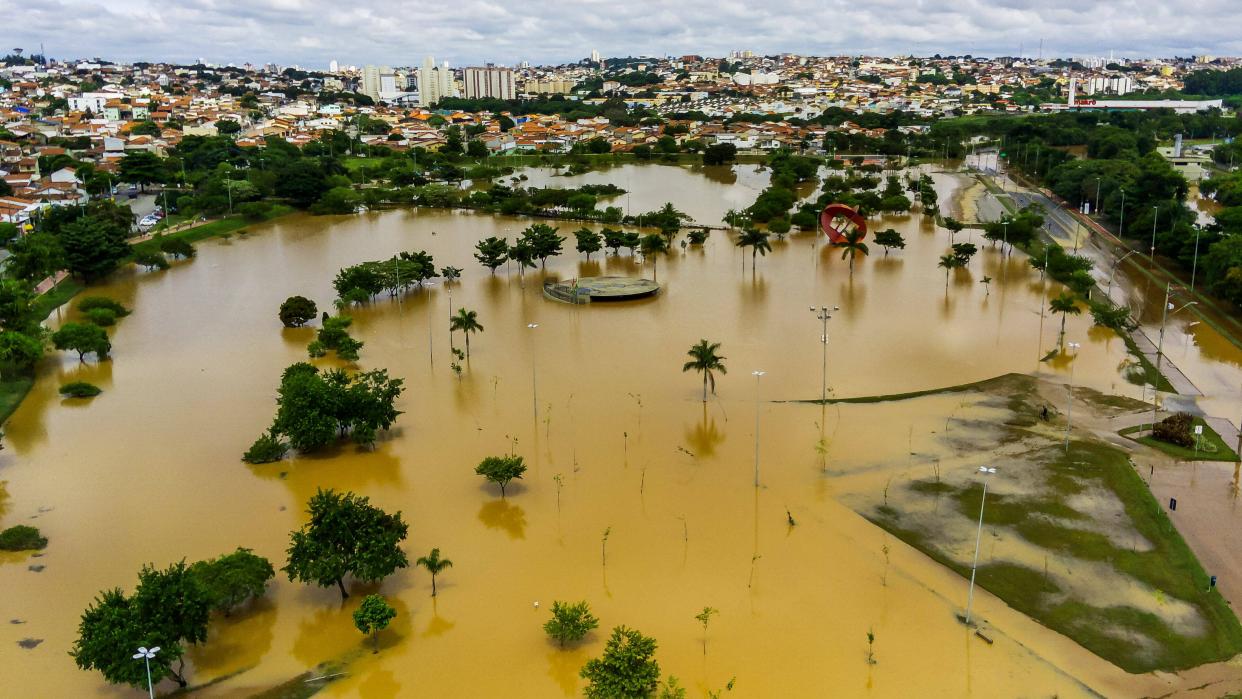
Participants were briefed on the 2022 floods, which affected 14.6 million people, caused $9.1 billion in losses and damaged or destroyed 1.71 million houses.
Existing World Bank-backed projects have mobilised $1.6 billion so far. Under them, they have restored more than 848 kilometres of roads and 205 kilometres of embankments, repaired or rebuilt over 900,000 houses, and established 26 Rescue 1122 stations across 14 districts.
The proposed SFRP has two pillars. The first focuses on basin-level flood resilience to protect Sindh’s right bank, using measures identified in recent research by the Asian Institute of Technology. The second targets urban resilience in secondary cities against floods, extreme heat and other climate risks.
Urban investments will be prioritised by flood risk, population vulnerability, gaps in basic services and local preparedness. Options include drainage, roads, streets, public spaces and green solutions.
BBC-featured Content Specialist with a sharp eye for search intent and a proven ability to turn content into a growth engine. I leverage cutting-edge digital marketing tools to craft strategies that fuel organic traffic, amplify brand growth, and own the local SEO landscape, particularly across the competitive real estate market. I help brands dominate search rankings and convert visibility into measurable business success.
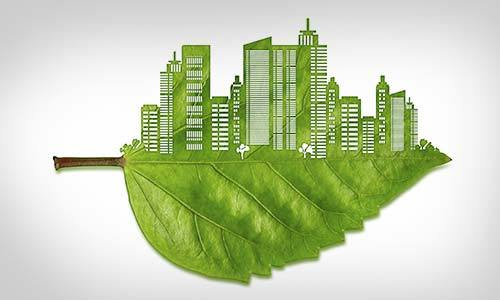
Pakistan’s real estate sector is entering a new era, one where climate-resilient real estate is no longer a niche concept but a market necessity. The 2022 floods submerged nearly a third of the country and caused an estimated $40 billion in damage, a stark reminder that the built environment cannot ignore climate risk any longer. Today, buyers, investors, and developers are rethinking how homes and commercial spaces are designed, built, and certified. Climate-resilient real estate now sits at the center of that shift, supported by sustainable real estate development practices and growing demand for green building certification across major cities.
This blog explains what climate-resilient real estate means for Pakistan, why it matters, and how the market is adapting.
What Is Climate-Resilient Real Estate?
Climate-resilient real estate refers to properties designed and constructed to withstand climate-related stressors such as flooding, extreme heat, and unpredictable rainfall, while protecting the wellbeing of residents and maintaining long-term asset value. It goes beyond aesthetics or energy savings. It is about ensuring a building can function safely and efficiently even as weather patterns become more extreme.
In Pakistan, this is not a distant concern. The housing sector faces a significant shortfall alongside growing climate risks, and most existing structures were never built to handle the intensity of floods, heatwaves, or storms the country now experiences. Climate-resilient real estate addresses this gap through better materials, smarter design, and disaster-aware planning.
Why Climate-Resilient Real Estate Matters for Pakistan
Pakistan ranks among the countries most vulnerable to climate change, yet much of its housing stock was never designed with resilience in mind. A few reasons this matters now more than ever:
Rising climate risk affects property value. Buildings that perform better against flooding, heat, and extreme weather tend to command higher rents and stronger resale value, while vulnerable properties face higher insurance and maintenance costs over time.
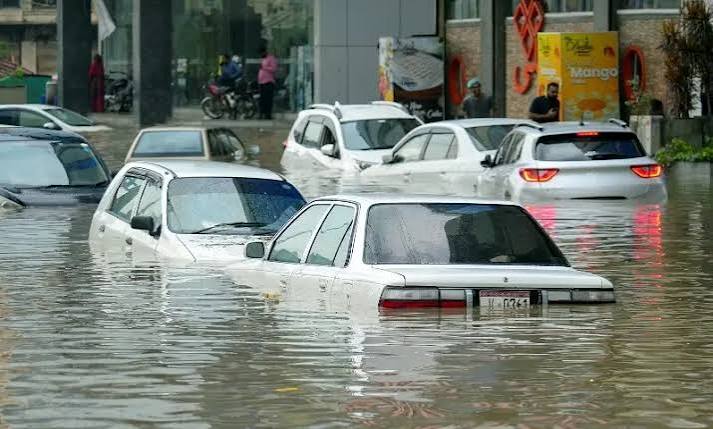
Urban flooding is a recurring threat. Karachi, Lahore, and other major cities regularly face monsoon flooding, making resilient drainage, elevated foundations, and flood-resistant materials essential rather than optional.
Energy and water demand keep rising. Passive design, insulation, and efficient systems reduce strain on an already stressed power grid while lowering utility bills for residents.
Investor expectations are shifting. Global capital increasingly favours developments that can demonstrate climate resilience and sustainability credentials, particularly as international investors look at Pakistan’s property sector.
Sustainable Real Estate Development
Climate-resilient real estate does not happen by accident. It is the outcome of deliberate sustainable real estate development, a process that integrates energy efficiency, resource-conscious design, and disaster resilience from the earliest planning stages rather than as an afterthought.
In practice, sustainable real estate development in Pakistan increasingly includes:
Low-carbon construction materials, such as autoclaved aerated concrete (AAC) blocks and interlocking bricks, which studies show can meaningfully reduce cooling energy demand and construction costs compared to conventional materials.
Passive design strategies, including solar orientation, natural ventilation, and shading, which reduce dependence on mechanical cooling in Pakistan’s hot climate.
Water conservation systems, such as rainwater harvesting and greywater recycling, which help offset the country’s growing water scarcity.
Renewable energy integration, particularly solar panels, which take advantage of Pakistan’s abundant sunlight to cut electricity costs and reduce grid dependence.
Resilient infrastructure planning, including improved drainage, elevated site design, and flood-conscious layouts for master-planned communities.
Developers who commit to sustainable real estate development are not just responding to climate risk; they are also meeting a clear shift in buyer expectations, especially among younger, environmentally conscious purchasers and overseas Pakistanis evaluating long-term investments.
The Role of Green Building Certification
Green building certification has become one of the clearest ways for developers to prove that a project meets recognised sustainability and resilience standards, rather than simply claiming it. Two frameworks are shaping this conversation in Pakistan:
LEED (Leadership in Energy and Environmental Design), developed by the U.S. Green Building Council, remains the world’s most widely used green building rating system. It evaluates projects on energy efficiency, water conservation, material selection, and indoor environmental quality, awarding certification levels from Certified up to Platinum. LEED-certified buildings can cut electricity and water bills significantly, an important advantage in a market facing rising energy costs.
EDGE (Excellence in Design for Greater Efficiencies), an IFC-backed certification, simplifies green building design and focuses on resource efficiency and net-zero performance. EDGE also supports a Building Resilience Index, giving developers, banks, insurers, and governments a way to assess and disclose climate resilience across a portfolio.
Green building certification is gaining real traction in Pakistan. Institutions and urban development authorities have started pursuing LEED and EDGE recognition for major projects, signalling that certification is moving from a rare achievement to an expected standard for large-scale developments.
For developers, pursuing certification demonstrates credibility to both local buyers and international investors, while positioning a project ahead of regulatory trends that are likely to tighten in the coming years.
How Pakistan’s Property Market Is Responding
The shift toward climate-resilient real estate is visible across Pakistan’s major cities. In Karachi, new projects increasingly feature solar power, rainwater harvesting, and green building certification as standard offerings rather than premium add-ons.
In Lahore and Islamabad, urban development authorities and private developers are integrating resilient infrastructure, smart mobility, and green public spaces into master-planned communities.
This momentum is also being supported at the policy level. Recent reforms, including reductions in withholding tax and the removal of Federal Excise Duty on certain property transactions, have lowered the cost of developing and investing in real estate, creating more room for developers to invest in sustainable features without passing steep costs onto buyers.
For overseas Pakistanis and institutional investors, climate-resilient real estate offers a practical advantage: lower long-term operating costs, stronger asset protection against extreme weather, and greater alignment with the sustainability standards increasingly demanded by global capital.
What Buyers and Investors Should Look For
When evaluating a property or project for climate resilience, a few practical indicators are worth checking:
Certification status — Is the project pursuing or holding LEED, EDGE, or an equivalent green building certification?
Drainage and flood planning — Does the site design account for monsoon flooding and urban drainage capacity?
Material choices — Are low-carbon, insulating materials used to reduce cooling demand?
Water and energy systems — Does the development include rainwater harvesting, solar power, or greywater recycling?
Long-term maintenance plans — Is there a clear strategy for monitoring and maintaining resilience features after handover?
Final Thoughts
Climate-resilient real estate is fast becoming the defining standard for Pakistan’s property market, not a future ambition but a present-day requirement. As climate risks intensify, sustainable real estate development and green building certification are giving developers a credible framework to build safer, more efficient, and more valuable properties. For buyers and investors alike, understanding these standards is no longer optional. It is central to making sound, future-focused property decisions in Pakistan.
As one of Pakistan’s leading real estate developers, Chakor continues to track these shifts closely, ensuring its projects reflect the standards that today’s buyers and international investors expect.
Frequently Asked Questions
What does climate-resilient real estate mean?
It refers to properties built to withstand climate-related risks such as flooding, extreme heat, and storms, while protecting resident wellbeing and long-term property value.
Why is green building certification important in Pakistan?
Green building certification, such as LEED or EDGE, verifies that a project meets recognised standards for energy efficiency, water conservation, and resilience, giving buyers and investors measurable proof of sustainability rather than unverified claims.
How does sustainable real estate development reduce costs?
Sustainable real estate development uses passive design, efficient materials, and renewable energy to lower a building’s energy and water consumption, which reduces utility costs for owners and occupants over the property’s lifetime.
Is climate-resilient real estate more expensive to build?
Some resilient materials and certification processes involve upfront investment, but they typically deliver long-term savings through lower utility bills, reduced maintenance, and stronger resale value.
BBC-featured Content Specialist with a sharp eye for search intent and a proven ability to turn content into a growth engine. I leverage cutting-edge digital marketing tools to craft strategies that fuel organic traffic, amplify brand growth, and own the local SEO landscape, particularly across the competitive real estate market. I help brands dominate search rankings and convert visibility into measurable business success.
Punjab is once again facing serious flooding this monsoon season. Heavy rains have swelled the province’s major rivers, and thousands of families are watching water levels rise near their homes. This guide explains the current flood in Punjab Pakistan, what is causing it, which areas are most at risk, and what residents can do to stay safe.
Key Facts – Flood in Punjab Pakistan (July 2026)
Category
Key Facts – Flood in Punjab Pakistan
Duration
Punjab experienced 6 consecutive days of monsoon rainfall (as of late July 2026)
Area affected
~400 sq km underwater across Sheikhupura, Muridke, Gujranwala, Narowal, Sambrial, and Pasrur
Main rivers
Chenab and Ravi rivers are at the center of this year’s flooding
Chenab flood points
Medium-to-high flood levels at Marala, Khanki, Qadirabad, and Chiniot Bridge
Ravi flood points
Rising inflows at Abdul Hakeem Headworks and Head Sidhani
Worst-hit districts
Hafizabad, Gujranwala, Sialkot, Jhang
Highest flash flood risk zones
Hill torrents of Dera Ghazi Khan; low-lying areas near the Ravi and Chenab
Also at risk
Northern Balochistan and KPK (flash flood threats)
Lead agencies
PDMA Punjab, and Flood Forecasting Division/FFD
Recent PDMA advisory
Low-to-medium flood levels on Chenab and Jhelum; flash flooding expected in DG Khan (July 28–30)
2025 comparison
Prior year’s monsoon affected 4,400+ villages and ~4.4 million people across Punjab
Mandatory in Islamabad (CDA); linked to groundwater recharge and reduced urban flooding
Key rainwater initiative
IWMI/WaterAid/PCRWR project at Kachnar Park
Broader context
Rising flood frequency linked to climate change in Pakistan (heavier monsoons, faster snowmelt)
Current Flood Situation in Punjab (July 2026)
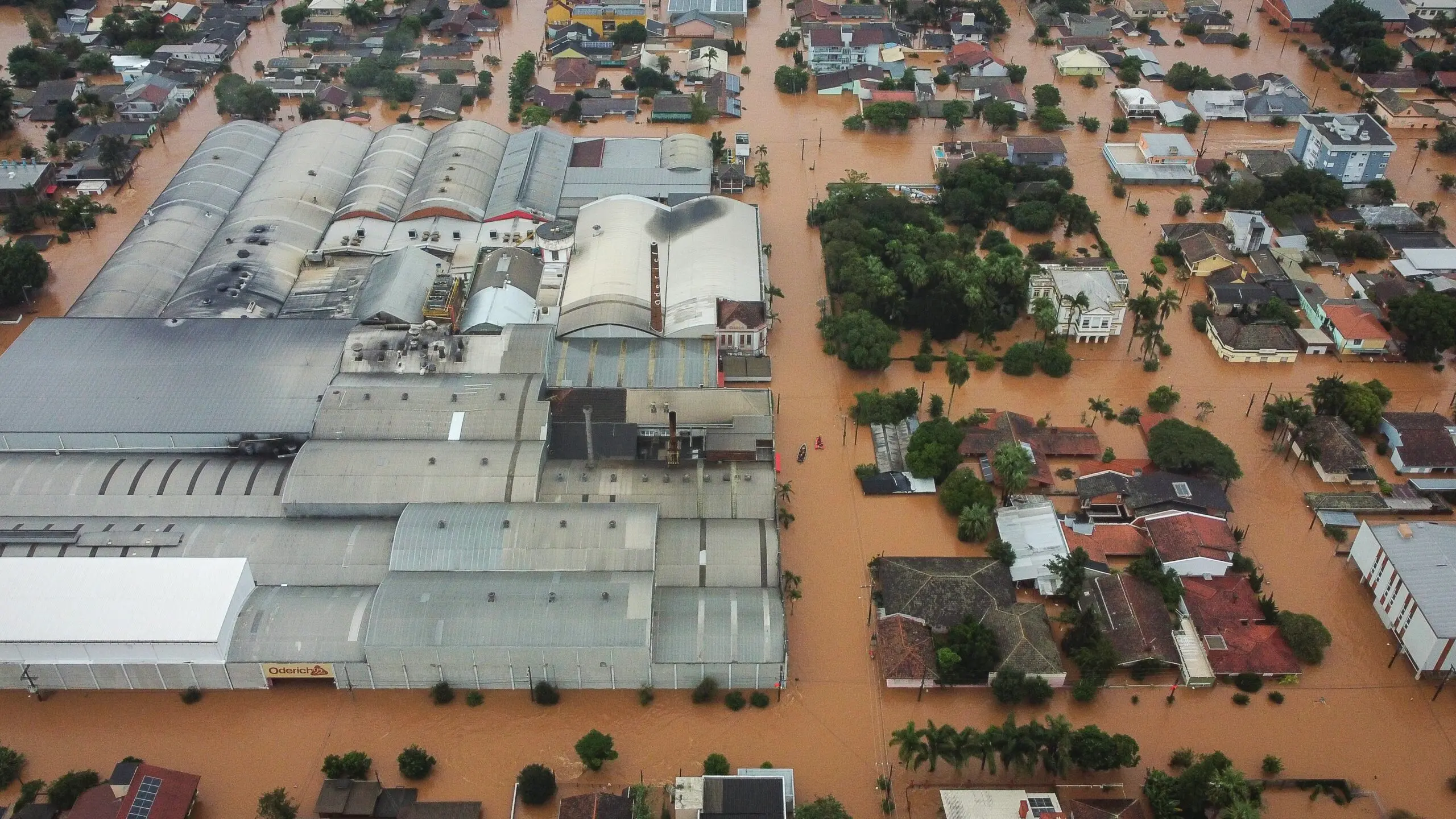
As of late July 2026, Punjab is experiencing its sixth straight day of monsoon rainfall. Nearly 400 square kilometres of land across Sheikhupura, Muridke, Gujranwala, Narowal, Sambrial, and Pasrur have already gone underwater. A senior Punjab irrigation official described the scale of flooding as unprecedented for the region.
The National Disaster Management Authority (NDMA) has warned that flood risk remains high across several parts of the country. Medium-level flooding has been recorded at key points along the Chenab River, and flash flood threats loom over northern Balochistan, Khyber Pakhtunkhwa, and the hill torrents of Dera Ghazi Khan.
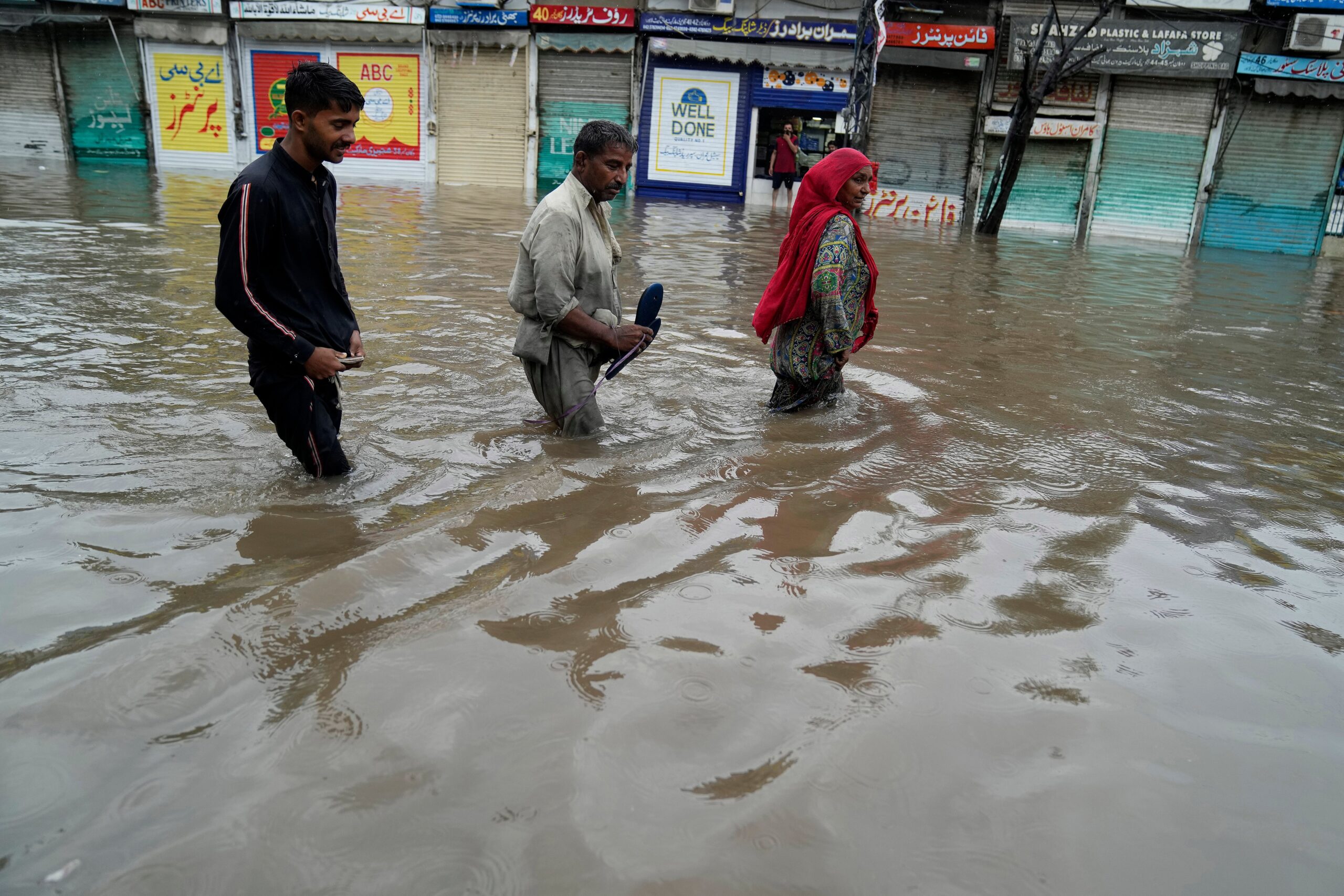
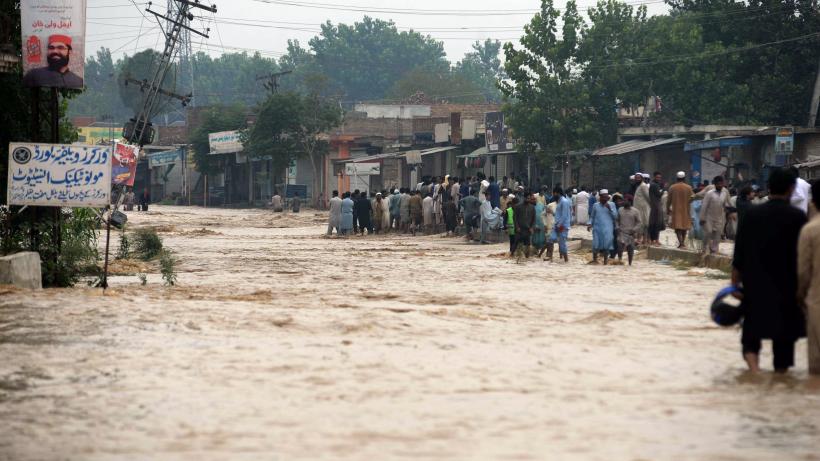
In several districts, floodwater has entered residential areas. Near Alipur Chattha, fast-moving water has caused heavy riverbank erosion, putting dozens of homes at risk of collapse.
Protective embankments have been breached in some villages, and local administrations have opened relief camps to shelter displaced families.
Chenab River Flood Update
The Chenab River is at the center of this year’s flooding. Water levels have moved between medium and high flood stages at Marala, Khanki, Qadirabad, and Chiniot Bridge. Districts along the river, including Hafizabad, Gujranwala, Sialkot, and Jhang, are under close watch.
Residents in areas like the Qadirabad river belt say the situation feels familiar. Many are still recovering from last year’s flooding and are once again monitoring water levels through the night.
The Flood Forecasting Division (FFD) has reported high-level flooding at Chiniot, with moderate flooding continuing at Marala, Khanki, and Qadirabad.
The Ravi River is also rising. Inflows at Abdul Hakeem Headworks and Head Sidhani have increased steadily, adding pressure to an already stretched system of embankments and drainage channels.
What Is Causing the Flood in Punjab Pakistan
A few factors are driving this year’s flooding.
Repeated monsoon spells. Punjab has seen back-to-back rounds of heavy rain rather than a single storm, giving rivers little time to recede between spells.
Overwhelmed drainage systems. Several drains in the Lahore and Gujranwala divisions have carried far more water than they were designed to handle, pushing floodwater into farmland and villages.
Upstream water flows. Rainfall in the wider catchment area, along with water releases from upstream dams and barrages, adds to the volume moving through Punjab’s river system.
Low-lying, riverside settlements. Many communities live close to riverbanks, which puts them in the direct path of rising water when embankments are breached.
Flash Flood Risk Areas in Punjab
Flash flood risk is highest in areas with hilly or fast-draining terrain, where water levels can rise within hours rather than days.
In Punjab, the hill torrents of Dera Ghazi Khan are a particular concern, along with low-lying stretches near the Ravi and Chenab rivers.
Urban flooding is also likely in parts of Punjab, Khyber Pakhtunkhwa, and Balochistan wherever drainage systems are already stretched thin.
Because flash floods can develop quickly, residents in these zones are advised to stay alert to official alerts rather than wait for visible signs of rising water.
PDMA Punjab and Flood Forecasting Division (FFD) Response
The Provincial Disaster Management Authority (PDMA) Punjab is the main body coordinating the province’s flood response. It regularly issues advisories on river levels, expected rainfall, and flood alerts for specific districts.
Its most recent advisory flagged low-to-medium flood levels on the Chenab and Jhelum rivers, with flash flooding expected in DG Khan hill torrents, and a wider weather advisory for heavy rain across Rawalpindi, Murree, Gujranwala, Lahore, and DG Khan.
The Flood Forecasting Division works alongside PDMA to track river discharge and issue technical flood forecasts. Together, these two bodies give residents and district administrations the lead time needed to move people and livestock out of harm’s way before water levels peak.
Anyone living near a river in Punjab is encouraged to follow PDMA Punjab and FFD updates directly, rather than relying only on word of mouth.
Flood in Lahore: Local Impact
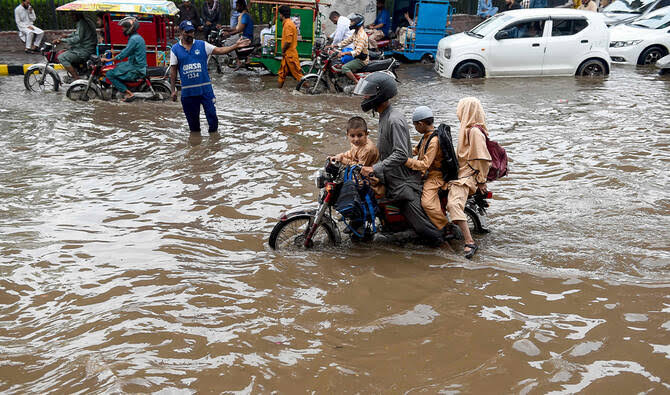
Lahore has recorded six consecutive days of monsoon rain this season, and the flood in Punjab Pakistan is being felt directly in and around the city. Heavy downpours have left several low-lying roads and neighbourhoods waterlogged, and drainage channels in parts of the Lahore and Gujranwala divisions have carried far more water than they were built to handle.
District authorities have set up relief camps for residents in the worst-affected outskirts, and commuters are being advised to avoid known flood-prone underpasses and roads during and after heavy rain. Residents can check daily updates from PDMA Punjab for road closures and rainfall forecasts specific to Lahore.
Climate Change in Pakistan and Rising Flood Frequency
This year’s flooding is part of a broader pattern. Pakistan has experienced increasingly intense and frequent flood events over the past several monsoon seasons, with 2025 alone affecting more than 4,400 villages and around 4.4 million people across Punjab.
Experts consistently point to climate change in Pakistan as a key factor behind this shift, citing heavier and less predictable monsoon rainfall, faster snowmelt in the north, and longer flood seasons overall.
For Punjab, this means flood preparedness is no longer a once-in-a-decade concern. Stronger early warning systems, better drainage infrastructure, and more resilient housing in flood-prone districts are becoming a yearly necessity rather than an occasional response.
Follow PDMA Punjab and NDMA alerts for flood in Punjab Pakistan for your district and act on evacuation notices without delay.
Avoid crossing flooded roads, bridges, or fields, even in a vehicle, since water depth and current strength are hard to judge.
Keep important documents, medicines, and a basic emergency kit ready if you live near a river or low-lying area.
Move livestock and valuables to higher ground as soon as an alert is issued for your area.
Stay in touch with your local district administration for the location of the nearest relief camp.
Rainwater Harvesting in Pakistan – Flood in Punjab Pakistan
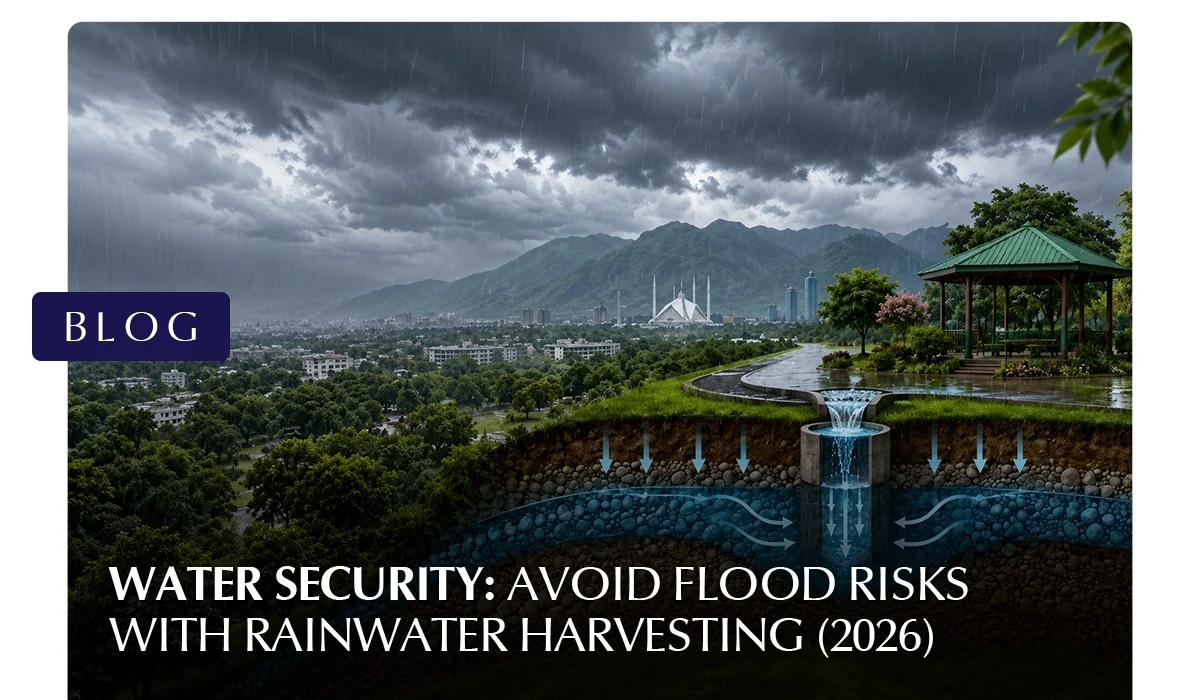
Rainwater harvesting is emerging as a key tool for Pakistan’s long-term water security, helping manage both flood risk and growing water scarcity at the same time.
Existing homeowners have been given a retrofit grace period before non-compliance penalties apply.
The federal cabinet has approved green building codes that embed rainwater harvesting into national construction standards.
A pilot project at Kachnar Park, led by IWMI with WaterAid and PCRWR, has shown that channeling rooftop runoff into recharge systems can ease urban flooding while restoring depleted groundwater.
Flood in Punjab Pakistan – Individual-level adoption:
Homeowners, mosques, and commercial developers in Lahore, Islamabad, and Rawalpindi are increasingly installing rooftop harvesting systems.
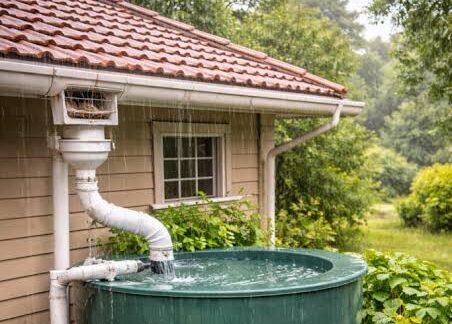
Common components include leaf screens, first-flush diverters, and storage tanks to capture and reuse rainwater.
Retrofitting is possible for existing properties, making adoption practical even without new construction.
Why it matters:
Reduces pressure on groundwater and borewells during dry spells.
Eases strain on stormwater drainage during monsoon season.
Strengthens water security at both the household and city level as flood patterns become less predictable.
FAQ – Flood in Punjab Pakistan
Is Punjab currently experiencing floods?
Yes. As of late July 2026, several districts are dealing with flood in Punjab Pakistan along the Chenab and Ravi rivers, with PDMA Punjab warning of further rain and flood risk into early August.
Which rivers are most affected by the current flood in Punjab Pakistan?
The Chenab and Ravi rivers are currently the most affected, with monitoring points at Marala, Khanki, Qadirabad, and Chiniot Bridge showing medium-to-high flood levels.
Which areas in Punjab are at the highest flash flood risk?
The hill torrents of Dera Ghazi Khan, along with low-lying areas near the Ravi and Chenab rivers, currently carry the highest flash flood risk in Punjab.
Where can residents check official flood updates?
PDMA Punjab and the Flood Forecasting Division publish regular advisories on river levels, rainfall, and district-level flood alerts.
Are there any safety tips during Flood in Punjab Pakistan?
The flood in Punjab Pakistan this monsoon season is a reminder of how quickly conditions can change for communities living near the province’s major rivers. Staying informed through PDMA Punjab and FFD updates, understanding local flash flood risk, and preparing early can make a real difference when water levels rise. As climate change in Pakistan continues to intensify monsoon patterns, this kind of preparedness is becoming part of everyday life in Punjab rather than an exception.
BBC-featured Content Specialist with a sharp eye for search intent and a proven ability to turn content into a growth engine. I leverage cutting-edge digital marketing tools to craft strategies that fuel organic traffic, amplify brand growth, and own the local SEO landscape, particularly across the competitive real estate market. I help brands dominate search rankings and convert visibility into measurable business success.
Water is essential to life, yet the world faces a growing paradox: some regions struggle with too little water, while others are increasingly overwhelmed by too much. Both scenarios fall under one critical concept: water security. While most people associate this with drought and scarcity, it equally concerns the destructive risks of excess water, particularly flooding.
This article explores what water security truly means, why urban flooding is becoming a growing threat, and how a simple, time-tested solution, rainwater harvesting, can help communities strengthen their security of water while reducing flood risks.
What Is Water Security?
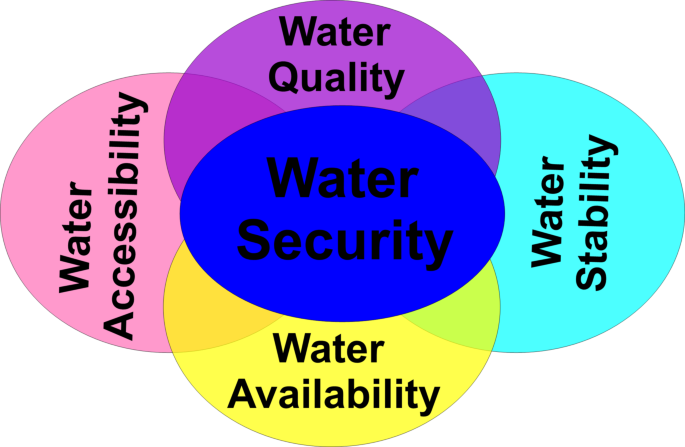
Water security refers to the reliable availability of an acceptable quantity and quality of water for health, livelihoods, and economic production, combined with an acceptable level of water-related risk.
In simpler terms, water sustainability isn’t just about having enough water; it’s about managing water safely, sustainably, and resiliently, so that it neither runs out nor causes harm.
According to UN-Water, security of water is “the capacity of a population to safeguard sustainable access to adequate quantities of acceptable quality water for sustaining livelihoods, human well-being, and socio-economic development, while ensuring protection against water-related disasters.”
This definition highlights an important truth: water security is a balancing act. It requires managing the following things at once:
Water scarcity – ensuring enough water is available to meet demand
Water quality – keeping that water safe and free from contamination
Water-related disasters – protecting communities from floods, droughts, and other water-driven shocks
Achieving security of water also means addressing risk at every level of society:
Household level – reliable, safe access for daily drinking, cooking, and sanitation needs
Community level – shared infrastructure like wells, pipelines, and local drainage systems functioning safely
City level – stormwater management, treatment plants, and supply networks built to handle demand and extreme weather
National level – policies, investment, and coordination across regions and river basins
When any one of these levels fails to manage water risk effectively, the consequences can be severe:
Contaminated drinking water
Damaged infrastructure
Displaced communities
Long-term economic setbacks
The Three Pillars of Water Security
To fully understand water security, it helps to break it down into three interconnected pillars:
Availability – Having enough water to meet the needs of people, agriculture, industry, and ecosystems.
Quality – Ensuring that available water is safe, clean, and free from harmful contaminants.
Risk Management – Protecting communities from water-related disasters, including flash floods, droughts, and infrastructure failures.
Most conversations around security of water focus heavily on scarcity and rightly so, given that millions of people worldwide lack reliable access to clean water. However, the risk management pillar of water security is just as important, and it’s here that flooding becomes a central concern.
A community can have abundant water resources and still suffer a severe water security crisis if a flood destroys its water infrastructure or contaminates its drinking supply.
Urban Flooding, Climate Change, and Water Security
One of the most pressing challenges to water security today is the rise of urban flooding driven by climate change. As global temperatures increase, rainfall patterns are becoming more erratic and extreme.
Instead of steady, predictable precipitation, many regions are now experiencing short bursts of intense rainfall that overwhelm drainage systems within minutes.
Why Cities Are Especially Vulnerable
Cities are particularly vulnerable to this shift. Urban landscapes are dominated by concrete, asphalt, and rooftops impervious surfaces that prevent rainwater from soaking into the ground.
Instead of being absorbed naturally, rainwater rushes across these hard surfaces, collecting pollutants and rapidly overwhelming stormwater drains.
The result is urban flooding: streets submerged in water, basements flooded, and in severe cases, contaminated water supplies and displaced families.
When Flooding Becomes a Water Security Crisis
This connection between urban flooding, climate change, and security of water cannot be overstated. When floodwaters mix with sewage or industrial runoff, they compromise drinking water quality, turning what should be a water abundance problem into a water security crisis.
In coastal and low-lying urban areas, monsoon-driven flooding has been shown to pollute municipal water supplies, forcing communities to rely on unsafe water sources in the flood’s aftermath.
This is a clear example of how flooding, even when it brings excess water, directly undermines water security rather than improving it.
The Role of Poor Urban Planning
Urban planning plays a central role in shaping how effectively a city manages its water resources and protects itself from flood risk. Poor urban planning compounds the issue. Rapid, unregulated urbanisation often outpaces the development of adequate drainage and stormwater infrastructure.
As more green spaces are paved over, natural water absorption capacity disappears, and the risk of flash flooding grows.
Without deliberate intervention, water security in fast-growing cities will continue to deteriorate as climate change intensifies rainfall extremes.
How Rainwater Harvesting Strengthens Water Security
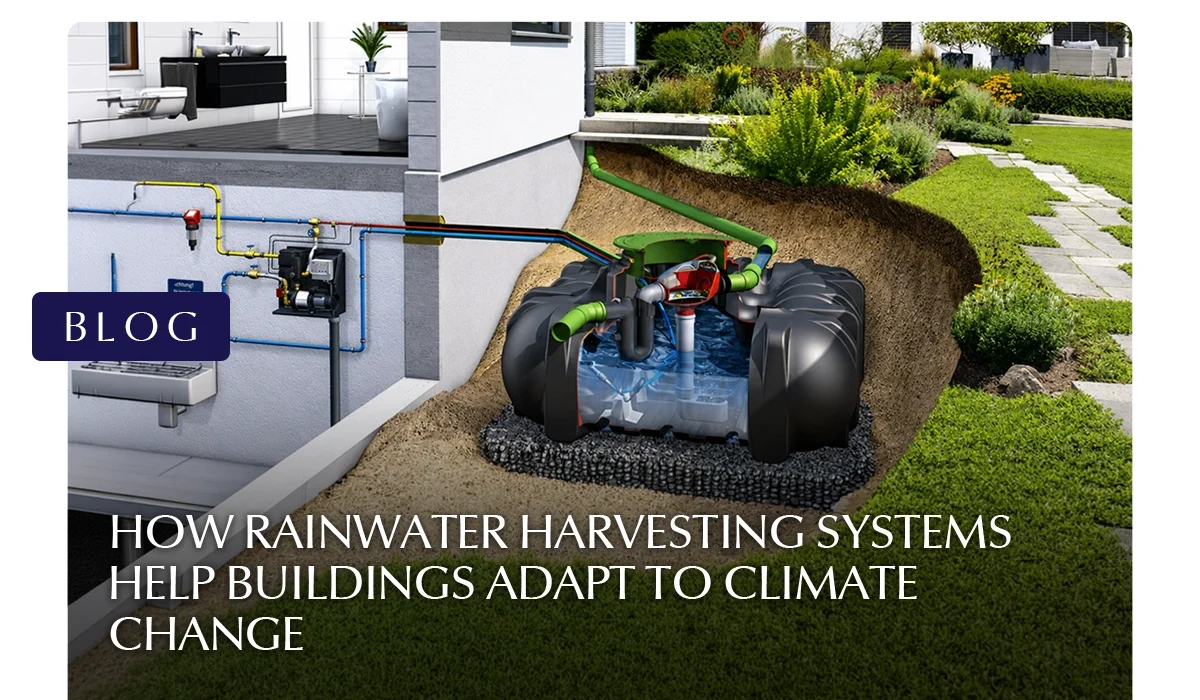
Fortunately, there is a practical, scalable solution that addresses both sides of the water security equation: rainwater harvesting. Rainwater harvesting is the practice of collecting, storing, and using rainwater rather than allowing it to run off uncontrolled into drains, streets, or waterways.
It can be as simple as a rooftop catchment system connected to a storage tank, or as sophisticated as large-scale urban infrastructure designed to capture and redirect stormwater.
By intercepting rainwater at its source, rainwater harvesting reduces the volume of water that would otherwise contribute to surface runoff and flash flooding. This makes it one of the most effective, low-cost tools for improving security of water in both urban and rural settings.
Rainwater Harvesting Benefits
The rainwater harvesting benefits extend far beyond flood prevention, making it a cornerstone strategy for long-term water security:
Reduces surface runoff and flood peaks – By capturing rainwater before it reaches the ground, harvesting systems lower the volume and speed of runoff, easing pressure on drainage systems during heavy storms.
Recharges groundwater – Excess harvested water can be directed into the ground, replenishing aquifers and supporting long-term security of water for the surrounding region.
Reduces pressure on stormwater infrastructure – Aging or undersized municipal drainage systems benefit significantly when a portion of rainfall is captured before it ever enters the system.
Provides an alternative water source – Harvested rainwater can supplement household and agricultural water use, strengthening security of water during dry spells or supply disruptions.
Improves water quality – By reducing the volume of runoff that picks up pollutants from streets and rooftops, rainwater harvesting helps limit contamination of rivers, lakes, and drinking water sources.
Together, these benefits illustrate why rainwater harvesting is not just an environmental nicety; it’s a direct, actionable contributor to water security at the household, community, and city level.
Rainwater Harvesting as a Flood Risk Mitigation Strategy
While large-scale flood infrastructure like levees, dams, and stormwater drains remain essential, they are not always sufficient on their own, especially as climate change pushes rainfall intensity beyond the design capacity of aging systems.
Rainwater harvesting offers a complementary, decentralised approach to flood risk management that strengthens overall water security.
Several practical methods make this possible:
Rooftop rainwater harvesting systems: Gutters and downspouts direct roof runoff into storage tanks instead of the street, reducing the immediate burden on drainage systems.
Rain gardens and bioswales: These landscaped depressions absorb and filter runoff before it reaches storm drains, slowing the flow of water during heavy rain.
Permeable pavements: Unlike traditional concrete, permeable surfaces allow rainwater to seep into the ground rather than running off, reducing flood volume in parking lots, driveways, and walkways.
Retention and detention ponds: These structures temporarily hold large volumes of stormwater, releasing it gradually to prevent sudden surges downstream.
When implemented at scale across households, neighbourhoods, and municipal planning, these rainwater harvesting techniques can meaningfully reduce flood peaks during extreme weather events.
They don’t eliminate the need for traditional flood infrastructure, but they significantly ease the burden on it, creating a more resilient, multi-layered defence system. This is precisely the kind of integrated approach that strengthens water security over the long term.
How Individuals and Communities Can Start Rainwater Harvesting
You don’t need to wait for large-scale government infrastructure to start improving water security in your own home or neighbourhood. Here’s a practical starting checklist:
Assess your rooftop catchment area – Larger roofs can capture more rainwater, giving you a sense of your harvesting potential.
Install gutters and downspouts – Direct roof runoff toward a designated collection point rather than the street or drain.
Choose appropriate storage – Options range from simple rain barrels to large underground cisterns, depending on your space and water needs.
Add a first-flush diverter – This component discards the initial, dirtiest runoff before clean water enters your storage tank.
Check local building codes – Many municipalities have specific guidelines or incentives for rainwater harvesting systems.
Consider a rain garden – If a full harvesting system isn’t feasible, even a small rain garden can absorb runoff and support local security of water.
Adopting these steps at a household level, combined with community-wide adoption, can meaningfully reduce local flood risk while contributing to broader water security goals.
Frequently Asked Questions
Water scarcity is simply a shortage of available water, while security of water is broader; it also covers water quality and protection from disasters like floods. A region can even face water security risks despite having abundant water.
Yes. It captures rainwater at the source, reducing runoff volume and speed, which lowers flood peaks during heavy storms.
Absolutely. Urban areas benefit the most, since rainwater harvesting directly addresses the runoff problem caused by concrete and rooftops.
Climate change intensifies rainfall extremes, driving both severe droughts and more frequent flooding, making security of water harder to maintain.
Conclusion
Water security means more than just having access to water; it’s about managing it wisely, protecting its quality, and reducing risks from both scarcity and excess. As urban flooding intensifies with climate change, rainwater harvesting offers a practical, scalable way to reduce flood risk, recharge groundwater, and strengthen security of water at every level.
By treating security of water as a holistic goal, individuals, communities, and governments can build a more flood-resilient, water-secure future for generations to come.
Dedicated and detail-oriented SEO Content Writer, Real Estate Writer, and Research Analyst based in Islamabad, with proven expertise in developing accurate, valuable, and well-researched content. Skilled in analytical writing, market research, and reporting, with the ability to turn insights into clear, professional, and impactful content. Passionate about exploring new ideas, analyzing industry trends, and contributing to high-quality writing and research-driven projects.
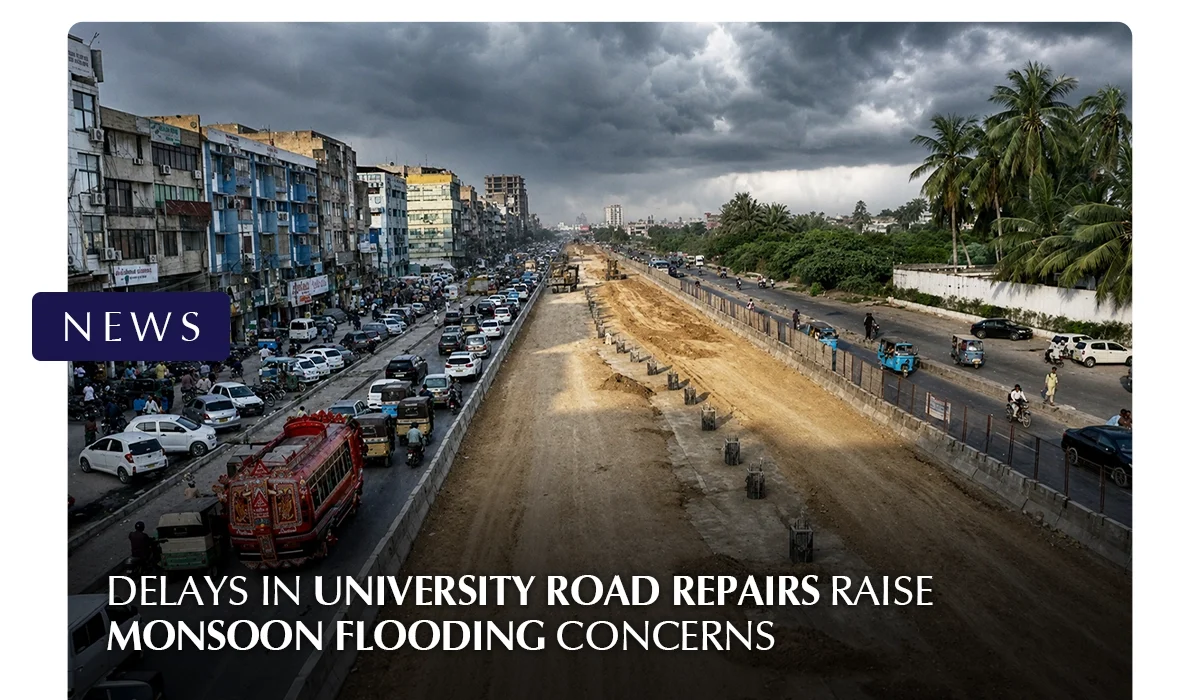
KARACHI: Gulshan-e-Iqbal Town Chairman Dr Fawad Ahmed has issued a stark warning that a key stretch of Karachi’s University Road could become a serious hazard if monsoon rains arrive before ongoing infrastructure work is completed. Speaking at a press conference held at the Gulshan-e-Iqbal Town Municipal Corporation council hall, Dr Ahmed described the situation as one that could quickly spiral into a full-blown emergency for commuters.
His remarks focused specifically on the segment of road between Hassan Square and Nipa, an area currently undergoing excavation for the Red Line Bus Rapid Transit (BRT) project.
According to Dr Ahmed, the digging has left the roadway riddled with pits and uneven surfaces, posing a significant risk to motorists and pedestrians alike, particularly once heavy rainfall sets in.
The town chairman also used the platform to voice strong opposition to a proposed flyover near Disco Bakery. He argued that the project was both unnecessary and impractical, cautioning that it could intensify traffic congestion rather than relieve it.
He pointed out that a substantial portion of University Road traffic has already been redirected to Shabbir Usmani Road, undermining the rationale for the flyover.
Compounding the issue, Dr Ahmed noted that the K-IV water supply augmentation line is also slated to pass through Shabbir Usmani Road, a factor that would further complicate flyover construction in that corridor.
He said these concerns have already been formally communicated to Karachi’s mayor, and he called on the provincial government to abandon the flyover plan altogether in favour of removing encroachments to improve traffic flow.
Separately, Dr Ahmed presented the town’s performance report for the outgoing period and announced a budget of Rs. 4.7795 billion for the 2026–27 fiscal year, with 75 percent of the allocation directed toward development projects across Gulshan-e-Iqbal Town.
Dedicated and detail-oriented SEO Content Writer, Real Estate Writer, and Research Analyst based in Islamabad, with proven expertise in developing accurate, valuable, and well-researched content. Skilled in analytical writing, market research, and reporting, with the ability to turn insights into clear, professional, and impactful content. Passionate about exploring new ideas, analyzing industry trends, and contributing to high-quality writing and research-driven projects.
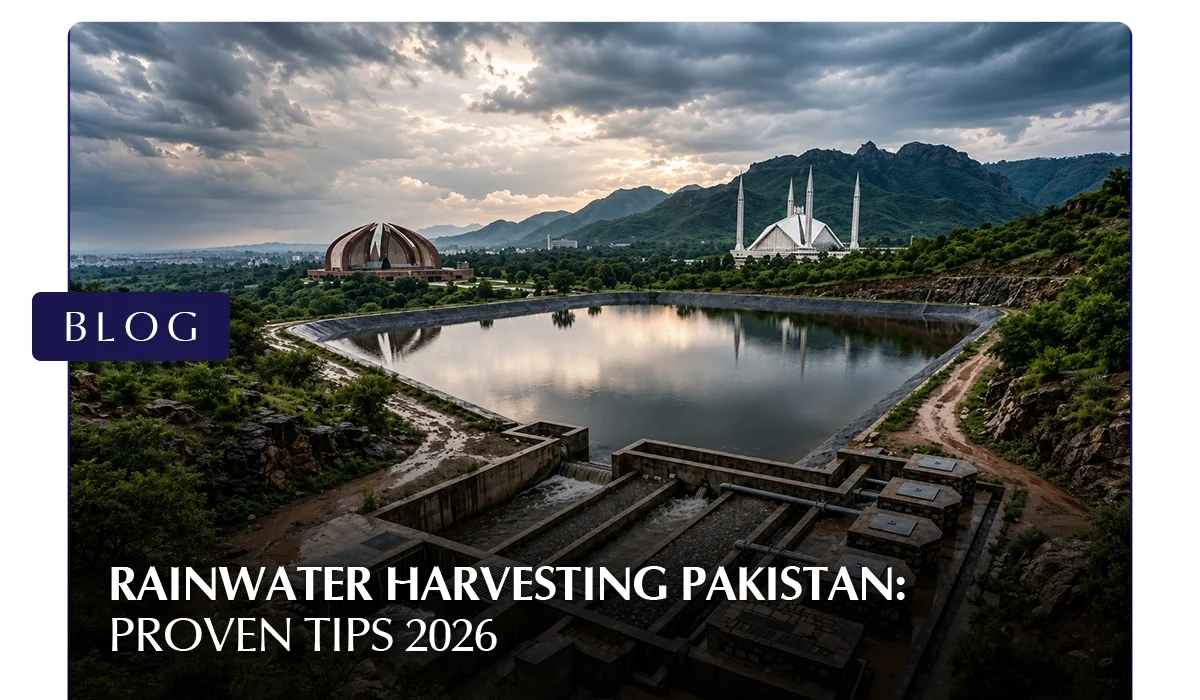
Pakistan is running out of water. Annual per capita water availability has fallen from over 5,000 cubic metres at independence to below 1,000 cubic metres today, pushing the country into the “water-scarce” category. Rainwater harvesting Pakistan offers one of the most practical, low-cost ways to slow this decline. It collects rain that would otherwise run off roofs, roads and open land, then stores it for reuse or sends it underground to recharge depleting aquifers.
This guide explains why rainwater harvesting Pakistan has become urgent, how the systems work, what government bodies are doing about it, and how households, builders and communities can take part.
Why Rainwater Harvesting in Pakistan Matters Right Now
Water scarcity in Pakistan is not a future risk. It is a present reality. The country now sits among the ten most water-stressed nations in the world. Groundwater tables are dropping in major cities, canal supplies are stretched thin, and more than half the population lacks access to safely managed drinking water.
A few numbers explain the scale of the problem:
Per capita water availability has dropped from around 5,260 cubic metres in 1951 to under 900 cubic metres today.
Pakistan can store only about 30 days of water nationally, far short of the 1,000-day buffer recommended for arid countries.
Roughly 90 percent of agricultural output depends on a single source, the Indus Basin Irrigation System.
Around 93 percent of available water goes to agriculture, leaving a thin margin for cities and households.
Rainwater harvesting Pakistan will not solve this crisis alone, but it reduces pressure on groundwater, cuts urban flooding, and gives households and buildings a backup source of water during dry months.
Climate Change in Pakistan and the Changing Rainfall Pattern
Climate change in Pakistan is making the water problem harder to manage, not easier. Rainfall has become more erratic. Long dry spells are now followed by short, intense monsoon bursts that overwhelm drains instead of soaking into the ground.
Experts from the International Water Management Institute have pointed to a rise in heatwaves and heavy precipitation events across South Asia linked to human-induced climate change, with Pakistan experiencing both extremes within the same year.
This swing between drought and flood is exactly the pattern rainwater harvesting in Pakistan is designed to manage. Storage tanks and recharge wells capture sudden heavy rain instead of letting it flood streets, then release that water slowly for use during the dry months that follow.
How Rainwater Harvesting Systems Work
A basic rainwater harvesting system follows a simple path:
Catchment – Rain lands on a roof, terrace, courtyard or paved surface.
Conveyance – Sloped surfaces and pipes direct the water toward a collection point.
Filtration – A first-flush diverter and filter screen remove dust, leaves and debris from the initial runoff.
Storage or recharge – Water is either stored in a tank for reuse or channeled into a recharge well or pit to replenish groundwater.
Stored rainwater is generally used for gardening, washing, cleaning, and flushing. It is not safe for drinking unless it passes through proper treatment and testing.
Storage Tanks vs Recharge Wells -Rainwater Harvesting Pakistan
System
Best suited for
What it does
Storage tank
Homes, farmhouses, offices
Collects water for direct household reuse
Recharge pit
Small plots, gardens, open land
Lets filtered water percolate into the soil
Recharge well
Large properties, mosques, apartment blocks
Sends filtered surplus water deep underground to recharge the aquifer
Most well-designed projects use a combination: a tank for everyday reuse and a recharge point for any overflow during heavy rain.
Rainwater Harvesting Pakistan in Practice: Cities and Deserts
Urban Recharge Wells in Islamabad and Lahore
The Capital Development Authority has made rooftop rainwater harvesting mandatory for new construction in Islamabad under its building bylaws.
The authority has also been installing groundwater recharge wells across the city, working alongside the Pakistan Council of Research in Water Resources (PCRWR).
At one recharge site in Islamabad, researchers recorded a rise in the water table of nearly five metres after monitoring rainfall between May and September.
In Lahore, the Water and Sanitation Agency has built underground water tanks in flood-prone neighbourhoods. One such tank, built at a cost of Rs. 140 million, can hold 1.4 million gallons of rainwater drawn from a 30-acre catchment area.
The collected water is later used to irrigate public parks and green belts, easing pressure on piped supply while also reducing urban flooding.
Rainwater Harvesting in the Cholistan Desert
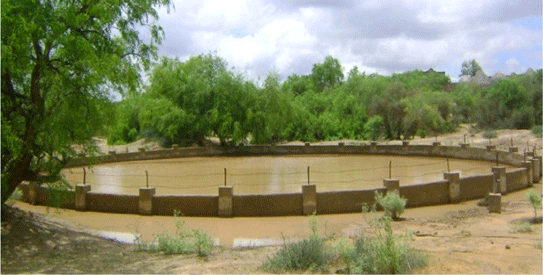
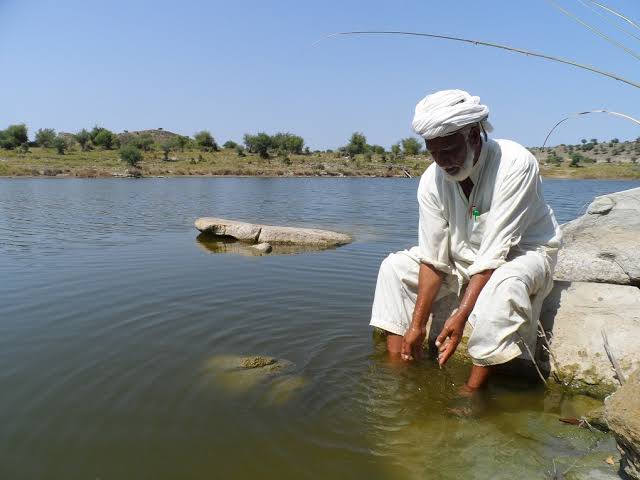
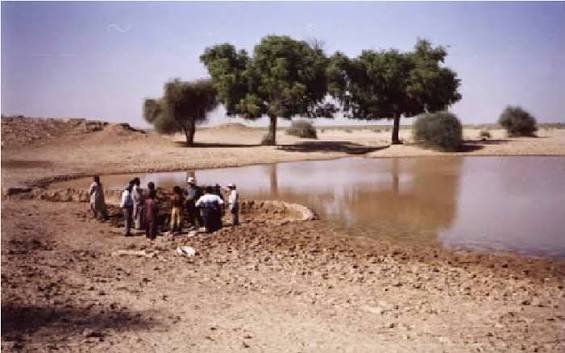
Rainwater harvesting Pakistan also plays a critical role far from major cities. In the Cholistan desert, rainfall is the only realistic water source for nomadic communities and their livestock. PCRWR has built a network of over 110 reservoirs across 26,000 square kilometers of desert, with a combined storage capacity of 440 million gallons.
This network, paired with newly drilled tubewells, has cut seasonal migration and saved an estimated Rs. 6 billion a year in losses linked to livestock movement and water shortages.
Benefits of Rainwater Harvesting Pakistan
Reduces dependence on groundwater, slowing the decline of water tables in over-extracted areas.
Lowers urban flood risk by capturing runoff before it overwhelms drains and roads.
Provides a backup water source for gardening, cleaning, and non-drinking household use during dry spells.
Supports agriculture and livestock in arid and desert regions where canal water never reaches.
Improves long-term building resilience, especially in cities where municipal supply is already intermittent.
Common Mistakes That Cause Rainwater Harvesting Pakistan Systems to Fail
Rainwater harvesting projects in Pakistan often fail for avoidable reasons:
Sending unfiltered roof water directly into a recharge well, which pushes silt and pollutants into the aquifer.
Undersized overflow pipes that cannot handle monsoon-level rainfall.
Tanks and filter chambers buried under finished paving with no access for cleaning.
Using one generic design across very different properties, rather than sizing the system to the actual roof area, rainfall pattern, and household need.
A system built without proper filtration and maintenance access may look fine in its first year and then fail during the next serious monsoon.
Not without treatment. Most systems are designed for gardening, washing, cleaning, and flushing rather than direct drinking use.
What causes water scarcity in Pakistan?
Rapid population growth, heavy reliance on a single river system, limited water storage infrastructure, and increasingly erratic rainfall linked to climate change in Pakistan have combined to push per capita water availability below internationally recognised scarcity thresholds.
Does rainwater harvesting Pakistan help with urban flooding?
Yes. Storing and redirecting heavy rainfall through tanks and recharge wells reduces the volume of runoff that would otherwise overwhelm city drains.
Final Word
Rainwater harvesting in Pakistan sits at the intersection of two growing problems: worsening water scarcity in Pakistan and the unpredictable rainfall brought on by climate change in Pakistan. Government-led projects in Islamabad, Lahore and the Cholistan desert show that the approach works at very different scales, from a single rooftop system to a desert-wide reservoir network. For households, builders and communities alike, treating rainwater as a resource rather than a runoff problem is one of the most direct ways to respond to Pakistan’s deepening water crisis.
BBC-featured Content Specialist with a sharp eye for search intent and a proven ability to turn content into a growth engine. I leverage cutting-edge digital marketing tools to craft strategies that fuel organic traffic, amplify brand growth, and own the local SEO landscape, particularly across the competitive real estate market. I help brands dominate search rankings and convert visibility into measurable business success.
Water shortage is a real problem in most cities today. Borewells run dry. Water bills keep rising. Groundwater levels keep falling. A rainwater harvesting system offers a simple, low-cost fix. It collects rain that would otherwise run off your roof or yard and turns it into a usable water source for drinking, irrigation, flushing, or simply topping up the ground beneath your feet.
This guide covers everything about a rainwater harvesting system: what it is, how it works, its components, methods, benefits, cost, water quality standards, and the rules that apply in Pakistan. By the end, you will know exactly how to plan one for your home, office, or institution.
What Is a Rainwater Harvesting System?
According to Encyclopaedia Britannica, a rainwater harvesting system is a technology that collects and stores rainwater for human use. Systems range from simple rain barrels to elaborate structures with pumps, tanks, and purification units. The stored water can irrigate landscaping, flush toilets, launder clothes, or even be purified for drinking.
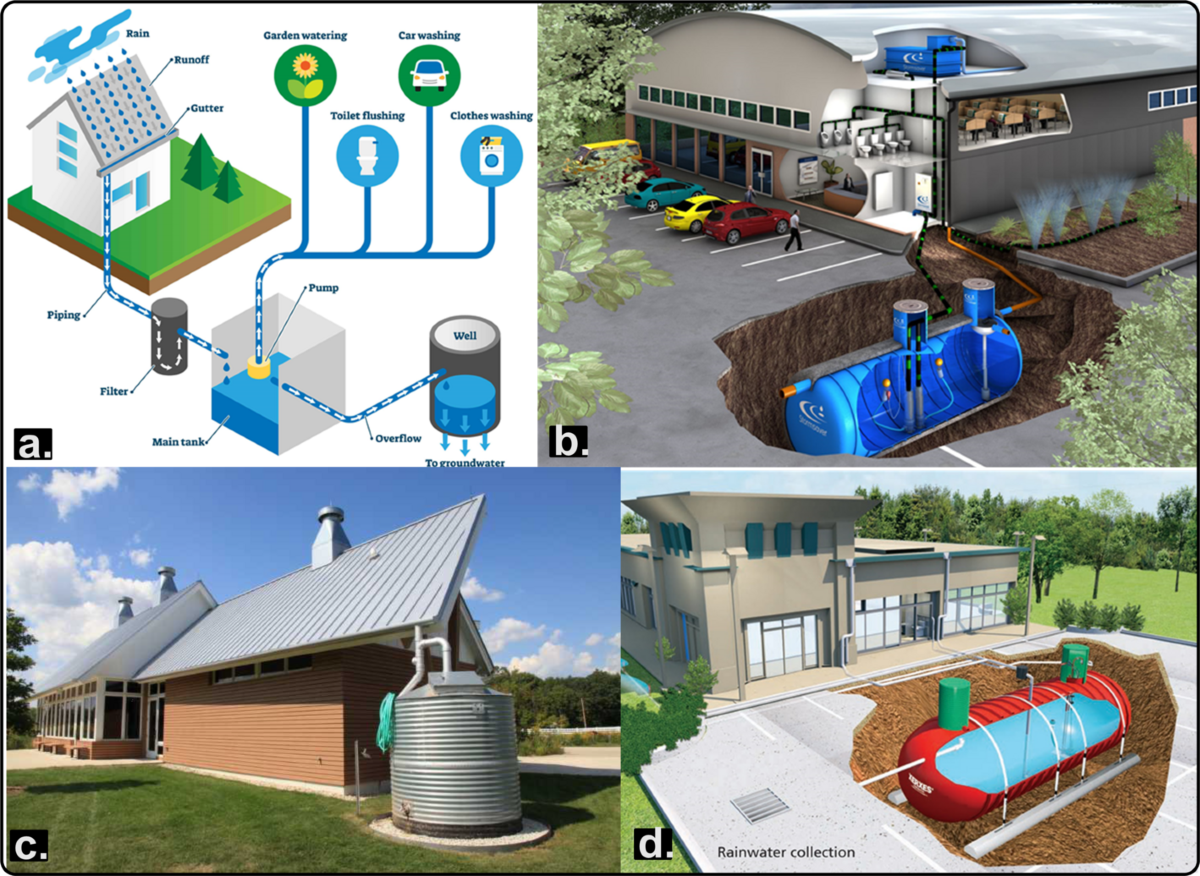
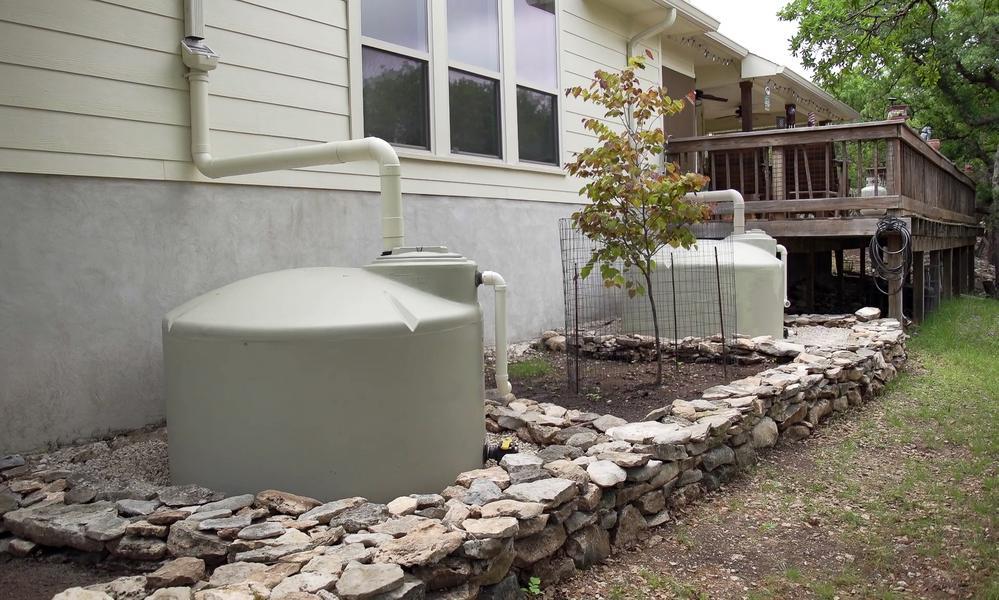
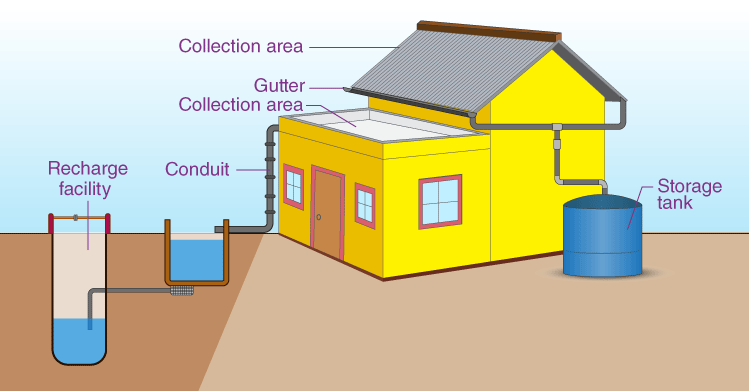
Instead of letting rain run into the street or drain away, a rainwater harvesting system directs it through gutters and pipes into a storage tank or into the ground. Researchers describe every rainwater harvesting system (RWHS) as sharing four core parts: a catchment area, gutters, pipes, and a storage system. Everything else- filters, pumps, recharge wells, treatment units- builds on that basic four-part foundation.
The idea itself is old. People have collected rainwater for thousands of years. Ancient cisterns dating back to 2500 BC have been found in the Middle East, and rainwater harvesting for irrigation dates back to roughly 4500 BC in southern Mesopotamia. Roman cities used rooftop channels and aqueducts long before modern gutters existed.
Farming communities in Balochistan practiced rainwater harvesting around 300 BC. The method has simply been refined with better tanks, filters, and monitoring tools, and in some university research projects today, even Building Information Modeling (BIM) and augmented reality.
Why a Rainwater Harvesting System Matters Right Now
Water stress is no longer a distant concern. Reports cited by industry sources suggest more than half the world’s population will be living in water-stressed regions by 2050.
Pakistan is a clear example. According to Abamet Pakistan, an environmental engineering firm, Pakistan is technically a “water-stressed” country rather than a “water-scarce” one, but it wastes nearly 10 trillion gallons of water every year due to poor conservation.
A rainwater harvesting system is one of the most direct ways to close that gap, because it captures free water at the exact point where it is needed most.
In Semarang, Indonesia, a city badly affected by climate-driven flooding and drought, a rainwater harvesting system built into public schools now channels collected water into daily use and groundwater recharge, directly benefiting more than 20,500 people.
This shows how a single, simple technology can serve two opposite climate problems at once: it eases drought by storing water, and it eases flooding by capturing runoff before it overwhelms drains.
How Does a Rainwater Harvesting System Work?
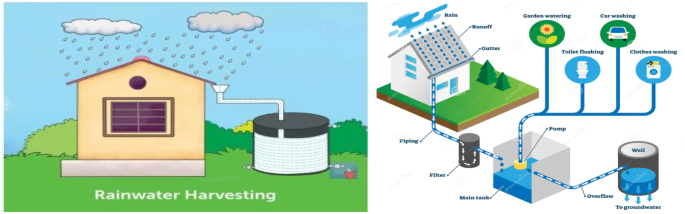
A rainwater harvesting system works in four simple stages: catchment, conveyance, filtration, and storage or recharge.
Catchment: Rain falls on a roof, terrace, or paved surface. This surface is called the catchment area.
Conveyance: Gutters and downpipes carry the water from the roof to the storage point.
Filtration: Before the water reaches the tank, it passes through a first-flush diverter and a filter. This removes dust, leaves, and bird droppings.
Storage or recharge: Clean water is stored in a tank for reuse, or it is directed into a recharge well or pit so it seeps into the ground and refills the water table.
Gravity does most of the work in a well-designed rainwater harvesting system. Pumps are only needed when water must move uphill, into upper floors, or through pressurised taps.
Methods of Rainwater Harvesting
There are two broad methods used in any rainwater harvesting system, and within each, two purpose-based categories worth knowing.
1. Rooftop Rainwater Harvesting
This is the most common method for homes, apartments, schools, and offices. Rain falling on the roof is captured through gutters and either stored in a tank or directed to a recharge well.
Roof runoff is generally of higher quality than surface runoff and can often be used with only basic treatment. It is simple, affordable, and works well for houses, mosques, factories, hotels, and multi-storey buildings.
2. Surface Runoff Harvesting
This method collects rainwater flowing across the ground, such as from a courtyard, driveway, or open plot. The runoff is channelled into a storage tank or recharge pit below ground level.
It works well for larger plots and is often used alongside rooftop systems to capture every drop of rain falling on a property, while also cutting soil erosion, water pollution, and street flooding.
Domestic vs. Agricultural Rainwater Harvesting
Beyond catchment type, rainwater harvesting is also split by purpose. Domestic rainwater harvesting (DRWH) serves household needs: drinking, washing, gardening, and flushing.
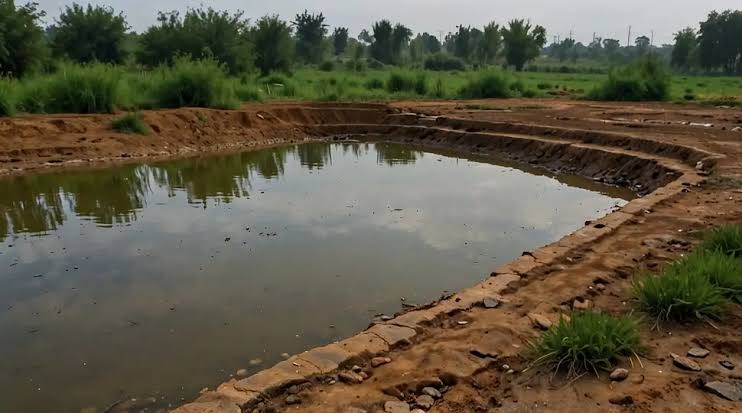
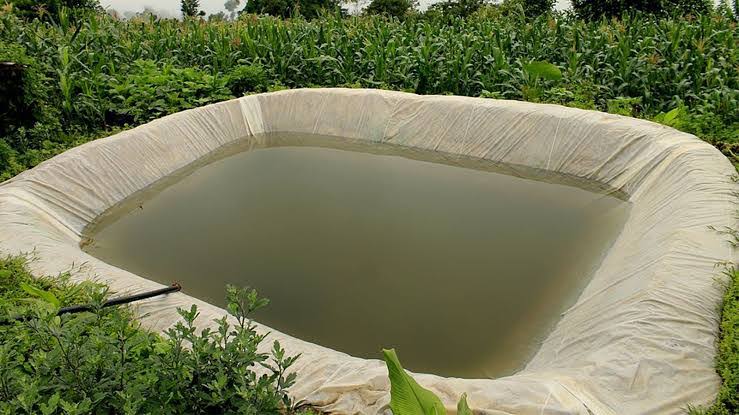
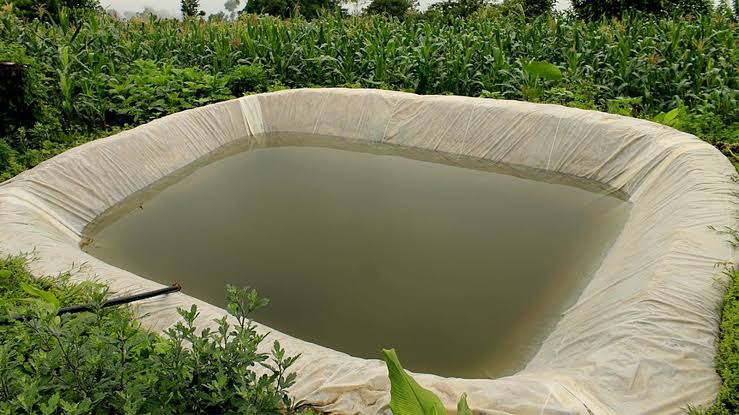
Agricultural and livestock rainwater harvesting (ARWH) serves larger-scale needs through pans, hafir dams, birkads, check dams, sand dams, and agricultural bunds, structures built to trap surface runoff for crops, livestock, and groundwater recharge in arid and semi-arid regions.
Both approaches share the same underlying goal: intercept rain before it is lost, and put it to productive use.
Key Components of a Rainwater Harvesting System
Every rainwater harvesting system, small or large, domestic or industrial, is built from a similar set of parts.
Catchment surface: Usually a roof, terrace, or courtyard. Roofing material affects water quality. Metal sheets and glazed tiles perform well; thatched roofs discolour the water and lower quality.
Coarse mesh: A screen at the roof or tank inlet that prevents leaves and large debris from entering the system.
Gutters: Channels fixed along the roof edge that collect rain and guide it toward a downpipe. Gutters should be sized 10–15% larger than the expected peak flow so they do not overflow, and given a gentle slope of about 10 mm fall per metre to avoid standing water.
Downpipes (conduits): Pipes, usually PVC or galvanised iron, that carry water from the gutter down to ground level. Pipe diameter should match rainfall intensity and roof area; a larger, high-intensity roof needs a wider downpipe to avoid backflow during heavy storms.
First-flush diverter: A valve that discards the initial rainfall, which carries the most dust, pollen, and pollutants washed off a dry roof.
Filter: A chamber filled with sand, gravel, charcoal, or fine mesh that removes suspended particles before water enters the tank. Filter designs range from simple household charcoal and sand filters to advanced multi-chamber units like the Dewas filter, the VARUN drum filter, horizontal roughing and slow sand filters (HRF/SSF), and compact potable-conversion units such as the RainPC, which combines screening, flocculation, and membrane filtration to bring rainwater up to WHO drinking-water standards.
Storage tank: Can be built above ground, underground, or partly buried. Common materials include reinforced concrete, ferrocement, masonry, HDPE plastic, fibreglass, and galvanised steel. Tank scale varies enormously, from small garden water butts of a few hundred litres to large underground commercial tanks holding well over 100,000 litres.
Overflow pipe: Directs excess water away safely once the tank is full, so it does not flood the roof, driveway, or a building’s boundary wall.
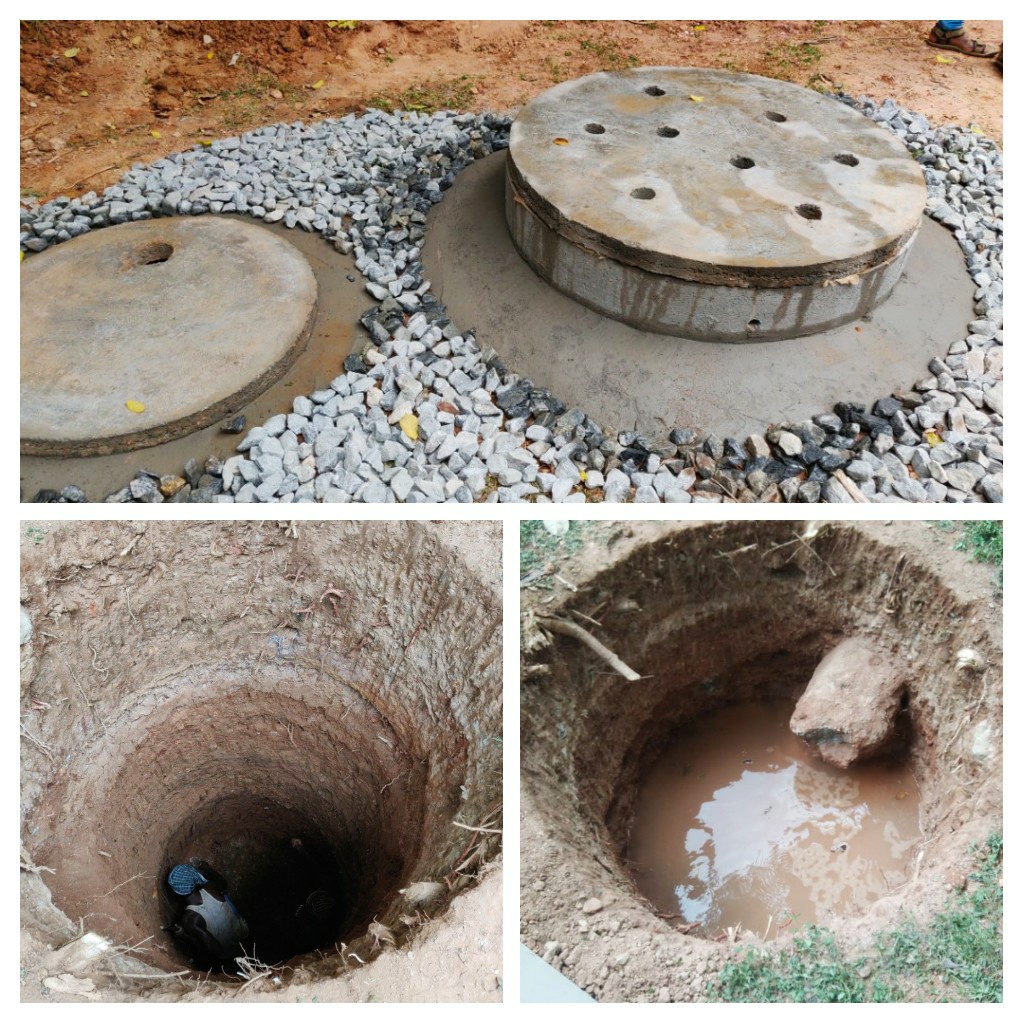
Recharge structures: Where storage is not the only goal, surplus filtered water can be sent into recharge wells, recharge pits, recharge trenches, recharge troughs, or modified injection wells, all designed to let water percolate into the ground and restore the local aquifer rather than run to waste.
Pump and controls (optional): Used when water needs to reach upper floors or pressurised taps. A water level indicator and flow meter with a data logger help track usage and detect problems early.
Backflow preventer: Stops rainwater from flowing backwards into a municipal or well water supply under negative pressure, an important safety feature for any hybrid system.
Treatment unit (optional): UV lights, chlorination, or fine membrane filters, needed only if the water will be used for drinking. Full potable treatment typically removes at least 99% of particles 3 microns or larger and includes daily water-quality testing.
Step-by-Step: How to Set Up a Rainwater Harvesting System
Installing an efficient rainwater harvesting system generally follows four practical steps:
Determine and clean your catchment area. Identify the terrace, courtyard, or roof section that will feed the system, and clean it thoroughly to prevent contamination at the very first stage.
Plan the layout. Decide where tanks and pipelines will sit to make the best use of your available collection surfaces. Common layouts include a single large tank or a cluster of smaller linked tanks.
Set up storage. Every drainpipe and collection point should include a mesh filter and first-flush diverter, a filtration stage before the tank, an air gap to prevent backflow, and an overflow route, ideally connected to a recharge system rather than a storm drain.
Install the pipes and tanks. Lay pipes with a single, consistent fall to avoid sediment traps that are hard to clean. Secure the tanks on a stable stand, connect them so they function as a single storage volume, install isolation valves for maintenance, and finish with a tank gauge so water levels can be monitored at a glance.
How Much Water Can You Actually Collect?
You can estimate the water your roof can capture with a simple formula, essentially the same one used by both the U.S. Department of Energy’s Federal Energy Management Program and independent engineering manuals:
Water collected (litres) = Roof area (m²) × Rainfall (mm) × Runoff coefficient
For example, a 300 m² roof catching 25 mm of rain, with a runoff coefficient of 0.9 for a smooth metal or tiled roof, would collect roughly 6,750 litres in a single rain event, before losses from the first-flush diverter and minor leaks. The U.S. Department of Energy recommends applying a collection factor of 75–90% to account for real-world system losses.
The runoff coefficient changes with roof material:
Roof Type
Runoff Coefficient
Metal (GI) sheet
0.8–0.9
Glazed tiles
0.6–0.9
Concrete/RCC roof
0.7–0.8
Asbestos (existing roofs only)
0.8–0.9
Thatched roof
0.2
There are three broad approaches used to size a storage tank:
Common-side approach: Uses mean annual rainfall to estimate how much water a roof can realistically supply, then sizes the tank to meet roughly a quarter’s worth of demand.
Demand-side approach: Bases tank size on daily consumption per person, household size, and the longest expected dry spell, useful where rainfall is plentiful and reliable.
Supply-side approach: Compares monthly rainfall potential against monthly demand across a full year, useful in low-rainfall or uneven-rainfall regions where storage must bridge real seasonal gaps.
Whichever method is used, tank size should reflect realistic demand, not the theoretical maximum a roof could ever collect.
Benefits of a Rainwater Harvesting System
Research reviews covering the environmental, economic, and social aspects of rainwater harvesting systems consistently find the same core advantages, echoed across engineering, government, and NGO sources alike.
Lowers water bills. Once the upfront cost of the system is paid off, harvested rainwater is essentially free. UK homes with rainwater systems commonly cut mains water use by 20–30%, and sometimes by 50% or more, a figure matched by European tank manufacturers who report up to 50% savings on drinking-water demand for homes using underground rainwater harvesting.
Supports groundwater levels. Directing surplus rainwater into recharge wells helps restore water tables that have dropped due to overuse of borewells, and reduces the risk of saltwater or brackish intrusion in coastal and low-lying aquifers.
Reduces flooding and stormwater runoff. Capturing rain before it reaches the street lowers the load on stormwater drains and reduces non-point source pollution reaching rivers and lakes, especially valuable during monsoon downpours.
Improves water security during drought. Stored rainwater acts as a backup source when mains supply is cut, a well runs low, or a drought hits. It can also serve as a main supply for new homes with no access to municipal water.
Requires low maintenance. Once installed, a system needs only routine gutter cleaning and periodic tank inspection; tanks and pipework can last 15 to 30 years with basic upkeep.
Reduces energy use and emissions. Because rainwater is used close to where it falls, it cuts the energy needed to pump and transport water across a city, and lowers the broader carbon footprint of urban water supply.
Adds long-term property value. Buildings with a working rainwater harvesting system often score points under green-building rating programs, and some municipalities offer rebates, tax exemptions, or property-tax reductions for installing one.
Supports climate adaptation. International climate bodies now class rainwater harvesting as a formal adaptation measure: it simultaneously builds drought resilience and reduces flood risk, which is why it appears in UN-backed community projects from Indonesia to Jamaica.
Cuts soil erosion. In open plots and agricultural land, capturing runoff reduces the speed and volume of water that would otherwise wash away topsoil.
Cost of a Rainwater Harvesting System and Return on Investment
Cost depends on tank size, excavation depth, pipe length, filtration quality, and whether the project is new construction or a retrofit. Broadly, price rises with:
Tank material (plastic tanks generally cost less than reinforced concrete)
Underground versus above-ground placement
Filtration and disinfection equipment, especially if the water will be used for drinking
Pump requirements
Site conditions, such as soil type and depth to the water table
Independent studies looking at hospital, residential, and office installations found payback periods of roughly 1 year for a hospital-scale system, up to 8 years for an office block, and around 21 years for a smaller residential system, showing that larger, higher-demand buildings generally see a faster return on a rainwater harvesting system than single homes.
Some cities also offer direct incentives: rebates covering up to half the system cost, sales-tax exemptions on harvesting equipment, and property-tax reductions tied to construction costs, all of which shorten the payback period further.
Retrofitting an existing building costs more than planning the system during original construction, since pipe runs and tank pits must work around finished structures.
Architects and engineers recommend including rainwater harvesting in the design stage, alongside plumbing and drainage drawings, rather than adding it as an afterthought.
Water Quality and Safety
Rainwater itself is naturally low in salinity and, scientifically as well as traditionally, considered one of the cleanest available water sources. However, once it touches a roof, it can pick up dust, bird droppings, moss, airborne pollutants, and even trace pesticides during the first rain after a dry spell. This is why filtration matters at every stage of a rainwater harvesting system.
For non-potable use, such as flushing, gardening, and washing, a first-flush diverter plus a basic sand, charcoal, or mesh filter is usually enough. For drinking water, additional treatment is required: fine filtration down to a few microns, plus disinfection through UV light, chlorination, or ozone, often used in combination.
Health authorities recommend boiling harvested rainwater as an added safety step where treatment systems are basic. Regular water testing is essential if a system is intended to supply drinking water, since contamination can occur even in a well-designed setup, and cisterns should also be checked periodically to prevent mosquito breeding.
Recent engineering research has gone a step further, developing integrated rainwater harvesting units that combine collection with on-site disinfection and mineral fortification to produce drinking water directly at the household level, with reported economic payback periods of around eight years for such compact potable units.
Maintenance of a Rainwater Harvesting System
A rainwater harvesting system needs simple, regular upkeep to keep working well:
Weekly: Clear debris from gutters and the roof surface, especially after storms, and check inlet filters for blockages.
Monthly: Check the first-flush diverter, overflow pipe, water level indicator, and any pumps or controls for proper function.
Annually: Inspect the storage tank for cracks or sediment buildup, and have backflow preventers tested by a qualified professional if the system connects to mains water.
As needed: Replace filter cartridges and UV lamps per the manufacturer’s schedule, particularly for systems used for drinking water, since a UV lamp typically loses effectiveness after about a year.
Storage tanks and pipework typically carry warranties of 15 to 30 years, while pumps last 2 to 10 years depending on use.
Rainwater Harvesting in Pakistan
Pakistan faces serious water stress, and a rainwater harvesting system is increasingly part of the national response, both in cities and in dry rural regions.
In arid zones like the Cholistan Desert, groundwater is often unusable due to salinity, so rainfall is the main source of drinking water for people and livestock. The Pakistan Council of Research in Water Resources (PCRWR) has developed a rainwater harvesting network of 110 specially designed reservoirs spread across 26,000 sq. km of Cholistan, storing around 440 million gallons of water.
Twenty deep tubewells add roughly 1,405 million gallons of annual discharge where groundwater is usable. Together, these measures have significantly cut seasonal migration among nomadic communities searching for water and are estimated to save around Rs. 6 billion a year.
In urban Pakistan, the picture is different but just as urgent. Falling groundwater levels in cities like Lahore, Islamabad, and Rawalpindi have pushed local authorities to act. The Capital Development Authority (CDA) has made rooftop rainwater harvesting mandatory for new buildings in Islamabad under updated building bylaws, aiming to raise groundwater levels and reduce water wastage.
Academic and engineering institutions are also pushing the technology forward locally. A recent civil engineering project at COMSATS University Islamabad’s Wah Campus designed a full rainwater harvesting system using Building Information Modeling (BIM), GIS, and integrated AR/VR technology, drawing on precipitation data from NASA and the Pakistan Meteorological Department, and applying the SCS Curve Number and Rational Method to estimate runoff.
The project paired a designed recharge well and anthracite filtration system with pre- and post-filtration water quality testing, illustrating how modern design tools are now being applied to a very old technology in a Pakistani context.
For homeowners and developers in Pakistan, practical design guidance includes:
Combine a storage tank (for reuse in gardening, washing, and flushing) with a recharge well (to support groundwater levels).
Always install a first-flush diverter and filter chamber before the water reaches a recharge well, so silt and pollutants do not enter the aquifer.
Keep gutters, downpipes, and tanks accessible for regular cleaning and inspection.
Plan the system with the architecture and plumbing drawings, not after construction has already started.
Size storage and recharge separately for different property types. A 5-marla house, a 1-kanal villa, a farmhouse, and an apartment building all need different catchment and storage strategies.
Harvested rainwater in Pakistani homes is generally safe for gardening, car washing, floor cleaning, and toilet flushing. It should not be used for drinking unless it undergoes proper filtration, disinfection, and water quality testing, in accordance with both PCRWR guidance and international drinking-water standards.
Frequently Asked Questions
Is a rainwater harvesting system worth it for a single home?
Yes. Even a basic setup with a storage tank and filter can meaningfully cut water bills and provide backup supply during shortages, especially in areas with unreliable mains water. Studies show payback periods for residential systems can run longer than for commercial buildings, but the system still pays for itself over its 15–30-year lifespan.
Can I drink harvested rainwater directly?
Not without proper treatment. Rainwater needs filtration and disinfection to meet drinking-water standards, ideally with regular testing. Most households use it for non-potable purposes like gardening, washing, and flushing.
Is rainwater harvesting mandatory in Pakistan?
It is mandatory for new buildings in Islamabad under CDA bylaws. Other cities and housing societies are increasingly encouraging or requiring it as groundwater levels continue to fall, echoing similar mandatory rules already applied in several Indian cities.
What is the difference between a storage tank and a recharge well?
A storage tank holds water for direct reuse. A recharge well, recharge pit, or recharge trench sends filtered surplus water underground to restore the water table. Most well-designed systems use both together.
How long does a rainwater harvesting system last?
With regular maintenance, storage tanks and pipework can last 15 to 30 years. Pumps and filters need more frequent servicing or replacement, typically every 2 to 10 years.
Does a rainwater harvesting system help with climate change?
Yes. International climate bodies, including the IPCC, list rainwater harvesting as a recognised adaptation measure, since it builds drought resilience while also reducing flood risk from heavy rainfall events.
Final Thoughts
A rainwater harvesting system turns a free, renewable resource into real savings and long-term water security. Whether it is a small rooftop setup for a single home, a BIM-designed university project, or a large recharge network across a desert region, the basic principle stays the same: catch the rain, filter it, and use every drop wisely. With water stress rising across Pakistan and beyond, installing a rainwater harvesting system is no longer just an environmental choice. It is a practical and increasingly necessary one.
BBC-featured Content Specialist with a sharp eye for search intent and a proven ability to turn content into a growth engine. I leverage cutting-edge digital marketing tools to craft strategies that fuel organic traffic, amplify brand growth, and own the local SEO landscape, particularly across the competitive real estate market. I help brands dominate search rankings and convert visibility into measurable business success.
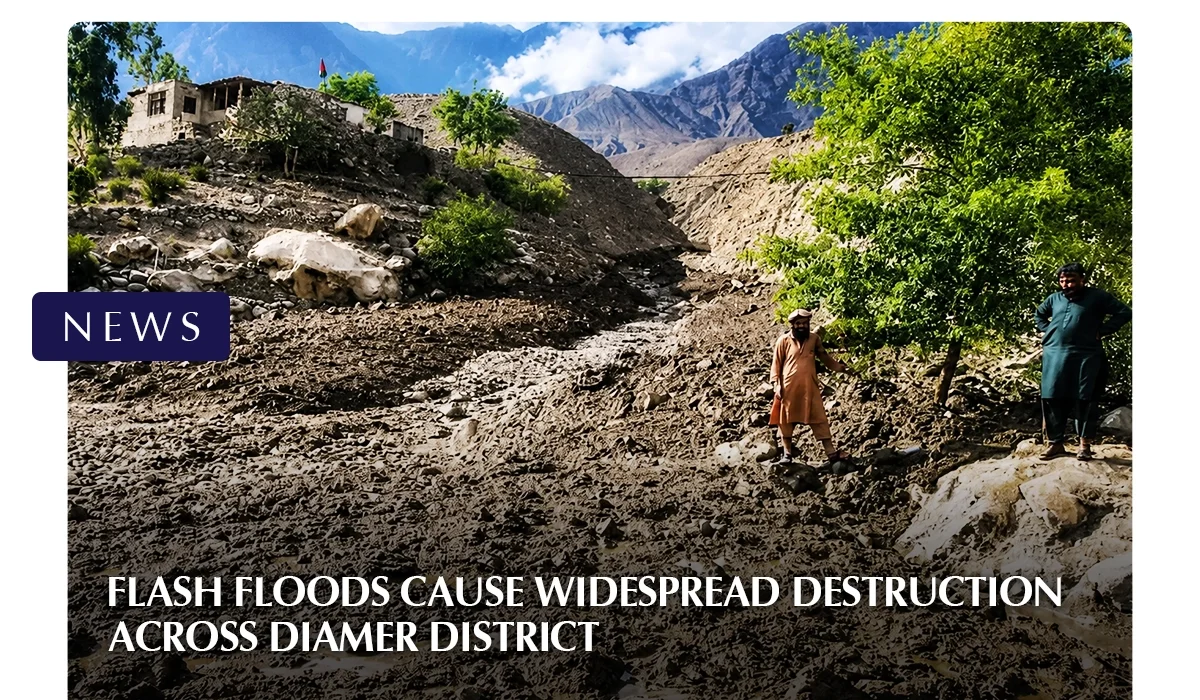
GILGIT: Flash floods triggered by heavy rainfall have caused extensive damage across Diamer district, with disaster officials confirming flooding at six locations early Monday.
The floods damaged houses, the Karakoram Highway (KKH), link roads, crops, agricultural land, and public and private property. Flooding was reported in Khanbari, Niyat, Thore, Gaspayan, Gasbala, Bunar and surrounding areas.
In Thore Valley’s Thunraka area, flood debris entered several homes, while standing crops, agricultural land and fruit trees sustained heavy damage. The valley’s main road was washed away at multiple points, completely suspending traffic.
Power transmission lines were also damaged, cutting electricity to Thore Valley and nearby areas. In Chilas’ Niyat area, floodwaters damaged link roads, disrupting transportation for local communities.
In Khanbari, a severe flash flood swept away two houses along with their contents, as well as several livestock. A private company working on the Diamer-Bhasha Dam project reported major losses after floodwaters swept away 13 dumpers, an excavator, a crushing plant and two water tankers, halting construction activities.
Landslides and debris blocked the KKH at Bonar Das, stranding domestic and foreign travellers for several hours. While the highway was later reopened, link roads to remote areas remained blocked, and power supply had not been restored in several affected localities.
Affected residents have called for immediate relief operations, restoration of roads and electricity, and financial assistance for impacted families.
Officials noted that Gilgit-Baltistan is witnessing a sharp rise in climate-linked disasters, including cloudbursts, flash floods, landslides and glacial lake outburst floods (GLOFs), driven by rising temperatures and accelerated glacier melt.
The region, home to roughly 8,400 glaciers and over 4,000 glacial lakes, faces mounting long-term water security risks. Authorities say emergency response arrangements remain in place.
BBC-featured Content Specialist with a sharp eye for search intent and a proven ability to turn content into a growth engine. I leverage cutting-edge digital marketing tools to craft strategies that fuel organic traffic, amplify brand growth, and own the local SEO landscape, particularly across the competitive real estate market. I help brands dominate search rankings and convert visibility into measurable business success.
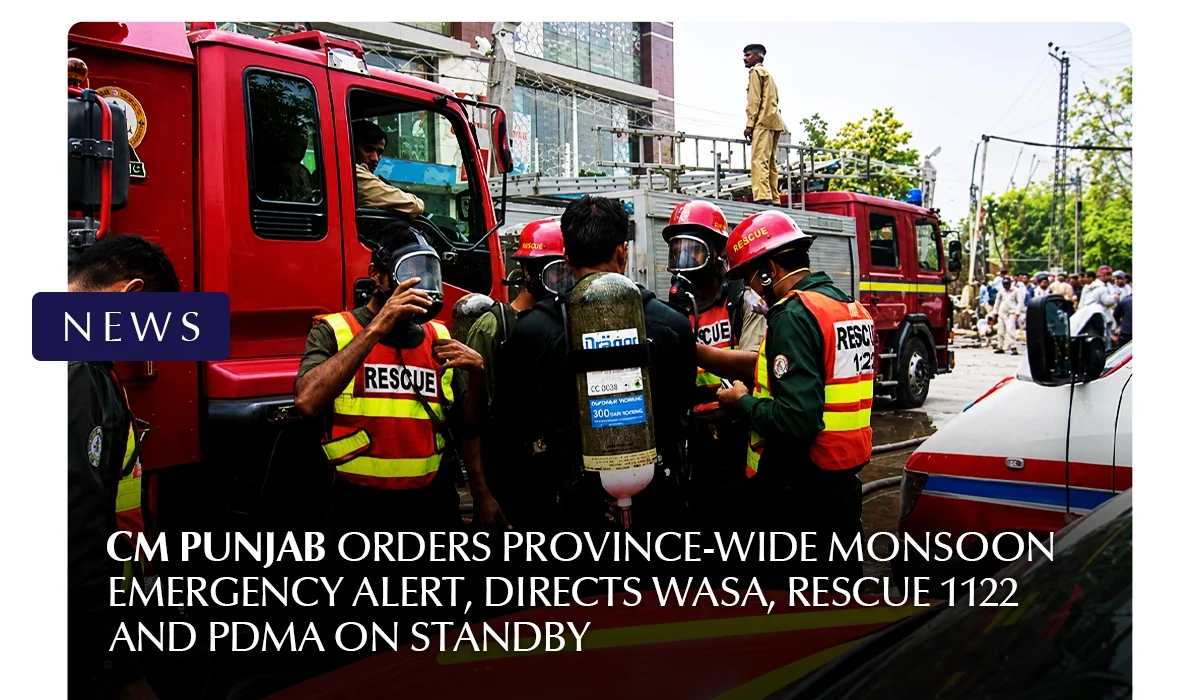
LAHORE: CM Punjab Maryam Nawaz has placed all provincial line departments on high alert following the onset of the monsoon season, directing commissioners, deputy commissioners and field officers across the province to maintain round-the-clock preparedness and ensure rapid emergency response.
The Chief Minister emphasised that all concerned officers and staff must remain vigilant, stating there would be no tolerance for negligence or irresponsibility during the monsoon period.
Rescue 1122 and WASA have been directed to keep personnel and machinery on standby, with priority given to swift-water drainage from low-lying areas and identified choke points. Continuous monitoring of stormwater drains and nullahs was also ordered to prevent water stagnation in urban areas.
The Irrigation Department has been instructed to keep teams on high alert to monitor canal water flow, while authorities were directed to ensure all manholes across urban and rural areas remain properly covered.
Additional safety arrangements were ordered at construction sites, alongside special monitoring of dilapidated and structurally vulnerable buildings. The Safe City Authority and Chief Traffic Officer teams have been directed to ensure smooth traffic flow on highways and main roads during periods of rainfall.
Field teams have been instructed to remain fully prepared to support public guidance, traffic management, and the protection of lives and property throughout the monsoon season.
BBC-featured Content Specialist with a sharp eye for search intent and a proven ability to turn content into a growth engine. I leverage cutting-edge digital marketing tools to craft strategies that fuel organic traffic, amplify brand growth, and own the local SEO landscape, particularly across the competitive real estate market. I help brands dominate search rankings and convert visibility into measurable business success.