
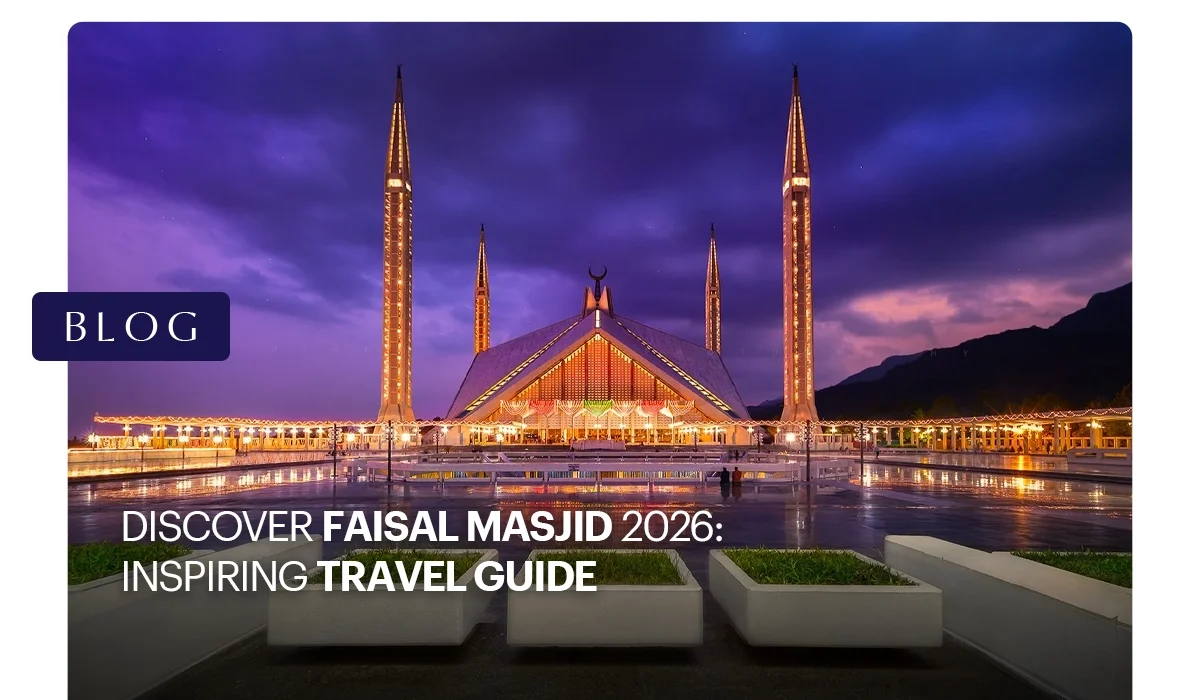

Every year, thousands of tourists flock to Islamabad just to catch a glimpse of the magnificent Faisal Masjid Islamabad. One of Islamabad’s most visited tourist attractions, this architectural wonder has captured the hearts of travellers, historians, and devotees from around the world. If you’re planning a trip to the Mosque, this essential travel guide is going to help you a lot. Keep reading to learn more.
Key Facts About Faisal Masjid Islamabad
| Faisal Masjid Details | Info |
| Location | Islamabad, Pakistan |
| Architect | Vedat Dalokay (Turkish) |
| Style | Modern Islamic |
| Completed | 1986 |
| Construction Cost | ~US$120 million |
| Site Area | 130,000 m² (33 acres) |
| Minarets | 4 × 90 m (300 ft) tall |
| Total Capacity | ~300,000 worshippers |
Faisal Masjid Location
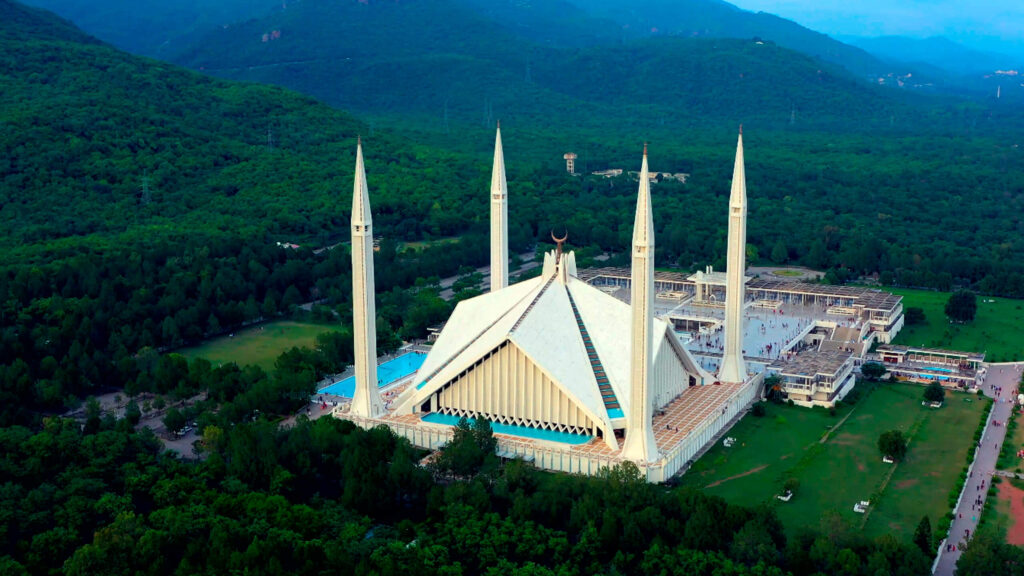
Faisal Masjid is located at the northern tip of Faisal Avenue in Islamabad, right at the foot of the Margalla Hills. The hills are the westernmost foothills of the Himalayas.
The Faisal mosque sits on elevated ground and faces the entire city. Its gleaming white structure against the dark green hills creates one of Pakistan’s most iconic views visible from miles away.
How to Reach Faisal Masjid Islamabad?
| Field | Details |
| Location | Faisal Avenue, Islamabad |
| Coordinates | 33°43’47″N, 73°2’14″E |
| Nearest Landmark | Margalla Hills |
| Administration | Capital Development Authority |
| Site Area | 130,000 m² (33 acres) |
The Faisal Masjid is easily accessible from anywhere in Islamabad or Rawalpindi. Here are your main options:
- By car or Rickshaw: Head north on Faisal Avenue to its end. Parking is available nearby.
- By Metro Bus: Take the Metro Bus to the Faisal Mosque stop, then a short walk or rickshaw to the entrance.
- From Rawalpindi: Use the Rawalpindi–Islamabad Metro Bus or a local bus toward the Islamabad city centre.
- From the Airport: Approx. 30–40 min by car. Taxis and ride apps are available at the terminal.
- Best time to visit: Early mornings or weekday evenings for fewer crowds
- Fridays: Expect heavy traffic and limited parking due to Jumma prayers
- Entry: Free for all visitors
Faisal Masjid History
The Faisal Masjid Islamabad history dates all the way back to 1966. Saudi King Faisal bin Abdul-Aziz visited Pakistan and supported the government’s plan to build a grand national mosque in Islamabad. That royal gesture sparked a two-decade journey.
The Design Competition – Faisal Masjid History
In 1969, an international competition was held. Architects from 17 countries submitted 43 designs. The winner was Vedat Dalokay, a Turkish architect, whose bold tent-shaped concept stood out from all the rest.
“I tried to capture the spirit, proportion, and geometry of the Kaaba in a purely abstract manner.”
– Vedat Dalokay, Architect
Construction of Faisal Mosque Islamabad
The construction of Faisal Mosque Islamabad Pakistan started in 1976 by National Construction Limited of Pakistan, led by Azim Khan. It was fully funded by Saudi Arabia at a cost of 130 million Saudi Riyals (~US$120 million). All engineering and labour was handled by Pakistanis.
King Faisal was assassinated in 1975, before construction began. Both the mosque and the avenue leading to it were named after him. His successor, King Khalid, laid the foundation stone in October 1976 and signed the agreement in 1978.
Key Dates -Faisal Masjid History
| Year / Date | Event |
| 1966 | King Faisal visits Pakistan; national mosque project proposed |
| 1969 | International design competition held (43 entries from 17 countries); Vedat Dalokay wins |
| 1975 | King Faisal assassinated; mosque named in his honour |
| Oct 1976 | Foundation stone laid by King Khalid; construction begins |
| 1978 | Formal construction agreement signed |
| 1986 | Mosque completed; becomes the world’s largest mosque |
| 18 Jun 1988 | First official prayer held |
| 1993 | Surpassed by Saudi mosques; now the 6th largest globally |
| 2000 | International Islamic University Islamabad relocates to its own campus |
Faisal Masjid Architecture
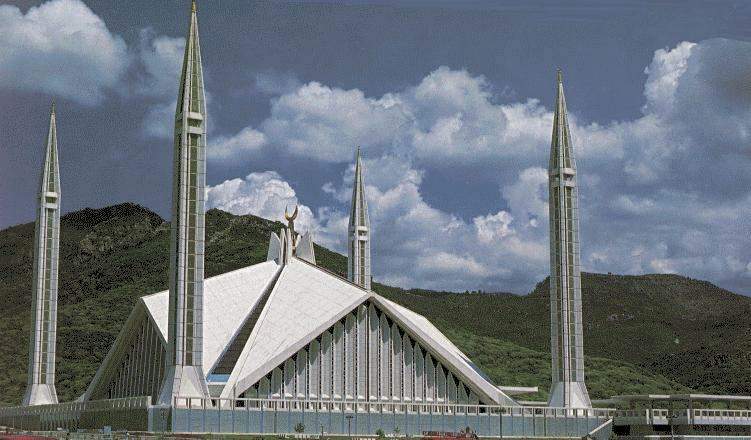
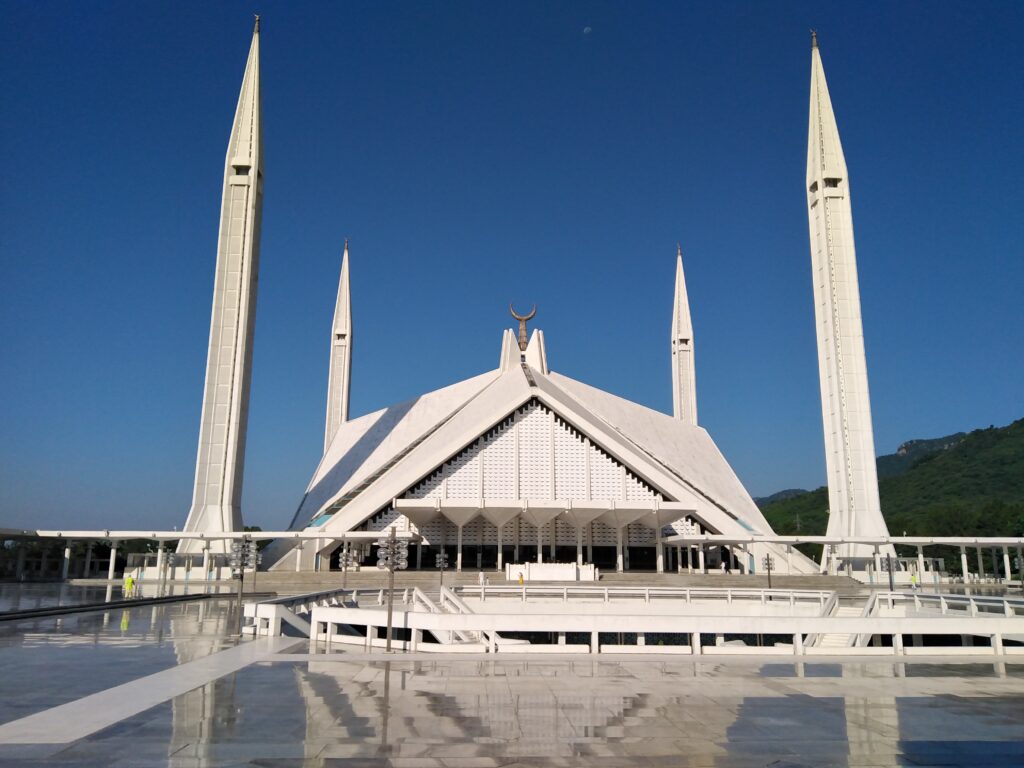
Most mosques have a dome; Faisal Mosque does not. Architect Vedat Dalokay replaced it with a striking eight-sided concrete shell shaped like a Bedouin desert tent.
| Feature | Details |
| Style | Modern Islamic |
| Shape | 8-sided concrete shell |
| Inspired by | Bedouin desert tent |
| Minarets | 4 × 90 m tall |
| Interior Art | Sadequain |
| Qibla Tiles | Mengu Ertel |
It was an unconventional and unforgettable piece of architecture which played a huge role in reimagining the identity and national architecture of Pakistan in the early years. The symbolism in design is mentioned below.
The Minarets:
- Four minarets, each 90 metres (300 ft) tall tallest in South Asia
- Each minaret is 10 × 10 metres in circumference
- Design inspired by Ottoman Turkish architecture
- Dalokay described them as marking the four corners of an abstract Kaaba
The Interior:
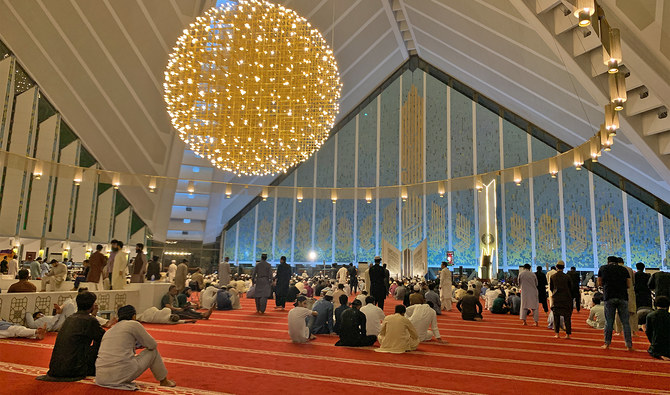
- Walls are lined with white marble throughout
- Mosaics and calligraphy by Pakistani artist Sadequain
- Qibla Wall covered in blue and white calligraphic tiles by Turkish artist Mengu Ertel
- Kalimah written in early Kufic script in a mirror-image pattern on the west wall
- Grand Turkish-style chandelier overhead
- Entrance from the east, fronted by a wide courtyard with porticoes
Capacity Breakdown
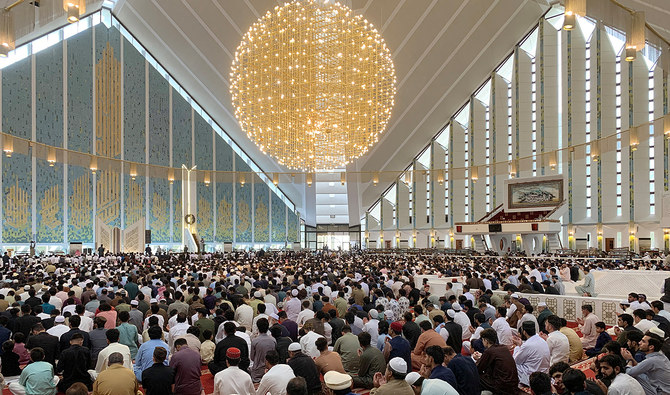
| Area | Capacity |
| Main prayer hall | 10,000 worshippers |
| Inner hall + courtyard combined | 74,000 worshippers |
| Surrounding open grounds | 200,000 worshippers |
| Total capacity | ~300,000 worshippers |
Facilities
- Library open to the public
- Lecture hall used for educational events
- The museum covers Islamic architecture and mosque history
- Café pleasant spot to rest and enjoy the surroundings
- Formerly housed the International Islamic University Islamabad (relocated in 2000)
Faisal Masjid Jumma Time
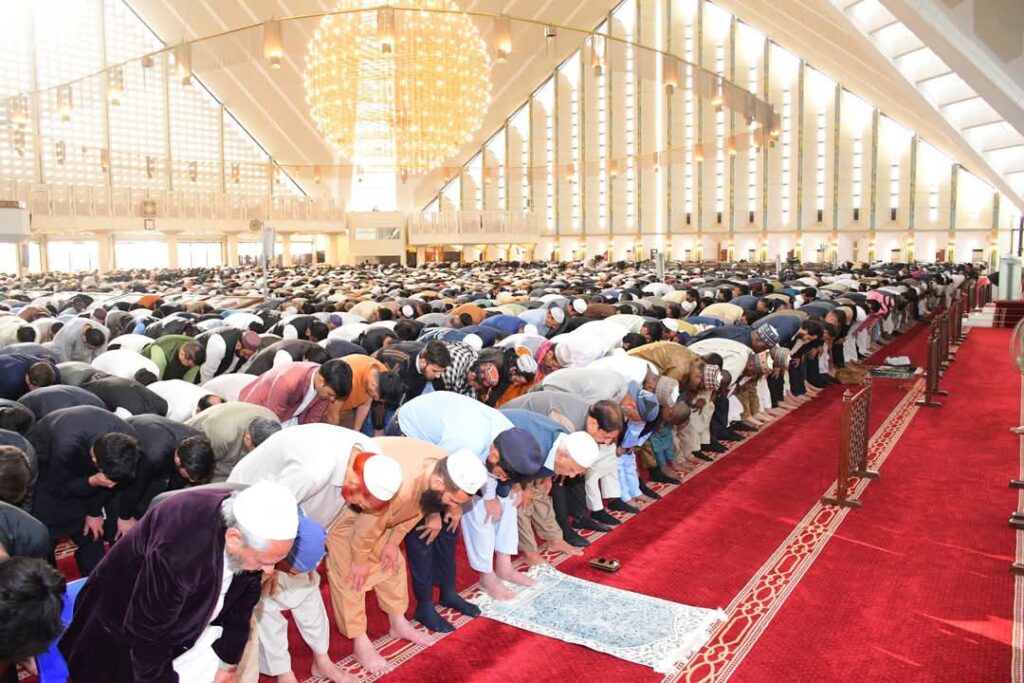
Attending Jumma prayers at Faisal Masjid is a deeply moving experience. Every Friday, thousands of worshippers fill the halls, courtyard, and open grounds. Faisal Masjid Jumma time shifts with the seasons.
Exact Jumma Namaz time in Faisal Masjid changes weekly. Always confirm via the mosque’s official schedule or a prayer app before visiting on a Friday.
Visitor Tips for Jumma
- Arrive 30–45 minutes early, space and parking fill up fast on Fridays
- Dress modestly, women must cover their heads; full-length clothing for all
- Remove shoes before entering the prayer hall; storage is available
- Photography is permitted in open areas, but be respectful of worshippers
Faisal Masjid Islamabad as a Tourist Attraction
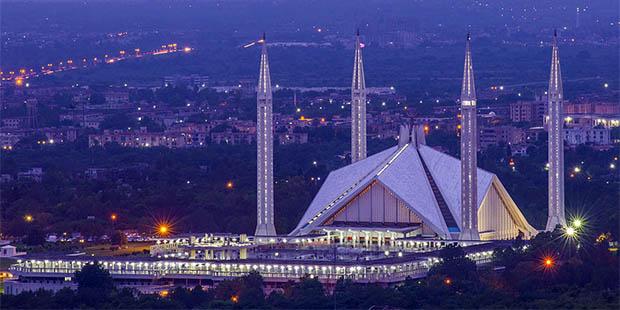
Faisal Masjid Islamabad Pakistan, is one of the country’s top tourist attractions. It is regularly featured in international travel guides. Its unique architectural design, ideal location, and fascinating history are some of the key elements that make it one of the most iconic Mosques in the world.
Unique Features
- Scenic Setting: Backed by Margalla Hills National Park with a full city view in front
- Iconic Photography: Stunning at dawn, golden hour, and lit up at night
- Cultural Depth: Museum, library, and public lecture hall on site
- Literary Significance: Featured in Khaled Hosseini’s The Kite Runner
- Ramadan Experience: Especially breathtaking on Laylat al-Qadr (27th night) when hundreds of thousands gather
- Author Connection: Michael Muhammad Knight came here as a teenager to study Islam and frequently references it in his writing
Best Viewpoints
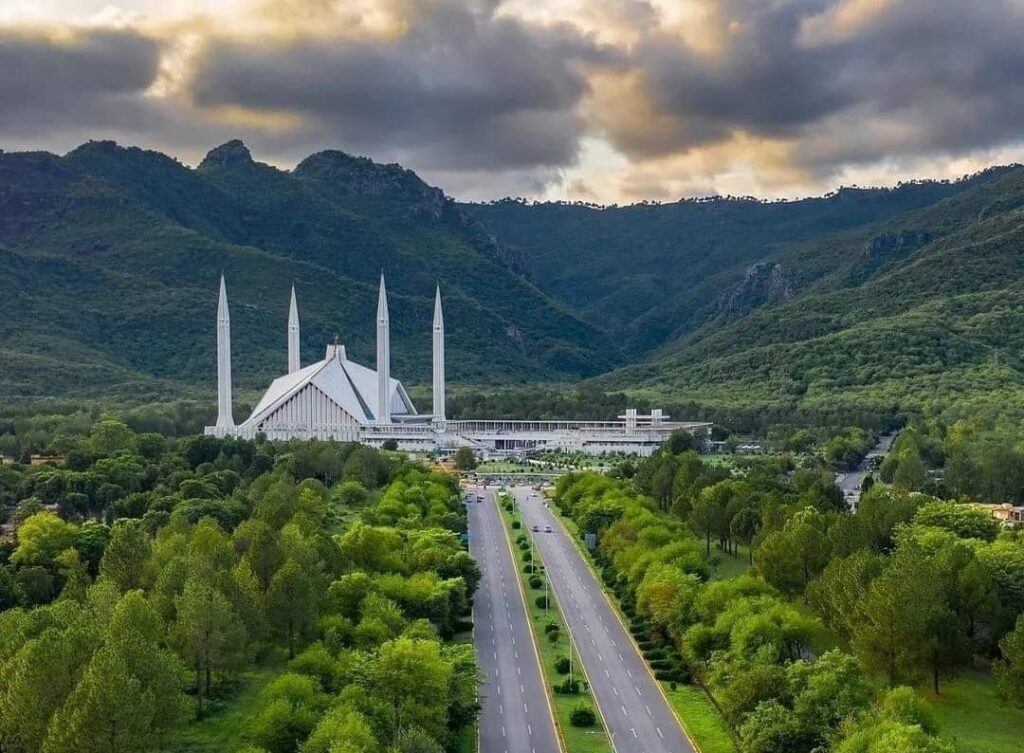
- Daman-e-Koh: Hilltop viewpoint, the best panoramic view of the mosque against the hills
- Margalla Hills Trails: View the mosque from above while hiking
- Faisal Avenue Approach: Driving up the avenue gives a dramatic straight-on view
- Hilltop viewpoint, best mosque panorama
Nearby Attractions
- Pakistan Monument
- National heritage landmark
- Shakarparian Hills
- Scenic park with walking trails and city views
- Margalla Hills trails
- Hiking trails directly behind the mosque
Visitor Information
| Detail | Info |
| Entry fee | Free for all visitors |
| Open to non-Muslims | Yes, respectful dress required |
| Photography | Allowed in open areas |
| Best days to visit | Weekdays for quiet; Fridays for Jumma atmosphere |
| Best time of day | Early morning or evening |
| On-site facilities | Café, museum, library, lecture hall |
| Parking | Available near the premises |
FAQs – Faisal Masjid Islamabad
Where is Faisal Masjid Islamabad located?
At the northern end of Faisal Avenue, Islamabad, at the foot of the Margalla Hills. Coordinates: 33°43’47″N, 73°2’14″E.
What is the Jumma Namaz time in Faisal Masjid?
Around 1:00–1:30 PM in summer and 12:30 PM in winter. Timings change weekly; always verify before visiting.
Who designed Faisal Mosque?
Turkish architect Vedat Dalokay, selected through an international competition in 1969 with 43 entries from 17 countries.
Why does Faisal Mosque have no dome?
Dalokay deliberately replaced the traditional dome with a tent-shaped eight-sided shell, inspired by the Bedouin desert tent and representing an abstract form of the Kaaba.
When was the construction of the Faisal Mosque completed?
Construction began in 1976 and was completed in 1986. The first official prayer was held on 18 June 1988.
How many people can Faisal Mosque hold?
Around 300,000 in total, 10,000 in the main hall, 74,000 including the courtyard, and 200,000 in the surrounding grounds.
Who funded the construction of the Faisal Mosque?
The Saudi Arabian government, at a cost of over 130 million Saudi Riyals (~US$120 million). King Faisal bin Abdul-Aziz initiated the funding of the mosque, which is named after him.
Was Faisal Mosque ever the largest mosque in the world?
Yes, from 1986 to 1993, it was the world’s largest. It is now the sixth-largest globally.
Is Faisal Mosque open to non-Muslim tourists?
Yes, entry is free and open to all. Modest dress is required. Avoid the prayer hall during active prayers.
What is inside the Faisal Mosque complex?
A library, lecture hall, museum, and café. The International Islamic University, one of the best universities in Islamabad, was also formerly housed here before moving to its own campus in 2000.
Conclusion – Faisal Masjid
Faisal Mosque Islamabad Pakistan is more than a religious building. It is a piece of history, a work of art, and one of the best tourist places in Islamabad. Whether you are coming for Faisal Masjid Jumma prayers, to explore its rich Faisal Masjid history, or simply to witness its stunning architecture in person, it never disappoints.
For more information on tourist attractions like Minar-e-Pakistan, visit Chakor blogs
Read More:
- Lake View Park Islamabad: Ultimate Joyful Escape (2026)
- Shah Allah Ditta Caves: Myths & History Complete Guide 2026

BBC-featured Content Specialist with a sharp eye for search intent and a proven ability to turn content into a growth engine. I leverage cutting-edge digital marketing tools to craft strategies that fuel organic traffic, amplify brand growth, and own the local SEO landscape, particularly across the competitive real estate market. I help brands dominate search rankings and convert visibility into measurable business success.
