BBC-featured Content Specialist with a sharp eye for search intent and a proven ability to turn content into a growth engine. I leverage cutting-edge digital marketing tools to craft strategies that fuel organic traffic, amplify brand growth, and own the local SEO landscape, particularly across the competitive real estate market. I help brands dominate search rankings and convert visibility into measurable business success.
Record reserves, two rating upgrades, and a pending $1.2bn IMF tranche support the government’s case to investors. A large share of the reserves is borrowed, and the IMF’s fuel-subsidy condition is contested.
Islamabad, Updated October 16, 2026
On October 15, 2026, Finance Minister Muhammad Aurangzeb told a JP Morgan investment seminar in Bangkok that Pakistan had achieved macroeconomic stabilisation, fiscal consolidation and sustained primary surpluses (Press Information Department, 2026).
The government release contains no figures. This report tests each claim against central bank data, IMF statements and independent assessments, and asks how much of the improvement is durable and how much depends on fresh borrowing.
2. The IMF Agreement and Its Conditions
An IMF team led by Iva Petrova reached a staff-level agreement on the fourth Extended Fund Facility review and the third Resilience and Sustainability Facility review. It would release about $1.21bn, roughly $1bn and $210m respectively, lifting combined disbursements to about $5.7bn once the Executive Board approves it (Daily Pakistan, 2026).
The Fund estimated FY2026 growth at 3.6%, with 4% recorded over the first three quarters (ARY News, 2026d). It set health and education spending at 2.8% of GDP for FY27, up from 2.5% in FY26 and 2.2% in FY24 (Daily Pakistan, 2026). It also warned that the Middle East conflict clouds the outlook through energy prices and global financial conditions.
3. The Reserves Question: How Much of the Record Is Borrowed?
The reserves figure has a direct origin. On September 3, Pakistan raised $3bn through a dual-tranche Eurobond, the largest single international bond issue in its history: $1.75bn over 5.5 years at a 7.50% coupon and $1.25bn over 10 years at 7.90%, with orders near $6bn (ARY News, 2026a).
SBP reserves rose from $18.33bn on September 4 to $21.4bn a week later, driven by the issuance and central bank purchases (TechJuice, 2026b). Total liquid reserves, which include commercial banks’ holdings, stood at $26.8bn (Wahab, 2026).
A Eurobond is external borrowing. This bears directly on the minister’s statement that Pakistan is replacing costly borrowing without enlarging the external debt stock. A finance ministry official told The Express Tribune that the new debt was raised to repay $3bn owed to Saudi Arabia, with an extension ending in October.
A ministry spokesman gave a broader account, saying the proceeds would serve overall financing needs and could replace short-term debt (Rana, 2026). If the first account is correct, reserves will fall again when the Saudi repayment is made. That outcome is an inference from the official’s statement, not a reported fact.
4. The Repayment Wall
Pakistan faces about $21.5bn in external debt servicing in FY2027, after a $5bn Saudi rollover to December 2028 reduced the gross financing requirement (Rana, 2026). Moody’s, citing IMF estimates, puts external financing needs at about $21bn in FY27 and $30bn in FY28 (TechJuice, 2026a). The IMF has estimated gross external financing needs of about $114.1bn for 2026 to 2030 (Kharal, 2026).
The trade position adds pressure. The Express Tribune reported a $7.1bn trade deficit for July and August, more than double the Eurobond’s size, and noted that the government has struggled to attract foreign direct investment (Rana, 2026).
5. The Fuel Subsidy Dispute
The IMF asked for the fuel support scheme to be phased out promptly, citing cost and broad targeting. It said any future support should be limited, time-bound and targeted. Aurangzeb said the scheme had worked, reaching about 10.2 million people, and would continue. He added that long marches and sit-ins costing about Rs120bn a day are incompatible with sustaining growth of 4% or more (The Express Tribune, 2026).
Analysts cited by the Pakistan Observer called the agreement a positive step reached without major delay. They said that ending the subsidy would be difficult while the oil price crisis continues (Pakistan Observer, 2026).
6. Independent Assessments
The Asian Development Bank put FY2026 growth at 3.7% and projected 3.7% for FY2027. It cited improved buffers and S&P’s sovereign upgrade in July and Moody’s in August 2026 (ARY News, 2026b). That is below the government’s 4% aspiration.
Moody’s lifted Pakistan to B3 from Caa1 with a stable outlook, and it flagged a fragile external position, weak debt affordability and a narrow revenue base (TechJuice, 2026a). B3 remains several notches below investment grade (Business Today, 2026).
7. Expert and Market Commentary
No named independent economists have yet published a response to the Bangkok remarks. The available commentary addresses the wider financing picture. Business Today reported that risk premiums on high-yield sovereign debt sit near two-decade lows, and that analysts caution the favourable borrowing window may not stay open (Business Today, 2026). Minute Mirror wrote that analysts and officials will watch whether improved market access translates into lower dependence on debt (Kharal, 2026).
Economist Kaiser Bengali, speaking in April, described Pakistan’s reliance on external financing as one of “absolute dependency,” in which a single IMF tranche can decide between survival and collapse (Al Jazeera, 2026). That comment predates the latest agreement.
8. How the Numbers Compare
Eurobond
Coupon
Spread over US Treasuries
2021 five-year ($1.3bn)
6.0%
about 5 points
2026 5.5-year ($1.75bn)
7.5%
about 3 points
2021 ten-year ($1.4bn)
7.375%
about 5.7 points
2026 ten-year ($1.25bn)
7.9%
about 3 points
Source: Rana (2026).
The 2026 coupons are higher in absolute terms, but US Treasury yields were about 1% in 2021 against about 4.5% now, and Pakistan’s spread over them has narrowed (Rana, 2026). The cost of money has risen, but the market now prices Pakistan as a lower credit risk.
Indicator
FY2026
FY2027 outlook
Remittances
above $41bn
$44bn target (ProPakistani, 2026)
Current account
roughly balanced
0% to 1% of GDP deficit (ProPakistani, 2026)
GDP growth
3.6% (IMF) / 3.7% (ADB)
3.7% (ADB)
9. Critical Assessment
The stabilisation claim is well supported. The IMF, ADB and Moody’s all report improvement, remittances are running above target, and ratings have risen twice this year.
The reserves claim needs qualification. Roughly $3bn of the record level came from one Eurobond, and the ministry’s own explanations of its purpose differ. A record is not the same as a durable buffer.
The debt-stock claim is unproven. Replacing Saudi deposits with Eurobonds changes who is owed, not necessarily how much. A $21.5bn repayment year leaves little room to reduce the stock.
The subsidy is the live fault line. The IMF wants prompt phase-out and the finance minister wants continuation, with Board approval of the tranche still pending.
BR Web Desk. (2026, October 15). Aurangzeb meets IMF chief, briefs investors on Pakistan’s economy. Business Recorder.https://www.brecorder.com/news/40444332
Press Information Department. (2026, October 15). Finance Minister highlights economic stabilization, fiscal consolidation and financing diversification at JP Morgan seminar (PR No. 210).https://pid.gov.pk/site/press_detail/34326
BBC-featured Content Specialist with a sharp eye for search intent and a proven ability to turn content into a growth engine. I leverage cutting-edge digital marketing tools to craft strategies that fuel organic traffic, amplify brand growth, and own the local SEO landscape, particularly across the competitive real estate market. I help brands dominate search rankings and convert visibility into measurable business success.
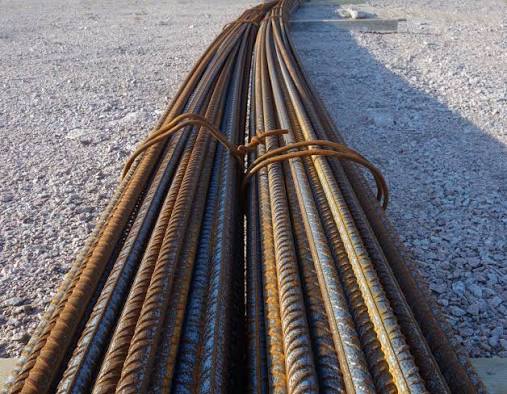
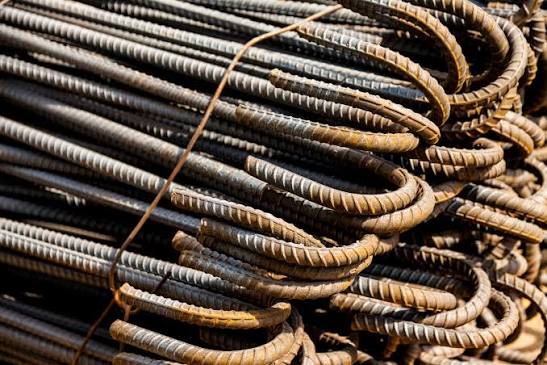
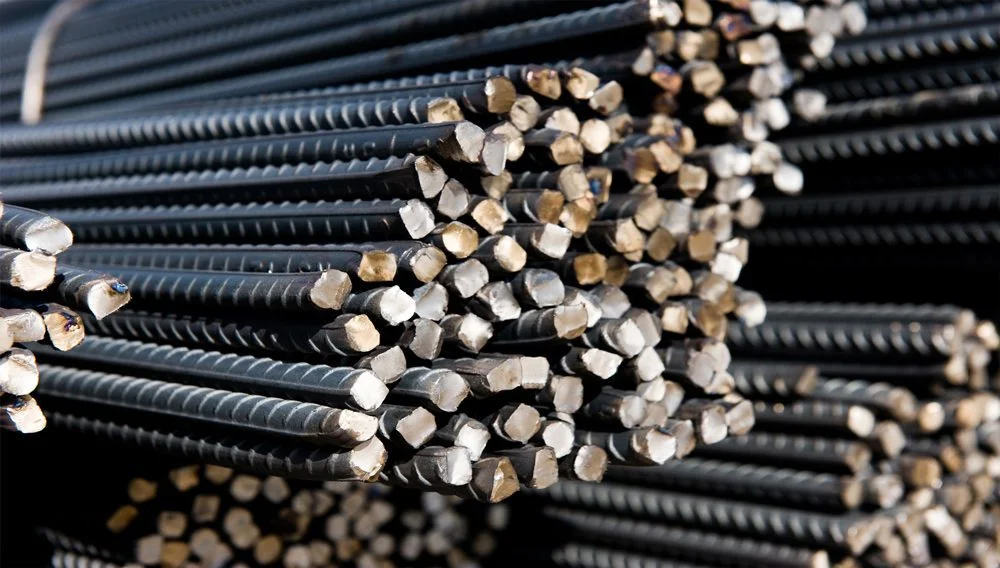
The steel price in Pakistan has moved up sharply in 2026. Builders paid about Rs 228 to Rs 232 per kg in January. By October, branded rebar sells for about Rs 255 to Rs 277 per kg. That gap adds lakhs of rupees to a house and crores to a commercial project. This guide gives you the steel price today, the steel price per kg and per ton, brand and city rates, and the stainless steel price in Pakistan. It also explains what moves the rate and how to buy safely.
Quick Answer: Steel Price Today in Pakistan
As of 15 October 2026, branded steel price in Pakistan is about Rs 255 to Rs 277 per kg, or Rs 255,000 to Rs 277,000 per ton. Grade 60 costs a little more than Grade 40. Local, unbranded steel is cheaper at about Rs 202 to Rs 210 per kg. Rates change with brand, bar size, city and order size.
Steel Price Today in Pakistan (Per Kg and Per Ton)
Steel price today depends mainly on grade. Grade 40 and Grade 60 are the two grades most builders buy. Grade 72 and Grade 80 are stronger and cost more.
Grade
Price per kg (Rs)
Price per ton (Rs)
Source and date
Grade 40 (branded)
254 to 275
254,000 to 275,000
Brand rate pages, 11 Oct 2026
Grade 60 (branded)
256 to 277
256,000 to 277,000
Brand rate pages, 11 Oct 2026
Grade 80 (branded)
about 262 to 264
about 262,000 to 264,000
ICONS rate table, 11 Oct 2026
Local or unbranded steel
202 to 210
202,000 to 210,000
Google AI Overview rate summary, Oct 2026
The top of the range comes from mills that quote ex-mill rates, such as Kamran Steel at Rs 277 per kg for Grade 60 and Rs 275 for Grade 40. Dealer-listed rates for other brands sit lower, near Rs 256 to Rs 261 per kg for Grade 60.
Steel Price per Kg in Pakistan
Steel price per kg is the base unit. Multiply it by the weight you need. Many dealers also quote per 40 kg, called one man or maund. Some quote per 50 kg.
At an example rate of Rs 265 per kg:
1 kg = Rs 265
40 kg (1 man) = Rs 10,600
50 kg = Rs 13,250
Across the current branded range of Rs 255 to Rs 277 per kg, one man costs about Rs 10,200 to Rs 11,080.
1 Ton Steel Price in Pakistan
The 1 ton steel price in Pakistan is simple to work out. One ton is 1,000 kg, which is 25 maunds. At Rs 255 to Rs 277 per kg, one ton of branded steel costs Rs 255,000 to Rs 277,000.
Here is a worked example. Your engineer’s bar schedule says you need 5 tons of Grade 60. At Rs 265,000 per ton, the steel costs Rs 1,325,000. A move of just Rs 10 per kg changes that bill by Rs 50,000.
Steel Price in Pakistan by Brand
Each mill sets its own rate. Brand rates also differ from dealer to dealer. The table below shows branded rates reported in October 2026.
Brand
Grade 40 (Rs per kg)
Grade 60 (Rs per kg)
Source and date
Kamran Steel
275
277
Kamran Steel rate page, 11 Oct 2026
Agha Steel
259
261
ICONS, 11 Oct 2026
Mughal Steel
255
261
ICONS, 11 Oct 2026
Ittehad Steel
258
260
ICONS, 11 Oct 2026
Amreli Steels
258
260
ICONS, 11 Oct 2026
AF Steel
258
260
ICONS, 11 Oct 2026
Five Star Steel
257
259
ICONS, 11 Oct 2026
Union Steel
255
257
ICONS, 11 Oct 2026
Moiz Steel
254
256
ICONS, 11 Oct 2026
Naveena Steel
254
256
ICONS, 11 Oct 2026
Some marketplace listings show Grade 60 bars at Rs 255 per kg for Aziz Steel and Rs 259 per kg for FF Steel. Hunza Steel is listed between Rs 248 and Rs 282. The FF Steel price in Pakistan today also appears on the mill’s own online rate calculator.
Why do the numbers differ? Some pages show ex-mill rates. Others show dealer rates with freight and margin added. Rates also vary by bar size. Use this table to compare brands, not to place an order.
Top Steel Manufacturers in Pakistan
Many mills supply rebar in Pakistan. The brand table above covers those with rates listed in October 2026. Market guides also name Aisha Steel, Safa Steel, Ittefaq Steel, Chenab Steel, Maqsood Steel and Amaan Steels.
Mills sit in different cities, so freight to your site changes the delivered rate. Ask each mill or its authorised dealer for the current rate list. Compare the same grade and the same bar size.
Steel Price in Pakistan by City
Steel rates differ little between big cities. Freight, dealer margin and brand stock cause most of the gap. Lahore and Karachi are close to the mills, so their rates are often a few rupees lower.
The table below shows general market rates reported on 11 October 2026. These are lower than the branded rates above because they reflect broader market and local steel, not one brand’s price list.
City
Steel Price in Pakistan per kg (Rs)
Steel Price in Pakistan per ton (Rs)
Karachi
248
248,000
Islamabad
247
247,000
Quetta
247
247,000
Lahore
246
246,000
Peshawar
246
246,000
Gujranwala
246
246,000
Faisalabad
245
245,000
Multan
245
245,000
Islamabad Steel Price Today – Steel Price in Pakistan
The Islamabad steel price today follows the national rate, with a small premium for delivery from mills in Punjab and Karachi. In October 2026, the general market rate in Islamabad is about Rs 247 per kg. Branded Grade 60 is quoted from about Rs 256 to Rs 277 per kg, depending on the mill and dealer.
Islamabad and Rawalpindi lie in a seismically active region. Builders here commonly choose Grade 60 bars for columns, beams and slabs. Your structural engineer’s drawing decides the grade and bar size. Ask for it in writing before you buy.
For a large order, ask for delivery to site in the quote. Freight to a site in the capital can add to the final bill.
Steel Price by Bar Size (Sutar, Inch and mm)
Steel bars are sold by size. In Pakistan, size is given in sutar. One sutar is one eighth of an inch. Market labels in mm are rounded, so 3 sutar is sold as 10 mm.
The table shows the weight of a standard 40 ft bar and its cost at an example rate of Rs 265 per kg.
Sutar
Inch
Market size (mm)
Weight per metre (kg)
Weight per 40 ft bar (kg)
Steel Price in Pakistan per bar at Rs 265 per kg
3
3/8
10
0.56
about 6.8
about Rs 1,810
4
1/2
12
0.99
about 12.1
about Rs 3,210
5
5/8
16
1.55
about 18.9
about Rs 5,010
6
3/4
20
2.24
about 27.2
about Rs 7,220
7
7/8
22
3.04
about 37.1
about Rs 9,830
8
1
25
3.97
about 48.4
about Rs 12,830
To price a bar on your own, use this formula: weight of the bar in kg x today’s steel price per kg.
Some mills quote different rates for thin and thick bars. For example, Ittehad Steel lists 8 mm Grade 60 at Rs 260,000 per ton and 10 mm to 22 mm Grade 60 at Rs 248,000 to Rs 250,000 per ton in its rate list. Always check the rate for your exact size.
Steel Price by Size and Grade (Per Ton)
Steel price per ton varies slightly by bar size. The thinnest bar, 3 sutar, costs the most. These are the rates reported on 11 October 2026.
Size (sutar / mm)
Grade 40 (Rs per ton)
Grade 60 (Rs per ton)
Grade 80 (Rs per ton)
3 sutar / 10 mm
260,000
262,000
264,000
4 to 7 sutar / 12 to 22 mm
258,000
260,000
262,000
8 sutar / 25 mm
258,000
261,000
263,000
Grade 40 vs Grade 60: Which Steel Should You Buy? Steel Price in Pakistan
The grade tells you the strength of the steel. Grade 40 has a yield strength of about 280 MPa. Grade 60 has about 420 MPa. Grade 60 carries more load with less steel, so it suits taller and heavier structures.
Point
Grade 40 Steel Price in Pakistan
Grade 60 Steel Price in Pakistan
Strength
Lower
Higher
Typical price
Slightly lower
Slightly higher, often Rs 2 to Rs 5 per kg
Common use
Light work such as boundary walls and small structures
Columns, beams and slabs in houses, towers and seismic areas
The price gap between the two grades is small. Do not pick Grade 40 to save money if your design calls for Grade 60. A structural engineer should confirm the grade for every project.
Iron Steel Price in Pakistan: Saria, Loha and Mild Steel
People use many words for the same product. Saria, sarya and loha all mean the steel bars used to reinforce concrete. Rebar is the English term. Mild steel, or MS, is a different group that includes sheets, angles and pipes.
The iron steel price in Pakistan splits into two segments:
Branded rebar from large mills. It carries a mill mark and a test certificate. In October 2026 it sells at about Rs 255 to Rs 277 per kg.
Local or unbranded steel. It is cheaper, at about Rs 202 to Rs 210 per kg. Quality and strength can vary. Some bars are re-rolled from scrap, and they may not meet the grade on the label.
The saving looks attractive. It is not worth the risk in load-bearing work. Use branded, certified steel for columns, beams and slabs.
Stainless Steel Price in Pakistan
The stainless steel price in Pakistan is a different story from rebar. Stainless steel resists rust. People use it for kitchens, railings, water tanks, food equipment and fittings. It costs much more than mild steel because it contains nickel and chromium.
Stainless Steel Price in Pakistan per Kg by Grade
The stainless steel price depends on the grade:
Grade 201 and 202: the cheapest. Often used for decorative items. Lower rust resistance.
Grade 304: the most common grade. Used for kitchen sinks, stair railings and food-grade pipes.
Grade 316: the premium grade. Used near the sea and in chemical or marine settings. It costs more than 304.
One rate page reports SS 304 pipe for railings and food use at about Rs 650 to Rs 900 per kg in October 2026. A scrap price site lists stainless steel scrap at about Rs 265 to Rs 335 per kg. The scrap rate is what dealers pay to buy old material. It is not the price of new stainless steel.
Stainless prices move with the global nickel price and the dollar rate. Thickness, finish and shape also change the price. Pipes, sheets and rods are all priced differently. Ask dealers in Lahore, Karachi or your own city for a written quote for your exact item.
Steel Price in Pakistan Trend in 2026
Steel prices rose through 2026. The chart below shows the reported range for branded Grade 60 steel. It comes from public rate pages and is indicative.
ICONS (Jan–Feb and Oct 2026), pricesin.pk (Jul 2026), Kamran Steel (Oct 2026); indicative ranges
That is a rise of roughly 12% to 20% in under a year. The Kamran Steel rate page shows its own price has stayed flat since 24 September 2026. That points to a pause after the earlier climb.
Global prices give some context. China’s rebar benchmark traded near CNY 3,062 per ton on 14 October 2026. That was down about 2% over the past month, according to Trading Economics. Local prices do not follow global moves day by day, because the rupee, energy costs and scrap prices also play a part.
What Affects Steel Price in Pakistan?
Several factors move the steel price in Pakistan:
Scrap and billet costs. Most local mills melt scrap or buy billet. When these rise, rebar rates follow.
Rupee to dollar rate. Mills import raw material. A weaker rupee raises costs.
Electricity and gas tariffs. Steel making uses a lot of power. Higher tariffs raise the cost per ton.
Taxes and duties. Sales tax and duties on raw material add to the final rate.
Season and demand. Construction is busier in the warmer months. Demand slows in winter.
Transport. Freight from the mill to your city adds to the dealer rate.
How Much Steel Does a House Need?
The steel quantity depends on the design. It changes with the number of floors, spans, soil and seismic zone. Your structural engineer prepares a bar schedule that lists every bar by size and length. This is the only reliable number.
Once you have the schedule, the cost is simple:
Steel cost = total weight in kg x steel price per kg
Then add freight to the total. Get the total in writing from the dealer.
If you are planning a new build, ourhouse design ideas guide covers 5 marla and 10 marla plans and shows how layout affects structure and cost.
Estimate Your Construction Cost with Chakor’s Calculator
Steel is only one part of a building budget. Cement, bricks, labour and finishing add to the total. Chakor’sHouse Construction Cost Calculator helps you estimate the cost of building your house. Use it alongside the steel rates in this guide. Then confirm the final figures with your engineer and dealers.
How to Buy Steel Safely
Follow this checklist before you pay:
Check certification. Look for PSQCA certification and the brand’s mark on each bar.
Ask for a mill test certificate. It confirms the grade and strength.
Weigh a sample. Check that the weight per bar matches the table above.
Compare three dealers. Ask for the same brand, grade and size.
Ask for a sales tax invoice. It protects you if there is a dispute.
Confirm delivery charges. Check unloading cost and site access.
Lock the rate in writing for large orders. Prices can move before delivery.
Inspect on arrival. Reject bars that are bent, rusted or without marks.
Why Steel Price in Pakistan Matters for Construction and Property Costs
Steel is one of the biggest material costs in a building’s structure. When the steel price in Pakistan rises, builders pay more. That cost flows into the price of new homes, offices and towers. It also affects how long a project takes, because contractors may delay orders when rates jump.
For buyers and investors, steel price is a useful signal. A fast rise can push up construction costs and, over time, property prices. Chakor Ventures, Pakistan’s leading real estate developer, tracks material costs closely so its projects stay on budget and on schedule. See how this plays out in a real project atCitadel 7, Chakor’s corporate tower in Islamabad’s Blue Area. For more on building costs, read our guides to the12 best construction companies in Lahore andhigh-rise construction time.
FAQs – Steel Price in Pakistan
How much is 1 kg of steel? Steel Price in Pakistan
In October 2026, 1 kg of branded steel costs about Rs 255 to Rs 277. Local steel costs about Rs 202 to Rs 210 per kg. Check the day’s rate with your dealer.
What is the price of saria 40 kg in Pakistan?
Saria is sold per 40 kg, called one man. At Rs 255 to Rs 277 per kg, one man costs about Rs 10,200 to Rs 11,080. At Rs 265 per kg, it is Rs 10,600.
What is the steel rate in Pakistan in 2026?
The steel rate rose from about Rs 228 to Rs 232 per kg in January and February 2026 to about Rs 255 to Rs 277 per kg in October 2026. Rates vary by brand, grade and city.
What is the price of FF Steel in Pakistan today?
A marketplace listing shows FF Steel Grade 60 at about Rs 259 per kg in October 2026. The mill also publishes its own rates on its online rate calculator. Use that page for the latest figure.
What is the Islamabad steel price today?
The Islamabad steel price today is about Rs 247 per kg for general market steel and about Rs 256 to Rs 277 per kg for branded Grade 60. Delivery and dealer margin change the final figure.
What is the 1 ton steel price in Pakistan?
One ton of branded steel costs about Rs 255,000 to Rs 277,000 in October 2026. One ton equals 1,000 kg, or 25 maunds.
What is the difference between Grade 40 and Grade 60 steel?
Grade 60 is stronger, with a yield strength of about 420 MPa against about 280 MPa for Grade 40. Grade 60 costs slightly more and is common in columns, beams and slabs.
What is the stainless steel price per kg in Pakistan?
The stainless steel price depends on grade, shape and thickness. One rate page lists SS 304 pipe at about Rs 650 to Rs 900 per kg. Ask a dealer for a quote for your exact item.
Why do steel prices differ between cities and brands?
Each mill sets its own rate. Dealers add freight and margin. Brand stock and demand also differ from city to city.
When is the best time to buy steel?
No one can time the market exactly, because rates move with scrap prices, the rupee and energy costs. Compare three quotes and lock the rate in writing for large orders.
Conclusion – Steel Price in Pakistan
The steel price in Pakistan is about Rs 255 to Rs 277 per kg for branded rebar in October 2026. That equals Rs 255,000 to Rs 277,000 per ton. Check steel price today with at least three dealers. Match the grade to your engineer’s drawing. Use certified, branded steel for structural work. Bookmark this page. We refresh the rates every week.
BBC-featured Content Specialist with a sharp eye for search intent and a proven ability to turn content into a growth engine. I leverage cutting-edge digital marketing tools to craft strategies that fuel organic traffic, amplify brand growth, and own the local SEO landscape, particularly across the competitive real estate market. I help brands dominate search rankings and convert visibility into measurable business success.
ISLAMABAD: Finance and Revenue Minister Senator Muhammad Aurangzeb met U.S. State Department Ambassador Yon in Bangkok to discuss economic cooperation between Pakistan and the United States. The meeting was held on the sidelines of the World Bank Group-IMF Annual Meetings 2026.
According to a Ministry of Finance press release issued Wednesday, the minister briefed the ambassador on progress toward a bilateral trade framework agreement. He also discussed plans to diversify Pakistan’s energy sources by increasing imports from the US and outlined steps the government is taking to maintain fuel supplies and support vulnerable consumers.
The two sides also discussed anti-money laundering and counter-terrorism financing (AML/CFT) arrangements and follow-up on the FATF process. The two sides also discussed investment financing through the U.S. Development Finance Corporation and the EXIM Bank.
Aurangzeb highlighted the Reko Diq project and cooperation on critical minerals, and spoke about project security and opportunities to attract private investment.
Other topics included acquiring and financing Boeing aircraft, aviation clearances, and regulating digital assets. The two sides also considered possible uses of tokenisation in remittances and Eurobond issuance.
The press release did not give financial figures or a timeline for the trade framework agreement.
BBC-featured Content Specialist with a sharp eye for search intent and a proven ability to turn content into a growth engine. I leverage cutting-edge digital marketing tools to craft strategies that fuel organic traffic, amplify brand growth, and own the local SEO landscape, particularly across the competitive real estate market. I help brands dominate search rankings and convert visibility into measurable business success.
LAHORE: The Provincial Development Working Party (PDWP) on Monday approved three development schemes worth Rs63.05 billion for the current fiscal year 2026-27, with the Rawalpindi Ring Road R3 accounting for the bulk of the outlay.
Presiding over the forum’s ninth meeting, Planning and Development (P&D) Board Chairman Dr Naeem Rauf approved construction of the Banth-to-Thalian section of the ring road at an estimated cost of Rs51.326bn, nearly 81 per cent of the total.
The working party also cleared the revised Chief Minister’s “Plant for Pakistan” Initiative at Rs8bn and the dualisation of Muzaffargarh Road (Jauharabad-Chowk Girote) in Khushab district at Rs3.724bn.
The forum also approved position papers to create posts for eight development schemes. These include establishing hatchery facilities for Pangasius and other high-value fish species, the Chief Minister’s Youth Engagement Programme, Safe City Katcha Area, an AI Hub at PIFTAC, and the Punjab Legal Aid and Assistance Portal.
The remaining three are an AI-powered carbon management and accounting platform to enable accurate industrial emissions management across Punjab, greening of industries in Faisalabad, Lahore, Multan and Sialkot, and Spark: Sustainability-related Planning and Action Research for Knowledge.
This runs about 190 words. The 81 per cent figure is my own calculation from the source numbers (51.326 ÷ 63.05), so confirm it against your house style before publishing.
BBC-featured Content Specialist with a sharp eye for search intent and a proven ability to turn content into a growth engine. I leverage cutting-edge digital marketing tools to craft strategies that fuel organic traffic, amplify brand growth, and own the local SEO landscape, particularly across the competitive real estate market. I help brands dominate search rankings and convert visibility into measurable business success.
Finding the best interior designer in Lahore is harder than it looks. The city has hundreds of studios. Many look good on Instagram. Fewer deliver on time, stay on budget and finish the job properly. This guide makes the search easier. It lists ten well-reviewed firms, explains what an interior designer in Lahore usually charges, and shows how to choose the right one for a home, a small apartment or an office.
This list is based on public Google ratings, years in business, review volume and how easy it is to see past work online. It is not a paid ranking. Always ask for a portfolio and a written quote before you hire anyone.
1. AenZay Interiors & Architects
AenZay is one of the most reviewed names for an interior designer in Lahore. It has been in business for more than 15 years and holds a 4.5 rating from 269 Google reviews. The firm covers interior design, architecture, engineering and fit-outs. It also works in Islamabad and other cities. Clients often mention creative design, smooth execution and clear communication. Best for: buyers who want design and execution from one team.
2. Archi Cubes Architects & Interior Designer
Archi Cubes also has 15+ years of experience and a 4.5 rating from 165 reviews. It handles homes, offices and full buildings. A client review praises on-time delivery and strong design sense. Best for: projects that need both architecture and interiors.
3. Mavric
Mavric presents itself as a studio for architects and interior designers. Its work focuses on bespoke design, premium finishes and smooth project delivery. Its living room designs are a good example of its modern style. Best for: premium homes and clients who want custom detailing.
4. HILINE International
HILINE is an architecture and interior design firm handling residential and commercial projects. It appears often in Lahore searches. Best for: owners who want one firm for both a home and a business space.
5. Inner Art Interior Designer Lahore
Inner Art holds a 5.0 rating from 40 reviews and 15+ years in business. Clients describe its designs as elegant. The review count is smaller than the firms above, so read the reviews and view past work before deciding. Best for: elegant, refined home interiors.
6. Spaces And Places
Spaces And Places is a Lahore design studio working on residential and commercial interiors. It has an active blog and a visible online presence. Best for: clients who want to research a firm’s thinking before they call.
7. The Inspire Interiors
The Inspire Interiors is a Lahore studio that regularly appears in “top interior designers” lists. It focuses mainly on home interiors. Best for: homeowners planning a full renovation.
8. The Fast Interiors Studio DHA
This studio is based in DHA and serves clients in the area. A local presence makes site visits and supervision easier. Best for: DHA homeowners who want a nearby team.
9. H-A Design Studio
H-A Design Studio, led by Anam Khalid, works from DHA Phase 6. Its public work leans toward modern, clean-lined interiors. Best for: modern homes and design-led projects.
10. Sadia Rasheed Interior Design
Sadia Rasheed is known for bespoke luxury interiors. She is a member of PIID and has received regional design recognition. Best for: high-end residences that need fully custom work.
Best Interior Designer in Lahore for Home
The best interior designer in Lahore for home projects depends on what you want to change. A kitchen refresh needs a different skill set from a full house build.
Match the designer to the job:
Full house build or major renovation: pick a firm that offers design and execution together. AenZay and Archi Cubes both handle this.
Style-led living rooms and bedrooms: pick a studio with a strong residential portfolio, such as Mavric or Inner Art.
Luxury, custom homes: look at bespoke studios such as Sadia Rasheed Interior Design.
Popular home styles in Lahore include modern, contemporary, classic and fusion. Modern homes use clean lines and neutral colours. Classic homes use rich wood, moulding and warmer tones. Fusion mixes both. Whatever the style, check that the designer has finished projects in it.
Planning a new build? Our 10 marla house design guide covers layouts, elevations and 2026 costs. For smaller plots, our house design ideas guide includes a 5 marla house design section. Use both to plan the layout before the interior work begins.
Interior Designers in Lahore for Small Apartments
Small apartments need smart planning more than expensive finishes. A good interior designer in Lahore for a compact flat will focus on four things:
Space planning. Every square foot should have a job.
Storage. Built-in wardrobes, under-bed drawers and wall shelves free up the floor.
Multi-use furniture. Sofa beds, fold-out tables and storage ottomans save space.
Light. Pale walls, mirrors and layered lighting make rooms feel larger.
How to choose a decorator for a small apartment: ask to see two or three completed flats under 1,000 sq ft. If the portfolio only shows large villas, the firm may not understand compact layouts.
Best Interior Designer in DHA Lahore
DHA homes are often larger, with higher finishing standards. The best interior designer in DHA Lahore should know local plot layouts and building rules, and should be able to visit the site often.
Studios based in DHA, such as The Fast Interiors Studio DHA and H-A Design Studio (DHA Phase 6), have a practical advantage. Site visits are quick and problems are fixed sooner. Larger firms like AenZay, Mavric and HILINE also work across Lahore.
Interior Designer in Bahria Town Lahore
Searching for an interior designer in Bahria Town Lahore usually means one of two projects: a villa fit-out or an apartment refresh. Both benefit from a designer who plans around the standard Bahria layouts.
When you call, ask these questions:
Have you completed projects in Bahria Town?
Do you handle approvals and material delivery?
How long does a typical villa project take?
A designer who works across Lahore can serve Bahria Town if they travel for site visits. Confirm travel costs before you sign.
Commercial Interior Designer in Lahore
Offices, clinics, restaurants and shops need a different approach from homes. A commercial interior designer in Lahore must balance appearance, workflow and budget. Downtime costs money, so the schedule matters as much as the design.
Look for these strengths:
Experience with fit-outs, not only design drawings
Knowledge of lighting, ventilation and fire exits
A clear timeline with milestones
Past commercial work you can visit or verify
HILINE International, AenZay, Archi Cubes and Spaces And Places all list commercial work. Ask each for two completed commercial projects of a similar size.
Best Interior Designer in Lahore with Price: What It Costs
Many readers want the best interior designer in Lahore with price details up front. Prices vary widely, so use the structure below to compare quotes fairly.
How interior designers in Lahore charge?
Pricing model
How it works
Best for
Per square foot
A fixed rate for the area covered
Full home or office projects
Fixed design fee
A set price for drawings, 3D visuals and plans
Clients who will execute separately
Percentage of project cost
A share of the total build and furnishing cost
Large, long projects
Hourly or consultation fee
Pay for time only
Advice, small rooms, second opinions
What changes the price?
Size of the space
Quality of materials, from laminates to imported finishes
Custom carpentry versus ready-made furniture
Amount of 3D design and drawings
Whether the firm supervises the site
Timeline and any rush work
Affordable Interior Designer in Lahore: How to Save Without Losing Quality
Many people search for a cheap interior designer in Lahore. Low cost can be fine if the scope is clear. Here is how to keep it affordable:
Hire a designer for plans and visuals only, then buy materials yourself.
Use a consultation for one room instead of a full-home package.
Choose standard finishes and put custom work in one focal area.
Phase the project room by room.
Compare at least three quotes.
If you are looking for a cheap interior designer in Lahore with price details, ask for a per sq ft rate and a list of what it includes. A very low quote often leaves out supervision, carpentry or materials. That can raise the final cost.
Virtual Consultations and Portfolios
You do not always need a studio visit to start. Many firms now share portfolios online and offer video consultations.
Portfolios: check each firm’s website, Instagram and Facebook page. Look for finished projects, not only renders.
Reviews: read Google reviews for comments on timelines and communication.
Virtual meetings: ask whether the firm offers video calls and digital mood boards before you commit.
Many top studios on this list, including Archi Cubes and Sadia Rasheed Interior Design, are active on social media. That makes it easy to review their style first.
Interior Designer in Lahore Contact Number: How to Reach a Firm
People often search for an interior designer in Lahore contact number to book a quick call. Public Google listings usually show these details; however, numbers and opening hours can change, so confirm them on the firm’s website or listing. When you call, have your area size, budget range and preferred style ready. It speeds up the quote.
How to Choose the Best Interior Designer in Lahore?
Use this checklist to compare firms:
Portfolio fit. Do past projects match your space and style?
Reviews. Look for steady praise about delivery and communication.
Written quote. It should break down every cost.
Timeline. Ask for milestones, not just an end date.
Site supervision. Confirm who visits the site and how often.
Material sourcing. Ask where materials come from and who orders them.
References. Speak to at least one past client.
After-sales support. Ask who fixes issues after handover.
Interior Design vs. Interior Decorating
People often mix up the two terms. Interior design covers space planning, structure, lighting, materials and furniture layout. It can involve drawings and site work. Interior decorating focuses on surface styling, such as colours, fabrics, furniture and accessories. A decorator usually does not change the layout. A designer often does.
Interior Design Trends in 2026
Current trends shaping homes in Lahore and across Pakistan include:
Warm minimalism: simple shapes with warm neutral colours.
Natural materials: wood, stone and cane for texture.
Statement lighting: sculptural pendants and layered lamps.
Smart homes: automated lighting, curtains and climate control.
Sustainable choices: longer-lasting materials and local sourcing.
Bedroom comfort: soft palettes, hidden storage and calm lighting.
Common types of interior design
Modern: clean lines and open layouts
Contemporary: current trends that change over time
Minimalist: few items, plenty of space
Traditional: classic furniture and rich detail
Industrial: raw finishes like metal and concrete
Scandinavian: light colours and simple wood
Bohemian: layered colours and mixed patterns
Buying a New Apartment? Plan Your Interiors Early
Interior planning works best when it starts before handover. Pakistan’s leading real estate developer, Chakor Ventures, builds towers such as Citadel Prime in Lahore’s CBD. Buyers of new apartments can bring a designer in early to plan layouts, lighting points and storage. See the Citadel Prime project page for details.
Frequently Asked Questions
What does it cost to hire an interior designer in Lahore?
Costs depend on size, materials and scope. Designers charge per square foot, a fixed design fee, a percentage of project cost or an hourly rate. Ask for a written, itemised quote and compare at least three.
Who is the best interior designer in Lahore?
There is no single answer. AenZay, Archi Cubes, Mavric and HILINE are among the firms that appear most often in Lahore searches. Choose based on portfolio fit, reviews and budget.
How do I find a cheap interior designer in Lahore?
Compare several quotes, limit the scope to key rooms, and use standard finishes. Be cautious of prices far below the others.
Which interior designers in Lahore work on small apartments?
Look for firms with completed flats under 1,000 sq ft in their portfolio. Ask how they handle storage and lighting in tight spaces.
Do interior designers in Lahore offer virtual consultations?
Many do. Ask about video calls and digital mood boards when you first contact the firm.
What is the difference between interior design and decorating?
Design includes layout, structure and planning. Decorating covers styling and finishing touches.
What are the key interior design trends for 2026?
Warm minimalism, natural materials, statement lighting, smart-home features and sustainable choices.
What are the different types of interior design?
Common types are modern, contemporary, minimalist, traditional, industrial, Scandinavian and bohemian.
Is interior design a good career in 2026?
It can be, especially for people with strong design, software and client skills. Demand depends on the housing and commercial market.
Is AI replacing interior designers?
AI helps with visuals and ideas. Designers still handle site conditions, budgets and client decisions.
Conclusion
Choosing the best interior designer in Lahore comes down to fit. Match the firm to your space, your style and your budget. Shortlist three, review their portfolios, ask for itemised quotes and speak to past clients. Whether you need an interior designer in Lahore for a small flat, a DHA villa or a commercial fit-out, a careful comparison saves money and stress.
BBC-featured Content Specialist with a sharp eye for search intent and a proven ability to turn content into a growth engine. I leverage cutting-edge digital marketing tools to craft strategies that fuel organic traffic, amplify brand growth, and own the local SEO landscape, particularly across the competitive real estate market. I help brands dominate search rankings and convert visibility into measurable business success.
LAHORE: The Provincial Development Working Party (PDWP) on Monday approved three development schemes and position papers with a combined estimated cost of Rs63.05 billion for FY27.
Chairing the forum’s ninth meeting, Planning and Development (P&D) Board Chairman Dr Naeem Rauf cleared construction of the Rawalpindi Ring Road-R3 from Banth to Thalian, estimated at Rs51.326 billion. The project accounts for roughly 81 percent of the total approved outlay.
The working party also approved the dualisation of Muzaffargarh Road, from Jauharabad to Chowk Girote in Khushab district, at an estimated cost of Rs3.724 billion. A revised Chief Minister’s “Plant for Pakistan” Initiative was cleared at Rs8 billion.
In addition, the forum approved position papers to create posts under eight schemes. They cover hatchery facilities for Pangasius and other high-value fish species, the Chief Minister’s Youth Engagement Programme, Safe City Katcha Area, an AI Hub at PIFTAC, and the Punjab Legal Aid and Assistance Portal.
The remaining three are an AI-powered carbon management and accounting platform for industrial emissions across Punjab, the greening of industries in Faisalabad, Lahore, Multan and Sialkot, and Spark: Sustainability-related Planning and Action Research for Knowledge.
BBC-featured Content Specialist with a sharp eye for search intent and a proven ability to turn content into a growth engine. I leverage cutting-edge digital marketing tools to craft strategies that fuel organic traffic, amplify brand growth, and own the local SEO landscape, particularly across the competitive real estate market. I help brands dominate search rankings and convert visibility into measurable business success.
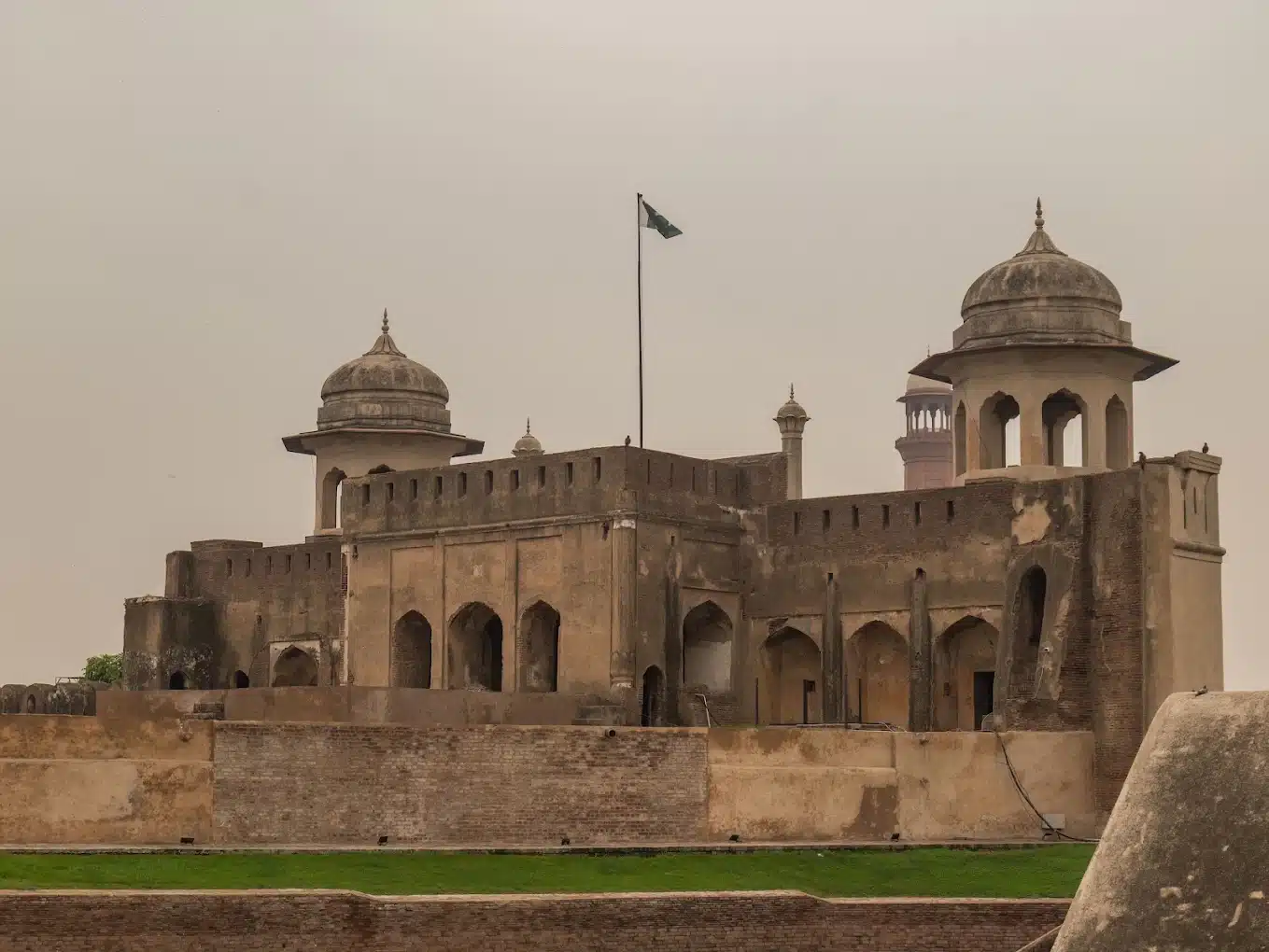
Lahore Fort, also known as Shahi Qila, is one of Pakistan’s most remarkable historical landmarks. Located at the northwestern corner of Lahore’s Walled City, this centuries-old fortress reflects the Mughal Empire’s grandeur through its monumental gateways, marble palaces, royal courtyards, and intricate decorations. Today, the fort is part of a UNESCO World Heritage Site and remains a major attraction for visitors interested in Pakistan’s history and architecture. Whether you want to explore Shahi Qila’s history, learn who built it, or check the latest ticket prices and timings, this guide covers everything you need to know.
Lahore Fort at a Glance
Here are the essential facts about Lahore Fort before exploring its history and attractions.
Information
Details
Name
Lahore Fort
Also known as
Shahi Qila
Location
Northwestern corner of the Walled City, Lahore, Punjab, Pakistan
Major Mughal reconstruction
Began in 1566 under Emperor Akbar
Architectural style
Mughal architecture with Islamic, Persian and regional influences
Historical rulers
Akbar, Jahangir, Shah Jahan, Aurangzeb and later Sikh rulers
UNESCO World Heritage status
Inscribed in 1981 alongside Shalimar Gardens
Notable surviving monuments
21
General entry ticket
PKR 100 for Pakistani visitors
Student ticket
PKR 30
Foreign visitor ticket
PKR 1,000
Opening time
8:00 AM
Closing time
Half an hour before sunset
Suggested visit duration
Approximately 2–3 hours
Where Is Lahore Fort Located?
Lahore Fort is located at the northwestern corner of the Walled City of Lahore, in Punjab, Pakistan.
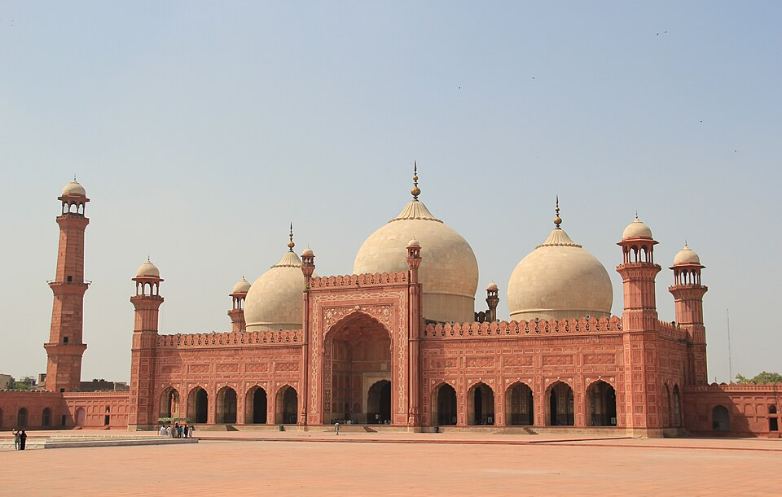
The fortress stands close to some of the city’s best-known historical landmarks, including Badshahi Mosque and Hazuri Bagh.
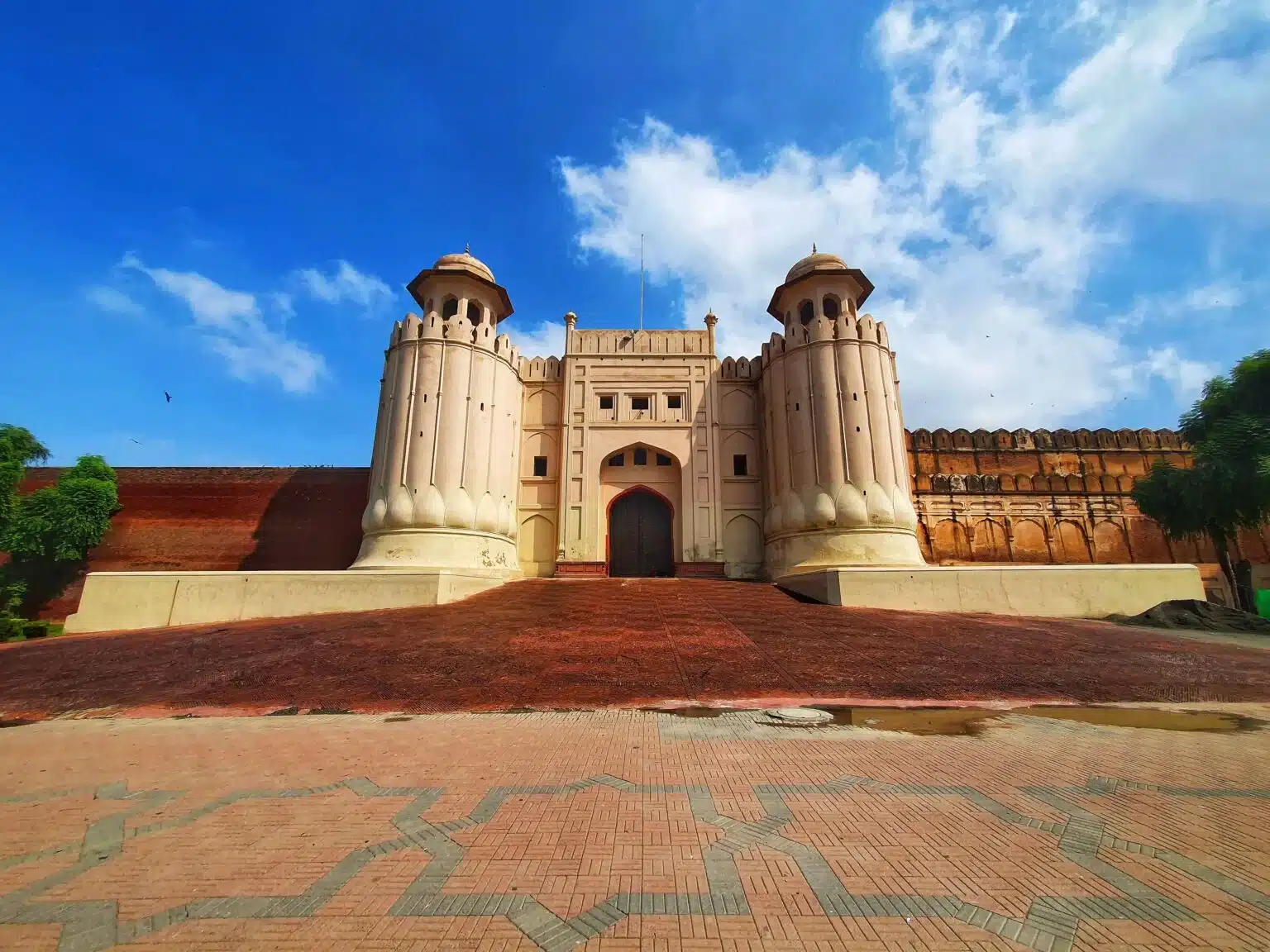
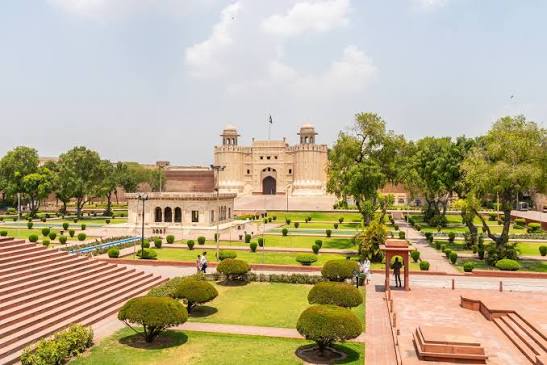
Its Alamgiri Gate faces the open historic space between the fort and Badshahi Mosque, creating one of Lahore’s most recognisable architectural settings.
Visitors can locate the monument using an online map by searching for Lahore Fort or Shahi Qila Lahore.
Because the surrounding historic district has narrow roads, pedestrian areas, and changing access arrangements, confirm the current visitor entrance and transport drop-off point before arriving.
Who Built Lahore Fort (Shahi Qila)?
Mughal Emperor Akbar extensively rebuilt Lahore Fort beginning in 1566. However, the fortification existed long before his reign, and several later Mughal emperors contributed to the buildings and architectural features visible today.
If you’re wondering who built Shahi Qila Lahore, Akbar is the principal ruler associated with its present Mughal form. His work introduced substantial brick and sandstone fortifications, royal accommodation and important administrative spaces.
The question of who built Shahi Qila has a more complex historical answer because the fortress was developed over several centuries. No single emperor completed it; successive rulers built and expanded it over time.
Jahangir expanded parts of the royal complex and contributed to its decorative architecture. Shah Jahan introduced elaborate marble buildings, including the celebrated Sheesh Mahal, while Aurangzeb commissioned the monumental Alamgiri Gate.
These contributions explain why Lahore Fort contains different architectural styles within the same fortified complex.
Ruler
Major contribution to Lahore Fort
Emperor Akbar
Major reconstruction beginning in 1566, fortifications and royal structures
Emperor Jahangir
Development of Jahangir’s Quadrangle and decorative work
Emperor Shah Jahan
Sheesh Mahal, marble palaces and richly decorated royal buildings
Emperor Aurangzeb
Alamgiri Gate
Maharaja Ranjit Singh
Sikh-era buildings, fortifications and alterations
Therefore, while the commonly accepted answer to “Shahi Qila was built by whom?” is Emperor Akbar, its surviving architecture reflects the work of multiple generations.
History of Shahi Qila Lahore
The history of Shahi Qila stretches across several periods of South Asian history. From early fortifications to Mughal royal residences, Sikh occupation and British administration, the fortress witnessed major political and architectural changes.
Understanding these periods helps explain why Lahore Fort is more than an impressive monument. It records the changing powers that controlled Lahore.
Early History of Lahore Fort
Lahore Fort’s origins predate the Mughal Empire. Archaeological and historical evidence indicates that people occupied the area long before the surviving Mughal buildings were constructed.
Early historical accounts refer to fortifications in Lahore during the medieval period, including an earlier mud-brick fort. The site changed repeatedly as different rulers took control of the city.
Because earlier structures were destroyed, rebuilt or incorporated into later construction, it is difficult to establish one precise founding date for the original fortress.
The fort’s location near the historic urban centre made it important for controlling access, maintaining defences, and administering the surrounding region.
Lahore Fort During Emperor Akbar’s Reign
The most significant transformation began during the reign of Mughal Emperor Akbar, who started rebuilding Lahore Fort in 1566.
Akbar’s reconstruction introduced extensive masonry, using baked bricks and red sandstone. The fort became an important military, administrative and royal complex, reflecting Lahore’s growing significance within the Mughal Empire.
Architectural elements from this period include impressive gateways, courtyards and buildings designed for royal administration.
Akbar’s work laid the foundation for the fort’s later development. Rather than replacing the entire complex each time, subsequent emperors adapted and expanded what earlier rulers had established.
Lahore Fort Under Jahangir, Shah Jahan and Aurangzeb
The 17th century brought some of the most elaborate additions to Shahi Qila.
Emperor Jahangir contributed to the complex’s royal courtyards and decorative features. His reign is especially associated with developing Jahangir’s Quadrangle and constructing the fort’s monumental Picture Wall.
Under Shah Jahan, Lahore Fort became increasingly refined. White marble, intricate inlay work, decorated screens and mirror mosaics transformed parts of the fortress into luxurious royal spaces.
Among Shah Jahan’s most important contributions were the Sheesh Mahal, Naulakha Pavilion and several private and ceremonial buildings.
Aurangzeb later added the imposing Alamgiri Gate on the fort’s western side. Its monumental design reinforced the fortress’s connection with the surrounding Mughal landscape, including Badshahi Mosque.
Together, these reigns shaped the architectural identity for which Lahore Fort is famous today.
Shahi Qila During Sikh and British Rule
Following the decline of Mughal power, Lahore Fort passed through periods of political instability before becoming an important centre under Sikh rule.
Maharaja Ranjit Singh, who established Lahore as the capital of his Sikh Empire, used the fort as a royal residence. Sikh-era additions and alterations included residential structures, defensive works, and other buildings that served the new administration.
After the British annexation of Punjab in 1849, the fort came under colonial control. The complex served military and administrative purposes.
These later periods changed the use and condition of several historic buildings, adding further layers to the site’s history.
Lahore Fort After Pakistan’s Independence
After Pakistan gained independence in 1947, Lahore Fort remained one of the country’s most important historical monuments.
The international community recognised its significance in 1981 when UNESCO inscribed Lahore Fort and Shalimar Gardens together on the World Heritage List.
Since then, conservation work has focused on protecting architectural features, stabilising historic structures and restoring decorative surfaces.
Today, Lahore Fort continues to function as a public heritage attraction, preserving evidence of Lahore’s political, artistic and cultural history.
Timeline of Lahore Fort’s History
Historical period
Important development
Pre-Mughal period
Earlier settlement and fortifications occupied the site
1566
Akbar began the major Mughal reconstruction
1617–1618
Jahangir-era development of the northern royal court
1624–1625
Decorative work began on the Picture Wall
1631–1632
Shah Jahan’s major palace and decorative additions
Lahore Fort’s architecture reflects the Mughal Empire’s artistic development across different reigns.
Spread over more than 20 hectares, the fortress contains 21 notable surviving monuments. Its buildings include audience halls, royal residences, mosques, courtyards, monumental gates and intricately decorated pavilions.
Earlier Mughal construction, particularly under Akbar, relied heavily on baked brick and red sandstone. Structural strength, impressive proportions and carved decorative details characterised many buildings of this period.
Later architecture introduced increasingly elaborate artistic elements.
Under Shah Jahan, white marble became particularly prominent. Carved screens, floral inlays, glazed tilework, mirror mosaics and decorative plaster transformed royal interiors into carefully composed spaces.
The fort also demonstrates the interaction of Islamic, Persian, Hindu and other regional artistic traditions. These influences can be seen in its decorative motifs, architectural forms, materials and craftsmanship.
Unlike a monument built from a single architectural plan, Lahore Fort developed gradually. This mixture of styles is part of what makes it historically valuable.
Famous Places to See Inside Lahore Fort
Lahore Fort contains some of Pakistan’s finest surviving examples of Mughal architecture. Its palaces, gates, and courtyards offer a glimpse into royal life, ceremonial traditions, and architectural craftsmanship.
These are some of the most important attractions inside Shahi Qila Lahore.
1. Sheesh Mahal (Palace of Mirrors)
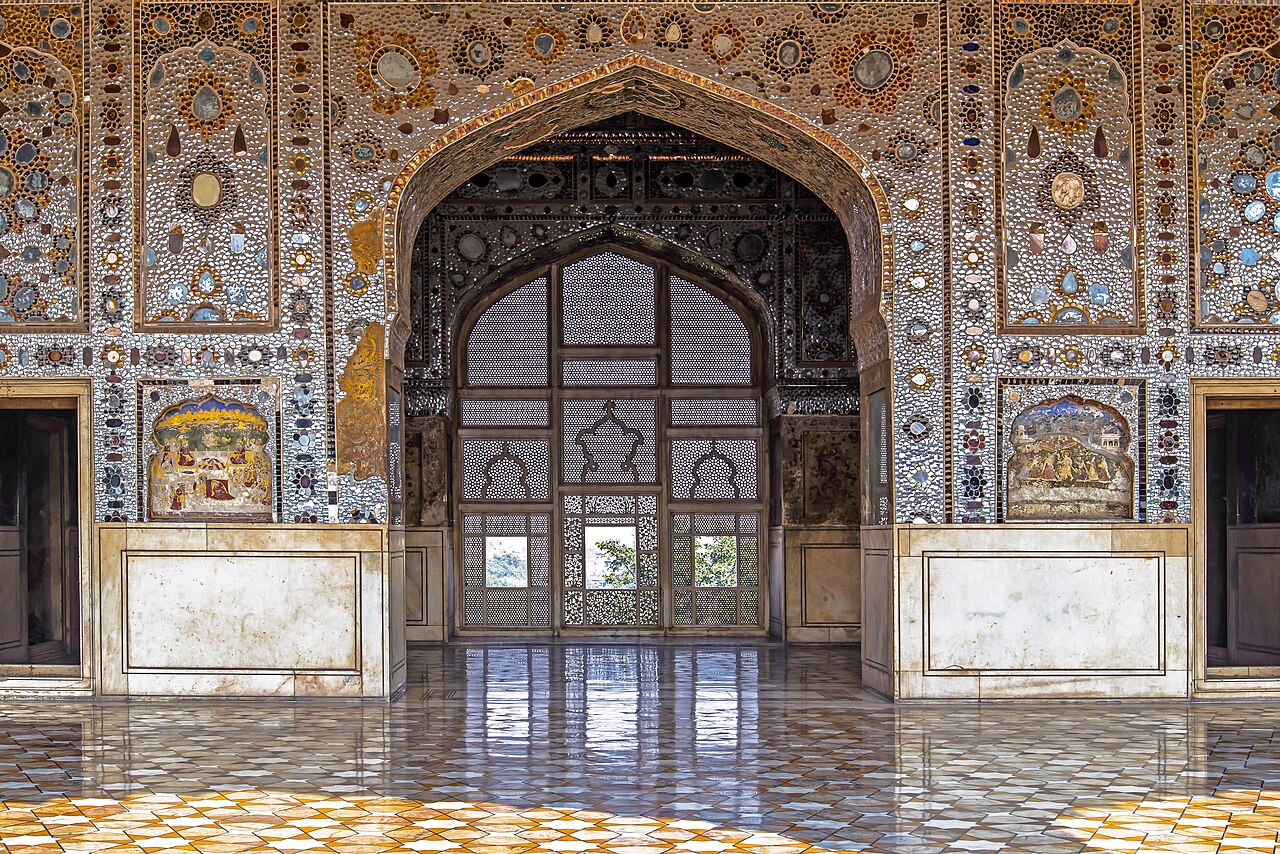
Sheesh Mahal is one of the most celebrated buildings in Lahore Fort. Built during Shah Jahan’s reign in the early 1630s, the palace is famous for its remarkable mirror mosaic decorations.
Its walls and ceilings incorporate carefully arranged pieces of reflective glass, intricate patterns and ornamental details. These decorations were designed to create an elaborate interior environment within the royal palace.
Marble screens and fine decorative craftsmanship add to its architectural significance.
The name Sheesh Mahal means Palace of Mirrors, reflecting the feature for which it is best known.
For visitors interested in Mughal artistic techniques, Sheesh Mahal offers one of the clearest examples of the sophistication achieved during Shah Jahan’s reign.
2. Alamgiri Gate
Alamgiri Gate is one of the most recognisable structures associated with Lahore Fort.
Commissioned by Mughal Emperor Aurangzeb in the 1670s, the monumental gateway stands on the fortress’s western side, facing Hazuri Bagh and Badshahi Mosque.
Its imposing entrance is flanked by two large semicircular bastions with distinctive decorative bases and domed pavilions above.
The gateway was designed on a grand scale, allowing royal processions, including elephant-mounted visitors, to pass through.
Today, Alamgiri Gate remains an iconic architectural symbol of Lahore and a prominent feature of the historic cityscape.
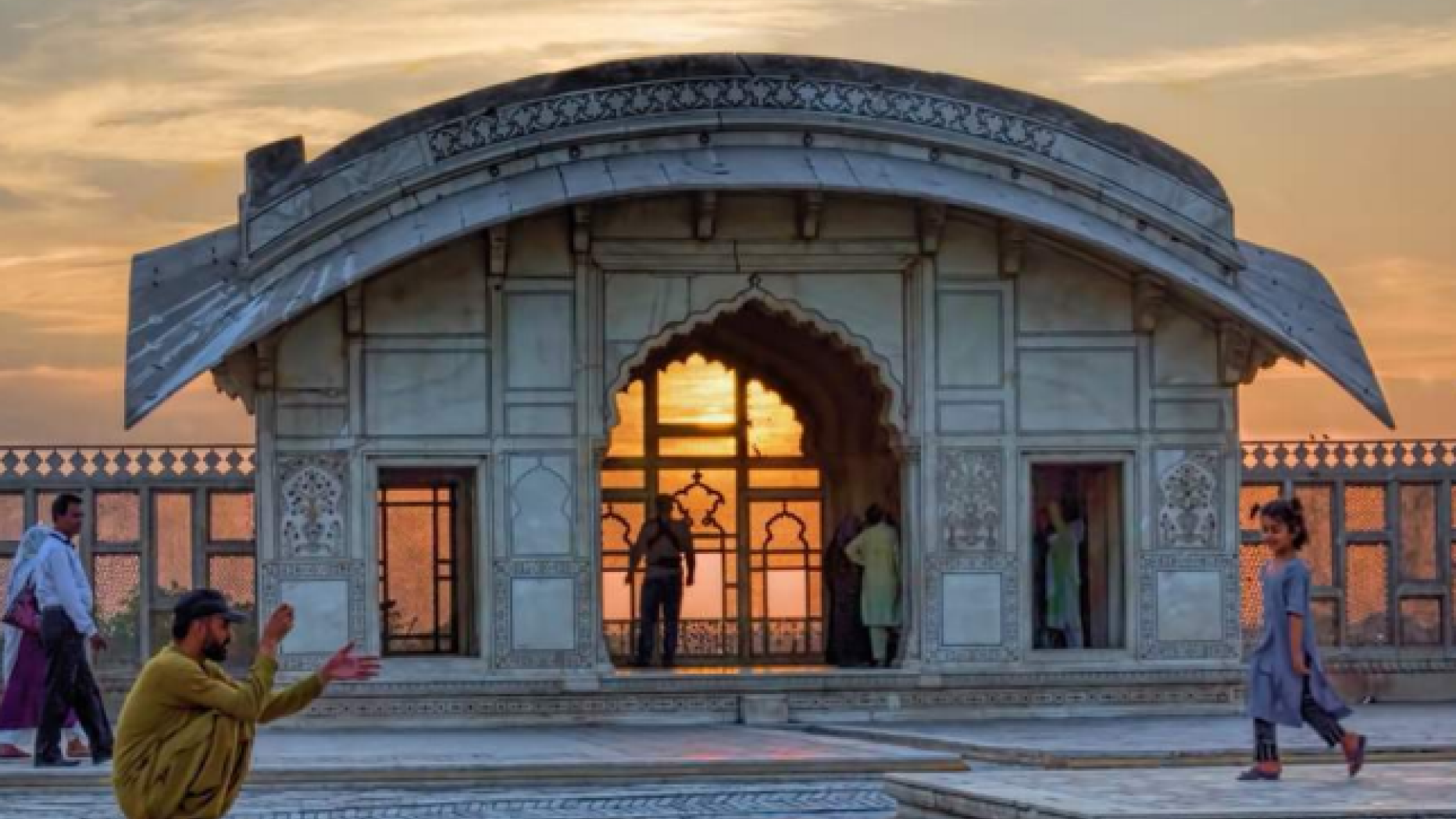
3. Naulakha Pavilion
Naulakha Pavilion is a marble structure associated with Emperor Shah Jahan.
Located near Sheesh Mahal, the pavilion is best known for its distinctive curved roof, elegant proportions, and refined marble decoration.
Its architecture reflects the Mughal preference for carefully balanced forms and intricate craftsmanship.
The pavilion is named after the traditional account that it cost nine lakh rupees to build.
Although smaller than several other buildings inside Lahore Fort, Naulakha Pavilion stands out because of its graceful design and artistic detailing.
4. Lahore Fort Picture Wall
The Picture Wall is one of Shahi Qila’s most extraordinary decorative features.
It was built and decorated during the reigns of Jahangir and Shah Jahan. The wall features numerous decorative panels with glazed tiles, mosaics, and intricate imagery.
The designs include artistic representations of animals, courtly activities, floral patterns and other decorative subjects.
The Picture Wall is especially important for its scale and the variety of techniques used to create its ornamentation.
Conservation projects have revealed and preserved sections of its historic decoration, allowing visitors to appreciate the craftsmanship that once adorned the royal fortress.
5. Diwan-e-Aam
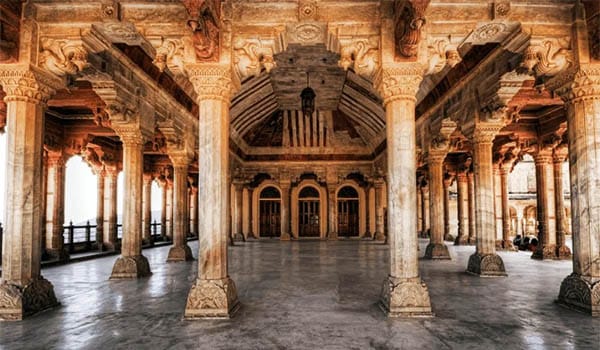
Diwan-e-Aam, meaning Hall of Public Audience, served as the administrative and ceremonial centre of Mughal rule.
Audience halls provided spaces where emperors could receive officials, petitioners and other visitors according to court traditions.
The architectural arrangement emphasises openness, symmetry and the authority of the royal court.
Although parts of the structure changed and were rebuilt across different historical periods, Diwan-e-Aam remains an important reminder that Lahore Fort was not merely a defensive fortress.
It also served as a centre of government and public royal ceremony.
6. Moti Masjid (Pearl Mosque)
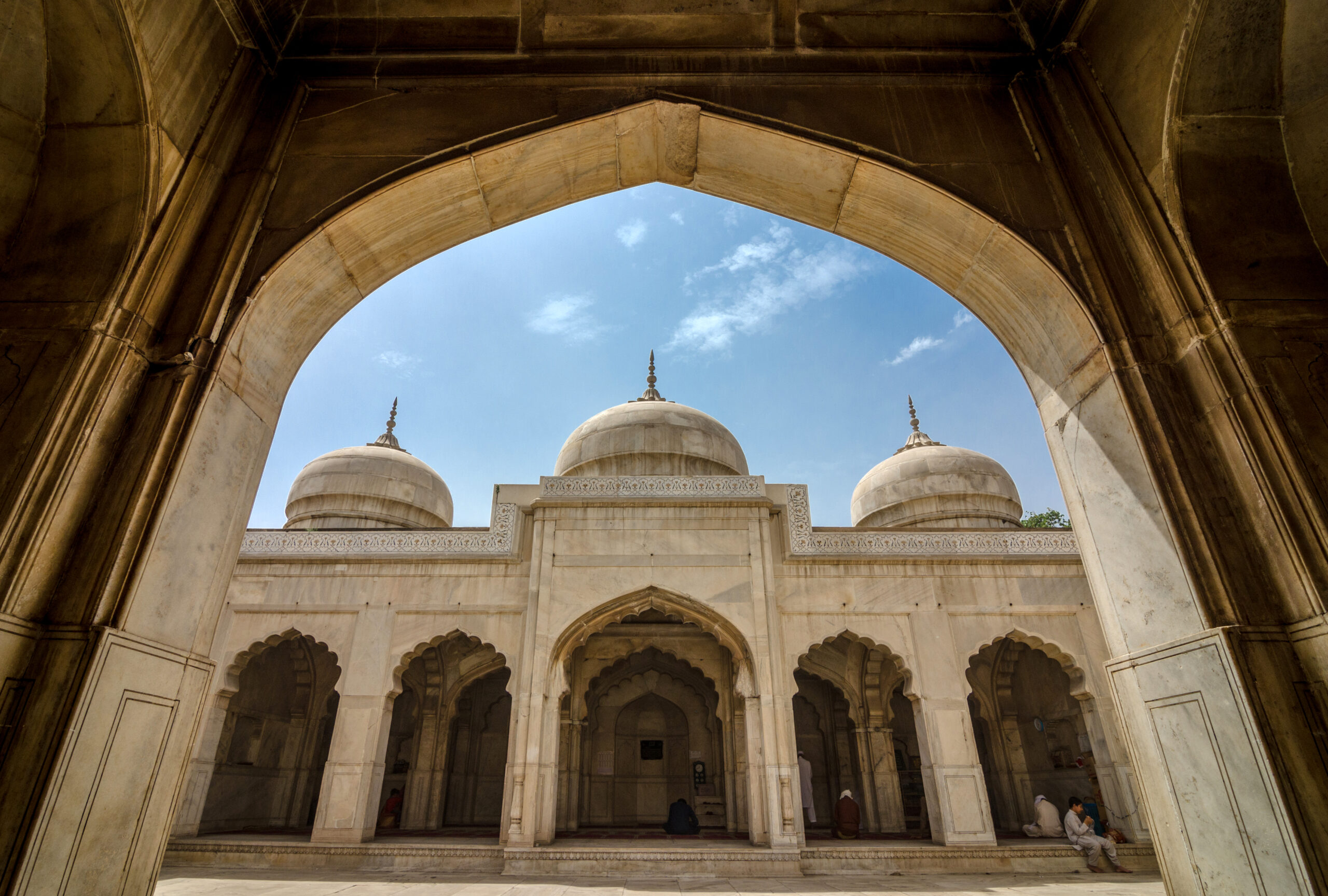
Moti Masjid is a historic mosque inside Lahore Fort, generally associated with Shah Jahan’s reign.
Its name means Pearl Mosque, reflecting the graceful appearance of its white marble architecture.
Compared with the fort’s monumental audience halls and gateways, Moti Masjid is relatively modest in scale. Its design relies on balanced proportions, marble surfaces and restrained decorative detail.
The mosque served religious functions within the royal complex and later changed use under successive administrations.
Its peaceful architectural character contrasts with the imposing defensive structures surrounding the palace complex.
Shahi Qila Lahore Ticket Price
The Shahi Qila Lahore ticket price depends on the visitor category. The official Lahore Fort website currently publishes separate admission charges for Pakistani visitors, students and foreign nationals.
Shahi Qila Ticket Price
Visitor category
Ticket price
Pakistani general admission
PKR 100
Student admission
PKR 30
Foreign visitor admission
PKR 1,000
These admission rates are published on the official Lahore Fort website and were checked on October 12, 2026.
Visitors should also note that certain guided tours, special-access experiences, and organised heritage activities may require separate tickets.
If you are checking the Shahi Qila ticket price before planning a visit, confirm the latest charges through theofficial Lahore Fort website, particularly if you are visiting after the date shown above.
Shahi Qila Lahore Timing and Opening Hours
According to the official Lahore Fort website, the published visiting hours are:
Visiting information
Official published schedule
Opening time
8:00 AM
Closing time
Half an hour before sunset
The Shahi Qila Lahore timing is linked to sunset, so the actual closing time changes with the season.
Visitors should not assume the fort always closes at a fixed afternoon hour.
Special events, maintenance work, public holidays or operational arrangements may also affect entry to certain areas.
To avoid inconvenience, check the latest official information before travelling and allow enough time to explore the main monuments during daylight.
What is the Best Time to Visit Lahore Fort?
The best time to visit Lahore Fort depends on the weather and the kind of sightseeing experience you prefer.
For many visitors, the cooler months from November to February offer more comfortable conditions for exploring the fort’s expansive courtyards and outdoor areas.
During Lahore’s hotter months, a morning visit is generally preferable. Arriving early makes walking between monuments more manageable before afternoon temperatures rise.
Morning light can also be ideal for photographing the fort’s gateways, courtyards, and architectural details.
Regardless of the season, remember that Lahore Fort covers a considerable area, and many sections require outdoor walking.
Comfortable footwear, drinking water and appropriate sun protection can make the experience easier.
How to Explore Lahore Fort?
A typical visit to Lahore Fort takes about two to three hours, though visitors interested in architecture, history, and photography may want to spend more time.
A useful way to explore Shahi Qila is to pair its major historical buildings with the stories of the rulers who built them.
Begin at the designated visitor entrance and learn about the fort’s development under Akbar. From there, explore the accessible royal courtyards and audience halls to understand how the complex functioned as both a palace and an administrative centre.
Continue to the buildings associated with Jahangir and Shah Jahan, noting changes in construction materials and decorative styles.
If access is permitted, prioritise Sheesh Mahal and Naulakha Pavilion for their marble architecture and artistic details. The Picture Wall is another essential feature for understanding Mughal decoration and craftsmanship.
Some specialised tours provide access to areas not normally included in standard visits. Check availability, prices and conditions through official heritage channels.
After a long day of sightseeing, many visitors like to end the trip with a proper meal. Our list offine dining restaurants in Lahore covers options across the city.
Why Is Lahore Fort a UNESCO World Heritage Site?
Lahore Fort became part of a UNESCO World Heritage property in 1981, alongside the historic Shalimar Gardens.
UNESCO recognises these two royal complexes as outstanding examples of Mughal artistic and architectural achievement during the 16th and 17th centuries.
Lahore Fort represents Mughal monumental architecture, while Shalimar Gardens showcases the period’s sophisticated approach to landscape design and water features.
The fort’s 21 surviving monuments show Mughal architecture’s progression from Akbar’s relatively robust brick-and-sandstone buildings to the elaborate marble palaces and decorative craftsmanship of Shah Jahan’s reign.
Its structures also reveal a combination of Islamic, Persian, Hindu and other artistic influences that shaped the Mughal architectural tradition.
UNESCO recognition reinforces the importance of preserving Lahore Fort for future generations.
Although the fort and Shalimar Gardens share a single World Heritage inscription, they are separate sites in Lahore.
Places to Visit Near Lahore Fort
A visit to Shahi Qila can easily form part of a broader exploration of Lahore’s historic district.
Badshahi Mosque
Located opposite the fort’s Alamgiri Gate, Badshahi Mosque is one of Lahore’s most recognisable Mughal landmarks. Commissioned during Aurangzeb’s reign, it provides an architectural connection to the fort’s later Mughal period.
Hazuri Bagh
Hazuri Bagh occupies the historic open space between Lahore Fort and Badshahi Mosque. Its location makes it particularly relevant for understanding the relationship between the area’s major monuments.
Fort Road Food Street
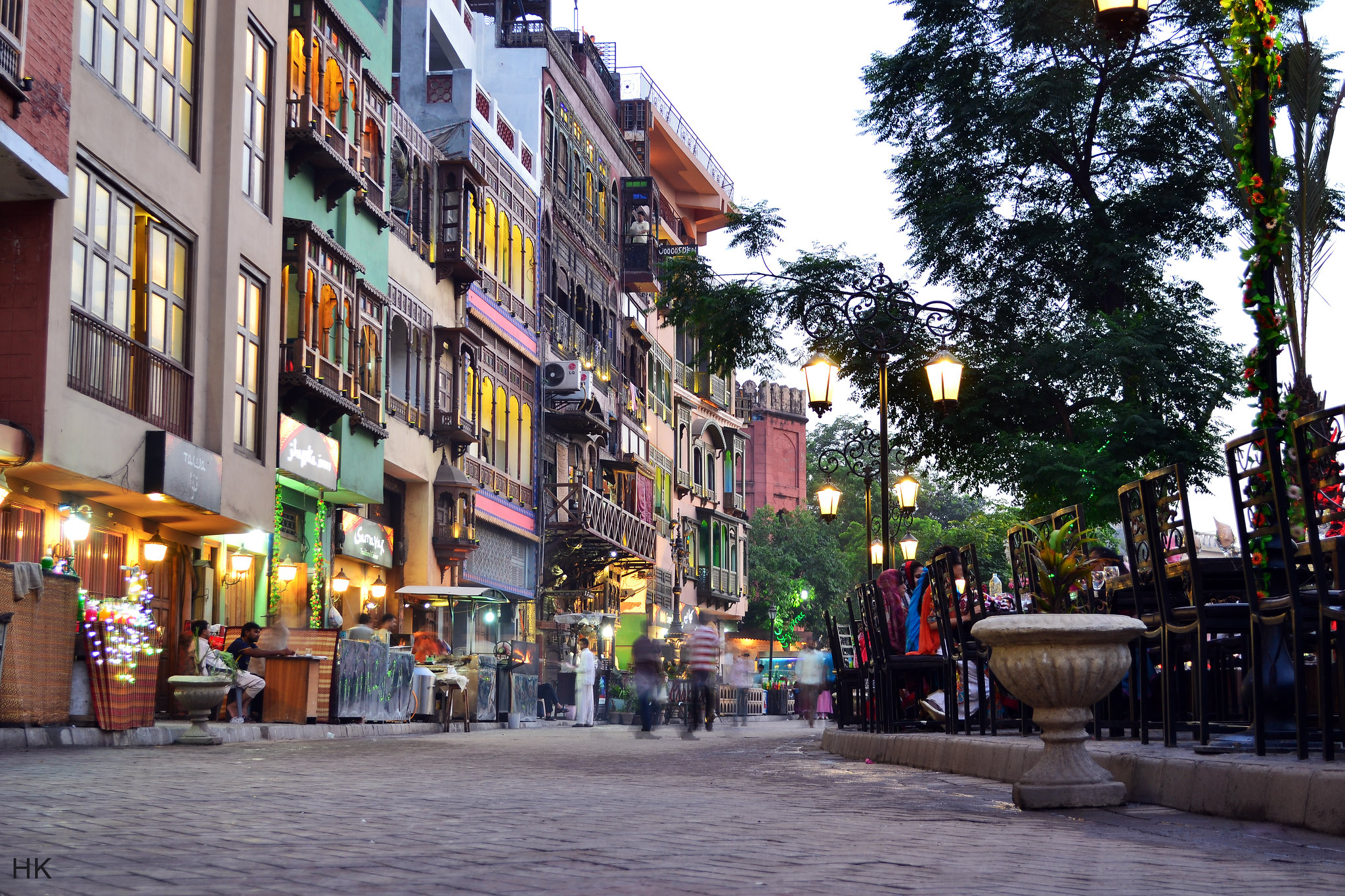
The nearby Fort Road area offers opportunities to experience Lahore’s food culture while viewing parts of the surrounding historic cityscape. If you want an evening meal with a view, our guide to therooftop restaurants in Lahore is a good place to start, and visitors travelling with kids can check thebest restaurants in Lahore for family.
Visitors planning to explore several attractions should check each attraction’s opening hours and entry arrangements, as they may differ from Lahore Fort’s.
Frequently Asked Questions About Lahore Fort
Who built Shahi Qila Lahore?
Mughal Emperor Akbar began the major reconstruction of Lahore Fort in 1566. However, the site contained earlier fortifications, and later emperors, including Jahangir, Shah Jahan and Aurangzeb, added important buildings.
When was Lahore Fort built?
Akbar began developing the foundations of the present Mughal-era fort in 1566. The site’s earlier history extends back centuries, so 1566 should not be treated as the date of its original foundation.
What is the history of Shahi Qila?
Shahi Qila’s history includes pre-Mughal fortifications, Akbar’s major reconstruction, architectural expansion under later Mughal rulers, Sikh-era occupation, and changes during British rule. It became part of a UNESCO World Heritage property in 1981.
What is the Shahi Qila Lahore ticket price?
The official website publishes general admission at PKR 100 for Pakistani visitors, PKR 30 for students and PKR 1,000 for foreign visitors. These rates were checked on October 12, 2026, and should be reconfirmed before visiting.
What are the Shahi Qila Lahore timings?
The official published opening time is 8:00 AM, and the fort closes half an hour before sunset. The exact closing time therefore varies throughout the year.
Is Lahore Fort the same as Shahi Qila?
Yes. Lahore Fort and Shahi Qila are two names for the same historic fortress in Lahore’s Walled City. Shahi Qila is the name commonly used locally.
Why is Lahore Fort famous?
Lahore Fort is famous for its Mughal architecture, royal palaces, Sheesh Mahal, Picture Wall, Naulakha Pavilion and Alamgiri Gate. It is also recognised internationally as part of a UNESCO World Heritage property.
How much time is needed to visit Lahore Fort?
Approximately two to three hours is a reasonable estimate for a general sightseeing visit. Visitors who want to explore the architecture in greater detail, take photographs or join guided experiences may need additional time.
Conclusion
Lahore Fort is one of Pakistan’s most significant historical landmarks, preserving centuries of Mughal architecture and later political history within a single fortified complex. From Akbar’s reconstruction to Shah Jahan’s marble palaces and Aurangzeb’s monumental gateway, Shahi Qila reveals how successive rulers shaped Lahore’s architectural heritage.
Whether you’re visiting for its history, photography, or remarkable monuments, check the latest ticket prices and timings beforehand to make the most of your visit.
BBC-featured Content Specialist with a sharp eye for search intent and a proven ability to turn content into a growth engine. I leverage cutting-edge digital marketing tools to craft strategies that fuel organic traffic, amplify brand growth, and own the local SEO landscape, particularly across the competitive real estate market. I help brands dominate search rankings and convert visibility into measurable business success.
A division bench of Justice Hassan Nawaz Makhdoom and Justice Khalid Ishaq allowed a petition filed by LUMS and the National Management Foundation, the non-profit society under which the university was established. The petition challenged orders of the Director General, Military Lands and Cantonments, Rawalpindi.
The Cantonment Board first issued a tax notice on the university’s buildings in 2007, 14 years after LUMS began operating from its Lahore campus in 1993. LUMS claimed exemption under Section 99(2)(b) of the Cantonments Act, 1924. Its appeal was dismissed in 2011, and a revision petition in 2017.
The university told the court it has over 5,000 students across five schools and has provided about Rs13.3 billion in financial aid since its founding. The respondents argued that LUMS earns substantial income from fees and investments and lets out some buildings and halls, which they said amounted to commercial activity.
In the judgment, Justice Ishaq held that the 2023 amendment made a substantive change that cannot be applied to earlier assessment periods. He ruled that charging fees and retaining a surplus does not establish a profit-making purpose, provided no funds are distributed to promoters, trustees or controllers.
The court declared the 2011 and 2017 orders void and barred recovery of any pre-amendment demand. For the later period, it said the amended law gives the Cantonment Board discretion to grant or refuse exemption. Any future assessment must be made through a reasoned order examining the use, income and public access of each building concerned.
BBC-featured Content Specialist with a sharp eye for search intent and a proven ability to turn content into a growth engine. I leverage cutting-edge digital marketing tools to craft strategies that fuel organic traffic, amplify brand growth, and own the local SEO landscape, particularly across the competitive real estate market. I help brands dominate search rankings and convert visibility into measurable business success.
LAHORE – The Punjab government has made sanitation fee payment mandatory for obtaining a no-objection certificate (NOC) for property sales, introducing the condition before it completes the distribution of bills across the province.
The new requirement binds property owners to clear outstanding sanitation charges before receiving a property transaction NOC. Previously, only property tax clearance was required. The condition has reportedly affected property transactions, particularly for owners who have yet to receive their bills.
The government has begun distributing bills to around five million residential and commercial properties in urban areas under the Suthra Punjab programme, with distribution expected to be completed this month. The Excise, Taxation and Narcotics Control Department has been tasked with billing and collecting the charges, with an annual revenue target of approximately Rs40 billion.
Owners will receive two bills over six months for their annual sanitation fee liability and must pay within 60 days of receiving them. Penalties will be applicable for delays.
For residential properties, monthly sanitation charges range from Rs300 for properties measuring up to five marla to Rs5,000 for those exceeding 40 marla. Commercial properties face monthly charges ranging from Rs500 to Rs3,000, depending on size.
The government has completed data integration between the excise department and Suthra Punjab, linking sanitation fee records with property ownership data and enabling the new NOC requirement.
Excise inspectors are responsible for delivering bills within their respective circles, while sanitation fee collection will occur alongside property tax payments.
BBC-featured Content Specialist with a sharp eye for search intent and a proven ability to turn content into a growth engine. I leverage cutting-edge digital marketing tools to craft strategies that fuel organic traffic, amplify brand growth, and own the local SEO landscape, particularly across the competitive real estate market. I help brands dominate search rankings and convert visibility into measurable business success.
If you are hungry in Allama Iqbal Town, the real challenge isn’t finding food; it’s choosing where to eat. Smoky BBQ, slow-cooked nihari, cheesy pizzas, and street-style snacks are all just blocks apart. With so many restaurants in Iqbal Town Lahore competing for your attention, a little guidance goes a long way. We have picked out the best restaurants in Iqbal Town Lahore, from long-running family favourites to newer spots worth trying. Each includes a short description, so you can quickly find a place that suits your taste, budget, and plans for the day.
List of the Best Restaurants in Iqbal Town Lahore
Sr. No.
Restaurant Name
Location / Address in Lahore
Contact Number
Social Media
Website
1
Pind Restaurant
33-College Block, Fashion Avenue, Bhekewal Chowk, Main Boulevard, Allama Iqbal Town
Pind Restaurant – Restaurants in Iqbal Town Lahore
Set in Fashion Avenue on Main Boulevard, Pind is known for its mughlai handi and hearty BBQ platters. It works well for group dinners where everyone wants to share.
BonFire – Restaurants in Iqbal Town Lahore
Chicken tikka is the dish regulars mention first at BonFire, usually described as juicy with a proper smoky finish. It is a dependable stop for grilled food lovers.
Jawa Restaurant – Restaurants in Iqbal Town Lahore
Families often pick Jawa for its relaxed setting on Main Boulevard and the attentive service. Expect a comfortable meal without much fuss.
Twice Da Spice – Restaurants in Iqbal Town Lahore
Good ambience and consistent food quality have earned this place a loyal following. It opens at 1 pm, so plan a late lunch or dinner.
Bundu Khan Restaurant
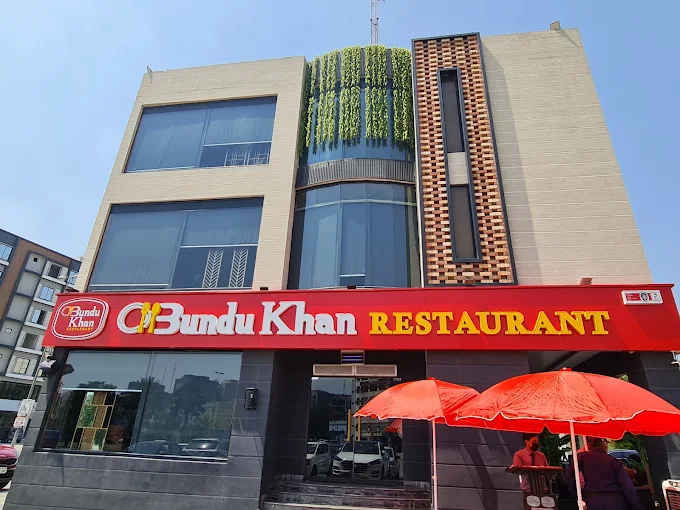
A Lahore name with a strong reputation for meat dishes, order the zafrani mutton ran roast. The Service Road location makes it easy to reach.
Stone Ove Pizza Valley
Pizza lovers can settle in for a comfortable evening, with guests praising the ambience as much as the food. Prices stay friendly, mostly under Rs 2,000 per person.
Cup Shup Iqbal Town –
Cup Shup suits casual hangouts, with a pleasant atmosphere and an easy-on-the-pocket menu. It opens at 3 pm, making it an afternoon-to-evening pick.
Yasir Broast
Near Bhekewal Morr, this spot goes beyond broast with items like grilled fish served with garlic naan. Many reviews point to steady popularity.
Namak Mandi – Restaurants in Iqbal Town Lahore
Mandi rice is the highlight here, praised for good flavour at a fair price. Barbecue fans on a budget will find it a sensible choice.
Gujjar Restaurant
Beef kabab is what keeps people coming to Gujjar. Meals are simple, filling, and priced for everyday eating.
Cluckin
Fried chicken cravings are well handled at this Gulshan Main fast-food stop. Customers regularly mention friendly, quick service.
Daily Deli Co.
Burgers and other fast-food favourites are served in a tidy, comfortable space on Gulshan Block. Reviewers rate both the ambience and the service highly.
Nush – Smash Burgers & Sando
The focus is smashed patties and crispy sandos, and the chicken fillet burger deal gets particular praise. It opens from 5 pm onward.
Xiwang Restaurant
Located on Allama Iqbal Road in College Block, Xiwang is described by diners as full of flavour without being expensive. A flexible menu covers both small and large budgets.
Cheesy Spot Pizza Restaurant
Cleanliness and polite staff stand out at this pizza place in Hunza Block. The cheesy pies do the talking.
Yummy Boy – Restaurants in Iqbal Town Lahore
With one of the highest review counts in the area, Yummy Boy is a go-to for Chinese food. Many guests call it one of the best Chinese places in Lahore, and prices stay reasonable.
Broadway Pizza
This well-known chain branch on Main Boulevard offers consistent pizza and a neat, comfortable dining area. It is a safe option when you want familiar flavours.
Haji Baba Tikka Rooftop Restaurant
Rooftop seating gives this Karim Park spot a relaxed, open feel after sunset. Tikka dishes arrive fresh and affordable, with service starting at 6 pm.
Cheezious – Restaurants in Iqbal Town Lahore
This Main Boulevard branch specialises in cheese-loaded fast food, and the ambience gets good feedback. Some visitors mention long waits during busy hours.
Fri-Chiks
Crispy fried chicken defines this Service Road outlet, which serves casual diners looking for a quick, satisfying meal.
NY212 – Restaurants in Iqbal Town Lahore
Pizza is the main draw at NY212, and diners also praise the courteous staff. It makes a good stop for a laid-back lunch.
XO – Pan Asian Cuisine
Tender, soft chicken has impressed even those used to high-end restaurants. Pan-Asian flavours and a 3 pm opening make it ideal for evening plans.
Kababjees Fried Chicken – Restaurants in Iqbal Town Lahore
Quick service and a pleasant environment make Kababjees an easy choice when you’re short on time. The fried chicken is the main attraction.
Slice & Sizzle
Arabian-style injected broast is the item to try here. The place is compact, friendly, and wallet-friendly.
Mad Max – Restaurants in Iqbal Town Lahore
Close to Gourmet Bakers, Mad Max wins over customers with good flavour and low prices. The staff are warm and helpful, and the doors open at 5 pm.
Lahore Broast Restaurant
Located on Main Boulevard, this restaurant keeps things simple with broast and filling meals at affordable rates.
OPTP – Restaurants in Iqbal Town Lahore
Loaded bomber fries and churros are the items people rave about. Found in the LDA Apartments, it is a fun pick for snacks and sweets.
Fri-Chiks (Karim Block)
Families with young children will appreciate the play area at this Karim Block market branch. The food is fresh, and the team is friendly.
Swadi Family Restaurant
Traditional Pakistani dishes and polite service make Swadi a comfortable pick in Sutlej Block. Think of it as a calm place for a home-style meal.
Waris Nihari – Restaurants in Iqbal Town Lahore
Beef nihari here is cooked the old-fashioned way, and long-time customers say the taste has barely changed over the decades. It is best enjoyed as a hearty, slow-paced meal.
Moon Market – Restaurants in Iqbal Town Lahore
More than a single eatery, Moon Market is a bustling hub where snacks, breakfast, and street food sit side by side. It is the place to wander when you cannot decide what to eat.
QD’s Family Restaurant (Branch 2)
Diners describe the pricing as very affordable and the taste as consistently good. It opens at 2 pm and is great for relaxed family lunches.
Ali Shan Sajji – Restaurants in Iqbal Town Lahore
Sajji with generous portions of rice is the star at this Fazal-e-Haq Road restaurant. Plan for the evening, as it opens at 6 pm.
The Garden Spice – Restaurants in Iqbal Town Lahore
Its garden-style setting near Green Forts 2 is among the best in Lahore. The BBQ platter is highly recommended, and the family-friendly vibe makes it great for special occasions.
Haveli Restaurant
Rooftop views of Badshahi Mosque and the old city make this Food Street landmark famous. The scenery adds to the meal, especially at dusk.
Alkhair Chullu Roast – Restaurants in Iqbal Town Lahore
Chicken roast served alongside well-cooked rice keeps this Noor-ul-Amin Road eatery popular. Simple, tasty, and budget-friendly.
Pizza Stories Iqbal Town
A cozy atmosphere and friendly staff make this pizzeria feel welcoming. It has one of the area’s highest ratings and opens at 5 pm.
What a Paratha – Restaurants in Iqbal Town Lahore
Paratha lovers will find plenty here at pocket-friendly prices. Reviewers also mention the helpful staff.
Pizza Max Iqbal Town
Decent ambience, good ingredients, and fair pricing give Pizza Max a reputation for value. The menu covers a wide budget range.
Burger Cottage – Restaurants in Iqbal Town Lahore
Signature sauces and meal deals keep regulars returning to this Fazal-e-Haq Road spot. It is an easy pick for a fast and affordable burger fix.
KWC (Grill & Pizza)
KWC does grilled chicken sandwiches best, with some diners calling them the finest in Lahore. Pizza is also on the menu, and the doors open at 4 pm.
Food Parliament – Restaurants in Iqbal Town Lahore
Spacious car parking is a real plus here, along with good food and attentive staff. Opens from 2 pm, so it suits a late lunch.
Foodpanda Iqbal Town
Offering both dine-in and takeaway, this listing gives you a convenient option when you want food without much planning.
Stone Fire – Restaurants in Iqbal Town Lahore
Visitors suggest trying the crunchy pasta. It is a modest, casual place for a quick bite.
Sultan Shawarma
Wraps and a refreshing mint margarita are the highlights on Main Boulevard. The pleasant ambience keeps customers coming back after 2:30 pm.
Mei Kong – Restaurants in Iqbal Town Lahore
A long-standing Chinese restaurant with many reviews and a steady reputation for good food and ambience. Meals sit in the Rs 2,000–3,000 range per person.
Chacha Bassa Halwa Puri
Breakfast in Moon Market Park often means halwa puri from this stall, which many consider among the best in Lahore. Go early, as it closes around midday.
Master Chef Grill & Gravy
Across from Fri-Chiks in Karim Block Market, this restaurant is praised for tasty dishes and good service. It opens at 2 pm.
Its BBC Times (BBC Restaurant)
Reasonable prices and decent food are the main appeal. It opens at 6 pm, so think of it as a casual evening stop.
Quetta Khyber Restaurant
Namkeen gosht, a salt-and-spice style mutton dish from Balochistan, is the speciality. It is located near Karim Market and keeps prices low.
Khan Naan Channay – Restaurants in Iqbal Town Lahore
Hot naan with channay makes a filling, inexpensive breakfast or brunch. Diners consistently mention good taste for the price.
Food Studio by URFAH
Grilled burgers and loaded fries are the items reviewers single out. Pizza is on the menu too, and the evening hours start at 4 pm.
Biryani Master Karim Block
Biryani fans can expect good quality and flavour in Karim Block market, plus a friendly team. A single plate fits comfortably under Rs 1,000.
Papa John’s Pizza
Fajita thin crust is the pizza most guests recommend at this branch. It is a reliable choice for those who prefer a familiar brand.
Sabir Sajji House
Sajji is the focus, though opinions vary on whether it is the very best in town. It opens at 4 pm and keeps prices low.
Xian City Chinese – Restaurants in Iqbal Town Lahore
The special soup earns repeated praise here. Expect Chinese noodles and similar dishes in Satluj Block.
Zaika.PK Restaurant
Located in Kashmir Block, this restaurant has earned praise for both food and service despite fewer reviews.
Haji Baba Tikka Shop
Live cooking, fresh ingredients, and rooftop seating give this Noor-ul-Amin Road spot its character. Service is quick, and prices are moderate.
Tea Wala and Fast Food
Generous portions at modest prices keep this Moon Market Park stand busy. Come after 4 pm for fast food and chai.
Al Syed Biryani And Pakwan Centre
Value for money is the selling point, with some calling it the best biryani in Iqbal Town. Quantity, taste, and low cost all earn mentions.
Sheikh Restaurant
Tucked into Hameed Plaza in Satluj Block, Sheikh offers both dine-in and takeaway. It is a practical choice for a straightforward meal.
Al-Rehmat Restaurant
Based in Lahore Plaza, this restaurant has impressed guests with tasty food. A smaller review count suggests it is still a lesser-known find.
Pizza21 By Namak Mandi
Pizza from the team behind Namak Mandi is budget-friendly. Service may be hit or miss, but diners generally leave satisfied with the food.
Chaskolay – Restaurants in Iqbal Town Lahore
A family-friendly spot offering dine-in, takeaway, and delivery, so you can enjoy it however suits you. It opens at 6 pm.
Spice Castle
Located in Rachna Block, Spice Castle offers dine-in and drive-through options. It is a convenient stop when you are short on time.
Chinese Cuisine
Reasonable prices and a cool atmosphere make this Gulshan-e-Iqbal Road spot a pleasant place for Chinese dishes. It opens at 2:30 pm.
P4PIZZA
The setting is comfortable and the pizza is fairly average according to reviewers. Fine for a casual, no-pressure meal.
Mystique Restaurants Lahore
This fine-dining option on MM Alam Road stands out for elegant ambiance and a kind, welcoming owner. Expect to spend between Rs 2,000 and Rs 8,000.
Cook Nook Pizza
Budget-friendly pizzas draw regular crowds to this Noor-ul-Amin Road outlet. It opens at 1 pm and works well for quick group orders.
Eten – Canal Road
Eten is best known for its high tea, which diners rate very highly for both food and service. The eclectic menu on Main Canal Road suits relaxed afternoon plans.
Conclusion
From classic desi dishes to modern fast food, the restaurants in Iqbal Town Lahore offer something for every taste and budget. Use this list of the best restaurants in Iqbal Town Lahore to plan your next meal, and check opening hours before you head out.
BBC-featured Content Specialist with a sharp eye for search intent and a proven ability to turn content into a growth engine. I leverage cutting-edge digital marketing tools to craft strategies that fuel organic traffic, amplify brand growth, and own the local SEO landscape, particularly across the competitive real estate market. I help brands dominate search rankings and convert visibility into measurable business success.