Pakistan is a country in motion. At Chakor, our Developments section brings you the latest on real estate projects, infrastructure works, and urban growth initiatives transforming cities and communities across the country.
From newly launched housing schemes to large-scale commercial builds, stay up to date with the developments that are defining where Pakistan is headed.
LAHORE: The Provincial Development Working Party (PDWP) on Monday approved three development schemes and position papers with a combined estimated cost of Rs63.05 billion for FY27.
Chairing the forum’s ninth meeting, Planning and Development (P&D) Board Chairman Dr Naeem Rauf cleared construction of the Rawalpindi Ring Road-R3 from Banth to Thalian, estimated at Rs51.326 billion. The project accounts for roughly 81 percent of the total approved outlay.
The working party also approved the dualisation of Muzaffargarh Road, from Jauharabad to Chowk Girote in Khushab district, at an estimated cost of Rs3.724 billion. A revised Chief Minister’s “Plant for Pakistan” Initiative was cleared at Rs8 billion.
In addition, the forum approved position papers to create posts under eight schemes. They cover hatchery facilities for Pangasius and other high-value fish species, the Chief Minister’s Youth Engagement Programme, Safe City Katcha Area, an AI Hub at PIFTAC, and the Punjab Legal Aid and Assistance Portal.
The remaining three are an AI-powered carbon management and accounting platform for industrial emissions across Punjab, the greening of industries in Faisalabad, Lahore, Multan and Sialkot, and Spark: Sustainability-related Planning and Action Research for Knowledge.
BBC-featured Content Specialist with a sharp eye for search intent and a proven ability to turn content into a growth engine. I leverage cutting-edge digital marketing tools to craft strategies that fuel organic traffic, amplify brand growth, and own the local SEO landscape, particularly across the competitive real estate market. I help brands dominate search rankings and convert visibility into measurable business success.
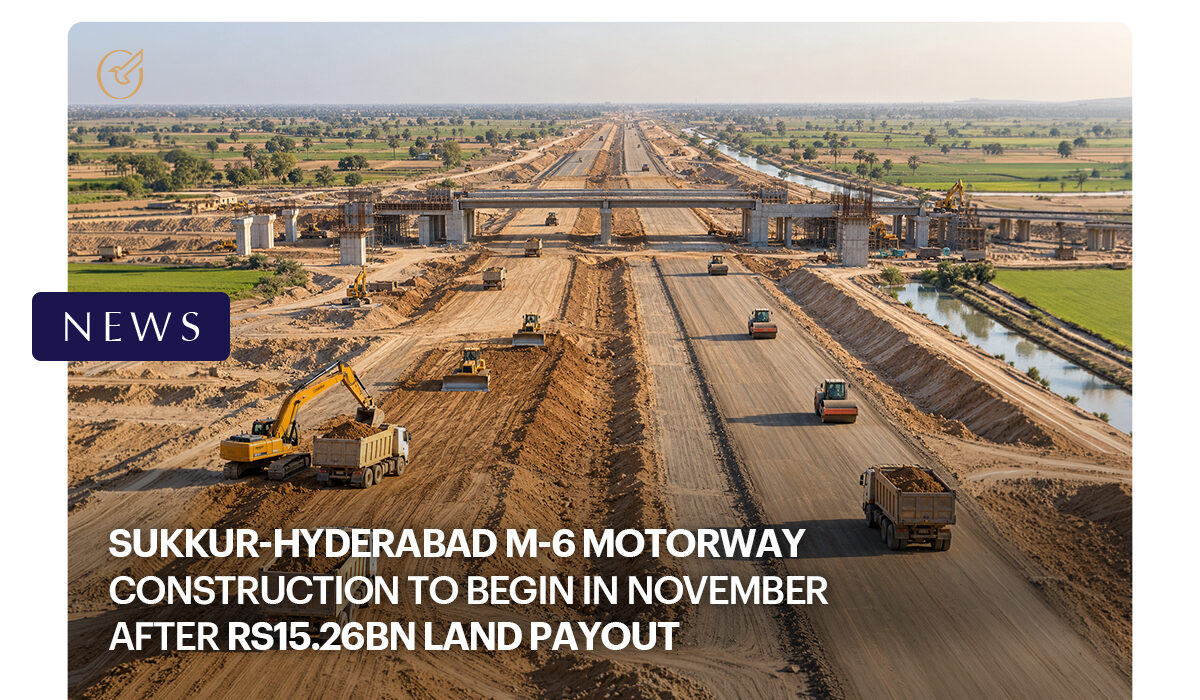
ISLAMABAD: Construction of the 306-kilometre M-6 Motorway will start next month, Minister for Communications Abdul Aleem Khan announced on Sunday.
In a statement posted on X, the minister said the motorway would give fresh momentum to trade and commercial activity in Sindh and across the country. He added that the project would support economic growth and improve regional connectivity.
The announcement follows a key development on the ground. The National Highway Authority has finished acquiring all the land the project requires, paying landowners around Rs15.26 billion in compensation.
The motorway needs more than 7,500 acres along its alignment, and it has now secured every acre. The NHA has described this as a major milestone, since land acquisition often holds up large infrastructure projects.
No details were shared on the contractor, the total project cost or the expected completion date. The minister also did not give an exact start date for construction beyond saying it would begin next month.
Once built, the M-6 is expected to link Sukkur and Hyderabad directly, easing movement of goods and passengers along one of Sindh’s busiest corridors.
BBC-featured Content Specialist with a sharp eye for search intent and a proven ability to turn content into a growth engine. I leverage cutting-edge digital marketing tools to craft strategies that fuel organic traffic, amplify brand growth, and own the local SEO landscape, particularly across the competitive real estate market. I help brands dominate search rankings and convert visibility into measurable business success.
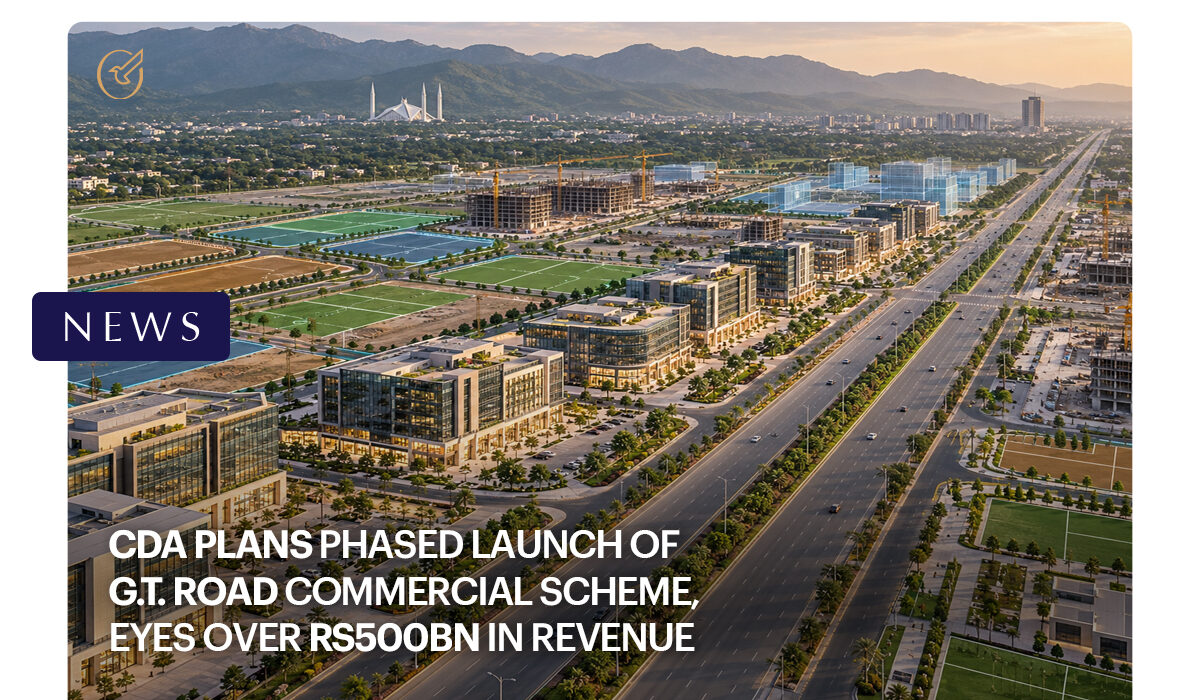
ISLAMABAD: CDA is preparing to open a large commercial area along G.T. Road, a project that officials say could earn the civic body more than Rs500 billion.
Sources said Chairman Sohail Ashraf has instructed the relevant teams to move ahead with the scheme, which is likely to launch in the coming months. He has reportedly presided over several meetings on the subject and asked the relevant wings to wrap up their preparations quickly.
CDA acquired the land in 1967, and it spans 3,550 kanals along a 16-kilometre stretch from EME College to Nicholson Monument, covering a 200-foot-wide strip on both sides of the road. Officials estimate that about 2,000 kanals will be usable after planning.
Explaining the revenue projection, an official said that even at a base rate of Rs750,000 per square yard, one kanal would fetch roughly Rs500 million. He added that the plots would be released gradually rather than all at once.
CDA did little to secure the land until 2025, when it began an enforcement drive. A major operation last year, led by the then Deputy Director General Enforcement, Dr Anam Fatima, recovered a considerable share, and another operation is underway. Officials said over 100 permanent buildings have been marked for demolition.
Heavy machinery dealers in the Tarnol area are also using the land for parking. Interior Minister Mohsin Naqvi has reportedly backed CDA’s efforts to reclaim state land.
Director General Spatial Planning Ijaz Ahmad Sheikh has set up a four-member committee, headed by Deputy Director General Architecture Ali Abdullah, to finalise the design. Officials expect strong demand for fuel stations, as NHA is adding land to the road.
BBC-featured Content Specialist with a sharp eye for search intent and a proven ability to turn content into a growth engine. I leverage cutting-edge digital marketing tools to craft strategies that fuel organic traffic, amplify brand growth, and own the local SEO landscape, particularly across the competitive real estate market. I help brands dominate search rankings and convert visibility into measurable business success.
KARACHI: Sindh is preparing to widen its urban property tax records more than fivefold, from about 397,375 entries to roughly 2.15 million, through a World Bank-backed programme covering 20 local councils outside Karachi.
The Sindh Property Revenues Enhancement Program (SPREP) is valued at $150 million, comprising $110 million in results-based financing and $40 million in investment project financing. The Local Government Department will implement it to increase Urban Immovable Property Tax (UIPT) collection and improve municipal financial management.
According to the programme’s Stakeholder Engagement Plan, only about one-fifth of an estimated 2.1 million properties in the five targeted divisions are currently registered. Field teams will conduct a GIS-based, door-to-door survey of residential and commercial premises, geo-tagging each property into a new UIPT management information system. The plan stresses that the exercise is meant to build records, not issue tax demands.
The targeted councils are spread across Hyderabad (nine), Larkana (four), Sukkur (three), Mirpurkhas (two) and Shaheed Benazirabad (two), serving about 4.5 million residents. Wider institutional support will reach all 45 participating councils, including 25 in Karachi.
Beyond the survey, the programme will finance digitisation of Board of Revenue land records, a digital master plan linking land and tax systems, city surveys and a financial management information system for budgeting, accounting, payroll and expenditure.
To address privacy and accuracy concerns, the plan proposes advance notice of visits, identified enumerators and channels for residents to review and correct records. Monthly Town Citizen Committees and women-only consultations are planned to prevent exclusion of vulnerable groups.
The design draws on Karachi’s CLICK project, where the registered base reportedly rose from about 900,000 to 4.2 million properties after removing duplicates and out-of-mandate entries.
For more real estate news and special reports, visit Chakor.
BBC-featured Content Specialist with a sharp eye for search intent and a proven ability to turn content into a growth engine. I leverage cutting-edge digital marketing tools to craft strategies that fuel organic traffic, amplify brand growth, and own the local SEO landscape, particularly across the competitive real estate market. I help brands dominate search rankings and convert visibility into measurable business success.
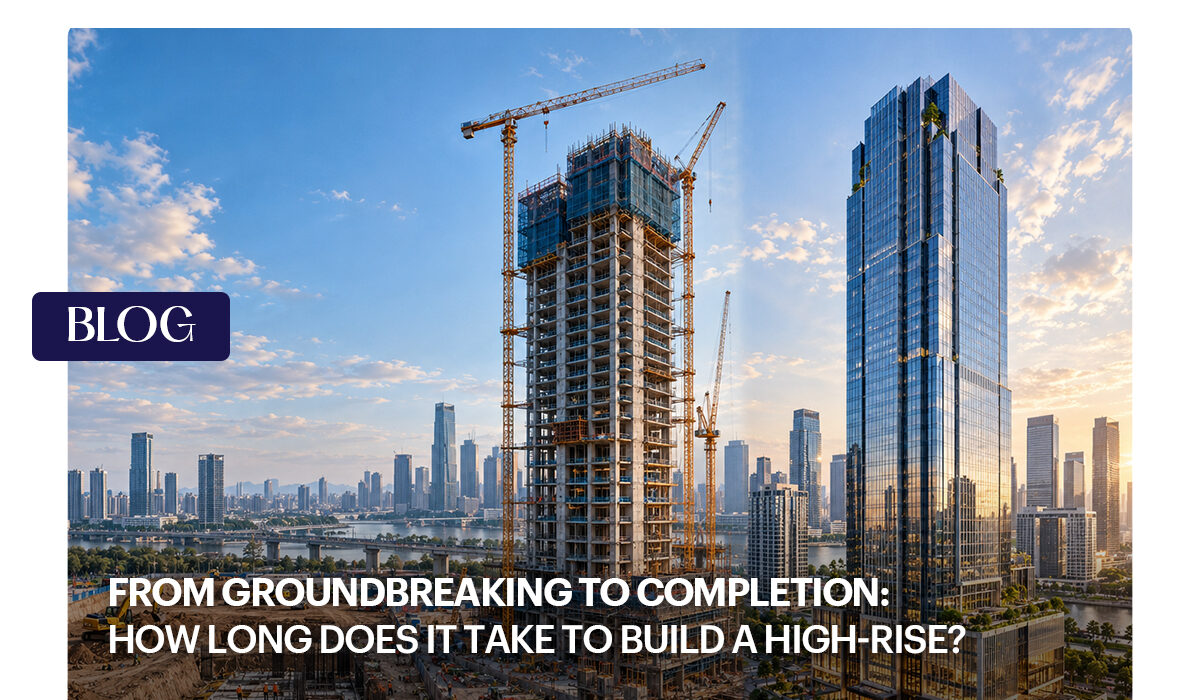
Most high-rise buildings take 2 to 5 years to complete, from groundbreaking to handover. A typical 20- to 30-storey tower takes about 2.5 to 3.5 years to build. Supertall skyscrapers can take 5 to 6 years or more. Height, structural system, and construction technology all shape where a project lands on that scale.
Anyone watching a tower rise on the skyline eventually asks the same question: how long did that actually take? The honest answer is that it depends, but not in a vague way.
High-rise construction time follows well-documented patterns, from the pace of a standard concrete pour to record-breaking modular builds from China. This guide breaks down what really determines how long a high-rise takes to build, stage by stage, with real benchmarks and a look at how Pakistan’s fastest towers compare.
What Counts as a High-Rise, Mid-Rise, or Skyscraper?
Before comparing timelines, it helps to define the building types themselves, since a 10-storey block and an 80-storey tower follow very different schedules.
Building type
Typical height/floors
Notes
Low-rise
Up to around 6–7 storeys
Usually built without lifts
Mid-rise
Roughly 5 to 10 storeys
Lift-equipped, moderate structural complexity
High-rise
7+ storeys, or around 18 metres and above
Definitions vary by country; height beyond the reach of standard firefighting equipment is a common threshold
Skyscraper
Generally 150 metres and above today
The term first described 10- to 20-storey buildings in the 1880s; height relative to width matters more than a fixed number
Is 20 floors a skyscraper? Not by most modern definitions, though it easily counts as a high-rise. A 7-storey building sits right at the boundary between mid-rise and high-rise, depending on the country’s building code.
And a 100-metre or 300-foot tower is a tall high-rise, but still short of the 150-metre mark most architects use for “skyscraper.”
High-Rise Construction Time: What the Data Actually Shows
For most projects, high-rise construction time takes 2 to 5 years, start to finish. That range is wide because it covers everything from a straightforward 15-storey residential block to an 80-storey mixed-use tower with a podium, basements, and a complex facade.
Tower size
Typical total timeline – High-Rise Construction Time
10–20 storeys
1.5 to 2.5 years
20–35 storeys
2.5 to 3.5 years
35–60 storeys
3.5 to 5 years
60+ storeys/supertall
5 to 7 years or more
These are averages, not guarantees. A well-financed, well-managed project with modern formwork can beat its band; a project held up by permitting delays, financing gaps, or a difficult site can run well past it.
In the US specifically, one industry study puts the average time to build a high-rise apartment building at 28 months, up from 22 months in 2009, a reminder that timelines have lengthened in some markets even as technology improves, largely due to financing and material-cost pressures.
The average duration for a 20-storey residential building in major Pakistani cities generally falls toward the middle of this range. A well-capitalised commercial or mixed-use high-rise in Karachi has completed structural work on more than 30 floors in as little as 16 months, though structural completion is only part of the picture; interior fit-out, MEP work, and handover typically add another 12 to 18 months. A realistic total for a fast-moving 20-storey residential project in Karachi, Lahore, or Islamabad is closer to 2.5 to 3.5 years.
Citadel 7: A Local Example of Disciplined Scheduling
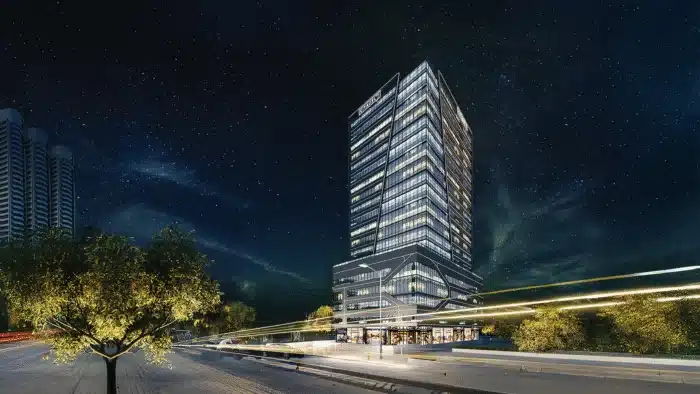
Islamabad’s own skyline offers a case in point. Citadel 7, Chakor Ventures’ commercial tower in Blue Area, wrapped construction 90 days ahead of its promised completion date, with handover running from October through December 2026.
It’s a practical illustration of the same factors this guide covers: realistic scheduling, consistent financing, and disciplined project management, translating into a tower that beat its own timeline rather than slipping past it.
How Long to Build a Skyscraper: A Stage-by-Stage Timeline
Every high-rise, regardless of size, moves through the same seven broad stages. Knowing how long each one typically takes helps explain why the overall timeline lands where it does.
Pre-construction and design (typically 6–18 months): feasibility studies, architectural and structural design, and early engineering.
Permitting and approvals (typically 3–12 months, often overlapping with design): this stage varies most by jurisdiction, and rarely gets counted in “construction time” headlines even though it can add a year or more before ground is broken.
Site preparation and foundation (typically 2–6 months): excavation, piling, and the foundation slab, deeper and more involved for taller towers.
Structural framing is the largest chunk of time on any high-rise, and the floor-by-floor climb where formwork technology has the biggest impact on speed.
Building envelope (often overlaps with framing, a few floors behind): facade, curtain wall, and roofing.
MEP systems installation: electrical, plumbing, HVAC, and elevators, usually running in parallel with interior work.
Interior fit-out, testing, and handover (typically 6–12 months for a large tower): finishes, inspections, and the handover process itself.
Structural framing deserves a closer look because it’s the stage most people picture when they think about how long it takes to build a skyscraper. A basic floor cycle the time to form, pour, and cure one level before starting the next commonly runs 8 to 12 days with conventional methods.
High-Rise Construction Timeline: What Moves the Schedule
A handful of variables explain most of the difference between a fast high-rise construction time and a slow one:
Height and floor count. More floors means more repetitions of the same structural cycle, so total time scales with height even when the per-floor pace stays constant.
Structural system. Reinforced concrete, structural steel, and composite systems all have different speed profiles; steel-framed towers benefit from components fabricated off-site and assembled quickly on site.
Soil conditions and foundation type. Deep piling or difficult ground can add months before the structure even breaks the surface.
Formwork technology. The single biggest lever available to a contractor, the difference between conventional formwork and a jump-form or aluminium system can cut floor-cycle time by close to half.
Weather and site logistics. Monsoon seasons, extreme heat, and congested urban sites all slow the pace of pours and material deliveries.
Permitting and regulatory approval. Often the least visible factor, and frequently the one that adds the most unplanned time.
MEP and facade complexity. A tower with an elaborate curtain wall or dense mechanical systems takes longer to finish than a simpler box, even at the same height.
Financing continuity. Interrupted funding is one of the most common causes of real-world schedule delays.
Tower Completion Time: Real-World Benchmarks
Global benchmarks put these High-Rise Construction Time numbers in perspective.
The Burj Khalifa, the world’s tallest building at 828 metres, took around six years to build, starting in January 2004 and officially opening in January 2010. At its peak, close to 12,000 workers were on site each day, and the project consumed an estimated 22 million person-hours of labour before completion.
The Empire State Building remains one of the fastest major skyscrapers ever built, despite being completed nearly a century ago. Steel erection alone ran at roughly four and a half storeys a week, and the entire building went from broken ground to a finished, tenant-ready tower in about one year and 45 days.
Counting the design and contract phase before construction started, the whole project took about twenty months. It’s a useful reminder that tower completion time is shaped as much by planning discipline and design simplicity as by modern technology.
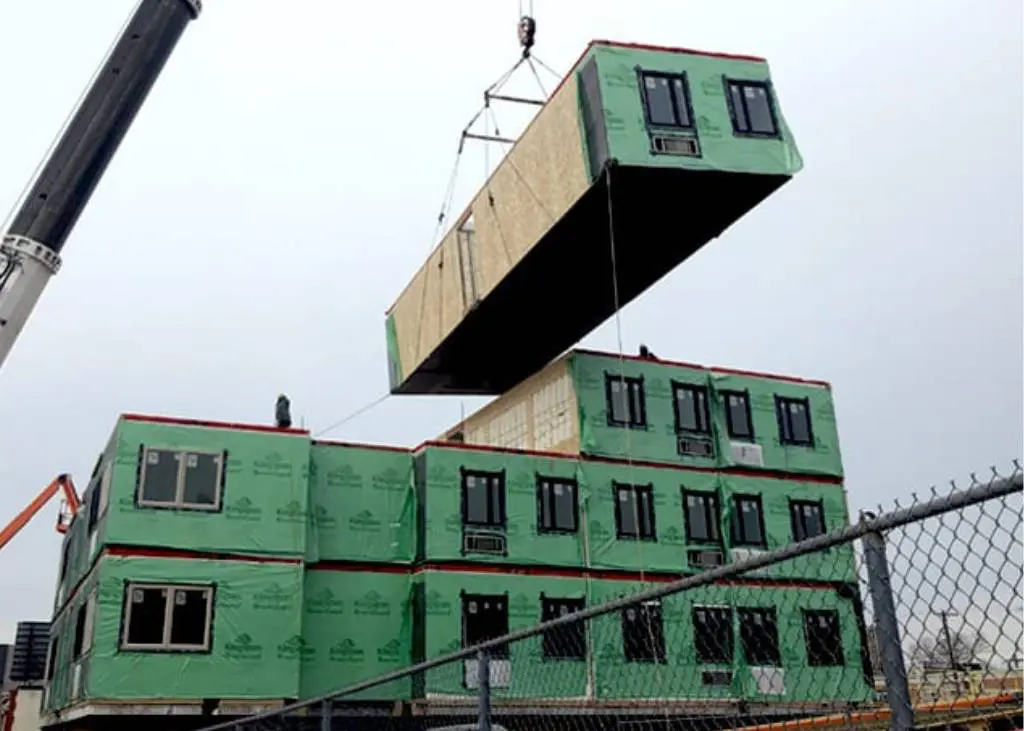
Mini Sky City, a 57-storey tower in Changsha, China, is the modern speed record: the tower itself went up in just 19 working days on site, at a pace of about three floors a day, using modules fabricated off-site over four and a half months beforehand. It’s a genuinely remarkable case study in modular construction but worth a note of caution.
The same company later announced plans for an even taller, 220-storey version to be built in 90 days; regulators halted that project before completion over safety concerns, and it was never finished. The lesson: modular speed records are real, but they don’t automatically scale to every height or every regulatory environment.
Pakistan’s own high-rises are increasingly competitive on speed. One large commercial tower in Karachi, standing more than 30 storeys above two basement levels, completed its entire structural framework in around 16 months, a pace that compares well against international benchmarks for a building of similar size.
Chakor Ventures’ Citadel 7, a commercial tower in Islamabad’s Blue Area, offers a further example: construction wrapped 90 days ahead of its promised completion date, with handover running from October through December 2026.
As with any tower, these figures reflect strong scheduling and structural progress; full completion, including interiors and handover, typically takes noticeably longer on projects without the same discipline.
What Are the Fastest Construction Technologies for High-Rise Buildings?
The technologies that most reliably shrink high-rise construction time all target the same bottleneck: the floor-by-floor structural cycle.
Aluminium formwork systems typically reduce a floor cycle to around 7 to 8 days, compared with 8 to 12 days for conventional formwork, and can be reused hundreds of times across a project.
Jump-form (climbing formwork) systems go further, often achieving 5- to 6-day cycles for core walls and vertical elements, because the formwork climbs the building on its own, supported by the concrete already poured, rather than relying on cranes or scaffolding.
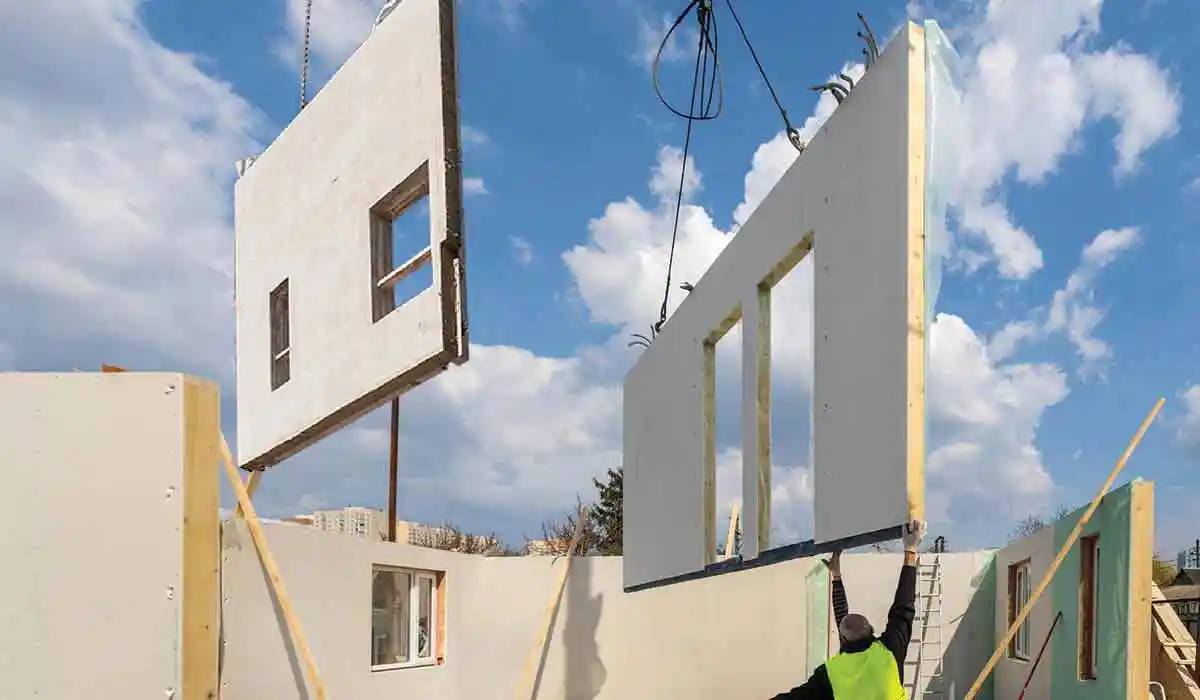
Precast and prefabricated components, staircases, facade panels, and reinforcement cages are manufactured off-site under controlled conditions and simply installed on arrival, cutting both time and on-site labour.
Post-tensioning allows for larger, thinner slabs with fewer support columns, which can simplify and speed up the structural sequence on commercial towers.
4D BIM and digital scheduling link a 3D building model directly to the project timeline, making it far easier to spot and resolve clashes and delays before they happen on site rather than after.
Can Modular Construction Reduce High-Rise Construction Time?
Yes, modular and prefabricated construction can meaningfully reduce high-rise completion time, and the effect is most dramatic when most of the building is manufactured off-site before assembly begins.
China’s Mini Sky City, referenced above, is the clearest example: three floors a day on site, because the heavy fabrication work had already happened in a factory.
A broader comparison of global modular projects has found that China consistently achieves the fastest construction rates with this approach, largely because of the scale of its factory-based steel module manufacturing.
That said, modular construction isn’t a universal shortcut to reduce high-rise construction time.. It works best on repetitive floor plans, like hotels, apartments, and student housing, where the same unit is built hundreds of times.
It’s a harder fit for towers with highly customised layouts, luxury finishes, or irregular floor plates, and it requires significant upfront investment in factory capacity and logistics, which is why adoption still varies enormously by market.
The Impact of Prefabrication on High-Rise Construction Time in Pakistan
Prefabrication is still an emerging practice in Pakistan’s construction sector rather than a mainstream one. Conventional, on-site construction remains the default for most high-rise projects, and research notes that prefabricated methods are less widely adopted here than in markets like China or the Gulf.
That’s beginning to shift: provincial governments have held discussions with Chinese prefabrication firms on large-scale housing schemes, and modular approaches are gaining attention as a way to address the delays, rising material costs, and labour shortages that affect conventional projects.
For now, prefabrication’s real impact on high-rise construction timelines in Pakistan is greatest in the housing and affordable-development segment rather than in commercial towers, where site-specific design and finishing standards still favour conventional methods. That’s likely to change as local supply chains for precast and modular components mature.
Building Materials That Reduce High-Rise Construction Time
Beyond formwork and modular assembly, certain material choices consistently shave off high-rise construction time:
Precast concrete elements (columns, beams, staircases, facade panels) arrive ready to install, eliminating on-site curing time.
Engineered structural steel, fabricated to precise specifications off-site, assembles faster than a comparable reinforced-concrete frame and reduces weather-related delays.
Aluminium formwork panels are as much a materials choice as a technology choice; their light weight and reusability enable fast floor cycles.
Unitised curtain wall systems, where entire facade panels are built and glazed in a factory, install far faster than facades assembled piece by piece on site.
Project Management Software for Faster High-Rise Schedules – High-Rise Construction Time
Scheduling software doesn’t pour concrete, but it’s increasingly a genuine factor in whether a high-rise stays on schedule. For large, complex towers, enterprise-grade critical-path scheduling tools like Oracle Primavera P6 remain the industry standard, valued for handling thousands of interdependent tasks and flagging exactly how a delay in one trade will ripple through the rest of the schedule.
Broader construction management platforms, such as Procore and Autodesk Build, are common choices for general contractors who need scheduling alongside budgeting, document control, and field reporting in one system. The common thread: real-time schedule visibility lets project managers catch small slips before they become months of delay.
What to Look for in a Contractor Built for Speed – High-Rise Construction Time
Choosing a construction partner for a fast, reliable high-rise project comes down to a few concrete signals, more useful than any list of company names:
A verifiable track record of on-time delivery on projects of similar height and complexity, not just an impressive portfolio.
In-house or committed access to modern formwork systems, aluminium or jump-form capability signals a contractor is set up for realistic floor cycles, not conventional ones.
Experienced structural and MEP project management, since coordination between trades drives most real-world delays.
Active use of scheduling software for critical-path planning, rather than manual, spreadsheet-based tracking.
Financial stability and secured funding for the full project, since interrupted financing remains one of the most common causes of stalled towers.
Developers with strong international engineering standards and access to global capital tend to hold schedules more reliably than smaller, locally financed projects; one reason Chakor, backed by its European FDI credentials, has structured its own high-rise developments around these same principles: modern construction methods, disciplined project management, and funding secured before ground is broken.
FAQs – High-Rise Construction Time
How long does it typically take to complete a high-rise construction project?
Most high-rise projects take 2 to 5 years from groundbreaking to handover, though the number depends heavily on height and structural complexity. A mid-sized 20- to 30-storey tower typically takes 2.5 to 3.5 years, while supertall buildings can take 5 to 7 years or more, including design, permitting, and finishing.
How long did the Burj Khalifa take to build? High-rise construction time.
The Burj Khalifa took approximately 6 years to build, with construction starting in January 2004 and the tower opening in January 2010.
Can modular construction really cut high-rise completion time?
Yes, significantly, when the building design suits it. China’s Mini Sky City went from foundation to a completed 57-storey structure in just 19 working days on site, because most of the building had already been manufactured in modules beforehand.
How fast can China build a skyscraper?
Faster than almost anywhere else, when it uses modular methods. China’s Broad Sustainable Building assembled a 57-storey tower in 19 working days at a rate of about three floors per day.
What is the fastest a high-rise floor has ever been built? High-rise construction time.
Using jump-form or climbing formwork systems, contractors have achieved core-wall cycle times of around 5 to 6 days per floor, compared with roughly 8 to 12 days using conventional methods.
The Bottom Line – High-Rise Construction Time
High-rise construction time isn’t a single number; it’s a range shaped by height, structural system, technology, and how well a project is financed and managed.
BBC-featured Content Specialist with a sharp eye for search intent and a proven ability to turn content into a growth engine. I leverage cutting-edge digital marketing tools to craft strategies that fuel organic traffic, amplify brand growth, and own the local SEO landscape, particularly across the competitive real estate market. I help brands dominate search rankings and convert visibility into measurable business success.
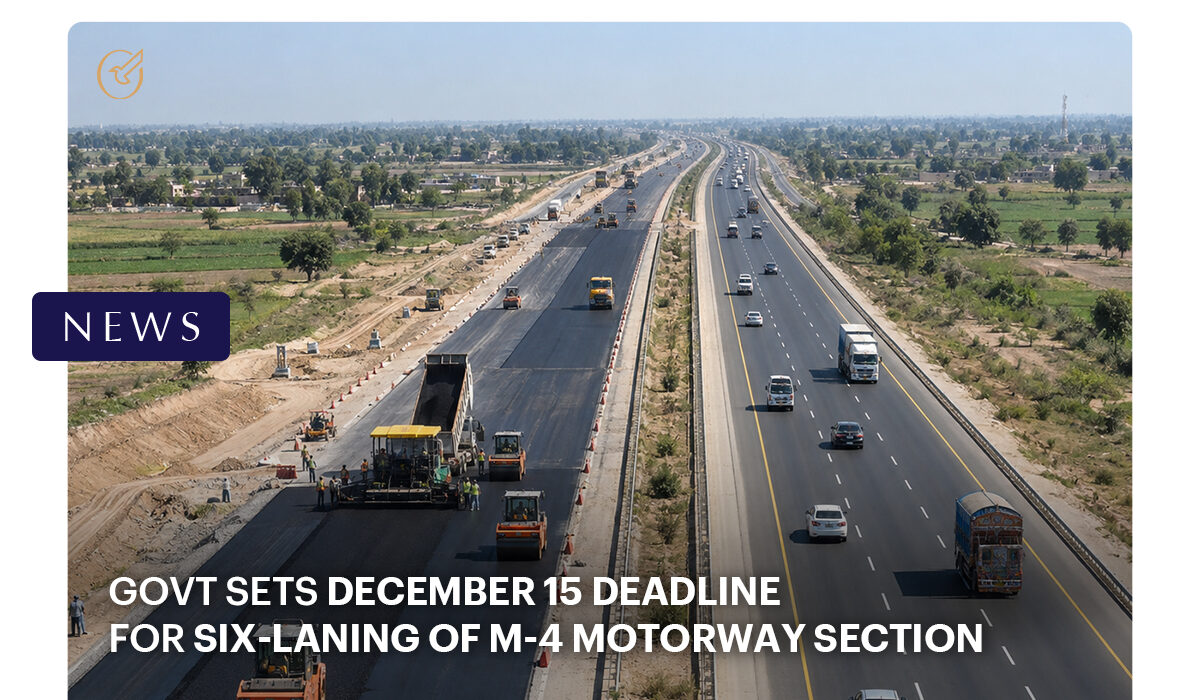
ISLAMABAD: The federal government has set December 15 as the deadline for completing the expansion of a key section of the M-4 Motorway. Federal Minister for Communications Abdul Aleem Khan has asked the National Highway Authority (NHA) to accelerate work on its ongoing infrastructure projects.
Chairing a review meeting on development schemes in the NHA Central Region, the minister directed officials to widen the Pindi Bhattian–Faisalabad section of the motorway from four lanes to six within the stipulated timeframe.
Officials briefed the meeting on the progress of various motorway and national highway projects. The minister then instructed the authority to adhere strictly to its prescribed targets and to speed up work on schemes currently underway.
Reviewing other projects, Mr Khan assessed the status of the Lodhran–Multan Expressway. He asked the NHA to expedite preliminary work on the Lala Musa Bypass on the N-5 National Highway. He also said that rehabilitation work on the Baba Farid Bridge over the River Sutlej would begin shortly.
The meeting also discussed projects to connect the Layyah and Taunsa bridges with adjoining highways in South Punjab. Regarding the Phool Nagar Interchange on the N-5, the minister stressed that construction must be of high quality. He also asked that all new infrastructure projects incorporate modern requirements.
Outlining his expectations for future highways, the minister called for modern lighting, quality infrastructure and properly developed rest areas. He further directed that the Islamabad–Murree Expressway serve as a model for planning and delivering new projects.
For more real estate news and special reports, visit Chakor.
Dedicated and detail-oriented SEO Content Writer, Real Estate Writer, and Research Analyst based in Islamabad, with proven expertise in developing accurate, valuable, and well-researched content. Skilled in analytical writing, market research, and reporting, with the ability to turn insights into clear, professional, and impactful content. Passionate about exploring new ideas, analyzing industry trends, and contributing to high-quality writing and research-driven projects.
LAHORE: Punjab’s flagship housing initiative, ‘Apni Chhat, Apna Ghar‘, has been named a recipient of the United Nations Scroll of Honour Award, placing it among the five most successful housing programmes worldwide this year.
UN-Habitat confirmed the honour following an extensive global review of housing initiatives, citing the programme’s role in extending safe, affordable shelter to low-income families. Only five schemes are chosen for the award internationally each year, making the recognition a notable achievement for the provincial government led by CM Punjab.
The award will be formally presented on October 5 during World Habitat Day, with the main ceremony taking place in Muscat, Oman. Related seminars and workshops on urban housing development are scheduled to run in the Omani capital from October 6 to 8.
Since its launch, the programme has disbursed roughly Rs260 billion in loans, enabling construction of more than 200,000 homes across two phases. The first phase accounted for over Rs196 billion in financing for 134,439 units, while the second added more than Rs62 billion for an additional 65,000 houses. Around 125,000 families have already moved into completed homes under the scheme.
Beyond the scale of financing, the programme is Pakistan’s first fully digital housing finance model, a feature officials say has helped streamline loan disbursement and construction tracking at scale.
The UN recognition adds to a string of accolades for the initiative, reinforcing its position as a reference model for low-cost housing delivery, both within Pakistan and among developing economies pursuing similar affordable-housing agendas.
BBC-featured Content Specialist with a sharp eye for search intent and a proven ability to turn content into a growth engine. I leverage cutting-edge digital marketing tools to craft strategies that fuel organic traffic, amplify brand growth, and own the local SEO landscape, particularly across the competitive real estate market. I help brands dominate search rankings and convert visibility into measurable business success.
ISLAMABAD: The SECP has presented a draft package of amendments to the REIT Regulations, 2022, designed to release fresh capital and extend participation in the country’s real estate investment trust sector.
As per the proposed changes, the minimum threshold for real estate income and assets for REIT portfolios would drop from 75 to 65 percent, giving REIT Management Companies (RMCs) greater latitude to structure holdings and qualify a broader range of projects. Investment-based REITs would also gain the right to invest in vacant land and plots, subject to conditions still to be finalised.
The reforms would extend REIT access to new categories of capital, permitting group-level trusts and employee funds to invest in unlisted REIT schemes. Separately, the borrowing window available to RMCs from sponsors, directors and associated entities would be lengthened from 24 to 36 months, though existing unitholder-approval safeguards would remain unchanged.
To ease execution timelines, RMCs facing delays beyond their control could receive up to a one-year extension to list Rental and Investment-based REITs. The draft also opens a path for RMCs to acquire property directly from government entities through binding agreements, under conditions set by the regulator. A further clarification addresses Hybrid REIT Schemes, confirming that vehicles combining investment-based and rental components may earn and realize rental income during their holding period.
SECP Chairman Dr Kabir Ahmed Sidhu said the measures are intended to build a more enabling framework for the sector, capable of drawing in long-term capital and expanding the investor base.
BBC-featured Content Specialist with a sharp eye for search intent and a proven ability to turn content into a growth engine. I leverage cutting-edge digital marketing tools to craft strategies that fuel organic traffic, amplify brand growth, and own the local SEO landscape, particularly across the competitive real estate market. I help brands dominate search rankings and convert visibility into measurable business success.
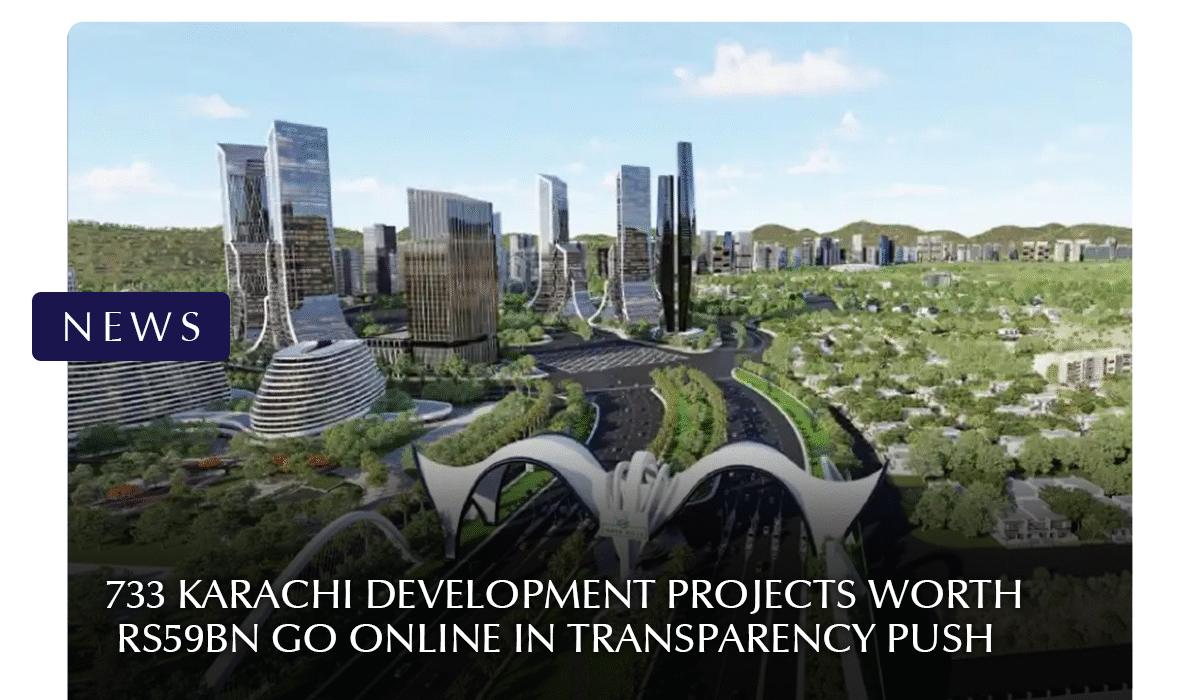
KARACHI: The Karachi Metropolitan Corporation (KMC) has begun publishing details of 733 development projects worth a combined Rs59 billion on its website, part of a broader digital transparency drive announced this week.
Mayor Barrister Murtaza Wahab said new sections added to the KMC website cover municipal assets and properties, ongoing development schemes, a Karachi Development Map, and a Land Record Management System. The project database includes costs, approved allocations and expenditure, along with details of contractors, funding sources and the institutions responsible for each scheme.
Through the interactive map, residents can track the location, jurisdiction, cost, progress and expected completion date of ongoing road works, including a Rs173 million scheme in District East, the Rs155 million Patel Hospital Road project, and the Rs472 million Mirza Adam Khan Road project. Photos and videos of construction progress will also be uploaded for public monitoring.
KMC is separately digitising land records dating back decades, with future property transfers to be recorded electronically. Employee records have been shifted to the SAP system to curb duplicate or fraudulent payments, and the civic body is moving toward an account-to-account digital payment system capable of tracking every transaction.
Wahab said the shift to digital collection has already lifted revenue, with one department’s monthly collections rising from around Rs170-180 million to roughly Rs300 million last month. Revenue and receivables are expected to be linked to the digital system in the coming months.
The mayor also cited progress on the Hub Canal, cleaning of the Hub Reservoir, and the 38-kilometre Shahrah-e-Bhutto Expressway, alongside a proposed Chakor Nala Expressway meant to ease congestion around Gulistan-e-Johar and Rashid Minhas Road.
BBC-featured Content Specialist with a sharp eye for search intent and a proven ability to turn content into a growth engine. I leverage cutting-edge digital marketing tools to craft strategies that fuel organic traffic, amplify brand growth, and own the local SEO landscape, particularly across the competitive real estate market. I help brands dominate search rankings and convert visibility into measurable business success.
ISLAMABAD: The Capital Development Authority (CDA) is moving forward with plans to establish a major commercial zone within Islamabad’s Zone III, an area officially protected from construction under existing regulations, prompting accusations of policy inconsistency from insiders familiar with the matter.
The commercial development is linked to Margalla Enclave, a joint venture between the CDA and the Defence Housing Authority (DHA) in the Kuri area. A 3.8-kilometre link road connecting Park Road to the housing scheme runs through Zone III, and earthwork on the route is nearly complete.
The federal government has since granted this road the status of an arterial/major road, directing the CDA to apply regulations used for other major thoroughfares such as GT Road, Murree Road, and the Islamabad Expressway, effectively paving the way for regulated commercial development along its length.
The move stands in sharp contrast to CDA’s long-standing enforcement in Zone III, where residents are barred from constructing even modest homes on their own land, denied electricity connections, and have had unauthorised structures demolished, with incidents reported in the Shah Allah Ditta area.
A CDA spokesperson declined to answer directly whether the road falls within Zone III or whether the plan constitutes contradictory policy, instead referring to an official notification dated May 7, 2026, authorising the development.
The CDA board reportedly reviewed the notification’s implementation parameters at a recent meeting.
Dedicated and detail-oriented SEO Content Writer, Real Estate Writer, and Research Analyst based in Islamabad, with proven expertise in developing accurate, valuable, and well-researched content. Skilled in analytical writing, market research, and reporting, with the ability to turn insights into clear, professional, and impactful content. Passionate about exploring new ideas, analyzing industry trends, and contributing to high-quality writing and research-driven projects.