
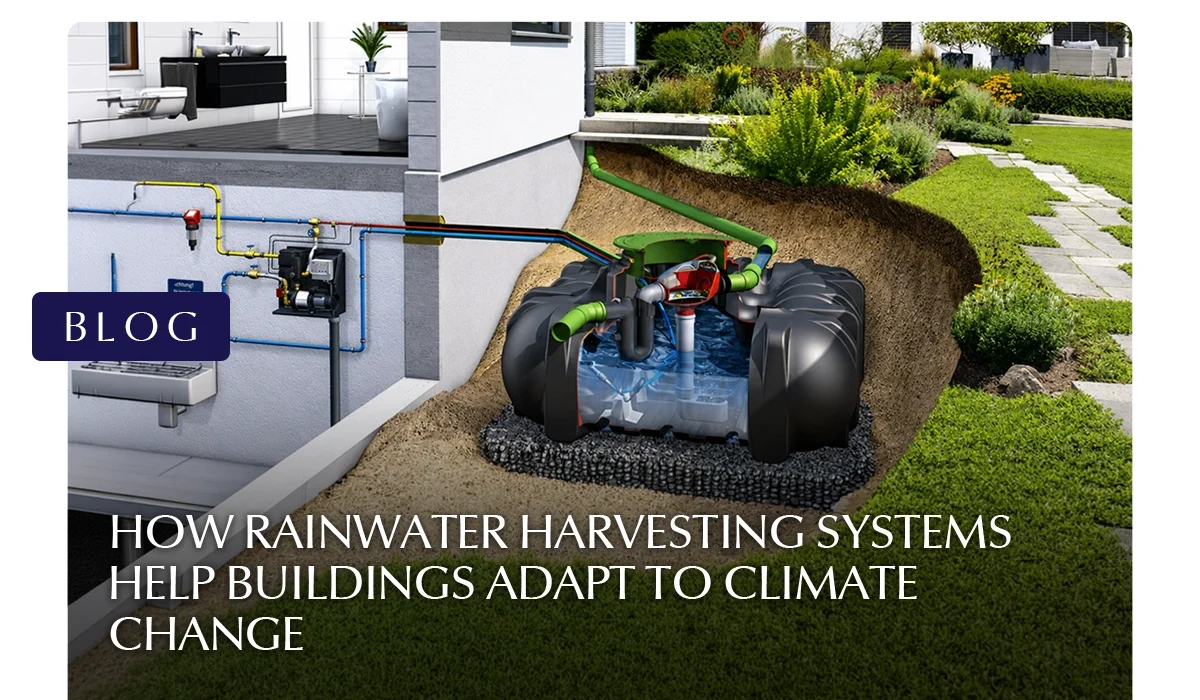

Water shortage is a real problem in most cities today. Borewells run dry. Water bills keep rising. Groundwater levels keep falling. A rainwater harvesting system offers a simple, low-cost fix. It collects rain that would otherwise run off your roof or yard and turns it into a usable water source for drinking, irrigation, flushing, or simply topping up the ground beneath your feet.
This guide covers everything about a rainwater harvesting system: what it is, how it works, its components, methods, benefits, cost, water quality standards, and the rules that apply in Pakistan. By the end, you will know exactly how to plan one for your home, office, or institution.
What Is a Rainwater Harvesting System?
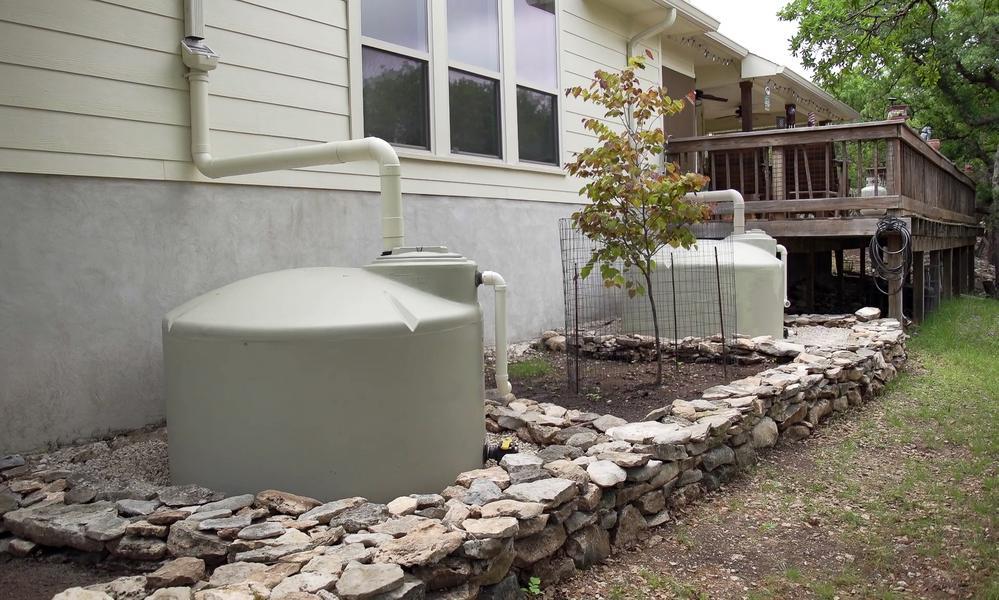
According to Encyclopaedia Britannica, a rainwater harvesting system is a technology that collects and stores rainwater for human use. Systems range from simple rain barrels to elaborate structures with pumps, tanks, and purification units. The stored water can irrigate landscaping, flush toilets, launder clothes, or even be purified for drinking.
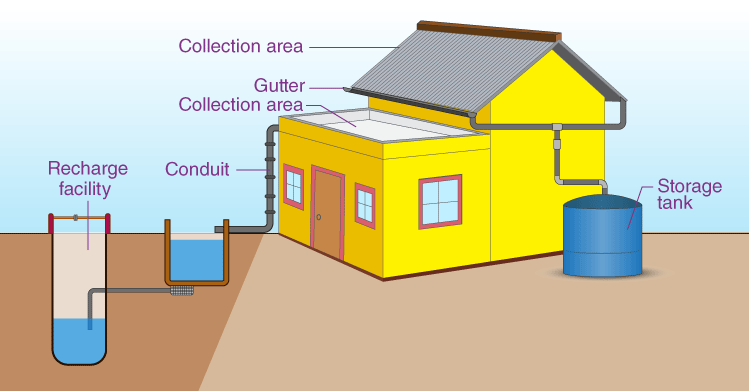
Instead of letting rain run into the street or drain away, a rainwater harvesting system directs it through gutters and pipes into a storage tank or into the ground. Researchers describe every rainwater harvesting system (RWHS) as sharing four core parts: a catchment area, gutters, pipes, and a storage system. Everything else- filters, pumps, recharge wells, treatment units- builds on that basic four-part foundation.
The idea itself is old. People have collected rainwater for thousands of years. Ancient cisterns dating back to 2500 BC have been found in the Middle East, and rainwater harvesting for irrigation dates back to roughly 4500 BC in southern Mesopotamia. Roman cities used rooftop channels and aqueducts long before modern gutters existed.
Farming communities in Balochistan practiced rainwater harvesting around 300 BC. The method has simply been refined with better tanks, filters, and monitoring tools, and in some university research projects today, even Building Information Modeling (BIM) and augmented reality.
Why a Rainwater Harvesting System Matters Right Now
Water stress is no longer a distant concern. Reports cited by industry sources suggest more than half the world’s population will be living in water-stressed regions by 2050.
Pakistan is a clear example. According to Abamet Pakistan, an environmental engineering firm, Pakistan is technically a “water-stressed” country rather than a “water-scarce” one, but it wastes nearly 10 trillion gallons of water every year due to poor conservation.
A rainwater harvesting system is one of the most direct ways to close that gap, because it captures free water at the exact point where it is needed most.
The United Nations’ Intergovernmental Panel on Climate Change (IPCC) has listed rainwater harvesting among specific measures for adapting to climate change.
In Semarang, Indonesia, a city badly affected by climate-driven flooding and drought, a rainwater harvesting system built into public schools now channels collected water into daily use and groundwater recharge, directly benefiting more than 20,500 people.
This shows how a single, simple technology can serve two opposite climate problems at once: it eases drought by storing water, and it eases flooding by capturing runoff before it overwhelms drains.
How Does a Rainwater Harvesting System Work?
A rainwater harvesting system works in four simple stages: catchment, conveyance, filtration, and storage or recharge.
- Catchment: Rain falls on a roof, terrace, or paved surface. This surface is called the catchment area.
- Conveyance: Gutters and downpipes carry the water from the roof to the storage point.
- Filtration: Before the water reaches the tank, it passes through a first-flush diverter and a filter. This removes dust, leaves, and bird droppings.
- Storage or recharge: Clean water is stored in a tank for reuse, or it is directed into a recharge well or pit so it seeps into the ground and refills the water table.
Gravity does most of the work in a well-designed rainwater harvesting system. Pumps are only needed when water must move uphill, into upper floors, or through pressurised taps.
Methods of Rainwater Harvesting
There are two broad methods used in any rainwater harvesting system, and within each, two purpose-based categories worth knowing.
1. Rooftop Rainwater Harvesting
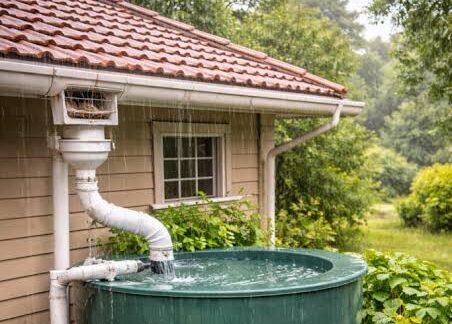
This is the most common method for homes, apartments, schools, and offices. Rain falling on the roof is captured through gutters and either stored in a tank or directed to a recharge well.
Roof runoff is generally of higher quality than surface runoff and can often be used with only basic treatment. It is simple, affordable, and works well for houses, mosques, factories, hotels, and multi-storey buildings.
2. Surface Runoff Harvesting
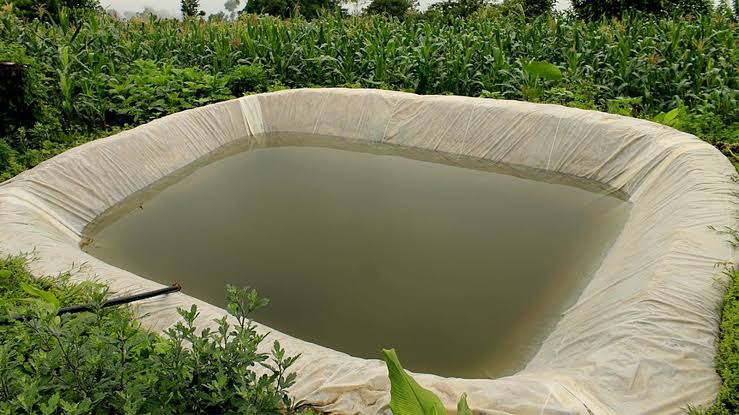
This method collects rainwater flowing across the ground, such as from a courtyard, driveway, or open plot. The runoff is channelled into a storage tank or recharge pit below ground level.
It works well for larger plots and is often used alongside rooftop systems to capture every drop of rain falling on a property, while also cutting soil erosion, water pollution, and street flooding.
Domestic vs. Agricultural Rainwater Harvesting
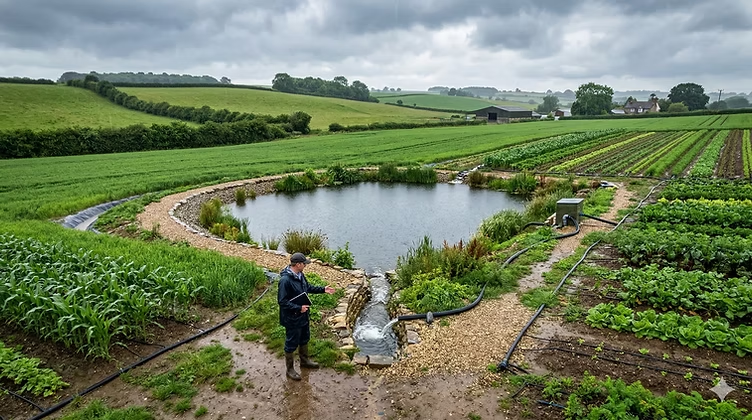
Beyond catchment type, rainwater harvesting is also split by purpose. Domestic rainwater harvesting (DRWH) serves household needs: drinking, washing, gardening, and flushing.
Agricultural and livestock rainwater harvesting (ARWH) serves larger-scale needs through pans, hafir dams, birkads, check dams, sand dams, and agricultural bunds, structures built to trap surface runoff for crops, livestock, and groundwater recharge in arid and semi-arid regions.
Both approaches share the same underlying goal: intercept rain before it is lost, and put it to productive use.
Key Components of a Rainwater Harvesting System
Every rainwater harvesting system, small or large, domestic or industrial, is built from a similar set of parts.
- Catchment surface: Usually a roof, terrace, or courtyard. Roofing material affects water quality. Metal sheets and glazed tiles perform well; thatched roofs discolour the water and lower quality.
- Coarse mesh: A screen at the roof or tank inlet that prevents leaves and large debris from entering the system.
- Gutters: Channels fixed along the roof edge that collect rain and guide it toward a downpipe. Gutters should be sized 10–15% larger than the expected peak flow so they do not overflow, and given a gentle slope of about 10 mm fall per metre to avoid standing water.
- Downpipes (conduits): Pipes, usually PVC or galvanised iron, that carry water from the gutter down to ground level. Pipe diameter should match rainfall intensity and roof area; a larger, high-intensity roof needs a wider downpipe to avoid backflow during heavy storms.
- First-flush diverter: A valve that discards the initial rainfall, which carries the most dust, pollen, and pollutants washed off a dry roof.
- Filter: A chamber filled with sand, gravel, charcoal, or fine mesh that removes suspended particles before water enters the tank. Filter designs range from simple household charcoal and sand filters to advanced multi-chamber units like the Dewas filter, the VARUN drum filter, horizontal roughing and slow sand filters (HRF/SSF), and compact potable-conversion units such as the RainPC, which combines screening, flocculation, and membrane filtration to bring rainwater up to WHO drinking-water standards.
- Storage tank: Can be built above ground, underground, or partly buried. Common materials include reinforced concrete, ferrocement, masonry, HDPE plastic, fibreglass, and galvanised steel. Tank scale varies enormously, from small garden water butts of a few hundred litres to large underground commercial tanks holding well over 100,000 litres.
- Overflow pipe: Directs excess water away safely once the tank is full, so it does not flood the roof, driveway, or a building’s boundary wall.
- Recharge structures: Where storage is not the only goal, surplus filtered water can be sent into recharge wells, recharge pits, recharge trenches, recharge troughs, or modified injection wells, all designed to let water percolate into the ground and restore the local aquifer rather than run to waste.
- Pump and controls (optional): Used when water needs to reach upper floors or pressurised taps. A water level indicator and flow meter with a data logger help track usage and detect problems early.
- Backflow preventer: Stops rainwater from flowing backwards into a municipal or well water supply under negative pressure, an important safety feature for any hybrid system.
- Treatment unit (optional): UV lights, chlorination, or fine membrane filters, needed only if the water will be used for drinking. Full potable treatment typically removes at least 99% of particles 3 microns or larger and includes daily water-quality testing.
Step-by-Step: How to Set Up a Rainwater Harvesting System
Installing an efficient rainwater harvesting system generally follows four practical steps:
- Determine and clean your catchment area. Identify the terrace, courtyard, or roof section that will feed the system, and clean it thoroughly to prevent contamination at the very first stage.
- Plan the layout. Decide where tanks and pipelines will sit to make the best use of your available collection surfaces. Common layouts include a single large tank or a cluster of smaller linked tanks.
- Set up storage. Every drainpipe and collection point should include a mesh filter and first-flush diverter, a filtration stage before the tank, an air gap to prevent backflow, and an overflow route, ideally connected to a recharge system rather than a storm drain.
- Install the pipes and tanks. Lay pipes with a single, consistent fall to avoid sediment traps that are hard to clean. Secure the tanks on a stable stand, connect them so they function as a single storage volume, install isolation valves for maintenance, and finish with a tank gauge so water levels can be monitored at a glance.
How Much Water Can You Actually Collect?
You can estimate the water your roof can capture with a simple formula, essentially the same one used by both the U.S. Department of Energy’s Federal Energy Management Program and independent engineering manuals:
Water collected (litres) = Roof area (m²) × Rainfall (mm) × Runoff coefficient
For example, a 300 m² roof catching 25 mm of rain, with a runoff coefficient of 0.9 for a smooth metal or tiled roof, would collect roughly 6,750 litres in a single rain event, before losses from the first-flush diverter and minor leaks. The U.S. Department of Energy recommends applying a collection factor of 75–90% to account for real-world system losses.
The runoff coefficient changes with roof material:
| Roof Type | Runoff Coefficient |
| Metal (GI) sheet | 0.8–0.9 |
| Glazed tiles | 0.6–0.9 |
| Concrete/RCC roof | 0.7–0.8 |
| Asbestos (existing roofs only) | 0.8–0.9 |
| Thatched roof | 0.2 |
There are three broad approaches used to size a storage tank:
- Common-side approach: Uses mean annual rainfall to estimate how much water a roof can realistically supply, then sizes the tank to meet roughly a quarter’s worth of demand.
- Demand-side approach: Bases tank size on daily consumption per person, household size, and the longest expected dry spell, useful where rainfall is plentiful and reliable.
- Supply-side approach: Compares monthly rainfall potential against monthly demand across a full year, useful in low-rainfall or uneven-rainfall regions where storage must bridge real seasonal gaps.
Whichever method is used, tank size should reflect realistic demand, not the theoretical maximum a roof could ever collect.
Benefits of a Rainwater Harvesting System
Research reviews covering the environmental, economic, and social aspects of rainwater harvesting systems consistently find the same core advantages, echoed across engineering, government, and NGO sources alike.
- Lowers water bills. Once the upfront cost of the system is paid off, harvested rainwater is essentially free. UK homes with rainwater systems commonly cut mains water use by 20–30%, and sometimes by 50% or more, a figure matched by European tank manufacturers who report up to 50% savings on drinking-water demand for homes using underground rainwater harvesting.
- Supports groundwater levels. Directing surplus rainwater into recharge wells helps restore water tables that have dropped due to overuse of borewells, and reduces the risk of saltwater or brackish intrusion in coastal and low-lying aquifers.
- Reduces flooding and stormwater runoff. Capturing rain before it reaches the street lowers the load on stormwater drains and reduces non-point source pollution reaching rivers and lakes, especially valuable during monsoon downpours.
- Improves water security during drought. Stored rainwater acts as a backup source when mains supply is cut, a well runs low, or a drought hits. It can also serve as a main supply for new homes with no access to municipal water.
- Requires low maintenance. Once installed, a system needs only routine gutter cleaning and periodic tank inspection; tanks and pipework can last 15 to 30 years with basic upkeep.
- Reduces energy use and emissions. Because rainwater is used close to where it falls, it cuts the energy needed to pump and transport water across a city, and lowers the broader carbon footprint of urban water supply.
- Adds long-term property value. Buildings with a working rainwater harvesting system often score points under green-building rating programs, and some municipalities offer rebates, tax exemptions, or property-tax reductions for installing one.
- Supports climate adaptation. International climate bodies now class rainwater harvesting as a formal adaptation measure: it simultaneously builds drought resilience and reduces flood risk, which is why it appears in UN-backed community projects from Indonesia to Jamaica.
- Cuts soil erosion. In open plots and agricultural land, capturing runoff reduces the speed and volume of water that would otherwise wash away topsoil.
Cost of a Rainwater Harvesting System and Return on Investment
Cost depends on tank size, excavation depth, pipe length, filtration quality, and whether the project is new construction or a retrofit. Broadly, price rises with:
- Tank material (plastic tanks generally cost less than reinforced concrete)
- Underground versus above-ground placement
- Filtration and disinfection equipment, especially if the water will be used for drinking
- Pump requirements
- Site conditions, such as soil type and depth to the water table
Independent studies looking at hospital, residential, and office installations found payback periods of roughly 1 year for a hospital-scale system, up to 8 years for an office block, and around 21 years for a smaller residential system, showing that larger, higher-demand buildings generally see a faster return on a rainwater harvesting system than single homes.
Some cities also offer direct incentives: rebates covering up to half the system cost, sales-tax exemptions on harvesting equipment, and property-tax reductions tied to construction costs, all of which shorten the payback period further.
Retrofitting an existing building costs more than planning the system during original construction, since pipe runs and tank pits must work around finished structures.
Architects and engineers recommend including rainwater harvesting in the design stage, alongside plumbing and drainage drawings, rather than adding it as an afterthought.
Water Quality and Safety
Rainwater itself is naturally low in salinity and, scientifically as well as traditionally, considered one of the cleanest available water sources. However, once it touches a roof, it can pick up dust, bird droppings, moss, airborne pollutants, and even trace pesticides during the first rain after a dry spell. This is why filtration matters at every stage of a rainwater harvesting system.
For non-potable use, such as flushing, gardening, and washing, a first-flush diverter plus a basic sand, charcoal, or mesh filter is usually enough. For drinking water, additional treatment is required: fine filtration down to a few microns, plus disinfection through UV light, chlorination, or ozone, often used in combination.
Health authorities recommend boiling harvested rainwater as an added safety step where treatment systems are basic. Regular water testing is essential if a system is intended to supply drinking water, since contamination can occur even in a well-designed setup, and cisterns should also be checked periodically to prevent mosquito breeding.
Recent engineering research has gone a step further, developing integrated rainwater harvesting units that combine collection with on-site disinfection and mineral fortification to produce drinking water directly at the household level, with reported economic payback periods of around eight years for such compact potable units.
Maintenance of a Rainwater Harvesting System
A rainwater harvesting system needs simple, regular upkeep to keep working well:
- Weekly: Clear debris from gutters and the roof surface, especially after storms, and check inlet filters for blockages.
- Monthly: Check the first-flush diverter, overflow pipe, water level indicator, and any pumps or controls for proper function.
- Annually: Inspect the storage tank for cracks or sediment buildup, and have backflow preventers tested by a qualified professional if the system connects to mains water.
- As needed: Replace filter cartridges and UV lamps per the manufacturer’s schedule, particularly for systems used for drinking water, since a UV lamp typically loses effectiveness after about a year.
Storage tanks and pipework typically carry warranties of 15 to 30 years, while pumps last 2 to 10 years depending on use.
Rainwater Harvesting in Pakistan
Pakistan faces serious water stress, and a rainwater harvesting system is increasingly part of the national response, both in cities and in dry rural regions.
In arid zones like the Cholistan Desert, groundwater is often unusable due to salinity, so rainfall is the main source of drinking water for people and livestock. The Pakistan Council of Research in Water Resources (PCRWR) has developed a rainwater harvesting network of 110 specially designed reservoirs spread across 26,000 sq. km of Cholistan, storing around 440 million gallons of water.
Twenty deep tubewells add roughly 1,405 million gallons of annual discharge where groundwater is usable. Together, these measures have significantly cut seasonal migration among nomadic communities searching for water and are estimated to save around Rs. 6 billion a year.
In urban Pakistan, the picture is different but just as urgent. Falling groundwater levels in cities like Lahore, Islamabad, and Rawalpindi have pushed local authorities to act. The Capital Development Authority (CDA) has made rooftop rainwater harvesting mandatory for new buildings in Islamabad under updated building bylaws, aiming to raise groundwater levels and reduce water wastage.
Academic and engineering institutions are also pushing the technology forward locally. A recent civil engineering project at COMSATS University Islamabad’s Wah Campus designed a full rainwater harvesting system using Building Information Modeling (BIM), GIS, and integrated AR/VR technology, drawing on precipitation data from NASA and the Pakistan Meteorological Department, and applying the SCS Curve Number and Rational Method to estimate runoff.
The project paired a designed recharge well and anthracite filtration system with pre- and post-filtration water quality testing, illustrating how modern design tools are now being applied to a very old technology in a Pakistani context.
For homeowners and developers in Pakistan, practical design guidance includes:
- Combine a storage tank (for reuse in gardening, washing, and flushing) with a recharge well (to support groundwater levels).
- Always install a first-flush diverter and filter chamber before the water reaches a recharge well, so silt and pollutants do not enter the aquifer.
- Keep gutters, downpipes, and tanks accessible for regular cleaning and inspection.
- Plan the system with the architecture and plumbing drawings, not after construction has already started.
- Size storage and recharge separately for different property types. A 5-marla house, a 1-kanal villa, a farmhouse, and an apartment building all need different catchment and storage strategies.
Harvested rainwater in Pakistani homes is generally safe for gardening, car washing, floor cleaning, and toilet flushing. It should not be used for drinking unless it undergoes proper filtration, disinfection, and water quality testing, in accordance with both PCRWR guidance and international drinking-water standards.
Frequently Asked Questions
Is a rainwater harvesting system worth it for a single home?
Yes. Even a basic setup with a storage tank and filter can meaningfully cut water bills and provide backup supply during shortages, especially in areas with unreliable mains water. Studies show payback periods for residential systems can run longer than for commercial buildings, but the system still pays for itself over its 15–30-year lifespan.
Can I drink harvested rainwater directly?
Not without proper treatment. Rainwater needs filtration and disinfection to meet drinking-water standards, ideally with regular testing. Most households use it for non-potable purposes like gardening, washing, and flushing.
Is rainwater harvesting mandatory in Pakistan?
It is mandatory for new buildings in Islamabad under CDA bylaws. Other cities and housing societies are increasingly encouraging or requiring it as groundwater levels continue to fall, echoing similar mandatory rules already applied in several Indian cities.
What is the difference between a storage tank and a recharge well?
A storage tank holds water for direct reuse. A recharge well, recharge pit, or recharge trench sends filtered surplus water underground to restore the water table. Most well-designed systems use both together.
How long does a rainwater harvesting system last?
With regular maintenance, storage tanks and pipework can last 15 to 30 years. Pumps and filters need more frequent servicing or replacement, typically every 2 to 10 years.
Does a rainwater harvesting system help with climate change?
Yes. International climate bodies, including the IPCC, list rainwater harvesting as a recognised adaptation measure, since it builds drought resilience while also reducing flood risk from heavy rainfall events.
Final Thoughts
A rainwater harvesting system turns a free, renewable resource into real savings and long-term water security. Whether it is a small rooftop setup for a single home, a BIM-designed university project, or a large recharge network across a desert region, the basic principle stays the same: catch the rain, filter it, and use every drop wisely. With water stress rising across Pakistan and beyond, installing a rainwater harvesting system is no longer just an environmental choice. It is a practical and increasingly necessary one.
For more information on Islamabad City view apartments and real estate investment options, please visit Chakor.

BBC-featured Content Specialist with a sharp eye for search intent and a proven ability to turn content into a growth engine. I leverage cutting-edge digital marketing tools to craft strategies that fuel organic traffic, amplify brand growth, and own the local SEO landscape, particularly across the competitive real estate market. I help brands dominate search rankings and convert visibility into measurable business success.
