
CategoriesNews Property Property Laws Property Taxes Real Estate

LDA Eases Property Transfer Costs With New Penalty Relief Rule

LAHORE: The Lahore Development Authority (LDA) has announced a significant change in how penalties are calculated for property owners involved in transfer and No Objection Certificate (NOC) cases, offering considerable financial relief to citizens across the city.

Under the revised policy, penalties will now be calculated based on the property rate at the time of the original plot allotment, rather than the current District Collector (DC) rates. This change marks a notable departure from the previous method, which many property owners found to be financially burdensome.

Previously, plot owners applying for NOCs or property transfers were charged heavy penalties calculated by including access area adjustments and applying current market rates, significantly increasing the financial burden on applicants.

Citizens had repeatedly raised concerns that they were being subjected to excessive fees during transfer and approval processes, even in situations where they were not directly responsible for discrepancies in land measurements.

Under the revised policy, any increase or decrease in the access area will now be assessed using historical rates from the year the plot was originally allotted. Officials believe this adjustment will bring greater fairness to the valuation process and reduce disputes between applicants and the authority.

The decision was taken following special working sessions conducted by LDA Director General Tahir Farooq and the Additional Director General (Housing), resulting in the preparation of a new policy framework. The policy has since been approved by the LDA Governing Body, and official minutes have been issued to implement the decision.

The reform is expected to benefit a large number of property owners in Lahore who have long faced disproportionate charges when seeking routine administrative approvals from the authority.

For more news on real estate and special reports, visit Chakor Ventures.

CategoriesProperty Property Laws Property Taxes Real Estate

FBR Streamlines Tax Exemption Process for Property Developers, Sets Seven-Day Deadline

A new FBR circular ends an unintended double-tax burden on Pakistan’s builders and, for the first time, puts a hard deadline on the bureaucracy to deliver.

Pakistan’s property developers have long operated under a tax arrangement that worked against them at precisely the wrong moment. Having already settled their obligations under a fixed-rate regime, they were still required to hand over advance tax at the point of every property sale, money that could not be recovered because the law had no mechanism to account for how their income was classified. The Federal Board of Revenue has now moved to close that gap.

Through Circular No. 08 of 2025-26 (IR-Policy – Income Tax), the FBR has clarified that builders and developers operating under the special tax regime defined by Section 7F of the Income Tax Ordinance, 2001, are eligible to seek exemption from advance withholding tax under Section 236C on property sale transactions. More significantly, it has set an enforceable seven-working-day deadline for Commissioners Inland Revenue to process those exemptions with an automated fallback through the IRIS system if the deadline is missed.

Two tax provisions pulling in opposite directions

Section 7F places eligible builders and developers on a presumptive tax track. Their taxable income is calculated as a fixed percentage of gross receipts, not on actual profits. The intention is to simplify compliance for a sector with long and unpredictable project cycles.

Section 236C operates differently. It requires advance tax to be withheld from the seller whenever immovable property changes hands. Under the Finance Act, 2025, the FBR’s official rate schedule sets this tax at 4.5 to 5.5 percent for active tax filers and up to 11.5 percent for non-filers, depending on the value of the transaction (FBR, 2025).

Table 1: Section 236C advance tax rates on seller of immovable property Finance Act 2025

Source: Federal Board of Revenue, fbr.gov.pk

Gross consideration received Filer rate Late filer Non-filer rate
Up to Rs. 50 million 4.5% 7.5% 11.5%
Rs. 50 million – Rs. 100 million 5.0% 8.5% 11.5%
Above Rs. 100 million 5.5% 9.5% 11.5%

 In most property transactions, this withholding is adjustable against capital gains at the end of the tax year. For Section 7F developers, however, income is not classified as capital gains; it falls under income from business. The adjustment never materialises. The withheld tax simply sits with the department and is unavailable to the developer (FBR Circular No. 07, 2026).

A cash flow problem with real consequences

Construction is a capital-intensive business. Developers need liquid funds continuously for materials, daily labour, and equipment. When advance tax deductions under Section 236C cannot be recovered, the effective tax burden on Section 7F developers exceeds the statutory rate. Research on tax compliance costs in developing economies finds that unrecoverable advance deductions fall hardest on smaller developers, limiting their ability to complete projects on time (Bird & Zolt, 2005).

The scale of the problem is compounded by the size of Pakistan’s construction sector, which is among the largest employers of daily-wage labour and a major consumer of industrial inputs. Policies that unnecessarily restrict developer cash flow carry downstream consequences for project completion, housing supply, and employment.

What Circular No. 07 got right and left unresolved

The FBR had already taken a first step with Circular No. 07 of 2025-26 (IR-Policy – Income Tax), issued on March 31, 2026. That circular confirmed that developers who had fully discharged their Section 7F liability and had no other taxable income could apply for an exemption certificate under Section 159 of the Ordinance. The certificate would authorise non-collection of advance tax on their property transactions.

The problem was enforcement. Circular No. 07 sets no deadline for Commissioners to act. In practice, that left the relief dependent on administrative responsiveness, a variable that has historically disadvantaged applicants in Pakistan’s tax system.

What Circular No. 08 changes

Circular No. 08 supersedes its predecessor and adds two concrete mechanisms. Commissioners Inland Revenue must now issue an exemption certificate within seven working days of receiving a complete, eligible application. If they do not, the IRIS system, the FBR’s central digital tax platform, automatically processes and issues the certificate (FBR Circular No. 08, 2026).

The eligibility criteria remain the same: the developer must have fully settled their Section 7F tax liability and must have no other taxable income against which the Section 236C deduction could otherwise be adjusted. Commissioners retain the responsibility to review each application individually before granting relief.

IRIS as an enforcement tool

The IRIS system already handles payment slip generation for property transactions under Sections 236C and 236K, including a dedicated channel for overseas Pakistanis (FBR, 2025). Designating it as the fallback for certificate issuance extends its role from record-keeping to active enforcement. International evidence supports this approach: automated processing mechanisms in tax administration consistently reduce approval delays and lower compliance costs for businesses (OECD, 2022).

Broader implications for investment and compliance

The reform addresses a structural mismatch that had no defensible policy rationale. Removing it improves operating cash flow for eligible developers and lowers the cost of compliance. For a sector that attracts both domestic and overseas Pakistani investment, regulatory clarity of this kind matters. Research on property markets in developing economies consistently identifies compliance uncertainty as a deterrent to private sector investment (World Bank, 2020).

There is also a compliance dividend. When developers can access statutory relief within a defined and enforced timeframe, the incentive to seek informal workarounds or to underreport transaction values is reduced. That outcome serves the FBR’s revenue interests as much as it serves the sector.

Conclusion

Circular No. 08 of 2025-26 resolves a specific, well-documented conflict in Pakistan’s property tax framework. The seven-day deadline and IRIS fallback convert a discretionary process into an enforceable one. For Section 7F developers, the practical result is the removal of an unrecoverable advance tax burden. For tax administration more broadly, it represents a meaningful step toward using digital infrastructure as an accountability mechanism. Whether that step translates into consistent on-the-ground practice will depend on how Commissioners apply the circular and how closely the FBR monitors IRIS processing timelines in the months ahead.

For more news on real estate and Special Reports, visit Chakor Ventures.

References

Bird, R. M., & Zolt, E. M. (2005). The limited role of the personal income tax in developing countries. Journal of Asian Economics, 16(6), 928–946.

Federal Board of Revenue. (2025). FAQs on filer rate under Section 236C or 236K. Government of Pakistan. https://fbr.gov.pk/overseas-faqs/174240/174248

Federal Board of Revenue. (2025). Withholding income tax rate card updated up to June 30, 2025 as per Finance Act, 2025. Government of Pakistan. https://download1.fbr.gov.pk

Federal Board of Revenue. (2026a). Circular No. 07 of 2025-26 (IR-Policy – Income Tax): Clarification regarding applicability of withholding tax under Section 236C in respect of persons covered under Section 7F. Government of Pakistan.

Federal Board of Revenue. (2026b). Circular No. 08 of 2025-26 (IR-Policy – Income Tax): Clarification regarding applicability of withholding tax under Section 236C in respect of persons covered under Section 7F. Government of Pakistan.

OECD. (2022). Tax administration 2022: Comparative information on OECD and other advanced and emerging economies. OECD Publishing. https://doi.org/10.1787/1e797131-en

World Bank. (2020). Doing business 2020: Comparing business regulation in 190 economies. World Bank Group. https://doi.org/10.1596/978-1-4648-1440-2

CategoriesEconomy Feature Article Investment Property Property Laws Property Taxes Real Estate

FBR Updates Property Valuation in Six Cities, Adopts Selective Revision Strategy

The Federal Board of Revenue (FBR) has revised property valuation rates in six cities through notifications issued in April 2026.

Type Location Published Source
Feature Report Islamabad, Multan, Faisalabad, Gujranwala, Bahawalpur, Sialkot April 2026 Federal Board of Revenue (FBR)

In a move that underscores a more cautious and data-driven approach to taxation, Pakistan’s Federal Board of Revenue (FBR) has revised property

valuation rates in six key urban centers, choosing precision over sweeping change.

6 cities revised  Targeted update

Up to 35% cut  in Islamabad

Up to 40% increase  in select Punjab areas

The latest notifications, issued through multiple statutory regulatory orders (SROs), affect Islamabad and five major cities of Punjab: Faisalabad, Multan, Gujranwala, Bahawalpur, and Sialkot. Yet unlike past revisions that triggered widespread market reactions, this update is defined by restraint.

Officials describe the exercise not as a revaluation, but as a “calibration.”

What the revision shows

A review of the notifications suggests three broad trends.

Islamabad

First, Islamabad has seen the clearest downward adjustment in a number of areas, especially when compared with earlier public discussion around high official values in the capital. The Islamabad notification provides a fresh sector-wise table with rates for open plots, apartments, and different commercial categories, showing wide variation by location. 

For example, it lists residential open-plot values such as Rs21,000 per square yard in B-17, Rs91,000 in D-12, Rs225,000 in F-7, and Rs200,000 in F-8, showing a more differentiated capital-city structure than a flat city-wide pricing approach. 

It also sets separate built-up values for superstructure based on age: Rs2,500 per square foot for structures up to five years old and Rs1,200 per square foot for older structures.

Multan and Faisalabad

Second, Multan and Faisalabad show upward movement in selected urban and developed areas. The Multan notification replaces a long list of entries from the 2024 schedule and gives revised open-plot values for areas such as Wapda Town, Gulgasht, Abdali Road, Bosan Road and other city locations. 

In the examples visible in the revised table, many residential and commercial entries in developed city areas are set at higher nominal levels than would normally be associated with lower-tier urban zones, indicating an upward update in important corridors and neighborhoods.

Faisalabad’s revised entries likewise show updated values for city housing and metropolitan corporation areas, including residential and general classifications in areas such as FDA City, city housing zones, and other listed blocks, pointing to a selective upward revision rather than a broad-based cut.

Gujranwala, Bahawalpur, and Sialkot

Third, Gujranwala, Bahawalpur and Sialkot appear to have more limited and focused changes, mainly in named housing schemes, DHA-related sectors, commercial plots, residential plots, and built-up categories. 

In Bahawalpur, for example, the amendments cover DHA-developed sectors and named villa and commercial projects, with separate plot and superstructure values. 

In Gujranwala, the changes cover selected entries in Defence Housing Scheme, GEPCO Town, Palm City Housing Society, Royal Palm City and other specific locations. 

In Sialkot, the notification is short and updates selected named schemes such as Canal City, City Villas Housing Society Harar, Daimond City, Dream Land City, Golden City, Model City, Quba City, Safe City Housing Scheme, Sialkot City and Silk City.

City-wise direction of change

Because the notifications revise selected entries rather than publishing a single city-wide percentage, the best way to present the trend is as an overall directional estimate based on the updated categories and areas listed in the SROs:

City Previous Valuation Level (2024) Revised Valuation Level (2026) Estimated Overall Shift General Market Reading
Islamabad 100% baseline about 65% to 90% of the earlier level in affected areas -10% to -35% downward correction in a number of sectors
Faisalabad 100% baseline about 110% to 125% in affected areas +10% to +25% moderate rise in selected urban areas
Multan 100% baseline about 115% to 140% in affected areas +15% to +40% stronger rise in key city zones
Gujranwala 100% baseline about 100% to 110% in affected areas 0% to +10% limited upward change
Bahawalpur 100% baseline about 110% to 120% in affected areas +10% to +20% controlled increase in selected schemes
Sialkot 100% baseline about 105% to 120% in affected areas +5% to +20% gradual increase in updated schemes

NOTE: These percentage bands are descriptive estimates drawn from the pattern of revised entries in the notified tables. The notifications themselves list area-specific values rather than a single city-wide percentage.

Impact on Buyers

For real estate buyers, FBR valuation is important because it affects the documented value used for tax purposes at the time of purchase. When the official valuation of a property rises, the tax burden tied to that documented value can also rise. When the official valuation falls, the tax cost attached to the transaction can become lighter. 

The practical effect is that buyers are not only concerned with the seller’s asking price or the market price; they are also affected by the official value assigned to the property in the FBR schedule. The notifications, therefore, matter directly for transaction planning, affordability, and the total upfront cost of buying.

Islamabad Property Market: Lower FBR Valuations May Ease Buyer Costs

The latest revision shows a downward trend in FBR property valuations in Islamabad, which could offer some relief to buyers in affected sectors.

Lower official values can help buyers in two key ways:

  • Reduced transaction taxes: Since taxes are linked to FBR valuation, a lower benchmark can decrease overall documentation costs.
  • Closer alignment with market prices: In some areas, the gap between official value and actual market price may narrow, making deals easier to negotiate.

However, this does not necessarily mean property prices will fall. Market prices are still driven by demand, location, and supply. What changes is the cost of registering and transferring property, which becomes more manageable.

This is particularly important for:

  • middle-income buyers
  • salaried individuals
  • first-time homebuyers

These groups are more sensitive to transaction costs, so even moderate reductions in official valuation can improve affordability.

Multan and Faisalabad: Higher Property Valuations May Increase Buyer Entry Costs

In contrast, FBR valuation increases in Multan and Faisalabad suggest higher entry costs for buyers, especially in developed and high-demand areas.

For properties located on main roads, in established housing societies, or in well-serviced neighborhoods, buyers may now face higher tax-linked costs at the time of purchase.

Key effects on buyers

  • Higher upfront costs: Buyers need to budget not only for the purchase price but also for increased taxes and documentation charges.
  • Pressure on affordability: Budget-conscious buyers may shift toward smaller plots or less expensive areas.
  • More location comparison: Differences in valuation between nearby areas may influence buying decisions more than before.
  • Potential slowdown in mid-range segments: Higher costs can reduce demand, especially where buyers are price-sensitive.

Overall, these changes may make the market more selective, with buyers focusing on value-for-money locations.

Gujranwala, Bahawalpur, and Sialkot: Limited Changes, Targeted Impact on Buyers

In Gujranwala, Bahawalpur, and Sialkot, the revisions are more limited and focused on specific housing schemes and property types. As a result, the impact on buyers is selective rather than widespread.

City-wise impact

  • Bahawalpur: Increased valuations in DHA sectors, villa communities, and commercial units may raise costs for buyers in premium planned developments.
  • Gujranwala: Modest increases in areas like Defence Housing Scheme, GEPCO Town, and Palm City may slightly raise transaction costs in organized housing projects.
  • Sialkot: Changes are concentrated in named housing societies such as Canal City, Model City, and Dream Land City, meaning the impact depends on the specific project.

What this means for buyers

  • No broad market-wide price pressure
  • Cost changes limited to specific schemes
  • Greater impact in well-developed or high-demand projects

For most buyers, the key takeaway is that location and project selection now play an even bigger role in determining total purchase cost.

Overall Buyer Impact: More Selective, Location-Based Decisions

Across all six cities, the revised FBR valuations make one thing clear: buyer costs are becoming more location-specific.

  • In some cities, lower valuations improve affordability
  • In others, higher valuations increase entry costs
  • In many cases, the impact depends on the exact housing scheme or sector

As a result, buyers are likely to:

  • Compare areas more carefully
  • Factor in both market price and official valuation
  • Prioritize total transaction cost, not just property price

This shift may lead to a more informed and selective buyers’ market in the coming months.

How the buyers’ market may respond

The revised valuations could shape buyer behavior in several ways over the coming months.

A. Greater interest in areas where official values have been reduced

Where official values move down, buyers may return to segments that had become costly to document. This could be particularly relevant in Islamabad, where revised valuations may encourage genuine residential demand in sectors where the official benchmark had become a hurdle.

B. Shift toward secondary locations in cities with upward revisions

In cities where official values have risen, some buyers may begin comparing notified localities more closely and shift toward less expensive zones. This is especially likely in Multan and Faisalabad, where stronger revisions in key areas may make nearby lower-rated localities more attractive.

C. Better transparency for serious buyers

Even though higher valuations can increase cost, a more detailed and area-based system can improve predictability. Buyers can more easily estimate the official basis on which their transaction will be documented if the schedule clearly identifies the area, road location, residential or commercial classification, and unit of measure. In that sense, a more detailed valuation schedule may help serious buyers plan better, even if it does not always reduce cost.

Expert Analysis and Industry Views

Early stakeholder reaction, primarily to the Islamabad valuation revision (S.R.O. 644(I)/2026)has been largely positive, with business leaders describing it as a corrective step.

Sardar Tahir Mehmood, President of the Islamabad Chamber of Commerce and Industry (ICCI), said:

“Earlier inflated valuations had created hurdles for genuine investors and contributed to a slowdown in property transactions. The new notification reflects a pragmatic approach by the FBR to rationalise property valuations in line with prevailing market conditions.”

ICCI Senior Vice President Tahir Ayub added:

“The revision would ease financial pressure on traders and industrialists who have been facing difficulties due to high taxation, thereby reviving business confidence and promoting investment in the real estate and construction sectors.”

What buyers should pay attention to now?

The revised notifications suggest that buyers should look at more than just market price before finalising a deal. A careful buyer now needs to confirm:

  • whether the property falls in an area specifically revised by the 2026 SRO;
  • whether it is residential, commercial, apartment, flat, shop or built-up property;
  • whether road-facing status or plot size changes the notified value;
  • whether superstructure value applies separately, as in Islamabad and some scheme-based entries;
  • and whether the scheme or sector is among the named entries that were substituted in the latest notifications.

These details can change the official value materially, which in turn can affect the transaction cost.

Overall Assessment

The FBR’s 2026 revision is a targeted adjustment, with reductions in parts of Islamabad and selective increases in several Punjab cities.

For buyers, the impact is mixed. Lower valuations can reduce transaction costs and improve affordability, while higher valuations in key areas may raise entry costs and make buyers more selective.

Overall, the update increases the importance of location-specific valuation, meaning buyers are more likely to compare total costs across areas. In the short term, this may lead to cautious buying, while over time it could help align official values more closely with market prices.

For more news on real estate and Special Reports, visit Chakor Ventures.

CategoriesNews Developments Economy Investment Trade Transport Urban Developments & Planning

Pakistan Signs Key Infrastructure Deal with Asian Development Bank for M6 Motorway

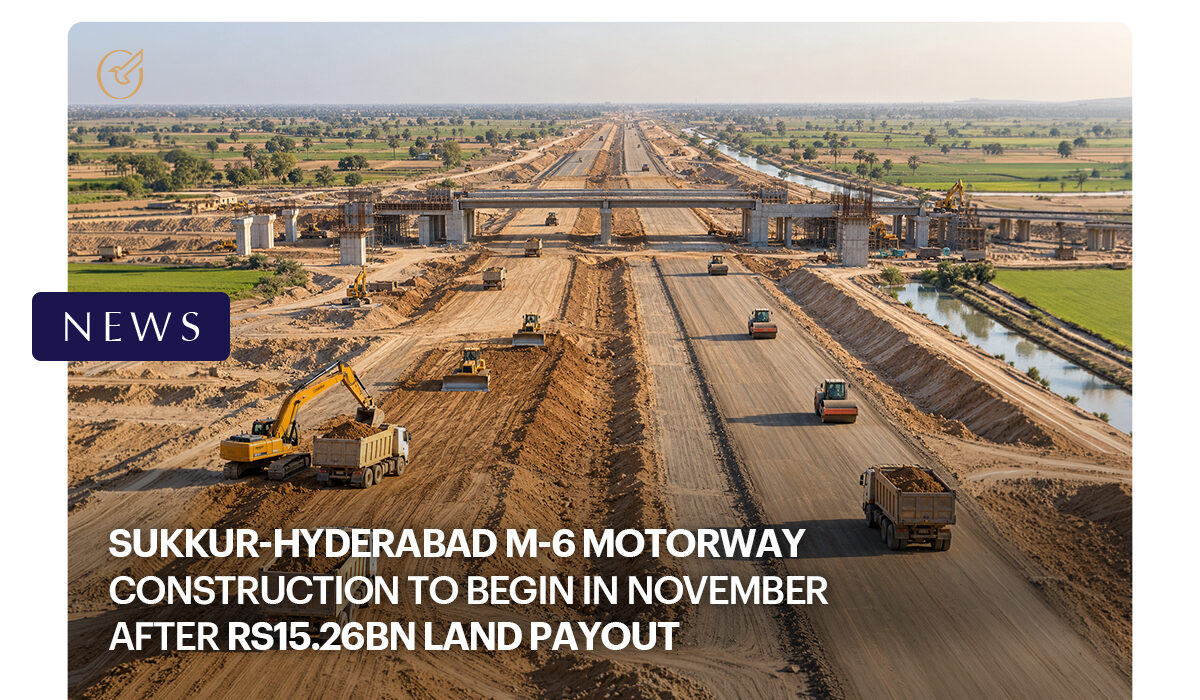
ISLAMABAD: The National Highway Authority (NHA) and the Asian Development Bank (ADB) have signed an agreement to build two sections of the M6 Motorway, connecting Hyderabad to Sukkur in Sindh province.

The agreement was signed by senior officials from both organizations. Under the deal, ADB will provide advisory support including feasibility studies and assistance in structuring a viable Public-Private Partnership (PPP) framework. The bank will also support the procurement process to attract private sector investment.

The project involves a 120-kilometre, six-lane road linking Hyderabad to Sukkur. It will serve as the final missing segment in the Karachi–Peshawar motorway corridor.

Federal Minister for Communications Abdul Aleem Khan welcomed the signing, calling it a major milestone for the country’s infrastructure development. He noted that a project stalled for over 30 years was now moving ahead within just two years. The minister credited focused government effort and multilateral engagement for the breakthrough.

Khan stressed that the M6 is the missing link in Pakistan’s north-south road network. Once completed, it will allow traffic to move uninterrupted from Karachi Port to Peshawar and Gilgit. This, he said, will significantly improve trade logistics and passenger connectivity across the country.

The full project stretches 306 kilometres and will be six lanes wide. It will include 15 interchanges and 10 service areas for travelers and commercial transporters. Modern tolling and safety systems will also be installed along the route. Construction is scheduled to begin in May under the PPP model, with financing already secured from the Islamic Development Bank and the OPEC Fund.

For more news on real estate and special reports, visit Chakor Ventures.

baltit fort hunza
CategoriesArchitecture Economy Entertainment Tourism

Baltit Fort 2026: Complete Guide to Hunza’s Scenic Wonder

Baltit Fort stands as one of Pakistan’s most iconic historical landmarks. Located in Karimabad, this centuries-old fort is believed to be about 700 years old, with some parts tracing even older origins. Once home to the rulers of Hunza, the fort is famous for its unique blend of architectural styles and its commanding views over the valley. Today, it serves as a cultural museum, offering insight into the region’s past. Its history, location, and striking design make it an important symbol of Hunza’s heritage.

Quick Facts

Feature Details
Location Karimabad, Hunza Valley, Gilgit-Baltistan, Pakistan
Age About 700 years old
Built by Rulers (Mirs) of Hunza
Status Museum / heritage site
UNESCO Tentative List
Setting Hilltop overlooking Hunza Valley

What Is Baltit Fort?

baltit fort Hunza

Baltit Fort is a historic fort in Karimabad, in the Hunza Valley of Gilgit-Baltistan, Pakistan. It is one of the most famous landmarks in Hunza and is known for its unique design and long history. The fort stands on a hilltop and overlooks the valley below.

Former Royal Residence

It was once the royal residence of the rulers of Hunza, known as the Mirs. It served as their home and center of power for many centuries. From here, they managed the region and protected their territory.

Strategic Hilltop Fort

The fort was built in a strategic location on a high hill. This position allowed it to defend against attacks and also provided wide views of the surrounding mountains and valleys. Its design reflects both local building styles and influences from nearby regions.

Cultural Landmark in Hunza

Today, it is an important cultural landmark in Hunza. It has been restored and is now open to visitors as a museum. It represents the history, architecture, and traditions of the Hunza Valley.

Where Is Baltit Fort Located in Hunza Valley?

 Fort is located in Karimabad, in the Hunza Valley of Gilgit-Baltistan, Pakistan. It stands on a hilltop above the town, offering wide views of the surrounding valley and mountains.

The Baltit fort location is easy to identify once you reach Karimabad. The fort sits above the main settlement, which was once the capital of the former Hunza State. This elevated position made it ideal for defense and for overseeing the valley.

When people search for Baltit Fort Karimabad, they are referring to this exact hilltop site in the heart of the town. Karimabad is one of the most visited places in Hunza, and the fort is its most famous landmark.

It is surrounded by high peaks and overlooks the valley below, enhancing both its beauty and historical importance.

How to Reach Baltit Fort Hunza?

Here are the main ways to reach the fort:

  • By Air (via Gilgit):
    Take a flight to Gilgit from Islamabad. From Gilgit, the fort is about a 2–3 hour drive by car or taxi.
  • By Road (via Karakoram Highway):
    Travel from Islamabad to Hunza via the Karakoram Highway. The journey takes around 12–16 hours, depending on road conditions.
  • From Karimabad:
    Once in Karimabad, it is a short uphill walk or a drive. Most visitors prefer walking through the local streets.
  • Local Transport:
    Taxis and private cars are easily available in Hunza for reaching the fort from nearby areas.

Baltit Fort History?

baltit fort history

The fort has a long and layered history that reflects the culture and power of Hunza Valley. It served as a royal residence, a defensive stronghold, and today, a preserved heritage site. Its story spans several centuries, from early construction to modern restoration.

Origins and Early Construction

This is widely known as being about 700 years old, which is the most common timeline used in travel and historical descriptions. This places its main development around the 14th–15th century.

However, some sources suggest that parts of the fort may be much older. The core structure, especially its earliest defensive elements, could date back to around the 8th century. This means the fort was not built at once but developed over time in different phases.

The design reflects this long evolution. Builders used local stone and timber to create a strong structure that could handle harsh weather and earthquakes. Over the centuries, new sections were added, shaping the fort into what we see today.

Royal Residence of Hunza

baltit fort is about years old

For many generations, this was the home of the rulers of Hunza, known as the Mirs. It was not just a house but the center of power in the region.

From this hilltop location, the Mirs could control the surrounding valley and monitor important trade routes. The fort’s elevated position gave it a clear strategic advantage, making it easier to defend against attacks.

Inside, the fort served both public and private functions. It had spaces for meetings, living quarters for the royal family, and areas for managing local affairs. This made it the political and administrative heart of Hunza for centuries.

Abandonment and Restoration

This remained in use until 1945, when the ruling family moved to a more modern residence. After that, the fort was left empty and began to fall into disrepair.

Over time, weather and neglect caused serious damage to the structure. There was a real risk that the fort could collapse if no action was taken.

In the 1990s, a major restoration project was started to save the fort. The work focused on preserving its original design while strengthening the structure. By 1996, the restoration was completed.

Today, it is open to visitors as a museum. It stands as a symbol of Hunza’s history and offers insight into the region’s royal past and architectural heritage.

How Old Is Baltit Fort?

Baltit Fort is about 700 years old, although parts of the structure may date back to the 8th century. The main fort was built and expanded during the 14th to 15th century. However, earlier sections may have existed as a simple defensive structure before that.

So, while the visible fort is around 700 years old, its origins could be much older.

Why is The Fort Famous?

Baltit Fort is famous for its scenic location, rich history, and unique design. It is one of the most well-known landmarks in Hunza Valley and attracts visitors from around the world.

Stunning Views of Hunza Valley

hunza valley baltit fort

From the top, you can see wide views of Hunza Valley, including mountains, villages, and green fields. The view is one of the main reasons people visit the fort.

Royal Heritage

It was once the home of the rulers of Hunza, known as the Mirs. It served as a royal residence for many years. This gives the fort strong historical importance and connects it to the region’s past.

Unique Architecture

The design of Baltit Fort is different from many other forts. It is built with stone and wood, which helps it stay strong in harsh weather. The structure also shows influences from Tibetan and Central Asian styles, making it architecturally unique.

Cultural Significance

Baltit Fort is an important cultural symbol in Hunza. It represents the traditions, history, and identity of the local people. Today, it is preserved as a museum and helps visitors learn about the region’s heritage.

Architecture and Design of Baltit Fort Hunza Valley

baltit fort height

Baltit Fort features a unique architectural style that blends local building methods with influences from Tibet and Central Asia. Its design reflects both practicality and cultural exchange over centuries. Baltit Fort is built on a high hill above Karimabad in Hunza Valley.

This elevated position gives it a strong natural advantage. It overlooks the entire Hunza Valley and offers wide views of the surrounding mountains. However, the exact Baltit Fort height is unknown.

Architectural Features

  • Stone and timber structure
    The fort is built using a mix of stone and wood. Stone provides strength, while timber adds flexibility and support. This combination helps the structure last for centuries.
  • Earthquake-resistant design
    The use of timber within stone walls allows the building to absorb shocks. This makes the fort more stable during earthquakes, which are common in mountainous regions like Hunza.
  • Multi-level construction
    Baltit Fort has multiple floors built upward on a hill. This vertical design helped save space and improved defense.
  • Thick defensive walls
    The walls are strong and thick, offering protection against harsh weather and past invasions.
  • Wooden balconies and carvings
    The upper sections include wooden balconies with detailed carvings. These reflect traditional craftsmanship.

Cultural and Regional Influences

  • Tibetan influence
    The structure resembles Tibetan-style buildings, especially in its form and use of wood.
  • Central Asian elements
    Some design features show links to Central Asian architecture, due to historical trade and cultural exchange.
  • Local Hunza craftsmanship
    The construction also uses local techniques suited to the mountain environment.

Overall, the architecture of Baltit Fort is not just about strength and defense. It also shows a blend of cultures and practical design suited to its location in Hunza Valley.

Baltit Fort and UNESCO Status

baltit fort karimabad

Baltit Fort is listed on the UNESCO Tentative List, which means it has been proposed for future World Heritage status but is not yet officially inscribed.

The listing highlights the fort’s heritage significance as an important cultural and historical site in northern Pakistan. It represents the region’s traditional architecture, royal history, and strategic role in the Hunza Valley.

According to UNESCO, sites on the Tentative List are recognized for their potential global value and are considered for full World Heritage status in the future.

Being on this list helps raise awareness about Baltit Fort and supports efforts to preserve it as a key part of the region’s cultural heritage.

Baltit Fort vs Altit Fort

Feature Baltit Fort Altit Fort
Age About 700 years old (with older origins) Over 900 years old
Location Hilltop above Karimabad Cliff edge above Altit village
Architecture Style Palace-like structure with multiple levels Compact and fortress-like design
Construction Material Stone and timber (layered for strength) Stone, wood, and mud
Design Influence Tibetan and Central Asian influence More local and defensive design
Main Purpose Royal residence of the Mirs of Hunza Early seat of power and defense fort
Layout Larger, more open interior spaces Narrow passages and tighter spaces
Views Wide panoramic views of Hunza Valley Strategic views for defense and control
Historical Role Political and royal center Defensive stronghold and early governance center

Visiting Baltit Fort in Hunza

baltit fort karimabad

Visiting Baltit Fort offers a mix of history, culture, and scenic views over Hunza Valley.

Museum Experience

Inside the fort, you can walk through restored rooms that show:

  • How the rulers of Hunza lived
  • old furniture and tools
  • traditional living spaces

Each section gives a clear idea of daily life in the past.

Views From The Top

Baltit Fort is built on a high point above Karimabad. From the top, you can see:

  • wide views of Hunza Valley
  • nearby mountains and glaciers
  • traditional houses below

The viewpoint is one of the main reasons visitors come here.

Cultural Exhibits

The fort also displays:

  • local crafts and heritage items
  • historical objects from Hunza
  • information about regional culture

Conclusion

Baltit Fort is a key landmark in Hunza Valley, located above Karimabad. With a history of about 700 years, it reflects the legacy of the region’s rulers and their way of life. Today, it stands as a preserved museum that highlights the culture and heritage of Hunza. Its design, location, and history make it an important symbol of the area.

FAQs – Baltit Fort

The following are some of the top FAQs.

What is the entry fee for Baltit Fort?

The entry fee for Baltit Fort may vary for local and foreign visitors. It is best to check updated prices at the ticket counter or through local sources before visiting.

What is the special thing about Baltit Fort?

Baltit Fort is known for its rich history, unique architecture, and hilltop location. It offers panoramic views of Hunza Valley and reflects the cultural heritage of the region.

How high is Baltit Fort?

There is no widely confirmed exact height of Baltit Fort.

Who built the Baltit Fort?

Baltit Fort was built and expanded by the rulers of Hunza, known as the Mirs. Over time, different parts were added and improved.

What is the history of Baltit Fort?

Baltit Fort has a history of about 700 years, with older parts possibly dating back even further. It served as the royal residence of the Mirs of Hunza until it was abandoned in 1945 and later restored.

What is the architecture of the Baltit Fort?

The fort features a mix of stone and timber construction. Its design shows Tibetan and Central Asian influences and includes multiple levels with strong structural support.

Which fort is famous in Gilgit?

Several forts are known in the Gilgit region, but Baltit Fort is among the most popular due to its history, location, and preservation.

Which fort is famous in Gilgit-Baltistan?

Gilgit-Baltistan is home to several historic forts, but Baltit Fort and Altit Fort are among the most well-known.

Best guided tour options for Baltit Fort

Guided tours are available through local travel agencies and tour operators in Hunza. Many offer combined tours of Baltit Fort, Altit Fort, and nearby attractions.

How to book a guided tour of Baltit Fort?

You can book a guided tour through local travel agencies, hotels in Karimabad, or online travel platforms that offer Hunza tour packages.

Top-rated travel agencies offering Baltit Fort trips.

Several travel agencies in Pakistan provide Hunza tours that include Baltit Fort. It is recommended to check reviews and compare packages before booking.

What are the best hotels near Baltit Fort for a family stay?

Karimabad offers a range of family-friendly hotels and guesthouses. Many provide comfortable stays with views of Hunza Valley and easy access to the fort.

How to buy tickets online for Baltit Fort visit.

Online ticket booking is not always available. Most visitors purchase tickets directly at the entrance of Baltit Fort.

Baltit Fort opening hours and ticket prices.

Baltit Fort is generally open during daytime hours. Ticket prices may vary, so it is best to confirm locally before your visit.

Are there any recommended local eateries close to Baltit Fort?

Yes, there are several local restaurants and cafés in Karimabad, search them up on Google.

Local transportation services to Baltit Fort from nearby cities

Visitors can reach Baltit Fort via local taxis, private cars, or transport services from nearby cities like Gilgit.

What are the costs associated with entering Baltit Fort?

The main cost is the entry ticket. Additional costs may include guided tours, transportation, and nearby accommodation depending on your travel plans.

For more informative blogs on topics like Altit Fort and Shakarparian, visit Chakor Blogs.

Read More:

CategoriesNews Developments Economy Tourism Urban Developments & Planning

Government Approves 1,000-Acre Park, Urban Reforms for Islamabad

ISLAMABAD: Pakistan has announced a major development plan to improve life in its capital, Islamabad. The plan was presented during a high-level meeting chaired by Interior Minister Mohsin Naqvi at the Capital Development Authority (CDA) headquarters.

A key decision from the meeting was the approval of a 1,000-acre public park near the Margalla Hills. The park is expected to offer modern recreational facilities and open spaces for people of all ages. Officials say it will become a major attraction and improve the city’s environment.

The government also plans to support investment in the hospitality sector. New five-star hotels will be built in partnership with international companies. In addition, a zero-tax policy for hotel investments is being prepared to attract both local and foreign investors.

To improve governance, authorities will conduct a full survey of land and properties in Islamabad. This will help resolve issues in land records and support better planning in the future.

Officials also shared updates on digital reforms. CDA services, including property transfers, are being shifted online. A central digital system will soon be launched to provide public services more efficiently.

For public safety, a dedicated emergency control room will be set up under the Safe City project to improve response times.

The meeting included senior government officials and CDA representatives. The new measures aim to manage urban growth, improve services, and make Islamabad a more modern and livable city.

For more news on real estate and special reports, visit Chakor Ventures.

shah jahan mosque thatta
CategoriesConstruction Architecture Entertainment Tourism

Shah Jahan Mosque Thatta: Ultimate Guide-2026

The Shah Jahan Mosque Thatta is one of the most unique Mughal-era mosques in Pakistan. Located in Thatta, it is famous for its 93 domes, intricate tile work, and remarkable acoustic design. Built in the 17th century by Shah Jahan, the mosque stands apart from other Mughal monuments due to its use of brick and glazed tiles instead of marble. If you are wondering where Shah Jahan Mosque is located, why it is famous, or what makes its architecture unique, this guide covers everything in detail.

What is Shah Jahan Mosque Thatta?

The Shah Jahan Mosque Thatta is a 17th-century Mughal mosque located in Thatta, Sindh, Pakistan. It is known for its 93 domes, blue tile decoration, and advanced acoustic design.

Shah Jahan Mosque Thatta Key Facts

Also known as Jamia Masjid Thatta, Shahjahani Mosque, Badshahi Mosque Thatta
Location The Shah Jahan Mosque is located in Eastern Thatta, Sindh, Pakistan
Coordinates 24°44′50″N, 67°55′41″E
Built 1644–1647 CE (eastern addition 1659)
Commissioned by Mughal Emperor Shah Jahan
Architectural style Mughal, Timurid, Safavid Persian, Sindhi
Total domes 93 (official); some sources cite 100, including smaller domes
Arches 33
Minarets None
Total dimensions 305 ft × 170 ft
Courtyard size 169 ft × 97 ft
Prayer capacity Up to 20,000 worshippers
Materials Red brick, glazed blue tiles (from Hala, Sindh)
UNESCO status Tentative list since 1993 (not yet fully inscribed)
Distance from Karachi ~100 km (~1.5–2 hours by road)
Construction cost 9 lakh rupees (17th-century value)
Entry fee Free
Maintained by Directorate General of Antiquities, Govt of Sindh

Overview of Shah Jahan Mosque Thatta

Shah Jahan Mosque Thatta

The Shah Jahan Mosque, also known as the Jamia Masjid of Thatta or Shahjahani Mosque, is the main congregational mosque in Thatta, Sindh. It was built during the Mughal period and remains one of Pakistan’s most important historic sites.

  • Built between 1644 and 1647 CE
  • Commissioned by Emperor Shah Jahan
  • Eastern section completed in 1659 under Aurangzeb
  • Serves as the central mosque of Thatta

Where is Shah Jahan Mosque Located?

  • Situated on the eastern edge of Thatta
  • Close to National Highway N-5
  • About 100 km from Karachi
  • Near the Makli Necropolis (UNESCO World Heritage Site)
  • On UNESCO’s tentative list since 1993

Size and Structure of Shah Jahan Mosque

Feature Details
Total Size 305 ft × 170 ft
Courtyard 169 ft × 97 ft
Number of Domes 93
Capacity Up to 20,000 people

Shah Jahan Mosque Thatta History

Shah Jahan Mosque Thatta

Before becoming emperor, Shah Jahan experienced exile, political conflict, and later returned to power. The mosque was built not just as a religious structure, but as a gesture of gratitude toward the people of Thatta who supported him during a difficult period.

Person / Place Role
Shah Jahan Exiled prince who later became emperor
Jahangir Mughal emperor and father of Khurram
Nur Jahan Influential empress involved in succession politics
Thatta City that hosted the exiled prince

Exile of Prince Khurram in Thatta (1622–1625)

Prince Khurram aka shah jahan portrait

Before he became emperor, Shah Jahan, then known as Prince Khurram, was involved in a power struggle within the Mughal court. This period is a key part of the Shah Jahan Mosque Thatta history, as it explains his personal connection to the city.

The political conflict was shaped by royal succession tensions and court alliances.

  • Nur Jahan supported her own faction in the royal court
  • Prince Khurram rebelled against Jahangir
  • The rebellion was unsuccessful

After his defeat, Prince Khurram was forced into exile. He traveled south and arrived in Thatta, which at the time was a distant Mughal city.

During his stay in Thatta:

  • The local population welcomed him warmly
  • Residents provided shelter and support
  • He remained in the region for several years
  • He later reconciled with his father and returned to the royal court

This experience left a lasting impression on Shah Jahan.

The Storm of 1637 and the Construction of the Mosque

After the death of Jahangir in 1627, Prince Khurram became Emperor Shah Jahan. Years later, a major natural disaster changed the course of Thatta’s history.

In 1637, a powerful storm struck the Sindh region and caused significant damage to Thatta.

Shah Jahan responded to this disaster with both political and personal motivation.

  • He remembered the support he received during exile
  • He decided to help rebuild and support the city
  • He ordered the construction of a grand mosque

The mosque project included:

  • Funding from the imperial treasury
  • Construction as a central congregational mosque
  • A design reflecting Mughal and Persian influences

This decision marked the beginning of what would become the Shah Jahan Mosque Thatta.

Legacy and Historical Significance

The mosque was completed in the mid-17th century and quickly became a major religious and cultural center. Over time, it gained recognition as one of the most important Mughal-era structures in the region.

The legacy of the mosque reflects both architectural and historical importance.

  • It represents Mughal craftsmanship and design
  • It highlights the cultural importance of Thatta
  • It symbolizes gratitude from a ruler to his people

Today, the Shah Jahan Mosque in Thatta continues to attract historians, architects, and travelers. It stands as a lasting reminder of the connection between power, politics, and community in the Mughal era.

Construction of Shah Jahan Mosque Thatta (1644–1647)

shah jahan mosque thatta history

Aspect Details
Construction Period 1644–1647
Patron Shah Jahan
Supervisor Nawab Gul Aqa Amir Khan
Funding Imperial treasury
Cost ~9 lakh rupees
Notable Work Calligraphic tile decoration

The construction of the Shah Jahan Mosque Thatta began in the mid-17th century under the orders of Shah Jahan. It was built using locally available materials, mainly red brick and glazed tiles, instead of marble.

The project was carefully planned to reflect both Mughal architectural principles and regional influences.

      • Built between 1644 and 1647
      • Funded by the imperial Mughal treasury
      • Designed with symmetry and balance in mind
      • Constructed without minarets, which is unusual for Mughal mosques
      • Featured 93 domes to enhance acoustics

Why is the Shah Jahan Mosque famous?

The Shah Jahan Mosque Thatta is famous for its architecture, history, and cultural importance. Many people search “why Shah Jahan Mosque is famous”, and the answer lies in a combination of design, engineering, and local traditions.

Architectural and Historical Reasons

The mosque stands out due to several key features:

  • 93 domes that create a unique skyline
  • An advanced acoustic system that carries sound across the hall
  • Extensive tile work with Persian-style patterns
  • No minarets, which is rare in Mughal architecture
  • Built by Shah Jahan as a symbol of gratitude

These elements make the mosque one of the most distinctive Mughal structures in South Asia.

The Mihrab Story and Local Tradition

shah jahan mosque Mihrab

There is also a well-known local story associated with the mosque’s mihrab, the niche indicating the direction of Mecca.

According to traditional belief:

  • The original mihrab was not correctly aligned
  • Help was sought from the Sufi saint Makhdum Nooh
  • It is said that he corrected the alignment overnight through prayer

This story is widely shared in local culture and adds a spiritual dimension to the mosque’s history.

Historical Perspective on the Mihrab

From a historical perspective, the explanation is different.

  • Records suggest the mihrab was rebuilt at a later stage
  • This reconstruction likely took place about a century after the mosque was built
  • The correction may have been part of structural or alignment adjustments

Architecture of the Shah Jahan Mosque Thatta

corridoors of shah jahan mosque thatta

The mosque does not follow a single architectural tradition. Instead, it combines multiple influences into a balanced and functional structure. This blend gives the mosque a distinct identity among Mughal monuments.

Architectural Influences

The design reflects a combination of imperial and regional styles. It brings together Mughal planning with Persian and Central Asian aesthetics, while also adapting to local conditions in Sindh.

  • Mughal influence can be seen in symmetry and layout
  • Persian Safavid style appears in tile work and color schemes
  • Timurid Central Asian elements are visible in dome design
  • Local Sindhi techniques are reflected in the use of brick and climate adaptation

Compared to other Mughal mosques, the difference is clear. Wazir Khan Mosque focuses on painted decoration, while Badshahi Mosque emphasizes scale and grandeur.

The Caravanserai-Inspired Layout

The layout of the mosque is inspired by a caravanserai, which was a resting place for travelers along trade routes. This concept is rarely used in mosque architecture, making the design unusual.

The structure is built around a central courtyard, creating a sense of openness and balance. Surrounding this space are domed chambers that connect different sections of the mosque.

Key spatial features include:

  • Central courtyard measuring approximately 169 ft × 97 ft
  • 33 arches forming the boundary of the courtyard
  • Two-aisled galleries on the north and south sides
  • A large prayer hall facing the courtyard

This arrangement allows smooth movement and accommodates large gatherings.

Layout Overview

Element Description
Central courtyard Open space with surrounding arches
Galleries Two-aisled corridors on the north and south
Prayer hall Large domed area facing the courtyard
Arches 33 arches framing the courtyard

Structural Design and the 93 Domes

One of the most remarkable aspects of the Shah Jahan Mosque Thatta architecture is its system of 93 domes. These domes are carefully arranged to serve both structural and functional purposes.

The building stands on a raised stone base, which provides stability. Thick brick walls and strong square pillars support the weight of the domes. This construction method has helped the mosque remain intact over centuries.

Acoustic Engineering

The mosque is widely known for its natural acoustic system. The shape and placement of the domes allow sound to travel efficiently across the prayer hall.

  • A voice from the mihrab can be heard clearly across the mosque
  • Sound spreads evenly without distortion
  • No need for artificial amplification during prayers

This level of acoustic planning shows advanced understanding of sound behavior, even before modern science explained it.

Ventilation and Light

The mosque is designed to suit the hot climate of Sindh. Its structure allows natural cooling and lighting without relying on modern systems.

Features:

  • Small openings allow air circulation
  • Interior remains cool in hot weather
  • Natural light enters through openings
  • No need for artificial lighting during the day

This design reduces heat and improves comfort for visitors and worshippers.

Tilework and Decoration

The decorative style of the mosque is one of its most visually striking features. The extensive use of glazed tiles gives the structure its distinct appearance.

  • Colors include cobalt blue, turquoise, manganese violet, and white
  • Patterns feature geometric shapes and floral designs
  • Arabic and Persian calligraphy is used for decoration
  • Domes often display star-shaped (stellated) patterns

These elements reflect Persian artistic influence while maintaining a strong regional identity.

What Makes Shah Jahan Mosque Thatta Unique?

The Shah Jahan Mosque Thatta is unique because it brings together multiple architectural traditions, advanced craftsmanship, and regional influences in one structure. Many users search “why Shah Jahan Mosque is famous”, and the answer lies in how these elements combine to create a distinct identity.

Multi-Colored Tile Work and Persian Influence

One of the most defining features of the mosque is its detailed tile work. Unlike simpler decorative styles, the tiles here often contain multiple colors within a single piece.

  • Uses Persian Safavid Kashani (Kashi) tile technique
  • Combines colors such as blue, turquoise, white, and violet
  • More complex than the decoration at Wazir Khan Mosque
  • Covers large interior surfaces, especially domes and walls

This style gives the mosque a rich and vibrant appearance.

Local Craftsmanship from Hala

The tile work also reflects strong local influence. Many experts believe the tiles were produced in Hala, a region still known for its traditional ceramics.

  • Likely produced using local kiln techniques
  • Connected to Sindh’s long tradition of blue pottery
  • Shows integration of regional craftsmanship into Mughal design

This combination of imperial design and local skill adds to the mosque’s uniqueness.

Central Asian and Timurid Elements

The mosque also reflects architectural ideas from Central Asia. These influences can be seen in its structural patterns and design approach.

  • Geometric brickwork inspired by Timurid traditions
  • Structural similarities with the architecture from Samarkand
  • Use of symmetry and repeating patterns

These features connect the mosque to a broader architectural heritage beyond South Asia.

Combined Architectural Identity

What truly makes the Shah Jahan Mosque Thatta stand out is how all these elements come together in a single structure.

  • Blends Mughal, Persian, and Central Asian influences
  • Uses advanced tile techniques with local materials
  • Integrates decorative beauty with structural functionality
  • Maintains balance between regional identity and imperial design

This combination makes the mosque one of the most distinctive Mughal-era monuments in the region.

What the Mosque Does Not Include?

No Minarets

  • Most Mughal mosques have them
  • This mosque does not
  • Instead, it uses a large entrance gateway (pishtaq)

No Frescoes

  • Unlike Wazir Khan Mosque
  • Decoration relies on tiles and brickwork only

No Marble

  • Other Mughal monuments use marble, such as:
    • Taj Mahal
    • Agra Fort
    • Jama Masjid
  • This mosque is built entirely of red brick
  • Gives it a warmer and more earthy appearance

Ablution Courtyard Placement

The ablution area is placed differently from the usual mosque design.

Typical design:

  • The ablution pool is in the center of the main courtyard

Here:

  • Located in a separate square courtyard
  • Positioned on the eastern side
  • Originally accessed through an arched passage

Shah Jahan Mosque vs Other Mughal Mosques

Feature Shah Jahan Mosque Badshahi Mosque Wazir Khan Mosque
Material Brick & tiles Red sandstone Tile & fresco
Domes 93 Few large domes Smaller domes
Minarets No Yes Yes
Style Persian + Sindhi Mughal imperial Decorative

Renovation and Conservation of Shah Jahan Mosque Thatta

The mosque’s physical history did not end with its completion in 1647. An eastern addition was completed in 1659 under Aurangzeb. Further repairs were conducted in 1692 under Emperor Aurangzeb’s orders, and again in 1812 by Murad Ali Khan Talpur, a local Sindhi chieftain. 

During British rule, renovations took place in 1855 and 1894. The most recent significant restoration work was carried out in the 1960s and 1970s, with a conscious effort to match original tile styles.

Today, the mosque is maintained by the Directorate General of Antiquities, Government of Sindh. The conservator on site is Mr. Sarfaraz Jatoi (contact: +92-333-2750124).

The Sindh Antiquities Directorate has also initiated the “We Connect Makli” project with international partners ICCROM, the ALIPH Foundation, and EHRF, responding to flood damage in the broader Thatta heritage zone.

Despite being on the UNESCO tentative list since 1993, for over 30 years, the mosque has not yet received full World Heritage inscription. This remains one of Pakistan’s most significant gaps in heritage recognition.

Visitor Guide: How to Visit the Shah Jahan Mosque Thatta

Here is the visitor guide to Shah Jahan Mosque Thatta:

Getting There from Karachi

The Shah Jahan mosque Thatta is located in eastern Thatta on the National Highway N-5, at its intersection with the Sujawal-Thatta Road. From Karachi, take the M-9 Motorway (Karachi–Hyderabad) and exit towards Thatta the total journey is approximately 100 km and takes around 1.5 to 2 hours by car.

There is no dedicated public transport directly to the mosque, but coaches and minibuses from Karachi’s Lea Market and Sohrab Goth terminals run regularly to Thatta city. From Thatta’s main bus stop, the mosque is accessible by rickshaw.

Visiting Hours (2026)

  • Summer (approx. April–September): 8:00 AM – 7:00 PM
  • Winter (approx. October–March): 9:00 AM – 6:00 PM
  • Open daily, including Fridays (though access may be restricted during Friday prayers)

Entry and Facilities

Entry to the mosque is free of charge. The site has a lawn and a footpath area around the main structure. The Sindh Tourism Development Corporation operates the Shah Jahan Restaurant near the site for visitors requiring food and refreshment.

Best Time to Visit the Shah Jahan Mosque Thatta

The best months to visit are November through February, when temperatures in Sindh are moderate (15–25°C). Summer temperatures regularly exceed 40°C, making an extended outdoor visit uncomfortable. Arriving in the morning avoids peak afternoon heat in all seasons.

Plan Your Full Day: Combining with Nearby Sites

Thatta rewards a full-day visit. The mosque pairs naturally with these nearby attractions:

  • Makli Necropolis (2–3 km away): One of the world’s largest Islamic funerary complexes and a fully inscribed UNESCO World Heritage Site, containing around 125,000 tombs spanning four centuries.
  • Keenjhar Lake (25 km away): Pakistan’s second-largest freshwater lake, offering boat rides and birdwatching.
  • Chaukundi Tombs (29 km from Karachi on the way to Thatta): Remarkable carved sandstone funerary monuments from the 15th–18th centuries.

Suggested itinerary from Karachi:

Depart by 7:00 AM → Chaukundi Tombs (30-minute stop) → Makli Necropolis (2 hours) → Shah Jahan Mosque Thatta (1.5 hours, including lunch at the site restaurant) → Keenjhar Lake (optional, 1 hour) → return to Karachi by early evening.

FAQs – Shah Jahan Mosque Thatta

Following are some of the FAQs regarding Shah Jahan Mosque Thatta.

Where is the Shah Jahan Mosque located?

The Shah Jahan Mosque is located in the city of Thatta, Sindh province, Pakistan, approximately 100 km from Karachi on National Highway N-5, at its intersection with the Sujawal-Thatta Road.

How old is the Shah Jahan Mosque in Thatta?

Construction began in 1644 and the main structure was completed in 1647, making it approximately 379 years old as of 2026. An eastern addition was completed in 1659.

Is the Shah Jahan Mosque Thatta a UNESCO World Heritage Site?

The Shah Jahan Mosque has been on UNESCO’s tentative list since 1993 but has not yet received full World Heritage inscription. It is one of Pakistan’s most significant pending heritage nominations.

How many domes does the Shah Jahan Mosque Thatta have?

The officially recognised count is 93 domes. Some sources cite 100 when including smaller subsidiary domes. Either way, it is the highest concentration of domes on any single mosque structure in Pakistan.

Is entry to the Shah Jahan Mosque Thatta free?

Yes, entry to the Shah Jahan Mosque is free of charge for all visitors.

What is the best time to visit the Shah Jahan Mosque Thatta?

November through February, when temperatures in Sindh are moderate (15–25°C). Summer heat can exceed 40°C. Arriving in the morning avoids peak afternoon heat in all seasons.

Does the Shah Jahan Mosque Thatta have minarets?

No. The Shah Jahan Mosque in Thatta has no minarets, an unusual feature distinguishing it from most Mughal mosques. The entrance is dominated by a tall semi-domed pishtaq gateway, a feature borrowed from Timurid Central Asian architecture.

Why was the Shah Jahan Mosque Thatta built?

Emperor Shah Jahan built it as a token of gratitude to the people of Thatta, who had sheltered him during his exile as Prince Khurram. A devastating cyclone that nearly destroyed Thatta in 1637 provided an additional motivation to rebuild and give back to the city.

Why is Shah Jahan Mosque Thatta famous?

The mosque is famous for its 93 domes, Persian-style tile work, unique acoustics, and the absence of minarets.

How far is the Shah Jahan Mosque Thatta from Karachi?

The Shah Jahan Mosque in Thatta is approximately 100 kilometres from Karachi around 1.5 to 2 hours via the M-9 Motorway and National Highway N-5.

What are the visiting hours of Shah Jahan Mosque Thatta?

Summer (approx. April–September): 8:00 AM to 7:00 PM. Winter (approx. October–March): 9:00 AM to 6:00 PM. The mosque is open daily.

For more informative blogs on topics like Lok Virsa Heritage Museum and Shakarparian, visit Chakor Blogs.

Read More

CategoriesNews Economy Property Property Laws Property Taxes

FBR Streamlines Tax Exemption Process for Property Developers, Sets Seven-Day Deadline

ISLAMABAD: The Federal Board of Revenue (FBR) has introduced a significant procedural reform for Pakistan’s real estate and construction sector through the issuance of Circular No. 08 of 2025-26 (IR-Policy – Income Tax). The circular clarifies the applicability of withholding tax under Section 236C of the Income Tax Ordinance, 2001, specifically for taxpayers operating under Section 7F.

Under the new directive, tax officials are required to issue withholding tax exemption certificates within seven working days to developers who have already fulfilled their obligations under the special tax regime. Should an applicant meet all required conditions and submit a complete application, yet the concerned Commissioner fails to act within the stipulated timeframe, the exemption certificate will be automatically processed and issued through the IRIS system. 

Under Section 7F, developers are taxed at a fixed percentage of gross receipts rather than conventional profit-based calculations, a distinction that had previously created ambiguity around the collection of advance tax on property transactions.

The latest circular supersedes Circular No. 7 of 2025-26 dated March 31, 2026, and directly addresses concerns raised by builders and developers regarding the collection of advance tax during property transactions.

The reform is expected to reduce administrative delays and improve the overall ease of doing business within Pakistan’s real estate and construction industry. By introducing an automated fallback mechanism through the IRIS system, the FBR aims to eliminate bureaucratic bottlenecks that have long frustrated developers seeking timely relief from double taxation.

This development signals a broader effort by the revenue authority to modernise tax administration and foster a more investor-friendly environment in the property sector.

For more news on real estate and Special Reports, visit Chakor Ventures.

CategoriesEconomy Feature Article Investment Property Laws Real Estate

From 3% to 1%: How CDA’s New Fee Policy Could Reshape Real Estate

The CDA has cut the property transfer fee from 3% to 1% reversing a move that quietly stalled one of Pakistan’s most active urban real estate markets.

Type Location Published Sources
Feature Report Islamabad, Pakistan April 17, 2026 The News International, Dawn, The Express Tribune

For anyone who has ever tried to transfer a property in Islamabad, the process is familiar: paperwork, queues, challans, and at the end of it, a fee that eats a meaningful chunk out of the deal. For nearly nine months, that fee stood at 3% of the government-assessed property value, a rate that many buyers and sellers quietly called the last straw. On April 9, 2026, the Capital Development Authority (CDA) changed that. The transfer fee is now 1%.

It sounds like a small adjustment on paper. But for a market that had visibly slowed since mid-2025, this single decision may prove to be the most consequential policy move for Islamabad’s real estate sector in recent years.

How it got to 3% in the first place

To understand why this cut matters, it helps to go back to July 2025. That summer, the CDA revised its property transfer fee upward from 1% to 3% in a move aligned with updated Federal Board of Revenue (FBR) property valuations. On the surface, it seemed like a routine administrative update. In practice, it tripled the closing cost for every buyer in the capital.

The impact was immediate. A property previously attracting a transfer fee of Rs 35,000 suddenly carried a fee of Rs 105,000. Deal pipelines that were nearly closed began to stall. Buyers who had already arranged financing found themselves short. Sellers struggled to find willing buyers at the new all-in cost. Market volumes dropped quietly but steadily through the second half of 2025.

Fee increase in July 2025

9 Months Market slowed under a high rate

65%+ Drop in transfer cost from today

Meanwhile, the federal government had been moving in the opposite direction. The FY2025-26 Budget had reduced advance property tax from 3% to 1.5% a signal that Islamabad’s CDA policy was running against the national grain.

Trade bodies began making noise. The Islamabad Chamber of Commerce and Industry, the Islamabad Estate Agents Association, and the United Business Group all formally called for a reversal.

The new chairman, a new approach

In early April 2026, Sohail Ashraf took charge as CDA Chairman. He also holds the office of Chief Commissioner of Islamabad a combination of roles that gives him significant authority. His third board meeting, held on April 9, produced the reversal the market had been waiting for.

The philosophical shift was as notable as the numbers. Ashraf stated explicitly that the goal going forward would be to broaden the tax base rather than increase tax rates. In other words, CDA would rather collect smaller amounts from more people and more transactions than squeeze harder from a shrinking pool.

“Instead of increasing property taxes in Islamabad, efforts should be made to broaden the tax base.”

— Sohail Ashraf, Chairman CDA and Chief Commissioner Islamabad

The CDA Board formally approved the new rate and issued the official notification on the same day. It supersedes the previous notification dated July 1, 2025. All revenue departments were directed to apply the 1% rate immediately.

What the numbers actually look like

The fee is calculated on the FBR-notified (assessed) value of the property not the open market price. This distinction matters. FBR assessments are typically lower than what properties actually trade for on the market. So the real saving is often larger than even a two-thirds reduction implies.

FBR-assessed value Old fee @ 3% New fee @ 1% Saving
Rs 5,000,000 Rs 150,000 Rs 50,000 Rs 100,000
Rs 10,000,000 Rs 300,000 Rs 100,000 Rs 200,000
Rs 20,000,000 Rs 600,000 Rs 200,000 Rs 400,000
Rs 50,000,000 Rs 1,500,000 Rs 500,000 Rs 1,000,000

The new rate applies to all properties within CDA-controlled areas of Islamabad residential sectors such as F-8, G-10, and I-8, as well as commercial areas, including the Blue Area. It does not apply to properties in housing societies outside the CDA jurisdiction.

How beneficial this is for the market

High transfer fees do more damage than just raising costs. When the official route becomes too expensive, informal shortcuts become tempting. Transfers get delayed or, worse, go undocumented.

Ownership records fall out of date. Future disputes over inheritance, resale, or financing become more complicated. Every informal shortcut is a hairline fracture in the property market’s long-term integrity.

Lower fees reverse that incentive. When the official cost is reasonable, there is simply less reason to cut corners. More documented transactions mean better price discovery because verified deals build the official data trail that the entire market relies on.

“This decision will increase business activity, restore public confidence, and help the real estate sector, along with its allied industries, regain momentum.”

— Zafar Bakhtawari, Secretary General, United Business Group

For buyers, the benefit is immediate: lower upfront cost and less last-minute financing pressure near closing. For sellers, it widens the pool of serious buyers. For developers, it reduces the cost of moving inventory.

And, in what many analysts called a counterintuitive but well-established effect, CDA itself may collect more revenue, not less, because more transactions will now be completed formally and on record.

Beyond the fee what else was decided

The April 9 board meeting was not only about the transfer fee. Two other significant decisions were also taken.

The CDA board approved the appointment of Creative Consultants, designated as a City Curator, to help develop Islamabad as a cultural and tourism destination. The initiative covers landscaping, parks, green belts, and urban vibrancy a long-discussed ambition for the capital that has now moved from idea to formal procurement.

The board also addressed solid waste management. After reviewing recommendations from its own committees, it decided to terminate the current outsourcing procurement process and revisit successful models from other cities before restarting. The chairman described the goal as adopting a sustainable and efficient system rather than pushing through a flawed one.

What happens now

For buyers and sellers currently in the process of a property transfer, the practical guidance is straightforward:

  • Confirm your property falls under CDA jurisdiction
  • Verify with the dealing office that the 1% rate is being applied to your file.
  • Calculate on the FBR-notified value rather than the market price. Keep all receipts and the updated notification, which replaces the July 2025 circular.

It is also worth noting that the transfer fee is one part of the total closing costs. Other taxes and administrative charges still apply, depending on the transaction. The cut is significant, but it is not a removal of all costs.

What it is, however, is a signal. The new CDA leadership has chosen, in its first major policy move, to reduce rather than increase. In a market that has spent the better part of a year waiting for exactly that signal, the timing could not have been more deliberate.

For more news on real estate ,Special Reports and real estate investment options visit Chakor Ventures.

CategoriesNews Property Laws Real Estate

Punjab to Launch Digital Real Estate System to Boost Investment and Transparency

LAHORE: The Punjab government is introducing a digital system for all property transactions in private housing schemes. The move is part of a proposed Real Estate Regulatory Act (RERA), directed by Chief Minister Maryam Nawaz.

All dealings will be processed through a centralised platform built by the Punjab Land Records Authority (PLRA). Housing schemes will need to issue a green certificate via the system before any sale. The full process, including approvals, registration, and documentation, will go paperless.

These reforms are expected to make real estate options more secure and transparent for buyers across Punjab.

A Housing Societies Management System will also be introduced. Some sub-registrar powers will be delegated to private housing schemes to speed up registrations.

Developers have one month to switch to the new system. A facilitation cell will be set up to guide stakeholders through the transition. Compliance is mandatory.

The move is also likely to strengthen confidence in real estate investment by reducing risks linked to informal property transactions.

The reforms aim to reduce fraud, improve transparency, and bring Punjab’s largely informal property market under proper oversight. The PLRA, Board of Revenue, and Lahore Development Authority are jointly overseeing the rollout.

For more news on the economy, development, real estate and special reports, visit Chakor Ventures.