
CategoriesNews Economy Investment Property Property Taxes Real Estate Investment

Punjab Property Valuation Reforms Target UAE and Gulf Investors

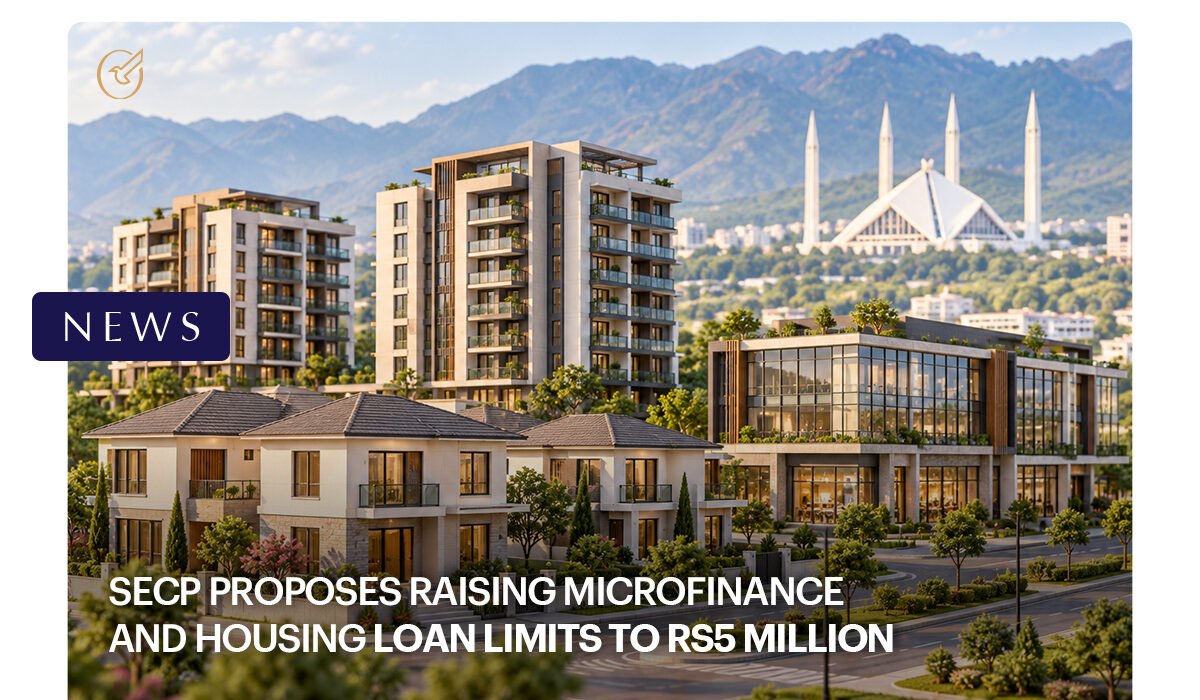
LAHORE: Punjab has started revising property valuation rates across several districts to encourage investment from the United Arab Emirates and other Gulf countries.

The revision was initiated after directions from the Board of Revenue Punjab. District administrations are reviewing local property rates and aligning them with Federal Board of Revenue benchmarks for the upcoming fiscal year. The step aims to reduce tax-related hurdles in the real estate sector and make property transactions more practical for investors.

Officials believe that clearer and more balanced property valuation rules can improve investor confidence, particularly among UAE and Gulf-based investors interested in Pakistan’s real estate market.

The process is currently being carried out at the district level and is expected to affect property transactions in major urban centers. Real estate stakeholders have mixed views about the likely impact. Some expect the revised tax structure to increase buying and selling activity, while others believe the immediate benefits may mainly support large housing societies and major developers.

The changes are being prepared before the start of the new fiscal year. The revised valuation framework is expected to influence property taxes, transaction costs, and investment decisions across Punjab’s real estate sector.

For more news on real estate and special reports, visit Chakor Ventures.

wazir mansion
CategoriesArchitecture Entertainment Towers

Wazir Mansion Tourist Guide 2026: Best Tips

In the heart of old Karachi, surrounded by the narrow streets and historic energy of Kharadar, stands one of Pakistan’s most meaningful national landmarks: Wazir Mansion. More than just a preserved building, it is remembered as the birthplace of Quaid-e-Azam Muhammad Ali Jinnah, the founder of Pakistan.

This guide explores the history, significance, museum experience, visitor details, and architecture of Wazir Mansion, helping readers understand why this heritage site remains one of Karachi’s most important historical places.

Quick Facts About Wazir Mansion

Feature Details
Name Wazir Mansion
Official Name Quaid-e-Azam Birthplace Museum
Location Barkati Street, Kharadar, Karachi
Historical Significance Birthplace of Muhammad Ali Jinnah
Date of Birth Associated 25 December 1876
Built Around 1860–1870
Floors Three storeys
Construction Stone masonry with lime and jute mortar
Museum Opened 14 August 1953
Renovation Major restoration completed between 2008 and 2010
Current Custodian Government of Sindh

Location of Wazir Mansion Karachi

Wazir Mansion is located on Barkati Street, Kharadar, Karachi, in the city’s historic old town area.

  • Area: Kharadar, Karachi South
  • Street: Barkati Street, formerly Chagla Street
  • Landmark: Also known as Quaid-e-Azam Birthplace Museum
  • Best map search: “Wazir Mansion Museum Karachi” or “Quaid-e-Azam Birthplace Museum”

How to Reach Wazir Mansion?

By Car or Ride-Hailing App

  • Use Careem, Uber, InDrive, or a private car.
  • Enter Wazir Mansion Museum Karachi in Google Maps.
  • Parking may be limited because Kharadar has narrow and busy streets.
  • It is best to get dropped near Barkati Street and walk to the museum.

From Saddar or M.A. Jinnah Road

  • Travel toward Tower.
  • Continue into Kharadar.
  • Follow directions to Barkati Street.

From Clifton or DHA

  • Take the route toward I.I. Chundrigar Road or Tower.
  • Continue toward Kharadar.
  • Use Google Maps for the quickest route based on traffic.

Visitor Tip

  • Visit in the morning to avoid heavy traffic and crowded market hours.

What Is Wazir Mansion?

Wazir Mansion Karachi

Wazir Mansion is a protected heritage building located in Kharadar, one of Karachi’s oldest and most historically rich neighborhoods. The building is best known as the birthplace of Muhammad Ali Jinnah, who was born there on 25 December 1876.

The mansion has been preserved as a museum dedicated to Jinnah’s early life, family background, and national legacy. For many Pakistanis, visiting the site is not simply a tourist activity. It is a symbolic journey into the origins of Pakistan’s independence movement.

The building stands in a part of Karachi that was once central to trade, migration, and community life. Kharadar’s streets, markets, and old buildings still reflect the city’s layered past, making Wazir Mansion an important stop for anyone interested in Karachi’s heritage.

The Story Behind the Name: Who Was Wazir Ali?

Although Wazir Mansion is remembered because of Quaid-e-Azam Muhammad Ali Jinnah, its name comes from Wazir Ali Ponawala, who purchased the building around the early 20th century.

Before Wazir Ali acquired it, the building is believed to have belonged to Gowardhan Das. Over time, the mansion became associated with Wazir Ali’s ownership and came to be known by his name. This creates an interesting contrast: the building’s name reflects one part of its ownership history, while its national significance comes from its connection to Jinnah’s birth and childhood.

That contrast is part of what makes Wazir Mansion Karachi so fascinating. It is both a private residential building from colonial-era Karachi and a national monument tied to Pakistan’s founding story.

Historical Background

wazir mansion outer view

Wazir Mansion was constructed around 1860–1870, during a period when Karachi was growing as a commercial port city. Its materials and structure reflect the building practices of the time. The mansion was built using stone masonry, lime, and jute mortar, materials commonly used in durable colonial-era buildings.

Muhammad Ali Jinnah’s father, Jinnah Bhai Poonja, moved to Karachi from Paneli village in Gondal State, Gujarat. He became involved in business and is said to have rented part of the mansion after entering into a partnership with Grams Trading Company. The family lived in the building during the early years of Jinnah’s life.

At that time, Karachi was becoming a city of trade, opportunity, and movement. Merchants, communities, and families from different regions were drawn to the city. Wazir Mansion, therefore, belongs not only to Jinnah’s personal history but also to the wider story of Karachi’s rise as an urban and commercial center.

December 25, 1876: The Birth of Pakistan’s Founder

The most important historical event associated with Wazir Mansion is the birth of Muhammad Ali Jinnah on 25 December 1876. This connection transformed the building from an old residence into one of the most emotionally significant heritage sites in Pakistan.

For years, there was some confusion about Jinnah’s exact birthplace, with some accounts suggesting Jhirk in Sindh. However, the widely accepted view recognizes Wazir Mansion in Karachi as his birthplace. Fatima Jinnah’s book My Brother also played an important role in strengthening the recognition of Wazir Mansion as the place where Jinnah was born.

This makes Wazir Mansion more than an architectural landmark. It is a place where national memory, family history, and public heritage come together. Standing inside the building allows visitors to imagine the early life of the leader who would later guide Muslims of the subcontinent toward the creation of Pakistan.

From Family Home to National Monument

After Jinnah’s rise as the leader of the Pakistan movement and the creation of Pakistan in 1947, the importance of his birthplace grew dramatically. The Government of Pakistan acquired the building in 1953, recognizing its national value.

The mansion was formally opened as a museum on 14 August 1953, a symbolic date chosen to connect the site with Pakistan’s Independence Day. It was later protected under heritage and antiquities laws, ensuring that the building would be preserved for future generations.

Over the years, restoration became necessary due to age, climate, and the challenges of maintaining a historic structure in a dense urban area. A major conservation and renovation project was carried out between 2008 and 2010, with careful attention given to preserving the building’s original character. In 2011, custodianship was handed over to the Government of Sindh.

This journey from private family residence to protected national museum shows how deeply the Mansion is tied to Pakistan’s identity.

Inside Wazir Mansion Museum Karachi: What Can Visitors See?

inside wazir mansion museum

The Wazir Mansion Museum Karachi allows visitors to walk through the preserved space associated with Quaid-e-Azam’s early life. The building has three floors, with museum galleries, archival material, photographs, and historical displays.

Inside, visitors may find:

  1. Photographs related to Muhammad Ali Jinnah’s life and political journey
  2. Personal and historical items connected to the Jinnah family
  3. Museum displays explaining the importance of the site
  4. Archival material and references to Pakistan’s independence history
  5. Preserved rooms and spaces that reflect the character of the original building

The atmosphere inside the museum is quiet and reflective. Unlike many large museums, the Mansion feels intimate. Its importance comes not from grand scale but from emotional and historical closeness. Visitors are not simply looking at objects behind glass; they are standing in a place connected to the earliest chapter of Jinnah’s life.

Architecture of Wazir Mansion

inside wazir mansion museum


The architecture of Wazir Mansion reflects the practical and aesthetic choices of colonial-era Karachi. Built as a three-story structure, the mansion uses stone masonry, lime, and jute mortar, giving it strength and durability.

Its design is not overly ornamental, but it carries the dignity of a historic urban residence. The layout reflects a time when Karachi’s residential buildings had to respond to heat, humidity, and the demands of dense neighborhood living. Thick walls, durable materials, and a compact vertical plan helped the building survive Karachi’s changing climate and urban pressures.

The restoration of the mansion focused on preserving its original structure while making it suitable for museum use. This balance is important in heritage conservation. A building like the Mansion must remain safe for visitors, but it must also retain the character that makes it historically meaningful.

For anyone interested in Karachi’s built heritage, the architecture of the mansion offers a valuable example of how residential buildings from the 19th century can become national monuments.

Wazir Mansion Karachi and the Heritage of Kharadar

Kharadar is one of Karachi’s oldest neighborhoods. Its name, streets, markets, and buildings reflect the city’s early development as a port and trading hub. Its location in Kharadar adds another layer to its importance.

A visit to Wazir Mansion Karachi is also a visit to old Karachi. The surrounding area offers glimpses of historic urban life, from traditional markets to old street patterns. For heritage tourists, this makes the trip more rewarding. The mansion can be part of a broader walking or driving tour of Karachi’s historic quarters.

Visitors interested in architecture, history, and culture can combine Wazir Mansion with nearby heritage stops in Karachi South. This helps position the site not only as a national monument but also as part of Karachi’s larger tourism story.

FAQs

Where is Wazir Mansion located?

The Mansion is located on Barkati Street in Kharadar, Karachi. The area is part of Karachi’s historic old city and is known for its narrow streets, markets, and heritage buildings.

Why is Wazir Mansion famous?

The Mansion is famous because it is recognized as the birthplace of Quaid-e-Azam Muhammad Ali Jinnah, the founder of Pakistan. It is now preserved as the Quaid-e-Azam Birthplace Museum.

When was Muhammad Ali Jinnah born in Wazir Mansion?

Muhammad Ali Jinnah was born on 25 December 1876. The Mansion is widely recognized as the place of his birth.

What can you see inside Wazir Mansion Museum Karachi?

Inside Wazir Mansion Museum Karachi, visitors can see photographs, historical displays, archival material, and preserved spaces connected to Jinnah’s early life and Pakistan’s national history.

What is special about the architecture?

The architecture is notable for its colonial-era construction, three-storey layout, stone masonry, and use of lime and jute mortar. Its preservation shows how Karachi’s historic residential buildings can be adapted into national museums.

Conclusion

For those exploring historical places in Karachi, Wazir Mansion Karachi deserves a place near the top of the list. It is not just a building from the past. It is a living reminder of the origins of Pakistan’s founding story.

For more informative blogs on topics like Altit Fort and Gurudwara Janam Asthan Nankana Sahib, visit Chakor Blogs.

Read More:

CategoriesNews Investment Real Estate Investment

Pakistan moves to reform REIT framework to attract investment

ISLAMABAD: Federal Minister for Finance and Revenue Senator Muhammad Aurangzeb has reaffirmed the government’s commitment to building a more open and investment-friendly environment, with a particular focus on strengthening Pakistan’s Real Estate Investment Trust (REIT) sector and broader capital markets.

Aurangzeb made these remarks while chairing a virtual meeting of the Focus Group on Incentivising and Facilitating the Growth of Real Estate Investment Trusts. The meeting was attended by prominent business figures, including Arif Habib, Nadeem Riaz, and Ali Jameel, along with officials from both the public and private sectors.

The minister noted that REITs offer a structured and transparent way to direct real estate investments into productive sectors of the economy. He also highlighted their role in promoting documentation and supporting the formalisation of the real estate, construction, and development sectors.

Discussions during the meeting focused on simplifying tax systems, easing regulatory procedures, and increasing investor participation, particularly from small investors, to help grow the REIT market.

Participants acknowledged that while Pakistan’s REIT sector has made some initial progress, significant room for growth remains. Officials noted this potential can be unlocked through better coordination, regulatory clarity, and the removal of administrative hurdles.

Officials also stressed the need to align Pakistan’s REIT framework with international best practices, while keeping regulations simple enough to encourage broader adoption and attract both local and foreign investment.

The Securities and Exchange Commission of Pakistan and other relevant bodies have been directed to review taxation and regulatory issues and present actionable proposals to the government.

The government reiterated its commitment to ensuring a transparent, stable, and investor-friendly environment to support sustainable growth in the real estate sector.

For more news on real estate and special reports, visit Chakor Ventures.

CategoriesNews Economy Investment

Gold Slips Sharply, Per Tola Price Down by Rs8,900

KARACHI: Gold prices fell sharply by Rs. 8,900 in Pakistan on Tuesday, following a major decline in the international market.

According to the All-Pakistan Gems and Jewellers Sarafa Association, the price of gold per tola dropped by Rs8,900 and reached Rs485,062. The price of 10 grams of gold also went down by Rs7,630 to Rs415,862. In the international market, gold prices decreased by $89 per ounce and settled at $4,627.

Silver prices also recorded a decline. The international price of silver fell by $2.38 per ounce to $73.27. In Pakistan, silver dropped by Rs238 per tola to Rs7,811, while the price of 10 grams of silver fell by Rs204 to Rs6,696.

The decline came after recent ups and downs in the bullion market. A day earlier, gold prices in Pakistan had increased by Rs800 per tola to Rs493,962, while the price of 10 grams had risen by Rs686 to Rs423,492.

Market experts said gold prices are being affected by changes in global markets, uncertainty in the world economy and tensions between the United States and Iran. Investors often move towards gold during uncertain times, but prices can also fall quickly when market conditions change.

The latest decline shows that gold prices remain highly unstable, both locally and internationally. Traders and buyers are expected to closely follow global market trends before making major buying or selling decisions.

For more news on real estate and special reports, visit Chakor Ventures.

CategoriesSpecial Report Economy Feature Article Investment

SBP Raises Policy Rate to 11.5% as Middle East Tensions Fuel Price Pressures

On Monday afternoon, Pakistan’s central bank changed a number that touches nearly every aspect of economic life in the country, from car loans to factory financing. The State Bank of Pakistan (SBP) raised its policy rate by one full percentage point, from 10.5% to 11.5%, effective April 28, 2026. It was the first rate hike in nearly three years, and it caught most analysts off guard.

What Is the Policy Rate, and Why Does It Matter?

Think of the policy rate as the master dial controlling the cost of money in the economy. When the SBP raises it, commercial banks charge more on loans for homes, businesses, and cars. The idea is that pricier credit discourages excessive spending, which in theory slows inflation. When it cuts rates, borrowing gets cheaper, and the economy is nudged to grow faster.

What Prompted This Decision?

The SBP pointed squarely at the ongoing Middle East conflict. The war has pushed up global oil prices, raised freight charges for ships, and increased cargo insurance premiums. For Pakistan, a net energy importer, these translate directly into higher fuel, transport, and electricity costs at home.

Inflation, measured by the Consumer Price Index, stood at 7.3% in March 2026, reflecting moderate but persistent price pressures. Core inflation, the stickier, underlying measure that excludes volatile food and energy, climbed to 7.8%. Both were trending in the wrong direction.

The MPC’s own assessment was stark: the current supply shock may push inflation to double digits in the coming months, and it is expected to stay above the 5–7% target range for most of FY27. The SBP decided that waiting would be riskier than acting early.

Why Were Analysts Surprised?

Economists were divided over the SBP’s 100 bps rate hike, reflecting a broader debate over whether interest rates are the right tool for a supply-driven inflation shock.

Dr. Khaqan Najeeb, former adviser to the Ministry of Finance, called it “a strong pre-emptive response to a classic external supply shock,” but said the size of the move appeared high. In his view, a smaller increase may have sent the same signal while preserving policy flexibility.

That signalling effect is important: central banks raise rates not only to cool demand, but also to shape expectations and discourage businesses and workers from assuming inflation will keep rising.

Dr. Ashfaque Hasan Khan disagreed more strongly, arguing that the inflation pressure was not demand-led: “The rising prices are not due to excessive demand. They are primarily caused by increasing oil prices and supply chain disruptions, factors over which we have no control. The shock is coming from the supply side, for which interest rate is not an ideal policy instrument.”

He also warned that higher rates would raise the government’s borrowing costs and worsen fiscal pressure, adding, “Since we had committed to the IMF in the last review, we had to increase the interest rate. This has nothing to do with Pakistan’s current economic fundamentals.”

The Bigger Picture

Pakistan’s economy has been in recovery mode. Real GDP grew 3.8% in the first half of FY26, compared to just 1.9% in the same period a year earlier, while the current account posted a small surplus during July–March, supported by resilient workers’ remittances. 

FX reserves stood at around $15.8 billion as of April 24, with the SBP projecting a rise above $18 billion by June 2026, partly buoyed by a Eurobond issuance, Pakistan’s first return to international capital markets in over four years.

The less comfortable side: tax collection fell short of target by Rs 611 billion through March, and GDP growth for FY26 is now expected at the lower end of the projected range.

What It Means in Practice

Higher rates mean more expensive loans across the board. Small businesses relying on bank credit will feel the squeeze most. Savers, on the other hand, typically earn better returns when rates rise. For the government, servicing Pakistan’s large domestic debt becomes costlier, adding pressure to an already strained budget.

What to Watch Next

The next MPC meeting in June coincides with the federal budget, making it one of the most consequential economic moments of the year. If Middle East tensions cool and oil prices ease, the case for further hikes weakens, and cuts could return sooner than expected. If the conflict deepens, more tightening cannot be ruled out.

The clearest indicator to watch is core inflation. If it stabilises over the coming months, the rate hike is doing its job. If it keeps rising despite higher borrowing costs, it would suggest the real problem lies beyond the reach of monetary policy in global commodity markets and fiscal decisions that only the government can make.

For more news on real estate and Special Reports, visit Chakor Ventures.

Citations

CategoriesNews Construction Economy Investment Real Estate Trade Urban Developments & Planning

President Zardari Pushes for China Ties in Construction Machinery and Engineering

ISLAMABAD: President Asif Ali Zardari has called for stronger industrial cooperation with China, with special attention to construction machinery, engineering and technology transfer.

During his visit to Hunan province, President Zardari toured SANY Heavy Industry, a major Chinese manufacturer of heavy construction machinery. He was briefed on the company’s advanced manufacturing systems, production capacity, research work and use of digital technology.

The visit focused on possible cooperation between Pakistan and China in engineering, construction machinery, investment and technology transfer. These areas are important for Pakistan’s infrastructure development, where modern machinery and better technical skills can help improve project quality and efficiency.

The demand for better construction methods is also visible in Pakistan’s urban property market, especially in Islamabad’s Blue Area, where projects such as Citadel 7 and Citadel One3 reflect the move towards vertical, mixed-use and technology-driven real estate development.

President Zardari stressed the need to promote industrial technology, skills development and joint ventures. He said such partnerships could support Pakistan’s infrastructure and industrial growth. He also pointed to possible cooperation in construction machinery, digital manufacturing, renewable energy and engineering.

SANY Group Chairman Tang Xiuguo expressed interest in expanding cooperation with Pakistan in manufacturing, technology exchange and capacity building.

For Pakistan’s construction sector, closer cooperation with Chinese companies could improve access to modern equipment and technical knowledge. It may also help build local capacity through joint ventures and skills training.

The visit also fits into wider Pakistan-China cooperation, including industrial development and CPEC 2.0, which Hunan officials said they would continue to support.

For more news on real estate and special reports, visit Chakor Ventures.

CategoriesReal Estate Investment Investment Property Real Estate

Real Estate Investing Tips in Pakistan: A Complete Guide for Smart Investors (2026–2027)

Pakistan’s real estate market is massive. It’s one of the biggest contributors to the country’s GDP, and the numbers keep growing. But this market is complex. Murky land titles, unregulated brokers, and fraudulent housing schemes catch unprepared investors off guard. Losses can be steep; however, the risks are manageable. With the right knowledge, most pitfalls are entirely avoidable. This guide covers practical real estate investing tips built for the Pakistani market. First-time buyer, overseas Pakistani, or seasoned investor, you’ll find actionable advice to protect your capital and build real wealth.

Understanding the Pakistani Real Estate Landscape

Pakistani Real Estate Landscape

Before diving into strategy, it’s important to understand where the market stands.

Pakistan’s real estate sector is experiencing a period of cautious optimism. Inflation dropped to just 0.7% in early 2025, the lowest in nearly six decades, giving buyers more purchasing power. Interest rates, which once reached a punishing 22–25%, have fallen to around 12–15%, making financing more accessible. Foreign direct investment is rising, and the government has introduced housing schemes and tax reforms aimed at encouraging genuine investment.

At the same time, challenges remain very real. Political instability continues to rattle investor confidence. Construction costs have risen sharply due to global supply chain disruptions.

Over 35% of investors reported possession delays or legal complications in 2023. And a fragmented, often corrupt regulatory environment means that even well-intentioned investments can go sideways without proper due diligence.

Understanding this backdrop is the foundation of any serious real estate investment strategy in Pakistan, 

Real Estate Investing Tips in Pakistan

Real Estate Investing Tips in Pakistan

Tip 1: Know Your Market – Location Is Non-Negotiable

The most fundamental of all real estate investment tips, in any country, is to know your market deeply. In Pakistan, this takes on even greater importance because property values can vary enormously within the same city, let alone across provinces.

What to research before buying:

  • Population and growth trends: Is the area’s population expanding? Is it attracting workers, students, or families? A neighbourhood near a major hospital, university, or business hub will hold demand better than one without anchor institutions.
  • Infrastructure quality: Access to clean water, electricity, gas, roads, public transport, and proximity to schools and hospitals directly impact rental demand and resale value.
  • Ownership type: Is the area dominated by large institutional developers (DHA, Bahria Town, CDA-approved schemes) or fragmented, individual ownership? Competing against large institutional developers can be difficult for small investors.
  • Zoning regulations: Make sure any property you consider is properly zoned for its intended use. Zoning violations are surprisingly common in Pakistan and can lead to demolition orders and total loss of investment.

Pakistan’s real estate market is evolving rapidly, and Islamabad, one of the country’s most liquid and high-demand markets, sits at the centre of that momentum. Two standout projects from Chakor Ventures are leading this charge: Citadel 7, a premium corporate tower in the Blue Area, and Citadel One3, a luxury 40+ storey residential condominium overlooking the Faisal Mosque, both strategically located on Jinnah Avenue, making them compelling options for investors seeking exposure to one of Pakistan’s strongest real estate markets.

Tip 2: Master the Tax Environment

Real Estate Investing Tips

Tax is perhaps the single most misunderstood aspect of real estate investing tips in Pakistan. The rules change frequently, the penalties for non-compliance are steep, and the gap between what filers and non-filers pay is enormous. Smart investors treat tax planning as a core part of their investment strategy, not an afterthought.

Here are the key taxes you need to understand:

  • Capital Gains Tax (CGT): As of July 1, 2024, properties acquired are subject to a flat 15% CGT for tax filers, regardless of how long you hold the property. Non-filers can face rates ranging from 15% to 45%. Previously, CGT decreased with holding period; this sliding scale has been eliminated for newer purchases, making long-term holding less tax-advantaged than before.
  • Withholding Tax (WHT): WHT applies at the point of property purchase and transfer. Rates for filers range from approximately 3% to 5%, depending on the property value. Non-filers pay significantly higher rates. The 2025–26 budget introduced some reductions in WHT for buyers, but the filer/non-filer gap remains wide.
  • Deemed Income Tax (Section 7E): One of the most controversial taxes in Pakistan’s real estate landscape, this requires property owners to pay tax on a deemed rental income from their properties, even if the property generates no actual rental income. Filers are charged around 3%, non-filers up to 10.5%. If you own multiple properties, this tax can add up quickly.
  • Federal Excise Duty (FED): FED applies to certain property transactions, adding yet another layer of transaction cost on top of CGT and WHT.
  • Stamp Duty and Registration Fees: These are provincial and vary across Punjab, Sindh, KPK, and Balochistan. Always factor these into your total acquisition cost.

Practical Tax Tips – Real Estate Investing Tips:

  • Maintain an active filer status with FBR. This single action can save you enormous amounts in WHT and CGT differentials. The difference between filer and non-filer rates can be 30 percentage points on capital gains; that’s not a rounding error, it’s the difference between profit and loss.
  • Track FBR valuation rates. Property transactions in Pakistan are often recorded at FBR valuation rates, which may differ from actual market prices. Understanding these rates helps you anticipate your actual tax liability.
  • Hire a qualified tax accountant with real estate expertise. General accountants may not be current on the frequent amendments to Pakistan’s property tax laws. A specialist can help you structure transactions in the most tax-efficient way legally permissible.
  • Plan your holding strategy around CGT implications. While the previous sliding scale has been removed for newer purchases, understanding how holding periods interact with tax liability remains important for your overall portfolio planning.

Tip 3: Conduct Rigorous Legal Due Diligence – Every Single Time

Real Estate Investing Tips

Legal risk is the number one cause of catastrophic investment losses in Pakistani real estate. Unlike economic risks that can be managed, legal problems, such as a disputed title, a fake NOC, or a fraudulent developer, can result in total, unrecoverable loss of capital.

The legal checklist every investor must follow:

  • Verify the NOC (No Objection Certificate). A valid NOC from the relevant development authority (CDA for Islamabad, LDA for Lahore, SBCA for Karachi) confirms that a housing society or development project has cleared legal and structural requirements. Cross-check the NOC number and developer name on the authority’s official website, not just on documents provided by the seller or agent. Buying into an unapproved project, no matter how attractive the price, can result in demolition and zero recovery.
  • Check the Fard / Jamabandi. The Fard is the official Land Revenue Record maintained by the revenue department. It confirms the seller has a clear, legal, and unencumbered title. Failure to verify the Fard is the root cause of most land-grabbing cases and ownership disputes, especially on the outskirts of Lahore, Karachi, and Islamabad.
  • Confirm no encumbrances. Ensure the property is free of any mortgages, legal disputes, liens, or active court cases. Ask for a written declaration from the seller and verify independently through provincial land registry offices.
  • Register the transaction legally. Simply signing a sale agreement is not enough. The Registration Act 1908 requires property documents to be legally registered to create an irreversible public record of ownership. Without registration, your ownership can be challenged.
  • Involve all relevant parties. Courts have invalidated property claims where necessary parties were not included in legal proceedings. Ensure every person with a potential interest in the property is accounted for in your documentation.
  • For overseas Pakistanis, use a verified Power of Attorney. If you cannot be present in Pakistan, appoint a trusted representative through a properly executed Power of Attorney. Be extremely careful: scams targeting overseas Pakistanis are widespread, often involving fake NOCs and unapproved land. Always hire an independent lawyer, not one recommended by the developer or agent you’re buying from.

Tip 4: Choose Your Investment Strategy and Commit to It

Real Estate Investing Tips

One of the most consistent real estate investment tips from experienced investors globally is this: decide on a strategy that aligns with your goals, and stick to it. The Pakistani market, with all its volatility, punishes those who switch strategies reactively.

The main strategies available in Pakistan:

  • Buy and Hold: Purchase a property in a high-demand, well-located area and hold it for long-term capital appreciation. This works especially well in rapidly developing corridors of Islamabad, Lahore DHA, and Bahria Town, where infrastructure investment is ongoing. The key is choosing locations with strong fundamentals, not just hype.
  • Rental Income: Buying residential or commercial property for rental income is one of the most reliable strategies in Pakistan’s urban centres. Islamabad and Karachi, in particular, have strong rental demand driven by the corporate and diplomatic community. Commercial properties in business hubs are sought after by startups and IT companies. Carefully project your rental yield against your total acquisition cost and ongoing maintenance, be conservative, not optimistic.
  • House Flipping: Buying undervalued properties, renovating them, and selling at a profit is viable in Pakistan but requires deep market knowledge, reliable contractors, and the ability to move quickly. Be aware of the CGT implications on short-term sales, especially under the new flat 15% rate for filers.
  • Off-Plan Investment: Buying into a project during the pre-launch or under-construction phase at lower prices and exiting at or after completion. This offers strong return potential but carries significant risk. Position delays affect 35%+ of investors in Pakistan. 
  • REITs (Real Estate Investment Trusts): For investors who want real estate exposure without hands-on management, Pakistan’s SECP-regulated REITs offer a more structured vehicle. Capital gains on REIT redemptions are subject to their own tax structure. 

Tip 5: Understand and Manage Real Estate Investment Risk

Every real estate investment carries risk. In Pakistan, the risk profile is heightened by several factors unique to the market. Acknowledging these risks honestly, rather than hoping they won’t affect you, is what separates successful investors from cautionary tales.

Key risks and how to mitigate them:

Risk Nature Real Estate Investing Tips / Mitigation
Title/ownership fraud Seller doesn’t actually own the property Verify Fard, conduct an independent title search
Developer fraud Projects sold without NOC or oversubscribed Only invest in NOC-verified, track-record developers
Tax policy changes Frequent amendments affect return calculations Maintain filer status, consult a tax specialist annually
Possession delays Over 35% of projects face delays Build delay clauses into sale agreements, buy from proven developers
Political/economic instability Currency depreciation, policy reversals** Diversify across property types and locations
Illegal land occupation (Qabza) Encroachment on unoccupied properties Regularly inspect properties, engage local caretakers
Unregulated brokers Agents misrepresent approvals and timelines Deal only with RECA-registered agents, and verify all claims independently
Inflation & construction costs Rising material costs increase investment outlay Lock in prices contractually with developers

Tip 6: Build a Professional Team Around Your Investment

No successful real estate investor operates alone. In Pakistan’s complex market, the quality of your team can literally determine whether you profit or lose everything.

The professionals you need:

  • A real estate lawyer with specific expertise in property law and land disputes in your target province. Provincial laws vary significantly; a Lahore lawyer may not be the right choice for a Karachi investment.
  • An FBR-compliant tax accountant who specialises in property transactions and stays current with annual Finance Act amendments.
  • A local property manager, if you’re investing in rental property, especially as an overseas Pakistani. They handle tenant screening, maintenance, and rent collection.
  • An independent property valuer to give you an honest market valuation rather than one influenced by the seller’s interest.

Tip 7: Look at Your Portfolio Holistically

A common mistake among new investors is focusing obsessively on the terms of a single deal rather than how it fits into an overall portfolio. Each property decision should be evaluated in the context of your total financial picture.

Real Estate Investing Tips – Key portfolio considerations:

  • Property type diversification: Residential, commercial, and industrial properties each carry different risk profiles and return characteristics. Residential is generally more stable in Pakistan; commercial offers higher yields but greater vacancy risk.
  • Geographic diversification: Don’t concentrate all your capital in a single city or even a single housing society. Spreading across Islamabad, Lahore, and one emerging market reduces your exposure to localised shocks.
  • Leverage carefully: While financing is more accessible now with interest rates falling, property loans in Pakistan still carry high costs. Ensure your rental income or projected capital gain comfortably covers debt servicing with margin to spare.
  • Maintain liquidity reserves: Pakistan’s property market can be illiquid; it can take months to find a buyer at your target price. Always maintain cash reserves to cover holding costs, unexpected repairs, and vacancy periods.

Tip 8: Only Invest in Approved Housing Societies

This cannot be overstated as a real estate investing tip specific to Pakistan. Many investors, especially first-timers and overseas Pakistanis, are lured by low prices in unapproved housing schemes. 

Unapproved schemes carry risks, including:

  • Demolition orders that wipe out the entire investment
  • No utility connections (water, gas, electricity)
  • No legal recourse against fraudulent developers
  • Inability to ever get a clean title deed
  • Properties that cannot be legally transferred or sold

Always verify approval status on the official websites of CDA, LDA, SBCA, RDA, or the relevant provincial development authority before paying a single rupee.

Tip 9: Project Your Cash Flow Honestly

Every developer, every agent, and every seller will present you with projections that show the best possible scenario. Your job as an investor is to stress-test those numbers until they break – and then decide if the investment still makes sense.

When evaluating a rental property, ask yourself:

  • What is the realistic vacancy rate for this area and property type? If similar units in the area run 20% vacancy, don’t project 5%.
  • What are the actual maintenance costs? Older properties have higher maintenance; new developments often have hidden costs in the form of service charges and HOA-equivalent fees.
  • What will tenant turnover cost you in Pakistan’s market? Legal eviction can take considerable time and expense if a tenant doesn’t pay.
  • Is the rent in line with comparable properties in the area, or is the agent showing you an exceptional rate that can’t be sustained?
  • What is your break-even rental yield, and does the market support it?

Tip 10: Leverage Technology for Research and Verification

Pakistan’s real estate market is increasingly digitising. Use available tools to incorporate better real estate investing tips:

  • Chakor Ventures or Other Property Portals for price benchmarking and market trend analysis across cities and neighbourhoods.
  • FBR’s Property Valuation portal to check official valuation rates for your target property.
  • Provincial land record management systems (like PLRA in Punjab) for online ownership verification, reducing dependence on potentially fraudulent paper documentation.
  • CDA, LDA, and SBCA websites for official NOC verification of housing societies.

Real Estate Investing Tips for Overseas Pakistani Investors

 Here are some real estate investing tips that specifically apply to overseas Pakistani investors:

  • You must clear the State Bank of Pakistan (SBP) requirements before remitting funds from abroad for property purchase. Ensure all transfers go through official banking channels and are properly documented.
  • Use a NICOP (National Identity Card for Overseas Pakistanis) for property transactions; it’s your primary identification document.
  • Always appoint an independent lawyer, not one recommended by the developer, to represent your interests through a Power of Attorney.
  • Visit physically before committing large sums, or engage a trusted, paid professional to conduct an on-ground inspection and report.
  • Be especially wary of social media and WhatsApp marketing, as some of the most aggressive fraudulent schemes target overseas Pakistanis through informal channels with polished digital marketing.

The Bottom Line – Real Estate Investing Tips

Apply these real estate investing tips consistently, and Pakistan’s property market, with all its complexity, can become the foundation of significant, long-term financial growth.

FAQs – Real Estate Investing Tips 

What is the 7 3 2 rule? Real estate investing tips.

The 7 3 2 rule is a simple investment guideline used to compare risk, returns, and growth potential. In real estate, it helps investors evaluate properties more strategically.

What are the five golden rules of real estate?

The five golden rules are location, cash flow, affordability, due diligence, and long-term value. These are essential Real Estate Investing Tips for safer decisions.

What are the five pillars of real estate?

The five pillars are location, financing, market analysis, property management, and legal compliance, which act as top real estate investing tips.

What is the number 1 rule in real estate?

A good location can improve rental demand, resale value, and long-term returns. This is one of the top real estate investing tips.

What are the 4Ps of real estate?

Property, price, place, and promotion. They act as real estate investing tips and help investors assess value, demand, and marketability.

What is a good way to invest in real estate?

A good way is to start small with rental units, plots, or verified property platforms.

Top tips for real estate investing in Pakistan.

Top real estate investing tips include studying the market, checking documents, and comparing nearby property rates.

Real estate investing tips for beginners.

Real estate investing tips for beginners include starting small, avoiding rushed decisions, and learning basic property terms. Provide some commercial real estate investing tips.

What are some commercial real estate investing tips?

Commercial real estate investing tips in Pakistan include checking tenant demand, lease terms, parking, and business activity.

List some of the best online platforms for real estate investing in Pakistan.

There are multiple online platforms for real estate investing tips in Pakistan. You can search them up on the internet.

Best property investment platforms for beginners in Pakistan.

There are many such beginner-friendly platforms which offer reasonable real estate investing tips.

How to use property management apps for rental investments.

Use property management apps to track rent, expenses, tenants, repairs, and lease dates. It is one of the best real estate investing tips.

List some of the loan options for buying investment property.

Loan options for buying investment property include bank loans, Islamic financing, and private lending.

What are some of the top tools for analysing real estate market trends in Pakistan?

Top tools include property portals, price comparison tools, rental yield calculators, and market reports.

What is the purpose of recommended software for rental property management?

It helps investors measure rental property performance.

Are there any affordable property inspection services for investors nearby available in Pakistan?

Yes you can search them up online.

Where to find reliable real estate legal services in Karachi.

Reliable real estate legal services in Karachi can be found through law firms, property lawyers, and trusted referrals.

Which financial services offer loans for real estate investors in Pakistan?

Banks, Islamic banks, and housing finance companies may offer loans for real estate investors in Pakistan.

What do companies offering real estate investment analysis tools provide? Real Estate Investing Tips.

Companies offering real estate investment analysis tools provide valuation, rental yield, ROI, and market trend features.

Is real estate investment in Pakistan safe for overseas Pakistanis? 

It can be, but only with proper legal representation, investment in NOC-approved projects, and payments made through official banking channels. 

What is the minimum investment for real estate in Pakistan? 

Entry-level plots in smaller cities or on instalment plans can start from PKR 1–2 million, while residential units in major cities typically require PKR 5 million and above. 

What is the biggest real estate investment risk in Pakistan? 

Title fraud and investment in unapproved housing schemes are consistently the most catastrophic risks. Always verify ownership through official land records and NOC status through development authority websites.

Should I be a tax filer before investing in real estate in Pakistan? 

Absolutely. The difference in withholding tax and capital gains tax between filers and non-filers can reach 30 percentage points, making active FBR filer status one of the highest-return actions an investor can take before buying property.

For more information on types of property taxes and real estate investment options please visit Chakor.

CategoriesNews Property Property Laws Property Taxes Real Estate

LDA Eases Property Transfer Costs With New Penalty Relief Rule

LAHORE: The Lahore Development Authority (LDA) has announced a significant change in how penalties are calculated for property owners involved in transfer and No Objection Certificate (NOC) cases, offering considerable financial relief to citizens across the city.

Under the revised policy, penalties will now be calculated based on the property rate at the time of the original plot allotment, rather than the current District Collector (DC) rates. This change marks a notable departure from the previous method, which many property owners found to be financially burdensome.

Previously, plot owners applying for NOCs or property transfers were charged heavy penalties calculated by including access area adjustments and applying current market rates, significantly increasing the financial burden on applicants.

Citizens had repeatedly raised concerns that they were being subjected to excessive fees during transfer and approval processes, even in situations where they were not directly responsible for discrepancies in land measurements.

Under the revised policy, any increase or decrease in the access area will now be assessed using historical rates from the year the plot was originally allotted. Officials believe this adjustment will bring greater fairness to the valuation process and reduce disputes between applicants and the authority.

The decision was taken following special working sessions conducted by LDA Director General Tahir Farooq and the Additional Director General (Housing), resulting in the preparation of a new policy framework. The policy has since been approved by the LDA Governing Body, and official minutes have been issued to implement the decision.

The reform is expected to benefit a large number of property owners in Lahore who have long faced disproportionate charges when seeking routine administrative approvals from the authority.

For more news on real estate and special reports, visit Chakor Ventures.

CategoriesProperty Property Laws Property Taxes Real Estate

FBR Streamlines Tax Exemption Process for Property Developers, Sets Seven-Day Deadline

A new FBR circular ends an unintended double-tax burden on Pakistan’s builders and, for the first time, puts a hard deadline on the bureaucracy to deliver.

Pakistan’s property developers have long operated under a tax arrangement that worked against them at precisely the wrong moment. Having already settled their obligations under a fixed-rate regime, they were still required to hand over advance tax at the point of every property sale, money that could not be recovered because the law had no mechanism to account for how their income was classified. The Federal Board of Revenue has now moved to close that gap.

Through Circular No. 08 of 2025-26 (IR-Policy – Income Tax), the FBR has clarified that builders and developers operating under the special tax regime defined by Section 7F of the Income Tax Ordinance, 2001, are eligible to seek exemption from advance withholding tax under Section 236C on property sale transactions. More significantly, it has set an enforceable seven-working-day deadline for Commissioners Inland Revenue to process those exemptions with an automated fallback through the IRIS system if the deadline is missed.

Two tax provisions pulling in opposite directions

Section 7F places eligible builders and developers on a presumptive tax track. Their taxable income is calculated as a fixed percentage of gross receipts, not on actual profits. The intention is to simplify compliance for a sector with long and unpredictable project cycles.

Section 236C operates differently. It requires advance tax to be withheld from the seller whenever immovable property changes hands. Under the Finance Act, 2025, the FBR’s official rate schedule sets this tax at 4.5 to 5.5 percent for active tax filers and up to 11.5 percent for non-filers, depending on the value of the transaction (FBR, 2025).

Table 1: Section 236C advance tax rates on seller of immovable property Finance Act 2025

Source: Federal Board of Revenue, fbr.gov.pk

Gross consideration received Filer rate Late filer Non-filer rate
Up to Rs. 50 million 4.5% 7.5% 11.5%
Rs. 50 million – Rs. 100 million 5.0% 8.5% 11.5%
Above Rs. 100 million 5.5% 9.5% 11.5%

 In most property transactions, this withholding is adjustable against capital gains at the end of the tax year. For Section 7F developers, however, income is not classified as capital gains; it falls under income from business. The adjustment never materialises. The withheld tax simply sits with the department and is unavailable to the developer (FBR Circular No. 07, 2026).

A cash flow problem with real consequences

Construction is a capital-intensive business. Developers need liquid funds continuously for materials, daily labour, and equipment. When advance tax deductions under Section 236C cannot be recovered, the effective tax burden on Section 7F developers exceeds the statutory rate. Research on tax compliance costs in developing economies finds that unrecoverable advance deductions fall hardest on smaller developers, limiting their ability to complete projects on time (Bird & Zolt, 2005).

The scale of the problem is compounded by the size of Pakistan’s construction sector, which is among the largest employers of daily-wage labour and a major consumer of industrial inputs. Policies that unnecessarily restrict developer cash flow carry downstream consequences for project completion, housing supply, and employment.

What Circular No. 07 got right and left unresolved

The FBR had already taken a first step with Circular No. 07 of 2025-26 (IR-Policy – Income Tax), issued on March 31, 2026. That circular confirmed that developers who had fully discharged their Section 7F liability and had no other taxable income could apply for an exemption certificate under Section 159 of the Ordinance. The certificate would authorise non-collection of advance tax on their property transactions.

The problem was enforcement. Circular No. 07 sets no deadline for Commissioners to act. In practice, that left the relief dependent on administrative responsiveness, a variable that has historically disadvantaged applicants in Pakistan’s tax system.

What Circular No. 08 changes

Circular No. 08 supersedes its predecessor and adds two concrete mechanisms. Commissioners Inland Revenue must now issue an exemption certificate within seven working days of receiving a complete, eligible application. If they do not, the IRIS system, the FBR’s central digital tax platform, automatically processes and issues the certificate (FBR Circular No. 08, 2026).

The eligibility criteria remain the same: the developer must have fully settled their Section 7F tax liability and must have no other taxable income against which the Section 236C deduction could otherwise be adjusted. Commissioners retain the responsibility to review each application individually before granting relief.

IRIS as an enforcement tool

The IRIS system already handles payment slip generation for property transactions under Sections 236C and 236K, including a dedicated channel for overseas Pakistanis (FBR, 2025). Designating it as the fallback for certificate issuance extends its role from record-keeping to active enforcement. International evidence supports this approach: automated processing mechanisms in tax administration consistently reduce approval delays and lower compliance costs for businesses (OECD, 2022).

Broader implications for investment and compliance

The reform addresses a structural mismatch that had no defensible policy rationale. Removing it improves operating cash flow for eligible developers and lowers the cost of compliance. For a sector that attracts both domestic and overseas Pakistani investment, regulatory clarity of this kind matters. Research on property markets in developing economies consistently identifies compliance uncertainty as a deterrent to private sector investment (World Bank, 2020).

There is also a compliance dividend. When developers can access statutory relief within a defined and enforced timeframe, the incentive to seek informal workarounds or to underreport transaction values is reduced. That outcome serves the FBR’s revenue interests as much as it serves the sector.

Conclusion

Circular No. 08 of 2025-26 resolves a specific, well-documented conflict in Pakistan’s property tax framework. The seven-day deadline and IRIS fallback convert a discretionary process into an enforceable one. For Section 7F developers, the practical result is the removal of an unrecoverable advance tax burden. For tax administration more broadly, it represents a meaningful step toward using digital infrastructure as an accountability mechanism. Whether that step translates into consistent on-the-ground practice will depend on how Commissioners apply the circular and how closely the FBR monitors IRIS processing timelines in the months ahead.

For more news on real estate and Special Reports, visit Chakor Ventures.

References

Bird, R. M., & Zolt, E. M. (2005). The limited role of the personal income tax in developing countries. Journal of Asian Economics, 16(6), 928–946.

Federal Board of Revenue. (2025). FAQs on filer rate under Section 236C or 236K. Government of Pakistan. https://fbr.gov.pk/overseas-faqs/174240/174248

Federal Board of Revenue. (2025). Withholding income tax rate card updated up to June 30, 2025 as per Finance Act, 2025. Government of Pakistan. https://download1.fbr.gov.pk

Federal Board of Revenue. (2026a). Circular No. 07 of 2025-26 (IR-Policy – Income Tax): Clarification regarding applicability of withholding tax under Section 236C in respect of persons covered under Section 7F. Government of Pakistan.

Federal Board of Revenue. (2026b). Circular No. 08 of 2025-26 (IR-Policy – Income Tax): Clarification regarding applicability of withholding tax under Section 236C in respect of persons covered under Section 7F. Government of Pakistan.

OECD. (2022). Tax administration 2022: Comparative information on OECD and other advanced and emerging economies. OECD Publishing. https://doi.org/10.1787/1e797131-en

World Bank. (2020). Doing business 2020: Comparing business regulation in 190 economies. World Bank Group. https://doi.org/10.1596/978-1-4648-1440-2

CategoriesEconomy Feature Article Investment Property Property Laws Property Taxes Real Estate

FBR Updates Property Valuation in Six Cities, Adopts Selective Revision Strategy

The Federal Board of Revenue (FBR) has revised property valuation rates in six cities through notifications issued in April 2026.

Type Location Published Source
Feature Report Islamabad, Multan, Faisalabad, Gujranwala, Bahawalpur, Sialkot April 2026 Federal Board of Revenue (FBR)

In a move that underscores a more cautious and data-driven approach to taxation, Pakistan’s Federal Board of Revenue (FBR) has revised property

valuation rates in six key urban centers, choosing precision over sweeping change.

6 cities revised  Targeted update

Up to 35% cut  in Islamabad

Up to 40% increase  in select Punjab areas

The latest notifications, issued through multiple statutory regulatory orders (SROs), affect Islamabad and five major cities of Punjab: Faisalabad, Multan, Gujranwala, Bahawalpur, and Sialkot. Yet unlike past revisions that triggered widespread market reactions, this update is defined by restraint.

Officials describe the exercise not as a revaluation, but as a “calibration.”

What the revision shows

A review of the notifications suggests three broad trends.

Islamabad

First, Islamabad has seen the clearest downward adjustment in a number of areas, especially when compared with earlier public discussion around high official values in the capital. The Islamabad notification provides a fresh sector-wise table with rates for open plots, apartments, and different commercial categories, showing wide variation by location. 

For example, it lists residential open-plot values such as Rs21,000 per square yard in B-17, Rs91,000 in D-12, Rs225,000 in F-7, and Rs200,000 in F-8, showing a more differentiated capital-city structure than a flat city-wide pricing approach. 

It also sets separate built-up values for superstructure based on age: Rs2,500 per square foot for structures up to five years old and Rs1,200 per square foot for older structures.

Multan and Faisalabad

Second, Multan and Faisalabad show upward movement in selected urban and developed areas. The Multan notification replaces a long list of entries from the 2024 schedule and gives revised open-plot values for areas such as Wapda Town, Gulgasht, Abdali Road, Bosan Road and other city locations. 

In the examples visible in the revised table, many residential and commercial entries in developed city areas are set at higher nominal levels than would normally be associated with lower-tier urban zones, indicating an upward update in important corridors and neighborhoods.

Faisalabad’s revised entries likewise show updated values for city housing and metropolitan corporation areas, including residential and general classifications in areas such as FDA City, city housing zones, and other listed blocks, pointing to a selective upward revision rather than a broad-based cut.

Gujranwala, Bahawalpur, and Sialkot

Third, Gujranwala, Bahawalpur and Sialkot appear to have more limited and focused changes, mainly in named housing schemes, DHA-related sectors, commercial plots, residential plots, and built-up categories. 

In Bahawalpur, for example, the amendments cover DHA-developed sectors and named villa and commercial projects, with separate plot and superstructure values. 

In Gujranwala, the changes cover selected entries in Defence Housing Scheme, GEPCO Town, Palm City Housing Society, Royal Palm City and other specific locations. 

In Sialkot, the notification is short and updates selected named schemes such as Canal City, City Villas Housing Society Harar, Daimond City, Dream Land City, Golden City, Model City, Quba City, Safe City Housing Scheme, Sialkot City and Silk City.

City-wise direction of change

Because the notifications revise selected entries rather than publishing a single city-wide percentage, the best way to present the trend is as an overall directional estimate based on the updated categories and areas listed in the SROs:

City Previous Valuation Level (2024) Revised Valuation Level (2026) Estimated Overall Shift General Market Reading
Islamabad 100% baseline about 65% to 90% of the earlier level in affected areas -10% to -35% downward correction in a number of sectors
Faisalabad 100% baseline about 110% to 125% in affected areas +10% to +25% moderate rise in selected urban areas
Multan 100% baseline about 115% to 140% in affected areas +15% to +40% stronger rise in key city zones
Gujranwala 100% baseline about 100% to 110% in affected areas 0% to +10% limited upward change
Bahawalpur 100% baseline about 110% to 120% in affected areas +10% to +20% controlled increase in selected schemes
Sialkot 100% baseline about 105% to 120% in affected areas +5% to +20% gradual increase in updated schemes

NOTE: These percentage bands are descriptive estimates drawn from the pattern of revised entries in the notified tables. The notifications themselves list area-specific values rather than a single city-wide percentage.

Impact on Buyers

For real estate buyers, FBR valuation is important because it affects the documented value used for tax purposes at the time of purchase. When the official valuation of a property rises, the tax burden tied to that documented value can also rise. When the official valuation falls, the tax cost attached to the transaction can become lighter. 

The practical effect is that buyers are not only concerned with the seller’s asking price or the market price; they are also affected by the official value assigned to the property in the FBR schedule. The notifications, therefore, matter directly for transaction planning, affordability, and the total upfront cost of buying.

Islamabad Property Market: Lower FBR Valuations May Ease Buyer Costs

The latest revision shows a downward trend in FBR property valuations in Islamabad, which could offer some relief to buyers in affected sectors.

Lower official values can help buyers in two key ways:

  • Reduced transaction taxes: Since taxes are linked to FBR valuation, a lower benchmark can decrease overall documentation costs.
  • Closer alignment with market prices: In some areas, the gap between official value and actual market price may narrow, making deals easier to negotiate.

However, this does not necessarily mean property prices will fall. Market prices are still driven by demand, location, and supply. What changes is the cost of registering and transferring property, which becomes more manageable.

This is particularly important for:

  • middle-income buyers
  • salaried individuals
  • first-time homebuyers

These groups are more sensitive to transaction costs, so even moderate reductions in official valuation can improve affordability.

Multan and Faisalabad: Higher Property Valuations May Increase Buyer Entry Costs

In contrast, FBR valuation increases in Multan and Faisalabad suggest higher entry costs for buyers, especially in developed and high-demand areas.

For properties located on main roads, in established housing societies, or in well-serviced neighborhoods, buyers may now face higher tax-linked costs at the time of purchase.

Key effects on buyers

  • Higher upfront costs: Buyers need to budget not only for the purchase price but also for increased taxes and documentation charges.
  • Pressure on affordability: Budget-conscious buyers may shift toward smaller plots or less expensive areas.
  • More location comparison: Differences in valuation between nearby areas may influence buying decisions more than before.
  • Potential slowdown in mid-range segments: Higher costs can reduce demand, especially where buyers are price-sensitive.

Overall, these changes may make the market more selective, with buyers focusing on value-for-money locations.

Gujranwala, Bahawalpur, and Sialkot: Limited Changes, Targeted Impact on Buyers

In Gujranwala, Bahawalpur, and Sialkot, the revisions are more limited and focused on specific housing schemes and property types. As a result, the impact on buyers is selective rather than widespread.

City-wise impact

  • Bahawalpur: Increased valuations in DHA sectors, villa communities, and commercial units may raise costs for buyers in premium planned developments.
  • Gujranwala: Modest increases in areas like Defence Housing Scheme, GEPCO Town, and Palm City may slightly raise transaction costs in organized housing projects.
  • Sialkot: Changes are concentrated in named housing societies such as Canal City, Model City, and Dream Land City, meaning the impact depends on the specific project.

What this means for buyers

  • No broad market-wide price pressure
  • Cost changes limited to specific schemes
  • Greater impact in well-developed or high-demand projects

For most buyers, the key takeaway is that location and project selection now play an even bigger role in determining total purchase cost.

Overall Buyer Impact: More Selective, Location-Based Decisions

Across all six cities, the revised FBR valuations make one thing clear: buyer costs are becoming more location-specific.

  • In some cities, lower valuations improve affordability
  • In others, higher valuations increase entry costs
  • In many cases, the impact depends on the exact housing scheme or sector

As a result, buyers are likely to:

  • Compare areas more carefully
  • Factor in both market price and official valuation
  • Prioritize total transaction cost, not just property price

This shift may lead to a more informed and selective buyers’ market in the coming months.

How the buyers’ market may respond

The revised valuations could shape buyer behavior in several ways over the coming months.

A. Greater interest in areas where official values have been reduced

Where official values move down, buyers may return to segments that had become costly to document. This could be particularly relevant in Islamabad, where revised valuations may encourage genuine residential demand in sectors where the official benchmark had become a hurdle.

B. Shift toward secondary locations in cities with upward revisions

In cities where official values have risen, some buyers may begin comparing notified localities more closely and shift toward less expensive zones. This is especially likely in Multan and Faisalabad, where stronger revisions in key areas may make nearby lower-rated localities more attractive.

C. Better transparency for serious buyers

Even though higher valuations can increase cost, a more detailed and area-based system can improve predictability. Buyers can more easily estimate the official basis on which their transaction will be documented if the schedule clearly identifies the area, road location, residential or commercial classification, and unit of measure. In that sense, a more detailed valuation schedule may help serious buyers plan better, even if it does not always reduce cost.

Expert Analysis and Industry Views

Early stakeholder reaction, primarily to the Islamabad valuation revision (S.R.O. 644(I)/2026)has been largely positive, with business leaders describing it as a corrective step.

Sardar Tahir Mehmood, President of the Islamabad Chamber of Commerce and Industry (ICCI), said:

“Earlier inflated valuations had created hurdles for genuine investors and contributed to a slowdown in property transactions. The new notification reflects a pragmatic approach by the FBR to rationalise property valuations in line with prevailing market conditions.”

ICCI Senior Vice President Tahir Ayub added:

“The revision would ease financial pressure on traders and industrialists who have been facing difficulties due to high taxation, thereby reviving business confidence and promoting investment in the real estate and construction sectors.”

What buyers should pay attention to now?

The revised notifications suggest that buyers should look at more than just market price before finalising a deal. A careful buyer now needs to confirm:

  • whether the property falls in an area specifically revised by the 2026 SRO;
  • whether it is residential, commercial, apartment, flat, shop or built-up property;
  • whether road-facing status or plot size changes the notified value;
  • whether superstructure value applies separately, as in Islamabad and some scheme-based entries;
  • and whether the scheme or sector is among the named entries that were substituted in the latest notifications.

These details can change the official value materially, which in turn can affect the transaction cost.

Overall Assessment

The FBR’s 2026 revision is a targeted adjustment, with reductions in parts of Islamabad and selective increases in several Punjab cities.

For buyers, the impact is mixed. Lower valuations can reduce transaction costs and improve affordability, while higher valuations in key areas may raise entry costs and make buyers more selective.

Overall, the update increases the importance of location-specific valuation, meaning buyers are more likely to compare total costs across areas. In the short term, this may lead to cautious buying, while over time it could help align official values more closely with market prices.

For more news on real estate and Special Reports, visit Chakor Ventures.