The committee learned that the FBR could retain up to Rs390 billion in tax refunds at a time. Senators raised concerns about the financial impact of delayed payments on businesses and taxpayers.
During the meeting, a company representative told the committee that the business had been waiting six years for tax refunds exceeding Rs270 million.
The committee expressed concern over the prolonged delay and directed the FBR to resolve the matter within one month. Officials were also instructed to release legitimate refunds and submit a progress report within 30 days.
FBR officials reported that approximately Rs197 billion in tax refunds had been issued during the first two months of the current fiscal year, compared with Rs157 billion during the same period last year.
The authority also said it paid around Rs500 billion in refunds during the previous fiscal year.
Officials informed lawmakers that a first-in, first-out system was being used to process refund claims, aiming to improve transparency and reduce discretion.
Senators called for greater oversight of the refund process and requested details of tax refunds issued over the past five years.
The committee also reviewed other financial matters, including honoraria for medical staff deployed during the budget session and the implementation of a State Bank of Pakistan foreign exchange circular.
Further discussion on the foreign exchange issue was deferred due to legal and contractual complications.
BBC-featured Content Specialist with a sharp eye for search intent and a proven ability to turn content into a growth engine. I leverage cutting-edge digital marketing tools to craft strategies that fuel organic traffic, amplify brand growth, and own the local SEO landscape, particularly across the competitive real estate market. I help brands dominate search rankings and convert visibility into measurable business success.
ISLAMABAD: The Federal Board of Revenue (FBR) has cut the tax rate applicable to exporters from 2 percent to 1.25 percent, as part of a wider tax relief package worth Rs361 billion extended during the current fiscal year, officials informed a Senate panel on Monday.
The disclosure was made during a briefing to the Senate Standing Committee on Finance’s subcommittee, chaired by Pakistan Peoples Party Senator Talha Mahmood. FBR representatives told the committee that the rate cut for exporters was intended to ease the cost of doing business and encourage greater investment, noting that the prime minister had separately approved Rs80 billion in dedicated relief for the export sector.
Addressing concerns that Pakistan’s tax burden could push multinational companies to scale back or exit the country, FBR officials maintained that prevailing rates were unlikely to trigger a significant outflow of investment, and indicated that further reductions would be considered in the years ahead.
The briefing also touched on broader reforms carried out in recent years, including reduced taxation for salaried individuals and the lowering or abolition of the super tax, which officials said had provided around Rs55 billion in relief.
The corporate tax rate for non-banking companies currently stands at 29 percent, while a faceless assessment system has been introduced this year to limit direct interaction between taxpayers and tax officials.
Officials further told the committee that no businessperson had faced arrest or an FIR over tax matters during the year, and that dedicated committees had been set up to resolve concerns raised by the business community. Taxpayers, they added, could avoid audit proceedings by clearing dues, and filers now have the option to revise submitted returns.
Senator Mahmood, meanwhile, voiced displeasure over the finance secretary’s absence from the meeting, saying he would pursue a privilege motion and raise the matter with the prime minister.
Dedicated and detail-oriented SEO Content Writer, Real Estate Writer, and Research Analyst based in Islamabad, with proven expertise in developing accurate, valuable, and well-researched content. Skilled in analytical writing, market research, and reporting, with the ability to turn insights into clear, professional, and impactful content. Passionate about exploring new ideas, analyzing industry trends, and contributing to high-quality writing and research-driven projects.
LAHORE: The Punjab Excise, Taxation and Narcotics Control Department has initiated the province’s first comprehensive property tax survey in over a decade, marking a significant step toward closing gaps in tax collection and curbing widespread evasion.
Department officials confirmed that the initiative will rely on a modern Geographic Information System (GIS)-based digital mapping platform, designed to identify properties that currently fall outside the tax net or are being assessed below their actual value.
The survey draws on records supplied by the Punjab Land Records Authority, integrating land data with tax rolls to create a more accurate picture of the province’s real estate landscape.
As a pilot, the department has begun work in Lahore’s Zone 13, an area where nearly 80,000 property units are already registered with taxpayers. Officials anticipate the exercise will bring an additional 20,000 units in that zone alone into the formal tax system, as the digital mapping process uncovers unassessed and underassessed properties.
The scale of the challenge is considerable. Lahore currently has more than 900,000 property units paying tax, while over 2.5 million units are registered as taxpayers across Punjab as a whole. The Excise Department’s broader records list more than 4.5 million taxable and non-taxable property units throughout the province, underscoring the potential for expanded revenue collection.
Officials said the GIS-based survey will be extended across Punjab in phases, contingent on the allocation of necessary funding. The initiative is expected to play a central role in helping the department meet its property tax collection target of Rs. 42 billion for the current fiscal year.
The move follows recent enforcement efforts in the province, including a crackdown that saw dozens of properties sealed in Lahore, reflecting a broader push by authorities to strengthen tax compliance and transparency in the real estate sector.
Dedicated and detail-oriented SEO Content Writer, Real Estate Writer, and Research Analyst based in Islamabad, with proven expertise in developing accurate, valuable, and well-researched content. Skilled in analytical writing, market research, and reporting, with the ability to turn insights into clear, professional, and impactful content. Passionate about exploring new ideas, analyzing industry trends, and contributing to high-quality writing and research-driven projects.
Inheriting property comes with more than just paperwork; it often raises a practical question families aren’t sure how to answer: what does the inheritedpropertytaxPakistan actually mean once a house, plot, or commercial property passes into your name? Is there a tax bill waiting immediately, or does it only apply later, when you decide to sell?
This guide clears up that confusion by explaining how the inheritedpropertytaxPakistan works today, including the key changes introduced through the Finance Bill 2026.
Is There Inheritance Tax in Pakistan?
When people search for inherited property tax Pakistan, the first thing they usually want to know is whether inheriting a property triggers an immediate tax bill. It doesn’t. Pakistan does not levy any inheritance tax, estate tax, or gift tax. This has been confirmed repeatedly by official sources, including PwC’s Worldwide Tax Summaries, which states plainly that there are no inheritance, estate, or gift taxes in Pakistan.
Selling Inherited Property Pakistan
This means that when a parent, spouse, or relative passes away and leaves behind immovable property, the legal heirs do not pay any tax simply for receiving their share. The Federal Board of Revenue (FBR) does not collect inheritance tax Pakistan on the transfer itself.
However, this doesn’t mean the topic of inherited property tax Pakistan ends there. The real complexity and the real tax exposure show up later, when an heir decides to sell that inherited asset. That’s where selling inherited property Pakistan becomes a very different conversation from simply receiving it.
Why the Inherited Property Tax Pakistan Conversation Has Changed in 2026
For years, the rules governing inheritedpropertytaxPakistan existed in something of a grey zone, especially regarding family settlements. The Finance Bill 2026 changed that. The Federal Government introduced a significant relief measure to address long-standing ambiguities in how the cost basis of inherited immovable property is determined and how family settlements following a death should be taxed.
Previously, when family members reached a mutual settlement about how to divide a deceased relative’s property rather than going through formal succession or probate, tax authorities often treated that settlement as a separate, fresh transaction subject to capital gains tax. This created real uncertainty around inherited property tax Pakistan for ordinary families simply trying to divide assets amicably.
Through the Finance Bill 2026, the government inserted an explanation into Section 79 of the Income Tax Ordinance, 2001, clarifying that the transmission of an asset to a beneficiary upon someone’s death also includes transmission through family settlements arrived at among family members following that death.
In other words, family settlements are now treated the same as direct inheritance for tax purposes. This clarification is declaratory, meaning it reflects how the law was always intended to work, thereby providing retrospective relief to families who may have faced adverse treatment in earlier tax years. For anyone researching inherited property tax Pakistan, this is one of the most important updates of the year.
The Second Major Shift: A Proposed Capital Gains Tax on Inherited Property Sales
While the family settlement clarification is a relief measure, another development in 2026 moves in the opposite direction. The National Assembly’s Standing Committee on Finance and Revenue approved a proposal to formally impose capital gains tax on the sale of inherited properties and plots, as part of the broader tax measures under the Finance Bill 2026.
FBR property tax officials explained the mechanism during committee deliberations: the property’s market value at the time of the original owner’s death would be treated as the acquisition cost for calculating capital gains tax when the property is eventually sold.
For example, if a plot was worth Rs. 8 million at the time of the owner’s death and is later sold for Rs. 10 million, capital gains tax would apply only to the Rs. 2 million increase in value, not the entire sale price.
The Valuation Date Debate: Death vs. Transfer
There was some debate within the committee about exactly which date should be used for valuation. Committee Chairman Syed Naveed Qamar suggested that the property’s original value should instead be calculated from the date ownership is formally transferred to the heir, rather than the date of death a recommendation the committee ultimately endorsed for standard inheritance cases.
However, for property transferred through family settlement arrangements, the valuation date would remain the original owner’s death date to provide legal certainty. This distinction matters a great deal for anyone trying to understand inherited property tax Pakistan in practical terms, since the exact valuation date directly affects how much capital gains tax will eventually be owed.
Tax authorities have framed this measure as a way to remove ambiguity and create a clear, consistent system for taxing gains from inherited assets, rather than leaving heirs and tax officers to argue over interpretation.
For families navigating inherited property tax Pakistan questions, this is a welcome move toward predictability, even if it formalises a tax obligation that previously existed in a more uncertain form.
How Capital Gains Tax Actually Works on Inherited Property
To fully understand the inheritedpropertytax inPakistan, it helps to separate two moments in time: the moment you inherit and the moment you sell.
At the moment of inheritance, there’s no tax. The property simply passes to you as a legal heir once the proper succession process is completed.
At the moment of sale, FBR applies what’s often called a “step-up basis.” Instead of calculating your capital gain from the original owner’s purchase price decades ago, FBR treats the fair market value of the property at the time of inheritance as your acquisition cost. You only pay capital gains tax on the increase in value from that inherited value to your eventual sale price. This is a fairer approach and a key reason why inherited property tax Pakistan obligations are often smaller than people initially fear.
The holding period for calculating your rate typically runs from the date the property was transferred into your name, the date of mutation or succession, not from when the original owner first purchased it. This detail matters a lot when working out your specific inherited property tax Pakistan liability.
Selling Inherited Property in Pakistan: The Practical Steps
Understanding inherited property tax Pakistan in theory is one thing; actually navigating the process of selling inherited property Pakistan is another. Here’s the general sequence heirs typically need to follow before a sale can legally proceed:
Record the inherited property in your FBR tax return.
Confirm current FBR compliance requirements before selling.
Settle any applicable taxes at the point of sale.
Throughout this process, maintaining organised documentation the death certificate, succession or heirship certificate, mutation confirmation, original property documents, CNIC copies of all heirs, and FBR valuation records makes the eventual sale far smoother.
Frequently Asked Questions
No. There is no inheritance tax, estate tax, or gift tax in Pakistan. The topic of inherited property tax Pakistan only becomes relevant when you later sell the property.
Capital gains tax applies to the difference between the property’s fair market value at the time of inheritance and its eventual sale price, not the original owner’s purchase price.
Yes, significantly. Active and late filers generally face a flat capital gains rate, while non-filers can face substantially higher rates depending on income.
Two major things: family settlements after a death are now explicitly treated the same as direct inheritance for cost-basis purposes, and a formal mechanism for taxing capital gains on inherited property sales has been endorsed, using either the death date or transfer date for valuation depending on the circumstances.
Final Thoughts
The reality of inherited property tax Pakistan in 2026 is more nuanced than a simple yes-or-no answer. Inheriting property remains tax-free at the point of transfer, which is genuinely good news for families. But selling inherited property Pakistan carries real capital gains tax implications, and the rules have just been sharpened through the Finance Bill 2026, bringing both new clarity for family settlements and a more formal framework for taxing gains on eventual sales.
Given how quickly these rules are evolving, it’s worth confirming the final enacted provisions with a tax professional or FBR-registered consultant before finalising any sale, so your understanding of inherited property tax Pakistan stays current with the latest legal position.
Dedicated and detail-oriented SEO Content Writer, Real Estate Writer, and Research Analyst based in Islamabad, with proven expertise in developing accurate, valuable, and well-researched content. Skilled in analytical writing, market research, and reporting, with the ability to turn insights into clear, professional, and impactful content. Passionate about exploring new ideas, analyzing industry trends, and contributing to high-quality writing and research-driven projects.
ISLAMABAD: The Islamabad High Court (IHC) has suspended the collection of property tax from residents of the federal capital, delivering interim relief to taxpayers who had challenged the levy imposed by the Metropolitan Corporation Islamabad (MCI).
The order was issued by a single bench during the first hearing of a writ petition filed by Muhammad Munir Ahmed Chaudhary and Ahmed Hasan Rana, with the latter also appearing as counsel for the case.
The petition contests Gazette Notification No. 404(1)-4/2024, issued on March 14, 2024, as well as a subsequent property tax bill of Rs. 846,398, served on the petitioners on April 24, 2026. Given that thousands of property owners across Islamabad face similar demands, the case has emerged as a key test case with wide-reaching implications.
Counsel for the petitioners argued that the notification contravened the Islamabad Capital Territory Local Government Act, 2015, and the Urban Immovable Property Tax Act, 1958. They contended that MCI lacked the legal authority to impose such a tax and that the notification had been issued by an administrator rather than an elected local government body, as required by law.
It was further argued that the tax demand was arbitrary, lacking proper assessment and failing to provide taxpayers a hearing. The petitioners cited a relevant Supreme Court ruling to reinforce their position.
After hearing preliminary arguments, the court concluded that the petitioners had established a prima facie case, with the balance of convenience favouring the taxpayers. Consequently, notices were issued to MCI, its Directorate of Revenue, the Capital Development Authority, and federal authorities through the Interior and Cabinet divisions.
The bench suspended the disputed tax bills until the next hearing and adjourned proceedings for four weeks, meaning affected residents will not be required to make payments in the interim.
Dedicated and detail-oriented SEO Content Writer, Real Estate Writer, and Research Analyst based in Islamabad, with proven expertise in developing accurate, valuable, and well-researched content. Skilled in analytical writing, market research, and reporting, with the ability to turn insights into clear, professional, and impactful content. Passionate about exploring new ideas, analyzing industry trends, and contributing to high-quality writing and research-driven projects.
LAHORE: Punjab’s government has announced plans to create a unified revenue authority modelled on the Federal Board of Revenue, consolidating all provincial tax streams under a single institutional framework during the upcoming fiscal year.
Finance Minister Mian Mujtaba Shujaur Rehman disclosed the initiative at a post-budget press conference on Wednesday, citing strong performance in the outgoing fiscal year as grounds for the reform. The province met 99 percent of its tax collection target, prompting officials to raise the revenue goal for FY 2026-27 by 46 percent. Own-source revenues are projected to grow between 30 and 40 percent, a gain the minister attributed to curbing corruption within tax administration and broadening the provincial tax base.
Under the new targets, the Punjab Revenue Authority has been assigned a collection goal of Rs528 billion, while the Excise and Taxation Department will aim for Rs124 billion. Non-tax departments are expected to contribute Rs461 billion, with the Mines and Minerals Department emerging as the leading performer in that category.
Rehman noted that only modest revisions to existing tax rates were proposed for the coming year, given current economic conditions. He explained that a Rs546 billion grant to the federal government had reduced Punjab’s development budget from Rs1,240 billion to Rs752 billion, though officials maintained that no development priorities were compromised.
Addressing reporters’ questions, the minister confirmed that proposed amendments to the agricultural tax, unchanged since 1998, would apply only to landholdings exceeding 12.5 acres.
Senior Minister Marriyum Aurangzeb, also present at the briefing, rejected claims that southern Punjab or the agriculture sector were being neglected, pointing to rising acreage and crop output. She further clarified that reports of a Rs145 billion traffic-fine target were inaccurate, stating that the actual figure is Rs45 billion. Officials added that documentation for 493 new development schemes, including a laptop distribution programme, would be finalised by June 30.
Dedicated and detail-oriented SEO Content Writer, Real Estate Writer, and Research Analyst based in Islamabad, with proven expertise in developing accurate, valuable, and well-researched content. Skilled in analytical writing, market research, and reporting, with the ability to turn insights into clear, professional, and impactful content. Passionate about exploring new ideas, analyzing industry trends, and contributing to high-quality writing and research-driven projects.
ISLAMABAD: The Federal Board of Revenue (FBR) has introduced a digital solution designed to expedite the resolution of tax disputes and curb prolonged litigation through a technology-driven process. The initiative was formalised under a new provision in the Finance Bill 2026, which empowers the FBR to establish a digital system to generate settlement offers for registered taxpayers prior to the issuance of final assessment orders.
The mechanism is intended to facilitate early resolution of tax proceedings by giving taxpayers an opportunity to settle disputes through a transparent, automated framework rather than pursuing lengthy adjudication.
According to officials, the system-generated settlement offers will take into account several factors, including the stage of the proceedings, the taxpayer’s compliance history on record with the FBR, the nature of the identified discrepancy, and any other criteria the Board deems relevant.
Under the proposed framework, taxpayers who receive a settlement offer will have a ten-day window to accept it through the IRIS portal and deposit the specified settlement amount. Once payment is made, the issues raised in the relevant notice or audit report will stand abated, effectively closing those proceedings.
Commenting on the development, tax expert Arshad Shehzad said the mechanism has the potential to significantly reduce litigation, accelerate dispute resolution, and improve revenue collection by encouraging voluntary compliance.
He noted, however, that the framework could be further strengthened by introducing an additional layer of review, suggesting that a specialised committee be established to examine taxpayers’ responses and objections before assessments are finalised, to ensure greater fairness and equity in the process.
Shehzad described the initiative as part of broader efforts to modernise Pakistan’s tax administration through technology-driven reforms, reduce compliance costs for taxpayers, and enhance certainty in tax matters.
Dedicated and detail-oriented SEO Content Writer, Real Estate Writer, and Research Analyst based in Islamabad, with proven expertise in developing accurate, valuable, and well-researched content. Skilled in analytical writing, market research, and reporting, with the ability to turn insights into clear, professional, and impactful content. Passionate about exploring new ideas, analyzing industry trends, and contributing to high-quality writing and research-driven projects.
LAHORE: The Excise, Taxation and Narcotics Control Department has been unable to meet its property tax collection goal for FY2025-26, despite revising property valuation rates and widening the tax base earlier in the year. With two weeks left before the June 30 deadline, officials have shifted into emergency mode.
The Director General of Excise and Taxation has cancelled all staff leave and ordered field teams to stay on active recovery duty until the fiscal year closes. As part of the crackdown, officers across the department’s five property tax zones sealed 362 properties belonging to defaulters in a single week, recovering Rs9.3 million in unpaid dues over the same period.
Zone-IV Gujar Khan stood out as the best-performing area. Excise and Taxation Officer Abdul Qadir led recoveries in the zone, followed by ETO Asim Sardar and ETO Kulsoom Zahra.
At the other end of the scale, Zone-V, which covers several upscale neighbourhoods with large, high-value properties, posted the weakest recovery numbers. Officials say complaints have already been filed with the Director General over the reporting of allegedly bogus taxable properties from that zone, raising questions about data integrity within the system.
Field officers, however, remain hopeful. They say notices have been issued to all known defaulters and enforcement operations are running throughout the day across all zones.
BBC-featured Content Specialist with a sharp eye for search intent and a proven ability to turn content into a growth engine. I leverage cutting-edge digital marketing tools to craft strategies that fuel organic traffic, amplify brand growth, and own the local SEO landscape, particularly across the competitive real estate market. I help brands dominate search rankings and convert visibility into measurable business success.
ISLAMABAD: The Federal Government has announced a series of significant tax reductions in the Finance Bill 2026-27, aimed at revitalising Pakistan’s real estate sector and reducing the financial burden on property buyers and sellers nationwide.
Under the new measures, the advance tax on property sales has been reduced by half. Sellers on the Active Taxpayers List (ATL) will now pay a flat rate of 2.75% under Section 236C, down from the previous 5.5%. Similarly, buyers who are registered filers will benefit from a reduced advance tax rate of 1.25% on the fair market value of purchased properties under Section 236K, compared to the earlier rate of 2.5%.
In a landmark move, the Finance Bill officially abolishes Section 7E, which levied a deemed income tax on immovable properties by taxing owners on a notional 5% of income, regardless of whether the property generated any actual earnings.
The Federal Constitutional Court had already declared Section 7E unconstitutional and void ab initio in May 2026, and the Finance Bill now formally removes it from the statute books.
The government has also abolished the Capital Value Tax (CVT) on foreign assets held by resident Pakistanis. Previously, Pakistanis owning properties abroad were required to pay CVT on their declared foreign wealth. The removal of this tax is expected to encourage greater transparency and documentation of overseas assets.
Furthermore, the Finance Bill introduces important amendments to Section 76(8A) regarding inherited property. The cost of an inherited asset will henceforth be recorded at the fair market value on the date of the original owner’s death, ensuring that heirs are not subjected to capital gains tax on value appreciation that occurred prior to inheritance.
It is noteworthy that while registered filers receive considerable relief, non-filers and individuals on the Non-Active Taxpayers List will continue to face substantially higher punitive tax rates during property transactions, reinforcing the government’s broader strategy of incentivising tax compliance and expanding the documented economy.
Dedicated and detail-oriented SEO Content Writer, Real Estate Writer, and Research Analyst based in Islamabad, with proven expertise in developing accurate, valuable, and well-researched content. Skilled in analytical writing, market research, and reporting, with the ability to turn insights into clear, professional, and impactful content. Passionate about exploring new ideas, analyzing industry trends, and contributing to high-quality writing and research-driven projects.
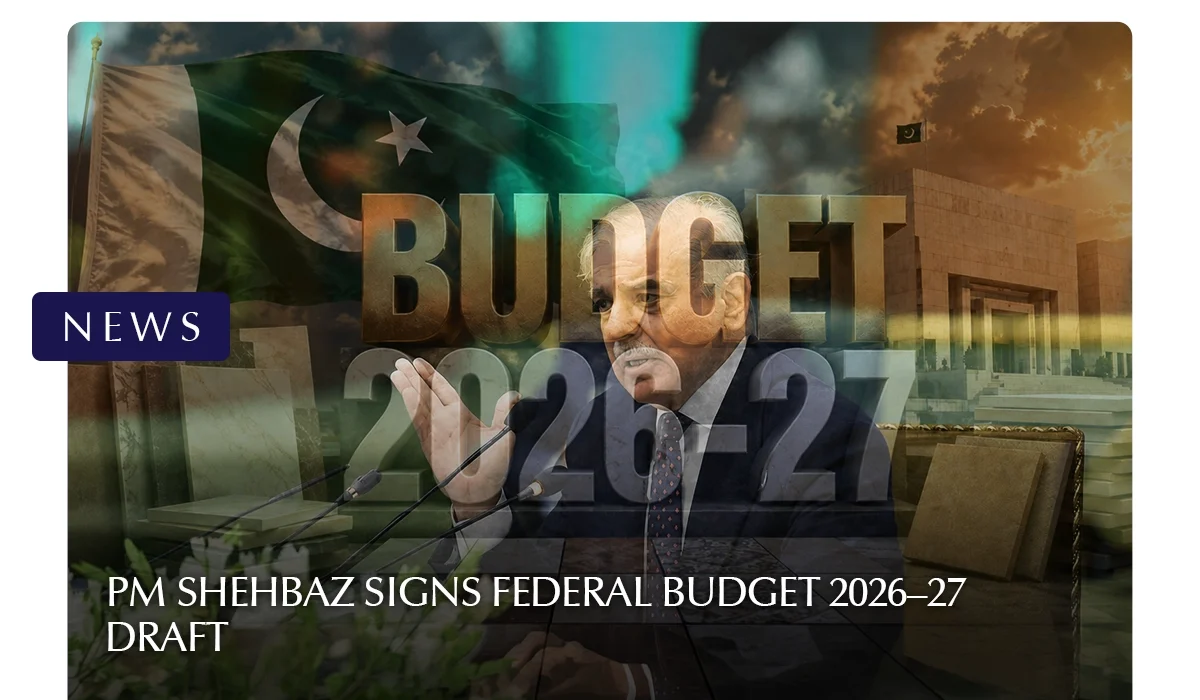
ISLAMABAD: Prime Minister Shehbaz Sharif signed the Federal Budget 2026–27 draft on Friday after chairing a federal cabinet meeting in Islamabad. Finance Minister Muhammad Aurangzeb is set to present it before parliament the same day.
The budget carries a total outlay of Rs17.1 trillion, with a GDP growth target of 4.1 percent, an inflation projection of 8.4 percent, and an FBR tax revenue target of Rs15.267 trillion. New tax measures between Rs660 billion and Rs700 billion are also expected.
Addressing the cabinet, the PM acknowledged that taxation would create hardship but described it as necessary to correct long-standing economic imbalances. He noted that inflation had fallen from 38 percent over the past two years and the policy rate had dropped from 22.5 percent to 11 percent, though regional instability from the Gulf crisis had slowed further progress.
Key Tax Proposals
The salaried class may receive up to Rs50 billion in income tax relief through revised slabs and reduced rates on monthly earnings above Rs183,400. A 2 percent cut in the super tax rate and removal of the 1 percent advance income tax on exporters are also under consideration.
For real estate, withholding tax on property purchases for filers may drop from 1.5 percent to 0.25 percent, while the seller tax could fall from 4.5 percent to 1.5 percent. The IMF has reportedly agreed in principle to support the property tax reductions. Non-filers are not expected to benefit.
The BISP quarterly stipend may rise from Rs13,000 to Rs14,500, with Rs838 billion allocated to the programme.
All four provincial governments endorsed the national development plan through the NEC ahead of the budget’s presentation. The PM also acknowledged support from coalition partners PML-N, PPP, MQM, IPP, BAP, and PML-Q in finalising the budget.
BBC-featured Content Specialist with a sharp eye for search intent and a proven ability to turn content into a growth engine. I leverage cutting-edge digital marketing tools to craft strategies that fuel organic traffic, amplify brand growth, and own the local SEO landscape, particularly across the competitive real estate market. I help brands dominate search rankings and convert visibility into measurable business success.