CategoriesNews Economy Property Property Laws Property Taxes

FBR Streamlines Tax Exemption Process for Property Developers, Sets Seven-Day Deadline

ISLAMABAD: The Federal Board of Revenue (FBR) has introduced a significant procedural reform for Pakistan’s real estate and construction sector through the issuance of Circular No. 08 of 2025-26 (IR-Policy – Income Tax). The circular clarifies the applicability of withholding tax under Section 236C of the Income Tax Ordinance, 2001, specifically for taxpayers operating under Section 7F.

Under the new directive, tax officials are required to issue withholding tax exemption certificates within seven working days to developers who have already fulfilled their obligations under the special tax regime. Should an applicant meet all required conditions and submit a complete application, yet the concerned Commissioner fails to act within the stipulated timeframe, the exemption certificate will be automatically processed and issued through the IRIS system. 

Under Section 7F, developers are taxed at a fixed percentage of gross receipts rather than conventional profit-based calculations, a distinction that had previously created ambiguity around the collection of advance tax on property transactions.

The latest circular supersedes Circular No. 7 of 2025-26 dated March 31, 2026, and directly addresses concerns raised by builders and developers regarding the collection of advance tax during property transactions.

The reform is expected to reduce administrative delays and improve the overall ease of doing business within Pakistan’s real estate and construction industry. By introducing an automated fallback mechanism through the IRIS system, the FBR aims to eliminate bureaucratic bottlenecks that have long frustrated developers seeking timely relief from double taxation.

This development signals a broader effort by the revenue authority to modernise tax administration and foster a more investor-friendly environment in the property sector.

For more news on real estate and Special Reports, visit Chakor Ventures.

CategoriesEconomy Feature Article Investment Property Laws Real Estate

From 3% to 1%: How CDA’s New Fee Policy Could Reshape Real Estate

The CDA has cut the property transfer fee from 3% to 1% reversing a move that quietly stalled one of Pakistan’s most active urban real estate markets.

Type Location Published Sources
Feature Report Islamabad, Pakistan April 17, 2026 The News International, Dawn, The Express Tribune

For anyone who has ever tried to transfer a property in Islamabad, the process is familiar: paperwork, queues, challans, and at the end of it, a fee that eats a meaningful chunk out of the deal. For nearly nine months, that fee stood at 3% of the government-assessed property value, a rate that many buyers and sellers quietly called the last straw. On April 9, 2026, the Capital Development Authority (CDA) changed that. The transfer fee is now 1%.

It sounds like a small adjustment on paper. But for a market that had visibly slowed since mid-2025, this single decision may prove to be the most consequential policy move for Islamabad’s real estate sector in recent years.

How it got to 3% in the first place

To understand why this cut matters, it helps to go back to July 2025. That summer, the CDA revised its property transfer fee upward from 1% to 3% in a move aligned with updated Federal Board of Revenue (FBR) property valuations. On the surface, it seemed like a routine administrative update. In practice, it tripled the closing cost for every buyer in the capital.

The impact was immediate. A property previously attracting a transfer fee of Rs 35,000 suddenly carried a fee of Rs 105,000. Deal pipelines that were nearly closed began to stall. Buyers who had already arranged financing found themselves short. Sellers struggled to find willing buyers at the new all-in cost. Market volumes dropped quietly but steadily through the second half of 2025.

Fee increase in July 2025

9 Months Market slowed under a high rate

65%+ Drop in transfer cost from today

Meanwhile, the federal government had been moving in the opposite direction. The FY2025-26 Budget had reduced advance property tax from 3% to 1.5% a signal that Islamabad’s CDA policy was running against the national grain.

Trade bodies began making noise. The Islamabad Chamber of Commerce and Industry, the Islamabad Estate Agents Association, and the United Business Group all formally called for a reversal.

The new chairman, a new approach

In early April 2026, Sohail Ashraf took charge as CDA Chairman. He also holds the office of Chief Commissioner of Islamabad a combination of roles that gives him significant authority. His third board meeting, held on April 9, produced the reversal the market had been waiting for.

The philosophical shift was as notable as the numbers. Ashraf stated explicitly that the goal going forward would be to broaden the tax base rather than increase tax rates. In other words, CDA would rather collect smaller amounts from more people and more transactions than squeeze harder from a shrinking pool.

“Instead of increasing property taxes in Islamabad, efforts should be made to broaden the tax base.”

— Sohail Ashraf, Chairman CDA and Chief Commissioner Islamabad

The CDA Board formally approved the new rate and issued the official notification on the same day. It supersedes the previous notification dated July 1, 2025. All revenue departments were directed to apply the 1% rate immediately.

What the numbers actually look like

The fee is calculated on the FBR-notified (assessed) value of the property not the open market price. This distinction matters. FBR assessments are typically lower than what properties actually trade for on the market. So the real saving is often larger than even a two-thirds reduction implies.

FBR-assessed value Old fee @ 3% New fee @ 1% Saving
Rs 5,000,000 Rs 150,000 Rs 50,000 Rs 100,000
Rs 10,000,000 Rs 300,000 Rs 100,000 Rs 200,000
Rs 20,000,000 Rs 600,000 Rs 200,000 Rs 400,000
Rs 50,000,000 Rs 1,500,000 Rs 500,000 Rs 1,000,000

The new rate applies to all properties within CDA-controlled areas of Islamabad residential sectors such as F-8, G-10, and I-8, as well as commercial areas, including the Blue Area. It does not apply to properties in housing societies outside the CDA jurisdiction.

How beneficial this is for the market

High transfer fees do more damage than just raising costs. When the official route becomes too expensive, informal shortcuts become tempting. Transfers get delayed or, worse, go undocumented.

Ownership records fall out of date. Future disputes over inheritance, resale, or financing become more complicated. Every informal shortcut is a hairline fracture in the property market’s long-term integrity.

Lower fees reverse that incentive. When the official cost is reasonable, there is simply less reason to cut corners. More documented transactions mean better price discovery because verified deals build the official data trail that the entire market relies on.

“This decision will increase business activity, restore public confidence, and help the real estate sector, along with its allied industries, regain momentum.”

— Zafar Bakhtawari, Secretary General, United Business Group

For buyers, the benefit is immediate: lower upfront cost and less last-minute financing pressure near closing. For sellers, it widens the pool of serious buyers. For developers, it reduces the cost of moving inventory.

And, in what many analysts called a counterintuitive but well-established effect, CDA itself may collect more revenue, not less, because more transactions will now be completed formally and on record.

Beyond the fee what else was decided

The April 9 board meeting was not only about the transfer fee. Two other significant decisions were also taken.

The CDA board approved the appointment of Creative Consultants, designated as a City Curator, to help develop Islamabad as a cultural and tourism destination. The initiative covers landscaping, parks, green belts, and urban vibrancy a long-discussed ambition for the capital that has now moved from idea to formal procurement.

The board also addressed solid waste management. After reviewing recommendations from its own committees, it decided to terminate the current outsourcing procurement process and revisit successful models from other cities before restarting. The chairman described the goal as adopting a sustainable and efficient system rather than pushing through a flawed one.

What happens now

For buyers and sellers currently in the process of a property transfer, the practical guidance is straightforward:

  • Confirm your property falls under CDA jurisdiction
  • Verify with the dealing office that the 1% rate is being applied to your file.
  • Calculate on the FBR-notified value rather than the market price. Keep all receipts and the updated notification, which replaces the July 2025 circular.

It is also worth noting that the transfer fee is one part of the total closing costs. Other taxes and administrative charges still apply, depending on the transaction. The cut is significant, but it is not a removal of all costs.

What it is, however, is a signal. The new CDA leadership has chosen, in its first major policy move, to reduce rather than increase. In a market that has spent the better part of a year waiting for exactly that signal, the timing could not have been more deliberate.

For more news on real estate ,Special Reports and real estate investment options visit Chakor Ventures.

CategoriesNews Property Laws Real Estate

Punjab to Launch Digital Real Estate System to Boost Investment and Transparency

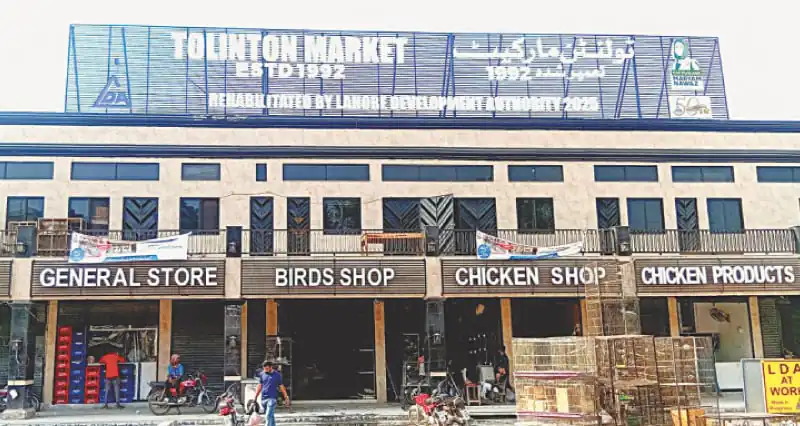
LAHORE: The Punjab government is introducing a digital system for all property transactions in private housing schemes. The move is part of a proposed Real Estate Regulatory Act (RERA), directed by Chief Minister Maryam Nawaz.

All dealings will be processed through a centralised platform built by the Punjab Land Records Authority (PLRA). Housing schemes will need to issue a green certificate via the system before any sale. The full process, including approvals, registration, and documentation, will go paperless.

These reforms are expected to make real estate options more secure and transparent for buyers across Punjab.

A Housing Societies Management System will also be introduced. Some sub-registrar powers will be delegated to private housing schemes to speed up registrations.

Developers have one month to switch to the new system. A facilitation cell will be set up to guide stakeholders through the transition. Compliance is mandatory.

The move is also likely to strengthen confidence in real estate investment by reducing risks linked to informal property transactions.

The reforms aim to reduce fraud, improve transparency, and bring Punjab’s largely informal property market under proper oversight. The PLRA, Board of Revenue, and Lahore Development Authority are jointly overseeing the rollout.

For more news on the economy, development, real estate and special reports, visit Chakor Ventures.

faisal masjid
CategoriesArchitecture Developments Tourism

Discover Faisal Masjid 2026: Inspiring Travel Guide

Every year, thousands of tourists flock to Islamabad just to catch a glimpse of the magnificent Faisal Masjid Islamabad. One of Islamabad’s most visited tourist attractions, this architectural wonder has captured the hearts of travellers, historians, and devotees from around the world. If you’re planning a trip to the Mosque, this essential travel guide is going to help you a lot. Keep reading to learn more.

Key Facts About Faisal Masjid Islamabad

Faisal Masjid Details Info
Location Islamabad, Pakistan
Architect Vedat Dalokay (Turkish)
Style Modern Islamic
Completed 1986
Construction Cost ~US$120 million
Site Area 130,000 m² (33 acres)
Minarets 4 × 90 m (300 ft) tall
Total Capacity ~300,000 worshippers

Faisal Masjid Location

 Faisal Masjid is located at the northern tip of Faisal Avenue in Islamabad, right at the foot of the Margalla Hills. The hills are the westernmost foothills of the Himalayas.

The Faisal mosque sits on elevated ground and faces the entire city. Its gleaming white structure against the dark green hills creates one of Pakistan’s most iconic views visible from miles away.

How to Reach Faisal Masjid Islamabad?

faisal masjid

Field Details
Location Faisal Avenue, Islamabad
Coordinates 33°43’47″N, 73°2’14″E
Nearest Landmark Margalla Hills
Administration Capital Development Authority
Site Area 130,000 m² (33 acres)

The  Faisal Masjid is easily accessible from anywhere in Islamabad or Rawalpindi. Here are your main options:

  • By car or Rickshaw: Head north on Faisal Avenue to its end. Parking is available nearby.
  • By Metro Bus: Take the Metro Bus to the Faisal Mosque stop, then a short walk or rickshaw to the entrance.
  • From Rawalpindi: Use the Rawalpindi–Islamabad Metro Bus or a local bus toward the Islamabad city centre.
  • From the Airport: Approx. 30–40 min by car. Taxis and ride apps are available at the terminal.
  • Best time to visit: Early mornings or weekday evenings for fewer crowds
  • Fridays: Expect heavy traffic and limited parking due to Jumma prayers
  • Entry: Free for all visitors

Faisal Masjid History

The Faisal Masjid Islamabad history dates all the way back to 1966. Saudi King Faisal bin Abdul-Aziz visited Pakistan and supported the government’s plan to build a grand national mosque in Islamabad. That royal gesture sparked a two-decade journey.

The Design Competition – Faisal Masjid History

faisal Mosque Islamabad

In 1969, an international competition was held. Architects from 17 countries submitted 43 designs. The winner was Vedat Dalokay, a Turkish architect, whose bold tent-shaped concept stood out from all the rest.

“I tried to capture the spirit, proportion, and geometry of the Kaaba in a purely abstract manner.”

– Vedat Dalokay, Architect

Construction of Faisal Mosque Islamabad

interior view of faisal masjid islamabad

The construction of Faisal Mosque Islamabad Pakistan started in 1976 by National Construction Limited of Pakistan, led by Azim Khan. It was fully funded by Saudi Arabia at a cost of 130 million Saudi Riyals (~US$120 million). All engineering and labour was handled by Pakistanis.

King Faisal was assassinated in 1975, before construction began. Both the mosque and the avenue leading to it were named after him. His successor, King Khalid, laid the foundation stone in October 1976 and signed the agreement in 1978.

Key Dates -Faisal Masjid History

Year / Date Event
1966 King Faisal visits Pakistan; national mosque project proposed
1969 International design competition held (43 entries from 17 countries); Vedat Dalokay wins
1975 King Faisal assassinated; mosque named in his honour
Oct 1976 Foundation stone laid by King Khalid; construction begins
1978 Formal construction agreement signed
1986 Mosque completed; becomes the world’s largest mosque
18 Jun 1988 First official prayer held
1993 Surpassed by Saudi mosques; now the 6th largest globally
2000 International Islamic University Islamabad relocates to its own campus

Faisal Masjid Architecture

faisal masjid minarets

Most mosques have a dome; Faisal Mosque does not. Architect Vedat Dalokay replaced it with a striking eight-sided concrete shell shaped like a Bedouin desert tent.

Feature Details
Style Modern Islamic
Shape 8-sided concrete shell
Inspired by Bedouin desert tent
Minarets 4 × 90 m tall
Interior Art Sadequain
Qibla Tiles Mengu Ertel

It was an unconventional and unforgettable piece of architecture which played a huge role in reimagining the identity and national architecture of Pakistan in the early years. The symbolism in design is mentioned below.

The Minarets:

  • Four minarets, each 90 metres (300 ft) tall tallest in South Asia
  • Each minaret is 10 × 10 metres in circumference
  • Design inspired by Ottoman Turkish architecture
  • Dalokay described them as marking the four corners of an abstract Kaaba

The Interior:

  • Walls are lined with white marble throughout
  • Mosaics and calligraphy by Pakistani artist Sadequain
  • Qibla Wall covered in blue and white calligraphic tiles by Turkish artist Mengu Ertel
  • Kalimah written in early Kufic script in a mirror-image pattern on the west wall
  • Grand Turkish-style chandelier overhead
  • Entrance from the east, fronted by a wide courtyard with porticoes

Capacity Breakdown

faisal masjid jumma time

Area Capacity
Main prayer hall 10,000 worshippers
Inner hall + courtyard combined 74,000 worshippers
Surrounding open grounds 200,000 worshippers
Total capacity ~300,000 worshippers

Facilities

  • Library open to the public
  • Lecture hall used for educational events
  • The museum covers Islamic architecture and mosque history
  • Café pleasant spot to rest and enjoy the surroundings
  • Formerly housed the International Islamic University Islamabad (relocated in 2000)

Faisal Masjid Jumma Time

faisal masjid jumma time

Attending Jumma prayers at Faisal Masjid is a deeply moving experience. Every Friday, thousands of worshippers fill the halls, courtyard, and open grounds. Faisal Masjid Jumma time shifts with the seasons.

Exact Jumma Namaz time in Faisal Masjid changes weekly. Always confirm via the mosque’s official schedule or a prayer app before visiting on a Friday.

Visitor Tips for Jumma

  • Arrive 30–45 minutes early, space and parking fill up fast on Fridays
  • Dress modestly, women must cover their heads; full-length clothing for all
  • Remove shoes before entering the prayer hall; storage is available
  • Photography is permitted in open areas, but be respectful of worshippers

Faisal Masjid Islamabad as a Tourist Attraction

faisal mosque islamabad

Faisal Masjid Islamabad Pakistan, is one of the country’s top tourist attractions. It is regularly featured in international travel guides. Its unique architectural design, ideal location, and fascinating history are some of the key elements that make it one of the most iconic Mosques in the world.

Unique Features

  • Scenic Setting: Backed by Margalla Hills National Park with a full city view in front
  • Iconic Photography: Stunning at dawn, golden hour, and lit up at night
  • Cultural Depth: Museum, library, and public lecture hall on site
  • Literary Significance: Featured in Khaled Hosseini’s The Kite Runner
  • Ramadan Experience: Especially breathtaking on Laylat al-Qadr (27th night) when hundreds of thousands gather
  • Author Connection: Michael Muhammad Knight came here as a teenager to study Islam and frequently references it in his writing

Best Viewpoints

faisal mosque islamabad pakistan

  • Daman-e-Koh: Hilltop viewpoint, the best panoramic view of the mosque against the hills
  • Margalla Hills Trails: View the mosque from above while hiking
  • Faisal Avenue Approach: Driving up the avenue gives a dramatic straight-on view
  • Hilltop viewpoint, best mosque panorama

Nearby Attractions

  • Pakistan Monument
  • National heritage landmark
  • Shakarparian Hills
  • Scenic park with walking trails and city views
  • Margalla Hills trails
  • Hiking trails directly behind the mosque

Visitor Information

Detail Info
Entry fee Free for all visitors
Open to non-Muslims Yes, respectful dress required
Photography Allowed in open areas
Best days to visit Weekdays for quiet; Fridays for Jumma atmosphere
Best time of day Early morning or evening
On-site facilities Café, museum, library, lecture hall
Parking Available near the premises

FAQs – Faisal Masjid Islamabad

Where is Faisal Masjid Islamabad located?

At the northern end of Faisal Avenue, Islamabad, at the foot of the Margalla Hills. Coordinates: 33°43’47″N, 73°2’14″E.

What is the Jumma Namaz time in Faisal Masjid?

Around 1:00–1:30 PM in summer and 12:30 PM in winter. Timings change weekly; always verify before visiting.

Who designed Faisal Mosque?

Turkish architect Vedat Dalokay, selected through an international competition in 1969 with 43 entries from 17 countries.

Why does Faisal Mosque have no dome?

Dalokay deliberately replaced the traditional dome with a tent-shaped eight-sided shell, inspired by the Bedouin desert tent and representing an abstract form of the Kaaba.

When was the construction of the Faisal Mosque completed?

Construction began in 1976 and was completed in 1986. The first official prayer was held on 18 June 1988.

How many people can Faisal Mosque hold?

Around 300,000 in total, 10,000 in the main hall, 74,000 including the courtyard, and 200,000 in the surrounding grounds.

Who funded the construction of the Faisal Mosque?

The Saudi Arabian government, at a cost of over 130 million Saudi Riyals (~US$120 million). King Faisal bin Abdul-Aziz initiated the funding of the mosque, which is named after him.

Was Faisal Mosque ever the largest mosque in the world?

Yes, from 1986 to 1993, it was the world’s largest. It is now the sixth-largest globally.

Is Faisal Mosque open to non-Muslim tourists?

Yes, entry is free and open to all. Modest dress is required. Avoid the prayer hall during active prayers.

What is inside the Faisal Mosque complex?

A library, lecture hall, museum, and café. The International Islamic University, one of the best universities in Islamabad, was also formerly housed here before moving to its own campus in 2000.

Conclusion – Faisal Masjid

Faisal Mosque Islamabad Pakistan is more than a religious building. It is a piece of history, a work of art, and one of the best tourist places in Islamabad. Whether you are coming for Faisal Masjid Jumma prayers, to explore its rich Faisal Masjid history, or simply to witness its stunning architecture in person, it never disappoints.

For more information on tourist attractions like Minar-e-Pakistan, visit Chakor blogs

Read More:

CategoriesNews Economy Investment

IMF Cuts Pakistan Growth Forecast to 3.5%, Raises Inflation Outlook to 8.4%

ISLAMABAD: The International Monetary Fund (IMF) has lowered its growth forecast for Pakistan. For the fiscal year 2026–27, the Fund now expects the economy to grow by 3.5 percent, down from its earlier estimate of 4.1 percent. The figures were published in the IMF’s World Economic Outlook report at its spring meetings.

For the current fiscal year, 2025–26, the growth estimate stays at 3.6 percent. The inflation forecast, however, has been raised. Prices are now expected to rise by 7.2 percent this year, up from 6.3 percent previously. For next year, inflation is forecast at 8.4 percent, compared to an earlier estimate of 7 percent.

The IMF linked the weaker outlook mainly to the conflict in the Middle East. The conflict has pushed oil prices higher and heightened global economic uncertainty. Pakistan imports around 90 percent of its energy from the region, which makes it more vulnerable to these developments than many other countries.

On trade and external payments, Pakistan’s current account deficit is expected to be about 0.4 percent of GDP this fiscal year. That figure is projected to rise to around 0.9 percent of GDP, roughly five billion US dollars, in fiscal year 2026–27. The IMF’s worst-case scenario assumes oil prices between $100 and $120 per barrel.

For more news on the economy, real estate, and development, visit Chakor Ventures.

CategoriesNews Economy Geopolitics Investment Trade

Pakistan Opens Iran Transit Route for Central Asia Exports

ISLAMABAD: Pakistan has dispatched its first commercial export consignment to Uzbekistan through a newly activated land route via Iran. The shipment, consisting of refrigerated trucks carrying frozen beef, departed from Karachi and crossed into Iran at the Gabd-Rimdan border point.

The transit is being conducted under the TIR convention, an international customs framework that allows goods to move across borders with minimal regulatory delay. The consignment is currently en route to Tashkent.

The route bypasses Afghanistan, offering Pakistan a more reliable alternative for accessing landlocked Central Asian markets. The Gabd-Rimdan crossing sits near Gwadar, effectively connecting the deep-sea port to regional trade networks.

Officials view the development as part of Pakistan’s broader push to expand its export footprint under the CPEC framework. Central Asia represents a combined market of over 70 million consumers.

The inaugural shipment is expected to strengthen trade ties between Islamabad, Tehran, and Tashkent, while boosting the commercial role of both Karachi and Gwadar ports.

For more news on the economy, real estate, and development, visit Chakor Ventures.

CategoriesNews Economy Investment Trade

PSX Plunges 4,800 Points as US-Iran Talks Collapse in Islamabad

ISLAMABAD: Pakistan’s benchmark KSE-100 Index dropped sharply on Monday morning following the breakdown of US-Iran peace talks held in Islamabad. At 9:34 AM, the index stood at 162,396.21, down 4,795.16 points or 2.87% from the previous close.

Selling pressure was broad-based, affecting key sectors including automobiles, cement, commercial banking, oil and gas exploration, power generation, and refining. Notable index-heavy stocks trading in the red included ARL, HUBCO, MARI, OGDC, POL, PPL, PSO, SSGC, SNGPL, and WAFI.

The market decline followed US Vice President JD Vance’s announcement on Sunday that the American negotiating team was departing Pakistan after 21 hours of talks failed to produce a deal. Vance stated Iran had declined to accept American terms, which included a commitment not to develop nuclear weapons.

Iran’s parliamentary speaker Mohammad Baqer Qalibaf acknowledged no agreement was expected from a single round of negotiations, citing an ongoing trust deficit between the two sides.

The outcome reversed gains recorded during the previous week, when the KSE-100 had risen 1,673.87 points or 1.01%, buoyed by investor optimism over the then-ongoing diplomatic process.

Global markets also reacted negatively. Brent crude futures surged approximately 8% to $103 per barrel, while S&P 500 futures fell around 1%. The euro slipped roughly 0.5% against the dollar. Asian markets declined modestly, with Japan’s Nikkei down 0.4%, South Korea’s KOSPI falling 1.4%, and Australia’s ASX 200 slipping 0.6%.

For more news on the economy, real estate, and development, visit Chakor Ventures.

CategoriesNews Current Affairs Economy Geopolitics Investment Trade Trending

Pakistan Emerges as Key Mediator in the US–Iran Peace Talks | All Eyes on Islamabad

ISLAMABAD, April 10, 2026 —Pakistan stands at the centre of one of the most consequential diplomatic efforts in decades as Islamabad prepares to host the US Iran peace talks, positioning the country as the primary intermediary in efforts to stabilise a conflict that disrupts global energy supplies and threatens wider regional escalation. The emerging framework, increasingly referred to by diplomats as the Islamabad Accord, follows a Pakistan-brokered ceasefire after weeks of intensive shuttle diplomacy.

The US Iran talks come after the US-Iran ceasefire announced on April 7–8, which emerged following sustained diplomatic engagement led by Pakistan’s civilian and military leadership. Islamabad facilitates backchannel communication, relays proposals, hosts regional meetings and coordinates with partners including China and Saudi Arabia. The agreement pauses hostilities shortly before a U.S. escalation deadline, underscoring the urgency surrounding the diplomatic push.

Analysts describe the development as a major diplomatic breakthrough. South Asia expert Michael Kugelman calls the mediation “one of Pakistan’s biggest diplomatic wins in years,” according to a France 24 report.

Conflict Triggered Global Energy Shock After Strait of Hormuz Closure

strait of hormuz

The crisis begins on February 28, 2026, when coordinated U.S. and Israeli airstrikes target Iran’s leadership and military infrastructure. Iran responds with missile and drone attacks and moves to close the Strait of Hormuz, the narrow waterway through which roughly 20 percent of global oil supply flows.

The closure of the Strait of Hormuz immediately disrupts global markets. The International Energy Agency warns the situation represents “the largest supply disruption in the history of the global oil market,” according to the IEA Oil Market Report cited in the document.

According to IEA data referenced in the report:

  • About 20 million barrels per day of oil are disrupted
  • Brent crude rises close to $120 per barrel
  • Analysts warn prices could reach $200 per barrel, according to Bloomberg
  • Global LNG supply drops around 20 percent
  • Gulf food imports fall by roughly 70 percent
  • Global GDP risk reaches −1.3 percentage points, according to Dallas Fed research

These figures illustrate the global stakes surrounding the US Iran peace talks and the urgency behind the Pakistan-brokered ceasefire.

Jet fuel prices double while U.S. gasoline prices rise about 30 percent, according to reporting cited from Time and industry data referenced in the report.

Pakistan Emerges as Only Credible Mediator

Pakistan mediates the US Iran crisis largely because of its unique diplomatic positioning. Islamabad maintains relations simultaneously with Washington, Tehran, Riyadh and Beijing, a rare diplomatic victory.

Pakistan shares a 900-kilometre border with Iran, maintains defence cooperation with Saudi Arabia and retains longstanding ties with the United States. It is also widely regarded as China’s closest regional partner, according to analysis cited from Al-Monitor.

Pakistan also has significant domestic and economic stakes:

  • Over 20 million Shia Muslims
  • Approximately 5 million workers in Gulf states
  • Annual remittances of $38.3 billion
  • Heavy reliance on energy imports through the Strait of Hormuz

Pakistan also emphasises neutrality. Officials condemn attacks by all sides and rule out military participation against Iran, strengthening Islamabad’s credibility as mediator, according to reporting cited from Al Jazeera.

Six Weeks of Shuttle Diplomacy Leads to Islamabad Accord

Pakistan launches diplomatic outreach immediately after the conflict begins.

On March 3, Foreign Minister Ishaq Dar tells Pakistan’s Senate Islamabad is ready to facilitate US Iran talks, according to Al Jazeera.

Prime Minister Shehbaz Sharif meets Saudi leadership in Jeddah on March 12, expressing solidarity while reassuring Iran. The move helps prevent further escalation, according to reporting referenced from CNN.

Regional foreign ministers meet in Riyadh on March 19 and again in Islamabad on March 29, aligning diplomatic positions for the US Iran peace talks.

Pakistan relays a 15-point U.S. ceasefire proposal to Tehran on March 25. Iran rejects the proposal but submits its own conditions, keeping negotiations alive.

On March 31, Pakistan and China announced a joint five-point peace initiative calling for cessation of hostilities and restoration of navigation in the Strait of Hormuz, reinforcing momentum toward the Islamabad Accord.

Further negotiations follow. Pakistan presents a two-phase ceasefire framework in early April. The exchange culminates in the US-Iran ceasefire announced April 7–8, according to reporting from CNN, Al Jazeera and France 24.

Historic Significance of US Iran Peace Talks

US Iran peace talks

Analysts describe the US Iran peace talks in Islamabad as unprecedented. The mediation marks the first time Pakistan brokers a ceasefire between adversaries during active escalation, according to expert assessments cited from Al Jazeera.

The engagement also represents the highest-level US Iran talks since 1979, according to Time.

Economic Stakes Linked to Ceasefire

The US-Iran ceasefire and potential Islamabad Accord carry major economic implications.

A diplomatic breakthrough could revive the Iran–Pakistan gas pipeline. The project:

  • Length: 2,775 km
  • Gas flow: 21.5 million m³/day
  • Power generation: 4,000 MW
  • Savings: $2.3 billion annually
  • Penalty risk avoided: $18 billion

These figures come from IPRI Pakistan research cited in the report.

The conflict also threatens remittances from Gulf-based Pakistani workers. About five million workers send home $38.3 billion annually, according to Time.

Global Reaction to Pakistan Mediates Ceasefire

International leaders welcome the Pakistan-brokered ceasefire.The United Nations calls for compliance with terms. European Commission President Ursula von der Leyen welcomes de-escalation. UK Prime Minister Keir Starmer calls the deal a “moment of relief.”

These reactions are cited from international coverage referenced in the report, including Reuters and Al Jazeera.

China says it works actively to help bring about the US-Iran ceasefire, while Iran confirms acceptance of the agreement.

Islamabad at the Centre of Global Diplomacy

Islamabad accord

Pakistan mediates the crisis at a moment when global markets remain sensitive to disruptions in the Strait of Hormuz and regional escalation risks. The Pakistan-brokered ceasefire pauses what analysts describe as the largest oil disruption in modern history and positions Islamabad as a central diplomatic actor.

The US Iran peace talks, expected to shape the emerging Islamabad Accord 2026, now place Pakistan at the centre of global diplomacy; with energy security, regional stability and geopolitical alignment all hinging on the outcome.

For more news on real estate and Special Reports, visit Chakor Ventures.

CategoriesNews Economy Investment Property Taxes Trade

Pakistan’s OPF launches global outreach drive, seeks mandatory diaspora enrolment

ISLAMABAD: Over 12 million Pakistanis live and work outside the country. Until now, the government had no formal system to register, track, or serve them. The OPF is moving to change that, and its chairman is personally carrying that message to every major diaspora hub.”

Every year, Pakistanis living abroad send billions of dollars back home. Last year, that figure hit a record $38.3 billion. Yet, despite that contribution, the government had no formal, structured relationship with these citizens. That is now changing, and changing fast.

OPF Chairman Syed Qamar Raza Shah is currently on an international tour spanning Japan, South Korea, Germany, and the UAE. At each stop, he has been sitting with Pakistani community members, listening to their concerns, and making commitments on the spot. The tour is not just a goodwill exercise. It is laying the ground for the most significant changes to the Overseas Pakistanis Foundation in its 45-year history.

In Japan, community leader Haji Syed Saleem Shah described the visit as a turning point. Pakistanis there raised long-standing problems, including jobs, education, legal disputes, and property matters back home. For many, it was the first time such issues were heard at a senior government level. The OPF Chairman gave direct instructions for urgent cases to be resolved immediately.

“This visit has given new hope to the Pakistani community in Japan. For the first time, their issues were seriously heard at such a high level.”
— Haji Syed Saleem Shah, Chairman, Ahl-e-Bait Foundation Japan

The same pattern repeated in the UAE. There, the OPF Chairman went a step further — announcing a formal proposal to make OPF membership compulsory for all overseas Pakistanis worldwide. Under the proposal, every Pakistani abroad would be required to register with the foundation and pay a one-time fee of Rs10,000 (around $35). The proposal now awaits approval from Prime Minister Shehbaz Sharif.

To go alongside the obligation, OPF has launched the Overseas Pakistanis Education Fund (OPEF), a scholarship program for children and spouses of overseas Pakistanis studying in Pakistani universities and colleges. The deadline to apply is April 30, 2026.

Two moves together tell the full story: the government wants to register its diaspora, fund its operations through their fees, and in return, invest in their families back home.

For more news on real estate and Special Reports, visit Chakor Ventures.

CategoriesNews Economy Investment Trade

PSX Gains 12,362 Points as Pakistan Secures US–Iran Ceasefire

ISLAMABAD: The Pakistan Stock Exchange (PSX) recorded one of its sharpest single-day gains on Wednesday, with the benchmark KSE-100 index rising 12,362 points, or 8.15%, to close at 164,035.83. The surge was triggered by news that Pakistan had mediated a two-week ceasefire between the United States and Iran, pausing an escalating military conflict in the Middle East.

Trading was briefly halted following the rapid climb and resumed at 10:42 AM. The previous session had closed at 151,673.45 points.

The ceasefire was agreed upon less than two hours before a deadline set by US President Donald Trump for Iran to reopen the Strait of Hormuz. Iran’s Foreign Minister Abbas Araqchi confirmed that Tehran would halt counter-attacks and ensure safe passage through the waterway, conditional on the cessation of attacks against Iran.

Prime Minister Shehbaz Sharif announced that he has invited the leadership of both nations to Islamabad on April 10 for further negotiations aimed at reaching a conclusive agreement.

The diplomatic development was accompanied by a sharp decline in international oil prices, which fell approximately 15%. Analysts noted that lower energy costs ease fears of imported inflation and reduce pressure on Pakistan’s external accounts.

Maaz Mulla of Topline Securities described the session as a broad-based rally driven by two simultaneous tailwinds: diplomatic de-escalation and softer energy prices. He noted that with Islamabad set to host peace talks on April 10, investors moved quickly to price in reduced geopolitical risk.

Prior to Wednesday’s session, the KSE-100 had corrected by 20% to 22%, largely due to regional tensions and global macroeconomic uncertainty. Wednesday’s gains represent a significant reversal of that decline, though analysts caution that the rally’s sustainability will depend on the outcome of the April 10 talks.

For more news on the economy, real estate, and development, visit Chakor Ventures.