
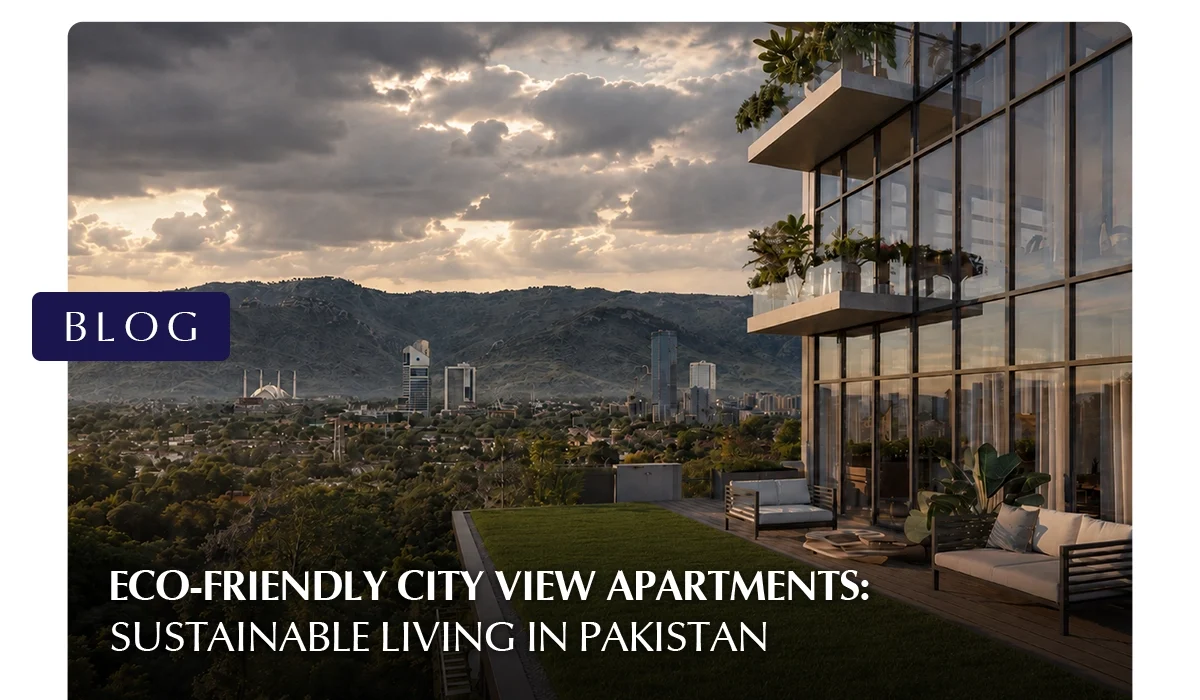

Pakistan’s urban apartment market has matured significantly over the past decade. Where buyers once prioritised location and price per square foot above all else, a growing segment particularly younger professionals and overseas Pakistanis now asks a more layered question: can the apartment I’m buying offer a genuine view and a reduced environmental footprint?
The demand for eco-friendly city view apartments in Pakistan is real, and so is the confusion surrounding it. “Eco-friendly” has become one of the most overused phrases in Pakistani real estate marketing, applied liberally to projects that have a few trees on the plot or a park nearby. Genuine sustainability in an apartment building is a different thing entirely; it involves specific, verifiable infrastructure built into the structure itself.
This guide explains exactly what those features are, which Pakistani cities currently offer the strongest combination of scenic views and sustainable living, and what to check before you commit to a purchase.
Table of Contents
- What Does an Eco-Friendly City View Apartments Pakistan Actually Mean?
- Why City Views and Eco-Friendly Features Go Together
- Green High-Rise Apartments in Pakistan Which Cities Have Real Options?
- Sustainable Flats in Pakistan The Financial Case
- What to Check Before Buying an Eco-Friendly City View Apartments Pakistan
- Frequently Asked Questions
What Does an Eco-Friendly City View Apartments Pakistan Actually Mean
The first thing to establish is that an eco-friendly apartment is defined by what is built into it, not by what surrounds it. Mountains nearby, a park across the road, or trees within the boundary are landscape features. They are pleasant. They are not evidence of a sustainably constructed or operated building.
A genuinely eco-friendly apartment building in Pakistan should incorporate some combination of the following:
Solar energy systems. Rooftop solar panels, either dedicated to individual units or feeding a shared generation pool, directly reduce dependence on the national grid. In a country where grid electricity is both expensive and unreliable, this is not an optional amenity; it is a meaningful quality-of-life and cost-of-living feature. Ask developers specifically whether solar is installed at handover, or merely listed as a future addition.
Thermal insulation. Double-glazed windows, insulated external walls, and well-designed roof assemblies significantly reduce the energy required to cool or heat a unit. Pakistan’s climate demands heavy air-conditioning for much of the year; a poorly insulated apartment drives up both electricity bills and carbon footprint. Quality insulation is one of the least visible but most impactful green features in a building.
Rainwater harvesting. The Capital Development Authority (CDA) has mandated rainwater collection tanks for all new housing communities in Islamabad. This is a compliance baseline, not a premium feature if a new development in Islamabad does not have it, that is a red flag, not a neutral data point. In Lahore and Karachi, rainwater harvesting is rarer but increasingly present in premium high-rise projects.
Waste management infrastructure. Dedicated recycling facilities, organic waste separation systems, and waste compactors within the building reduce the volume of material going to landfill and create a cleaner, better-maintained common environment. The presence of these systems also signals that the developer has thought beyond the sale.
Green rooftops and landscaped terraces. Planted rooftop surfaces reduce the urban heat island effect, the phenomenon where dense built areas trap heat and drive up ambient temperatures. A green rooftop on a high-rise also improves air quality at the building level and provides usable outdoor amenity space for residents.
EV charging bays. Pakistan’s electric vehicle market is still in its early stages, but it is growing. A high-rise building that installs EV charging infrastructure in its parking facility today is a more future-proof asset than one that does not. For buyers with a ten-year investment horizon, this matters.
Water-efficient fixtures. Low-flow taps, showerheads, and toilet cisterns reduce per-unit water consumption without affecting usability. Greywater recycling, treating water from sinks and showers for reuse in toilets or irrigation, is rarer but present in some premium sustainable flats in Pakistan.
Smart building systems. Automated lighting in corridors and common areas, occupancy-sensing HVAC systems, and centralised energy monitoring reduce waste at the building level. These systems tend to lower maintenance costs over time and are a hallmark of genuinely well-engineered high-rise buildings.
When evaluating any project, use this list as a framework for questions, not as an expectation that every feature will be present. A building that delivers four or five of these credibly is a genuinely sustainable product. A building that mentions none of them but calls itself eco-friendly is a marketing exercise.
Green High-Rise Apartments in Pakistan: Which Cities Have Real Options?
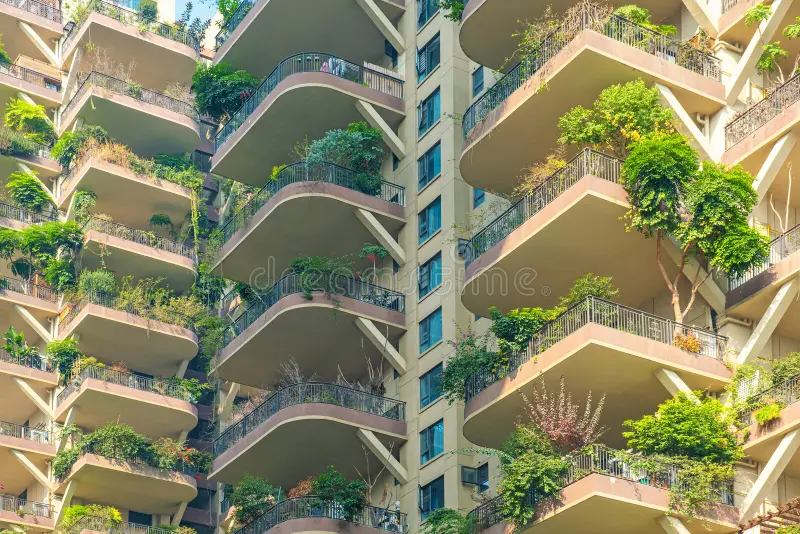
The phrase “eco-friendly city view apartments Pakistan” covers the whole country, but the market is not evenly distributed. Here is an honest assessment of where genuine options currently exist.
Islamabad: Strongest Market for Eco-Friendly City View Apartments Pakistan
Islamabad has structural advantages that no other Pakistani city can match. The city was designed from scratch in the 1960s on a low-density grid with green belts, wide avenues, and sector-based zoning built in from the start. The result, six decades later, is a city where height genuinely rewards you, views from upper floors reveal parks and mountains, not adjacent rooftops.
CDA regulations set a higher baseline for new developments than in other cities. Green space allocation, rainwater harvesting requirements, and building setback rules mean that eco-friendly apartments in Islamabad have already passed a regulatory minimum that does not exist elsewhere in the country.
The Blue Area and Jinnah Avenue corridor is where the view, the location, and the high-rise residential product converge most convincingly. Towers in this corridor look out over the Faisal Mosque, F-9 Park, and the Margalla ridgeline simultaneously.
CDA-controlled development in this zone also limits supply, which supports long-term asset values. Among the apartment products currently operating in the eco-friendly city view segment of the Islamabad market are Citadel One3 and Green View Apartments.
Zone IV hillside societies offer a different but equally compelling product: Margalla view apartments built at natural elevation, where the landscape itself provides the view rather than building height. These tend to integrate more outdoor greenery into the development but may sit further from commercial infrastructure.
For buyers prioritising CDA-approved apartments in Islamabad with genuine eco features and unobstructed views, this city is the clearest choice in Pakistan right now.
Lahore: An Emerging Market Where Scrutiny Matters
Lahore’s apartment market has grown considerably over the past ten years, and the city’s high-rise residential stock is now substantial.
Lahore’s more recently developed phases, and premium towers on MM Alam Road, are increasingly incorporating sustainability features, solar provision, better insulation, and EV parking in response to buyer demand from the upper-middle market.
Buyers looking for green high-rise apartments in Lahore should ask specific questions and request documentation rather than accepting marketing language at face value.
Karachi Sea Views and a Different Kind of Sustainability
Karachi’s version of the scenic view apartment is geographically distinct. In Clifton and DHA Phase 8, upper-floor apartments face the Arabian Sea, a genuinely exceptional view and one that comes with a passive sustainability benefit that often goes unmentioned: sea breezes.
Consistent onshore winds in Clifton and the DHA coastal strip provide natural ventilation that meaningfully reduces cooling loads during much of the year.
The important caveat in Karachi is infrastructure. Eco-friendly building features in sustainable flats in Pakistan’s largest city are less standardised than in Islamabad, and buyers should carefully verify backup power and independent water supply arrangements.
In Karachi’s context, a building with a robust generator and water storage infrastructure is delivering a practical form of urban resilience that maps closely to eco-friendly concerns, even if it is not marketed in those terms.
Eco-Friendly City View Apartments Pakistan: The Financial Case
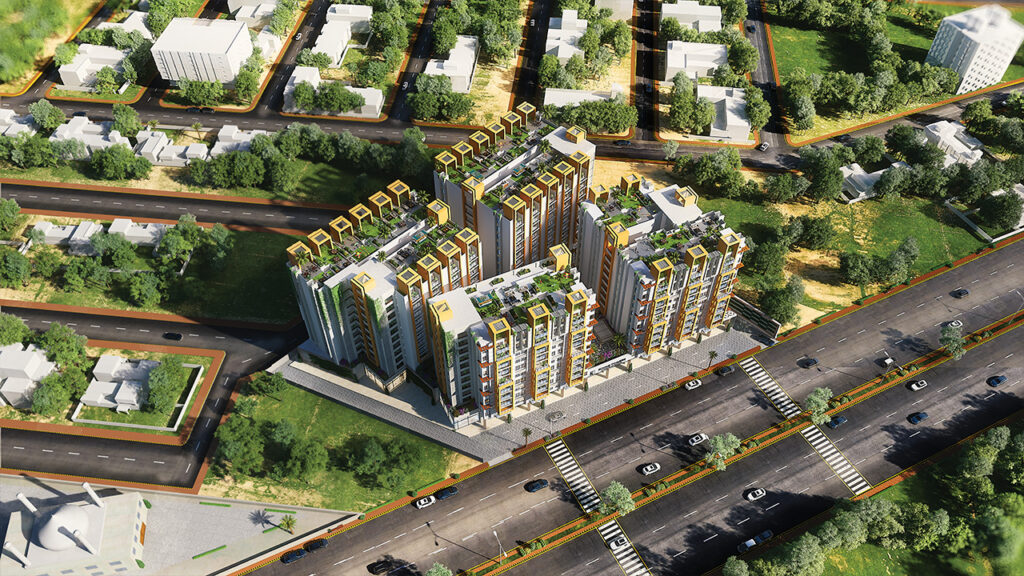
The environmental argument for Eco-Friendly City View Apartments Pakistan is well-documented. The financial argument is discussed less often, and it is equally strong.
Lower electricity bills. A building with operational rooftop solar reduces the grid electricity consumption of each unit. In Pakistan, where electricity tariffs have risen sharply over recent years, and load-shedding remains a routine feature of urban life, this translates to a direct, recurring reduction in monthly costs. It is not a marginal benefit; it is a structural one.
Resilience during load-shedding. Buildings with solar-plus-battery backup, or with well-managed generator infrastructure, maintain liveability during outages. For investment properties, this directly affects tenant satisfaction, occupancy rates, and the rent premium a landlord can command.
Premium rents and stronger tenant quality. Eco-friendly features in Pakistan’s rental market correlate with higher tenant quality in the professional segment, expats, corporate tenants, and overseas Pakistani families. These tenants are typically less price-sensitive, more reliable, and more likely to sign multi-year leases.
Long-term asset value. Green buildings face a lower risk of regulatory obsolescence as building codes tighten. An apartment in a CDA-approved, sustainably built high-rise is a more defensible long-term asset than a comparable unit in a project that cut corners on construction quality or environmental compliance.
Water cost savings. Rainwater harvesting and greywater recycling reduce per-unit water bills. In a country facing increasing water stress, particularly acute in Karachi, this is a savings trajectory that improves over time: the more constrained the municipal supply becomes, the more valuable the independent provision.
What to Check Before Buying Eco-Friendly City View Apartments Pakistan
Green buildings are the future of Pakistan’s real estate. The checklist below applies whether you are buying to live in or to invest. It is built to close the gap between what developers claim in their marketing and what actually gets built and maintained.
- Verify the relevant authority approval. In Islamabad, this means a valid CDA No Objection Certificate. The CDA publishes a list of approved and unapproved housing schemes on its official website.
- Ask for specific eco-feature documentation, not marketing claims. “Eco-friendly” in a brochure carries no legal or technical weight in the absence of supporting detail. Ask which features are installed and operational at the point of handover, and which are listed as future additions.
- Establish which floors deliver unobstructed views. In most Pakistani cities, a genuine city or mountain view requires the apartment to be above the surrounding built fabric. Ask specifically which floors achieve unobstructed views. Request photographic evidence taken from the actual floors in question, drone footage or on-site photography rather than rendered images, which routinely omit the buildings that will obstruct sightlines once the surrounding area develops.
- Distinguish building-wide green features from unit-level ones. Some high-rise buildings apply solar generation only to common areas, lobby lighting, elevator power, and corridor illumination. Others extend solar benefits to individual units, reducing each resident’s electricity bill directly. The difference is material and worth establishing clearly before purchase, not after.
- Evaluate post-handover building management. Green building features degrade without proper maintenance. Solar panels lose output if not cleaned regularly. Green rooftops require irrigation and upkeep. Rainwater systems need periodic inspection.
- Check the developer’s track record of delivery. Any developer can produce compelling renders and confident project announcements. The meaningful question is what they have already built and handed over in the same city, on a similar scale. A developer with a completed project standing is offering evidence.
- Watch for greenwashing signals early in the process. Common red flags include: eco-friendly claims with no supporting technical specification; sustainability features described as “planned” with no contractual delivery timeline; marketing language that equates natural surroundings with built-in sustainability infrastructure; and the absence of any mention of CDA or relevant authority approval in sales materials.
FAQs – Eco-Friendly City View Apartments Pakistan
What makes an apartment eco-friendly in Pakistan?
Built-in features like solar, insulation, water-saving systems, waste management, and smart energy controls. Green views alone do not make an apartment eco-friendly.
Which city in Pakistan has the best city view apartments?
Islamabad stands out for views of the Margalla Hills, Faisal Mosque, F-9 Park, and tree-lined sectors.
Are eco-friendly apartments more expensive in Pakistan?
They can cost slightly more upfront, but lower electricity, water, and maintenance costs can offset the premium over time.
Can overseas Pakistanis buy city view apartments in Pakistan?
Yes. Overseas Pakistanis can buy approved residential apartments. The key is verifying project approvals before payment.
What is the difference between a green high-rise and a regular apartment?
A green high-rise has sustainability systems built into the building. A regular apartment may not, even if it has good surroundings.
Closing Thoughts – Eco-Friendly City View Apartments Pakistan
Eco-friendly city view apartments Pakistan are gaining demand, but the label should mean more than nice views. True sustainability means verified features: solar, insulation, water systems, and waste infrastructure that are installed and working at handover. The financial case is also getting stronger. As power costs rise, water pressure increases, and buyers become more selective, genuinely sustainable flats are likely to perform better on running costs, rent, and resale value.
For more information on types of property taxes and real estate investment options, please visit Chakor.

BBC-featured Content Specialist with a sharp eye for search intent and a proven ability to turn content into a growth engine. I leverage cutting-edge digital marketing tools to craft strategies that fuel organic traffic, amplify brand growth, and own the local SEO landscape, particularly across the competitive real estate market. I help brands dominate search rankings and convert visibility into measurable business success.
