Islamabad Property Valuation Rates
CategoriesNews Economy Property Property Laws Property Taxes Real Estate

FBR Revises Islamabad Property Valuation Rates Downward by Up to 35 Percent

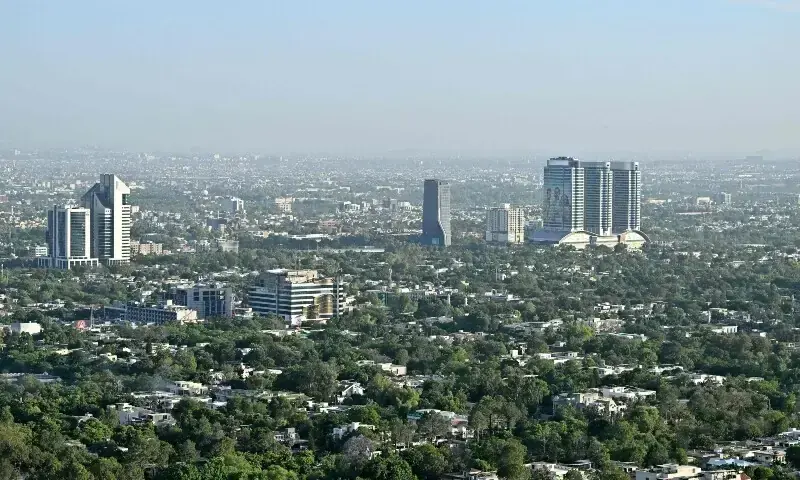
ISLAMABAD: The Federal Board of Revenue’s issuance of S.R.O. 644(I)/2026 on April 16, 2026, marks the latest development in a series of property valuation adjustments for Islamabad that began in late 2025. In December 2025, the FBR suspended fresh property valuations in Islamabad after taxpayers raised concerns about increases of up to 1,250%. The April 2026 notification is the fourth significant intervention in Islamabad’s property valuation framework within five months, superseding S.R.O. 163(I)/2026 dated February 2, 2026, and S.R.O. 332(I)/2026 dated February 24, 2026. 

Category Area / Sector Previous Rate Revised Rate Change (%)
Superstructure (≤5 years) All Islamabad Rs 3,000 / sq ft Rs 2,500 / sq ft ↓ ~17%
Superstructure (>5 years) All Islamabad Rs 1,500 / sq ft Rs 1,200 / sq ft ↓ ~20%
Residential Plot B-17 Rs 30,000 / sq yd Rs 21,000 / sq yd ↓ ~30%
Residential Plot C-14 Rs 30,000 / sq yd Rs 21,000 / sq yd ↓ ~30%
Residential Plot C-15 / C-16 ~Rs 30,000 Reduced proportionally ↓ ~30%
Residential Plot G-13 Rs 100,000 / sq yd Rs 70,000 / sq yd ↓ 30%
Residential Plot Margalla Town Higher earlier Rs 38,500 ↓ 30%+
Residential Plot Chak Shahzad Higher earlier Rs 35,000 ↓ 30%+
Residential Plot Banigala Higher earlier Rs 24,500 ↓ 30%+
Residential Plot Park View Higher earlier Rs 24,500–49,000 ↓ 30%+
Residential Plot E-7 Unchanged Rs 225,000 / sq yd No change
Commercial Blue Area Unchanged Rs 40,000–100,000 / sq ft No change
Commercial New Blue Area Unchanged Up to Rs 150,000 / sq ft No change
Commercial F-8 / G-8 Mostly unchanged High values retained Minimal change
Rural Areas Islamabad rural As per July 2025 rates No change

The Federal Board of Revenue (FBR) has announced a reduction in the official valuation rates of immovable properties across Islamabad, slashing prices by 10 to 35 percent in a move that marks one of the most significant recalibrations of the capital’s real estate taxation framework in recent years.

The revised valuation tables, issued through an official notification on Thursday, apply to a broad spectrum of residential and commercial properties across multiple sectors of the federal capital. The adjustments affect both constructed buildings and open plots, though several prime commercial zones retain their existing benchmarks.

Under the new structure, valuation rates for residential and commercial superstructures up to five years old have been reduced from Rs3,000 to Rs2,500 per square foot, while buildings older than five years will now be assessed at Rs1,200 per square foot, down from Rs1,500.

Developing and mid-range sectors have witnessed particularly steep reductions. Residential plot rates in B-17 and C-14 have been brought down from Rs30,000 to Rs21,000 per square yard, while C-15 and C-16 have also seen proportionate cuts. In the G-series, G-13 has been revised from Rs100,000 to Rs70,000 per square yard. Prominent localities, including Margalla Town, Chak Shahzad, Banigala, and Park View, have each recorded reductions exceeding 30 percent.
Upscale sectors, however, continue to command high valuations. Residential plots in E-7 remain assessed at Rs225,000 per square yard, and key commercial corridors such as Blue Area, New Blue Area, and sectors F-8 and G-8 largely retain their existing rates, ranging between Rs40,000 and Rs150,000 per square foot.

Rural areas of Islamabad remain outside the scope of this revision and will continue to follow rates determined by the District Collector under the July 2025 notification.

The revision is widely seen as an effort to align official property valuations more closely with prevailing market realities, potentially encouraging greater documentation and transparency in real estate transactions across the capital.

What the New Rates Mean for Buyers and Sellers

The revised valuation rates directly affect the tax obligations of both parties in any property transaction. Every property transaction, whether involving a house, plot, apartment, shop, or any other form of land, requires both the buyer and the seller to pay advance income tax and withholding tax based on official FBR valuation rates. An increase in official valuation directly raises the cost of property transactions for both buyers and sellers.

The FBR collects withholding tax ranging from 4.5% to 11.5% on the sale of property and from 2.5% to 18.5% on the purchase of property in December 2025. With the new rates cutting valuations by 10 to 35 percent across a wide range of residential and commercial categories, the corresponding tax liabilities on transactions are expected to reduce proportionally across most sectors.

Effect on Transaction Volumes

Prior valuation increases had a measurable dampening effect on market activity. Higher valuations lead to a further decline in transaction volume, particularly affecting short-term investors, whose profit margins are significantly eroded by higher taxes. Heavy taxation, coupled with a slow market, had pushed investors away from the real estate sector. 

The revised rates are expected to provide relief to the real estate sector and help revive property transactions in the capital. However, the extent of any recovery in transaction volumes will depend on broader market conditions, interest rates, and purchasing power factors beyond the scope of the valuation revision itself.

Business Community Perspective

Real estate analysts have offered a measured reading of the implications. According to Pkrevenue, analysts said the revised framework could increase transaction costs in prime areas while improving transparency in property deals, but warned that higher valuations may temporarily slow activity in certain segments. 

ICCI President Sardar Tahir Mehmood identified the core issue that the revision addresses:

“Noting that earlier inflated valuations had created hurdles for genuine investors and contributed to a slowdown in property transactions, and that the new notification reflects a pragmatic approach by the FBR to rationalise property valuations in line with prevailing market conditions.”

ICCI Senior Vice President Tahir Ayub called for direct financial relief for market participants, stating that:

“The revision would ease financial pressure on traders and industrialists who have been facing difficulties due to high taxation, thereby reviving business confidence and promoting investment in the real estate and construction sectors.”

ICCI Vice President Muhammad Irfan Chaudhry addressed the longer-term structural dimension, remarking that:

“Rationalising property values is a step towards creating a more balanced and investor-friendly environment, and such measures are essential to ensure sustainable growth in the property market and encourage greater documentation of the economy.”

The collective assessment from these voices points to one central argument: that the gap between official FBR valuations and actual market prices had become a structural barrier to legitimate transactions, and that realistic valuations are a more effective instrument for achieving both revenue growth and market transparency.

Policy Consistency and Regulatory Context

Since 2016, the FBR has been determining fair market prices for properties in major urban centres, with the revised property tables used to calculate federal taxes, including capital gains tax and withholding tax. Internationally, tax is charged on the transaction value, but in Pakistan, the collector value is often much lower than the actual transaction value, a structural gap that has complicated property tax policy for years.

The frequency of revisions in the current cycle, four SROs in five months, has drawn attention to the need for a more stable valuation framework. The ICCI urged authorities to continue engaging stakeholders in policymaking to ensure sustainable economic outcomes, reflecting a broader industry call for a consultative and consistent regulatory process going forward.

For more news on real estate and Special Reports, visit Chakor Ventures.

altit fort
CategoriesArchitecture Developments Entertainment Tourism

Altit Fort: Best Guide to Pakistan’s Oldest Heritage Site 2026

If you are planning a trip to northern Pakistan, one destination that should be at the top of your list is Altit Fort, a centuries-old monument that stands as a silent witness to the rise and fall of one of the most powerful dynasties in the Karakoram region. From its dramatic clifftop position to its intricate wooden carvings and dark underground prison, every corner of this fort tells a story worth knowing.

Quick Facts

Features Details
Location Altit Village, Hunza, Gilgit-Baltistan
Built By Mirs of Hunza
Age ~1,100 Years Old
Built In 9th – 11th Century AD
Altitude ~2,400 meters above sea level
Restored By Aga Khan Trust for Culture (2001–2007)
UNESCO Award Asia-Pacific Award of Distinction (2011)
Entry Fee Rs. 250 – Rs. 1,650 (varies by nationality)
Opening Hours 9:00 AM – 5:00 PM (Daily)
Best Time to Visit April – October
Temperature Range -15°C (Winter) to 30°C (Summer)
Nearest City Karimabad (~2 km)

What Is Altit Fort?

altit fort

Perched on the edge of a 1,000-foot cliff overlooking the Hunza River, Altit Fort is widely recognized as the oldest surviving monument in Gilgit-Baltistan. It is located in Altit village, just a short drive from the popular tourist hub of Karimabad, in the Hunza District of Gilgit-Baltistan, Pakistan.

The fort is believed to be approximately 1,100 years old, making it older than most historical structures in the entire region. For centuries, it served as the seat of power for the rulers of Hunza. After decades of gradual decline, it was carefully restored and reopened to the public in 2007. In 2011, it received the UNESCO Asia-Pacific Award of Distinction, recognising both its architectural value and the quality of its restoration.

Today, Altit Fort welcomes thousands of visitors every year who come to explore its royal halls, ancient mosque, watchtower, and the breathtaking views it offers over the Hunza Valley.

Altit Fort Location

 Altit Fort location sits in Altit village, approximately 2 kilometres from Karimabad in the Hunza District of Gilgit-Baltistan. The exact coordinates are 36°18’59.3″N and 74°40’55.4″E. It stands on the southern bank of the Hunza River, positioned at an altitude of approximately 2,400 meters above sea level.

How to Reach Altit Fort

How to Reach Altit Fort

Travellers from Islamabad can reach the fort by taking the Karakoram Highway (KKH), one of the highest paved international roads in the world. The road journey takes approximately 12 to 14 hours by private car or shared transport. The nearest domestic airport is Gilgit Airport, located roughly 100 kilometres away, with regular flights from Islamabad on clear weather days.

From Karimabad, the fort is accessible by a 15-20-minute drive or a scenic walk through Altit village. Parking is available near the fort entrance. The road leading to the fort passes through a beautifully maintained heritage village, offering visitors a glimpse of the traditional Hunza lifestyle before they reach the monument itself.

Altit Fort Was Built by Which Family?

Mirs of Hunza

One of the most frequently asked questions about this monument is: Altit Fort was built by which family? The answer lies deep in the history of the Hunza princely state.

Altit Fort was built by the Mirs of Hunza, the hereditary rulers who held the title of “Mir,” meaning “prince.” The original structure is believed to have been constructed around the 9th to 11th century AD, during the early reign of the Mir dynasty.

Local craftsmen, supported by skilled Balti artisans, carried out the construction using rough stone, pebbles, mud mortar, and timber without any use of cement or steel.

History of Altit Fort

altit fort

The fort’s development continued over several centuries. A significant addition came in the 16th century when a local Mir prince married a Baltistani princess.

She brought with her a team of master craftsmen from Baltistan who added refined architectural elements to the structure, blending Balti and Tibetan styles with Central Asian influences. A pivotal moment in the fort’s history occurred in the 1540s, when a bitter dispute broke out between two royal brothers, Prince Shah Abbas (also known as Shabos) and Prince Ali Khan.

This family conflict eventually led to the construction of a separate fort, which is now known as Baltit Fort. Prince Ali Khan, according to local legend, was buried alive inside the Shikari Tower of Altit Fort as a consequence of this dispute, and his standing grave can still be seen inside the tower today.

For those wondering altit fort built by which family, the answer is clear: the Mir dynasty of Hunza, one of the most influential ruling families in the entire Karakoram mountain region.

The royal family continued to maintain the fort until 1990, when they gifted it to the Aga Khan Foundation, a decision that ultimately saved the structure from permanent ruin.

Historical Significance of Altit Fort in Hunza Valley

altit fort in hunza valley

Altit Fort Hunza Valley connection goes far beyond just architecture. This fort was the original capital and political centre of the Hunza state, the first seat of power before the rulers shifted their base to Baltit Fort.

Its location was strategically chosen. Sitting high on a cliff above the Hunza River, the fort gave rulers complete visual control over the valley below and the ancient Silk Road trade routes passing through it.

The Mirs used this vantage point to monitor and often tax the caravans of merchants, traders, and travellers moving between Central Asia, China, and South Asia.

The Mir dynasty continued to rule Hunza as a semi-autonomous princely state until 1972, when Pakistan’s political reforms formally dissolved the system of princely governance. After this point, the fort fell into gradual disrepair until the Aga Khan Trust for Culture (AKTC) stepped in.

Architecture: What Makes It Unique?

Architecture

The architecture of Altit Fort is one of its most compelling features. The entire structure was built without a single gram of cement or steel. Instead, the builders relied on rough-cut stone, river pebbles, mud mortar, and large wooden beams, a construction method that has proven remarkably durable over more than a thousand years.

The architectural style is a fascinating blend of Balti-Tibetan vernacular design, with visible Central Asian and Persian influences. Key features include:

  • The Shikari Tower is the oldest section of the fort, estimated to be around 1,100 years old. It served multiple purposes: a watchtower to spot approaching enemies, a court of law where judgments were delivered, and, reportedly, the site where condemned prisoners were thrown off the cliff to their deaths. The standing grave of Prince Ali Khan is also located here.

The Shikari Tower

  • The Royal Living Quarters include several rooms used by the Mir family, including a living room with an ancient sundial, a royal meeting hall, and, interestingly, a wine storage room dating back to the pre-Islamic era of Hunza’s history.
  • The Ancient Mosque, believed to be around 400 years old, is still in remarkably good condition and remains an active place of worship.

The Ancient Mosque

  • Low Doorways are a clever defensive feature throughout the fort. Most doorways stand at just around five feet high, forcing anyone entering to bow their head, making it impossible for an enemy to enter with a weapon raised.
  • Underground Prison Cells beneath the fort were used to hold prisoners. These dark, cramped cells give visitors a sobering sense of how justice was administered in medieval times.

The woodwork throughout the fort on doors, window frames, and ceilings features intricate hand-carved geometric and floral patterns that reflect the artistic traditions of multiple cultural influences.

Altit Fort Temperature and Best Time to Visit

Understanding Altit Fort temperature patterns is essential for planning a comfortable visit. 

Season Months Temperature Range Visitor Experience
Spring March – May 8°C to 18°C Apricot blossoms, ideal weather
Summer June – August 20°C to 30°C Peak season, clear skies
Autumn September – October 10°C to 20°C Golden poplars, great photography
Winter November – February -3°C to -15°C Snow, limited road access

The best time to visit is between April and October. Late March to April is particularly magical when the apricot and cherry trees in the Altit village burst into bloom, creating a pink-and-white landscape against the backdrop of snow-capped mountains. September and October offer golden autumn colours and fewer tourists, making it ideal for photography and peaceful exploration.

Restoration and UNESCO Recognition

The restoration of Altit Fort is considered one of the finest heritage conservation projects in Asia. After the royal family donated the fort to the Aga Khan Foundation in 1990, the Aga Khan Trust for Culture (AKTC) launched a comprehensive restoration program between 2001 and 2007, funded in partnership with the Government of Norway.

The project did not stop at the fort itself. The surrounding village of Altit was also rehabilitated, with water and sanitation systems improved, abandoned homes restored, and the local community actively involved throughout the process. The fort was reopened to the public in 2007 and in 2011 received the prestigious UNESCO Asia-Pacific Award of Distinction for its exceptional approach to cultural heritage preservation.

Today, the fort employs approximately 15 people directly and is managed through the Altit Town Management Society, ensuring that the benefits of tourism reach the local community.

Visitor Information

  • Opening Hours: 9:00 AM – 5:00 PM, seven days a week
  • Entry Fee (2025): International visitors: Rs. 1,650 | Pakistani nationals: Rs. 650 | GB & Chitral residents: Rs. 250
  • Guided tours are included with every ticket
  • KhaBasi Café inside the fort garden serves traditional local food
  • Serena Hotel is located within the Fort Lawns for those who want to stay nearby
  • Always ask for permission before photographing local residents

Nearby Attractions

While visiting Altit Fort, do not miss these nearby destinations:

Hunza Valley

  • Baltit Fort (~3 km away) the other iconic fort of Hunza
  • Eagle’s Nest (~5 km) offers one of the best panoramic views in the entire Karakoram
  • Attabad Lake (~30 km) is a stunning turquoise lake formed by a 2010 landslide
  • Passu Cones (~50 km), dramatic rock pinnacles rising from the valley floor
  • Karimabad Bazaar is perfect for buying local handicrafts, dried apricots, and traditional Hunza caps

Final Thoughts

Altit Fort is not just a historical monument; it is a living piece of Central Asian and South Asian heritage that has survived earthquakes, invasions, political upheavals, and the slow decay of time. Whether you are a history enthusiast, a travel photographer, or simply someone who appreciates extraordinary places, this fort offers an experience that few other destinations in Pakistan can match. Plan your visit between April and October, come with curiosity, and leave with a deep appreciation for the civilisation that once thrived on these clifftops above the Hunza River.

For more informative blogs on topics like Lok Virsa Heritage Museum and Shakarparian, visit Chakor Blogs.

Read More:

Ranikot Fort
CategoriesArchitecture Construction Entertainment Tourism

Ranikot Fort: 10 Surprising Facts of ‘Great Wall of Sindh’

Hidden deep within the rugged Kirthar hills of Sindh, Ranikot Fort stands as one of the most extraordinary and enigmatic structures in the world. Stretching over 32 kilometres in circumference, this colossal fortification is widely regarded as the largest fort on Earth, earning it the legendary title of “The Great Wall of Sindh.” Yet despite its staggering scale, Ranikot Fort remains one of Pakistan’s historical treasures, shrouded in mystery and waiting to be discovered.

Whether you are a history enthusiast, an adventure traveller, or simply curious about Pakistan’s rich heritage, this complete guide covers everything from the history of Ranikot Fort and its disputed origins to its architectural wonders and practical travel tips.

What Is Ranikot Fort?

Ranikot Fort

Ranikot Fort is a massive ancient fortification located in Sindh, Pakistan. Its walls, built from solid limestone and sandstone, rise between 6 and 9 metres in height in various sections, winding dramatically across barren hills and valleys in a distinctive zigzag pattern. From a distance, the fort blends seamlessly into its natural surroundings, its tawny stone walls appearing almost as an extension of the landscape itself.

Unlike the grand Mughal forts of Lahore or Agra, Ranikot Fort does not dazzle visitors with ornate palaces or intricate decorative tile work. Its power lies entirely in its sheer, almost unimaginable scale and in the raw, untamed wilderness that surrounds it. The fort’s walls are interspersed with solid semi-circular bastions placed at strategic intervals, a design clearly intended for serious military defence.

Quick Facts 

Feature Detail
Total Circumference ~32 km
Wall Height 6–9 metres
Number of Gates 4 (Sann, Amri, Shah-Pere, Mohan)
Built By Talpur Dynasty / Nawab Wali Muhammad Khan Leghari
Located In Jamshoro District, Sindh, Pakistan
UNESCO Status Tentative World Heritage Site (since 1993)
Nearest Town Sann

Where Is Ranikot Fort Located?

Ranikot Fort Location

Ranikot Fort is located in the Jamshoro District of Sindh province, Pakistan, within the rugged Kirthar mountain range. It is approximately 90 kilometres north of Hyderabad on the Indus Highway (N-55) and falls within the boundaries of Kirthar National Park, Pakistan’s second-largest national park.

The nearest town is Sann, which also serves as a railhead on the Kotri–Larkana railway line. From Sann, a rough 21-kilometre diversion road leads to the eastern entrance of the fort, known as Sann Gate.

The surrounding landscape is stark and arid, with barren hills, sparse scrubland, and a silence that amplifies the sense of stepping into a forgotten world.

Getting There

  • From Karachi: Take the M-9 Karachi–Hyderabad Motorway, cross Jamshoro Toll Plaza (approx. 1.5 hours), then join the Indus Highway (N-55) northward. The total journey is roughly 261 km and takes about 3 to 3.5 hours by car.
  • From Hyderabad: The distance is approximately 120 km via the Indus Highway and Ranikot Fort Road, a journey of about 1.5 to 2 hours.

Once you reach the small settlement of Meeri, it is advisable to park your vehicle and proceed on foot for the remaining stretch to the fort.

Who Built Ranikot Fort?

Talpur Mirs of Sindh

The question of who built Ranikot Fort remains one of the most fascinating debates in Pakistani archaeology. Officially, the answer points to the Talpur Mirs of Sindh, with Nawab Wali Muhammad Khan Leghari credited as the chief architect and supervisor of the fort’s construction in the early 1800s.

However, various theories persist. Some researchers argue that earlier civilisations, possibly the Sassanians or Parthians, may have constructed an earlier version of the fortification, which the Talpurs later rebuilt and expanded.

The discovery of Gupta-era inscriptions on the fort walls has added further weight to the idea that the site held strategic or cultural significance centuries before the Talpur era.

Ranikot Fort was built by the Talpur dynasty, yet the full truth of its origins may be far older and more complex than any single dynasty can account for. This unresolved mystery is precisely what continues to attract historians, archaeologists, and curious travellers from around the world.

History of Ranikot Fort

The Ranikot Fort history is as dramatic and layered as its towering stone walls. Few historical monuments in South Asia carry as much mystery around their origins, and that very mystery is a large part of what makes this place so compelling.

Ancient Origins

the Sassanians

For a long time, historians debated whether Ranikot Fort was the work of ancient civilisations, the Sassanians, the Scythians, the Parthians, or even the Bactrian Greeks. This belief was fuelled by the sheer scale of the structure, which seemed almost impossibly grand for a relatively recent construction.

However, discoveries in 2018 significantly changed the conversation. Three inscriptions found on the southeastern corner of the fort were examined by scholars, with one set of markings traced to the Gupta Period (4th–5th century AD). Iron arrowheads from what researchers believe may be the Scythian period and coins from the Habbarid period (854–910 AD) were also found in the vicinity, suggesting the site had been occupied or used across multiple eras.

Radiocarbon testing conducted on charcoal embedded in the mortar of a collapsed pillar at Sann Gate confirmed that parts of the fort were renovated between the early 18th and early 19th centuries, most likely during the reign of the Kalhoras or the Talpur Mirs of Sindh.

The Talpur Dynasty and Construction

Talpur Dynasty

The most widely accepted view among archaeologists today is that the Ranikot Fort was substantially built and reconstructed during the Talpur dynasty in the early 19th century.

According to the history of Ranikot Fort as documented in the Sindh Gazetteer, the fort underwent major reconstruction in 1812 at a recorded cost of 1.2 million rupees, an enormous sum at the time.

Historian accounts record that the fort was planned and constructed under the direct supervision of Nawab Wali Muhammad Khan Leghari, the Prime Minister of Sindh under the Talpur rulers, around 1819 AD. The Talpurs, facing growing pressure from an advancing British Empire, needed both a military stronghold and a safe refuge for the ruling Mir family and their households.

Ironically, the British forces swept through Sindh and seized Ranikot Fort before its construction was even complete. The fort thus never fulfilled the purpose for which it was so ambitiously built.

Architecture and Key Features

The Four Gates

The Four Gates

Ranikot Fort has four entry gates, arranged in a roughly rhomboid formation:


  • Sann Gate is the best-preserved and most commonly used entrance. It can be scaled from both sides and offers panoramic views of the surrounding terrain. This gate also serves as the entry point to Miri Fort.
  • Mohan Gate is the main southern gate and features a rare double-door design. Inside the gate, two decorative niches carved with floral motifs and stone carvings add a touch of elegance to what is otherwise a purely defensive structure.
  • Amri Gate and Shah-Pere Gate complete the four entrances, with the Sann River cutting through two of the gates, making certain approaches particularly difficult, a deliberate defensive feature.

Miri Fort — The Palace Within

Miri Fort — The Palace Within

Approximately 3 kilometres from Sann Gate lies Miri Fort (also called Meeri), a smaller fortress within the grand outer walls. This inner fort is believed to have served as the royal residence and palace of the Mir ruling family. It is the most visited section of the complex and contains the remains of what was once a well-appointed royal retreat.

Shergarh and Mohan Kot

Shergarh

Two additional inner forts, Shergarh, perched high in the Kirthar mountains, and Mohan Kot, near Mohan Gate, are part of the Ranikot complex. Shergarh requires a full day’s trekking to reach and is recommended only for serious adventurers.

Ranikot Fort vs. The Great Wall of China

Ranikot Fort

The comparison between Ranikot Fort and the Great Wall of China is not mere hyperbole; it is a genuine architectural parallel that has struck every serious observer who has visited both.

Like China’s Great Wall, Ranikot’s walls follow the natural contours of the mountain terrain, rising and falling with the hills rather than cutting through them. Both were built for large-scale territorial defence. Both were built with stone and mortar. And both stretch across vast distances that seem almost humanly impossible to have constructed.

The key difference is recognition. The Great Wall of China is one of the most visited landmarks on Earth. Ranikot Fort, equally impressive in scope, is barely known outside Pakistan. That disparity speaks less to the fort’s significance, and more to how dramatically under-promoted Pakistan’s cultural heritage remains on the global stage.

The Great Wall of China

UNESCO Status and Conservation

Ranikot Fort was nominated for UNESCO World Heritage Site status in 1993 by the Pakistan National Commission and has since remained on UNESCO’s Tentative List. The fort is also protected under Pakistan’s Antiquities Act of 1975.

Restoration works have been undertaken by the Archaeology Department of Pakistan and the Sindh Department of Culture, though these efforts have not been without controversy. An inquiry commissioned in 2005 found that restoration work had been carried out using cement and new stonework that did not comply with the Venice Charter for the Conservation and Restoration of Monuments and Sites. Further restoration work was subsequently halted pending review.

The fort clearly deserves far greater investment in conservation, research, and promotion, both for Pakistan’s cultural pride and for its potential to become a major global heritage tourism destination.

FAQs About Ranikot Fort

Who built Ranikot Fort? 

Ranikot Fort was built by the Talpur dynasty of Sindh, under the supervision of Nawab Wali Muhammad Khan Leghari, around 1819 AD.

Where is Ranikot Fort located? 

Ranikot Fort is located in Jamshoro District, Sindh, Pakistan, within the Kirthar National Park, approximately 90 km north of Hyderabad.

What is Ranikot Fort famous for? 

It is famous as the world’s largest fort by circumference, often called the Great Wall of Sindh for its resemblance to the Great Wall of China.

Is Ranikot Fort a UNESCO World Heritage Site? 

It has been on UNESCO’s Tentative World Heritage List since 1993, but has not yet received full UNESCO World Heritage designation.

Has Ranikot Fort ever been invaded? 

According to local accounts and visitor records, the fort was never successfully invaded by an enemy force, and the British took control of Sindh before the fort was fully completed.

Final Thoughts

Ranikot Fort is not just a historical monument; it is a statement of ambition, mystery, and endurance carved in stone across the hills of Sindh. From its disputed origins spanning possibly thousands of years, to its dramatic construction by the Talpur Mirs in the face of British expansion, every wall and gate of this extraordinary fortification tells a story worth knowing.

If Pakistan’s cultural heritage were given the global attention it deserves, Ranikot Fort would already be as famous as the Great Wall of China. Until that day comes, those who make the journey to Jamshoro will find themselves rewarded with one of the most awe-inspiring and profoundly silent historical experiences in all of South Asia.

For more informative blogs on topics like lok virsa heritage museum and Shakarparian, visit Chakor Blogs.

Read More:

Power Crisis as Electricity Shortfall
CategoriesNews Dams Power/Energy

Pakistan Plunges into Power Crisis as Electricity Shortfall Reaches 6,500MW

LAHORE/ISLAMABAD: Pakistan is currently grappling with one of its most acute electricity crises in recent years, as the nationwide power shortfall has surged to 6,500 megawatts, plunging millions of households and businesses into prolonged darkness. 

According to official data, total electricity demand has climbed to approximately 22,000MW, while the national grid is generating only 15,400MW, a gap that has translated into 8 to 16 hours of outages in various parts of the country. The energy mix currently comprises thermal, nuclear, hydro, wind, solar, and bagasse sources, with thermal contributing the largest share at 9,250MW.

Two primary factors are driving the shortfall. First, hydropower generation has taken a significant hit due to reduced water releases from the country’s dams, with output falling by nearly 2,000MW during peak nighttime hours. Second, gas supply to thermal power plants has been sharply curtailed following a halt in liquefied natural gas (LNG) cargo shipments, which are not expected to resume until early May. Only limited volumes of indigenous gas are currently being diverted to the power sector.

The worst-affected regions include areas under the Multan Electric Power Company, where residents report near-routine outages of 12 to 16 hours. Major cities, including Lahore, Faisalabad, and Kasur, are experiencing recurring power cuts of 3 to 8 hours, contradicting official claims of a minimal urban shortfall.

The Power Division issued a public apology and urged citizens to adopt energy-saving practices, particularly during nighttime hours. Authorities expressed optimism that the situation would ease as the dam water levels rise and RLNG supplies resume.

Meanwhile, a petition has been filed in the Lahore High Court challenging unannounced load shedding, as businesses report mounting losses and households struggle with the onset of summer heat. With peak demand season still ahead, the crisis shows little sign of immediate resolution.

For more news on the economy, real estate, and development, visit Chakor Ventures.

US-Iran talks
CategoriesNews Current Affairs Geopolitics Trending

A Make-or-Break Moment: Inside the US-Iran Peace Talks in Islamabad

ISLAMABAD, April 11, 2026 — Pakistan’s capital became the centre of global diplomacy as senior delegations from Washington and Tehran gathered for high-stakes US-Iran peace talks, widely described by analysts as the most consequential negotiations in decades. The meeting followed a Pakistan-brokered truce that halted a devastating six-week conflict and reopened diplomatic channels between long-time adversaries.

The war, which began on February 28, lasted roughly 40 days and involved extensive US-Israeli aerial bombardment of Iranian targets. The conflict resulted in thousands of casualties and pushed shipping through the Strait of Hormuz, a corridor responsible for nearly 20 percent of global oil and gas transit, to the brink of disruption.

The ceasefire, achieved after weeks of quiet diplomacy in which Pakistan mediates ceasefire efforts between the two sides, created the conditions for the US-Iran talks, Islamabad framework.

Prime Minister Shehbaz Sharif described the talks as a decisive moment. “I ask all of you to pray that these talks are successful and countless lives are saved and the world shall see peace,” he said in a televised address, according to The Express Tribune’s report.

Delegations Arrived Amid Global Attention

United States

United States

The United States delegation was led by Vice President JD Vance, marking the first visit by a sitting US vice president to Pakistan since 2011. The delegation also included Middle East Special Envoy Steve Witkoff and Jared Kushner, according to The Express Tribune’s and Bloomberg. Pakistani officials, including Deputy Prime Minister Ishaq Dar and Army Chief Field Marshal Syed Asim Munir, received the delegation at Nur Khan Airbase.

President Trump, speaking from Washington, expressed optimism while simultaneously warning of renewed military action should the talks collapse, saying: “We’re going to find out in about 24 hours.”

Before departure, Vance expressed cautious optimism regarding the US-Iran peace talks. “We’re looking forward to the negotiation. I think it’s going to be positive. If the Iranians are willing to negotiate in good faith, we’re certainly willing to extend the open hand,” he told reporters, according to The Express Tribune.

Iran


Iran

Iran’s delegation, led by Parliament Speaker Mohammad Bagher Ghalibaf and Foreign Minister Abbas Araghchi, arrived late on Friday night. Tehran entered the US-Iran talks Islamabad with a firm negotiating position, demanding sanctions relief, access to frozen financial assets, and security guarantees against further military operations, according to Bloomberg and Al Jazeera.

Iran also called for oversight of the Strait of Hormuz, compensation for war damages, and inclusion of Lebanon in any ceasefire arrangement, conditions analysts described as more expansive than those presented before the conflict began. 

Pakistan Mediates Ceasefire and Hosts Negotiations

Pakistan’s emergence as a mediator followed weeks of quiet diplomacy. Islamabad maintained backchannel contacts with Tehran while coordinating with Washington and consulting regional actors, including China, Saudi Arabia, Turkey and Egypt. These efforts helped bring both sides to the negotiating table and shaped the format of the US-Iran peace talks, according to an analysis published by The Friday Times.

Pakistan’s civil-military leadership adopted a layered mediation structure. Prime Minister Sharif provided political authority, Foreign Minister Ishaq Dar managed the diplomatic process, and senior security officials engaged at the strategic level.

Analysts noted that Pakistan mediates ceasefire diplomacy, combining pressure and reassurance. Islamabad warned against escalation while maintaining neutrality, enabling both sides to accept a pause without conceding.

Islamabad Under Tight Security

Pakistan ramps up security as Islamabad

The US-Iran talks Islamabad were held in Islamabad’s Red Zone, with heavy security deployed across the capital. Roads were sealed, barriers erected, and a dedicated media centre established for international coverage, according to The Express Tribune. Officials indicated negotiations could continue for up to 15 days, beginning with shuttle diplomacy before direct exchanges.

Nuclear Programme at the Core of US-Iran Peace Talks

The nuclear dispute remained the most contentious issue. Washington demanded a permanent halt to uranium enrichment and disposal of Iran’s enriched uranium stockpile, including approximately 460 kilograms of 60 percent enriched material, according to Bloomberg. Tehran rejected a zero-enrichment proposal and insisted on its right to peaceful nuclear development.

Iran argued that any Islamabad Accord must go beyond the 2015 nuclear agreement, which it described as a baseline rather than a ceiling.

The Strait of Hormuz Became Critical Bargaining Point

The Strait of Hormuz emerged as one of the most urgent issues in the US-Iran peace talks. Iran’s effective closure during the conflict disrupted tanker movement and threatened global energy markets, according to Bloomberg

Iran proposed long-term oversight of the Strait of Hormuz, while Washington demanded an unconditional reopening, a disagreement that analysts said illustrated the global economic stakes in the negotiations.

Lebanon Crisis Complicated Diplomacy

The situation in Lebanon threatened to derail the talks. Israel launched widespread strikes following the ceasefire, killing more than 300 people in a single day. Iran demanded that Lebanon be included in negotiations, while Washington maintained that the issue fell outside the current ceasefire terms, according to Al Jazeera.

Competing Frameworks

The United States presented a 15-point proposal focusing on the rollback of nuclear activity, missile limits and regional posture adjustments. Iran offered a 10-point plan prioritizing security guarantees, early sanctions relief and preservation of deterrence capabilities, according to Bloomberg.

The sequencing dispute, concessions first versus relief first, remained the biggest obstacle. Diplomats said bridging that gap would determine whether the US-Iran peace talks could produce a lasting Islamabad Accord.

Global Stakes

The US-Iran peace talks represented the highest-level diplomatic engagement between Washington and Tehran since the 1979 Iranian Revolution. A successful Islamabad Accord could reopen global energy flows, stabilise Middle Eastern security architecture and reshape regional geopolitics, according to Bloomberg. Failure risked renewed conflict and volatility in oil markets linked to the Strait of Hormuz.

For Pakistan, the stakes were equally significant. Success would cement Islamabad’s role as a credible global mediator and demonstrate how Pakistan mediates ceasefire diplomacy and influence international outcomes, as reflected in reporting by The Express Tribune and analysis by The Friday Times.

As negotiations unfolded, diplomats acknowledged that diplomacy had entered its most delicate phase. Whether the US-Iran talks Islamabad would yield a durable Islamabad Accord remained uncertain, but the outcome promised far-reaching consequences for regional stability, global energy markets and the future of US-Iran relations.

Global Significance

The Islamabad Talks marked the highest-level engagement between the United States and Iran since the 1979 Islamic Revolution, with implications extending far beyond the two countries.

A successful agreement could reopen global energy flows, stabilise the Middle East, and reshape regional geopolitics. Failure, however, risked renewed conflict, higher energy prices, and wider instability.

For Pakistan, success would strengthen its position as a credible global mediator, while failure would expose the limits of its diplomatic influence. As Prime Minister Shehbaz Sharif said, Pakistan would “put in its best efforts,” but the outcome ultimately rested with Washington and Tehran.

For more news on real estate and Special Reports, visit Chakor Ventures.

Petroleum Prices by Rs135
CategoriesNews Economy Transport

Pakistan Slashes Petroleum Prices by Rs135 as Global Oil Markets Stabilise

ISLAMABAD: Prime Minister Shehbaz Sharif announced a significant reduction of Rs135 per litre in high-speed diesel (HSD) and Rs12 per litre in petrol prices on Friday, effective April 11, 2026, extending much-needed financial relief to millions of consumers grappling with sustained inflationary pressures.

Following the announcement, the Petroleum Division officially notified the revised rates, bringing HSD down from Rs520.35 to Rs385.54 per litre and petrol from Rs378.41 to Rs366.58 per litre, the steepest single-day diesel price cut in recent memory.

The Prime Minister attributed the decision to a decline in global oil prices, describing it as his “moral and political responsibility” to pass the full benefit on to the public. Notably, he disclosed that he had been advised to retain a portion of the savings to offset the Rs129 billion subsidy extended by the government in preceding weeks, a proposal he firmly rejected.

The announcement’s timing is particularly significant for Pakistan’s agricultural sector, as it coincides with the ongoing wheat harvest season. A reduction in diesel prices is expected to lower farm mechanisation costs directly, helping safeguard both farmer incomes and food affordability for the general public. Broader economic benefits are also anticipated, with logistics and public transport costs likely to ease in the near term.

The calming of global energy markets follows a two-week ceasefire between Iran and the United States, brokered with Pakistan’s diplomatic involvement. The truce has temporarily eased concerns over supply disruptions through the Strait of Hormuz, a critical corridor for global oil trade.

It is worth noting that existing levies remain intact, including a petroleum levy of Rs80.61 per litre on petrol and a Rs2.50 per litre climate support levy across multiple fuel types. The government has not indicated how long the revised prices will remain in effect.

For more news on the economy, real estate, and development, visit Chakor Ventures.

Derawar Fort
CategoriesTourism Architecture

Derawar Fort: Complete Guide to Bahawalpur’s Desert Jewel

Rising dramatically from the endless golden sands of the Cholistan Desert, Derawar Fort is one of Pakistan’s most breathtaking and historically significant landmarks. This colossal square fortress has stood for over a thousand years, silently witnessing the rise and fall of empires, the passage of desert caravans, and the grandeur of royal courts. Whether you are a history enthusiast, an architecture lover, or an adventurous traveller, Derawar Fort offers an experience unlike any other in South Asia.

What is Derawar Fort?

Derawar Fort

Derawar Fort Bahawalpur is a massive square fortification built of baked clay bricks, rising 30 meters high from the flat sands of the Cholistan Desert in southern Punjab, Pakistan. Its forty enormous circular bastions, visible for miles across the open desert, make it one of the most visually striking forts on the entire subcontinent. The walls stretch over 1,500 meters in perimeter, enclosing a world of royal history, military legacy, and architectural brilliance.

The fort is not merely a tourist attraction; it is a living monument to the people, rulers, and civilizations that shaped the culture of the Cholistan region for centuries.

Where is Derawar Fort Located?

Derawar Fort is located in Tehsil Yazman, Bahawalpur District, Punjab, Pakistan. It sits approximately 130 kilometers south of Bahawalpur city and about 20 kilometers south of Ahmedpur East, deep within the Cholistan Desert, also known locally as the Rohi Desert.

Derawar Fort Bahawalpur is not just a geographic pairing; the two are deeply intertwined in history. The fort served as the desert stronghold of the Nawabs of Bahawalpur for centuries and remains in the possession of the Abbasi family, the descendants of those very rulers, to this day.

The fort’s position was no accident. It was strategically placed at a critical point where deep underground water deposits and remnants of the ancient Hakra River could be accessed. This made Derawar an essential stopping and watering point for caravans crossing the vast desert on trade and pilgrimage routes connecting Central Asia, the subcontinent, and Mecca.

Derawar Fort History: A Thousand Years of Power

The story of Derawar Fort history stretches back over eleven centuries, making it one of the oldest surviving fortifications in Pakistan.

Origins: The Bhatti Rajputs (9th Century)

Derawar Fort

Derawar Fort was originally built in 858 AD by Rai Jajja Bhatti, a Hindu Rajput ruler of the Bhatti clan. It was constructed as a tribute to Rawal Deoraj Bhatti, the king of Jaisalmer. The fort was initially called “Dera Rawal,” which over time became “Dera Rawar” and eventually evolved into the name we know today, Derawar.

For several centuries, the fort remained under the control of the Rajput Bhatti royal family of Jaisalmer. It served as a military stronghold protecting the desert trade routes that connected Iran, Afghanistan, and Central Asia to the heart of the subcontinent.

The Nawabs of Bahawalpur Take Control (18th Century)

The Nawabs of Bahawalpur

In the 18th century, the political landscape of the Cholistan Desert shifted dramatically. The Nawab of Bahawalpur, Sadeq Mohammad Khan I, captured the fort in 1733. The Nawab transformed what was a Rajput desert outpost into a symbol of Muslim royal power in the region, adding the iconic bastions, reinforced brick walls, and the grand architectural features that define the fort today.

In 1747, the fort temporarily slipped from the Nawabs’ hands due to military preoccupations elsewhere, but they recaptured it in 1804, and it remained their prized desert fortress for generations. Nawab Sadeq Muhammad Khan Abbasi V, the 12th and last ruler of the Bahawalpur State, was born within the fort’s walls in 1904, a testament to the fort’s deep integration into Bahawalpur’s royal identity.

British Era and Beyond


British Era

During British rule, Derawar Fort took on a darker role; it was used to house prisoners and even served as a site of executions. During the period around the 1965 war with India, several structures inside the fort were demolished to make room for military training activities, causing irreversible damage to parts of its interior.

In more recent history, Google honoured the fort with a special Doodle on Pakistan’s 75th Independence Day, recognizing it as a symbol of Pakistani antiquity and adaptability. In 2016, the Pakistani government submitted “Derawar and the Desert Forts of Cholistan” to UNESCO for consideration as a World Heritage Site, a long-overdue recognition of its global significance.

Derawar Fort Architecture: A Marvel in Brick and Stone

Derawar Fort Architecture

Derawar Fort architecture is where this monument truly sets itself apart from every other fort in Pakistan. The sheer scale, symmetry, and craftsmanship of the structure are extraordinary, especially considering it rises from a flat, featureless desert landscape with no natural elevation to aid its defense.

  • The StructureThe Structure

The fort is a massive square structure built entirely of baked clay bricks. Its walls have a perimeter of 1,500 meters and stand up to thirty meters high. Forty circular bastions, ten on each side of the square, surround the fort and are decorated with intricately carved geometric patterns cut directly into the brickwork. 

These bastions can be seen from many miles across the flat desert, making Derawar Fort visible long before you reach it, a deliberate statement of power and presence.

  • The Interiorinterior

Inside the fort, there are remains of imperial quarters, residential rooms, offices, a small prison, a water pond, and even an ancient gallows, each telling a different chapter of the fort’s long history. Even the architecture of its dungeons, once accessible through tunnelled stairways, carries a haunting charm.

One of the most remarkable and lesser-known features of Derawar Fort is its underground connectivity. A long underground tunnel once connected the fort directly to the Sadiq Garh Palace in Bahawalpur. The fort was also connected to other fortifications across the Cholistan Desert through a network of underground passages, reflecting the Nawabs’ sophisticated military and logistical strategy.

tunnels

  • Nearby Monuments

mosque

Just outside the fort walls stands the stunning Abbasi Mosque (also called the Moti or Pearl Mosque), a beautifully proportioned white structure that provides a striking visual contrast to the red-brown fort behind it. Adjacent to the mosque lies the cemetery of the Nawabs of Bahawalpur, filled with ornate, richly decorated tombs featuring elaborate tilework and domed structures.

Derawar Fort and the Cholistan Desert: Part of a Greater Legacy


cholistan desert

Derawar Fort Cholistan is not simply a single monument standing alone in the desert; it is the crown jewel of an entire network of historic forts that once spanned the Cholistan landscape. This network included Meergarh, Jaangarh, Marotgarh, Maujgarh, Dingarh, Khangarh, Khairgarh, Bijnotgarh, and Islamgarh, a chain of fortifications that protected desert caravan routes, controlled water resources, and maintained order across an otherwise inhospitable terrain.

These forts protected and enabled the desert caravan routes, the mercantile routes from Central Asia to the heart of the subcontinent, and the pilgrimage routes between Mecca and India. Of all these forts, Derawar Fort is by far the best surviving example, and it is the only one that continues to draw visitors from across Pakistan and the world.

Conservation Crisis: A Heritage Under Threat

Heritage Under ThreatDespite its legendary status, Derawar Fort is facing a serious conservation crisis. The exterior walls and bastions remain visually impressive, but the fort’s interior is rapidly deteriorating. Fallen roofs, crumbling walls, and damaged structures paint a picture of years of neglect and underfunding.

In 2019, the Punjab government allocated Rs. 46 million for conservation work, including the underpinning of damaged bastions, wall repairs, and the restoration of the main entrance platform. However, heritage activists and researchers argue that these efforts are far too limited for a monument of this scale and significance.

The fort is crumbling and necessitates urgent, large-scale preservation work. With its UNESCO tentative listing at stake, the pressure is mounting on both the Abbasi family, which still owns the fort, and the government of Pakistan to take decisive action before any more of this irreplaceable heritage is lost.

Visiting Derawar Fort: Practical Travel Tips

Planning a visit to Derawar Fort requires some preparation, but the experience is absolutely worth the effort.

Best time to visit: October to February, when the desert climate is cool and manageable. Summer temperatures in the Cholistan Desert can be extreme, making visiting uncomfortable or even dangerous.

How to get there: Travel from Bahawalpur city toward Ahmedpur East, then head south into the desert. The trip is a full-day excursion that includes a three- to four-hour four-wheel-drive journey led by local guides familiar with the desert terrain. A sturdy 4×4 vehicle is essential.

Entry permission: The fort remains private property owned by the Abbasi family, and visitors wishing to enter the interior must obtain special permission from the Nawab’s family in advance. The exterior and surrounding mosques and mausoleums can generally be visited without restriction.

What to see nearby: The Abbasi Mosque, the Nawabs’ ornate mausoleum complex, and the surrounding desert landscape are all part of the experience. 

Frequently Asked Questions

Who built Derawar Fort? 

In 858 AD, the Derawar fort built by Rai Jajja Bhatti and later rebuilt in its current form in 1732 by Nawab Sadeq Muhammad Khan I of Bahawalpur.

How old is Derawar Fort? 

The fort is over 1,100 years old, dating back to the 9th century AD.

Is Derawar Fort on the UNESCO World Heritage List? 

It is currently on UNESCO’s tentative list, submitted by Pakistan in 2016 under the title “Derawar and the Desert Forts of Cholistan.”

Can tourists visit Derawar Fort? 

Yes. The exterior, mosque, and mausoleum are accessible to visitors. Entering the interior requires advance permission from the Abbasi family.

Final Thoughts

Derawar Fort is more than a crumbling relic in the desert; it is a living, breathing testament to over a thousand years of human civilization, royal ambition, architectural ingenuity, and cultural resilience. From the Bhatti Rajputs who first raised its walls to the Abbasi Nawabs who gave it the grandeur it carries today, every brick of this extraordinary fortress tells a story worth preserving.

If Pakistan has a monument that deserves the full attention of heritage bodies, travel writers, and future generations alike, it is Derawar Fort, the undisputed crown of the Cholistan Desert.

For more informative blogs on topics like lok virsa heritage museum and Shakarparian, visit Chakor Blogs.

Read More:

Kachehry Chowk Project
CategoriesNews Construction Developments Economy

Construction Material Prices Drive Kachehry Chowk Project Cost Up by Rs3 Billion

RAWALPINDI: The ambitious District Kachehry underpass, overhead bridge, and pedestrian bridges project in Rawalpindi has witnessed significant cost escalation, with the budget rising from Rs16 billion to Rs19 billion. Authorities attribute the sharp increase to skyrocketing prices of key construction materials, including cement, sand, and steel, which have placed considerable financial strain on the infrastructure initiative.

In addition to the cost overrun, the project has suffered a 30-day delay in its scheduled completion. Eid holidays and persistent heavy rainfall over the past three weeks have disrupted construction timelines, pushing the expected completion date from April 30 to May 30, 2026. Preparations for the inauguration ceremony have consequently been suspended until further notice.

Rawalpindi Commissioner Aamir Khattak has taken strict notice of the setback and issued firm directives to the concerned authorities to ensure the project is completed by May 30 without any further extension. During a recent site visit alongside Frontier Works Organisation officials, the commissioner reviewed construction progress firsthand and received detailed briefings from engineers and contractors.

Current figures indicate that overall construction progress stands at 76 percent, with work being carried out in double shifts to compensate for lost time. Physical progress at Kachehry intersection stands at 74 percent, 72 percent at Iftikhar Janjua, and 71 percent at Annex Chowk. Utility ducts are 83 percent complete, pedestrian bridges 50 percent, the tube well 96 percent, and the retaining wall 98 percent complete.

The project has also sparked controversy following the closure of the 200-year-old main gate of the district courts and adjoining access routes serving multiple judicial institutions. Judges, lawyers, and court staff have formally protested the closure, prompting the matter to be escalated to the High Court. Authorities have cited security concerns as justification, while legal community representatives have deemed alternative routes unsafe.

Launched on November 3, 2025, the project remains on course for its revised May 2026 deadline.

For more news on the economy, real estate, and development, visit Chakor Ventures.

Tomb of Jahangir
CategoriesEntertainment Architecture Construction Tourism

Tomb of Jahangir 2026: Lahore’s Remarkable Mughal Heritage

The tomb of Jahangir stands as one of the most breathtaking and historically significant monuments of the Mughal Empire. Located in the heart of Lahore, Pakistan, this magnificent mausoleum is the eternal resting place of Emperor Noor-ud-Din Muhammad Jahangir, the fourth ruler of the Mughal dynasty, who reigned from 1605 to 1627. For centuries, the tomb of Jahangir has drawn historians, architects, tourists, and heritage enthusiasts from across the world, offering a stunning window into the grandeur of one of South Asia’s most powerful empires.

Whether you are a history lover, a traveller planning a trip to Lahore’s historical landmark, or simply curious about Mughal heritage, this complete guide to the tomb of Jahangir covers everything you need to know.

Who Was Emperor Jahangir?

Emperor Jahangir

Before exploring the tomb of Jahangir, it is essential to understand the man behind this monument. Emperor Noor-ud-Din Muhammad Salim, known by his imperial name Jahangir, meaning “Conqueror of the World“, was the fourth ruler of the Mughal Empire. 

He reigned from 1605 to 1627 CE and is remembered as a patron of art, nature, and architecture. Jahangir had a deep love for Lahore and spent considerable time there. His passion for beauty and grandeur is perfectly reflected in the monument that now carries his name.

Where Is the Tomb of Jahangir?

Tomb of Jahangir

The tomb of Jahangir is situated in Shahdara Bagh, on the western bank of the River Ravi, in Lahore, Punjab, Pakistan. If you’re wondering where the tomb of Mughal Emperor Jahangir is on a map, the coordinates are 31°37’22.6″N, 74°18’13.2″E, easily accessible by road from central Lahore.

It lies approximately three miles northwest of Lahore’s historic Walled City, in a lush, rural landscape dotted with pleasure gardens and scenic retreats.

More precisely, the Jahangir tomb is situated within the grounds of the Dilkusha Garden, a name that translates to “heart-pleasing”, which was originally laid out in 1557. This garden was personally favoured by Emperor Jahangir during his time in Lahore, making it a deeply personal and symbolic choice for his burial site.

History of Jahangir Tomb: From an Emperor’s Death to a Mughal Masterpiece

The Death of Emperor Jahangir

History of Jahangir Tomb

The history of Jahangir tomb begins with the final days of the emperor himself. In October 1627, Emperor Jahangir passed away near Rajauri in the foothills of Kashmir while travelling from Lahore. As per his last wish, his body was returned to Lahore, arriving on Friday, 12 November 1627.

He had requested burial in the Dilkusha Garden, a place he deeply loved during his years in the city. His son and successor, the legendary Emperor Shah Jahan, immediately ordered that a mausoleum befitting an emperor be constructed in his father’s honour.

Who Built the Tomb of Jahangir?

Tomb-Jahangir

The question of who built tomb of Jahangir is one of the most fascinating debates in Mughal architectural history. While contemporary court records officially credit Shah Jahan with commissioning the structure, many historians argue that the real creative vision behind the tomb belonged to Empress Noor Jahan, Jahangir’s powerful and architecturally gifted wife, who outlived him by 18 years.

Noor Jahan, of Persian descent, had previously overseen the construction of the exquisite Itimad-ud-Daulah tomb in Agra. Her Persian sensibilities and deep devotion to Jahangir are clearly reflected in the tomb’s design. She became a permanent resident of Lahore after his death and is widely believed to have played an active role in the monument’s design and planning.

Construction began in 1627 and took a full decade to complete, finishing in 1637 at a total cost of approximately Rs. 10 lakh, an enormous sum at the time. The result was a monument that would be described for centuries as the finest ornament of Lahore.

Jahangir Tomb Lahore: Architectural Brilliance Explained

The Jahangir tomb Lahore is a masterwork of Mughal architecture, fusing Persian, Timurid, and Safavid influences into a single, cohesive monument of extraordinary beauty.

Exterior Design

Exterior Design

The mausoleum is a single-storey, square-plan structure measuring 267 feet on each side, built upon a high platform. Its façade is clad in rich red sandstone intricately inlaid with white marble in the pietra dura style, a decorative technique involving semi-precious stones cut and fitted to form elaborate floral and geometric patterns.

Rising from each of the four corners of the building are striking octagonal minarets, each standing 100 feet tall and decorated with chevrons of pink and white marble. These minarets are divided into three sections and are crowned with elegant white marble cupolas.

One of the most distinctive features of the tomb of Jahangir is its complete absence of a central dome. Unlike almost every other major Mughal mausoleum, including the Taj Mahal and Humayun’s Tomb, the tomb of Jahangir has a flat roof. This was not an oversight; it was Jahangir’s express wish, made before his death, in keeping with Sunni burial traditions that favour simplicity and openness to the sky.

The Chahar Bagh Garden

tomb of Jahangir

The tomb of Jahangir is set within a classical Chahar Bagh, a Persian-style four-part garden. The grounds cover approximately 55 acres, divided into four main sections and further subdivided into sixteen equal squares by brick-paved walkways and water channels. The garden was designed to evoke the Islamic concept of paradise on earth, with lush greenery, fountains, and reflecting pools completing the serene atmosphere.

The Inner Burial Chamber

The Inner Burial Chamber

Passing through the arcaded verandah of the inner sanctuary, visitors enter the central octagonal burial chamber measuring approximately eight meters in diameter. At its heart sits the marble cenotaph of Emperor Jahangir, intricately inlaid with 99 attributes of Allah (Asma-ul-Husna) in semi-precious and precious stones, crafted in stunning floral patterns. At the foot of the cenotaph, a Persian inscription reads:

“This is the illumined grave of His Majesty, the Asylum of Pardon, Nooruddin Muhammad Jahangir Padshah 1037 AH.”

The vaulted ceiling and side walls of the burial chamber are adorned with rich Mughal buon fresco paintings among the finest surviving examples of Mughal mural art. 

Akbari Sarai and Tomb of Asif Khan

Akbari Sarai

Entry to the main complex of the tomb of Jahangir is through the western gate via the Akbari Sarai, a grand caravanserai featuring 180 small cells, a mosque with three domed chambers, and stately Mughal-style gateways beautifully decorated with frescoes. Adjacent to the Akbari Sarai lies the Tomb of Asif Khan, Jahangir’s brother-in-law, completing the historic ensemble.

Tomb of Asif Khan

Historical Importance of Jahangir Tomb

The historical importance of Jahangir tomb extends far beyond its visual grandeur. Here is why this monument holds such a significant place in history:

  • National Symbol: The tomb of Jahangir was depicted on Pakistan’s 1,000-rupee note until 2005 and was commemorated on a Pakistani postage stamp in 1954, reflecting its stature as a defining symbol of the nation’s Mughal heritage.
  • UNESCO Recognition: The tomb of Jahangir, along with the Tomb of Asif Khan and the Akbari Sarai, was inscribed on UNESCO’s Tentative World Heritage Site list in 1993. This recognition places it among the most historically and architecturally significant sites not only in Pakistan but in the world.
  • Artistic Legacy: The tomb of Jahangir represents the peak of Mughal artistic achievement, combining Persian, Timurid, and local craftsmanship in an ensemble that influenced subsequent Mughal architecture, including Shah Jahan’s own masterpiece, the Taj Mahal.
  • Cultural Identity: For the people of Lahore and Pakistan, the tomb of Jahangir is more than a monument; it is a living link to a rich imperial past that shaped the region’s culture, art, language, and identity.

Interesting Facts About the Tomb of Jahangir

  • The tomb of Jahangir is the only major Mughal royal mausoleum without a central dome.
  • The complex covers 55 acres, making it one of the largest Mughal tomb complexes.
  • Noor Jahan’s own tomb lies slightly to the southwest of the tomb of Jahangir, keeping the royal couple geographically close even in death.
  • The garden’s Chahar Bagh design follows the same concept as the gardens of the Taj Mahal.
  • The tomb of Jahangir was once used as a private residence during the Sikh era.

Visitor Information

Planning a visit to the tomb of Jahangir? Here is what you need to know:

 Location: Shahdara Bagh, Lahore, Punjab, Pakistan 

Opening Hours: Generally open from 8:00 AM to 6:00 PM daily

Entry Fee: A nominal fee is charged for both local and international visitors 

Best Time to Visit: October to February, when Lahore’s weather is cooler and pleasant 

Nearby Attractions: Badshahi Mosque, Lahore Fort, Shalimar Gardens, and the Tomb of Noor Jahan

The tomb of Jahangir is well connected by road from central Lahore. Rickshaws, taxis, and ride-hailing apps make getting there straightforward.

Frequently Asked Questions

Where is tomb of Jahangir? 

The tomb of Jahangir is in Shahdara Bagh, on the western bank of the River Ravi, Lahore, Punjab, Pakistan.

Who built the tomb of Jahangir? 

Shah Jahan commissioned the tomb of Jahangir, though historians widely credit Empress Noor Jahan as the guiding visionary behind its design and construction.

Does the tomb of Jahangir have a dome? 

No. Jahangir expressly forbade a dome over his tomb, making the tomb of Jahangir unique among major Mughal mausoleums.

Is the tomb of Jahangir a UNESCO site? 

It has been on UNESCO’s Tentative World Heritage Site list since 1993.

Conclusion

The tomb of Jahangir is far more than a burial place. It is a monument to Mughal grandeur, a testament to the love between an emperor and his empress, and a living archive of art, architecture, and history. From its domed-free roofline to its pietra dura-embellished cenotaph, every detail of the tomb of Jahangir tells a story worth knowing. If you visit Lahore, no journey is complete without standing in the presence of this timeless masterpiece and feeling the weight of centuries beneath your feet.

For more informative blogs on topics like lok virsa heritage museum and Shakarparian, visit Chakor Blogs.

Read More:

Saidpur Village: A Hidden Gem in Islamabad

Reviving History: Restored Heritage Properties in Islamabad

10 Incredible Haunted Places in Pakistan to Explore

Gold Surges Rs15,700
CategoriesNews Economy

Gold Surges Rs15,700 per Tola in Pakistan After US-Iran Ceasefire Agreement

KARACHI: Gold prices in Pakistan witnessed a significant single-day surge on Wednesday, with the per-tola rate climbing by Rs15,700 to reach Rs504,162, as international bullion markets rallied on a temporary breakthrough in the geopolitical standoff between the United States and Iran.

The All-Pakistan Gems and Jewellers Sarafa Association confirmed that the price of 10 grams of gold also rose by Rs13,460, settling at Rs432,237. Silver followed the upward trend, gaining Rs440 to trade at Rs8,184 per tola. The gains came a day after gold had declined, with the per-tola rate having closed at Rs488,462 on Tuesday.

On the international front, spot gold climbed 1.2 percent to $4,756.37 per ounce during mid-session trading, having earlier touched a gain of over 3 percent its strongest level since March 19. June delivery futures on US exchanges advanced 2.1 percent to $4,782.70 per ounce.

The primary catalyst behind the rally was a two-week ceasefire agreement between Washington and Tehran, reportedly facilitated through Pakistan’s diplomatic engagement. The truce prompted a retreat in both oil prices and the US dollar, conditions that traditionally bolster demand for gold as a store of value and safe-haven asset.

The Pakistani rupee registered a marginal gain of Rs0.01, settling at 279.05 against the US dollar, as the greenback touched a one-month low in global currency markets. Analysts anticipate continued volatility in gold prices, with movements closely tied to developments in the Middle East and signals from the Federal Reserve in the near term.

For more news on the economy, real estate, and development, visit Chakor Ventures.