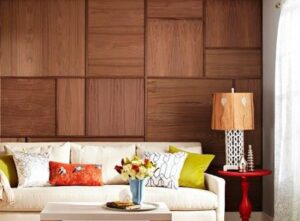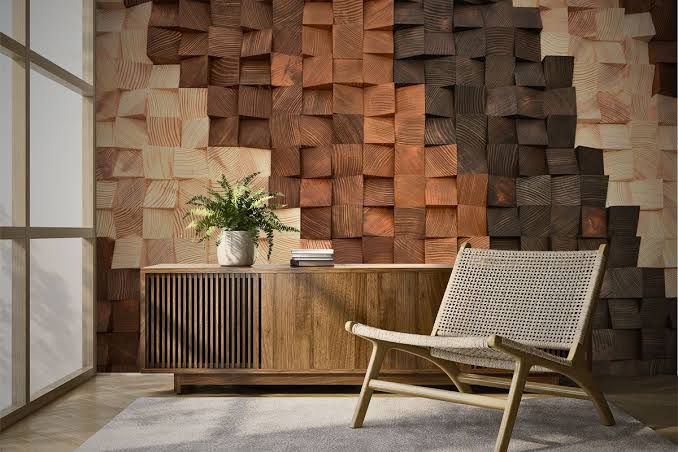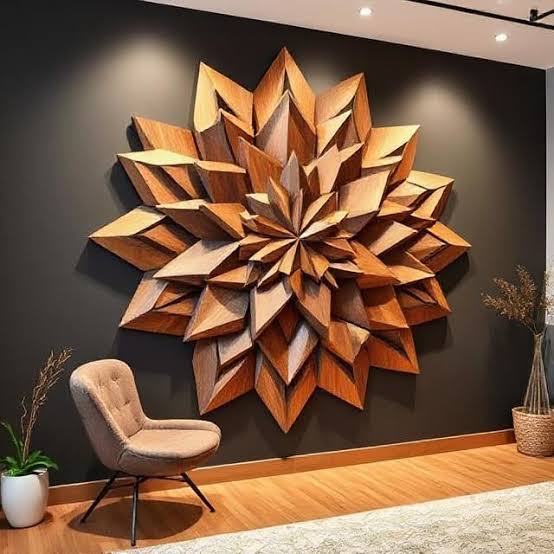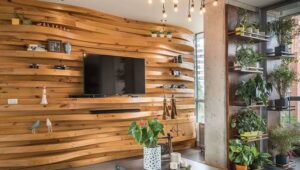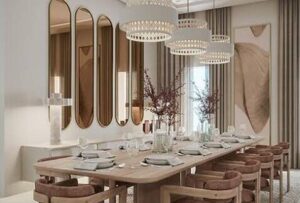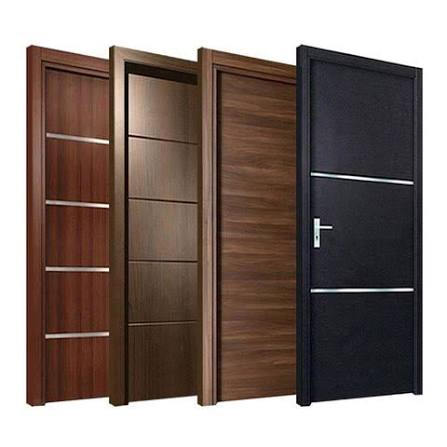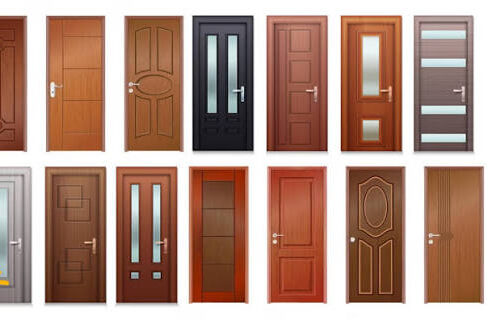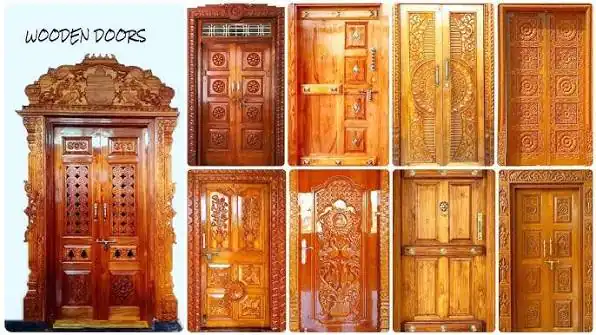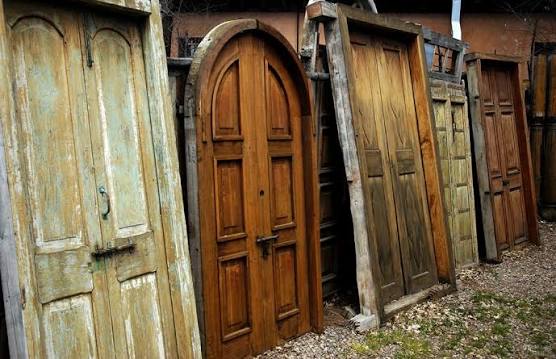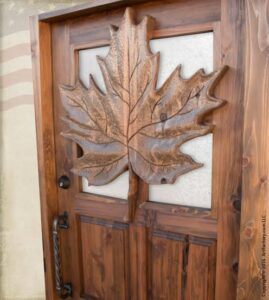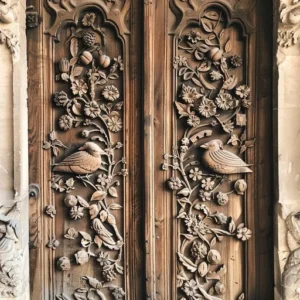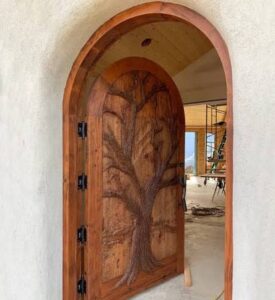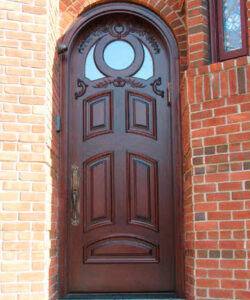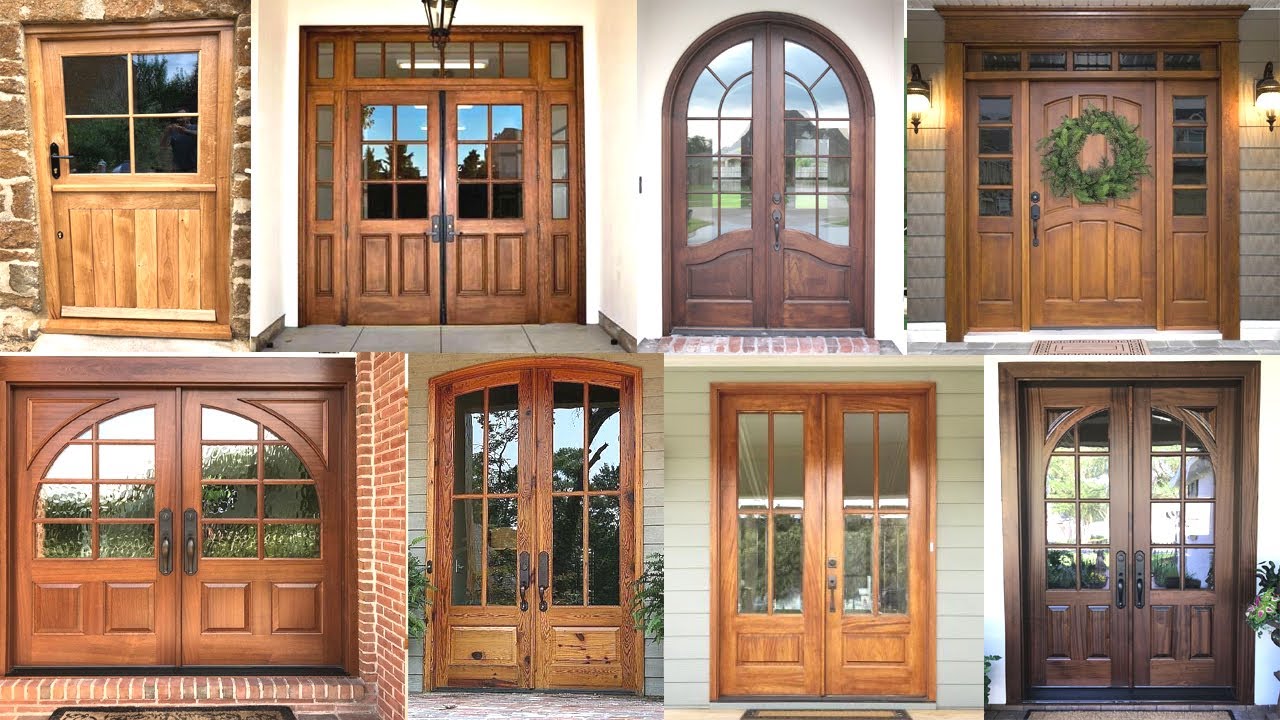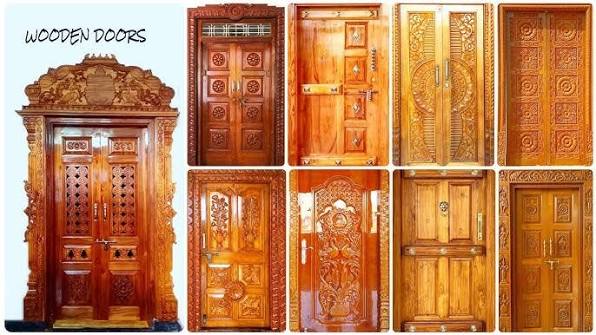
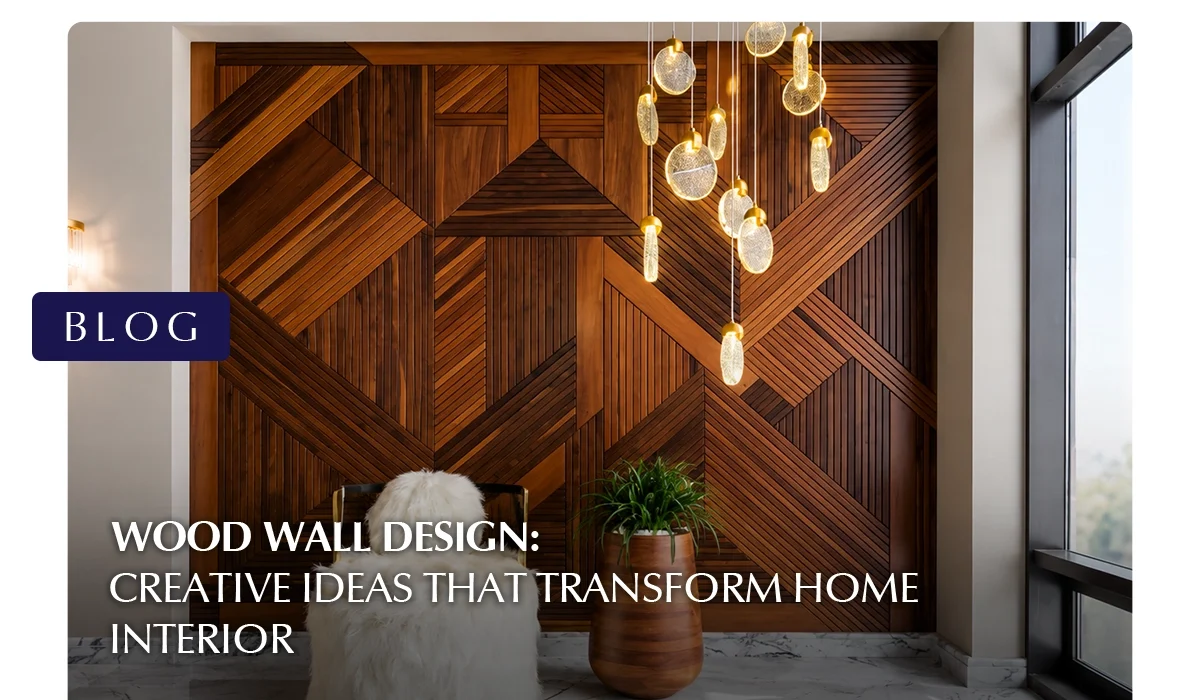
wood wall design
CategoriesHome Design Architecture Construction

Wood Wall Design: Creative Ideas That Transform Home Interior

From cosy living rooms to sleek modern bedrooms, homeowners and interior designers alike are turning to wood wall design as an easy way to add warmth, texture, and personality to a space. Unlike paint or wallpaper design, a well-executed wood wall brings a natural, tactile quality that instantly elevates a room without making it feel cold or overly polished.

In this guide, we’ll walk through everything you need to know about wood wall design, from popular styles and materials to room-specific ideas, DIY tips, and how to choose the right wall design for your own home.

Why Wood Wall Design Is Trending Again
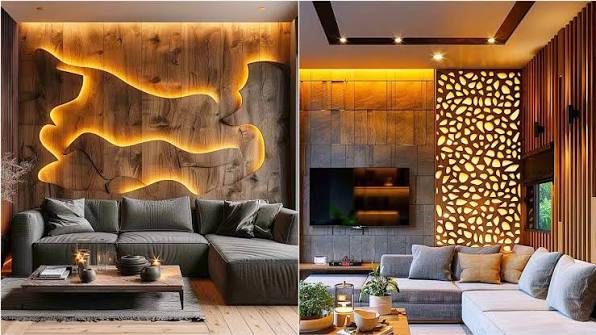
Wood Wall Design

Wood wall design isn’t exactly new. Wood panelling has been part of interior design for decades, going in and out of fashion depending on the era. But today’s version of wood wall looks nothing like the dark, heavy panelling of the past. Modern wood walls are lighter, more textured, and far more versatile, which is exactly why they’re seeing such a strong resurgence.

A few reasons wood wall design continues to gain popularity:

  • Warmth and cosiness: Wood naturally softens a space, making even large or minimalist rooms feel inviting.
  • Biophilic appeal: With more people craving a connection to nature indoors, wood walls offer an organic material that feels grounding and calm.
  • Versatility: Whether your home leans rustic, modern, industrial, or minimalist, there’s a wood wall that fits.
  • Value: A well-designed wood wall can genuinely increase a home’s perceived value, especially in living rooms, entryways, and primary bedrooms.

As one interior designer put it, wood panelling isn’t limited to a single style anymore; it can transform practically any room by adding warmth, character, and a touch of luxury. That flexibility is exactly why wood wall design has become such a go-to feature in modern interiors.

Types of Wood Wall Design to Consider

Before diving into room-specific ideas, it helps to understand the different types of wood wall design available. Each style creates a completely different look and feel, so choosing the right one depends on your space, budget, and aesthetic goals.

1. Wood Panelling and Slat Walls
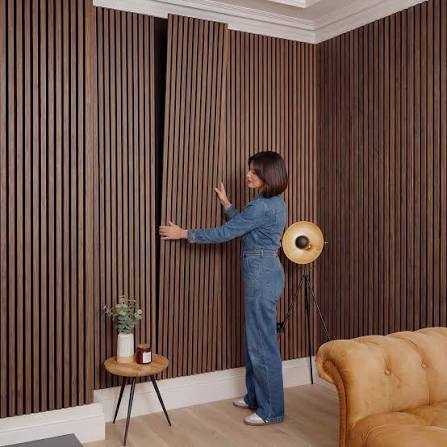
Wood Panelling and Slat Walls

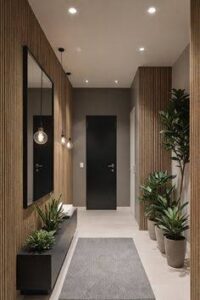
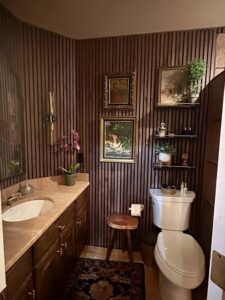
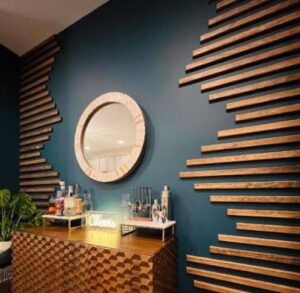
This is one of the most popular wood wall design options today. Vertical wood slats, evenly spaced and mounted onto a wall, create a clean, architectural look that works beautifully in both modern and traditional homes. Slat wall wood wall is especially popular behind beds, sofas, and TV units because it adds dimension without overwhelming the room.

2. Reclaimed and Shiplap Wood Wall Design
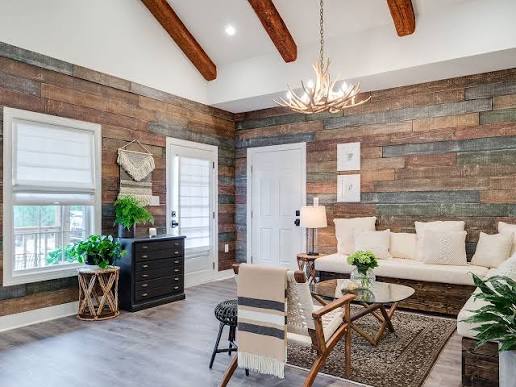
Reclaimed and Shiplap Wood Wall Design

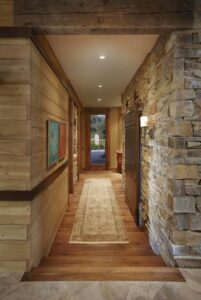
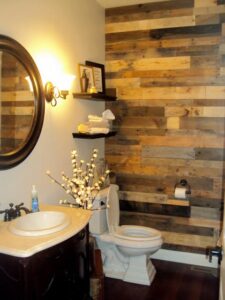
For a more rustic, farmhouse-inspired look, reclaimed wood or shiplap panelling is a favourite choice. This wood wall uses weathered, textured boards that bring character and lived-in charm to a space. It works particularly well in entryways, mudrooms, and cabin-style homes.

3. Wood Veneer Wall Design
If you want the richness of hardwood without the bulk or cost of solid wood, veneer is an excellent option. Wood veneer wall design lets you choose custom finishes like rift white oak or walnut, applied directly to walls to create a smooth, high-end look often seen in luxury interiors.

4. 3D Wood Wall Design
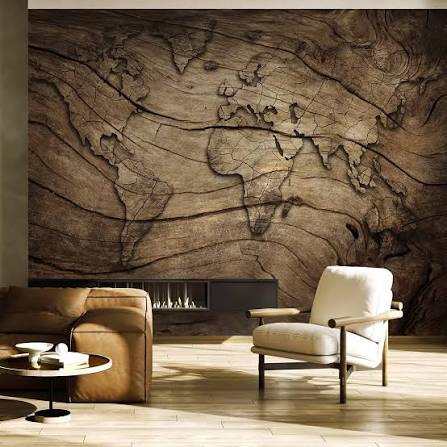
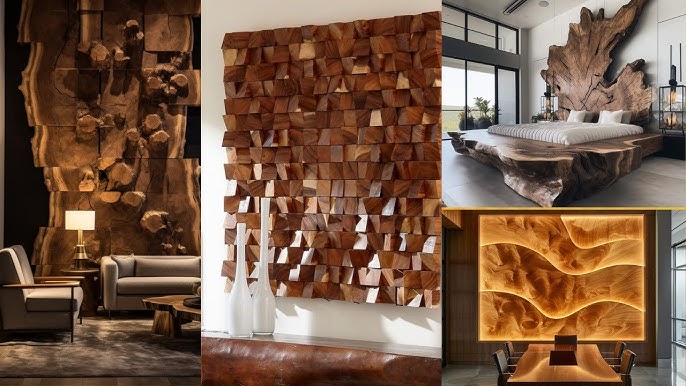
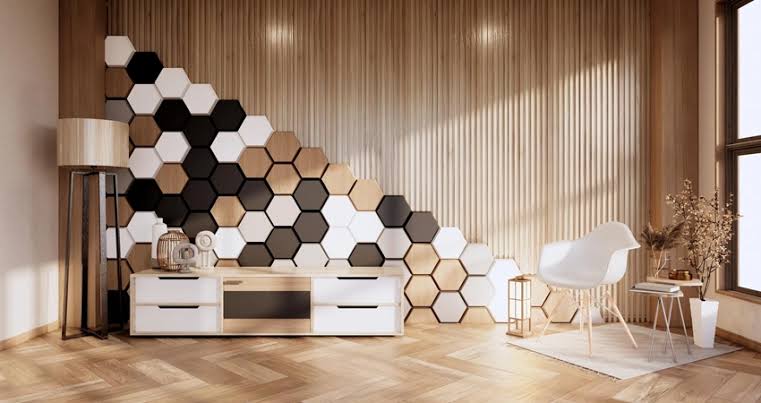
For homeowners who want their wood wall design to make a bold visual statement, 3d wood wall is one of the most eye-catching options available. This style uses layered, carved, or geometric wood pieces to create depth and movement on the wall.

Some 3D wood wall designs use repeating geometric blocks for an optical-illusion effect, while others incorporate backlighting to highlight the texture and shadows created by the wood’s layers.

3D wood wall works especially well as a statement accent wall in living rooms or as a striking backdrop behind a TV unit. You can achieve it with pre-made 3D wood panels or create it as a DIY project using reclaimed wood blocks, fence posts, or offcuts arranged in a pattern.

Home Wall Wood Design by Room

One of the best things about wood wall design is how adaptable it is across different rooms. Below is a breakdown of how you can apply home wall wood throughout your house design.

Living Room Wall Designs with Wood
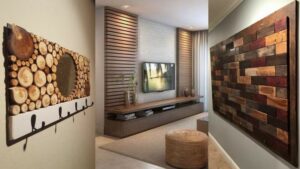
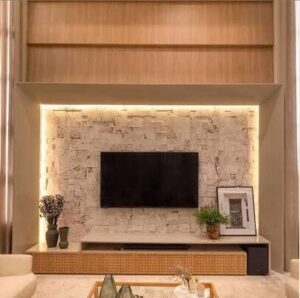
The living room is often the first place homeowners consider when exploring wood wall design, and for good reason; it’s usually the largest, most-used space in the home. Living room wall designs with wood can range from a single accent wall behind the sofa to full wood cladding that wraps around a fireplace or extends to the ceiling for dramatic effect.

Popular approaches for living room wood wall include:

  • A textured slat wall behind the seating area to anchor the room
  • Wood panelling that surrounds a fireplace, adding warmth to what can otherwise feel like a cold focal point
  • Full millwork extended from floor to ceiling for a more formal, architectural statement
  • Mixing wood tones with stone, brick, or plaster to create contrast and visual interest

Because the living room tends to be a gathering space, a wood wall design here should feel welcoming rather than overpowering, which is why many designers recommend pairing it with soft furnishings, warm lighting, and natural textures like wool or linen.

LCD Wall Design with Wood
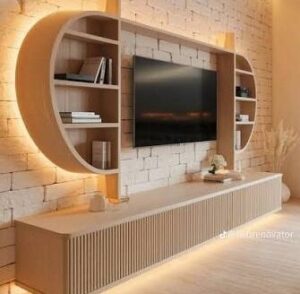
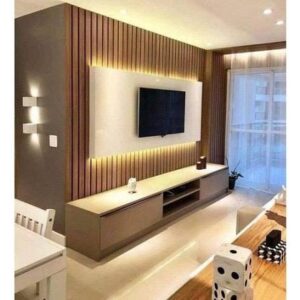
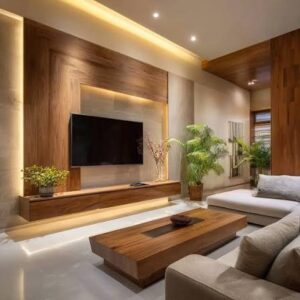
Media walls have become a major focus area for wood wall design, especially as flat-screen TVs have become a central feature in most living rooms and bedrooms. LCD wall design with wood combines function and aesthetics by hiding cables, adding storage, and creating a polished, cohesive look around the television.

A well-designed LCD wall design with wood typically includes:

  • Wood slat or panelling as the backdrop, which helps the TV blend into the wall rather than standing out awkwardly
  • Floating wood shelving units for storage and display
  • Integrated LED backlighting behind the panel for a soft glow effect
  • A mix of matte and textured wood finishes to avoid a flat, one-dimensional look

This type of wood wall is popular because it solves a practical problem: where to put the TV while still contributing to the room’s overall design language. Many homeowners now treat their TV wall as a design centrepiece rather than an afterthought, and a wood wall makes that possible.

Bedroom Wood Wall Design
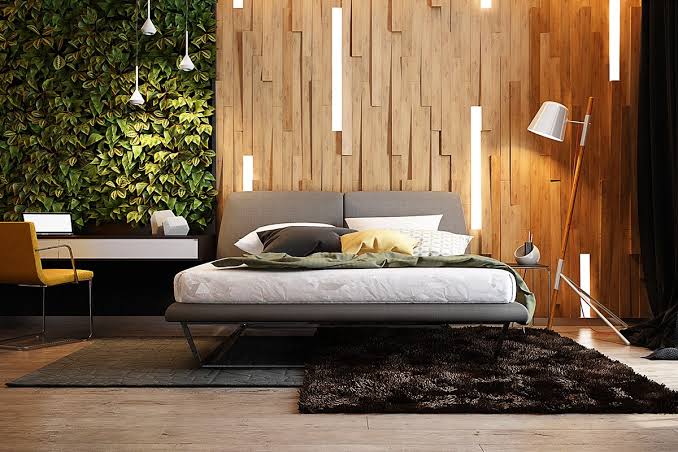
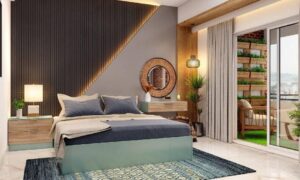
Bedroom Wood Wall DesignIn bedrooms wall design, wood tends to lean softer and more calming. A wood accent wall behind the headboard is one of the most common applications, instantly making the room feel cosier and more grounded. Lighter wood tones like oak or ash work well in smaller bedrooms, while darker walnut tones can create a more dramatic, moody atmosphere in larger primary suites.
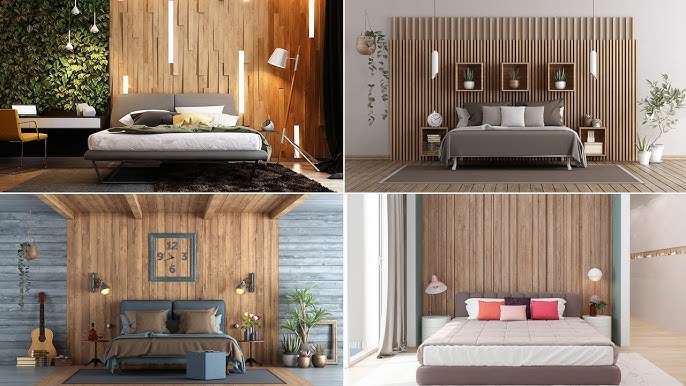
Bedroom Wood Wall Design

Some ideas for bedroom wood wall:

  • A slatted wood headboard wall with integrated reading lights
  • Reclaimed wood panelling for a rustic, cottage-style bedroom
  • Vertical wood strips painted or stained to match existing furniture

Entryway and Hallway Wood Wall Design
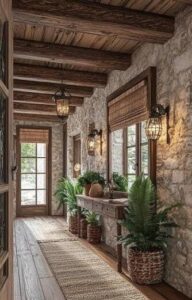
First impressions matter, and a wood wall design in the entryway sets the tone for the rest of the home. Because entryways tend to be smaller, high-traffic spaces, wood panelling here often serves a dual purpose, protecting walls from scuffs while adding a polished, welcoming look.

Bathroom Wood Accent Walls
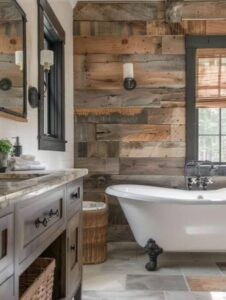
While it might seem unconventional, wood walls have also made their way into bathrooms, particularly around freestanding tubs or as a feature wall behind vanities. Treated or moisture-resistant wood options let homeowners bring warmth into what is often a utilitarian, tile-heavy space.

Popular Styles for Wood Wall Design
Popular Styles for Wood Wall Design

Because wood wall design is so adaptable, it fits into nearly every interior design style. Here’s how it typically shows up across different aesthetics:

Minimalist and Scandinavian: Clean, evenly spaced slat walls in light wood tones like birch or ash, paired with neutral colours and simple furniture.

Rustic and Farmhouse: Reclaimed wood, shiplap, and barn-wood-style panelling with visible grain and weathered texture.

Mid-Century Modern: Warm wood tones combined with strong geometric lines often seen in slat walls or panelling with clean, repeating patterns.

Industrial and Eclectic: Wood wall design mixed with metal accents, exposed brick, or concrete for a raw, layered look.

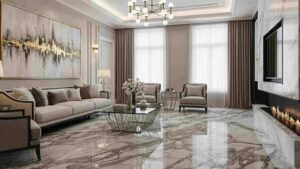
Luxury and Contemporary: Custom wood veneer wall design, often extended floor-to-ceiling, paired with high-end finishes like marble floor or brass fixtures.

No matter which style resonates with you, you can tailor a wood wall to match.

DIY Wood Wall Design vs. Professional Installation

One appealing thing about wood wall design is that it doesn’t always require a professional installer. Depending on the project’s complexity, many homeowners can complete their own wood wall with basic tools.
When DIY wood wall makes sense:

  • Simple slat walls using pre-cut wood strips
  • Small accent walls or feature areas (like a headboard wall)
  • Peel-and-stick or lightweight wood panel products designed for easy installation
Professional Installation

When to consider professional installation:

  • Full-room or floor-to-ceiling wood wall design
  • Custom veneer work requiring precise measurements and finishing
  • 3D wood wall with intricate patterns or structural elements
  • Projects involving electrical work, like integrated LED lighting

If you’re new to woodworking, start with a smaller wood wall project, like a single accent wall, to build confidence before tackling something larger.

Tips for Choosing the Right Wood Wall Design

With so many directions to take, choosing the right wood wall for your home comes down to a few key considerations:

  1. Match the wood tone to your existing furniture and flooring. A wood wall should complement your space, not clash with it.
  2. Consider the room’s natural light. Darker wood tones can make a dim room feel smaller, while lighter woods help brighten and open up a space.
  3. Think about scale. A large, open living room can handle a bold 3d wood wall, while smaller rooms may benefit from a simpler, more subtle wood wall design.
  4. Factor in maintenance. Solid wood requires more upkeep than engineered panels or veneers, so consider your lifestyle and how much maintenance you’re willing to commit to.
  5. Don’t be afraid to mix materials. Pairing wood wall with stone, metal, or plaster can add depth and prevent the space from feeling one-note.

Maintaining Your Wood Wall Design

Once your wood wall design is installed, a little maintenance goes a long way in keeping it looking its best:

  • Dust regularly with a soft, dry cloth to prevent buildup in grooves or textured panels
  • Avoid placing wood wall features in direct, prolonged sunlight, which can cause fading over time
  • Use wood-safe cleaning products if the panels require occasional deeper cleaning
  • Monitor humidity levels, especially in bathrooms or kitchens, to prevent warping

Frequently Asked Questions 

It depends on the materials and scope. A simple DIY slat wall can be relatively affordable, while custom veneer or full-room wood wall design installed by a professional will cost significantly more.

Popular choices include oak, walnut, pine, and ash. The best option depends on your desired finish, budget, and whether you want a light or dark wood wall design.

Yes, many simpler wood wall design projects like slat walls or small accent panels are DIY-friendly with basic tools. More complex designs, like 3D wood wall or full veneer walls, are best left to professionals.

Absolutely. Lighter wood tones and simple slat patterns can actually make small rooms feel warmer without making them feel cramped.

Regular dusting, avoiding excess moisture, and keeping the wall out of direct sunlight will help preserve both the colour and structural integrity of your wood wall.

Final Thoughts

A wood wall is one of the most effective ways to bring warmth, texture, and character into a home. Whether you’re drawn to a subtle wood accent behind your bed, a striking 3D wood wall in the living room, or a functional LCD wall design with wood that ties your media area together, there’s a wood wall design suited to nearly every space and style.

As home wood wall design continues to evolve, one thing remains clear: wood isn’t just a passing trend. It’s a timeless material that, when thoughtfully designed, can transform the feel of any room in your home.

For more information on City View Apartment Interior Design Pakistan and Wooden Door Price, please visit Chakor.

Read More:

marble floor design
CategoriesHome Design Architecture Construction

Marble Floor Design: Ultimate Guide to Elegant Flooring 2026

Few materials transform a home the way marble does. A well-planned marble floor design brings light, depth, and quiet luxury into any room, whether it’s a grand living hall or a cosy bedroom corner. From classic white tiles design to slabs to bold geometric inlays, marble design remains a timeless favourite among homeowners, architects, and interior designers alike, with no sign of going out of style.

In this ultimate guide, we’ll cover everything you need to know about marble floor design: the types of marble available, popular colours and patterns, room-specific ideas, the latest marble flooring design trends, and practical tips on maintenance and cost. 

Marble Flooring

Marble is a natural stone formed from limestone, transformed under heat and pressure over millions of years. This geological process gives marble its signature veining, the delicate streaks of colour that run through the stone and make every slab unique. Because no two pieces of marble are exactly alike, a marble floor design always feels custom, even when using a widely available marble type.

Marble Flooring

Marble is prized in interior design for three main reasons: its natural elegance, its durability when properly maintained, and its ability to reflect light, which makes rooms appear larger and brighter. These qualities are why marble design continues to dominate mood boards and renovation plans worldwide.

Types of Marble Used in Floor Design

Before diving into patterns and colours, it helps to understand the raw material itself. Different marble varieties bring different textures, tones, and price points to a marble floor design project:

  • Carrara Marble – Soft grey-white background with subtle grey veining; one of the most affordable and widely used marbles.

carrara marble

  • Statuario Marble – Bright white base with bold, dramatic grey veins; considered a premium choice for luxury interiors.

Statuario Marble

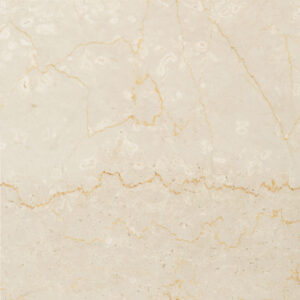
  • Botticino Marble – Warm beige tone, popular in South Asian homes including many marble design in Pakistan projects, especially in living rooms and staircases.

Botticino Marble

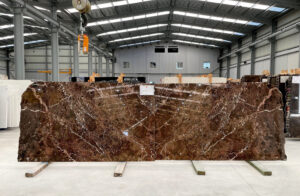
  • Emperador Marble – Rich brown shades with fine veining, ideal for warm, cosy interiors.

Emperador Marble

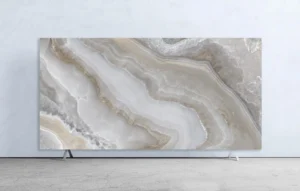
  • Onyx Marble – Translucent and dramatic, often used as an accent rather than full flooring due to cost.

Onyx Marble


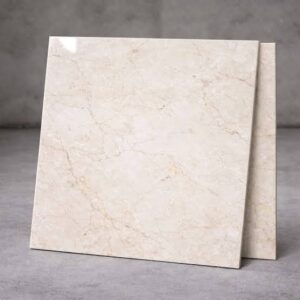
  • Crema Marfil – Creamy beige with fine veining, a versatile option that suits both traditional and modern homes.

Crema Marfil

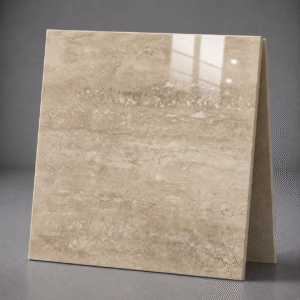
  • Travertine – Earthy and textured, often used for a rustic or outdoor-inspired marble floor design.

Travertine

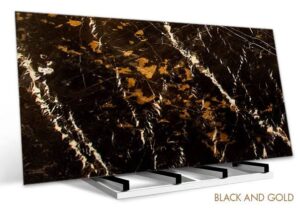
  • Black & Gold Marble – A bold, statement-making choice with striking gold veins running through a black base.

Black & Gold Marble

Choosing the right marble type is the foundation of any successful marble design, since the base tone determines how the rest of the room’s furniture, lighting, and decor should be styled.

Marble Floor Design Ideas by Colour

Colour is one of the biggest decision points in marble floor design, as it sets the mood of the entire space.

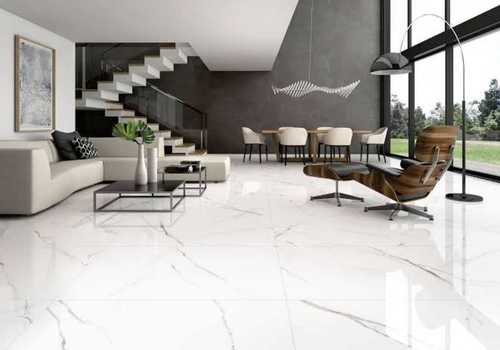
White Marble Floor Design

White Marble Floor Design

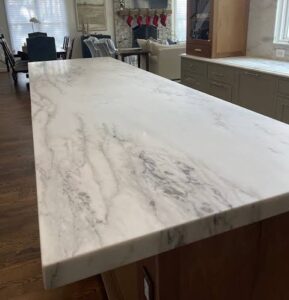
White marble remains the most popular choice for a reason. It brightens rooms, makes small spaces feel larger, and pairs effortlessly with almost any furniture style from minimalist to classic. A white marble design works particularly well in living rooms, entryways, and hallways where you want a clean, airy first impression.

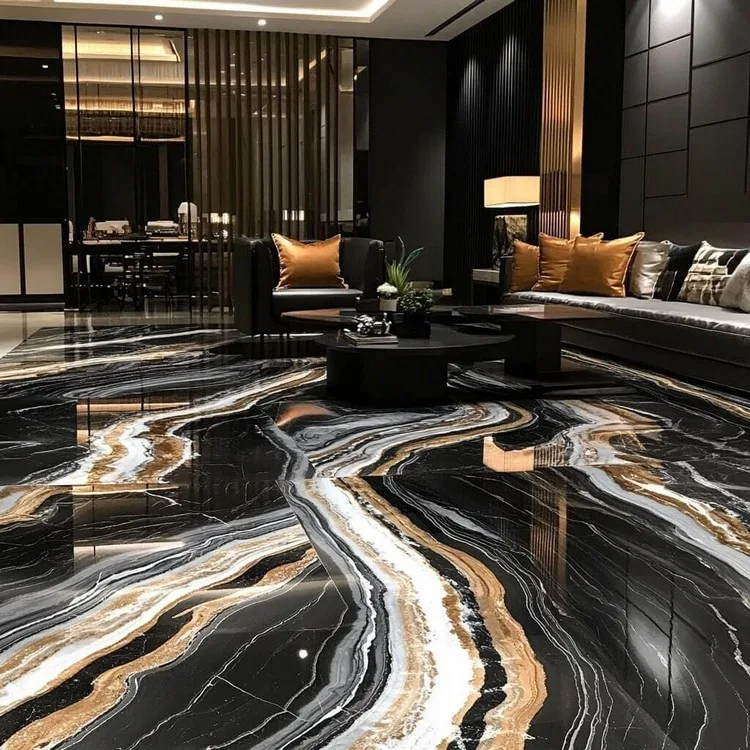
Black Marble Floor Design 

Black Marble Floor Design 

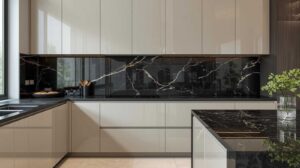
For homeowners who want drama and sophistication, a black marble design creates a bold contrast, especially in well-lit spaces. Black marble pairs beautifully with gold accents, warm lighting, and minimalist furniture, making it a favourite for formal dining rooms and home offices.

Beige and Cream Marble Floor Design 

Beige and Cream Marble Floor Design 

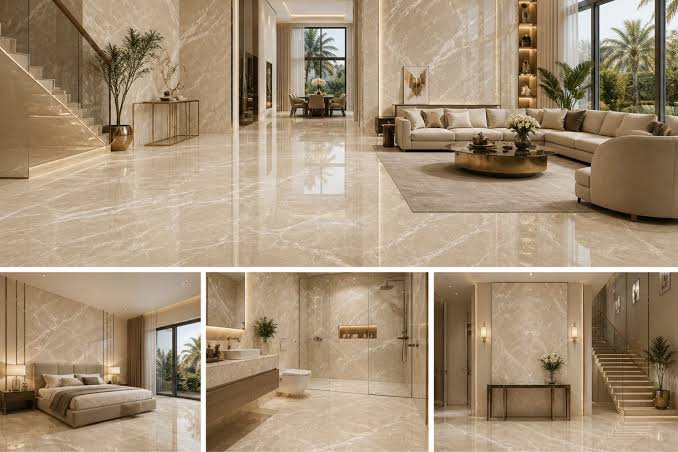
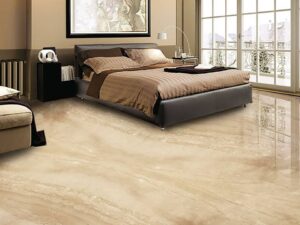
Neutral tones like beige and cream never go out of fashion. A beige marble design adds warmth to a room and hides dirt and everyday wear better than stark white, which makes it a practical choice for high-traffic hallways and living areas.

Grey Marble Floor Design

Grey Marble Floor Design

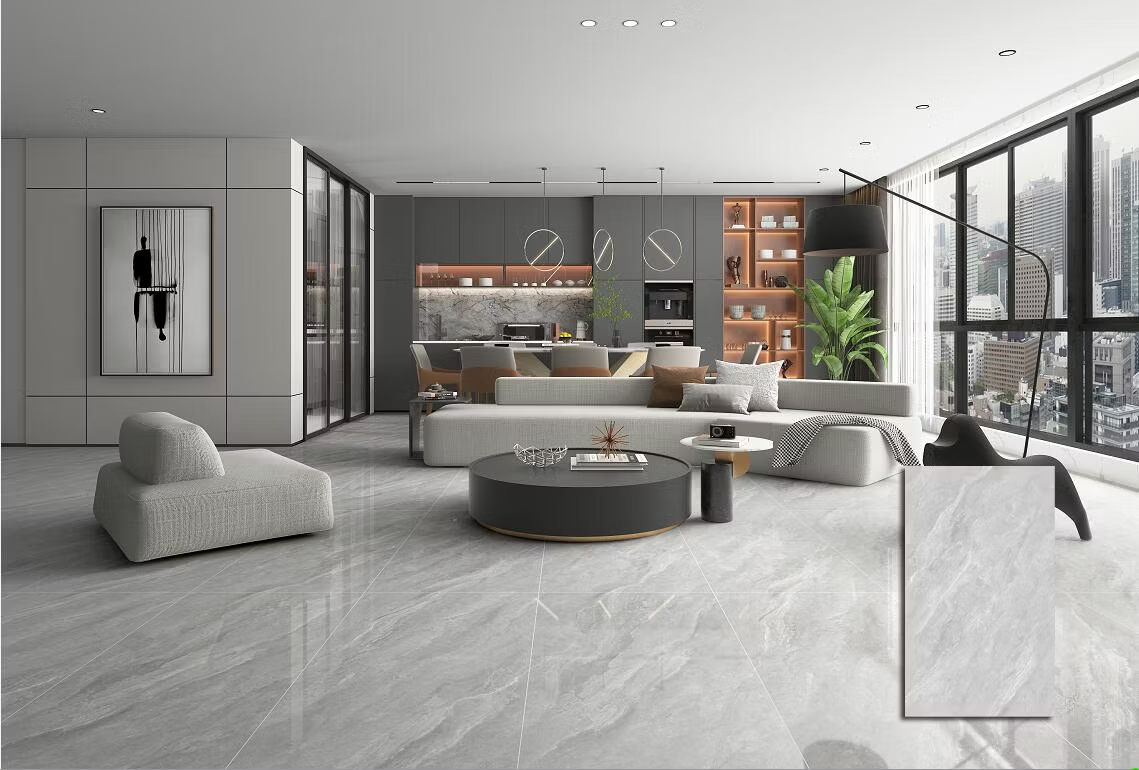
Grey marble offers an understated, contemporary look that suits urban apartments and modern homes. It’s a popular pick for those who want elegance without the high-maintenance appearance of pure white.

Green and Colored Marble Floor Design

Green and Colored Marble Floor Design

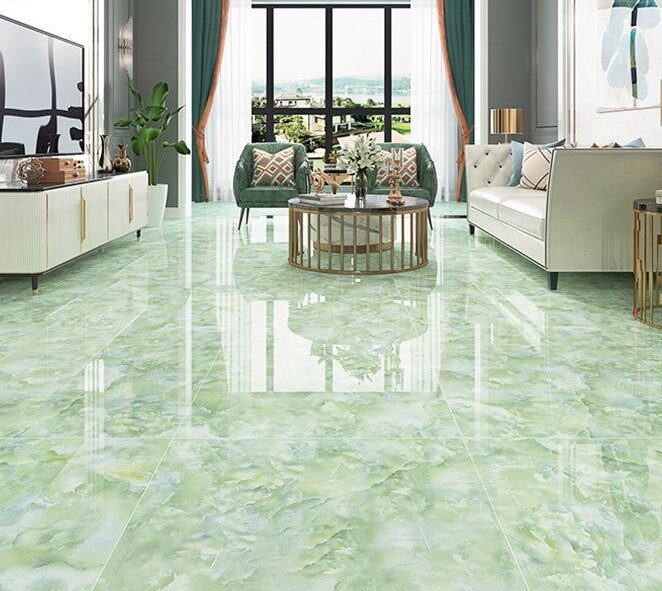
For homeowners who want something unconventional, green, red, or pink-toned marble can turn a floor into a genuine design statement. These colours are less commonly used but are gaining popularity in the latest marble flooring design trends, especially as accent borders or feature areas.

Marble Floor Design Patterns and Layouts

Beyond colour, the layout pattern is what truly elevates a marble floor design from ordinary to extraordinary. Here are the most popular patterns being used today:

  1. Straight Lay – The simplest and most widely used layout, where tiles are placed in a grid. This is often the go-to option for a simple marble floor design for home projects because it’s easy to install and cost-effective.Straight Lay
  2. Diagonal Layout – Tiles are laid at a 45-degree angle, visually expanding the room and adding dynamism to a plain marble design. diagonal-layout
  3. Herringbone Pattern – A zigzag arrangement that lends a refined, almost European aesthetic to the space. This pattern works especially well with rectangular marble strips.                                 Herringbone Pattern
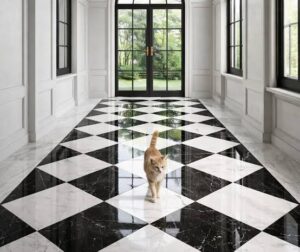
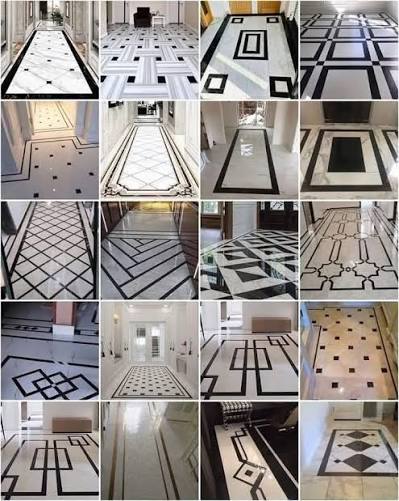
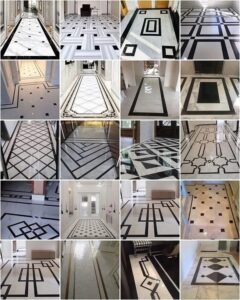
  4. Checkerboard Design – Alternating light and dark marble tiles (commonly black and white) create a classic, retro-inspired marble design that never loses its charm. Checkerboard Design
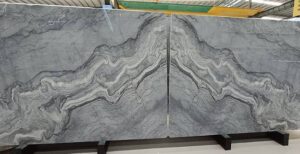
  5. Book-Matched Marble – Two slabs cut from the same block are placed as mirror wall design images of each other, creating a symmetrical, high-end look often seen in luxury hotel lobbies and premium homes. Book-Matched Marble
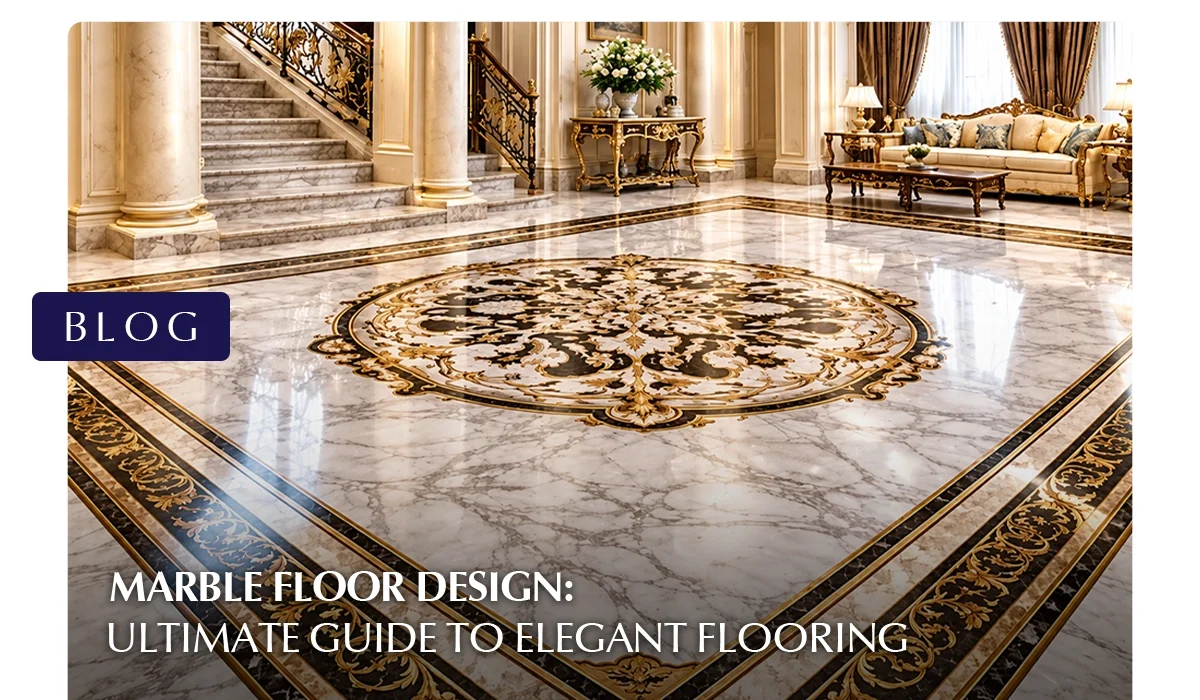
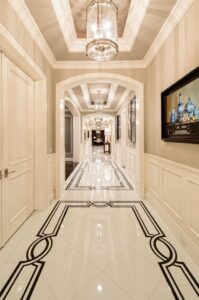
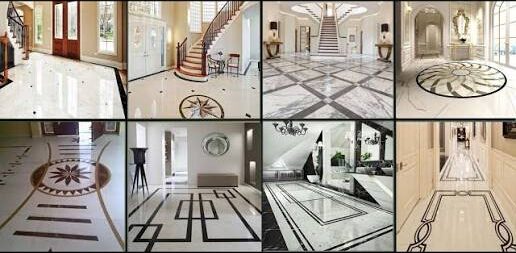
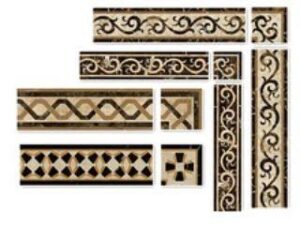
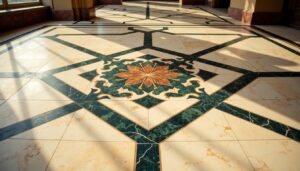
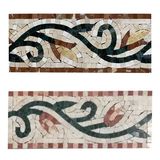
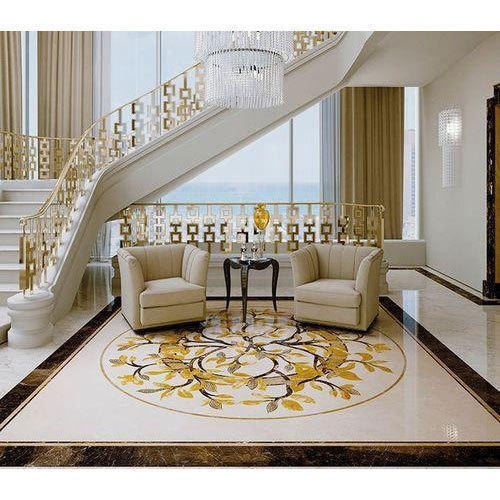
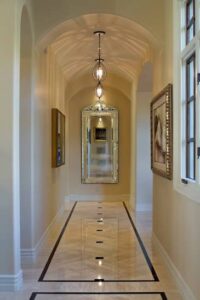
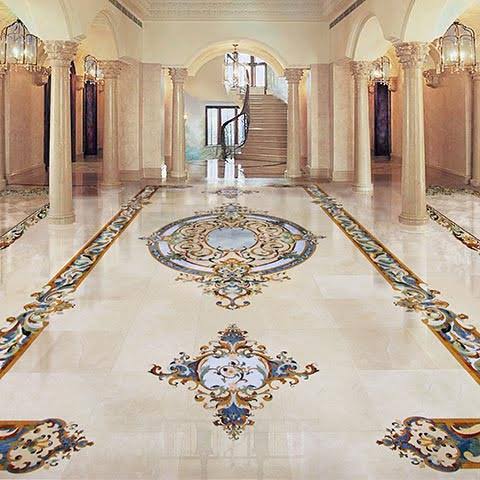
  6. Border and Inlay Designs – Adding a contrasting border around the perimeter of a room, or intricate geometric inlays in the centre, is one of the most requested marble design styles for formal living rooms and entryways. Border and Inlay Designs
  7. Diamond and Geometric Motifs – Diamond patterns scattered across a plain marble base add subtle visual interest without overwhelming the space. Diamond and Geometric Motifs

Each of these patterns can be adapted to fit both grand, spacious halls and smaller, modern apartments, which is part of what makes marble design so versatile.

Simple Marble Floor Design for Home

Simple Marble Floor Design for Home

Not every homeowner wants an elaborate, pattern-heavy floor. If you prefer understated elegance, a simple marble floor design for home is often the smarter and more budget-friendly choice. Here’s how to achieve it:

  • Stick to a single marble colour throughout the room instead of mixing multiple tones.
  • Use a straight-lay layout with minimal or no border detailing.
  • Choose a marble with subtle, light veining rather than bold, high-contrast patterns; this keeps the floor looking clean and timeless.
  • Add a thin, single-tone border only if you want a touch of definition without complexity.

A simple marble design for home is ideal for smaller rooms, rental properties, or anyone who wants marble’s elegance without the higher cost of intricate inlay work. It’s also easier to maintain, since fewer grout lines and joints mean fewer places for dirt to accumulate.

Latest Marble Flooring Design Trends 

Marble floor design continues to evolve as interior design tastes change. Here are the latest marble flooring design trends shaping homes this year:

  • Large-Format Tiles – Oversized marble slabs with fewer grout lines are increasingly popular. They create a seamless, expansive look and make rooms appear more connected and open. Large-Format Tiles
  • Matte Finishes – While glossy marble has long been the standard, matte-finish marble design is gaining popularity for its soft, contemporary appeal and reduced glare. Matte Finishes
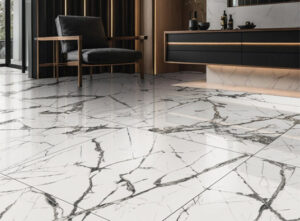
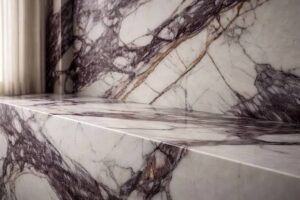
  • Bold Veining as a Feature – Rather than choosing subtle veining, many homeowners now treat dramatic, flowing veins as functional floor art, especially in spacious living rooms. Bold Veining as a Feature
  • Marble-Look Vitrified Tiles – As natural marble requires upkeep, many homeowners are opting for marble-look porcelain or vitrified tiles that replicate the appearance of a genuine marble floor design at a fraction of the maintenance and cost. Marble-Look Vitrified Tiles
  • Mixed Material Borders – Combining marble with metal strips or wood accents along the edges is a fresh way to modernise a traditional marble design. Mixed Material Borders
  • Soft, Unconventional Colours – Blush pink, sage green, and deep charcoal marble tones are appearing more frequently in the latest marble flooring design collections, moving beyond the traditional white-and-beige palette. Soft, Unconventional Colours

These trends show that marble floor design isn’t static; it keeps adapting to modern lifestyles while retaining its core appeal of timeless luxury.

Marble Floor Design in Pakistan

Marble holds a special place in Pakistani homes, largely because Pakistan has some of the region’s richest marble reserves, particularly in areas like Chagai and Mardan. This local availability makes marble floor design in Pakistan more affordable and culturally significant than in many other countries.

Popular marble types used in Pakistani homes include Ziarat White, Sunny Grey, Botticino, and Black & Gold marble. These are commonly seen in drawing rooms, main entrances, staircases, and dining areas spaces where families want to make a strong visual impression on guests.

A few things make marble floor design in Pakistan unique:

  • Local Sourcing – Since much of the marble is quarried domestically, homeowners can often get high-quality stone at more competitive prices compared to imported options.
  • Climate Considerations – Marble’s naturally cool surface makes it a practical flooring choice in Pakistan’s hot summer months, keeping interiors comfortable without extra cooling costs.
  • Cultural Preference for Grand Entrances – Many homes in Pakistan feature elaborate marble designs with borders and inlays, especially in entryways and formal sitting areas, reflecting hospitality traditions.
  • Budget-Friendly Options – For those working with tighter budgets, a simple marble design for a home in Pakistan using local Botticino or Sunny Grey marble offers an elegant look without the premium price tag of imported Italian marble like Carrara or Statuario.

Whether you’re renovating an older home or planning a new build, marble floor design in Pakistan remains one of the most sought-after flooring choices, balancing affordability, durability, and visual appeal.

Room-Wise Marble Floor Design Ideas

Living Room

Living Room

The living room is where most homeowners invest the most effort into their marble floor design, since it’s the space guests see first. Large-format tiles, subtle borders, or a herringbone layout all work beautifully here.

Bedroom 

Bedroom 

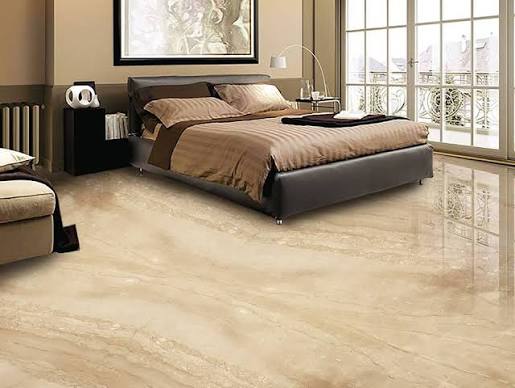
A softer, more serene floor with marble design think light beige or soft grey tones pairs well with plush rugs and warm lighting to create a hotel-like, relaxing bedroom atmosphere.

Kitchen

Kitchen

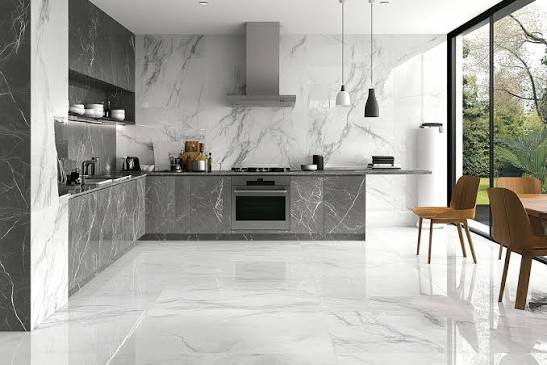
While natural marble can stain if not sealed properly, many homeowners still choose a durable marble floor design or marble-look tile for kitchens because of its clean, polished appearance.

Bathroom

Bathroom

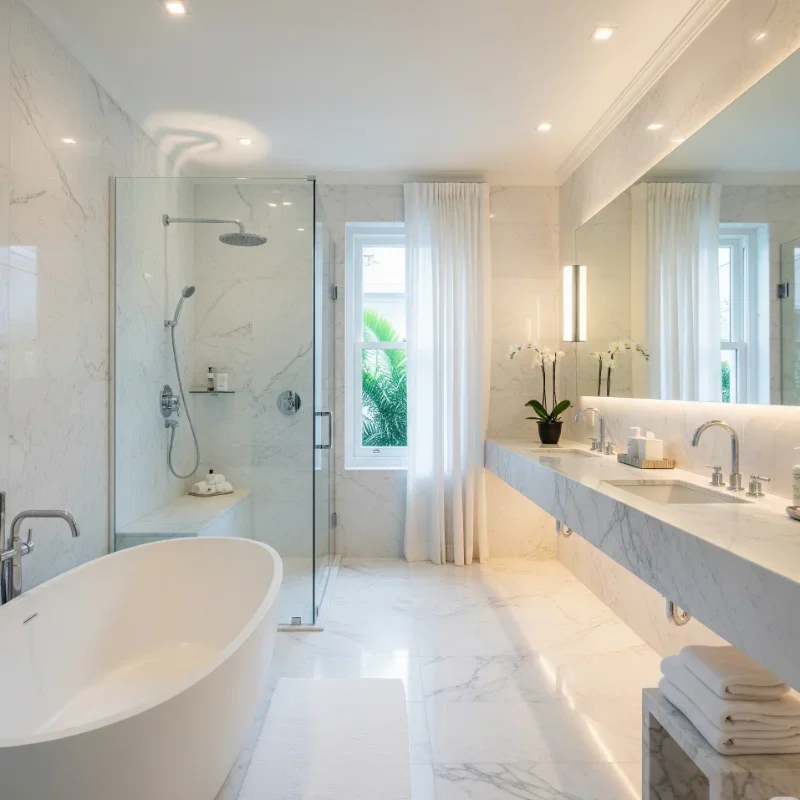
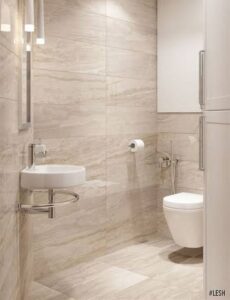
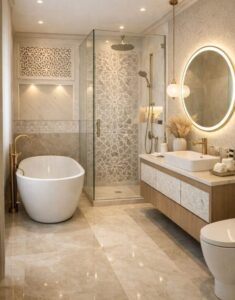
Marble’s water-resistant qualities (when properly sealed) make it a popular choice for bathroom flooring. Simple marble-design bathroom floors often use smaller-format tiles for better slip resistance.

Entryway and Hallway

Entryway and Hallway

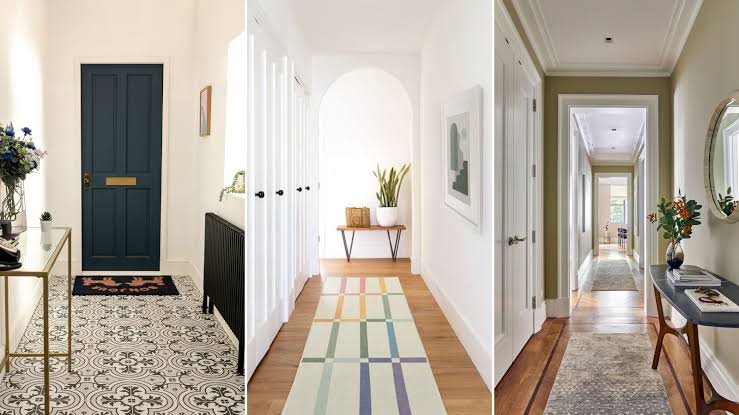
Since entryways see the most foot traffic, a durable, lightly veined marble-design floor with a subtle border is ideal; it hides scuffs and dirt better than high-contrast, dark options.

Marble vs. Marble-Look Vitrified Tiles

Marble vs. Marble-Look Vitrified Tiles

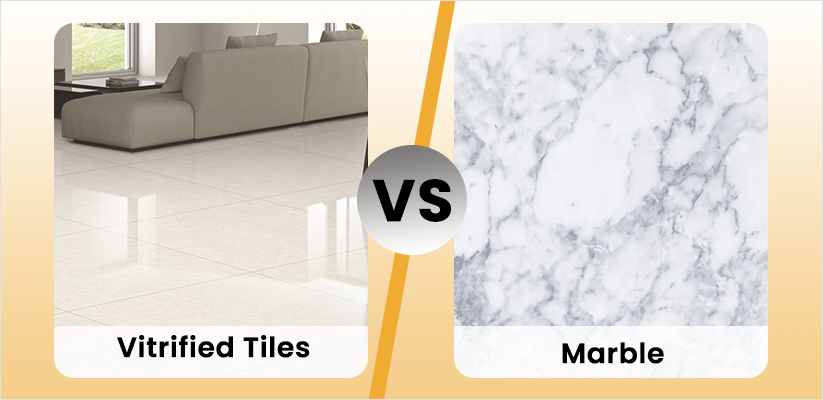
One question that often comes up when planning a marble floor design is whether to choose natural marble or marble-look vitrified/porcelain tiles. Natural marble offers unmatched authenticity and unique veining patterns, but it requires regular sealing and gentle cleaning to avoid stains and etching.

Marble-look tiles, on the other hand, replicate the same aesthetic with significantly less maintenance and a lower price point, making them a practical alternative for busy households or high-traffic commercial spaces.

Both options can achieve a stunning marble floor design; the right choice ultimately depends on your budget, lifestyle, and how much upkeep you’re willing to commit to.

Marble Floor Design Maintenance Tips

A beautiful marble floor design can last for decades with proper care. Follow these simple tips:

  • Sweep or vacuum regularly to remove dirt and grit that can scratch the surface.
  • Clean spills immediately, especially acidic liquids like citrus juice or vinegar, which can etch the marble.
  • Use a pH-neutral cleaner and a soft mop instead of harsh chemicals or abrasive scrubbers.
  • Reseal marble floors every 6–12 months to maintain their stain resistance and shine.
  • Place mats at entryways to reduce the amount of grit tracked onto the floor.

With consistent care, your marble design will retain its elegance and durability for many years to come.

Cost of Marble Floor Design

The cost of a marble floor design varies significantly based on the marble type, tile size, and pattern complexity. Locally sourced marble, such as that used in many marble design projects in Pakistan, is often more budget-friendly than imported varieties like Italian Carrara or Statuario.

Simple, single-colour layouts are generally the most economical, while intricate inlays, borders, and book-matched designs increase both material and labour costs. It’s always a good idea to get quotes from local suppliers and installers before finalising your marble design budget.

Frequently Asked Questions

White and beige marble floor designs remain the most popular choices due to their versatility, brightness, and ability to complement almost any interior style.

Yes, marble design in Pakistan is extremely popular thanks to local marble reserves, affordability, and marble’s natural ability to stay cool in hot weather.

Stick to one marble colour, use a straight-lay layout, and avoid heavy borders or inlays to keep the design clean, elegant, and budget-friendly.

Large-format tiles with minimal grout lines, matte finishes, and bold statement veining are among the latest marble flooring design trends for 2026.

Natural marble requires periodic sealing and careful cleaning, but with proper maintenance, a marble design can last for decades without losing its beauty.

Yes, with proper sealing, marble floor design can be used in living rooms, bedrooms, kitchens, and even bathrooms, though it’s important to consider slip resistance in wet areas.

Conclusion

From classic white slabs to bold, patterned inlays, marble floor design offers endless possibilities for homeowners who want to bring timeless elegance into their living spaces. 

Whether you’re drawn to a simple marble design for home, curious about the latest marble flooring design trends, or specifically exploring marble floor design in Pakistan for your next renovation, the key is choosing a style that fits your lifestyle, budget, and the overall mood you want your home to reflect.

With the right marble type, pattern, and proper maintenance, your marble-design floor can remain a stunning centrepiece of your home for generations.

For more information on City View Apartment Interior Design Pakistan and Wooden Door Price, please visit Chakor.

Read More:

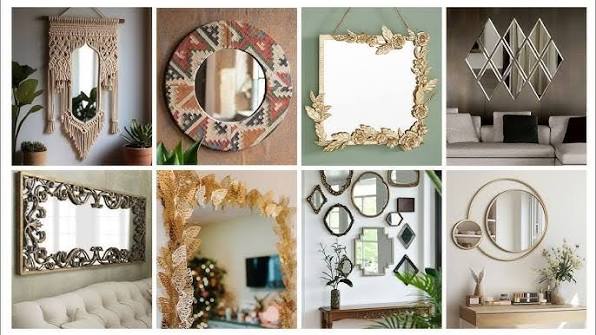
Mirror Wall Design
CategoriesHome Design Architecture Construction

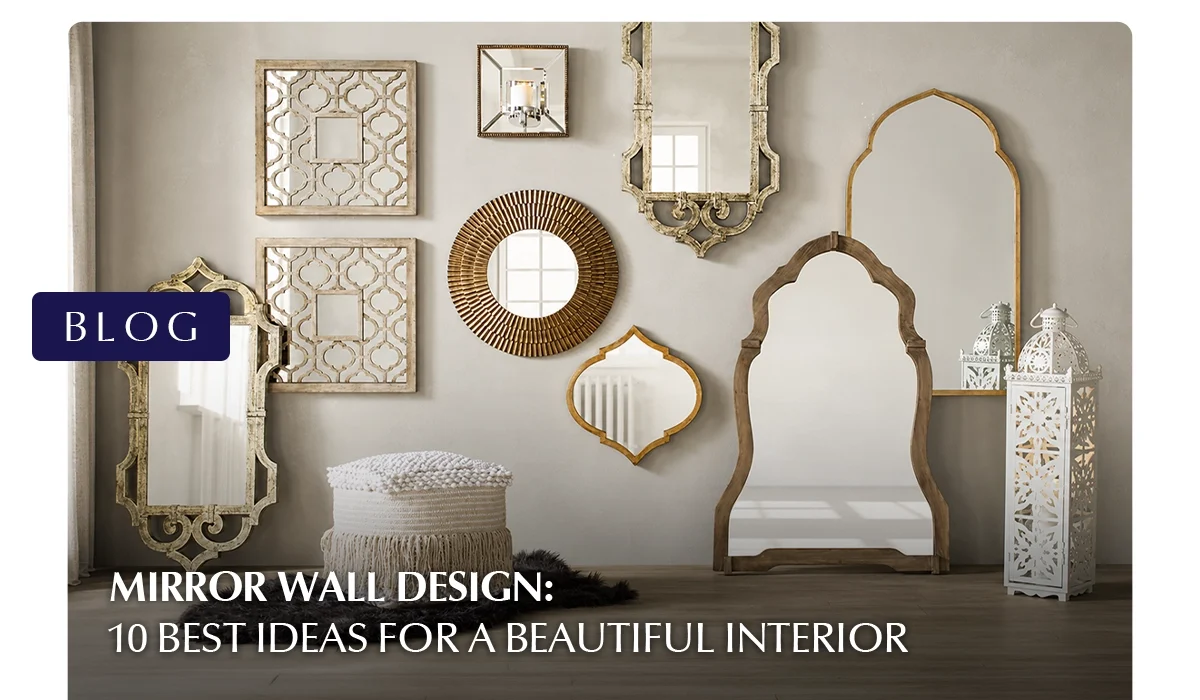
Mirror Wall Design: 10 Best Ideas for a Beautiful Interior

If you’ve ever walked into a room that felt instantly bigger, brighter, and more elegant, chances are a mirror wall design had something to do with it. From compact apartments to spacious living rooms, wall design ideas keep improving   to refresh interior spaces without a full renovation.

In this guide, we’ll explore ten stunning mirror wall design concepts that work brilliantly in living rooms, bedrooms wall design, hallways, and beyond, along with practical tips on choosing, placing, and styling the right one for your home.

Why Choose a Mirror Wall Design for Your Home

Mirror wall Design

A well-planned mirror wall design does more than just let you check your outfit before heading out the door. Mirrors reflect light, create the illusion of extra square footage, and act as functional art that ties a room together. Small apartments feel airier, dark hallways feel brighter, and plain walls suddenly feel intentional. 

That’s exactly why mirror wall design has become a go-to strategy for interior designers and homeowners alike; it delivers a dramatic visual upgrade at a fraction of the cost of major renovation work.

Beyond aesthetics, mirrors are practical. They help with daily grooming, make small rooms feel proportionate to the furniture, and can be swapped or rearranged far more easily than paint or wallpaper if your taste changes.

10 Best Wall Mirror Design Ideas for Every Room

Here are ten tried-and-tested ideas to inspire your next mirror wall design project, whether you’re working with a cosy bedroom corner or an entire living room feature wall.

1. Statement Full-Height Mirror Panel

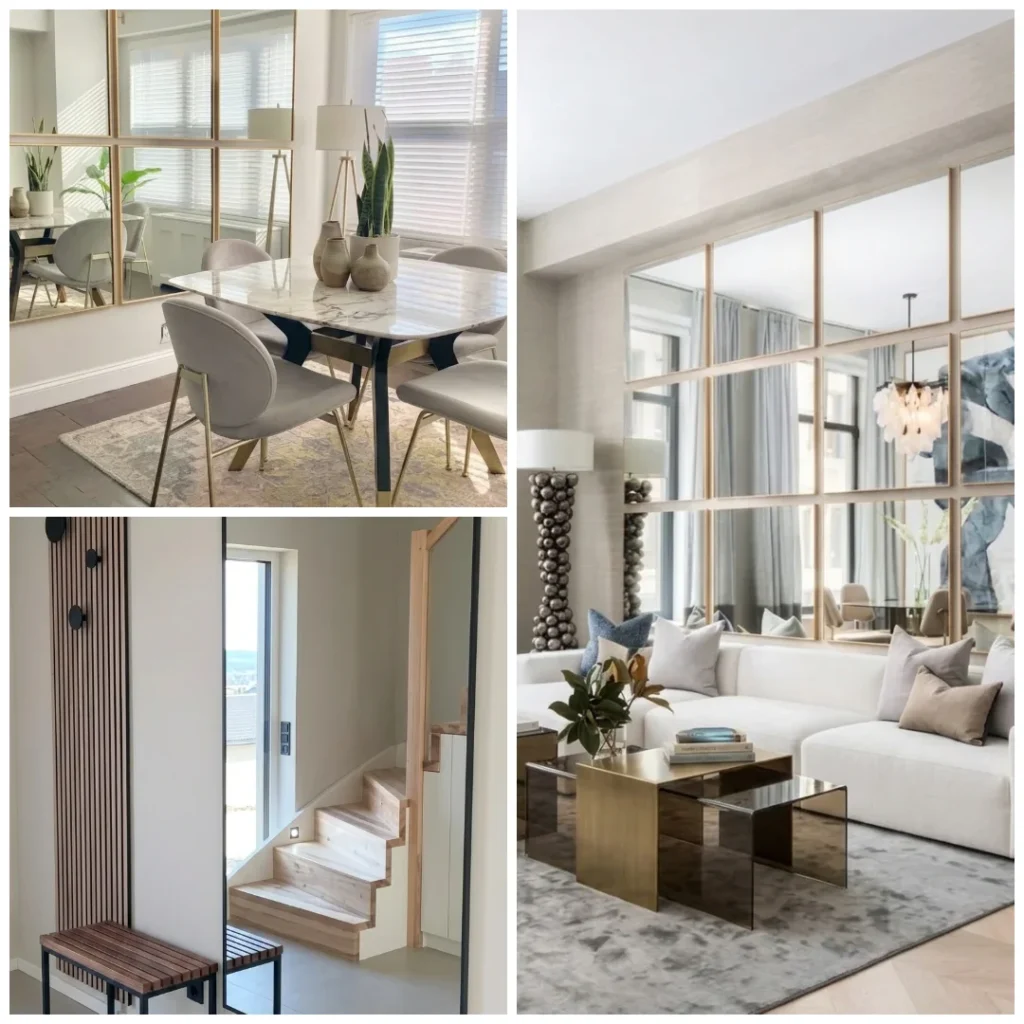
One of the boldest mirror wall design choices is a full-height mirror panel that runs floor to ceiling. Installed on one wall, it visually doubles a room’s depth and floods the space with reflected light.

This works especially well in smaller living rooms or narrow hallways where every inch of perceived space matters. Choose a frameless panel for a seamless, architectural look, or a subtly framed version if you want a softer transition between the mirror and the wall.

2. Eclectic Mirror Gallery Wall

Eclectic Mirror Gallery Wall

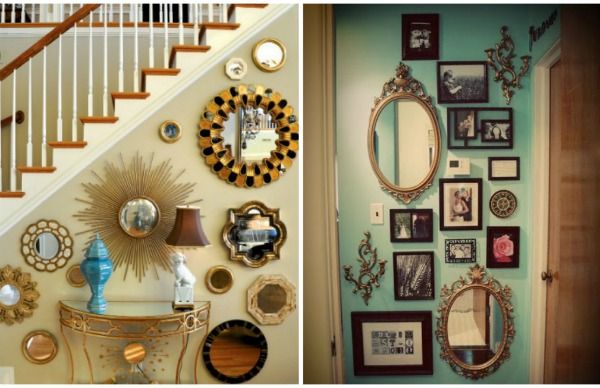
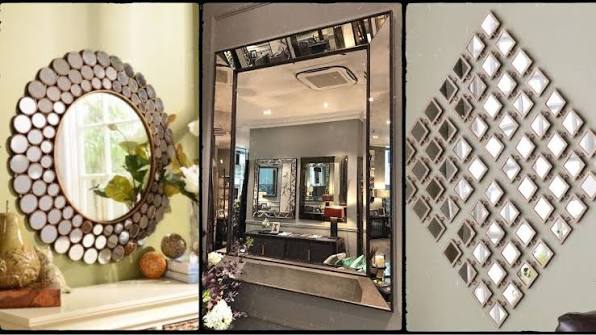
A gallery-style wall mirror design mixes different frames, shapes, and sizes into one eye-catching arrangement. Combine round, oval, and rectangular mirrors of varying dimensions, and don’t be afraid to throw in a piece of framed art for contrast.

The trick is balance: distribute similar sizes and colours evenly across the wall so the arrangement feels curated rather than cluttered. Lay everything out on the floor first to test the layout before you commit to any nail holes.

3. Wooden Wall Mirror Design for Warmth and Character

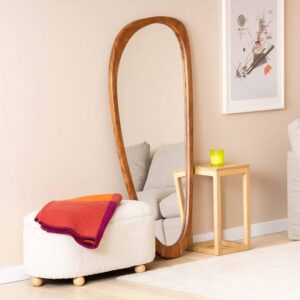
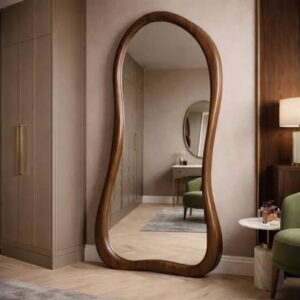
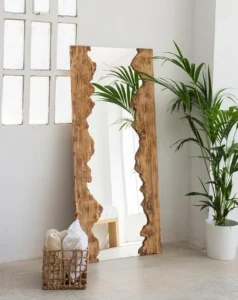
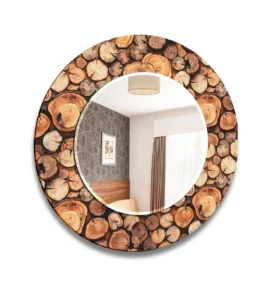
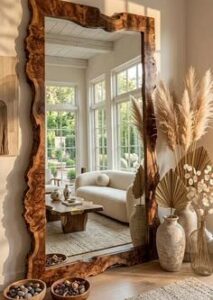
If you love natural textures, a wooden wall mirror design brings instant warmth to any space. Carved wooden frames, whether in a light honey finish or a darker walnut stain, add character that pure glass or metal frames can’t replicate.

This type of mirror wall design pairs beautifully with rattan furniture, linen upholstery, and earthy colour palettes, making it a favourite for boho, rustic, and traditional interiors alike.

4. Mirror Glass Wall Design with Bevelled Edges

Mirror Glass Wall Design with Bevelled Edges

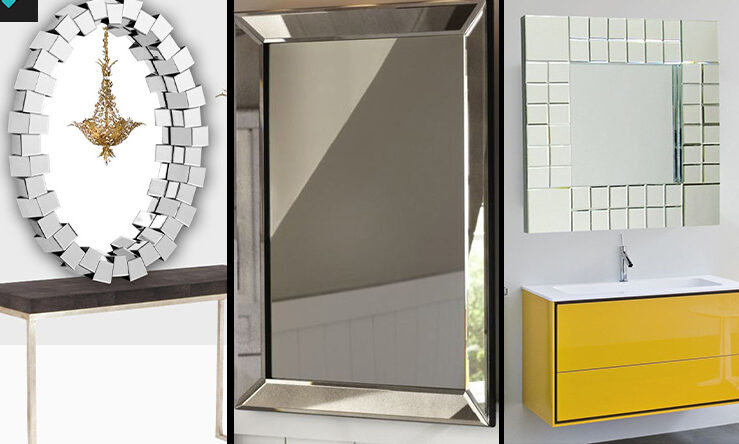
A frameless mirror glass wall design offers a sleek, minimalist look that suits contemporary interiors perfectly. Bevelled edges where the glass is cut and polished at an angle add subtle sophistication by catching and refracting light differently than a flat edge would.

This modern mirror wall design bounces natural light beautifully across the room and works especially well behind sofas, over fireplaces, or as a kitchen splashback accent.

5. Sunburst and Geometric Mirror Accents

Adding a sunburst mirror is a classic mirror wall design trick for mid-century glam interiors. The radiating spokes create a striking focal point above a mantel, sofa, or console table.

If sunbursts feel too ornate for your taste, geometric mirrors hexagons, diamonds, or interlocking shapes offer a more contemporary alternative while still delivering that same “wow” factor on an otherwise plain wall.

6. Mirror Above a Console or Mantel

Placing a mirror above your console table is one of the easiest mirror wall design updates you can make this weekend. As a general rule, choose a mirror about two-thirds the width of the furniture beneath it for a balanced, proportional look.

This placement not only reflects ambient light but also highlights whatever decor vases, candles, framed photos sits on the surface below.

7. Layered Mirrors and Mirrored Furniture

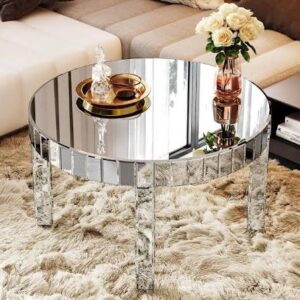
Layering mirrored furniture, like a coffee table or sideboard, with a wall mirror multiplies the design’s reflective impact throughout the room. This layered mirror wall design approach works especially well in dining rooms and living rooms, where it adds depth without requiring a single oversized piece.

Pair mirrored surfaces with plants or textured decor so the look feels warm rather than cold or overly glossy.

8. LED Backlit Mirror Walls

LED Backlit Mirror Walls

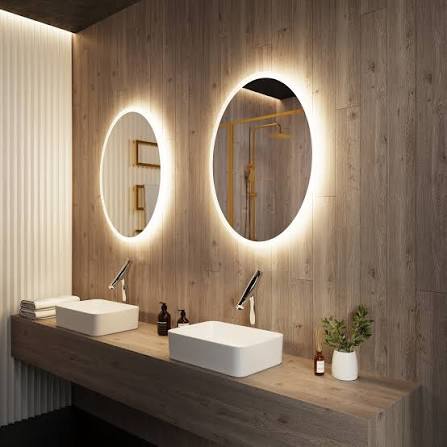
LED backlit mirrors have become a favourite modern mirror wall design, particularly for gyms, dressing rooms, and hallways. Integrated lighting around the mirror’s perimeter provides even, shadow-free illumination while doubling as an ambient light source in the evening.

It’s a trend that blends function and style, and it’s increasingly showing up in bedrooms and bathrooms as a subtle luxury upgrade.

9. Arched or Window-Style Mirror

Arched or Window-Style Mirror

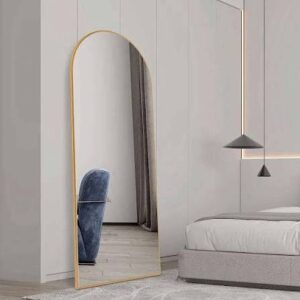
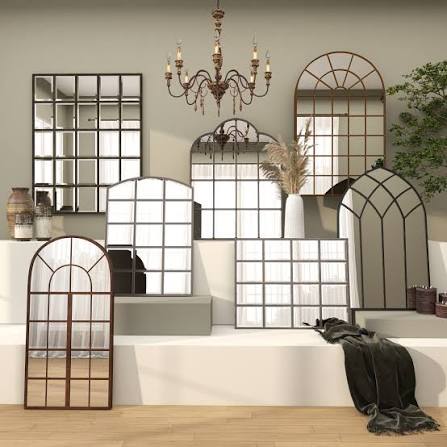
An arched mirror wall design mimics the look of a window, which is perfect for rooms lacking natural light. The soft, rounded top softens a room’s hard architectural lines and creates the illusion of an additional opening onto the outdoors. Position it opposite an actual window if possible; the reflected light will make the effect even more convincing.

10. Traditional Brass and Antique-Finish Mirrors

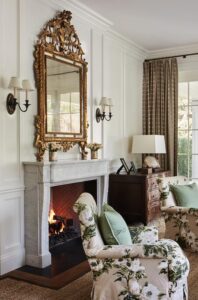
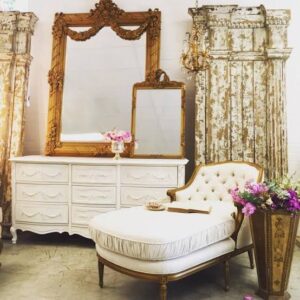
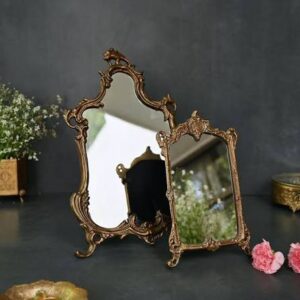
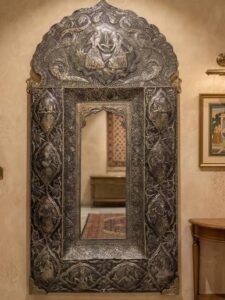
For a more traditional feel, a brass or antique-finish mirror wall design brings timeless elegance and cultural charm to any home. Ornately carved frames, aged gold finishes, and hand-hammered brass detailing suit classic, vintage, and South Asian-inspired interiors particularly well.

These pieces work beautifully as standalone statement mirrors in entryways or as part of a symmetrical pairing flanking a fireplace.

Mirror Wall Design Ideas by Room

Different rooms call for different approaches. Here’s how to adapt mirror wall design ideas to specific spaces in your home.

Wall Mirror Design for Living Room

Wall Mirror Design for Living Room

A well-placed mirror wall design for living room spaces draws the eye, opens up the room, and complements your existing furniture. Large statement mirrors above the sofa or between two windows work particularly well here, since the living room is usually the first space guests notice.

Stick to a cohesive colour palette between the mirror frame and your other metal accents, light fixtures, hardware, and picture frames for a pulled-together look.

Wall Mirror Designs for Bedrooms

In bedrooms, wall mirror designs for bedrooms often balance function as much as style; think full-length mirrors near the wardrobe or a smaller vanity mirror paired with a dressing table.

A mirror wall design near the closet doubles as a practical outfit-check spot while still contributing to the room’s overall aesthetic. Avoid placing a mirror directly across from the bed if you prefer a calmer, more restful sleeping environment.

Entryway and Hallway

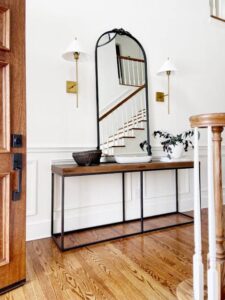
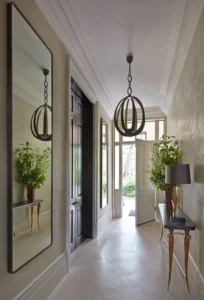
A mirror wall design at the entrance welcomes guests and makes a strong first impression while also giving you one last glance before heading out the door. In narrow hallways, a horizontal mirror stretched along the wall can make the corridor feel noticeably wider.

Dining Room

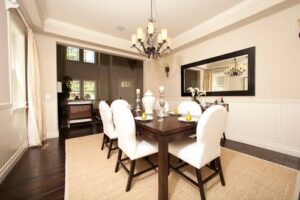
Even a small mirror wall design above the dining console can transform the mood of family dinners, bouncing candlelight or pendant lighting across the table for a warmer, more intimate atmosphere.

How to Choose the Right Wall Mirror Design for Your Space

Before you commit to any mirror wall design, think carefully about your wall size and the furniture positioned below or around it. The right mirror wall design should feel proportional, not so small that it looks lost on a large wall, and not so oversized that it overwhelms a modest piece of furniture underneath it.

Frame material also shapes your mirror wall design’s personality, whether you choose polished wood, brushed metal, sleek frameless glass, or ornate brass detailing. A few practical guidelines to keep in mind:

  • Size: Aim for a mirror that’s roughly 50–75% the width of the furniture or wall section it’s paired with.
  • Height: Hang mirrors at eye level where possible, generally with the centre around 60 inches from the floor.
  • Shape: Round and oval mirrors soften a room with sharp architectural lines; rectangular mirrors suit minimalist, symmetrical spaces.
  • Lighting: Position mirrors to reflect a light source, natural or artificial, rather than facing a cluttered or dark corner.
  • Weight and hardware: Larger, heavier mirrors need proper wall anchors, not just a single nail or adhesive strip.

Wall Mirror Designs in Pakistan: Styles, Trends, and Price Guide

Wall Mirror Designs in Pakistan: Styles, Trends

In Pakistan, wall mirror designs in Pakistan trends split into two distinct directions: traditional handcrafted pieces and sleek modern styles. Traditional Sheesham wood and brass “baradari” mirrors remain popular choices for anyone wanting a mirror wall design with strong cultural roots. These often feature intricate hand-carved detailing, gold or brass finishes, and rich wood tones that suit both classic and contemporary Pakistani homes.

On the contemporary side, local furniture brands across Lahore, Karachi, and Islamabad now offer everything from budget-friendly wall mirror designs in Pakistan to premium hand-carved statement pieces. Popular contemporary styles include asymmetric organic shapes, scalloped edges, arched full-length mirrors, and matte black round frames, all commonly available online with home delivery. Prices generally range from around PKR 4,000 for small decorative pieces to PKR 40,000 or more for large handcrafted brass baradari mirrors or oversized full-length designs, giving buyers options across every budget.

Mirror Wall Design Placement Tips and Common Mistakes

Getting the placement right matters just as much as picking the design itself. Here are a few tips and pitfalls to keep in mind:

  • Do position mirrors opposite windows to maximise natural light throughout the day.
  • Do consider the reflection; make sure the mirror reflects something pleasant, like artwork or a plant, rather than clutter.
  • Don’t hang a mirror directly facing the front door, a common decor faux pas in many design traditions.
  • Don’t place mirrors across from cluttered areas like storage corners or kitchen counters.
  • Do use proper wall anchors for anything over a few kilograms; a falling mirror is both a safety hazard and an expensive mistake.
  • Don’t ignore scale; an undersized mirror on a large blank wall can look like an afterthought rather than a design choice.

Frequently Asked Questions

Full-height, frameless panels or a single large statement piece tend to work best in small rooms, since they reflect the most light and create the strongest illusion of extra space.

A good rule of thumb is to pick a mirror that’s roughly two-thirds the width of the furniture or wall section beneath it, large enough to make an impact, but not so large it overwhelms the space.

It depends on the look you’re after. Wooden frames add warmth and texture, while frameless glass options feel sleeker and more minimalist. Many modern interiors actually mix both for contrast.

Yes. Positioned correctly, especially opposite a window or light source, mirrors bounce natural light around a room and create a strong illusion of added depth and space.

Aim to centre the mirror at roughly eye level, typically around 60 inches from the floor, unless it’s a full-length piece meant to extend closer to the ground.

Final Thoughts

From bold statement panels to warm wooden frames and traditional brass detailing, a mirror wall design suits nearly every room, budget, and personal style. Whether you’re drawn to a sleek frameless glass panel, a curated gallery wall, or a hand-carved antique piece, the right choice comes down to your room’s size, lighting, and the overall mood you want to create. Start with one focal wall, follow the sizing and placement guidelines above, and you’ll have a beautifully reflective, light-filled space in no time.

For more information on City View Apartment Interior Design Pakistan and Wooden Door Price, please visit Chakor.

Read More:

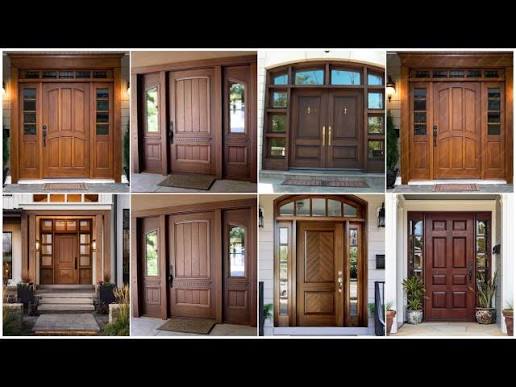
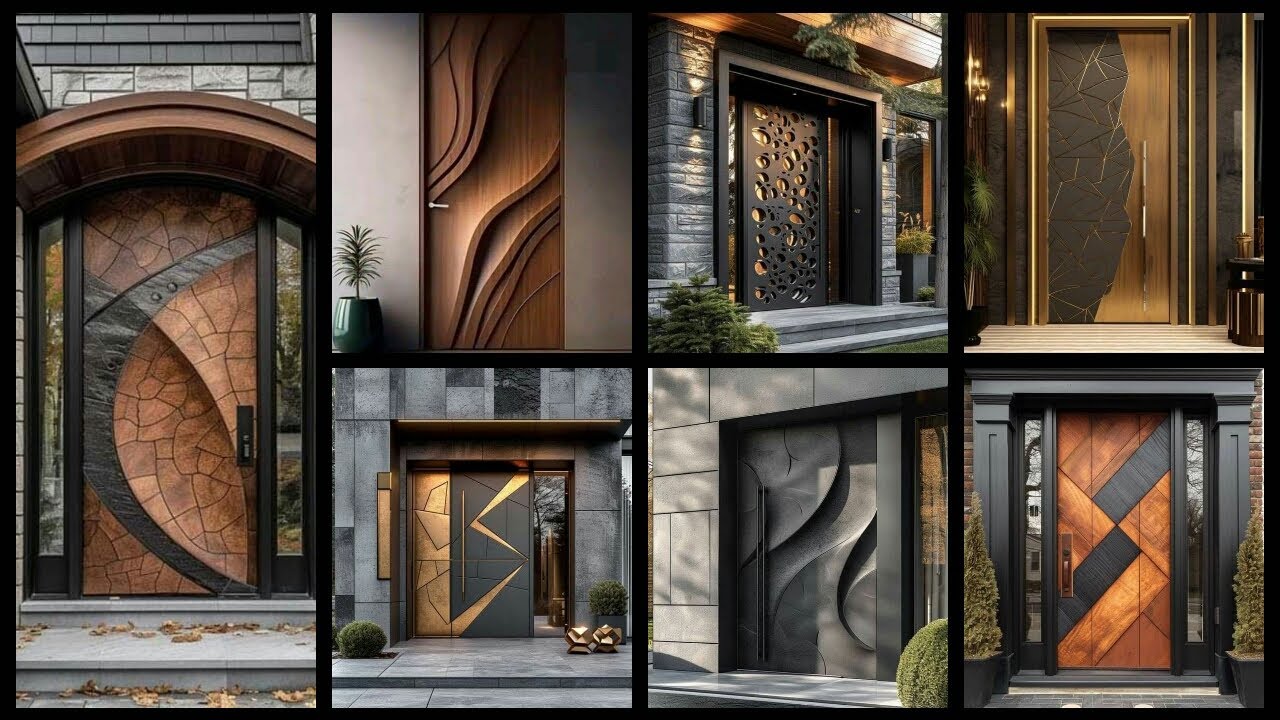
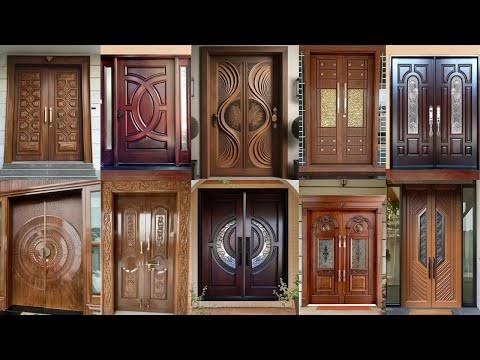
wooden door design
CategoriesHome Design Architecture Construction

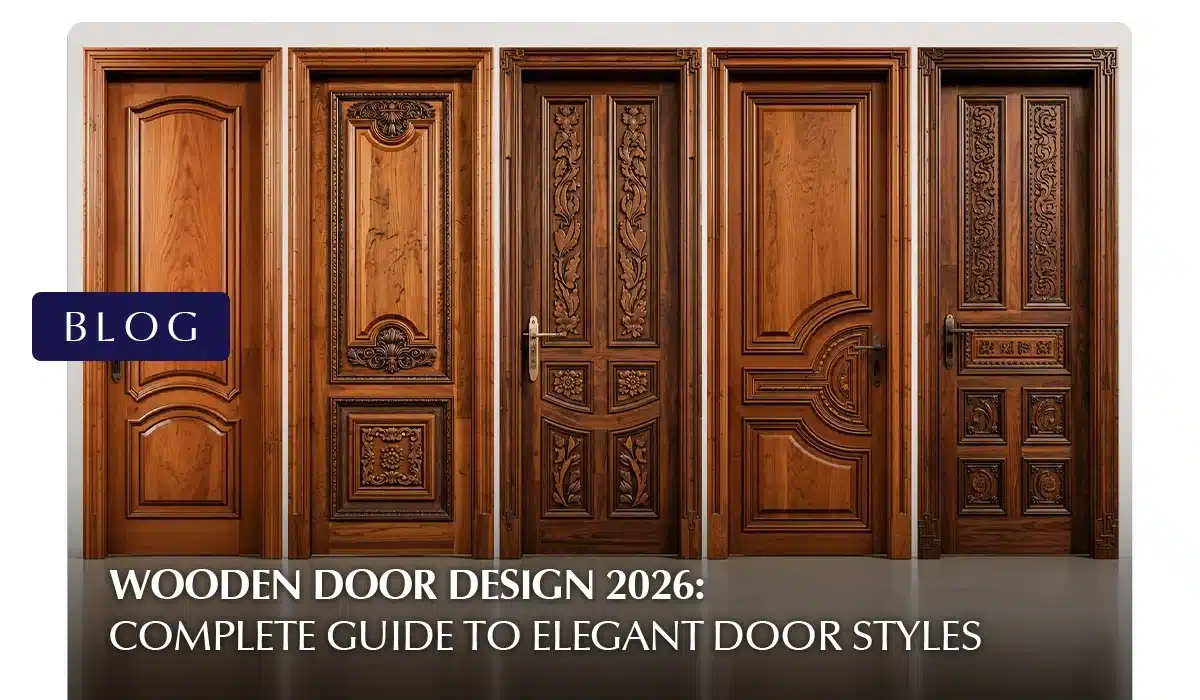
Wooden Door Design 2026: Complete Guide to Elegant Door Styles

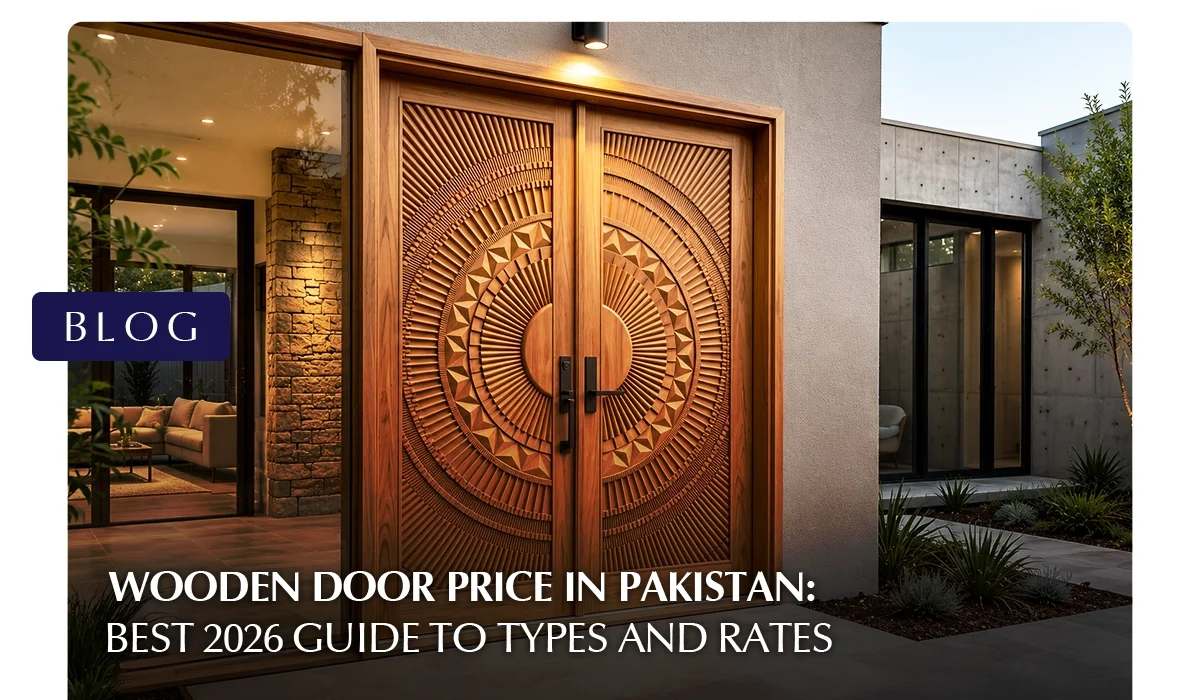
A house begins its story at the door, and no material tells that story quite like wood. Warm, textured, and endlessly versatile, wooden door design remains one of the most sought-after choices for homeowners across Pakistan heading into 2026-27. 

In this complete guide, we’ll walk through everything you need to know about wooden door design from main entrance styles to bedroom doors, from traditions to sleek modern minimalism, and from wood selection to polish colours and price ranges. 

Why Wooden Door Design Still Leads in 2026

Wooden door design

Despite the rise of aluminium, PVC, and composite alternatives, wooden door design still dominates residential architecture. The reason is simple: wood offers a natural warmth and character that manufactured materials struggle to replicate. Every grain pattern is unique, every knot tells a story, and a well-maintained wooden main door only grows more beautiful with age.

Beyond aesthetics, timber doors also offer genuine functional advantages. They provide decent thermal insulation, absorb sound better than metal or glass alternatives, and when properly treated, stand up well to humidity and temperature swings common in South Asian climates.

This combination of beauty and performance is why wooden door design ideas continue to trend heavily in home design searches, interior mood boards, and architecture portfolios.

Key Elements That Define Great Wooden Door Design

Four factors consistently show up in the best examples of wooden door design:

  • Wood species and grain – The type of timber determines durability, texture, and how the door ages over time.
  • Panel structure – Flat, raised, fluted, or grooved panels change the door’s entire visual language.
  • Hardware and handles – Handles, knockers, and hinges are small details that make a disproportionately large impact.
  • Proportions and height – Taller, wall-height doors have become a defining feature of contemporary homes, creating a grander, more welcoming entrance.

Getting these four elements right is the foundation of any successful wooden door design for home, regardless of budget or architectural style.

Popular Wooden Door Design Styles for Every Space

Here’s a breakdown of the styles currently trending.

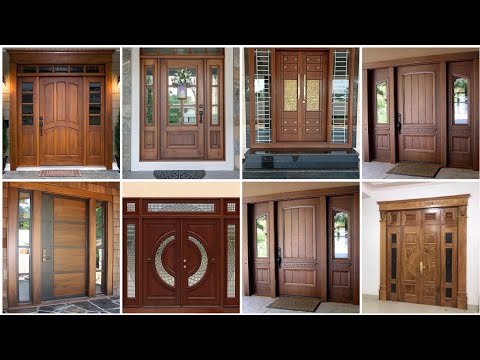
1. Wooden Main Door Design

Wooden Main Door Design

Your wooden main door design sets the tone for the entire home. It’s the first thing guests notice and often the most invested-in door in the house. Popular 2026 styles include:

  • Panelled main doors with symmetrical grooves for a timeless, classic look
  • Fluted wooden doors, where smooth vertical grooves catch light beautifully and add subtle texture without overwhelming the entrance
  • Doors with brass or metal inlay accents, which add a touch of regal detailing to an otherwise simple wooden surface
  • Arched wooden main doors, especially popular in larger homes and bungalows for a dramatic, welcoming entry

A well-executed wooden main door balances security, durability, and visual impact; it’s rarely just about decoration.

2. Modern Wooden Door Design

Modern Wooden Door Design

For homeowners drawn to clean lines and minimalism, modern wooden door design has become the dominant aesthetic in urban apartments and contemporary homes. Key characteristics include:

  • Straight, geometric panel lines with little to no carving
  • Horizontal wooden slats for a linear, architectural look
  • Matte or muted finishes rather than high-gloss polish
  • Combination designs that pair wood with matte black metal frames or handles

This style works particularly well in compact urban homes where simplicity and functionality matter more than ornamentation. It’s also one of the fastest-growing categories within wooden door design searches, reflecting a broader shift toward understated interiors.

3. Wooden Double Door Design

Wooden Double Door Design

For larger entrances, verandas, or formal living spaces, wooden double door design offers scale and grandeur that a single door simply cannot match. A wooden double door typically features:

  • Matching symmetrical panels on both shutters
  • Central handles or traditional ring-style door knockers
  • Optional glass or grill inserts for ventilation and natural light

Double doors are especially popular for main entrances in independent houses and farmhouses, where the extra width allows for more elaborate detailing without looking cluttered.

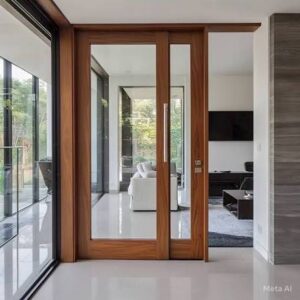
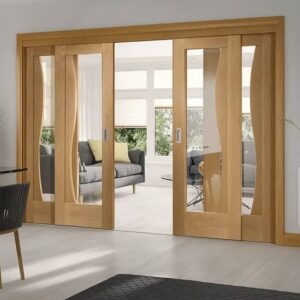
4. Wooden Glass Door Design

Combining transparency with warmth, wooden glass door design has grown significantly in popularity for balconies, room dividers, and semi-open spaces. A glass door with wooden frame design allows natural light to flow through while retaining the tactile richness of a timber frame. Common variations include:

  • Frosted or fluted glass panels set within a solid wood frame
  • French-door-style multi-pane wooden glass doors
  • Sliding glass-wood combinations for patios and balconies

This style is ideal for homeowners who want the openness of glass without losing the grounded, natural feel that wood provides.

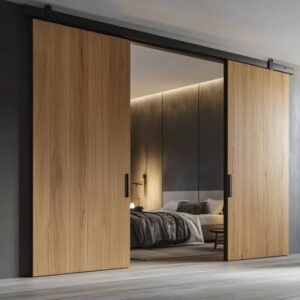
5. Wooden Sliding Door

Space efficiency is a major consideration in modern homes, and wooden sliding door has become a go-to solution. Rather than swinging open into a room, sliding doors glide along a track, perfect for:

  • Wardrobes and storage units
  • Room dividers in open-plan layouts
  • Balcony and patio access points where floor space is limited

Sliding doors also suit minimalist, modern wooden door design aesthetics, often finished with simple vertical panelling or full-length flush surfaces.

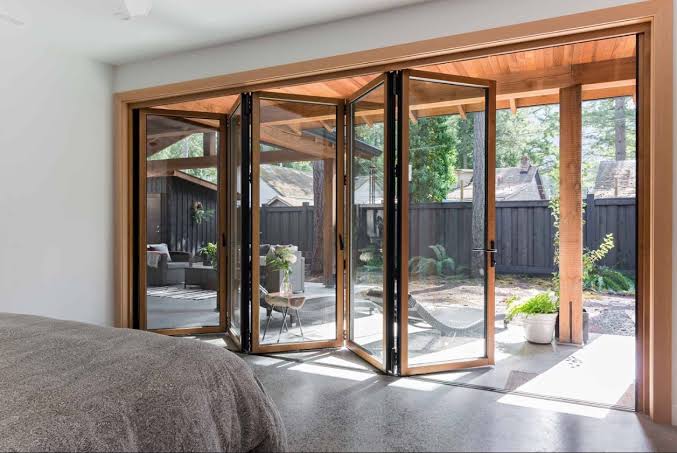
6. Wooden Bifold Doors and Wooden Folding Doors

Wooden Sliding Door
Source: Solid Wood Sliding Door

For spaces that need flexible openings, think patios, closets, or room partitions, wooden bifold doors and wooden folding doors are increasingly popular. These fold neatly against the wall when open, maximising usable space, and provide a wide, unobstructed opening when needed. They’re especially practical for:

  • Walk-in closets and dressing rooms
  • Connecting indoor living spaces to outdoor patios
  • Utility or laundry room entrances where a swinging door would be impractical

7. Simple Wooden Door Design

Simple Wooden Door Design

Not every door needs intricate carving or elaborate detailing. A simple wooden door design with clean panels, minimal hardware, and a smooth natural or lightly stained finish remains one of the most requested styles, particularly for interior rooms and budget-conscious renovations. Simplicity doesn’t mean boring; it often means the door blends seamlessly into the overall interior without competing for attention.

8. Wooden Door Design for Room

Wooden Door Design for Room

Interior doors deserve just as much thought as main entrances. A well-chosen wooden door design for room use should reflect the space’s function; bedrooms often favour softer, understated panels, while home offices or study rooms may lean toward a more structured, formal look. Room door design wooden options are typically slimmer and lighter than main doors, prioritising smooth operation and quiet closing over heavy security features.

9. Wooden Main Door Designs Indian Style

Door Designs Indian Style

Traditional wooden main door designs Indian style remain popular, especially in independent houses and heritage-inspired homes. These designs typically feature:

  • Hand-carved floral, peacock, or mandala motifs
  • Teak wood construction for durability and rich colour
  • Double-shutter designs with brass fittings and nameplates
  • Vastu-conscious placement and orientation

This style celebrates craftsmanship and cultural heritage, often becoming a centrepiece feature rather than a purely functional element of the home.

10. Old Wooden Door and Repurposed Styles

Old Wooden Door and Repurposed Styles

There’s also growing appreciation for the old wooden door aesthetic, reclaimed, weathered, or antique-style doors that carry visible character and history. Designers increasingly repurpose salvaged doors or replicate their rustic charm in new builds, pairing distressed finishes with modern hardware for a striking old-meets-new contrast.

If you’re browsing wooden door designs pictures online for inspiration, you’ll notice this vintage-industrial trend appearing frequently in boutique homes, cafes, and heritage renovation projects.
Choosing the Best Wood for Your Door

The timber species you choose has a major impact on how your door performs over time. Some of the most commonly used woods include:

  • Teak – Highly durable, moisture-resistant, and a favourite for main entrance doors due to its strength and rich natural colour
  • Mahogany – Offers a deep, elegant tone with excellent durability, often used for premium wooden main door design projects
  • Oak – Strong and attractive, though slightly more expensive in many markets
  • Pine – Affordable and lightweight, commonly used for interior and budget doors
  • Deodar (Himalayan Cedar) – A regional favourite in parts of South Asia, known for even texture and natural resistance to decay
  • Ashwood and Kail Wood – Lighter, smooth-grained options often chosen for their affordability and clean appearance

Choosing the right wood isn’t just about looks; it directly affects how well your door withstands humidity, temperature changes, and daily wear.

Wooden Door Price in Pakistan: What to Expect

One of the most common questions homeowners ask is about wooden door price in Pakistan. Pricing varies significantly based on wood species, size, design complexity, and whether you’re ordering a single or double door.

As a general guide:

  • Budget-friendly doors (pine or basic panel designs) tend to start on the lower end per square foot, suitable for interior or secondary doors
  • Mid-range doors using kail wood or deodar offer a balance of durability and cost, popular for main entrances in standard homes
  • Premium doors in teak or mahogany, especially with hand-carved detailing, sit at the higher end of the price spectrum

Many suppliers quote wooden door price per square foot, so the final cost depends heavily on your door’s dimensions. Prices vary considerably between suppliers and cities, so getting multiple quotes from local manufacturers is the best way to get an accurate figure for your specific project.

Wooden Door Locks Price in Pakistan

Security hardware is another cost to factor in. Wooden door lock price in Pakistan vary widely; basic mortise locks are the most affordable option, while digital or smart locks with keypad and app-based access cost considerably more. For a wooden main door, a quality lock is as important as the design itself, since it directly affects your home’s safety.

Wooden Door Paint Colours and Polish Guide

Wooden Door Paint Colours

Once your door is installed, the finishing touch colour and polish make all the difference. Wooden door paint colours and polish choices should complement both the wood’s natural grain and your home’s overall interior palette.

Popular polish types include:

  • PU (Polyurethane) Polish – Highly durable, scratch and water-resistant, ideal for high-traffic main doors
  • Melamine Polish – Smooth and water-resistant, commonly used on teak and oak doors
  • French Polish – A classic, high-gloss finish favoured for its elegant shine
  • Wax Polish – A softer, more natural-looking finish, best suited for interior or decorative doors
  • Varnish – Forms a hard protective coat, well suited to exterior doors exposed to weather

When it comes to wooden door polish colours, popular 2026 choices include rich mahogany tones, warm honey and walnut shades, deep ebony for a bold contemporary look, and natural clear finishes that let the wood’s original grain shine through. 

Choosing the right combination of polish type and colour not only enhances appearance but also significantly extends your door’s life.

How to Choose the Right Wooden Door Design

With so many options available, narrowing down the right wooden door design for your home can feel overwhelming. Here’s a simple framework to guide your decision:

  1. Define the purpose – Is this a main entrance, interior room door, or space-saving solution like a sliding or folding door?
  2. Set a realistic budget – Wood species and design complexity drive most costs, so decide early what you’re willing to spend.
  3. Consider your climate – Humid regions benefit from moisture-resistant woods like teak, paired with a protective polish or varnish.
  4. Match your interior style – A modern wooden door design suits minimalist homes, while carved wooden main door designs Indian style suit more traditional or heritage-inspired spaces.
  5. Think about security – For main doors, prioritise solid wood construction and quality locks over decorative detailing alone.
  6. Browse for inspiration – Looking through wooden door designs pictures online or in supplier catalogues can help you visualise how different panel styles, colours, and hardware combinations will look in your own space before committing.

Maintaining Your Wooden Door for the Long Term

A beautiful wooden door design is only as good as its upkeep. To keep your door looking its best:

  • Clean regularly with a soft, dry or slightly damp cloth to remove dust and grime
  • Re-apply polish every one to three years, depending on wood type and exposure to sunlight or moisture
  • Check hinges, locks, and frames periodically for wear, especially on frequently used main doors
  • Avoid direct, prolonged exposure to water on exterior doors; proper sealing goes a long way in preventing warping or cracking

With consistent care, a quality wooden door can easily last several decades while developing richer character over time.

Frequently Asked Questions

What is the average wooden door price in Pakistan?
Pricing depends on wood type, size, and design complexity, ranging from budget-friendly pine to premium teak or mahogany. For an accurate quote, check current rates with local suppliers before finalising your wooden door design.

Which wood is best for a main door?
Teak and mahogany are top choices for their strength and moisture resistance, while deodar offers a more affordable alternative.

How much do wooden door locks cost in Pakistan?
Costs range from basic mortise locks to higher-priced smart digital locks, depending on features and brand.

Is a wooden door or glass door better for a main entrance?
Solid wood offers better security and privacy, while a glass-wood combination adds more natural light; many homeowners blend both in a single wooden door design.

How often should a wooden door be polished?
Typically every one to three years, though doors exposed to direct sun or rain may need more frequent touch-ups.

Final Thoughts

From grand carved entrances to sleek, minimalist interior doors, wooden door design offers something for every home, budget, and personal style. Whether you’re drawn to a traditional wooden main door design rich in cultural detail, a simple wooden door design for everyday interior spaces, or a space-saving wooden sliding door for a modern apartment, the key is choosing wood, finish, and hardware that suit both your practical needs and aesthetic vision.

For more information on City View Apartment Interior Design Pakistan and Wooden Door Price, please visit Chakor.

Read More:

Marble Design
CategoriesHome Design Architecture Entertainment

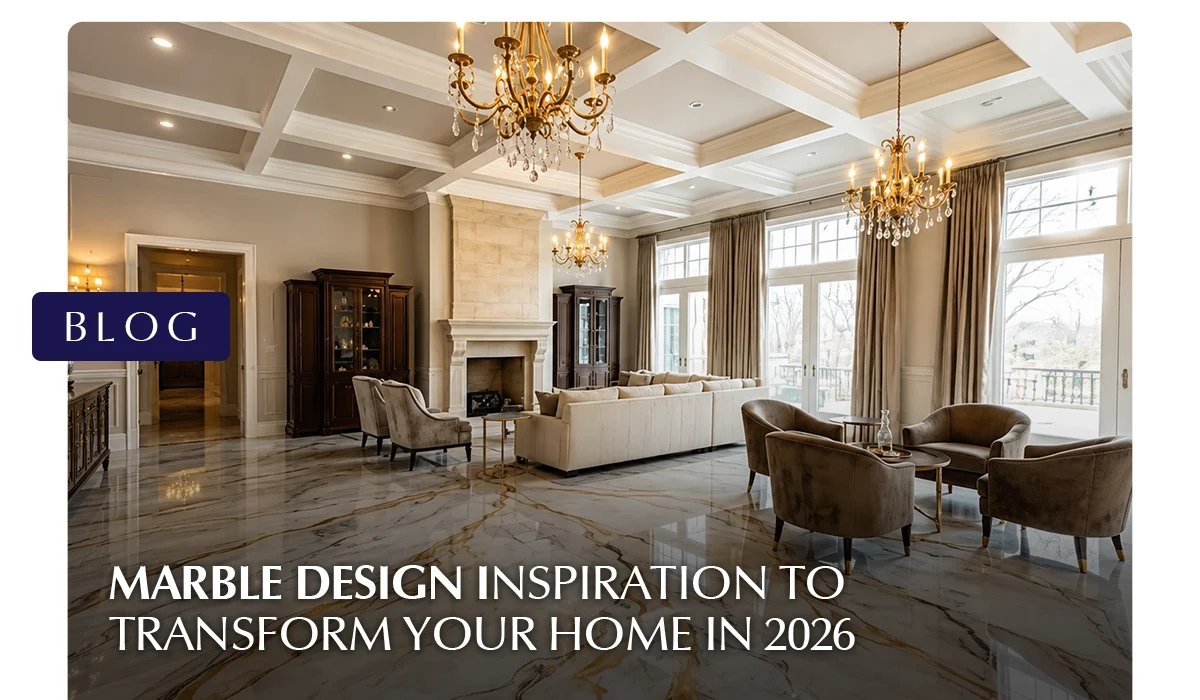
Marble Design Inspiration To Transform Your Home in 2026

Few materials carry the same instant sense of luxury as marble. It has dressed palaces, temples, and grand hotel lobbies for centuries, and in 2026 it remains one of the most sought-after choices for homeowners who want their interiors design to feel elevated and timeless.

Good marble design isn’t just about picking a pretty slab; it’s about matching the right stone, finish, and pattern to the right space. From floors and walls to staircases, kitchens, and furniture, thoughtful marble design can completely transform a home’s mood.

This guide walks through the most inspiring marble ideas for 2026, room by room.

Why Marble Design Is Still Trending in 2026

Marble has survived every passing design fad for one simple reason: it never really goes out of style. Every slab is naturally unique, formed over millions of years, which means no home ever looks quite the same when this stone is involved.

In 2026, marble design is leaning toward bolder veining, mixed-material pairings (think marble with wood, brass, or matte black metal), and a stronger focus on tailoring each space to its function rather than just its appearance.

Marble Design

Beyond aesthetics, marble offers real practical value:

  • Durability with proper sealing, it can last for decades without losing its finish.
  • Natural cooling marble stays cool underfoot, a genuine advantage in warmer climates.
  • Resale value: homes finished with quality marble tend to command higher prices, since buyers associate it with premium construction.
  • Versatility: the same stone can be honed, polished, or textured to suit minimalist and maximalist interiors alike.

Popular Marble Design Styles and Stone Typesand Stone Types

Before diving into room-specific ideas, it helps to understand the available stone options, since your choice of type and veining will shape the overall look of the space.

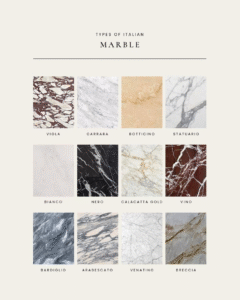
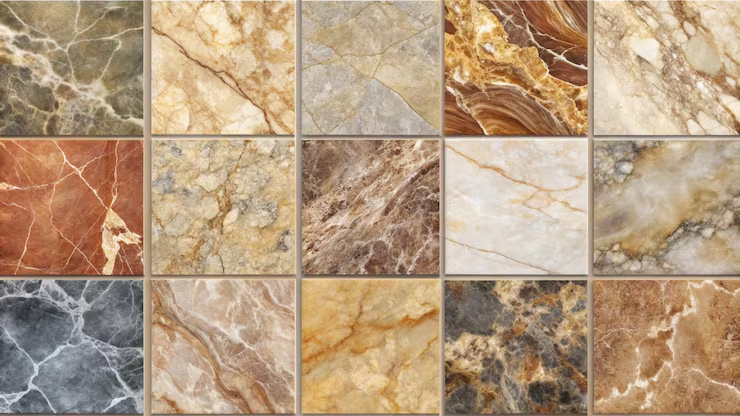
  • Carrara Marble soft white background with subtle grey veining; timeless and budget-friendly.
  • Calacatta Marble dramatic gold-and-grey veins on a white base; ideal for a statement look in larger rooms.
  • Statuario Marble bright white with bold grey streaks, often used for a gallery-like, refined feel.
  • Emperador Marble warm brown tones with fine veining, perfect for cosy, traditional interiors.
  • Onyx Marble translucent and dramatic, often backlit for a striking visual effect.
  • Botticino Marble in beige tones that work beautifully in both modern and classic settings.
  • Nero Marquina, with deep black-and-white veining, is best for bold, contemporary spaces.

Stone Types

Each of these stones can be used across floors, walls, and furniture, and choosing the right one is really the foundation of a successful project.

Marble Floor Design Ideas for Every Room

Flooring is where marble tends to make the biggest visual impact, simply because it covers the largest surface area in any home. Different rooms call for different approaches, finishes, and colour choices.

Room Marble Design Ideas for the Living Room and Hall

A well-planned living room and hall layout instantly elevates a house’s first impression. Classic white marble with a subtle border, herringbone-laid tiles, or a book-matched slab pattern all work beautifully here.

For smaller halls, large-format tiles design in lighter shades make the space feel more open, while darker veined stones suit larger, more formal living areas.

Kitchen Marble Design for Everyday Elegance

Kitchens see heavy daily use, so this space needs to balance beauty with practicality. Honed or leathered finishes are increasingly popular for 2026 kitchens because they hide fingerprints and minor scratches better than a high-gloss polish.

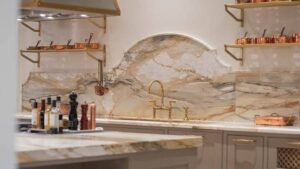
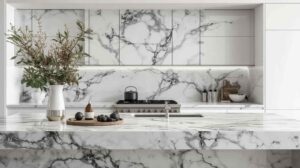
Marble countertops paired with matching or contrasting flooring create a cohesive, high-end look, while a marble backsplash adds texture without overwhelming the space.

Bedroom and Bathroom Marble Floor Design for Home

Bedrooms benefit from softer, warmer tones think Botticino or Crema Marfil paired with matte finishes for a calmer atmosphere. In bathrooms, textured or honed marble is safer underfoot when wet, and it pairs beautifully with brass or matte black fittings for a spa-like feel.

This is one of the areas where good planning really pays off, since moisture and daily use most severely test the stone.

Marble Floor Design in PakistanMarble Floor Design in Pakistan

Homeowners exploring flooring options in Pakistan have access to both locally quarried stone and imported varieties. Local marbles like Ziarat White and Chagai offer excellent durability at an accessible price point, while imported Italian or Turkish stone is often reserved for feature areas due to higher cost.

Given the country’s warmer climate, many homeowners favour lighter tones that stay cooler underfoot and need less frequent resealing against dust build-up.

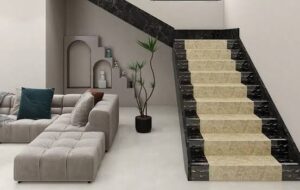
Stair Marble Design Ideas for a Grand Entrance

Stair Marble Design Ideas

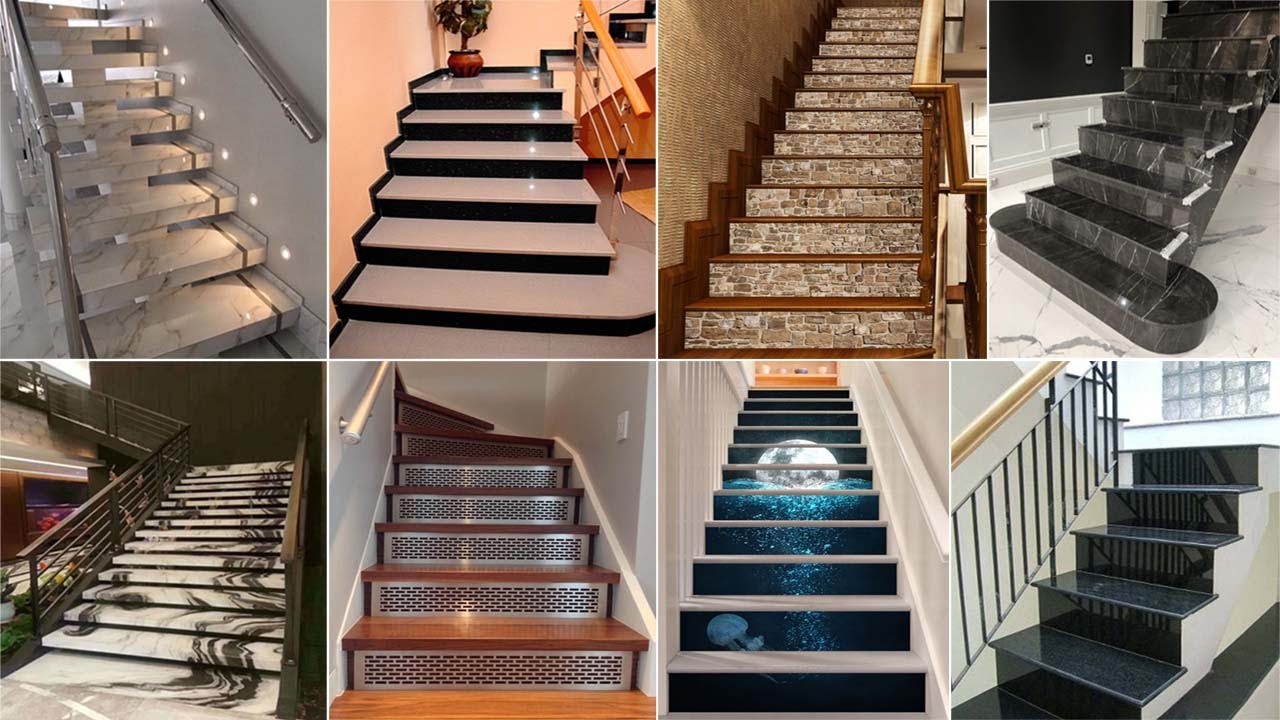
Staircases are often overlooked, but a thoughtfully executed approach to stair marble design can turn a purely functional element into a striking architectural feature. Popular ideas include:

  • Contrasting risers and treads pairing a light tread with a darker riser for visual definition and improved step visibility.
  • Bullnose or bevelled edges softening the stair’s profile while adding a subtle luxury detail.
  • Runner-style inlays: a strip of contrasting stone or metal down the centre of each step, echoing a traditional stair runner without the upkeep of fabric.

Because stairs see constant foot traffic, an anti-slip honed or flamed finish is strongly recommended for any staircase, particularly near the edge of each step.

Marble Wall Design Trends to Watch

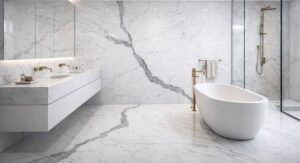
Marble isn’t limited to floors; cladding walls with this material has become one of the fastest-growing interior trends for 2026. Book-matched slabs, where two adjacent pieces are mirrored to create a symmetrical butterfly pattern, are especially popular as feature walls design behind television units, headboards, or bathtubs. 

Thinner veneers now make it possible to clad an entire wall without the structural weight of solid slabs, making this trend far more accessible than it once was, and it’s quickly becoming a favourite way to reimagine modern marble design without touching the flooring at all.

Marble Table Design Ideas for Dining and Living Spaces

Furniture is another area where this material continues to shine. A well-chosen tabletop can serve as the centrepiece of a dining room or living space. Popular styles for 2026 include:

  • Round or oval dining tables with a single slab top and a slim metal or wooden base.
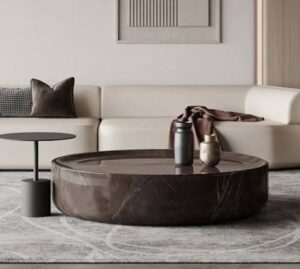
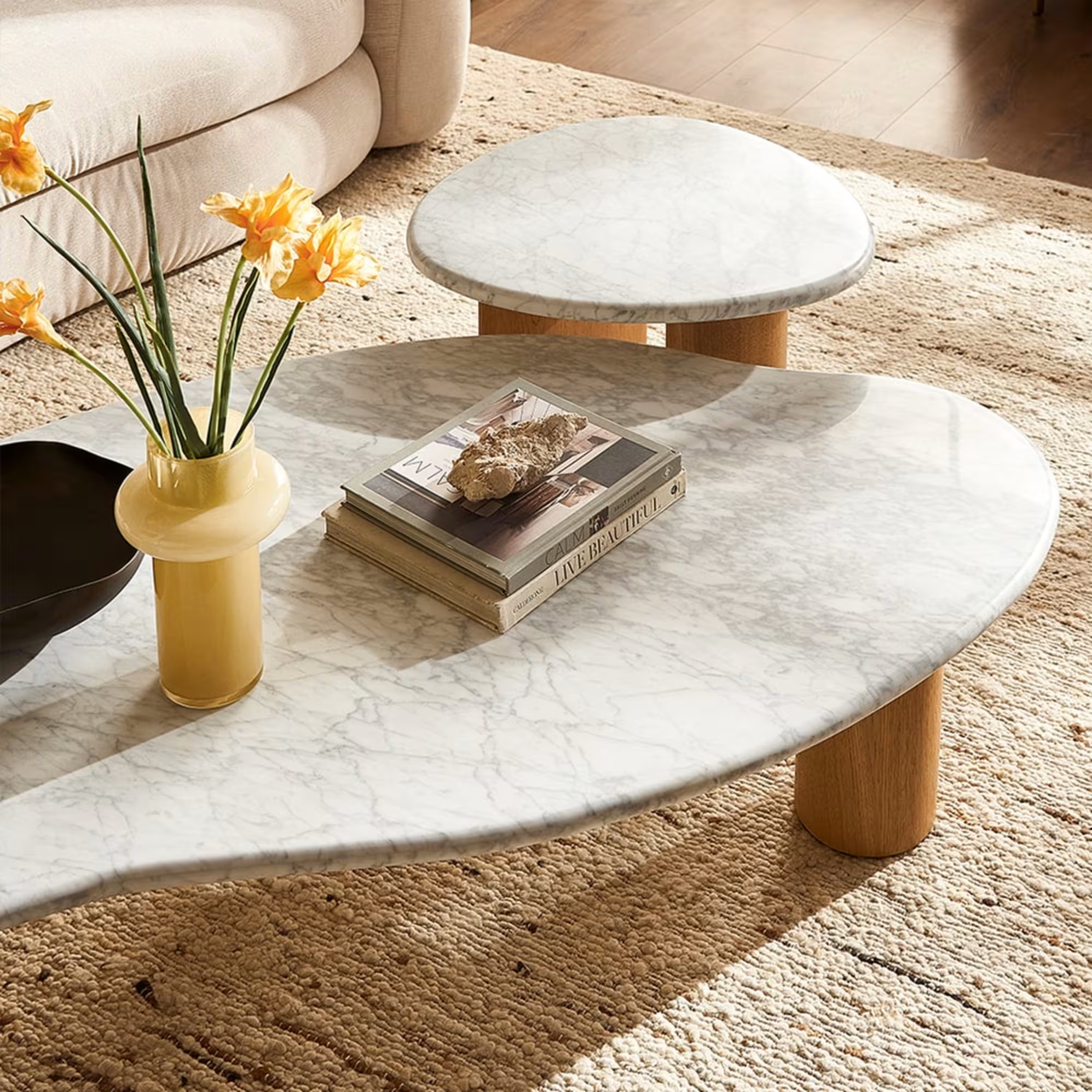
  • Coffee tables topped with stone and paired with brass or black-finish legs for contrast.
  • Side tables using smaller offcuts, a budget-friendly way to bring the material into a room without a full flooring or wall project.

Marble Design in Pakistan: What Homeowners Should Know

Interest in marble design in Pakistan has grown steadily as construction quality standards rise across major cities. Pakistan is home to significant marble reserves, particularly in Balochistan and Khyber Pakhtunkhwa, which means many high-quality options are available without the cost of importing stone. A few local factors are worth keeping in mind:

  • Climate: dust and heat mean floors require more frequent cleaning and periodic resealing than in cooler climates.
  • Sourcing: buying directly from quarries or established suppliers in cities like Karachi, Lahore, or Islamabad often results in better pricing than smaller retail outlets can offer.
  • Budget planning: local stone is significantly more affordable than imported marble, allowing for a luxurious look without the cost typically associated with high-end imported materials.

Choosing the Right Marble Design for Home Projects

With so many options, narrowing down the right choice can feel overwhelming. A few practical questions can help guide the decision:

  • What room is it for? 

High-traffic areas like halls and kitchens need durable, easy-to-clean finishes, while bedrooms can afford softer, more delicate stones.

  • How much natural light does the room get? 

Darker stones work beautifully in bright rooms, while lighter tones help brighten dim spaces.

  • What’s the budget? 

Local varieties can achieve a similarly elegant look to imported stone at a fraction of the cost.

  • What finish suits the lifestyle? 

Polished finishes look glamorous but show scratches more easily; honed or leathered finishes are more forgiving for busy households.

Taking time to answer these questions before committing to a supplier will save both money and regret later on.

Marble Maintenance Tips to Keep It Looking New

Marble is durable, but it is also porous, which means it needs a bit of regular care to stay looking its best:

  • Sweep or vacuum floors regularly to prevent dust and grit from scratching the surface.
  • Wipe up spills immediately, especially acidic liquids like citrus juice or vinegar, which can etch the stone.
  • Clean with a pH-neutral cleaner and a soft mop; avoid harsh chemicals or abrasive scrubbers.
  • Reseal surfaces every 6–12 months, depending on foot traffic and moisture exposure.
  • Use coasters and placemats on marble furniture to prevent staining from hot dishes or liquids.

With consistent care, well-installed marble can easily last for decades while retaining its original shine and character.

Frequently Asked Questions

Yes, it’s a popular and practical choice given the country’s own marble reserves. Lighter shades keep interiors cooler, and with regular sealing, the stone holds up well even in dusty conditions.

Lighter tones such as Carrara or Botticino, paired with large-format tiles and minimal borders, create an airy, spacious feel that suits compact homes well.

A honed or flamed finish is recommended over high-polish marble, since it offers better grip and reduces the risk of slipping on frequently used steps.

Yes, it works well when paired with a honed or leathered finish, which resists visible scratches and stains better than a high-gloss polish.

Absolutely. Book-matched slabs have become a popular way to create a feature wall without requiring the material to withstand foot traffic.

With proper sealing and care, marble can easily last several decades without losing its shine or structural integrity.

It can cost more upfront than tiles or laminate, but locally sourced marble in Pakistan is often far more affordable than imported options.

Yes, as long as a textured or honed finish is used, since it provides better slip resistance in wet conditions.

Classic white marble with subtle grey veining, such as Carrara, remains one of the most enduring and versatile choices.

Most homes benefit from resealing every 6 to 12 months, depending on foot traffic and moisture exposure.

Final Thoughts

From grand entryways to compact powder rooms, marble design offers a level of timeless sophistication that few other materials can match. Whether you’re drawn to a classic white floor, a dramatic staircase, or a striking feature wall, 2026 offers more flexibility than ever to bring natural stone into your home at a price point and finish that suits your lifestyle.

With thoughtful planning and proper maintenance, the right choice can genuinely transform your home into a space that feels both luxurious and lasting.


For more information on City View Apartment Interior Design Pakistan and Tiles Design, please visit Chakor.

Read More:

Furniture Markets in Lahore
CategoriesHome Design Architecture Construction Economy Entertainment

Furniture Markets in Lahore 2026: A Comprehensive Directory

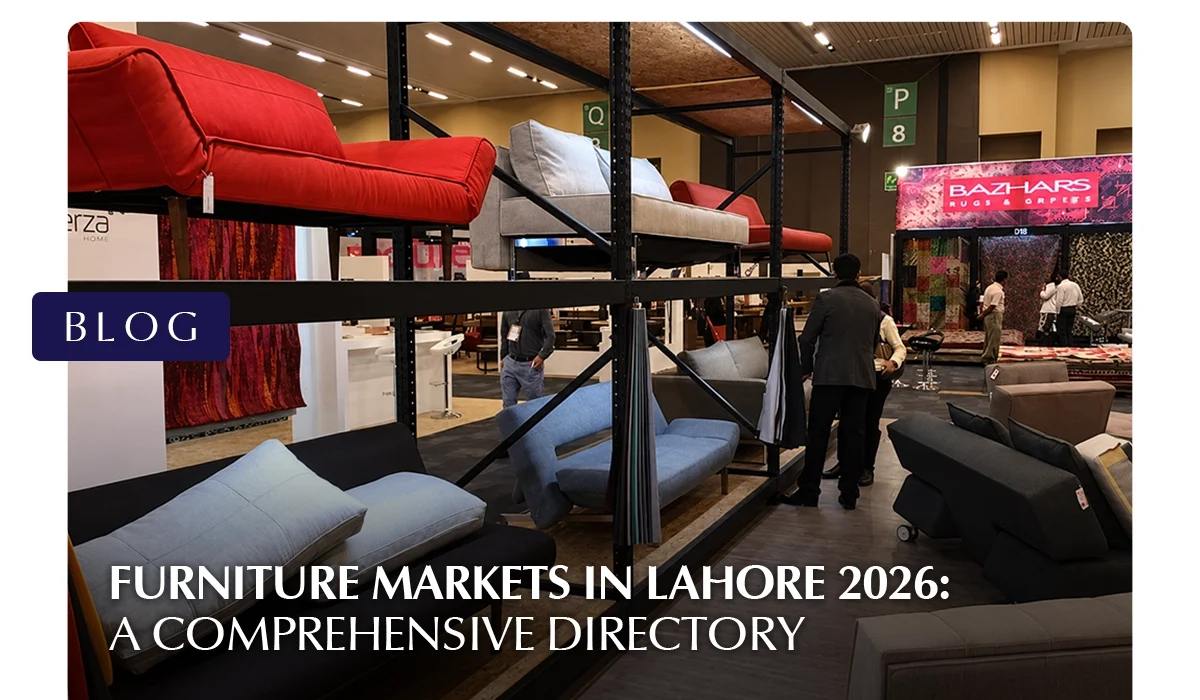
Lahore has long been known as one of Pakistan’s biggest hubs for furniture shopping, and its furniture markets in Lahore continue to grow every year in both size and variety. Whether you’re setting up a new home, renovating an office, or simply looking to replace an old sofa, the furniture markets in Lahore offer something for every budget and taste. 

From centuries-old wholesale markets to modern showroom clusters scattered across the city, this guide walks you through every major area you should know before you start shopping. 

Quick Overview of Furniture Markets in Lahore

Before diving into details, here’s a quick snapshot of the major furniture markets in Lahore so you can decide which one matches your needs. 

Market Area Best For Price Range
Ichhra Market Ferozepur Road Custom-made, upholstery Rs. 15,000 – 80,000
Furniture Market Ashrafia Ferozepur Road (Service Road) Wood furniture, mid-range Rs. 15,000 – 70,000
Main Market Gulberg Gulberg Premium, office furniture Rs. 30,000 – 150,000+
PIA Road Model Town Link Road Budget sofas, beds Rs. 10,000 – 50,000
Shah Alam Market Old City near Minar-e-Pakistan Wholesale, antiques Rs. 8,000 – 60,000
Multan Road Cluster Multan Road Mixed budget-to-mid Rs. 12,000 – 70,000
Allama Iqbal Town Karim Block Mid-range, local brands Rs. 15,000 – 65,000
DHA / Defence Defence Road, Khayaban-e-Jinnah High-end, contemporary Rs. 40,000 – 200,000+
Wapda Town / Model Town Wapda Town Online + in-store hybrid Rs. 15,000 – 75,000
Cantt (Sultan Park) Cantonment Area Quality mid-to-premium Rs. 20,000 – 90,000
Fortress Stadium Rawalpindi Block Premium, reliable quality Rs. 25,000 – 100,000
Hali Road Gulberg-adjacent Affordable, reliable Rs. 15,000 – 60,000
Bund Road / Daroghewala Near Model Kanta Furniture accessories, budget Rs. 8,000 – 40,000
Shah Di Khoi Mir Street Online + retail, custom orders Rs. 15,000 – 65,000

Furniture Markets in Lahore 

Lahore is home to some of the most diverse and well-established furniture markets in the country, each offering its own mix of styles, price points, and craftsmanship. This section breaks down the major markets across the city, helping you find exactly where to go based on your needs and budget.

Ichhra Market

Ichhra Market

Ichhra is one of the oldest and best-known furniture markets in Lahore, especially popular among people looking for custom-made pieces. This market is packed with skilled carpenters and small workshops that can build furniture to your exact specifications, from bed frames to dining sets. Prices here are generally lower than in showroom-based markets because you’re often dealing directly with the manufacturer rather than a retailer.
Furniture Market Ashrafia (Ferozepur Road)

Just along the Ferozepur Road service road, Furniture Market Ashrafia is a distinct destination among furniture markets in Lahore, separate from the main Ichhra stretch. It’s particularly known for solid wood furniture; locals often mention the quality of “mother wood” pieces here at reasonable, mid-range prices. This makes it a good stop if you want something sturdier than budget MDF furniture without paying premium showroom rates.
Main Market Gulberg

Main Market Gulberg

Gulberg is home to some of the most established furniture markets in Lahore, catering largely to office and premium residential furniture buyers. You’ll find well-known local names like Mohkam Furnishers here, known for handmade, long-lasting pieces. This area tends to attract buyers who prioritise craftsmanship and are willing to pay a bit more for durability and design.

PIA Road

For shoppers on a tighter budget, PIA Road is one of the most practical furniture markets in Lahore to visit. This stretch is dominated by shops selling ready-made sofa sets, beds, and dining tables at competitive prices, making it ideal for young families or first-time apartment renters.

Shah Alam Market

Shah Alam Market

Shah Alam is a historic wholesale hub and remains one of the busiest furniture markets in Lahore for bulk buyers, shopkeepers, and antique collectors. If you’re a retailer looking to stock up or have a taste for vintage and handcrafted wooden furniture, this is where you’ll find the widest selection at wholesale rates.

Multan Road Cluster

Multan Road Cluster

The Multan Road cluster has quietly become one of the more active furniture markets in Lahore in recent years. This area includes several standalone stores such as Furniture Sale Mela and the Furniture Market Area near the PTCL Exchange, offering a mix of budget and mid-range furniture without the congestion of older inner-city markets.
Allama Iqbal Town

Allama Iqbal Town

Allama Iqbal Town’s Karim Block area has become a solid mid-range destination among furniture markets in Lahore. Local stores here often carry unique, contemporary designs that aren’t found in the older markets.
DHA / Defence Road & Khayaban-e-Jinnah

DHA / Defence Road & Khayaban-e-Jinnah

If budget isn’t a constraint, Defence Road is arguably the most upscale furniture markets in Lahore. This area features polished showrooms with imported materials and premium finishes, including well-regarded names like EleganXa and Crown Furniture & Interior.
Nearby on Khayaban-e-Jinnah, Home Design Furniture Store is another notable option in this pocket, known for timely delivery alongside quality pieces, a combination not always guaranteed at other furniture markets in Lahore. 

Wapda Town / Model Town

Wapda Town / Model Town

Wapda Town and nearby Model Town host newer furniture markets in Lahore that blend traditional retail with online ordering, such as FurnitureHub.pk, which operates both a physical store and an online catalogue.

Cantt (Sultan Park Area)

 The Cantonment area, particularly around Sultan Park on Main Academy Road, is home to Living Space Furniture, one of the more consistent, higher-rated furniture markets in Lahore for buyers wanting good quality at reasonable prices without heading into the busier central markets. 

Fortress Stadium

Fortress Stadium

Fortress Stadium’s Rawalpindi Block is a smaller but notable stop among furniture markets in Lahore, home to AM Furniture, known for combining top-notch quality with reasonable pricing. It’s a good option if you’re in the Cantt/Fortress area and want a reliable, no-hassle shopping experience.

Hali Road

Hali Road

Just off Gulberg, Hali Road hosts Gourmet Furnishers, offering reliable, affordable furniture that bridges the gap between budget markets and Gulberg’s premium pricing. This makes it a useful stop for buyers who want Gulberg-adjacent convenience without the premium markup.

Bund Road / Daroghewala

Bund Road / Daroghewala

Near Model Kanta, the Bund Road and Daroghewala area is one of the lesser-known furniture markets in Lahore, home to Bissmillah Furniture Mart, which supplies furniture accessories and budget pieces to both individual buyers and smaller retailers. 

Shah Di Khoi (Mir Street)

Shah Di Khoi (Mir Street)

Opposite Shamim Medical Complex, the Shah Di Khoi area is where you’ll find FurnitureZone.pk, a hybrid online-and-in-store option among furniture markets in Lahore that’s earned a strong reputation for delivering good value for the quality it provides. 

Other Notable Markets Worth Knowing

A few additional names come up repeatedly across furniture markets in Lahore without being tied to one specific commercial hub, but are worth knowing if you’re shopping around: Old Neelam Ghar Furniture Market (a well-regarded wholesaler), Hussnain Furniture / FurnitureIdea.pk (known for budget-friendly options), and Tahir Islam Furniture Outlet (praised for professional service). These are smaller, standalone stores rather than full market clusters, but they’re frequently recommended by local shoppers.

Best Furniture Markets in Lahore by Category

Different furniture markets in Lahore specialise in different types of furniture, so here’s a quick breakdown by category to help you shop smarter. 

  • Best for Budget Furniture: PIA Road, Multan Road cluster, and Bund Road/Daroghewala consistently offer the lowest prices.
  • Best for Custom-Made Furniture: Ichhra Market and Shah Di Khoi remain top choices among furniture markets in Lahore for anyone seeking pieces built to specific measurements. 
  • Best for Office Furniture: Main Market Gulberg and DHA cater well to corporate buyers needing desks, cabinets, and conference furniture.
  • Best for Wholesale or Bulk Buying: Shah Alam Market and Old Neelam Ghar Furniture Market are ideal for retailers or large-scale buyers.
  • Best for Reliable Mid-Range Shopping: Cantt, Fortress Stadium, and Hali Road all offer a good balance of quality and price without going fully premium. 
  • Best for Used or Second-Hand Furniture: Several furniture markets in Lahore, particularly around Ichhra and Shah Alam, also have nearby shops selling gently used furniture at a fraction of retail price. 

Average Furniture Prices Across Lahore’s Markets

Pricing varies significantly depending on which furniture markets in Lahore you visit, the material used, and whether the piece is custom-made or ready-made. 

Furniture Item Budget Market (PIA Rd, Bund Rd) Mid-Range (Iqbal Town, Cantt, Hali Rd) Premium (Gulberg, DHA, Fortress)
Sofa Set (5-seater) Rs. 25,000 – 45,000 Rs. 45,000 – 80,000 Rs. 90,000 – 200,000+
Bed Set (Queen) Rs. 20,000 – 40,000 Rs. 40,000 – 70,000 Rs. 80,000 – 150,000
Dining Table (6-seater) Rs. 18,000 – 35,000 Rs. 35,000 – 60,000 Rs. 65,000 – 140,000
Office Desk Rs. 12,000 – 25,000 Rs. 25,000 – 45,000 Rs. 50,000 – 100,000

These figures are approximate and can shift depending on wood type (Sheesham, Kikar, MDF), fabric quality, and seasonal demand. 

Tips Before Visiting Furniture Markets in Lahore

Shopping at furniture markets in Lahore can be overwhelming given the sheer number of options, so keep these tips in mind: 

  • Compare at least 3 shops before committing, since prices for similar-looking pieces can vary by 20-30% within the same market.
  • Check the wood type carefully. Sheesham and solid wood cost more but last significantly longer than MDF or particleboard.
  • Negotiate respectfully. Bargaining is common across most furniture markets in Lahore, particularly in older markets such as Shah Alam and Bund Road. 
  • Ask about delivery and assembly, especially at showroom-based markets like DHA and Fortress Stadium.
  • Visit lesser-known areas like Hali Road or Shah Di Khoi if you want good quality without Gulberg or DHA pricing.

Frequently Asked Questions

Shah Alam Market is generally considered the largest and oldest furniture market in Lahore, known for wholesale trade. 

PIA Road, Multan Road, and Bund Road/Daroghewala tend to offer the most budget-friendly options.

Yes, Ichhra is widely regarded as one of the best options for custom-made and made-to-order furniture in Lahore.

Sections near Ichhra and Shah Alam often carry used or second-hand furniture at lower prices than new pieces.

Main Market Gulberg and DHA are the top choices for executive and corporate office furniture.

Yes, Cantt, Fortress Stadium, and Wapda Town all offer reliable options without needing to travel into the busier inner-city markets. 

Final Thoughts

Whether you’re after budget-friendly essentials or premium designer pieces, the furniture markets in Lahore offer a genuinely wide range of choices spread across the city, from the historic wholesale lanes of Shah Alam to the contemporary showrooms of DHA and lesser-known but reliable pockets like Hali Road and Shah Di Khoi.

Taking the time to visit two or three markets before making a decision will help you find furniture that truly fits both your style and your budget.

This was all about Furniture Markets in Lahore; for more information on relevant topics such as famous markets in Lahore, visit Chakor blogs.

city view apartment unit layout Pakistan
CategoriesCitadel One3 Home Design Towers

City View Apartment Unit Layout Pakistan: Complete Guide 2026

Pakistan’s real estate market is shifting fast, and one trend stands out above the rest: the growing demand for a city view apartment unit layout Pakistan buyers and renters can actually plan their lives around. From Islamabad’s Blue Area towers to Lahore’s high-rises and Karachi, developers are marketing “city view” as a premium selling point. But very few buyers actually understand what that means in terms of floor plan, unit orientation, and livable space.

This guide breaks down everything you need to know about a city view apartment unit layout Pakistan market in 2026.

What Is a City View Apartment Unit Layout in Pakistan?

city view apartments

A city-view apartment is a unit positioned and designed so that its windows, balconies, or terraces face the surrounding skyline, main boulevards, or landmark views rather than an internal courtyard, parking lot, or neighbouring wall.

The city view apartment unit layout Pakistan developers advertise usually depends on three things: the floor level, the direction the unit faces, and how the rooms and windows are arranged within the unit itself.

It’s important to understand that “city view” is not just a marketing label; it’s a direct result of layout design. Two units on the same floor, in the same building, can have completely different views simply because of how their windows and balconies are positioned.

This is why understanding the city view apartment unit layout Pakistan buyers are shown in brochures matters more than the glossy renders suggest.

Why Unit Layout Matters More Than the “View” Label

Many buyers get drawn in by the phrase “city view” without checking the actual floor plan. Here’s what really determines city view apartment unit layout Pakistan: whether you get a genuine, unobstructed view:

  • Floor height – Lower floors (below the 5th–6th floor in most Pakistani cities) often get blocked by neighbouring buildings, trees, or boundary walls.
  • Corner units – Corner apartments usually have windows on two sides, offering a wider view than mid-building units.
  • Balcony orientation – A balcony facing the main road or skyline adds real value; one facing an internal corridor or service area does not.
  • Window-to-wall ratio – Some layouts use large glass panels for maximum view exposure, while others use smaller punched windows.

When evaluating any city-view apartment unit layout in a Pakistan listing, always ask for the actual floor plan document, not just the promotional images, so you can verify which direction the unit faces.

Types of Apartment Layouts Available in Pakistan

Before comparing sizes, it helps to understand the common layout categories used across Pakistani developments. Most projects offering a city view apartment unit layout Pakistan buyers can choose from fall into these categories:

Studio Apartments

Studio Apartments

A single open space combining the bedroom, living area, and kitchenette, with a separate bathroom. Some Pakistani developers offer a broken plan studio, where a partial wall or sliding partition separates the sleeping area from the living space.

1-Bedroom Apartments

1-Bedroom Apartments

A separate bedroom, living/dining area, kitchen, and bathroom. This is currently the most popular city view apartment unit layout Pakistan, for young professionals and small families, since it balances affordability with privacy.

2-Bedroom Apartments

2-Bedroom Apartments

Two separate bedrooms (often one with an attached bath), a living/dining area, kitchen, and sometimes a utility or storeroom. Ideal for small families or those who need a home office.

3-Bedroom & Penthouse Units

3-Bedroom & Penthouse Units

City view apartment unit layout Pakistan with multiple bedrooms, larger living areas, and, in some cases, a private terrace, usually positioned on higher floors to maximise the city view.

Layout Type Typical Size (sq ft) Rooms Included Best For
Studio 350 – 600 Open living/bed + kitchenette + bath Bachelors, students, investors
1 Bedroom 550 – 850 1 bed, living/dining, kitchen, bath Young professionals, couples
2 Bedroom 900 – 1,400 2 beds, living/dining, kitchen, 1–2 baths Small families
3 Bedroom / Penthouse 1,500 – 3,000+ 3+ beds, larger living, terrace Families, investors seeking premium units

(Sizes vary by project and city; always confirm with the developer’s covered area document.)

Studio vs 1 Bedroom vs 2 Bedroom Apartment: Flat Sizes in Pakistan

One of the most common questions buyers ask when evaluating a city view apartment unit layout Pakistan project is which unit size actually makes sense for their lifestyle and budget. Here’s a straightforward comparison of studio vs 1 bedroom vs 2 bedroom apartment, flat sizes Pakistan buyers typically encounter in 2026 listings:

Space and Privacy

A studio offers the smallest footprint and no separation between living and sleeping areas, ideal for a single occupant. A 1-bedroom adds a closed-off bedroom, giving more privacy without a huge jump in price.

A 2-bedroom unit adds a second private room, which works well for couples with a child, roommates, or anyone who needs a dedicated workspace.

Price Range

Generally, studio apartments carry the lowest ticket price, making them attractive to first-time investors. 1-bedroom units sit in the middle, offering the best balance of affordability and livability.

2-bedroom apartments command a higher price but often offer a higher rental yield for family tenants and better long-term resale value.

Maintenance and Furnishing Cost

Smaller units are cheaper to furnish and have lower electricity bills, fewer rooms to clean, and lower service charges in most buildings. Larger 2-bedroom units cost more to furnish and maintain but offer more flexibility if your household grows.

Who Should Choose What

  • Studio: Best for students, bachelors, or investors targeting short-term rental income.
  • 1-Bedroom: Best for young professionals, couples, or anyone prioritising privacy on a moderate budget.
  • 2-Bedroom: Best for small families, or investors targeting long-term family tenants who value stability.

Understanding the sizes of studio vs 1 bedroom vs 2 bedroom apartment and flat sizes Pakistan before signing any booking form can save you from overpaying for space you won’t use or underbuying space you’ll outgrow within a year.

How Layout Affects City View Quality

CityViewApartments

Not every unit in the same building offers the same view, even if the project is marketed as offering a city view apartment unit layout Pakistan residents will enjoy. Developers typically reserve the best-positioned units, corner apartments on higher floors, for premium pricing tiers. When comparing units, look at:

  • Orientation: North- or east-facing units in cities like Islamabad often offer views of the Margalla Hills and the skyline without direct, harsh afternoon sun.
  • Obstruction distance: Check how far the nearest tall structure is from the unit’s main windows.
  • Balcony depth and width: A deeper balcony not only improves the view experience but also adds functional outdoor space.

Balcony

A well-designed city view apartment unit layout Pakistan developers offer typically places living rooms and bedrooms along the view-facing side, while kitchens, bathrooms, and storage areas are pushed toward the interior or service side of the building.

Best Cities and Areas in Pakistan for City View Apartments

City Popular Areas View Highlights
Islamabad Blue Area, Jinnah Avenue, I-8, DHA Islamabad Margalla Hills, city skyline
Lahore Gulberg, DHA Lahore, Cantt high-rises Boulevard views, city lights
Karachi Clifton, DHA Karachi, Do Talwar area Sea view, downtown skyline

If you’re specifically searching for a city view apartment unit layout Pakistan option within a limited budget, mid-sized cities and emerging sectors on the outskirts of Islamabad and Lahore are also introducing high-rise projects with competitive pricing compared to established prime locations.

Real Example: Citadel One3, A City View Project in Islamabad

citadelone3

To see how a city view apartment unit layout Pakistan project comes together in practice, Citadel One3 by Chakor is a useful case study. Located on Jinnah Avenue in Blue Area, Islamabad, it’s a 40+-story residential tower offering views of the Faisal Mosque and F-9 Park, positioned on one of the capital’s most prominent addresses. 

A few details worth noting about the project’s layout approach:

  • Height and view strategy: With over 40 floors, the project is designed so that upper-floor units get clear, unobstructed sightlines toward Islamabad’s landmark skyline and the Margalla Hills, reinforcing the earlier point that floor level plays a major role in view quality.
  • Mixed-use layout: The complex includes both commercial and residential units, so the layout must balance retail/office space on lower floors with residential city-view units higher up. 
  • Amenity-integrated design: Beyond the apartments themselves, the project layout incorporates amenities such as a gym, a kids’ play area, dedicated dining spaces, and parking for over 350 cars, along with round-the-clock surveillance and modern firefighting system features increasingly expected in premium city-view developments. 
  • Payment structure: Like many under-construction Islamabad towers, the project follows a multi-year instalment plan rather than a lump-sum payment, spreading costs across several years until completion.

Projects like this illustrate why the city view apartment unit layout Pakistan market is evolving; developers are no longer just adding large windows but actively designing floor plates, floor heights, and unit positioning around the view itself.

What to Check Before Buying or Renting a City View Unit

Before finalising any purchase, run through this checklist:

  1. Authority approval: Confirm the project has NOC approval from the relevant development authority (CDA, LDA, or the applicable city authority).
  2. Developer track record: Research the developer’s completed projects and handover history.
  3. Actual floor plan: Request the official layout plan rather than relying on marketing renders.
  4. Power backup: Confirm generator or UPS coverage, especially in cities with frequent load shedding.
  5. Maintenance charges: Ask about monthly service charges and what they cover (e.g., security, elevators, common-area upkeep).
  6. Resale/rental potential: Compare similar city view apartment unit layout Pakistan listings nearby to gauge fair market pricing.

Frequently Asked Questions

A 2-bedroom layout with a separate kitchen and at least one attached bathroom is generally considered ideal for small families, offering enough privacy and storage without excessive maintenance costs.

Studio apartments are generally cheaper due to their smaller covered area, though the price gap with 1-bedroom units has narrowed in many new developments as demand for 1-bedroom layouts increases.

Most 2-bedroom apartments in Pakistan range between 900 and 1,400 square feet, depending on the city, project, and whether the unit includes a utility or storeroom.

Higher floors, typically from the 6th floor upward, generally offer clearer, unobstructed views, though the ideal floor also depends on surrounding building heights and the specific project’s layout.

An open floor plan studio has no dividing wall between the living and sleeping areas, while a broken floor plan studio uses a partial wall or partition to visually separate the two zones without fully closing them off.

Final Word

Choosing the right city view apartment unit layout Pakistan offers in 2026 comes down to more than just the promise of a nice view; it requires understanding floor plans, unit orientation, and how your chosen size fits your lifestyle and budget. Whether you’re comparing a studio, a 1-bedroom, or a 2-bedroom unit, always request the actual layout documents, verify the floor level and orientation, and compare similar projects in your target city before making a final decision.

For more information on Islamabad City view apartments and real estate investment options, please visit Chakor.

5 marla house design
CategoriesArchitecture Construction Developments Home Design

Beautiful 5 Marla House Design 2026 – Ultimate Guide

A 5 marla plot is the most popular residential size in Pakistan. It’s affordable, practical, and big enough for a comfortable family home. But choosing the right 5 marla house design can be confusing when you’re staring at dozens of layouts, elevations, and styles online.

This guide breaks it all down. You’ll find single storey and double storey options, front elevation ideas, corner plot tricks, 3D design trends, and even a Spanish-inspired look everything you need before you meet your architect. A standard 5 marla plot measures around 25×45 feet, giving you roughly 1,125 square feet of land to work with. It’s compact, but with smart planning, it comfortably fits a family of four to six people.

Single Story vs Double Story 5 Marla House Design


Your first big decision is the number of floors. Both options work; it depends on your family size, budget, and future plans.

5 marla single storey house design

A 5 marla house design single storey layout works best if:

  • You have a small family or are building for retired parents
  • You want lower construction costs and faster completion
  • Easy maintenance matters more than extra space

5 marla house design double story

A 5 marla house design double story layout works best if:

  • You need 3 to 4 bedrooms instead of 2
  • You want rental income potential from a separate upper portion
  • You’re planning for a growing family over the next several years

A well-planned 5 marla house design double storey layout can include separate lounges, two kitchens, and a private terrace giving you far more flexibility without buying a bigger plot.

Whether you search for a 5 marla single story house design or a taller layout, the plot size stays the same only the internal planning changes.

5 Marla House Front Design That Makes a Statement

5 Marla House Front Design

Your 5 marla house front design is the first thing anyone sees. A strong 5 marla house design front adds real value, even on a tight budget.

Popular 5 marla house front elevation designs right now:

  • Minimalist look — flat rooflines, clean edges, and neutral tones like grey, white, or charcoal
  • Stone and wood accents — wooden doors paired with glass railings for a warm, modern feel. While wooden door prices can vary based on design and type of wood used.
  • Jali screens — decorative cut panels that add privacy and airflow with a distinct local touch
  • Glass and wood combination — a premium finish using tempered glass balconies and wood-textured panels

For a double story 5 marla house front design, keep the visual weight balanced between floors. A common mistake is making the ground floor look heavy while the upper floor feels disconnected use matching materials or a repeated design element to tie both levels together.

When searching for 5 marla house front design in Pakistan, you’ll notice most homeowners now prefer a mix of matte finishes and warm lighting over the older glossy-tile look.

Budget Tip: Textured trendy tile designs that mimic stone and matte black railings give a premium look without the premium price tag.

5 Marla Spanish House Design: A Distinct Alternative

5 Marla Spanish House Design

If you want something different from the usual modern-minimalist look, a 5 marla Spanish house design is worth considering. This style borrows from Mediterranean architecture and stands out in most Pakistani neighborhoods.

Key features of a Spanish-style 5 marla home:

  • Terracotta or clay-tiled sloped roofing over the porch or balcony
  • Warm, earthy exterior tones terracotta, ochre, cream, and muted browns
  • Arched doorways and windows instead of straight edges
  • Wrought iron detailing on balconies, grilles, and light fixtures
  • Textured stucco-style wall finishes

This style works particularly well on corner plots or homes with a visible side wall, since the arches and texture read better from multiple angles. It costs slightly more than a standard minimalist elevation because of the roofing tiles and stucco work, but it holds strong resale appeal for buyers wanting something unique. You can find a lot of door types on the market; go for the one that harmonizes with your house’s design.

5 Marla House Design 3D: Why It Matters Before You Build

double storey 5 marla house front design

More architects in Pakistan now offer a 5 marla house design 3D rendering before construction starts and it’s worth insisting on one.

Why a 3D design helps:

  • You see the actual proportions of rooms, not just measurements on paper
  • Front elevation changes (materials, colors, window placement) are easy to test before committing
  • You catch layout problems like a cramped staircase or a blocked window before they’re built in concrete
  • It’s easier to explain your vision to a contractor using a visual model instead of a 2D floor plan

Most architects charge a small design fee for a 3D walkthrough, but it often saves far more in avoided rework later. If your architect doesn’t offer this, ask directly most software used today (like SketchUp or AutoCAD-based tools) makes it a quick addition to their existing process.

5 Marla Corner House Design: Making the Most of Extra Space

5 Marla Corner House Design

A 5 marla corner house design gives you an advantage most plots don’t have: a second open side. If you own a corner plot, don’t waste it on a blank wall.

Ways to use a corner 5 marla plot well:

  • Add windows along the side wall for extra natural light and airflow
  • Build an L-shaped lawn or a small side garden
  • Create a separate side entrance, useful if you plan to rent a portion later
  • Extend your front elevation design around the corner instead of stopping it at the front wall

A 5 marla corner house design in Pakistan typically commands a higher resale value than an interior plot of the same size, mainly because of the extra light, ventilation, and design flexibility it offers.

Floor Plan Essentials for Every 5 Marla House Design in Pakistan

Regardless of style, a good 5 marla house design in Pakistan needs to get the basics right:

  • Car porch — minimum 10×14 feet, positioned so it doesn’t block the main entrance
  • Drawing room — placed near the entrance so guests don’t walk through private areas
  • Kitchen — open kitchens make the lounge feel bigger; closed kitchens offer more privacy and odor control
  • Bedrooms — at least 2 on a single storey plan, both with attached bathrooms where possible
  • Staircase — for double storey homes, incorporate it in the side wall design to save lounge space

Never copy a floor plan or a trendy wall design idea exactly from the internet. Plot orientation, sunlight direction, and your family’s specific needs should always shape the final layout.

FAQ – 5 Marla House Design

How many square feet is a 5 marla plot?
A standard 5 marla plot is about 1,125 square feet, typically measuring 25×45 feet. Exact dimensions can vary slightly by housing society.

Is a single storey or double storey 5 marla house design better?
Single storey works better for small families and tighter budgets. Double storey suits larger families or anyone planning future rental income.

How much does building a 5 marla house cost in Pakistan?
The cost of a 5 marla house design can vary significantly by city, material quality, and design complexity; figures currently range widely across contractors and regions. Always get a written quote from a local architect or contractor rather than relying on a fixed online estimate.

What is the best front elevation style for a 5 marla house?
There’s no single “best” style minimalist, Spanish, and jali-accented elevations are all popular in 2026. The right choice depends on your budget and personal taste.

Is a corner plot worth paying extra for on 5 marla?
Generally, yes. The extra light, airflow, and design flexibility a corner plot offers usually justify the higher price, especially for resale value.

Hope this article helped guide you through the trendy 5 marla house design in Pakistan. For more trendy house design ideas, visit Chakor blogs.

Sources:

Tiles Design
CategoriesHome Design Architecture Construction

Tiles Design 2026: Trending Ideas for Stylish Interiors

Walk into any newly renovated home in 2026, and you’ll notice many things right away like wooden doors and tiles design has quietly become the single biggest decision homeowners make. It’s no longer just about picking a colour that “looks nice” in the showroom; tiles now shapes how spacious a room feels, how much upkeep you’ll deal with for years, and how your house is perceived from the street before anyone steps inside. 

This guide walks through planning an entire house tiles ideas for 2026, room by room, with special attention to what’s practical for homeowners in Pakistan.

Top Tiles Design Trends to Watch in 2026

Where homeowners once chased bold, attention-grabbing patterns, the current mood is calmer; today’s tiles design favours balance, texture, and durability over novelty for its own sake. Large-format slabs, matte finishes, and textured 3D accent surfaces are dominating showroom floors this year, and they set the tone for tile design across every room in the house.

Manufacturers have also leaned into rectified edges and thinner, lighter slabs, which makes it easier to install large formats even in older homes without adding excessive weight to floors and walls. After types of doors, Tiles today is about balance, texture, and durability rather than novelty for its own sake.

  • Large format tiles remain the standout trend. Bigger slabs mean fewer grout lines, which instantly makes any room feel more open, especially in compact homes and apartments.
  • Wood tiles design is another favourite. Homeowners love the warmth of natural wood without the maintenance or termite risk. Modern wood-look porcelain gives you the grain and texture of real timber with the durability of ceramic, ideal for bedrooms, living rooms, and even bathrooms.
  • Marble tiles design continues to dominate the luxury segment. Full marble slabs are expensive and require regular sealing, but marble-look porcelain now convincingly replicates the veining and shine at a fraction of the cost. This makes marble tiles achievable for far more budgets than before.
  • Black Tiles Design for a bolder statement, dark, moody finishes on a single accent wall or a full-height shower panel are increasingly popular, especially paired with warm wood accents to keep the space from feeling too cold. A matte black finish, rather than a high-gloss one, tends to age better in daily use since it hides water spots, fingerprints, and soap residue far more effectively.
  • Black and White Tiles Design classic checkerboard and monochrome combinations are being reintroduced in modern proportions, often paired with brass or matte-black fixtures for a sharper, contemporary look. Unlike the small, busy checkerboard patterns of decades past, today’s version typically uses larger tiles and a more restrained pattern, which keeps the look elegant rather than overwhelming in a smaller room.

Bathroom & Washroom Tiles Design Ideas

Bathrooms see more water and daily wear than almost any other room, which is why bathroom-focused tile design has become one of the most searched categories in any renovation. Because bathrooms are also relatively small, tile choices here have an outsized visual impact; a single wrong colour or pattern can make the whole room feel cramped or dated far faster than in a larger living space.

  • Bathroom Wall Tiles Design: Trends lean toward large-format matte or softly textured tiles that resist water spots and are easy to wipe down. Full-height tiling is increasingly common since it protects walls from moisture far better than partial tiling.
  • Bathroom Floor Tiles Design: Floors need to prioritise slip resistance above everything else. Anti-skid matte porcelain or textured stone-look options are the safest choice near the shower and sink.

Bathroom Design Floor Tiles

Always confirm the slip-resistance rating and water absorption level before finalising a purchase; appearance should never come at the cost of safety.

  • Small Bathroom Tiles Design: For compact spaces, the trick is large tiles with minimal grout lines to visually expand the room, paired with light, neutral tones and vertical wall orientation to draw the eye upward.
  • Latest Bathroom Tiles Design: Current inspiration favours natural stone-look finishes over the glossy, high-shine tiles that were popular a decade ago.
  • Bathroom tiles design in Pakistan: comes with its own considerations. Given the local climate and water quality, porcelain and vitrified tiles are generally recommended over standard ceramic, since they’re denser and better at resisting staining and moisture absorption. Prices vary widely by brand, so it’s worth comparing a few local showrooms before committing.

Washroom Tiles Design Ideas

  • Small Washroom Tiles Design: The same large-format, light-tone approach used for small bathrooms works well here too, especially when paired with a frameless glass partition to keep the room feeling airy.
  • Latest Washroom Tiles Design: The emphasis right now is on subtle texture think linen-effect or lightly ribbed surfaces combined with warm, earthy palettes rather than stark white. Soft grey, sand, and greige tones are especially popular this year, since they pair easily with almost any fixture finish.

Kitchen Tiles Design Ideas

Kitchen Tiles Design Ideas

Kitchen Wall Tiles Design: Trends for 2026 centre around backsplashes, the area behind the stove and sink, with homeowners choosing bold patterned tiles, herringbone subway layouts, or glossy glass-look tiles that wipe clean easily. A patterned backsplash paired with plain walls elsewhere is currently the most popular way to add personality without overwhelming the rest of the kitchen.

Kitchen Floor Tiles Design: Floors should prioritise durability and slip resistance, since kitchens see heavy daily traffic. Porcelain remains the top choice because it resists scratches and moisture better than standard ceramic.

Modern Kitchen Tiles Design: The overall look is trending toward large-format neutral tiles for the main floor and walls, paired with one bold accent zone, usually the backsplash, to keep the space feeling current without overwhelming it. Open-plan kitchens, in particular, benefit from carrying the same floor tile into adjoining living areas for a seamless, uninterrupted look.

Kitchen Tiles Design in Pakistan: Local suppliers now offer porcelain options at multiple price points, making it easier to find a durable, stylish tile that fits a realistic renovation budget.

Floor Tiles Design in Pakistan for Every Room

Floor Tiles Design for Every Room

For general living spaces, choices are increasingly unified across the house, with one large-format neutral tile used for hallways, living rooms, and bedrooms alike to create visual flow between spaces.

Bedroom Tiles Design

Warmer tones, wood-look porcelain, soft beige, and muted greys create a cosy, restful atmosphere rather than the cooler look often used in bathrooms.

Bedroom Floor Tiles Design

A slightly textured matte finish underfoot adds comfort and warmth, especially in colder months, while still being easy to clean.

Floor Tiles Design in Pakistan

Affordability and heat resistance both matter. Vitrified tiles are popular because they handle temperature fluctuations well and don’t discolour when exposed to direct sunlight near windows or balconies, which is a common problem with lower-quality ceramic tiles in south-facing rooms.

Floor Tiles Design Pakistan

Pricing can vary significantly between local and imported ranges depending on the city and supplier, so it’s worth getting samples before buying in bulk. Buying slightly more than your calculated square footage, typically an extra 5 to 10 percent also protects against breakage during installation and gives you spares for future repairs.

Tiles Border Design

A smaller but growing trend is the use of decorative border strips to frame a floor or define a transition between rooms a subtle detail that adds a finished, custom look without the cost of a full patterned floor. These borders work particularly well at doorway transitions, where two different rooms meet, and a clean visual break helps both spaces feel intentional.

Wall Tiles Design Trends

Wall Tiles Design Trends

Wall design and Accent walls featuring textured 3D tiles, stone-look panels, or geometric patterns are now common in living rooms and bedrooms to create a focal point without repainting the entire space. A single accent wall, rather than tiling an entire room, is usually enough to make a strong design statement while keeping material costs reasonable.

Wall tiles design in Pakistan follows similar global patterns, with local manufacturers offering large-format matte and textured options that suit both modern and traditional home styles. Combining glossy and matte finishes on the same wall is a simple technique that adds depth without much extra cost.

Front Elevation & Exterior Tiles Design

Front Elevation & Exterior Tiles Design

The exterior of a home sets the first impression, and exterior-focused tiles design covers everything from the main façade to boundary walls. Unlike interior tiles, every option chosen here must also withstand years of direct exposure to weather, so durability deserves at least as much attention as appearance.

Front Tiles Design

Durable, weather-resistant tiles that also make a strong visual statement from the street are the priority here.

Home Front Tiles Design

Homeowners are combining stone-look bases with smooth accent panels for a layered, upscale look at the entrance.

House Front Tiles Design

Textured porcelain in earthy tones remains the safest long-term choice, since it resists fading far better than painted or glossy finishes.

Front Elevation Tiles Design

Trends for 2026 lean toward natural stone-look and textured porcelain rather than glossy, brightly colored options popular in previous years.

Front Elevation Tile Design in Pakistan

Local trends currently favour earthy stone tones and textured finishes that suit the climate while giving homes a grounded street presence.

Front Wall Tiles Design

A well-planned scheme typically combines two or three complementary textures; for example, a stone-look base with a smooth accent panel to add depth without looking cluttered.

Front Tiles Design in Pakistan

Comparing a few local showrooms before finalising is worthwhile, since pricing and slab sizes vary considerably between brands.

Exterior Tiles Design

Materials need to withstand direct sun, rain, and temperature swings without fading or cracking.

Exterior Wall Tiles Design

Look specifically for tiles rated for outdoor or facade use, since indoor tiles simply aren’t built to withstand years of exposure to the elements.

Outer Wall Tiles Design

For boundary walls, textured, low-maintenance finishes that hide dust and weathering well are the most practical choice. A slightly darker tone than the main house façade also helps boundary walls read as a deliberate design choice rather than an afterthought.

Outside Wall Tiles Design

Side and rear walls benefit from the same weather-rated, low-maintenance materials used on the main façade for a consistent look.

Outdoor Tiles Design

For patios and garden walkways, always check slip resistance and UV stability, since these surfaces are exposed to the elements year-round. A textured, matte finish is almost always the safer choice outdoors, particularly around pool areas or anywhere that gets wet regularly.

Outdoor Wall Tiles Design

Garden and boundary walls both benefit from textured stone-look finishes that age gracefully rather than showing every mark.

Car Porch Tiles Design

This area should prioritise slip resistance and load-bearing strength, as it supports vehicle loads and constant foot traffic.

Garage Tiles Design

Tough, stain-resistant tiles that can handle oil spills and heavy use are essential here.

Pillar Tiles Design

Often overlooked, matching pillar finishes to the main façade tiles ties the whole exterior look together. Wrapping pillars in the same stone-look material used on the base of the house is a simple way to make the whole exterior feel like one cohesive design rather than several mismatched decisions.

Tuff Tile Design for Driveways and Outdoor Areas

Tuff Tile Design for Driveways and Outdoor Areas

For driveways, pathways, and open outdoor areas, this pressed-concrete style of tile design is the go-to option in most local markets. Known for their thickness and load-bearing strength, these tiles are built to withstand vehicle loads, foot traffic, and constant exposure to weather without cracking. Interlocking installation also makes future repairs easier, since a damaged tile can often be replaced individually rather than requiring the whole surface to be redone.

Tough Tile Design

Some homeowners search for this slightly different spelling, but the intent and the product are identical: a dense, pressed concrete tile built purely for durability rather than decoration.

Taf Tile Design

Some search listings also reference this term, which generally points to the same category of pressed, heavy-duty outdoor tiles rather than a distinct product line.

Tuff Tiles Design in Pakistan

This typically comes in a range of interlocking patterns and earthy colours, making it possible to get a reasonably attractive finish even in high-traffic zones like driveways and courtyards.

Thickness ratings vary by intended use, so it’s worth confirming that the specific option you choose is rated for vehicle weight if it will be used on a driveway rather than just a pedestrian pathway.

Stair Tiles Design and Ceiling Tiles Design

Two smaller but important categories round out a full home renovation. Textured or anti-skid tiles with a contrasting nosing strip on each step edge are the safest, cleanest solution for staircases, since stairs are a common site for slips.

A tile with a slightly rougher texture than the surrounding floor also helps visually signal the step, which is a small but meaningful safety detail. 

At the opposite end of the home, patterned ceiling panels are seeing a modest revival, particularly in false ceilings for living rooms and commercial spaces, adding visual interest to areas of the room that are usually left plain.

Lightweight PVC or gypsum-based options are typically used here rather than traditional ceramic, since weight and ease of installation matter more on a ceiling than underfoot.

Tiles Design in Pakistan: What Homeowners Should Know

Across every room, a few local factors consistently shape the right choice: climate (heat and monsoon exposure), water quality, and the balance between local and imported tile pricing. Porcelain and vitrified options generally offer the best long-term value across most of these categories. It’s also worth factoring in installation costs and local labour rates when comparing brands, since a cheaper tile with a more complex installation process can sometimes end up costing more overall than a slightly pricier option that’s simpler to lay.

How to Choose the Right Tiles Design for Your Home

Every good tiles design decision starts the same way: with the room’s exposure to water and traffic. Bathrooms and kitchens need slip-resistant, low-porosity tiles, while bedrooms and living rooms have more flexibility.

Next, consider size: larger formats suit bigger rooms, while smaller tiles add detail to accent areas without overwhelming a compact space. Finally, think about maintenance realistically: a beautiful tile that requires constant sealing or careful cleaning may not suit a busy household, no matter how good it looks in the showroom.

Master Tiles Design Planning

A whole-home plan that chooses one or two core tile families and repeats them with variation across rooms is usually more cost-effective than picking a completely different tile for every room, and it creates a more cohesive look throughout the house.

This approach also simplifies future maintenance, since you’ll only ever need to source and match one or two products rather than tracking down discontinued tiles from half a dozen different ranges.

Time Tiles Design Planning

Mapping out quantities and finishes room by room before ordering prevents the common mistake of running out of a discontinued batch halfway through a renovation. Finally, always request physical samples before committing.

Showroom lighting is very different from lighting in your actual home, and colours that look neutral under bright display lights can shift noticeably once installed in natural daylight or under warm bulbs.

No matter which direction you lean, the goal of any tile design decision should be the same: a finish that looks good today and still holds up, both visually and structurally, years from now.

Frequently Asked Questions

Large-format tiles, wood- and marble-look porcelain, matte finishes, and a return of classic black and white tiles design are leading the year.

Porcelain or vitrified tiles are generally recommended over standard ceramic for better moisture and stain resistance.

Large-format tiles with minimal grout lines are the most effective at visually expanding a small bathroom or bedroom.

Yes, tuff tile is specifically built for high-traffic, load-bearing outdoor areas like driveways and car porches.

Prioritise textured, weather-resistant tiles rated for outdoor use, and combine no more than two or three finishes for a cohesive look.

Final Thoughts

From the bathroom to the front gate, tiles in 2026 are less about chasing trends and more about choosing finishes that genuinely suit how you live. Whether you’re updating a single washroom or planning tiles for an entire home, the same principles apply: prioritise durability where it matters, choose sizes and tones that suit the room’s proportions, and always see samples in your own lighting before making a final decision.

For more information on City View Apartment Interior Design Pakistan and House Design, please visit Chakor.

Read More:

wooden door price
CategoriesHome Design Architecture Economy

Wooden Door Price in Pakistan: Best 2026 Guide to Types and Rates

If you are searching for the different types of doors and wooden door price in Pakistan, here is a quick answer. A standard wooden door costs between PKR 8,000 and PKR 60,000, while premium solid-wood doors made from Deodar, Sheesham, or Mahogany can go up to PKR 130,000 or more, depending on size, design, and finish. Custom-carved doors can cost PKR 150,000. 

This guide breaks down the current wooden door price for every type of wooden door, popular design ideas, and lock and polish costs, so you can budget accurately before you buy.

What Is the Average Wooden Door Price in Pakistan in 2026?

Door Type Material Price Range (Per Door)
Solid Wood Door Diyar, Ash, Sheesham PKR 25,000 to PKR 130,000
Semi-Solid Door MDF Core with Veneer PKR 16,000 to PKR 30,000
Plywood Flush Door Commercial Ply PKR 8,000 to PKR 12,000
PVC Door Plastic or Polymer PKR 6,000 to PKR 10,000
Fiberglass Door Fiber and Resin PKR 11,000 to PKR 18,000
uPVC Door Unplasticized PVC PKR 15,000 to PKR 35,000

For custom doors made by a carpenter, wooden door price are usually quoted per square foot rather than per door.

Wooden Door Price Per Square Foot

Wood Quality Price Per Sq. Ft. (Labour and Material)
Premium (Diyar or Afghan) PKR 1,400 to PKR 1,800
Standard (Ash or Oak) PKR 1,100 to PKR 1,450
Mid Range (Kail or Malaysian) PKR 850 to PKR 1,000
Budget (Panel or Semi Solid) PKR 450 to PKR 600

A standard bedroom door measuring 3.5 by 7 feet works out to roughly 24.5 sq. ft, so multiply that figure by the rate above to estimate your total cost.

What Are the Different Types of Wood Used for Doors in Pakistan?

Choosing the right wood is the biggest factor behind any wooden door price in Pakistan.

Wood Type Price Per Cubic Foot Best Suited For
Deodar (Diyar) PKR 8,500 Main entrance, exterior doors
Sheesham (Rosewood) PKR 9,000 to PKR 12,000 Main doors, premium interiors
Ash Wood PKR 10,500 Main doors, modern designs
Mahogany PKR 8,500 Exterior doors in humid climates
Oak PKR 9,500 Exterior doors, furniture-grade
Kail (Pinewood) PKR 4,000 Interior and budget doors
Partal (Himalayan Spruce) PKR 3,500 Interior doors, window panels
Kikar (Acacia) PKR 3,500 to PKR 5,000 Budget-friendly doors
Poplar Budget range Interior doors, kitchen cabinets

Which Wood Performs Best?

Deodar has even, straight grains and resists termites and moisture well, which is why it remains the top pick for a wooden main door in Pakistan despite its wooden door price, though it scratches more easily than harder woods. Sheesham and Mahogany sit at the premium end, valued for strength and a rich, dark finish that ages well. 

Ash wood is sturdy and resists shrinkage, but it needs protection from harsh sunlight. Oak is long-lasting and resistant to warping but can darken unevenly over time. Kail, Partal, Kikar, and Poplar are softer, more affordable woods that work well for interior doors but are not recommended for exterior use, as they are more prone to termite damage and general wear.

How Much Does a Main Wooden Door Price in Pakistan?

Main Wooden door

The wooden main door carries the highest price tag of any internal or external door because it needs extra thickness, strength and a premium finish for security and curb appeal. A solid Deodar or Sheesham main door typically costs PKR 35,000 to PKR 80,000 or more, with carved or custom wooden main door design work pushing prices well past PKR 100,000. 

Experts recommend a main door thickness of at least 1.5 to 2 inches for proper security. Budget alternatives like Engineered Wood or a semi-solid main wooden door price down to PKR 18,000 to PKR 30,000 while still offering a wood grain finish.

What Are the Latest Wooden Door Design Ideas for Home?

Wooden door design trends in Pakistan have moved well beyond plain flat panels. Below is a detailed breakdown of each style so you know exactly the wooden door price and where it fits best in your home.

Modern Wooden Door Design

A modern wooden door design strips away ornamentation and focuses on clean geometry. The panel is usually a single flush surface or split into two or three equal vertical or horizontal sections using thin recessed grooves instead of raised mouldings. Hardware is kept minimal, often a slim stainless-steel or matte-black handle set flush against the door rather than a bulky traditional knob.

The finish is almost always matte rather than glossy, which lets the natural wood grain show without looking shiny or old-fashioned. When comparing options, the wooden door price can vary significantly depending on the wood type, panel design, and hardware quality, so it’s worth checking a few designs before deciding on the one that best fits both your aesthetic and your budget. 

This style works best in Ash wood or Oak because both woods have a tight, even grain that looks sharp under a matte coat. It suits main doors on contemporary house facades, drawing room entrances, and any home where the rest of the interior follows a minimalist theme. Ash wood with a matte finish is currently the most requested wooden door design for home interiors in Pakistan, largely because it photographs well and pairs easily with both warm and cool-toned wall colours.

Simple Wooden Door Design

Simple Wooden Door Design

A simple wooden door design is the most economical and widely used style for bedrooms, storerooms and secondary entrances, making the wooden door price quite affordable for everyday use. It consists of a single flat or lightly moulded panel with no carving, no glass insert and minimal detailing. The only visual interest usually comes from the natural grain of the wood itself or a thin border moulding running around the edge of the panel. 

Because there is no carving labour involved, this design keeps both material and craftsmanship costs low, which is why it is commonly built from Kail, Partal or Kikar rather than premium woods like Sheesham or Deodar. It is the right choice if you need to fit out multiple doors across a house on a tight budget, since the savings per door add up quickly across an entire property.

Wooden Door Design for Room

Wooden Door Design for Room

A wooden door design for room interiors generally falls between the simple flat-panel and the more decorative main-door styles. Common features include two or three raised or recessed panels arranged vertically, lighter wood tones than what you would use for an exterior door, and occasionally a small frosted or fluted glass cutout near the top to allow some light or ventilation between rooms without sacrificing privacy.

A room door design with a raised-panel or shaker style is particularly popular because the shallow three-dimensional panel adds visual texture without requiring carving. This style is forgiving on the wooden door price since it can be made in Poplar or Kail and still look more refined than a completely flat door, making it a good middle ground for bedrooms, studies, and home offices. 

Carved or Decorative Wooden Doors

Carved doors represent the top end of wooden door design in Pakistan, both visually and in price. The design typically features deep-relief carving of floral motifs, geometric Islamic patterns, or vine-and-leaf borders cut directly into solid wood panels, most often Sheesham or Deodar, because both woods are dense enough to hold fine-carved detail without chipping. Some designs combine carving with a raised centre panel that sits proud of the surrounding frame, creating a layered, three-dimensional look from a distance.

This style is almost exclusively used for main entrance doors, where the door itself serves as a design statement for the entire property. Because every carved door requires a skilled craftsman to work by hand for several days, pricing reflects labour as much as material, which is why carved wooden door price in Pakistan range from PKR 30,000 for simpler border carving to PKR 70,000 or more for full-panel relief work.

 If you are browsing pictures of wooden door designs for inspiration, pay close attention to the depth of the carving in the photo, since shallow machine-routed patterns look very different in person compared to genuine hand-carved relief work.

What Is the Price of a Wooden Double Door in Pakistan?

A wooden double door is a common choice for grand entrances, drawing rooms and villas. Because it uses roughly twice the material and labour of a single door, wooden door price ranges from PKR 60,000 to PKR 180,000, depending on wood and design. A wooden double door design with matching carved panels and brass fittings sits at the higher end, while a simpler flush double door in Kail or Partal can be done for PKR 35,000 to PKR 60,000.

How Much Does a Wooden Sliding Door or Bifold Door Cost?

A wooden sliding door is increasingly used for drawing rooms, balconies and space-saving interior partitions. Wooden door price depends on track hardware and panel count, but typical costs range from PKR 25,000 to PKR 70,000 for a standard two-panel sliding setup.

Wooden bifold doors and wooden folding doors are popular for wardrobes, kitchen partitions and patio openings where a swinging door would take up too much space. These typically cost PKR 15,000 to PKR 40,000 per opening, depending on the panel count and wood grade, with hardware (rollers, hinges, tracks) adding PKR 3,000 to PKR 8,000.

What Are the Best Wooden Glass Door Designs?

Wooden Glass Door Designs

A wooden glass door design combines a wooden frame with full or partial glass panels and is commonly used for balconies, study rooms, and modern drawing rooms. A glass door with a wooden frame design typically costs more than a solid-panel door of the same size because of the tempered or frosted glass insert, which usually adds PKR 5,000 to PKR 15,000 to the base wooden door price. These designs work especially well in Ash or Oak frames, which complement the clean lines that glass panels call for.

What Do Wooden Main Door Designs in Indian Style Look Like?

Indian Sttyle Wooden Door

Wooden main door designs in the Indian style remain a popular reference point for Pakistani homeowners who want an ornate, traditional entrance. These designs typically feature deep-relief carving, jali (lattice) patterns, arched tops, and brass or antique-gold hardware, usually crafted from Teak, Sheesham, or Deodar. Due to labour-intensive carving, wooden door price for this style generally starts at PKR 60,000 and can exceed PKR 150,000 for hand-carved pieces.

How Much Do Wooden Door Locks Cost in Pakistan?

Lock and hardware costs add a meaningful amount to your total wooden door price in Pakistan, sometimes PKR 5,000 to PKR 40,000 per door once everything is included.

Accessory Quality or Material Price Range (PKR)
Main Door Handle Lock Zinc Alloy or Brass PKR 8,500 to PKR 35,000
Bedroom Handle Lock Standard (Wista or Nexen) PKR 3,500 to PKR 9,000
Cylindrical Knob Lock For Bathrooms PKR 1,200 to PKR 2,500
Door Hinges (Kabzay) Stainless Steel, Set of 3 PKR 800 to PKR 2,500
Door Stopper Magnetic or Rubber PKR 450 to PKR 1,200
Digital Smart Lock Fingerprint or Card, Imported PKR 25,000 to PKR 65,000

Wooden door lock prices in Pakistan vary mainly by brand and finish. Local zinc alloy locks are budget-friendly, while imported brass or digital smart locks cost significantly more but offer better durability and added security for the main entrance.

What Are the Best Wooden Door Paint Colours and Polish Options?

Finishing is one of the easiest ways to change how a door looks without changing the wood itself.

Finish Type Description Rate (Per Sq. Ft.)
Standard Wood Polish Hand rubbed (Lakh Dana) PKR 150 to PKR 250
Deco Paint High gloss or solid colors PKR 350 to PKR 550
PU or Lacquer Finish Premium machine finish PKR 500 to PKR 800
Simple Oil Paint For steel or flush doors PKR 80 to PKR 120

For wooden door paint colours, walnut brown, mahogany red, and natural honey tones remain the most requested for main doors, as they highlight the grain and influence wooden door price. Matte black and charcoal grey are trending for modern facades, while soft white or off-white finishes work well for interior room doors. A proper wooden door polish job using the Lakh Dana hand-rubbed method brings out the natural shine of Deodar and Sheesham and remains ideal for humid climates.

Is Buying an Old Wooden Door a Good Idea?

An old wooden door, whether reclaimed from a demolished property or bought from an antique dealer, can be a budget-friendly and characterful option for a wooden door price, especially for Diyar or Sheesham pieces that are no longer commercially available at the same quality level.

Before buying, check carefully for termite damage, warping and loose joints, since restoration (stripping, sanding, repolishing) can add PKR 5,000 to PKR 15,000 to the upfront cost. If the structure is sound, an old wooden door often outperforms a new budget door in both durability and appearance. 

What Additional Costs Affect Wooden Door Price?

Cost Item Type or Material Price Range (PKR)
Chaukhat (Steel Frame) 16 Gauge Standard PKR 5,500 to PKR 8,500
Chaukhat (Wooden Frame) Diyar, A Grade PKR 18,000 to PKR 28,000
Chaukhat (WPC Frame) Waterproof, Termite Proof PKR 12,000 to PKR 16,000
Installation Carpenter Labor PKR 2,000 to PKR 7,000
Polish or Paint Per Sq. Ft, Finish Dependent PKR 80 to PKR 800
Locks and Hardware Standard to Digital PKR 5,000 to PKR 40,000

Frequently Asked Questions

As of 2026, prices range from PKR 8,000 for a basic plywood or PVC door to PKR 130,000 or more for a premium solid Deodar or Sheesham main door, with custom-carved designs going even higher.

A semi-solid door has a solid wood frame around the edges with an MDF or honeycomb core in the centre, covered by a thin wood veneer. It looks similar to solid wood but costs roughly half the price.

Solid Deodar, Sheesham, or Ash wood is the top choice for main doors because of its strength and resistance to weather. A thickness of at least 1.5 to 2 inches is recommended for security.

No. Standard door rates usually refer only to the door leaf. A wooden or steel chaukhat typically adds PKR 5,000 to PKR 28,000, depending on the material.

Check the weight first, since solid doors are noticeably heavier. Then inspect the top or bottom edge. A solid door shows continuous wood grain throughout, while a semi-solid door reveals a layered, sandwich-like structure.

A wooden double door generally costs close to twice as much as a single door of the same wood and design, typically PKR 60,000 to PKR 180,000, since it uses twice the material and hardware.

Final Thoughts: Wooden door price in Pakistan

Choosing the right door for your home comes down to balancing budget, durability, and design. As this guide shows, wooden door price in Pakistan can range from PKR 8,000 for a basic plywood or PVC door to over PKR 130,000 for a premium solid Deodar or Sheesham main door, with custom-carved designs going even higher. The wood type, design complexity, hardware, and finishing all play a major role in determining your final cost, so it helps to decide on these priorities before you start shopping.

If you’re on a tight budget, woods like Kail, Partal, or Poplar, paired with a simple or shaker-style design, will keep costs low without sacrificing much in appearance. For a long-lasting main door, investing in Deodar or Sheesham with a properly polished finish is worth the higher wooden door price. Remember to also budget for the chaukhat, installation, and locks, as these add to your overall cost and ensure you get a complete, well-fitted door rather than just the door leaf.

For more information on City View Apartment Interior Design Pakistan and House Design, please visit Chakor.

Read More: