Petroleum Prices by Rs135
CategoriesNews Economy Transport

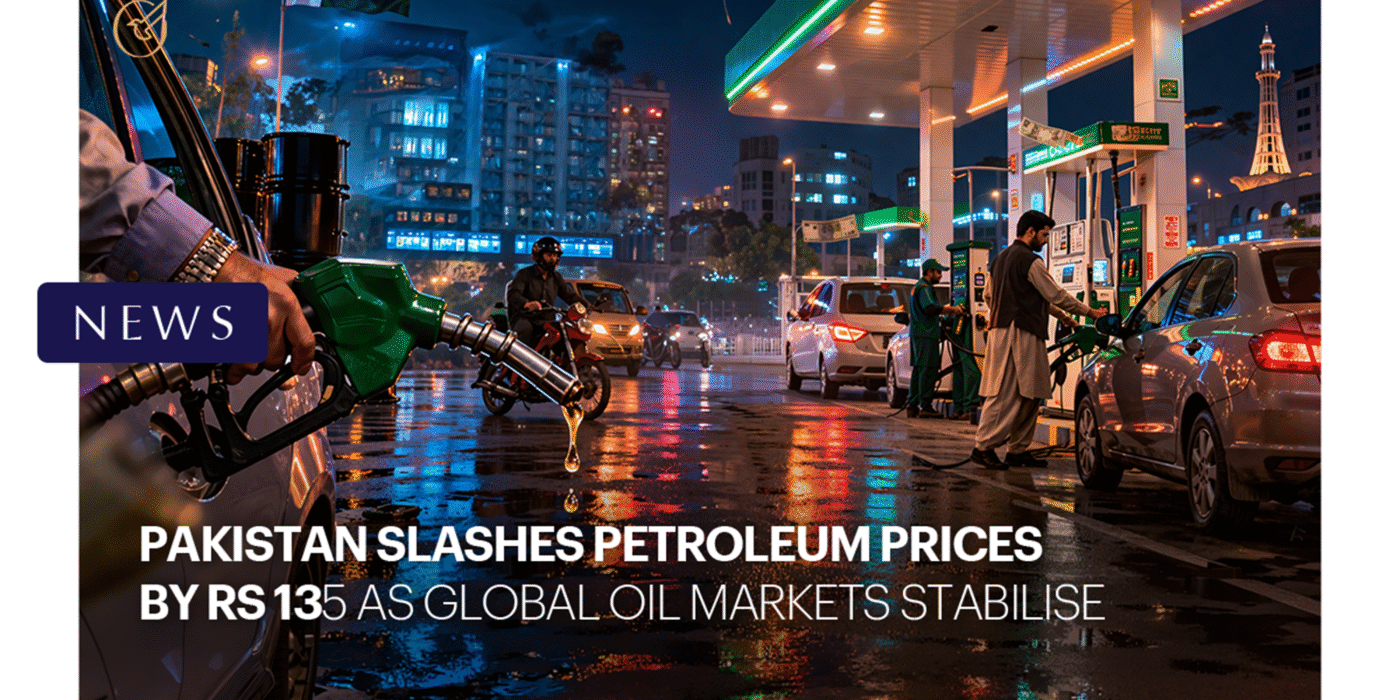
Pakistan Slashes Petroleum Prices by Rs135 as Global Oil Markets Stabilise

ISLAMABAD: Prime Minister Shehbaz Sharif announced a significant reduction of Rs135 per litre in high-speed diesel (HSD) and Rs12 per litre in petrol prices on Friday, effective April 11, 2026, extending much-needed financial relief to millions of consumers grappling with sustained inflationary pressures.

Following the announcement, the Petroleum Division officially notified the revised rates, bringing HSD down from Rs520.35 to Rs385.54 per litre and petrol from Rs378.41 to Rs366.58 per litre, the steepest single-day diesel price cut in recent memory.

The Prime Minister attributed the decision to a decline in global oil prices, describing it as his “moral and political responsibility” to pass the full benefit on to the public. Notably, he disclosed that he had been advised to retain a portion of the savings to offset the Rs129 billion subsidy extended by the government in preceding weeks, a proposal he firmly rejected.

The announcement’s timing is particularly significant for Pakistan’s agricultural sector, as it coincides with the ongoing wheat harvest season. A reduction in diesel prices is expected to lower farm mechanisation costs directly, helping safeguard both farmer incomes and food affordability for the general public. Broader economic benefits are also anticipated, with logistics and public transport costs likely to ease in the near term.

The calming of global energy markets follows a two-week ceasefire between Iran and the United States, brokered with Pakistan’s diplomatic involvement. The truce has temporarily eased concerns over supply disruptions through the Strait of Hormuz, a critical corridor for global oil trade.

It is worth noting that existing levies remain intact, including a petroleum levy of Rs80.61 per litre on petrol and a Rs2.50 per litre climate support levy across multiple fuel types. The government has not indicated how long the revised prices will remain in effect.

For more news on the economy, real estate, and development, visit Chakor Ventures.

Public Transport Free
CategoriesNews Economy Transport

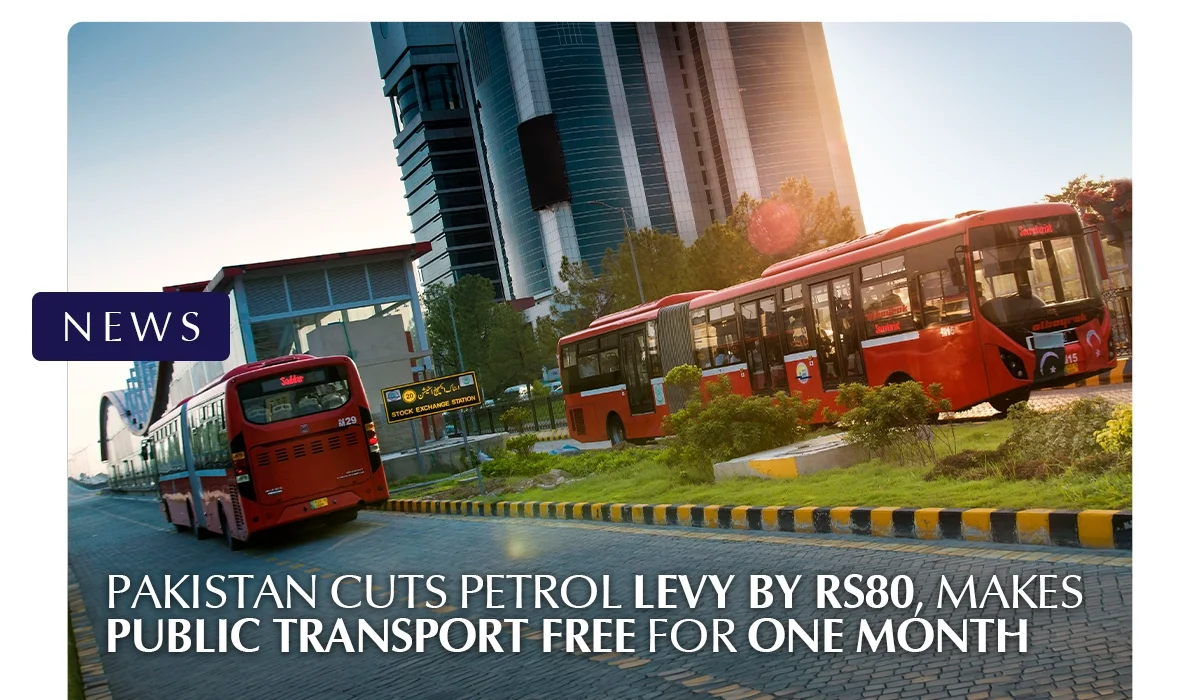
Pakistan Cuts Petrol Levy by Rs80, Makes Public Transport Free for One Month

ISLAMABAD: On Friday, Shehbaz Sharif announced an immediate reduction of Rs80 per litre in the petroleum levy, lowering the retail price of petrol to Rs378 per litre. Meanwhile, Federal Minister for Interior Mohsin Naqvi declared that all public transport in Islamabad would be free for 30 days.

The crisis was triggered by a sharp surge in global oil prices following the ongoing conflict involving the United States, Israel, and Iran, which has severely disrupted international energy markets and threatened the flow of crude through the Strait of Hormuz. In response, the government on Thursday raised petrol prices by 43% to Rs458.41 per litre and high-speed diesel by 55% to Rs520.35 per litre, prompting widespread public backlash, street protests in Lahore, and long queues at fuel stations across the country.

Acknowledging the burden on ordinary citizens, the Prime Minister stated that the government had absorbed Rs129 billion in subsidies over the preceding three weeks to shield the public from the full brunt of rising international prices. The revised petrol rate of Rs378 per litre will remain in effect nationwide for at least one month.

In a parallel relief effort, Interior Minister Mohsin Naqvi announced that all public transport in Islamabad would be free of charge for 30 days, with the Ministry of Interior bearing an estimated cost of Rs350 million.

CM Punjab Maryam Nawaz extended the same measure province-wide, making the Orange Line Metro, Metro Bus, Speedo buses, and Green Electric Buses free for daily commuters. Sindh Chief Minister Murad Ali Shah, meanwhile, announced a monthly cash subsidy of Rs2,000 for registered motorcycle owners across the province, to be disbursed digitally through the excise department within 15 days.

Additional relief measures include a Rs100-per-litre diesel subsidy per acre for farmers, targeted monthly financial support for freight and passenger transport operators, and a freeze on Pakistan Railways’ economy-class fares. Federal cabinet members also extended their salary contributions to the national exchequer from 2 months to 6 months under the government’s broader austerity programme.

For more news on the economy, real estate, and development, visit Chakor Ventures.

Fuel Price Hike
CategoriesNews Economy Transport

Pakistan Announces Record Fuel Price Hike Amid Regional Crisis

ISLAMABAD: Pakistan government has announced an unprecedented increase in fuel prices. Petrol prices have been raised by Rs137 per litre, a staggering 43% jump, bringing the new rate to a historic high of Rs458.4 per litre. High-speed diesel has surged even more sharply, climbing 55% to Rs520.35 per litre, while kerosene and light diesel oil rose to Rs468 and Rs395 per litre, respectively.

The move marks the second major fuel price revision in under a month, pushing the cumulative increase in petrol to 63% and high-speed diesel to 75% within thirty days.

A key driver behind the hike is the government’s failure to secure greater subsidy allowances from the International Monetary Fund, which capped fuel subsidies at Rs152 billion. Simultaneously, the closure of the Strait of Hormuz by Iran in retaliation for US and Israeli strikes has sent international oil prices soaring, severely limiting Islamabad’s room to manoeuvre.

To offset diesel costs, the government has raised the petroleum levy on petrol to a record Rs161 per litre, effectively transferring the burden onto petrol consumers to cross-subsidise diesel users, a decision that has drawn sharp criticism. As a partial relief measure, motorcycle riders will receive a subsidy of Rs100 per litre.

The government has announced subsidies for farmers, transporters, and low-income citizens. Small farmers will receive a one-time payment of Rs 1,500 per acre. Truck operators carrying food items will receive Rs 70,000 per month, large transport vehicles will receive Rs 80,000 per month, and inter-city passenger vehicles will receive Rs 100,000 per month.

A Rs100-per-litre fuel subsidy will also apply to inter-city and goods transport, with prices reviewed monthly. Low-income train passengers will also benefit from federal support.

For more news on the economy, real estate, and development, visit Chakor Ventures.

CategoriesNews Construction Developments Economy Transport Urban Developments & Planning

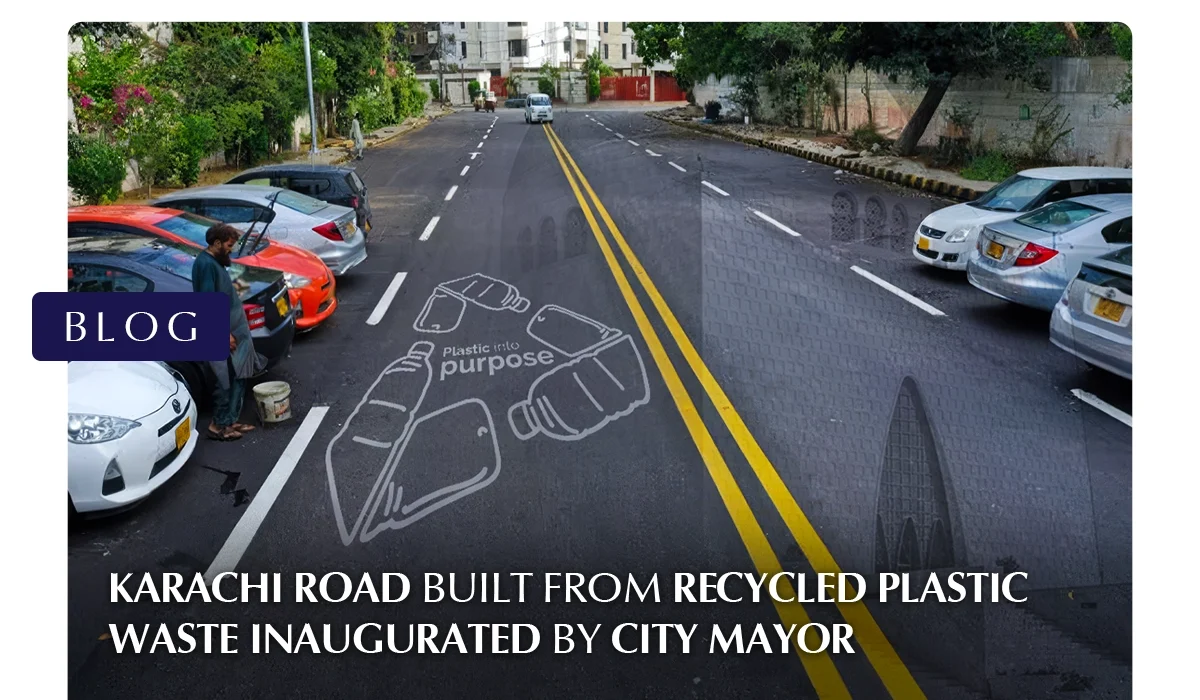
Karachi Road Built from Recycled Plastic Waste Inaugurated by City Mayor

KARACHI: Karachi Mayor Murtaza Wahab on Monday inaugurated a road near the English Biscuit Manufacturers (EBM) facility constructed using recycled industrial plastic waste, marking a notable convergence of private-sector sustainability efforts and urban infrastructure development in Pakistan’s largest city.

The road, located adjacent to EBM’s Karachi manufacturing plant, was developed in partnership with Concept Loop and is designed to divert low-value plastic waste from landfills by converting it into durable road material. The initiative is part of EBM’s broader circular economy agenda and is presented as a scalable model for integrating recycled materials into national infrastructure projects.

Speaking at the inauguration, Mayor Wahab described the project as “practical innovation that Karachi needs,” adding that it addresses both infrastructural deficiencies and environmental challenges simultaneously. EBM Executive Director Shahzain Munir emphasised the company’s commitment to long-term value creation through circular solutions and called for stronger public–private collaboration to scale such initiatives nationwide.

The inauguration ceremony also featured public awareness activities on sustainable waste management practices.

Separately, Mayor Wahab laid the foundation stone for the rehabilitation of Mirza Adam Khan Road in Lyari Town on the same day, at an estimated cost of Rs400 million. The project encompasses a 4.48-kilometre dual carriageway, a 4.61-kilometre drainage line, and an 18-inch sewerage line, with completion targeted before 30 June 2026. The mayor noted the road is a key artery connecting the Mauripur Road and Garden areas and forms part of the broader Lyari Transformation Project, valued at approximately Rs5 billion in its first phase.

For more news on the economy, real estate, and development, visit Chakor Ventures.

CategoriesNews Construction Transport Urban Developments & Planning

CDA Plans Citywide Bicycle Tracks to Promote Eco-Friendly Transport in Islamabad

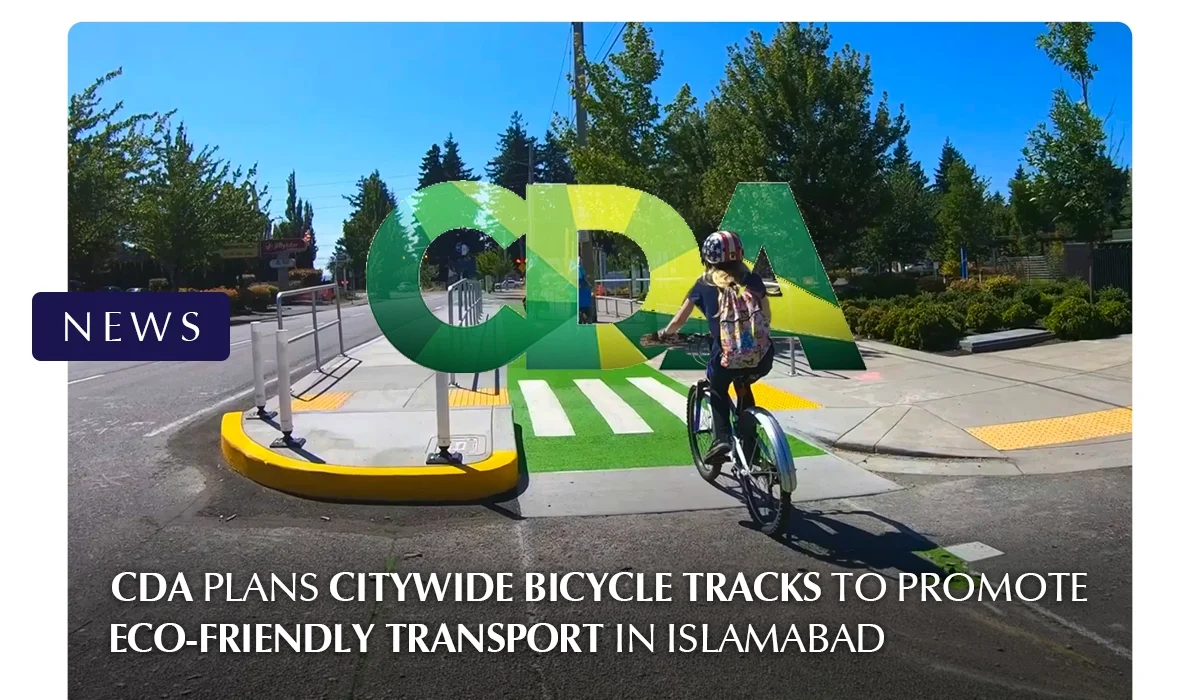
ISLAMABAD: The Capital Development Authority (CDA) has announced plans to introduce dedicated bicycle tracks across Islamabad as part of efforts to promote sustainable transportation and improve urban mobility.

According to officials, the initiative aims to develop a comprehensive network of cycling lanes across various sectors and major roads in the federal capital. The project is intended to provide residents with an alternative mode of transport while reducing traffic congestion and environmental impact.

The bicycle track plan is part of broader urban development measures focused on enhancing public infrastructure and encouraging healthier commuting options. Authorities indicated that the project will include proper planning for connectivity between different sectors, ensuring accessibility and usability for daily commuters.

In addition to promoting cycling culture, the initiative is expected to contribute to environmental goals by reducing carbon emissions associated with conventional transport. Officials also highlighted that the development of cycling infrastructure aligns with efforts to modernize the city’s transport system and improve the quality of life for residents.

The CDA has previously undertaken planning for large-scale cycling networks, including proposals for extensive bicycle lanes and supporting facilities such as parking stands and safety infrastructure.

While detailed timelines for the latest phase have not been disclosed, the authority has indicated that the project will be implemented in stages as part of ongoing development efforts in the capital.

The initiative reflects a continued focus on sustainable urban planning and the introduction of alternative transport solutions in Islamabad.

For more news on the economy, real estate, and development, visit Chakor Ventures.

strait of hormuz
CategoriesEconomy Investment News Trade Transport

Iran Thanks Pakistan for ‘Strong Solidarity’ Amid Ongoing Conflict – Pakistan-Bound Oil Tanker Passes Strait of Hormuz

ISLAMABAD: A Pakistan-bound oil tanker successfully transited the Strait of Hormuz over the weekend, marking the first recorded passage of a non-Iranian cargo vessel through the waterway since Iran close strait of hormuz and imposed restrictions on shipping following the outbreak of hostilities on February 28.

The Aframax-class tanker, operated by Pakistan National Shipping Corporation, completed its Strait of Hormuz transit on approximately March 15 after loading crude oil at Das Island in Abu Dhabi. The vessel was recorded navigating along the Iranian coastline of the Strait of Hormuz before altering course eastward toward Pakistan, where it is expected to dock on March 17. 

Maritime intelligence firm MarineTraffic confirmed it was the first non-Iranian cargo ship to transit the Strait of Hormuz with its Automatic Identification System signal active, indicating that select nations have succeeded in securing negotiated passage through the strait.

Iran Strait of Hormuz Importance

The Strait of Hormuz is a narrow waterway between Iran and Oman connecting the Persian Gulf to the Gulf of Oman and the Arabian Sea. At its narrowest navigable point, the Strait of Hormuz measures only 3.2 kilometres wide in each direction, yet serves as the transit corridor for approximately one-fifth of the world’s daily crude oil supply and one quarter of global seaborne liquefied natural gas exports

There is no commercially viable alternative route for Gulf producers, making the Strait of Hormuz the most critical maritime chokepoint in the global energy system. Since Iranian forces effectively closed the Strait of Hormuz to the majority of international shipping, Brent crude has surged more than 40 percent, trading above $100 per barrel as of this week.

Iran Publicly Thanks Pakistan for ‘Strong Support’

strait of hormuz

The successful Strait of Hormuz transit prompted an immediate public response from Tehran. Iranian Foreign Minister Abbas Araghchi, in a post in Urdu on X formerly Twitter on Monday, extended his “heartfelt gratitude to the government and people of Pakistan for their strong expression of solidarity and support with the people and government of the Islamic Republic of Iran.” He further affirmed that Iran stood with steadfastness in defence of its sovereignty and territorial integrity.

The statement reflects Iran’s policy of selectively permitting Strait of Hormuz passage to vessels from nations it regards as neutral or sympathetic. Pakistan’s Foreign Office has formally described Islamabad’s role throughout the conflict as that of a “bridge builder” a posture that has yielded a direct economic benefit in the form of access through the Strait of Hormuz that Western-aligned nations currently cannot secure.

Naval Operation and Selective Access

In the days preceding the Strait of Hormuz transit, Pakistan’s navy launched Operation Muhafiz-ul-Bahr to safeguard commercial shipping lanes and Pakistani-flagged vessels in regional waters. Naval authorities established contact with Iranian counterparts ahead of the passage. A military source confirmed no escort was ultimately required for the vessel.

Iran’s selective approach to the Strait of Hormuz blockade has extended to other nations as well. 

Pakistan’s Economic Exposure

Pakistan’s dependence on the Strait of Hormuz is among the most acute of any economy in the region. Approximately 80 percent of the country’s crude oil imports are ordinarily routed through the strait, and nearly 90 percent of its liquefied natural gas is sourced from Qatar all of which transits the Strait of Hormuz.

With strategic petroleum reserves of only 10 to 14 days, Pakistan has limited capacity to absorb prolonged disruption. The government has already enacted its largest single fuel price revision on record, raising petrol to Rs 321 per litre and diesel to Rs 335 per litre, an increase of 17 to 20 percent in a single adjustment.

A second PNSC tanker, which loaded crude at Saudi Arabia’s Red Sea port of Yanbu, was approximately three sailing days from Pakistan at the time of reporting. Pakistan’s finance ministry confirmed petroleum stocks remain comfortable, with supply coverage extending into mid-April, while diversification of import routes beyond the Hormuz corridor remains actively underway.

Pakistan’s Diplomatic Posture

The tanker’s Strait of Hormuz passage is the most concrete economic outcome of Pakistan’s diplomatic engagement since hostilities began. Prime Minister Shehbaz Sharif travelled to Saudi Arabia on March 12 for a meeting with Crown Prince Mohammed bin Salman.

At the United Nations Security Council, Pakistan maintained a calibrated position condemning strikes on Iran, affirming solidarity with Gulf states, and consistently urging all parties toward a negotiated resolution to the Hormuz crisis.

Whether the access Pakistan has secured through the Hormuz can be sustained, and whether it proves sufficient to shield an economy so heavily dependent on this single passage, remains the defining economic question for Islamabad in the weeks ahead.

For more news on the economy, real estate, and development, visit Chakor Ventures.

Fuel Crisis Looms
CategoriesNews Economy Mass Transit Transport

Post-Eid Fuel Crisis Looms as Dealers Threaten Nationwide Sales Halt

KARACHI: Pakistan’s petroleum dealers have issued a stern warning to the federal government, threatening to suspend the sale of petrol and diesel immediately after Eid al-Fitr if their longstanding demand for revised profit margins is not met.

The ultimatum was delivered by the leadership of the Pakistan Petroleum Dealers Association (PPDA) at a press conference held at the Karachi Press Club on Friday, March 13, 2026.

The PPDA has given the government until March 26 to increase dealers’ profit margins from the current 2.59 percent to 8 percent, a demand that has gained urgency in the wake of a steep Rs55-per-litre hike in petrol and diesel prices. At present, dealers earn approximately Rs8.64 per litre on fuel sales, a figure the association describes as wholly inadequate given the rising cost pressures on the sector.

Speaking at the press conference, PPDA leaders Abdul Sami Khan, Tariq Hasan, and Ameer Khan Masood argued that the combined effect of the petroleum levy and recent price increases has placed an unsustainable burden on both dealers and end consumers. The association further accused oil marketing companies (OMCs) of deliberately capping oil supplies to retail outlets, a practice it claims has led to fuel shortages at numerous pumps across the country.

The PPDA leadership also called for a formal government investigation into the conduct of OMCs, alleging that these companies have reaped significant inventory gains from profits on old fuel stocks, profits dealers say have come at the expense of those operating at the retail level.

This is not the first time dealers have raised these concerns. According to the PPDA, they have been pressing the government for upward margin revisions for over two years, with little to no response. Industry observers warn that a post-Eid strike, if carried out, could cause considerable disruption to fuel supply chains at a time when transport and economic activity typically surge.

For more news on the economy, real estate, and development, visit Chakor Ventures.

CategoriesNews Construction Developments Mass Transit Real Estate Transport Urban Developments & Planning

Swat Motorway Phase-II Construction Officially Underway

ISLAMABAD: The provincial government has commenced construction on Phase-II of the Swat Motorway, initiating a project expected to significantly improve road connectivity and boost tourism across the Swat Valley.

Officials confirmed the launch, describing it as a key milestone in the government’s broader push to modernize transportation infrastructure throughout Khyber Pakhtunkhwa. The Chief Minister stated that the motorway would ease travel across the region while generating new economic opportunities for local communities through increased visitor numbers and investment.

Authorities have linked the project to a wider provincial strategy aimed at reducing barriers to trade and development. Improved road access, officials noted, is expected to benefit multiple sectors, with tourism identified as a primary driver of anticipated growth.

The government has emphasized its commitment to quality construction and timely delivery. However, no specific completion date or project budget has been made public at this stage.

Local stakeholders have responded positively to the announcement, citing longstanding demand for reliable road infrastructure in the area. The motorway is expected to make the Swat Valley more accessible to both domestic and international visitors, strengthening its position as one of the province’s key tourism destinations.

Provincial authorities say construction will proceed under direct government supervision, with progress subject to ongoing review.

For more news on the economy, real estate, and development, visit Chakor Ventures.

CategoriesNews Economy Transport

Petrol Prices Soar by Rs55 Per Litre as Global Oil Shock Hits Pakistan

ISLAMABAD: Pakistan witnessed an unprecedented surge in petroleum prices after the federal government announced a massive Rs55-per-litre increase in both petrol and diesel.

The price of petrol has risen from Rs266.17 per litre to Rs321.17 per litre, while diesel now costs Rs335.86 per litre, up from Rs280.86 per litre. Officials say the decision was driven primarily by a sharp rise in global oil prices amid escalating tensions in the Middle East, particularly the ongoing conflict involving Iran.

International oil markets have reacted strongly to regional instability, with crude prices nearing $100 per barrel. As an oil-import dependent country, Pakistan remains highly vulnerable to fluctuations in global energy markets. A significant portion of the country’s oil imports passes through the Strait of Hormuz, a strategic maritime route that has been affected by the conflict.

The government has also revised the petroleum development levy (PDL) as part of the price adjustment. The levy on petrol has been increased by Rs20, bringing it to around Rs105 per litre, while the levy on diesel has been reduced by Rs20. Authorities argue that the adjustments were necessary to manage fiscal pressures and maintain revenue targets.

The announcement triggered widespread concern among citizens. Long queues were reported at petrol pumps in several cities as motorists rushed to purchase fuel before the new prices. The government is also reviewing potential fuel conservation measures, including remote work arrangements and online classes, though no immediate implementation has been announced.

Analysts warn that the sharp increase in fuel prices could further intensify inflationary pressures, affecting transportation costs, food prices, and overall economic stability in the coming weeks.

For more news on the economy, real estate, and development, visit Chakor Ventures.

CategoriesNews Economy Trade Transport

Pakistan Moves to Safeguard Fuel Supplies Amid Global Oil Transport Crisis

ISLAMABAD: Pakistan is considering a series of emergency measures to manage petroleum supplies and pricing amid rising global uncertainty in oil transportation following disruptions linked to the Strait of Hormuz, one of the world’s most critical oil shipping routes.

According to officials, the government is evaluating the possibility of shifting from the current fortnightly petroleum price adjustments to a weekly review mechanism. The proposed change aims to enable quicker responses to rapidly fluctuating global oil prices and shipping costs. Authorities are also exploring options to compensate oil marketing companies for the sharp increases in shipping insurance and freight charges resulting from heightened geopolitical tensions in the region.

Government sources indicate that Pakistan currently holds more than 500,000 tonnes of petrol and diesel in stock, which is sufficient to meet national demand for approximately 25 to 26 days. Officials maintain that there is no immediate threat of a fuel shortage. However, precautionary measures are being implemented to safeguard supply chains and prevent potential market disruptions.

To secure continued energy imports, Pakistan has approached Saudi Arabia to facilitate oil shipments through alternative Red Sea routes, bypassing the Strait of Hormuz. In addition, Pakistan State Oil has reportedly issued import tenders for shipments that would avoid the affected maritime corridor.

The situation has also significantly increased the cost of importing fuel. Insurance premiums for oil shipments have reportedly surged from about $30,000 to nearly $400,000 per vessel, while freight costs have risen to over $4 million per shipment, up from roughly $900,000 previously.

Officials warn that if the rising import costs are not managed through policy adjustments, the price gap could reach around Rs45–50 per litre for diesel and Rs25–26 per litre for petrol.

A cabinet committee led by the finance minister is closely monitoring developments and reviewing options to ensure stable fuel availability while minimizing the economic impact on consumers and the broader economy.

For more news on the economy, real estate, and development, visit Chakor Ventures.