CategoriesReal Estate Investment News Property Property Taxes Real Estate

FBR Revises Property Valuations for DHA Lahore and Rawalpindi; Eight Cities Now Covered Under Updated Tax Framework

ISLAMABAD — The Federal Board of Revenue has updated the official valuations of properties in Defence Housing Authority areas of Lahore and Rawalpindi, through two separate orders issued on Tuesday. The revisions will directly affect the amount of tax that buyers and sellers are required to pay when a property changes hands in these localities.

The updates were formalised through Statutory Regulatory Orders S.R.O. 876(I)/2026 for Lahore and S.R.O. 877(I)/2026 for Rawalpindi, both signed by Muhammad Amin Qureshi, Secretary Rules and SRO, Revenue Division. They amend valuations originally set in October 2024 and bring the total number of cities where the FBR has revised property benchmarks in recent months to eight, following similar exercises carried out for Islamabad and other major urban centres.

Understanding the FBR Rate

When a property is sold in Pakistan, the government uses an official benchmark value set by the FBR to calculate withholding tax, which is a tax collected at the point of the transaction. This FBR rate is separate from both the actual price agreed between buyer and seller and the Deputy Commissioner rate set by provincial governments for stamp duty purposes.

The purpose of periodically revising these benchmarks is to keep them closer to real market values. When official values are too far below what properties actually trade for, the withholding tax collected ends up being lower than it should be, effectively allowing significant portions of high-value transactions to go under-taxed. There are multiple online property tax calculators which help you calculate your property taxes.

Lahore: What the New Rates Say

The Lahore order revises valuations for DHA Phases VI through XIII, all administratively located within Nishtar Town. Rates here are expressed in rupees per marla, the standard unit of land measurement in Punjab.

The most valuable commercial address in the entire Lahore table is the Broadway strip in DHA Phase VIII, the main commercial avenue running through sub-sectors A, B, C and D, officially valued at Rs. 4,988,970 per marla. This figure forms the basis of withholding tax calculations for any commercial plot or shop sold along that stretch.

Among residential areas, DHA Phase XI Rahbar, Sector I carries the highest valuation at Rs. 967,960 per marla, reflecting its established infrastructure and sustained demand. At the lower end, DHA Phase XIII, formerly known as DHA City and located furthest from the city centre, is valued at Rs. 204,960 per marla, consistent with its earlier stage of development.

DHA Phase VI, one of Lahore’s most established residential addresses, is valued at Rs. 1,132,460 per marla for most residential blocks. The C, M and N Blocks carry a lower residential rate of Rs. 761,460 per marla, though their commercial land value rises sharply to Rs. 4,369,410 per marla, reflecting heavy commercial activity in those areas.

A significant addition in this notification is the first-ever official valuation assigned to One Central DHA, a newer development that previously had no FBR benchmark. It has now been entered into the official table at Rs. 760,000 per marla for residential open plots and Rs. 3,100,000 per marla for commercial plots. This means transactions in One Central DHA will now carry a formally calculated withholding tax obligation for the first time.

Across all DHA Lahore entries, built structures, that is, houses or commercial buildings as opposed to bare land, are assessed at a uniform Rs. 1,750 per square foot for residential and Rs. 2,800 per square foot for commercial, regardless of which phase they are located in.

Rawalpindi: A Different Scale, Similar Intent

The Rawalpindi order covers DHA Phases I through V and DHA Valley. An important distinction: unlike Lahore, where rates are expressed per marla, Rawalpindi valuations in this notification are given in rupees per square foot. This reflects a difference in how property is traditionally measured and administered across the two cities.

The highest commercial valuation in Rawalpindi’s table belongs to DHA Phase II, at Rs. 17,677 per square foot for commercial open plots, the single largest figure in the Rawalpindi notification. DHA Phase I follows at Rs. 15,427 per square foot for commercial land.

On the residential side, DHA Phase II again leads at Rs. 2,878 per square foot, while DHA Valley, the most peripheral of the listed localities, sits at just Rs. 466 per square foot for residential open plots. The gap between these two figures illustrates how sharply official land values decline as the distance from the city’s established core increases.

DHA Phases II Extension, III and IV share an identical commercial open plot rate of Rs. 5,946 per square foot, indicating that the FBR considers their commercial potential broadly equivalent. Their residential rates, however, vary: Phase IV at Rs. 1,322 per square foot, Phase III at Rs. 1,011 per square foot and Phase II Extension at Rs. 778 per square foot, differences that broadly reflect each area’s level of development and infrastructure maturity.

Built structure rates across Rawalpindi DHA phases are set at Rs. 1,470 per square foot for commercial and Rs. 735 per square foot for residential in most phases, with DHA Valley’s residential superstructure rate marginally higher at Rs. 770 per square foot.

The Broader Context

Pakistan’s property market has long operated with a well-documented gap between declared transaction values and actual market prices. For years, it was common practice for buyers and sellers to register a property at a fraction of its true value, reducing their tax liability significantly.

FBR valuation revisions are one of the primary tools available to narrow that gap and, with it, improve tax collection from a sector that has historically contributed far less to the national treasury than its scale would suggest.

These revisions also carry relevance beyond individual transactions. Pakistan’s economic reform commitments, including those made under its ongoing programme with the International Monetary Fund, have consistently identified the real estate sector as an area requiring greater documentation and tax compliance. The gradual extension of revised FBR benchmarks to more cities and localities is part of the government’s response to those obligations.

For buyers and sellers in the affected DHA areas, the immediate effect is straightforward: withholding tax at the point of transaction will now be calculated on a revised official value, which in most cases will be closer to actual market prices than the figures it replaces.

Those accustomed to a significant gap between the FBR rate and the market price should account for a narrower margin when planning the financial aspects of a property transaction.

For more news on real estate and Special Reports, visit Chakor Ventures.

References

Federal Board of Revenue, Government of Pakistan. (2026, May 19). S.R.O. 876(I)/2026: Revision of valuation of immovable properties Nishtar Town, Lahore [Statutory notification]. Revenue Division, Islamabad. File No. 2(17)R&S/2017.

Federal Board of Revenue, Government of Pakistan. (2026, May 19). S.R.O. 877(I)/2026: Revision of valuation of immovable properties Rawalpindi [Statutory notification]. Revenue Division, Islamabad. File No. 2(31)R&S/2024.

Akhter, S. (2026, May 19). FBR revises property valuation tables for Nishtar Town Lahore. Pkrevenue.com. https://pkrevenue.com/fbr-revises-property-valuation-tables-for-nishtar-town-lahore/

Government of Pakistan. (2001). Income Tax Ordinance, 2001 (XLIX of 2001), Section 68(4). National Assembly of Pakistan.

Federal Board of Revenue, Government of Pakistan. (2024, October 29). S.R.O. 1722(I)/2024: Valuation of immovable properties Lahore [Statutory notification]. Revenue Division, Islamabad.

Federal Board of Revenue, Government of Pakistan. (2024, October 29). S.R.O. 1728(I)/2024: Valuation of immovable properties Rawalpindi [Statutory notification]. Revenue Division, Islamabad.

CategoriesNews Budget Economy Property Property Taxes Real Estate Real Estate Investment

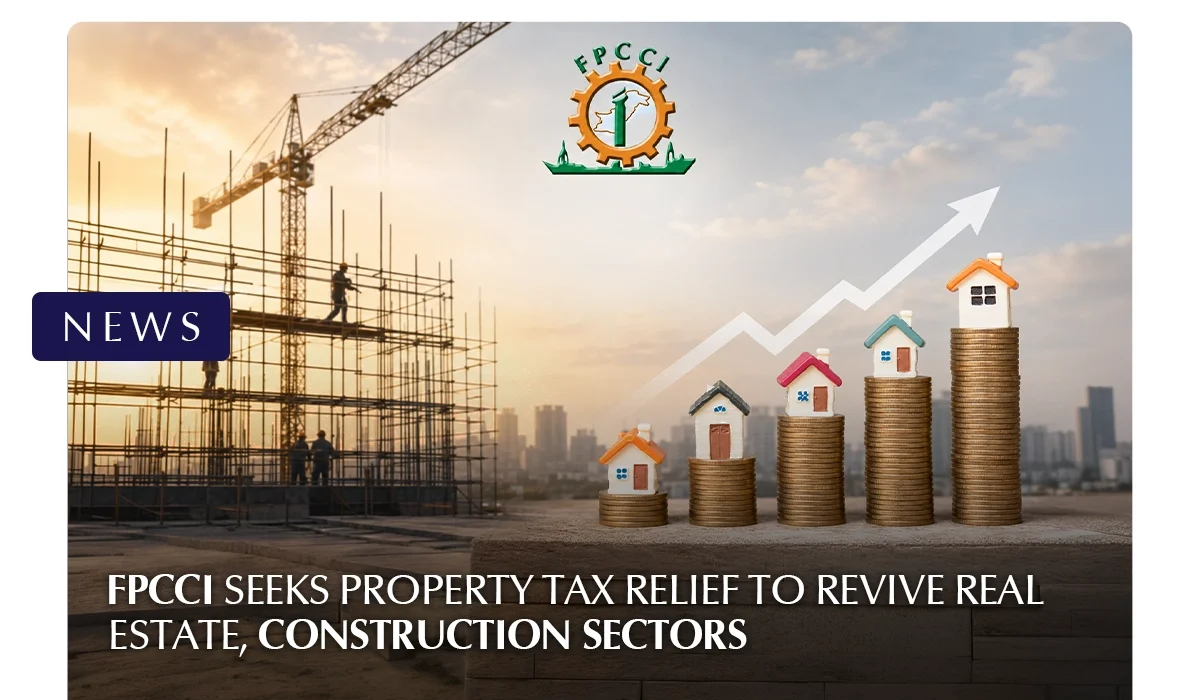
FPCCI seeks property tax relief to revive real estate, construction sectors

ISLAMABAD: The Federation of Pakistan Chambers of Commerce and Industry (FPCCI) has proposed major property tax reforms for the federal budget FY2026-27 to help revive Pakistan’s real estate and construction sectors.

According to FPCCI’s budget proposals, the current tax structure has made property transactions more expensive and slowed investment in the sector. The chamber has suggested reducing withholding tax under Section 236C on the sale of immovable property to a uniform 1% across all transaction values. At present, the rate can go as high as 5.5% on higher-value transactions and is charged on the gross transaction value, regardless of actual profit or loss.

FPCCI also proposed reducing advance tax under Section 236K on property purchases to a flat 1%, while abolishing advance tax on the first property purchase by a filer. The body said simpler and lower tax rates could encourage proper documentation, reduce under-reporting, and improve transparency in the property market.

The chamber further called for abolishing the tax on deemed income under Section 7E, saying it taxes assumed income from immovable property instead of actual earnings. It also recommended withdrawing Section 7F, under which builders and developers are taxed on 10% of gross receipts, regardless of their actual income.

FPCCI said balanced taxation could attract investment and support allied industries such as cement, steel, transport, and labour, helping generate wider economic activity.

For more news on real estate and special reports, visit Chakor Ventures.

Sources:

CategoriesCitadel One3 Construction Developments Real Estate

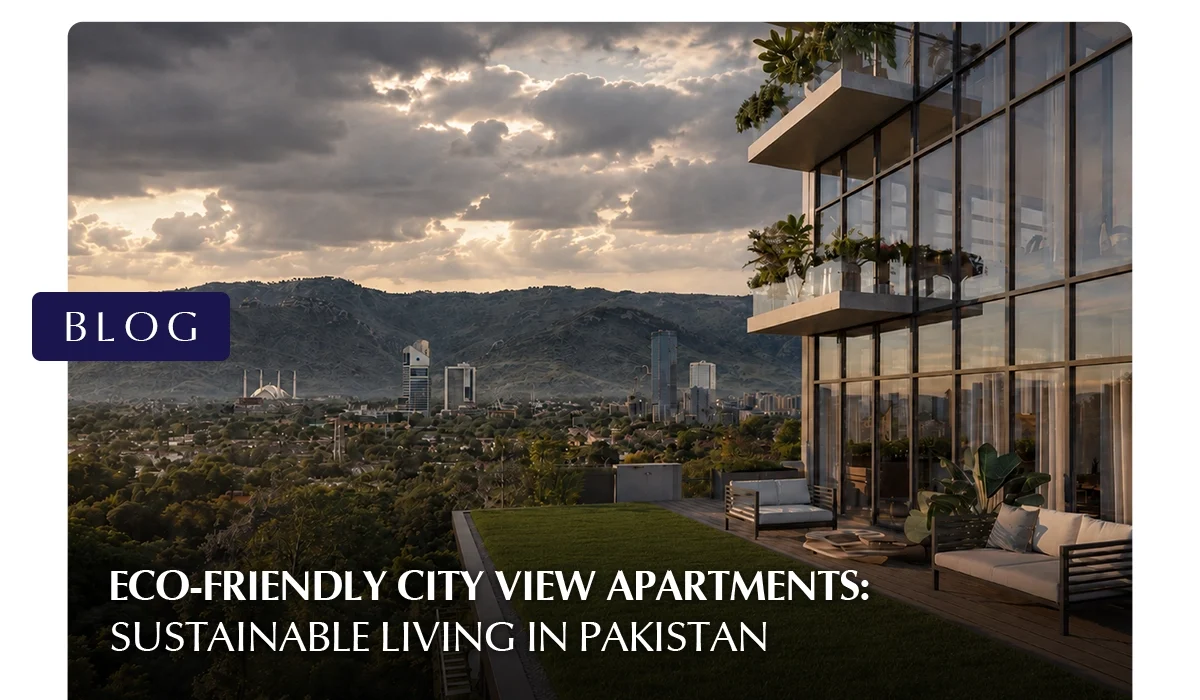
Eco-Friendly City View Apartments: Sustainable Living in Pakistan

Pakistan’s urban apartment market has matured significantly over the past decade. Where buyers once prioritised location and price per square foot above all else, a growing segment particularly younger professionals and overseas Pakistanis now asks a more layered question: can the apartment I’m buying offer a genuine view and a reduced environmental footprint?

The demand for eco-friendly city view apartments in Pakistan is real, and so is the confusion surrounding it. “Eco-friendly” has become one of the most overused phrases in Pakistani real estate marketing, applied liberally to projects that have a few trees on the plot or a park nearby. Genuine sustainability in an apartment building is a different thing entirely; it involves specific, verifiable infrastructure built into the structure itself.

This guide explains exactly what those features are, which Pakistani cities currently offer the strongest combination of scenic views and sustainable living, and what to check before you commit to a purchase.

Table of Contents

  1. What Does an Eco-Friendly City View Apartments Pakistan Actually Mean?
  2. Why City Views and Eco-Friendly Features Go Together
  3. Green High-Rise Apartments in Pakistan Which Cities Have Real Options?
  4. Sustainable Flats in Pakistan The Financial Case
  5. What to Check Before Buying an Eco-Friendly City View Apartments Pakistan
  6. Frequently Asked Questions

What Does an Eco-Friendly City View Apartments Pakistan Actually Mean

The first thing to establish is that an eco-friendly apartment is defined by what is built into it, not by what surrounds it. Mountains nearby, a park across the road, or trees within the boundary are landscape features. They are pleasant. They are not evidence of a sustainably constructed or operated building.

A genuinely eco-friendly apartment building in Pakistan should incorporate some combination of the following:

Solar energy systems. Rooftop solar panels, either dedicated to individual units or feeding a shared generation pool, directly reduce dependence on the national grid. In a country where grid electricity is both expensive and unreliable, this is not an optional amenity; it is a meaningful quality-of-life and cost-of-living feature. Ask developers specifically whether solar is installed at handover, or merely listed as a future addition.

Thermal insulation. Double-glazed windows, insulated external walls, and well-designed roof assemblies significantly reduce the energy required to cool or heat a unit. Pakistan’s climate demands heavy air-conditioning for much of the year; a poorly insulated apartment drives up both electricity bills and carbon footprint. Quality insulation is one of the least visible but most impactful green features in a building.

Rainwater harvesting. The Capital Development Authority (CDA) has mandated rainwater collection tanks for all new housing communities in Islamabad. This is a compliance baseline, not a premium feature if a new development in Islamabad does not have it, that is a red flag, not a neutral data point. In Lahore and Karachi, rainwater harvesting is rarer but increasingly present in premium high-rise projects.

Waste management infrastructure. Dedicated recycling facilities, organic waste separation systems, and waste compactors within the building reduce the volume of material going to landfill and create a cleaner, better-maintained common environment. The presence of these systems also signals that the developer has thought beyond the sale.

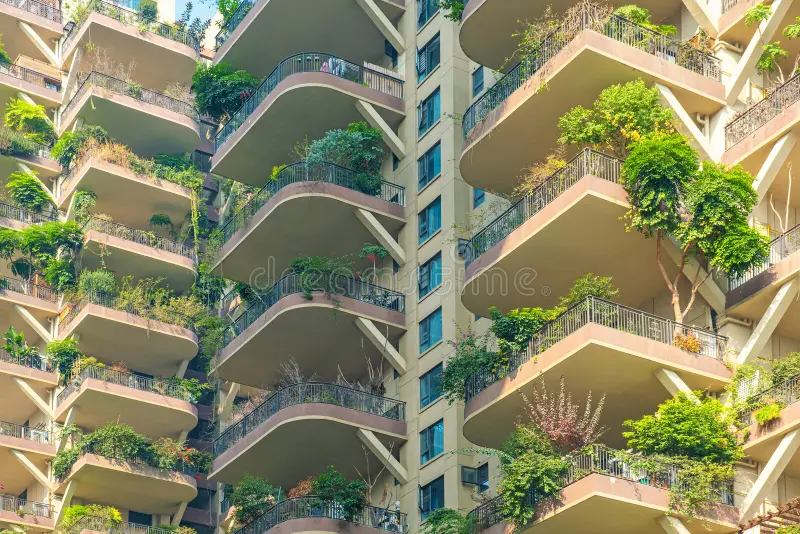
Green rooftops and landscaped terraces. Planted rooftop surfaces reduce the urban heat island effect, the phenomenon where dense built areas trap heat and drive up ambient temperatures. A green rooftop on a high-rise also improves air quality at the building level and provides usable outdoor amenity space for residents.

EV charging bays. Pakistan’s electric vehicle market is still in its early stages, but it is growing. A high-rise building that installs EV charging infrastructure in its parking facility today is a more future-proof asset than one that does not. For buyers with a ten-year investment horizon, this matters.

Water-efficient fixtures. Low-flow taps, showerheads, and toilet cisterns reduce per-unit water consumption without affecting usability. Greywater recycling, treating water from sinks and showers for reuse in toilets or irrigation, is rarer but present in some premium sustainable flats in Pakistan.

Smart building systems. Automated lighting in corridors and common areas, occupancy-sensing HVAC systems, and centralised energy monitoring reduce waste at the building level. These systems tend to lower maintenance costs over time and are a hallmark of genuinely well-engineered high-rise buildings.

When evaluating any project, use this list as a framework for questions, not as an expectation that every feature will be present. A building that delivers four or five of these credibly is a genuinely sustainable product. A building that mentions none of them but calls itself eco-friendly is a marketing exercise.

Green High-Rise Apartments in Pakistan: Which Cities Have Real Options?

Eco-Friendly City View Apartments Pakistan

The phrase “eco-friendly city view apartments Pakistan” covers the whole country, but the market is not evenly distributed. Here is an honest assessment of where genuine options currently exist.

Islamabad: Strongest Market for Eco-Friendly City View Apartments Pakistan

Islamabad has structural advantages that no other Pakistani city can match. The city was designed from scratch in the 1960s on a low-density grid with green belts, wide avenues, and sector-based zoning built in from the start. The result, six decades later, is a city where height genuinely rewards you, views from upper floors reveal parks and mountains, not adjacent rooftops.

CDA regulations set a higher baseline for new developments than in other cities. Green space allocation, rainwater harvesting requirements, and building setback rules mean that eco-friendly apartments in Islamabad have already passed a regulatory minimum that does not exist elsewhere in the country.

The Blue Area and Jinnah Avenue corridor is where the view, the location, and the high-rise residential product converge most convincingly. Towers in this corridor look out over the Faisal Mosque, F-9 Park, and the Margalla ridgeline simultaneously. 

CDA-controlled development in this zone also limits supply, which supports long-term asset values. Among the apartment products currently operating in the eco-friendly city view segment of the Islamabad market are Citadel One3 and Green View Apartments.

Zone IV hillside societies offer a different but equally compelling product: Margalla view apartments built at natural elevation, where the landscape itself provides the view rather than building height. These tend to integrate more outdoor greenery into the development but may sit further from commercial infrastructure.

For buyers prioritising CDA-approved apartments in Islamabad with genuine eco features and unobstructed views, this city is the clearest choice in Pakistan right now.

Lahore: An Emerging Market Where Scrutiny Matters

Lahore’s apartment market has grown considerably over the past ten years, and the city’s high-rise residential stock is now substantial. 

Lahore’s more recently developed phases, and premium towers on MM Alam Road, are increasingly incorporating sustainability features, solar provision, better insulation, and EV parking in response to buyer demand from the upper-middle market.

Buyers looking for green high-rise apartments in Lahore should ask specific questions and request documentation rather than accepting marketing language at face value.

Karachi Sea Views and a Different Kind of Sustainability

Karachi’s version of the scenic view apartment is geographically distinct. In Clifton and DHA Phase 8, upper-floor apartments face the Arabian Sea, a genuinely exceptional view and one that comes with a passive sustainability benefit that often goes unmentioned: sea breezes.

Consistent onshore winds in Clifton and the DHA coastal strip provide natural ventilation that meaningfully reduces cooling loads during much of the year. 

The important caveat in Karachi is infrastructure. Eco-friendly building features in sustainable flats in Pakistan’s largest city are less standardised than in Islamabad, and buyers should carefully verify backup power and independent water supply arrangements. 

In Karachi’s context, a building with a robust generator and water storage infrastructure is delivering a practical form of urban resilience that maps closely to eco-friendly concerns, even if it is not marketed in those terms.

Eco-Friendly City View Apartments Pakistan: The Financial Case

Eco-Friendly City View Apartments Pakistan

The environmental argument for Eco-Friendly City View Apartments Pakistan is well-documented. The financial argument is discussed less often, and it is equally strong.

Lower electricity bills. A building with operational rooftop solar reduces the grid electricity consumption of each unit. In Pakistan, where electricity tariffs have risen sharply over recent years, and load-shedding remains a routine feature of urban life, this translates to a direct, recurring reduction in monthly costs. It is not a marginal benefit; it is a structural one.

Resilience during load-shedding. Buildings with solar-plus-battery backup, or with well-managed generator infrastructure, maintain liveability during outages. For investment properties, this directly affects tenant satisfaction, occupancy rates, and the rent premium a landlord can command. 

Premium rents and stronger tenant quality. Eco-friendly features in Pakistan’s rental market correlate with higher tenant quality in the professional segment, expats, corporate tenants, and overseas Pakistani families. These tenants are typically less price-sensitive, more reliable, and more likely to sign multi-year leases.

Long-term asset value. Green buildings face a lower risk of regulatory obsolescence as building codes tighten. An apartment in a CDA-approved, sustainably built high-rise is a more defensible long-term asset than a comparable unit in a project that cut corners on construction quality or environmental compliance. 

Water cost savings. Rainwater harvesting and greywater recycling reduce per-unit water bills. In a country facing increasing water stress, particularly acute in Karachi, this is a savings trajectory that improves over time: the more constrained the municipal supply becomes, the more valuable the independent provision.

What to Check Before Buying Eco-Friendly City View Apartments Pakistan

Eco-Friendly City View Apartments pakistan

Green buildings are the future of Pakistan’s real estate. The checklist below applies whether you are buying to live in or to invest. It is built to close the gap between what developers claim in their marketing and what actually gets built and maintained.

  1. Verify the relevant authority approval. In Islamabad, this means a valid CDA No Objection Certificate. The CDA publishes a list of approved and unapproved housing schemes on its official website. 
  2. Ask for specific eco-feature documentation, not marketing claims. “Eco-friendly” in a brochure carries no legal or technical weight in the absence of supporting detail. Ask which features are installed and operational at the point of handover, and which are listed as future additions.
  3. Establish which floors deliver unobstructed views. In most Pakistani cities, a genuine city or mountain view requires the apartment to be above the surrounding built fabric. Ask specifically which floors achieve unobstructed views. Request photographic evidence taken from the actual floors in question, drone footage or on-site photography rather than rendered images, which routinely omit the buildings that will obstruct sightlines once the surrounding area develops.
  4. Distinguish building-wide green features from unit-level ones. Some high-rise buildings apply solar generation only to common areas, lobby lighting, elevator power, and corridor illumination. Others extend solar benefits to individual units, reducing each resident’s electricity bill directly. The difference is material and worth establishing clearly before purchase, not after.
  5. Evaluate post-handover building management. Green building features degrade without proper maintenance. Solar panels lose output if not cleaned regularly. Green rooftops require irrigation and upkeep. Rainwater systems need periodic inspection.
  6. Check the developer’s track record of delivery. Any developer can produce compelling renders and confident project announcements. The meaningful question is what they have already built and handed over in the same city, on a similar scale. A developer with a completed project standing is offering evidence. 
  7. Watch for greenwashing signals early in the process. Common red flags include: eco-friendly claims with no supporting technical specification; sustainability features described as “planned” with no contractual delivery timeline; marketing language that equates natural surroundings with built-in sustainability infrastructure; and the absence of any mention of CDA or relevant authority approval in sales materials.

FAQs – Eco-Friendly City View Apartments Pakistan

What makes an apartment eco-friendly in Pakistan?

Built-in features like solar, insulation, water-saving systems, waste management, and smart energy controls. Green views alone do not make an apartment eco-friendly.

Which city in Pakistan has the best city view apartments?

Islamabad stands out for views of the Margalla Hills, Faisal Mosque, F-9 Park, and tree-lined sectors.

Are eco-friendly apartments more expensive in Pakistan?

They can cost slightly more upfront, but lower electricity, water, and maintenance costs can offset the premium over time.

Can overseas Pakistanis buy city view apartments in Pakistan?

Yes. Overseas Pakistanis can buy approved residential apartments. The key is verifying project approvals before payment.

What is the difference between a green high-rise and a regular apartment?

A green high-rise has sustainability systems built into the building. A regular apartment may not, even if it has good surroundings.

Closing Thoughts – Eco-Friendly City View Apartments Pakistan

Eco-friendly city view apartments Pakistan are gaining demand, but the label should mean more than nice views. True sustainability means verified features: solar, insulation, water systems, and waste infrastructure that are installed and working at handover. The financial case is also getting stronger. As power costs rise, water pressure increases, and buyers become more selective, genuinely sustainable flats are likely to perform better on running costs, rent, and resale value.

For more information on types of property taxes and real estate investment options, please visit Chakor.

Pakistan Moves to Regulate Housing Sector
CategoriesNews Real Estate Urban Developments & Planning

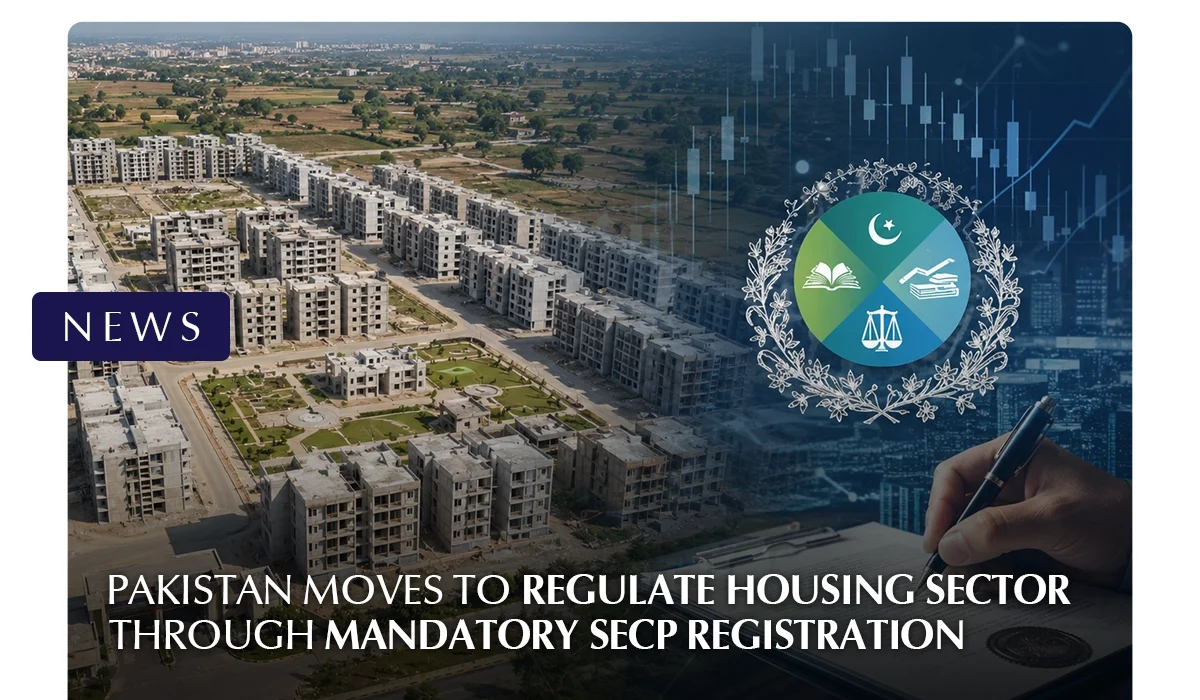
Pakistan Moves to Regulate Housing Sector Through Mandatory SECP Registration

ISLAMABAD: The federal government is considering making registration with the Securities and Exchange Commission of Pakistan (SECP) mandatory for all companies operating in the housing and development sector, as part of a broader push to bring transparency and regulatory oversight to the country’s largely unregulated real estate market.

The development came during a high-level meeting on housing sector reforms, chaired by Prime Minister Shehbaz Sharif, at which proposals to overhaul the sector were formally presented.

Pakistan faces a housing shortage estimated at around 10 million units, while rapid urbanisation has intensified pressure on infrastructure, services, and farmland surrounding major cities. Against this backdrop, the government has signalled its intent to pursue sweeping structural reforms.

Participants at the meeting were briefed that mandatory SECP registration would be introduced for all entities engaged in housing and development. A strategy is also to be formulated to curb unplanned urban expansion, while high-rise construction and vertical development will be encouraged in major cities.

The meeting further discussed master town planning for large urban centres and proposed establishing a one-window system to safeguard the rights of developers, buyers, and other stakeholders.

The government is also considering regulatory reforms to simplify procedures for credible developers and investors.

Addressing the meeting, Prime Minister Shehbaz Sharif underscored that housing sector reforms are an essential requirement given the country’s growing population. He reaffirmed that providing affordable housing for low-income groups and improving public facilities remain key government priorities.

The proposed measures, if enacted, are expected to instil greater investor confidence, curb fraudulent housing schemes, and provide a structured regulatory framework for one of Pakistan’s fastest-growing economic sectors.

For more news on real estate and special reports, visit Chakor Ventures.

IMF Demands Stronger AML Compliance
CategoriesNews Real Estate

Pakistan’s Property Sector Faces Increased Scrutiny as IMF Demands Stronger AML Compliance

ISLAMABAD: The International Monetary Fund (IMF) has urged Pakistan to significantly strengthen its anti-money laundering (AML) framework, expressing serious concern over the critically low number of Suspicious Transaction Reports (STRs) being filed from the country’s real estate sector.

The development came as the IMF approved the release of its fourth tranche of $1.1 billion under the Extended Fund Facility (EFF), alongside approximately $220 million under the Resilience and Sustainability Facility (RSF). Despite the disbursement, the Fund flagged persistent structural weaknesses in Pakistan’s financial monitoring architecture, particularly within Designated Non-Financial Businesses and Professions (DNFBPs).

IMF officials noted a widespread perception that significant volumes of undocumented and untaxed capital are being absorbed into the real estate market, circumventing formal financial oversight mechanisms. The Fund described the current performance of Pakistan’s DNFBP framework as unsatisfactory and called for immediate corrective measures.

In response, Pakistani authorities informed the IMF that the Federal Board of Revenue, the Financial Monitoring Unit, and the Directorate General of DNFBPs would jointly address the STR shortfall through regulatory reforms, a structured reporting framework, and mandatory registration of relevant entities.

The IMF also raised concerns over trade-based money laundering, pressing Pakistan to enhance inter-agency data sharing across customs, foreign exchange, and import payment systems to detect illicit financial flows more effectively.

Additionally, the Fund highlighted deficiencies in beneficial ownership disclosures and called for improved accuracy in the Securities and Exchange Commission of Pakistan’s corporate registry to prevent the misuse of legal entities.

On the banking front, authorities reported that non-performing loans had declined to 6.1 percent by the end of 2025, and a previously undercapitalized private bank has since completed recapitalization and restored full regulatory compliance.

For more news on real estate and special reports, visit Chakor Ventures.

CategoriesNews Construction Developments Property Property Laws Real Estate Urban Developments & Planning

Big Relief for Developers as Court Allows Commercial Conversion of Karachi Residential Plots

KARACHI: The Federal Constitutional Court has lifted restrictions on converting residential plots for commercial and recreational use in Karachi, marking an important development for the city’s property and construction sectors.

The case was heard by a bench headed by Justice Aamer Farooq. The court disposed of a long-running matter related to illegal constructions in Karachi and removed earlier limits on changing residential plots into commercial properties.
However, the court made it clear that amenity plots cannot be converted. This means land reserved for parks, schools, hospitals, mosques, playgrounds, and graveyards will remain protected and cannot be used for commercial or residential purposes.

During the hearing, Justice Aamer Farooq observed that the court would not interfere in the work of institutions such as the Sindh Building Control Authority unless there was a clear violation of the law. The court also noted that affected parties may approach the relevant forum or the high court if they believe any rule has been violated.

Justice Arshad Hussain further remarked that officials who violate building regulations or planning laws would face legal action under existing laws.
The decision is expected to have a significant impact on Karachi’s real estate market, where the use of residential areas for commercial activity has long been a disputed issue among developers, residents, and government authorities. While the ruling may open new business and construction opportunities, the protection of public-use land remains an important condition.

For more news on real estate and special reports, visit Chakor Ventures.

CategoriesNews Economy Investment Property Property Laws Real Estate Real Estate Investment

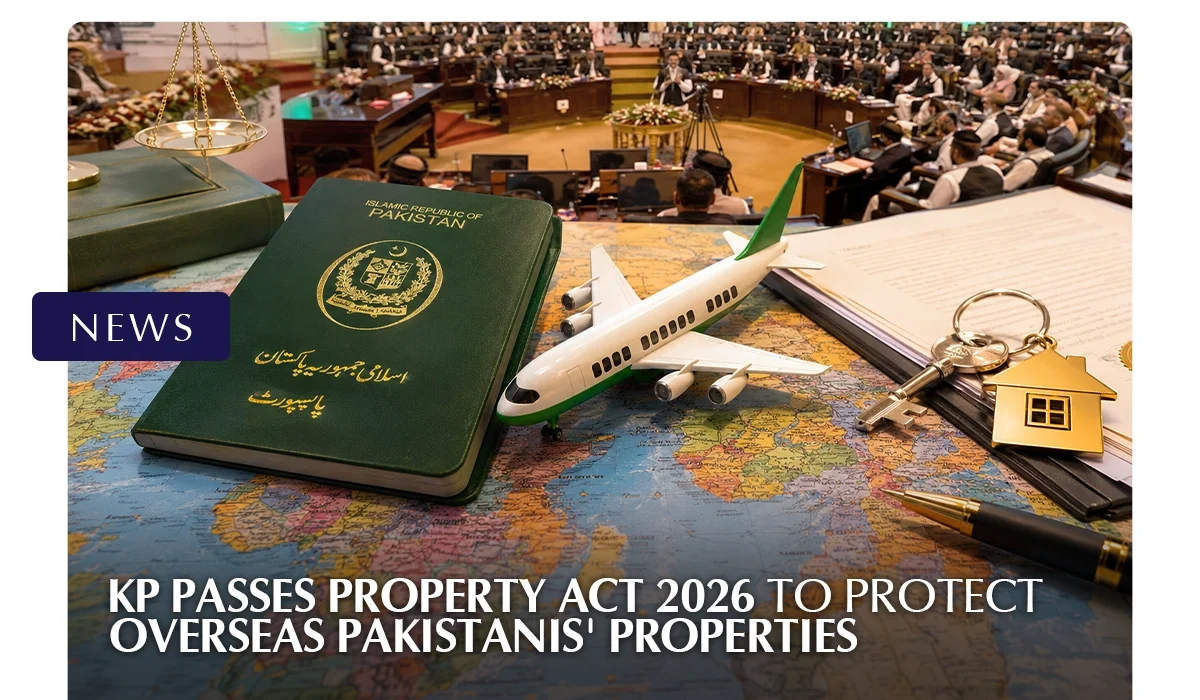
KP passes property Act 2026 to protect overseas Pakistanis’ properties

PESHAWAR: The Khyber Pakhtunkhwa Assembly has passed the Overseas Pakistanis Property Act 2026 to protect properties owned by overseas Pakistanis and ensure faster resolution of related disputes.

The law, introduced by Provincial Law Minister Aftab Alam, is aimed at preventing illegal occupation, unlawful transfer, and other property-related issues faced by expatriates in the province.

Under the Act, special courts will be established across Khyber Pakhtunkhwa in consultation with the Peshawar High Court. These courts will be headed by judges of the rank of Additional District and Sessions Judge, while pending property cases involving overseas Pakistanis will also be transferred to the special courts.

The law requires such cases to be decided within 120 days, while appeals must be filed within 15 days. Overseas Pakistanis will also be able to submit applications online, making the legal process more accessible for those living abroad.

The Act further allows testimony to be recorded through video link, enabling applicants to take part in court proceedings without travelling to Pakistan. Court notices may also be served through mobile phones, email, and mosques to improve communication and reduce delays.

The legislation also includes provisions to stop illegal transfer of properties and assist in rent recovery for overseas Pakistanis. Officials said the measure is intended to strengthen legal protection, improve access to justice, and build confidence among expatriates regarding their properties in Khyber Pakhtunkhwa.

For more news on real estate and special reports, visit Chakor Ventures.

CategoriesNews Construction Developments Real Estate Urban Developments & Planning

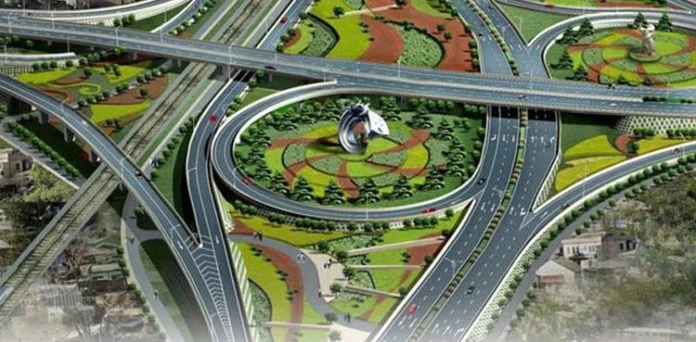
Rawalpindi completes Kachehri Chowk remodelling project

RAWALPINDI: Kachehri Chowk, one of Rawalpindi’s busiest traffic points, has been renamed Marka-e-Haq Square following the completion of a major remodelling project aimed at improving traffic flow in the city.

Punjab Chief Minister Maryam Nawaz was scheduled to formally inaugurate the project on Sunday, May 10, 2026. The project, reportedly completed in six to seven months, was originally expected to take much longer.

The development includes two flyovers and three underpasses designed to reduce congestion for commuters travelling within Rawalpindi and between Rawalpindi and Islamabad. The project is expected to handle more than 250,000 vehicles daily, making movement easier for motorists using The Mall, Rashid Minhas Road, Jinnah Park, and nearby routes.

The remodelled Kachehri Chowk flyover and underpass have been named Marka-e-Haq, while other parts of the project include the Jinnah Underpass and Flyover, and the Iftikhar Janjua Underpass. A monument has also been established near Baggi Park as part of the development.

The project cost has been reported at around Rs. 19 billion. Frontier Works Organisation was involved in the work, with quality checks linked to the Punjab Communication and Works Department.

Security arrangements were made for the inauguration ceremony, with personnel from Rawalpindi Police, Elite Force, Special Branch, and district police deployed in the area.

Residents have welcomed the completion of the project, expressing hope that it will ease daily traffic problems and reduce travel time in one of the city’s most crowded areas.

For more news on real estate and special reports, visit Chakor Ventures.

CategoriesSpecial Report News Property Laws Property Taxes Real Estate Tax

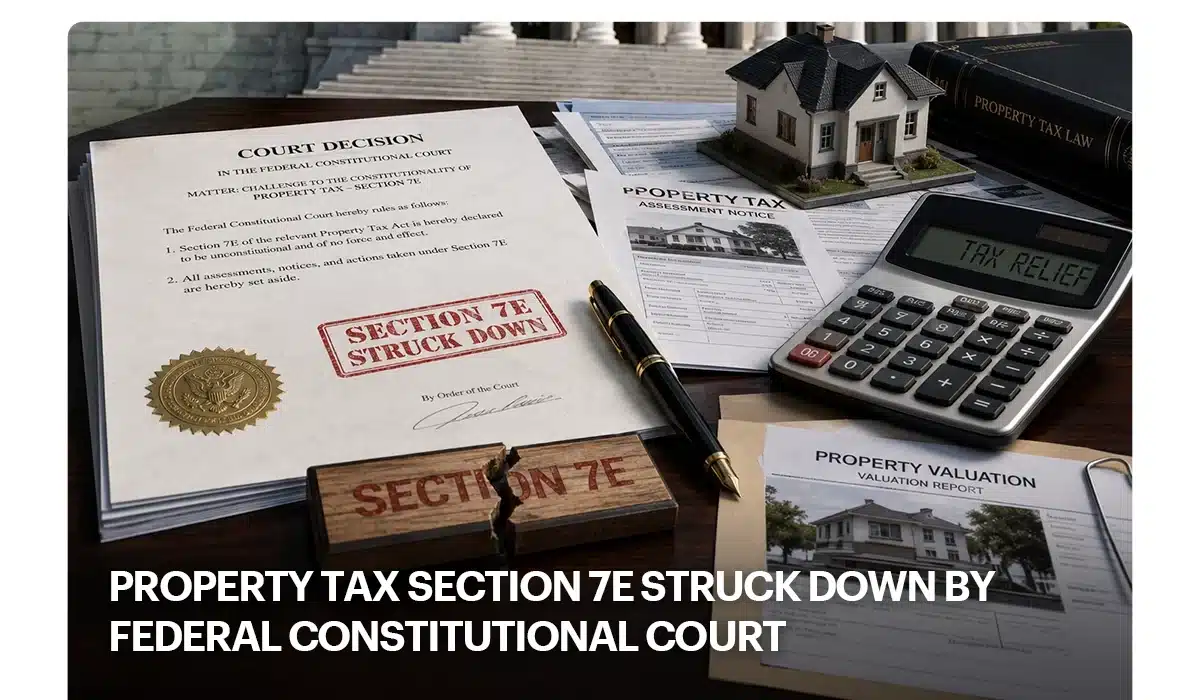
Property Tax Section 7E Struck Down by Federal Constitutional Court

ISLAMABAD: In a landmark ruling that closes nearly four years of legal battles across Pakistan, the Federal Constitutional Court (FCC) has unanimously declared Section 7E of the Income Tax Ordinance, 2001, unconstitutional, wiping the controversial property tax off the books entirely and delivering a major blow to the Federal Board of Revenue (FBR).

Chief Justice Amin-ud-Din Khan, sitting alongside Justice Ali Baqar Najafi, delivered the short order in open court in Islamabad, marking one of the most significant tax rulings in Pakistan’s recent judicial history.

What Was Section 7E?

To understand why this ruling matters, you need to understand what Section 7E actually did and why so many people found it deeply unfair.

Section 7E was inserted into the Income Tax Ordinance through the Finance Act 2022. It introduced a “deemed income” tax on immovable property, essentially treating the value of real estate as if it were generating taxable rental income at a fixed rate, regardless of whether the owner had actually earned a single rupee from that property.

In plain terms, if you owned a plot or house that you weren’t renting out or selling, the tax authorities could still charge you income tax on what they assumed you should have earned. The law imposed this tax from tax year 2022 onwards, calculated at a rate of 5% of the property’s fair market value.

The law did carve out some exceptions. It excluded a person’s single self-owned property, business premises used by active taxpayers, agricultural land used for farming, properties owned by provincial or local governments, and assets allotted to armed forces personnel or war-wounded individuals. Properties with a combined fair market value below Rs. 25 million were also exempt.

But for everyone else, salaried professionals, retired civil servants, heirs to family property, and major business houses alike, unexpected tax demands quickly followed. In a country where real estate has historically been the default savings vehicle for the middle class, the provision struck a raw nerve almost immediately.

A Four-Year Legal War Across the Country

What followed Section 7E’s introduction was one of the most sprawling tax litigations Pakistan has ever seen. Over 200 petitioners, from individual homeowners in Karachi to major textile conglomerates in Lahore, from bar associations to listed corporations, challenged the law in High Courts across the country.

The results were deeply inconsistent, creating a confusing patchwork of legal rulings that differed province by province:

The Peshawar High Court and the High Court of Balochistan struck down Section 7E entirely as ultra vires the Constitution. The Islamabad High Court charted a middle course, declining to invalidate the entire provision but declaring subsection (2) unconstitutional.

The Lahore High Court initially sided with the taxpayers through a Single Judge, only for a Division Bench to reverse that verdict and uphold the law. The High Court of Sindh, for its part, dismissed constitutional petitions, leaving Karachi’s taxpayers with no relief.

The result was an absurd situation where your tax obligations depended not on the law itself, but on which province you happened to file your legal challenge in. This clearly called for a single, definitive ruling from the highest court.

The Federal Constitutional Court Consolidates the Cases

The Federal Constitutional Court took up the matter, consolidating a staggering array of cases, civil petitions from Karachi, Lahore, Peshawar, and Quetta; cases transferred from the Islamabad High Court; and freshly filed transfer cases into one grand consolidated hearing.

The bench heard arguments over seven intensive days in April 2026, the 13th, 14th, 15th, 27th, 28th, 29th, and 30th, with a formidable array of advocates on both sides. Senior counsel representing taxpayers included Rashid Anwer, Salman Akram Raja, and Faisal Siddiqi, among others. The Federation and FBR were represented by counsel, including Asma Hamid and Hafiz Ahsan Ahmad Khokhar.

The arguments revolved around several core constitutional questions: Could Parliament lawfully impose income tax on income that was never actually received? Did the provision violate the fundamental right to property? Was the concept of “deemed income” constitutionally valid without any genuine accrual of income? And critically, did the levy actually function as a disguised wealth tax, something Parliament does not have the legislative competence to impose under the Constitution’s legislative lists?

The Verdict: Void from Day One

The court’s decision, reserved on April 30, was read by Chief Justice Amin-ud-Din Khan, who noted that all actions taken by FBR under Section 7E are now void.

The court held that Section 7E is ultra vires the Constitution. It is struck down. It is void ab initio, meaning it is treated as if it never legally existed, from the very moment of its enactment in 2022.

This is a critical legal distinction. The ruling does not just stop the tax going forward; it retroactively erases the legal basis for every assessment, demand, and action taken under Section 7E since it was introduced four years ago.

The Federal Constitutional Court upheld appeals filed by citizens challenging the decisions of the Islamabad and Lahore High Courts, effectively reversing those courts’ conclusions that the provision was constitutional.

Who Benefits?

Taxpayers who received assessments or demands under Section 7E, ranging from salaried individuals to large listed companies, are now formally in the clear.

The decision is expected to provide significant relief to Pakistan’s real estate sector, which had been under pressure since the law came into force. With greater clarity and reduced tax-related concerns, investors are likely to show renewed interest in rental property opportunities within developments such as Citadel 7 and Citadel One3, projects by Chakor. Property owners who had delayed transactions or investment decisions due to this tax liability can now move forward with greater legal certainty.

The FBR, which had filed appeals seeking to reinstate the provision, lost comprehensively. The constitutional court dismissed all appeals filed by the FBR seeking its restoration.

What This Means Going Forward

The ruling is a clear constitutional signal to Parliament: you cannot tax income that does not exist. Fictionalizing income treating the notional rental value of a property as actual taxable earnings crosses a constitutional line between income tax and wealth tax, and Parliament does not have unlimited power to blur that boundary.

For property owners across Pakistan, the immediate takeaway is straightforward. Any tax demand, assessment, or penalty issued under Section 7E has no legal standing. The law is treated as if it never existed. And the FBR has no further recourse on this provision unless Parliament were to attempt a fresh, constitutionally compliant legislative approach a path that would face significant legal scrutiny given this ruling.

For the broader tax and real estate ecosystem, the verdict restores a degree of investor confidence that had been shaken since 2022, and removes what many had called an arbitrary and constitutionally dubious burden from millions of property owners across the country.

For more news on real estate and Special Reports, visit Chakor Ventures.

Citations

  1. Dunya News, “FCC strikes down controversial Section 7E of income tax law”, updated May 7, 2026.
  2. Mettis Global, “FCC strikes down Section 7E tax on property”.
  3. ProPakistani, “Constitutional Court Declares Section 7E Unconstitutional in Major Relief for Property Sector”, May 7, 2026.
  4. HUM News English, “FBR loses appeal as court scraps Section 7E tax rule”.
  5. Federal Board of Revenue, Income Tax Ordinance, 2001 — Amended up to 20.02.2026, Section 7E, “Tax on deemed income.”
CategoriesCitadel One3 Architecture Construction Developments Investment Property Real Estate Real Estate Investment Towers

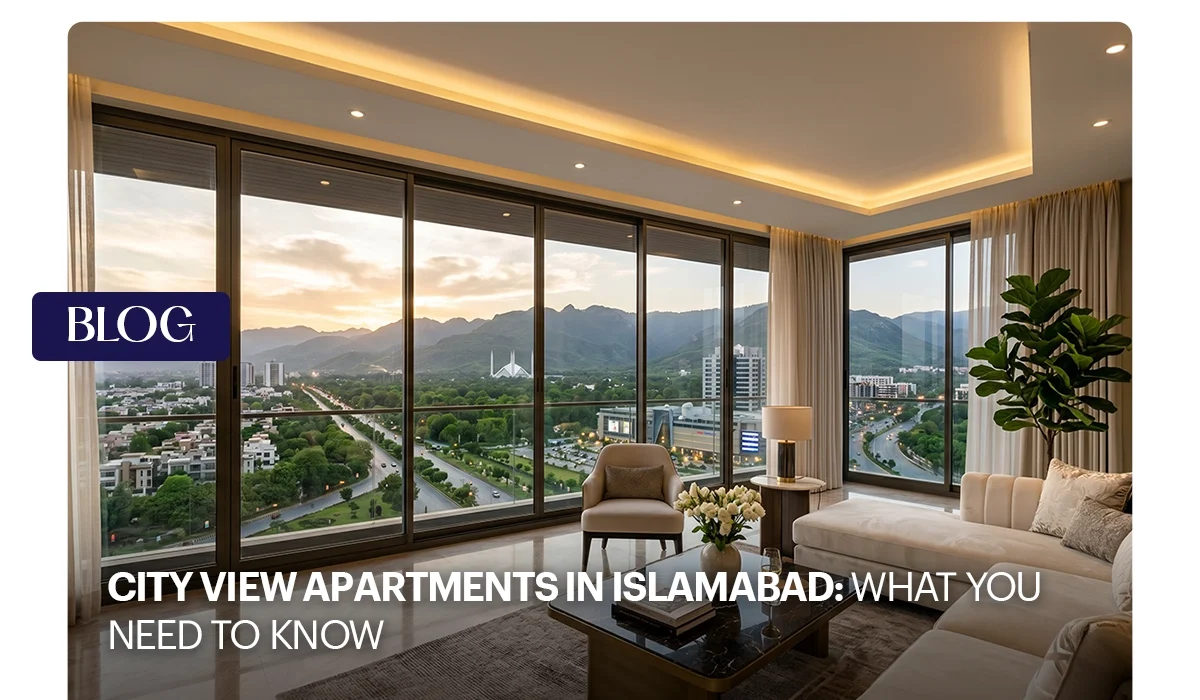
City View Apartments Islamabad: The Complete Guide (2026)

There are cities where height gives you more concrete. Then there is Islamabad a city where rising above the roofline reveals one of the most distinctive urban panoramas in South Asia: a low-lying capital spread across a valley floor, the geometric order of its master-planned sectors giving way to the hazy green ridgeline of the Margalla Hills. A city view apartment in Islamabad is not an abstract amenity. It is a fundamentally different way to experience the capital.

Demand for city view apartments Islamabad has grown consistently over the past several years, driven by a convergence of factors.

This guide covers everything you need to know what a genuine city view apartment looks like in Islamabad, where to find one, what to look for before committing, and why location within the city determines view quality, lifestyle quality, and long-term value in roughly equal measure.

Table of Contents

  1. What Makes a City View Apartment Worth It in Islamabad?
  2. Long-Term Rent and Buy: What the Market Actually Offers
  3. Location Guide: Where in Islamabad Do You Get the Best Views?
  4. What to Look for Before You Commit
  5. Buying vs. Renting: Which Is Right for You?
  6. Citadel One3: A New Benchmark for City View Living in Islamabad
  7. Frequently Asked Questions

What makes city view apartments Islamabad worth it?

Islamabad was designed from scratch in the 1960s by Greek urban planner Constantinos Doxiadis. That deliberate, low-density layout, wide avenues, sector-based zoning, and generous green belts mean that a city view here rarely means staring at a wall of concrete.

From the upper floors of a tower in the Blue Area, you are typically looking at tree canopy, the tiled rooflines of F-sector houses, the distant white dome of the Faisal Mosque, the green swathe of F-9 Park, and behind it all, the permanent, weather-shifting presence of the Margalla Hills.

This is what separates a premium Islamabad apartment from its equivalent in Lahore or Karachi. The horizontal city drops away beneath you. What replaces it is a view that combines the energy of a modern capital with the calm of a landscape that predates it by millions of years.

Long-Term Rent and Buy: What the Market Actually Offers

The long-term market for apartments for sale in Islamabad with genuine city or Margalla views is more limited than headlines suggest. Many developments marketed as city view apartments are either in locations where height does not yet translate to an unobstructed view, or in housing societies at an early enough stage of development that the view will be compromised as surrounding construction catches up.

Genuinely premium Margalla view apartments in Islamabad tend to fall into two categories: hillside society developments in Zone IV, where the natural elevation and distance from the urban core mean long-range unobstructed views of the Margalla range; and high-rise towers in the Blue Area, where the height of the building itself clears the surrounding low-rise fabric and delivers a panoramic 360-degree view.

The Blue Area high-rise option, the category into which Citadel One3 falls, offers both the view and the location simultaneously. It is also the rarer product, because CDA-regulated development within the Blue Area and Jinnah Avenue corridor imposes strict controls on what can be built. Supply is limited by design. That structural scarcity is a key driver of long-term value.

Location Guide: Where in Islamabad Do You Get the Best Views?

The city’s geography divides the city view apartment Islamabad market into distinct zones with different view profiles, price points, and lifestyle implications.

Location View Profile Typical Use
Blue Area / Jinnah Avenue City skyline + Faisal Mosque + Margalla Hills Short stay, investment, long-term residence

The Blue Area and Jinnah Avenue corridor stands alone in one respect: it is the only zone in Islamabad where the view, the location, and the commercial infrastructure converge in the same address.

Living above the city’s dominant commercial spine means that the landmarks you see from your window, Faisal Mosque, F-9 Park, the Margalla ridgeline, are the same landmarks you pass on the way to work, to dinner, to everything.

What to look for before you commit?

Whether you are booking a short stay or signing a purchase agreement, several practical considerations apply universally.

Floor level matters more than you expect. Islamabad is a predominantly low-rise city. In most sectors, buildings top out at two or three storeys. To get a genuinely unobstructed view from a Blue Area tower, you need to be high enough to clear the surrounding built fabric.

CDA NOC status is non-negotiable for purchases. Before transferring any funds, verify that the development holds a valid Capital Development Authority No Objection Certificate. The CDA publishes a list of approved and unapproved housing schemes on its official website. Purchasing in a development without CDA approval exposes buyers to the risk of demolition notices, untransferable title, and inability to secure financing. This step takes five minutes and can prevent years of legal difficulty.

Developer track record matters. Look beyond the renders and ask what the developer has already delivered. A developer with a completed project in the same market on the same street, at a comparable scale, is offering proof of concept, not just a promise. That distinction is material.

Power backup. Islamabad experiences load-shedding, particularly during the summer months. Premium high-rise towers in the Blue Area typically build backup power into the infrastructure, but this should be confirmed, not assumed. A generator that covers corridors and common areas but not individual units is not the same as full building backup.

Management post-handover. For investment buyers, the quality of building management after handover determines rental income and asset preservation. Who manages the building? What are the annual maintenance charges? Is there a rental management service for investors who want to rent their units without being involved day-to-day? These questions matter as much as the purchase price.

Buying vs. Renting a City View Apartment in Islamabad

Buy if you are a Pakistani resident or overseas national with a three-to-five-year or longer investment horizon. Blue Area apartments have shown the strongest and most stable price appreciation of any property type in the city. CDA-approved high-rise units on or near Jinnah Avenue are a scarce asset in this market, and scarcity tends to compound over time.

Rent short-term if you are visiting Islamabad for work or family, on a corporate posting, or a diaspora visitor spending weeks rather than months. Serviced apartments in the Blue Area towers give you hotel security and services with genuine living space and city views, the right product for this need.

Rent long-term if you are an expat or professional on a multi-year posting who values flexibility over asset accumulation. Fully furnished long-term lets in the Blue Area corridor are available through building operators, typically at monthly rates negotiated directly. 

Citadel One3: A New Benchmark for City View Living Islamabad

Citadel One3 is Chakor Ventures’ premium residential condominium tower, rising 40+ floors along Jinnah Avenue in the Blue Area. It represents one of the few genuinely new high-rise residential products to come to market in Islamabad’s most established commercial corridor in recent years.

The project is developed by Chakor Ventures, the same firm behind Citadel 7, Islamabad’s first premium corporate tower on Jinnah Avenue, delivered ahead of schedule with grey structure complete.

What Citadel One3 City View Apartments Islamabad offers:

  • Location: Jinnah Avenue, Blue Area, Islamabad’s dominant commercial core.
  • Views: Direct sightlines to the Faisal Mosque, F-9 Park, and the Margalla Hills three of Islamabad’s most iconic landmarks, from a single address
  • Scale: 40+ floors rising above the surrounding low-rise fabric, ensuring that views are genuine and not aspirational
  • Total area: 27,500 sq ft, with both commercial and residential units
  • Amenities: Gym, sports and kids play area, culinary court, rental stay management, smart parking for 350+ cars, advanced firefighting systems, secure entry and exit points, CCTV infrastructure
  • Rental management: A built-in rental stay management service means investors who purchase units can generate short-stay rental income without managing it directly, bridging the short-stay and investment buyer segments in one structure

The project offers what most city view apartments Islamabad cannot: a panoramic view from Islamabad’s most recognisable landmarks, delivered by a developer who has already proved it can build at this scale, at this address.

FAQs – City View Apartments Islamabad

Which area in Islamabad has the best city view apartments Islamabad?

For the combination of view quality, location, and long-term investment value, the Blue Area and Jinnah Avenue corridor is the strongest option in the city. 

Are city view apartments Islamabad available on installments?

Yes. Most new-launch condominium projects in Islamabad, including those in the Blue Area, offer structured installment plans.

Is a CDA NOC important when buying City View Apartments Islamabad?

Yes, It is essential.

Can overseas Pakistanis buy city view apartments Islamabad?

Yes. Overseas Pakistanis can purchase CDA-approved City View Apartments Islamabad without restriction.

What floor do you need to be on for a real City View Apartments Islamabad?

In the Blue Area, the surrounding built fabric is mostly two to four storeys. A tower of 40+ floors begins delivering genuinely unobstructed panoramic views from the middle floors upward.

Final Word – City View Apartments Islamabad

Islamabad offers a city view apartment market that is genuinely distinctive, not because of density or skyline height, but because of what the city looks like when you rise above it. The combination of a planned low-rise capital and the Margalla Hills as a permanent northern backdrop creates a view that rewards altitude in a way few other Pakistani cities can match.

For more information on types of property taxes and real estate investment options, please visit Chakor.