CategoriesReal Estate Investment Investment Property Real Estate

Real Estate Investing Tips in Pakistan: A Complete Guide for Smart Investors (2026โ€“2027)

Pakistan’s real estate market is massive. It’s one of the biggest contributors to the country’s GDP, and the numbers keep growing. But this market is complex. Murky land titles, unregulated brokers, and fraudulent housing schemes catch unprepared investors off guard. Losses can be steep; however, the risks are manageable. With the right knowledge, most pitfalls are entirely avoidable. This guide covers practical real estate investing tips built for the Pakistani market. First-time buyer, overseas Pakistani, or seasoned investor, you’ll find actionable advice to protect your capital and build real wealth.

Understanding the Pakistani Real Estate Landscape

Pakistani Real Estate Landscape

Before diving into strategy, it’s important to understand where the market stands.

Pakistan’s real estate sector is experiencing a period of cautious optimism. Inflation dropped to just 0.7% in early 2025, the lowest in nearly six decades, giving buyers more purchasing power. Interest rates, which once reached a punishing 22โ€“25%, have fallen to around 12โ€“15%, making financing more accessible. Foreign direct investment is rising, and the government has introduced housing schemes and tax reforms aimed at encouraging genuine investment.

At the same time, challenges remain very real. Political instability continues to rattle investor confidence. Construction costs have risen sharply due to global supply chain disruptions.

Over 35% of investors reported possession delays or legal complications in 2023. And a fragmented, often corrupt regulatory environment means that even well-intentioned investments can go sideways without proper due diligence.

Understanding this backdrop is the foundation of any serious real estate investment strategy in Pakistan,ย 

Real Estate Investing Tips in Pakistan

Real Estate Investing Tips in Pakistan

Tip 1: Know Your Market – Location Is Non-Negotiable

The most fundamental of all real estate investment tips, in any country, is to know your market deeply. In Pakistan, this takes on even greater importance because property values can vary enormously within the same city, let alone across provinces.

What to research before buying:

  • Population and growth trends: Is the area’s population expanding? Is it attracting workers, students, or families? A neighbourhood near a major hospital, university, or business hub will hold demand better than one without anchor institutions.
  • Infrastructure quality: Access to clean water, electricity, gas, roads, public transport, and proximity to schools and hospitals directly impact rental demand and resale value.
  • Ownership type: Is the area dominated by large institutional developers (DHA, Bahria Town, CDA-approved schemes) or fragmented, individual ownership? Competing against large institutional developers can be difficult for small investors.
  • Zoning regulations: Make sure any property you consider is properly zoned for its intended use. Zoning violations are surprisingly common in Pakistan and can lead to demolition orders and total loss of investment.

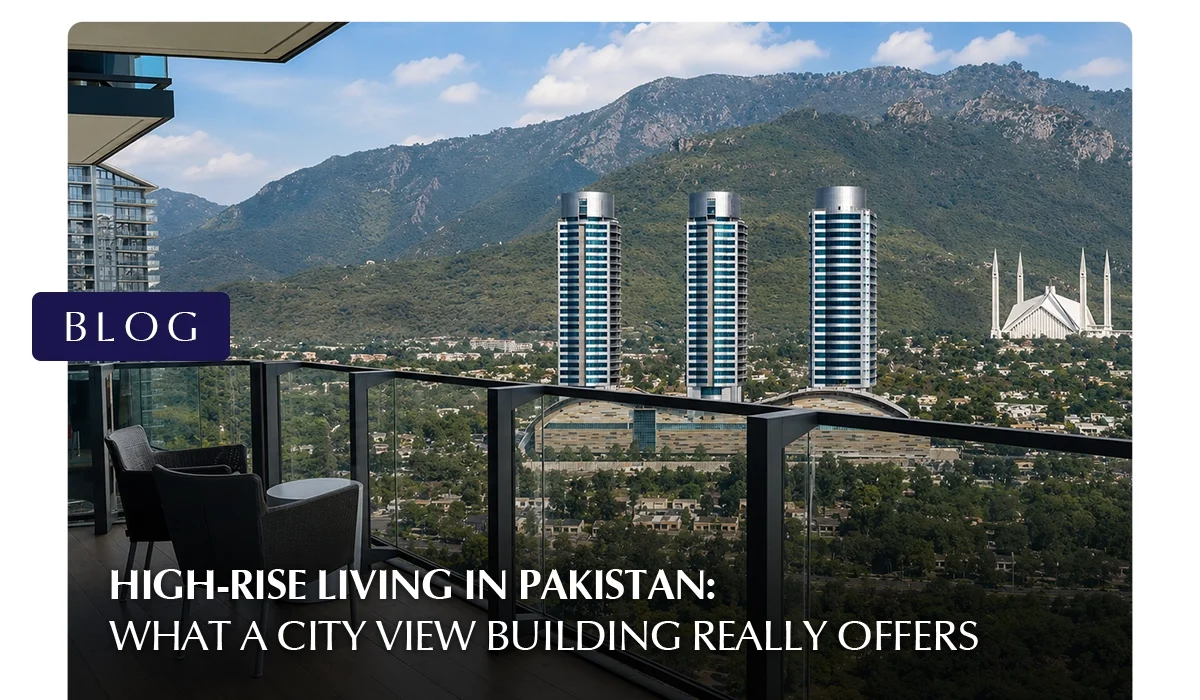
Pakistan’s real estate market is evolving rapidly, and Islamabad, one of the country’s most liquid and high-demand markets, sits at the centre of that momentum. Two standout projects from Chakor Ventures are leading this charge: Citadel 7, a premium corporate tower in the Blue Area, and Citadel One3, a luxury 40+ storey residential condominium overlooking the Faisal Mosque, both strategically located on Jinnah Avenue, making them compelling options for investors seeking exposure to one of Pakistan’s strongest real estate markets.

Tip 2: Master the Tax Environment

Real Estate Investing Tips

Tax is perhaps the single most misunderstood aspect of real estate investing tips in Pakistan. The rules change frequently, the penalties for non-compliance are steep, and the gap between what filers and non-filers pay is enormous. Smart investors treat tax planning as a core part of their investment strategy, not an afterthought.

Here are the key taxes you need to understand:

  • Capital Gains Tax (CGT): As of July 1, 2024, properties acquired are subject to a flat 15% CGT for tax filers, regardless of how long you hold the property. Non-filers can face rates ranging from 15% to 45%. Previously, CGT decreased with holding period; this sliding scale has been eliminated for newer purchases, making long-term holding less tax-advantaged than before.
  • Withholding Tax (WHT): WHT applies at the point of property purchase and transfer. Rates for filers range from approximately 3% to 5%, depending on the property value. Non-filers pay significantly higher rates. The 2025โ€“26 budget introduced some reductions in WHT for buyers, but the filer/non-filer gap remains wide.
  • Deemed Income Tax (Section 7E):ย One of the most controversial taxes in Pakistan’s real estate landscape, this requires property owners to pay tax on a deemed rental income from their properties, even if the property generates no actual rental income.ย Filers are charged around 3%, non-filers up to 10.5%. If you own multiple properties, this tax can add up quickly.
  • Federal Excise Duty (FED): FED applies to certain property transactions, adding yet another layer of transaction cost on top of CGT and WHT.
  • Stamp Duty and Registration Fees: These are provincial and vary across Punjab, Sindh, KPK, and Balochistan. Always factor these into your total acquisition cost.

Practical Tax Tips – Real Estate Investing Tips:

  • Maintain an active filer status with FBR. This single action can save you enormous amounts in WHT and CGT differentials. The difference between filer and non-filer rates can be 30 percentage points on capital gains; that’s not a rounding error, it’s the difference between profit and loss.
  • Track FBR valuation rates. Property transactions in Pakistan are often recorded at FBR valuation rates, which may differ from actual market prices. Understanding these rates helps you anticipate your actual tax liability.
  • Hire a qualified tax accountant with real estate expertise. General accountants may not be current on the frequent amendments to Pakistan’s property tax laws. A specialist can help you structure transactions in the most tax-efficient way legally permissible.
  • Plan your holding strategy around CGT implications. While the previous sliding scale has been removed for newer purchases, understanding how holding periods interact with tax liability remains important for your overall portfolio planning.

Tip 3: Conduct Rigorous Legal Due Diligence – Every Single Time

Real Estate Investing Tips

Legal risk is the number one cause of catastrophic investment losses in Pakistani real estate. Unlike economic risks that can be managed, legal problems, such as a disputed title, a fake NOC, or a fraudulent developer, can result in total, unrecoverable loss of capital.

The legal checklist every investor must follow:

  • Verify the NOC (No Objection Certificate). A valid NOC from the relevant development authority (CDA for Islamabad, LDA for Lahore, SBCA for Karachi) confirms that a housing society or development project has cleared legal and structural requirements. Cross-check the NOC number and developer name on the authority’s official website, not just on documents provided by the seller or agent. Buying into an unapproved project, no matter how attractive the price, can result in demolition and zero recovery.
  • Check the Fard / Jamabandi.ย The Fard is the official Land Revenue Record maintained by the revenue department. It confirms the seller has a clear, legal, and unencumbered title. Failure to verify the Fard is the root cause of most land-grabbing cases and ownership disputes, especially on the outskirts of Lahore, Karachi, and Islamabad.
  • Confirm no encumbrances. Ensure the property is free of any mortgages, legal disputes, liens, or active court cases. Ask for a written declaration from the seller and verify independently through provincial land registry offices.
  • Register the transaction legally. Simply signing a sale agreement is not enough. The Registration Act 1908 requires property documents to be legally registered to create an irreversible public record of ownership. Without registration, your ownership can be challenged.
  • Involve all relevant parties. Courts have invalidated property claims where necessary parties were not included in legal proceedings. Ensure every person with a potential interest in the property is accounted for in your documentation.
  • For overseas Pakistanis, use a verified Power of Attorney. If you cannot be present in Pakistan, appoint a trusted representative through a properly executed Power of Attorney. Be extremely careful: scams targeting overseas Pakistanis are widespread, often involving fake NOCs and unapproved land. Always hire an independent lawyer, not one recommended by the developer or agent you’re buying from.

Tip 4: Choose Your Investment Strategy and Commit to It

Real Estate Investing Tips

One of the most consistent real estate investment tips from experienced investors globally is this: decide on a strategy that aligns with your goals, and stick to it. The Pakistani market, with all its volatility, punishes those who switch strategies reactively.

The main strategies available in Pakistan:

  • Buy and Hold: Purchase a property in a high-demand, well-located area and hold it for long-term capital appreciation. This works especially well in rapidly developing corridors of Islamabad, Lahore DHA, and Bahria Town, where infrastructure investment is ongoing. The key is choosing locations with strong fundamentals, not just hype.
  • Rental Income: Buying residential or commercial property for rental income is one of the most reliable strategies in Pakistan’s urban centres. Islamabad and Karachi, in particular, have strong rental demand driven by the corporate and diplomatic community. Commercial properties in business hubs are sought after by startups and IT companies. Carefully project your rental yield against your total acquisition cost and ongoing maintenance, be conservative, not optimistic.
  • House Flipping: Buying undervalued properties, renovating them, and selling at a profit is viable in Pakistan but requires deep market knowledge, reliable contractors, and the ability to move quickly. Be aware of the CGT implications on short-term sales, especially under the new flat 15% rate for filers.
  • Off-Plan Investment: Buying into a project during the pre-launch or under-construction phase at lower prices and exiting at or after completion. This offers strong return potential but carries significant risk. Position delays affect 35%+ of investors in Pakistan.ย 
  • REITs (Real Estate Investment Trusts): For investors who want real estate exposure without hands-on management, Pakistan’s SECP-regulated REITs offer a more structured vehicle. Capital gains on REIT redemptions are subject to their own tax structure.ย 

Tip 5: Understand and Manage Real Estate Investment Risk

Every real estate investment carries risk. In Pakistan, the risk profile is heightened by several factors unique to the market. Acknowledging these risks honestly, rather than hoping they won’t affect you, is what separates successful investors from cautionary tales.

Key risks and how to mitigate them:

Risk Nature Real Estate Investing Tips / Mitigation
Title/ownership fraud Seller doesn’t actually own the property Verify Fard, conduct an independent title search
Developer fraud Projects sold without NOC or oversubscribed Only invest in NOC-verified, track-record developers
Tax policy changes Frequent amendments affect return calculations Maintain filer status, consult a tax specialist annually
Possession delays Over 35% of projects face delays Build delay clauses into sale agreements, buy from proven developers
Political/economic instability Currency depreciation, policy reversals** Diversify across property types and locations
Illegal land occupation (Qabza) Encroachment on unoccupied properties Regularly inspect properties, engage local caretakers
Unregulated brokers Agents misrepresent approvals and timelines Deal only with RECA-registered agents, and verify all claims independently
Inflation & construction costs Rising material costs increase investment outlay Lock in prices contractually with developers

Tip 6: Build a Professional Team Around Your Investment

No successful real estate investor operates alone. In Pakistan’s complex market, the quality of your team can literally determine whether you profit or lose everything.

The professionals you need:

  • A real estate lawyer with specific expertise in property law and land disputes in your target province. Provincial laws vary significantly; a Lahore lawyer may not be the right choice for a Karachi investment.
  • An FBR-compliant tax accountant who specialises in property transactions and stays current with annual Finance Act amendments.
  • A local property manager, if you’re investing in rental property, especially as an overseas Pakistani. They handle tenant screening, maintenance, and rent collection.
  • An independent property valuer to give you an honest market valuation rather than one influenced by the seller’s interest.

Tip 7: Look at Your Portfolio Holistically

A common mistake among new investors is focusing obsessively on the terms of a single deal rather than how it fits into an overall portfolio. Each property decision should be evaluated in the context of your total financial picture.

Real Estate Investing Tips – Key portfolio considerations:

  • Property type diversification: Residential, commercial, and industrial properties each carry different risk profiles and return characteristics. Residential is generally more stable in Pakistan; commercial offers higher yields but greater vacancy risk.
  • Geographic diversification: Don’t concentrate all your capital in a single city or even a single housing society. Spreading across Islamabad, Lahore, and one emerging market reduces your exposure to localised shocks.
  • Leverage carefully: While financing is more accessible now with interest rates falling, property loans in Pakistan still carry high costs. Ensure your rental income or projected capital gain comfortably covers debt servicing with margin to spare.
  • Maintain liquidity reserves: Pakistan’s property market can be illiquid; it can take months to find a buyer at your target price. Always maintain cash reserves to cover holding costs, unexpected repairs, and vacancy periods.

Tip 8: Only Invest in Approved Housing Societies

This cannot be overstated as a real estate investing tip specific to Pakistan. Many investors, especially first-timers and overseas Pakistanis, are lured by low prices in unapproved housing schemes.ย 

Unapproved schemes carry risks, including:

  • Demolition orders that wipe out the entire investment
  • No utility connections (water, gas, electricity)
  • No legal recourse against fraudulent developers
  • Inability to ever get a clean title deed
  • Properties that cannot be legally transferred or sold

Always verify approval status on the official websites of CDA, LDA, SBCA, RDA, or the relevant provincial development authority before paying a single rupee.

Tip 9: Project Your Cash Flow Honestly

Every developer, every agent, and every seller will present you with projections that show the best possible scenario. Your job as an investor is to stress-test those numbers until they break – and then decide if the investment still makes sense.

When evaluating a rental property, ask yourself:

  • What is the realistic vacancy rate for this area and property type? If similar units in the area run 20% vacancy, don’t project 5%.
  • What are the actual maintenance costs? Older properties have higher maintenance; new developments often have hidden costs in the form of service charges and HOA-equivalent fees.
  • What will tenant turnover cost you in Pakistan’s market? Legal eviction can take considerable time and expense if a tenant doesn’t pay.
  • Is the rent in line with comparable properties in the area, or is the agent showing you an exceptional rate that can’t be sustained?
  • What is your break-even rental yield, and does the market support it?

Tip 10: Leverage Technology for Research and Verification

Pakistan’s real estate market is increasingly digitising. Use available tools to incorporate better real estate investing tips:

  • Chakor Ventures or Other Property Portals for price benchmarking and market trend analysis across cities and neighbourhoods.
  • FBR’s Property Valuation portal to check official valuation rates for your target property.
  • Provincial land record management systems (like PLRA in Punjab) for online ownership verification, reducing dependence on potentially fraudulent paper documentation.
  • CDA, LDA, and SBCA websites for official NOC verification of housing societies.

Real Estate Investing Tips for Overseas Pakistani Investors

ย Here are some real estate investing tips that specifically apply to overseas Pakistani investors:

  • You must clear the State Bank of Pakistan (SBP) requirements before remitting funds from abroad for property purchase. Ensure all transfers go through official banking channels and are properly documented.
  • Use a NICOP (National Identity Card for Overseas Pakistanis) for property transactions; it’s your primary identification document.
  • Always appoint an independent lawyer, not one recommended by the developer, to represent your interests through a Power of Attorney.
  • Visit physically before committing large sums, or engage a trusted, paid professional to conduct an on-ground inspection and report.
  • Be especially wary of social media and WhatsApp marketing, as some of the most aggressive fraudulent schemes target overseas Pakistanis through informal channels with polished digital marketing.

The Bottom Line – Real Estate Investing Tips

Apply these real estate investing tips consistently, and Pakistan’s property market, with all its complexity, can become the foundation of significant, long-term financial growth.

FAQs – Real Estate Investing Tipsย 

What is the 7 3 2 rule? Real estate investing tips.

The 7 3 2 rule is a simple investment guideline used to compare risk, returns, and growth potential. In real estate, it helps investors evaluate properties more strategically.

What are the five golden rules of real estate?

The five golden rules are location, cash flow, affordability, due diligence, and long-term value. These are essential Real Estate Investing Tips for safer decisions.

What are the five pillars of real estate?

The five pillars are location, financing, market analysis, property management, and legal compliance, which act as top real estate investing tips.

What is the number 1 rule in real estate?

A good location can improve rental demand, resale value, and long-term returns. This is one of the top real estate investing tips.

What are the 4Ps of real estate?

Property, price, place, and promotion. They act as real estate investing tips and help investors assess value, demand, and marketability.

What is a good way to invest in real estate?

A good way is to start small with rental units, plots, or verified property platforms.

Top tips for real estate investing in Pakistan.

Top real estate investing tips include studying the market, checking documents, and comparing nearby property rates.

Real estate investing tips for beginners.

Real estate investing tips for beginners include starting small, avoiding rushed decisions, and learning basic property terms. Provide some commercial real estate investing tips.

What are some commercial real estate investing tips?

Commercial real estate investing tips in Pakistan include checking tenant demand, lease terms, parking, and business activity.

List some of the best online platforms for real estate investing in Pakistan.

There are multiple online platforms for real estate investing tips in Pakistan. You can search them up on the internet.

Best property investment platforms for beginners in Pakistan.

There are many such beginner-friendly platforms which offer reasonable real estate investing tips.

How to use property management apps for rental investments.

Use property management apps to track rent, expenses, tenants, repairs, and lease dates. It is one of the best real estate investing tips.

List some of the loan options for buying investment property.

Loan options for buying investment property include bank loans, Islamic financing, and private lending.

What are some of the top tools for analysing real estate market trends in Pakistan?

Top tools include property portals, price comparison tools, rental yield calculators, and market reports.

What is the purpose of recommended software for rental property management?

It helps investors measure rental property performance.

Are there any affordable property inspection services for investors nearby available in Pakistan?

Yes you can search them up online.

Where to find reliable real estate legal services in Karachi.

Reliable real estate legal services in Karachi can be found through law firms, property lawyers, and trusted referrals.

Which financial services offer loans for real estate investors in Pakistan?

Banks, Islamic banks, and housing finance companies may offer loans for real estate investors in Pakistan.

What do companies offering real estate investment analysis tools provide? Real Estate Investing Tips.

Companies offering real estate investment analysis tools provide valuation, rental yield, ROI, and market trend features.

Is real estate investment in Pakistan safe for overseas Pakistanis?ย 

It can be, but only with proper legal representation, investment in NOC-approved projects, and payments made through official banking channels.ย 

What is the minimum investment for real estate in Pakistan?ย 

Entry-level plots in smaller cities or on instalment plans can start from PKR 1โ€“2 million, while residential units in major cities typically require PKR 5 million and above.ย 

What is the biggest real estate investment risk in Pakistan?ย 

Title fraud and investment in unapproved housing schemes are consistently the most catastrophic risks. Always verify ownership through official land records and NOC status through development authority websites.

Should I be a tax filer before investing in real estate in Pakistan?ย 

Absolutely. The difference in withholding tax and capital gains tax between filers and non-filers can reach 30 percentage points, making active FBR filer status one of the highest-return actions an investor can take before buying property.

For more information on types of property taxes and real estate investment options please visit Chakor.

CategoriesNews Property Property Laws Property Taxes Real Estate

LDA Eases Property Transfer Costs With New Penalty Relief Rule

LAHORE: The Lahore Development Authority (LDA) has announced a significant change in how penalties are calculated for property owners involved in transfer and No Objection Certificate (NOC) cases, offering considerable financial relief to citizens across the city.

Under the revised policy, penalties will now be calculated based on the property rate at the time of the original plot allotment, rather than the current District Collector (DC) rates. This change marks a notable departure from the previous method, which many property owners found to be financially burdensome.

Previously, plot owners applying for NOCs or property transfers were charged heavy penalties calculated by including access area adjustments and applying current market rates, significantly increasing the financial burden on applicants.

Citizens had repeatedly raised concerns that they were being subjected to excessive fees during transfer and approval processes, even in situations where they were not directly responsible for discrepancies in land measurements.

Under the revised policy, any increase or decrease in the access area will now be assessed using historical rates from the year the plot was originally allotted. Officials believe this adjustment will bring greater fairness to the valuation process and reduce disputes between applicants and the authority.

The decision was taken following special working sessions conducted by LDA Director General Tahir Farooq and the Additional Director General (Housing), resulting in the preparation of a new policy framework. The policy has since been approved by the LDA Governing Body, and official minutes have been issued to implement the decision.

The reform is expected to benefit a large number of property owners in Lahore who have long faced disproportionate charges when seeking routine administrative approvals from the authority.

For moreย news on real estateย and special reports, visitย Chakor Ventures.

CategoriesProperty Property Laws Property Taxes Real Estate

FBR Streamlines Tax Exemption Process for Property Developers, Sets Seven-Day Deadline

A new FBR circular ends an unintended double-tax burden on Pakistanโ€™s builders and, for the first time, puts a hard deadline on the bureaucracy to deliver.

Pakistanโ€™s property developers have long operated under a tax arrangement that worked against them at precisely the wrong moment. Having already settled their obligations under a fixed-rate regime, they were still required to hand over advance tax at the point of every property sale, money that could not be recovered because the law had no mechanism to account for how their income was classified. The Federal Board of Revenue has now moved to close that gap.

Through Circular No. 08 of 2025-26 (IR-Policy โ€“ Income Tax), the FBR has clarified that builders and developers operating under the special tax regime defined by Section 7F of the Income Tax Ordinance, 2001, are eligible to seek exemption from advance withholding tax under Section 236C on property sale transactions. More significantly, it has set an enforceable seven-working-day deadline for Commissioners Inland Revenue to process those exemptions with an automated fallback through the IRIS system if the deadline is missed.

Two tax provisions pulling in opposite directions

Section 7F places eligible builders and developers on a presumptive tax track. Their taxable income is calculated as a fixed percentage of gross receipts, not on actual profits. The intention is to simplify compliance for a sector with long and unpredictable project cycles.

Section 236C operates differently. It requires advance tax to be withheld from the seller whenever immovable property changes hands. Under the Finance Act, 2025, the FBRโ€™s official rate schedule sets this tax at 4.5 to 5.5 percent for active tax filers and up to 11.5 percent for non-filers, depending on the value of the transaction (FBR, 2025).

Table 1: Section 236C advance tax rates on seller of immovable property Finance Act 2025

Source: Federal Board of Revenue, fbr.gov.pk

Gross consideration received Filer rate Late filer Non-filer rate
Up to Rs. 50 million 4.5% 7.5% 11.5%
Rs. 50 million โ€“ Rs. 100 million 5.0% 8.5% 11.5%
Above Rs. 100 million 5.5% 9.5% 11.5%

ย In most property transactions, this withholding is adjustable against capital gains at the end of the tax year. For Section 7F developers, however, income is not classified as capital gains; it falls under income from business. The adjustment never materialises. The withheld tax simply sits with the department and is unavailable to the developer (FBR Circular No. 07, 2026).

A cash flow problem with real consequences

Construction is a capital-intensive business. Developers need liquid funds continuously for materials, daily labour, and equipment. When advance tax deductions under Section 236C cannot be recovered, the effective tax burden on Section 7F developers exceeds the statutory rate. Research on tax compliance costs in developing economies finds that unrecoverable advance deductions fall hardest on smaller developers, limiting their ability to complete projects on time (Bird & Zolt, 2005).

The scale of the problem is compounded by the size of Pakistanโ€™s construction sector, which is among the largest employers of daily-wage labour and a major consumer of industrial inputs. Policies that unnecessarily restrict developer cash flow carry downstream consequences for project completion, housing supply, and employment.

What Circular No. 07 got right and left unresolved

The FBR had already taken a first step with Circular No. 07 of 2025-26 (IR-Policy โ€“ Income Tax), issued on March 31, 2026. That circular confirmed that developers who had fully discharged their Section 7F liability and had no other taxable income could apply for an exemption certificate under Section 159 of the Ordinance. The certificate would authorise non-collection of advance tax on their property transactions.

The problem was enforcement. Circular No. 07 sets no deadline for Commissioners to act. In practice, that left the relief dependent on administrative responsiveness, a variable that has historically disadvantaged applicants in Pakistanโ€™s tax system.

What Circular No. 08 changes

Circular No. 08 supersedes its predecessor and adds two concrete mechanisms. Commissioners Inland Revenue must now issue an exemption certificate within seven working days of receiving a complete, eligible application. If they do not, the IRIS system, the FBRโ€™s central digital tax platform, automatically processes and issues the certificate (FBR Circular No. 08, 2026).

The eligibility criteria remain the same: the developer must have fully settled their Section 7F tax liability and must have no other taxable income against which the Section 236C deduction could otherwise be adjusted. Commissioners retain the responsibility to review each application individually before granting relief.

IRIS as an enforcement tool

The IRIS system already handles payment slip generation for property transactions under Sections 236C and 236K, including a dedicated channel for overseas Pakistanis (FBR, 2025). Designating it as the fallback for certificate issuance extends its role from record-keeping to active enforcement. International evidence supports this approach: automated processing mechanisms in tax administration consistently reduce approval delays and lower compliance costs for businesses (OECD, 2022).

Broader implications for investment and compliance

The reform addresses a structural mismatch that had no defensible policy rationale. Removing it improves operating cash flow for eligible developers and lowers the cost of compliance. For a sector that attracts both domestic and overseas Pakistani investment, regulatory clarity of this kind matters. Research on property markets in developing economies consistently identifies compliance uncertainty as a deterrent to private sector investment (World Bank, 2020).

There is also a compliance dividend. When developers can access statutory relief within a defined and enforced timeframe, the incentive to seek informal workarounds or to underreport transaction values is reduced. That outcome serves the FBRโ€™s revenue interests as much as it serves the sector.

Conclusion

Circular No. 08 of 2025-26 resolves a specific, well-documented conflict in Pakistanโ€™s property tax framework. The seven-day deadline and IRIS fallback convert a discretionary process into an enforceable one. For Section 7F developers, the practical result is the removal of an unrecoverable advance tax burden. For tax administration more broadly, it represents a meaningful step toward using digital infrastructure as an accountability mechanism. Whether that step translates into consistent on-the-ground practice will depend on how Commissioners apply the circular and how closely the FBR monitors IRIS processing timelines in the months ahead.

For moreย news on real estateย and Special Reports, visitย Chakor Ventures.

References

Bird, R. M., & Zolt, E. M. (2005). The limited role of the personal income tax in developing countries. Journal of Asian Economics, 16(6), 928โ€“946.

Federal Board of Revenue. (2025). FAQs on filer rate under Section 236C or 236K. Government of Pakistan. https://fbr.gov.pk/overseas-faqs/174240/174248

Federal Board of Revenue. (2025). Withholding income tax rate card updated up to June 30, 2025 as per Finance Act, 2025. Government of Pakistan. https://download1.fbr.gov.pk

Federal Board of Revenue. (2026a). Circular No. 07 of 2025-26 (IR-Policy โ€“ Income Tax): Clarification regarding applicability of withholding tax under Section 236C in respect of persons covered under Section 7F. Government of Pakistan.

Federal Board of Revenue. (2026b). Circular No. 08 of 2025-26 (IR-Policy โ€“ Income Tax): Clarification regarding applicability of withholding tax under Section 236C in respect of persons covered under Section 7F. Government of Pakistan.

OECD. (2022). Tax administration 2022: Comparative information on OECD and other advanced and emerging economies. OECD Publishing. https://doi.org/10.1787/1e797131-en

World Bank. (2020). Doing business 2020: Comparing business regulation in 190 economies. World Bank Group. https://doi.org/10.1596/978-1-4648-1440-2

CategoriesEconomy Feature Article Investment Property Property Laws Property Taxes Real Estate

FBR Updates Property Valuation in Six Cities, Adopts Selective Revision Strategy

The Federal Board of Revenue (FBR) has revised property valuation rates in six cities through notifications issued in April 2026.

Type Location Published Source
Feature Report Islamabad, Multan, Faisalabad, Gujranwala, Bahawalpur, Sialkot April 2026 Federal Board of Revenue (FBR)

In a move that underscores a more cautious and data-driven approach to taxation, Pakistanโ€™s Federal Board of Revenue (FBR) has revised property

valuation rates in six key urban centers, choosing precision over sweeping change.

6 cities revisedย  Targeted update

Up to 35% cut ย in Islamabad

Up to 40% increase ย in select Punjab areas

The latest notifications, issued through multiple statutory regulatory orders (SROs), affect Islamabad and five major cities of Punjab: Faisalabad, Multan, Gujranwala, Bahawalpur, and Sialkot. Yet unlike past revisions that triggered widespread market reactions, this update is defined by restraint.

Officials describe the exercise not as a revaluation, but as a โ€œcalibration.โ€

What the revision shows

A review of the notifications suggests three broad trends.

Islamabad

First, Islamabad has seen the clearest downward adjustment in a number of areas, especially when compared with earlier public discussion around high official values in the capital. The Islamabad notification provides a fresh sector-wise table with rates for open plots, apartments, and different commercial categories, showing wide variation by location.ย 

For example, it lists residential open-plot values such as Rs21,000 per square yard in B-17, Rs91,000 in D-12, Rs225,000 in F-7, and Rs200,000 in F-8, showing a more differentiated capital-city structure than a flat city-wide pricing approach.ย 

It also sets separate built-up values for superstructure based on age: Rs2,500 per square foot for structures up to five years old and Rs1,200 per square foot for older structures.

Multan and Faisalabad

Second, Multan and Faisalabad show upward movement in selected urban and developed areas. The Multan notification replaces a long list of entries from the 2024 schedule and gives revised open-plot values for areas such as Wapda Town, Gulgasht, Abdali Road, Bosan Road and other city locations.ย 

In the examples visible in the revised table, many residential and commercial entries in developed city areas are set at higher nominal levels than would normally be associated with lower-tier urban zones, indicating an upward update in important corridors and neighborhoods.

Faisalabadโ€™s revised entries likewise show updated values for city housing and metropolitan corporation areas, including residential and general classifications in areas such as FDA City, city housing zones, and other listed blocks, pointing to a selective upward revision rather than a broad-based cut.

Gujranwala, Bahawalpur, and Sialkot

Third, Gujranwala, Bahawalpur and Sialkot appear to have more limited and focused changes, mainly in named housing schemes, DHA-related sectors, commercial plots, residential plots, and built-up categories.ย 

In Bahawalpur, for example, the amendments cover DHA-developed sectors and named villa and commercial projects, with separate plot and superstructure values.ย 

In Gujranwala, the changes cover selected entries in Defence Housing Scheme, GEPCO Town, Palm City Housing Society, Royal Palm City and other specific locations.ย 

In Sialkot, the notification is short and updates selected named schemes such as Canal City, City Villas Housing Society Harar, Daimond City, Dream Land City, Golden City, Model City, Quba City, Safe City Housing Scheme, Sialkot City and Silk City.

City-wise direction of change

Because the notifications revise selected entries rather than publishing a single city-wide percentage, the best way to present the trend is as an overall directional estimate based on the updated categories and areas listed in the SROs:

City Previous Valuation Level (2024) Revised Valuation Level (2026) Estimated Overall Shift General Market Reading
Islamabad 100% baseline about 65% to 90% of the earlier level in affected areas -10% to -35% downward correction in a number of sectors
Faisalabad 100% baseline about 110% to 125% in affected areas +10% to +25% moderate rise in selected urban areas
Multan 100% baseline about 115% to 140% in affected areas +15% to +40% stronger rise in key city zones
Gujranwala 100% baseline about 100% to 110% in affected areas 0% to +10% limited upward change
Bahawalpur 100% baseline about 110% to 120% in affected areas +10% to +20% controlled increase in selected schemes
Sialkot 100% baseline about 105% to 120% in affected areas +5% to +20% gradual increase in updated schemes

NOTE: These percentage bands are descriptive estimates drawn from the pattern of revised entries in the notified tables. The notifications themselves list area-specific values rather than a single city-wide percentage.

Impact on Buyers

For real estate buyers, FBR valuation is important because it affects the documented value used for tax purposes at the time of purchase. When the official valuation of a property rises, the tax burden tied to that documented value can also rise. When the official valuation falls, the tax cost attached to the transaction can become lighter.ย 

The practical effect is that buyers are not only concerned with the sellerโ€™s asking price or the market price; they are also affected by the official value assigned to the property in the FBR schedule. The notifications, therefore, matter directly for transaction planning, affordability, and the total upfront cost of buying.

Islamabad Property Market: Lower FBR Valuations May Ease Buyer Costs

The latest revision shows a downward trend in FBR property valuations in Islamabad, which could offer some relief to buyers in affected sectors.

Lower official values can help buyers in two key ways:

  • Reduced transaction taxes: Since taxes are linked to FBR valuation, a lower benchmark can decrease overall documentation costs.
  • Closer alignment with market prices: In some areas, the gap between official value and actual market price may narrow, making deals easier to negotiate.

However, this does not necessarily mean property prices will fall. Market prices are still driven by demand, location, and supply. What changes is the cost of registering and transferring property, which becomes more manageable.

This is particularly important for:

  • middle-income buyers
  • salaried individuals
  • first-time homebuyers

These groups are more sensitive to transaction costs, so even moderate reductions in official valuation can improve affordability.

Multan and Faisalabad: Higher Property Valuations May Increase Buyer Entry Costs

In contrast, FBR valuation increases in Multan and Faisalabad suggest higher entry costs for buyers, especially in developed and high-demand areas.

For properties located on main roads, in established housing societies, or in well-serviced neighborhoods, buyers may now face higher tax-linked costs at the time of purchase.

Key effects on buyers

  • Higher upfront costs: Buyers need to budget not only for the purchase price but also for increased taxes and documentation charges.
  • Pressure on affordability: Budget-conscious buyers may shift toward smaller plots or less expensive areas.
  • More location comparison: Differences in valuation between nearby areas may influence buying decisions more than before.
  • Potential slowdown in mid-range segments: Higher costs can reduce demand, especially where buyers are price-sensitive.

Overall, these changes may make the market more selective, with buyers focusing on value-for-money locations.

Gujranwala, Bahawalpur, and Sialkot: Limited Changes, Targeted Impact on Buyers

In Gujranwala, Bahawalpur, and Sialkot, the revisions are more limited and focused on specific housing schemes and property types. As a result, the impact on buyers is selective rather than widespread.

City-wise impact

  • Bahawalpur: Increased valuations in DHA sectors, villa communities, and commercial units may raise costs for buyers in premium planned developments.
  • Gujranwala: Modest increases in areas like Defence Housing Scheme, GEPCO Town, and Palm City may slightly raise transaction costs in organized housing projects.
  • Sialkot: Changes are concentrated in named housing societies such as Canal City, Model City, and Dream Land City, meaning the impact depends on the specific project.

What this means for buyers

  • No broad market-wide price pressure
  • Cost changes limited to specific schemes
  • Greater impact in well-developed or high-demand projects

For most buyers, the key takeaway is that location and project selection now play an even bigger role in determining total purchase cost.

Overall Buyer Impact: More Selective, Location-Based Decisions

Across all six cities, the revised FBR valuations make one thing clear: buyer costs are becoming more location-specific.

  • In some cities, lower valuations improve affordability
  • In others, higher valuations increase entry costs
  • In many cases, the impact depends on the exact housing scheme or sector

As a result, buyers are likely to:

  • Compare areas more carefully
  • Factor in both market price and official valuation
  • Prioritize total transaction cost, not just property price

This shift may lead to a more informed and selective buyersโ€™ market in the coming months.

How the buyersโ€™ market may respond

The revised valuations could shape buyer behavior in several ways over the coming months.

A. Greater interest in areas where official values have been reduced

Where official values move down, buyers may return to segments that had become costly to document. This could be particularly relevant in Islamabad, where revised valuations may encourage genuine residential demand in sectors where the official benchmark had become a hurdle.

B. Shift toward secondary locations in cities with upward revisions

In cities where official values have risen, some buyers may begin comparing notified localities more closely and shift toward less expensive zones. This is especially likely in Multan and Faisalabad, where stronger revisions in key areas may make nearby lower-rated localities more attractive.

C. Better transparency for serious buyers

Even though higher valuations can increase cost, a more detailed and area-based system can improve predictability. Buyers can more easily estimate the official basis on which their transaction will be documented if the schedule clearly identifies the area, road location, residential or commercial classification, and unit of measure. In that sense, a more detailed valuation schedule may help serious buyers plan better, even if it does not always reduce cost.

Expert Analysis and Industry Views

Early stakeholder reaction, primarily to the Islamabad valuation revision (S.R.O. 644(I)/2026)has been largely positive, with business leaders describing it as a corrective step.

Sardar Tahir Mehmood, President of the Islamabad Chamber of Commerce and Industry (ICCI), said:

โ€œEarlier inflated valuations had created hurdles for genuine investors and contributed to a slowdown in property transactions. The new notification reflects a pragmatic approach by the FBR to rationalise property valuations in line with prevailing market conditions.โ€

ICCI Senior Vice President Tahir Ayub added:

โ€œThe revision would ease financial pressure on traders and industrialists who have been facing difficulties due to high taxation, thereby reviving business confidence and promoting investment in the real estate and construction sectors.โ€

What buyers should pay attention to now?

The revised notifications suggest that buyers should look at more than just market price before finalising a deal. A careful buyer now needs to confirm:

  • whether the property falls in an area specifically revised by the 2026 SRO;
  • whether it is residential, commercial, apartment, flat, shop or built-up property;
  • whether road-facing status or plot size changes the notified value;
  • whether superstructure value applies separately, as in Islamabad and some scheme-based entries;
  • and whether the scheme or sector is among the named entries that were substituted in the latest notifications.

These details can change the official value materially, which in turn can affect the transaction cost.

Overall Assessment

The FBRโ€™s 2026 revision is a targeted adjustment, with reductions in parts of Islamabad and selective increases in several Punjab cities.

For buyers, the impact is mixed. Lower valuations can reduce transaction costs and improve affordability, while higher valuations in key areas may raise entry costs and make buyers more selective.

Overall, the update increases the importance of location-specific valuation, meaning buyers are more likely to compare total costs across areas. In the short term, this may lead to cautious buying, while over time it could help align official values more closely with market prices.

For moreย news on real estateย and Special Reports, visitย Chakor Ventures.

FBR Valuation Revision 2026
CategoriesEconomy Property Property Laws Property Taxes Real Estate

Islamabad Real Estate Investment Outlook After FBR Valuation Revision 2026

Executive Summary

The Federal Board of Revenue (FBR) issued S.R.O. 644(I)/2026 on April 16, 2026, implementing sweeping reductions of 10 to 35 percent in official property valuation rates across Islamabad. This marks the fourth major intervention in Islamabad’s property valuation framework within five months, following S.R.O. 163(I)/2026 (February 2) and S.R.O. 332(I)/2026 (February 24, 2026).

The revision is widely seen as a pivotal recalibration that could reignite investor confidence, stimulate transaction volumes, and bring greater documentation to the capital’s real estate market.

1. Background & Policy Context

Pakistan’s property taxation framework has long grappled with a structural gap between official FBR valuations and actual market transaction values. Since 2016, the FBR has been responsible for determining fair market prices for properties in major urban centres. These valuations serve as the basis for calculating federal taxes, including capital gains and withholding taxes.

The current revision cycle began in December 2025, when the FBR suspended fresh property valuations in Islamabad after taxpayers raised concerns about proposed increases of up to 1,250%. The April 2026 notification is the fourth significant intervention in five months, reflecting the urgency of realigning valuations with market realities.

SRO Reference Description Date
Suspension FBR suspends fresh valuations after public outcry over 1,250% hike proposals December 2025
S.R.O. 163(I)/2026 First revised valuation framework issued February 2, 2026
S.R.O. 332(I)/2026 Second revision โ€” further recalibration February 24, 2026
S.R.O. 644(I)/2026 Current notification โ€” 10โ€“35% reductions across sectors April 16, 2026

2. Key Changes in Valuation Rates

The revised valuation tables affect both constructed buildings and open plots across multiple sectors of the federal capital. Below are the most significant changes:

Selected Sector-Wise Valuation Changes (Per Square Yard โ€” Open Plots)
Sector Previous Rate (Rs/sq yd) Revised Rate (Rs/sq yd)
B-17 & C-14 (Residential) 30,000 21,000 (โ€“30%)
G-13 (Residential) 100,000 70,000 (โ€“30%)
Margalla Town / Banigala / Park View / Chak Shahzad Variable Reductions >30%
E-7 (Upscale โ€” Unchanged) 225,000 225,000 (No change)
Building Type Previous Rate (Rs/sq ft) Revised Rate (Rs/sq ft)
Superstructure (โ‰ค5 years old) Rs 3,000 Rs 2,500 (โ€“16.7%)
Superstructure (>5 years old) Rs 1,500 Rs 1,200 (โ€“20%)

3. Impact on Investors: Why This is Beneficial

3.1 Reduced Transaction Tax Burden

Every property transaction in Pakistan, whether a house, plot, apartment, shop, or land, requires both buyer and seller to pay advance income tax and withholding tax based on official FBR valuation rates. The FBR collects withholding tax ranging from 4.5% to 11.5% on the sale of property and from 2.5% to 18.5% on the purchase of property. With the new rates cutting valuations by 10 to 35 percent across a wide range of residential and commercial categories, the corresponding tax liabilities on transactions are expected to reduce proportionally.

For a mid-range residential plot in G-13, previously valued at Rs 100,000 per sq yard, a 300 sq yard plot was valued at Rs 30 million. At a 4.5% seller WHT rate, the tax liability was Rs 1.35 million. Under the revised rate of Rs 70,000/sq yd (Rs 21 million total), the same seller now faces WHT of Rs 945,000, a saving of Rs 405,000 per transaction.

3.2 Revival of Short-Term Investment Activity

Prior valuation increases had a measurable dampening effect on market activity. Higher valuations had led to a further decline in transaction volume, particularly affecting short-term investors whose profit margins were significantly eroded by higher taxes. Heavy taxation, coupled with a slow market, had pushed investors away from the real estate sector.

The revised rates are expected to provide relief to the real estate sector and help revive property transactions in the capital. This is especially significant for short-term and mid-term investors who depend on transaction velocity for returns.

3.3 Long-Term Market Transparency and Documentation

Historically, a wide gap between official FBR valuations and actual market transaction values has incentivised undocumented cash dealings. This structural misalignment has been a chronic obstacle for legitimate investors, banks financing property, and foreign direct investment into the sector.

By aligning official rates more closely with market realities, the new SRO encourages buyers and sellers to transact at declared values, thereby improving documentation and transparency across the board. This lays the groundwork for a healthier, more bankable real estate market, one that can attract institutional and overseas Pakistani investment.

4. Expert Analysis & Industry Voices

The following citations are drawn directly from analysts and industry leaders responding to S.R.O. 644(I)/2026:

“Earlier inflated valuations had created hurdles for genuine investors and contributed to a slowdown in property transactions. The new notification reflects a pragmatic approach by the FBR to rationalise property valuations in line with prevailing market conditions.”

โ€” Sardar Tahir Mehmood, President โ€” Islamabad Chamber of Commerce & Industry (ICCI)

“The revision would ease financial pressure on traders and industrialists who have been facing difficulties due to high taxation, thereby reviving business confidence and promoting investment in the real estate and construction sectors.”

โ€” Tahir Ayub, Senior Vice President โ€” ICCI

“Rationalising property values is a step towards creating a more balanced and investor-friendly environment. Such measures are essential to ensure sustainable growth in the property market and encourage greater documentation of the economy.”

โ€” Muhammad Irfan Chaudhry, Vice President โ€” ICCI

Real estate analysts at Pkrevenue have offered a measured assessment, noting that the revised framework could increase transaction costs in prime areas while improving transparency in property deals, but warned that higher valuations may temporarily slow activity in certain segments.

5. Broader Real Estate Market Impact

5.1 Transaction Volume Recovery

The real estate sector had experienced a measurable slowdown in transaction volumes following previous valuation hikes. The revised rates are expected to reverse this trend, particularly in developing and mid-range sectors such as B-17, C-14, G-13, Margalla Town, Chak Shahzad, Banigala, and Park View, which saw the steepest reductions (exceeding 30 percent in several cases).

5.2 Segmented Impact Across the Market

The impact of the revision is not uniform across all market segments:

  • Mid-range sectors: Developing and mid-range sectors (B-17, C-14, C-15, C-16, G-13) will benefit most from valuation reductions, making transactions more financially viable for a broader range of buyers and investors.
  • Prime/upscale zones: Upscale sectors such as E-7 and key commercial corridors in Blue Area, F-8, and G-8 retain existing rates, indicating that the FBR views prime zones as already appropriately valued.
  • Rural Islamabad: Rural areas of Islamabad remain outside the scope of this revision and continue to be subject to the District Collector rates from the July 2025 notification.

5.3 Construction Sector Spillover

Lower transaction taxes and improved market liquidity are expected to generate upstream benefits for the construction industry. Increased buyer activity in the residential sector typically drives demand for new construction, renovations, and ancillary real estate services, amplifying the economic impact of the revision beyond the property market itself.

6. Risks & Caveats for Investors

While the revision is broadly positive for the investment climate, several caveats must be noted:

  • Market conditions: The extent of any recovery in transaction volumes will depend on broader market conditions, interest rates, and purchasing power factors beyond the scope of the valuation revision itself.
  • Policy consistency: The frequency of four SROs in five months raises questions about regulatory stability. ICCI has urged authorities to continue engaging stakeholders in policymaking to ensure sustainable economic outcomes.
  • Prime zone costs: Analysts have cautioned that while transparency improves in most areas, revised valuations in certain prime commercial zones may temporarily increase transaction costs for specific buyer profiles.
  • Structural gap: The gap between official valuations and actual market prices internationally, where tax is typically charged on transaction value, remains a structural challenge that a single SRO cannot fully resolve.

7. Conclusion

S.R.O. 644(I)/2026 represents one of the most consequential recalibrations of Islamabad’s real estate taxation framework in recent years. For investors, the direct benefits are clear: lower transaction costs, improved market liquidity, and a more transparent regulatory environment. For the broader real estate market, the revision addresses a long-standing structural barrier, the gap between official valuations and market realities that had constrained documented investment.

The collective assessment from ICCI leadership and real estate analysts points to one central argument: that realistic valuations are a more effective instrument for achieving both government revenue growth and market transparency. Investors across residential, commercial, and construction segments stand to benefit, provided the regulatory environment stabilises, and further revisions do not undermine confidence.

For more information on real estate investing tips, and real estate investment options visit Chakor real estate news

Islamabad Property Valuation Rates
CategoriesNews Economy Property Property Laws Property Taxes Real Estate

FBR Revises Islamabad Property Valuation Rates Downward by Up to 35 Percent

ISLAMABAD: The Federal Board of Revenue’s issuance of S.R.O. 644(I)/2026 on April 16, 2026, marks the latest development in a series of property valuation adjustments for Islamabad that began in late 2025. In December 2025, the FBR suspended fresh property valuations in Islamabad after taxpayers raised concerns about increases of up to 1,250%. The April 2026 notification is the fourth significant intervention in Islamabad’s property valuation framework within five months, superseding S.R.O. 163(I)/2026 dated February 2, 2026, and S.R.O. 332(I)/2026 dated February 24, 2026.ย 

Category Area / Sector Previous Rate Revised Rate Change (%)
Superstructure (โ‰ค5 years) All Islamabad Rs 3,000 / sq ft Rs 2,500 / sq ft โ†“ ~17%
Superstructure (>5 years) All Islamabad Rs 1,500 / sq ft Rs 1,200 / sq ft โ†“ ~20%
Residential Plot B-17 Rs 30,000 / sq yd Rs 21,000 / sq yd โ†“ ~30%
Residential Plot C-14 Rs 30,000 / sq yd Rs 21,000 / sq yd โ†“ ~30%
Residential Plot C-15 / C-16 ~Rs 30,000 Reduced proportionally โ†“ ~30%
Residential Plot G-13 Rs 100,000 / sq yd Rs 70,000 / sq yd โ†“ 30%
Residential Plot Margalla Town Higher earlier Rs 38,500 โ†“ 30%+
Residential Plot Chak Shahzad Higher earlier Rs 35,000 โ†“ 30%+
Residential Plot Banigala Higher earlier Rs 24,500 โ†“ 30%+
Residential Plot Park View Higher earlier Rs 24,500โ€“49,000 โ†“ 30%+
Residential Plot E-7 Unchanged Rs 225,000 / sq yd No change
Commercial Blue Area Unchanged Rs 40,000โ€“100,000 / sq ft No change
Commercial New Blue Area Unchanged Up to Rs 150,000 / sq ft No change
Commercial F-8 / G-8 Mostly unchanged High values retained Minimal change
Rural Areas Islamabad rural โ€” As per July 2025 rates No change

The Federal Board of Revenue (FBR) has announced a reduction in the official valuation rates of immovable properties across Islamabad, slashing prices by 10 to 35 percent in a move that marks one of the most significant recalibrations of the capital’s real estate taxation framework in recent years.

The revised valuation tables, issued through an official notification on Thursday, apply to a broad spectrum of residential and commercial properties across multiple sectors of the federal capital. The adjustments affect both constructed buildings and open plots, though several prime commercial zones retain their existing benchmarks.

Under the new structure, valuation rates for residential and commercial superstructures up to five years old have been reduced from Rs3,000 to Rs2,500 per square foot, while buildings older than five years will now be assessed at Rs1,200 per square foot, down from Rs1,500.

Developing and mid-range sectors have witnessed particularly steep reductions. Residential plot rates in B-17 and C-14 have been brought down from Rs30,000 to Rs21,000 per square yard, while C-15 and C-16 have also seen proportionate cuts. In the G-series, G-13 has been revised from Rs100,000 to Rs70,000 per square yard. Prominent localities, including Margalla Town, Chak Shahzad, Banigala, and Park View, have each recorded reductions exceeding 30 percent.

Upscale sectors, however, continue to command high valuations. Residential plots in E-7 remain assessed at Rs225,000 per square yard, and key commercial corridors such as Blue Area, New Blue Area, and sectors F-8 and G-8 largely retain their existing rates, ranging between Rs40,000 and Rs150,000 per square foot.

Rural areas of Islamabad remain outside the scope of this revision and will continue to follow rates determined by the District Collector under the July 2025 notification.

The revision is widely seen as an effort to align official property valuations more closely with prevailing market realities, potentially encouraging greater documentation and transparency in real estate transactions across the capital.

What the New Rates Mean for Buyers and Sellers

The revised valuation rates directly affect the tax obligations of both parties in any property transaction. Every property transaction, whether involving a house, plot, apartment, shop, or any other form of land, requires both the buyer and the seller to pay advance income tax and withholding tax based on official FBR valuation rates. An increase in official valuation directly raises the cost of property transactions for both buyers and sellers.

The FBR collects withholding tax ranging from 4.5% to 11.5% on the sale of property and from 2.5% to 18.5% on the purchase of property in December 2025. With the new rates cutting valuations by 10 to 35 percent across a wide range of residential and commercial categories, the corresponding tax liabilities on transactions are expected to reduce proportionally across most sectors.

Effect on Transaction Volumes

Prior valuation increases had a measurable dampening effect on market activity. Higher valuations lead to a further decline in transaction volume, particularly affecting short-term investors, whose profit margins are significantly eroded by higher taxes. Heavy taxation, coupled with a slow market, had pushed investors away from the real estate sector.ย 

The revised rates are expected to provide relief to the real estate sector and help revive property transactions in the capital. However, the extent of any recovery in transaction volumes will depend on broader market conditions, interest rates, and purchasing power factors beyond the scope of the valuation revision itself.

Business Community Perspective

Real estate analysts have offered a measured reading of the implications. According to Pkrevenue, analysts said the revised framework could increase transaction costs in prime areas while improving transparency in property deals, but warned that higher valuations may temporarily slow activity in certain segments.ย 

ICCI President Sardar Tahir Mehmood identified the core issue that the revision addresses:

“Noting that earlier inflated valuations had created hurdles for genuine investors and contributed to a slowdown in property transactions, and that the new notification reflects a pragmatic approach by the FBR to rationalise property valuations in line with prevailing market conditions.”

ICCI Senior Vice President Tahir Ayub called for direct financial relief for market participants, stating that:

“The revision would ease financial pressure on traders and industrialists who have been facing difficulties due to high taxation, thereby reviving business confidence and promoting investment in the real estate and construction sectors.”

ICCI Vice President Muhammad Irfan Chaudhry addressed the longer-term structural dimension, remarking that:

“Rationalising property values is a step towards creating a more balanced and investor-friendly environment, and such measures are essential to ensure sustainable growth in the property market and encourage greater documentation of the economy.”

The collective assessment from these voices points to one central argument: that the gap between official FBR valuations and actual market prices had become a structural barrier to legitimate transactions, and that realistic valuations are a more effective instrument for achieving both revenue growth and market transparency.

Policy Consistency and Regulatory Context

Since 2016, the FBR has been determining fair market prices for properties in major urban centres, with the revised property tables used to calculate federal taxes, including capital gains tax and withholding tax. Internationally, tax is charged on the transaction value, but in Pakistan, the collector value is often much lower than the actual transaction value, a structural gap that has complicated property tax policy for years.

The frequency of revisions in the current cycle, four SROs in five months, has drawn attention to the need for a more stable valuation framework. The ICCI urged authorities to continue engaging stakeholders in policymaking to ensure sustainable economic outcomes, reflecting a broader industry call for a consultative and consistent regulatory process going forward.

For moreย news on real estateย and Special Reports, visitย Chakor Ventures.

CategoriesEconomy Feature Article Investment Property Laws Real Estate

From 3% to 1%: How CDAโ€™s New Fee Policy Could Reshape Real Estate

The CDA has cut the property transfer fee from 3% to 1% reversing a move that quietly stalled one of Pakistan’s most active urban real estate markets.

Type Location Published Sources
Feature Report Islamabad, Pakistan April 17, 2026 The News International, Dawn, The Express Tribune

For anyone who has ever tried to transfer a property in Islamabad, the process is familiar: paperwork, queues, challans, and at the end of it, a fee that eats a meaningful chunk out of the deal. For nearly nine months, that fee stood at 3% of the government-assessed property value, a rate that many buyers and sellers quietly called the last straw. On April 9, 2026, the Capital Development Authority (CDA) changed that. The transfer fee is now 1%.

It sounds like a small adjustment on paper. But for a market that had visibly slowed since mid-2025, this single decision may prove to be the most consequential policy move for Islamabad’s real estate sector in recent years.

How it got to 3% in the first place

To understand why this cut matters, it helps to go back to July 2025. That summer, the CDA revised its property transfer fee upward from 1% to 3% in a move aligned with updated Federal Board of Revenue (FBR) property valuations. On the surface, it seemed like a routine administrative update. In practice, it tripled the closing cost for every buyer in the capital.

The impact was immediate. A property previously attracting a transfer fee of Rs 35,000 suddenly carried a fee of Rs 105,000. Deal pipelines that were nearly closed began to stall. Buyers who had already arranged financing found themselves short. Sellers struggled to find willing buyers at the new all-in cost. Market volumes dropped quietly but steadily through the second half of 2025.

3ร— Fee increase in July 2025

9 Months Market slowed under a high rate

65%+ Drop in transfer cost from today

Meanwhile, the federal government had been moving in the opposite direction. The FY2025-26 Budget had reduced advance property tax from 3% to 1.5% a signal that Islamabad’s CDA policy was running against the national grain.

Trade bodies began making noise. The Islamabad Chamber of Commerce and Industry, the Islamabad Estate Agents Association, and the United Business Group all formally called for a reversal.

The new chairman, a new approach

In early April 2026, Sohail Ashraf took charge as CDA Chairman. He also holds the office of Chief Commissioner of Islamabad a combination of roles that gives him significant authority. His third board meeting, held on April 9, produced the reversal the market had been waiting for.

The philosophical shift was as notable as the numbers. Ashraf stated explicitly that the goal going forward would be to broaden the tax base rather than increase tax rates. In other words, CDA would rather collect smaller amounts from more people and more transactions than squeeze harder from a shrinking pool.

“Instead of increasing property taxes in Islamabad, efforts should be made to broaden the tax base.”

โ€” Sohail Ashraf, Chairman CDA and Chief Commissioner Islamabad

The CDA Board formally approved the new rate and issued the official notification on the same day. It supersedes the previous notification dated July 1, 2025. All revenue departments were directed to apply the 1% rate immediately.

What the numbers actually look like

The fee is calculated on the FBR-notified (assessed) value of the property not the open market price. This distinction matters. FBR assessments are typically lower than what properties actually trade for on the market. So the real saving is often larger than even a two-thirds reduction implies.

FBR-assessed value Old fee @ 3% New fee @ 1% Saving
Rs 5,000,000 Rs 150,000 Rs 50,000 Rs 100,000
Rs 10,000,000 Rs 300,000 Rs 100,000 Rs 200,000
Rs 20,000,000 Rs 600,000 Rs 200,000 Rs 400,000
Rs 50,000,000 Rs 1,500,000 Rs 500,000 Rs 1,000,000

The new rate applies to all properties within CDA-controlled areas of Islamabad residential sectors such as F-8, G-10, and I-8, as well as commercial areas, including the Blue Area. It does not apply to properties in housing societies outside the CDA jurisdiction.

How beneficial this is for the market

High transfer fees do more damage than just raising costs. When the official route becomes too expensive, informal shortcuts become tempting. Transfers get delayed or, worse, go undocumented.

Ownership records fall out of date. Future disputes over inheritance, resale, or financing become more complicated. Every informal shortcut is a hairline fracture in the property market’s long-term integrity.

Lower fees reverse that incentive. When the official cost is reasonable, there is simply less reason to cut corners. More documented transactions mean better price discovery because verified deals build the official data trail that the entire market relies on.

“This decision will increase business activity, restore public confidence, and help the real estate sector, along with its allied industries, regain momentum.”

โ€” Zafar Bakhtawari, Secretary General, United Business Group

For buyers, the benefit is immediate: lower upfront cost and less last-minute financing pressure near closing. For sellers, it widens the pool of serious buyers. For developers, it reduces the cost of moving inventory.

And, in what many analysts called a counterintuitive but well-established effect, CDA itself may collect more revenue, not less, because more transactions will now be completed formally and on record.

Beyond the fee what else was decided

The April 9 board meeting was not only about the transfer fee. Two other significant decisions were also taken.

The CDA board approved the appointment of Creative Consultants, designated as a City Curator, to help develop Islamabad as a cultural and tourism destination. The initiative covers landscaping, parks, green belts, and urban vibrancy a long-discussed ambition for the capital that has now moved from idea to formal procurement.

The board also addressed solid waste management. After reviewing recommendations from its own committees, it decided to terminate the current outsourcing procurement process and revisit successful models from other cities before restarting. The chairman described the goal as adopting a sustainable and efficient system rather than pushing through a flawed one.

What happens now

For buyers and sellers currently in the process of a property transfer, the practical guidance is straightforward:

  • Confirm your property falls under CDA jurisdiction
  • Verify with the dealing office that the 1% rate is being applied to your file.
  • Calculate on the FBR-notified value rather than the market price. Keep all receipts and the updated notification, which replaces the July 2025 circular.

It is also worth noting that the transfer fee is one part of the total closing costs. Other taxes and administrative charges still apply, depending on the transaction. The cut is significant, but it is not a removal of all costs.

What it is, however, is a signal. The new CDA leadership has chosen, in its first major policy move, to reduce rather than increase. In a market that has spent the better part of a year waiting for exactly that signal, the timing could not have been more deliberate.

For moreย news on real estate ,Special Reports and real estate investment options visit Chakor Ventures.

CategoriesNews Property Laws Real Estate

Punjab to Launch Digital Real Estate System to Boost Investment and Transparency

LAHORE: The Punjab government is introducing a digital system for all property transactions in private housing schemes. The move is part of a proposed Real Estate Regulatory Act (RERA), directed by Chief Minister Maryam Nawaz.

All dealings will be processed through a centralised platform built by the Punjab Land Records Authority (PLRA). Housing schemes will need to issue a green certificate via the system before any sale. The full process, including approvals, registration, and documentation, will go paperless.

These reforms are expected to make real estate options more secure and transparent for buyers across Punjab.

A Housing Societies Management System will also be introduced. Some sub-registrar powers will be delegated to private housing schemes to speed up registrations.

Developers have one month to switch to the new system. A facilitation cell will be set up to guide stakeholders through the transition. Compliance is mandatory.

The move is also likely to strengthen confidence in real estate investment by reducing risks linked to informal property transactions.

The reforms aim to reduce fraud, improve transparency, and bring Punjabโ€™s largely informal property market under proper oversight. The PLRA, Board of Revenue, and Lahore Development Authority are jointly overseeing the rollout.

For moreย news on the economy, development, real estateย and special reports, visitย Chakor Ventures.

Short Term Rental Property Management
CategoriesCitadel One3 Developments Investment Real Estate Towers Urban Developments & Planning

Short Term Rental Property Management: Best Condo Guide 2026

If you own a condo in Pakistan, whether in Lahore, Islamabad, Karachi, or any growing urban centre, you are sitting on one of the most valuable income opportunities available today. Short term rental property management has transformed how Pakistani property owners generate returns from their real estate investments. Instead of locking a tenant into a year-long contract at a fixed rent, you can list your condo for short stays, charge premium nightly rates, and earn two to three times more than a conventional long-term tenancy.

But managing a short-stay property is not as simple as posting a listing on a platform and waiting for bookings. It requires a structured, professional approach. This guide covers everything you need to know about short term rental property management in Pakistan in 2026 from setting up your condo and pricing it correctly to choosing the right short term rental companies and tools to scale your income.

What is Short Term Rental Property Management?

Short Term Rental Property Management

Short term rental property management refers to the complete process of operating a furnished property for stays typically ranging from one night to a few months. Unlike conventional rentals, where a landlord signs a lease and collects monthly rent, short term rental property management involves active, ongoing work: marketing the property, coordinating bookings, communicating with guests, overseeing cleaning between stays, maintaining the unit, and continuously optimising pricing.

In Pakistan, this model has gained serious momentum over the past few years. Corporate travellers, visiting families, freelancers on project-based relocations, and domestic tourists are all actively seeking well-managed, furnished spaces over traditional hotels. This demand has created a thriving market for vacation rentals and a clear need for professional management systems to match it.

Short-Term vs Long-Term Rental Management

Short-Term vs Long-Term Rental Management

The core difference is operational intensity. Long-term rentals involve placing a single tenant, collecting rent monthly, and handling occasional maintenance. Short term rental property management, on the other hand, requires managing multiple guest cycles every month, each with separate bookings, check-ins, cleaning sessions, and reviews.ย 

Who Needs a Short Term Rental Property Manager?

Not every condo owner has the time or expertise to manage a short-stay property. A dedicated property manager is especially valuable for:

  • Owners who live abroad or in a different city from their property
  • Investors managing multiple units simultaneously
  • Professionals with full-time jobs who cannot respond to guests around the clock
  • First-time landlords unfamiliar with platform management and pricing tools
  • Owners who want to maximise revenue without managing day-to-day operations

Citadel One3: A Prime Condo for Short Term Rental in Islamabad

Citadel one3

Citadel One3 by Chakor Ventures is one of the most strategically positioned condos for professional short-term rental property management today.

Rising 40+ floors on Jinnah Avenue in the Blue Area, one of the capital’s most sought-after urban addresses, it offers panoramic views of the Faisal Mosque, F-9 Park, and the Margalla Hills, making it an instantly attractive listing for both corporate and leisure guests.

What sets Citadel One3 apart from a short-term rentalย investment from Pakistan’s perspective is that it is designed with rental operations in mind.ย The building features dedicatedย rental-stay management as a built-in amenity, meaning the infrastructure for short-stay operations is already embedded in the development.

For investors entering the vacation rentals space, this removes one of the most common early barriers to finding a building that actually supports and accommodates short-stay guests.

The development also includes a suite of amenities that today’s guests actively search for:

  • A fully equipped gym and sports facilities
  • A culinary court for dining within the building
  • Sports and kids’ play area for family guests
  • Smart parking for over 350 vehicles
  • 24/7 CCTV surveillance and secure entry and exit points
  • An advanced firefighting and safety system

These facilities allow your condo listing to compete directly with serviced apartment hotels at a fraction of the nightly cost to the guest, and with far stronger returns for the owner.

Located on Jinnah Avenue with direct sightlines to the Faisal Mosque and F-9 Park, a Citadel One3 unit appeals to corporate travellers, government visitors, diplomats, and domestic tourists alike, exactly the guest mix that keeps occupancy rates consistently high throughout the year.

For anyone serious about short-term rental property management in Islamabad, Citadel One3 represents the kind of address, amenity stack, and built-in management support that turns a condo investment into a reliable, high-performing income asset.

Core Responsibilities in Short Term Rental Property Management

Core Responsibilities in Short Term Rental Property Management

Understanding whatย short-term rental property managementย entails helps you decide whether to handle it yourself or work with a professional short term rental property management.

Listing creation and optimisation is the first step. Your property needs professional photographs, a compelling description, competitive pricing, and accurate availability calendars across platforms like Airbnb, Booking.com, and local Pakistani portals.

Dynamic pricing is one of the most powerful tools in short-term rental property management. It adjusts your nightly rates based on demand, local events, and competitor activity.ย 

Guest communication is a constant responsibility. From the moment a guest enquires to the moment they check out, and even after they leave a review, clear, professional communication is essential.

Housekeeping and maintenance between each stay are non-negotiable. Every guest expects a spotless, fully functional apartment.ย 

How to Choose the Best Short Term Rental Property Management Companies in Pakistan

Short-term rental property management

For property owners who do not want to manage everything themselves, working with professional Short-term rental property management companies is the most practical solution.ย 

When evaluating short-term rental property management, look for the following qualities:

  • Transparent fee structure: Most companies charge between 20% and 30% of revenue. Understand exactly what is included before signing any agreement.
  • Local market expertise: A company familiar with your specific city and neighborhood understands demand patterns, seasonal trends, and guest expectations far better than a generic operator.
  • Technology and reporting: Professional short-term rental property management companies use property management systems that provide real-time visibility into occupancy, revenue, and guest feedback.
  • End-to-end service: The best operators handle listing management, dynamic pricing, guest communication, housekeeping coordination, maintenance, and monthly reporting under one arrangement.
  • Guest experience focus: Companies that invest in professional photography, quality staging, and responsive support consistently achieve higher reviews and stronger occupancy.

Setting Up Your Condo for Vacation Rentals

Short-term rental property management

Before any management system can work effectively, your condo needs to be properly prepared for vacation rentals. First impressions matter enormously in this market.

Furnishing and staging should be functional, clean, and visually appealing. Guests booking vacation rentals in Pakistan, whether corporate travelers or families, expect a comfortable, hotel-standard experience. The non-negotiable essentials include:

  • Quality bedding and sufficient linen sets for quick turnovers
  • A fully equipped kitchen with basic cookware, cutlery, and appliances
  • Reliable, high-speed internet connection
  • A properly maintained air conditioning and heating system
  • Adequate storage space for guests staying more than a few nights

Building society and owner association rules are an important consideration unique to the Pakistani condo residence.ย 

Tools and Technology for Short Term Rental Property Management

Tools and Technology for Short Term Rental Property Management

Modern short term rental property management in 2026 is heavily supported by technology. Even if you are managing your condo independently, using the right tools can save significant time and help you compete with professionally managed properties.

Property Management Systems (PMS) are the backbone of efficient operations. These platforms centralise your calendars, bookings, guest communications, and financial reporting in one dashboard.ย 

Channel managers automatically sync your property’s availability and pricing across multiple platforms Airbnb, Booking.com, Expedia, and your own direct booking page.ย 

Automated guest messaging tools handle pre-arrival instructions, welcome messages, mid-stay check-ins, and post-checkout review requests without any manual effort.ย 

Common Challenges in Short Term Rental Property Management

Common Challenges in Short Term Rental Property Management

Every property owner entering the short term rental property management space in Pakistan faces a common set of challenges.

Inconsistent occupancy during off-peak periods is the most frequent concern. The solution lies in diversifying your target guest segments.ย 

Maintenance responsiveness is another challenge. Guest satisfaction depends heavily on how quickly issues with a faulty geyser, a broken lock, and a slow internet connection are resolved.

Guest vetting and property security require careful attention. Recommended practices include:

  • Using platform-based identity verification wherever available
  • Collecting CNIC copies for guests booking through direct or WhatsApp channels
  • Setting clear house rules in writing before every booking is confirmed
  • Installing a smart lock or key management system for secure, traceable access

FAQs: Short Term Rental Property Management

What does a short-term rental property manager do?ย 

A property manager handles all aspects of operating your condo as a short stay property, from listings and pricing to guest communication, cleaning coordination, and maintenance.

How much do short-term rental companies charge in Pakistan?ย 

Most local short-term rental companies charge between 20% and 30% of monthly rental revenue as a management fee, depending on the scope of services included.

Is short-term rental property management worth it for condos in Pakistan?ย 

Yes, particularly in high-demand areas like DHA, Bahria Town Islamabad, and the Blue Areas. Well-managed condos in these locations regularly outperform long-term rental yields by a significant margin.

Can I manage my condo myself without hiring a company?ย 

Absolutely. Many owners self-manage using tools. However, self-management requires consistent time investment and availability, especially for guest communication and cleaning coordination.

Final Thoughts | Short Term Rental Property Management

Short term rental property management in Pakistan has moved from a niche experiment to a mainstream investment strategy, and 2026 is shaping up to be the strongest year yet for condo owners willing to manage their properties professionally. Whether you choose to partner with established short-term rental companies or build your own management system, the opportunity is real, and the returns are proven.

The key is consistency: a well-presented property, professional pricing, attentive guest communication, and reliable housekeeping will set your condo apart in an increasingly competitive market.ย 

If youโ€™re looking for aย holiday apartment in Islamabad, visitย Chakor Ventures.

Read More:

CategoriesNews Construction Developments Property Real Estate Urban Developments & Planning

CDA Launches Ataturk Avenue Expansion Project in Islamabad

ISLAMABAD: The Capital Development Authority has started construction work on Ataturk Avenue to widen the road between D-Chowk and Ayub Chowk. The road will be expanded from a single lane into a two-way carriageway. The project will cost Rs. 241 million and is expected to finish within two months.

Since March 31, the avenue has been closed to traffic while construction is ongoing. Islamabad Traffic Police has set up alternate routes to help commuters get around the affected area.

The CDA has also taken steps to protect trees along the route, following heavy criticism over a similar project in 2018 when more than a hundred trees were cut down. This time, the authority says no trees will be removed. Twelve trees that fall in the path of construction are being dug up and moved to nearby locations. CDA spokesperson Shahid Kiani invited journalists and environmentalists to visit the site and see the process for themselves.

The project is being carried out under the supervision of the Environment Protection Agency, which had previously raised objections over tree cutting on the same stretch.

Apart from widening the road, the project also includes building dedicated cycling lanes and improving the overall layout of the avenue to reduce traffic congestion.
Residents have been asked to plan their travel in advance and follow instructions from traffic police during the construction period.

For moreย news on the economy, real estate, and development, visitย Chakor Ventures.