
fbr valuation rate pakistan
CategoriesReal Estate Investment Property Property Taxes Real Estate

FBR Valuation Rate Pakistan 2026: Complete Guide for Investors

What is the FBR Valuation Rate Pakistan?ย 

The FBR valuation rate Pakistan (also called the FBR property valuation rate or Fair Market Value rate) is the official per-square-yard or per-square-foot value that the Federal Board of Revenue assigns to properties in specific cities and localities across Pakistan.

Table of Contents

  1. What is FBR Valuation Rate Pakistan Used For?
  2. FBR Rate vs DC Rate vs Market Rate: The Key Difference
  3. How FBR Valuation Rates Came to Exist
  4. Latest FBR Property Valuation Rates 2025โ€“26 City-Wise List
  5. What Changed in 2025โ€“26? Key Updates
  6. FBR Rates by Property Type
  7. Impact on Buyers Taxes You Now Pay (Finance Act 2025 Rates)
  8. Impact on Sellers CGT and Advance Tax (Updated Rates)
  9. Worked Example: Full Buyer + Seller Tax Calculation
  10. What If Your Area Is Not Listed?
  11. Overseas Pakistanis Special Exemptions
  12. FAQs

What is the FBR Valuation Rate Pakistan Used For?

FBR valuation rate Pakistan are the base for calculating:

  • Advance tax on purchase Section 236-K (collected from buyers)
  • Advance tax on sale Section 236-C (collected from sellers)
  • Capital Gains Tax (CGT) Section 37 (tax on profit from the sale)
  • Withholding tax on property transactions
  • Unexplained investment tax Section 111

The golden rule: Your declared transaction value cannot be lower than the FBR valuation rate Pakistan. Even if you buy or sell for less, you pay taxes as if the transaction happened at the FBR rate.

FBR Rate vs DC Rate vs Market Rate: The Key Difference This is where most buyers and sellers get confused. There are actually three separate values attached to every property in Pakistan:

Value Type Set By Used For
DC Rate (District Collector Rate) Provincial Government / Board of Revenue Stamp duty, CVT, registration fee
FBR Valuation Rate Pakistan Federal Board of Revenue Advance tax, CGT, withholding tax
Market Rate Buyers & sellers in the open market Actual negotiated transaction price

Real-World Example (DHA Phase VIII, Karachi 500 Sq. Yards Residential Plot)

Value Type Per Sq. Yard Total Value
DC Rate (Sindh) ~Rs. 2,388 ~Rs. 11,94,000
FBR Valuation Rate Pakistan Rs. 20,000 Rs. 1,00,00,000
Actual Market Price ~Rs. 90,000+ Rs. 4,50,00,000+

This gap is the core problem FBR has been trying to fix for years. DC rates were set so low that real estate became the favourite place to park undeclared money. FBR Valuation Rate Pakistan was introduced to bridge this gap, not perfectly, but significantly.

Important for property valuation in Pakistan: FBR rates and DC rates serve completely different purposes and are set by different governments (Federal vs Provincial). Never mix the two when calculating your transaction costs.

How FBR Valuation Rate Pakistan Came to Exist?

Before 2016, the DC Rate Era

For decades, all property taxes, including income tax, were anchored to District Collector (DC) rates. These were set by provincial Boards of Revenue and were often not revised for 5โ€“6 years at a stretch. The result was that DC rates were 3 to 8 times lower than actual market prices.

Real estate became a black hole for untaxed money. The government had no effective way to tax property gains because officially declared values were a fraction of real prices.

Rule 228 and the First Reforms (2002โ€“2016)

The Income Tax Rules 2002 introduced Rule 228, which formalised DC rates as the basis for property valuation in tax matters. A 2009 amendment improved this slightly by requiring that for built-up properties, the higher of Fair Market Value (FMV under Section 68) or DC rates should apply. But since tax officers had broad discretion in determining FMV, this created its own problems.

2016 The Turning Point – FBR Valuation Rate Pakistan

The Finance Act 2016 and Income Tax (Amendment) Ordinance 2016 overhauled Section 68. The FBR was empowered to directly notify Fair Market Values through official gazette notifications, with those rates becoming the binding minimum for property transactions.

Since then, FBR has issued multiple SRO rounds covering 56+ cities with the latest revision wave running from October 2024 through Aprilโ€“May 2026.

Latest FBR Valuation Rate Pakistan 2025โ€“26 City-Wise List

FBR property valuation rate Pakistan have seen a major revision cycle in 2025โ€“26. Key SRO notifications currently in effect include:

  • SRO 2392(I)/2025 December 2025 (Islamabad, later revised)
  • SRO 644(I)/2026 April 16, 2026 (Islamabad revised downward by 10โ€“35%)
  • SRO 650(I)/2026 Multan (amending SRO 1729 of 2024)
  • SRO 651(I)/2026 Faisalabad (amending SRO 1688 of 2024)
  • SRO 652(I)/2026 Bahawalpur (DHA & Askari schemes)
  • SRO 653(I)/2026 Gujranwala (DHA, Askari, Palm City)
  • May 2026 SRO DHA Lahore (officially implemented May 19, 2026)

How to download: Visit fbr.gov.pk โ†’ Property Valuation for all city-specific SRO files in PDF format.

Cities Currently Covered by FBR Valuation Rate Pakistan Notifications

# City # City # City
1 Islamabad 2 Lahore 3 Karachi
4 Rawalpindi 5 Faisalabad 6 Multan
7 Peshawar 8 Quetta 9 Hyderabad
10 Sialkot 11 Gujranwala 12 Gujrat
13 Murree 14 Abbottabad 15 Gwadar
16 Bahria Town 17 DHA City Karachi 18 Bahawalpur
19 Jhelum 20 Sargodha 21 Rahim Yar Khan

Plus 35+ additional cities. Total coverage: 56 city/locality links currently listed on FBRโ€™s valuation page.

What Changed in 2025โ€“26? Key Updatesย 

1. Islamabad Rates A Roller Coaster

Islamabad’s valuation story in 2025โ€“26 has been dramatic:

  • December 2025: FBR tried to hike rates by up to 1,700% in some sectors via SRO 2392(I)/2025
  • December 16, 2025: FBR suspended the SRO after massive protests from real estate associations
  • February 2026: Revised SRO 163(I)/2026 issued with reduced rates (still up 15โ€“75% from before)
  • April 2026: FBR cut rates again by 10โ€“35% via SRO 644(I)/2026

Current Islamabad superstructure rates (SRO 644/2026):

  • Buildings up to 5 years old: Rs. 2,500 per sq. ft
  • Buildings older than 5 years: Rs. 1,200 per sq. ft

In sectors like B-17 and C-14, possession-held residential plots: Rs. 21,000 per sq. yard

2. DHA Lahore May 2026 Revision

DHA Lahore rates were revised downward in May 2026 through an official SRO. DHA Phase 7, Phase 8, and Phase 9 Prism saw noticeable reductions. This is expected to reduce transfer costs and encourage fresh investment activity.

3. Finance Act 2025: Completely New Advance Tax Rates

The Finance Act 2025 replaced the old simple 1%/2%/4% structure with a tiered, value-based system. See the tables in the buyer and seller sections below.

4. CGT The Holding Period Rule Has Changed

This is the biggest change most guides miss. The Finance Act 2024 already introduced a flat CGT rate for properties bought on or after July 1, 2024. The holding period table (10%, 7.5%, 5%, 0%) only applies to properties bought before July 1, 2024. For newer purchases, a flat rate applies. Full details in the seller section below.

FBR Valuation Rate Pakistan by Property Type

FBR valuation rates Pakistan vary by property category and urban zone (typically classified as A-I, I, II, III, etc., with A-I being the highest-value areas).

Property Type Valuation Basis
Open Plot โ€“ Residential Per square yard
Open Plot โ€“ Commercial Per square yard (significantly higher than residential)
Open Plot โ€“ Industrial Per square yard
Built-up Residential Property Per square yard
Built-up Commercial Property Per square yard
Residential Superstructure (constructed building) Per square foot of covered area (age-based)
Flats / Apartments Per square foot of covered area

For Islamabad specifically, the superstructure value is now set at:

  • Up to 5 years old: Rs. 2,500/sq. ft
  • Older than 5 years: Rs. 1,200/sq. ft

For areas with conflicting rates (e.g. overlap between two notifications), the higher value always applies.

Impact on Buyers Taxes You Now Pay (Finance Act 2025 Rates)

Provincial Taxes (Based on DC Rates)

These have not changed structurally, though DC rates themselves are periodically revised:

  • Capital Value Tax (CVT): 2%โ€“3% of DC rates (provincial)
  • Stamp Duty: 2% of DC rates (provincial)
  • Registration Fee: 1% of DC rate or declared value, whichever is higher (provincial)

Federal Advance Tax Section 236-K (Finance Act 2025 Rates)

This is where the biggest change happened. The old flat 2%/4% structure is gone. Rates are now tiered by property value and have three categories instead of two: Filer, Late Filer, and Non-Filer.

Fair Market Value of Property Filer Late Filer Non-Filer
Up to Rs. 50 million 1.5% 4.5% 10.5%
Rs. 50 million to Rs. 100 million 2% 5.5% 14.5%
Above Rs. 100 million 2.5% 6.5% 18.5%

Key point for 2026: Non-filers can now pay up to 18.5% advance tax on high-value property purchases. That’s nearly 12x more than a filer buying the same property. Being on the Active Taxpayers List (ATL) has never mattered more.

Exemptions still apply:

  • Overseas Pakistanis with POC/NICOP using approved banking remittances (see Overseas section)

Impact on Sellers CGT and Advance Tax (Updated 2025โ€“26 Rates)

Advance Tax on Sale Section 236-C (Finance Act 2025 Rates)

Old rate: 1% filer / 2% non-filer. That’s gone. The new structure is:

Gross Sale Consideration Filer Late Filer Non-Filer
Up to Rs. 50 million 4.5% 7.5% 11.5%
Rs. 50 million to Rs. 100 million 5% 8.5% 11.5%
Above Rs. 100 million 5.5% 9.5% 11.5%

Source: FBR.gov.pk official FAQ Finance Act 2025 amendments

Exemptions:

  • Dependents of Shaheed Armed Forces personnel
  • First sale by original allottee (certified by official allotment authority)

Capital Gains Tax (CGT) The Two-Regime System

Pakistan now has two different CGT regimes for immovable property, depending on when the property was acquired.

Regime 1: Properties Acquired On or Before June 30, 2024

For properties acquired on or before June 30, 2024, CGT still depends on the holding period, but the rates are not the same for every property type. Open plots, constructed properties, and flats have separate rate schedules.

Holding Period Open Plots Constructed Property Flats
Up to 1 year 15% 15% 15%
More than 1 year and up to 2 years 12.5% 10% 7.5%
More than 2 years and up to 3 years 10% 7.5% 0%
More than 3 years and up to 4 years 7.5% 5% 0%
More than 4 years and up to 5 years 5% 0% 0%
More than 5 years and up to 6 years 2.5% 0% 0%
More than 6 years 0% 0% 0%

Regime 2: Properties Acquired On or After July 1, 2024

For properties acquired on or after July 1, 2024, the holding-period benefit no longer applies in the same way.

If the seller is on the Active Taxpayers List (ATL) on the date of disposal, CGT is charged at a flat 15% of the capital gain, regardless of whether the property is sold after one year, three years, or a longer period.

If the seller is not on the ATL, the gain is taxed at the applicable rates specified for individuals/AOPs or companies, as the case may be. For individuals and AOPs not appearing on the ATL, the tax rate cannot be less than 15% of the gain.

Plain English: If you bought a property on or after July 1, 2024, you should not assume that holding it for 3+ years will make the gain tax-free. For ATL filers, the current rule is a flat 15% CGT on the gain.


Worked Example: Full Buyer + Seller Tax Calculation

Scenario:

  • Property: Residential plot in DHA Lahore
  • Purchase date: September 2024 (post July 1, 2024, new CGT regime applies)
  • Purchase value (FBR rate at time of purchase): Rs. 60 million
  • Sale value (FBR rate at time of sale): Rs. 80 million
  • Holding period: ~1.5 years (sold in early 2026)
  • Both buyer and seller: Active ATL Filers

SELLER’S CALCULATION:

Capital Gain = Rs. 80M โ€“ Rs. 60M = Rs. 20 million

CGT (flat 15% new regime, post July 2024 purchase): Rs. 20M ร— 15% = Rs. 3,000,000

Advance Tax Section 236-C (5% filer Rs. 50Mโ€“100M slab): Rs. 80M ร— 5% = Rs. 4,000,000

Total Seller Tax = Rs. 7,000,000

(Note: 236-C advance tax is adjustable against final tax liability it is not an additional tax on top of CGT in the final assessment)

BUYER’S CALCULATION:

Advance Tax Section 236-K (2% filer Rs. 50Mโ€“100M slab): Rs. 80M ร— 2% = Rs. 1,600,000

Plus provincial taxes on DC rates (stamp duty 2% + registration 1% + CVT ~2.5%): Estimated on DC rate of approx. Rs. 5โ€“8 million = ~Rs. 275,000โ€“440,000

Approximate Total Buyer Tax = ~Rs. 1,875,000 โ€“ Rs. 2,040,000

Key takeaway: On an Rs. 80 million property, a filer seller pays approximately Rs. 7 million in total tax. A non-filer seller on the same transaction would pay Rs. 9.2 million (11.5% ร— Rs. 80M) in 236-C alone, before CGT. Filing your taxes is not optional anymore; the financial penalty for not doing so is enormous.

FBR Valuation Rate Pakistan – What If Your Area Is Not Listed?

Not every locality in Pakistan has an FBR valuation rate Pakistan notification. If your area is not covered:

  • Rule 228 of the Income Tax Rules 2002 provides the legal fallback
  • For open plots: the value determined by the development authority (LDA, KDA, CDA, RDA, etc.) based on auction prices for similar plots applies
  • If no development authority valuation exists: the DC rate (set by District Officer Revenue for stamp duty purposes) is used
  • For agricultural land: the average recorded sale price from revenue records of the estate applies
  • For built-up properties: FMV under Section 68 or DC rate, whichever is higher

In short: DC rates serve as the last resort fallback when FBR has not yet notified rates for your specific area. This is still the situation for many smaller cities and rural localities.

FBR Valuation Rate Pakistan – Overseas Pakistanis Special Exemptionsย 

The Finance Act 2025 explicitly updated FBR’s position on overseas Pakistanis. Key points:

Advance Tax (236-C and 236-K) Filer Rate for Non-Resident Pakistanis

Overseas Pakistanis who qualify get the filer rate even if they have never filed a tax return in Pakistan. To qualify, you must:

  1. Hold a valid POC (Pakistan Origin Card) or NICOP (National Identity Card for Overseas Pakistanis)
  2. Be non-resident in Pakistan (stay of less than 183 days in a financial year)

How to claim it: The registrar/housing society clicks the “Overseas Pakistanis” link on FBR’s web portal, creates a PSID, uploads your POC/NICOP, and the system processes payment at filer rates after Commissioner verification.

Overseas Pakistanis CGT Treatment on Property Sold in Pakistan

Overseas Pakistanis should not treat this as a blanket โ€œ0% CGT exemption.โ€ The law provides a specific treatment only where the conditions are met.

If the seller or transferor is a non-resident individual holding a POC, NICOP, or CNIC, and the immovable property was acquired through a Foreign Currency Value Account (FCVA) or a Non-Resident Pakistani Rupee Value Account (NRVA) maintained with an authorized bank in Pakistan under State Bank foreign exchange regulations, then the tax collected under Section 236C is treated as final discharge of tax liability in lieu of capital gains taxable under Section 37.

In simple terms, eligible overseas Pakistanis may have their Section 236C tax treated as the final settlement of CGT on that property sale. This is not the same as saying โ€œ0% CGT applies automatically.โ€

This treatment is separate from the filer-rate benefit for overseas Pakistanis. Non-resident Pakistanis holding POC or NICOP may qualify for filer rates under Sections 236C and 236K even if they have not filed a Pakistani tax return, subject to FBRโ€™s verification process.

Government Schemes Section 236-K Exemption

Advance tax under Section 236-K does not apply to government-approved schemes specifically for expatriate Pakistanis, provided payment is made in foreign exchange remitted through normal banking channels from outside Pakistan.

FAQs – FBR Valuation Rate Pakistan

What is the FBR valuation rate Pakistan?

The FBR valuation rate Pakistan is the official per-square-yard value set by the Federal Board of Revenue for properties in specific areas. It is the legally binding minimum base for calculating advance tax, CGT, and withholding tax on property transactions. It is set under Section 68 of the Income Tax Ordinance 2001 and published via official SRO notifications.

What is the difference between FBR rate and DC rate in Pakistan?

The FBR valuation rate Pakistan is set by the federal government and used for income tax purposes (advance tax, CGT, withholding tax). The DC rate is set by the provincial government (District Collector / Board of Revenue) and used for provincial taxes like stamp duty, CVT, and registration fees. FBR rates are generally significantly higher than DC rates. You pay both sets of taxes in any property transaction, but they are calculated on different bases.

What are the current advance tax rates for property in Pakistan (2025โ€“26)?

Under Finance Act 2025, buyer advance tax (236-K) ranges from 1.5% to 2.5% for filers, 4.5% to 6.5% for late filers, and 10.5% to 18.5% for non-filers, depending on the property’s FBR value. Seller advance tax (236-C) ranges from 4.5% to 5.5% for filers and 11.5% for non-filers, regardless of property value tier for non-filers.

What is the CGT rate on property in Pakistan in 2025โ€“26?

It depends on when you bought the property. Bought before July 1, 2024: old holding-period system applies (10%/7.5%/5%/0% for 1/2/3/3+ years). Bought on or after July 1, 2024: flat 15% CGT for ATL filers, regardless of holding period. Non-filers face higher progressive rates.

Does the 3-year zero CGT rule still apply in Pakistan?

Only for properties purchased before July 1, 2024. If you bought after that date, there is no zero-CGT benefit for holding 3+ years. A flat 15% CGT applies for ATL filers regardless of holding period under the new regime introduced by the Finance Act 2024.

Where can I check my property’s FBR valuation rate Pakistan?

Visit fbr.gov.pk and go to the Property Valuation section. Each city’s rates are available as downloadable PDFs (SRO notification files). Alternatively, check with a registered property consultant or your housing society’s transfer office, as they handle these filings daily.

What happens if FBR value is higher than the actual market price?

You still pay taxes on the FBR notified rate. Section 68(6) of the Income Tax Ordinance is explicit: the consideration for tax calculation “shall not be less than the fair market value as determined” by FBR. This is exactly why FBR’s Islamabad rate hike in December 2025 (by up to 1,700%) caused such a massive backlash in many sectors; the notified FBR value exceeded the actual market price.

Are overseas Pakistanis exempt from FBR advance tax on property?

Overseas Pakistanis holding POC or NICOP and qualifying as non-residents can pay advance tax at the filer rate even without having filed a Pakistani tax return. They are also exempt from Section 236-K advance tax on government-approved schemes, provided remittance comes through banking channels.

For more information onย types of property taxesย andย real estate investment options,ย please visitย Chakor.

Sources:

CategoriesSpecial Report Construction Economy News Property Taxes Real Estate Real Estate Investment Tax

Pakistan Real Estate Sector Expects Major Tax Relief in Budget FY 2026-27

ISLAMABAD โ€” Pakistanโ€™s real estate and construction sectors are expecting major tax relief in the upcoming federal budget for fiscal year 2026-27, as the government considers proposals to reduce property-related taxes and revive investment activity.

The budget, expected to be presented on June 5, could bring significant changes for property buyers, sellers, investors, and overseas Pakistanis, according to industry representatives and media reports.

Government Signals Possible Relief in Real Estate Taxes

The real estate sector has been under pressure for several years due to higher taxes, rising costs, and a slowdown in property transactions. Industry stakeholders say the sector is directly linked with more than 80 other industries, including cement, steel, paint, glass, electrical fittings, tiles, transport, and construction services.

They argue that when real estate activity slows down, many connected businesses also suffer. For this reason, the sector is urging the government to reduce taxes in the upcoming budget to encourage buying, selling, and construction activity.

Prime Minister Shehbaz Sharif has also reportedly hinted at relief measures for the construction and real estate sectors during meetings with business representatives. These signals have increased expectations that the government may announce major policy changes in the new budget.

Key Tax Demands from the Sector

Real estate stakeholders are demanding reductions in withholding tax, capital gains tax, and rental income tax. They say the current tax structure has discouraged investment and reduced the number of property transactions.

Abolition of Section 7E

One of the sectorโ€™s main demands is the abolition of Section 7E of the Income Tax Ordinance. Section 7E imposes tax on deemed income from immovable property. In simple terms, it allows tax to be charged on an assumed income from property, even if the property owner has not actually earned rent from it.

Industry representatives say this discourages documented investors and creates an unfair burden on property owners. They have also called for property-buying and selling taxes to be reduced to 1%.

Business leader Kashif Chaudhry has said that Pakistanโ€™s economy cannot fully recover without restoring activity in the real estate market. He argued that reducing taxes would increase transactions and ultimately help the government collect more revenue.

FBR Proposals Under Consideration

According to reports, the Federal Board of Revenue has prepared proposals to provide relief to the real estate sector. These proposals include reducing taxes on property purchases and sales, while also making investment easier for overseas Pakistanis and local investors.

Under one reported proposal, withholding tax on property purchases for tax filers could be reduced from 1.5 percent to 0.25 percent. Tax on property sales may also be reduced from 4.5 percent to 1.5 percent.

The government has also reportedly briefed the International Monetary Fund on these proposed tax reductions. This is important because Pakistanโ€™s budget decisions are closely linked with IMF targets on revenue collection and fiscal discipline.

FPCCI Calls for Wider Reform

The Federation of Pakistan Chambers of Commerce and Industry has also supported tax relief for the real estate and construction sectors. FPCCI President Atif Ikram Sheikh has said that taxes imposed under Sections 236C and 236K are expected to be abolished.

He has also called for the removal of Section 7E, describing it as a long-standing demand of the business community.

The FPCCI has further proposed the creation of a Real Estate Regulatory Authority, known as RERA, in Pakistan. The chamber says such an authority would help regulate the sector, improve transparency, and protect investors.

In its shadow budget proposals, FPCCI has suggested reducing real estate taxes to a uniform 0.5 percent. The chamber believes this would encourage investment and help revive economic activity.

Experts Urge Balanced Policy

Tax experts and economists say the government should reduce taxes that discourage transactions, but they also warn that reforms must be carefully designed.

Experts Huzaima Bukhari, Dr. Ikramul Haq, and Abdul Rauf Shakoori have argued that Pakistanโ€™s tax system needs broader reform. They say the country should reduce pressure on productive economic activity while improving taxation of idle and speculative assets.

Their view is that transaction taxes should be rationalized, but the government should also modernize land records, improve property valuation systems, and tax speculative urban land more effectively.

Other analysts have warned that Pakistanโ€™s room for tax relief may be limited because of IMF conditions. If the government reduces taxes in one area, it may need to raise revenue from another area to meet fiscal targets.

Overseas Pakistanis Seen as Key Investors

The proposed relief is also being viewed as important for overseas Pakistanis. Industry representatives say lower taxes and simpler procedures could encourage Pakistanis living abroad to invest more in property and construction projects.

They believe this could bring more foreign exchange into the country through remittances and investment. For Pakistan, where remittances play an important role in supporting the economy, this could be a major benefit.

FPCCI Senior Vice President Saqib Fayyaz Magoon has also said that real estate can help attract more foreign exchange if investors are given confidence and clear rules.

Revenue Challenge for the Government

The government faces a difficult policy choice. On one hand, lower taxes may increase property transactions and revive economic activity. On the other hand, the government must also meet revenue targets and satisfy IMF conditions.

FBR data shows that withholding tax collection increased during the current fiscal year. However, higher taxes have also contributed to a decline in capital gains tax collection compared to the previous year. This shows that while higher rates may increase some tax collections, they can also reduce overall market activity.

Real estate stakeholders argue that lower rates could bring more people into the documented economy and increase tax collection through higher transaction volume.

Budget Could Mark Turning Point

The upcoming budget is being closely watched by builders, developers, property buyers, sellers, and overseas investors. If the government accepts key proposals, the real estate sector could receive one of its biggest relief packages in recent years.

However, experts say tax cuts alone will not be enough. They believe the government must also improve regulation, digitize land records, update property valuation systems, and discourage speculative investment in idle land.

For now, the sector is waiting for the June 5 budget announcement. The final decision will show whether the government is ready to make a major policy shift for real estate and construction, or whether fiscal pressure will limit the scale of relief.

References

Bukhari, H., Haq, I., & Shakoori, A. R. (2026, May 15). Budget 2026โ€“27 & fiscal justice. Business Recorder. https://www.brecorder.com/news/40421212

Bukhari, H., Haq, I., & Shakoori, A. R. (2026). Budget FY27: Out of the box solutions. Business Recorder. https://www.brecorder.com/news/amp/40422269

Federation of Pakistan Chambers of Commerce and Industry (FPCCI). (n.d.). Section 7E of Income Tax Ordinance should be abolished: Atif Ikram Sheikh. FPCCI Official Website. https://fpcci.org.pk/section-7e-of-income-tax-ordinance-should-be-abolished-atif-ikram-sheikh/

Khan, Z. A. (2026, June 1). Real estate sector seeks major tax relief in the budget. SAMAA TV. https://www.samaa.tv/2087351329-real-estate-sector-seeks-major-tax-relief-in-budget

Khyber News. (2026, June 1). Pakistan Federal Budget 2026-27 analysis raises questions over inflation, taxes, and IMF influence. Khyber News. https://khybernews.tv/pakistan-federal-budget-2026-27-analysis-raises-questions-over-inflation-taxes-and-imf-influence/

Pakistan Observer. (2026, June 1). Budget 2026โ€“27: Big relief expected for property buyers, sellers in Pakistan. Pakistan Observer. https://pakobserver.net/budget-2026-27-big-relief-expected-for-property-buyers-sellers-in-pakistan/

Pakistan Observer. (2026). FPCCI unveils Pakistan’s first shadow budget for 2026-27. Pakistan Observer. https://pakobserver.net/fpcci-unveils-paks-first-shadow-budget-for-2026-27/

Siddiqui, S. (2026, June 1). Major tax relief expected for real estate in Budget 26-27. Bloom Pakistan. https://bloompakistan.com/major-tax-relief-expected-for-real-estate-in-budget-26-27/

Talreja, S. (2025, June 11). In Pakistan targets passive incomes, foreign e-commerce in a push for a $50 billion tax haul. Arab News. https://www.arabnews.com/node/2604103/amp

TechJuice. (2026, June 1). Major property tax relief likely in Pakistan Budget 2026-27. TechJuice. https://www.techjuice.pk/major-property-tax-relief-likely-in-pakistan-budget-2026-27/

For moreย news on real estateย and Special Reports, visitย Chakor Ventures.

high-rise city view apartment Pakistan
CategoriesCitadel One3 Construction Developments Real Estate

High-Rise City View Apartment Pakistan: Complete Buyerโ€™s Guide for 2026

Across Islamabad, Lahore and Karachi, apartment living is becoming more desirable as cities grow vertically. Buyers today are looking beyond traditional houses and searching for modern apartments that offer panoramic views, secure entry, covered parking, backup systems, smart layouts and access to key commercial zones. For many investors, overseas Pakistanis and urban families, a high-rise city view apartment Pakistan offers the best of both worlds: the comfort of private living and the convenience of a professionally managed building. This guide explains what to look for before buying a high-rise city view apartment Pakistan buyers can confidently consider in 2026.

What is a High-Rise City View Apartment Pakistan?

A high-rise city view apartment is a residential unit located in a multi-storey building that offers elevated views of the surrounding city, skyline, mountains, parks, roads or commercial districts.

High-rise city view apartment Pakistan often include:

  • High-floor residential units
  • Apartments with panoramic city views
  • Margalla Hills view apartments in Islamabad
  • Faisal Mosque or F-9 Park facing apartments
  • Skyline-view apartments in Lahore
  • Sea-side or city-facing apartments in Karachi
  • Smart apartments in mixed-use towers
  • Premium units in secure residential buildings

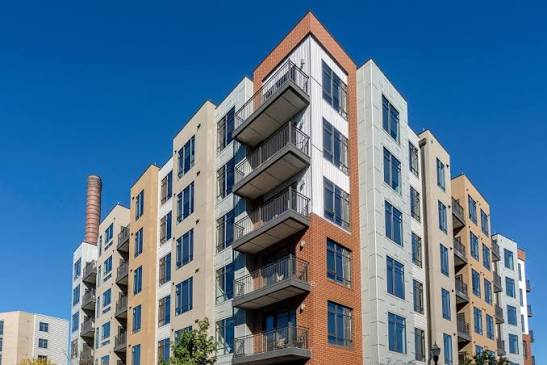
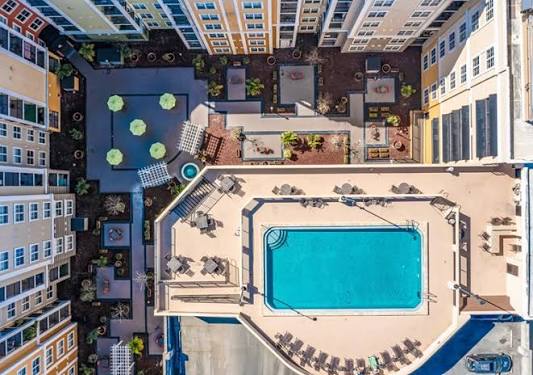
A modern apartment building Pakistan buyers prefer today usually includes elevators, basement parking, power backup, CCTV surveillance, secure access, fire safety systems, reception areas, maintenance teams and lifestyle amenities such as gyms, lounges, rooftop spaces and community areas.

Why High-Rise City View Apartment Pakistan are Growing?

Pakistanโ€™s major cities are becoming denser, busier and more expensive. As prime land becomes limited, vertical development is becoming a practical solution for both residents and real estate developers.

Instead of expanding endlessly outward, cities are now moving upward.

1. Urban convenience is becoming more important

Todayโ€™s buyers want to live closer to offices, schools, hospitals, restaurants, shopping areas and commercial hubs. A well-located apartment can reduce commute time and improve everyday convenience.

This is one reason vertical living Islamabad has gained momentum in areas connected to Blue Area, Jinnah Avenue, F-8, G-8, DHA, Bahria Town, B-17 and other active residential and commercial corridors.

2. City views add lifestyle value

A city view apartment feels more open, private and premium than a ground-level unit. Buyers often pay more for:

A clear view can increase both emotional appeal and resale interest.

3. High-rise buildings offer better managed living

A premium apartment building usually provides shared services that independent homes may not offer in the same way. These can include:

  • 24/7 surveillance
  • Secure entry and exit points
  • Dedicated parking
  • Elevators
  • Backup electricity
  • Fire safety systems
  • Maintenance staff
  • Waste management
  • Shared amenities

For buyers who want a secure, lock-and-leave lifestyle, apartment living can be very practical.

4. Investors want rental potential

High-rise apartments in central locations can attract professionals, corporate tenants, small families, short-stay residents and overseas Pakistanis visiting Pakistan.

This makes a city view apartment attractive for:

  • Long-term rental income
  • Furnished rental demand
  • Corporate leasing
  • Short-stay accommodation where permitted
  • Long-term capital appreciation

Islamabad, Lahore and Karachi: Which City Is Best?

Most online content about high-rise apartments focuses heavily on Islamabad, but the keyword high-rise city view apartment Pakistan has a broader national intent. Buyers should compare the main apartment markets before making a decision.

City Best For Popular Apartment Zones View Advantage
Islamabad Premium lifestyle, security, capital appreciation Blue Area, Jinnah Avenue, F-8, G-8, DHA, B-17, Bahria Town Margalla Hills, Faisal Mosque, F-9 Park, skyline
Lahore Business access, luxury urban living Gulberg, DHA, CBD, MM Alam, Askari Commercial skyline, boulevard views
Karachi Established apartment culture, rental demand Clifton, DHA, PECHS, Bahria Town Karachi, central corridors Sea view, skyline, urban density

Each city has its own strengths. Islamabad offers scenic views and planned development. Lahore offers strong business and lifestyle access. Karachi offers mature apartment living and a large rental base.

Islamabad: The Strongest Market for Vertical Living

Islamabad is one of Pakistanโ€™s most attractive cities for high-rise apartments because it combines scenic beauty, planned infrastructure, security appeal and rising demand for premium urban living.

When buyers search for a high-rise city view apartment Pakistan, many are specifically interested in Islamabad because of its Margalla Hills backdrop, wide roads, premium commercial districts and growing apartment culture.

Why Islamabad stands out

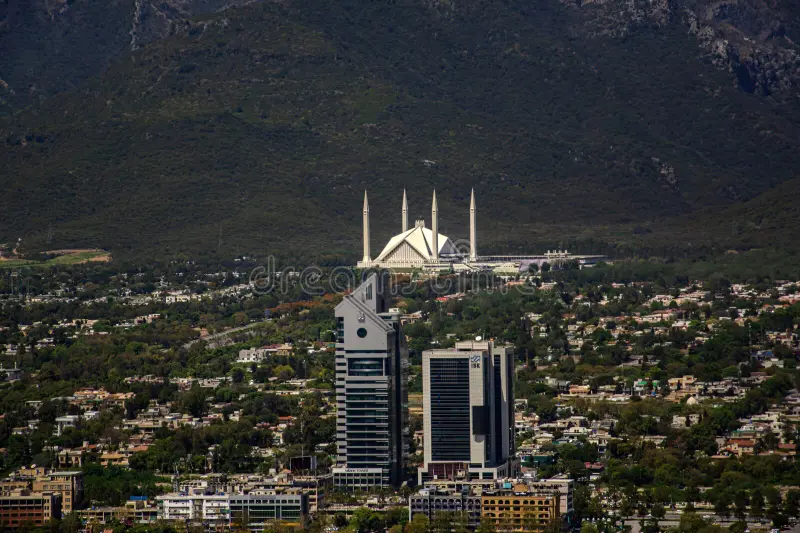
Islamabad offers views that are difficult to replicate in other cities. A well-positioned apartment may offer visibility of the Margalla Hills, Faisal Mosque, F-9 Park, Jinnah Avenue or the Blue Area skyline.

For many buyers, this creates a clear lifestyle premium.

Best views to look for in Islamabad

  • Margalla Hills view
  • Faisal Mosque view
  • F-9 Park view
  • Blue Area skyline view
  • Main boulevard view
  • Corner apartment with two-side exposure

What buyers should check

Before buying any apartment in Islamabad, verify:

  • Legal approvals
  • Land status
  • Building plan approval
  • Developer reputation
  • Construction quality
  • Floor plan efficiency
  • Parking allocation
  • Backup systems
  • Maintenance structure
  • Actual view from the unit

A beautiful view is valuable, but it should always be supported by legal clarity and strong development standards.

Citadel One3 by Chakor Ventures

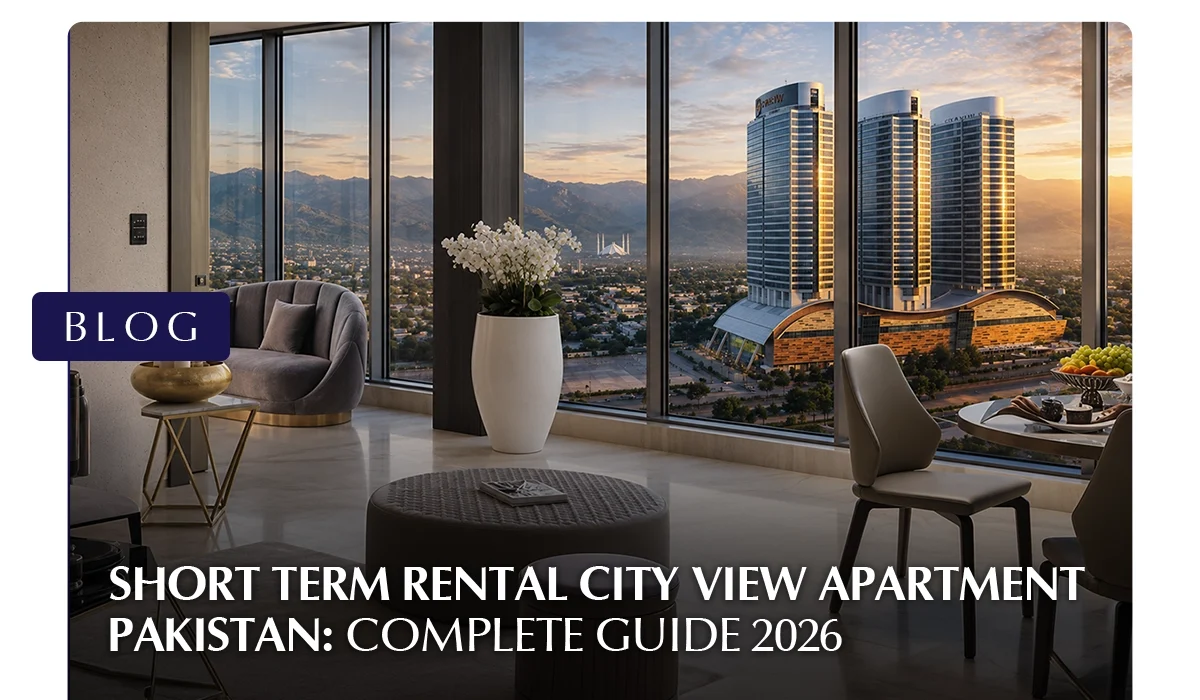
Citadel One3 by Chakor Ventures is a premium conduminium complex planned for Blue Area, Islamabad, along Jinnah Avenue. Designed for refined vertical living, it brings together a prestigious urban address, elegant architecture and rare views of the Faisal Mosque and F-9 Park. For buyers exploring a high-rise city view apartment in Pakistan, Citadel One3 represents Chakor Venturesโ€™ vision for privacy, sophistication and long-term value in the heart of Islamabad.

Lahore: A Market for Premium Urban Apartments

Lahoreโ€™s apartment market is different from Islamabadโ€™s. It is more focused on commercial access, lifestyle convenience, business activity and premium interiors.

Buyers looking for aย modern apartment building in Pakistan in Lahore often prefer areas connected to business districts, retail hubs and major roads.

What makes Lahore attractive?

Lahore is ideal for buyers who want:

  • Access to commercial zones
  • Restaurants and retail are nearby
  • Corporate rental demand
  • Premium furnished living
  • Strong resale demand in central areas
  • Luxury apartment layouts

In Lahore, location often matters more than view alone. A well-connected apartment in a prime business or lifestyle district can perform better than a larger unit in a weaker location.

Karachi: Established Apartment Living and Rental Demand

Karachi has one of Pakistanโ€™s most mature apartment cultures. Many residents are already familiar with high-rise living, especially in central, coastal and commercial areas.

For buyers, Karachi offers two major advantages:

  1. Strong rental demand
  2. Established acceptance of apartment living

What makes Karachi attractive?

Karachi is suitable for buyers who want:

  • Sea-facing or city-facing apartments
  • Access to commercial districts
  • Strong tenant demand
  • Family apartment communities
  • Corporate rental opportunities
  • High-density urban convenience

Price Factors for High-Rise City View Apartments in Pakistan

Apartment prices vary widely across Pakistan depending on location, floor, view, project quality, developer reputation, amenities, construction stage and payment terms.

Instead of relying only on general market averages, buyers should evaluate what actually affects price.

Key factors that increase apartment value

A high-rise city view apartment usually becomes more valuable when it offers:

  • Prime location
  • Higher floor level
  • Permanent open view
  • Corner layout
  • Balcony or terrace
  • Better sunlight
  • Efficient floor plan
  • Smart home features
  • Dedicated parking
  • Secure building access
  • Quality elevators
  • Backup power
  • Strong rental potential
  • Reputable developer
  • Professional maintenance

Why View Direction Matters

Two apartments in the same building can have different values because of the view direction. A unit facing a landmark, park, mountain or main boulevard may attract stronger buyer interest than a unit facing the rear side of another structure.

Before paying a view premium, ask whether the view is likely to remain open in the future.

Buying vs Renting a City View Apartment

One of the most important decisions is whether to buy or rent. Both options can make sense depending on your lifestyle, budget and long-term plan.

Buy if:

  • You plan to hold the property for several years
  • You want rental income
  • You are an overseas Pakistani looking for a secure asset
  • You prefer ownership over monthly rent
  • You want to customize the apartment
  • You believe the location will appreciate
  • You have verified the projectโ€™s approvals and developer reputation

Rent if:

  • You want flexibility
  • You are new to the city
  • You want to test apartment living first
  • You are relocating temporarily
  • You do not want a large upfront payment
  • You prefer a furnished unit for short-term use
  • You do not want responsibility for ownership costs

Smart buyer tip

If you are unsure about a building or location, rent in the same area before buying. This helps you understand traffic, noise, parking, lift waiting time, maintenance quality, sunlight and daily convenience.

High-Rise vs Low-Rise Apartment: Which Is Better?

Both high-rise and low-rise apartments have advantages. The right choice depends on your priorities.

Factor High-Rise Apartment Low-Rise Apartment
View Usually better Usually limited
Privacy Stronger on higher floors Moderate
Maintenance cost Usually higher Usually lower
Amenities More likely Limited
Elevator dependency Higher Lower
Rental appeal Strong in central locations Strong in family areas
Resale value Strong if the view and location are good Depends on location

A high-rise apartment is usually better for buyers who value views, security, amenities and rental potential. A low-rise apartment may suit families who want simpler access and lower maintenance costs.

What to Look for Before Buying a High-Rise City View Apartment

A practical checklist is essential before buying any apartment in Pakistan.

1. Legal approvals

Always verify:

  • Land ownership
  • NOC status
  • Building plan approval
  • Development authority permissions
  • Utility approvals
  • Transfer process
  • Payment schedule
  • Possession timeline

Legal clarity should come before location, view or price.

2. Developer reputation

Check whether the developer has:

  • Delivered previous projects
  • Maintained construction quality
  • Communicated transparently
  • Built in prime locations
  • Managed customer expectations
  • Provided clear documentation

A strong developer can reduce risk and improve buyer confidence.

3. Actual view from the unit

Never rely only on renders or brochures. Visit the site or inspect the floor plan carefully.

Ask:

  • Is the view open?
  • Is it likely to be blocked later?
  • Does the unit face a landmark, road, park or another building?
  • Is there traffic noise?
  • Does the apartment receive harsh sunlight?
  • Is the balcony usable?

4. Floor level

Higher floors usually offer better views and privacy, but they depend more on elevators and backup systems. Many buyers prefer middle-to-high floors because they balance view, comfort and accessibility.

5. Layout efficiency

A good layout is more important than size alone.

Check:

  • Bedroom dimensions
  • Lounge width
  • Kitchen placement
  • Balcony depth
  • Bathroom ventilation
  • Storage space
  • Window direction
  • Natural light

A compact apartment with a smart layout can feel more spacious than a larger apartment with wasted space.

6. Parking

Parking can become a major issue in apartment living.

Confirm:

  • Dedicated parking
  • Visitor parking
  • Basement access
  • Parking charges
  • Number of vehicles allowed
  • Separate access for commercial areas if the building is mixed-use

7. Elevators and backup systems

A quality high-rise should include:

  • Multiple elevators
  • Service lift
  • Backup generator
  • Fire stairs
  • Emergency lighting
  • Fire safety systems
  • Maintenance staff
  • Lift service planning

8. Maintenance structure

Ask about:

  • Monthly maintenance charges
  • Security charges
  • Generator charges
  • Cleaning schedule
  • Water supply
  • Waste management
  • Building management
  • Long-term maintenance fun

ROI and Rental Income Potential

A high-rise city view apartment Pakistan can generate value in two main ways:

  1. Rental income
  2. Capital appreciation

The strongest investment apartments usually have:

  • Central location
  • Reliable access
  • Clear legal status
  • Quality construction
  • Secure parking
  • Strong views
  • Good maintenance
  • Professional building management
  • Demand from tenants and end-users

Long-term rental potential

Long-term tenants usually prefer secure buildings with parking, backup power, elevators and easy access to work, schools or commercial areas.

This makes high-rise city view apartment Pakistan attractive for professionals, small families and corporate tenants.

Short-stay rental potential

Some high-rise city view apartments Pakistan can also perform well for short-stay rentals, especially in business and tourism-friendly locations. However, short-stay rentals require more active management, furnishing, cleaning and compliance with building rules.

Lifestyle plus ROI

The best high-rise city view apartment Pakistan is not just the one with the best view. It is the one that combines:

  • Livability
  • Legal safety
  • View quality
  • Tenant demand
  • Resale appeal
  • Strong location
  • Developer credibility
  • Sensible maintenance costs

This balance is what makes a high-rise city view apartment Pakistan both enjoyable to live in and valuable as an asset.

Common Mistakes Buyers Should Avoid

Following are some common mistakes that buyers need to avoid before making an investment in a high-rise city view apartment Pakistan.

Paying only for the view

A view adds value, but it cannot fix weak approvals, poor construction, bad parking or unreliable maintenance.

Ignoring legal verification

Never book an apartment without checking the projectโ€™s legal status, approvals and developer documentation.

Overlooking maintenance costs

High monthly charges can reduce rental yield. Always calculate your net return after maintenance, taxes and furnishing costs.

Choosing size over location

A smaller apartment in a prime location can be more valuable than a larger apartment in a poorly connected area.

Not visiting the actual site

Brochures and renders are useful, but the real test is the site visit. Check access roads, surroundings, construction quality, views and building management.

Ignoring resale demand

Think like a future buyer. A good apartment should be easy to rent, easy to maintain and attractive to resell.

Who Should Consider a High-Rise City View Apartment Pakistan?

A high-rise city view apartment Pakistan may be a strong choice for:

  • Overseas Pakistanis
  • Investors
  • Young professionals
  • Small families
  • Corporate executives
  • Retired couples
  • Buyers seeking secure urban living
  • People who prefer managed buildings
  • Buyers interested in long-term rental income

It may not be ideal for people who need large outdoor spaces, dislike elevators, own multiple vehicles or prefer independent home living.

Final Verdict – High-Rise City View Apartment Pakistan

A high-rise city view apartment Pakistan buyer should look beyond height, marketing claims and brochure images. The right apartment must combine location, legal clarity, developer credibility, construction quality, view, amenities, rental potential and long-term resale value.

FAQs – High-Rise City View Apartment Pakistan

What is a high-rise city view apartment in Pakistan?

A high-rise city view apartment Pakistan is a residential unit in a multi-storey building that offers elevated views of the city, skyline, parks, mountains, sea or commercial areas. These apartments are usually located in modern buildings with elevators, security, parking and shared amenities.

Is a high-rise city view apartment a good investment in Pakistan?

Yes, a high-rise apartment can be a good investment if it is legally approved, well-located, built by a credible developer like Chakor and supported by strong rental demand. View, maintenance quality and resale appeal also matter.

Which city is best for high-rise city view apartment in Pakistan?

Islamabad is especially strong for scenic views and vertical living. Lahore is ideal for business access and luxury urban living. Karachi is suitable for buyers who want established apartment communities and strong rental demand.

What should I check before buying a high-rise city view apartment Pakistan?

Check legal approvals, developer reputation, construction quality, actual view, parking, elevators, backup power, maintenance charges, rental demand and resale potential.

Is buying better than renting a high-rise city view apartment Pakistan?

Buying is better for long-term ownership, rental income and capital appreciation. Renting is better for flexibility, short-term living or testing a location before making a purchase.

Do city view apartments have better resale value?

City high-rise view apartment apartment Pakistan can have better resale value if the view is clear, the building is well maintained, the location is strong and the project has legal clarity. A good view alone is not enough.

Why is Citadel One3 relevant for city view apartment buyers?

Citadel One3 by Chakor Ventures is relevant because it is planned as a premium conduminium complex in Blue Area, Islamabad, with views of Faisal Mosque and F-9 Park. It reflects the growing demand for refined vertical living in Islamabad.

For more information onย Islamabad City view apartmentsย andย real estate investment options,ย please visitย Chakor.

CategoriesNews Construction Developments Real Estate Urban Developments & Planning

Peshawar Road Underpass Project Stalls as Monsoon Deadline Looms

RAWALPINDI: The Punjab Communication and Works (C&W) Department has yet to break ground on three planned underpasses along Peshawar Road, with the monsoon season now less than a month away.

The underpasses, to be built at Race Course Park, Army Graveyard, and Chairing Cross, are central to a 25-kilometre signal-free corridor linking the Islamabad Expressway to Motorway Chowk. Once operational, the corridor aims to cut travel time between the two points to 15โ€“20 minutes.

While the GPO Chowk interchange was completed last year and the Kutchery Chowk remodelling wrapped up in May, formal construction on the three remaining structures has not commenced. Completion is now projected in the next fiscal year.

Officials attribute the delay to ongoing preparatory work. The executing agency is prioritising drainage infrastructure and service road construction before excavation begins, so that monsoon rains do not disrupt the project mid-course.

Formal digging is expected to begin within one to two weeks, after which completion is estimated at two months. Traffic police have been asked to prepare a revised traffic management plan, and the Rawalpindi Cantonment Board has been directed to carry out patchwork on designated alternative routes.

On the utility front, Executive Engineer Qamar Saqib of the Punjab Highway Department confirmed that the relocation of Sui gas pipelines, telephone cables, and electricity infrastructure along the Race Course to Qadir Motors stretch has been completed.

Construction experts, however, warn that excavation during monsoon rains risks waterlogging in open trenches, potential rework, and restricted use of heavy machinery, all of which could extend timelines considerably.

Whether authorities can deliver within their stated window remains an open question for the thousands of commuters dependent on this corridor daily.

For moreย news on real estateย and special reports, visitย Chakor Ventures.

Sources:

stamp duty Pakistan
CategoriesEconomy Property Property Laws Real Estate Real Estate Investment

What Is Stamp Duty Pakistan and How Much Will You Pay?

Buying or selling property in Pakistan comes with more costs than just the sale price. One charge that every buyer must understand and budget for is stamp duty. Yet many people complete an entire property deal without fully grasping what stamp duty is, how much they owe, or how it differs across Punjab, Sindh, KPK, and Balochistan. This guide covers everything: what stamp duty Pakistan is, the latest 2026 provincial rates, how it’s calculated, who pays it, available exemptions, and how to pay it online. Whether you’re a first-time buyer or a seasoned investor, this is your definitive reference.

What Is Stamp Duty Pakistan?

Stamp duty is a provincial tax levied on legal documents, most commonly those related to the transfer of immovable property, such as sale deeds, gift deeds, lease agreements, and affidavits.

It is primarily governed by the Stamp Act of 1899, with each province empowered to set its own specific rates and procedures through provincial Finance Acts.

Beyond being a government revenue tool, stamp duty serves a critical legal function: it validates ownership and makes your property documents admissible as evidence in court. Without paying stamp duty, a buyer cannot legally claim rights over the property, and no Sub-Registrar’s office will process the registration.

Rates of Stamp Duty Rates Pakistan 2026 – Province by Province

Stamp duty rates Pakistan are not uniform nationally. Each province sets its own schedule under the Stamp Act, and rates are revised periodically through provincial Finance Acts. Here is the current breakdown for FY 2025โ€“26:

Punjab – Stamp Duty Pakistan

Punjab uses a fixed-amount stamp duty system for specific document types, rather than a universal percentage rate across all transactions. The Punjab Finance Act 2024โ€“25 revised these amounts upward:

  • Sale Deed: PKR 3,000 (increased from PKR 1,200 under the 2024โ€“25 budget)
  • Affidavit / Individual Deed: PKR 300 (increased from PKR 100)
  • Lease Agreement: PKR 3,000
  • Registration Fee: 1% of the DC/FBR-assessed property value
  • PLRA Fee: PKR 3,300 flat for properties up to PKR 3 million; 0.1% above PKR 3 million
  • Corporation / Municipal Fee: 1% of property value

Punjab is considering reforms to shift toward a unified percentage-based model for greater transparency, but until enacted, buyers should verify current document-specific charges through the Punjab e-Stamping portal or the Bank of Punjab’s Form 32 system.

Sindh – Stamp Duty Pakistan

Sindh levies a 2% stamp duty on property transactions, calculated on the DC (Deputy Commissioner) rate value. Rates can vary based on property type, location, and the nature of the transaction. Buyers should consult the Sindh Board of Revenue for specifics, particularly for commercial or agricultural land deals.

Khyber Pakhtunkhwa (KPK) – Stamp Duty Pakistan

KPK applies a 3% stamp duty on property transfers for FY 2025โ€“26. Additional charges include:

  • Capital Value Tax (CVT): 1%
  • Registration Fee: 0.5%

For a PKR 10 million property in KPK, the CVT alone amounts to PKR 100,000, making comprehensive budgeting essential.

Balochistan – Stamp Duty Pakistan

Balochistan follows a 4% stamp duty rate, applied to the official DC rate value of the property rather than the market transaction price.

Islamabad Capital Territory (ICT) – Stamp Duty Pakistan

For property sales in ICT, stamp duty is currently charged at 2% of the DC Rate. This is separate from the registration fee, which stands at approximately 1% of the DC Rate. Buyers in Islamabad should budget for both charges alongside other applicable taxes.

Note: There were discussions and proposals regarding rate adjustments under the Finance Act 2025 for ICT, but the operative stamp duty rate confirmed by legal practitioners in Islamabad remains 2%. Always verify the current schedule directly with the ICT Sub-Registrar’s office or a qualified property lawyer before finalising any transaction.

Stamp Duty Pakistan – Rates by Province

Province / Territory Stamp Duty Pakistan Calculated On
Punjab Fixed per document type (e.g. PKR 3,000 for a sale deed) Document / DC Value
Sindh 2% DC Rate Value
KPK 3% DC Rate Value
Balochistan 4% DC Rate Value
Islamabad (ICT) 2% DC Rate Value

Note: Stamp Duty Pakistan rates are subject to revision each fiscal year. Always verify with your provincial Sub-Registrar or Board of Revenue before finalising a transaction.

What Is the DC Rate and Why Does It Matter?

Stamp duty Pakistan is calculated on the DC (Deputy Commissioner) rate, the government’s official assessed value of a property, rather than the actual market transaction price. DC rates are set annually by each province’s Board of Revenue.

Crucially, DC rates are typically 30โ€“50% lower than the actual market value. This means your stamp duty liability is substantially less than it would be if calculated on the sale price you negotiate with the seller.

For example, a property transacting at PKR 20 million in Lahore may carry a DC rate of PKR 10โ€“12 million, and stamp duty is computed on the latter figure.

Commercial properties are typically rated 2โ€“3 times higher than residential properties in the same area, meaning the absolute stamp duty payable on a commercial transaction will be significantly larger even if the percentage rate is identical.

How Is Stamp Duty Calculated in Pakistan?

The basic formula is:

Stamp Duty = DC Rate Value ร— Applicable Provincial Rate

Example KPK Property:

  • DC Value: PKR 10,000,000
  • Stamp Duty (3%): PKR 300,000
  • CVT (1%): PKR 100,000
  • Registration Fee (0.5%): PKR 50,000
  • Total: PKR 450,000

Example ICT Property:

  • DC Value: PKR 10,000,000
  • Stamp Duty (2%): PKR 200,000
  • Registration Fee (1%): PKR 100,000
  • Total: PKR 300,000

The difference between ICT’s rate and KPK’s rate on the same property is PKR 150,000, illustrating why understanding property stamp duty by province matters when choosing where to invest.

Who Pays Stamp Duty Pakistan?

The buyer is generally responsible for paying stamp duty at the time of property registration. This is established under Section 29 of the Stamp Act 1899, which provides that in the case of a conveyance, the expense of providing the proper stamp is borne by the grantee. The seller, meanwhile, is typically liable for other taxes such as Capital Gains Tax (CGT) and FBR advance tax under Section 236C.

For buyers, additional FBR advance tax under Section 236K is also payable at the time of transfer. Rates differ significantly depending on whether the buyer is on the FBR’s Active Taxpayer List (ATL):

  • Active Filer: 1% of the transaction value
  • Non-Filer: 2% of the transaction value

Being a registered tax filer can produce meaningful savings. Non-filers face double the withholding tax rate, and additionally face much steeper Capital Gains Tax exposure if they later sell the property.

When Must Stamp Duty Be Paid?

Stamp duty must be paid before the execution and registration of the property transfer deed. Under Section 35 of the Stamp Act 1899, no instrument chargeable with duty shall be admitted in evidence, acted upon, or registered unless it is duly stamped.

Attempting to register without first paying stamp duty will result in rejection by the Sub-Registrar’s office. Late payment attracts penalties, fines, and potential legal complications affecting the property’s title chain.

Stamp Duty Exemptions and Rebates in Pakistan

Certain categories of buyers and transactions are eligible for exemptions or reduced rates:

First-Time Buyers: May be eligible for relief from certain federal duties on their first property purchase. The specifics vary by province and should be confirmed with the relevant revenue authority.

Low-Value Properties: Properties below certain provincial thresholds may qualify for reduced or nil stamp duty, varying by province.

Agricultural Land: Generally exempt from stamp duty in most provinces, subject to specific provincial rules.

Gift Deeds (ICT): In Islamabad, gift deeds to immediate family members attract a reduced stamp duty rate of approximately 1% of the DC Rate, compared to 2% for outright sales.

Corporate Mergers (Punjab): The Lahore High Court has suspended stamp duty on corporate mergers in Punjab, bringing it in line with existing exemptions in Sindh and Islamabad, a significant development for M&A activity.

To claim any exemption, you will typically need:

  • Valid CNIC
  • Proof of eligibility (e.g., a first-time buyer affidavit)
  • Property valuation documents
  • Any additional documentation specified by the provincial revenue authority

Property Stamp Duty by Province: Online Payment & Portals

Most provinces now offer digital e-stamping facilities, reducing the need for physical visits to revenue offices:

These platforms have significantly improved transparency, reduced delays, and minimised opportunities for fraud at land registries.

Other Charges to Budget for Alongside Stamp Duty

Stamp duty is only one component of the total cost of a property transaction in Pakistan. A comprehensive budget must also include:

  • Registration Fee: 1% (Punjab, ICT); 0.5% (KPK)
  • Capital Value Tax (CVT): 1% in KPK; varies by province
  • FBR Advance Tax (Section 236K): Paid by buyer 1% for active filers, 2% for non-filers
  • FBR Advance Tax (Section 236C): Paid by seller
  • Capital Gains Tax (CGT): 15% for filers on profit if property sold within the first year, reducing annually to zero after five years; non-filers face rates between 30โ€“45%
  • Mutation Fee / TMA Tax: Province-specific

Ignoring these associated costs is one of the most common mistakes buyers make, often leading to financial stress or legal delays at the registry.

Recent Developments and Upcoming Reforms

Several significant changes are shaping stamp duty Pakistan in 2025:

Lahore High Court Ruling: The court suspended stamp duty on corporate mergers in Punjab, potentially unlocking business consolidation activity and aligning Punjab with Sindh and Islamabad on this point.

Standardisation Discussions: Talks are underway at the federal level to harmonise stamp duty rates across provinces, with a potential shift toward a uniform percentage-based model. This would simplify transactions significantly, but has not yet been enacted.

Punjab Fixed-Amount Review: Punjab is actively considering replacing fixed rupee amounts per document type with a market-linked percentage system for greater transparency and consistency.

Buyers and investors should monitor provincial Finance Acts announced each June/July for the latest changes, and consult a qualified property lawyer before concluding any transaction.

FAQs About Stamp Duty Pakistan

Q: Is stamp duty the same as registration fee in Pakistan? No. Stamp duty P and registration fee are separate charges. Stamp duty validates the document legally under the Stamp Act 1899; the registration fee is paid under the Registration Act 1908 to record the transfer in official land records. Both are payable at or before registration.

Q: Can stamp duty be paid online? Yes, in Punjab and several other provinces, stamp duty can be paid via the e-stamping portal or through designated bank branches. Obtaining an e-stamp certificate is now the standard and preferred method.

Q: What happens if I don’t pay stamp duty? Under Section 35 of the Stamp Act 1899, the property transfer deed cannot be registered without stamp duty payment. If a document is later found to be insufficiently stamped, it can be impounded and subjected to penalties.

Q: Is stamp duty different for residential and commercial property? In most provinces, the percentage rate is the same, but DC rates differ significantly. Commercial properties carry a DC rate 2โ€“3 times higher than residential, resulting in a larger absolute stamp duty payment.

Q: Does stamp duty apply to gifted or inherited property? Gift deeds attract stamp duty in most provinces, though family gift deeds in ICT benefit from a reduced 1% rate. Inherited property through succession is generally treated differently; consult the provincial revenue department for applicable charges.

Q: What is the stamp duty rate in Islamabad? The current operative rate for property sale in Islamabad (ICT) is 2% of the DC Rate, plus a 1% registration fee. Confirm the latest schedule with the ICT Sub-Registrar’s office before transacting.

Final Thoughts – Stamp Duty Pakistanย 

Stamp duty Pakistan is a non-negotiable part of any property transaction, but its complexity lies in the provincial variation in rates, the gap between DC value and market value, and the layers of additional taxes that accompany it. Whether you’re buying in Lahore, Karachi, Peshawar, or Islamabad, the total cost picture changes significantly.

The key takeaways:

  • Always calculate stamp duty on the DC rate, not the market price
  • Verify the current provincial Finance Act schedule before closing a deal
  • Register as a tax filer with FBR, and the savings on Section 236K and CGT can be substantial
  • Use official e-stamping portals for payment to avoid complications
  • Budget for CVT, registration fee, and FBR advance taxes alongside stamp duty
  • When in doubt, engage a qualified property lawyer; the cost is small relative to the transaction value

With the right preparation, stamp duty doesn’t have to be a surprise cost; it’s a manageable, knowable expense that smart property buyers factor in from day one.

For more information onย types of property taxesย andย real estate investment options,ย please visitย Chakor.

Sources:

SBCA
CategoriesNews Construction Real Estate

SBCA Launches One-Window Digital Revolution

KARACHI: The Sindh Building Control Authority (SBCA) is set to transform its construction permit services by introducing a comprehensive digital one-window system, marking a significant milestone in Sindh’s e-governance journey.

The newly introduced system is designed to serve a broad spectrum of stakeholders, including citizens, builders, architects, and engineers, by replacing traditional, paper-heavy processes with a fully integrated digital framework.

Key features of the system include online application submission, e-payment of challans, real-time application tracking, SMS alerts, digital approvals, e-certification, and inter-departmental coordination. A dedicated mobile application and e-portal will further ensure round-the-clock accessibility for users across the province.

The SBCA has structured the permit process into five distinct categories to ensure clarity and efficiency. Category One cases, which cover residential plots up to 399 square yards and bungalows exceeding that threshold, will be processed through the single-window facility within a defined 15-day turnaround, provided all documentation is complete and legal requirements are duly met.

Category Two and Three cases will continue to be handled through respective district offices in accordance with prevailing rules. Category Four cases encompassing public-sale, public-use, and industrial buildings, along with Category Five cases involving major town planning and land development projects, will both be routed through the centralised one-window cell.

This initiative is part of a broader directive by the Government of Sindh to fully automate all four categories of construction permits within one month, reflecting a strong institutional commitment to reducing bureaucratic delays, curbing corruption, and enhancing public trust in regulatory bodies.

By digitising its core services, the SBCA aims to create a more accountable, responsive, and citizen-friendly regulatory environment, one that aligns with modern urban governance standards and supports Sindh’s long-term development goals.

For moreย news on real estateย and special reports, visitย Chakor Ventures.

Sources:

CategoriesReal Estate Investment News Property Property Taxes Real Estate

FBR Revises Property Valuations for DHA Lahore and Rawalpindi; Eight Cities Now Covered Under Updated Tax Framework

ISLAMABAD โ€” The Federal Board of Revenue has updated the official valuations of properties in Defence Housing Authority areas of Lahore and Rawalpindi, through two separate orders issued on Tuesday. The revisions will directly affect the amount of tax that buyers and sellers are required to pay when a property changes hands in these localities.

The updates were formalised through Statutory Regulatory Orders S.R.O. 876(I)/2026 for Lahore and S.R.O. 877(I)/2026 for Rawalpindi, both signed by Muhammad Amin Qureshi, Secretary Rules and SRO, Revenue Division. They amend valuations originally set in October 2024 and bring the total number of cities where the FBR has revised property benchmarks in recent months to eight, following similar exercises carried out for Islamabad and other major urban centres.

Understanding the FBR Rate

When a property is sold in Pakistan, the government uses an official benchmark value set by the FBR to calculate withholding tax, which is a tax collected at the point of the transaction. This FBR rate is separate from both the actual price agreed between buyer and seller and the Deputy Commissioner rate set by provincial governments for stamp duty purposes.

The purpose of periodically revising these benchmarks is to keep them closer to real market values. When official values are too far below what properties actually trade for, the withholding tax collected ends up being lower than it should be, effectively allowing significant portions of high-value transactions to go under-taxed. There are multiple online property tax calculators which help you calculate your property taxes.

Lahore: What the New Rates Say

The Lahore order revises valuations for DHA Phases VI through XIII, all administratively located within Nishtar Town. Rates here are expressed in rupees per marla, the standard unit of land measurement in Punjab.

The most valuable commercial address in the entire Lahore table is the Broadway strip in DHA Phase VIII, the main commercial avenue running through sub-sectors A, B, C and D, officially valued at Rs. 4,988,970 per marla. This figure forms the basis of withholding tax calculations for any commercial plot or shop sold along that stretch.

Among residential areas, DHA Phase XI Rahbar, Sector I carries the highest valuation at Rs. 967,960 per marla, reflecting its established infrastructure and sustained demand. At the lower end, DHA Phase XIII, formerly known as DHA City and located furthest from the city centre, is valued at Rs. 204,960 per marla, consistent with its earlier stage of development.

DHA Phase VI, one of Lahore’s most established residential addresses, is valued at Rs. 1,132,460 per marla for most residential blocks. The C, M and N Blocks carry a lower residential rate of Rs. 761,460 per marla, though their commercial land value rises sharply to Rs. 4,369,410 per marla, reflecting heavy commercial activity in those areas.

A significant addition in this notification is the first-ever official valuation assigned to One Central DHA, a newer development that previously had no FBR benchmark. It has now been entered into the official table at Rs. 760,000 per marla for residential open plots and Rs. 3,100,000 per marla for commercial plots. This means transactions in One Central DHA will now carry a formally calculated withholding tax obligation for the first time.

Across all DHA Lahore entries, built structures, that is, houses or commercial buildings as opposed to bare land, are assessed at a uniformย Rs. 1,750 per square footย for residential andย Rs. 2,800 per square foot for commercial, regardless of which phase they are located in.

Rawalpindi: A Different Scale, Similar Intent

The Rawalpindi order covers DHA Phases I through V and DHA Valley. An important distinction: unlike Lahore, where rates are expressed per marla, Rawalpindi valuations in this notification are given in rupees per square foot. This reflects a difference in how property is traditionally measured and administered across the two cities.

The highest commercial valuation in Rawalpindi’s table belongs to DHA Phase II, at Rs. 17,677 per square foot for commercial open plots, the single largest figure in the Rawalpindi notification. DHA Phase I follows at Rs. 15,427 per square foot for commercial land.

On the residential side,ย DHA Phase IIย again leads atย Rs. 2,878 per square foot, whileย DHA Valley,ย the most peripheral of the listed localities, sits at justย Rs. 466 per square foot for residential open plots. The gap between these two figures illustrates how sharply official land values decline as the distance from the city’s established core increases.

DHA Phases II Extension, III and IV share an identical commercial open plot rate of Rs. 5,946 per square foot, indicating that the FBR considers their commercial potential broadly equivalent. Their residential rates, however, vary: Phase IV at Rs. 1,322 per square foot, Phase III at Rs. 1,011 per square foot and Phase II Extension at Rs. 778 per square foot, differences that broadly reflect each area’s level of development and infrastructure maturity.

Built structure rates across Rawalpindi DHA phases are set at Rs. 1,470 per square foot for commercial and Rs. 735 per square foot for residential in most phases, with DHA Valley’s residential superstructure rate marginally higher at Rs. 770 per square foot.

The Broader Context

Pakistan’s property market has long operated with a well-documented gap between declared transaction values and actual market prices. For years, it was common practice for buyers and sellers to register a property at a fraction of its true value, reducing their tax liability significantly.

FBR valuation revisions are one of the primary tools available to narrow that gap and, with it, improve tax collection from a sector that has historically contributed far less to the national treasury than its scale would suggest.

These revisions also carry relevance beyond individual transactions. Pakistan’s economic reform commitments, including those made under its ongoing programme with the International Monetary Fund, have consistently identified the real estate sector as an area requiring greater documentation and tax compliance. The gradual extension of revised FBR benchmarks to more cities and localities is part of the government’s response to those obligations.

For buyers and sellers in the affected DHA areas, the immediate effect is straightforward: withholding tax at the point of transaction will now be calculated on a revised official value, which in most cases will be closer to actual market prices than the figures it replaces.

Those accustomed to a significant gap between the FBR rate and the market price should account for a narrower margin when planning the financial aspects of a property transaction.

For moreย news on real estateย and Special Reports, visitย Chakor Ventures.

References

Federal Board of Revenue, Government of Pakistan. (2026, May 19). S.R.O. 876(I)/2026: Revision of valuation of immovable properties Nishtar Town, Lahore [Statutory notification]. Revenue Division, Islamabad. File No. 2(17)R&S/2017.

Federal Board of Revenue, Government of Pakistan. (2026, May 19). S.R.O. 877(I)/2026: Revision of valuation of immovable properties Rawalpindi [Statutory notification]. Revenue Division, Islamabad. File No. 2(31)R&S/2024.

Akhter, S. (2026, May 19). FBR revises property valuation tables for Nishtar Town Lahore. Pkrevenue.com. https://pkrevenue.com/fbr-revises-property-valuation-tables-for-nishtar-town-lahore/

Government of Pakistan. (2001). Income Tax Ordinance, 2001 (XLIX of 2001), Section 68(4). National Assembly of Pakistan.

Federal Board of Revenue, Government of Pakistan. (2024, October 29). S.R.O. 1722(I)/2024: Valuation of immovable properties Lahore [Statutory notification]. Revenue Division, Islamabad.

Federal Board of Revenue, Government of Pakistan. (2024, October 29). S.R.O. 1728(I)/2024: Valuation of immovable properties Rawalpindi [Statutory notification]. Revenue Division, Islamabad.

CategoriesNews Budget Economy Property Property Taxes Real Estate Real Estate Investment

FPCCI seeks property tax relief to revive real estate, construction sectors

ISLAMABAD: The Federation of Pakistan Chambers of Commerce and Industry (FPCCI) has proposed major property tax reforms for the federal budget FY2026-27 to help revive Pakistanโ€™s real estate and construction sectors.

According to FPCCIโ€™s budget proposals, the current tax structure has made property transactions more expensive and slowed investment in the sector. The chamber has suggested reducing withholding tax under Section 236C on the sale of immovable property to a uniform 1% across all transaction values. At present, the rate can go as high as 5.5% on higher-value transactions and is charged on the gross transaction value, regardless of actual profit or loss.

FPCCI also proposed reducing advance tax under Section 236K on property purchases to a flat 1%, while abolishing advance tax on the first property purchase by a filer. The body said simpler and lower tax rates could encourage proper documentation, reduce under-reporting, and improve transparency in the property market.

The chamber further called for abolishing the tax on deemed income under Section 7E, saying it taxes assumed income from immovable property instead of actual earnings. It also recommended withdrawing Section 7F, under which builders and developers are taxed on 10% of gross receipts, regardless of their actual income.

FPCCI said balanced taxation could attract investment and support allied industries such as cement, steel, transport, and labour, helping generate wider economic activity.

For moreย news on real estateย and special reports, visitย Chakor Ventures.

Sources:

CategoriesCitadel One3 Construction Developments Real Estate

Eco-Friendly City View Apartments: Sustainable Living in Pakistan

Pakistan’s urban apartment market has matured significantly over the past decade. Where buyers once prioritised location and price per square foot above all else, a growing segment particularly younger professionals and overseas Pakistanis now asks a more layered question: can the apartment I’m buying offer a genuine view and a reduced environmental footprint?

The demand for eco-friendly city view apartments in Pakistan is real, and so is the confusion surrounding it. “Eco-friendly” has become one of the most overused phrases in Pakistani real estate marketing, applied liberally to projects that have a few trees on the plot or a park nearby. Genuine sustainability in an apartment building is a different thing entirely; it involves specific, verifiable infrastructure built into the structure itself.

This guide explains exactly what those features are, which Pakistani cities currently offer the strongest combination of scenic views and sustainable living, and what to check before you commit to a purchase.

Table of Contents

  1. What Does an Eco-Friendly City View Apartments Pakistan Actually Mean?
  2. Why City Views and Eco-Friendly Features Go Together
  3. Green High-Rise Apartments in Pakistan Which Cities Have Real Options?
  4. Sustainable Flats in Pakistan The Financial Case
  5. What to Check Before Buying an Eco-Friendly City View Apartments Pakistan
  6. Frequently Asked Questions

What Does an Eco-Friendly City View Apartments Pakistan Actually Mean

The first thing to establish is that an eco-friendly apartment is defined by what is built into it, not by what surrounds it. Mountains nearby, a park across the road, or trees within the boundary are landscape features. They are pleasant. They are not evidence of a sustainably constructed or operated building.

A genuinely eco-friendly apartment building in Pakistan should incorporate some combination of the following:

Solar energy systems. Rooftop solar panels, either dedicated to individual units or feeding a shared generation pool, directly reduce dependence on the national grid. In a country where grid electricity is both expensive and unreliable, this is not an optional amenity; it is a meaningful quality-of-life and cost-of-living feature. Ask developers specifically whether solar is installed at handover, or merely listed as a future addition.

Thermal insulation. Double-glazed windows, insulated external walls, and well-designed roof assemblies significantly reduce the energy required to cool or heat a unit. Pakistan’s climate demands heavy air-conditioning for much of the year; a poorly insulated apartment drives up both electricity bills and carbon footprint. Quality insulation is one of the least visible but most impactful green features in a building.

Rainwater harvesting. The Capital Development Authority (CDA) has mandated rainwater collection tanks for all new housing communities in Islamabad. This is a compliance baseline, not a premium feature if a new development in Islamabad does not have it, that is a red flag, not a neutral data point. In Lahore and Karachi, rainwater harvesting is rarer but increasingly present in premium high-rise projects.

Waste management infrastructure. Dedicated recycling facilities, organic waste separation systems, and waste compactors within the building reduce the volume of material going to landfill and create a cleaner, better-maintained common environment. The presence of these systems also signals that the developer has thought beyond the sale.

Green rooftops and landscaped terraces. Planted rooftop surfaces reduce the urban heat island effect, the phenomenon where dense built areas trap heat and drive up ambient temperatures. A green rooftop on a high-rise also improves air quality at the building level and provides usable outdoor amenity space for residents.

EV charging bays. Pakistan’s electric vehicle market is still in its early stages, but it is growing. A high-rise building that installs EV charging infrastructure in its parking facility today is a more future-proof asset than one that does not. For buyers with a ten-year investment horizon, this matters.

Water-efficient fixtures. Low-flow taps, showerheads, and toilet cisterns reduce per-unit water consumption without affecting usability. Greywater recycling, treating water from sinks and showers for reuse in toilets or irrigation, is rarer but present in some premium sustainable flats in Pakistan.

Smart building systems. Automated lighting in corridors and common areas, occupancy-sensing HVAC systems, and centralised energy monitoring reduce waste at the building level. These systems tend to lower maintenance costs over time and are a hallmark of genuinely well-engineered high-rise buildings.

When evaluating any project, use this list as a framework for questions, not as an expectation that every feature will be present. A building that delivers four or five of these credibly is a genuinely sustainable product. A building that mentions none of them but calls itself eco-friendly is a marketing exercise.

Green High-Rise Apartments in Pakistan: Which Cities Have Real Options?

Eco-Friendly City View Apartments Pakistan

The phrase “eco-friendly city view apartments Pakistan” covers the whole country, but the market is not evenly distributed. Here is an honest assessment of where genuine options currently exist.

Islamabad: Strongest Market for Eco-Friendly City View Apartments Pakistan

Islamabad has structural advantages that no other Pakistani city can match. The city was designed from scratch in the 1960s on a low-density grid with green belts, wide avenues, and sector-based zoning built in from the start. The result, six decades later, is a city where height genuinely rewards you, views from upper floors reveal parks and mountains, not adjacent rooftops.

CDA regulations set a higher baseline for new developments than in other cities. Green space allocation, rainwater harvesting requirements, and building setback rules mean that eco-friendly apartments in Islamabad have already passed a regulatory minimum that does not exist elsewhere in the country.

The Blue Area and Jinnah Avenue corridor is where the view, the location, and the high-rise residential product converge most convincingly. Towers in this corridor look out over the Faisal Mosque, F-9 Park, and the Margalla ridgeline simultaneously.ย 

CDA-controlled development in this zone also limits supply, which supports long-term asset values. Among the apartment products currently operating in the eco-friendly city view segment of the Islamabad market are Citadel One3 and Green View Apartments.

Zone IV hillside societies offer a different but equally compelling product: Margalla view apartments built at natural elevation, where the landscape itself provides the view rather than building height. These tend to integrate more outdoor greenery into the development but may sit further from commercial infrastructure.

For buyers prioritising CDA-approved apartments in Islamabad with genuine eco features and unobstructed views, this city is the clearest choice in Pakistan right now.

Lahore: An Emerging Market Where Scrutiny Matters

Lahore’s apartment market has grown considerably over the past ten years, and the city’s high-rise residential stock is now substantial.ย 

Lahore’s more recently developed phases, and premium towers on MM Alam Road, are increasingly incorporating sustainability features, solar provision, better insulation, and EV parking in response to buyer demand from the upper-middle market.

Buyers looking for green high-rise apartments in Lahore should ask specific questions and request documentation rather than accepting marketing language at face value.

Karachi Sea Views and a Different Kind of Sustainability

Karachi’s version of the scenic view apartment is geographically distinct. In Clifton and DHA Phase 8, upper-floor apartments face the Arabian Sea, a genuinely exceptional view and one that comes with a passive sustainability benefit that often goes unmentioned: sea breezes.

Consistent onshore winds in Clifton and the DHA coastal strip provide natural ventilation that meaningfully reduces cooling loads during much of the year.ย 

The important caveat in Karachi is infrastructure. Eco-friendly building features in sustainable flats in Pakistan’s largest city are less standardised than in Islamabad, and buyers should carefully verify backup power and independent water supply arrangements.ย 

In Karachi’s context, a building with a robust generator and water storage infrastructure is delivering a practical form of urban resilience that maps closely to eco-friendly concerns, even if it is not marketed in those terms.

Eco-Friendly City View Apartments Pakistan: The Financial Case

Eco-Friendly City View Apartments Pakistan

The environmental argument for Eco-Friendly City View Apartments Pakistan is well-documented. The financial argument is discussed less often, and it is equally strong.

Lower electricity bills. A building with operational rooftop solar reduces the grid electricity consumption of each unit. In Pakistan, where electricity tariffs have risen sharply over recent years, and load-shedding remains a routine feature of urban life, this translates to a direct, recurring reduction in monthly costs. It is not a marginal benefit; it is a structural one.

Resilience during load-shedding. Buildings with solar-plus-battery backup, or with well-managed generator infrastructure, maintain liveability during outages. For investment properties, this directly affects tenant satisfaction, occupancy rates, and the rent premium a landlord can command.ย 

Premium rents and stronger tenant quality. Eco-friendly features in Pakistan’s rental market correlate with higher tenant quality in the professional segment, expats, corporate tenants, and overseas Pakistani families. These tenants are typically less price-sensitive, more reliable, and more likely to sign multi-year leases.

Long-term asset value. Green buildings face a lower risk of regulatory obsolescence as building codes tighten. An apartment in a CDA-approved, sustainably built high-rise is a more defensible long-term asset than a comparable unit in a project that cut corners on construction quality or environmental compliance.ย 

Water cost savings. Rainwater harvesting and greywater recycling reduce per-unit water bills. In a country facing increasing water stress, particularly acute in Karachi, this is a savings trajectory that improves over time: the more constrained the municipal supply becomes, the more valuable the independent provision.

What to Check Before Buying Eco-Friendly City View Apartments Pakistan

Eco-Friendly City View Apartments pakistan

Green buildings are the future of Pakistan’s real estate. The checklist below applies whether you are buying to live in or to invest. It is built to close the gap between what developers claim in their marketing and what actually gets built and maintained.

  1. Verify the relevant authority approval. In Islamabad, this means a valid CDA No Objection Certificate. The CDA publishes a list of approved and unapproved housing schemes on its official website.ย 
  2. Ask for specific eco-feature documentation, not marketing claims. “Eco-friendly” in a brochure carries no legal or technical weight in the absence of supporting detail. Ask which features are installed and operational at the point of handover, and which are listed as future additions.
  3. Establish which floors deliver unobstructed views. In most Pakistani cities, a genuine city or mountain view requires the apartment to be above the surrounding built fabric. Ask specifically which floors achieve unobstructed views. Request photographic evidence taken from the actual floors in question, drone footage or on-site photography rather than rendered images, which routinely omit the buildings that will obstruct sightlines once the surrounding area develops.
  4. Distinguish building-wide green features from unit-level ones. Some high-rise buildings apply solar generation only to common areas, lobby lighting, elevator power, and corridor illumination. Others extend solar benefits to individual units, reducing each resident’s electricity bill directly. The difference is material and worth establishing clearly before purchase, not after.
  5. Evaluate post-handover building management. Green building features degrade without proper maintenance. Solar panels lose output if not cleaned regularly. Green rooftops require irrigation and upkeep. Rainwater systems need periodic inspection.
  6. Check the developer’s track record of delivery. Any developer can produce compelling renders and confident project announcements. The meaningful question is what they have already built and handed over in the same city, on a similar scale. A developer with a completed project standing is offering evidence.ย 
  7. Watch for greenwashing signals early in the process. Common red flags include: eco-friendly claims with no supporting technical specification; sustainability features described as “planned” with no contractual delivery timeline; marketing language that equates natural surroundings with built-in sustainability infrastructure; and the absence of any mention of CDA or relevant authority approval in sales materials.

FAQs – Eco-Friendly City View Apartments Pakistan

What makes an apartment eco-friendly in Pakistan?

Built-in features like solar, insulation, water-saving systems, waste management, and smart energy controls. Green views alone do not make an apartment eco-friendly.

Which city in Pakistan has the best city view apartments?

Islamabad stands out for views of the Margalla Hills, Faisal Mosque, F-9 Park, and tree-lined sectors.

Are eco-friendly apartments more expensive in Pakistan?

They can cost slightly more upfront, but lower electricity, water, and maintenance costs can offset the premium over time.

Can overseas Pakistanis buy city view apartments in Pakistan?

Yes. Overseas Pakistanis can buy approved residential apartments. The key is verifying project approvals before payment.

What is the difference between a green high-rise and a regular apartment?

A green high-rise has sustainability systems built into the building. A regular apartment may not, even if it has good surroundings.

Closing Thoughts – Eco-Friendly City View Apartments Pakistan

Eco-friendly city view apartments Pakistan are gaining demand, but the label should mean more than nice views. True sustainability means verified features: solar, insulation, water systems, and waste infrastructure that are installed and working at handover. The financial case is also getting stronger. As power costs rise, water pressure increases, and buyers become more selective, genuinely sustainable flats are likely to perform better on running costs, rent, and resale value.

For more information onย types of property taxesย andย real estate investment options,ย please visitย Chakor.

Pakistan Moves to Regulate Housing Sector
CategoriesNews Real Estate Urban Developments & Planning

Pakistan Moves to Regulate Housing Sector Through Mandatory SECP Registration

ISLAMABAD: The federal government is considering making registration with the Securities and Exchange Commission of Pakistan (SECP) mandatory for all companies operating in the housing and development sector, as part of a broader push to bring transparency and regulatory oversight to the country’s largely unregulated real estate market.

The development came during a high-level meeting on housing sector reforms, chaired by Prime Minister Shehbaz Sharif, at which proposals to overhaul the sector were formally presented.

Pakistan faces a housing shortage estimated at around 10 million units, while rapid urbanisation has intensified pressure on infrastructure, services, and farmland surrounding major cities. Against this backdrop, the government has signalled its intent to pursue sweeping structural reforms.

Participants at the meeting were briefed that mandatory SECP registration would be introduced for all entities engaged in housing and development. A strategy is also to be formulated to curb unplanned urban expansion, while high-rise construction and vertical development will be encouraged in major cities.

The meeting further discussed master town planning for large urban centres and proposed establishing a one-window system to safeguard the rights of developers, buyers, and other stakeholders.

The government is also considering regulatory reforms to simplify procedures for credible developers and investors.

Addressing the meeting, Prime Minister Shehbaz Sharif underscored that housing sector reforms are an essential requirement given the country’s growing population. He reaffirmed that providing affordable housing for low-income groups and improving public facilities remain key government priorities.

The proposed measures, if enacted, are expected to instil greater investor confidence, curb fraudulent housing schemes, and provide a structured regulatory framework for one of Pakistan’s fastest-growing economic sectors.

For moreย news on real estateย and special reports, visitย Chakor Ventures.