Sound investment decisions are built on economic understanding. At Chakor, our Economy section covers the macroeconomic trends, policy shifts, market movements, and financial developments that directly influence real estate, construction, and investment across Pakistan.
Whether you are tracking inflation, interest rates, or GDP growth, we break down what matters and what it means for your decisions.
ISLAMABAD: The Federal Board of Revenue (FBR) recorded a 56.9 percent increase in withholding tax (WHT) collected on the sale of immovable property during FY26, with receipts rising by Rs66.7 billion compared to the previous fiscal year, according to official data.
The property-sector levy, collected under Section 236C of the Income Tax Ordinance 2001, was one of five major withholding tax categories driving overall WHT growth during the year, alongside contracts, imports, dividends and salaries.
WHT collected on contracts under Section 153 rose 22.3 percent, adding Rs162.3 billion in FY26 the largest absolute increase among the categories. Import-related WHT under Section 150 grew 16.5 percent, generating an additional Rs69.5 billion.
Dividend-income WHT under Section 149 increased 18.5 percent, contributing Rs30 billion in incremental revenue, while WHT deducted from salaries rose 3.8 percent, adding Rs23 billion to collections.
In percentage terms, the property sector recorded the sharpest growth among the five heads, though contracts remained the largest contributor to incremental WHT revenue in absolute rupee terms.
The figures suggest withholding mechanisms continue to anchor FBR’s direct tax collection, with real estate transactions emerging as an increasingly significant revenue source alongside trade- and salary-linked deductions.
BBC-featured Content Specialist with a sharp eye for search intent and a proven ability to turn content into a growth engine. I leverage cutting-edge digital marketing tools to craft strategies that fuel organic traffic, amplify brand growth, and own the local SEO landscape, particularly across the competitive real estate market. I help brands dominate search rankings and convert visibility into measurable business success.
KARACHI: The ongoing Gulf war has significantly disrupted the long-standing flow of undocumented Pakistani wealth into Dubai’s real estate sector, with market sources reporting that funds once considered secure abroad are now being channelled back into property investments within Pakistan.
For years, Pakistan ranked among the top foreign investors in Dubai property, and the emirate was widely regarded as a reliable destination for capital of questionable origin. That dynamic appears to be reversing.
Hassan Bakhshi, Chairman of the All Pakistan Builders Association, estimated that approximately $60 million in undocumented funds had previously left Pakistan for Dubai each month an outflow that has now halted entirely.
Currency market sources describe a similar shift, noting that assets already parked in Dubai have become difficult to liquidate amid the instability caused by the conflict. Rising remittance inflows from the UAE are being interpreted as evidence that Pakistanis are repatriating liquid holdings rather than expanding them abroad.
This capital redirection has had a visible effect on Karachi’s property market. According to Bakhshi, prices in the city’s Defence Housing Authority area have surged by 50 to 60 percent since the war began, driven partly by the area’s reputation for secure property titles.
Other parts of Karachi have seen more moderate gains of 20 to 25 percent, according to property dealer Karim Dad, who attributed the rebound to improved liquidity and government efforts to stimulate the construction sector.
The disruption extends beyond real estate. Several technology firms that previously relocated to Dubai, citing a favourable regulatory climate and frustration with Pakistan’s internet connectivity and tax administration, are now among those seeking to recover stalled investments as the regional situation remains unresolved.
Analysts caution that any large-scale return of capital will likely depend on how quickly stability returns to the Gulf region.
Dedicated and detail-oriented SEO Content Writer, Real Estate Writer, and Research Analyst based in Islamabad, with proven expertise in developing accurate, valuable, and well-researched content. Skilled in analytical writing, market research, and reporting, with the ability to turn insights into clear, professional, and impactful content. Passionate about exploring new ideas, analyzing industry trends, and contributing to high-quality writing and research-driven projects.
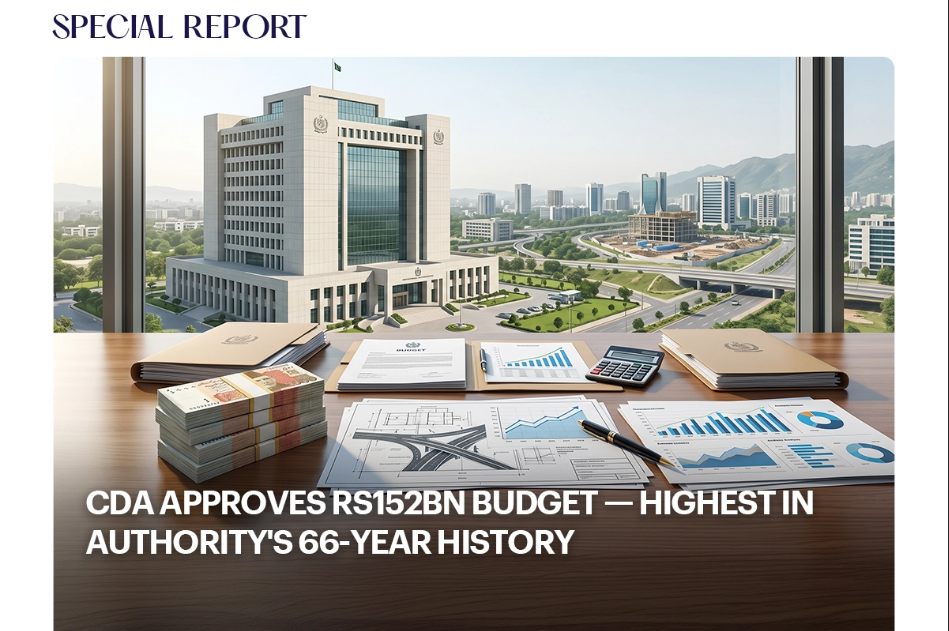
On August 25, 2026, the Capital Development Authority (CDA) board chaired by Chairman Sohail Ashraf approved a Rs152 billion budget for fiscal year 2026-27, reported by Dawn as the highest in the authority’s history. (Dawn, Aug 26, 2026) That framing is worth testing rather than repeating. This report lays out the full budget, then examines three things a purely descriptive write-up would skip: whether the “record” claim survives scrutiny, whether CDA’s underlying finances support the number, and what CDA’s own track record suggests about how much of it will actually get spent.
1. The Budget at a Glance
Of the Rs152 billion total, Rs112 billion is earmarked for new and ongoing development works and Rs40 billion for non-development (administrative/running) expenditure.
CDA projects Rs152.5 billion in receipts: 74% from self-finance (plot auctions and taxes), 19% from revenue receipts, and 7% from an opening balance. By spending category, 74% goes to development, 24% to non-development, and 2% to the Metropolitan Corporation Islamabad (MCI). (Dawn, Aug 26, 2026)
Development allocation breakdown:
Allocation
Amount
Covers
26 priority projects
Rs55 billion
Not itemised in board disclosure
63 new projects
Rs16 billion
Sector development, infrastructure, sewerage, metro buses
246 ongoing works
Rs13.5 billion
Existing projects in progress
Pending liabilities
Rs7 billion
Legacy payment obligations
Lump-sum provisions
Rs19 billion
Contingency/unallocated
Source: Dawn, Aug 26, 2026. These five line items sum to Rs110.5bn against the reported Rs112bn development total — a gap that exists in the original board disclosure, not something introduced in this report.
Two other decisions came out of the same meeting: the board approved Package-II of the cleanliness/garbage collection contract, outsourcing collection and transport to the Losar landfill in Rawalpindi for four years, and approved 10 additional acres for Daanish School Kuri. (Dawn, Aug 26, 2026)
3. Can CDA Afford Its Own Ambitions? The Land Bank Problem
CDA covers most of its expenditure through auctioning commercial plots it has not built a durable revenue base beyond its land holdings, and conducts two to three auctions a year. (Dawn, Aug 26, 2026) This isn’t an incidental detail; it’s the mechanism financing 74% of the new budget.
Live examples from this month: a three-day commercial plot auction in early August generated Rs16.4 billion, with a single Blue Area plot fetching Rs9.1 billion in one bid. (ProPakistani, Aug 4, 2026; ProPakistani, Aug 6, 2026)
That volatility, dependent on land market appetite, which fluctuates with interest rates, political stability, and buyer confidence, sits underneath a headline number presented as fixed and stable.
The clearest sign that CDA’s cash position doesn’t match its ambitions: just one week before approving the Rs152bn “record” budget, the same board again chaired by Sohail Ashraf approved seeking a Rs20 billion bridge facility from the federal government. A board member told Dawn: “Today, we decided to seek a federal government loan for sector development.” (Dawn, Aug 18, 2026)
That report detailed the specific commitments straining CDA’s balance sheet: the Expressway Service Road (~Rs5bn), the Margalla Road Extension (~Rs3.8bn), the New Convention Centre (NICEEC, near Malpur, built for the 2027 SCO summit lowest bid Rs37 billion after a design revision added steel components), the first phase of a new cricket stadium (lowest bid ~Rs8.9bn), two underpass projects, and a planned Safari Park. (Dawn, Aug 18, 2026; Zameen News, 2026)
An authority that needs a federal loan to fund sector development while simultaneously approving its largest development allocation in three years is, at minimum, carrying more committed spending than its liquid revenue currently supports.
4. Does CDA Deliver What It Budgets? A Mixed Track Record
The most concrete reason for scepticism about the Rs152bn figure converting into real infrastructure is what happened to last year’s budget. FY2025-26 included Rs17 billion for three tourism projects a zipline, a safari park, and a cricket stadium near Sector D-12 none of which broke ground. (Dawn, Aug 26, 2026) That same year’s Rs90.2bn initial allocation was also revised down to Rs81bn mid-year, a roughly 10% cut from the original plan. (Dawn, Aug 26, 2026)
This year’s budget carries similar exposure: Rs7 billion is earmarked simply for pending liabilities (unpaid obligations from prior commitments), and 246 separate ongoing works are competing for a combined Rs13.5 billion, an average of roughly Rs55 million per project, which is thin for infrastructure works if spread unevenly.
Whether the 63 new projects and 26 priority projects move faster than last year’s stalled tourism package is the open question this report can’t answer in advance; it’s the one to watch over the coming fiscal year.
5. The Governance Backdrop
Sohail Ashraf, who also serves as Islamabad’s Chief Commissioner, became CDA chairman in April 2026, succeeding Muhammad Ali Randhawa. At that transition, an unnamed CDA official summarised the structural problem now facing a much larger budget: “How long will we continue selling plots for development projects and paying salaries? There should be a new model to end dependency on the sale of plots.” (Dawn, Apr 2, 2026)
That same report flagged unresolved issues the new chairman inherited: stalled development in sectors I-12, I-15, E-12 and C-15; unresolved compensation for land-affected persons in D-13, E-13, F-13, C-13 and C-15; a chronic water shortfall (CDA supplies ~70 million gallons daily against ~220mgd demand); and a 1960 master plan that was meant to be revised every 20 years but has instead seen 51 piecemeal amendments rather than a comprehensive update. (Dawn, Apr 2, 2026)
None of these structural issues is resolved by a larger budget number a bigger allocation for sewerage and infrastructure only helps if the underlying planning and delivery capacity keeps pace with the money.
Separately, CDA did make one real reform in this period: cutting the property transfer fee from 3% back to 1% in April 2026, reversing a July 2025 increase that had been criticised for raising transaction costs. (Wirasat Real Estate, Apr 2026; CDA official release, Apr 9, 2026)
6. What Expert and Market Commentary Exists
Independent economists and real estate analysts have not published commentary specifically reacting to the August 26 budget announcement as of this writing; it’s roughly 48 hours old. What is available:
On CDA’s financing model specifically: the two insider quotes above (the “new model to end dependency” comment from April 2026, and the loan-seeking board member’s comment from August 18) are the most substantive on-record structural critique available, both from within CDA itself rather than outside analysts.
On real estate market impact: analysts cited by Wirasat Real Estate said the property transfer fee reduction should lower transaction costs and improve transparency in Islamabad’s property market, though this reaction predates and is unrelated to the new budget. (Wirasat Real Estate, Apr 2026) Separately, property-market commentary has argued that specific infrastructure catalysts like the Margalla Road extension matter more for sector-level property values (D-12, E-11, D-13) than headline mega-projects like the cricket stadium, whose realistic completion window has reportedly slipped toward 2028-29. (Milkiyat, Jun 2026)
On the macro backdrop: economists Naved Hamid and Waqar Wadho, commenting on Pakistan’s federal FY2026-27 budget generally, described minimal room for growth under the current IMF programme. Hamid put it bluntly: “We don’t really have any room.” (Dawn, Jun 2026) That’s a comment on the national fiscal picture, not CDA specifically, but it frames a genuine tension: CDA is scaling up its own spending sharply in the same year the federal government is operating under IMF-driven austerity, worth watching for whether federal support (like the Rs20bn loan request) materialises on CDA’s timeline.
If independent analysis of this specific announcement is published in the coming days, it would be worth a follow-up.
7. How CDA Compares
Lahore Development Authority (LDA): approved Rs88.613 billion for FY2026-27, under 60% of CDA’s figure. (ProPakistani, Aug 19, 2026)
Sargodha Development Authority (SDA): approved Rs697.415 million — illustrating the scale gap between the federal capital’s authority and a smaller regional one. (APP, Jul 10, 2026)
Federal/ICT context: CDA’s budget is separate from the Islamabad Capital Territory (ICT) Administration, the local-government body. The National Assembly separately approved Rs23.22 billion for ICT Administration’s operations, part of a Rs968.041 billion demands-for-grants package passed in June 2026, and the PSDP earmarked Rs21.82 billion for the Interior Division (up 69.2% from Rs12.9bn), covering ICT Administration among other departments. (Business Recorder, Jun 23, 2026; Business Recorder, Jun 13, 2026) None of this federal money is part of CDA’s Rs152bn.
8. Critical Assessment
Reading the full record together, three conclusions seem more defensible than the headline framing:
The record claim is overstated, not fabricated. Rs152bn is a genuinely large budget and likely the biggest in three years, but Rs156.35bn (2021-22) and a reported ~Rs308bn (2022-23) complicate any claim to an all-time high. The one number that may genuinely be a record is the Rs112bn development allocation, which edges out 2023-24’s Rs107.463bn.
The financing base hasn’t changed despite the bigger number. CDA is more reliant than ever on volatile land-auction income, and needed a federal loan request the week before approving this budget the exact dependency an internal official called for ending back in April.
Delivery risk is the biggest open question. With last year’s Rs17bn tourism package fully unbuilt, Rs7bn in pending liabilities carried into this year, and 246 ongoing projects sharing Rs13.5bn, the gap between what’s approved on paper and what gets built on the ground is the detail worth tracking through the fiscal year, not the size of the initial number.
For anyone using this budget as a signal for real estate or development planning in Islamabad, the more reliable indicators are likely to be specific, funded, in-progress projects (like the Margalla Road extension) rather than the aggregate Rs152bn figure or the political framing around it.
9. Sourcing & Verification Notes
Wikipedia’s infobox for CDA still lists Muhammad Ali Randhawa as chairman; multiple 2026 Dawn reports, including the budget story itself, consistently show Sohail Ashraf holding the post since April 2026. (Wikipedia)
The Rs110.5bn vs Rs112bn gap in the development breakdown (Section 1) is present in CDA’s own disclosure as reported by Dawn and has not been reconciled publicly.
The FY2022-23 Rs308bn figure (Section 2) was reported as a board estimate pending Federal Cabinet approval; this report could not confirm whether that exact figure was the final approved budget for that year.
CDA was established June 14, 1960, per the authority’s own ordinance page — used to calculate any “X years old” reference. (CDA official site)
BBC-featured Content Specialist with a sharp eye for search intent and a proven ability to turn content into a growth engine. I leverage cutting-edge digital marketing tools to craft strategies that fuel organic traffic, amplify brand growth, and own the local SEO landscape, particularly across the competitive real estate market. I help brands dominate search rankings and convert visibility into measurable business success.
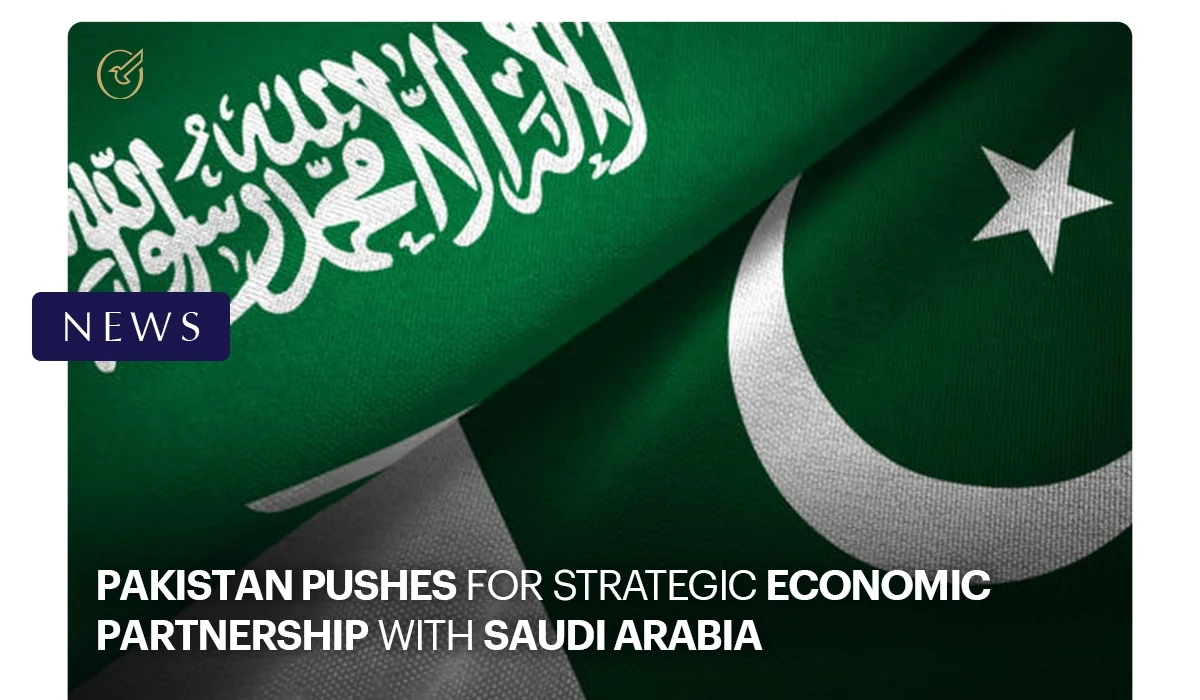
ISLAMABAD: Prime Minister Shehbaz Sharif on Tuesday welcomed a high-level Saudi business delegation at the Prime Minister’s House and invited investors from the Kingdom to explore opportunities across Pakistan’s priority sectors, including agriculture, infrastructure, energy, real estate, and information technology.
Prince Mansour bin Mohammed Al Saud, Chairman of the Saudi-Pak Joint Business Council, led the delegation. During the meeting, the Prime Minister conveyed his respects to Custodian of the Two Holy Mosques King Salman bin Abdulaziz Al Saud and Crown Prince and Prime Minister Mohammed bin Salman.
Sharif underscored the “deep-rooted and brotherly relationship” between the two nations and stressed the need to translate this longstanding partnership into a mutually beneficial strategic economic alliance, in line with the Crown Prince’s vision for expanded regional cooperation.
He said the visit would build on earlier engagements and pave the way for new memorandums of understanding across various sectors.
The Saudi delegation conveyed interest in a broad range of investment avenues, including agriculture, ports, highways, airport outsourcing, real estate, energy, power distribution and information technology.
The Prime Minister described the present moment as an opportune time to deepen bilateral economic ties through both government-to-government and business-to-business channels.
In response, Prince Mansour thanked the Prime Minister for the warm reception and reaffirmed Saudi Arabia’s continued commitment, through both government and private sectors, to strengthening commercial and investment relations with Pakistan.
The delegation is scheduled to hold further meetings with senior government officials and private-sector representatives during its visit.
The engagement comes amid Islamabad’s renewed efforts to attract foreign investment and diversify its economic partnerships, with senior members of the federal cabinet in attendance, underscoring the government’s emphasis on the visit’s strategic significance.
Dedicated and detail-oriented SEO Content Writer, Real Estate Writer, and Research Analyst based in Islamabad, with proven expertise in developing accurate, valuable, and well-researched content. Skilled in analytical writing, market research, and reporting, with the ability to turn insights into clear, professional, and impactful content. Passionate about exploring new ideas, analyzing industry trends, and contributing to high-quality writing and research-driven projects.
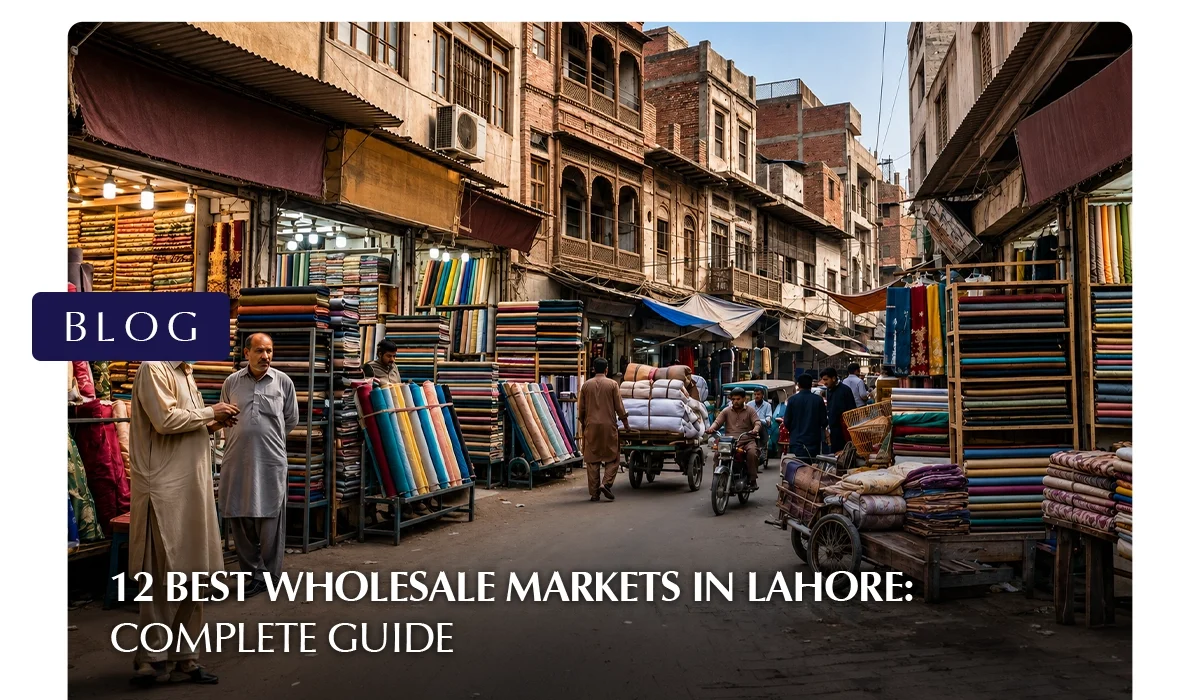
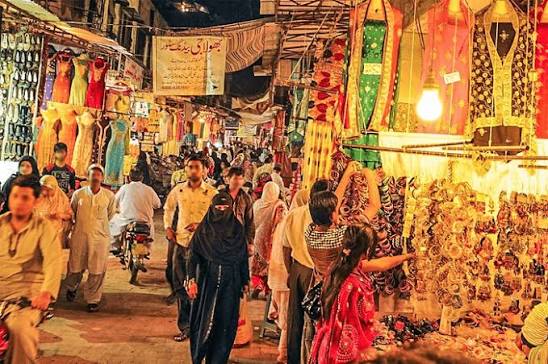
Lahore has been a trading city for centuries, and nowhere is that more obvious than in its wholesale markets. From fabric sold by the bale to spices measured in sacks, the wholesale markets in Lahore supply shopkeepers, boutique owners, and bulk buyers from across Pakistan and plenty of everyday shoppers who just want retail-beating prices.
This guide covers the wholesale markets in Lahore that matter most: what each one sells, where to find it, and how to shop there without overpaying. Whether you’re a retailer stocking a shop or a buyer looking for a good deal, this list will point you to the right bazaar.
What Makes Lahore’s Wholesale Markets Different
Most of Lahore’s biggest wholesale markets sit inside or just outside the Walled City, a dense network of bazaars connected by narrow lanes that has operated as a trading hub since the Mughal era.
Each market inside this network tends to specialise: one street sells only fabric, the next only spices, another only shoes a structure that goes back generations and still shapes how the city trades today.
Newer wholesale hubs have grown up outside the Walled City too, especially for electronics and mobile phones, but the underlying logic is the same: buy in bulk, expect to negotiate, and go to the market built for exactly what you need.
Quick Comparison: Wholesale Markets in Lahore at a Glance
Shah Alam Market, also called Shahalmi, is the largest and best-known of the wholesale markets in Lahore. It sits on the site of the old Shah Alam Gate, one of the Walled City Lahore’s original thirteen gates, named after an 18th-century Mughal emperor. Today it holds close to 10,000 shops selling toys, cosmetics, kitchenware, plastics, garments, and electronics.
It’s the first stop for small shop owners looking to fill their shelves with everyday goods at low prices, though the crowded lanes and constant negotiation take some getting used to on a first visit.
Location: Circular Road, near Delhi Gate, Walled City
2. Azam Cloth Market
Azam Cloth Market is widely regarded as the largest wholesale cloth market in Asia, with a network of more than 25,000 shops packed into the lanes inside Delhi Gate. It was relocated to its current site in 1953, near Wazir Khan Mosque, and has supplied fabric to buyers across Pakistan and neighbouring countries ever since.
Every fabric category is here: cotton, silk, chiffon, linen, khaddar, sold by the bale rather than the metre, which makes this the go-to wholesale cloth market in Lahore for tailors, designers, and boutique owners buying in volume.
Location: Inside Delhi Gate, near Rang Mahal, Walled City
3. Akbari Mandi
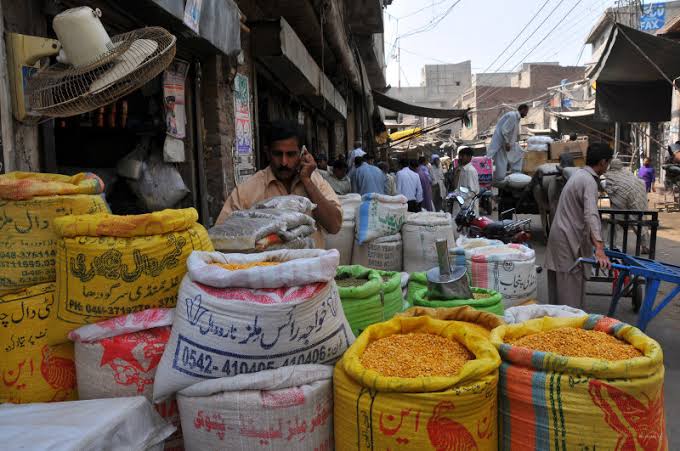
Akbari Mandi is one of the largest spice and grain markets in Asia and the main source for wholesale grains, pulses, spices, herbs, and dry fruits in Lahore. It sits near Akbari Gate and takes its name either from Emperor Akbar or from the sheer scale (“akbari”) of its trade; accounts differ, but the market’s age isn’t in question.
Grocers, restaurant owners, and food distributors from across Punjab buy here, and the smell of fresh spice sacks is part of the experience.
Location: Off Circular Road, near Akbari Gate, Walled City
4. Hall Road
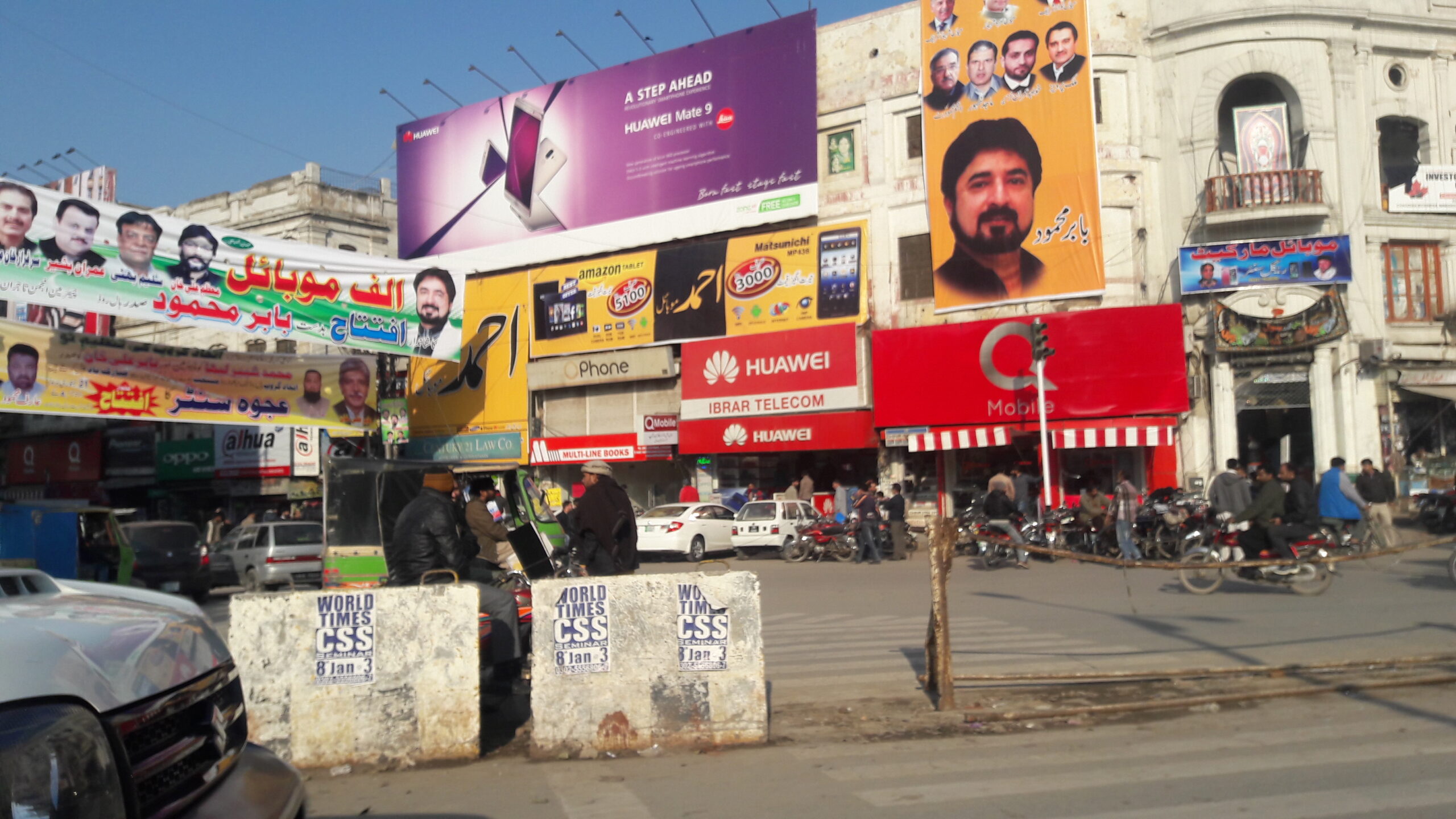
Hall Road is Lahore’s and arguably Punjab’s largest wholesale market for electronics and mobile accessories. What began decades ago as a hub for CDs, DVDs, and software has evolved into a dense concentration of shops selling phones, laptops, components, chargers, and repair parts.
Retailers and repair shop owners come here for bulk pricing on accessories and spare parts, and it remains the cheapest wholesale market in Lahore for anything electronics-related.
Location: Egerton Road, near Regal Chowk, Mall Road area
5. Moti Bazaar
Moti Bazaar is the Walled City’s dedicated wholesale shoe market, home to roughly 1,200 shops. Shoes bought here are supplied to retailers across Pakistan, and some are exported abroad. The market’s name is said to date back to the Mughal period.
Shop owners looking to stock footwear at bulk rates, rather than individual shoppers, make up most of the buyers here.
Location: Walled City, easily reached via Delhi Gate or Akbari Gate
6. Landa Bazaar
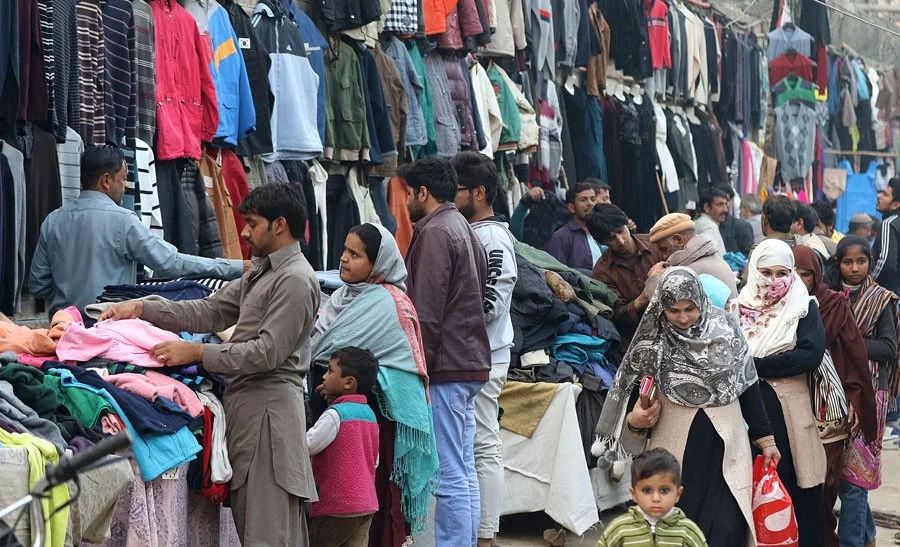
Landa Bazaar is Lahore’s wholesale market for imported second-hand clothing, footwear, blankets, and accessories, sold in bulk at prices that undercut every other clothing market on this list.
Items arrive as donated clothing from countries abroad, are sorted, and sold often by weight or in bundles to shopkeepers and individual bargain hunters alike.
It sits close to Delhi Gate and the Railway Station, near Urdu Bazaar, and includes smaller speciality sections for shoes and ready-made clothes within the main market.
Location: Near Delhi Gate, Walled City
7. Ichhra Bazaar
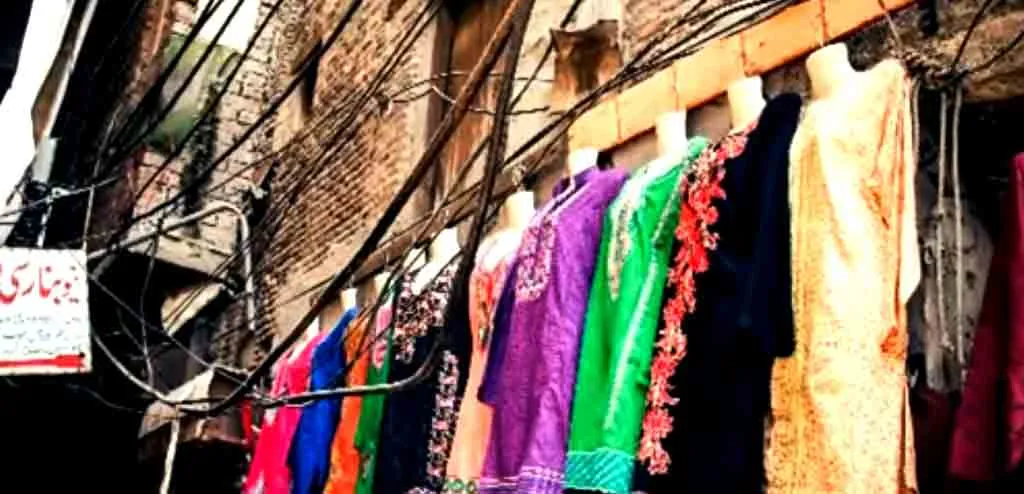
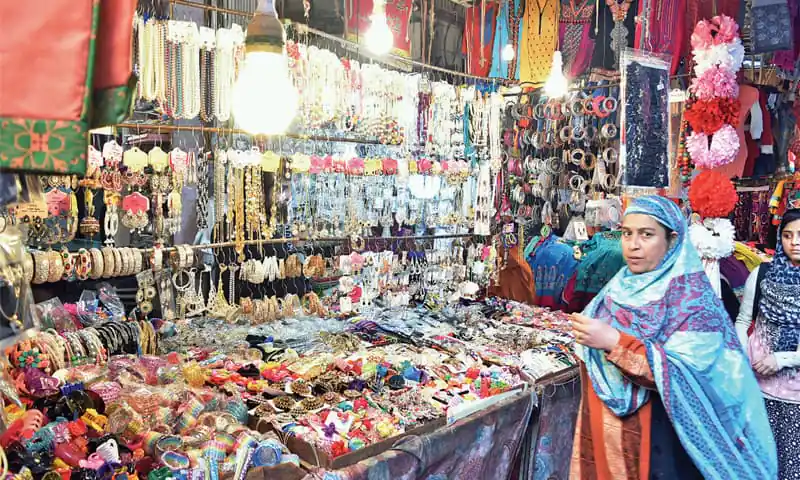
Ichhra Bazaar, on Ferozepur Road, blends wholesale and retail shopping for ready-to-wear clothing, lawn suits, and home textiles. Prices here run noticeably lower than the boutiques of Gulberg or DHA, which is why it draws heavy crowds especially on weekends and ahead of wedding season.
The market is also known for its shoe section, with dozens of shops selling locally made leather footwear at affordable rates.
Location: Ferozepur Road, Ichhra
8. Urdu Bazaar
Urdu Bazaar is Lahore’s wholesale and retail hub for books, stationery, and printing supplies. Textbooks, novels, office supplies, and printing paper are all sold here, and it functions as a wholesale source for bookshops and schools across the city, not just a retail stop for individual readers.
Location: Near Anarkali Bazaar
9. Kinaari & Gumti Bazaar
Kinaari Bazaar and the adjoining Gumti Bazaar, both inside Shah Alam Gate near Rang Mahal Chowk, specialise in embroidered and bridal cloth. Kinaari Bazaar has operated for more than a century and supplies embroidered fabric to larger markets across Lahore and beyond, while Gumti Bazaar a more recent addition is known for unstitched bridal wear, including pieces with minor flaws sold at a discount, and for shops that rent out heavy bridal outfits.
Location: Inside Shah Alam Gate, near Rang Mahal Chowk
10. Hafeez Centre
Hafeez Centre is Lahore’s main formal alternative to Hall Road, a multi-storey plaza on Main Boulevard, Gulberg, where authorised dealers sell mobile phones, laptops, and electronics at wholesale and retail rates.
Floors are organised by product category, the environment is air-conditioned, and pricing is generally fixed rather than negotiated, which appeals to corporate buyers and anyone who wants a warranty.
Location: Main Boulevard, Gulberg III
11. Anarkali Bazaar
Anarkali Bazaar is Lahore’s oldest surviving market, roughly 200 years old, and blends retail and wholesale trade in clothing, jewellery, shawls, and handicrafts. It’s split into Old Anarkali, known for food stalls, and New Anarkali, known for clothing and gifts. While not purely a wholesale market, many of its shops sell in bulk to smaller retailers from outside the city.
Location: Mall Road, near Lahore Museum
12. Rang Mahal Food Market
Rang Mahal Food Market, near Rang Mahal Chowk within the Shah Alam Market area, is a wholesale source for fresh produce, spices, and dry fruits. Restaurant owners and grocers buy here in bulk, and the market runs alongside the general trade of Shah Alam rather than as a separate destination.
Location: Rang Mahal Chowk, Shah Alam Market area
How to Shop Smart at – Best Wholesale Markets in Lahore
Buying from the wholesale markets in Lahore rewards a bit of preparation. A few habits make the difference between a good deal and an average one:
Negotiate, always. Opening prices are rarely final. Start lower than what you’re willing to pay and work up.
Carry cash. Most shops in the Walled City markets deal in cash only; card and mobile payment acceptance is limited outside plazas like Hafeez Centre.
Check quality before you commit to volume. Inspect fabric, electronics, or produce closely; bulk purchases are harder to return.
Buy in genuine bulk for the best rates. Per-unit prices drop as order size goes up; ask about minimum quantities before negotiating.
Go on a weekday morning. Markets are calmer and easier to navigate before the afternoon crowds arrive.
Plan for narrow lanes. Comfortable shoes matter more than they sound like they should most of these markets are walking-only once you’re inside.
Know your market before you go. Each bazaar specialises in something specific; walking into the wrong one wastes a trip.
Best Time to Visit
Weekday mornings are the easiest time to shop the wholesale markets in Lahore; shops are open, stock is fresh, and the lanes aren’t yet at full capacity. Fridays around prayer time see many shops close briefly, and weekends bring the heaviest foot traffic, particularly at Ichhra Bazaar and Anarkali.
FAQ – 12 Best Wholesale Markets in Lahore
What is the biggest wholesale market in Lahore?
Shah Alam Market is generally considered the largest general wholesale market in Lahore, with close to 10,000 shops. For fabric specifically, Azam Cloth Market is the largest wholesale cloth market in Asia.
Which is the cheapest wholesale market in Lahore?
It depends on what you’re buying. Landa Bazaar offers the lowest prices for clothing and footwear, while Shah Alam Market and Akbari Mandi offer strong bulk rates on household goods and food staples.
Can individuals buy from wholesale markets in Lahore, or only retailers
Most wholesale markets in Lahore welcome individual buyers alongside retailers. Savings improve with volume, but there’s usually no requirement to be a registered shop owner.
What is the best wholesale cloth market in Lahore?
Azam Cloth Market is the top choice for bulk fabric across all categories. For embroidered and bridal cloth specifically, Kinaari and Gumti Bazaar are better suited.
Is Hall Road a wholesale market?
Yes. Hall Road functions as Lahore’s main wholesale market for electronics, mobile phones, and accessories, alongside retail trade.
Do Lahore’s wholesale markets accept card payments?
Most shops in the Walled City markets are cash-only. Formal plazas like Hafeez Centre are more likely to accept cards or mobile payments, but it’s safest to carry cash everywhere else.
Final Thoughts – 12 Best Wholesale Markets in Lahore
The best wholesale markets in Lahore aren’t just shopping destinations; they’re some of the city’s oldest working neighbourhoods, each built around a single trade that’s been refined over generations. Whether it’s fabric by the bale at Azam Cloth Market, spices by the sack at Akbari Mandi, or electronics by the carton on Hall Road, there’s a market built for exactly what you need. Go in knowing which one fits your list, negotiate with confidence, and Lahore’s wholesale markets will reward the trip.
BBC-featured Content Specialist with a sharp eye for search intent and a proven ability to turn content into a growth engine. I leverage cutting-edge digital marketing tools to craft strategies that fuel organic traffic, amplify brand growth, and own the local SEO landscape, particularly across the competitive real estate market. I help brands dominate search rankings and convert visibility into measurable business success.
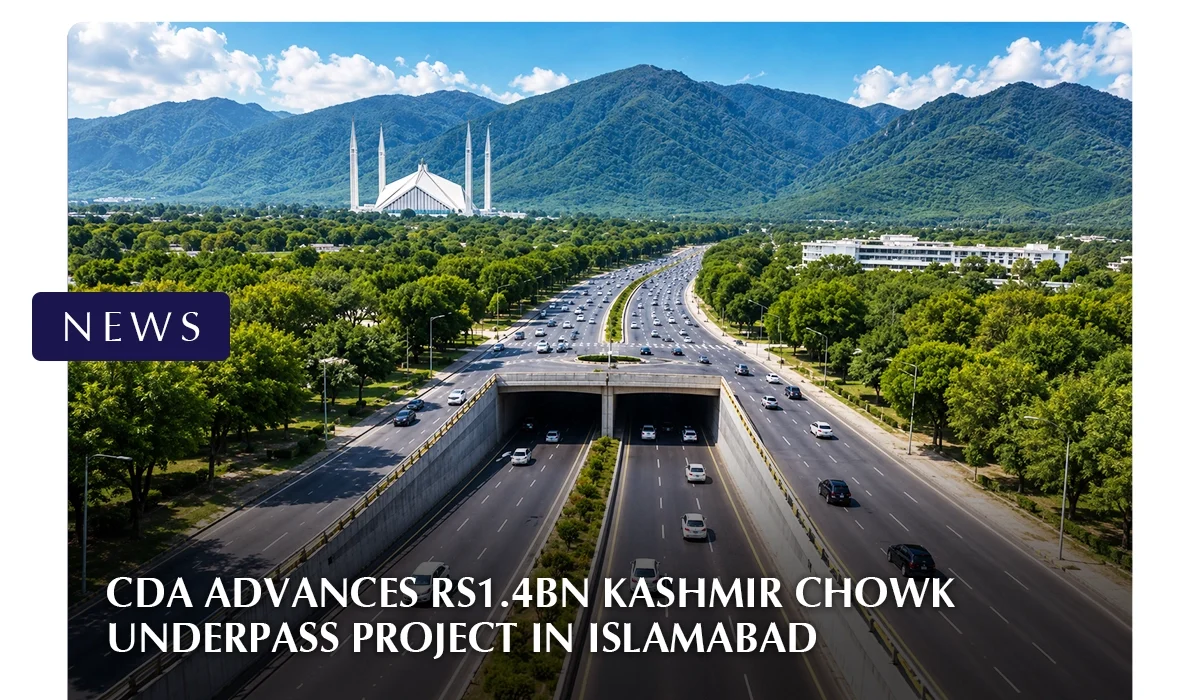
ISLAMABAD: The Capital Development Authority (CDA) has moved forward with plans to construct an underpass at Kashmir Chowk on Murree Road, with the project estimated to cost around Rs1.4 billion.
The proposed underpass, located at Dhokri Chowk near Islamabad Club, is intended to improve traffic movement at the busy intersection. Under the planned arrangement, vehicles travelling from the Serena side towards Rawalpindi will use the underpass, while traffic heading towards Murree will pass over its upper section.
CDA has opened technical bids submitted by Habib Construction Services and M/s Kamran Khan (Kundi Group). During the evaluation process, Kundi Group was declared non-responsive and subsequently filed a grievance with the civic authority. Financial bids will remain unopened until the complaint is decided. Officials expect the matter to be resolved within 15 days.
Separately, CDA is also preparing another underpass at the junction of Faisal Avenue and Margalla Road, where the PC-I is being finalised before the tendering process begins.
The projects form part of CDA’s broader road infrastructure programme aimed at improving traffic flow across Islamabad. Meanwhile, the federally funded 10th Avenue project remains incomplete, with about half of its work still pending despite its original 2024 completion target.
BBC-featured Content Specialist with a sharp eye for search intent and a proven ability to turn content into a growth engine. I leverage cutting-edge digital marketing tools to craft strategies that fuel organic traffic, amplify brand growth, and own the local SEO landscape, particularly across the competitive real estate market. I help brands dominate search rankings and convert visibility into measurable business success.
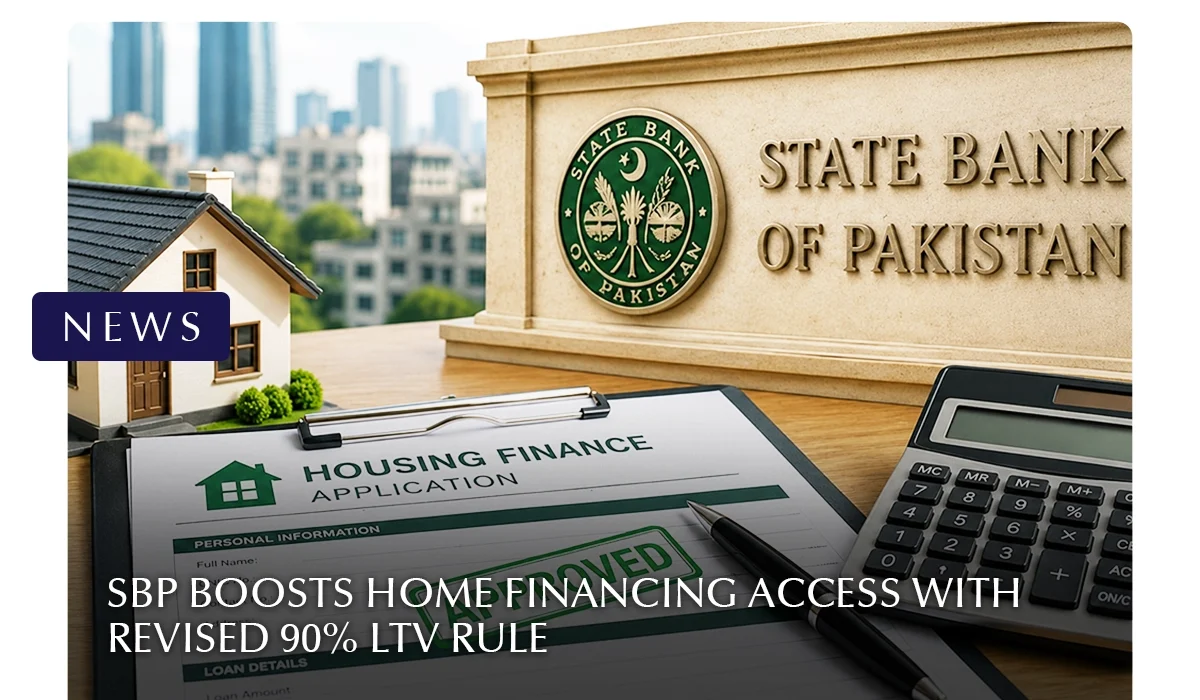
ISLAMABAD: The State Bank of Pakistan (SBP) has issued a revised regulatory framework for housing finance, allowing banks and development finance institutions (DFIs) to finance up to 90 percent of a property’s value, up from previous limits under earlier circulars. The new regulations, which took effect immediately upon issuance, supersede several circulars issued between 2019 and 2021, and the central bank has directed all banks and DFIs to ensure strict compliance.
Under the updated rules, the maximum loan-to-value ratio has been set at 90:10, meaning eligible borrowers can secure financing covering up to 90 percent of a property’s assessed value.
Housing finance may be extended for a range of purposes, including purchasing a house, apartment, or plot; constructing on an already-owned plot; renovating or expanding an existing home; and installing renewable energy systems within housing units.
The maximum repayment tenor for standard housing finance is fixed at 30 years, while renewable energy financing has a shorter maximum tenor of 10 years.
To safeguard borrowers from over-leveraging, the SBP has capped total monthly loan repayments, including the proposed housing finance and any other consumer loans, at 65 percent of a borrower’s net disposable income.
Banks and DFIs must also obtain updated credit information reports through the State Bank’s Electronic Credit Information Bureau or a licensed private credit bureau, with approved proxy models available to assess informal income where applicable.
Additional safeguards include mandatory documentation of property title and ownership, lenders’ formal acknowledgement of received documents, and a general requirement that financed properties be mortgaged in the lender’s favour.
For loans up to Rs. 5 million, a lien supported by a Green Property Certificate may serve as sufficient security. The framework also mandates comprehensive insurance or Takaful coverage equal to the outstanding finance amount, and lenders must clearly disclose coverage terms and charges to borrowers.
Dedicated and detail-oriented SEO Content Writer, Real Estate Writer, and Research Analyst based in Islamabad, with proven expertise in developing accurate, valuable, and well-researched content. Skilled in analytical writing, market research, and reporting, with the ability to turn insights into clear, professional, and impactful content. Passionate about exploring new ideas, analyzing industry trends, and contributing to high-quality writing and research-driven projects.
LAHORE: The Lahore Development Authority‘s governing body has approved an Rs88.613 billion budget for LDA and the Traffic Engineering and Planning Agency (TEPA) for the 2026-27 fiscal year, setting a revenue target of Rs47 billion. The decision was made during a meeting chaired by LDA Vice Chairman Mian Marghub Ahmed, with senior officials from housing, finance, local government and WASA departments in attendance.
Under the approved budget, Rs10 billion sourced through a Punjab government loan has been earmarked for structural road projects, while Rs6.3 billion will fund Annual Development Programme schemes.
Development work in LDA City has been allocated Rs12.5 billion, with a further Rs13.5 billion set aside for sustainable development and urban regeneration initiatives. LDA Avenue 1 will receive Rs4 billion, and TEPA has been granted a separate Rs3.5 billion budget alongside amendments to existing building and zoning regulations.
On the revenue side, the authority has set targets of Rs17 billion from town planning activities and Rs19.2 billion from property sales and allotments, with LDA City expected to contribute Rs15 billion of that figure.
The governing body also greenlit several new initiatives, including a pilot maintenance-charge scheme for residential and commercial properties in LDA Avenue 1, Jubilee Town and LDA Enclave, with services offered free for an initial two-month period.
Additionally, officials approved plans to develop commercial plots on 118 kanals along Ferozepur Road near Arfa Karim Tower for a proposed technology park, and allocated Rs100 million toward a child-friendly city initiative undertaken in partnership with UNICEF.
Other approvals included launching a new residential and commercial sector within LDA City and installing solar lighting across several city blocks. Officials credited the authority’s leadership for achieving a record Rs32 billion in revenue during the previous fiscal year, the highest total in LDA’s history.
Dedicated and detail-oriented SEO Content Writer, Real Estate Writer, and Research Analyst based in Islamabad, with proven expertise in developing accurate, valuable, and well-researched content. Skilled in analytical writing, market research, and reporting, with the ability to turn insights into clear, professional, and impactful content. Passionate about exploring new ideas, analyzing industry trends, and contributing to high-quality writing and research-driven projects.
ISLAMABAD: Pakistan’s Large Scale Manufacturing Industries (LSMI) sector recorded growth of 4.98 percent during FY26 (July-June 2025-26) compared to the corresponding period of the previous fiscal year, according to provisional data released under the Quantum Index of Manufacturing (QIM), based on the 2015-16 base year. The index reached 120.55 for the full fiscal year.
For June 2026, the QIM stood at 108.83, reflecting a year-on-year decline of 3.48 percent and a month-on-month contraction of 6.08 percent compared to May 2026.
Automobiles emerged as the strongest-performing sub-sector, registering growth of 57.77 percent for FY26 and 50.53 percent in June alone. Cement production rose 7.36 percent for the fiscal year and 9.76 percent in June, while petroleum products posted gains of 9.70 percent and 0.70 percent, respectively.
Cotton cloth output increased marginally by 0.17 percent for both the month and the year, while cotton yarn recorded cumulative growth of 1.00 percent despite a 1.85 percent decline in June.
Garments registered fiscal-year growth of 5.49 percent, notwithstanding a 13.45 percent contraction in June. Iron and steel production declined 7.84 percent for the year and 11.75 percent in June. Fertiliser output fell 1.99 percent cumulatively despite a marginal 0.83 percent rise in June.
Automobiles contributed the largest share to overall growth, adding 1.56 percentage points, followed by food (1.21), garments (0.91), petroleum products (0.72), cement (0.41) and electrical equipment (0.37). These gains were partially offset by declines in pharmaceuticals (-0.54), iron and steel products (-0.34), chemicals (-0.20) and textiles (-0.11).
Sectors posting fiscal-year growth included food, beverages, tobacco, wearing apparel, paper and board, coke and petroleum products, rubber products, non-metallic minerals, fabricated metal, computer and electronics products, electrical equipment, machinery, automobiles, other transport equipment and furniture, while textiles, leather, wood products, chemicals, fertilisers, pharmaceuticals and iron and steel products recorded declines.
BBC-featured Content Specialist with a sharp eye for search intent and a proven ability to turn content into a growth engine. I leverage cutting-edge digital marketing tools to craft strategies that fuel organic traffic, amplify brand growth, and own the local SEO landscape, particularly across the competitive real estate market. I help brands dominate search rankings and convert visibility into measurable business success.
Tollinton Market is really two different markets that share one name and one history. The first is a restored Victorian-era heritage building on Mall Road. The second is a busy, working bazaar on Jail Road known today as New Tollinton Market. This guide covers both, in full, so you never have to wonder which one you need.
What Is Tollinton Market?
Tollinton Market is one of Lahore’s oldest and most recognizable market names. It started life in 1864 as a colonial exhibition hall on Mall Road. Over more than 150 years, the name has stretched to cover a heritage site, a relocated commercial bazaar, and an entire road in central Lahore.
Today, when locals say “Tollinton Market,” they usually mean the birds, pets, and meat market on Jail Road, not the original building near the Lahore Museum.
History of Tollinton Market Lahore
The story of Tollinton Market Lahore begins with an exhibition, not a market.
On January 20, 1864, the Punjab Exhibition of Arts and Industry opened on Mall Road, inaugurated by Lieutenant Governor Robert Montgomery. The building was designed by Francis Fowkes of the Royal Engineers, using a prefabricated iron-and-glass style borrowed from London’s exhibition halls. Construction was overseen by Assistant Commissioner Henry Phillips Tollinton, and the building eventually took his name.
After the exhibition closed, the hall held Lahore’s early museum collection until the present-day Lahore Museum opened across the road in 1894. In the 1920s, municipal engineer Sir Ganga Ram remodeled the empty hall into a covered public market. It grew into one of Lahore’s busiest fruit, vegetable, and general goods bazaars for decades.
By the mid-20th century, the building had started to deteriorate. Traders began drifting away through the 1980s, and in 1992 the Lahore Development Authority built a dedicated new market complex on Jail Road. This became New Tollinton Market, absorbing the poultry, meat, bird, and pet trade that Lahoris now associate with the name.
Back on Mall Road, the original building faced demolition plans in the 1990s. A five-year campaign (1993–97), led by the Lahore Conservation Society along with artists and civil society groups, saved the structure.
Restoration work followed in the early-to-mid 2000s, and the building reopened as a heritage exhibition space, closely linked to the National College of Arts (NCA), that today hosts craft bazaars and art shows.
Old Tollinton Market vs. New Tollinton Market Lahore
Because people often search for both markets together, here’s a side-by-side comparison.
Feature
Old Tollinton Market
New Tollinton Market Lahore
Built
1864
1992
Location
Mall Road, next to Lahore Museum
Jail Road, near Ferozepur Road junction
Function today
Heritage exhibition hall, craft bazaar
Working birds, pets, poultry & meat market
Best for
History, architecture, exhibitions
Bulk poultry, meat, birds, and pets
Atmosphere
Quiet, restored colonial building
Busy, commercial, hands-on bazaar
New Tollinton Market Lahore: What You’ll Find on Jail Road
This is the Tollinton Market most visitors mean, and it earns its reputation as one of Lahore’s most distinctive markets.
Across roughly 300 shops, traders sell:
Live chickens, with on-site butchering
Mutton, fish, and frozen meat items
Birds of nearly every kind, including parrots and love birds
Pets such as rabbits, cats, and dogs
Bird feed, cages, and pet supplies
It’s a genuinely commercial market rather than a curated shopping street, which makes it popular with restaurant owners, poultry traders, and bulk buyers, alongside everyday households and pet enthusiasts.
The market has historically drawn criticism over cleanliness and smell around its meat and poultry sections, something the 2025 upgrade project (covered below) was specifically designed to address.
Tollinton Market Lahore Location
The Tollinton Market Lahore location depends on which market you mean:
Old Tollinton Market sits on Mall Road, immediately next to the Lahore Museum and close to the National College of Arts and Anarkali Bazaar. It’s easy to spot from Mall Road itself, tucked between the Museum and the older commercial stretch toward Anarkali.
New Tollinton Market Lahore is on Jail Road, near the Ferozepur Road junction and close to Mozang Chowk and the Shadman area. This is also referred to informally as Tollinton Market Road, and it functions as a well-known landmark for giving directions in that part of the city.
How to Reach Tollinton Market Lahore
Getting to New Tollinton Market Lahore is straightforward from most parts of the city, since Jail Road and Ferozepur Road are major arteries.
From Ichhra: Take Ferozepur Road toward Shadman and Jail Road. The market sits near the Jail Road–Ferozepur Road intersection, roughly a 10–15 minute drive.
From Mall Road or the old city: Head south toward Mozang Chowk, then onto Jail Road.
By public transport or rickshaw: The market is a well-known local landmark, so mentioning “Tollinton” to any driver is usually enough.
To reach the Old Market on Mall Road, the nearest reference points are the Lahore Museum and Anarkali Bazaar, both well served by Metro Bus and easily reached from central Lahore.
Tollinton Market Timings
Shops at New Market generally open around 8 AM and stay active until about 9 PM. Mornings tend to be quieter, with fresher stock arriving early, while evenings draw larger crowds.
As with most Lahore bazaars, individual shop hours can vary slightly, especially around Friday prayer times, so it’s worth calling ahead if you’re making a special trip for a specific trader.
The Old Market, run as a heritage and exhibition space, follows standard museum and gallery hours rather than bazaar timings, and is best checked directly before visiting for a scheduled exhibition.
The 2025 Upgrade: A Rs 190 Million Rehabilitation
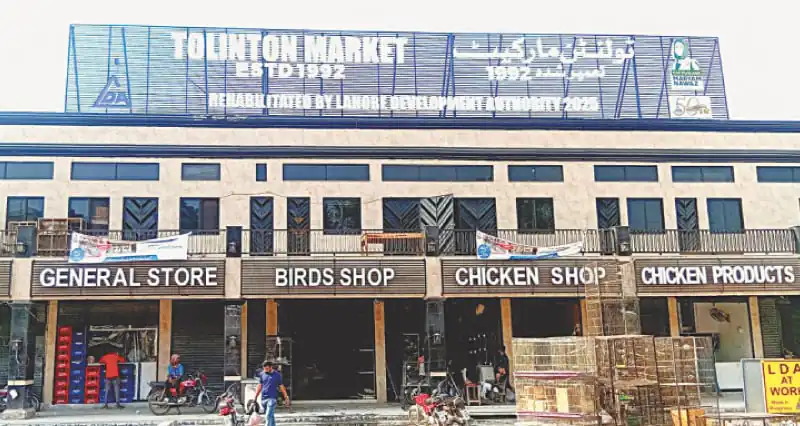
In 2025, the Lahore Development Authority completed a major upgradation and rehabilitation project at New Market, aimed at fixing the cleanliness and infrastructure issues the market had long been known for.
The Rs 190 million project covered:
A redesigned market facade
Improved lighting and ventilation systems
Replacement of internal fiberglass shades
New flooring throughout the complex
An upgraded electricity supply system, carried out with LESCO
The LDA also converted a number of existing shops into model units, intended to set a design and hygiene standard for other traders to follow. Heritage voices in the city welcomed the cleaner look but stressed that ongoing maintenance, particularly solid waste management, will determine whether the improvements last.
Real Estate & Commercial Value
Beyond the market itself, the surrounding stretch commonly referred to as Tollinton Market Road is a recognized commercial location in central Lahore. Its position near Jail Road and Ferozepur Road puts it within easy reach of banks, restaurants, colleges, hostels, and hospitals, which has kept commercial plots and properties in the area attractive to investors and business owners over the years.
For anyone tracking Lahore’s inner-city commercial corridors, Tollinton Market Road remains a useful reference point: high footfall, strong connectivity, and a location that has stayed commercially relevant even as the city’s newer commercial hubs have expanded outward.
Visiting Tips
Go early in the morning for the freshest stock and smaller crowds.
Bring a mask if you’re sensitive to the smell around the meat and poultry sections.
Wear closed shoes rather than sandals; the ground can be wet or uneven.
Bargaining is normal and expected, especially for birds, pets, and bulk purchases.
If you’re buying live animals or birds, ask about diet and care requirements before you leave.
FAQs
Where is Tollinton Market located?
There are two locations. The historic Old Tollinton Market is on Mall Road next to the Lahore Museum. New Tollinton Market Lahore, the working bazaar, is on Jail Road near the Ferozepur Road junction.
What is sold at New Tollinton Market Lahore?
Poultry, mutton, fish, frozen meat, birds, and pets, including cats, dogs, and rabbits, along with pet supplies and bird feed.
What are Tollinton Market’s timings?
Most shops operate from around 8 AM to 9 PM daily, with mornings generally quieter than evenings.
Is the Old Tollinton Market open to visitors?
Yes. It now functions as a heritage exhibition space and craft bazaar, and is open to the public for scheduled exhibitions and events.
How far is Tollinton Market from Ichhra?
About 10 to 15 minutes by road via Ferozepur Road toward Shadman and Jail Road.
Conclusion
Tollinton Market Lahore carries more than 150 years of history in one name, split across two very different places. The original Mall Road building tells the story of colonial-era Lahore and its long fight to preserve itself.
The New Market on Jail Road tells a different story altogether: a working, evolving bazaar that just received its biggest upgrade in decades. Whether you’re heading there for business, a pet, or simply to see what the fuss is about, knowing which one you’re looking for is the first step.
BBC-featured Content Specialist with a sharp eye for search intent and a proven ability to turn content into a growth engine. I leverage cutting-edge digital marketing tools to craft strategies that fuel organic traffic, amplify brand growth, and own the local SEO landscape, particularly across the competitive real estate market. I help brands dominate search rankings and convert visibility into measurable business success.