Sound investment decisions are built on economic understanding. At Chakor, our Economy section covers the macroeconomic trends, policy shifts, market movements, and financial developments that directly influence real estate, construction, and investment across Pakistan.
Whether you are tracking inflation, interest rates, or GDP growth, we break down what matters and what it means for your decisions.
KARACHI: Pakistan’s capital markets showed renewed vigour in the first half of 2026, with companies raising more than Rs20 billion through initial public offerings, according to figures released by the SECP.
The figures reflect a broader push by Islamabad to strengthen the country’s capital markets and steer businesses toward equity financing as an alternative to conventional bank borrowing.
Nine companies completed public listings during the period, drawing capital from a diverse range of sectors including manufacturing, petroleum, dairy, Islamic finance, poultry, and real estate. The SECP attributed the uptick in market activity to a series of regulatory reforms aimed at streamlining the IPO process and making stock market listings more accessible to companies across industries.
In a related development, the regulator unveiled Pakistan’s first regulatory framework for Environmental, Social and Governance (ESG) mutual funds. Under the new rules, ESG-designated funds will be required to allocate at least fifty percent of their assets to qualifying sustainable investments.
The framework also incorporates safeguards intended to curb “greenwashing,” ensuring that funds marketed as environmentally or socially responsible genuinely meet defined sustainability criteria.
The ESG framework is part of a wider sustainable finance strategy being rolled out by the SECP, which includes new ESG disclosure requirements, sustainability reporting standards, and the introduction of Pakistan’s Green Taxonomy, a classification system meant to identify and standardise environmentally sustainable economic activities.
Taken together, these developments signal a deliberate effort by Pakistani regulators to modernise the country’s financial markets, attract a broader base of investors, and align domestic capital-raising practices with global sustainability standards.
Analysts suggest that continued regulatory simplification could further encourage companies to tap public markets in the coming months, potentially deepening liquidity and investor participation in Pakistan’s equity landscape.
Dedicated and detail-oriented SEO Content Writer, Real Estate Writer, and Research Analyst based in Islamabad, with proven expertise in developing accurate, valuable, and well-researched content. Skilled in analytical writing, market research, and reporting, with the ability to turn insights into clear, professional, and impactful content. Passionate about exploring new ideas, analyzing industry trends, and contributing to high-quality writing and research-driven projects.
ISLAMABAD: The Supreme Court of Pakistan has restored the property inheritance rights of female heirs in a decades-old land dispute, delivering a judgment underscoring that inheritance of ancestral property is a vested legal and religious right, not something that can be surrendered through informal family arrangements.
The dispute traces back to 1955, when, following the death of the parties’ father, two brothers transferred the family’s inherited property into their own names. They claimed their mother and sisters had orally gifted away their share of the ancestral land.
Appellant Noor Muhammad challenged this claim, arguing the so-called gift was a fabricated device to strip female heirs of their legitimate property inheritance. For decades, the trial court, appellate court, and high court upheld the brothers’ claim, leaving the sisters excluded from land that was rightfully theirs.
A two-judge Supreme Court bench, comprising Justices Shahid Bilal Hassan and Shakeel Ahmad, reversed these findings, declaring all prior judgments void and ordering revenue authorities to correct the land record so the sisters’ property inheritance is formally recognised.
The Court ruled that the burden of proving an oral gift lies with those who benefit from it, not with female heirs seeking their inheritance, and reiterated that a valid gift requires clear declaration, acceptance, and delivery of possession. Importantly, it held that revenue mutations serve fiscal record-keeping purposes only and cannot, by themselves, transfer or extinguish property inheritance rights.
The Court also found no unjustified delay in the claim, noting that the sisters had continued to receive income shares from the land for years, indicating no knowledge of the exclusion.
Anchoring its ruling in constitutional guarantees of equality and property rights, alongside Islamic principles, the Court characterised the deprivation of women’s inheritance of property as an entrenched social issue that demands effective enforcement, not just legal recognition on paper.
Dedicated and detail-oriented SEO Content Writer, Real Estate Writer, and Research Analyst based in Islamabad, with proven expertise in developing accurate, valuable, and well-researched content. Skilled in analytical writing, market research, and reporting, with the ability to turn insights into clear, professional, and impactful content. Passionate about exploring new ideas, analyzing industry trends, and contributing to high-quality writing and research-driven projects.
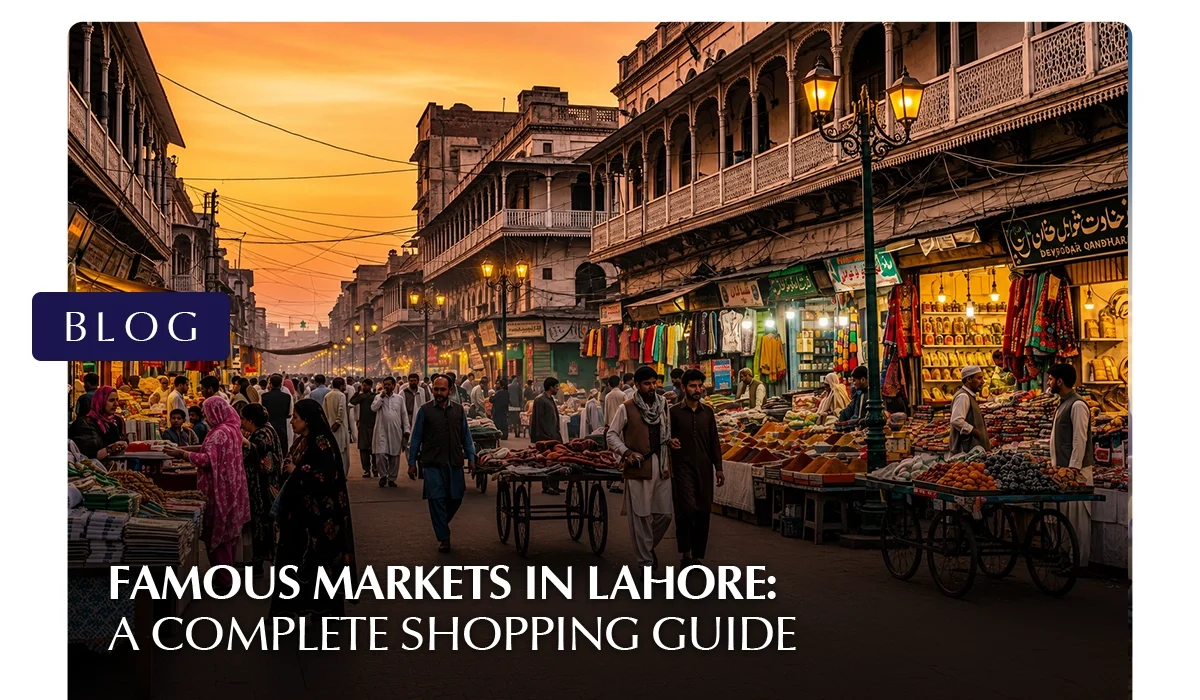
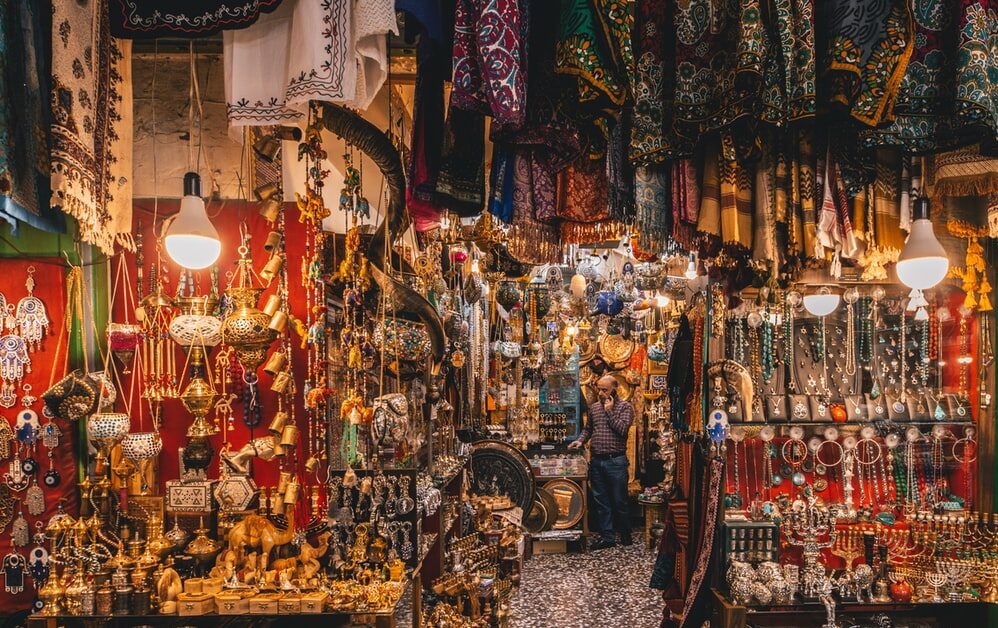
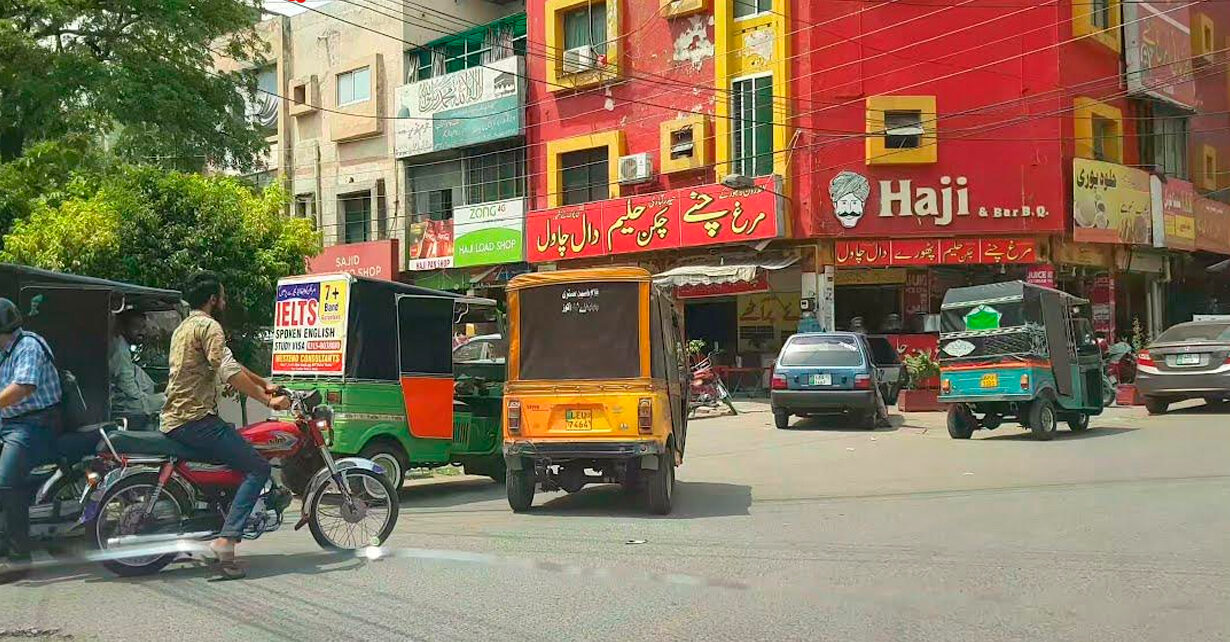
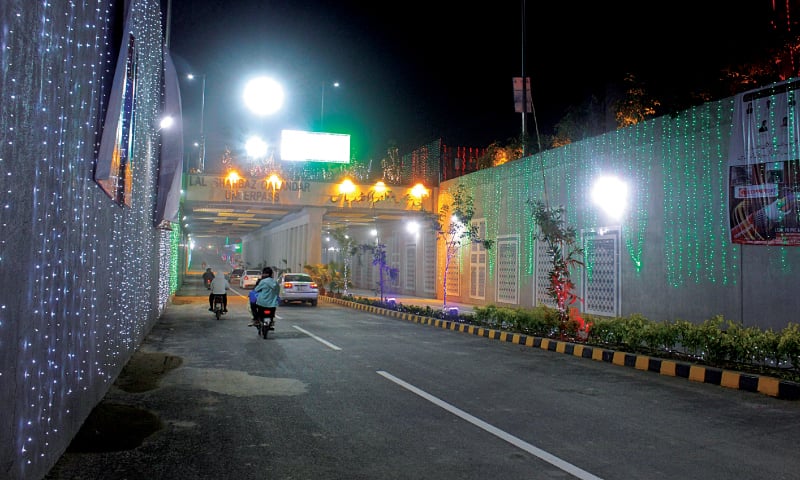
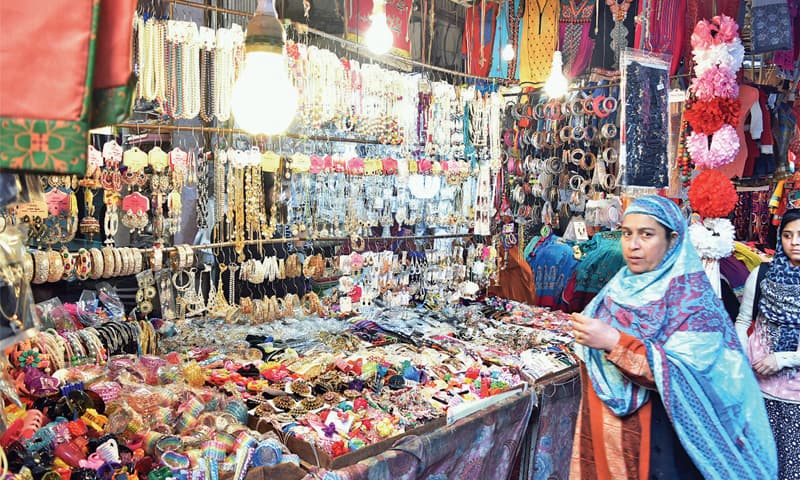
Lahore is a city built on commerce as much as culture. Every neighborhood has a market that defines it, and every market has a personality of its own. From air-conditioned fashion outlets to centuries-old open-air spice bazaars, the famous markets in Lahore capture the city better than any monument could.
Some trace their roots to the Mughal era; others grew alongside the city’s twentieth-century expansion. What ties them together is the same thing that has always defined Lahori commerce: energy, negotiation, and a genuine love of the transaction itself.
This guide walks through the ones worth knowing, whether you are shopping for bridal wear, hunting for wholesale bargains, restocking a kitchen, or simply want to feel the pulse of the city.
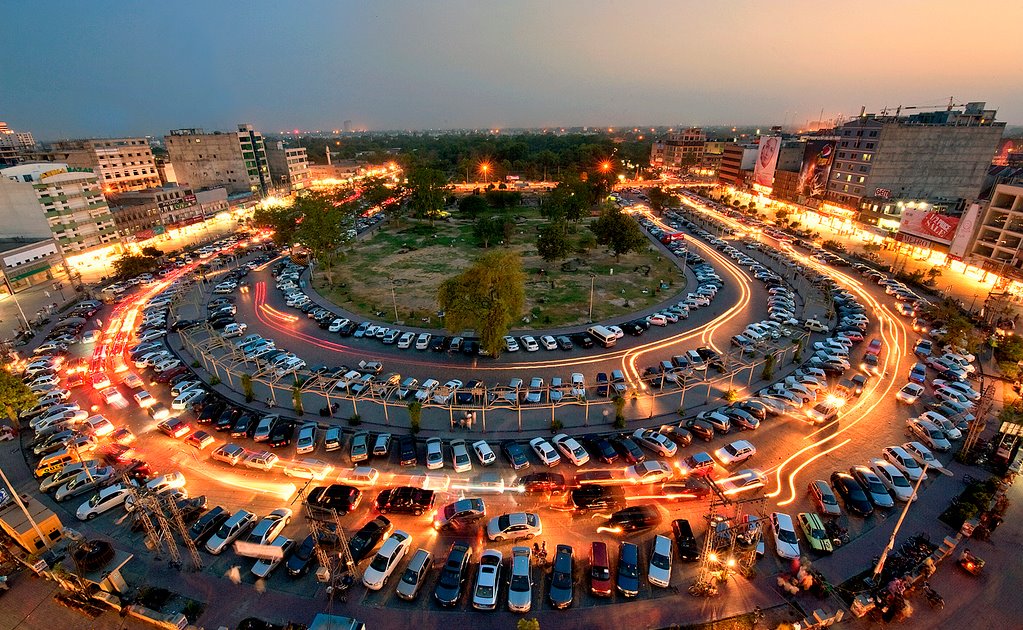
Liberty Market sits at the heart of Gulberg III, arranged in a circular layout around a central parking area that makes browsing easy. It is the city’s go-to spot for clothing, shoes, jewelry, cosmetics, and home décor, and it comes alive after sunset when the lights go up and street food vendors set up shop.
Liberty is anchored by Liberty Chowk, the roundabout that serves as its gateway, ringed with cafés and restaurants that draw crowds long before shoppers even enter the market. Right beside it sits Liberty Mall, a covered alternative for anyone who prefers branded outlets and a food court to open-air stalls.
The circular design means shoppers can walk the full loop and see almost every shop category along the way, from designer lawn and formal wear to imported cosmetics and mobile accessories.
Weekend evenings are the busiest. If you are short on time and want a single stop that represents modern Lahori retail, Liberty is usually the answer.
Anarkali Bazaar: Lahore’s Oldest Market
No list of famous markets in Lahore is complete without Anarkali Bazaar, one of the oldest and most storied markets in South Asia. Split into Old and New Anarkali, it stretches along Mall Road and offers everything from books and handicrafts to fabric, jewellery and street food. Its narrow lanes and centuries of trading history make it as much a heritage experience as a shopping trip.
The market takes its name from a legend tied to the Mughal court. Old Anarkali leans toward food, with some of Lahore’s most loved street food stalls tucked between shops, while New Anarkali is the stronger destination for clothing, embroidery and gift shopping.
Ichra Bazaar: Everyday Fashion for Every Budget
Ichra Bazaar, close to the historic Ichra neighborhood, is known for affordable clothing, accessories and footwear. It draws a steady crowd of students and families looking for everyday fashion without the price tag of Gulberg’s boutiques, and its stalls are a reliable source for seasonal and festive wear.
Shoppers on a budget often prefer Ichra for Eid and wedding season shopping, when the market fills with stalls selling matching sets, artificial jewelry and ready-made outfits at prices that are easy to negotiate down.
Barkat Market: A Neighborhood Favorite
Barkat Market serves the Garden Town and Model Town area with a mix of grocery stores, bakeries, clothing outlets, and household goods. It is less about tourism and more about daily convenience, which is exactly why residents rely on it so consistently.
In a single visit, shoppers can pick up groceries, drop off tailoring, grab fresh bread and still have time to browse a clothing outlet before heading home.
Firdous Market: Bridal Wear and Fabric
Firdous Market, tucked near Gulberg, has built a reputation around bridal wear, fabric and tailoring services. It is a popular stop for anyone planning a wedding in Lahore, with shops specializing in embellished and made-to-order outfits.
Many of the tailors and boutiques here have worked with the same families across generations, and alongside bridal specialists, the market has a strong selection of fabric shops carrying everything from everyday cotton to formal silk and chiffon.
Kareem Block Market: Allama Iqbal Town’s Local Hub
Kareem Block Market in Allama Iqbal Town is a smaller, community-focused market offering clothing, groceries, and general household items. It reflects the everyday commercial rhythm of Lahore’s residential neighborhoods, away from the bigger tourist-heavy bazaars.
It rarely appears on tourist itineraries but plays a real role in daily life for the families who live around it, with small tailoring shops, general stores, and eateries keeping the block running from morning until late evening.
Shah Alam Market: The Wholesale Powerhouse
Shah Alam Market is where Lahore does business in bulk. Occupying the site of the old Shah Alam Gate, it has served as a commercial hub for more than a century and today holds close to ten thousand shops selling accessories, cosmetics, electronics, handicrafts, stationery and crockery.
It’s located in close proximity to Minar-e-Pakistan. Entrepreneurs from across Pakistan travel here to stock up, and the constant hum of bargaining is part of its character.
Prices tend to drop sharply for anyone buying in bulk, which is why small retailers from across Punjab make regular trips here. The market is organized loosely by category, with entire lanes dedicated to specific goods like cosmetics or stationery.
Tollinton Market: Fresh Produce Near Mall Road
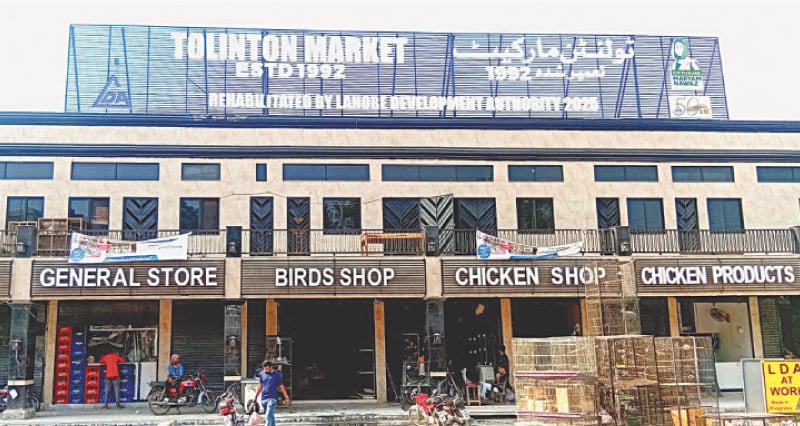
Tollinton Market, close to Mall Road, is the place for fresh vegetables, fruit, meat, poultry, and flowers. Restaurants and caterers across Lahore source their produce here, and over time some stalls have expanded into home goods and packaged food as well.
Early mornings are when Tollinton is at its best, with the freshest stock arriving before the day’s heat sets in. Its proximity to Anarkali and Mall Road makes it an easy add-on for anyone already exploring that part of the city.
Auriga Market: Trendy and Affordable
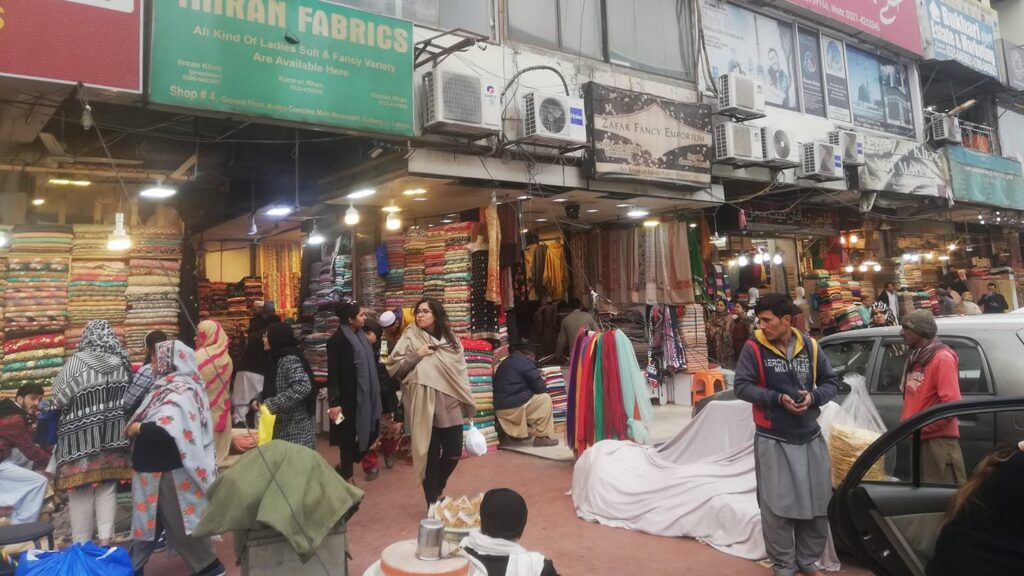
Auriga Market sits near Main Boulevard Gulberg and Ferozepur Road, offering budget-friendly clothing, shoes, bags, and home goods. The market takes its name from the Auriga Centre building at its core, though many locals still call it Origa Market.
Its location makes it a natural stop for anyone already in the Gulberg area, and it has become a favorite among younger shoppers looking for current trends at a fraction of boutique prices.
Akbari Mandi: Asia’s Grain and Spice Giant
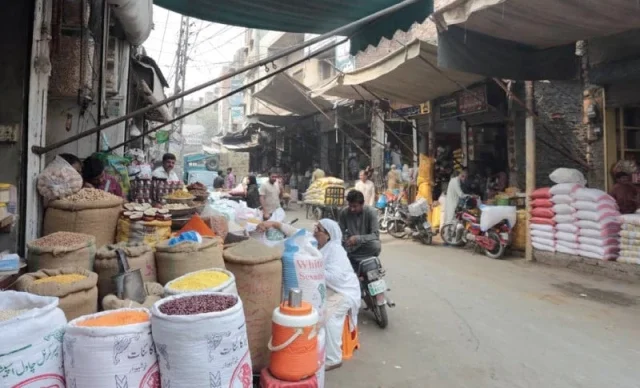
Inside the Walled City, Akbari Mandi is one of the largest wholesale markets for grains, spices, herbs, and chemicals in Asia. Its name traces back to the Mughal era, either named for Emperor Akbar or for the sheer scale (akbari, meaning large) of its trade. Either way, it remains a working piece of Lahore’s Mughal commercial legacy.
Walking through Akbari Mandi means moving past sacks of grain stacked to head height and the scent of fresh spices carrying through the lanes. It is a working market first and a tourist attraction second, supplying shops across Lahore and beyond.
Kasera Bazaar: Utensils With a Century of History
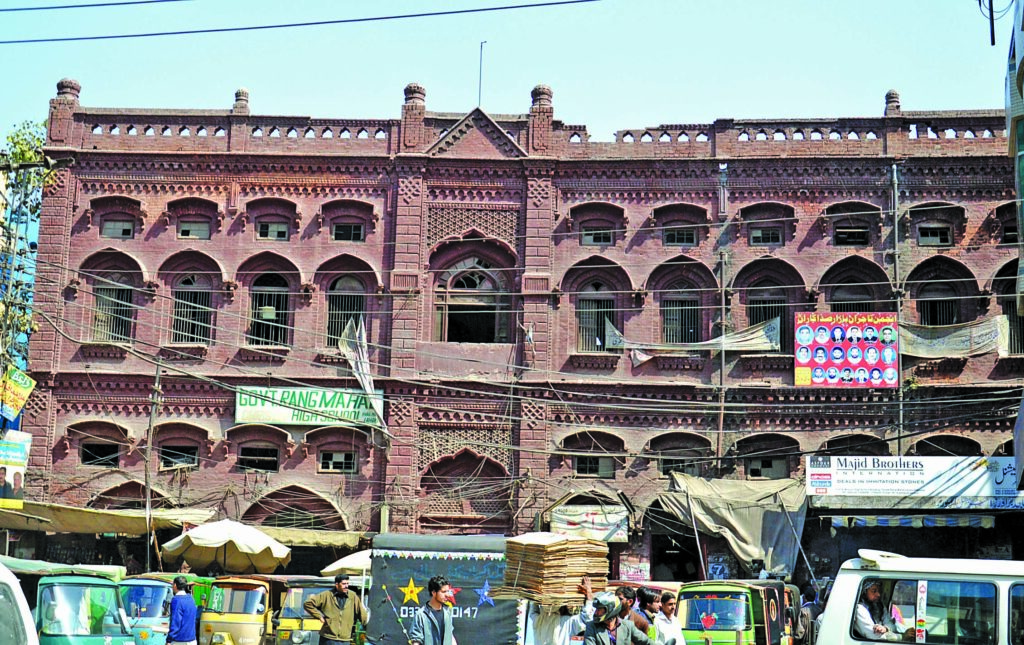
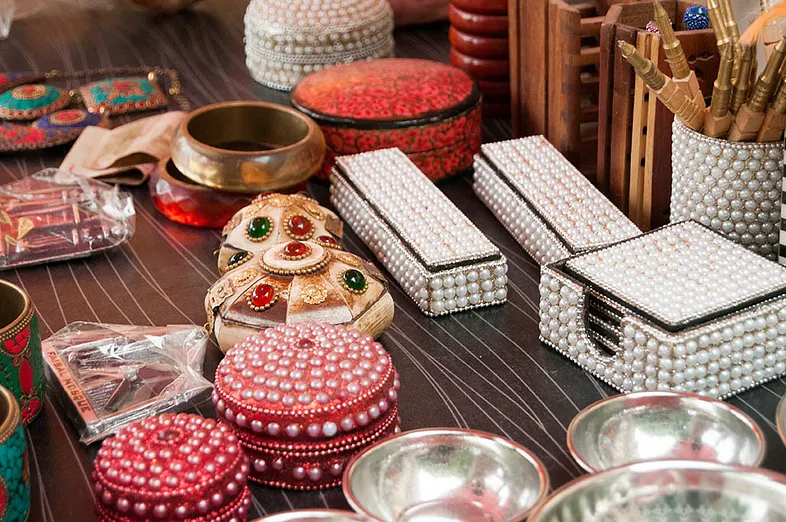
Kasera Bazaar, near Rang Mehal Chowk, has been trading household utensils and crockery for close to 135 years. Around a hundred shops sell everything from steel and brass cookware to antique decoration pieces, chandeliers and vases that are hard to find anywhere else in the city. It remains a favorite stop for tourists hunting for souvenirs making it one of the most famous markets in Lahore.
Many of the shops have been run by the same families for multiple generations, and beyond everyday kitchenware, it is worth visiting simply to see the ornate serving trays and traditional metalwork that are increasingly hard to find elsewhere in the city.
Moti Bazaar: The Walled City’s Shoe Market
Moti Bazaar is the Walled City’s dedicated wholesale shoe market, with roughly 1,200 shops supplying footwear across Pakistan and beyond. Its name is believed to date back to the Mughal period, and it remains one of the largest shoe trading hubs in the country, as well as one of the most famous markets in Lahore.
Retailers from across Pakistan travel to these famous markets in Lahore to buy in bulk, and the range spans everyday footwear to elaborate embroidered shoes made for weddings and festive occasions.
Sarafaa Bazaar Gold Market: Famous Markets in Lahore
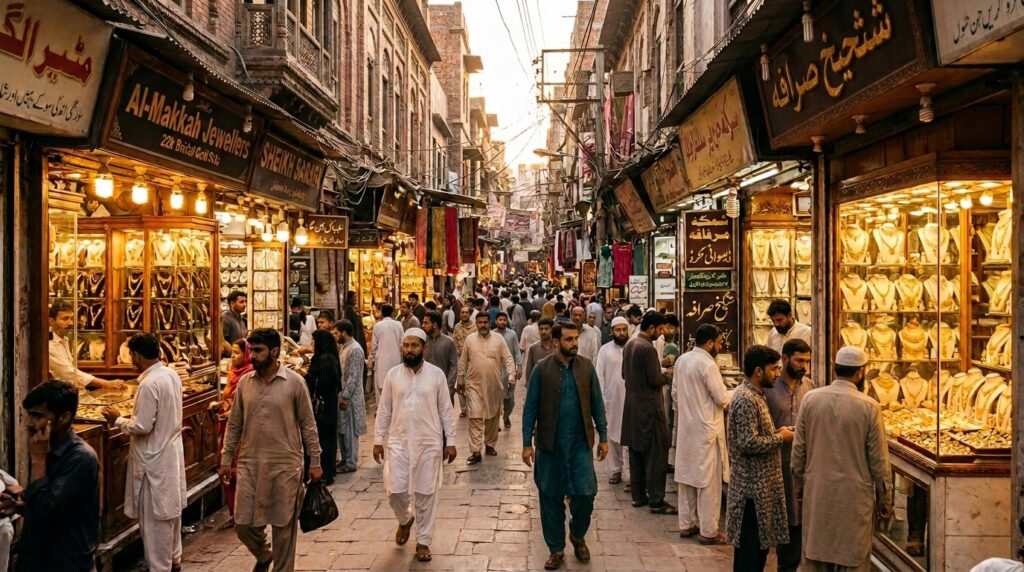
Also called Sooha Bazaar, Sarafaa Bazaar at Rang Mahal Chowk has been the city’s center for gold and jewellery trade since well before Partition. With over 500 shops today, it covers everything from handmade traditional jewelry to modern machine-crafted designs, blending old-world craftsmanship with contemporary demand.
Families across Lahore still make Sarafaa Bazaar their first stop for wedding jewelry, gold investment, and custom pieces made to order, and many shoppers stay loyal to the same family-run shops their parents and grandparents used.
How to Plan a Market Route in Lahore?
Because alll the famous markets in Lahore are spread across different parts of the city, it helps to group a visit by area rather than trying to cover everything in one trip. A Gulberg-focused day could combine Liberty Market, Auriga Market and Firdous Market, all within a short drive of each other and close to Main Boulevard Gulberg.
A heritage-focused day works better around the Walled City, pairing Akbari Mandi, Kasera Bazaar, Moti Bazaar and Sarafaa Bazaar with a stop at Anarkali Bazaar and Tollinton Market on the way back toward Mall Road.
Other neighborhood famous markets in Lahore like Barkat Market, Ichra Bazaar and Kareem Block Market are best visited when you are already in that part of the city, since they are built more for convenience than for a dedicated trip.
Shopping Tips for Famous Markets in Lahore
When on a shopping spree in these famous markets in Lahore, bargain where it is expected, especially at Liberty, Auriga, Shah Alam and the Walled City bazaars. A polite, unhurried negotiation almost always gets a better price than a rushed one, and shopkeepers generally respect buyers who know the value of what they are asking for.
Evenings tend to be cooler and busier, so plan visits after five for the best atmosphere, particularly at Liberty Market and Anarkali Bazaar where the crowds and lighting are part of the experience.
Wholesale famous markets in Lahore like Shah Alam, Akbari Mandi and Moti Bazaar are the opposite, and are best visited earlier in the day before the lanes get too crowded to move through comfortably.
Cash is still king in most of these markets, so carry enough on hand, especially in the Walled City where card payments are far less common. And if you are heading toward Shah Alam or the Walled City, leave early since traffic and crowding build up fast, and parking close to the entrance can be difficult later in the day.
Why These Famous Markets in LahoreMatter?
Each of these famous markets in Lahore tells a different part of the city’s story. Liberty and Auriga represent its modern, fast-moving retail culture. Anarkali, Akbari Mandi, Kasera Bazaar, Moti Bazaar and Sarafaa Bazaar carry centuries of trading history within the Walled City.
Ichra, Barkat Market, Firdous Market and Kareem Block Market keep the city’s neighborhoods running day to day. Together, famous markets in Lahore make the city one of the most dynamic retail landscapes in Pakistan, and one that continues to grow even as the city expands well beyond its old boundaries.
What sets Lahore apart from many other shopping cities is how little separation there is between commerce and community. A visit to Sarafaa Bazaar is also a walk through generations of family businesses, and a trip to Akbari Mandi means watching a working supply chain in real time.
That blend of transaction and tradition is what keeps both locals and visitors coming back to these markets year after year.
Citadel Prime: A New Landmark on Main Boulevard Gulberg
Just as Gulberg has long been home to Lahore’s favorite markets, it is now home to the city’s next major mixed-use address. Citadel Prime, developed by Chakor on CBD at Main Boulevard Gulberg, brings together premium corporate offices and branded apartments in one of Lahore’s most connected locations, minutes from Liberty Market and Auriga Market. Positioned within the same commercial energy that has made Gulberg synonymous with prime real estate, Citadel Prime offers a rare opportunity to live, work, and invest at the center of it all. Learn more about Citadel Prime.
This was all about famous markets in Lahore; for more information on relevant topics such as Main Boulevard Gulberg, visit Chakor blogs.
BBC-featured Content Specialist with a sharp eye for search intent and a proven ability to turn content into a growth engine. I leverage cutting-edge digital marketing tools to craft strategies that fuel organic traffic, amplify brand growth, and own the local SEO landscape, particularly across the competitive real estate market. I help brands dominate search rankings and convert visibility into measurable business success.
Barkat Market is one of Lahore’s most recognised commercial destinations, sitting right on Main Boulevard in Garden Town. Known for its food, retail variety, and central location, Barkat Market Lahore has grown from a small neighbourhood bazaar into one of the city’s busiest commercial corridors.
Whether someone is looking for a quick bite, running errands, or exploring commercial real estate opportunities in the area, Barkat Market remains a reliable point of reference in Lahore’s urban landscape.
This guide covers everything worth knowing about Barkat Market Lahore location, how to get there, what it offers, its history, and why it continues to matter for both residents and businesses.
Barkat Market Location
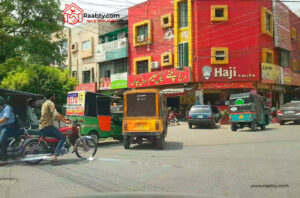
Barkat Market location places it on Main Boulevard, Garden Town, Lahore, in Usman Block’s commercial area. Its central position places it within easy reach of several major Lahore localities, including Gulberg, Model Town, Faisal Town, and Allama Iqbal Town. The postal code for the broader Garden Town area, which includes Barkat Market, is 54600.
Because of this location, Barkat Market functions as a connecting point between several residential and commercial zones, making it a natural stop for people commuting across the city.
How to Reach Barkat Market Lahore
Barkat Market is accessible from multiple directions, which is part of why it sees such consistent foot traffic.
From Ferozepur Road: Head toward Kalma Chowk, then turn onto Main Boulevard Garden Town instead of taking the flyover. Continue straight, and the market will appear on the left, near the Shell petrol pump.
From Gulberg: Approach Kalma Chowk and take the underpass onto Main Boulevard Garden Town. Continue straight, and Barkat Market will be visible on the left after passing the main Garden Town blocks.
From Multan Road or Thokar Niaz Baig (via Okara Road): Enter Main Boulevard Garden Town and take the designated U-turn near the Shell petrol pump. The market sits just past the turn, on the left.
From Canal Road: Canal Road offers one of the smoothest approaches, connecting directly into Garden Town with minimal traffic compared to peak-hour routes through Kalma Chowk.
Public transport, rickshaws, and ride-hailing services regularly stop near Barkat Market, and parking is available in designated spaces around the market, though it can get tight during peak evening hours.
What You’ll Find at Barkat Market
Barkat Market is best described as a mixed-use commercial strip that blends food, retail, services, and business activity in one compact stretch.
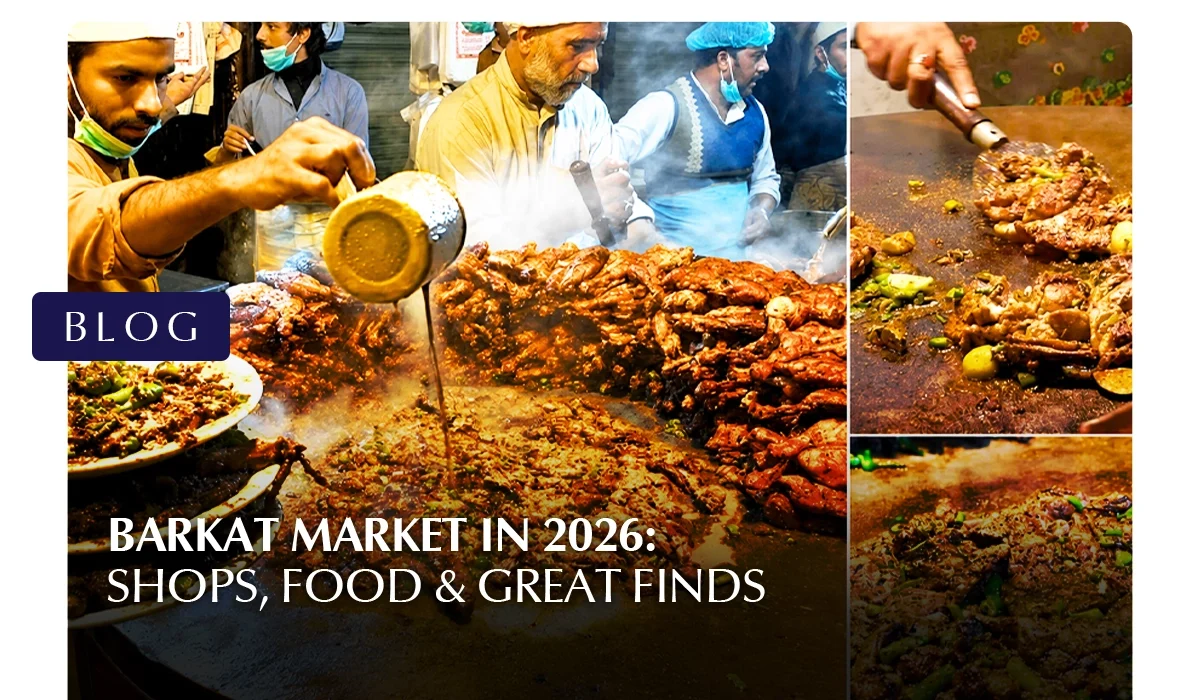
Food and Dining: This is arguably what Market is best known for today. The market has built a reputation as one of Lahore’s reliable food destinations, with a dense cluster of restaurants and food stalls covering everything from fast food and BBQ to traditional Pakistani cuisine and continental options.
Among the long-standing names here, Lal Qila Barkat Market is frequently mentioned by regulars for its Mughal-inspired menu, alongside other established spots serving karahi, biryani, and grilled fast food. The area is informally treated as a food street by locals, especially in the evenings when most outlets are at full capacity.
Retail and Shopping: Beyond food, Market houses a range of retail outlets, including clothing stores, mobile phone shops and repair centers, bakeries, grocery stores, and general merchandise shops. It has also developed a presence as a destination for wedding-related shopping, supported by nearby event venues.
Banking and Financial Services: Several major banks operate branches or ATMs in and around Market, giving visitors easy access to everyday banking needs without having to travel outside the area.
Healthcare Pharmacies, clinics, and basic diagnostic facilities are present within the market, and larger hospitals are a short drive away, making the area reasonably well-served for routine medical needs.
Offices and Commercial Spaces: Market is also home to a number of small offices, service centers, and real estate agencies, reflecting its dual identity as both a retail destination and a working commercial zone.
A Brief History of Barkat Market
Barkat Market began as a modest neighbourhood market serving the residential needs of Garden Town, established as the area developed in the decades following independence.
As Garden Town expanded and nearby institutions, including Punjab University’s campus, grew their presence, the market expanded alongside the rising population and commercial demand.
A significant redevelopment took place in the mid-2000s, which included road widening, improved infrastructure, expanded parking, and modernised shopfronts. This redevelopment played a major role in shifting Market from a basic retail strip into the dining and commercial hub it is recognised as today.
In recent years, the market has leaned further into its identity as a food destination, while still retaining its role as a practical commercial center for the surrounding residential communities.
Why Barkat Market Matters for Commercial Real Estate
For anyone evaluating commercial property in Lahore, Market is a useful reference point. Its consistent footfall, central location, and proximity to established residential societies such as Garden Town, Model Town, and Faisal Town make it an example of how a well-positioned commercial corridor sustains long-term value.
Areas like this tend to attract continued investment in retail and food businesses precisely because of steady demand and easy accessibility from multiple parts of the city.
This pattern is one that real estate developers pay close attention to when assessing commercial viability in Lahore. A strong mix of footfall, accessibility, and surrounding residential density is often what separates a commercial area that thrives long-term from one that struggles to retain businesses.
Frequently Asked Questions
What are Barkat Market’s general operating hours?
Most shops operate during standard daytime hours, but the market is busiest in the evening, particularly between 5 PM and 10 PM, when food stalls and restaurants see peak activity.
Is parking available at Market?
Yes, designated parking spaces are available around the market, though they can fill up quickly during evening hours.
Is Barkat Market mainly known for food?
While it offers a wide range of retail and services, food is what Bakat Market is most popularly associated with today, particularly its concentration of restaurants and food stalls.
What is Barkat Market Lahore location relative to major roads?
Market sits on Main Boulevard, Garden Town, within close reach of Canal Road, Ferozepur Road, and Gulberg, making it accessible from most parts of central Lahore.
Is Lal Qila Barkat Market still open?
Lal Qila Market remains one of the area’s established dining spots, known for its Mughal-inspired menu and continued popularity among regular visitors to the market.
What residential areas are closest to Barkat Market?
Garden Town, Model Town, Faisal Town, and parts of Allama Iqbal Town are all within close reach.
Are banks and hospitals available nearby?
Yes, several bank branches operate within the market, and larger hospitals are a short drive away.
What is the best route to avoid traffic when visiting Barkat Market?
Canal Road tends to offer a smoother approach compared to routes through Kalma Chowk during peak hours.
For more informative blogs on Lahore’s most promising commercial real estate, visit Chakor.
BBC-featured Content Specialist with a sharp eye for search intent and a proven ability to turn content into a growth engine. I leverage cutting-edge digital marketing tools to craft strategies that fuel organic traffic, amplify brand growth, and own the local SEO landscape, particularly across the competitive real estate market. I help brands dominate search rankings and convert visibility into measurable business success.
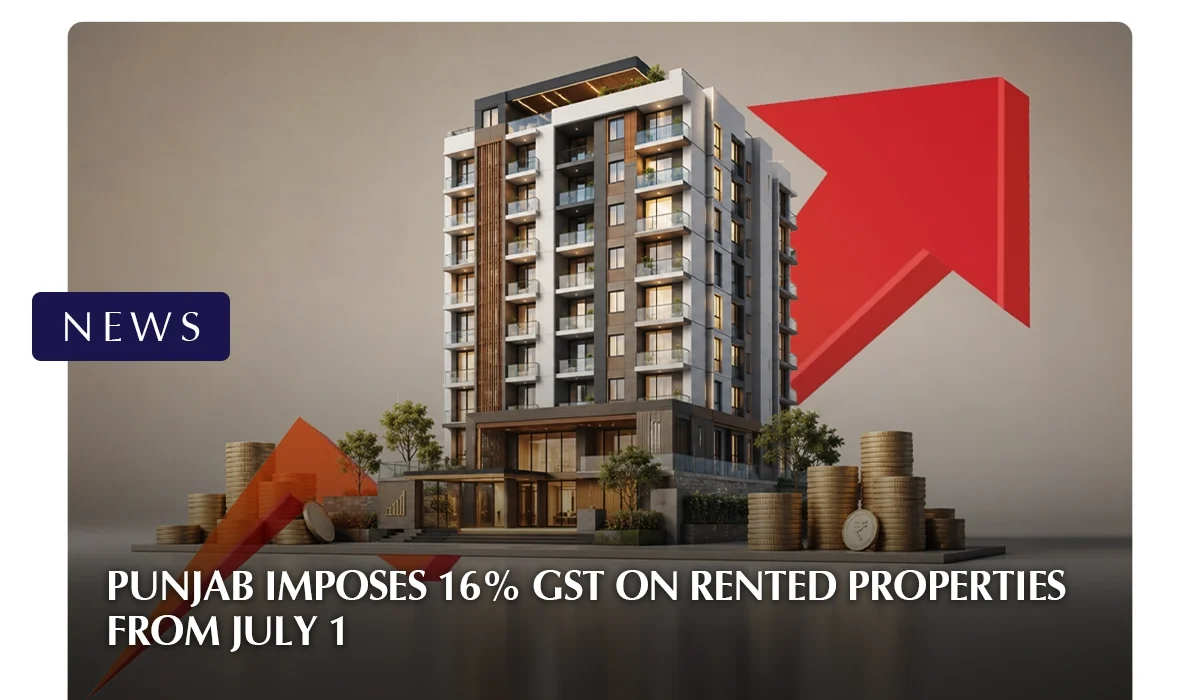
LAHORE: The Punjab government has announced a 16% General Sales Tax (GST) on rented properties across the province. The new tax will take effect from July 1, 2026.
The tax will apply to rented commercial buildings, non-residential properties and other rented immovable properties. Smaller houses rented out will also be included.
The decision is expected to affect both landlords and tenants. Landlords may either pay the tax from their rental income or increase rents to cover the cost. This could make homes, shops, offices and warehouses more expensive for tenants.
Property tax payments in Punjab will now be made through the E-Pay Punjab system. Taxpayers who use the self-assessment method will get a 5% rebate. Those registered before January 1, 2025, will receive a 20% cap on capital value assessment.
If property tax is not paid on time, the government will add a surcharge every three months. These increases will take place on October 31, January 31, April 30 and July 31.
Property dealers have criticised the move. They say property owners already pay taxes on rental properties, so adding another tax is unfair.
Residents have also raised concerns. Many people, especially pensioners, depend on rent as their main source of income. They fear the new tax will reduce their monthly earnings.
The Punjab government has also increased the token tax on commercial vehicles, including vans and trucks, as well as vehicles of 1,000cc and above.
BBC-featured Content Specialist with a sharp eye for search intent and a proven ability to turn content into a growth engine. I leverage cutting-edge digital marketing tools to craft strategies that fuel organic traffic, amplify brand growth, and own the local SEO landscape, particularly across the competitive real estate market. I help brands dominate search rankings and convert visibility into measurable business success.
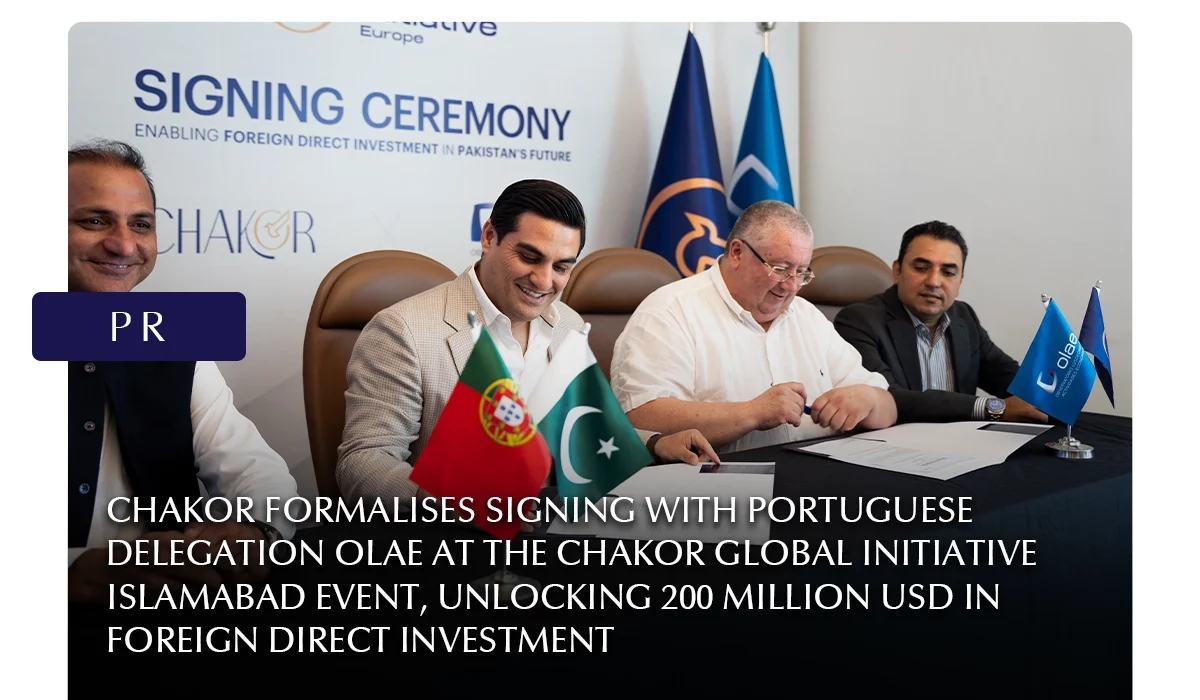
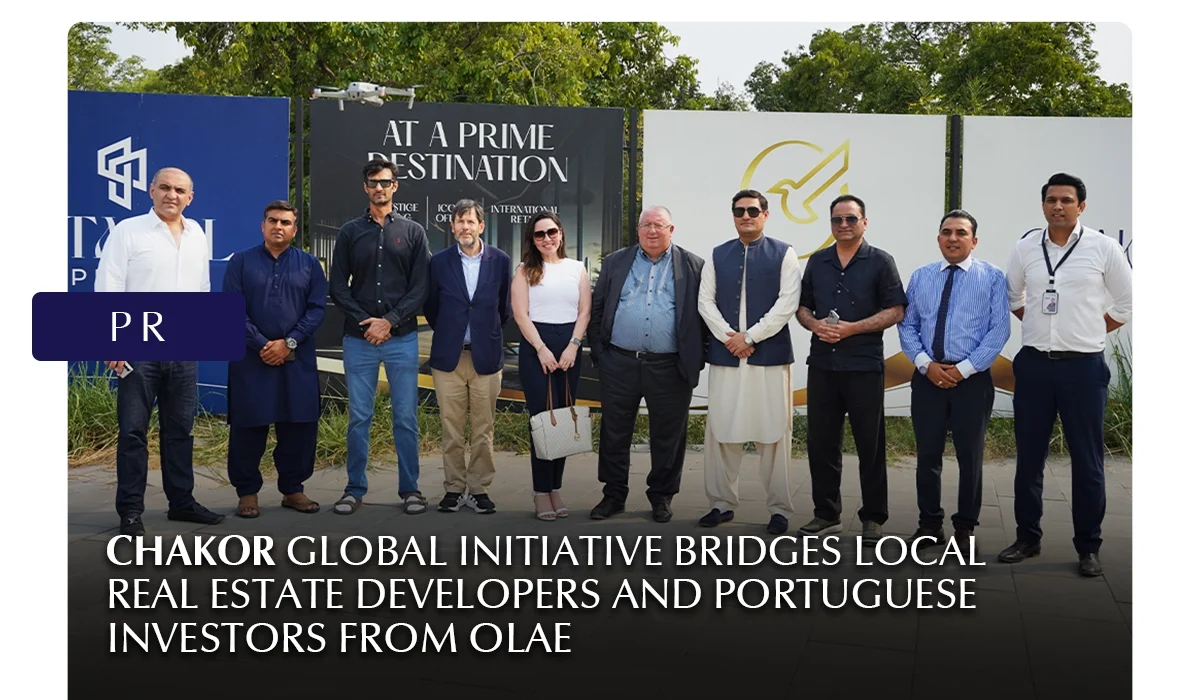
Islamabad, Pakistan — June 20, 2026: Chakor, one of Pakistan’s leading real estate developers, has concluded a landmark FDI signing with a Portuguese investor delegation from OLAE at the Chakor Global Initiative’s Islamabad event held on June 20, 2026.
The historic signing formalises a combined investment commitment of 200 million USD across two Chakor development projects: Citadel Prime, a premium residential project located in the CBD Lahore, and a second flagship Chakor project, marking a significant milestone in Pakistan’s real estate sector.
This game-changing signing brings tangible European FDI inflow in Pakistan property market at a time when international confidence in the country’s economic trajectory is building. The impact of foreign direct investment on economic growth in Pakistan is well documented, and signings of this scale translate directly into job creation, infrastructure development, and long-term sectoral confidence. For Chakor, this is not merely a transaction; it is a statement of intent: that Pakistan is open, investable, and ready for the world.
The Islamabad event was attended by Prof. Dr. Jose Paulo Oliveira, Founder and President of OLAE, accompanied by other senior OLAE representatives, including Dr. Carlos Alberto Ribeiro, Sueny Aline, and Dr. Muhammad Sohail.
Speaking on the occasion, Muhammad Abbas Khan, CEO of Chakor, said:
“This signing with OLAE is a defining moment not just for Chakor, but for Pakistan’s real estate sector as a whole. Attracting European investment of this scale reflects the strength of our projects, the credibility of our platform, and the growing appetite of global investors for what Pakistan has to offer. We built the Chakor Global Initiative to open exactly these doors, and today, they are wide open.”
“We have seen firsthand the opportunities this market offers, and we are proud to be part of what Chakor and Muhammad Abbas Khan is building here. “
The Chakor Global Initiative, which also held its inaugural gathering in Lahore, has positioned Chakor at the forefront of Pakistan’s push to integrate its real estate market with global investment networks. This OLAE partnership represents one of the most consequential instances of foreign direct investment in Pakistan‘s real estate sector to date, and a defining addition to the country’s growing FDI in Pakistan narrative, standing as the most concrete outcome of that ambition to date.
BBC-featured Content Specialist with a sharp eye for search intent and a proven ability to turn content into a growth engine. I leverage cutting-edge digital marketing tools to craft strategies that fuel organic traffic, amplify brand growth, and own the local SEO landscape, particularly across the competitive real estate market. I help brands dominate search rankings and convert visibility into measurable business success.
ISLAMABAD: In a major relief measure for consumers, Prime Minister Shehbaz Sharif on Friday announced a substantial cut in fuel prices, reducing petrol by Rs74 per litre and high-speed diesel by Rs67 per litre, as the government moves to pass on the benefits of falling international oil prices to the public.
According to the announcement, the formal notification confirming the new rates had not yet been issued at the time of reporting. Prices have been adjusted weekly since the outbreak of the US-Iran war, reflecting the volatility conflict has introduced into global energy markets.
Once the revision takes effect, petrol will be priced at Rs299.78 per litre, while diesel will be priced at Rs311.78 per litre, sharply lower than the previous rates of Rs373.78 and Rs378.78, respectively.
Explaining the rationale behind the decision, the Prime Minister stated that the government was responding to an improved regional economic climate alongside the broader decline in oil prices, describing the move as the fulfilment of a commitment previously made to the nation.
The announcement follows remarks PM Shehbaz delivered earlier in the day in the National Assembly, where he had pledged a “significant” reduction in fuel prices, attributing the shift to de-escalating tensions in the Middle East following the recently brokered US-Iran peace agreement and the resumption of energy shipments through the Strait of Hormuz.
In his official statement, the Prime Minister also acknowledged the difficulties faced by ordinary citizens during the period of elevated fuel costs, commended the public for its patience and resilience, and expressed appreciation for their continued support for the government throughout the challenging period.
The development is being viewed as a direct economic dividend of the broader regional stabilisation following the recent ceasefire arrangement between Washington and Tehran, which has restored confidence in global oil supply chains.
Dedicated and detail-oriented SEO Content Writer, Real Estate Writer, and Research Analyst based in Islamabad, with proven expertise in developing accurate, valuable, and well-researched content. Skilled in analytical writing, market research, and reporting, with the ability to turn insights into clear, professional, and impactful content. Passionate about exploring new ideas, analyzing industry trends, and contributing to high-quality writing and research-driven projects.
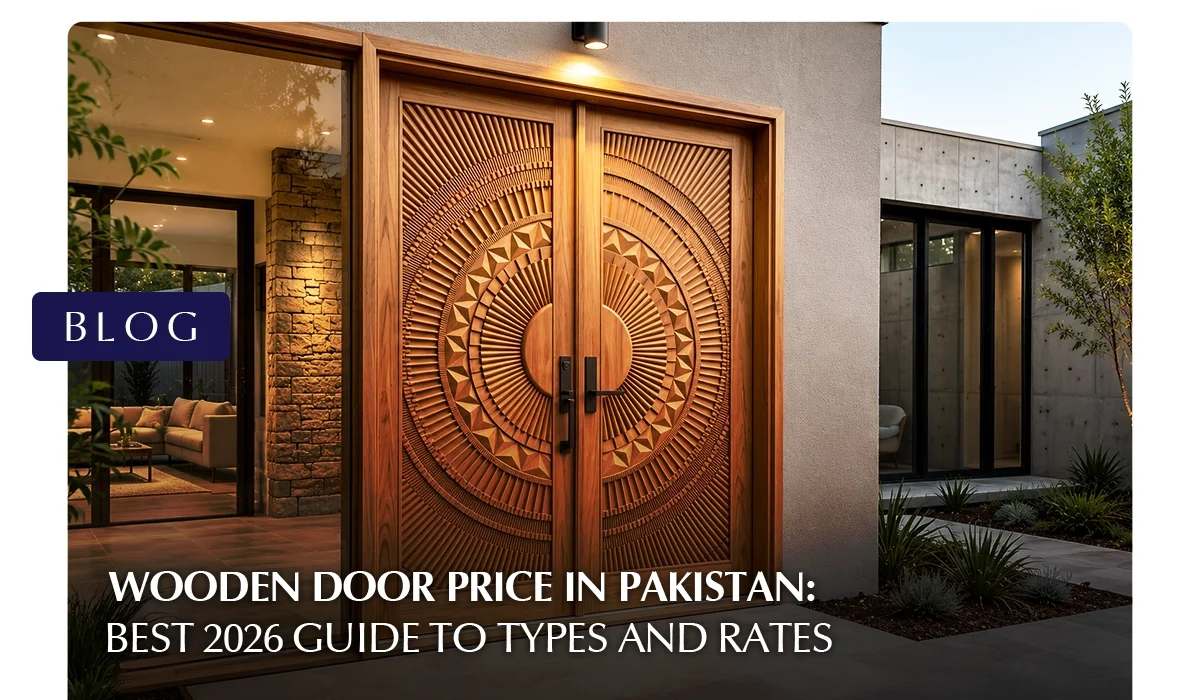
If you are searching for the different types of doors and wooden door price in Pakistan, here is a quick answer. A standard wooden door costs between PKR 8,000 and PKR 60,000, while premium solid-wood doors made from Deodar, Sheesham, or Mahogany can go up to PKR 130,000 or more, depending on size, design, and finish. Custom-carved doors can cost PKR 150,000.
This guide breaks down the current wooden door price for every type of wooden door, popular design ideas, and lock and polish costs, so you can budget accurately before you buy.
What Is the Average Wooden Door Price in Pakistan in 2026?
Door Type
Material
Price Range (Per Door)
Solid Wood Door
Diyar, Ash, Sheesham
PKR 25,000 to PKR 130,000
Semi-Solid Door
MDF Core with Veneer
PKR 16,000 to PKR 30,000
Plywood Flush Door
Commercial Ply
PKR 8,000 to PKR 12,000
PVC Door
Plastic or Polymer
PKR 6,000 to PKR 10,000
Fiberglass Door
Fiber and Resin
PKR 11,000 to PKR 18,000
uPVC Door
Unplasticized PVC
PKR 15,000 to PKR 35,000
For custom doors made by a carpenter, wooden door price are usually quoted per square foot rather than per door.
Wooden Door Price Per Square Foot
Wood Quality
Price Per Sq. Ft. (Labour and Material)
Premium (Diyar or Afghan)
PKR 1,400 to PKR 1,800
Standard (Ash or Oak)
PKR 1,100 to PKR 1,450
Mid Range (Kail or Malaysian)
PKR 850 to PKR 1,000
Budget (Panel or Semi Solid)
PKR 450 to PKR 600
A standard bedroom door measuring 3.5 by 7 feet works out to roughly 24.5 sq. ft, so multiply that figure by the rate above to estimate your total cost.
What Are the Different Types of Wood Used for Doors in Pakistan?
Choosing the right wood is the biggest factor behind any wooden door price in Pakistan.
Wood Type
Price Per Cubic Foot
Best Suited For
Deodar (Diyar)
PKR 8,500
Main entrance, exterior doors
Sheesham (Rosewood)
PKR 9,000 to PKR 12,000
Main doors, premium interiors
Ash Wood
PKR 10,500
Main doors, modern designs
Mahogany
PKR 8,500
Exterior doors in humid climates
Oak
PKR 9,500
Exterior doors, furniture-grade
Kail (Pinewood)
PKR 4,000
Interior and budget doors
Partal (Himalayan Spruce)
PKR 3,500
Interior doors, window panels
Kikar (Acacia)
PKR 3,500 to PKR 5,000
Budget-friendly doors
Poplar
Budget range
Interior doors, kitchen cabinets
Which Wood Performs Best?
Deodar has even, straight grains and resists termites and moisture well, which is why it remains the top pick for a wooden main door in Pakistan despite its wooden door price, though it scratches more easily than harder woods. Sheesham and Mahogany sit at the premium end, valued for strength and a rich, dark finish that ages well.
Ash wood is sturdy and resists shrinkage, but it needs protection from harsh sunlight. Oak is long-lasting and resistant to warping but can darken unevenly over time. Kail, Partal, Kikar, and Poplar are softer, more affordable woods that work well for interior doors but are not recommended for exterior use, as they are more prone to termite damage and general wear.
How Much Does a Main Wooden Door Price in Pakistan?
The wooden main door carries the highest price tag of any internal or external door because it needs extra thickness, strength and a premium finish for security and curb appeal. A solid Deodar or Sheesham main door typically costs PKR 35,000 to PKR 80,000 or more, with carved or custom wooden main door design work pushing prices well past PKR 100,000.
Experts recommend a main door thickness of at least 1.5 to 2 inches for proper security. Budget alternatives like Engineered Wood or a semi-solid main wooden door price down to PKR 18,000 to PKR 30,000 while still offering a wood grain finish.
What Are the Latest Wooden Door Design Ideas for Home?
Wooden door design trends in Pakistan have moved well beyond plain flat panels. Below is a detailed breakdown of each style so you know exactly the wooden door price and where it fits best in your home.
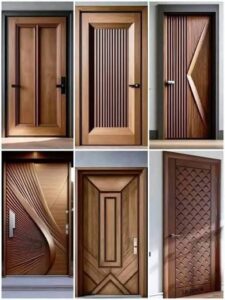
Modern Wooden Door Design
Source: Modern Wooden Door Designs
Source: Modern Wooden Door Designs
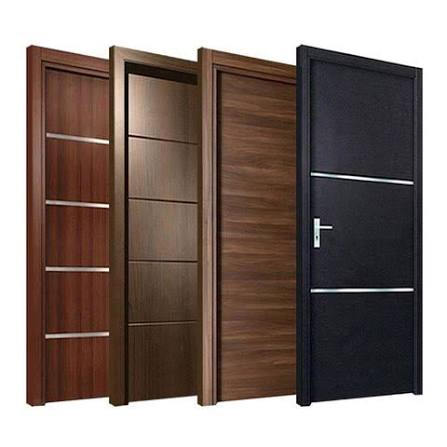
A modern wooden door design strips away ornamentation and focuses on clean geometry. The panel is usually a single flush surface or split into two or three equal vertical or horizontal sections using thin recessed grooves instead of raised mouldings. Hardware is kept minimal, often a slim stainless-steel or matte-black handle set flush against the door rather than a bulky traditional knob.
The finish is almost always matte rather than glossy, which lets the natural wood grain show without looking shiny or old-fashioned. When comparing options, the wooden door price can vary significantly depending on the wood type, panel design, and hardware quality, so it’s worth checking a few designs before deciding on the one that best fits both your aesthetic and your budget.
This style works best in Ash wood or Oak because both woods have a tight, even grain that looks sharp under a matte coat. It suits main doors on contemporary house facades, drawing room entrances, and any home where the rest of the interior follows a minimalist theme. Ash wood with a matte finish is currently the most requested wooden door design for home interiors in Pakistan, largely because it photographs well and pairs easily with both warm and cool-toned wall colours.
Simple Wooden Door Design
A simple wooden door design is the most economical and widely used style for bedrooms, storerooms and secondary entrances, making the wooden door price quite affordable for everyday use. It consists of a single flat or lightly moulded panel with no carving, no glass insert and minimal detailing. The only visual interest usually comes from the natural grain of the wood itself or a thin border moulding running around the edge of the panel.
Because there is no carving labour involved, this design keeps both material and craftsmanship costs low, which is why it is commonly built from Kail, Partal or Kikar rather than premium woods like Sheesham or Deodar. It is the right choice if you need to fit out multiple doors across a house on a tight budget, since the savings per door add up quickly across an entire property.
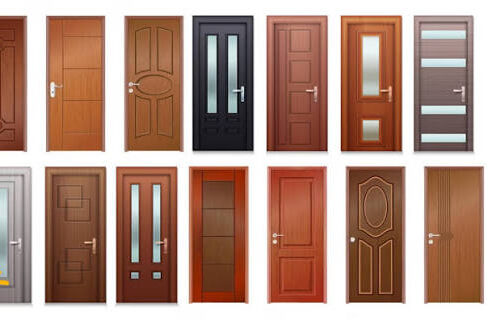
Wooden Door Design for Room
A wooden door design for room interiors generally falls between the simple flat-panel and the more decorative main-door styles. Common features include two or three raised or recessed panels arranged vertically, lighter wood tones than what you would use for an exterior door, and occasionally a small frosted or fluted glass cutout near the top to allow some light or ventilation between rooms without sacrificing privacy.
A room door design with a raised-panel or shaker style is particularly popular because the shallow three-dimensional panel adds visual texture without requiring carving. This style is forgiving on the wooden door price since it can be made in Poplar or Kail and still look more refined than a completely flat door, making it a good middle ground for bedrooms, studies, and home offices.
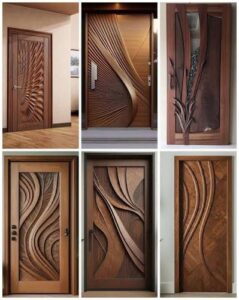
Carved or Decorative Wooden Doors
Source:
Source: StockCake
Source: Make My Piece
Source: ArchiExpo
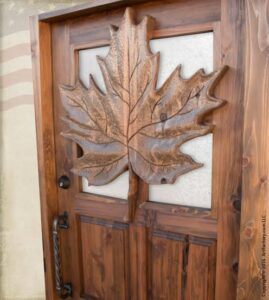
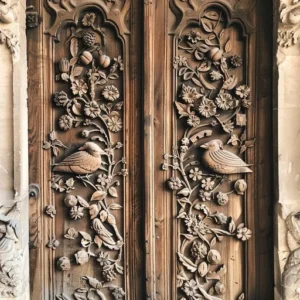
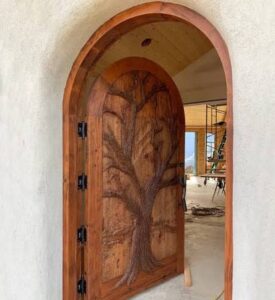
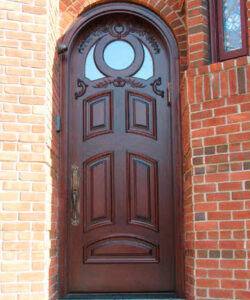
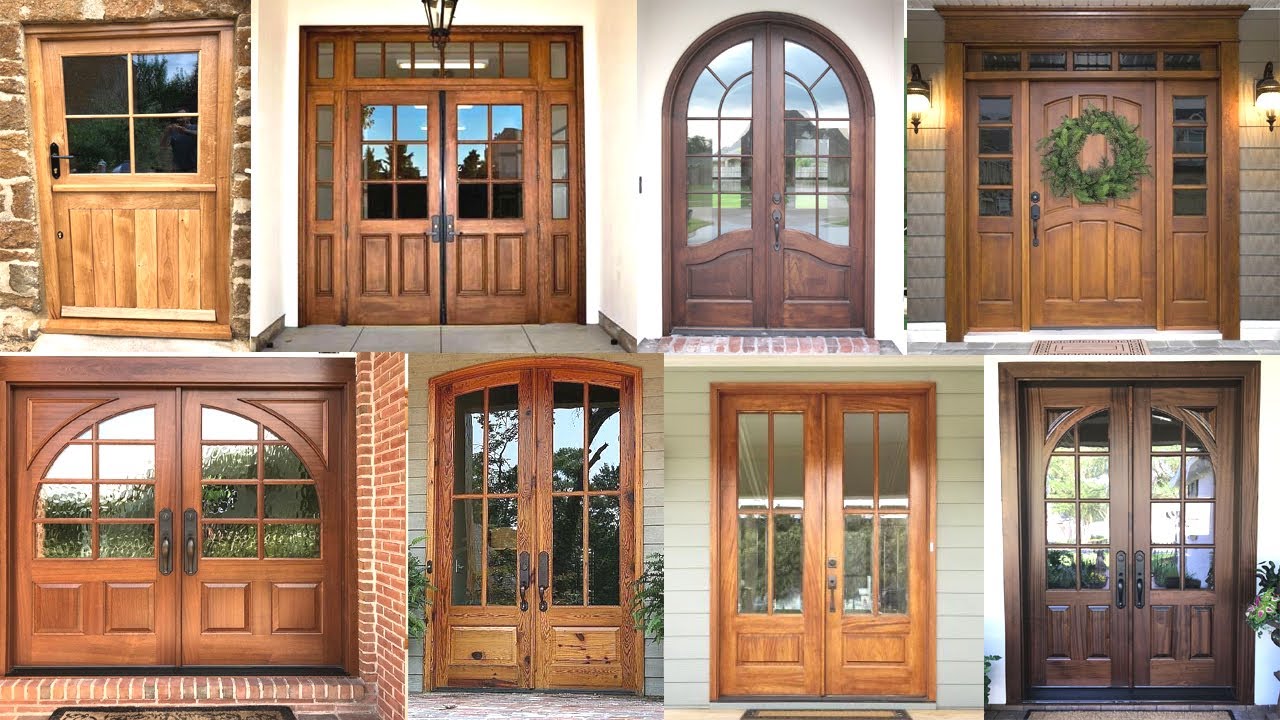
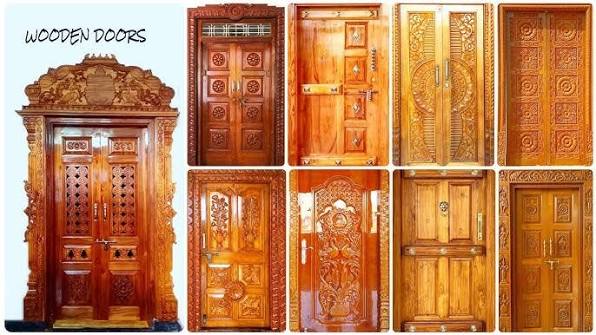
Carved doors represent the top end of wooden door design in Pakistan, both visually and in price. The design typically features deep-relief carving of floral motifs, geometric Islamic patterns, or vine-and-leaf borders cut directly into solid wood panels, most often Sheesham or Deodar, because both woods are dense enough to hold fine-carved detail without chipping. Some designs combine carving with a raised centre panel that sits proud of the surrounding frame, creating a layered, three-dimensional look from a distance.
This style is almost exclusively used for main entrance doors, where the door itself serves as a design statement for the entire property. Because every carved door requires a skilled craftsman to work by hand for several days, pricing reflects labour as much as material, which is why carved wooden door price in Pakistanrange from PKR 30,000 for simpler border carving to PKR 70,000 or more for full-panel relief work.
If you are browsing pictures of wooden door designs for inspiration, pay close attention to the depth of the carving in the photo, since shallow machine-routed patterns look very different in person compared to genuine hand-carved relief work.
What Is the Price of a Wooden Double Door in Pakistan?
A wooden double door is a common choice for grand entrances, drawing rooms and villas. Because it uses roughly twice the material and labour of a single door, wooden door price ranges from PKR 60,000 to PKR 180,000, depending on wood and design. A wooden double door design with matching carved panels and brass fittings sits at the higher end, while a simpler flush double door in Kail or Partal can be done for PKR 35,000 to PKR 60,000.
How Much Does a Wooden Sliding Door or Bifold Door Cost?
A wooden sliding door is increasingly used for drawing rooms, balconies and space-saving interior partitions. Wooden door price depends on track hardware and panel count, but typical costs range from PKR 25,000 to PKR 70,000 for a standard two-panel sliding setup.
Wooden bifold doors and wooden folding doors are popular for wardrobes, kitchen partitions and patio openings where a swinging door would take up too much space. These typically cost PKR 15,000 to PKR 40,000 per opening, depending on the panel count and wood grade, with hardware (rollers, hinges, tracks) adding PKR 3,000 to PKR 8,000.
What Are the Best Wooden Glass Door Designs?
A wooden glass door design combines a wooden frame with full or partial glass panels and is commonly used for balconies, study rooms, and modern drawing rooms. A glass door with a wooden frame design typically costs more than a solid-panel door of the same size because of the tempered or frosted glass insert, which usually adds PKR 5,000 to PKR 15,000 to the base wooden door price. These designs work especially well in Ash or Oak frames, which complement the clean lines that glass panels call for.
What Do Wooden Main Door Designs in Indian Style Look Like?
Wooden main door designs in the Indian style remain a popular reference point for Pakistani homeowners who want an ornate, traditional entrance. These designs typically feature deep-relief carving, jali (lattice) patterns, arched tops, and brass or antique-gold hardware, usually crafted from Teak, Sheesham, or Deodar. Due to labour-intensive carving, wooden door price for this style generally starts at PKR 60,000 and can exceed PKR 150,000 for hand-carved pieces.
How Much Do Wooden Door Locks Cost in Pakistan?
Lock and hardware costs add a meaningful amount to your total wooden door price in Pakistan, sometimes PKR 5,000 to PKR 40,000 per door once everything is included.
Accessory
Quality or Material
Price Range (PKR)
Main Door Handle Lock
Zinc Alloy or Brass
PKR 8,500 to PKR 35,000
Bedroom Handle Lock
Standard (Wista or Nexen)
PKR 3,500 to PKR 9,000
Cylindrical Knob Lock
For Bathrooms
PKR 1,200 to PKR 2,500
Door Hinges (Kabzay)
Stainless Steel, Set of 3
PKR 800 to PKR 2,500
Door Stopper
Magnetic or Rubber
PKR 450 to PKR 1,200
Digital Smart Lock
Fingerprint or Card, Imported
PKR 25,000 to PKR 65,000
Wooden door lock prices in Pakistan vary mainly by brand and finish. Local zinc alloy locks are budget-friendly, while imported brass or digital smart locks cost significantly more but offer better durability and added security for the main entrance.
What Are the Best Wooden Door Paint Colours and Polish Options?
Finishing is one of the easiest ways to change how a door looks without changing the wood itself.
Finish Type
Description
Rate (Per Sq. Ft.)
Standard Wood Polish
Hand rubbed (Lakh Dana)
PKR 150 to PKR 250
Deco Paint
High gloss or solid colors
PKR 350 to PKR 550
PU or Lacquer Finish
Premium machine finish
PKR 500 to PKR 800
Simple Oil Paint
For steel or flush doors
PKR 80 to PKR 120
For wooden door paint colours, walnut brown, mahogany red, and natural honey tones remain the most requested for main doors, as they highlight the grain and influence wooden door price. Matte black and charcoal grey are trending for modern facades, while soft white or off-white finishes work well for interior room doors. A proper wooden door polish job using the Lakh Dana hand-rubbed method brings out the natural shine of Deodar and Sheesham and remains ideal for humid climates.
Is Buying an Old Wooden Door a Good Idea?
An old wooden door, whether reclaimed from a demolished property or bought from an antique dealer, can be a budget-friendly and characterful option for a wooden door price, especially for Diyar or Sheesham pieces that are no longer commercially available at the same quality level.
Before buying, check carefully for termite damage, warping and loose joints, since restoration (stripping, sanding, repolishing) can add PKR 5,000 to PKR 15,000 to the upfront cost. If the structure is sound, an old wooden door often outperforms a new budget door in both durability and appearance.
What Additional Costs Affect Wooden Door Price?
Cost Item
Type or Material
Price Range (PKR)
Chaukhat (Steel Frame)
16 Gauge Standard
PKR 5,500 to PKR 8,500
Chaukhat (Wooden Frame)
Diyar, A Grade
PKR 18,000 to PKR 28,000
Chaukhat (WPC Frame)
Waterproof, Termite Proof
PKR 12,000 to PKR 16,000
Installation
Carpenter Labor
PKR 2,000 to PKR 7,000
Polish or Paint
Per Sq. Ft, Finish Dependent
PKR 80 to PKR 800
Locks and Hardware
Standard to Digital
PKR 5,000 to PKR 40,000
Frequently Asked Questions
As of 2026, prices range from PKR 8,000 for a basic plywood or PVC door to PKR 130,000 or more for a premium solid Deodar or Sheesham main door, with custom-carved designs going even higher.
A semi-solid door has a solid wood frame around the edges with an MDF or honeycomb core in the centre, covered by a thin wood veneer. It looks similar to solid wood but costs roughly half the price.
Solid Deodar, Sheesham, or Ash wood is the top choice for main doors because of its strength and resistance to weather. A thickness of at least 1.5 to 2 inches is recommended for security.
No. Standard door rates usually refer only to the door leaf. A wooden or steel chaukhat typically adds PKR 5,000 to PKR 28,000, depending on the material.
Check the weight first, since solid doors are noticeably heavier. Then inspect the top or bottom edge. A solid door shows continuous wood grain throughout, while a semi-solid door reveals a layered, sandwich-like structure.
A wooden double door generally costs close to twice as much as a single door of the same wood and design, typically PKR 60,000 to PKR 180,000, since it uses twice the material and hardware.
Final Thoughts: Wooden door price in Pakistan
Choosing the right door for your home comes down to balancing budget, durability, and design. As this guide shows, wooden door price in Pakistan can range from PKR 8,000 for a basic plywood or PVC door to over PKR 130,000 for a premium solid Deodar or Sheesham main door, with custom-carved designs going even higher. The wood type, design complexity, hardware, and finishing all play a major role in determining your final cost, so it helps to decide on these priorities before you start shopping.
If you’re on a tight budget, woods like Kail, Partal, or Poplar, paired with a simple or shaker-style design, will keep costs low without sacrificing much in appearance. For a long-lasting main door, investing in Deodar or Sheesham with a properly polished finish is worth the higher wooden door price. Remember to also budget for the chaukhat, installation, and locks, as these add to your overall cost and ensure you get a complete, well-fitted door rather than just the door leaf.
Dedicated and detail-oriented SEO Content Writer, Real Estate Writer, and Research Analyst based in Islamabad, with proven expertise in developing accurate, valuable, and well-researched content. Skilled in analytical writing, market research, and reporting, with the ability to turn insights into clear, professional, and impactful content. Passionate about exploring new ideas, analyzing industry trends, and contributing to high-quality writing and research-driven projects.
LAHORE, Pakistan — June 17, 2026: Chakor launched the Chakor Global Initiative to build direct connections between international capital and Pakistan’s most credible real estate opportunities. This week, that vision advanced in a significant way.
A high-level delegation from OLAE, Portugal, comprising the President of OLAE, Prof. Dr Jose Paulo Oliveira, accompanied by Dr Carlos Alberto Ribeiro, Sueny Aline, and Dr Muhammad Sohail, visited Pakistan under the initiative. Through this platform, local real estate developers gained direct access to international representatives and a tangible opportunity to present their projects for foreign direct investment.
A Strategic Meeting with CBD Punjab
Chakor put its international network to work, arranging a strategic meeting between the Portuguese delegation and CBD Punjab at CBD Lahore, where the delegation received a detailed briefing on the scale, vision, and investment potential of one of Punjab’s most significant urban development projects.
On the same platform, Chakor presented Citadel Prime Lahore, its premium residential offering, placing the project directly before global decision-makers with a stake in Pakistan’s growth story. Both engagements reflected what sets Chakor apart: the ability to open doors that translate international interest into real investment.
Unlike conventional angel investment platforms or digital crowdfunding models, the Chakor Global Initiative facilitates direct, high-level engagement between project owners, institutions, international representatives, and investors. It also creates new channels for international investors and business angels to identify credible opportunities and establish strategic partnerships with local developers.
In the evening, Chakor hosted a private dinner, bringing the Portuguese delegation together with senior figures from Pakistan’s government, real estate, and business sectors.
The guests included Minister of Education Punjab Rana Sikandar, CEO of CBD Imran Amin, Salman Zafar of Linkers Development, and senior representatives from leading real estate developers and business figures across Pakistan.
“Pakistan has the projects, talent, and potential to attract major international investment. Chakor is creating the direct connections required to turn that potential into partnerships, capital, and long-term growth.”
— Muhammad Abbas Khan, CEO, Chakor
Exclusive networking and social events are being hosted by Chakor in Lahore and Islamabad, with limited seats available.
BBC-featured Content Specialist with a sharp eye for search intent and a proven ability to turn content into a growth engine. I leverage cutting-edge digital marketing tools to craft strategies that fuel organic traffic, amplify brand growth, and own the local SEO landscape, particularly across the competitive real estate market. I help brands dominate search rankings and convert visibility into measurable business success.
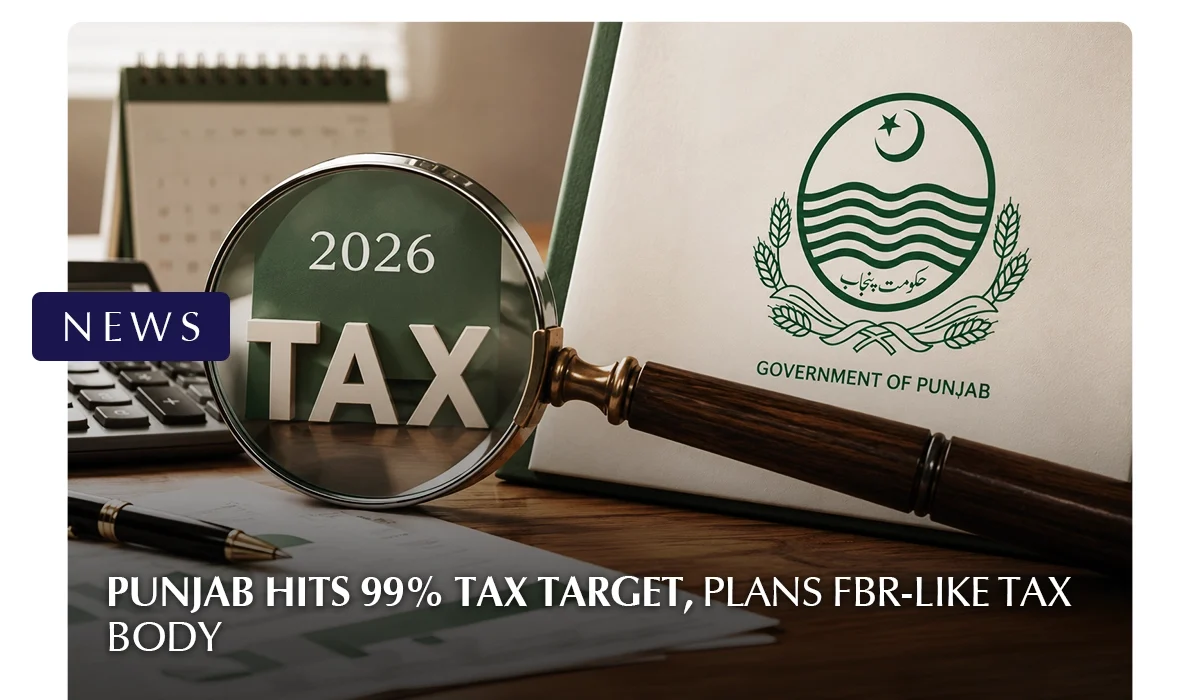
LAHORE: Punjab’s government has announced plans to create a unified revenue authority modelled on the Federal Board of Revenue, consolidating all provincial tax streams under a single institutional framework during the upcoming fiscal year.
Finance Minister Mian Mujtaba Shujaur Rehman disclosed the initiative at a post-budget press conference on Wednesday, citing strong performance in the outgoing fiscal year as grounds for the reform. The province met 99 percent of its tax collection target, prompting officials to raise the revenue goal for FY 2026-27 by 46 percent. Own-source revenues are projected to grow between 30 and 40 percent, a gain the minister attributed to curbing corruption within tax administration and broadening the provincial tax base.
Under the new targets, the Punjab Revenue Authority has been assigned a collection goal of Rs528 billion, while the Excise and Taxation Department will aim for Rs124 billion. Non-tax departments are expected to contribute Rs461 billion, with the Mines and Minerals Department emerging as the leading performer in that category.
Rehman noted that only modest revisions to existing tax rates were proposed for the coming year, given current economic conditions. He explained that a Rs546 billion grant to the federal government had reduced Punjab’s development budget from Rs1,240 billion to Rs752 billion, though officials maintained that no development priorities were compromised.
Addressing reporters’ questions, the minister confirmed that proposed amendments to the agricultural tax, unchanged since 1998, would apply only to landholdings exceeding 12.5 acres.
Senior Minister Marriyum Aurangzeb, also present at the briefing, rejected claims that southern Punjab or the agriculture sector were being neglected, pointing to rising acreage and crop output. She further clarified that reports of a Rs145 billion traffic-fine target were inaccurate, stating that the actual figure is Rs45 billion. Officials added that documentation for 493 new development schemes, including a laptop distribution programme, would be finalised by June 30.
Dedicated and detail-oriented SEO Content Writer, Real Estate Writer, and Research Analyst based in Islamabad, with proven expertise in developing accurate, valuable, and well-researched content. Skilled in analytical writing, market research, and reporting, with the ability to turn insights into clear, professional, and impactful content. Passionate about exploring new ideas, analyzing industry trends, and contributing to high-quality writing and research-driven projects.