BBC-featured Content Specialist with a sharp eye for search intent and a proven ability to turn content into a growth engine. I leverage cutting-edge digital marketing tools to craft strategies that fuel organic traffic, amplify brand growth, and own the local SEO landscape, particularly across the competitive real estate market. I help brands dominate search rankings and convert visibility into measurable business success.
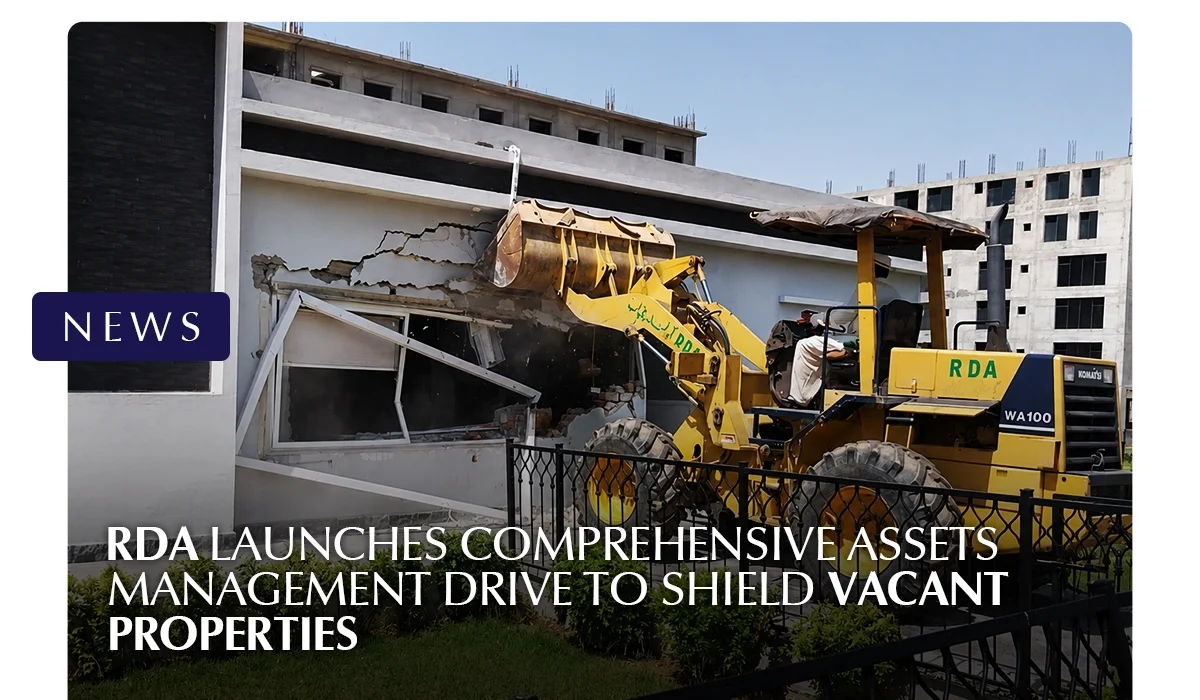
RAWALPINDI: The Rawalpindi Development Authority (RDA) has introduced a new Assets Management initiative aimed at protecting public land, generating sustainable revenue, and making better use of long-neglected properties across its housing schemes.
The initiative was formally unveiled at a high-level briefing held at the RDA Conference Room, chaired by the Commissioner of Rawalpindi and the Director General of RDA. Senior officials from finance, planning, engineering, and estate management departments attended the session, reflecting the broad institutional commitment behind the programme.
Director Estate Management Maleeha Iesar led the presentation, outlining a three-part strategy focused on: preventing illegal encroachment on RDA-owned land; developing vacant properties to create steady income for the Authority; and improving land use across 13 housing schemes currently under RDA’s ownership.
The initiative comes in response to growing concerns over the gradual encroachment of open spaces within established housing colonies, a problem that has steadily reduced both public utility and the Authority’s land assets over the years.
In response to the briefing, the Commissioner and DG RDA directed all department heads to extend full support to the Estate Management Directorate. They also ordered the prompt preparation and submission of design drawings for proposed construction on identified sites, emphasising the need for swift action across all relevant departments.
The meeting concluded with unanimous agreement among all officials to move forward with the plan. Authorities indicated that construction and development activities are expected to begin once the designs receive formal approval.
Officials noted that this initiative signals a broader shift in RDA’s approach, moving from simply owning land to actively managing and developing it. The programme is also expected to serve as a model for urban land management across Punjab.
RDA Launches Comprehensive Assets Management Drive to Shield Vacant Properties
BBC-featured Content Specialist with a sharp eye for search intent and a proven ability to turn content into a growth engine. I leverage cutting-edge digital marketing tools to craft strategies that fuel organic traffic, amplify brand growth, and own the local SEO landscape, particularly across the competitive real estate market. I help brands dominate search rankings and convert visibility into measurable business success.
ISLAMABAD — For more than twenty years, people who bought apartments in Islamabad did so without any dedicated law to protect their ownership. Unlike those who bought a plot or a house, apartment buyers had no independent title in their own name.
Their rights were tied to whatever lease the developer held with the Capital Development Authority (CDA). If that lease was cancelled for any reason, buyers could find themselves with no legal recourse, regardless of how much money they had paid.
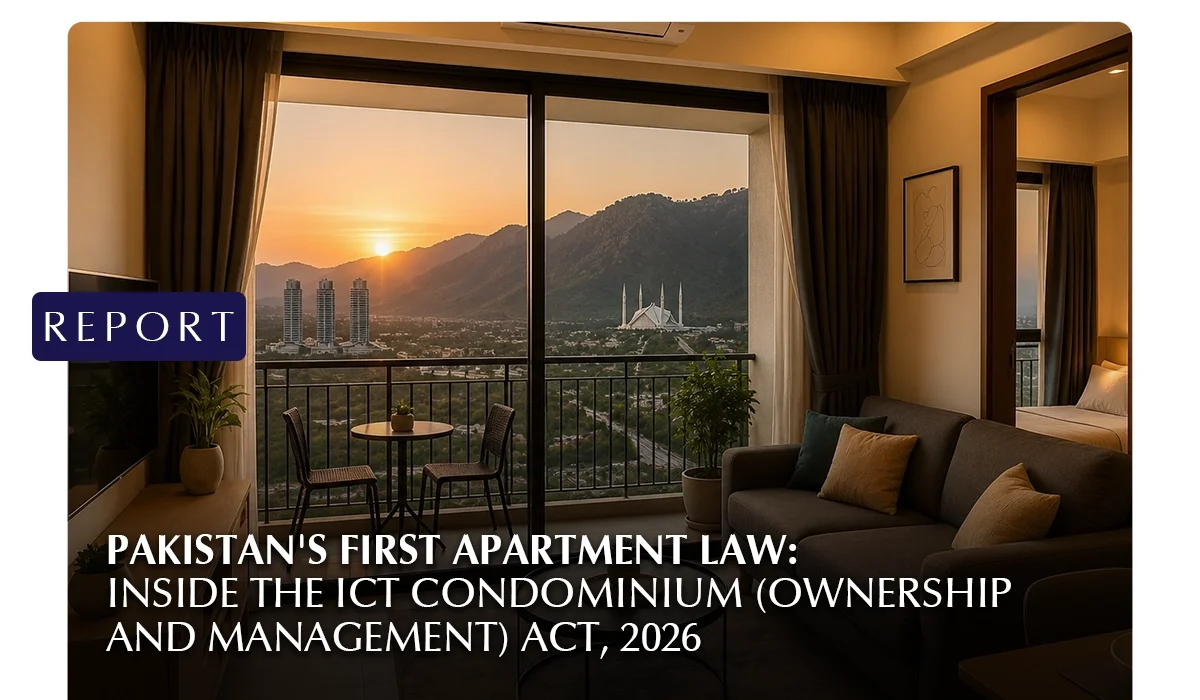
Pakistan’s parliament has finally moved to pass the Islamabad Capital Territory Condominium (Ownership and Management) Act, 2026, the first dedicated condominium law for the federal capital.
What the Law Actually Does
At its core, the Act does three things: it gives apartment owners a proper legal title, it creates a formal body to manage shared buildings, and it sets up a system to resolve disputes.
On ownership: Every unit sold in a condominium complex now confers exclusive ownership rights on the buyer. A formal Deed of Ownership containing details of the unit, common areas, value, and ownership percentage must be executed and registered with the Authority.
Builders are legally bound to provide this deed within three months of a sale. Critically, the buyer’s share in common areas, lobbies, staircases, car parking, and rooftops automatically transfers along with the unit. It cannot be separated.
On lease-hold properties: Many apartments in Islamabad sit on land that developers leased from the CDA rather than owned outright. The law now requires those developers to execute individual subleases for each unit and register them with the CDA.
Once 50% of units are handed over to buyers, the developer must formally transfer the lease rights to the Association of Owners.
On collective management: The law makes it mandatory to form an Association of Owners for every condominium complex. This body, a minimum of five elected members, each serving a three-year term, takes on responsibility for maintaining the building, managing shared facilities, collecting maintenance contributions, and insuring the complex against fire, earthquakes, riots, and bomb blasts. Crucially, each unit owner gets one vote regardless of how many units they hold, preventing wealthier investors from dominating building decisions.
On enforcement: A federal Regulator will be designated by the government to receive complaints, inspect buildings, and issue binding decisions in disputes. If the Association of Owners fails to perform its duties, aggrieved owners or tenants can approach the Regulator directly. The Regulator’s decisions in unresolved disputes are final.
Pakistan’s Housing Crisis
Pakistan faces a housing shortage estimated at around 10 million units, while rapid urbanisation has intensified pressure on infrastructure, services, and farmland surrounding major cities. UN-Habitat notes that Pakistan’s urban population nearly doubled from 43 million to 75 million between 1998 and 2017.
Pakistan has historically relied on low-rise, plot-based housing development, unlike neighbouring India and many Gulf states, where vertical urban expansion has become more common in major cities.
Prime Minister Shehbaz Sharif, chairing a high-level meeting on housing sector reforms in May 2026, said the government would encourage high-rise buildings and vertical expansion in major cities as part of broader urban planning reforms, and directed authorities to digitise and automate housing-related processes to improve transparency and attract investment.
Officials also proposed mandatory registration with the Securities and Exchange Commission of Pakistan (SECP) for entities operating in the housing and development sector, alongside a proposed one-window system to protect the rights of developers, buyers, and other stakeholders.
The condominium law fits squarely within this direction. If vertical growth is to be encouraged, legal certainty for apartment buyers is not optional; it is a precondition.
Analyst Perspectives
Experts broadly welcome the legislation but point to significant implementation challenges. Investment advisors highlight 2026 as a turning point for property investment in Pakistan, with urban expansion, infrastructure projects, and growing overseas demand pointing toward market growth, but note that success depends on choosing developers who deliver on promises and provide international-standard living environments.
A recurring concern raised by observers is whether the Regulator, whose appointment is left to the Federal Government’s discretion, will be sufficiently independent and adequately resourced. The law grants the Regulator wide inspection and enforcement powers, but its effectiveness will depend entirely on how seriously the government treats that appointment.
Similarly, the Association of Owners model only works if residents are willing and able to organise themselves, something that may prove difficult in buildings where a large share of units are held by absentee investors rather than resident owners.
Conclusion
The ICT Condominium Act, 2026, is a meaningful step forward for Pakistan’s urban property sector. It fills a legal vacuum that left apartment buyers in an unacceptably weak position for decades.
By establishing clear ownership titles, mandating owners’ associations, and creating a formal complaints mechanism, it lays the foundation for a healthier apartment market in the federal capital. The law has been written. The harder work begins now.
Mehsud, R. (2026, May 14). Pakistan weighs high-rise housing push to curb urban sprawl, protect farmland. Arab News.https://www.arabnews.com/node/2643548
National Assembly of Pakistan. (2026). Islamabad Capital Territory Condominium (Ownership and Management) Act, 2026 [Bill text, as passed by the National Assembly].
BBC-featured Content Specialist with a sharp eye for search intent and a proven ability to turn content into a growth engine. I leverage cutting-edge digital marketing tools to craft strategies that fuel organic traffic, amplify brand growth, and own the local SEO landscape, particularly across the competitive real estate market. I help brands dominate search rankings and convert visibility into measurable business success.
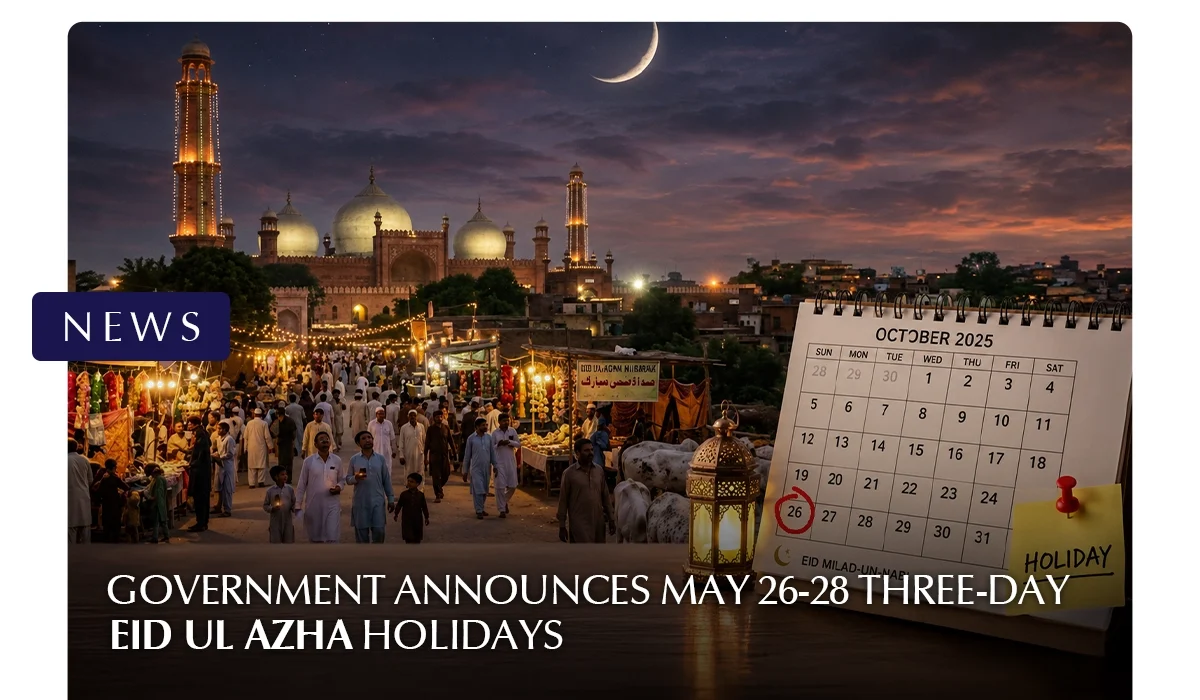
ISLAMABAD: The federal government has declared public holidays from May 26 to May 28, 2026, on the occasion of Eidul Azha.
According to a notification issued by the Cabinet Division, Prime Minister Shehbaz Sharif approved the three-day holiday schedule, covering Tuesday, Wednesday and Thursday. All offices, educational institutions and businesses observing public holidays will remain closed during the notified period.
The announcement follows the sighting of the Zilhajj 1447 AH moon in Pakistan. The Central Ruet-e-Hilal Committee confirmed that the first day of Zilhajj would fall on May 18, while Eidul Azha would be observed across the country on May 27.
BBC-featured Content Specialist with a sharp eye for search intent and a proven ability to turn content into a growth engine. I leverage cutting-edge digital marketing tools to craft strategies that fuel organic traffic, amplify brand growth, and own the local SEO landscape, particularly across the competitive real estate market. I help brands dominate search rankings and convert visibility into measurable business success.
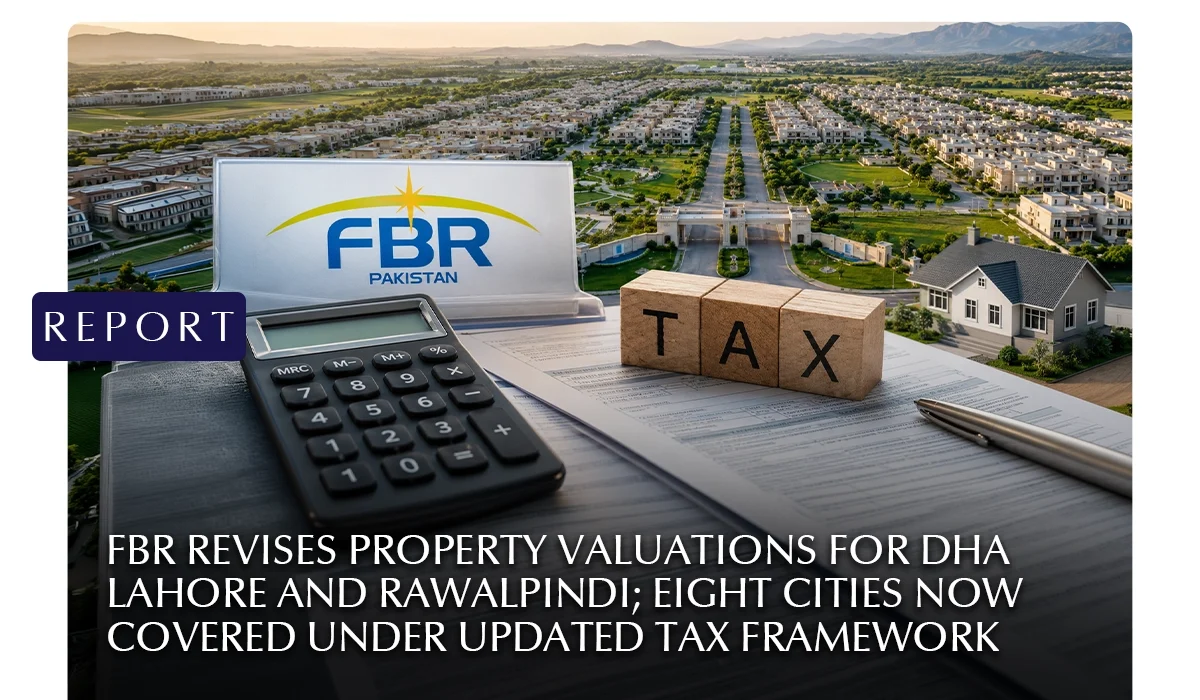
ISLAMABAD — The Federal Board of Revenue has updated the official valuations of properties in Defence Housing Authority areas of Lahore and Rawalpindi, through two separate orders issued on Tuesday. The revisions will directly affect the amount of tax that buyers and sellers are required to pay when a property changes hands in these localities.
The updates were formalised through Statutory Regulatory Orders S.R.O. 876(I)/2026 for Lahore and S.R.O. 877(I)/2026 for Rawalpindi, both signed by Muhammad Amin Qureshi, Secretary Rules and SRO, Revenue Division. They amend valuations originally set in October 2024 and bring the total number of cities where the FBR has revised property benchmarks in recent months to eight, following similar exercises carried out for Islamabad and other major urban centres.
Understanding the FBR Rate
When a property is sold in Pakistan, the government uses an official benchmark value set by the FBR to calculate withholding tax, which is a tax collected at the point of the transaction. This FBR rate is separate from both the actual price agreed between buyer and seller and the Deputy Commissioner rate set by provincial governments for stamp duty purposes.
The purpose of periodically revising these benchmarks is to keep them closer to real market values. When official values are too far below what properties actually trade for, the withholding tax collected ends up being lower than it should be, effectively allowing significant portions of high-value transactions to go under-taxed. There are multiple online property tax calculators which help you calculate your property taxes.
Lahore: What the New Rates Say
The Lahore order revises valuations for DHA Phases VI through XIII, all administratively located within Nishtar Town. Rates here are expressed in rupees per marla, the standard unit of land measurement in Punjab.
The most valuable commercial address in the entire Lahore table is the Broadway strip in DHA Phase VIII, the main commercial avenue running through sub-sectors A, B, C and D, officially valued at Rs. 4,988,970 per marla. This figure forms the basis of withholding tax calculations for any commercial plot or shop sold along that stretch.
Among residential areas, DHA Phase XI Rahbar, Sector I carries the highest valuation at Rs. 967,960 per marla, reflecting its established infrastructure and sustained demand. At the lower end, DHA Phase XIII, formerly known as DHA City and located furthest from the city centre, is valued at Rs. 204,960 per marla, consistent with its earlier stage of development.
DHA Phase VI, one of Lahore’s most established residential addresses, is valued at Rs. 1,132,460 per marla for most residential blocks. The C, M and N Blocks carry a lower residential rate of Rs. 761,460 per marla, though their commercial land value rises sharply to Rs. 4,369,410 per marla, reflecting heavy commercial activity in those areas.
A significant addition in this notification is the first-ever official valuation assigned to One Central DHA, a newer development that previously had no FBR benchmark. It has now been entered into the official table at Rs. 760,000 per marla for residential open plots and Rs. 3,100,000 per marla for commercial plots. This means transactions in One Central DHA will now carry a formally calculated withholding tax obligation for the first time.
Across all DHA Lahore entries, built structures, that is, houses or commercial buildings as opposed to bare land, are assessed at a uniform Rs. 1,750 per square foot for residential and Rs. 2,800 per square foot for commercial, regardless of which phase they are located in.
Rawalpindi: A Different Scale, Similar Intent
The Rawalpindi order covers DHA Phases I through V and DHA Valley. An important distinction: unlike Lahore, where rates are expressed per marla, Rawalpindi valuations in this notification are given in rupees per square foot. This reflects a difference in how property is traditionally measured and administered across the two cities.
The highest commercial valuation in Rawalpindi’s table belongs to DHA Phase II, at Rs. 17,677 per square foot for commercial open plots, the single largest figure in the Rawalpindi notification. DHA Phase I follows at Rs. 15,427 per square foot for commercial land.
On the residential side, DHA Phase II again leads at Rs. 2,878 per square foot, while DHA Valley, the most peripheral of the listed localities, sits at just Rs. 466 per square foot for residential open plots. The gap between these two figures illustrates how sharply official land values decline as the distance from the city’s established core increases.
DHA Phases II Extension, III and IV share an identical commercial open plot rate of Rs. 5,946 per square foot, indicating that the FBR considers their commercial potential broadly equivalent. Their residential rates, however, vary: Phase IV at Rs. 1,322 per square foot, Phase III at Rs. 1,011 per square foot and Phase II Extension at Rs. 778 per square foot, differences that broadly reflect each area’s level of development and infrastructure maturity.
Built structure rates across Rawalpindi DHA phases are set at Rs. 1,470 per square foot for commercial and Rs. 735 per square foot for residential in most phases, with DHA Valley’s residential superstructure rate marginally higher at Rs. 770 per square foot.
The Broader Context
Pakistan’s property market has long operated with a well-documented gap between declared transaction values and actual market prices. For years, it was common practice for buyers and sellers to register a property at a fraction of its true value, reducing their tax liability significantly.
FBR valuation revisions are one of the primary tools available to narrow that gap and, with it, improve tax collection from a sector that has historically contributed far less to the national treasury than its scale would suggest.
These revisions also carry relevance beyond individual transactions. Pakistan’s economic reform commitments, including those made under its ongoing programme with the International Monetary Fund, have consistently identified the real estate sector as an area requiring greater documentation and tax compliance. The gradual extension of revised FBR benchmarks to more cities and localities is part of the government’s response to those obligations.
For buyers and sellers in the affected DHA areas, the immediate effect is straightforward: withholding tax at the point of transaction will now be calculated on a revised official value, which in most cases will be closer to actual market prices than the figures it replaces.
Those accustomed to a significant gap between the FBR rate and the market price should account for a narrower margin when planning the financial aspects of a property transaction.
Federal Board of Revenue, Government of Pakistan. (2026, May 19). S.R.O. 876(I)/2026: Revision of valuation of immovable properties Nishtar Town, Lahore [Statutory notification]. Revenue Division, Islamabad. File No. 2(17)R&S/2017.
Federal Board of Revenue, Government of Pakistan. (2026, May 19). S.R.O. 877(I)/2026: Revision of valuation of immovable properties Rawalpindi [Statutory notification]. Revenue Division, Islamabad. File No. 2(31)R&S/2024.
Government of Pakistan. (2001). Income Tax Ordinance, 2001 (XLIX of 2001), Section 68(4). National Assembly of Pakistan.
Federal Board of Revenue, Government of Pakistan. (2024, October 29). S.R.O. 1722(I)/2024: Valuation of immovable properties Lahore [Statutory notification]. Revenue Division, Islamabad.
Federal Board of Revenue, Government of Pakistan. (2024, October 29). S.R.O. 1728(I)/2024: Valuation of immovable properties Rawalpindi [Statutory notification]. Revenue Division, Islamabad.
BBC-featured Content Specialist with a sharp eye for search intent and a proven ability to turn content into a growth engine. I leverage cutting-edge digital marketing tools to craft strategies that fuel organic traffic, amplify brand growth, and own the local SEO landscape, particularly across the competitive real estate market. I help brands dominate search rankings and convert visibility into measurable business success.
ISLAMABAD: The Federation of Pakistan Chambers of Commerce and Industry (FPCCI) has proposed major property tax reforms for the federal budget FY2026-27 to help revive Pakistan’s real estate and construction sectors.
According to FPCCI’s budget proposals, the current tax structure has made property transactions more expensive and slowed investment in the sector. The chamber has suggested reducing withholding tax under Section 236C on the sale of immovable property to a uniform 1% across all transaction values. At present, the rate can go as high as 5.5% on higher-value transactions and is charged on the gross transaction value, regardless of actual profit or loss.
FPCCI also proposed reducing advance tax under Section 236K on property purchases to a flat 1%, while abolishing advance tax on the first property purchase by a filer. The body said simpler and lower tax rates could encourage proper documentation, reduce under-reporting, and improve transparency in the property market.
The chamber further called for abolishing the tax on deemed income under Section 7E, saying it taxes assumed income from immovable property instead of actual earnings. It also recommended withdrawing Section 7F, under which builders and developers are taxed on 10% of gross receipts, regardless of their actual income.
FPCCI said balanced taxation could attract investment and support allied industries such as cement, steel, transport, and labour, helping generate wider economic activity.
BBC-featured Content Specialist with a sharp eye for search intent and a proven ability to turn content into a growth engine. I leverage cutting-edge digital marketing tools to craft strategies that fuel organic traffic, amplify brand growth, and own the local SEO landscape, particularly across the competitive real estate market. I help brands dominate search rankings and convert visibility into measurable business success.
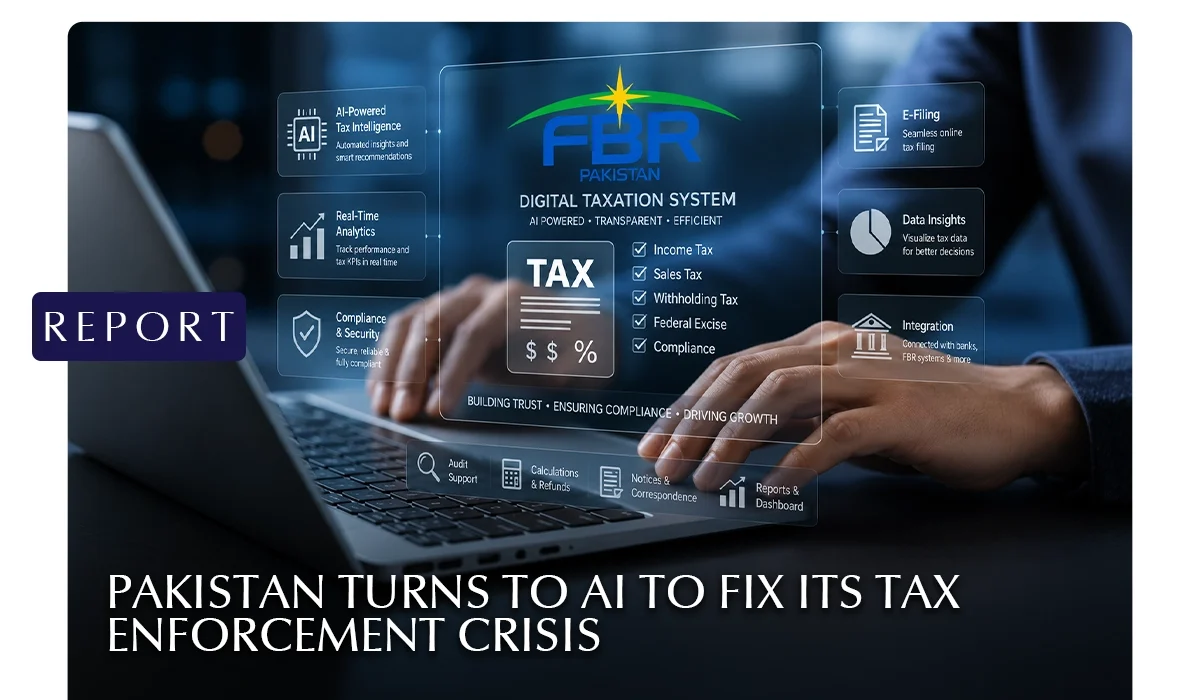
The government is weighing AI-based return scrutiny, real-time digital tracking, and e-auctions for seized goods, a tech-first overhaul that officials say could transform how Pakistan collects revenue and confronts evasion.
ISLAMABAD: In a significant shift in how Pakistan approaches tax enforcement, the federal government is actively considering deploying artificial intelligence and digital monitoring systems to detect evasion, broaden the tax base, and reduce the human discretion that has long been blamed for corruption and revenue leakage.
The proposals, reviewed at a high-level meeting on May 13, mark the most explicit government commitment yet to technology-driven tax reform and come at a moment when Pakistan is under intense IMF pressure to raise revenues or risk jeopardizing its stabilization program.
The meeting was chaired by Federal Minister for Economic Affairs Ahad Cheema and attended by a cross-ministry lineup that included Federal Minister for Climate Change Musadik Malik, Adviser on Industries and Production Haroon Akhtar Khan, Minister of State for Finance Bilal Azhar Kayani, FBR Chairman Rashid Mahmood Langrial, and Attorney General Mansoor Usman Awan. The breadth of representation underscored that the government views this not as a narrow FBR administrative reform but as a whole-of-government priority.
The FBR’s briefing to the meeting identified five core problems that AI and digital tools are meant to address: underreporting of income and sales, non-reporting of taxable transactions, under-invoicing to lower declared values, outright tax evasion, and smuggling.
Together, these practices are estimated to cost the national exchequer hundreds of billions of rupees every year, though the government has not published a precise figure. What is clear is that Pakistan’s tax-to-GDP ratio remains among the lowest in the region, and officials increasingly believe that administrative failures, not just policy gaps, are a root cause.
“The government supports a tax system with minimum human interaction, one that reduces discretion, limits opportunities for corruption, and brings transparency to enforcement.” Federal Minister Ahad Cheema.
Among the specific proposals on the table, the most consequential is an AI-based system to scrutinize tax returns and flag false or anomalous data. Rather than relying on manual audits, a process that is slow, resource-intensive, and prone to selective enforcement, the system would use algorithmic pattern recognition to identify discrepancies between declared income and observable financial behaviour.
Tax reform specialists say this approach has shown measurable results in countries such as India, Rwanda, and several Eastern European states, where AI-assisted compliance checks have increased voluntary declarations and reduced audit backlogs. The question for Pakistan, analysts note, is not whether the technology works, but whether the institutional infrastructure to support it is ready.
Alongside AI-based return checking, the government is considering real-time digital tracking mechanisms across commercial and industrial sectors. This would mean continuous data feeds from point-of-sale systems, invoicing platforms, and supply chain records flowing into a centralised FBR database, a model that would make it significantly harder for businesses to report different figures to different authorities or to simply not report at all.
A further proposal involves an e-auction system for goods confiscated by customs, replacing a discretionary and often opaque process with a transparent public platform. Officials say the e-auction reform alone could both raise direct revenue and deter smugglers who currently factor in the low cost of having goods seized.
Fiscal policy analysts have offered a cautiously optimistic reading of the proposals, while flagging familiar implementation risks. Pakistan has announced digital tax reforms before track-and-trace systems, electronic invoicing mandates, and point-of-sale integration drives with uneven results.
The FBR’s capacity to build and maintain complex AI systems in-house is limited, and dependence on external vendors raises questions about data security, system continuity, and accountability.
“The design of these proposals is sound,” noted one Islamabad-based economist who follows tax administration closely. “The challenge is that every previous wave of FBR digitalisation has run into the same obstacles: resistance from within the bureaucracy, political interference in enforcement, and a lack of follow-through after the initial announcement.” Officials at the meeting acknowledged these concerns, with Cheema directing the FBR to ensure proposals are practical and technology-oriented before the Finance Bill is finalised.
The AI enforcement push sits within a broader fiscal consolidation framework that includes over Rs 1.1 trillion in additional taxes and levies for FY2027, a package linked directly to IMF targets and a government ambition to achieve a primary budget surplus of 2 percent of GDP.
The government has also assured the IMF that Pakistan’s provinces will not introduce any measures that could undermine reform commitments. But the AI component is being watched closely precisely because it represents a departure from the traditional approach of simply adding new tax rates to an already narrow base. If it works, it would expand who pays rather than just how much they pay, a structural shift that Pakistan’s revenue base has needed for decades.
BBC-featured Content Specialist with a sharp eye for search intent and a proven ability to turn content into a growth engine. I leverage cutting-edge digital marketing tools to craft strategies that fuel organic traffic, amplify brand growth, and own the local SEO landscape, particularly across the competitive real estate market. I help brands dominate search rankings and convert visibility into measurable business success.
ISLAMABAD: Pakistan is facing mounting pressure from the International Monetary Fund (IMF) to introduce major tax reforms ahead of budget negotiations for fiscal year 2026–27. According to recent reports, the IMF has asked the government to generate nearly Rs500 billion through additional tax measures while setting an ambitious Federal Board of Revenue (FBR) tax collection target of Rs15.264 trillion.
A key part of the IMF’s proposal is the removal of all sales tax exemptions to create a more uniform taxation system. While the standard sales tax rate could be reduced from 22.8 percent to 18 percent, the withdrawal of exemptions is expected to widen the tax net and increase revenue collection. The IMF is also seeking around Rs778 billion through stricter enforcement measures.
The discussions include the expansion of the Third Schedule, which may bring products such as infant formula, dairy items, cooking oil, and other essential goods into a revised tax structure. This move alone is expected to generate around Rs100 billion in revenue.
In another major reform, authorities are considering making digital invoicing mandatory from July 1, 2026. Under the proposal, only digitally issued invoices would be accepted for tax purposes, a step projected to add another Rs100 billion to national revenue while improving transparency in business transactions.
The government is also reviewing a simplified taxation scheme for retailers and shopkeepers with annual turnover between Rs200 million and Rs250 million, potentially linked to electricity bills for easier collection.
Meanwhile, discussions on the controversial super tax suggest that an immediate withdrawal is unlikely, though a phased elimination over the next three years remains under consideration.
BBC-featured Content Specialist with a sharp eye for search intent and a proven ability to turn content into a growth engine. I leverage cutting-edge digital marketing tools to craft strategies that fuel organic traffic, amplify brand growth, and own the local SEO landscape, particularly across the competitive real estate market. I help brands dominate search rankings and convert visibility into measurable business success.
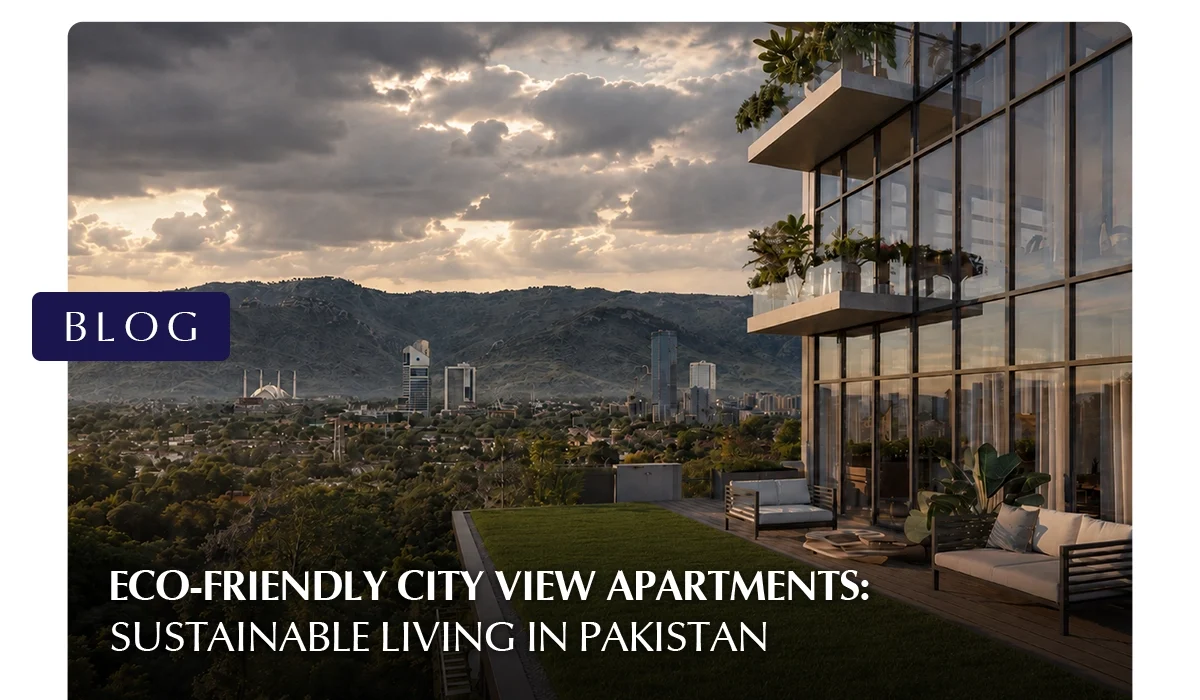
Pakistan’s urban apartment market has matured significantly over the past decade. Where buyers once prioritised location and price per square foot above all else, a growing segment particularly younger professionals and overseas Pakistanis now asks a more layered question: can the apartment I’m buying offer a genuine view and a reduced environmental footprint?
The demand for eco-friendly city view apartments in Pakistan is real, and so is the confusion surrounding it. “Eco-friendly” has become one of the most overused phrases in Pakistani real estate marketing, applied liberally to projects that have a few trees on the plot or a park nearby. Genuine sustainability in an apartment building is a different thing entirely; it involves specific, verifiable infrastructure built into the structure itself.
This guide explains exactly what those features are, which Pakistani cities currently offer the strongest combination of scenic views and sustainable living, and what to check before you commit to a purchase.
Why City Views and Eco-Friendly Features Go Together
Green High-Rise Apartments in Pakistan Which Cities Have Real Options?
Sustainable Flats in Pakistan The Financial Case
What to Check Before Buying an Eco-Friendly City View Apartments Pakistan
Frequently Asked Questions
What Does an Eco-Friendly City View Apartments Pakistan Actually Mean
The first thing to establish is that an eco-friendly apartment is defined by what is built into it, not by what surrounds it. Mountains nearby, a park across the road, or trees within the boundary are landscape features. They are pleasant. They are not evidence of a sustainably constructed or operated building.
A genuinely eco-friendly apartment building in Pakistan should incorporate some combination of the following:
Solar energy systems. Rooftop solar panels, either dedicated to individual units or feeding a shared generation pool, directly reduce dependence on the national grid. In a country where grid electricity is both expensive and unreliable, this is not an optional amenity; it is a meaningful quality-of-life and cost-of-living feature. Ask developers specifically whether solar is installed at handover, or merely listed as a future addition.
Thermal insulation. Double-glazed windows, insulated external walls, and well-designed roof assemblies significantly reduce the energy required to cool or heat a unit. Pakistan’s climate demands heavy air-conditioning for much of the year; a poorly insulated apartment drives up both electricity bills and carbon footprint. Quality insulation is one of the least visible but most impactful green features in a building.
Rainwater harvesting. The Capital Development Authority (CDA) has mandated rainwater collection tanks for all new housing communities in Islamabad. This is a compliance baseline, not a premium feature if a new development in Islamabad does not have it, that is a red flag, not a neutral data point. In Lahore and Karachi, rainwater harvesting is rarer but increasingly present in premium high-rise projects.
Waste management infrastructure. Dedicated recycling facilities, organic waste separation systems, and waste compactors within the building reduce the volume of material going to landfill and create a cleaner, better-maintained common environment. The presence of these systems also signals that the developer has thought beyond the sale.
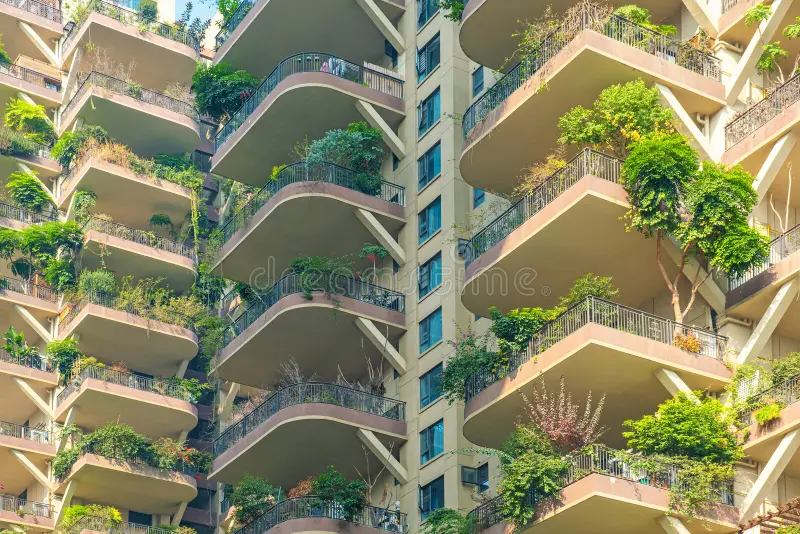
Green rooftops and landscaped terraces. Planted rooftop surfaces reduce the urban heat island effect, the phenomenon where dense built areas trap heat and drive up ambient temperatures. A green rooftop on a high-rise also improves air quality at the building level and provides usable outdoor amenity space for residents.
EV charging bays. Pakistan’s electric vehicle market is still in its early stages, but it is growing. A high-rise building that installs EV charging infrastructure in its parking facility today is a more future-proof asset than one that does not. For buyers with a ten-year investment horizon, this matters.
Water-efficient fixtures. Low-flow taps, showerheads, and toilet cisterns reduce per-unit water consumption without affecting usability. Greywater recycling, treating water from sinks and showers for reuse in toilets or irrigation, is rarer but present in some premium sustainable flats in Pakistan.
Smart building systems. Automated lighting in corridors and common areas, occupancy-sensing HVAC systems, and centralised energy monitoring reduce waste at the building level. These systems tend to lower maintenance costs over time and are a hallmark of genuinely well-engineered high-rise buildings.
When evaluating any project, use this list as a framework for questions, not as an expectation that every feature will be present. A building that delivers four or five of these credibly is a genuinely sustainable product. A building that mentions none of them but calls itself eco-friendly is a marketing exercise.
Green High-Rise Apartments in Pakistan: Which Cities Have Real Options?
The phrase “eco-friendly city view apartments Pakistan” covers the whole country, but the market is not evenly distributed. Here is an honest assessment of where genuine options currently exist.
Islamabad: Strongest Market for Eco-Friendly City View Apartments Pakistan
Islamabad has structural advantages that no other Pakistani city can match. The city was designed from scratch in the 1960s on a low-density grid with green belts, wide avenues, and sector-based zoning built in from the start. The result, six decades later, is a city where height genuinely rewards you, views from upper floors reveal parks and mountains, not adjacent rooftops.
CDA regulations set a higher baseline for new developments than in other cities. Green space allocation, rainwater harvesting requirements, and building setback rules mean that eco-friendly apartments in Islamabad have already passed a regulatory minimum that does not exist elsewhere in the country.
CDA-controlled development in this zone also limits supply, which supports long-term asset values. Among the apartment products currently operating in the eco-friendly city view segment of the Islamabad market are Citadel One3 and Green View Apartments.
Zone IV hillside societies offer a different but equally compelling product: Margalla view apartments built at natural elevation, where the landscape itself provides the view rather than building height. These tend to integrate more outdoor greenery into the development but may sit further from commercial infrastructure.
For buyers prioritising CDA-approved apartments in Islamabad with genuine eco features and unobstructed views, this city is the clearest choice in Pakistan right now.
Lahore: An Emerging Market Where Scrutiny Matters
Lahore’s apartment market has grown considerably over the past ten years, and the city’s high-rise residential stock is now substantial.
Lahore’s more recently developed phases, and premium towers on MM Alam Road, are increasingly incorporating sustainability features, solar provision, better insulation, and EV parking in response to buyer demand from the upper-middle market.
Buyers looking for green high-rise apartments in Lahore should ask specific questions and request documentation rather than accepting marketing language at face value.
Karachi Sea Views and a Different Kind of Sustainability
Karachi’s version of the scenic view apartment is geographically distinct. In Clifton and DHA Phase 8, upper-floor apartments face the Arabian Sea, a genuinely exceptional view and one that comes with a passive sustainability benefit that often goes unmentioned: sea breezes.
Consistent onshore winds in Clifton and the DHA coastal strip provide natural ventilation that meaningfully reduces cooling loads during much of the year.
The important caveat in Karachi is infrastructure. Eco-friendly building features in sustainable flats in Pakistan’s largest city are less standardised than in Islamabad, and buyers should carefully verify backup power and independent water supply arrangements.
In Karachi’s context, a building with a robust generator and water storage infrastructure is delivering a practical form of urban resilience that maps closely to eco-friendly concerns, even if it is not marketed in those terms.
Eco-Friendly City View Apartments Pakistan: The Financial Case
The environmental argument for Eco-Friendly City View Apartments Pakistan is well-documented. The financial argument is discussed less often, and it is equally strong.
Lower electricity bills. A building with operational rooftop solar reduces the grid electricity consumption of each unit. In Pakistan, where electricity tariffs have risen sharply over recent years, and load-shedding remains a routine feature of urban life, this translates to a direct, recurring reduction in monthly costs. It is not a marginal benefit; it is a structural one.
Resilience during load-shedding. Buildings with solar-plus-battery backup, or with well-managed generator infrastructure, maintain liveability during outages. For investment properties, this directly affects tenant satisfaction, occupancy rates, and the rent premium a landlord can command.
Premium rents and stronger tenant quality. Eco-friendly features in Pakistan’s rental market correlate with higher tenant quality in the professional segment, expats, corporate tenants, and overseas Pakistani families. These tenants are typically less price-sensitive, more reliable, and more likely to sign multi-year leases.
Long-term asset value. Green buildings face a lower risk of regulatory obsolescence as building codes tighten. An apartment in a CDA-approved, sustainably built high-rise is a more defensible long-term asset than a comparable unit in a project that cut corners on construction quality or environmental compliance.
Water cost savings. Rainwater harvesting and greywater recycling reduce per-unit water bills. In a country facing increasing water stress, particularly acute in Karachi, this is a savings trajectory that improves over time: the more constrained the municipal supply becomes, the more valuable the independent provision.
What to Check Before Buying Eco-Friendly City View Apartments Pakistan
Green buildings are the future of Pakistan’s real estate. The checklist below applies whether you are buying to live in or to invest. It is built to close the gap between what developers claim in their marketing and what actually gets built and maintained.
Verify the relevant authority approval. In Islamabad, this means a valid CDA No Objection Certificate. The CDA publishes a list of approved and unapproved housing schemes on its official website.
Ask for specific eco-feature documentation, not marketing claims. “Eco-friendly” in a brochure carries no legal or technical weight in the absence of supporting detail. Ask which features are installed and operational at the point of handover, and which are listed as future additions.
Establish which floors deliver unobstructed views. In most Pakistani cities, a genuine city or mountain view requires the apartment to be above the surrounding built fabric. Ask specifically which floors achieve unobstructed views. Request photographic evidence taken from the actual floors in question, drone footage or on-site photography rather than rendered images, which routinely omit the buildings that will obstruct sightlines once the surrounding area develops.
Distinguish building-wide green features from unit-level ones. Some high-rise buildings apply solar generation only to common areas, lobby lighting, elevator power, and corridor illumination. Others extend solar benefits to individual units, reducing each resident’s electricity bill directly. The difference is material and worth establishing clearly before purchase, not after.
Evaluate post-handover building management. Green building features degrade without proper maintenance. Solar panels lose output if not cleaned regularly. Green rooftops require irrigation and upkeep. Rainwater systems need periodic inspection.
Check the developer’s track record of delivery. Any developer can produce compelling renders and confident project announcements. The meaningful question is what they have already built and handed over in the same city, on a similar scale. A developer with a completed project standing is offering evidence.
Watch for greenwashing signals early in the process. Common red flags include: eco-friendly claims with no supporting technical specification; sustainability features described as “planned” with no contractual delivery timeline; marketing language that equates natural surroundings with built-in sustainability infrastructure; and the absence of any mention of CDA or relevant authority approval in sales materials.
FAQs – Eco-Friendly City View Apartments Pakistan
What makes an apartment eco-friendly in Pakistan?
Built-in features like solar, insulation, water-saving systems, waste management, and smart energy controls. Green views alone do not make an apartment eco-friendly.
Which city in Pakistan has the best city view apartments?
Islamabad stands out for views of the Margalla Hills, Faisal Mosque, F-9 Park, and tree-lined sectors.
Are eco-friendly apartments more expensive in Pakistan?
They can cost slightly more upfront, but lower electricity, water, and maintenance costs can offset the premium over time.
Can overseas Pakistanis buy city view apartments in Pakistan?
Yes. Overseas Pakistanis can buy approved residential apartments. The key is verifying project approvals before payment.
What is the difference between a green high-rise and a regular apartment?
A green high-rise has sustainability systems built into the building. A regular apartment may not, even if it has good surroundings.
Closing Thoughts – Eco-Friendly City View Apartments Pakistan
Eco-friendly city view apartments Pakistan are gaining demand, but the label should mean more than nice views. True sustainability means verified features: solar, insulation, water systems, and waste infrastructure that are installed and working at handover. The financial case is also getting stronger. As power costs rise, water pressure increases, and buyers become more selective, genuinely sustainable flats are likely to perform better on running costs, rent, and resale value.
BBC-featured Content Specialist with a sharp eye for search intent and a proven ability to turn content into a growth engine. I leverage cutting-edge digital marketing tools to craft strategies that fuel organic traffic, amplify brand growth, and own the local SEO landscape, particularly across the competitive real estate market. I help brands dominate search rankings and convert visibility into measurable business success.
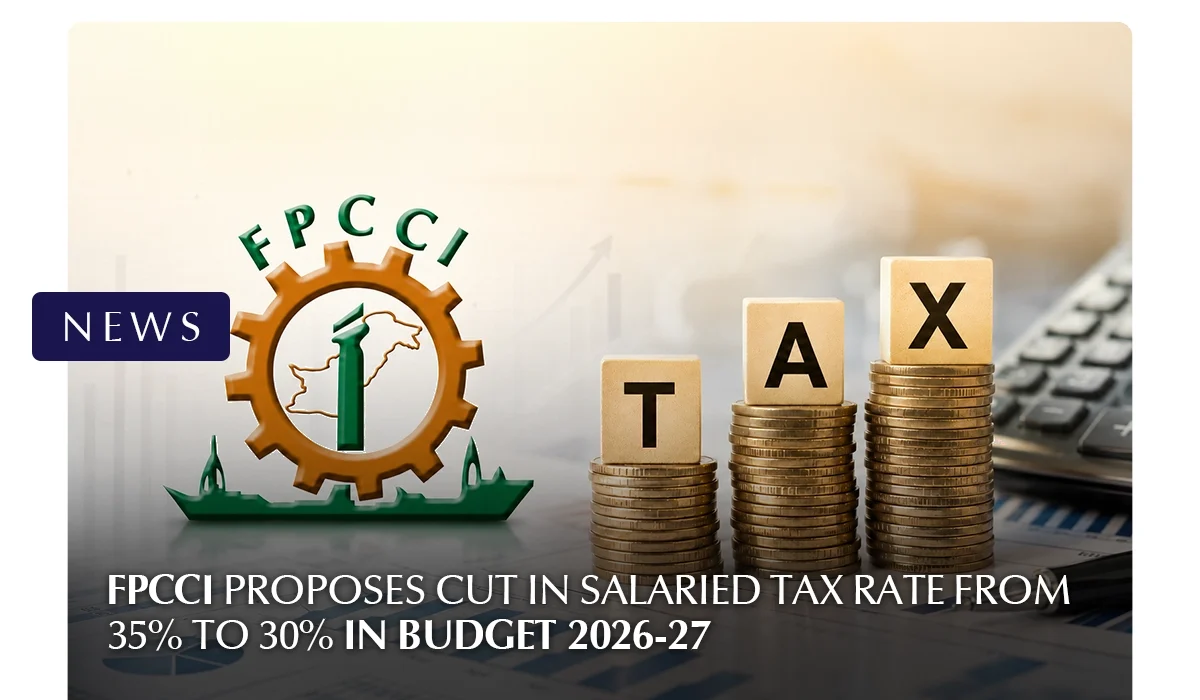
ISLAMABAD: The Federation of Pakistan Chambers of Commerce and Industry has proposed major tax relief for the salaried class in the upcoming federal budget 2026-27.
In its budget proposals submitted to the Ministry of Finance, FPCCI recommended reducing the maximum income tax rate for salaried individuals from 35 percent to 30 percent. The business body also proposed abolishing the 9 percent surcharge currently imposed on salaried taxpayers.
FPCCI said the relief is needed because many salaried people are facing rising living costs due to inflation. It added that higher taxes have reduced the take-home income of workers, making it harder for families to manage everyday expenses.
The chamber also presented several other tax-related proposals for the business community. These include abolishing super tax, restoring the final tax regime for goods transport, and continuing the 25 percent export tax rate for the IT sector until 2035.
FPCCI further suggested increasing the SME turnover threshold from Rs250 million to Rs500 million. It also proposed reducing the income tax rate for manufacturers from 29 percent to 20 percent.
The proposals are aimed at reducing the tax burden on individuals and businesses, improving purchasing power, and encouraging economic activity in the country.
BBC-featured Content Specialist with a sharp eye for search intent and a proven ability to turn content into a growth engine. I leverage cutting-edge digital marketing tools to craft strategies that fuel organic traffic, amplify brand growth, and own the local SEO landscape, particularly across the competitive real estate market. I help brands dominate search rankings and convert visibility into measurable business success.
SBP Scales Up Digital Payments Drive for Eid-al-Adha 2026, Expanding Coverage to 96 Cattle Markets Nationwide
Central bank deploys 22 banks, temporary transaction relaxations, and digital infrastructure in bid to reduce cash dependency during Eid trading season
Islamabad, May 16, 2026
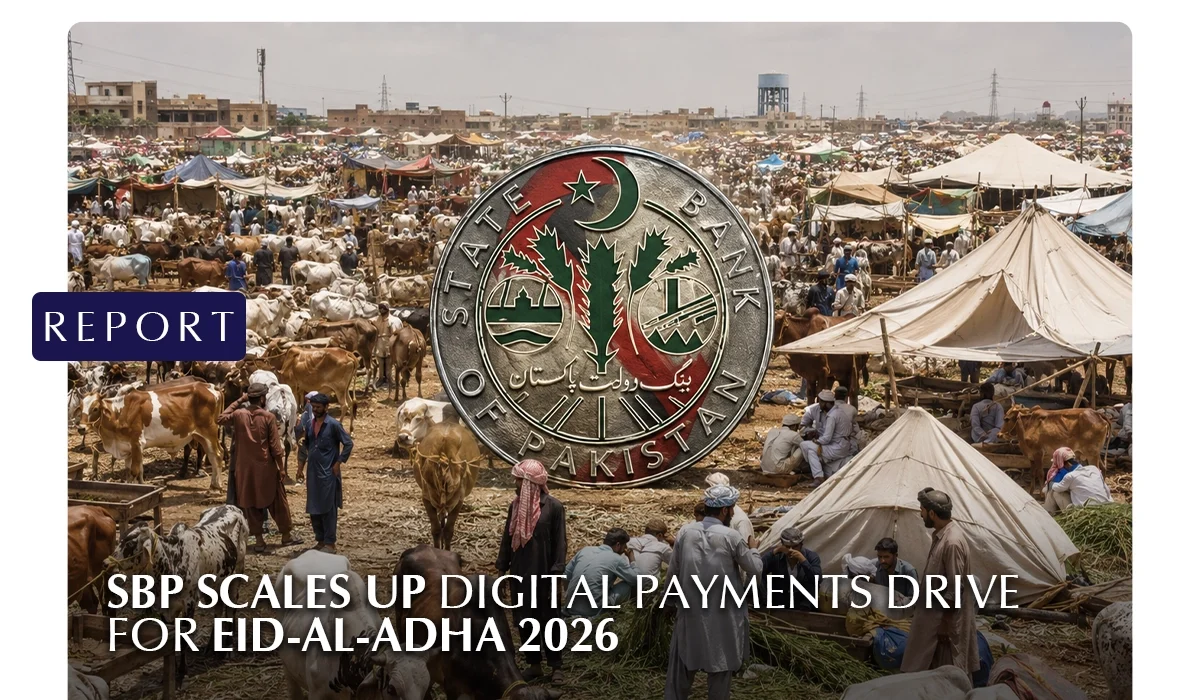
ISLAMABAD — The State Bank of Pakistan (SBP) has launched its most expansive digital payments initiative to date ahead of Eid-ul-Adha 2026, extending its annual “Go Cashless” campaign to 96 cattle markets across the country, a near-doubling of the 54 markets covered in the preceding year. The central bank’s move signals a deliberate escalation of its efforts to digitise one of Pakistan’s largest seasonal commercial events, where billions of rupees exchange hands, predominantly in cash, over the course of just a few weeks.
A Seasonal Window for Financial Inclusion
Eid-ul-Adha, one of Islam’s most significant religious observances, is accompanied in Pakistan by an enormous surge in livestock trading. Cattle markets locally known as mandi become bustling commercial hubs in the days preceding the festival, attracting buyers and sellers from across provinces and socioeconomic backgrounds. Historically, these transactions have been conducted almost exclusively in cash, presenting considerable security risks and limiting financial traceability.
The SBP has framed the cattle market campaign as a strategic leverage point in its broader financial inclusion agenda. By targeting an event with high transaction volumes and wide public participation, the central bank is attempting to convert seasonal cash users into habitual adopters of digital payment channels. The 2026 campaign, announced on May 15, represents the most operationally ambitious iteration of this effort since its inception.
List of Cattle Markets
City
Mandi Location
Bahawalpur
Ahmad pur Road Near Suzuki Showroom, Bahawalpur.
Jhangi wala road Near Civil Hospital, Bahawalpur.
Yazman Road near Bahawalpur Airport, Bahawalpur.
D I Khan
Main Cattle Market , Qureshi Moor , D.I Khan
Faisalabad
Model Cattle Market, Niamoana, Samundari Road, Faisalabad
Cattle Market 85 Jhaal, Silanwali Road, Sargodha
Bhakkar Road, By Pass Jhang
Cattle Market Adjacent to New Sabzi Mandi, Chiniot.
Gujranwala
Mafiwala, Sialkot Bypass, Gujranwala
Khiali Bypass, Sheikhupura Road, Gujranwala
Imtiaz Store, Wapda Town, Near Chan da Qila (Lahore Bypass), Gujranwala
Hyderabad
Main Hatri Bypass opposite Ayub Restaurant Hyderabad
Bismillah City Unit #10 latifabad Hyderabad
Near Indus Hospital main Hyderabad – Tando Muhammad Khan Road, district Tando Muhammad Khan
Islamabad
Near Facto Cement Factory, Sangjani, Islamabad
Sector I-15 Markaz, Islamabad
Bhara Kahu, Islamabad
Near Sultana Foundation Lehtarar Road, Islamabad
Rawalpindi
Bhatta Chowk intersection of Twin Cities
Zia Masjid Express High way Islamabad
Rawat Rawalpindi
Karachi
Northern Bypass Mandi (Taiser Town, District West)
Liyari Express Way Cattle Market
Northern Bypass Gai Mandi
Malir Cattle Market
Korangi Crossing Cattle Market
Cattle Fiesta, DHA Phase 1
Lahore
Shahpur Kanjran Cattle Market, Lahore
Nishter Zone at LDA City (near Sidhar Village at Kahna Kachha, Defence Road Lahore
road Lahore
Cattle Market Burki Road Lahore
Raiwand Cattle Market Lahore
Multan
Billi Wala by-pass Multan
Lahore Morr Khanewal
Fatima Town Multan
Bakar Mandi Haji Shareef Chowk Multan
Muzaffarabad
Maweshi Mandi located at Talhi Mandi, Muzaffarabad
Operational Infrastructure and Participating Institutions
Under the 2026 framework, 22 commercial banks will establish dedicated camps and kiosks within their assigned markets. Bank representatives will be tasked with on-the-spot account opening for cattle sellers, livestock transporters, and allied service providers, while simultaneously deploying QR code-based payment terminals to facilitate instant digital transactions.
To address cash access needs in parallel, the central bank will also deploy mobile banking vans, automated teller machines (ATMs), and Cash Deposit Machines (CDMs) at market sites where infrastructure permits.
Critically, the SBP has introduced temporary relaxations on transactional and account balance limits, effective from May 14 through June 5, 2026, to accommodate the elevated payment volumes typical of the Eid trading season.
Expert Analysis: Ambition, Execution, and Structural Challenges
Financial sector analysts broadly welcome the initiative as a meaningful step toward broadening digital financial access, while noting that the operational challenges of converting informal, trust-based livestock markets to cashless models should not be underestimated.
“The SBP deserves credit for the consistency and scale of this campaign,” said a Karachi-based economist specialising in digital finance. “Doubling the number of covered markets in a single year reflects genuine institutional commitment. But the real metric is not how many markets are covered; it is the percentage of transactions within those markets that actually shift to digital rails. That data, if published transparently, would tell us whether the campaign is achieving systemic change or merely symbolic presence.”
Pakistan’s financial technology ecosystem has undergone considerable transformation in recent years, with the central bank’s own Raast instant payment system, Pakistan’s first fully interoperable instant payment system, launched in January 2021, emerging as a key enabler of zero-cost, real-time digital transfers. The SBP’s encouragement of Raast-enabled services alongside mobile banking applications and QR payments reflects an effort to consolidate these tools for public use in high-traffic informal settings.
However, analysts have flagged structural barriers that regulatory directives alone cannot resolve. Connectivity gaps in peri-urban and rural markets, low digital literacy among older cattle traders, and a deep cultural preference for physical currency in large-value livestock transactions present persistent headwinds.
“A seller moving a high-value animal sometimes worth several hundred thousand rupees often prefers cash because it offers immediacy and privacy,” noted a policy researcher at a Lahore-based development institute. “Building trust in digital systems for high-stakes, one-time transactions requires more than kiosks and QR codes. It requires demonstrable reliability, fraud protection, and peer adoption.”
Regulatory Context and National Digital Strategy
The Go Cashless campaign is situated within Pakistan’s wider national agenda to expand financial inclusion and formalise economic activity. Pakistan remains among the countries with the largest unbanked populations globally. The World Bank’s Global Findex 2025 Report identified it as one of eight countries accounting for over half of the world’s 1.3 billion unbanked adults.
Nevertheless, recent years have seen measurable progress: according to SBP data, bank account coverage has risen from 47 percent of the adult population in 2018 to around 64 percent, driven partly by the proliferation of mobile wallets and branchless banking services.
The SBP’s temporary relaxation of account and transaction limits during the Eid window is noteworthy from a regulatory standpoint. Such adjustments recognise that standard Know Your Customer (KYC) thresholds, designed for routine banking, can inadvertently exclude individuals seeking to make legitimate, high-value seasonal payments. By calibrating limits to seasonal economic realities, the central bank is attempting to reduce friction without compromising the integrity of its anti-money laundering framework.
Outlook
With Eid-ul-Adha widely expected to fall on May 27, 2026, the window for on-the-ground deployment is narrow. The success of this year’s campaign will likely be assessed not only by uptake figures but also by the SBP’s ability to retain newly onboarded customers within the formal banking system beyond the festival season. Sustained engagement rather than one-time digital transactions would represent the more durable indicator of progress toward Pakistan’s financial inclusion objectives.
The central bank has encouraged citizens to utilise mobile banking applications, branchless banking wallets, Raast-enabled services, and QR payment platforms for all Eid-related transactions, emphasising the security, convenience, and systemic benefits of reducing cash dependency in high-traffic commercial settings.
BBC-featured Content Specialist with a sharp eye for search intent and a proven ability to turn content into a growth engine. I leverage cutting-edge digital marketing tools to craft strategies that fuel organic traffic, amplify brand growth, and own the local SEO landscape, particularly across the competitive real estate market. I help brands dominate search rankings and convert visibility into measurable business success.