BBC-featured Content Specialist with a sharp eye for search intent and a proven ability to turn content into a growth engine. I leverage cutting-edge digital marketing tools to craft strategies that fuel organic traffic, amplify brand growth, and own the local SEO landscape, particularly across the competitive real estate market. I help brands dominate search rankings and convert visibility into measurable business success.
LAHORE: If you buy or sell property through a “file” in Lahore, your time is running out. Starting July 1, 2026, file-based property trading will no longer be allowed in any housing scheme across the city.
The Lahore Development Authority (LDA) announced the move on Monday. LDA Director General Tahir Farooq made it clear that this applies to both private and public housing schemes. No exceptions will be made.
From July 1, all plot transactions must be done through a property certificate issued by the Punjab Land Records Authority (PLRA). Think of it as a digital title deed official, traceable, and tamper-proof.
Each property certificate will carry a QR code. Scan it, and you instantly get all the details about that plot. No more confusion. No more disputed records.
Housing societies have until June 30 to migrate their records to PLRA’s digital system, called the Housing Societies Management System (HSMS). This is mandatory. Societies that fail to comply and are operating within LDA’s jurisdiction will face legal action.
To ease the transition, LDA and PLRA will jointly train private sector housing schemes on how to use the new system. Private schemes will also be able to issue their own green certificates and registrations through a dedicated digital portal.
At the meeting, representatives from ABAD, the Board of Revenue Punjab, and LDA all welcomed the move. They said digitising property records will build investor trust and bring much-needed transparency to Lahore’s real estate market.
For ordinary buyers and sellers, the message is simple: deal in certificates, not files or risk standing outside the law.
BBC-featured Content Specialist with a sharp eye for search intent and a proven ability to turn content into a growth engine. I leverage cutting-edge digital marketing tools to craft strategies that fuel organic traffic, amplify brand growth, and own the local SEO landscape, particularly across the competitive real estate market. I help brands dominate search rankings and convert visibility into measurable business success.
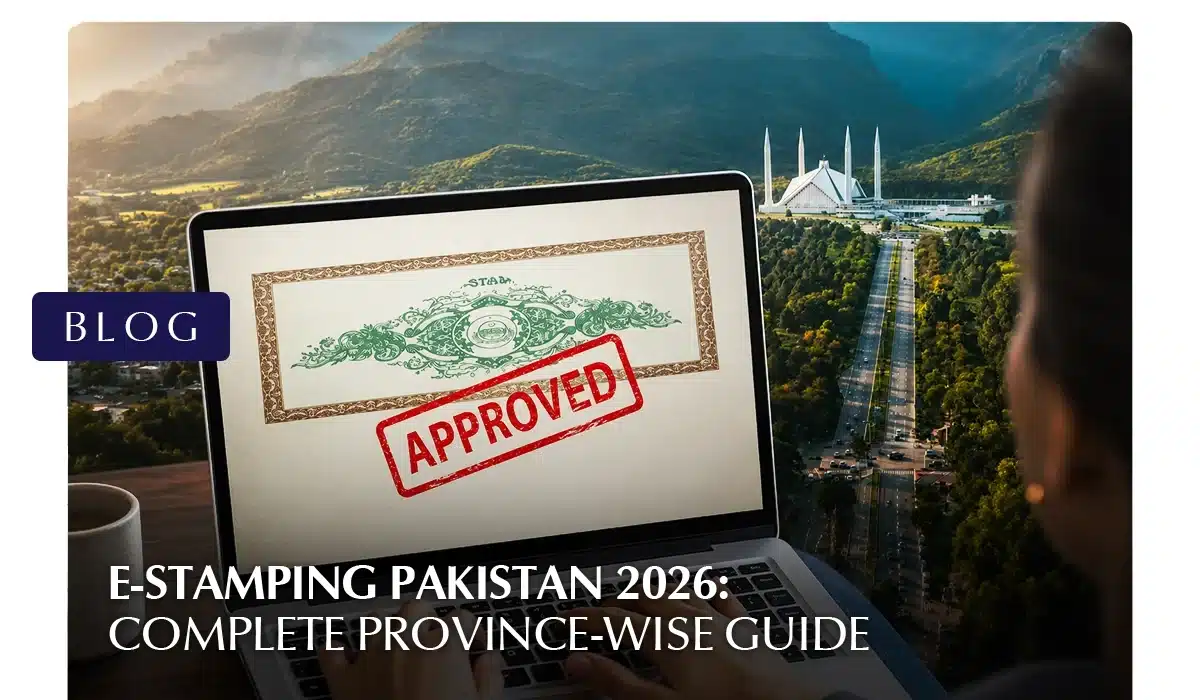
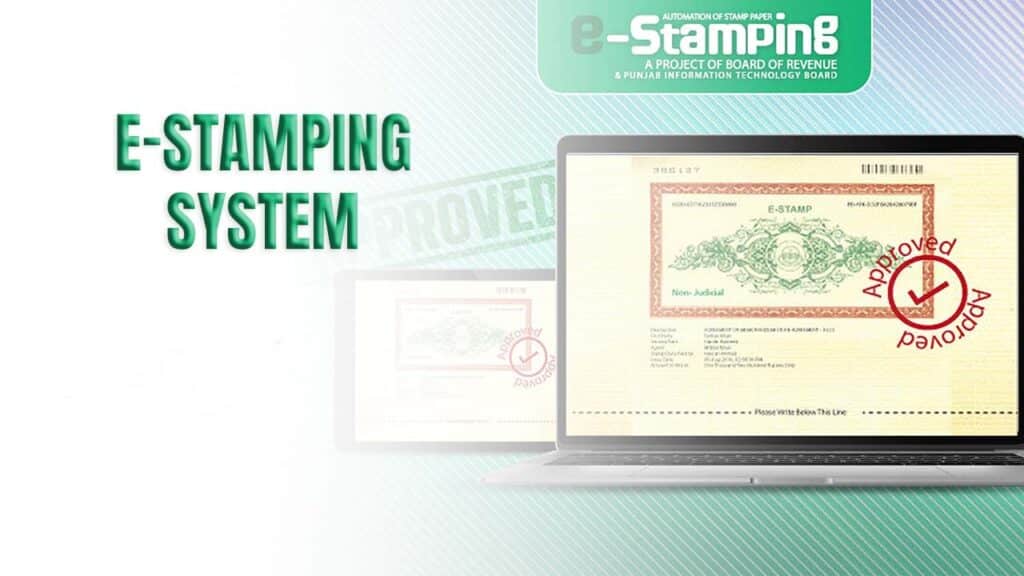
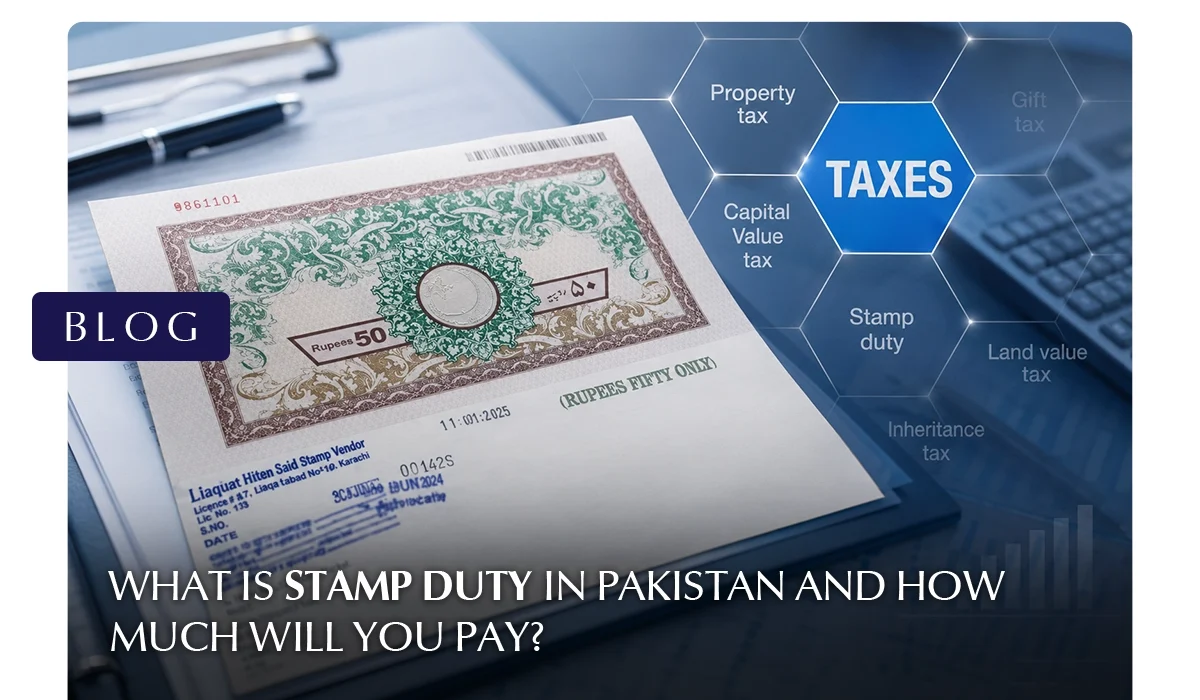
E-stamping Pakistan is a digital system for paying stamp duty to the government. It replaces the old physical stamp paper with a computer-generated certificate printed at a bank branch. Under the e-stamping Pakistan system, there are no more pre-printed stamp papers. Instead, you fill in your details online. The system calculates how much stamp duty you owe. You pay at a bank. The bank prints your e-stamping Pakkistan certificate on the spot.
This guide covers everything you need to know about e-stamping is, how it works step by step, portals for each province, and how to verify an e-stamp online.
E-Stamping Pakistan | What You Will Find in This Guide?
Why did the government introduce e-stamping Pakistan for property transactions?
How to generate Challan 32-A and get an e-stamp step by step
Province-wise portals: Punjab, Sindh, KPK, and Islamabad
Stamp duty rates by province
How to verify an e-stamp paper online
Frequently asked questions
Why Was E-Stamping Pakistan Introduced?
The old system had serious problems. Physical stamp papers were easy to fake. Stamp vendors often sold papers at higher prices than the face value. Backdating was common; people would get stamp papers dated months earlier to avoid disputes. And getting a high-value stamp paper (above Rs. 50,000) required giving the treasury office a full day’s advance notice.
The main goals of the e-stamping Pakistan system are:
Stop fraud and forgery in property transactions
Prevent leakage of government stamp duty revenue
Create a central digital database of all stamp transactions
Make it easy for citizens to verify any stamp paper online
Remove the need for multiple visits to treasury offices
Punjab Information Technology Board (PITB) developed the core technology. By February 2023, the Punjab e-stamping Pakistan system alone had collected over PKR 300 billion in stamp duty revenue and issued more than 15 million e-stamps. The same technology was later adopted by Sindh and Khyber Pakhtunkhwa.
How to Get E-Stamp Paper in Pakistan Step by Step
The e-stamping Pakistan process is the same across Punjab, Sindh, and KPK. Here is how it works:
Go to the official e-stamping Pakistan portal for your province (links below). You do not need to create an account.
Click on ‘Generate Challan Form 32-A’. Enter the details of your transaction names of the buyer and seller, both CNICs, type of instrument (sale deed, agreement, affidavit etc.), and property details such as area, location, and whether it is residential or commercial.
The system will automatically calculate the stamp duty amount using the DC valuation table built into the portal. Review the amount carefully.
A Challan Form 32-A is generated. Print it or save the reference number.
Visit the nearest designated bank branch National Bank of Pakistan (NBP), Bank of Punjab, Bank of Khyber, or Sindh Bank, depending on your province.
Pay the stamp duty amount. The bank will print your e-stamp certificate on the spot on legal-sized paper.
Submit the e-stamp to the Sub-Registrar, housing society, or relevant authority as required for your transaction.
If you are registering a property, Capital Value Tax (CVT), Registration Fees, and Mutation Fees can also be paid through the same Challan 32-A. You do not need separate challans for each.
Once the e-stamping Pakistan is used and submitted, the system marks it as used. The same e-stamp cannot be reused for another transaction.
Province-Wise E-Stamping Pakistan Details (2026)
Punjab’s first and most advanced E-Stamp System. Punjab launched e-stamping Pakistan in May 2016. It was the first province in Pakistan to do so, and it remains the most developed system in the country.
By 2023, Punjab had issued over 15 million e-stamps and collected more than Rs. 300 billion in stamp duty through the portal.
The Punjab portal includes a built-in DC Rate calculator. You can check the government valuation of your land before generating a challan.
Sindh Launched May 2022
The Sindh government launched its e-stamping Pakistan system on 10 May 2022. Chief Minister Murad Ali Shah chaired the launch ceremony and also announced a reduction in stamp duty from 2% to 1% to encourage people to use the new system.
The system was first rolled out in 11 districts and later expanded province-wide. Sindh Bank Limited was added as a designated issuing bank in November 2022, in addition to NBP.
The Sindh portal also supports adhesive stamp challans, digital scanning fee, copying fee, and duplicate fee payments all in one place.
Khyber Pakhtunkhwa Major Upgrade in 2026
KPK launched its e-stamping Pakistan system in October 2022 under Chief Minister Mahmood Khan. But the big news for KPK came in 2025 and 2026.
In December 2025, KPK became the first province to launch a full E-Registry System. Manual registries were completely banned in District Peshawar from 17 December 2025. Property registration went entirely digital.
Then in January 2026, KPITB launched the E-Vendor Module. This replaced traditional stamp papers entirely. Now, authorised stamp vendors in KPK issue e-stamp papers on plain white paper just like a regular printout, but with a QR code for verification. Stamp duty is paid electronically through any bank using a PSID number.
The E-Vendor Module has been rolling out district by district:
28 January 2026 District Peshawar (pilot)
3 February 2026 District Haripur
4 February 2026 District Swat
6 February 2026 District Mardan
10 February 2026 District Nowshera
Further expansion Bannu, D.I. Khan, Kohat, Abbottabad, Charsadda and all remaining districts
Islamabad Capital Territory Launched February 2026
Islamabad formally launched its e-stamping Pakistan service in February 2026. Deputy Commissioner Irfan Nawaz Memon told Dawn that the system gives citizens digital access to both judicial and non-judicial stamp papers through a mobile app or computer.
Before this launch, getting a stamp paper worth Rs. 50,000 or above in Islamabad required giving the treasury office a full day’s advance notice. That requirement is now gone. Citizens generate the stamp themselves, print it on plain paper, and present it to the Sub-Registrar for online verification.
The service is accessible through Pakistan Khidmat Centre in G-9 Islamabad, which houses several government service departments in one building.
One of the biggest benefits of electronic stamping for property in Pakistan is that any stamp paper can be verified in seconds.
If someone shows you an e-stamp and you are not sure it is genuine, here is how to check:
Go to the verification portal for the relevant province.
Enter the e-stamp ID or scan the QR code on the paper.
The system will show you the stamp details, for whom it was issued, the amount, the date, and whether it has already been used.
What Documents Require E-Stamp Papers in Pakistan?
E-stamping Pakistan papers are required for a wide range of legal and property transactions:
Sale and purchase deeds for residential and commercial property
Transfer of land and agricultural property
Lease agreements and tenancy contracts
Loan and hypothecation agreements
Commercial agreements between businesses
Affidavits and declarations
Demand promissory notes
Indemnity bonds
Power of attorney documents
Things to Learn Before Getting E-Stamping Pakistan
FBR IRIS Name Matching (Punjab)
If you are a filer and getting a Punjab e-stamp, make sure the names of both the buyer and seller are spelled exactly as they appear in FBR IRIS records. Even a small spelling difference can cause the Sub-Registrar to reject the document.
Deficiency in Stamp Duty
If the Sub-Registrar or a relevant authority believes the stamp duty paid is too low, they can ask you to deposit more. The system accepts additional payment and links it to the same e-stamp ID.
Wrong Details on a Paid Challan
Once you pay a Challan 32-A, you cannot edit it. If the details are wrong, you have to submit a refund application under the Stamp Act 1899 and generate a new challan. Double-check everything before paying.
Stamp Papers Below Rs. 500 in Sindh
Stamp papers for small amounts (below Rs. 500) are not available through the Sindh e-stamping portal. You still need to get these from traditional stamp vendors.
Multiple Fees in One Challan
If you are registering a property, you can pay Stamp Duty, Capital Value Tax (CVT), Registration Fees, and Mutation Fees all through the same Challan 32-A. You do not need separate challans for each.
Frequently Asked Questions About E-Stamping in Pakistan
Is an e-stamp paper legally valid in Pakistan?
Yes. E-stamp papers issued through official government portals are fully valid for all legal, property registration, and court purposes. This is confirmed by the Board of Revenue in Punjab, Sindh, and KPK.
Can I generate a Challan 32-A from home?
Yes. You can generate Challan 32-A from your mobile or computer through the official provincial portal. You only need to visit a bank to make the payment and collect the printed e-stamp certificate.
Do I need a login or account to use the e-stamping portal?
No. You do not need to create an account. Go to the portal, enter your transaction details, and generate the challan directly.
What happens if I lose my e-stamp certificate?
You can reprint it. Go to the portal, enter your e-stamp ID or challan details, and select the reprint option. Your transaction remains in the system.
Is e-stamping available in all cities of Pakistan?
Punjab, Sindh, and KPK have active e-stamping systems running in most districts. Islamabad (ICT) launched in February 2026. Balochistan and Gilgit-Baltistan are still building their systems.
How long does it take to get an e-stamp?
If you generate the challan online and go straight to a bank branch, you can get your e-stamp certificate on the same day. There is no waiting period; the bank prints it immediately after payment.
Can I verify an e-stamp from KPK online?
Yes. Every KPK e-stamp paper includes a QR code. Scan it with any QR reader or use the KPK e-stamping portal to verify the stamp details.
Final Word – E-Stamping Pakistan
E-stamping Pakistan has made property transactions much safer and more transparent. Whether you are in Lahore, Karachi, Peshawar, or Islamabad, you can now get a legally valid stamp paper the same day without relying on stamp vendors or treasury offices. For now, use the official provincial portals listed in this guide, double-check your details before paying, and verify any stamp paper you receive through the online verification tool.
Punjab Information Technology Board. (2023, February 6). e-Stamping system collected PKR 300 billion+ revenue in Punjab. Government of Punjab. https://pitb.gov.pk/node/8983
Revenue & Estate Department, Government of Khyber Pakhtunkhwa. (2026, January 26). Launch of E-Vendor Module for issuance of e-stamp papers on white paper (pilot – District Peshawar). https://revenue.kp.gov.pk/general-news/launch-of-e-vendor/
BBC-featured Content Specialist with a sharp eye for search intent and a proven ability to turn content into a growth engine. I leverage cutting-edge digital marketing tools to craft strategies that fuel organic traffic, amplify brand growth, and own the local SEO landscape, particularly across the competitive real estate market. I help brands dominate search rankings and convert visibility into measurable business success.
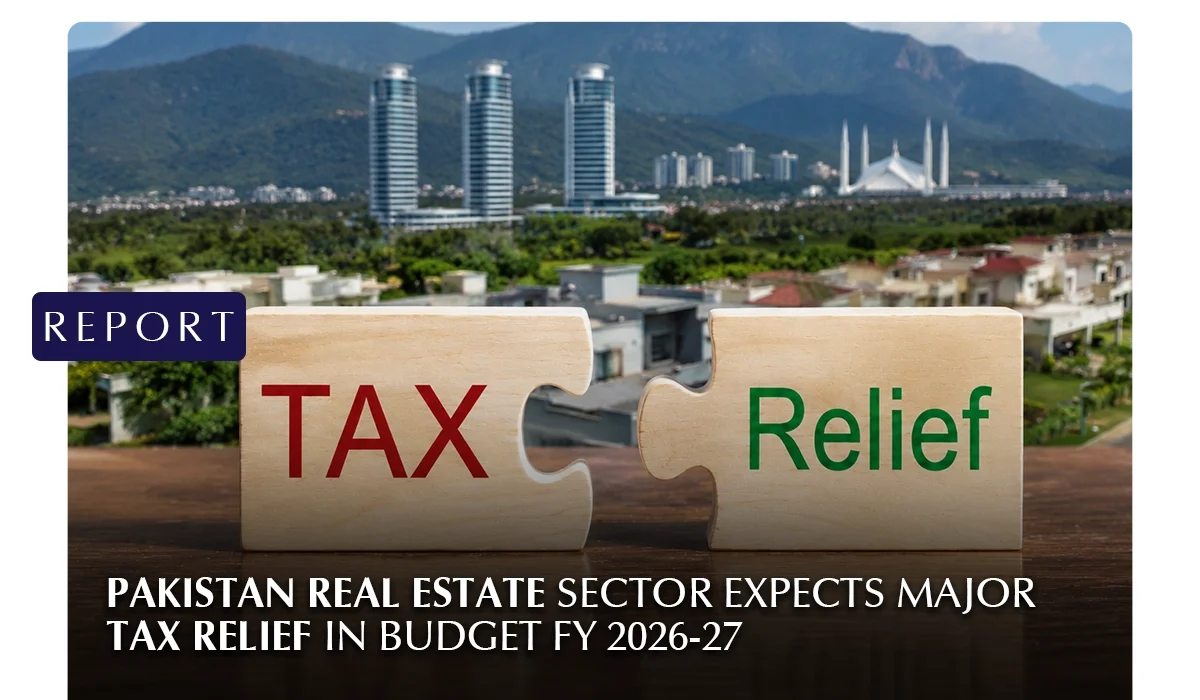
ISLAMABAD: The Association of Builders and Developers of Pakistan (ABAD) has formally called on the federal government to introduce tax relief measures for the real estate sector in the upcoming Budget 2026-27, warning that the current tax burden is deterring domestic and foreign investment. The federal budget is scheduled to be announced on June 10.
ABAD Chairman Muhammad Hassan Bakshi stated that the construction and real estate sector, with an estimated market value of $1 trillion, currently contributes only 2.2 to 2.5 percent to Pakistan’s GDP. He argued that policy reforms aligned with regional benchmarks could raise that contribution to 15 percent.
A central concern raised by ABAD is the high cost of property transfers. For tax filers, the transfer cost currently stands at 10 to 12 percent, while non-filers face rates as high as 30 to 32 percent. By comparison, the transfer cost in Dubai is four percent. Bakshi urged policymakers to bring Pakistan’s rates in line with Dubai or lower, to make the market competitive and attract capital held abroad.
ABAD has also requested that builders be taxed on a per-square-foot basis, a measure it says would simplify compliance and reduce disputes with tax authorities. Relief for first-time homebuyers was also among the association’s demands.
Beyond taxation, ABAD called for the digitalisation of land records and approval processes nationwide to reduce corruption and improve investor confidence. The association also emphasised the need for a long-term, legislation-backed policy developed in consultation with industry stakeholders.
The construction sector is the second-largest employer in Pakistan after agriculture, with 72 industries linked to it. Lower tax rates, ABAD maintains, would ultimately increase government revenue by encouraging greater compliance rather than avoidance.
Muhammad Waqas Ghani, Head of Research at JS Global Capital Limited, described potential real estate incentives in Budget FY27 as a positive development, noting that investment flows into the sector are likely to continue in the coming months.
Pakistan is currently operating under a $7 billion International Monetary Fund (IMF) loan program. The IMF has called on the country, which has a tax-to-GDP ratio of approximately 10 percent, to broaden its tax base by bringing sectors such as real estate, agriculture, and retail more fully into the tax net. The government is also targeting approximately Rs860 billion ($3.1 billion) in new tax revenue in the coming fiscal year.
BBC-featured Content Specialist with a sharp eye for search intent and a proven ability to turn content into a growth engine. I leverage cutting-edge digital marketing tools to craft strategies that fuel organic traffic, amplify brand growth, and own the local SEO landscape, particularly across the competitive real estate market. I help brands dominate search rankings and convert visibility into measurable business success.
The FBR valuation rate Pakistan (also called the FBR property valuation rate or Fair Market Value rate) is the official per-square-yard or per-square-foot value that the Federal Board of Revenue assigns to properties in specific cities and localities across Pakistan.
Table of Contents
What is FBR Valuation Rate Pakistan Used For?
FBR Rate vs DC Rate vs Market Rate: The Key Difference
How FBR Valuation Rates Came to Exist
Latest FBR Property Valuation Rates 2025–26 City-Wise List
What Changed in 2025–26? Key Updates
FBR Rates by Property Type
Impact on Buyers Taxes You Now Pay (Finance Act 2025 Rates)
Impact on Sellers CGT and Advance Tax (Updated Rates)
Worked Example: Full Buyer + Seller Tax Calculation
What If Your Area Is Not Listed?
Overseas Pakistanis Special Exemptions
FAQs
What is the FBR Valuation Rate Pakistan Used For?
FBR valuation rate Pakistan are the base for calculating:
Advance tax on purchase Section 236-K (collected from buyers)
Advance tax on sale Section 236-C (collected from sellers)
Capital Gains Tax (CGT) Section 37 (tax on profit from the sale)
Withholding tax on property transactions
Unexplained investment tax Section 111
The golden rule: Your declared transaction value cannot be lower than the FBR valuation rate Pakistan. Even if you buy or sell for less, you pay taxes as if the transaction happened at the FBR rate.
FBR Rate vs DC Rate vs Market Rate: The Key Difference This is where most buyers and sellers get confused. There are actually three separate values attached to every property in Pakistan:
This gap is the core problem FBR has been trying to fix for years. DC rates were set so low that real estate became the favourite place to park undeclared money. FBR Valuation Rate Pakistan was introduced to bridge this gap, not perfectly, but significantly.
Important for property valuation in Pakistan: FBR rates and DC rates serve completely different purposes and are set by different governments (Federal vs Provincial). Never mix the two when calculating your transaction costs.
How FBR Valuation Rate Pakistan Came to Exist?
Before 2016, the DC Rate Era
For decades, all property taxes, including income tax, were anchored to District Collector (DC) rates. These were set by provincial Boards of Revenue and were often not revised for 5–6 years at a stretch. The result was that DC rates were 3 to 8 times lower than actual market prices.
Real estate became a black hole for untaxed money. The government had no effective way to tax property gains because officially declared values were a fraction of real prices.
Rule 228 and the First Reforms (2002–2016)
The Income Tax Rules 2002 introduced Rule 228, which formalised DC rates as the basis for property valuation in tax matters. A 2009 amendment improved this slightly by requiring that for built-up properties, the higher of Fair Market Value (FMV under Section 68) or DC rates should apply. But since tax officers had broad discretion in determining FMV, this created its own problems.
2016 The Turning Point – FBR Valuation Rate Pakistan
The Finance Act 2016 and Income Tax (Amendment) Ordinance 2016 overhauled Section 68. The FBR was empowered to directly notify Fair Market Values through official gazette notifications, with those rates becoming the binding minimum for property transactions.
Since then, FBR has issued multiple SRO rounds covering 56+ cities with the latest revision wave running from October 2024 through April–May 2026.
Latest FBR Valuation Rate Pakistan 2025–26 City-Wise List
FBR property valuation rate Pakistan have seen a major revision cycle in 2025–26. Key SRO notifications currently in effect include:
SRO 2392(I)/2025 December 2025 (Islamabad, later revised)
SRO 644(I)/2026 April 16, 2026 (Islamabad revised downward by 10–35%)
SRO 650(I)/2026 Multan (amending SRO 1729 of 2024)
SRO 651(I)/2026 Faisalabad (amending SRO 1688 of 2024)
Cities Currently Covered by FBR Valuation Rate Pakistan Notifications
#
City
#
City
#
City
1
Islamabad
2
Lahore
3
Karachi
4
Rawalpindi
5
Faisalabad
6
Multan
7
Peshawar
8
Quetta
9
Hyderabad
10
Sialkot
11
Gujranwala
12
Gujrat
13
Murree
14
Abbottabad
15
Gwadar
16
Bahria Town
17
DHA City Karachi
18
Bahawalpur
19
Jhelum
20
Sargodha
21
Rahim Yar Khan
Plus 35+ additional cities. Total coverage: 56 city/locality links currently listed on FBR’s valuation page.
What Changed in 2025–26? Key Updates
1. Islamabad Rates A Roller Coaster
Islamabad’s valuation story in 2025–26 has been dramatic:
December 2025: FBR tried to hike rates by up to 1,700% in some sectors via SRO 2392(I)/2025
December 16, 2025: FBR suspended the SRO after massive protests from real estate associations
February 2026: Revised SRO 163(I)/2026 issued with reduced rates (still up 15–75% from before)
April 2026: FBR cut rates again by 10–35% via SRO 644(I)/2026
Current Islamabad superstructure rates (SRO 644/2026):
Buildings up to 5 years old: Rs. 2,500 per sq. ft
Buildings older than 5 years: Rs. 1,200 per sq. ft
In sectors like B-17 and C-14, possession-held residential plots: Rs. 21,000 per sq. yard
2. DHA Lahore May 2026 Revision
DHA Lahore rates were revised downward in May 2026 through an official SRO. DHA Phase 7, Phase 8, and Phase 9 Prism saw noticeable reductions. This is expected to reduce transfer costs and encourage fresh investment activity.
3. Finance Act 2025: Completely New Advance Tax Rates
The Finance Act 2025 replaced the old simple 1%/2%/4% structure with a tiered, value-based system. See the tables in the buyer and seller sections below.
4. CGT The Holding Period Rule Has Changed
This is the biggest change most guides miss. The Finance Act 2024 already introduced a flat CGT rate for properties bought on or after July 1, 2024. The holding period table (10%, 7.5%, 5%, 0%) only applies to properties bought before July 1, 2024. For newer purchases, a flat rate applies. Full details in the seller section below.
FBR Valuation Rate Pakistan by Property Type
FBR valuation rates Pakistan vary by property category and urban zone (typically classified as A-I, I, II, III, etc., with A-I being the highest-value areas).
Property Type
Valuation Basis
Open Plot – Residential
Per square yard
Open Plot – Commercial
Per square yard (significantly higher than residential)
Open Plot – Industrial
Per square yard
Built-up Residential Property
Per square yard
Built-up Commercial Property
Per square yard
Residential Superstructure (constructed building)
Per square foot of covered area (age-based)
Flats / Apartments
Per square foot of covered area
For Islamabad specifically, the superstructure value is now set at:
Up to 5 years old: Rs. 2,500/sq. ft
Older than 5 years: Rs. 1,200/sq. ft
For areas with conflicting rates (e.g. overlap between two notifications), the higher value always applies.
Impact on Buyers Taxes You Now Pay (Finance Act 2025 Rates)
Provincial Taxes (Based on DC Rates)
These have not changed structurally, though DC rates themselves are periodically revised:
Capital Value Tax (CVT): 2%–3% of DC rates (provincial)
Stamp Duty: 2% of DC rates (provincial)
Registration Fee: 1% of DC rate or declared value, whichever is higher (provincial)
Federal Advance Tax Section 236-K (Finance Act 2025 Rates)
This is where the biggest change happened. The old flat 2%/4% structure is gone. Rates are now tiered by property value and have three categories instead of two: Filer, Late Filer, and Non-Filer.
Fair Market Value of Property
Filer
Late Filer
Non-Filer
Up to Rs. 50 million
1.5%
4.5%
10.5%
Rs. 50 million to Rs. 100 million
2%
5.5%
14.5%
Above Rs. 100 million
2.5%
6.5%
18.5%
Key point for 2026: Non-filers can now pay up to 18.5% advance tax on high-value property purchases. That’s nearly 12x more than a filer buying the same property. Being on the Active Taxpayers List (ATL) has never mattered more.
Exemptions still apply:
Overseas Pakistanis with POC/NICOP using approved banking remittances (see Overseas section)
Impact on Sellers CGT and Advance Tax (Updated 2025–26 Rates)
Advance Tax on Sale Section 236-C (Finance Act 2025 Rates)
Old rate: 1% filer / 2% non-filer. That’s gone. The new structure is:
Gross Sale Consideration
Filer
Late Filer
Non-Filer
Up to Rs. 50 million
4.5%
7.5%
11.5%
Rs. 50 million to Rs. 100 million
5%
8.5%
11.5%
Above Rs. 100 million
5.5%
9.5%
11.5%
Source: FBR.gov.pk official FAQ Finance Act 2025 amendments
Exemptions:
Dependents of Shaheed Armed Forces personnel
First sale by original allottee (certified by official allotment authority)
Capital Gains Tax (CGT) The Two-Regime System
Pakistan now has two different CGT regimes for immovable property, depending on when the property was acquired.
Regime 1: Properties Acquired On or Before June 30, 2024
For properties acquired on or before June 30, 2024, CGT still depends on the holding period, but the rates are not the same for every property type. Open plots, constructed properties, and flats have separate rate schedules.
Holding Period
Open Plots
Constructed Property
Flats
Up to 1 year
15%
15%
15%
More than 1 year and up to 2 years
12.5%
10%
7.5%
More than 2 years and up to 3 years
10%
7.5%
0%
More than 3 years and up to 4 years
7.5%
5%
0%
More than 4 years and up to 5 years
5%
0%
0%
More than 5 years and up to 6 years
2.5%
0%
0%
More than 6 years
0%
0%
0%
Regime 2: Properties Acquired On or After July 1, 2024
For properties acquired on or after July 1, 2024, the holding-period benefit no longer applies in the same way.
If the seller is on the Active Taxpayers List (ATL) on the date of disposal, CGT is charged at a flat 15% of the capital gain, regardless of whether the property is sold after one year, three years, or a longer period.
If the seller is not on the ATL, the gain is taxed at the applicable rates specified for individuals/AOPs or companies, as the case may be. For individuals and AOPs not appearing on the ATL, the tax rate cannot be less than 15% of the gain.
Plain English: If you bought a property on or after July 1, 2024, you should not assume that holding it for 3+ years will make the gain tax-free. For ATL filers, the current rule is a flat 15% CGT on the gain.
Worked Example: Full Buyer + Seller Tax Calculation
Scenario:
Property: Residential plot in DHA Lahore
Purchase date: September 2024 (post July 1, 2024, new CGT regime applies)
Purchase value (FBR rate at time of purchase): Rs. 60 million
Sale value (FBR rate at time of sale): Rs. 80 million
Holding period: ~1.5 years (sold in early 2026)
Both buyer and seller: Active ATL Filers
SELLER’S CALCULATION:
Capital Gain = Rs. 80M – Rs. 60M = Rs. 20 million
CGT (flat 15% new regime, post July 2024 purchase): Rs. 20M × 15% = Rs. 3,000,000
Plus provincial taxes on DC rates (stamp duty 2% + registration 1% + CVT ~2.5%): Estimated on DC rate of approx. Rs. 5–8 million = ~Rs. 275,000–440,000
Approximate Total Buyer Tax = ~Rs. 1,875,000 – Rs. 2,040,000
Key takeaway: On an Rs. 80 million property, a filer seller pays approximately Rs. 7 million in total tax. A non-filer seller on the same transaction would pay Rs. 9.2 million (11.5% × Rs. 80M) in 236-C alone, before CGT. Filing your taxes is not optional anymore; the financial penalty for not doing so is enormous.
FBR Valuation Rate Pakistan – What If Your Area Is Not Listed?
Not every locality in Pakistan has an FBR valuation rate Pakistan notification. If your area is not covered:
Rule 228 of the Income Tax Rules 2002 provides the legal fallback
For open plots: the value determined by the development authority (LDA, KDA, CDA, RDA, etc.) based on auction prices for similar plots applies
If no development authority valuation exists: the DC rate (set by District Officer Revenue for stamp duty purposes) is used
For agricultural land: the average recorded sale price from revenue records of the estate applies
For built-up properties: FMV under Section 68 or DC rate, whichever is higher
In short: DC rates serve as the last resort fallback when FBR has not yet notified rates for your specific area. This is still the situation for many smaller cities and rural localities.
FBR Valuation Rate Pakistan – Overseas Pakistanis Special Exemptions
The Finance Act 2025 explicitly updated FBR’s position on overseas Pakistanis. Key points:
Advance Tax (236-C and 236-K) Filer Rate for Non-Resident Pakistanis
Overseas Pakistanis who qualify get the filer rate even if they have never filed a tax return in Pakistan. To qualify, you must:
Hold a valid POC (Pakistan Origin Card) or NICOP (National Identity Card for Overseas Pakistanis)
Be non-resident in Pakistan (stay of less than 183 days in a financial year)
How to claim it: The registrar/housing society clicks the “Overseas Pakistanis” link on FBR’s web portal, creates a PSID, uploads your POC/NICOP, and the system processes payment at filer rates after Commissioner verification.
Overseas Pakistanis CGT Treatment on Property Sold in Pakistan
Overseas Pakistanis should not treat this as a blanket “0% CGT exemption.” The law provides a specific treatment only where the conditions are met.
If the seller or transferor is a non-resident individual holding a POC, NICOP, or CNIC, and the immovable property was acquired through a Foreign Currency Value Account (FCVA) or a Non-Resident Pakistani Rupee Value Account (NRVA) maintained with an authorized bank in Pakistan under State Bank foreign exchange regulations, then the tax collected under Section 236C is treated as final discharge of tax liability in lieu of capital gains taxable under Section 37.
In simple terms, eligible overseas Pakistanis may have their Section 236C tax treated as the final settlement of CGT on that property sale. This is not the same as saying “0% CGT applies automatically.”
This treatment is separate from the filer-rate benefit for overseas Pakistanis. Non-resident Pakistanis holding POC or NICOP may qualify for filer rates under Sections 236C and 236K even if they have not filed a Pakistani tax return, subject to FBR’s verification process.
Government Schemes Section 236-K Exemption
Advance tax under Section 236-K does not apply to government-approved schemes specifically for expatriate Pakistanis, provided payment is made in foreign exchange remitted through normal banking channels from outside Pakistan.
FAQs – FBR Valuation Rate Pakistan
What is the FBR valuation rate Pakistan?
The FBR valuation rate Pakistan is the official per-square-yard value set by the Federal Board of Revenue for properties in specific areas. It is the legally binding minimum base for calculating advance tax, CGT, and withholding tax on property transactions. It is set under Section 68 of the Income Tax Ordinance 2001 and published via official SRO notifications.
What is the difference between FBR rate and DC rate in Pakistan?
The FBR valuation rate Pakistan is set by the federal government and used for income tax purposes (advance tax, CGT, withholding tax). The DC rate is set by the provincial government (District Collector / Board of Revenue) and used for provincial taxes like stamp duty, CVT, and registration fees. FBR rates are generally significantly higher than DC rates. You pay both sets of taxes in any property transaction, but they are calculated on different bases.
What are the current advance tax rates for property in Pakistan (2025–26)?
Under Finance Act 2025, buyer advance tax (236-K) ranges from 1.5% to 2.5% for filers, 4.5% to 6.5% for late filers, and 10.5% to 18.5% for non-filers, depending on the property’s FBR value. Seller advance tax (236-C) ranges from 4.5% to 5.5% for filers and 11.5% for non-filers, regardless of property value tier for non-filers.
What is the CGT rate on property in Pakistan in 2025–26?
It depends on when you bought the property. Bought before July 1, 2024: old holding-period system applies (10%/7.5%/5%/0% for 1/2/3/3+ years). Bought on or after July 1, 2024: flat 15% CGT for ATL filers, regardless of holding period. Non-filers face higher progressive rates.
Does the 3-year zero CGT rule still apply in Pakistan?
Only for properties purchased before July 1, 2024. If you bought after that date, there is no zero-CGT benefit for holding 3+ years. A flat 15% CGT applies for ATL filers regardless of holding period under the new regime introduced by the Finance Act 2024.
Where can I check my property’s FBR valuation rate Pakistan?
Visit fbr.gov.pk and go to the Property Valuation section. Each city’s rates are available as downloadable PDFs (SRO notification files). Alternatively, check with a registered property consultant or your housing society’s transfer office, as they handle these filings daily.
What happens if FBR value is higher than the actual market price?
You still pay taxes on the FBR notified rate. Section 68(6) of the Income Tax Ordinance is explicit: the consideration for tax calculation “shall not be less than the fair market value as determined” by FBR. This is exactly why FBR’s Islamabad rate hike in December 2025 (by up to 1,700%) caused such a massive backlash in many sectors; the notified FBR value exceeded the actual market price.
Are overseas Pakistanis exempt from FBR advance tax on property?
Overseas Pakistanis holding POC or NICOP and qualifying as non-residents can pay advance tax at the filer rate even without having filed a Pakistani tax return. They are also exempt from Section 236-K advance tax on government-approved schemes, provided remittance comes through banking channels.
BBC-featured Content Specialist with a sharp eye for search intent and a proven ability to turn content into a growth engine. I leverage cutting-edge digital marketing tools to craft strategies that fuel organic traffic, amplify brand growth, and own the local SEO landscape, particularly across the competitive real estate market. I help brands dominate search rankings and convert visibility into measurable business success.
ISLAMABAD: Pakistan’s federal budget for fiscal year 2026-27 is unlikely to be presented on June 5, as previously expected, because some fiscal measures are still being discussed with the International Monetary Fund.
According to Reuters, a government source and local media reported on Wednesday that the budget may now be presented on June 10. The source said the delay is mainly linked to unresolved matters with the IMF over fiscal space, including funds that provinces may need to give up for federal spending.
The government has not officially announced a reason for the possible delay. Pakistan’s finance ministry did not immediately respond to Reuters’ request for comment.
Despite the expected delay in the budget presentation, the parliamentary session scheduled for June 5 is still expected to take place. The session may allow the government and opposition to discuss budget-related issues before the formal presentation.
Pakistan is currently under a $7 billion IMF bailout program, which has helped stabilize the economy after a difficult financial period. Any delay in finalizing the budget reflects the importance of IMF approval in shaping Pakistan’s spending and revenue plans.
The upcoming budget is being closely watched by businesses, investors, and the public, as the government is expected to balance demands for economic relief with the need to meet revenue targets. Key sectors, including real estate and construction, are hoping for tax relief, but final decisions may depend on the outcome of continuing talks with the IMF.
The budget delay adds uncertainty at a time when Pakistan is trying to maintain economic recovery while managing pressure on public finances.
BBC-featured Content Specialist with a sharp eye for search intent and a proven ability to turn content into a growth engine. I leverage cutting-edge digital marketing tools to craft strategies that fuel organic traffic, amplify brand growth, and own the local SEO landscape, particularly across the competitive real estate market. I help brands dominate search rankings and convert visibility into measurable business success.
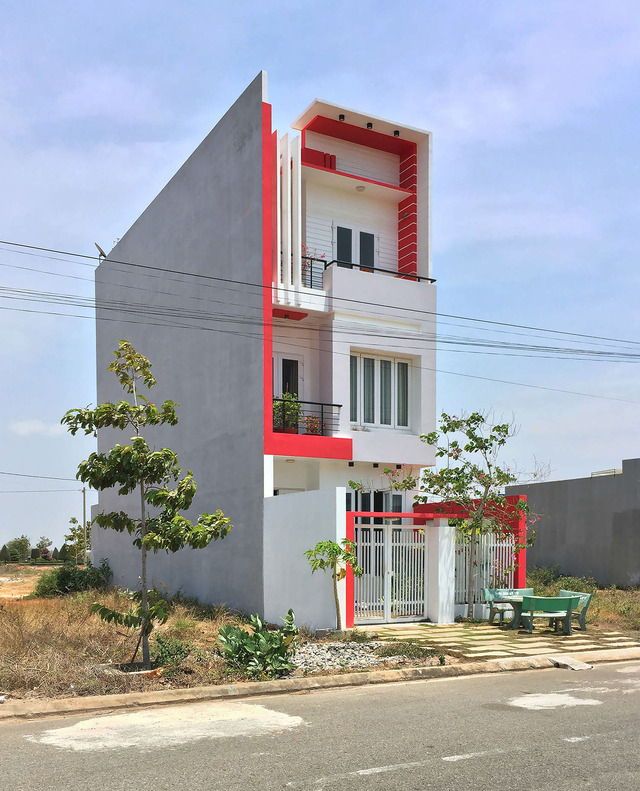
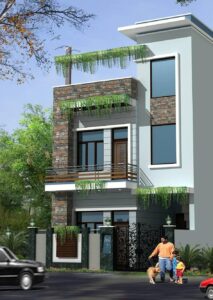
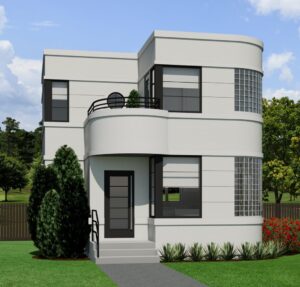
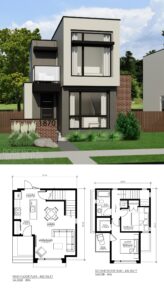
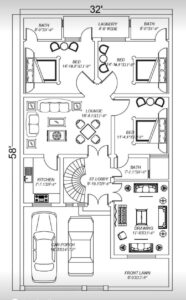
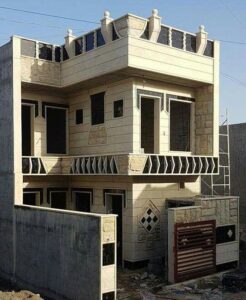
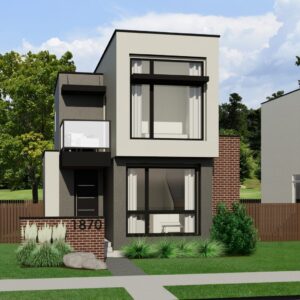
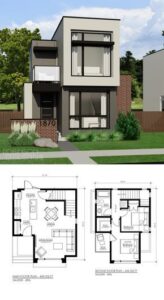
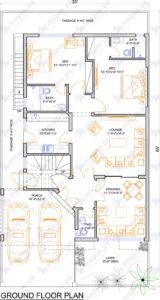
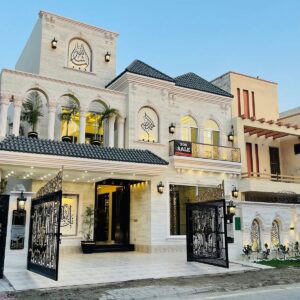
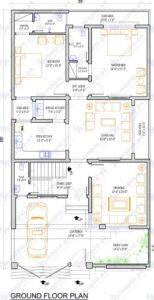
Are you planning to build a house in Pakistan? Whether you have a 2.5 marla plot or a full 1 kanal, choosing the right house design is one of the most important decisions you will make. This guide covers everything. You will find ideas for every plot size, popular design styles, and tips for key design elements like gates, walls, and stairs. Let’s get started.
What is a Good House Design?
A good house design does two things well. First, it looks beautiful from the outside; second, it works well on the inside.
In Pakistan, house design has changed a lot over the years. People used to build large open courtyards with simple rooms. Now, modern house design focuses on clean lines, smart use of space, and stylish exteriors.
Whether you are searching for a simple house front design or a full modern house design with 3D renderings, the goal is the same: a home you love living in.
House Design by Plot Size in Pakistan
Pakistan uses a unique measurement system. Most plots are measured in marla, kanal, or square yards. Here is a complete breakdown for every common size.
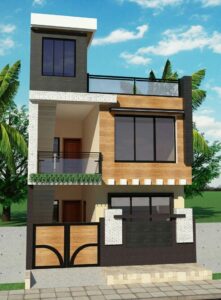
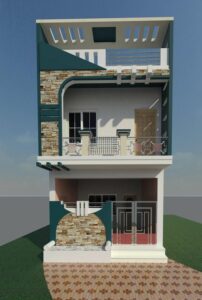
2 Marla House Design
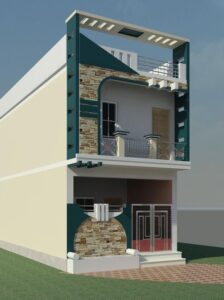
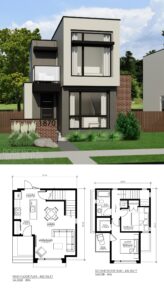
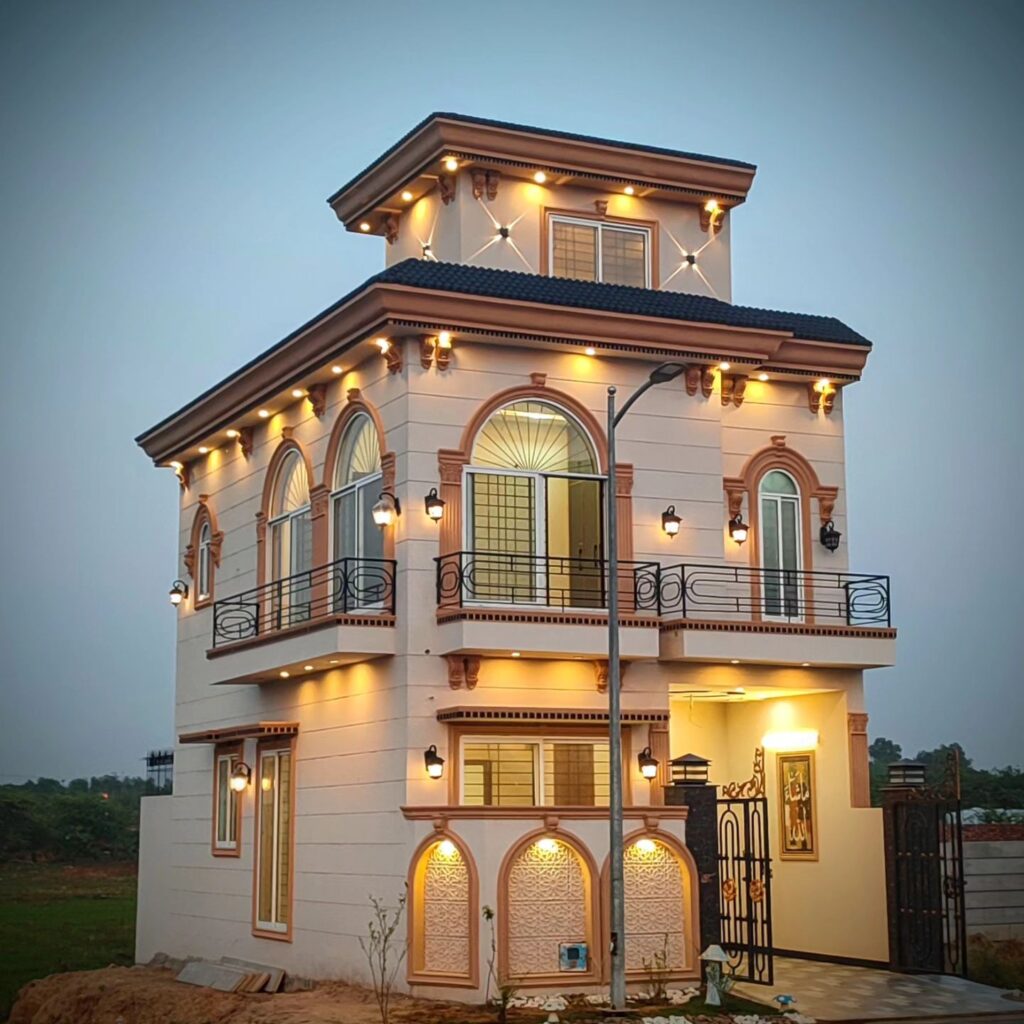
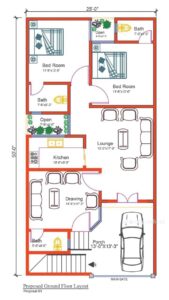
A 2 marla plot is very small, but a smart design makes it feel spacious. Most 2 marla house designs are double storey to make the most of the limited land.
Source : Pinterest
Source : Pinterest
Source : Pinterest
Source : Pinterest
Source : Pinterest
Source : Pinterest
Key tips for 2 marla:
Use light colours on the exterior to make the house look bigger
Keep the floor plan open on the ground floor
Add a small balcony on the upper floor for ventilation
2.5 Marla House Design
A 2.5 marla house design gives you slightly more space than a 2 marla. It is very common in the older city areas of Lahore, Rawalpindi, and Gujranwala.
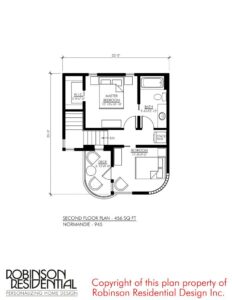
With a 2.5 marla plot, you can comfortably fit 2 bedrooms, a small lounge, a kitchen, and 2 bathrooms on two floors. Keep the stairs compact and place them along the side wall to save space.
Source : Pinterest
Source : Pinterest
Source : Pinterest
Source : Pinterest
Source : Pinterest
Source : Pinterest
3 Marla House Design
The 3 marla house design is one of the most searched designs in Pakistan. It is affordable to build and fits well in most housing societies.
A standard 3 marla plot measures around 25 x 30 feet. On this size, a double storey design gives you 3 bedrooms, a drawing room, and 2 to 3 bathrooms.
Source : Pinterest
Source : Pinterest
Source : Pinterest
Source : Pinterest
Source : Pinterest
Source : Pinterest
Popular features in 3 marla designs:
Simple house front design with clean tiles
Single covered parking
Small TV lounge on the ground floor
3.5 Marla House Design
The 3.5 marla house design sits between 3 and 4 marla. It is a practical choice for middle-income families. You get a bit more floor space compared to 3 marla, which allows for a slightly larger kitchen or an extra bathroom.
A 3.5 marla double-storey design can comfortably house a family of 5 to 6 people.
Source : Pinterest
Source : Pinterest
Source : Pinterest
Source : Pinterest
Source : Pinterest
Source : Pinterest
Source : Pinterest
Source : Pinterest
Source : Pinterest
4 Marla House Design
A 4 marla house design is ideal for small families who want comfort without overspending on construction.
On a 4 marla plot, you can build a proper drawing room, 3 bedrooms, a dining area, and 2 bathrooms. Many people also add a small servant quarter at the back.
Source : Pinterest
Source : Pinterest
Source : Pinterest
Source : Pinterest
Source : Pinterest
Source : Pinterest
The front wall design of 4 marla homes is usually kept simple but stylish. Light-coloured cladding tiles or exposed brick are popular choices.
5 Marla House Design
The 5 marla house design is the most popular size in Pakistan. Almost every major housing society has a large number of 5 marla plots.
Source : Pinterest
Source : Pinterest
Source : Pinterest
Source : Pinterest
Source : Pinterest
Source : Pinterest
Source : Pinterest
Source : Pinterest
Source : Pinterest
Source : Pinterest
Source : Pinterest
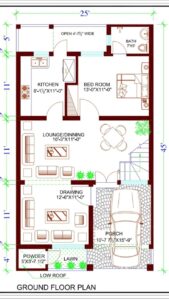
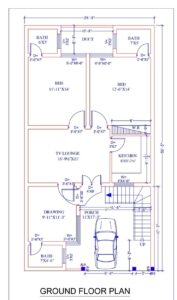
A 5 marla plot is approximately 25 x 45 feet. Here is what a typical double storey design includes:
Ground floor: Drawing room, TV lounge, kitchen, 1 bedroom, 1 bathroom, small garden
First floor: 3 bedrooms, 2 bathrooms, laundry area
5 marla house elevation design is usually the most worked on. Homeowners invest in good front tiles, decorative columns, and a stylish main gate to create a strong first impression.
6 Marla House Design
A 6 marla house design gives you noticeably more room than 5 marla. The extra space usually goes into a larger lounge, a wider staircase, or an extra room on the ground floor.
This size is great for families who want a small lawn or courtyard area at the back. The house exterior design can include a mix of brick and plaster finish, which looks great and is cost-effective.
Source : Pinterest
Source : Pinterest
Source : Pinterest
Source : Pinterest
Source : Pinterest
Source : Pinterest
7 Marla House Design
A 7 marla house design is less common but very practical. It gives you enough room to add features that are not possible in smaller plots, like a proper guest room, a separate dining room, and a dedicated TV lounge.
Many people building a 7 marla house also invest more in house wall design and boundary wall features, since the extra plot width allows for more creativity.
Source : Pinterest
Source : Pinterest
Source : Pinterest
Source : Pinterest
Source : Pinterest
Source : Pinterest
8 Marla House Design
An 8 marla house design is considered a comfortable mid-range home in Pakistan. You have enough space for a spacious single story house design or a well-spaced double storey.
Single story house design on 8 marla are especially popular among older homeowners. You get wide rooms, a large kitchen, and a proper lawn all on one level.
The house stairs design on 8 marla homes is usually a feature piece. A curved or L-shaped staircase in the centre of the house looks elegant and adds visual interest.
Source : Pinterest
Source : Pinterest
Source : Pinterest
Source : Pinterest
Source : Pinterest
Source : Pinterest
10 Marla House Design
The 10 marla house design is the standard for upper-middle-class homes in Pakistan. Cities like Lahore, Islamabad, and Rawalpindi have thousands of 10 marla houses.
A 10 marla plot is roughly 35 x 65 feet. A good design for this size includes:
Spacious drawing room with a separate dining
Master bedroom with attached bathroom and walk-in wardrobe
3 additional bedrooms
TV lounge
Proper kitchen with service area
Driver/servant quarter
Covered parking for 2 cars
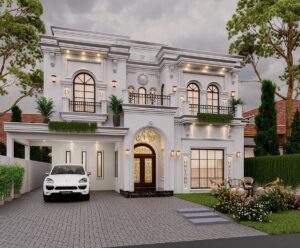
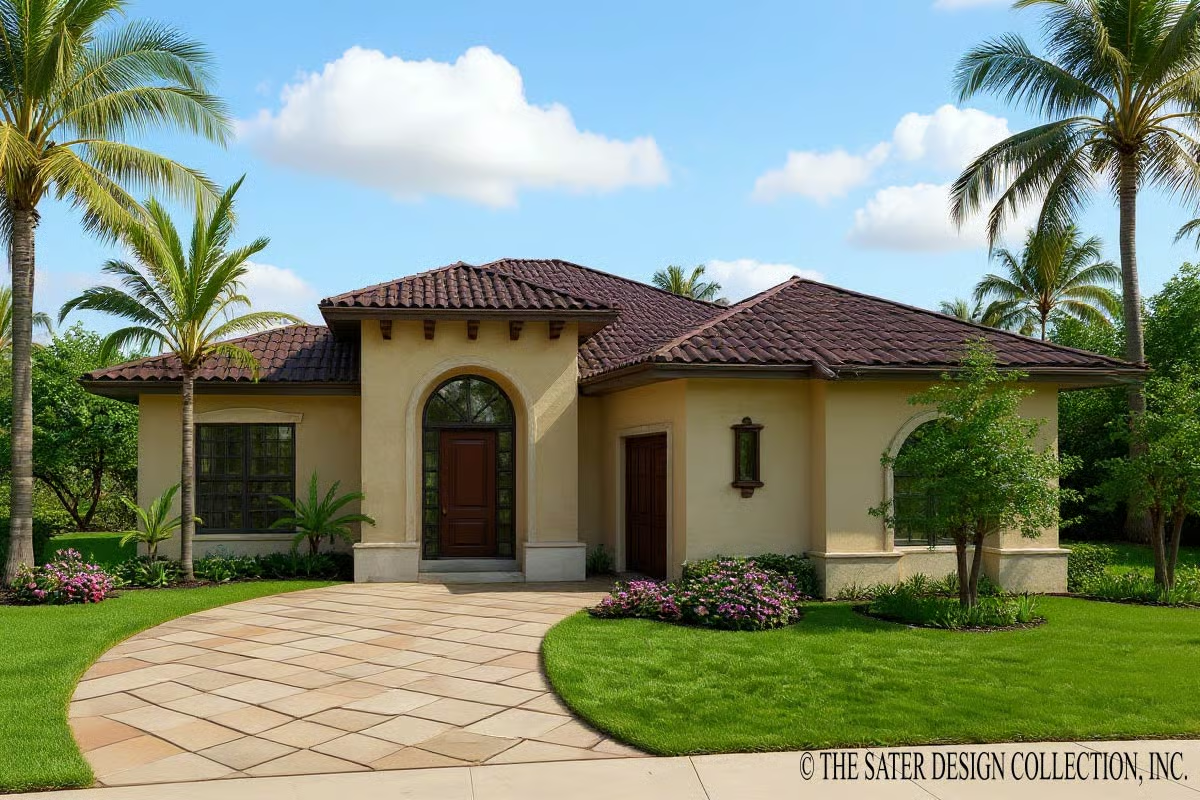
The house front elevation design on 10 marla homes gets a lot of attention. Spanish house design elements like arches and terracotta roofing, or modern designs with large glass panels and flat roofs, are both very popular here.
Source : Pinterest
Source : Pinterest
Source : Pinterest
Source : Pinterest
Source : Pinterest
Source : Pinterest
1 Kanal House Design
A 1 kanal house design is the dream for most Pakistani families. With 500 square yards of space, the design possibilities are almost unlimited.
A 1 kanal plot is approximately 50 x 90 feet. At this size, you can include:
Large entrance foyer
Formal drawing and dining rooms
5 to 6 bedrooms
Home cinema or family room
Rooftop terrace
Swimming pool or large garden
Servant quarters and utility block
House interior design becomes very important at this scale. Most 1 kanal homeowners hire an interior designer to work on everything from flooring to ceiling details, lighting plans, and built-in furniture.
Source : Pinterest
Source : Pinterest
Source : Pinterest
Source : Pinterest
Source : Pinterest
Source : Pinterest
120 Square Yards House Design
In cities like Karachi and Hyderabad, plots are often measured in square yards instead of marla. A 120 sq yards house design is roughly equivalent to a 4 marla plot.
The design approach for 120 sq yards is similar to 4 marla. A double storey works best, with a clean and simple house exterior design to make the building look taller and more spacious.
Source : Pinterest
Source : Pinterest
Source : Pinterest
Source : Pinterest
Source : Pinterest
Source : Pinterest
Popular House Design Styles in Pakistan
Once you know your plot size, the next step is choosing a style. Here are the most popular styles right now.
Modern House Design
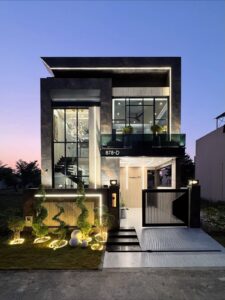
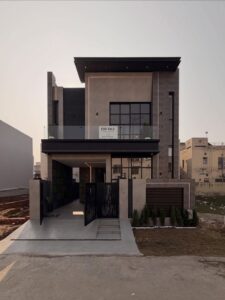
Modern house design is the top choice for most Pakistani homeowners in 2026. It features clean lines, flat or slightly sloped roofs, large windows, and minimal ornamentation.
Modern designs use neutral colours white, grey, and beige, paired with dark accents like charcoal or black frames. The result is a sleek and contemporary look.
Source : Pinterest
Source : Pinterest
Source : Pinterest
Source : Pinterest
Key features of modern house design:
Large glass windows and sliding doors
Flat roof with rooftop terrace
Mixed materials: concrete, glass, and steel
Minimalistic house front wall design
Spanish House Design
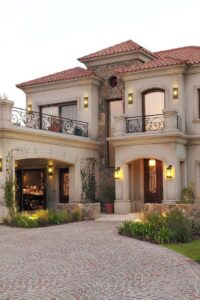
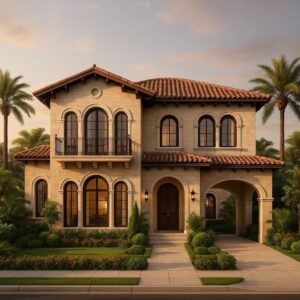
Spanish house design is gaining popularity across Pakistan, especially in Lahore and Islamabad. It combines elegance with practicality.
The classic Spanish look includes white stucco walls, red clay roof tiles, rounded arches at the entrance, and wrought iron detailing. It looks stunning and holds up well in Pakistan’s climate.
The thick white walls of a Spanish house design also help keep the interior cool during hot summers, a very practical benefit.
Minimalistic House Design
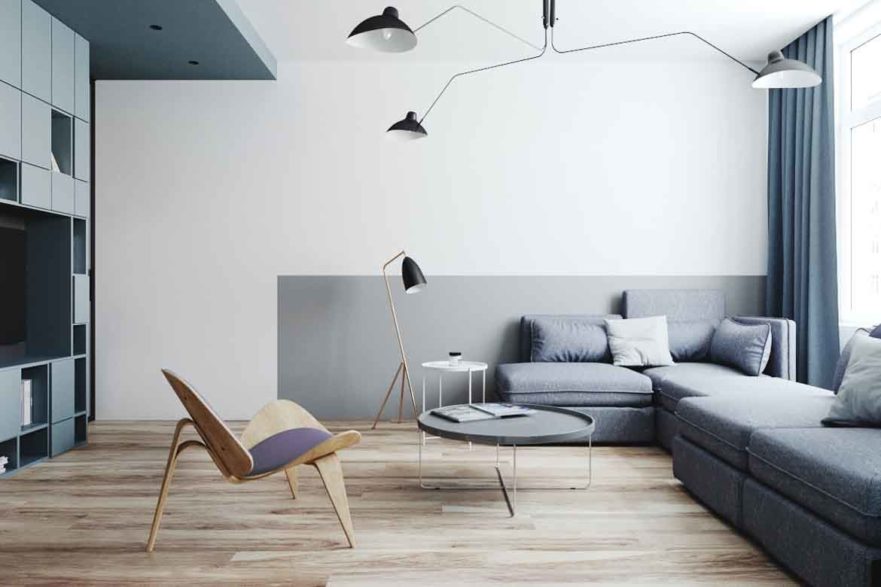
Minimalistic design is all about simplicity. Less decoration, cleaner shapes, and smarter use of space.
In a minimalistic house, you will find open floor plans, neutral colours, and very little clutter. The house front elevation design is usually flat and geometric, with no heavy cladding or decorative elements.
This style works especially well for 5 marla and 7 marla house designs, where keeping things simple makes the home feel bigger.
Screenshot
Single Storey House Design
Not everyone wants to climb stairs. Single-storey house designs are perfect for elderly family members, young children, and those who prefer everything on one level.
A single storey design works best on 8 marla or larger plots, where you have enough ground area to spread out. On smaller plots like 3 marla or 4 marla, going single storey means sacrificing rooms.
The main advantage of a single-storey house design is lower construction cost per square foot, as you do not need extra structural reinforcement for upper floors.
Source : Pinterest
Source : Pinterest
Source : Pinterest
3 Bedroom House Design
A 3-bedroom house design is the most practical choice for a typical Pakistani family. It works on plot sizes from 4 marla all the way up to 10 marla.
The key to a good 3-bedroom design is smart room placement. Place the master bedroom away from the main road for privacy. Keep the second bedroom close to the children’s bathroom. And make the third bedroom easily accessible for guests.
Source : Pinterest
Source : Pinterest
Source : Pinterest
Key Design Elements You Should Not Ignore
Your house is more than just rooms. The details on the outside make the first impression. Here are the most important elements.
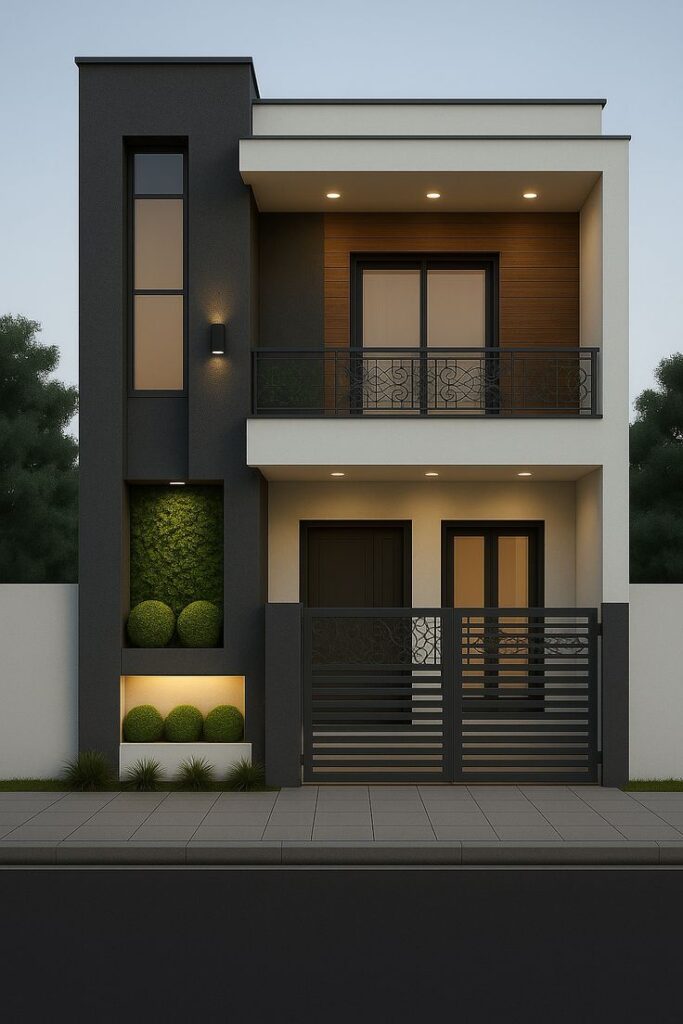
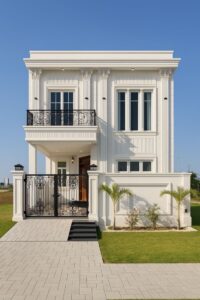
House Front Elevation Design
The house front elevation design is how your home looks from the street. It is the most visible part of your design.
A good elevation combines the right materials, proportions, and colours. Popular choices in Pakistan include:
Exposed brick with plaster detailing
White or off-white paint with dark window frames
Stone cladding on the lower portion
House Exterior Design
House exterior design covers everything visible from outside the walls, roof, windows, boundary wall, and gate. A well-planned exterior makes your house stand out in the street.
Try to keep the exterior design consistent in style. If you choose a modern look for the front, carry the same lines and colours to the sides and back.
Simple House Front Design
Not everyone wants a complex exterior. A simple house front design with clean lines, good proportions, and quality finishes can look just as impressive as a fancy elevation.
Simple designs are also cheaper to build and easier to maintain. A coat of quality exterior paint, some good tiles at the entrance, and a stylish gate are enough to create a great first impression.
House Front Wall Design
The house front wall design is the area between the gate and the main door. This wall is highly visible and sets the tone for the entire exterior.
Popular options include:
Cladding tiles in a stone or ceramic finish
Exposed red or grey brick
A combination of plaster and textured panels
House Front Tiles Design
Tiles are one of the best ways to upgrade your house front design without spending a lot. They are durable, easy to clean, and come in hundreds of styles.
For a modern look, choose large-format grey or beige tiles. For a traditional or Spanish style, terracotta or stone-look tiles work beautifully.
House Main Gate Design
The house main gate design is the first thing visitors see. It should match the overall style of your house.
Popular gate styles in Pakistan:
Modern: Flat metal panels in black or charcoal with concealed hinges
Classic: Ornamental wrought iron with decorative tips
Contemporary: Wood and metal combination for a warm, stylish look
A good gate also provides security, so make sure it is solidly built with quality hardware.
House Boundary Wall Design
The house boundary wall design defines the perimeter of your property. A strong, well-designed boundary wall improves privacy, security, and street appeal.
Popular boundary wall options:
Full brick wall with plaster finish
A combination of brick and metal grille on top
Decorative block or stone wall for a more stylish look
For 5 marla and larger plots, adding a small garden strip in front of the boundary wall looks very attractive.
House Window Design
House window design affects both the look and functionality of your home. The right windows bring in natural light, allow ventilation, and add character to the exterior.
Popular window styles in Pakistan:
Simple rectangular aluminum windows for a modern look
Arched windows for Spanish or classic styles
Large sliding glass panels for contemporary homes
House Wall Design
Good house wall design matters both inside and outside. For exterior walls, a combination of textures, such as smooth plaster, brick, and stone, creates visual interest.
For interior wall design, popular choices include textured paint, wall panels, and feature walls with wallpaper or cladding in the lounge or master bedroom.
House Stairs Design
The house stairs design is often ignored during planning, but it can be a real statement piece inside your home.
Common options:
Straight stairs: Simple, space-efficient, works in any size plot
L-shaped stairs: Good for 5 marla and above
Curved or spiral stairs: Beautiful but needs more space, best for 10 marla and 1 kanal homes
Use tiles or marble on the stair treads, and add a stylish railing in metal or glass for a modern touch.
House Name Plate Design
The house name plate design is a small detail that adds a personal touch. It goes near the main gate or entrance door.
Popular name plate styles:
Brushed metal with engraved text
Backlit acrylic for a modern, premium look
Ceramic tiles with a painted house name and number
House Interior Design Tips
Once the exterior is done, the interior is where you spend most of your time. Good house interior design makes your home comfortable and functional.
Key tips:
Use light colours in smaller rooms to make them feel bigger
Choose flooring that is easy to clean and maintain
Add storage wherever possible under stairs, in wardrobes, and above cabinets
Use good quality lighting; a mix of natural light and warm LED lights works best
Keep the kitchen practical with enough counter space and good ventilation
For large homes like 10 marla or 1 kanal, consider hiring a professional interior designer. The investment pays off in long-term comfort and resale value.
Final Thoughts
Building a house in Pakistan is a big investment. Taking time to plan your house design properly, from the overall style to small details like the name plate and gate, will save you money and headaches later.
Whether you are working with a 2.5 marla plot or a full 1 kanal, there is always a design that works for your space and budget. Start with your plot size, choose a style you love, and focus on the details that matter most to you.
If you need professional help, many great architecture firms in Pakistan offer 2D plans, 3D designs, and even 360° virtual tours so you can see your house before a single brick is laid.
BBC-featured Content Specialist with a sharp eye for search intent and a proven ability to turn content into a growth engine. I leverage cutting-edge digital marketing tools to craft strategies that fuel organic traffic, amplify brand growth, and own the local SEO landscape, particularly across the competitive real estate market. I help brands dominate search rankings and convert visibility into measurable business success.
ISLAMABAD — Pakistan’s real estate and construction sectors are expecting major tax relief in the upcoming federal budget for fiscal year 2026-27, as the government considers proposals to reduce property-related taxes and revive investment activity.
The budget, expected to be presented on June 5, could bring significant changes for property buyers, sellers, investors, and overseas Pakistanis, according to industry representatives and media reports.
Government Signals Possible Relief in Real Estate Taxes
The real estate sector has been under pressure for several years due to higher taxes, rising costs, and a slowdown in property transactions. Industry stakeholders say the sector is directly linked with more than 80 other industries, including cement, steel, paint, glass, electrical fittings, tiles, transport, and construction services.
They argue that when real estate activity slows down, many connected businesses also suffer. For this reason, the sector is urging the government to reduce taxes in the upcoming budget to encourage buying, selling, and construction activity.
Prime Minister Shehbaz Sharif has also reportedly hinted at relief measures for the construction and real estate sectors during meetings with business representatives. These signals have increased expectations that the government may announce major policy changes in the new budget.
Key Tax Demands from the Sector
Real estate stakeholders are demanding reductions in withholding tax, capital gains tax, and rental income tax. They say the current tax structure has discouraged investment and reduced the number of property transactions.
Abolition of Section 7E
One of the sector’s main demands is the abolition of Section 7E of the Income Tax Ordinance. Section 7E imposes tax on deemed income from immovable property. In simple terms, it allows tax to be charged on an assumed income from property, even if the property owner has not actually earned rent from it.
Industry representatives say this discourages documented investors and creates an unfair burden on property owners. They have also called for property-buying and selling taxes to be reduced to 1%.
Business leader Kashif Chaudhry has said that Pakistan’s economy cannot fully recover without restoring activity in the real estate market. He argued that reducing taxes would increase transactions and ultimately help the government collect more revenue.
FBR Proposals Under Consideration
According to reports, the Federal Board of Revenue has prepared proposals to provide relief to the real estate sector. These proposals include reducing taxes on property purchases and sales, while also making investment easier for overseas Pakistanis and local investors.
Under one reported proposal, withholding tax on property purchases for tax filers could be reduced from 1.5 percent to 0.25 percent. Tax on property sales may also be reduced from 4.5 percent to 1.5 percent.
The government has also reportedly briefed the International Monetary Fund on these proposed tax reductions. This is important because Pakistan’s budget decisions are closely linked with IMF targets on revenue collection and fiscal discipline.
FPCCI Calls for Wider Reform
The Federation of Pakistan Chambers of Commerce and Industry has also supported tax relief for the real estate and construction sectors. FPCCI President Atif Ikram Sheikh has said that taxes imposed under Sections 236C and 236K are expected to be abolished.
He has also called for the removal of Section 7E, describing it as a long-standing demand of the business community.
The FPCCI has further proposed the creation of a Real Estate Regulatory Authority, known as RERA, in Pakistan. The chamber says such an authority would help regulate the sector, improve transparency, and protect investors.
In its shadow budget proposals, FPCCI has suggested reducing real estate taxes to a uniform 0.5 percent. The chamber believes this would encourage investment and help revive economic activity.
Experts Urge Balanced Policy
Tax experts and economists say the government should reduce taxes that discourage transactions, but they also warn that reforms must be carefully designed.
Experts Huzaima Bukhari, Dr. Ikramul Haq, and Abdul Rauf Shakoori have argued that Pakistan’s tax system needs broader reform. They say the country should reduce pressure on productive economic activity while improving taxation of idle and speculative assets.
Their view is that transaction taxes should be rationalized, but the government should also modernize land records, improve property valuation systems, and tax speculative urban land more effectively.
Other analysts have warned that Pakistan’s room for tax relief may be limited because of IMF conditions. If the government reduces taxes in one area, it may need to raise revenue from another area to meet fiscal targets.
Overseas Pakistanis Seen as Key Investors
The proposed relief is also being viewed as important for overseas Pakistanis. Industry representatives say lower taxes and simpler procedures could encourage Pakistanis living abroad to invest more in property and construction projects.
They believe this could bring more foreign exchange into the country through remittances and investment. For Pakistan, where remittances play an important role in supporting the economy, this could be a major benefit.
FPCCI Senior Vice President Saqib Fayyaz Magoon has also said that real estate can help attract more foreign exchange if investors are given confidence and clear rules.
Revenue Challenge for the Government
The government faces a difficult policy choice. On one hand, lower taxes may increase property transactions and revive economic activity. On the other hand, the government must also meet revenue targets and satisfy IMF conditions.
FBR data shows that withholding tax collection increased during the current fiscal year. However, higher taxes have also contributed to a decline in capital gains tax collection compared to the previous year. This shows that while higher rates may increase some tax collections, they can also reduce overall market activity.
Real estate stakeholders argue that lower rates could bring more people into the documented economy and increase tax collection through higher transaction volume.
Budget Could Mark Turning Point
The upcoming budget is being closely watched by builders, developers, property buyers, sellers, and overseas investors. If the government accepts key proposals, the real estate sector could receive one of its biggest relief packages in recent years.
However, experts say tax cuts alone will not be enough. They believe the government must also improve regulation, digitize land records, update property valuation systems, and discourage speculative investment in idle land.
For now, the sector is waiting for the June 5 budget announcement. The final decision will show whether the government is ready to make a major policy shift for real estate and construction, or whether fiscal pressure will limit the scale of relief.
Talreja, S. (2025, June 11). In Pakistan targets passive incomes, foreign e-commerce in a push for a $50 billion tax haul. Arab News.https://www.arabnews.com/node/2604103/amp
BBC-featured Content Specialist with a sharp eye for search intent and a proven ability to turn content into a growth engine. I leverage cutting-edge digital marketing tools to craft strategies that fuel organic traffic, amplify brand growth, and own the local SEO landscape, particularly across the competitive real estate market. I help brands dominate search rankings and convert visibility into measurable business success.
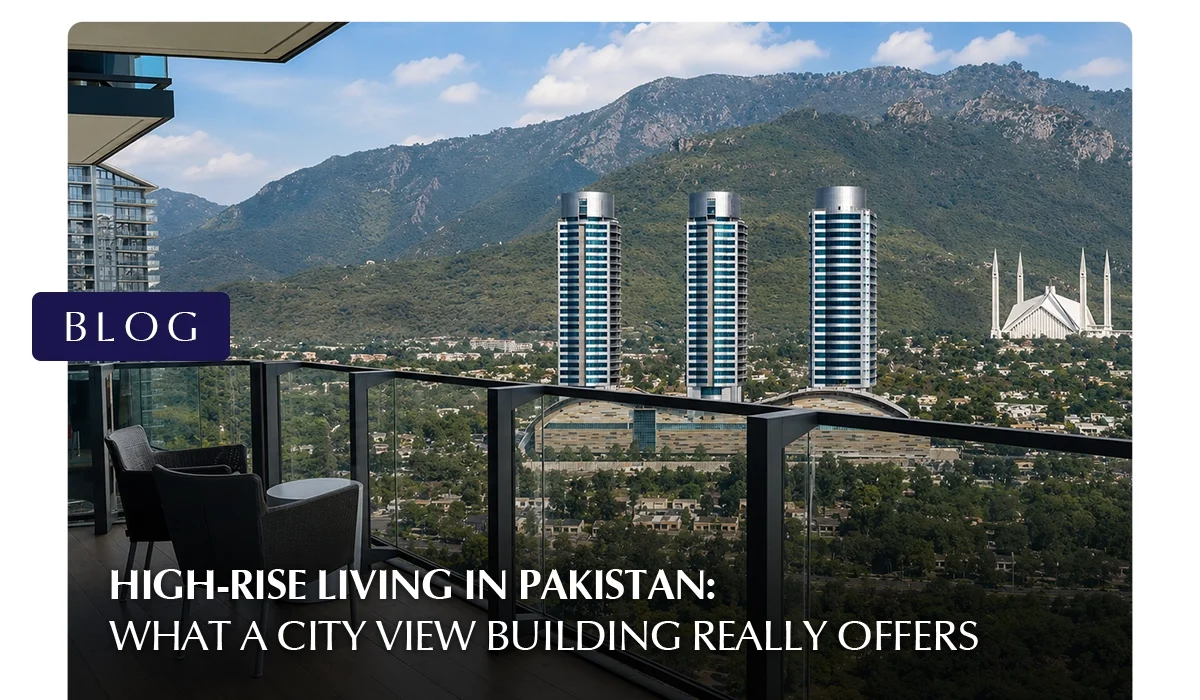
Across Islamabad, Lahore and Karachi, apartment living is becoming more desirable as cities grow vertically. Buyers today are looking beyond traditional houses and searching for modern apartments that offer panoramic views, secure entry, covered parking, backup systems, smart layouts and access to key commercial zones. For many investors, overseas Pakistanis and urban families, a high-rise city view apartment Pakistan offers the best of both worlds: the comfort of private living and the convenience of a professionally managed building. This guide explains what to look for before buying a high-rise city view apartment Pakistan buyers can confidently consider in 2026.
What is a High-Rise City View Apartment Pakistan?
A high-rise city view apartment is a residential unit located in a multi-storey building that offers elevated views of the surrounding city, skyline, mountains, parks, roads or commercial districts.
High-rise city view apartment Pakistan often include:
High-floor residential units
Apartments with panoramic city views
Margalla Hills view apartments in Islamabad
Faisal Mosque or F-9 Park facing apartments
Skyline-view apartments in Lahore
Sea-side or city-facing apartments in Karachi
Smart apartments in mixed-use towers
Premium units in secure residential buildings
A modern apartment building Pakistan buyers prefer today usually includes elevators, basement parking, power backup, CCTV surveillance, secure access, fire safety systems, reception areas, maintenance teams and lifestyle amenities such as gyms, lounges, rooftop spaces and community areas.
Why High-Rise City View Apartment Pakistan are Growing?
Pakistan’s major cities are becoming denser, busier and more expensive. As prime land becomes limited, vertical development is becoming a practical solution for both residents and real estate developers.
Instead of expanding endlessly outward, cities are now moving upward.
1. Urban convenience is becoming more important
Today’s buyers want to live closer to offices, schools, hospitals, restaurants, shopping areas and commercial hubs. A well-located apartment can reduce commute time and improve everyday convenience.
This is one reason vertical living Islamabad has gained momentum in areas connected to Blue Area, Jinnah Avenue, F-8, G-8, DHA, Bahria Town, B-17 and other active residential and commercial corridors.
2. City views add lifestyle value
A city view apartment feels more open, private and premium than a ground-level unit. Buyers often pay more for:
A clear view can increase both emotional appeal and resale interest.
3. High-rise buildings offer better managed living
A premium apartment building usually provides shared services that independent homes may not offer in the same way. These can include:
24/7 surveillance
Secure entry and exit points
Dedicated parking
Elevators
Backup electricity
Fire safety systems
Maintenance staff
Waste management
Shared amenities
For buyers who want a secure, lock-and-leave lifestyle, apartment living can be very practical.
4. Investors want rental potential
High-rise apartments in central locations can attract professionals, corporate tenants, small families, short-stay residents and overseas Pakistanis visiting Pakistan.
This makes a city view apartment attractive for:
Long-term rental income
Furnished rental demand
Corporate leasing
Short-stay accommodation where permitted
Long-term capital appreciation
Islamabad, Lahore and Karachi: Which City Is Best?
Most online content about high-rise apartments focuses heavily on Islamabad, but the keyword high-rise city view apartment Pakistan has a broader national intent. Buyers should compare the main apartment markets before making a decision.
Clifton, DHA, PECHS, Bahria Town Karachi, central corridors
Sea view, skyline, urban density
Each city has its own strengths. Islamabad offers scenic views and planned development. Lahore offers strong business and lifestyle access. Karachi offers mature apartment living and a large rental base.
Islamabad: The Strongest Market for Vertical Living
Islamabad is one of Pakistan’s most attractive cities for high-rise apartments because it combines scenic beauty, planned infrastructure, security appeal and rising demand for premium urban living.
When buyers search for a high-rise city view apartment Pakistan, many are specifically interested in Islamabad because of its Margalla Hills backdrop, wide roads, premium commercial districts and growing apartment culture.
Why Islamabad stands out
Islamabad offers views that are difficult to replicate in other cities. A well-positioned apartment may offer visibility of the Margalla Hills, Faisal Mosque, F-9 Park, Jinnah Avenue or the Blue Area skyline.
For many buyers, this creates a clear lifestyle premium.
Best views to look for in Islamabad
Margalla Hills view
Faisal Mosque view
F-9 Park view
Blue Area skyline view
Main boulevard view
Corner apartment with two-side exposure
What buyers should check
Before buying any apartment in Islamabad, verify:
Legal approvals
Land status
Building plan approval
Developer reputation
Construction quality
Floor plan efficiency
Parking allocation
Backup systems
Maintenance structure
Actual view from the unit
A beautiful view is valuable, but it should always be supported by legal clarity and strong development standards.
Citadel One3 by Chakor Ventures
Citadel One3 by Chakor Ventures is a premium conduminium complex planned for Blue Area, Islamabad, along Jinnah Avenue. Designed for refined vertical living, it brings together a prestigious urban address, elegant architecture and rare views of the Faisal Mosque and F-9 Park. For buyers exploring a high-rise city view apartment in Pakistan, Citadel One3 represents Chakor Ventures’ vision for privacy, sophistication and long-term value in the heart of Islamabad.
Lahore: A Market for Premium Urban Apartments
Lahore’s apartment market is different from Islamabad’s. It is more focused on commercial access, lifestyle convenience, business activity and premium interiors.
Buyers looking for a modern apartment building in Pakistan in Lahore often prefer areas connected to business districts, retail hubs and major roads.
What makes Lahore attractive?
Lahore is ideal for buyers who want:
Access to commercial zones
Restaurants and retail are nearby
Corporate rental demand
Premium furnished living
Strong resale demand in central areas
Luxury apartment layouts
In Lahore, location often matters more than view alone. A well-connected apartment in a prime business or lifestyle district can perform better than a larger unit in a weaker location.
Karachi: Established Apartment Living and Rental Demand
Karachi has one of Pakistan’s most mature apartment cultures. Many residents are already familiar with high-rise living, especially in central, coastal and commercial areas.
For buyers, Karachi offers two major advantages:
Strong rental demand
Established acceptance of apartment living
What makes Karachi attractive?
Karachi is suitable for buyers who want:
Sea-facing or city-facing apartments
Access to commercial districts
Strong tenant demand
Family apartment communities
Corporate rental opportunities
High-density urban convenience
Price Factors for High-Rise City View Apartments in Pakistan
Apartment prices vary widely across Pakistan depending on location, floor, view, project quality, developer reputation, amenities, construction stage and payment terms.
Instead of relying only on general market averages, buyers should evaluate what actually affects price.
Key factors that increase apartment value
A high-rise city view apartment usually becomes more valuable when it offers:
Prime location
Higher floor level
Permanent open view
Corner layout
Balcony or terrace
Better sunlight
Efficient floor plan
Smart home features
Dedicated parking
Secure building access
Quality elevators
Backup power
Strong rental potential
Reputable developer
Professional maintenance
Why View Direction Matters
Two apartments in the same building can have different values because of the view direction. A unit facing a landmark, park, mountain or main boulevard may attract stronger buyer interest than a unit facing the rear side of another structure.
Before paying a view premium, ask whether the view is likely to remain open in the future.
Buying vs Renting a City View Apartment
One of the most important decisions is whether to buy or rent. Both options can make sense depending on your lifestyle, budget and long-term plan.
Buy if:
You plan to hold the property for several years
You want rental income
You are an overseas Pakistani looking for a secure asset
You prefer ownership over monthly rent
You want to customize the apartment
You believe the location will appreciate
You have verified the project’s approvals and developer reputation
Rent if:
You want flexibility
You are new to the city
You want to test apartment living first
You are relocating temporarily
You do not want a large upfront payment
You prefer a furnished unit for short-term use
You do not want responsibility for ownership costs
Smart buyer tip
If you are unsure about a building or location, rent in the same area before buying. This helps you understand traffic, noise, parking, lift waiting time, maintenance quality, sunlight and daily convenience.
High-Rise vs Low-Rise Apartment: Which Is Better?
Both high-rise and low-rise apartments have advantages. The right choice depends on your priorities.
Factor
High-Rise Apartment
Low-Rise Apartment
View
Usually better
Usually limited
Privacy
Stronger on higher floors
Moderate
Maintenance cost
Usually higher
Usually lower
Amenities
More likely
Limited
Elevator dependency
Higher
Lower
Rental appeal
Strong in central locations
Strong in family areas
Resale value
Strong if the view and location are good
Depends on location
A high-rise apartment is usually better for buyers who value views, security, amenities and rental potential. A low-rise apartment may suit families who want simpler access and lower maintenance costs.
What to Look for Before Buying a High-Rise City View Apartment
A practical checklist is essential before buying any apartment in Pakistan.
1. Legal approvals
Always verify:
Land ownership
NOC status
Building plan approval
Development authority permissions
Utility approvals
Transfer process
Payment schedule
Possession timeline
Legal clarity should come before location, view or price.
2. Developer reputation
Check whether the developer has:
Delivered previous projects
Maintained construction quality
Communicated transparently
Built in prime locations
Managed customer expectations
Provided clear documentation
A strong developer can reduce risk and improve buyer confidence.
3. Actual view from the unit
Never rely only on renders or brochures. Visit the site or inspect the floor plan carefully.
Ask:
Is the view open?
Is it likely to be blocked later?
Does the unit face a landmark, road, park or another building?
Is there traffic noise?
Does the apartment receive harsh sunlight?
Is the balcony usable?
4. Floor level
Higher floors usually offer better views and privacy, but they depend more on elevators and backup systems. Many buyers prefer middle-to-high floors because they balance view, comfort and accessibility.
5. Layout efficiency
A good layout is more important than size alone.
Check:
Bedroom dimensions
Lounge width
Kitchen placement
Balcony depth
Bathroom ventilation
Storage space
Window direction
Natural light
A compact apartment with a smart layout can feel more spacious than a larger apartment with wasted space.
6. Parking
Parking can become a major issue in apartment living.
Confirm:
Dedicated parking
Visitor parking
Basement access
Parking charges
Number of vehicles allowed
Separate access for commercial areas if the building is mixed-use
7. Elevators and backup systems
A quality high-rise should include:
Multiple elevators
Service lift
Backup generator
Fire stairs
Emergency lighting
Fire safety systems
Maintenance staff
Lift service planning
8. Maintenance structure
Ask about:
Monthly maintenance charges
Security charges
Generator charges
Cleaning schedule
Water supply
Waste management
Building management
Long-term maintenance fun
ROI and Rental Income Potential
A high-rise city view apartment Pakistan can generate value in two main ways:
Rental income
Capital appreciation
The strongest investment apartments usually have:
Central location
Reliable access
Clear legal status
Quality construction
Secure parking
Strong views
Good maintenance
Professional building management
Demand from tenants and end-users
Long-term rental potential
Long-term tenants usually prefer secure buildings with parking, backup power, elevators and easy access to work, schools or commercial areas.
This makes high-rise city view apartment Pakistan attractive for professionals, small families and corporate tenants.
Short-stay rental potential
Some high-rise city view apartments Pakistan can also perform well for short-stay rentals, especially in business and tourism-friendly locations. However, short-stay rentals require more active management, furnishing, cleaning and compliance with building rules.
Lifestyle plus ROI
The best high-rise city view apartment Pakistan is not just the one with the best view. It is the one that combines:
Livability
Legal safety
View quality
Tenant demand
Resale appeal
Strong location
Developer credibility
Sensible maintenance costs
This balance is what makes a high-rise city view apartment Pakistan both enjoyable to live in and valuable as an asset.
Common Mistakes Buyers Should Avoid
Following are some common mistakes that buyers need to avoid before making an investment in a high-rise city view apartment Pakistan.
Paying only for the view
A view adds value, but it cannot fix weak approvals, poor construction, bad parking or unreliable maintenance.
Ignoring legal verification
Never book an apartment without checking the project’s legal status, approvals and developer documentation.
Overlooking maintenance costs
High monthly charges can reduce rental yield. Always calculate your net return after maintenance, taxes and furnishing costs.
Choosing size over location
A smaller apartment in a prime location can be more valuable than a larger apartment in a poorly connected area.
Not visiting the actual site
Brochures and renders are useful, but the real test is the site visit. Check access roads, surroundings, construction quality, views and building management.
Ignoring resale demand
Think like a future buyer. A good apartment should be easy to rent, easy to maintain and attractive to resell.
Who Should Consider a High-Rise City View Apartment Pakistan?
A high-rise city view apartment Pakistan may be a strong choice for:
Overseas Pakistanis
Investors
Young professionals
Small families
Corporate executives
Retired couples
Buyers seeking secure urban living
People who prefer managed buildings
Buyers interested in long-term rental income
It may not be ideal for people who need large outdoor spaces, dislike elevators, own multiple vehicles or prefer independent home living.
Final Verdict – High-Rise City View Apartment Pakistan
A high-rise city view apartment Pakistan buyer should look beyond height, marketing claims and brochure images. The right apartment must combine location, legal clarity, developer credibility, construction quality, view, amenities, rental potential and long-term resale value.
FAQs – High-Rise City View Apartment Pakistan
What is a high-rise city view apartment in Pakistan?
A high-rise city view apartment Pakistan is a residential unit in a multi-storey building that offers elevated views of the city, skyline, parks, mountains, sea or commercial areas. These apartments are usually located in modern buildings with elevators, security, parking and shared amenities.
Is a high-rise city view apartment a good investment in Pakistan?
Yes, a high-rise apartment can be a good investment if it is legally approved, well-located, built by a credible developer like Chakor and supported by strong rental demand. View, maintenance quality and resale appeal also matter.
Which city is best for high-rise city view apartment in Pakistan?
Islamabad is especially strong for scenic views and vertical living. Lahore is ideal for business access and luxury urban living. Karachi is suitable for buyers who want established apartment communities and strong rental demand.
What should I check before buying a high-rise city view apartment Pakistan?
Check legal approvals, developer reputation, construction quality, actual view, parking, elevators, backup power, maintenance charges, rental demand and resale potential.
Is buying better than renting a high-rise city view apartment Pakistan?
Buying is better for long-term ownership, rental income and capital appreciation. Renting is better for flexibility, short-term living or testing a location before making a purchase.
Do city view apartments have better resale value?
City high-rise view apartment apartment Pakistan can have better resale value if the view is clear, the building is well maintained, the location is strong and the project has legal clarity. A good view alone is not enough.
Why is Citadel One3 relevant for city view apartment buyers?
Citadel One3 by Chakor Ventures is relevant because it is planned as a premium conduminium complex in Blue Area, Islamabad, with views of Faisal Mosque and F-9 Park. It reflects the growing demand for refined vertical living in Islamabad.
BBC-featured Content Specialist with a sharp eye for search intent and a proven ability to turn content into a growth engine. I leverage cutting-edge digital marketing tools to craft strategies that fuel organic traffic, amplify brand growth, and own the local SEO landscape, particularly across the competitive real estate market. I help brands dominate search rankings and convert visibility into measurable business success.
RAWALPINDI: The Punjab Communication and Works (C&W) Department has yet to break ground on three planned underpasses along Peshawar Road, with the monsoon season now less than a month away.
The underpasses, to be built at Race Course Park, Army Graveyard, and Chairing Cross, are central to a 25-kilometre signal-free corridor linking the Islamabad Expressway to Motorway Chowk. Once operational, the corridor aims to cut travel time between the two points to 15–20 minutes.
While the GPO Chowk interchange was completed last year and the Kutchery Chowk remodelling wrapped up in May, formal construction on the three remaining structures has not commenced. Completion is now projected in the next fiscal year.
Officials attribute the delay to ongoing preparatory work. The executing agency is prioritising drainage infrastructure and service road construction before excavation begins, so that monsoon rains do not disrupt the project mid-course.
Formal digging is expected to begin within one to two weeks, after which completion is estimated at two months. Traffic police have been asked to prepare a revised traffic management plan, and the Rawalpindi Cantonment Board has been directed to carry out patchwork on designated alternative routes.
On the utility front, Executive Engineer Qamar Saqib of the Punjab Highway Department confirmed that the relocation of Sui gas pipelines, telephone cables, and electricity infrastructure along the Race Course to Qadir Motors stretch has been completed.
Construction experts, however, warn that excavation during monsoon rains risks waterlogging in open trenches, potential rework, and restricted use of heavy machinery, all of which could extend timelines considerably.
Whether authorities can deliver within their stated window remains an open question for the thousands of commuters dependent on this corridor daily.
BBC-featured Content Specialist with a sharp eye for search intent and a proven ability to turn content into a growth engine. I leverage cutting-edge digital marketing tools to craft strategies that fuel organic traffic, amplify brand growth, and own the local SEO landscape, particularly across the competitive real estate market. I help brands dominate search rankings and convert visibility into measurable business success.
Buying or selling property in Pakistan comes with more costs than just the sale price. One charge that every buyer must understand and budget for is stamp duty. Yet many people complete an entire property deal without fully grasping what stamp duty is, how much they owe, or how it differs across Punjab, Sindh, KPK, and Balochistan. This guide covers everything: what stamp duty Pakistan is, the latest 2026 provincial rates, how it’s calculated, who pays it, available exemptions, and how to pay it online. Whether you’re a first-time buyer or a seasoned investor, this is your definitive reference.
What Is Stamp Duty Pakistan?
Stamp duty is a provincial tax levied on legal documents, most commonly those related to the transfer of immovable property, such as sale deeds, gift deeds, lease agreements, and affidavits.
It is primarily governed by the Stamp Act of 1899, with each province empowered to set its own specific rates and procedures through provincial Finance Acts.
Beyond being a government revenue tool, stamp duty serves a critical legal function: it validates ownership and makes your property documents admissible as evidence in court. Without paying stamp duty, a buyer cannot legally claim rights over the property, and no Sub-Registrar’s office will process the registration.
Rates of Stamp Duty Rates Pakistan 2026 – Province by Province
Stamp duty rates Pakistan are not uniform nationally. Each province sets its own schedule under the Stamp Act, and rates are revised periodically through provincial Finance Acts. Here is the current breakdown for FY 2025–26:
Punjab – Stamp Duty Pakistan
Punjab uses a fixed-amount stamp duty system for specific document types, rather than a universal percentage rate across all transactions. The Punjab Finance Act 2024–25 revised these amounts upward:
Sale Deed: PKR 3,000 (increased from PKR 1,200 under the 2024–25 budget)
Affidavit / Individual Deed: PKR 300 (increased from PKR 100)
Lease Agreement: PKR 3,000
Registration Fee: 1% of the DC/FBR-assessed property value
PLRA Fee: PKR 3,300 flat for properties up to PKR 3 million; 0.1% above PKR 3 million
Corporation / Municipal Fee: 1% of property value
Punjab is considering reforms to shift toward a unified percentage-based model for greater transparency, but until enacted, buyers should verify current document-specific charges through the Punjab e-Stamping portal or the Bank of Punjab’s Form 32 system.
Sindh – Stamp Duty Pakistan
Sindh levies a 2% stamp duty on property transactions, calculated on the DC (Deputy Commissioner) rate value. Rates can vary based on property type, location, and the nature of the transaction. Buyers should consult the Sindh Board of Revenue for specifics, particularly for commercial or agricultural land deals.
Khyber Pakhtunkhwa (KPK) – Stamp Duty Pakistan
KPK applies a 3% stamp duty on property transfers for FY 2025–26. Additional charges include:
Capital Value Tax (CVT): 1%
Registration Fee: 0.5%
For a PKR 10 million property in KPK, the CVT alone amounts to PKR 100,000, making comprehensive budgeting essential.
Balochistan – Stamp Duty Pakistan
Balochistan follows a 4% stamp duty rate, applied to the official DC rate value of the property rather than the market transaction price.
Islamabad Capital Territory (ICT) – Stamp Duty Pakistan
For property sales in ICT, stamp duty is currently charged at 2% of the DC Rate. This is separate from the registration fee, which stands at approximately 1% of the DC Rate. Buyers in Islamabad should budget for both charges alongside other applicable taxes.
Note: There were discussions and proposals regarding rate adjustments under the Finance Act 2025 for ICT, but the operative stamp duty rate confirmed by legal practitioners in Islamabad remains 2%. Always verify the current schedule directly with the ICT Sub-Registrar’s office or a qualified property lawyer before finalising any transaction.
Stamp Duty Pakistan – Rates by Province
Province / Territory
Stamp Duty Pakistan
Calculated On
Punjab
Fixed per document type (e.g. PKR 3,000 for a sale deed)
Document / DC Value
Sindh
2%
DC Rate Value
KPK
3%
DC Rate Value
Balochistan
4%
DC Rate Value
Islamabad (ICT)
2%
DC Rate Value
Note: Stamp Duty Pakistan rates are subject to revision each fiscal year. Always verify with your provincial Sub-Registrar or Board of Revenue before finalising a transaction.
What Is the DC Rate and Why Does It Matter?
Stamp duty Pakistan is calculated on the DC (Deputy Commissioner) rate, the government’s official assessed value of a property, rather than the actual market transaction price. DC rates are set annually by each province’s Board of Revenue.
Crucially, DC rates are typically 30–50% lower than the actual market value. This means your stamp duty liability is substantially less than it would be if calculated on the sale price you negotiate with the seller.
For example, a property transacting at PKR 20 million in Lahore may carry a DC rate of PKR 10–12 million, and stamp duty is computed on the latter figure.
Commercial properties are typically rated 2–3 times higher than residential properties in the same area, meaning the absolute stamp duty payable on a commercial transaction will be significantly larger even if the percentage rate is identical.
How Is Stamp Duty Calculated in Pakistan?
The basic formula is:
Stamp Duty = DC Rate Value × Applicable Provincial Rate
Example KPK Property:
DC Value: PKR 10,000,000
Stamp Duty (3%): PKR 300,000
CVT (1%): PKR 100,000
Registration Fee (0.5%): PKR 50,000
Total: PKR 450,000
Example ICT Property:
DC Value: PKR 10,000,000
Stamp Duty (2%): PKR 200,000
Registration Fee (1%): PKR 100,000
Total: PKR 300,000
The difference between ICT’s rate and KPK’s rate on the same property is PKR 150,000, illustrating why understanding property stamp duty by province matters when choosing where to invest.
Who Pays Stamp Duty Pakistan?
The buyer is generally responsible for paying stamp duty at the time of property registration. This is established under Section 29 of the Stamp Act 1899, which provides that in the case of a conveyance, the expense of providing the proper stamp is borne by the grantee. The seller, meanwhile, is typically liable for other taxes such as Capital Gains Tax (CGT) and FBR advance tax under Section 236C.
For buyers, additional FBR advance tax under Section 236K is also payable at the time of transfer. Rates differ significantly depending on whether the buyer is on the FBR’s Active Taxpayer List (ATL):
Active Filer: 1% of the transaction value
Non-Filer: 2% of the transaction value
Being a registered tax filer can produce meaningful savings. Non-filers face double the withholding tax rate, and additionally face much steeper Capital Gains Tax exposure if they later sell the property.
When Must Stamp Duty Be Paid?
Stamp duty must be paid before the execution and registration of the property transfer deed. Under Section 35 of the Stamp Act 1899, no instrument chargeable with duty shall be admitted in evidence, acted upon, or registered unless it is duly stamped.
Attempting to register without first paying stamp duty will result in rejection by the Sub-Registrar’s office. Late payment attracts penalties, fines, and potential legal complications affecting the property’s title chain.
Stamp Duty Exemptions and Rebates in Pakistan
Certain categories of buyers and transactions are eligible for exemptions or reduced rates:
First-Time Buyers: May be eligible for relief from certain federal duties on their first property purchase. The specifics vary by province and should be confirmed with the relevant revenue authority.
Low-Value Properties: Properties below certain provincial thresholds may qualify for reduced or nil stamp duty, varying by province.
Agricultural Land: Generally exempt from stamp duty in most provinces, subject to specific provincial rules.
Gift Deeds (ICT): In Islamabad, gift deeds to immediate family members attract a reduced stamp duty rate of approximately 1% of the DC Rate, compared to 2% for outright sales.
Corporate Mergers (Punjab): The Lahore High Court has suspended stamp duty on corporate mergers in Punjab, bringing it in line with existing exemptions in Sindh and Islamabad, a significant development for M&A activity.
To claim any exemption, you will typically need:
Valid CNIC
Proof of eligibility (e.g., a first-time buyer affidavit)
Property valuation documents
Any additional documentation specified by the provincial revenue authority
Property Stamp Duty by Province: Online Payment & Portals
Most provinces now offer digital e-stamping facilities, reducing the need for physical visits to revenue offices:
Punjab:Punjab e-Stamping Portal pay via designated bank branches or online challan. The Bank of Punjab’s Form 32 system is also widely used.
Federal / ICT:FBR Portal for federal-level guidance and ICT-specific rates.
These platforms have significantly improved transparency, reduced delays, and minimised opportunities for fraud at land registries.
Other Charges to Budget for Alongside Stamp Duty
Stamp duty is only one component of the total cost of a property transaction in Pakistan. A comprehensive budget must also include:
Registration Fee: 1% (Punjab, ICT); 0.5% (KPK)
Capital Value Tax (CVT): 1% in KPK; varies by province
FBR Advance Tax (Section 236K): Paid by buyer 1% for active filers, 2% for non-filers
FBR Advance Tax (Section 236C): Paid by seller
Capital Gains Tax (CGT): 15% for filers on profit if property sold within the first year, reducing annually to zero after five years; non-filers face rates between 30–45%
Mutation Fee / TMA Tax: Province-specific
Ignoring these associated costs is one of the most common mistakes buyers make, often leading to financial stress or legal delays at the registry.
Recent Developments and Upcoming Reforms
Several significant changes are shaping stamp duty Pakistan in 2025:
Lahore High Court Ruling: The court suspended stamp duty on corporate mergers in Punjab, potentially unlocking business consolidation activity and aligning Punjab with Sindh and Islamabad on this point.
Standardisation Discussions: Talks are underway at the federal level to harmonise stamp duty rates across provinces, with a potential shift toward a uniform percentage-based model. This would simplify transactions significantly, but has not yet been enacted.
Punjab Fixed-Amount Review: Punjab is actively considering replacing fixed rupee amounts per document type with a market-linked percentage system for greater transparency and consistency.
Buyers and investors should monitor provincial Finance Acts announced each June/July for the latest changes, and consult a qualified property lawyer before concluding any transaction.
FAQs About Stamp Duty Pakistan
Q: Is stamp duty the same as registration fee in Pakistan? No. Stamp duty P and registration fee are separate charges. Stamp duty validates the document legally under the Stamp Act 1899; the registration fee is paid under the Registration Act 1908 to record the transfer in official land records. Both are payable at or before registration.
Q: Can stamp duty be paid online? Yes, in Punjab and several other provinces, stamp duty can be paid via the e-stamping portal or through designated bank branches. Obtaining an e-stamp certificate is now the standard and preferred method.
Q: What happens if I don’t pay stamp duty? Under Section 35 of the Stamp Act 1899, the property transfer deed cannot be registered without stamp duty payment. If a document is later found to be insufficiently stamped, it can be impounded and subjected to penalties.
Q: Is stamp duty different for residential and commercial property? In most provinces, the percentage rate is the same, but DC rates differ significantly. Commercial properties carry a DC rate 2–3 times higher than residential, resulting in a larger absolute stamp duty payment.
Q: Does stamp duty apply to gifted or inherited property? Gift deeds attract stamp duty in most provinces, though family gift deeds in ICT benefit from a reduced 1% rate. Inherited property through succession is generally treated differently; consult the provincial revenue department for applicable charges.
Q: What is the stamp duty rate in Islamabad? The current operative rate for property sale in Islamabad (ICT) is 2% of the DC Rate, plus a 1% registration fee. Confirm the latest schedule with the ICT Sub-Registrar’s office before transacting.
Final Thoughts – Stamp Duty Pakistan
Stamp duty Pakistan is a non-negotiable part of any property transaction, but its complexity lies in the provincial variation in rates, the gap between DC value and market value, and the layers of additional taxes that accompany it. Whether you’re buying in Lahore, Karachi, Peshawar, or Islamabad, the total cost picture changes significantly.
The key takeaways:
Always calculate stamp duty on the DC rate, not the market price
Verify the current provincial Finance Act schedule before closing a deal
Register as a tax filer with FBR, and the savings on Section 236K and CGT can be substantial
Use official e-stamping portals for payment to avoid complications
Budget for CVT, registration fee, and FBR advance taxes alongside stamp duty
When in doubt, engage a qualified property lawyer; the cost is small relative to the transaction value
With the right preparation, stamp duty doesn’t have to be a surprise cost; it’s a manageable, knowable expense that smart property buyers factor in from day one.
BBC-featured Content Specialist with a sharp eye for search intent and a proven ability to turn content into a growth engine. I leverage cutting-edge digital marketing tools to craft strategies that fuel organic traffic, amplify brand growth, and own the local SEO landscape, particularly across the competitive real estate market. I help brands dominate search rankings and convert visibility into measurable business success.