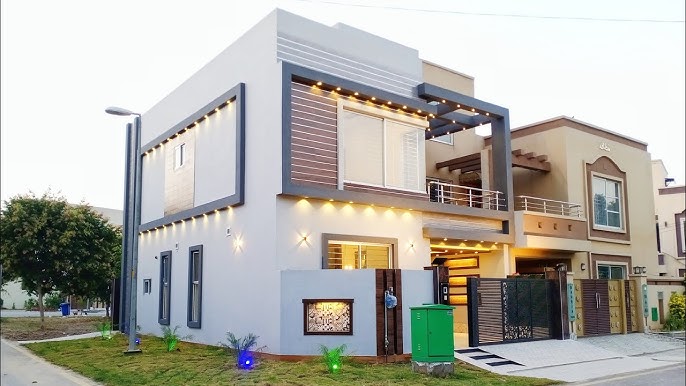
City View Apartment vs Flat vs Studio Pakistan
CategoriesCitadel One3 Construction Developments Investment Real Estate Towers

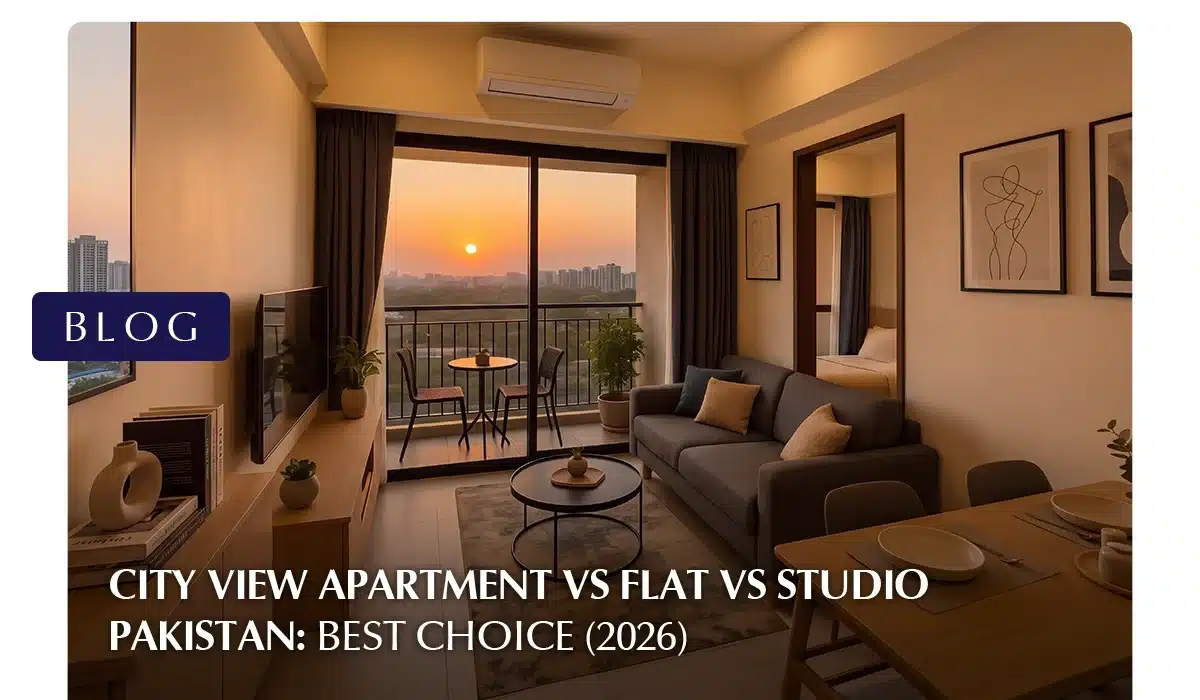
City View Apartment vs Flat vs Studio Pakistan: Best Choice (2026)

If you’ve spent any time browsing listings in Islamabad, Lahore, or Karachi, you’ve probably noticed that every other project claims a “stunning city view” or a “panoramic skyline.” But when it comes down to signing the paperwork, most buyers freeze at one question: should I go for a city-view apartment, a regular flat, or a compact studio? This City View Apartment vs Flat vs Studio Pakistan comparison isn’t just about square footage; it’s about lifestyle, budget, resale value, and how you plan to use the property. In this guide, we’ll break down what each option actually means, what it costs, and how to decide which one fits your goals.

Apartment vs Flat in Pakistan
Apartment vs Flat

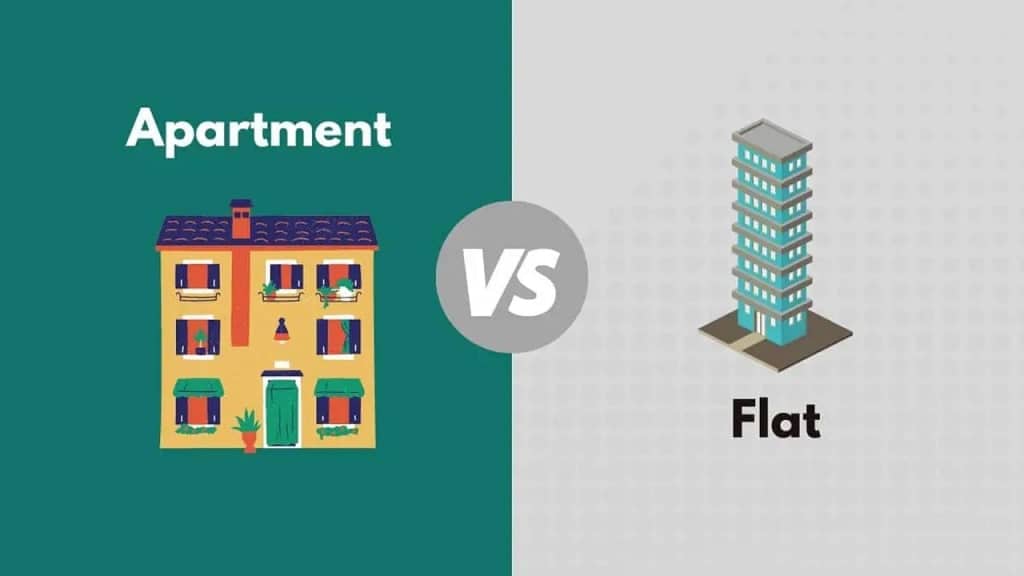
Before we even get to the City View Apartment vs Flat vs Studio Pakistan debate, let’s settle something that trips up a lot of first-time buyers: is an apartment different from a flat? In short, no. “Flat” is the British-English term, more common in older listings and conversational use.

“Apartment” is the American-English equivalent, and it’s increasingly used by developers to market newer, more premium projects. Both refer to the same thing: a self-contained residential unit within a larger building, sharing structure and common areas with other owners.

What actually varies isn’t the word; it’s the building. A “flat” in a well-managed, secure block with a great view can easily outperform an “apartment” in a poorly maintained tower.

So when you’re evaluating apartment types Pakistan has to offer, don’t let the label do your thinking for you. Focus on the block quality, developer reputation, floor level, layout, and increasingly the view.

What Is a Studio Apartment?
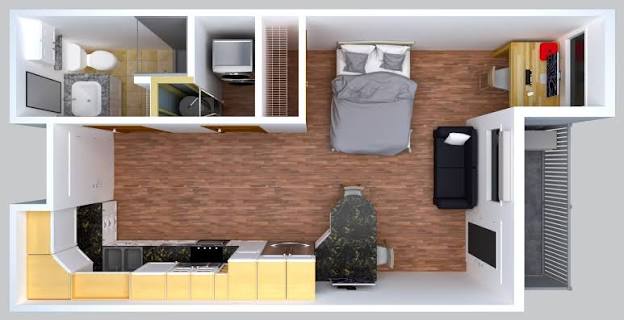
Studio Apartment

A studio is the smallest and most affordable unit in the City View Apartment vs Flat vs Studio Pakistan comparison. It’s essentially one open room that combines your bedroom, living room, and kitchen into a single space, with only the bathroom enclosed separately.

Studios are popular among:

  • Students studying away from home
  • Young professionals starting their first job in a new city
  • Bachelors who don’t need extra rooms
  • Overseas Pakistanis looking for an easy-entry investment property

In Islamabad, Lahore and Karachi, prices vary based on sector and proximity to commercial hubs. The appeal here is low maintenance, lower utility bills, and quicker resale in dense urban pockets, but the tradeoff is limited privacy and no separate sleeping area, which doesn’t suit couples or small families.

What Is a Flat (Regular Apartment)?
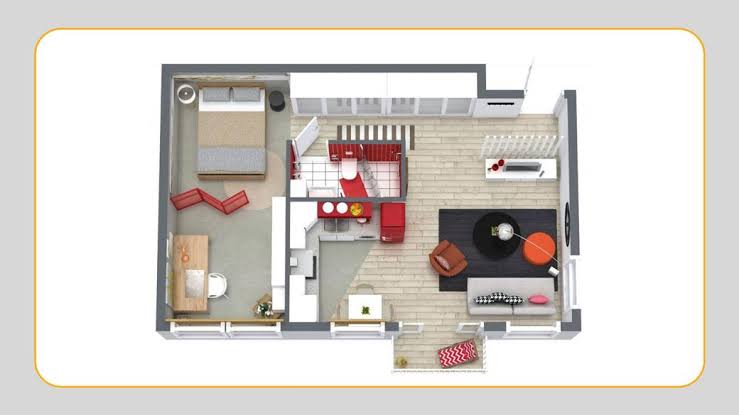
Flat (Regular Apartment)

A flat or standard apartment usually comes with at least one separate, enclosed bedroom, a distinct living area, a kitchen, and one or more bathrooms. Depending on the number of bedrooms, flats in Pakistan are generally categorised as:

  • 1-bedroom flats
  • 2-bedroom flats
  • 3-bedroom flats
  • 4-bedroom flats

This is where most of the apartment types Pakistan buyers search for actually fall; the “regular” flat category makes up the bulk of listings in Karachi, Lahore, and Islamabad. Flats offer a balance: more space and privacy than a studio, without jumping into penthouse-level pricing. If you’re raising a family or need a dedicated home office, a flat is usually the more practical choice over a studio.

What Is a City View Apartment?
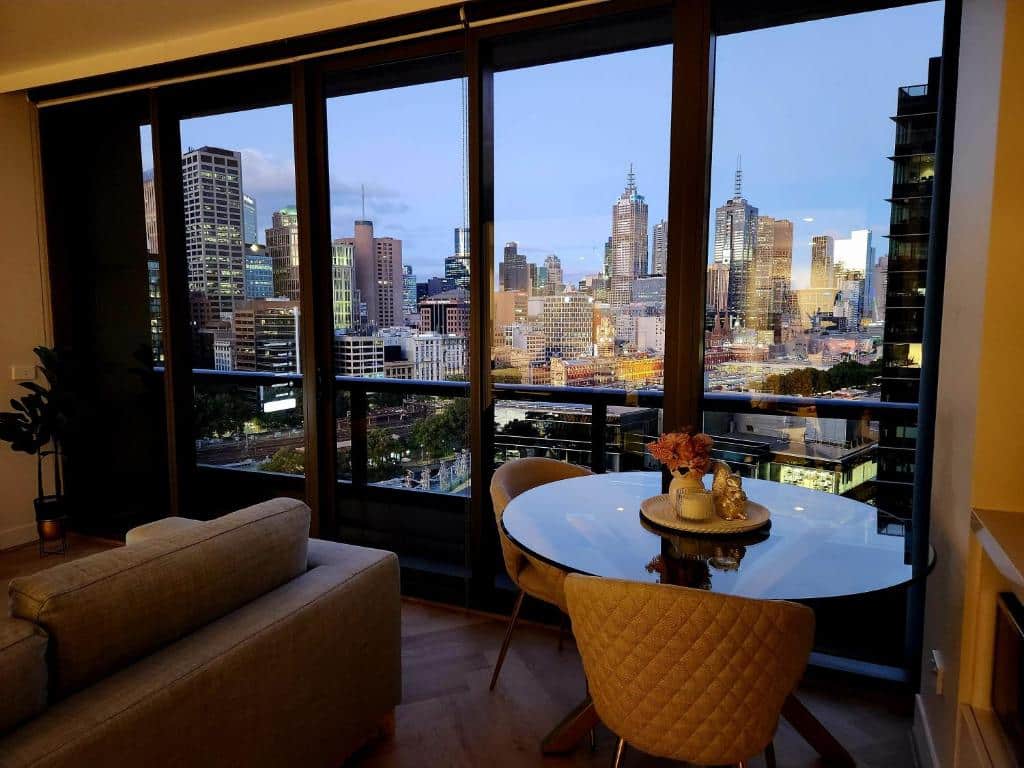
City View Apartment

This is where things get interesting and where most generic “types of apartments” articles fall short. A city view apartment isn’t a separate structural category like a studio or duplex; it’s a positioning within a building.

It refers to a unit studio, 1-bed, 2-bed, or penthouse that’s placed on a higher floor or oriented to face a landmark, skyline, park, or mountain range, rather than facing an internal courtyard, parking lot, or a neighbouring building’s wall.

In the ongoing City View Apartment vs Flat vs Studio Pakistan conversation, this is often the deciding factor for investors and end-users alike. Developers routinely charge a premium, often 10% to 25% more for units with a confirmed, unobstructed view. Why? Because view units:

  • Command higher resale value over time
  • Attract better rental yields, especially from expats and corporate tenants
  • Rarely lose their view (unlike lower floors, which can get blocked by future construction)
  • Offer better natural light and ventilation

If you’re comparing a plain flat against a city view apartment at similar square footage, the view unit is almost always the stronger long-term investment provided the building itself is well-managed, and the developer has a solid track record.

City View Apartment vs Flat vs Studio Pakistan 

Feature Studio Regular Flat City View Apartment
Typical Size 250–800 sq ft 500–1,600 sq ft Varies (studio to 3-bed)
Privacy Low Moderate to High Depends on unit type
Price Premium Lowest Mid-range 10–25% higher than same-size non-view unit
Rental Yield Good in student/business areas Steady, family-driven demand Highest, especially for expats/corporate tenants
Resale Value Moderate Reliable Strongest long-term appreciation
Best For Singles, students, quick investment entry Couples, families Investors, end-users wanting lifestyle + ROI
Maintenance Minimal Moderate Moderate to high (premium buildings)

When you lay it out this way, the City View Apartment vs Flat vs Studio Pakistan decision becomes less about “which type is objectively best” and more about matching the unit to your specific goal, whether that’s affordability, family space, or long-term capital growth.

Which One Should You Buy? A Decision Framework

Here’s a practical way to think through the City View Apartment vs Flat vs Studio Pakistan decision based on who you are:

If you’re a student or single professional on a budget, a studio makes the most sense. Lower purchase price, lower utility bills, and easier maintenance mean you can get into the property market without overextending yourself financially.

If you’re a couple or small family, a 1- or 2-bedroom flat gives you the separation and space you need without the premium pricing of a view unit. This is the sweet spot for most middle-income buyers exploring apartment types Pakistan offers today.

If you’re an investor or overseas Pakistani, a city view apartment, even in a smaller configuration like a 1-bed or studio, tends to deliver the best combination of rental demand and capital appreciation.

Buyers who are not living in the unit year-round often prioritise view and building reputation over raw square footage, since these units rent out faster and hold value better.

If you want to future-proof your investment, choosing a city view unit protects you from the risk of your view getting blocked by future construction nearby, which is a real concern in fast-developing sectors of Islamabad and Lahore.

Best Flat to Buy in Islamabad
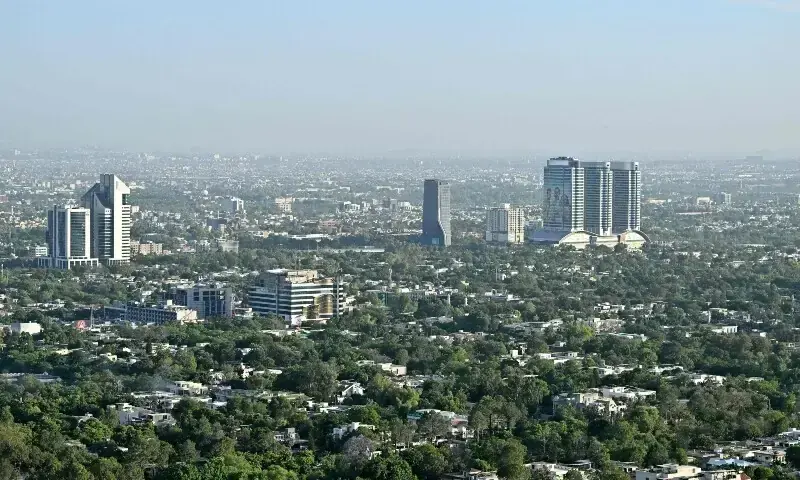
Best Flat to Buy in Islamabad

If Islamabad is on your radar, here’s what actually matters before you finalise a purchase, beyond just picking between a studio, flat, or city view unit:

  1. NOC status: Only buy in NOC-approved societies or developments to avoid legal complications down the line.
  2. Developer track record: Look at the builder’s delivery history on previous projects, not just their marketing brochures.
  3. Payment plan flexibility: Instalment-based plans are common in Islamabad; compare down payment percentages and possession timelines across projects.
  4. Amenities and security: Gated access, 24/7 surveillance, parking capacity, and firefighting systems matter more than they seem at first glance.
  5. View and floor premium: Decide whether paying extra for a confirmed skyline or landmark view is worth it for your rental or resale goals.

A Real Example: Citadel One3 in IslamabadCitadel one3

To put the “city view” concept into context, it’s worth looking at a live example. Citadel One3, developed by Chakor, is a 40+ story residential and commercial tower coming up on Jinnah Avenue in Blue Area, Islamabad. What makes it a relevant case study in this City View Apartment vs Flat vs Studio Pakistan discussion is exactly the positioning we’ve been talking about the project is built around: panoramic views of the Faisal Mosque and F-9 Park, two of Islamabad’s most recognisable landmarks.

Beyond the view itself, the project spans roughly 27,500 sq ft of total area and includes amenities aimed squarely at long-term value and lifestyle appeal: a culinary court, dedicated sports and kids’ play areas, a gym, smart parking for over 350 cars, rental stay management for investors, advanced firefighting systems, secure entry and exit points, and 24/7 surveillance. Its location in the heart of Blue Area also plays into the “centralised city living” pitch that’s become common among premium Islamabad developments.

Projects like Citadel One3 illustrate why the city view angle matters so much in today’s market; it’s not just a marketing term, it’s increasingly a structural part of how developers price and position units, and it’s a major factor buyers should weigh alongside apartment size and layout.

Final Thoughts

At the end of the day, the City View Apartment vs Flat vs Studio Pakistan decision comes down to matching the unit to your life stage and financial goals rather than chasing the “best” option in the abstract. A studio works if you’re optimising for affordability and low maintenance. A flat makes sense if you need space and privacy for a family. And a city view apartment is worth the premium if you’re playing the long game on rental income and resale value.

Whichever direction you lean, don’t get distracted by whether a listing says “flat” or “apartment”; that’s just terminology. What actually determines whether you’ve made a smart purchase is the building quality, the developer’s reputation, the floor and orientation of the unit, and whether the price reflects genuine long-term value. Take the time to compare a few projects side by side, ask about view guarantees in writing, and always verify NOC and documentation before you commit; that discipline will serve you far better than any single label ever could.

For more information on Islamabad City view apartments and real estate investment options, please visit Chakor.
CategoriesNews Construction Developments Economy Property Property Laws Real Estate Investment

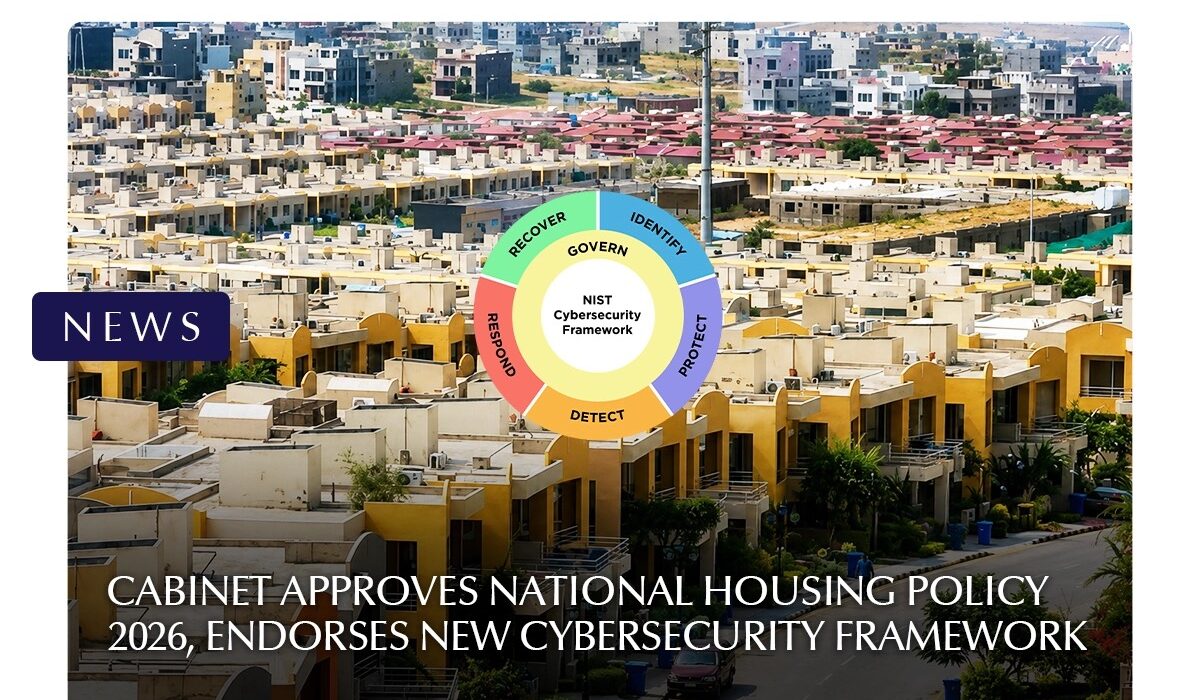
Cabinet Approves National Housing Policy 2026, Endorses New Cybersecurity Framework

ISLAMABAD: The federal cabinet, chaired by Prime Minister Shehbaz Sharif, has approved the National Housing Policy 2026 together with a corresponding implementation plan. Under the policy, housing projects will be required to fully observe zoning regulations, with priority given to vertical construction to improve land-use efficiency. 

Officials noted the policy was drafted with input from local and international experts, along with federal, provincial, and development-sector stakeholders, aiming to ensure sustainable and quality housing nationwide. Energy-efficiency standards have also been folded into the policy framework to align new construction with environmental goals.

The cabinet was additionally briefed on the Apna Ghar housing scheme, revealing that banks have sanctioned loans worth Rs220 billion for prospective homeowners, of which more than Rs32 billion has already been disbursed.

In a separate move, the cabinet approved withdrawing Pakistan’s earlier notice to terminate its 1981 bilateral investment treaty with Sweden, based on a summary presented by the Board of Investment.

On the technology front, the Ministry of Information Technology introduced the draft Pakistan Information Security Framework 2026 (PISF 2026), developed under the CERT Rules 2023. The framework is designed to establish unified baseline cybersecurity standards with centralized oversight. The cabinet approved it as a key policy document and directed its timely implementation.

Further ratifications included proposed amendments to the Pakistan Oil Refining Policy 2023, aimed at upgrading refineries to strengthen energy supply, along with decisions made during recent Economic Coordination Committee and Cabinet Committee on Legislative Cases meetings.

For more real estate news and special reports, visit Chakor.

Source: DAWN

Extends Deadline for Chitral-Shandur Highway
CategoriesNews Construction Developments Transport

Government Extends Deadline for Chitral-Shandur Highway to December 2026

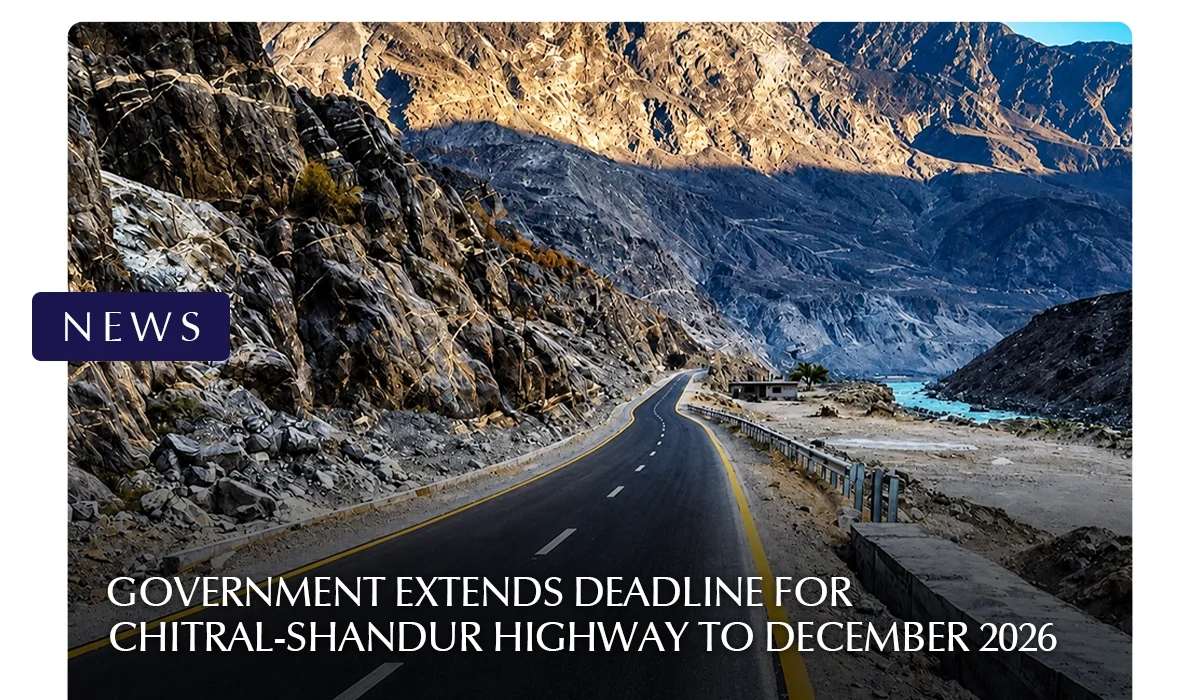
ISLAMABAD: Pakistan’s federal government has fixed December 2026 as the new target date for completing all four construction packages of the Chitral-Booni-Mastuj-Shandur Road, a strategically vital 153-kilometre highway connecting the remote northern district of Chitral to the Shandur Pass region.

According to official documents, the National Highway Authority requires Rs4.20 billion in the 2026-27 fiscal year to stay on track for the revised deadline. Authorities have already disbursed Rs6.59 billion on the project to date, underscoring the scale of investment required for a road that traverses some of the most rugged terrain in the country.

The highway, which passes through Pret, Booni, Mastuj and Shaidas before reaching Shandur, was formally designated National Highway N-140 following its federalisation in May 2020, bringing it under direct federal oversight and funding.

Construction has been divided into four separate packages, and progress across them remains uneven. The first segment, running from Chitral to Pret, leads the pack with 47.54 percent completion.

The second package, from Pret to Booni, has reached 34.77 percent, while the third stretch, connecting Booni to Shaidas, stands at 38.16 percent. The fourth and final package, from Shaidas to Shandur, trails the others at 29.78 percent progress.

Notably, the project was originally scheduled for completion between 2023 and 2024. The repeated delays reflect broader challenges facing infrastructure development in Pakistan’s mountainous north, including difficult terrain, funding constraints and logistical hurdles.

Once completed, the road is expected to significantly improve connectivity for Chitral’s residents, boost regional trade and tourism, and provide a more reliable link to the high-altitude Shandur Pass, home to the world’s highest polo ground.

For more real estate news and special reports, visit Chakor.

Sources:

Punjab Government Pushes Vertical Urban Expansion
CategoriesNews Construction Developments Property Real Estate Urban Developments & Planning

Punjab Government Pushes Vertical Urban Expansion to Meet Housing Demand at Lahore Real Estate Conference

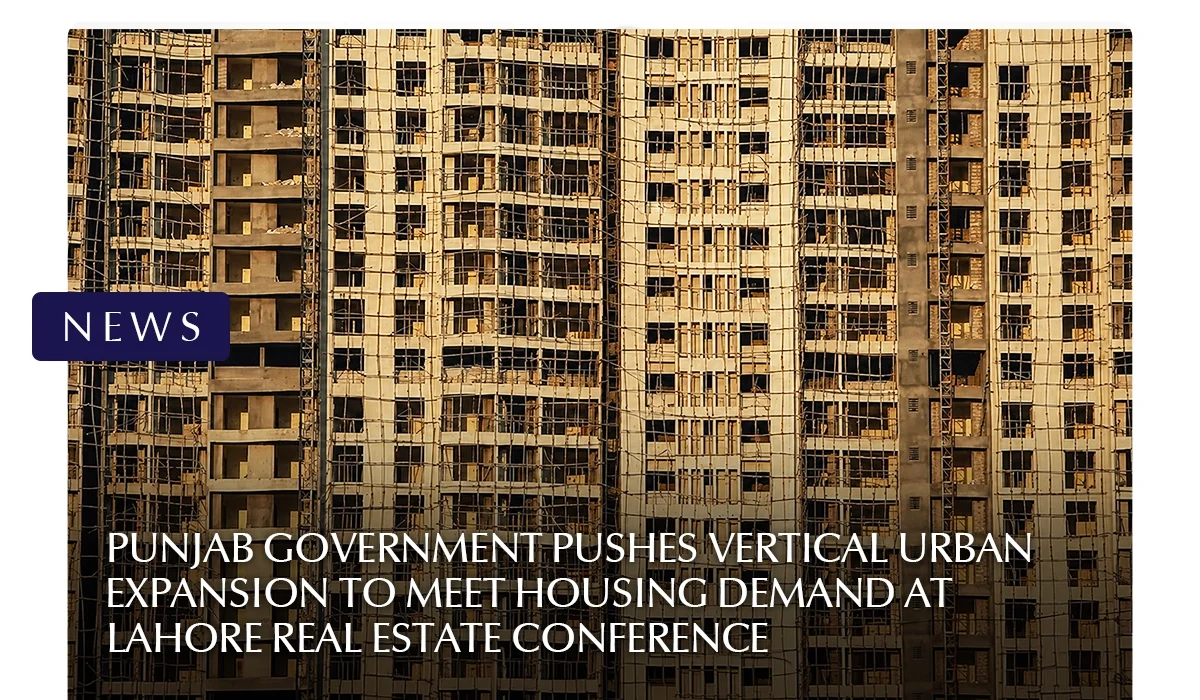
LAHORE: Punjab’s Minister for Housing, Urban Development and Public Health Engineering, Bilal Yaseen, has identified vertical construction as a critical pillar of Pakistan’s urban future, arguing that high-rise development is now indispensable given the country’s expanding population and diminishing land resources.

Speaking at a live podcast session held as part of Pakistan’s first Real Estate CEOs Conference featuring a sitting provincial housing minister, Yaseen said that rising urbanisation pressures leave little alternative to building upward.

He noted that carefully planned high-rise projects allow cities to expand sustainably while making the most of existing infrastructure, and reaffirmed that government policy would prioritise developments meeting modern construction benchmarks to support organised urban growth.

He further underlined the importance of ongoing coordination between government bodies and private developers, suggesting that collaborative policy-making is essential to build investor trust and sustain momentum in the real estate sector.

The conference, organised by Alif Holdings, drew together policymakers, developers, investors and media figures to deliberate on housing policy, urban planning reforms, the investment climate and prospects for public-private partnership.

The discussion was moderated by veteran journalist Mansoor Ali Khan, with television anchors Waseem Badami and Shahzeb Iqbal in attendance alongside senior figures from the real estate industry.

Alif Holdings CEO Ahmed Saljouk described the real estate sector as a significant contributor to Pakistan’s economy, stressing that its long-term prospects hinge on sustained dialogue between industry and government.

He said the conference was designed to give stakeholders a shared platform to raise concerns and shape workable solutions, adding that his company intends to continue hosting similar forums.

Participants at the event echoed calls for more consistent policy frameworks, greater regulatory transparency, and deeper public-private cooperation measures, which they said would be key to strengthening investor confidence and supporting sustainable urban expansion across Pakistan.

For more real estate news and special reports, visit Chakor.

Sources:

Delays in University Road Repairs
CategoriesNews Climate Change Construction Developments Urban Flooding Weather

Delays in University Road Repairs Raise Monsoon Flooding Concerns

KARACHI: Gulshan-e-Iqbal Town Chairman Dr Fawad Ahmed has issued a stark warning that a key stretch of Karachi’s University Road could become a serious hazard if monsoon rains arrive before ongoing infrastructure work is completed. Speaking at a press conference held at the Gulshan-e-Iqbal Town Municipal Corporation council hall, Dr Ahmed described the situation as one that could quickly spiral into a full-blown emergency for commuters.

His remarks focused specifically on the segment of road between Hassan Square and Nipa, an area currently undergoing excavation for the Red Line Bus Rapid Transit (BRT) project.

According to Dr Ahmed, the digging has left the roadway riddled with pits and uneven surfaces, posing a significant risk to motorists and pedestrians alike, particularly once heavy rainfall sets in.

The town chairman also used the platform to voice strong opposition to a proposed flyover near Disco Bakery. He argued that the project was both unnecessary and impractical, cautioning that it could intensify traffic congestion rather than relieve it.

He pointed out that a substantial portion of University Road traffic has already been redirected to Shabbir Usmani Road, undermining the rationale for the flyover.

Compounding the issue, Dr Ahmed noted that the K-IV water supply augmentation line is also slated to pass through Shabbir Usmani Road, a factor that would further complicate flyover construction in that corridor.

He said these concerns have already been formally communicated to Karachi’s mayor, and he called on the provincial government to abandon the flyover plan altogether in favour of removing encroachments to improve traffic flow.

Separately, Dr Ahmed presented the town’s performance report for the outgoing period and announced a budget of Rs. 4.7795 billion for the 2026–27 fiscal year, with 75 percent of the allocation directed toward development projects across Gulshan-e-Iqbal Town.

For more real estate news and special reports, visit Chakor.

Source:

CategoriesNews Construction Developments Real Estate Urban Developments & Planning

KP Approves Rs69bn Dir Motorway Spanning 29km

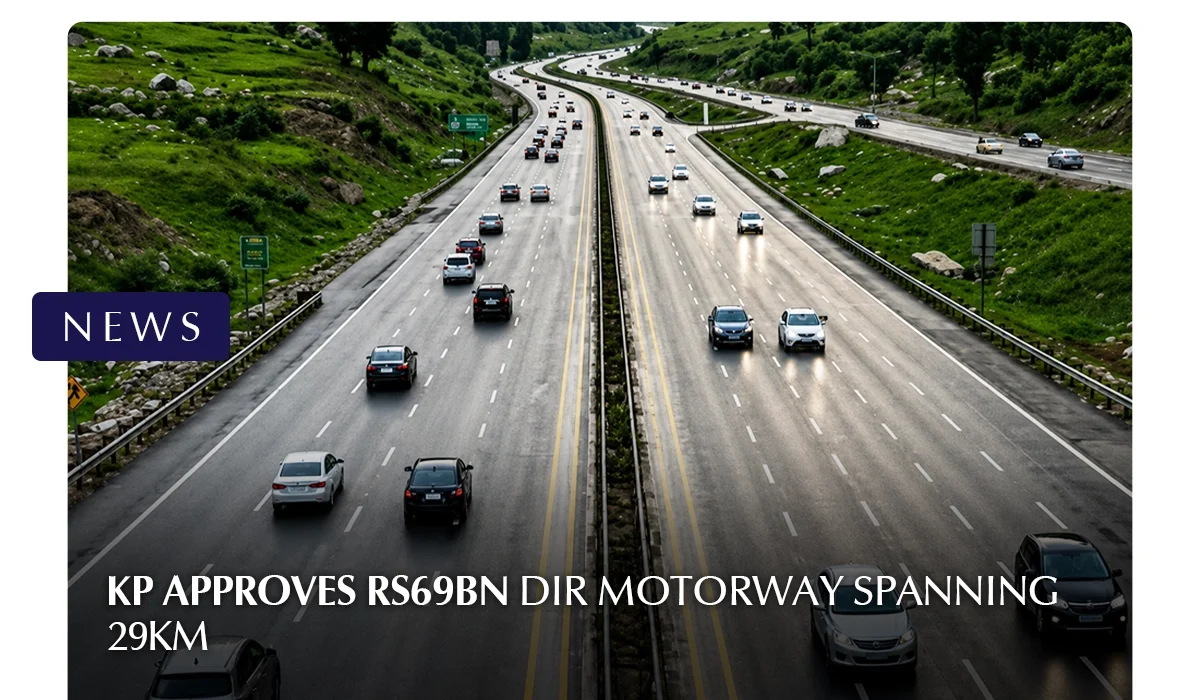
PESHAWAR: The Khyber Pakhtunkhwa Public-Private Partnership (PPP) Committee has approved the construction of the 29-kilometre Dir Motorway, connecting Chakdara Interchange to Baroon in Lower Dir District, at an estimated cost of Rs69 billion.

The approval was granted during a committee meeting chaired by Chief Minister Sohail Afridi, held on Saturday. Following the decision, the chief minister directed relevant authorities to immediately initiate land acquisition proceedings for the project.

He further instructed concerned departments to establish clear implementation timelines to ensure the motorway is completed within the stipulated period, enabling the public to benefit from the infrastructure at the earliest opportunity. Authorities were also directed to propose amendments to the existing PPP framework aimed at facilitating faster and more efficient execution of development projects.

The chief minister termed the motorway a significant contribution by the provincial government to the people of Malakand Division, stating that it would substantially reduce travel time, lower fuel consumption and transportation costs, and generate direct economic benefits for residents. He added that the project would play a pivotal role in promoting tourism and strengthening the regional economy, noting that improved connectivity to remote tourist destinations would create new employment opportunities.

The same meeting also reviewed progress on the Peshawar-Dera Ismail Khan Motorway and Swat Motorway Phase-II projects, with participants discussing measures to ensure their timely completion.

The session was attended by cabinet members Aftab Alam Afridi, Shakeel Khan, Shafi Jan and Muzammil Aslam, along with the chief secretary, additional chief secretary (planning and development), principal secretary to the chief minister, and administrative secretaries of the relevant departments.

For more real estate news and special reports, visit Chakor.

Source:

CategoriesNews Construction Developments Economy Urban Developments & Planning

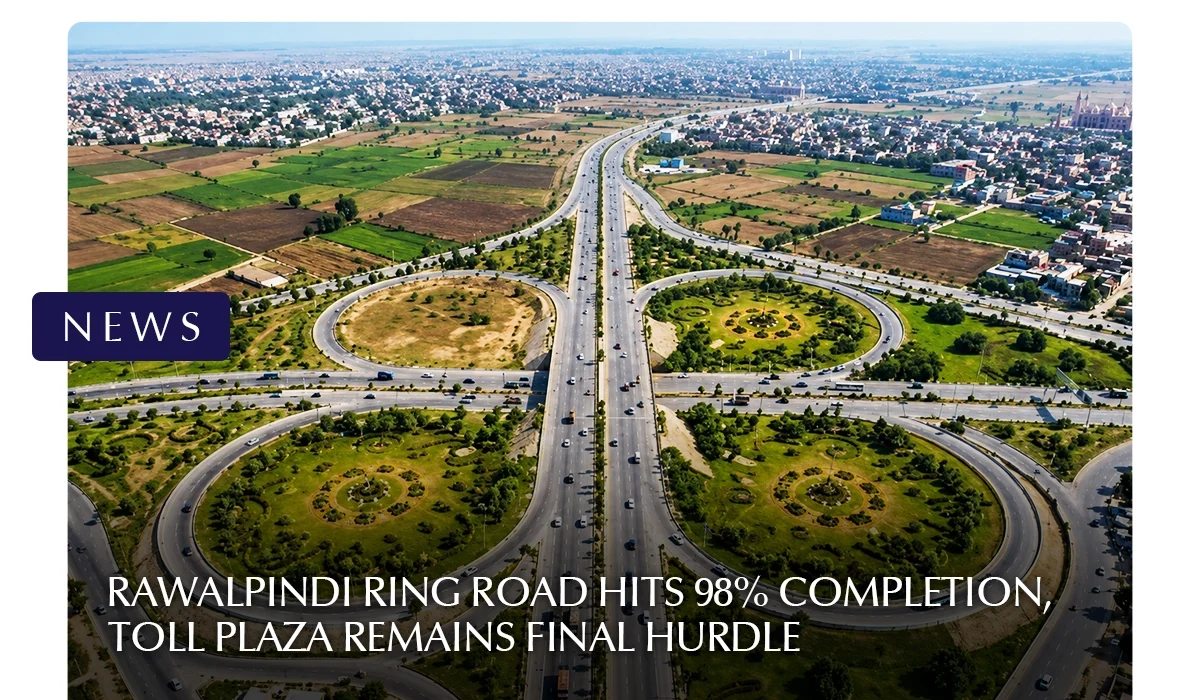
Rawalpindi Ring Road Hits 98% Completion, Toll Plaza Remains Final Hurdle

RAWALPINDI: The Rawalpindi Ring Road project has reached 98 percent completion, with installation of the toll plaza the only major work remaining before the highway opens to traffic.

The update was shared during a review meeting chaired by the Rawalpindi Divisional Commissioner. Officials confirmed that the Punjab Ring Road Authority will install and operate the toll plaza, collect tolls at government-approved rates, and oversee traffic management on the route once operational.

Spanning 38.3 kilometres, the Ring Road has completed construction of its main carriageway, flyovers, subways, interchanges, bridges, and other civil infrastructure. Installation of road barriers, lane markings, signboards, and streetlights has also been finalized.

The Punjab government has released more than Rs. 29 billion for the project to date, with the remaining funds expected within one to two weeks, according to officials.

During the review, the commissioner directed authorities to expedite the outstanding work, accelerate landscaping and tree plantation along both sides of the corridor, and establish a dedicated policing and traffic management system ahead of the road’s opening.

Officials further confirmed that construction of the Thalian Interchange will proceed as a separate project once the Ring Road becomes operational.

Once functional, the Ring Road is expected to divert heavy traffic away from Rawalpindi’s urban core, easing congestion on GT Road, Peshawar Road, Murree Road, and other major arteries. Authorities anticipate the project will reduce travel times, cut fuel consumption, and lower vehicular air pollution across the city.

The project marks one of the most significant infrastructure undertakings in the twin cities in recent years, with completion now widely anticipated in the coming weeks.

For more news on real estate and special reports, visit Chakor.

Source:

Asset Management Authority
CategoriesNews Developments Property Urban Developments & Planning

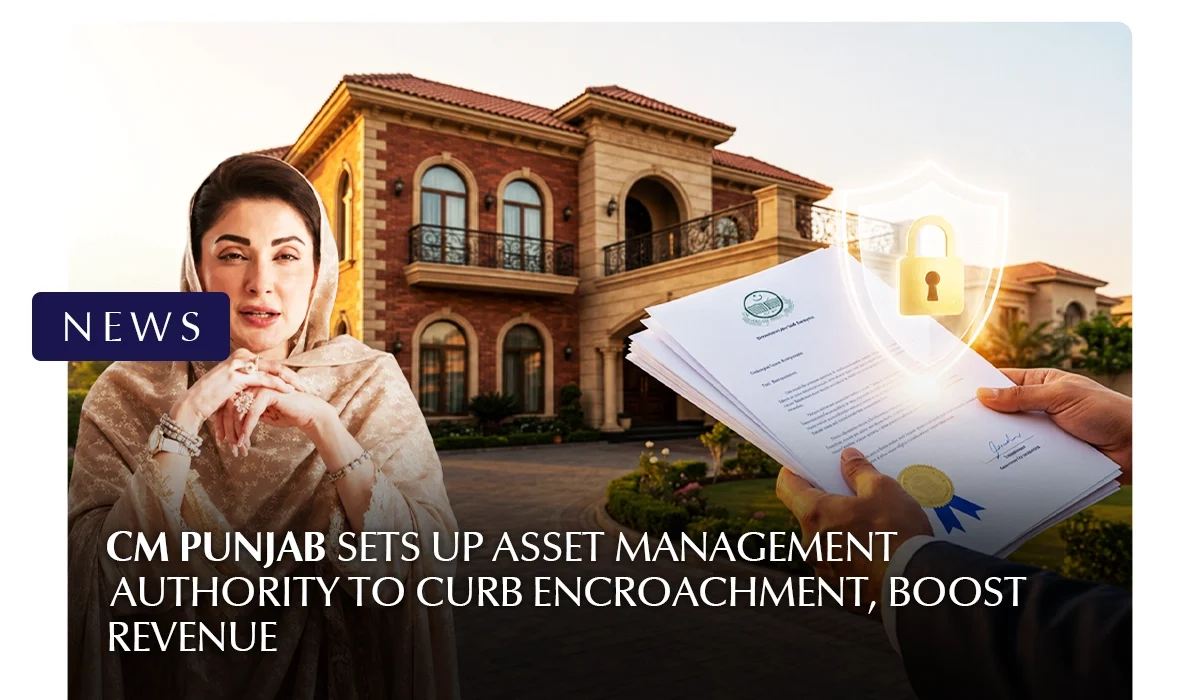
CM Punjab Sets Up Asset Management Authority to Curb Encroachment, Boost Revenue

LAHORE: CM Punjab has approved the establishment of AMAP, a newly proposed institution tasked with centralising the identification, management, and utilisation of the province’s assets. The decision was announced following a high-level meeting chaired by the chief minister on Monday.

According to officials familiar with the plan, the Asset Management Authority of Punjab (AMAP) will serve as the province’s primary regulatory body for government-owned land and public property, consolidating functions that have historically been scattered across multiple departments.

Its mandate will include overseeing the transfer, disposal, valuation, and marketing of provincial assets, with a particular focus on properties identified as having strong investment or privatisation potential.

To generate revenue, the authority is expected to employ a range of financial mechanisms, including leasing arrangements, rental agreements, public-private partnerships, and joint ventures. Officials said the approach is designed to maximise returns on underutilised government property while attracting private investment into asset development.

During the meeting, the chief minister directed relevant departments to accelerate revenue generation through the sale, lease, and collateral-based financing of provincial assets. She noted that the absence of a single, dedicated institution to regulate Punjab’s assets had left substantial public land vulnerable to illegal encroachment and mismanagement, underscoring the need for a more coordinated regulatory framework.

In terms of structure, AMAP will operate under a governing board headed by the provincial chief secretary, while daily operations will be managed by an officer of BPS-20 rank.

The authority will also induct private-sector professionals on a merit basis, reflecting an effort to bring specialised commercial expertise into asset management decisions.

Officials clarified that all major decisions regarding the transfer, valuation, or long-term management of assets will require formal approval from the provincial cabinet, adding an additional layer of oversight.

The move is seen as part of a broader push by the current Punjab administration to reform governance structures and improve fiscal discipline across state institutions.

For more news on real estate and special reports, visit Chakor.

Source:

Shah Alam Market
CategoriesEconomy Developments Investment

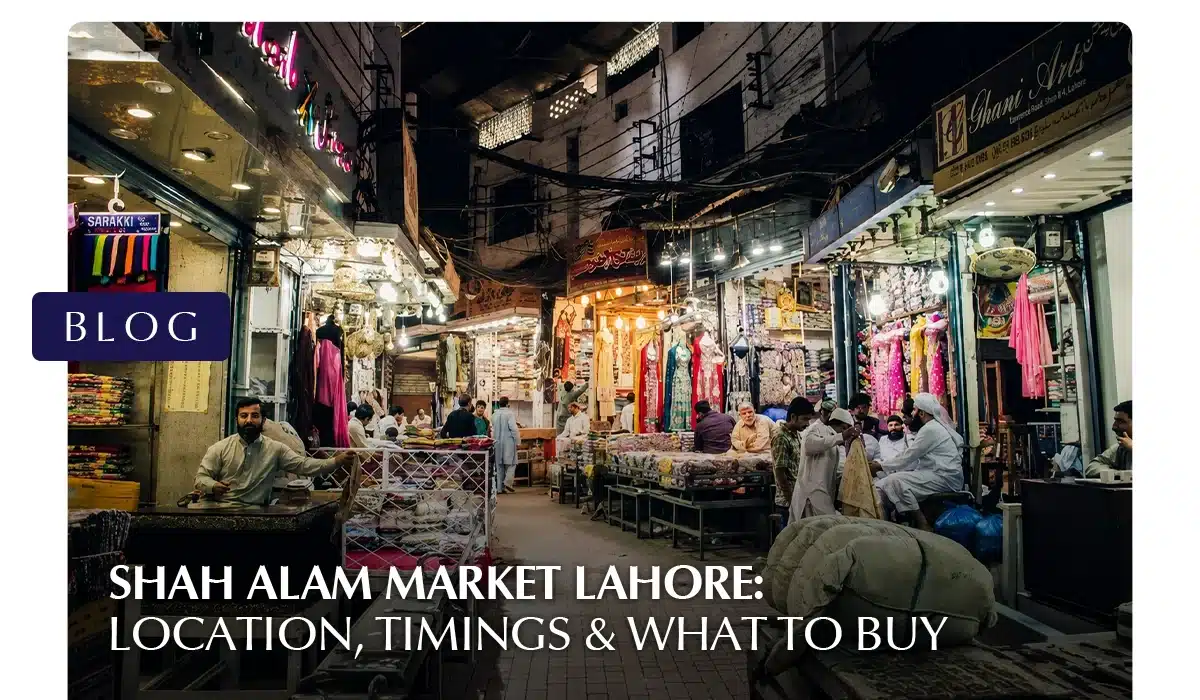
Shah Alam Market: Location, Timings & What to Buy 2026

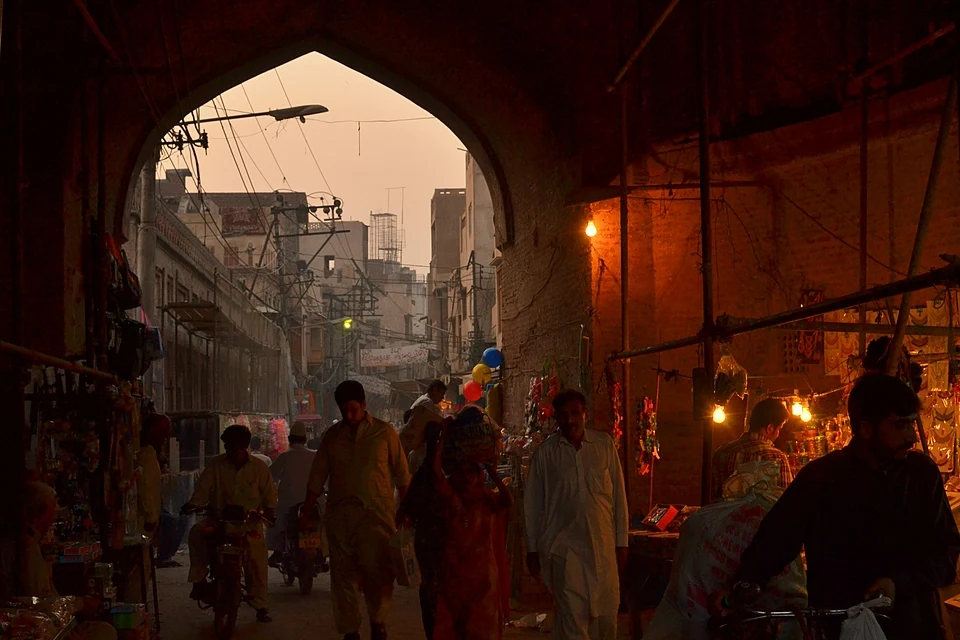
Shah Alam Market is one of the oldest and busiest commercial centers in Lahore, Pakistan. Known locally as Shahalmi or Shah Almi Market, it sits at the heart of the Walled City and draws traders, retailers, and everyday shoppers from across the country. With more than 25 bazaars packed into a sprawling network of lanes, Shah Alam Market Lahore remains one of the few places where centuries of history and modern-day wholesale trade coexist.

This guide covers everything worth knowing about the market: its origins, the exact location of the Shah Alam market, what you can buy there, when to visit, and how to get there without getting lost in its narrow streets.

The History Behind Shah Alam Market

Shah Alam Market

The market takes its name from the Shah Alami Gate, one of the twelve historic gates of Lahore’s Walled City. The gate itself was named after Mughal emperor Shah Alam I, son of Aurangzeb, though before his rule it was known as the Bherwala Gate.

The gate was destroyed during the riots that accompanied the 1947 partition, and only its name lives on today through the market and neighborhood built around its former site.

Before partition, the Shah Alami area was largely home to Hindu-owned businesses and a predominantly Hindu population. Following the mass migration of 1947, the area was resettled, and the market gradually grew into the trading center it is today.

Over the decades, it expanded into a dense cluster of specialized bazaars, each known for a different category of goods, including the well-known Pappar Mandi, Rang Mahal, Bottle Bazaar, and Sarafa Bazaar.

Shah Alam Market Location: Where Exactly Is It?

Understanding the Shah Alam market location is the first step to planning a visit, since the area is dense and not always easy to navigate by car. The market sits inside Lahore’s Walled City, right next to Mayo Chowk, which is itself located beside the Mayo Hospital gate. From Mayo Chowk, a one-way road leads directly into the market’s entrance.

The broader Shah Alam market Lahore location places it close to other historic landmarks, including Minar-e-Pakistan, Lahore Fort and Badshahi Mosque, all within a short distance. This makes the market a natural stop for anyone already exploring the old city’s heritage sites, not just a destination for wholesale shopping.

Shah Alam Market Lahore Location: Getting There

Because of the narrow streets and heavy footfall, reaching the market works best with a bit of planning:

  • By road: Coming from Gulberg, Model Town, or DHA, take Ferozepur Road onto the Lahore Ring Road and exit near Azadi Chowk. From there, follow signs toward Circular Road, then turn toward Shahalmi Gate. Parking directly at the market is limited, so many visitors park a short distance away and walk in.
  • By public transport: The Metro Bus stops at Azadi Station or Timber Market Station are both a short rickshaw ride from the market. Local buses and wagons also stop frequently along Circular Road.
  • On foot: Given how compact the Walled City is, walking is often the fastest way to move between the market’s different bazaars once you’ve arrived.

What You Can Buy at Shah Alam Market

Shah Alam Market

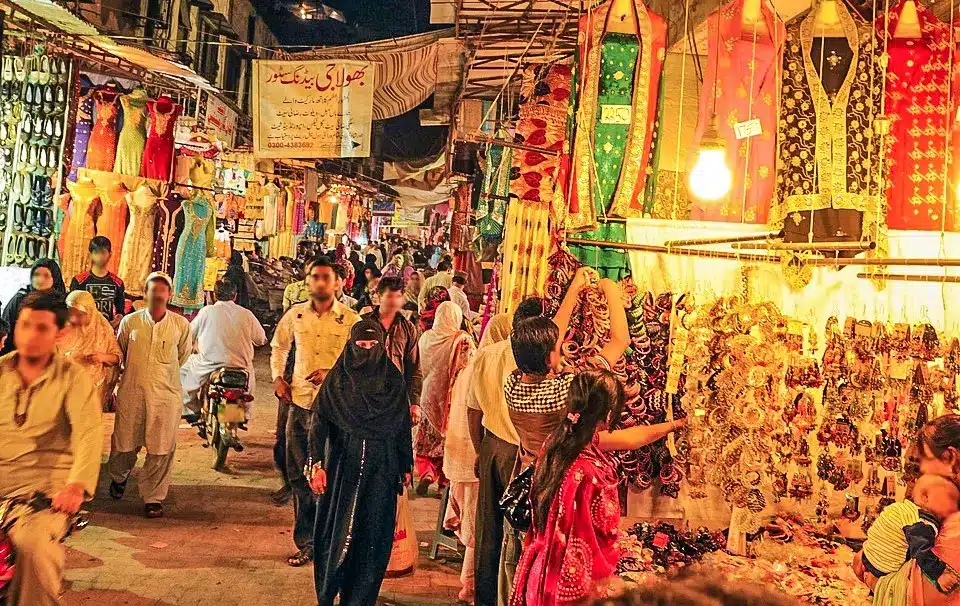
Shah Alam Market built its reputation on wholesale pricing, and that variety is still its biggest draw. Shoppers and retailers head here for:

  • Clothing and fabrics: From ready-made shalwar kameez to fabric by the meter, the market’s textile shops cater to both individual buyers and shopkeepers stocking up for resale.
  • Baby garments: A dedicated section of the market specializes in newborn and toddler clothing, sold in bulk to retailers from across Punjab.
  • Toys: Several lanes are lined with toy shops selling everything from basic plastic toys to battery-operated cars, popular with both bulk buyers and families.
  • Perfumes and attars: Local and imported fragrances are sold here at prices well below retail, making the perfume section a favorite for small business owners.
  • Crockery and kitchenware: Basic utensils, dinner sets, and steel home items are available at wholesale rates.
  • Electric goods: Wiring accessories, switches, and lighting fixtures are sold here at prices that attract electricians and small contractors.
  • Watches: Long-established watch shops sell wristwatches, wall clocks, and offer repair services.
  • Jewellery and handicrafts: The Sarafa Bazaar section is known for gold and silver jewellery, while nearby shops sell handmade décor and traditional crafts.
  • Food: Street food stalls and traditional eateries operate throughout the market, especially in the early morning hours before the shops fully open.

Shah Alam Market Timings

Shah Alam Market

Most shops in the market follow standard trading hours from late morning through the afternoon, though food stalls open much earlier. Since individual shop hours can vary, it’s worth checking with a specific vendor before heading out, especially if you’re planning to visit a particular shop for baby garments, toys, or perfumes.

Unlike many other markets in Lahore that close on Sundays, Shah Alam Market stays open seven days a week, including Sundays, which tend to be the busiest day given that it’s a public holiday for most other businesses.

Why Shah Alam Market Still Matters

Shah Alam Market

Shah Alam Market isn’t just a shopping destination; it’s a working piece of Lahore’s economic and cultural fabric. Thousands of shopkeepers, wholesalers, and support staff rely on the market for their livelihoods, and its wholesale pricing structure makes it a key source of supply for retailers across Punjab.

At the same time, its location within the Walled City, close to Lahore Fort and Badshahi Mosque, keeps it connected to the city’s historic identity rather than being just another commercial zone.

FAQs – Shah Alam Market

Shah Alam Market

Where is Shah Alam Market located?

The market is located inside Lahore’s Walled City, next to Mayo Chowk, close to Mayo Hospital and within walking distance of Lahore Fort and Badshahi Mosque.

What is Shah Alam Market famous for?

It is known as one of the largest wholesale markets in Pakistan, with more than 25 specialized bazaars covering clothing, toys, perfumes, crockery, electric goods, and jewellery.

Is Shah Alam Market open on Sundays?

Yes. Unlike most markets in Lahore, it remains open on Sundays, which is often its busiest day.

What is the best time to visit Shah Alam Market?

Late afternoon tends to be less crowded than midday, making it easier to browse shops without the heaviest foot traffic.

Is Shah Alam Market only for wholesale buyers?

No. While it’s a major wholesale hub, individual retail shoppers are welcome and often find prices lower than typical retail markets elsewhere in the city.

This was all about Shah Alam market Lahore; for more information on relevant topics such as famous markets in Lahore, visit Chakor blogs.

5 marla house design
CategoriesArchitecture Construction Developments Home Design

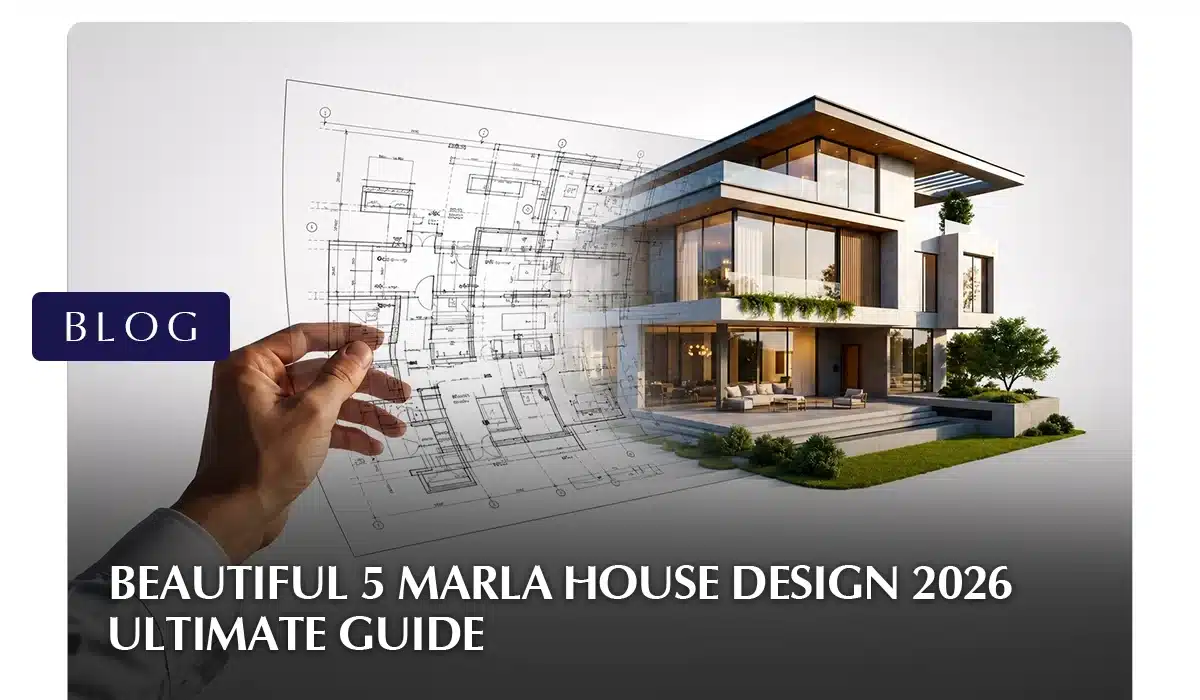
Beautiful 5 Marla House Design 2026 – Ultimate Guide

A 5 marla plot is the most popular residential size in Pakistan. It’s affordable, practical, and big enough for a comfortable family home. But choosing the right 5 marla house design can be confusing when you’re staring at dozens of layouts, elevations, and styles online.

This guide breaks it all down. You’ll find single storey and double storey options, front elevation ideas, corner plot tricks, 3D design trends, and even a Spanish-inspired look everything you need before you meet your architect. A standard 5 marla plot measures around 25×45 feet, giving you roughly 1,125 square feet of land to work with. It’s compact, but with smart planning, it comfortably fits a family of four to six people.

Single Story vs Double Story 5 Marla House Design


Your first big decision is the number of floors. Both options work; it depends on your family size, budget, and future plans.

5 marla single storey house design

A 5 marla house design single storey layout works best if:

  • You have a small family or are building for retired parents
  • You want lower construction costs and faster completion
  • Easy maintenance matters more than extra space

5 marla house design double story

A 5 marla house design double story layout works best if:

  • You need 3 to 4 bedrooms instead of 2
  • You want rental income potential from a separate upper portion
  • You’re planning for a growing family over the next several years

A well-planned 5 marla house design double storey layout can include separate lounges, two kitchens, and a private terrace giving you far more flexibility without buying a bigger plot.

Whether you search for a 5 marla single story house design or a taller layout, the plot size stays the same only the internal planning changes.

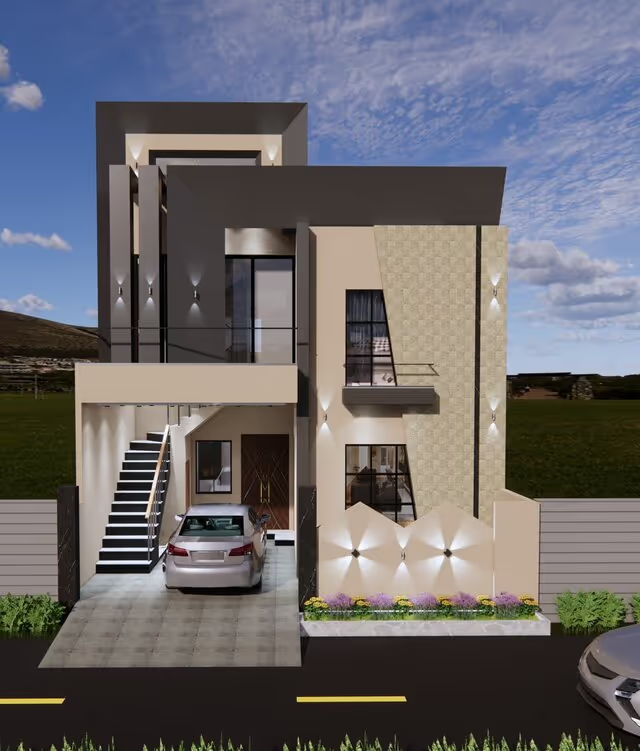
5 Marla House Front Design That Makes a Statement

5 Marla House Front Design

Your 5 marla house front design is the first thing anyone sees. A strong 5 marla house design front adds real value, even on a tight budget.

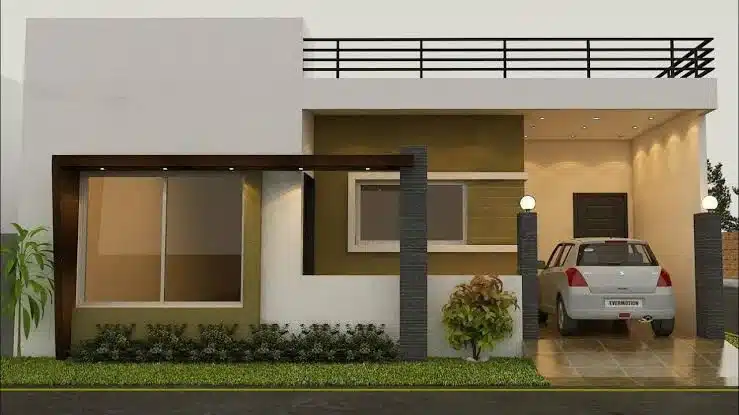
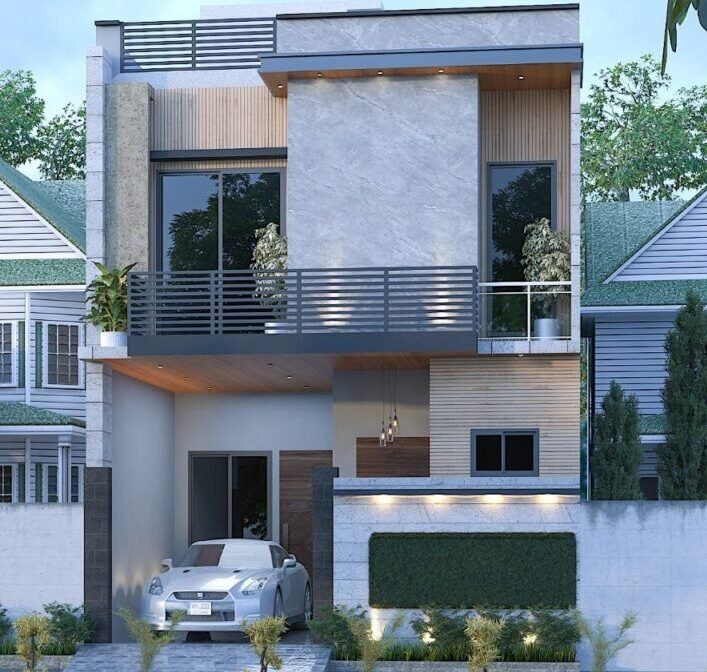
Popular 5 marla house front elevation designs right now:

  • Minimalist look — flat rooflines, clean edges, and neutral tones like grey, white, or charcoal
  • Stone and wood accents — wooden doors paired with glass railings for a warm, modern feel. While wooden door prices can vary based on design and type of wood used.
  • Jali screens — decorative cut panels that add privacy and airflow with a distinct local touch
  • Glass and wood combination — a premium finish using tempered glass balconies and wood-textured panels

For a double story 5 marla house front design, keep the visual weight balanced between floors. A common mistake is making the ground floor look heavy while the upper floor feels disconnected use matching materials or a repeated design element to tie both levels together.

When searching for 5 marla house front design in Pakistan, you’ll notice most homeowners now prefer a mix of matte finishes and warm lighting over the older glossy-tile look.

Budget Tip: Textured trendy tile designs that mimic stone and matte black railings give a premium look without the premium price tag.

5 Marla Spanish House Design: A Distinct Alternative

5 Marla Spanish House Design

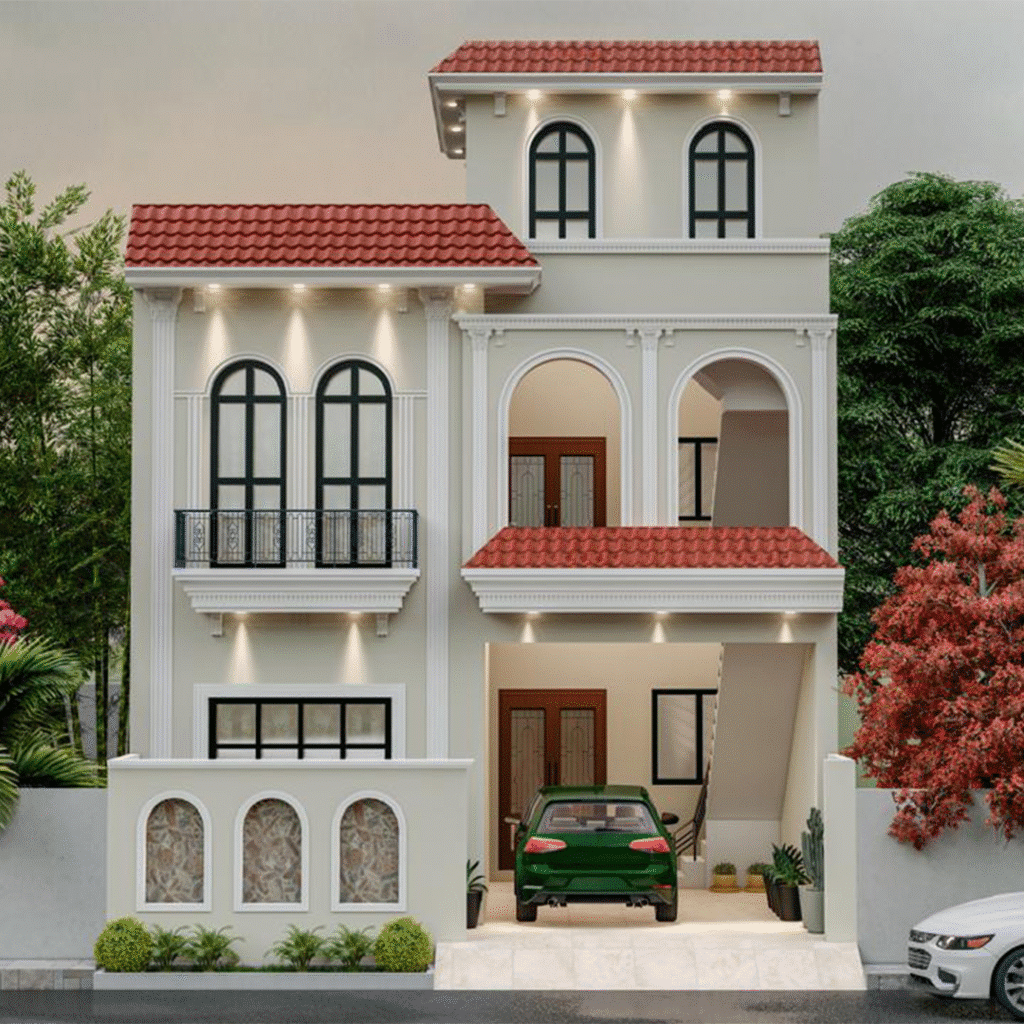
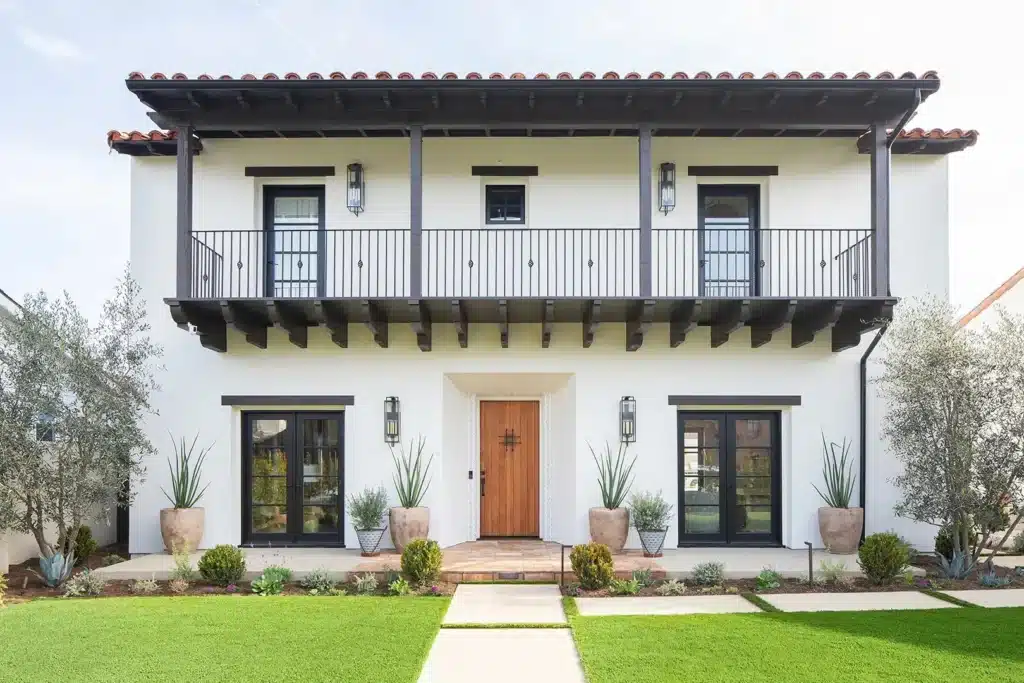
If you want something different from the usual modern-minimalist look, a 5 marla Spanish house design is worth considering. This style borrows from Mediterranean architecture and stands out in most Pakistani neighborhoods.

Key features of a Spanish-style 5 marla home:

  • Terracotta or clay-tiled sloped roofing over the porch or balcony
  • Warm, earthy exterior tones terracotta, ochre, cream, and muted browns
  • Arched doorways and windows instead of straight edges
  • Wrought iron detailing on balconies, grilles, and light fixtures
  • Textured stucco-style wall finishes

This style works particularly well on corner plots or homes with a visible side wall, since the arches and texture read better from multiple angles. It costs slightly more than a standard minimalist elevation because of the roofing tiles and stucco work, but it holds strong resale appeal for buyers wanting something unique. You can find a lot of door types on the market; go for the one that harmonizes with your house’s design.

5 Marla House Design 3D: Why It Matters Before You Build

double storey 5 marla house front design

More architects in Pakistan now offer a 5 marla house design 3D rendering before construction starts and it’s worth insisting on one.

Why a 3D design helps:

  • You see the actual proportions of rooms, not just measurements on paper
  • Front elevation changes (materials, colors, window placement) are easy to test before committing
  • You catch layout problems like a cramped staircase or a blocked window before they’re built in concrete
  • It’s easier to explain your vision to a contractor using a visual model instead of a 2D floor plan

Most architects charge a small design fee for a 3D walkthrough, but it often saves far more in avoided rework later. If your architect doesn’t offer this, ask directly most software used today (like SketchUp or AutoCAD-based tools) makes it a quick addition to their existing process.

5 Marla Corner House Design: Making the Most of Extra Space

5 Marla Corner House Design

A 5 marla corner house design gives you an advantage most plots don’t have: a second open side. If you own a corner plot, don’t waste it on a blank wall.

Ways to use a corner 5 marla plot well:

  • Add windows along the side wall for extra natural light and airflow
  • Build an L-shaped lawn or a small side garden
  • Create a separate side entrance, useful if you plan to rent a portion later
  • Extend your front elevation design around the corner instead of stopping it at the front wall

A 5 marla corner house design in Pakistan typically commands a higher resale value than an interior plot of the same size, mainly because of the extra light, ventilation, and design flexibility it offers.

Floor Plan Essentials for Every 5 Marla House Design in Pakistan

Regardless of style, a good 5 marla house design in Pakistan needs to get the basics right:

  • Car porch — minimum 10×14 feet, positioned so it doesn’t block the main entrance
  • Drawing room — placed near the entrance so guests don’t walk through private areas
  • Kitchen — open kitchens make the lounge feel bigger; closed kitchens offer more privacy and odor control
  • Bedrooms — at least 2 on a single storey plan, both with attached bathrooms where possible
  • Staircase — for double storey homes, incorporate it in the side wall design to save lounge space

Never copy a floor plan or a trendy wall design idea exactly from the internet. Plot orientation, sunlight direction, and your family’s specific needs should always shape the final layout.

FAQ – 5 Marla House Design

How many square feet is a 5 marla plot?
A standard 5 marla plot is about 1,125 square feet, typically measuring 25×45 feet. Exact dimensions can vary slightly by housing society.

Is a single storey or double storey 5 marla house design better?
Single storey works better for small families and tighter budgets. Double storey suits larger families or anyone planning future rental income.

How much does building a 5 marla house cost in Pakistan?
The cost of a 5 marla house design can vary significantly by city, material quality, and design complexity; figures currently range widely across contractors and regions. Always get a written quote from a local architect or contractor rather than relying on a fixed online estimate.

What is the best front elevation style for a 5 marla house?
There’s no single “best” style minimalist, Spanish, and jali-accented elevations are all popular in 2026. The right choice depends on your budget and personal taste.

Is a corner plot worth paying extra for on 5 marla?
Generally, yes. The extra light, airflow, and design flexibility a corner plot offers usually justify the higher price, especially for resale value.

Hope this article helped guide you through the trendy 5 marla house design in Pakistan. For more trendy house design ideas, visit Chakor blogs.

Sources: