Real estate is one of Pakistan’s most dynamic and opportunity-rich sectors. At Chakor, we cover it all, from emerging developments and market trends to investment analysis and buyer guidance, giving you the full picture of a sector that continues to define the country’s economic trajectory.
Whether you are buying, selling, developing, or investing, Chakor is where informed real estate decisions begin.
Investing in Pakistan can be a smart way to grow wealth, especially with the country’s rapidly evolving market dynamics. Among the various investment options, two stand out: real estate and the Pakistan Stock Exchange (PSX). Both have their loyal followers and long-standing histories, but the big question for investors is: where can you find the best return on investment in Pakistan? Should you go with the tangible and stable real estate investing, or is it better to dive into the more volatile yet rewarding world of the investment in Pakistan Stock Exchange?
This article breaks down the strengths and challenges of each investment avenue, offering insights into their returns, risks, and long-term potential, so you can make a more informed decision for your financial future.
Real Estate vs. PSX: A Side-by-Side Comparison
To help you decide where to place your capital for the best return on investment in Pakistan, let’s break down the key differences between real estate investing and investing in the Pakistan Stock Exchange:
Criterion
Real Estate
Pakistan Stock Exchange
Average Return
5-7% (residential), 10-12% (commercial)
12-18% (volatile, with potential for high returns)
Risk
Lower volatility, but market cycles can affect returns
Higher volatility, with potential for significant gains or losses
Liquidity
Low—properties can take months to sell
High—buy and sell quickly during market hours
Initial Investment
High—millions of PKR needed
Low—can start with as little as PKR 1,000
Income Type
Rental income
Dividends and capital appreciation
Regulation
Often unregulated or informal
SECP regulated, with transparent oversight
Growth Potential
Steady, long-term growth
High growth potential during bull markets
Understanding Real Estate Investment in Pakistan
Real estate has long been regarded as a secure investment in Pakistan, and for good reason. With its tangible nature, real estate provides a sense of security, as it’s an asset that can’t be easily devalued or lost. Whether you’re considering residential or commercial real estate investment, Pakistan’s rapidly growing urban areas—especially cities like Karachi, Lahore, and Islamabad—offer lucrative opportunities for both capital appreciation and rental income.
Why Real Estate is an Attractive Investment in Pakistan?
Here are a few reasons why real estate remains a top choice for investors seeking the best return on investment in Pakistan:
1. Stable Long-Term Growth:
The growth in property prices over the last decade has been impressive. Residential real estate, in particular, offers annual returns of around 5-7%, while commercial real estate yields up to 10-12% annually. Areas like Karachi, Lahore, and Islamabad continue to see consistent demand, especially for residential and commercial properties, making real estate a reliable inflation hedge. As urbanization increases and housing shortages persist, the demand for property is expected to remain high, driving further price appreciation.
2. Passive Income Through Rent:
One of the most appealing aspects of real estate investing is the opportunity for rental income. Residential properties typically offer yields between 5-7%, but commercial properties can provide even higher returns, ranging from 10-12% annually. This steady cash flow can be reinvested or used to cover expenses, making real estate an excellent source of passive income.
3. Tangible Asset:
Real estate is a physical asset. Unlike stocks, which can fluctuate wildly due to market sentiment, property is less vulnerable to short-term market swings. Its value typically appreciates over time, offering long-term growth and stability. For investors looking for a low-risk and high-reward investment, real estate provides the ideal balance.
4. Legacy Building and Security:
Real estate investments can also be passed down from generation to generation, providing long-term financial security. Unlike stocks, where prices can be influenced by global markets, the value of real estate remains tied to the local economy, making it a more reliable asset for family wealth.
Families can explore different real estate options to choose assets that support long-term stability and future financial planning.
Challenges of Real Estate Investment in Pakistan
While real estate investing in Pakistan has its benefits, it’s not without its challenges. The high entry cost, legal hurdles, and maintenance requirements make it more suitable for investors with larger capital.
High Initial Investment
Real estate investments often require millions of Pakistani Rupees (PKR), which makes it less accessible for individuals just starting their investment journey. Unlike stocks, which allow for small investments, the capital requirement for property investments is significant. This high entry barrier means that real estate investing is more suited for wealthier investors.
Liquidity Issues
Selling property in Pakistan can take months, and the process is often delayed by legal issues, market conditions, and transaction costs. In comparison to stocks, where you can quickly sell and access your funds, real estate is less liquid, making it less suitable for investors who may need quick access to cash.
Legal and Maintenance Costs
Managing real estate comes with its own set of headaches. Legal issues, such as unclear ownership or land disputes, can complicate matters. Maintenance costs, especially for rental properties, can also add up. Whether you’re managing tenants, handling repairs, or dealing with legal challenges, the time and effort involved in real estate investing can be draining for some investors.
Investment in Pakistan Stock Exchange (PSX)
The Pakistan Stock Exchange (PSX) offers a different kind of investment experience. While it may seem more volatile and unpredictable than real estate, it comes with its own set of benefits that make it an attractive option for certain types of investors.
Why Invest in the Pakistan Stock Exchange?
High Return Potential:
Historically, the PSX has shown strong performance, with the KSE-100 index growing from 40,000 points in 2020 to over 85,000 points in 2025, providing investors with returns in the 12%-18% range annually. Despite political instability and market fluctuations, the stock market in Pakistan has exhibited resilience, offering strong returns over the long run.
Liquidity and Flexibility:
One of the key advantages of the investment in Pakistan Stock Exchange is its liquidity. Stocks can be bought and sold within minutes during market hours. If you need to liquidate your investment or make quick adjustments to your portfolio, you can do so instantly, unlike real estate, which requires months to sell. This flexibility makes PSX an attractive option for investors seeking quick access to funds.
Low Entry Cost:
You can start investing in the PSX with as little as PKR 1,000. This low entry barrier makes it an accessible option for a wider range of investors, including salaried individuals, students, and those who want to diversify their portfolios without committing large sums of capital. Apps like KTrade make it easy to buy shares and manage investments without requiring agents or excessive paperwork.
Passive Income through Dividends:
Just like real estate offers rental income, stocks can also provide passive income in the form of dividends. Many top-performing companies in Pakistan regularly distribute dividends to their shareholders, allowing investors to earn money while their stock holdings appreciate in value.
Challenges of Investing in the PSX
Volatility and Risk
One of the primary drawbacks of the stock market is its volatility. Prices can fluctuate drastically due to political events, economic news, and changes in investor sentiment. For example, in 2022, the PSX saw a significant downturn due to political instability, but it quickly recovered. Investors who aren’t prepared for market swings may find themselves exposed to substantial losses if they’re unable to ride out the volatility.
Technical Knowledge and Active Monitoring
Investing in the PSX requires a certain level of knowledge and active engagement. To maximize returns and avoid significant losses, investors need to research companies, understand market trends, and actively manage their portfolios. This can be a challenge for new investors or those who are not familiar with the stock market.
Market Cycles
The stock market operates in cycles, with periods of growth followed by downturns. Unlike real estate, which generally appreciates over time, stocks can experience long periods of stagnation or even loss. It’s important for investors to time their investments well and diversify their portfolios to minimize risk.
Conclusion: Real Estate vs. PSX – Which Is the Better Investment?
While both real estate investing and investment in the Pakistan Stock Exchange offer their own set of advantages, real estate is the better option for those seeking stability, tangible assets, and passive income over the long term. With higher rental yields, capital appreciation, and the ability to build legacy wealth, real estate in Pakistan remains a top investment choice for many.
However, for those with a lower budget, a shorter time horizon, or a higher risk tolerance, the PSX offers the potential for greater returns, though at the cost of higher volatility and the need for active management. For diversified investors, a balanced approach combining both assets can be a smart strategy.
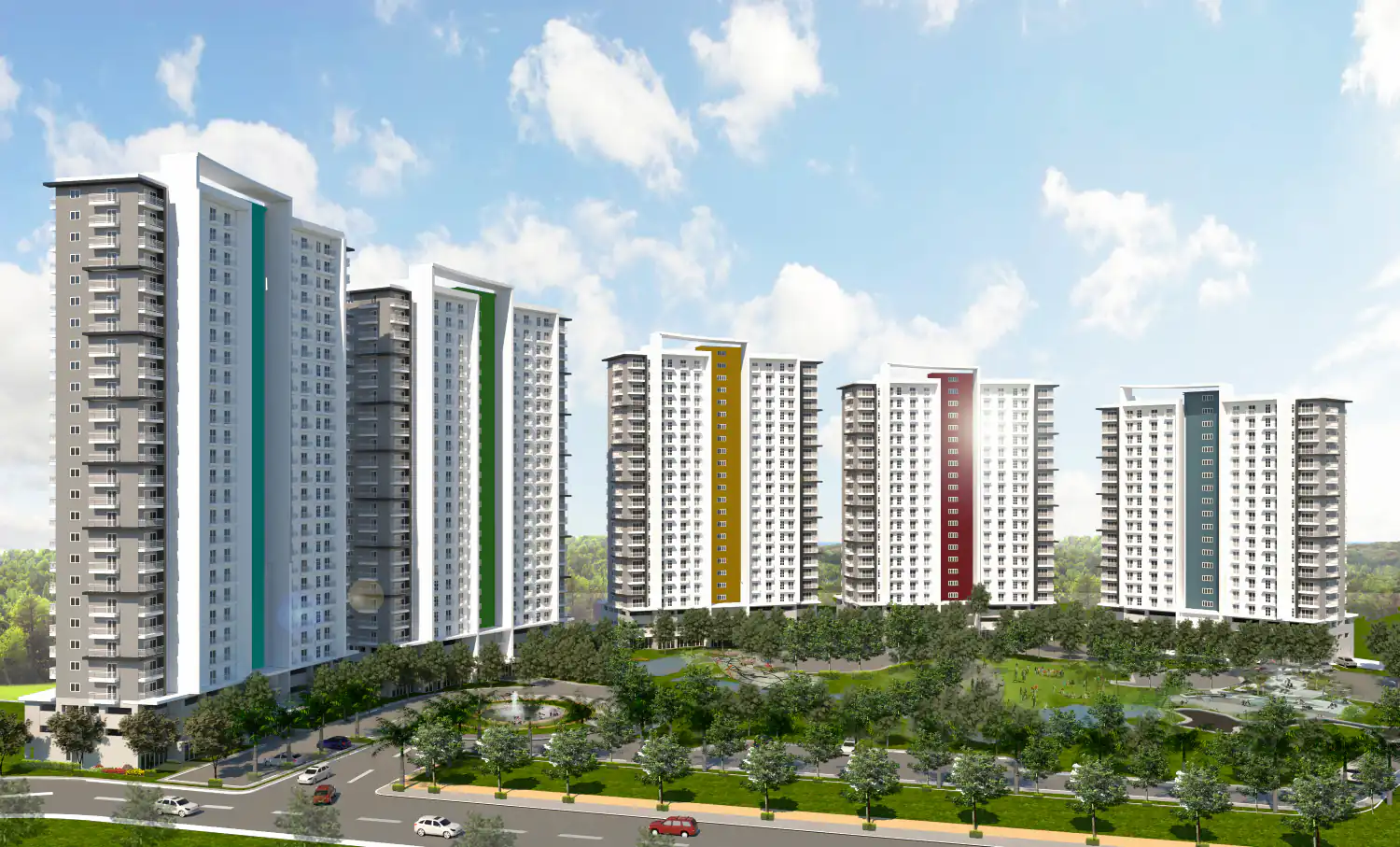
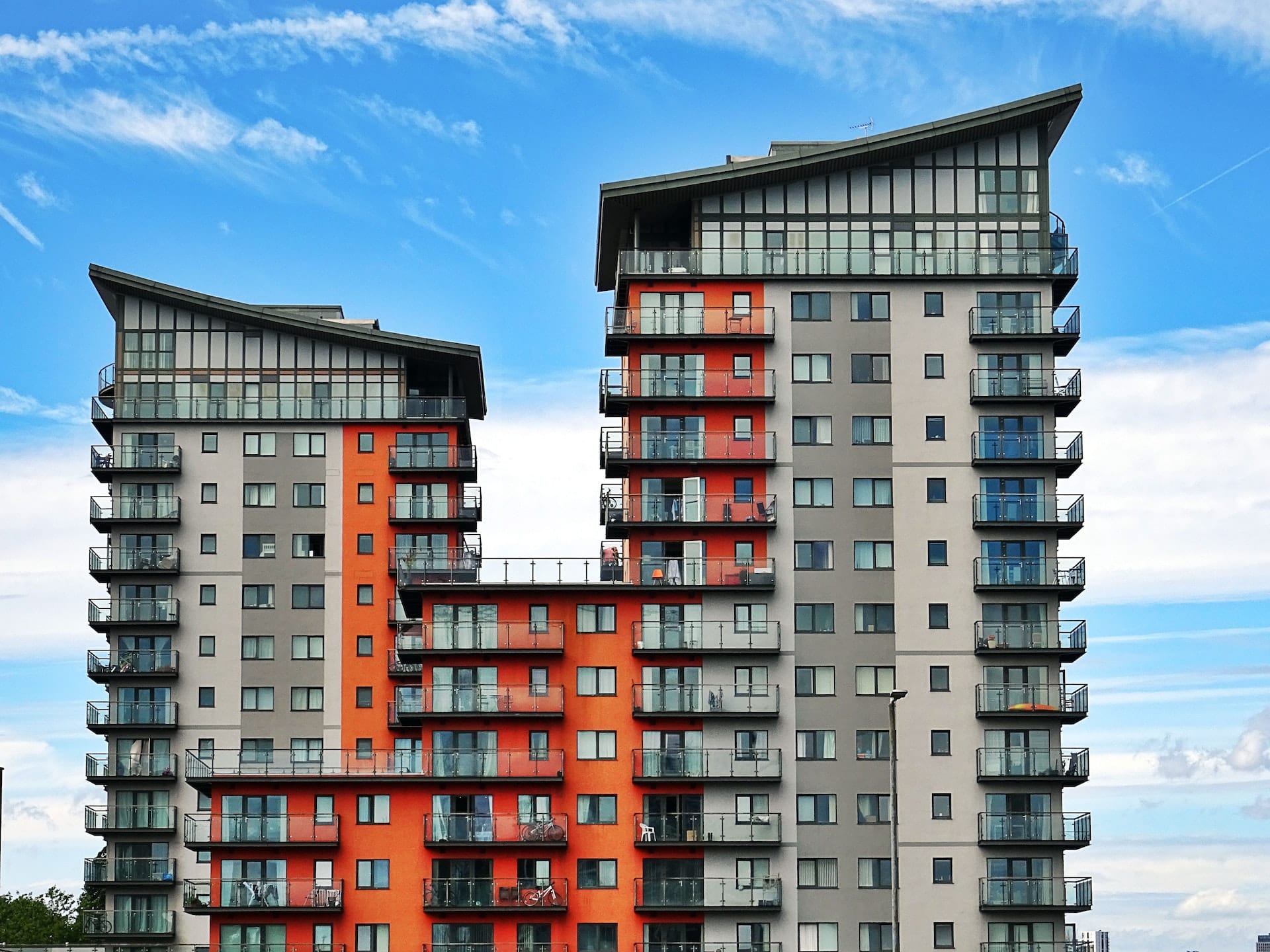
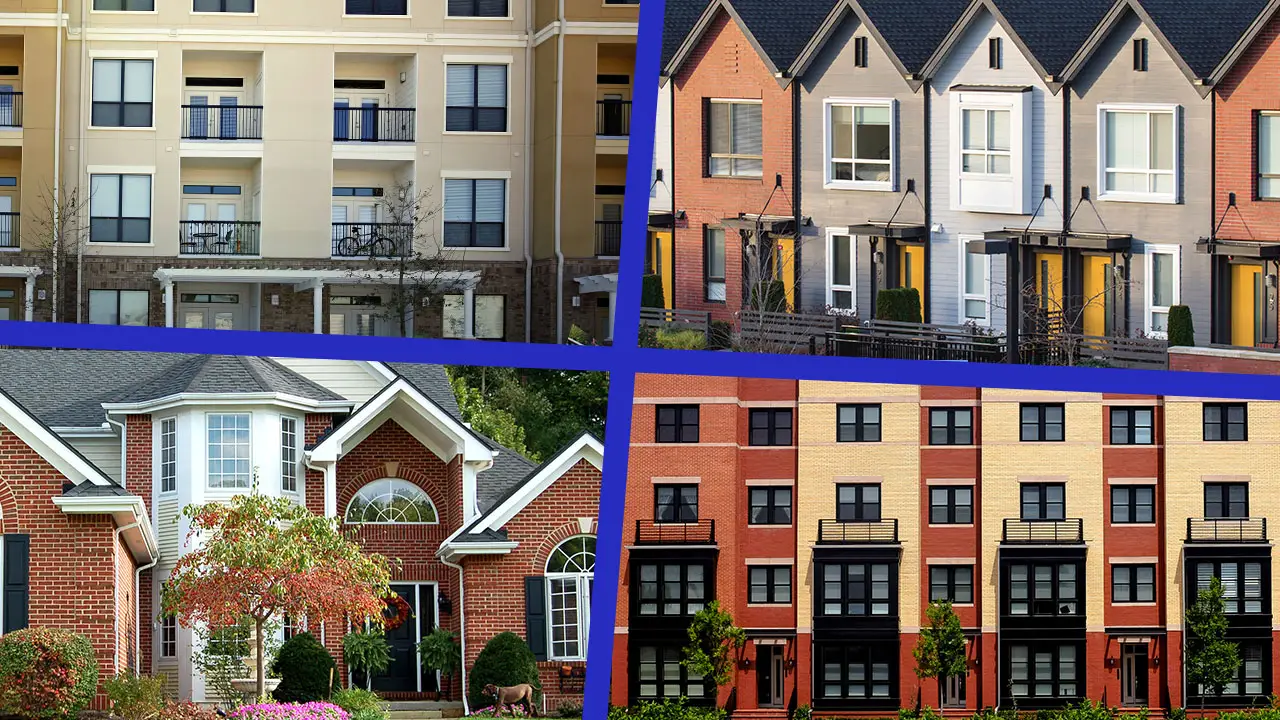
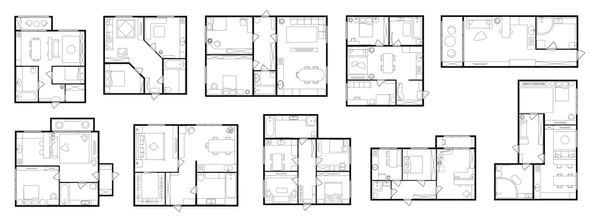
ISLAMABAD: Rising land costs, rapid urbanisation, and changing lifestyle preferences are pushing Pakistan’s housing market towards vertical living, with condominiums, apartments, and compact residential units emerging as the preferred choice for buyers and developers, real estate experts said.
Pakistan is currently facing an estimated housing shortage of 10 to 12 million residential units, a gap that continues to widen each year due to population growth and increasing urban migration. Industry specialists warn that this persistent supply-demand imbalance is reshaping the real estate landscape, particularly in major cities such as Lahore, Karachi, and Islamabad, where land scarcity has driven prices sharply higher.
Speaking to Business Recorder, real estate expert Shahzad Akbar Janjua said accelerating urbanisation, shrinking household sizes, and evolving buyer behaviour are key factors behind the rising demand for apartments, condominiums, and townhouses.
“Urbanisation is accelerating, household sizes are shrinking, and younger families want their own homes earlier than before,” Janjua said, adding that despite economic slowdowns, real estate remains Pakistan’s most trusted long-term investment, offering security and protection against inflation.
Janjua noted that rising land acquisition costs, higher construction material prices, and inflation in labour and development inputs have significantly increased property prices, particularly in urban centres. This trend has made traditional large homes unaffordable for most middle-income families, pushing buyers towards vertical living and compact apartment-style housing.
“The greatest housing shortfall is now in mid-sized, compact units such as apartments, condominiums, and townhouses,” he said. “Without consistent development of these formats, the urban housing deficit will continue to grow.”
Another real estate expert, Ahmed Saljouk, said Pakistan’s property market is experiencing renewed momentum because housing demand has outpaced supply for several years. He explained that affordability, land optimisation, and changing lifestyle needs are driving the shift towards apartment living and community-based condominium complexes.
“Large plots are no longer viable for most buyers, while compact units offer better price accessibility,” Saljouk said. “Vertical developments allow developers to integrate security, utilities, maintenance services, and green spaces more efficiently.”
He added that horizontal urban expansion requires large, contiguous land parcels that are increasingly scarce and expensive near city centres. Such expansion also places heavy pressure on infrastructure, roads, and utilities, making high-rise apartments and condominiums a more practical and sustainable solution.
“Modern buyers prioritise convenience, connectivity, and maintenance-friendly living—qualities that apartments and condominiums deliver far better than traditional sprawl-based housing schemes,” Saljouk said.
Experts believe that improved connectivity, new residential corridors, and the growing availability of affordable apartments, condominiums, and compact housing will continue to drive Pakistan’s real estate investment towards vertical living as a long-term response to rising land prices and the country’s housing shortage.
Pakistan’s long-delayed decision to privatize Pakistan International Airlines (PIA) has become one of the most consequential economic reforms in nearly two decades. After years of losses, political interference, and failed sale attempts, the successful auction of a 75% stake in PIA for Rs135 billion by Arif Habib Ltd Consortium in December 2025 represents far more than a corporate transaction. It signals a structural shift in Pakistan’s economic thinking — away from perpetual state ownership toward market-driven reform.
While much of the public discussion has focused on whether PIA is privatized, who won the bidding war, and whether the valuation was fair, a deeper and more important question remains underexplored: What does the privatization of PIA mean for Pakistan’s broader economy — especially real estate and foreign investment?
This article examines PIA privatization as an economic reform, analyzing its direct and indirect impacts on aviation growth, real estate demand, foreign direct investment (FDI), and investor confidence, while addressing the long-term implications for Pakistan’s reform trajectory.
Understanding PIA Privatization in Context
The privatization of PIA marks a significant turning point in Pakistan’s economic trajectory. As the first major divestment since the privatization of K-Electric in 2005, it isn’t merely a financial transaction—it’s a litmus test of the country’s reform credibility.
After a failed attempt to offload PIA in 2024, the government recognized that systemic issues had to be addressed before any meaningful investor interest could be generated. At the time, PIA was weighed down by massive operational losses, an unsustainable cost structure, and a staggering debt burden exceeding Rs650 billion. The airline’s poor safety reputation, underscored by the tragic 2020 Karachi crash, further damaged investor sentiment and led to flight bans from key international regulators such as the UK and EU aviation authorities.
In a bold corrective move, the government undertook a sweeping financial and operational overhaul. Rs654–670 billion of legacy debt was absorbed onto the government’s balance sheet, instantly transforming PIA from a distressed liability into a viable investment proposition. Just as importantly, international flight bans were lifted, restoring access to European air corridors that are vital for revenue and route prestige. These developments restored not only operational credibility but also investor confidence.
This time, the privatization process was designed with transparency at its core. Unlike the previous year’s solitary lowball bid of Rs10 billion, the 2025 auction attracted three credible, pre-qualified consortia. A live-televised bidding war unfolded between Arif Habib Corporation and Lucky Cement, with the former clinching the 75% stake at a final bid of Rs135 billion—far surpassing the government’s minimum reference price of Rs100 billion.
Importantly, the deal was structured not to enrich the public treasury overnight, but to inject fresh capital into PIA’s operations. Only Rs10.1 billion from the bid proceeds will enter the government’s coffers, while the rest will fund fleet expansion, service upgrades, safety compliance, and infrastructure modernization. This signals a pivotal shift in Pakistan’s approach: privatization is no longer seen as a fiscal band-aid, but as a catalyst for operational turnaround and institutional reform.
Alignment with IMF Structural Reform Agenda
By aligning the process with International Monetary Fund (IMF) structural benchmarks, the government also reinforced its commitment to credible economic governance. This alignment not only satisfies IMF conditions under the $7 billion program but also sends a strong message to both domestic and foreign investors: Pakistan is open to transparent, rules-based capitalism.
The privatization structure—where ownership transfer is phased, post-deal investments are ring-fenced, and management insulation is prioritized—demonstrates a sophisticated understanding of political-economy risk. It explicitly addresses past failures where privatization devolved into asset-stripping or triggered ex-post litigation. By separating financial engineering from operational control, this approach offers a roadmap for other state-owned enterprises (SOEs) facing similar challenges.
In short, the privatization of PIA is not a fire sale of a national icon—it’s a strategic recalibration of Pakistan’s public sector role, a test case for responsible privatization, and a signal of market maturity. It represents the shift from a reactive state to a reform-minded, investor-conscious actor capable of unlocking long-term growth through institutional discipline.
Why PIA Privatization Is an Economic Reform — Not Just a Sale
The impacts of privatization on PIA go far beyond a mere shift in shareholder structure. This transformation addresses the deep-rooted structural inefficiencies that crippled the airline for decades, turning a once-celebrated national carrier into a perennial loss-making entity.
Legacy Burdens That Held PIA Back
For years, PIA was plagued by:
Chronic political interference, where appointments and operational decisions were influenced by non-commercial considerations
Severe overstaffing, with nearly 300 employees per aircraft—far exceeding the international norm of 150–200
Safety and compliance failures, culminating in damaging global bans, such as the EU and UK suspensions after the 2020 crash
Annual taxpayer bailouts of over Rs35 billion, draining public funds with little return
These legacy issues made PIA unattractive for both commercial growth and investment, deterring local and foreign stakeholders from engaging with the airline.
How Privatization Resets the Playing Field
The privatization of PIA directly addresses these dysfunctions by installing:
Professional management insulated from politics, capable of making data-driven, strategic decisions
Capital discipline and performance incentives, aligning leadership with profitability and efficiency
Route rationalization, prioritizing profitable paths and eliminating wasteful subsidies
Corporate governance frameworks, ensuring transparency, accountability, and compliance with international standards
This is a paradigm shift—from political patronage to performance, from bloated bureaucracy to lean strategy.
Ripple Effects on Real Estate and Foreign Investment
These operational reforms don’t just benefit the airline—they influence broader investor psychology. FDI flows and real estate investment are highly sensitive to signals of reform credibility. When a high-profile asset like PIA is restructured successfully:
Foreign investors gain trust in Pakistan’s reform agenda and institutional maturity
Real estate markets, particularly those linked to aviation and tourism (hotels, logistics parks, serviced apartments), gain momentum
Infrastructure investment around major airports (Karachi, Lahore, Islamabad) becomes viable due to predictable aviation traffic and better governance
By removing state inefficiency and political distortion from a major sector, PIA privatization acts as a beacon, attracting both capital and confidence.
How PIA Privatization Links to Real Estate Investment in Pakistan
1. Aviation Growth Drives Real Estate Demand
One of the most immediate and visible impacts of privatization on PIA is the expansion of Pakistan’s aviation sector. With the UK and EU flight bans lifted, and new capital committed for fleet modernization, PIA is set to significantly enhance: international flight routes, domestic connectivity and passenger and cargo capacity.
As more planes take off, the movement of people and goods across borders and cities will rise sharply. This surge directly boosts real estate investment in Pakistan, especially in airport-adjacent zones of Karachi, Lahore, and Islamabad.
How Aviation Growth Translates to Real Estate Demand
PIA’s revival under private management will:
Increase demand for hotels, serviced apartments, and hospitality real estate, as tourism and business travel rise.
Fuel commercial development, such as office spaces, business lounges, and retail outlets near aviation hubs.
Expand logistics and industrial real estate, including cold storage, cargo handling zones, and warehousing near airports.
Drive residential expansion, particularly for aviation staff and frequent travelers in airport-accessible neighborhoods.
2. Airport-Adjacent Real Estate Gains Momentum
Privatizing PIA strengthens Pakistan’s aviation ecosystem, creating spillover effects around major airports, especially in Karachi, Lahore & Islamabad
Increased air traffic boosts demand for:
Hotels and hospitality developments
Serviced apartments
Commercial plazas
Logistics hubs and warehousing
Cargo handling and cold-chain infrastructure
Airport-centric real estate has historically delivered premium yields in emerging markets where aviation capacity expands rapidly — a pattern Pakistan now appears poised to replicate.
3. Tourism Revival and Hospitality Expansion
The privatization of PIA coincides with the reopening of European routes, restoring Pakistan’s access to high-value tourism and diaspora travel markets.
Tourism growth stimulates:
Resort developments
Urban hotels
Mixed-use commercial districts
Retail and food destinations
Cities with international airports become real estate growth nodes, benefiting developers, REITs, and long-term investors.
Commercial Real Estate and Business Mobility
4. Business Travel Fuels Commercial Property Demand
Improved airline connectivity supports:
Multinational corporate travel
Regional headquarters operations
Trade exhibitions and conferences
As aviation reliability improves, corporate tenants seek Grade-A office space, co-working hubs, and business parks — particularly near airports and central business districts.
This dynamic reinforces demand for:
Commercial plazas
Business hotels
Logistics-linked office infrastructure
Logistics, Warehousing, and Industrial Real Estate
5. Cargo and Supply Chains Benefit from Airline Reform
PIA’s turnaround also enhances Pakistan’s air cargo potential, especially for:
Textiles
Pharmaceuticals
Perishables
E-commerce fulfillment
This creates demand for:
Warehousing near airports
Cold storage facilities
Distribution centers
Industrial real estate near Karachi, Lahore, and Islamabad airports stands to benefit significantly as air freight reliability improves.
Foreign Direct Investment (FDI): Why PIA Privatization Matters
6. A Credibility Signal to Global Investors
Foreign investors don’t assess economic reform by political promises—they evaluate execution. In this context, the successful privatization of PIA marks a breakthrough moment, sending strong, market-reassuring signals to global capital markets.
I. Contracts Can Survive Political Cycles
In Pakistan, the history of public-private partnerships (PPPs) and energy sector contracts is marred by ex-post renegotiations, sudden cancellations, and bureaucratic reversals. By successfully completing the PIA privatization process, the state has shown that large, multi-stakeholder transactions can survive political transitions—a crucial signal to long-term investors who require stability across administrations.
II. Competitive Bidding Is Possible
The live-televised bidding war between Arif Habib Corporation and Lucky Cement showcased not only transparency but also genuine market competition. This contrasts with previous failed privatization efforts where insider deals or lack of interest led to weak outcomes. It proves that competitive, rules-based asset divestment is achievable in Pakistan.
III. Large-Scale Transactions Can Be Closed
At Rs135 billion (~$480M), this was one of the largest privatization deals in recent history. Its successful closure shows that Pakistan’s institutions are capable of managing complex, high-stakes financial transactions—a critical trust factor for foreign direct investment (FDI), especially in sectors like energy, telecom, and infrastructure.
IV. State Interference Can Be Minimized
The separation of PIA’s management from direct government control also signals a reduction in political interference, which has historically been a top deterrent for institutional investors. Clear governance structures, performance incentives, and post-deal protection measures demonstrate that the government is serious about insulating private capital from political shocks.
7. Aviation as an FDI Enabler
A functioning national airline is far more than a mode of transportation—it is a strategic enabler of FDI. In the case of Pakistan, the privatization of PIA and its operational revival create ripple effects that go far beyond the aviation industry. For foreign investors, connectivity, convenience, and infrastructure reliability are crucial inputs into market entry decisions.
When an airline functions efficiently and offers expanded routes, it reduces key frictions that often deter FDI:
Lower transaction costs – Executive travel, site visits, due diligence, and logistics become faster and cheaper
Reduced travel friction – Easier access to and from major economic hubs like Karachi, Lahore, and Islamabad improves investor confidence
Less operational uncertainty – Reliable air transport ensures smoother supply chains and continuity of business operations
These improvements are not abstract—they translate into real-time investment decisions. Investors are more likely to expand into markets where access is predictable and professional, rather than patchy and politicized.
FDI Attraction Across Multiple Sectors
With PIA being modernized post-privatization, Pakistan’s air links with global markets are expected to grow. This development is especially impactful for FDI-intensive sectors such as:
Manufacturing: Investors need reliable movement of personnel, machinery, and goods across borders.
Real Estate Development: Global real estate developers, architects, and consultants rely on seamless mobility for project oversight.
Tourism & Hospitality: The revival of direct flights to Europe repositions Pakistan on the international tourism map.
Financial Services: Banks, fintechs, and investors benefit from reliable flight options for regional headquarters and branch expansions.
8. Real Estate as an FDI Gateway
The privatization of Pakistan International Airlines (PIA) is a strategic lever that strengthens all three of these prerequisites, thereby reinforcing the capital flow cycle into Pakistan’s built environment.
Improving City Connectivity Fuels Urban Expansion
By expanding international routes and domestic air access, the revitalized PIA enhances mobility across Pakistan’s major economic centers—Karachi, Lahore, and Islamabad. This reduces friction for businesses, tourists, and trade, making secondary cities more accessible and encouraging development of new growth corridors.
Improved connectivity supports:
Airport-linked commercial zones
Mixed-use residential communities
Suburban real estate clusters with higher livability and commuter access
Enhancing Investor Confidence Through Execution
Foreign investors have long been skeptical of Pakistan’s ability to complete large-scale, transparent privatization deals. The Rs135 billion PIA stake sale, conducted through open bidding, helps dispel that skepticism. It demonstrates:
Contract enforcement across political cycles
Capability to execute high-value transactions
A credible shift towards market-driven reforms
This boosts confidence among international real estate developers, infrastructure funds, and sovereign investors seeking frontier-market exposure.
Supporting Long-Term Urban Growth and Infrastructure Demand
With Pakistan’s urban population projected to cross 50% by the early 2030s, the need for modern housing, transportation, utilities, and commercial space is growing rapidly. The revival of national aviation capacity enables more predictable movement of talent, goods, and capital—essential ingredients for planned urbanization.
Catalyze private-public partnerships for city expansion projects
Impacts of Privatization on PIA and Investor Psychology
The broader impacts of privatization on PIA reshape how investors perceive Pakistan:
From Policy Volatility to Conditional Stability
Policy unpredictability has long been one of the most cited risks in foreign direct investment (FDI) risk assessments. Investors often fear abrupt contract cancellations, regulatory reversals, or shifting political priorities.
By aligning the PIA privatization with IMF structural benchmarks, maintaining process transparency, and ensuring institutional oversight, Pakistan has signaled a move toward conditional, rules-based stability. This change doesn’t remove risk—but it makes it more measurable, which is exactly what long-term capital seeks.
From Asset Decay to Value Recovery
For years, Pakistan’s national assets—airlines, energy firms, steel mills—were symbols of decline rather than growth. The revival of PIA through private capital, alongside the removal of Rs654+ billion in legacy debt, shows that value recovery is possible, even in distressed sectors.
This creates a blueprint for restructuring other loss-making SOEs, making them bankable and investible in the eyes of both local and foreign institutional investors.
Why This Psychological Shift Matters
Investor sentiment is driven as much by perception as by numbers. While fundamentals like GDP, interest rates, and regulatory policy matter, expectations about the future often shape actual capital flows.
If Pakistan is perceived as reform-minded, it will attract long-term infrastructure and real estate investors.
If it remains seen as politically unstable or anti-business, capital will continue to bypass it for more predictable markets.
The psychological shift triggered by PIA’s successful privatization tilts the scales toward optimism. It sends a message that Pakistan can respect contracts, conduct fair market processes, and pursue growth through market mechanisms.
Addressing Skepticism: Price vs Capability
Critics of PIA privatization often focus narrowly on valuation. However, aviation economics dictate that price alone cannot define success. What matters more is:
Capital depth of owners
Governance discipline
Operational expertise
Willingness to absorb early losses
From a real estate and FDI perspective, successful turnaround matters more than headline price, because sustainable aviation growth fuels downstream economic activity.
Labour, Stability, and Transitional Protection
The privatization structure includes:
One-year protection against layoffs
Preservation of pension rights
Transfer of legacy obligations to a holding entity
These measures reduce social disruption while allowing gradual restructuring — a balance that improves political sustainability and investor confidence.
Why Delay Was the Real Risk
In the case of PIA, delaying privatization had significant economic consequences. The airline continued to drain public funds, with annual subsidies exceeding Rs35 billion, putting pressure on already stretched national resources.
Meanwhile, PIA’s international relevance declined, especially after flight bans from major markets like the UK and EU. Prolonged inaction also contributed to the deterioration of aviation infrastructure, with underutilized fleets and outdated systems becoming liabilities.
Crucially, the delay led to missed opportunities in real estate and tourism. Poor connectivity limited growth around airports, holding back investments in hotels, logistics hubs, and commercial zones—sectors that rely heavily on air traffic.
By completing privatization, Pakistan has not only halted this value erosion but also created a foundation for growth across aviation, infrastructure, real estate, and tourism. It’s a strategic shift from managing decline to enabling reform-driven development.
Long-Term Outlook: Aviation, Real Estate, and Growth
Delays in PIA privatization came at a steep economic cost. The airline continued to absorb over Rs35 billion annually in public subsidies, burdening taxpayers without delivering value. Internationally, Pakistan’s aviation reputation suffered, with flight bans diminishing access to key markets and eroding global competitiveness.
Meanwhile, aging infrastructure, grounded aircraft, and weak service quality worsened. Real estate opportunities around airports stalled, and tourism growth remained undercut by poor connectivity.
Now, with privatization executed, Pakistan has reversed the trend of institutional decline. The reform halts value erosion and establishes a platform for recovery—fueling growth in aviation, real estate, logistics, and tourism while restoring investor confidence in the country’s reform agenda.
Conclusion: More Than an Airline Deal
The privatization of PIA is not merely about selling an airline. It is about restoring credibility, unlocking investment, and proving that reform is possible in a system long resistant to change.
For real estate investors, it strengthens demand drivers linked to mobility, tourism, logistics, and urban growth. For foreign investors, it signals a rare willingness to let markets function. For Pakistan’s economy, it represents a critical test case — one that could redefine the country’s investment narrative.
PIA privatization, if protected from reversal and politicization, has the potential to reshape Pakistan’s economic landscape — not just in the skies, but on the ground where real assets, capital, and confidence converge.
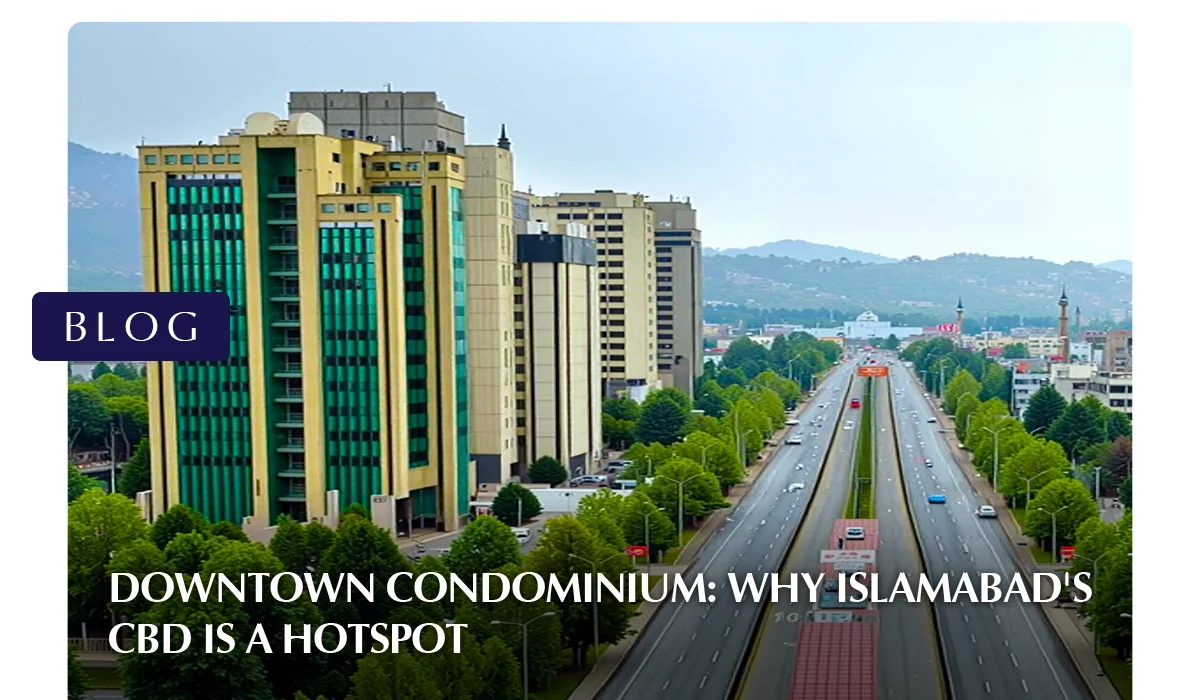
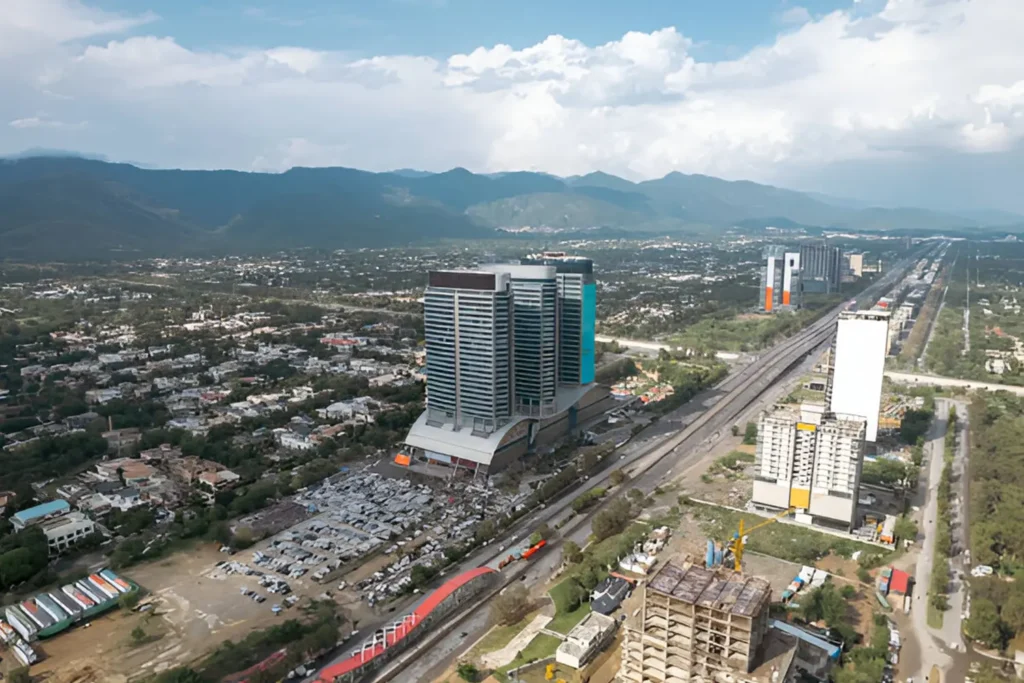
Islamabad’s commercial landscape is often described using the word “downtown Islamabad,” yet the city has never had an officially designated central business district. As urban expansion accelerated and new mixed-use developments emerged, multiple areas began marketing themselves as downtowns, creating confusion between real estate branding and economic reality.
In the absence of a formally planned CBD, perception has increasingly replaced evidence in shaping market narratives. This blog cuts through that ambiguity by relying strictly on multi-year commercial real estate data from 2018 to 2024, comparing long-term value trends, price-per-square-foot behaviour, and market stability across Islamabad’s major commercial zones to examine how actual downtown centrality is formed and sustained.
Indicator
Blue Area
New Blue Area
Gulberg
Park View City
Price per Sq. Ft (2024)
~PKR 500,000
Growing
~PKR 90,000
~PKR 81,000
Long-Term Growth
+196% (2018–24)
Positive (Since 2020)
Moderate
Moderate
6-Month Momentum
+22%
+4%
−8%
+6%
Market Stability
Very High
Medium
Low
Medium
Commercial Density
Highest
Rising
Low
Low
Growth Driver
Commercial Core
Core Extension
Residential-led
Residential-led
CBD Qualification
Yes
Emerging Extension
No
No
Islamabad’s Commercial Evolution and the Absence of a Planned CBD
Sector-Based Planning Without a Central Core
The original Islamabad master plan followed a low-density, sector-based layout. Commercial activity was distributed across local-sector markets rather than concentrated in a single central business district. Administrative and commercial functions were also spatially separated.
Population Growth Beyond Early Projections
Over time, Islamabad urban growth far exceeded early planning assumptions. The city’s population crossed two million, sharply increasing demand for housing and services. This growth placed pressure on land and infrastructure across the metropolitan area.
Rapid Expansion of the Built-Up Area
Islamabad’s built-up area expanded from about 58 km² in 2000 to nearly 256 km² by 2020. This represents more than a fourfold increase in urbanised land. Most of this growth occurred through horizontal expansion rather than vertical development.
Residential-Led Sprawl and Mixed-Use Development
Large-scale residential projects led the city’s outward expansion. Commercial and office spaces followed mainly to serve local residential demand. These areas functioned as mixed-use zones rather than high-density commercial centres.
How Downtown Islamabad Confusion Emerged
With no formally planned CBD, multiple areas began presenting themselves as downtown Islamabad. Real estate branding filled the gap left by planning ambiguity. This created confusion between perceived centrality and actual economic function within Islamabad’s commercial development.
Why Blue Area Became Islamabad’s Commercial Spine?
Central Position Along Jinnah Avenue
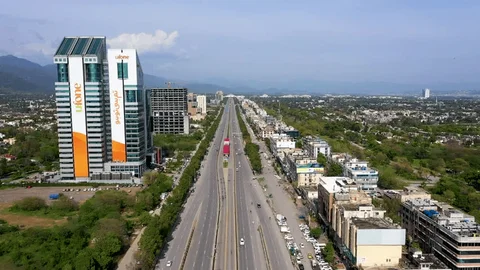
The Blue Area Islamabad history is inseparable from its strategic location along Jinnah Avenue. This corridor functions as Islamabad’s primary east–west axis, linking major residential sectors with administrative and institutional zones.
Located on Islamabad’s main arterial road
Direct connectivity to key sectors and civic areas
High visibility and accessibility for businesses
Planned Commercial Strip to Functional Core
Blue Area was originally designed as a mid-rise, mixed-use commercial strip. Over time, however, market demand reshaped its role. As Islamabad expanded, dispersed sector markets proved insufficient for large-scale corporate activity.
Initial mid-rise zoning
Gradual market-led densification
Shift from dispersed markets to centralised offices
Concentration of Corporate Headquarters
One of the defining features of Blue Area is the clustering of Islamabad corporate offices. Major national and multinational firms established headquarters in the area due to its centrality and prestige.
This concentration generated agglomeration benefits, attracting more firms and reinforcing commercial depth.
Presence of financial, telecom, and service-sector firms
High corporate visibility and institutional clustering
Strong demand for premium office space
Proximity to Administrative and Government Institutions
Blue Area’s rise was reinforced by its closeness to key government and administrative centres. Ministries, regulatory bodies, and public-sector offices are located in adjacent zones. This proximity supports frequent interaction between corporate and institutional actors.
Easy access to government offices
Strategic for policy, finance, and corporate coordination
Infrastructure, Transit, and Market Convergence
Factor
Impact on Commercial Centrality
Wide boulevards
Supports high traffic and visibility
Public transport corridors
Enhances accessibility and footfall
Traffic convergence
Increases market activity and liquidity
Evolution Into a High-Value Commercial Core
Over time, limited land supply and rising demand transformed Blue Area into Islamabad’s highest-value commercial zone. Mid-rise structures gave way to high-density, vertical development. This evolution cemented Blue Area as the city’s primary commercial spine rather than just another business district.
Long-Term Commercial Property Trends (2018–2024)
Analysing Islamabad commercial property price trends over multiple years provides a clearer picture of true market strength. Long-term trends reveal whether value growth is structural or driven by short-lived speculation. Between 2018 and 2024, distinct patterns emerged across Islamabad’s major commercial areas.
Blue Area: Sustained and Compounding Growth
Blue Area demonstrated the strongest long-term performance in the city.
Price per sq. ft increased by approximately 196%
From ~PKR 130,000 in 2018
To ~PKR 385,000 in 2024
Growth followed a steady, compounding trajectory
No sharp spikes or sudden corrections were observed
This pattern indicates persistent demand, limited land supply, and strong commercial fundamentals. Such stability is characteristic of mature downtown Islamabad markets rather than emerging or speculative zones.
Index Growth and Market Depth
In addition to rising prices, Blue Area’s commercial index nearly tripled over the same period.
Index growth reflects:
Appreciation
Transactional activity
Market stability
Rising index values signal depth and liquidity
Confirms that Blue Area real estate growth is structurally driven
Comparison With Peripheral Commercial Areas
Area
Growth Pattern
Primary Driver
Market Behavior
Blue Area
Compounding, consistent
Commercial core demand
Stable, resilient
Gulberg
Uneven growth
Horizontal expansion
Post-speculative correction
Park View City
Accelerated phases
Residential demand
Cycle-sensitive
Compounding Growth vs Speculative Spikes
Long-term Islamabad land value appreciation reflects economic centrality. Sustained growth indicates enduring demand and institutional presence. Short-term spikes, however, often result from speculation, marketing, or development announcements.
Between 2018 and 2024, Blue Area consistently outperformed peripheral markets. Its growth was gradual, predictable, and resilient, traits that distinguish a true commercial core from areas driven by temporary hype.
Short-Term Market Momentum and Liquidity Signals
While long-term trends show structural strength, Islamabad real estate momentum over shorter timeframes reveals real-time market sentiment. Six-month, one-year, and two-year growth rates indicate liquidity, buyer urgency, and confidence. These indicators help distinguish stable commercial cores from cycle-sensitive developments.
Blue Area Downtown Islamabad: Strong Momentum in a Mature Market
Blue Area stands out sharply in short-term performance.
6-month growth: ~22%
1-year growth: ~52%
2-year growth: ~102%
Such acceleration in an already high-value market is rare. Mature commercial districts typically show slower short-term movement due to pricing stability. In Blue Area’s case, strong Blue Area property demand reflects high liquidity, limited supply, and sustained interest from end-users and institutional buyers.
This level of momentum signals not speculation, but confidence in long-term commercial relevance.
Performance of Other Commercial Areas
Area
6-Month Trend
1-Year Trend
Market Signal
Blue Area
+22%
+52%
High liquidity, strong demand
New Blue Area
+4%
+15%
Early-stage consolidation
Gulberg
−8%
−14%
Market correction
Park View City
+6%
+39%
Residential-cycle driven
2024 Snapshot | Downtown Islamabad
Citywide averages often hide important variations within commercial districts. A block-level comparison provides a clearer view of where value, demand, and liquidity are most concentrated. In 2024, data from key commercial blocks highlights the sharp hierarchy within Price per square foot Islamabad markets.
Blue Area Block C: Peak Commercial Value
Blue Area Block C stands at the top of Islamabad’s commercial market.
Price per sq. ft: ~PKR 500,000
3-month growth: ~15%
1-year growth: ~63%
Commercial index: ~558
These figures place Block C firmly as the Islamabad most expensive commercial area. High quarterly growth at such elevated price levels signals intense demand, limited supply, and strong transactional liquidity.
Comparative Snapshot of Key Commercial Blocks
Area
Price per Sq. Ft
3-Month Change
1-Year Change
Index
Blue Area – Block C
~PKR 500k
+15%
+63%
558
Gulberg Civic Centre
~PKR 90k
+3%
−4%
172
Park View Downtown Islamabad
~PKR 81k
+6%
+26%
123
Why Peripheral “Downtown Islamabad” Don’t Behave Like Downtowns
Residential-led appreciation dominates growth
Commercial activity serves nearby residential communities rather than the citywide economy.
Price increases follow housing cycles, not commercial absorption.
Horizontal expansion replaces density
Peripheral zones expand outward through new land development.
Land supply remains relatively flexible, limiting long-term value pressure.
True downtown Islamabad rely on vertical consolidation due to land scarcity.
Greater exposure to speculative corrections
Rapid price increases are often driven by marketing and speculation.
Gulberg experienced negative momentum following earlier gains.
Speculative markets lose liquidity quickly when sentiment shifts.
Lack of institutional and corporate clustering
Peripheral areas do not host dense clusters of corporate headquarters.
Financial institutions and major offices are limited.
Agglomeration benefits remain weak or absent.
Function as local service markets
Most businesses cater to the surrounding residential populations.
Economic activity is localised rather than metropolitan in scale.
Despite branding, these areas do not operate as true downtown Islamabad mixed-use developments.
Long-standing commercial nucleus since early city development
Recently developed through outward expansion
Land value dominance
Highest price per square foot in the city
Significantly lower and cycle-sensitive
Corporate density
Dense clustering of national and multinational offices
Scattered, small-scale commercial presence
Administrative presence
Close proximity to major ministries and institutions
Limited or indirect access
Transit centrality
Located on Jinnah Avenue with major traffic convergence
Dependent on local access routes
Vertical development leadership
High-rise and high-density commercial zoning
Predominantly low- to mid-rise development
What This Means for Investors, Developers, and Policymakers
Islamabad’s commercial data does more than explain where downtown Islamabad is. It clarifies how different stakeholders should respond to the city’s evolving commercial hierarchy. The implications vary by role, but all point toward the continued importance of the central commercial corridor.
For Investors: Liquidity and Risk Profile
From an Islamabad commercial investment perspective, Blue Area offers a fundamentally different risk–return profile than peripheral markets. Its long-term appreciation, high transaction volume, and short-term momentum indicate strong liquidity.
High buyer depth reduces exit risk.
Price stability limits downside volatility.
End-users, not speculation, drive demand
This makes Blue Area investment potential more suitable for capital preservation and steady returns than for quick speculative gains.
For Developers: Vertical Opportunity Zones
Developers face a clear choice between horizontal expansion and vertical optimisation. Blue Area and its extension favour density-driven development due to land scarcity and sustained demand.
Factor
Central Corridor
Peripheral Areas
Growth model
Vertical densification
Horizontal expansion
Demand driver
Commercial absorption
Residential spillover
Value creation
Per sq. ft optimisation
Per plot expansion
Vertical commercial projects align more closely with proven market behaviour in the core.
For Policymakers: Densification vs Sprawl
An effective Islamabad urban policy must balance growth with efficiency. Strengthening the central commercial spine reduces infrastructure duplication and transportation strain. Densification within established corridors supports sustainable urban form.
Conclusion | Downtown Islamabad
Commercial data clearly shows that actual downtown Islamabad centrality is built through sustained value, density, and institutional concentration, not branding. Across both long-term and short-term indicators, Blue Area consistently outperforms all other locations. As the city continues to grow, strengthening this established core remains the most efficient and economically sound path forward.
BBC-featured Content Specialist with a sharp eye for search intent and a proven ability to turn content into a growth engine. I leverage cutting-edge digital marketing tools to craft strategies that fuel organic traffic, amplify brand growth, and own the local SEO landscape, particularly across the competitive real estate market. I help brands dominate search rankings and convert visibility into measurable business success.
Investing money wisely is one of the most important decisions you can make for your future financial security. While there are various investment options available, real estate has proven to be one of the most reliable ways to build wealth over the long term. For those interested in how to invest money in Pakistan, real estate offers a wealth of opportunities that can yield significant returns. However, navigating the real estate market in Pakistan can be a complex and challenging task for those unfamiliar with it. This is where a buyer’s agent for investment property comes into play.
In this article, we will explore how to invest money in Pakistan by using a buyer’s agent for real estate investments. We’ll dive into the importance of real estate as an investment opportunity in Pakistan, the role of a buyer’s agent, and how you can make the best possible decisions when looking to invest in property, including premium projects like Citadel 7 Corporate Tower by Chakor Ventures.
Why Invest in Real Estate in Pakistan?
Before we dive into the specifics of how to invest money in Pakistan, it’s important to understand why real estate is such a valuable investment option. Pakistan’s real estate market has been a steady performer, attracting both local and international investors due to several key factors:
1. Steady Appreciation
Real estate in Pakistan, especially in major cities such as Karachi, Lahore, and Islamabad, has historically appreciated at a consistent rate. As urban populations continue to grow, demand for residential and commercial properties increases. This makes real estate a relatively stable investment compared to other markets that may experience high volatility.
2. Rental Yields
Rental income is another attractive feature of real estate investments in Pakistan. With the expanding middle class and urbanization, demand for rental properties remains high, particularly in major cities. Investors who acquire rental properties can earn steady income streams from tenants, making it an appealing option for those seeking a more passive source of income.
3. Government Incentives
The government of Pakistan has introduced various incentives and policies to encourage real estate investments. These may include tax breaks, special financing schemes, and infrastructure development initiatives that make investing in property more appealing. The government’s push towards promoting affordable housing and expanding cities presents a unique opportunity for investors to capitalize on rising demand.
4. Diversification of Investment Portfolio
Investing in real estate provides a great way to diversify your portfolio. It offers a physical, tangible asset that is less prone to sudden fluctuations compared to stocks or bonds. This makes it an ideal option for long-term investment and wealth preservation.
With these benefits in mind, let’s now discuss how to invest money in Pakistan using a buyer’s agent for real estate property investment.
What is a Buyer’s Agent for Investment Property?
A buyer’s agent is a licensed professional who represents the buyer in a real estate transaction. The key difference between a buyer’s agent and a seller’s agent is that a seller’s agent is hired to work for the seller’s interests, while a buyer’s agent focuses on protecting the buyer’s best interests throughout the entire investment process.
For those unfamiliar with how to invest money in Pakistan or the local real estate market, a buyer’s agent for investment property is an invaluable asset. Their expertise can help ensure that you make the right choices based on your financial goals and avoid costly mistakes. Below, we’ll take a closer look at how a buyer’s agent can benefit you as a real estate investor.
Why Should You Use a Buyer’s Agent for Investment Property in Pakistan?
1. Market Expertise
A buyer’s agent is highly knowledgeable about the local real estate market. They are familiar with market trends, the economic environment, and the best-performing areas for property investments. This expertise is essential when you’re looking to invest in a foreign market or a market you are not familiar with. They can help identify the best investment opportunities based on the latest trends and future growth potential.
For example, if you’re looking for the best return on investment in Pakistan, a buyer’s agent can help you identify areas that are likely to see significant appreciation. These areas may include locations near new infrastructure projects, upcoming commercial hubs, or newly developed residential neighborhoods. They will also be able to tell you which properties offer the best rental yields, helping you make an informed decision.
2. Time-Saving
Searching for investment properties, visiting multiple locations, and doing research on the property’s history and legal standing can be time-consuming. A buyer’s agent can save you a great deal of time by narrowing down the options and presenting you with only the most promising properties that meet your criteria. This leaves you free to focus on other aspects of your life or business.
3. Negotiation Skills
One of the most valuable skills a buyer’s agent brings to the table is negotiation. Real estate transactions can involve complex negotiations on price, terms, and conditions, and having a skilled negotiator on your side can make a huge difference. They will help you secure the best price for the property and ensure the deal is in your favor. Their expertise can save you money and help you achieve a better return on investment.
4. Access to Exclusive Listings
Many properties, particularly high-demand ones, may not be available on public property listing platforms. A buyer’s agent has access to exclusive listings that may not be advertised publicly. This gives you an advantage by providing access to off-market opportunities that other investors may not know about, allowing you to secure prime properties before others can even consider them.
5.Due Diligence and Legal Support
Real estate transactions involve a significant amount of paperwork and legal requirements. A buyer’s agent ensures that all necessary due diligence is performed before finalizing the deal. This includes verifying the legal status of the property, checking for any encumbrances, confirming the property’s title deed, and ensuring that all documents are in order. By leveraging the expertise of a buyer’s agent, you can avoid costly legal issues down the line.
How to Invest Money in Pakistan Using a Buyer’s Agent for Investment Property
Now that we’ve established why a buyer’s agent is essential for real estate investment, let’s explore how you can invest money in Pakistan using a buyer’s agent.
1. Define Your Investment Goals
The first step in any successful investment journey is defining your goals. Before you begin working with a buyer’s agent, it’s essential to have a clear understanding of your investment objectives. Are you looking for long-term capital appreciation, short-term profits, or rental income?
A buyer’s agent will work with you to understand these goals and recommend properties that match your specific criteria. For example, if you are looking for the best return on investment in Pakistan through capital appreciation, they might suggest investing in newly developed areas that have strong future growth potential. If you’re more interested in generating rental income, your agent may recommend properties in areas with high tenant demand and stable rental yields.
2. Research Investment Opportunities
Your buyer’s agent will help you identify the best investment opportunities in Pakistan based on their market knowledge and research. They will present you with properties that fit your financial goals, taking into account factors such as location, property type, condition, and potential for future growth.
Whether you’re looking to invest in residential properties, commercial properties, or even mixed-use developments, a buyer’s agent will be able to pinpoint the best options for you. For example, if you’re looking for real estate investing in Pakistan in fast-developing cities like Lahore, Islamabad, or Karachi, they will guide you to the most promising districts that are poised for growth.
3. Evaluate the Property’s Potential
Once you’ve narrowed down your options, your buyer’s agent will conduct thorough due diligence on each property. This will include checking the legal status of the property, examining the ownership history, verifying the title deed, and ensuring that there are no legal issues. Additionally, they will assess the property’s location, infrastructure development, amenities, and surrounding neighborhood, all of which can impact its future value.
For instance, investing in properties near newly developed transportation hubs, commercial centers, or educational institutions can provide long-term growth potential and high rental demand.
4. Negotiate the Deal
Once you’ve found the property you want to invest in, your buyer’s agent will help you make an offer and negotiate the best possible deal. This could involve negotiating the price, payment terms, contingencies, and closing date. Having a professional negotiator on your side ensures that you secure the best possible price and conditions for your investment.
5. Finalize the Purchase
Finally, once your offer is accepted, your buyer’s agent will guide you through the entire closing process. They will ensure that all necessary documents are in order, handle the legal paperwork, and make sure that the transaction is smooth and hassle-free.
Premium Investment Opportunities in Pakistan: Citadel 7 and Citadel One3
When looking for the best investment opportunities in Pakistan, Chakor Ventures stands out with its exceptional real estate projects, offering great potential for investors.
Citadel 7 Corporate Tower (Islamabad)
Located in one of the most prestigious and rapidly developing commercial hubs of Islamabad, the Citadel 7 Corporate Tower is a state-of-the-art business complex designed to cater to the needs of modern businesses.
This project promises not only modern amenities but also excellent growth potential, as it is situated in an area that’s expected to see substantial commercial development over the coming years. Investing in this property is ideal for those looking to secure a stable return on investment through high-demand commercial spaces. As businesses continue to expand in Islamabad, Citadel 7 is expected to see significant appreciation in value, making it an excellent option for real estate investors.
Luxury Condominium Building
For those looking for luxury residential investment opportunities,Luxury Condominium Building offers a remarkable chance. Located in Islamabad, this luxury condominium development is set to redefine modern living with its upscale design, prime location, and world-class amenities. The demand for high-end residential properties in Islamabad is growing, and Citadel One3 offers an opportunity to invest in a premium property with the potential for high rental yields and long-term capital appreciation. Whether you’re interested in buying property for personal use or as an investment, Citadel One3 provides an attractive option for investors seeking the best return on investment in Pakistan’s luxury market.
Conclusion
Investing in real estate in Pakistan can be an incredibly lucrative opportunity, but it requires careful planning, research, and the right guidance to succeed. By working with a buyer’s agent, you can ensure that you’re making the best possible investment decisions while maximizing your return on investment. Whether you’re looking for capital appreciation, rental income, or both, a buyer’s agent can help you navigate the complexities of the market and secure the best investment opportunities.
Premium projects like Citadel 7 Corporate Tower and Luxury Condominium Projects by Chakor Ventures exemplify the best investment opportunities in Pakistan. These developments not only offer modern amenities and prime locations but also provide significant growth potential in Islamabad’s thriving real estate market. Real estate is one of the best ways to invest money in Pakistan, and with the right help, you can make smart decisions that will help you achieve your financial goals.
Understand how your investment performs over time with our inflation-adjusted real estate ROI calculator.
FAISALABAD – The city’s road infrastructure is being rapidly upgraded under the ongoing ‘Sarakain Bahal – Safar Asaan’ program, as repair and restoration work gains momentum along Sheikhupura Road up to Nishatabad Bridge.
Divisional Commissioner and Administrator Municipal Corporation Faisalabad, Raja Jahangir Anwar, said the government is utilizing all available resources to improve road conditions and provide residents with safer, smoother, and more convenient travel options. He emphasized that the initiative reflects the Punjab government’s commitment to enhancing urban mobility and public convenience across the province.
Alongside road repairs, anti-encroachment operations are underway throughout the city, including Faisalabad’s eight main bazaars, to reclaim public spaces and ensure unobstructed pedestrian and traffic movement. Authorities are also restoring traffic signals, illuminating streetlights, and completing asphalt work on link roads and inner streets to improve citywide connectivity.
Raja Jahangir Anwar noted that municipal services will continue uninterrupted during the development work and reaffirmed that the improvement drive will persist until Faisalabad’s infrastructure aligns with the standards envisioned by the Chief Minister of Punjab.
The “Sarakain Bahal – Safar Asaan” program is part of the Punjab government’s broader effort to modernize urban infrastructure, promote civic development, and facilitate efficient, safe travel for citizens across major cities.
BBC-featured Content Specialist with a sharp eye for search intent and a proven ability to turn content into a growth engine. I leverage cutting-edge digital marketing tools to craft strategies that fuel organic traffic, amplify brand growth, and own the local SEO landscape, particularly across the competitive real estate market. I help brands dominate search rankings and convert visibility into measurable business success.

A property valuation certificate is an official document that states the fair market value of a property after proper assessment. It is issued by either government authorities such as the Federal Board of Revenue (FBR) or by private firms registered with the State Bank of Pakistan (SBP). The certificate reflects the property’s worth based on its location, size, condition, construction quality, and current market trends.
This document is more than just a piece of paper, it plays a vital role in different financial and legal matters. It is required for taxation purposes, such as calculating capital gains tax and property tax. Banks and financial institutions demand it when approving loans or mortgages against property.
By understanding what a property valuation certificate is and why it matters, property owners and investors in Pakistan can make informed decisions and avoid legal or financial complications.
What Is a Property Valuation Certificate?
A property valuation certificate is an official document that states the fair market value of a property at a specific point in time. It acts as proof of how much a property is worth and is widely used for taxation, loans, legal transactions, and immigration purposes.
Who Issues the Certificate?
The certificate can be issued through two main channels:
Government Authorities: The Federal Board of Revenue (FBR) or local District Revenue Offices are authorized to issue property valuation certificates. These are commonly required for tax purposes, property registration, or legal documentation.
Private Valuation Firms: Firms that are registered with the State Bank of Pakistan (SBP) can also issue certificates. These are often used when applying for bank loans, mortgages, or financial evaluations, as banks rely on valuations from SBP-approved firms.
What Is Assessed During Valuation?
When a property is being evaluated for its certificate, surveyors and experts take into account a wide range of factors to calculate its value:
Location – where the property is situated, including city, neighborhood, and proximity to main roads or commercial hubs.
Structure and Materials – quality of construction, type of materials used, and overall condition of the building.
Soil and Land Quality – especially important for plots or agricultural land, where soil strength and land usability affect value.
Utilities and Amenities – access to water, gas, electricity, sewerage, and nearby facilities like schools, hospitals, and markets.
Market Comparables – prices of similar properties in the same area.
Interior & Exterior Quality – design, finishing, layout, and overall aesthetic appeal of the property.
In short, a property valuation certificate is a reliable document that reflects the true market worth of your property by considering all physical and market-based factors.
Who Issues the Property Valuation Certificate?
In Pakistan, property valuation certificates can be obtained through two main paths:
1. Government Path
The Federal Board of Revenue (FBR) and local Excise & Taxation offices are authorized to issue valuation certificates. In this process, an official surveyor visits the property, inspects it on-site, and evaluates its worth based on government valuation tables and prevailing market trends. Certificates issued by these authorities carry strong legal weight and are commonly used for:
Taxation purposes, such as calculating capital gains or property tax.
Property transfers and registration with government offices.
Legal disputes, where official proof of value is required in court.
2. Private Path
Alongside government bodies, private valuation firms registered with the State Bank of Pakistan (SBP) are also allowed to issue property valuation certificates. These firms follow professional valuation methods and provide detailed reports, often faster than government channels. Their certificates are especially useful for:
Bank loans and mortgages, as financial institutions rely on SBP-approved valuations before approving financing.
Investor needs, where quick and independent valuations are required for decision-making.
Property transactions, where buyers and sellers want a reliable, neutral estimate of value.
Both government and private paths serve important but slightly different purposes. While government-issued certificates are mandatory for legal and tax compliance, private firm certificates are preferred in financial and commercial matters like securing loans or finalizing investments.
Step-by-Step — How to Get Your Certificate
Getting a property valuation certificate in Pakistan is a straightforward process if you follow the right steps. Here’s how it works:
1. Gather Required Documents
Start by collecting all the necessary paperwork. Commonly required documents include:
Copy of your CNIC
Title deed or allotment letter of the property
Registry/Fard to confirm ownership
Recent utility bills (electricity, gas, water)
Any previous valuation reports (if available)
Having these documents ready helps avoid delays during the application process.
2. Submit Application
Once the documents are in order, submit your application through the proper channel. This can be done by:
Visiting the FBR portal or the local revenue/excise office for a government-issued certificate.
Contacting an SBP-registered private firm if you are seeking a certificate for bank loans or faster service.
3. Property Inspection
After the application is filed, a surveyor or valuation officer will visit your property. During the inspection, they assess:
Location and accessibility
Size and layout of the land or building
Quality of construction and building materials
Nearby amenities and utilities
Comparison with similar properties in the area
This inspection is the foundation for determining the accurate market value.
4. Receiving the Certificate
Once the evaluation is complete, the certificate is prepared and issued. In most cases, this process takes about 5 to 10 working days, though timelines may vary depending on the authority or firm you apply through.
5. Fee Payment
The cost of getting a property valuation certificate depends on the issuing body:
Government-issued certificates usually come at a lower fee.
Private firm certificates may cost more but are often faster and include detailed reports accepted by banks.
By completing these steps, you can obtain an official property valuation certificate that reflects the true market value of your asset and can be used for taxation, loans, legal, or personal purposes.
DC Value, FBR Value, and Valuation Methods
Property valuation in Pakistan can be a bit confusing because different authorities use different values. To understand the process better, it’s important to know the difference between DC value, FBR value, and market value, along with the common methods used to calculate property worth.
DC Value (District Collector Rate)
The DC value is the rate set by the local District Collector for property transactions. It is mainly used to calculate:
Stamp duty
Capital Value Tax (CVT)
This value is often lower than the market rate and is used by provincial authorities when registering or transferring property.
FBR Value
The FBR value is determined by the Federal Board of Revenue and is applied nationwide. It plays a key role in calculating federal taxes such as capital gains tax and withholding tax on property transactions. Like DC values, FBR rates are also usually below the actual market price.
Market Value
The market value reflects the actual price a buyer is willing to pay and a seller is willing to accept for a property in open market conditions. It is usually higher than both DC and FBR values, which creates a gap between recorded values and real transaction prices.
FBR Value vs DC Value vs Market Rates
DC Value: Used at the provincial level for stamp duty and CVT. FBR Value: Used at the federal level for taxation purposes.
Market Value: The real price based on demand, location, and market conditions.
This difference often leads to discrepancies in property taxation and can create confusion for buyers and sellers.
Five Common Valuation Methods
Property experts and surveyors generally use one or more of the following methods to determine accurate value:
Comparison Method – Compares the property with similar ones recently sold in the area.
Investment Method – Calculates value based on the expected return or rental income.
Residual Method – Common for development projects; value is based on potential profits after construction or redevelopment.
Profits Method – Often used for commercial properties like hotels or shops, where income generation determines value.
Cost Method – Considers the cost of building the property today minus depreciation, plus land value.
These methods provide a more realistic and detailed assessment of property value compared to the fixed DC or FBR tables.
Policy Context & Challenges
The property valuation system in Pakistan has long faced issues of inconsistency and lack of transparency. While steps have been taken to improve the process, several challenges still remain.
Lack of Standardization
One of the biggest challenges is the absence of a uniform valuation system across the country. Different authorities apply different values—DC rates, FBR values, and market rates—which creates confusion for buyers, sellers, and investors. This lack of standardization often results in undervalued transactions being recorded officially.
Updates by FBR
Since 2016, the Federal Board of Revenue has updated its valuation tables for multiple cities. These revisions aimed to bring official values closer to market prices and increase tax revenue. However, even after updates, FBR values still remain lower than actual market rates. This gap exists partly to encourage compliance and partly to reduce pressure on taxpayers, but it continues to distort the real estate market.
Encouragement of Black Money
Because of the difference between official values and true market rates, many property transactions are recorded at artificially low figures. The remaining amount is often exchanged in cash or “grey money.” This practice allows tax evasion, reduces government revenue, and makes it difficult to track the true flow of money in the real estate sector.
Market Distortion
These weaknesses in the system affect fair property pricing. Buyers and sellers may face mistrust in transactions, investors struggle with unclear valuations, and the government loses significant tax income. Without a standardized, transparent system, the property market remains vulnerable to manipulation.
Other Related Property Processes & Legal Terms
Property valuation is closely tied to other legal processes in Pakistan’s real estate sector. Understanding these related terms and documents is important for smooth transactions.
Property Registration vs Valuation
Valuation determines the market worth of a property. It helps in tax assessment, loan approval, and ensuring a fair deal between buyers and sellers.
Property registration, on the other hand, is the legal process of recording the property under the buyer’s name in government records. This is done through local registrars or revenue offices. Without proper registration, even a valued property has no legal standing in ownership disputes. Together, valuation and registration ensure that a property is both fairly priced and legally protected.
Key Documents in Property Ownership
Fard– An official record of ownership, issued by the revenue department.
Inteqaal – The process of transferring ownership from one person to another.
Jamabandi – A land record that shows details of ownership, cultivation, and revenue collected.
Gardavri – A seasonal record of crops and land use, important for agricultural properties.
Haq-e-Shufa – The “right of pre-emption,” allowing certain relatives or neighbors to claim first right if a property is being sold.
Knowing these terms helps property buyers and sellers navigate legal requirements and avoid disputes.
FAQs
Here are answers to some of the most common questions about property valuation certificates in Pakistan:
How long does it take?
Usually between 5 to 10 working days, depending on whether it’s processed by a government office or a private firm.
Can I get a free valuation?
No. Property valuation always involves a fee, as surveyors and agents must be paid for their professional assessment.
Which option is better: government or private certificate?
Government-issued certificates carry more legal and tax-related weight, making them necessary for official transactions.
Private certificates are generally faster and are preferred when applying for loans or mortgages.
What if I disagree with the valuation?
You can request a revaluation or file an appeal through the concerned authority or valuation firm. In many cases, presenting updated market data can support your case.
Conclusion
A property valuation certificate is more than just a formality—it is a key document for ensuring transparency, fairness, and legal compliance in Pakistan’s real estate market. From paying taxes to securing bank loans and even applying for visas, this certificate proves the true market value of your property and helps prevent disputes.
Both government-issued and private certificates serve important roles. Government certificates are essential for legal and tax matters, while private certificates provide speed and flexibility, especially in financial dealings. Choosing the right path depends on your specific needs.
In Pakistan’s fast-evolving real estate market, property management companies play a crucial role in helping landlords, investors, and overseas Pakistanis manage their assets efficiently. Whether it’s handling tenants, maintaining properties, or ensuring timely rent collection, a professional property management firm can save time, reduce stress, and maximize returns.
In this blog, we explore the top property management companies in Pakistan, what services they offer, and how to choose the right one for your real estate needs.
What is Property Management?
In Pakistan, where the property market is booming and urban centers are expanding rapidly, it has become an essential service rather than a luxury. There are a lot of property management companies in Pakistan offering quite beneficial services.
From residential apartments and houses to commercial plazas and even large industrial sites, property management ensures that properties are not only maintained but also generate consistent returns.
In today’s fast-paced environment, property management in Pakistan goes beyond taking care of buildings. It’s more about protecting investments, ensuring tenant satisfaction, and maximizing long-term value.
By entrusting professionals with the daily details, property owners can relax while their assets continue to work for them.
Top Property Management Companies in Pakistan
Sapphire Properties
Universal Marketing
Zameen
Graana
The Cloud Services
Apnelinks
SkyOne Real Estate
Square Nine International
Property Hub
Zem Builders
Sapphire Properties
Offers a wide range of real estate services:
Land acquisition
Real estate consultancy
Society development
Portfolio management
Joint venture support
Serves Lahore, Islamabad, Murree, Rawalpindi, and Karachi.
Targets expat Pakistanis with dedicated investment and consultancy services.
Universal Marketing Inc.
Services include:
Property investment guidance
Real estate consultancy
Project development support
After-sales customer service
24/7 consultation
Expert investment advice
Operates mainly in Peshawar with a focus on consistent client engagement.
Zameen
Large-scale real estate platform for:
Buying, selling, and renting properties across Pakistan.
Project marketing for developers.
Investment consultation.
Offers data-driven property valuations and portfolio services.
Also has a mobile app for users and agents.
Graana
Offers:
Verified listings for rent, sale, and purchase.
Property investment services via Imarat Group Projects.
Vetted legal and approval processes for safe investments.
Support for both end-users and investors via Property Ownerships, Approvals, Demand and Delivery model.
Apnelinks
Offers comprehensive digital property management:
Renting, tenant relations, and maintenance.
All services are managed through a smart account via their digital platform.
Services include:
Property Management – covers operations, tenant services, and upkeep.
Project Management – for real estate developments.
Investment Management – includes market research, advisory, and value optimization.
Portfolio Creation & Strategy Planning – helping clients build and manage real estate portfolios.
Strong focus on tech-enabled, user-friendly service for investors and homeowners.
The Cloud Services
Leading real estate and property development company based in Islamabad.
Key services include:
Luxury apartment & villa development in areas like Mumtaz City, Gulberg Greens, and B-17.
Smart building solutions with integrated voice/data connectivity.
Energy-efficient design and construction, lowering long-term management and operational costs.
Emphasis on technology-driven, sustainable housing and signature developments.
Focused more on property development and sales than day-to-day tenant management.
Property Hub
Property Hub delivers customized property management solutions, covering services such as tenant screening and routine upkeep. Their team is recognized for its reliability and prompt support.
Square Nine International
Specializing in upscale real estate, Square Nine International offers complete management services, from property upkeep to securing qualified tenants. They are a top choice for owners of luxury residences.
SkyOne Real Estate
SkyOne Real Estate oversees both its own developments and those of its affiliated partners. Their strong relationships with tenants and builders alike make them a trusted and efficient property management provider.
Zem Builders
Zem Builders provides comprehensive real estate development and property management services, focusing on premium residential and commercial projects. Known for their innovative design and attention to detail, they also offer post-possession management, ensuring that properties remain well-maintained and tenants are properly supported. Their commitment to quality and customer satisfaction sets them apart in the market.
Types of Property Management
Property management in Pakistan isn’t a one-size-fits-all service. Different types of properties demand different strategies, expertise, and levels of involvement. Whether it’s ensuring smooth rent collection in an apartment building or managing large-scale industrial spaces, property management companies adapt their services to match the property’s unique needs.
Residential Property Management
This is the most common type of property management in Pakistan, especially in cities like Lahore, Karachi, and Islamabad where rental demand is high.
Managing houses, apartments, and rental units
Tenant screening and lease agreements
Collecting monthly rent on time
Handling maintenance requests and emergency repairs
Ensuring tenant satisfaction to reduce turnover
Commercial Property Management
Commercial properties often require a more professional, business-oriented approach. These properties are typically high-value and high-visibility investments.
Managing corporate offices, shopping plazas, and retail outlets
Ensuring consistent rental yields through reliable tenants
Overseeing maintenance of shared spaces like lobbies, elevators, and parking areas
Handling marketing and leasing for vacant spaces
Compliance with local business and commercial property regulations
Industrial Property Management
Industrial property management is less common but highly specialized in Pakistan. It’s crucial for investors who own warehouses, factories, and logistics hubs.
Supervising warehouses, factories, and storage facilities
Ensuring compliance with safety and industrial regulations
Coordinating with contractors and vendors for repairs and upgrades
Managing large-scale leases with companies for long-term use
Providing security and access control
Mixed-Use Property Management
As urban centers evolve, mixed-use properties are gaining popularity in Pakistan especially in developments that combine residential, retail, and office spaces.
Coordinating multiple property types under one roof
Balancing needs of residents, shop owners, and office tenants
Handling marketing and leasing across different sectors
Ensuring smooth operations and upkeep of shared spaces
Maximizing rental yields through diverse income streams
Services Offered by Property Management Companies
Property management companies in Pakistan are more than just middlemen between landlords and tenants. They offer a wide range of services designed to protect your investment, reduce stress, and maximize returns. From handling tenants to managing finances, here’s what they bring to the table:
Tenant Management
The heart of property management lies in dealing with tenants. Companies take care of the entire process so property owners don’t have to worry about day-to-day interactions.
Screening tenants to ensure reliability and minimize risks
Drafting and managing leasing agreements in line with local laws
Collecting rent on time and following up on delays
Handling tenant complaints and ensuring satisfaction
Maintenance & Repairs
Well-maintained properties retain higher value and attract better tenants. Property management companies ensure your property stays in top shape.
Routine upkeep such as cleaning, plumbing, and electrical checks
Handling emergency repairs swiftly to reduce downtime
Outsourcing contractors and monitoring their work for quality assurance
Scheduling preventive maintenance to avoid costly damage in the future
Legal & Documentation Support
Navigating Pakistan’s property laws can be complicated. Professional management companies simplify the process by handling all paperwork and compliance.
Preparing and securing tenancy contracts
Ensuring compliance with local tenancy laws and regulations
Managing registration of property documents when needed
Resolving disputes through legal support and mediation
Financial Management
Keeping track of finances is essential for property owners, especially overseas Pakistanis. Property managers ensure complete transparency and proper reporting.
Rent accounting and maintaining detailed financial records
Expense tracking for repairs, maintenance, and services
Preparing ROI reports to show income versus expenses
Offering online access to financial data for easy monitoring
Marketing & Leasing Services
Vacant properties can be costly. Property management companies work to minimize vacancy periods and secure reliable tenants.
Advertising vacant units on property portals and local platforms
Showcasing properties through professional photos and listings
Handling property viewings with potential tenants
Negotiating leases to ensure fair rental terms and steady income
How to Choose the Right Property Management Company?
Selecting the right property management company is key to protecting your investment and ensuring long-term returns. Here are the most important factors to consider:
Experience & Track Record
Look for a company with proven experience in managing properties similar to yours, whether residential, commercial, or luxury. Ask for case studies or references.
Range of Services
A good property management firm should offer end-to-end solutions: tenant screening, rent collection, maintenance, legal compliance, and regular reporting.
Communication & Transparency
Clear, consistent communication is vital. Choose a company that provides regular updates, responds promptly to queries, and offers transparent billing practices
Local Market Knowledge
Firms with deep understanding of local real estate trends can better price, market, and manage your property.
Reputation & Reviews
Check client reviews, testimonials, and third-party ratings. A well-reviewed company is more likely to deliver professional and reliable service.
Fee Structure
Understand how they charge, flat fee, percentage-based, or service-specific. Ensure there are no hidden costs and that the pricing matches the value offered.
Technology & Tools
Companies that leverage digital platforms for property listings, rent collection, and maintenance requests often offer more efficient service.
Conclusion
Property management companies are there for property owner’s convenience. It’s important to choose the one that suits your requirements.
Purchasing a property is considered undoubtedly one of the most reliable, conservative and safe investments in Pakistan. However, a vast majority of people get into the business without having any prior knowledge about property registration. Without proper registration, even the purchase of a house, plot, or commercial shop remains legally incomplete.
The government has further strengthened property laws and digitalized registration systems across provinces to make the process more transparent and less time-consuming. With online registration portals now active in Punjab and Sindh, property buyers can initiate their cases digitally, pay government fees online, and track applications in real time.
In this blog, Chakor Ventures – best real estate developer in Pakistan has come up with a detailed and step-by-step guide on how to register your property in Pakistan.
What Is Property Registration?
Property registration is the legal process of recording ownership of immovable property with the government. It ensures the buyer’s title is recognized under the law.
Registry (Bay-Nama): A sale deed or transfer document recorded with the sub-registrar.
Mutation (Inteqal): Entry of ownership in land revenue records after registry.
Property Transfer: Broader term covering sale, gift, inheritance, or exchange.
The process is governed by:
Registration Act, 1908 – regulates registration of deeds.
Land Revenue Act, 1967 – deals with revenue records and mutation.
Stamp Act, 1899 – defines stamp duty and fee structures.
3. Why Property Registration Is Important?
Property registration is a crucial step when transferring the property. The reasons are mentioned below:
Establishes undisputed legal ownership.
Protects buyers from fraudulent claims or fake documents.
Grants full rights to sell, lease, or gift the property.
Enables use of property as collateral for loans.
Serves as evidence in court disputes or successin claims.
Key Documents Required for Registration
Here is a complete list of required documents for the property registration process:
CNICs of buyer, seller, and witnesses.
Sale deed (Bay-Nama).
Ownership certificate (Fard).
NOC for registration of propertyfrom housing society or development authority.
Encumbrance certificate confirming no legal disputes.
Power of attorney (if transaction through an agent).
Affidavit confirming transaction authenticity.
Tax receipts: Stamp Duty, Capital Value Tax (CVT), and registration fee.
Step-by-Step Property Registration Manual Process
Manual property registration involves the following steps:
Verify title and ownership (Fard) at the local land records office.
Prepare sale deed through a licensed deed writer.
Pay government fees (stamp duty, CVT, registration).
Appear before sub-registrar with two witnesses.
Biometric verification via NADRA system.
Receive registered deed within 7–14 working days.
e-Registration of Property (Punjab & Sindh)
Punjab and Sindh governments have initiated online property registration which allows people to check property registration details online and easily complete the registration process without having to visit registrar offices.
Punjab property registration process is now online and the process involves following steps.
Step 1: Account & Sign-In
Go to the PLRA website and select “Access e-Registration Portal.”
Enter your CNIC and security code to log in.
If you are new, create an account first, then sign in.
Step 2: Start a New Registry (اندراجِ رجسٹری)
On the dashboard, review registry number, tehsil, and registry type.
Click “اندراجِ رجسٹری” to begin a new entry.
Fill in all required registry details for the property.
Scroll to e-Stamp fee submission and open it.
Enter your e-Stamp challan information and save.
Step 3: Record Fee Payments (e-Stamp, Tax on property registration, Service Charges)
Paste the same challan number for the council where required.
Enter CPR number, bank name, and branch to record taxes paid from your bank challan.
Open Advance Tax and enter the CPR number again.
Open PLRA Service Charges and input the submitted challan number.
Save after each entry.
A new Registry Details screen will appear; complete any remaining fields and save.
Step 4: Enter Buyer (Mushtari) Details
Click “Mushtry / Mushtari” (Buyer) and enter:
CNIC, name, father/spouse name, nationality, relation, etc.
Add property identifiers: Property number/unit, area/measurement, Khasra/Khewat/Khatooni as applicable.
Step 5: Enter Witnesses’ Details
Add two witnesses with CNICs and personal particulars.
Review all spellings and numbers carefully.
Complete any remaining property details if prompted.
Step 6: Upload Supporting Documents
Attach clear scans of:
Buyer/seller CNICs
e-Stamp challan and CPR
Paid bank challans (advance tax, service charges)
NOC/society or authority letters, ownership papers
Power of Attorney (if applicable)
Affidavits and any other portal-required documents Then save.
Step 7: Generate & Review the Draft Registry
Use “Print Registry” to generate the draft.
Cross-check every field against your documents.
Fix errors now to avoid queries or rejection.
Step 8: Submit to the Registrar
Finalize the file in the portal.
Submit electronically to the Sub-Registrar’s office.
Note your application/registry number for tracking.
Sindh e-Registration Portal
Allows online application and challan payment, though physical verification remains necessary. Here are the following step for e-registration in sindh
Create an account on the relevant portal.
Enter sale deed and challan details.
Upload required documents.
Submit online application.
The Registrar’s office verifies and finalizes registration.
Property Registration Charges 2025
Fee structures and timeframes can slightly vary depending on Province, City/Tehsil, type of property (urban/rural, commercial/residential), filer vs. Non-filer status.
Jurisdiction
Stamp Duty
Capital Value Tax (CVT)
Registration Fee
Punjab
1% (urban areas)
2%
1%
Sindh
2%
2%
1%
How to Avoid Property Fraud and Scams?
When registering property in Pakistan, buyers must stay alert to common scams such as fake or forged ownership documents, double registry where a single property is sold to multiple buyers, brokers charging inflated fees, illegal encroachments or occupation, and misuse of power of attorney through identity theft.
To avoid these risks, it is essential to use only official government portals such as PLRA in Punjab, SLRA in Sindh, or the relevant Board of Revenue portals. Always verify the seller’s ownership title and any encumbrances before proceeding, and hire licensed lawyers or deed writers to prepare and review documents.
Keep all original papers in a safe location, and most importantly, physically visit the property before making the final payment to ensure the transaction is both secure and legally sound.
Conclusion
Property registration in Pakistan is not just a formality, it is the foundation of secure and legal ownership. With digital reforms (Punjab & Sindh) the process is faster and more transparent, but due diligence remains essential. Whether you are a local buyer, an overseas investor, or inheriting property, always ensure registration through legal and official channels.
FAQs
How long does property registration take?
7–14 working days for manual, 3–7 days for e-registration (if documents are complete).
Can I register property online?
Yes, in Punjab and Sindh through official portals.
What happens if I don’t register my property?
Ownership remains incomplete, and you risk legal disputes or losing rights.
What’s the difference between Inteqal and Registry?
Registry records the transaction, while Inteqal updates ownership in revenue records.
How to check property registration online?
You can visit the relevant government official portals. PLRA for Punjab and SLRA for Sindh.
Is biometric verification mandatory?
Yes, biometric through NADRA is compulsory in all provinces.
Is property registration available in Islamabad?
No, Property registration is not fully available in Islamabad.
Do Property registration charges are same in all cities?
No, property verification charges vary for each city. For instance; property registration charges in karachi are different from property registration charges in Lahore and so on.
Imagine Mr. Hamid Ali, a first-time investor in Lahore. He had saved for years to buy a small commercial space, but when the agreement papers landed on his table, he felt lost in legal jargon. Terms like “lease” under the Transfer of Property Act, mortgage clauses, and Section 59 made no sense to him. Many investors like Ali face the same challenge: real estate contracts filled with technicalities that can either safeguard your future or leave you vulnerable. This is where understanding the Transfer of Property Act in Pakistan becomes crucial. The Transfer of Property Act (TPA) governs how property is transferred, leased, mortgaged, or sold in Pakistan. It’s not just a legal document; it’s the foundation that ensures transparency and fairness in real estate transactions. Let’s break it down in simple, conversational terms so you can make informed decisions.
What Is the Transfer of Property Act in Pakistan?
The Transfer of Property Act, enacted during British India and still applicable in Pakistan with modifications, regulates the transfer of immovable property. In essence, it outlines who can transfer property, the rights they have, and how these rights are transferred to others.
One of its most important clauses, Section 6 of the Transfer of Property Act, defines what can and cannot be transferred. For example, property tied to future inheritance or restricted by law cannot be transferred. This clause protects buyers from fraudulent or invalid sales.
Lease Under the Transfer of Property Act
A common transaction in real estate is leasing property. But what exactly is a lease?
Under the Act, a lease is defined as the transfer of the right to enjoy a property for a specified time in exchange for rent or compensation. This differs from ownership here; you don’t “own” the property but have the legal right to use it.
Rights of Tenants Under the Transfer of Property Act
Tenants are also given legal protection:
The right to peaceful enjoyment of the property.
The right to claim damages if the landlord fails to maintain the premises.
The right to remain on the property for the duration of the lease unless lawfully terminated.
This ensures that both landlords and tenants are bound by fair rules, reducing disputes.
Difference Between Lease and License Under the Transfer of Property Act
Many confuse a lease with a license, but the Act draws a clear distinction.
Lease: Grants an interest in the property with legal rights to enjoy it for a period.
License: Merely allows the licensee to use the property without creating any legal interest.
For instance, if Ali rents an office space for 5 years, that’s a lease. But if he only gets permission to use a hall for a one-day event, that’s a license.
Different Types of Mortgage Under the Transfer of Property Act
Buying property often involves financing, and mortgages are a central part of the process. It defines different types of mortgages under the Transfer of Property Act, including:
Simple Mortgage: Property is security, but possession remains with the owner.
Mortgage by Conditional Sale: Ownership shifts if repayment is not made.
Usufructuary Mortgage: The lender gets possession and uses the income from the property.
English Mortgage: Property is transferred outright but reverts when the loan is repaid.
Each type carries unique rights and responsibilities, making it essential for buyers to know what they’re signing up for.
Why Buyers Must Understand the Act
The Transfer of Property Act in Pakistan is not just for lawyers; it’s for anyone looking to invest in property. Whether it’s ensuring your lease is valid, knowing your rights as a tenant, or confirming that your mortgage terms are fair, these clauses directly impact your financial future. Ali’s story reminds us that a lack of awareness can lead to confusion or even fraud. But with basic knowledge of the Act, buyers can protect themselves from risks.
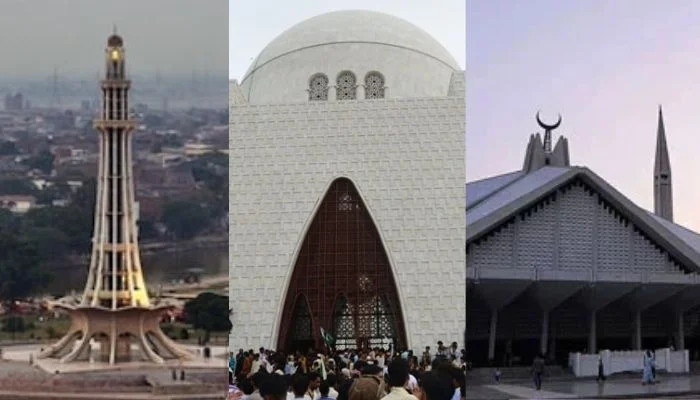
How Chakor Ventures Helps You Navigate Property Laws
At Chakor Ventures, we believe real estate investment should be transparent and stress-free. That’s why we don’t just develop properties; we guide investors through critical legal frameworks like the Transfer of Property Act. From understanding the rights of the lessee under the Transfer of Property Act to ensuring compliance with Section 6 and Section 59, we help you make informed decisions that keep your investments secure and profitable. If you’d like a deeper dive into the clauses, check out our detailed guide here: Transfer of Property Act Pakistan.
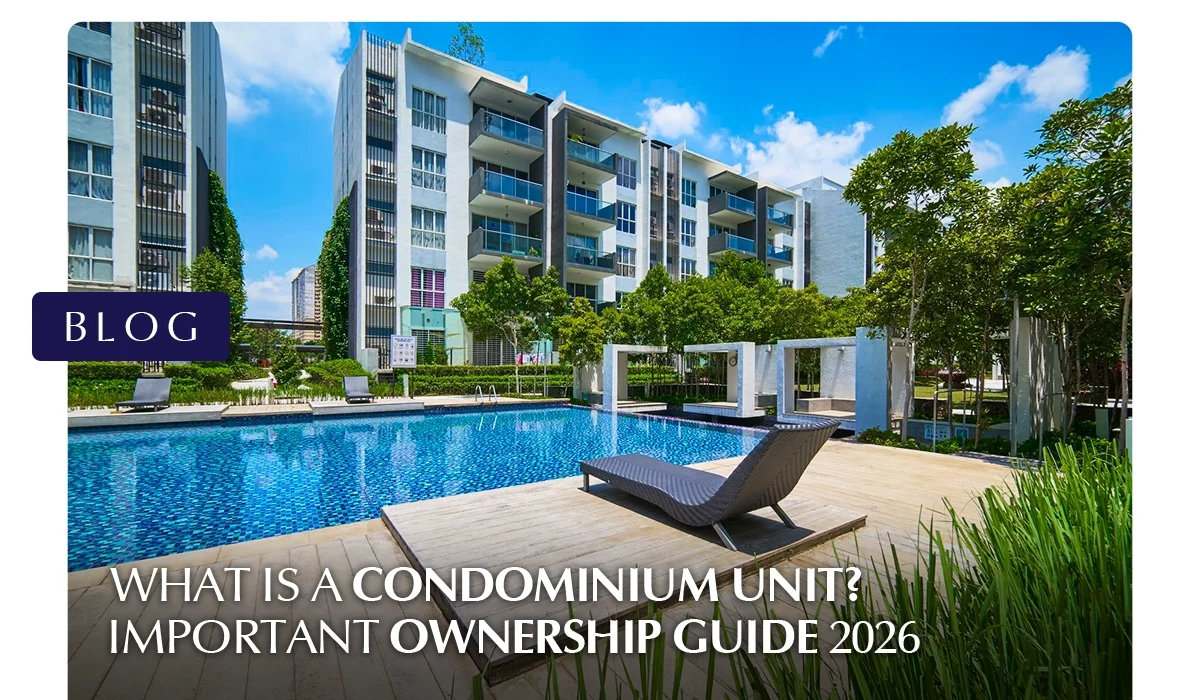
Why the Transfer of Property Act Matters for Every Buyer and Investor
The Transfer of Property Act Pakistan is the backbone of real estate transactions. It explains everything from leases to mortgages, ensuring transparency between buyers, sellers, and tenants. Key provisions like Section 6 and Section 59, along with clarity on the difference between lease and license under the Transfer of Property Act, can help you avoid costly mistakes. So, whether you’re leasing a property, mortgaging for a new home, or renting out a commercial space, understanding the Act gives you control and confidence. And with Chakor Ventures by your side, navigating Pakistan’s complex real estate laws becomes simpler, smarter, and far more secure.
FAQs
What is the Transfer of Property Act in Pakistan? The Transfer of Property Act Pakistan governs how immovable property is transferred, leased, mortgaged, or sold. It ensures transparency and fairness between buyers, sellers, and tenants in real estate transactions.
What is the difference between a lease and a license under the Transfer of Property Act? A lease creates a legal interest in the property, granting tenants rights to enjoy it for a set period. A license, on the other hand, only permits usage without transferring any legal interest.
What are the different types of mortgage under the Transfer of Property Act? The Act defines several types of mortgages, including simple mortgage, mortgage by conditional sale, usufructuary mortgage, and English mortgage, each carrying unique rights and responsibilities.
Why should property buyers understand Section 6 and Section 59 of the Transfer of Property Act? Section 6 defines what property can or cannot be transferred, while Section 59 deals with the legal requirements of mortgage deeds. Knowing these safeguards buyers from invalid agreements and fraud.