Pakistan is a country in motion. At Chakor, our Developments section brings you the latest on real estate projects, infrastructure works, and urban growth initiatives transforming cities and communities across the country.
From newly launched housing schemes to large-scale commercial builds, stay up to date with the developments that are defining where Pakistan is headed.
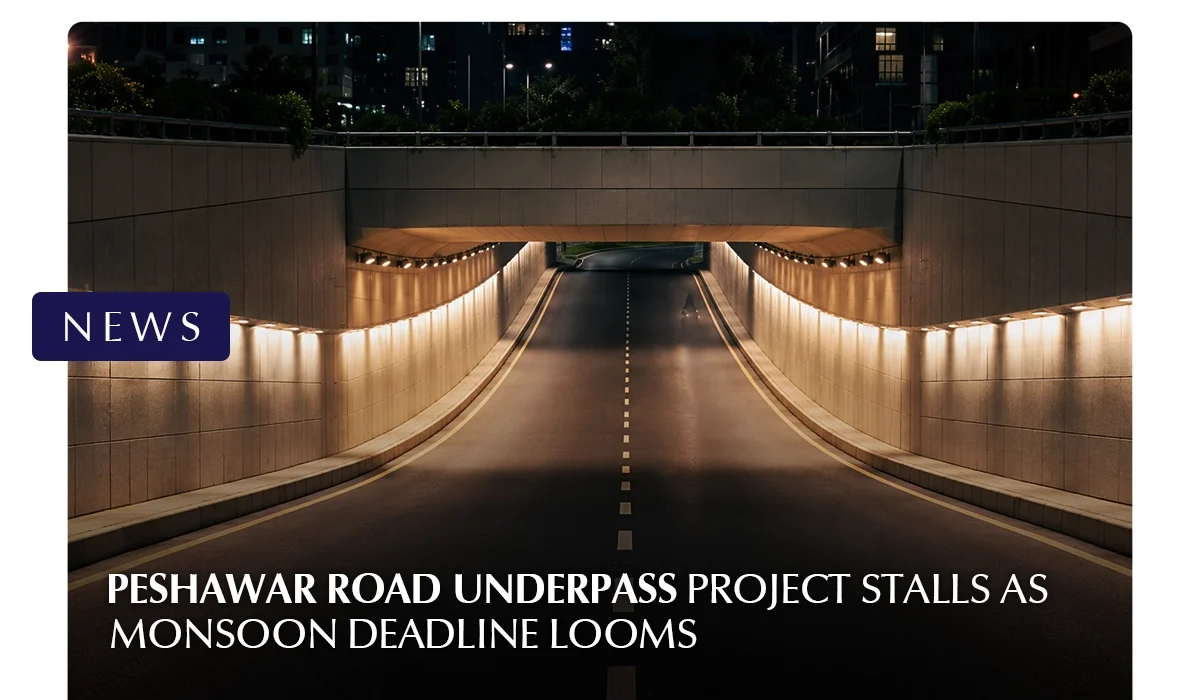
RAWALPINDI: The Punjab Communication and Works (C&W) Department has yet to break ground on three planned underpasses along Peshawar Road, with the monsoon season now less than a month away.
The underpasses, to be built at Race Course Park, Army Graveyard, and Chairing Cross, are central to a 25-kilometre signal-free corridor linking the Islamabad Expressway to Motorway Chowk. Once operational, the corridor aims to cut travel time between the two points to 15–20 minutes.
While the GPO Chowk interchange was completed last year and the Kutchery Chowk remodelling wrapped up in May, formal construction on the three remaining structures has not commenced. Completion is now projected in the next fiscal year.
Officials attribute the delay to ongoing preparatory work. The executing agency is prioritising drainage infrastructure and service road construction before excavation begins, so that monsoon rains do not disrupt the project mid-course.
Formal digging is expected to begin within one to two weeks, after which completion is estimated at two months. Traffic police have been asked to prepare a revised traffic management plan, and the Rawalpindi Cantonment Board has been directed to carry out patchwork on designated alternative routes.
On the utility front, Executive Engineer Qamar Saqib of the Punjab Highway Department confirmed that the relocation of Sui gas pipelines, telephone cables, and electricity infrastructure along the Race Course to Qadir Motors stretch has been completed.
Construction experts, however, warn that excavation during monsoon rains risks waterlogging in open trenches, potential rework, and restricted use of heavy machinery, all of which could extend timelines considerably.
Whether authorities can deliver within their stated window remains an open question for the thousands of commuters dependent on this corridor daily.
BBC-featured Content Specialist with a sharp eye for search intent and a proven ability to turn content into a growth engine. I leverage cutting-edge digital marketing tools to craft strategies that fuel organic traffic, amplify brand growth, and own the local SEO landscape, particularly across the competitive real estate market. I help brands dominate search rankings and convert visibility into measurable business success.
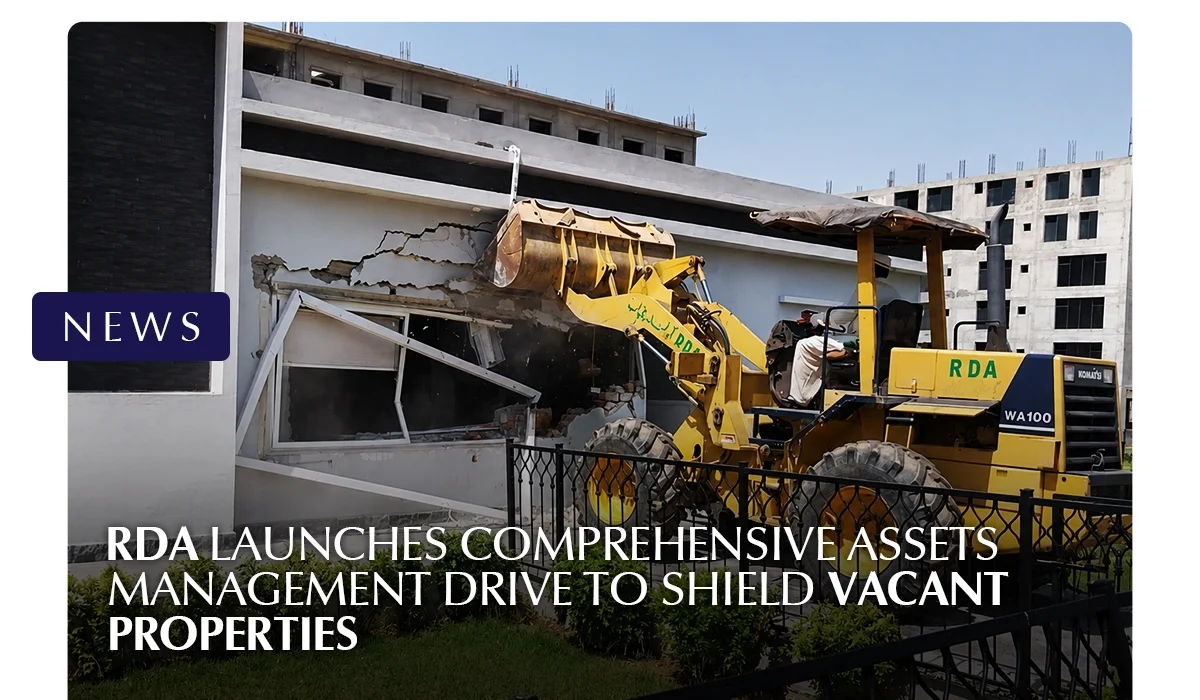
RAWALPINDI: The Rawalpindi Development Authority (RDA) has introduced a new Assets Management initiative aimed at protecting public land, generating sustainable revenue, and making better use of long-neglected properties across its housing schemes.
The initiative was formally unveiled at a high-level briefing held at the RDA Conference Room, chaired by the Commissioner of Rawalpindi and the Director General of RDA. Senior officials from finance, planning, engineering, and estate management departments attended the session, reflecting the broad institutional commitment behind the programme.
Director Estate Management Maleeha Iesar led the presentation, outlining a three-part strategy focused on: preventing illegal encroachment on RDA-owned land; developing vacant properties to create steady income for the Authority; and improving land use across 13 housing schemes currently under RDA’s ownership.
The initiative comes in response to growing concerns over the gradual encroachment of open spaces within established housing colonies, a problem that has steadily reduced both public utility and the Authority’s land assets over the years.
In response to the briefing, the Commissioner and DG RDA directed all department heads to extend full support to the Estate Management Directorate. They also ordered the prompt preparation and submission of design drawings for proposed construction on identified sites, emphasising the need for swift action across all relevant departments.
The meeting concluded with unanimous agreement among all officials to move forward with the plan. Authorities indicated that construction and development activities are expected to begin once the designs receive formal approval.
Officials noted that this initiative signals a broader shift in RDA’s approach, moving from simply owning land to actively managing and developing it. The programme is also expected to serve as a model for urban land management across Punjab.
RDA Launches Comprehensive Assets Management Drive to Shield Vacant Properties
BBC-featured Content Specialist with a sharp eye for search intent and a proven ability to turn content into a growth engine. I leverage cutting-edge digital marketing tools to craft strategies that fuel organic traffic, amplify brand growth, and own the local SEO landscape, particularly across the competitive real estate market. I help brands dominate search rankings and convert visibility into measurable business success.
ISLAMABAD: Pakistan and the Asian Development Bank (ADB) have agreed to ensure the timely completion of documentation and procedural formalities to accelerate the implementation of the Main Line-1 (ML-1) railway project, with a focus on the Karachi-Rohri section.
A high-level meeting chaired by Minister for Economic Affairs Ahad Cheema reviewed the project’s implementation framework and deliberated on measures to fast-track progress. Secretary Economic Affairs Muhammad Humair Karim and Secretary Railways Mazhar Ali Shah briefed the participants on ongoing preparatory arrangements, while ADB Country Director Emma Fan and senior Bank officials also took part in the discussions.
The ADB is expected to approve a financing facility of approximately USD 1.2 billion to rehabilitate the Karachi-Rohri section of Pakistan Railways’ ML-1 project. The Bank is also planning to engage other development partners as co-financiers for the remaining corridor stretching from Karachi to Peshawar.
Minister Cheema directed the Ministry of Railways to accelerate the documentation process in close coordination with the ADB and the Economic Affairs Division. He underscored that Prime Minister Shehbaz Sharif is keen to hold the groundbreaking ceremony for the ML-1 project this year, and that securing ADB funding in the upcoming fiscal year remains a key government priority.
The Minister further instructed the Ministry of Railways to work in tandem with the Planning Division to ensure readiness of the PC-1 and all other mandatory project requirements, emphasising efficiency and transparency throughout the process.
ADB Country Director Emma Fan reaffirmed the Bank’s commitment to supporting Pakistan in expediting documentation and related formalities. She confirmed that the ADB would ensure the timely hiring of the PRF consultant and would endeavour to minimise the project review timeline.
ML-1 is regarded as a strategically significant initiative that will substantially improve freight movement and strengthen railway services nationwide.
Dedicated and detail-oriented SEO Content Writer, Real Estate Writer, and Research Analyst based in Islamabad, with proven expertise in developing accurate, valuable, and well-researched content. Skilled in analytical writing, market research, and reporting, with the ability to turn insights into clear, professional, and impactful content. Passionate about exploring new ideas, analyzing industry trends, and contributing to high-quality writing and research-driven projects.
ISLAMABAD — For more than twenty years, people who bought apartments in Islamabad did so without any dedicated law to protect their ownership. Unlike those who bought a plot or a house, apartment buyers had no independent title in their own name.
Their rights were tied to whatever lease the developer held with the Capital Development Authority (CDA). If that lease was cancelled for any reason, buyers could find themselves with no legal recourse, regardless of how much money they had paid.
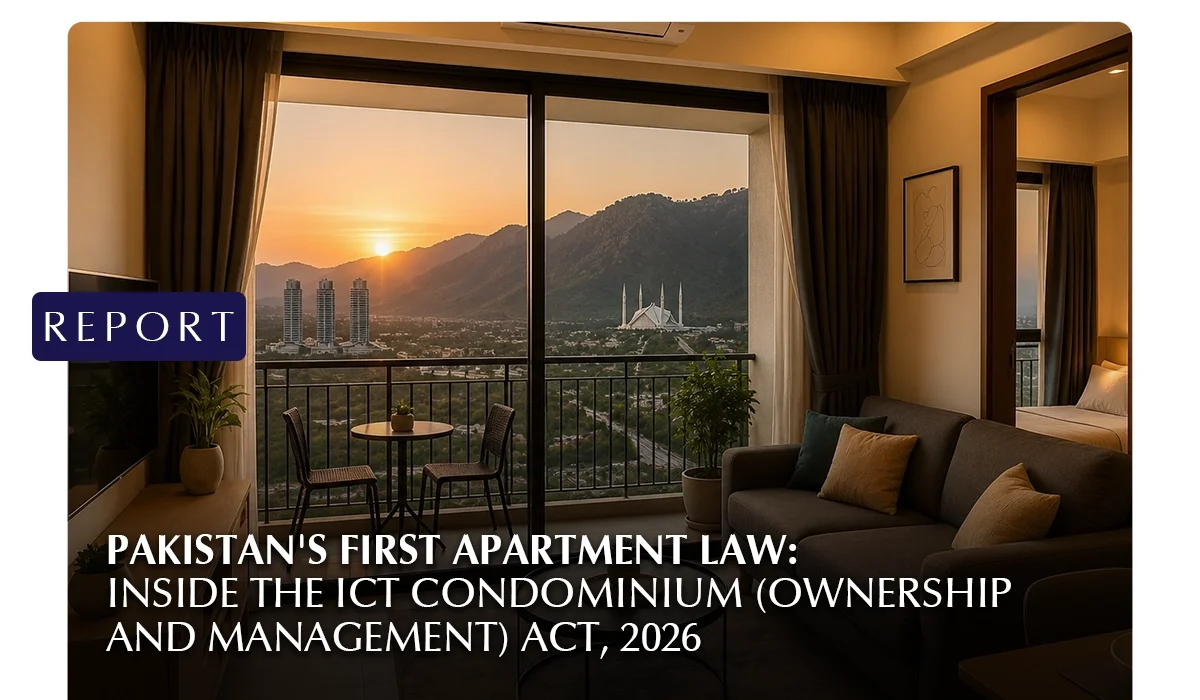
Pakistan’s parliament has finally moved to pass the Islamabad Capital Territory Condominium (Ownership and Management) Act, 2026, the first dedicated condominium law for the federal capital.
What the Law Actually Does
At its core, the Act does three things: it gives apartment owners a proper legal title, it creates a formal body to manage shared buildings, and it sets up a system to resolve disputes.
On ownership: Every unit sold in a condominium complex now confers exclusive ownership rights on the buyer. A formal Deed of Ownership containing details of the unit, common areas, value, and ownership percentage must be executed and registered with the Authority.
Builders are legally bound to provide this deed within three months of a sale. Critically, the buyer’s share in common areas, lobbies, staircases, car parking, and rooftops automatically transfers along with the unit. It cannot be separated.
On lease-hold properties: Many apartments in Islamabad sit on land that developers leased from the CDA rather than owned outright. The law now requires those developers to execute individual subleases for each unit and register them with the CDA.
Once 50% of units are handed over to buyers, the developer must formally transfer the lease rights to the Association of Owners.
On collective management: The law makes it mandatory to form an Association of Owners for every condominium complex. This body, a minimum of five elected members, each serving a three-year term, takes on responsibility for maintaining the building, managing shared facilities, collecting maintenance contributions, and insuring the complex against fire, earthquakes, riots, and bomb blasts. Crucially, each unit owner gets one vote regardless of how many units they hold, preventing wealthier investors from dominating building decisions.
On enforcement: A federal Regulator will be designated by the government to receive complaints, inspect buildings, and issue binding decisions in disputes. If the Association of Owners fails to perform its duties, aggrieved owners or tenants can approach the Regulator directly. The Regulator’s decisions in unresolved disputes are final.
Pakistan’s Housing Crisis
Pakistan faces a housing shortage estimated at around 10 million units, while rapid urbanisation has intensified pressure on infrastructure, services, and farmland surrounding major cities. UN-Habitat notes that Pakistan’s urban population nearly doubled from 43 million to 75 million between 1998 and 2017.
Pakistan has historically relied on low-rise, plot-based housing development, unlike neighbouring India and many Gulf states, where vertical urban expansion has become more common in major cities.
Prime Minister Shehbaz Sharif, chairing a high-level meeting on housing sector reforms in May 2026, said the government would encourage high-rise buildings and vertical expansion in major cities as part of broader urban planning reforms, and directed authorities to digitise and automate housing-related processes to improve transparency and attract investment.
Officials also proposed mandatory registration with the Securities and Exchange Commission of Pakistan (SECP) for entities operating in the housing and development sector, alongside a proposed one-window system to protect the rights of developers, buyers, and other stakeholders.
The condominium law fits squarely within this direction. If vertical growth is to be encouraged, legal certainty for apartment buyers is not optional; it is a precondition.
Analyst Perspectives
Experts broadly welcome the legislation but point to significant implementation challenges. Investment advisors highlight 2026 as a turning point for property investment in Pakistan, with urban expansion, infrastructure projects, and growing overseas demand pointing toward market growth, but note that success depends on choosing developers who deliver on promises and provide international-standard living environments.
A recurring concern raised by observers is whether the Regulator, whose appointment is left to the Federal Government’s discretion, will be sufficiently independent and adequately resourced. The law grants the Regulator wide inspection and enforcement powers, but its effectiveness will depend entirely on how seriously the government treats that appointment.
Similarly, the Association of Owners model only works if residents are willing and able to organise themselves, something that may prove difficult in buildings where a large share of units are held by absentee investors rather than resident owners.
Conclusion
The ICT Condominium Act, 2026, is a meaningful step forward for Pakistan’s urban property sector. It fills a legal vacuum that left apartment buyers in an unacceptably weak position for decades.
By establishing clear ownership titles, mandating owners’ associations, and creating a formal complaints mechanism, it lays the foundation for a healthier apartment market in the federal capital. The law has been written. The harder work begins now.
Mehsud, R. (2026, May 14). Pakistan weighs high-rise housing push to curb urban sprawl, protect farmland. Arab News.https://www.arabnews.com/node/2643548
National Assembly of Pakistan. (2026). Islamabad Capital Territory Condominium (Ownership and Management) Act, 2026 [Bill text, as passed by the National Assembly].
BBC-featured Content Specialist with a sharp eye for search intent and a proven ability to turn content into a growth engine. I leverage cutting-edge digital marketing tools to craft strategies that fuel organic traffic, amplify brand growth, and own the local SEO landscape, particularly across the competitive real estate market. I help brands dominate search rankings and convert visibility into measurable business success.
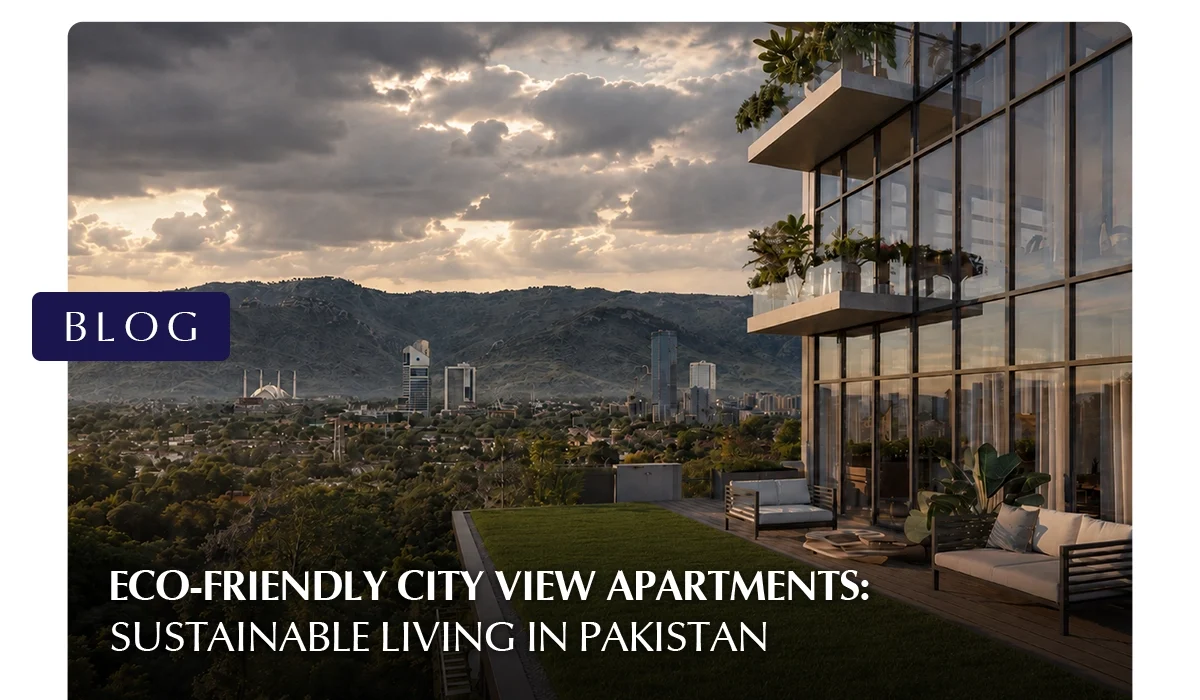
Pakistan’s urban apartment market has matured significantly over the past decade. Where buyers once prioritised location and price per square foot above all else, a growing segment particularly younger professionals and overseas Pakistanis now asks a more layered question: can the apartment I’m buying offer a genuine view and a reduced environmental footprint?
The demand for eco-friendly city view apartments in Pakistan is real, and so is the confusion surrounding it. “Eco-friendly” has become one of the most overused phrases in Pakistani real estate marketing, applied liberally to projects that have a few trees on the plot or a park nearby. Genuine sustainability in an apartment building is a different thing entirely; it involves specific, verifiable infrastructure built into the structure itself.
This guide explains exactly what those features are, which Pakistani cities currently offer the strongest combination of scenic views and sustainable living, and what to check before you commit to a purchase.
Why City Views and Eco-Friendly Features Go Together
Green High-Rise Apartments in Pakistan Which Cities Have Real Options?
Sustainable Flats in Pakistan The Financial Case
What to Check Before Buying an Eco-Friendly City View Apartments Pakistan
Frequently Asked Questions
What Does an Eco-Friendly City View Apartments Pakistan Actually Mean
The first thing to establish is that an eco-friendly apartment is defined by what is built into it, not by what surrounds it. Mountains nearby, a park across the road, or trees within the boundary are landscape features. They are pleasant. They are not evidence of a sustainably constructed or operated building.
A genuinely eco-friendly apartment building in Pakistan should incorporate some combination of the following:
Solar energy systems. Rooftop solar panels, either dedicated to individual units or feeding a shared generation pool, directly reduce dependence on the national grid. In a country where grid electricity is both expensive and unreliable, this is not an optional amenity; it is a meaningful quality-of-life and cost-of-living feature. Ask developers specifically whether solar is installed at handover, or merely listed as a future addition.
Thermal insulation. Double-glazed windows, insulated external walls, and well-designed roof assemblies significantly reduce the energy required to cool or heat a unit. Pakistan’s climate demands heavy air-conditioning for much of the year; a poorly insulated apartment drives up both electricity bills and carbon footprint. Quality insulation is one of the least visible but most impactful green features in a building.
Rainwater harvesting. The Capital Development Authority (CDA) has mandated rainwater collection tanks for all new housing communities in Islamabad. This is a compliance baseline, not a premium feature if a new development in Islamabad does not have it, that is a red flag, not a neutral data point. In Lahore and Karachi, rainwater harvesting is rarer but increasingly present in premium high-rise projects.
Waste management infrastructure. Dedicated recycling facilities, organic waste separation systems, and waste compactors within the building reduce the volume of material going to landfill and create a cleaner, better-maintained common environment. The presence of these systems also signals that the developer has thought beyond the sale.
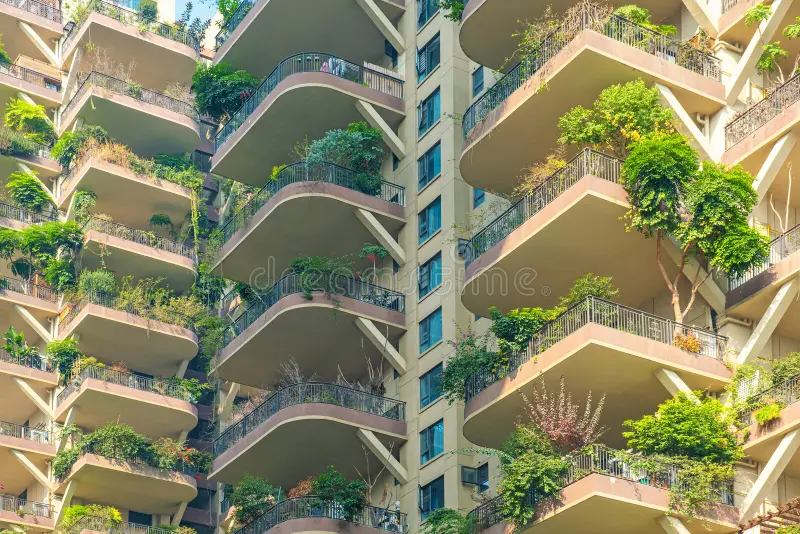
Green rooftops and landscaped terraces. Planted rooftop surfaces reduce the urban heat island effect, the phenomenon where dense built areas trap heat and drive up ambient temperatures. A green rooftop on a high-rise also improves air quality at the building level and provides usable outdoor amenity space for residents.
EV charging bays. Pakistan’s electric vehicle market is still in its early stages, but it is growing. A high-rise building that installs EV charging infrastructure in its parking facility today is a more future-proof asset than one that does not. For buyers with a ten-year investment horizon, this matters.
Water-efficient fixtures. Low-flow taps, showerheads, and toilet cisterns reduce per-unit water consumption without affecting usability. Greywater recycling, treating water from sinks and showers for reuse in toilets or irrigation, is rarer but present in some premium sustainable flats in Pakistan.
Smart building systems. Automated lighting in corridors and common areas, occupancy-sensing HVAC systems, and centralised energy monitoring reduce waste at the building level. These systems tend to lower maintenance costs over time and are a hallmark of genuinely well-engineered high-rise buildings.
When evaluating any project, use this list as a framework for questions, not as an expectation that every feature will be present. A building that delivers four or five of these credibly is a genuinely sustainable product. A building that mentions none of them but calls itself eco-friendly is a marketing exercise.
Green High-Rise Apartments in Pakistan: Which Cities Have Real Options?
The phrase “eco-friendly city view apartments Pakistan” covers the whole country, but the market is not evenly distributed. Here is an honest assessment of where genuine options currently exist.
Islamabad: Strongest Market for Eco-Friendly City View Apartments Pakistan
Islamabad has structural advantages that no other Pakistani city can match. The city was designed from scratch in the 1960s on a low-density grid with green belts, wide avenues, and sector-based zoning built in from the start. The result, six decades later, is a city where height genuinely rewards you, views from upper floors reveal parks and mountains, not adjacent rooftops.
CDA regulations set a higher baseline for new developments than in other cities. Green space allocation, rainwater harvesting requirements, and building setback rules mean that eco-friendly apartments in Islamabad have already passed a regulatory minimum that does not exist elsewhere in the country.
CDA-controlled development in this zone also limits supply, which supports long-term asset values. Among the apartment products currently operating in the eco-friendly city view segment of the Islamabad market are Citadel One3 and Green View Apartments.
Zone IV hillside societies offer a different but equally compelling product: Margalla view apartments built at natural elevation, where the landscape itself provides the view rather than building height. These tend to integrate more outdoor greenery into the development but may sit further from commercial infrastructure.
For buyers prioritising CDA-approved apartments in Islamabad with genuine eco features and unobstructed views, this city is the clearest choice in Pakistan right now.
Lahore: An Emerging Market Where Scrutiny Matters
Lahore’s apartment market has grown considerably over the past ten years, and the city’s high-rise residential stock is now substantial.
Lahore’s more recently developed phases, and premium towers on MM Alam Road, are increasingly incorporating sustainability features, solar provision, better insulation, and EV parking in response to buyer demand from the upper-middle market.
Buyers looking for green high-rise apartments in Lahore should ask specific questions and request documentation rather than accepting marketing language at face value.
Karachi Sea Views and a Different Kind of Sustainability
Karachi’s version of the scenic view apartment is geographically distinct. In Clifton and DHA Phase 8, upper-floor apartments face the Arabian Sea, a genuinely exceptional view and one that comes with a passive sustainability benefit that often goes unmentioned: sea breezes.
Consistent onshore winds in Clifton and the DHA coastal strip provide natural ventilation that meaningfully reduces cooling loads during much of the year.
The important caveat in Karachi is infrastructure. Eco-friendly building features in sustainable flats in Pakistan’s largest city are less standardised than in Islamabad, and buyers should carefully verify backup power and independent water supply arrangements.
In Karachi’s context, a building with a robust generator and water storage infrastructure is delivering a practical form of urban resilience that maps closely to eco-friendly concerns, even if it is not marketed in those terms.
Eco-Friendly City View Apartments Pakistan: The Financial Case
The environmental argument for Eco-Friendly City View Apartments Pakistan is well-documented. The financial argument is discussed less often, and it is equally strong.
Lower electricity bills. A building with operational rooftop solar reduces the grid electricity consumption of each unit. In Pakistan, where electricity tariffs have risen sharply over recent years, and load-shedding remains a routine feature of urban life, this translates to a direct, recurring reduction in monthly costs. It is not a marginal benefit; it is a structural one.
Resilience during load-shedding. Buildings with solar-plus-battery backup, or with well-managed generator infrastructure, maintain liveability during outages. For investment properties, this directly affects tenant satisfaction, occupancy rates, and the rent premium a landlord can command.
Premium rents and stronger tenant quality. Eco-friendly features in Pakistan’s rental market correlate with higher tenant quality in the professional segment, expats, corporate tenants, and overseas Pakistani families. These tenants are typically less price-sensitive, more reliable, and more likely to sign multi-year leases.
Long-term asset value. Green buildings face a lower risk of regulatory obsolescence as building codes tighten. An apartment in a CDA-approved, sustainably built high-rise is a more defensible long-term asset than a comparable unit in a project that cut corners on construction quality or environmental compliance.
Water cost savings. Rainwater harvesting and greywater recycling reduce per-unit water bills. In a country facing increasing water stress, particularly acute in Karachi, this is a savings trajectory that improves over time: the more constrained the municipal supply becomes, the more valuable the independent provision.
What to Check Before Buying Eco-Friendly City View Apartments Pakistan
Green buildings are the future of Pakistan’s real estate. The checklist below applies whether you are buying to live in or to invest. It is built to close the gap between what developers claim in their marketing and what actually gets built and maintained.
Verify the relevant authority approval. In Islamabad, this means a valid CDA No Objection Certificate. The CDA publishes a list of approved and unapproved housing schemes on its official website.
Ask for specific eco-feature documentation, not marketing claims. “Eco-friendly” in a brochure carries no legal or technical weight in the absence of supporting detail. Ask which features are installed and operational at the point of handover, and which are listed as future additions.
Establish which floors deliver unobstructed views. In most Pakistani cities, a genuine city or mountain view requires the apartment to be above the surrounding built fabric. Ask specifically which floors achieve unobstructed views. Request photographic evidence taken from the actual floors in question, drone footage or on-site photography rather than rendered images, which routinely omit the buildings that will obstruct sightlines once the surrounding area develops.
Distinguish building-wide green features from unit-level ones. Some high-rise buildings apply solar generation only to common areas, lobby lighting, elevator power, and corridor illumination. Others extend solar benefits to individual units, reducing each resident’s electricity bill directly. The difference is material and worth establishing clearly before purchase, not after.
Evaluate post-handover building management. Green building features degrade without proper maintenance. Solar panels lose output if not cleaned regularly. Green rooftops require irrigation and upkeep. Rainwater systems need periodic inspection.
Check the developer’s track record of delivery. Any developer can produce compelling renders and confident project announcements. The meaningful question is what they have already built and handed over in the same city, on a similar scale. A developer with a completed project standing is offering evidence.
Watch for greenwashing signals early in the process. Common red flags include: eco-friendly claims with no supporting technical specification; sustainability features described as “planned” with no contractual delivery timeline; marketing language that equates natural surroundings with built-in sustainability infrastructure; and the absence of any mention of CDA or relevant authority approval in sales materials.
FAQs – Eco-Friendly City View Apartments Pakistan
What makes an apartment eco-friendly in Pakistan?
Built-in features like solar, insulation, water-saving systems, waste management, and smart energy controls. Green views alone do not make an apartment eco-friendly.
Which city in Pakistan has the best city view apartments?
Islamabad stands out for views of the Margalla Hills, Faisal Mosque, F-9 Park, and tree-lined sectors.
Are eco-friendly apartments more expensive in Pakistan?
They can cost slightly more upfront, but lower electricity, water, and maintenance costs can offset the premium over time.
Can overseas Pakistanis buy city view apartments in Pakistan?
Yes. Overseas Pakistanis can buy approved residential apartments. The key is verifying project approvals before payment.
What is the difference between a green high-rise and a regular apartment?
A green high-rise has sustainability systems built into the building. A regular apartment may not, even if it has good surroundings.
Closing Thoughts – Eco-Friendly City View Apartments Pakistan
Eco-friendly city view apartments Pakistan are gaining demand, but the label should mean more than nice views. True sustainability means verified features: solar, insulation, water systems, and waste infrastructure that are installed and working at handover. The financial case is also getting stronger. As power costs rise, water pressure increases, and buyers become more selective, genuinely sustainable flats are likely to perform better on running costs, rent, and resale value.
BBC-featured Content Specialist with a sharp eye for search intent and a proven ability to turn content into a growth engine. I leverage cutting-edge digital marketing tools to craft strategies that fuel organic traffic, amplify brand growth, and own the local SEO landscape, particularly across the competitive real estate market. I help brands dominate search rankings and convert visibility into measurable business success.
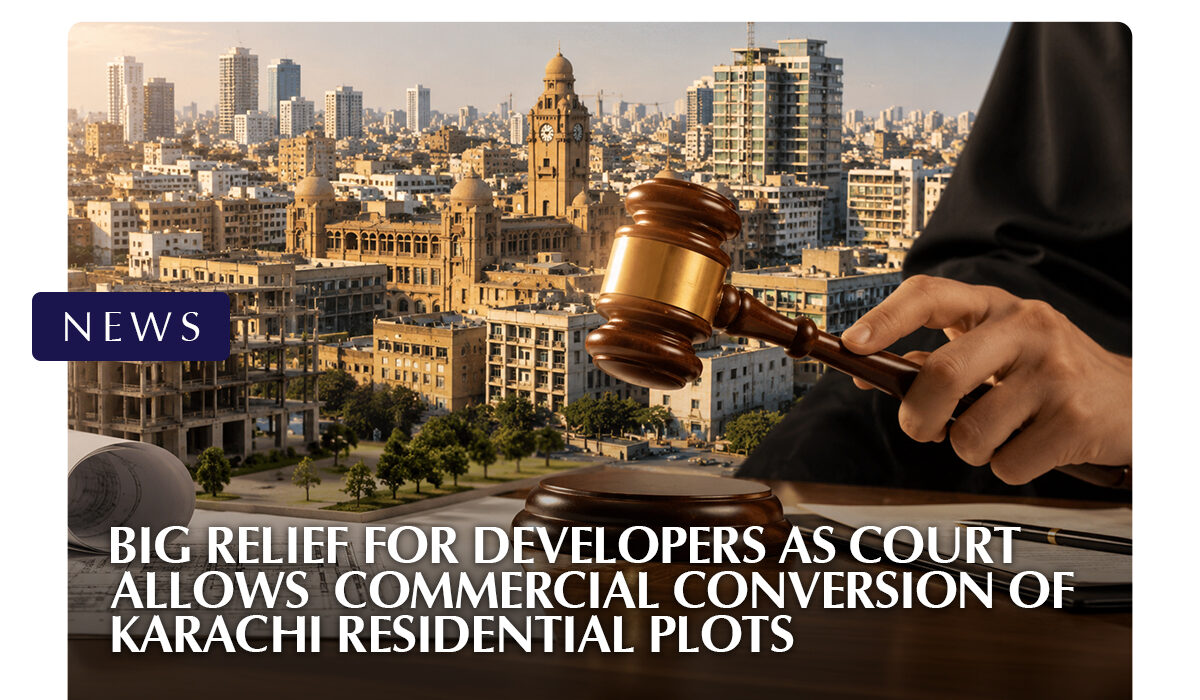
KARACHI: The Federal Constitutional Court has lifted restrictions on converting residential plots for commercial and recreational use in Karachi, marking an important development for the city’s property and construction sectors.
The case was heard by a bench headed by Justice Aamer Farooq. The court disposed of a long-running matter related to illegal constructions in Karachi and removed earlier limits on changing residential plots into commercial properties.
However, the court made it clear that amenity plots cannot be converted. This means land reserved for parks, schools, hospitals, mosques, playgrounds, and graveyards will remain protected and cannot be used for commercial or residential purposes.
During the hearing, Justice Aamer Farooq observed that the court would not interfere in the work of institutions such as the Sindh Building Control Authority unless there was a clear violation of the law. The court also noted that affected parties may approach the relevant forum or the high court if they believe any rule has been violated.
Justice Arshad Hussain further remarked that officials who violate building regulations or planning laws would face legal action under existing laws.
The decision is expected to have a significant impact on Karachi’s real estate market, where the use of residential areas for commercial activity has long been a disputed issue among developers, residents, and government authorities. While the ruling may open new business and construction opportunities, the protection of public-use land remains an important condition.
BBC-featured Content Specialist with a sharp eye for search intent and a proven ability to turn content into a growth engine. I leverage cutting-edge digital marketing tools to craft strategies that fuel organic traffic, amplify brand growth, and own the local SEO landscape, particularly across the competitive real estate market. I help brands dominate search rankings and convert visibility into measurable business success.
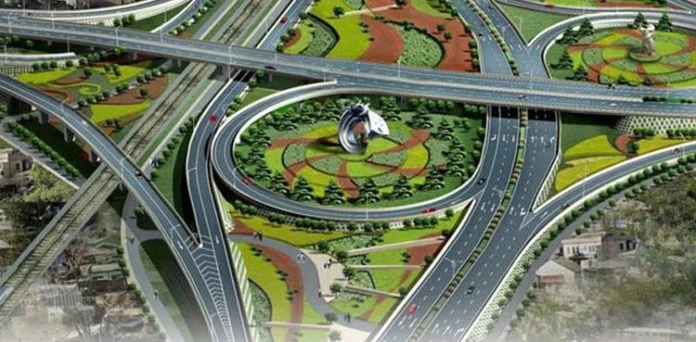
RAWALPINDI: Kachehri Chowk, one of Rawalpindi’s busiest traffic points, has been renamed Marka-e-Haq Square following the completion of a major remodelling project aimed at improving traffic flow in the city.
Punjab Chief Minister Maryam Nawaz was scheduled to formally inaugurate the project on Sunday, May 10, 2026. The project, reportedly completed in six to seven months, was originally expected to take much longer.
The development includes two flyovers and three underpasses designed to reduce congestion for commuters travelling within Rawalpindi and between Rawalpindi and Islamabad. The project is expected to handle more than 250,000 vehicles daily, making movement easier for motorists using The Mall, Rashid Minhas Road, Jinnah Park, and nearby routes.
The remodelled Kachehri Chowk flyover and underpass have been named Marka-e-Haq, while other parts of the project include the Jinnah Underpass and Flyover, and the Iftikhar Janjua Underpass. A monument has also been established near Baggi Park as part of the development.
The project cost has been reported at around Rs. 19 billion. Frontier Works Organisation was involved in the work, with quality checks linked to the Punjab Communication and Works Department.
Security arrangements were made for the inauguration ceremony, with personnel from Rawalpindi Police, Elite Force, Special Branch, and district police deployed in the area.
Residents have welcomed the completion of the project, expressing hope that it will ease daily traffic problems and reduce travel time in one of the city’s most crowded areas.
BBC-featured Content Specialist with a sharp eye for search intent and a proven ability to turn content into a growth engine. I leverage cutting-edge digital marketing tools to craft strategies that fuel organic traffic, amplify brand growth, and own the local SEO landscape, particularly across the competitive real estate market. I help brands dominate search rankings and convert visibility into measurable business success.
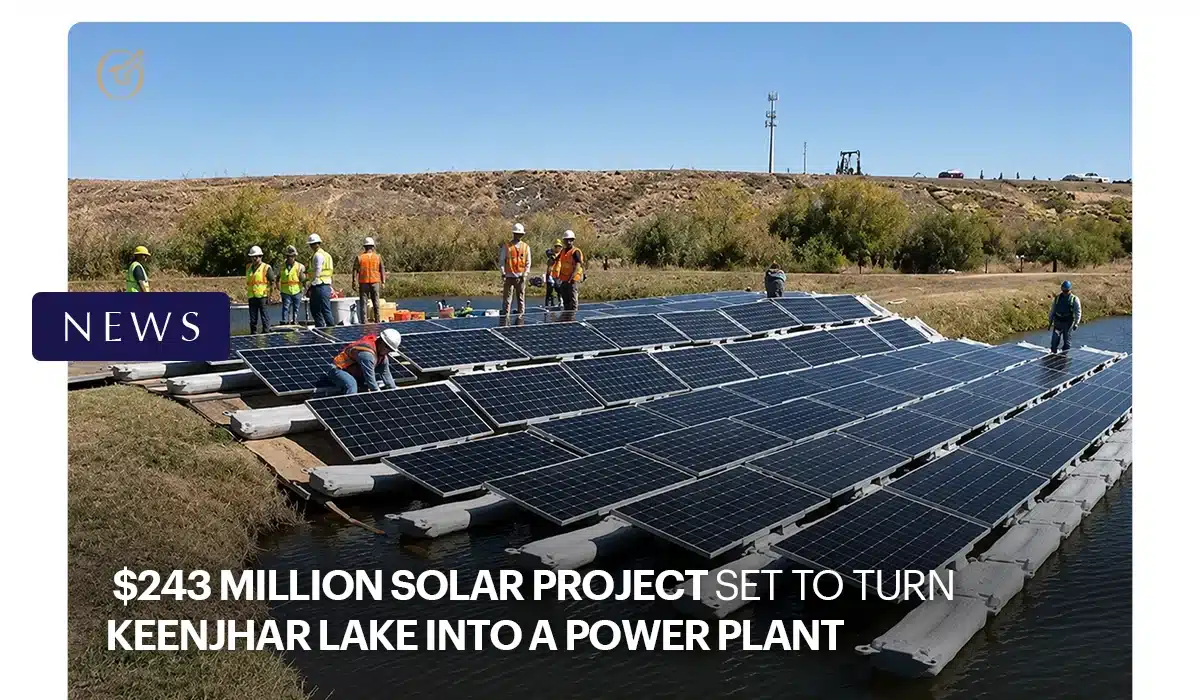
KARACHI: The Pakistani government has announced plans to develop a 500-megawatt floating solar power project at Keenjhar Lake in Sindh, marking a significant milestone in the country’s transition to clean, renewable energy. The project, estimated to cost $243.63 million, is projected to generate approximately 861.91 gigawatt-hours of electricity annually, operating at a capacity factor of 19.6%.
The electricity generated by the facility will be supplied to K-Electric under a long-term power purchase agreement. A letter of intent has already been secured from K-Electric, and the process to select Engineering, Procurement and Construction contractors through competitive bidding is currently underway. The Sindh Transmission and Dispatch Company has also signed a memorandum of understanding with GO Energy Private Limited to facilitate power transmission from the project site.
Situated 137 kilometres from Karachi on the surface of Keenjhar Lake, one of Sindh’s largest freshwater bodies, the project will utilise approximately 1,606 acres of the lake’s surface to accommodate nearly one million solar panels. The floating design offers dual advantages: it eliminates land acquisition challenges associated with conventional solar installations and leverages the natural cooling effect of water to improve panel efficiency and overall energy output.
The initiative aligns with Pakistan’s 2030 emissions reduction targets and is part of a broader national push to diversify energy sources and reduce dependence on costly imported fossil fuels. Construction is expected to commence in 2026, with commercial operations projected to begin by 2028. The project is also anticipated to generate significant employment during both the construction and operational phases.
However, the project has drawn concern from local fishing communities and environmentalists. As Keenjhar Lake falls within a designated Ramsar wetland site, experts have flagged potential risks to migratory bird habitats and local fisheries, underscoring the need for thorough environmental oversight throughout the project’s development.
Dedicated and detail-oriented SEO Content Writer, Real Estate Writer, and Research Analyst based in Islamabad, with proven expertise in developing accurate, valuable, and well-researched content. Skilled in analytical writing, market research, and reporting, with the ability to turn insights into clear, professional, and impactful content. Passionate about exploring new ideas, analyzing industry trends, and contributing to high-quality writing and research-driven projects.
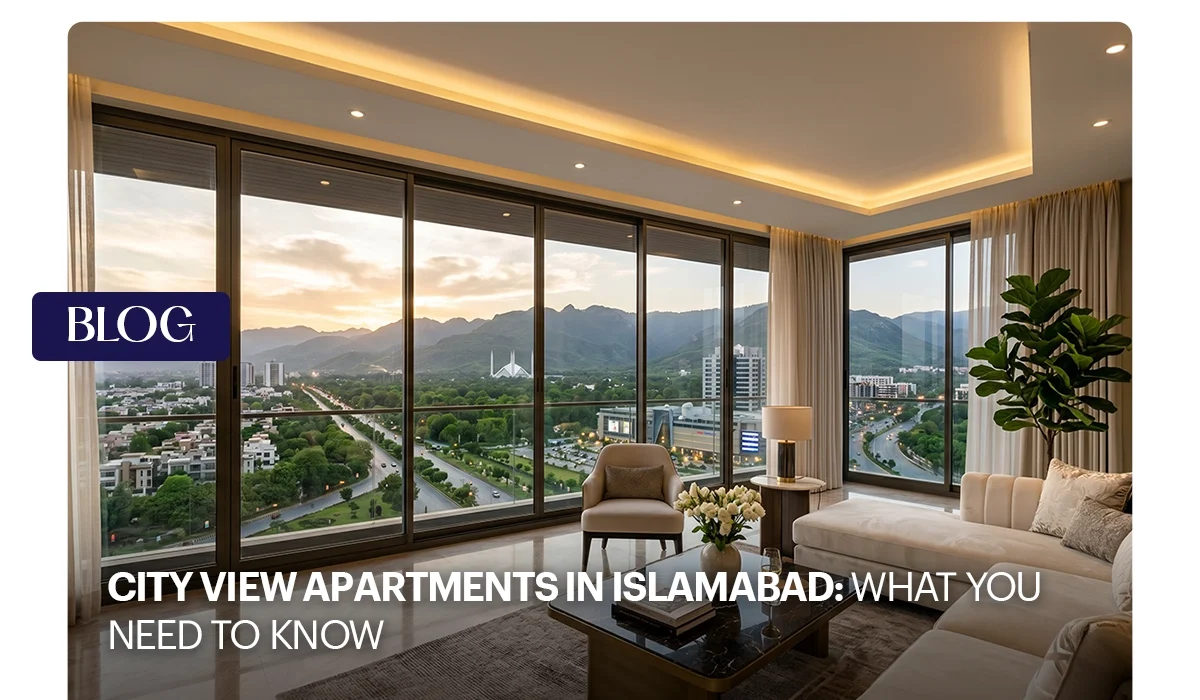
There are cities where height gives you more concrete. Then there is Islamabad a city where rising above the roofline reveals one of the most distinctive urban panoramas in South Asia: a low-lying capital spread across a valley floor, the geometric order of its master-planned sectors giving way to the hazy green ridgeline of the Margalla Hills. A city view apartment in Islamabad is not an abstract amenity. It is a fundamentally different way to experience the capital.
Demand for city view apartments Islamabad has grown consistently over the past several years, driven by a convergence of factors.
This guide covers everything you need to know what a genuine city view apartment looks like in Islamabad, where to find one, what to look for before committing, and why location within the city determines view quality, lifestyle quality, and long-term value in roughly equal measure.
Table of Contents
What Makes a City View Apartment Worth It in Islamabad?
Long-Term Rent and Buy: What the Market Actually Offers
Location Guide: Where in Islamabad Do You Get the Best Views?
What to Look for Before You Commit
Buying vs. Renting: Which Is Right for You?
Citadel One3: A New Benchmark for City View Living in Islamabad
Frequently Asked Questions
What makes city view apartments Islamabad worth it?
Islamabad was designed from scratch in the 1960s by Greek urban planner Constantinos Doxiadis. That deliberate, low-density layout, wide avenues, sector-based zoning, and generous green belts mean that a city view here rarely means staring at a wall of concrete.
From the upper floors of a tower in the Blue Area, you are typically looking at tree canopy, the tiled rooflines of F-sector houses, the distant white dome of the Faisal Mosque, the green swathe of F-9 Park, and behind it all, the permanent, weather-shifting presence of the Margalla Hills.
This is what separates a premium Islamabad apartment from its equivalent in Lahore or Karachi. The horizontal city drops away beneath you. What replaces it is a view that combines the energy of a modern capital with the calm of a landscape that predates it by millions of years.
Long-Term Rent and Buy: What the Market Actually Offers
The long-term market for apartments for sale in Islamabad with genuine city or Margalla views is more limited than headlines suggest. Many developments marketed as city view apartments are either in locations where height does not yet translate to an unobstructed view, or in housing societies at an early enough stage of development that the view will be compromised as surrounding construction catches up.
Genuinely premium Margalla view apartments in Islamabad tend to fall into two categories: hillside society developments in Zone IV, where the natural elevation and distance from the urban core mean long-range unobstructed views of the Margalla range; and high-rise towers in the Blue Area, where the height of the building itself clears the surrounding low-rise fabric and delivers a panoramic 360-degree view.
The Blue Area high-rise option, the category into which Citadel One3 falls, offers both the view and the location simultaneously. It is also the rarer product, because CDA-regulated development within the Blue Area and Jinnah Avenue corridor imposes strict controls on what can be built. Supply is limited by design. That structural scarcity is a key driver of long-term value.
Location Guide: Where in Islamabad Do You Get the Best Views?
The city’s geography divides the city view apartment Islamabad market into distinct zones with different view profiles, price points, and lifestyle implications.
Location
View Profile
Typical Use
Blue Area / Jinnah Avenue
City skyline + Faisal Mosque + Margalla Hills
Short stay, investment, long-term residence
The Blue Area and Jinnah Avenue corridor stands alone in one respect: it is the only zone in Islamabad where the view, the location, and the commercial infrastructure converge in the same address.
Living above the city’s dominant commercial spine means that the landmarks you see from your window, Faisal Mosque, F-9 Park, the Margalla ridgeline, are the same landmarks you pass on the way to work, to dinner, to everything.
What to look for before you commit?
Whether you are booking a short stay or signing a purchase agreement, several practical considerations apply universally.
Floor level matters more than you expect. Islamabad is a predominantly low-rise city. In most sectors, buildings top out at two or three storeys. To get a genuinely unobstructed view from a Blue Area tower, you need to be high enough to clear the surrounding built fabric.
CDA NOC status is non-negotiable for purchases. Before transferring any funds, verify that the development holds a valid Capital Development Authority No Objection Certificate. The CDA publishes a list of approved and unapproved housing schemes on its official website. Purchasing in a development without CDA approval exposes buyers to the risk of demolition notices, untransferable title, and inability to secure financing. This step takes five minutes and can prevent years of legal difficulty.
Developer track record matters. Look beyond the renders and ask what the developer has already delivered. A developer with a completed project in the same market on the same street, at a comparable scale, is offering proof of concept, not just a promise. That distinction is material.
Power backup. Islamabad experiences load-shedding, particularly during the summer months. Premium high-rise towers in the Blue Area typically build backup power into the infrastructure, but this should be confirmed, not assumed. A generator that covers corridors and common areas but not individual units is not the same as full building backup.
Management post-handover. For investment buyers, the quality of building management after handover determines rental income and asset preservation. Who manages the building? What are the annual maintenance charges? Is there a rental management service for investors who want to rent their units without being involved day-to-day? These questions matter as much as the purchase price.
Buying vs. Renting a City View Apartment in Islamabad
Buy if you are a Pakistani resident or overseas national with a three-to-five-year or longer investment horizon. Blue Area apartments have shown the strongest and most stable price appreciation of any property type in the city. CDA-approved high-rise units on or near Jinnah Avenue are a scarce asset in this market, and scarcity tends to compound over time.
Rent short-term if you are visiting Islamabad for work or family, on a corporate posting, or a diaspora visitor spending weeks rather than months. Serviced apartments in the Blue Area towers give you hotel security and services with genuine living space and city views, the right product for this need.
Rent long-term if you are an expat or professional on a multi-year posting who values flexibility over asset accumulation. Fully furnished long-term lets in the Blue Area corridor are available through building operators, typically at monthly rates negotiated directly.
Citadel One3: A New Benchmark for City View Living Islamabad
Citadel One3 is Chakor Ventures’ premium residential condominium tower, rising 40+ floors along Jinnah Avenue in the Blue Area. It represents one of the few genuinely new high-rise residential products to come to market in Islamabad’s most established commercial corridor in recent years.
What Citadel One3 City View Apartments Islamabad offers:
Location: Jinnah Avenue, Blue Area, Islamabad’s dominant commercial core.
Views: Direct sightlines to the Faisal Mosque, F-9 Park, and the Margalla Hills three of Islamabad’s most iconic landmarks, from a single address
Scale: 40+ floors rising above the surrounding low-rise fabric, ensuring that views are genuine and not aspirational
Total area: 27,500 sq ft, with both commercial and residential units
Amenities: Gym, sports and kids play area, culinary court, rental stay management, smart parking for 350+ cars, advanced firefighting systems, secure entry and exit points, CCTV infrastructure
Rental management: A built-in rental stay management service means investors who purchase units can generate short-stay rental income without managing it directly, bridging the short-stay and investment buyer segments in one structure
The project offers what most city view apartments Islamabad cannot: a panoramic view from Islamabad’s most recognisable landmarks, delivered by a developer who has already proved it can build at this scale, at this address.
FAQs – City View Apartments Islamabad
Which area in Islamabad has the best city view apartments Islamabad?
For the combination of view quality, location, and long-term investment value, the Blue Area and Jinnah Avenue corridor is the strongest option in the city.
Are city view apartments Islamabad available on installments?
Yes. Most new-launch condominium projects in Islamabad, including those in the Blue Area, offer structured installment plans.
Is a CDA NOC important when buying City View Apartments Islamabad?
Yes, It is essential.
Can overseas Pakistanis buy city view apartments Islamabad?
Yes. Overseas Pakistanis can purchase CDA-approved City View Apartments Islamabad without restriction.
What floor do you need to be on for a real City View Apartments Islamabad?
In the Blue Area, the surrounding built fabric is mostly two to four storeys. A tower of 40+ floors begins delivering genuinely unobstructed panoramic views from the middle floors upward.
Final Word – City View Apartments Islamabad
Islamabad offers a city view apartment market that is genuinely distinctive, not because of density or skyline height, but because of what the city looks like when you rise above it. The combination of a planned low-rise capital and the Margalla Hills as a permanent northern backdrop creates a view that rewards altitude in a way few other Pakistani cities can match.
BBC-featured Content Specialist with a sharp eye for search intent and a proven ability to turn content into a growth engine. I leverage cutting-edge digital marketing tools to craft strategies that fuel organic traffic, amplify brand growth, and own the local SEO landscape, particularly across the competitive real estate market. I help brands dominate search rankings and convert visibility into measurable business success.
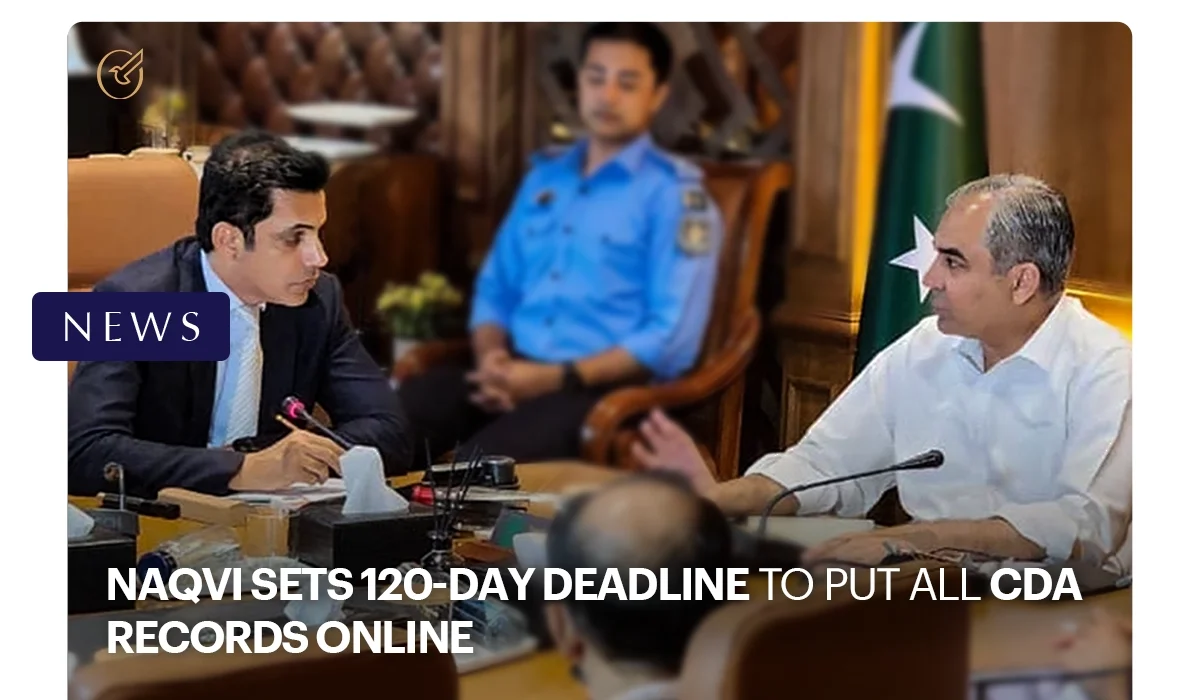
ISLAMABAD: Interior Minister Mohsin Naqvi has issued a formal directive ordering the complete digitization of all Capital Development Authority (CDA) records within 120 days, a move aimed at enhancing administrative transparency and streamlining public service delivery. Once implemented, citizens will be able to monitor the status of their applications through an online portal, eliminating the need for in-person follow-ups.
The directive was issued during a high-level meeting chaired by Naqvi, in which officials reviewed ongoing development projects in the federal capital and deliberated on new urban initiatives. The minister categorically stated that no illegal housing societies would be tolerated within Islamabad’s limits, signalling a firm stance against unauthorized land use and encroachments.
Among the significant announcements, three international firms have been pre-qualified for the construction of a new convention center, an expo center, and the Islamabad Arena. Authorities have been instructed to ensure the timely completion of these projects in advance of the Shanghai Cooperation Organization (SCO) summit, underscoring their strategic importance at the diplomatic level.
On the recreational front, the minister outlined an ambitious plan to modernize leisure facilities across the capital. A dedicated service center is to be established in the F-6 sector, while construction is set to begin on several public attractions, including a top golf facility, hot air balloon rides, a zip line, a water park, and an amusement park.
Additionally, Naqvi directed that F-9 Park be transformed into a world-class recreational space modelled after London’s Hyde Park, and called for a comprehensive entertainment development plan for the area around Shahdara Dam.
Infrastructure improvements were also addressed, with beautification and lighting work on the Expressway and Club Road scheduled to commence immediately. The CDA chairman confirmed that construction on the Expressway service road will proceed upon receipt of formal approval from the Planning Division.
Naqvi commended CDA officials for their role in exposing internal corruption and made clear that those found involved in malpractice would face strict accountability without exception, reaffirming the government’s commitment to institutional reform and good governance.
Dedicated and detail-oriented SEO Content Writer, Real Estate Writer, and Research Analyst based in Islamabad, with proven expertise in developing accurate, valuable, and well-researched content. Skilled in analytical writing, market research, and reporting, with the ability to turn insights into clear, professional, and impactful content. Passionate about exploring new ideas, analyzing industry trends, and contributing to high-quality writing and research-driven projects.