Every great financial decision begins with the right information. At Chakor, our Investment section is your comprehensive resource for opportunities, analysis, and insight spanning real estate, infrastructure, emerging markets, and beyond.
Whether you are a first-time investor or a seasoned portfolio builder, we bring you the depth of knowledge and the quality of opportunities needed to grow your wealth with purpose and confidence.
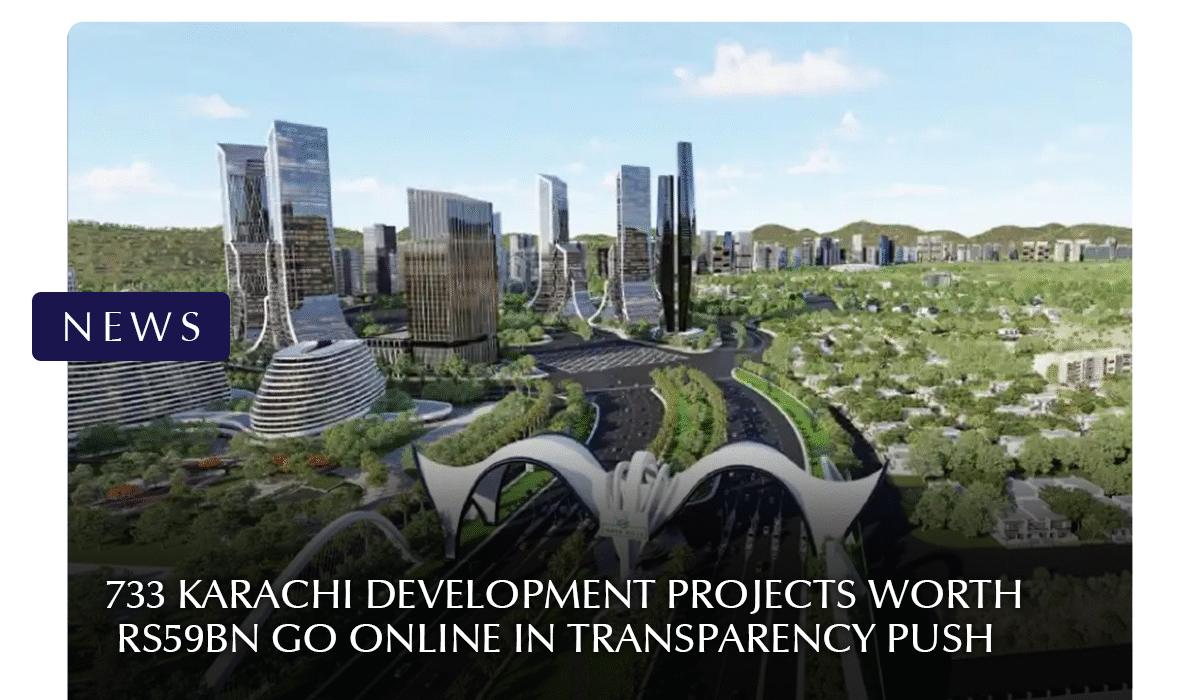
KARACHI: The Karachi Metropolitan Corporation (KMC) has begun publishing details of 733 development projects worth a combined Rs59 billion on its website, part of a broader digital transparency drive announced this week.
Mayor Barrister Murtaza Wahab said new sections added to the KMC website cover municipal assets and properties, ongoing development schemes, a Karachi Development Map, and a Land Record Management System. The project database includes costs, approved allocations and expenditure, along with details of contractors, funding sources and the institutions responsible for each scheme.
Through the interactive map, residents can track the location, jurisdiction, cost, progress and expected completion date of ongoing road works, including a Rs173 million scheme in District East, the Rs155 million Patel Hospital Road project, and the Rs472 million Mirza Adam Khan Road project. Photos and videos of construction progress will also be uploaded for public monitoring.
KMC is separately digitising land records dating back decades, with future property transfers to be recorded electronically. Employee records have been shifted to the SAP system to curb duplicate or fraudulent payments, and the civic body is moving toward an account-to-account digital payment system capable of tracking every transaction.
Wahab said the shift to digital collection has already lifted revenue, with one department’s monthly collections rising from around Rs170-180 million to roughly Rs300 million last month. Revenue and receivables are expected to be linked to the digital system in the coming months.
The mayor also cited progress on the Hub Canal, cleaning of the Hub Reservoir, and the 38-kilometre Shahrah-e-Bhutto Expressway, alongside a proposed Chakor Nala Expressway meant to ease congestion around Gulistan-e-Johar and Rashid Minhas Road.
BBC-featured Content Specialist with a sharp eye for search intent and a proven ability to turn content into a growth engine. I leverage cutting-edge digital marketing tools to craft strategies that fuel organic traffic, amplify brand growth, and own the local SEO landscape, particularly across the competitive real estate market. I help brands dominate search rankings and convert visibility into measurable business success.
KARACHI: The ongoing Gulf war has significantly disrupted the long-standing flow of undocumented Pakistani wealth into Dubai’s real estate sector, with market sources reporting that funds once considered secure abroad are now being channelled back into property investments within Pakistan.
For years, Pakistan ranked among the top foreign investors in Dubai property, and the emirate was widely regarded as a reliable destination for capital of questionable origin. That dynamic appears to be reversing.
Hassan Bakhshi, Chairman of the All Pakistan Builders Association, estimated that approximately $60 million in undocumented funds had previously left Pakistan for Dubai each month an outflow that has now halted entirely.
Currency market sources describe a similar shift, noting that assets already parked in Dubai have become difficult to liquidate amid the instability caused by the conflict. Rising remittance inflows from the UAE are being interpreted as evidence that Pakistanis are repatriating liquid holdings rather than expanding them abroad.
This capital redirection has had a visible effect on Karachi’s property market. According to Bakhshi, prices in the city’s Defence Housing Authority area have surged by 50 to 60 percent since the war began, driven partly by the area’s reputation for secure property titles.
Other parts of Karachi have seen more moderate gains of 20 to 25 percent, according to property dealer Karim Dad, who attributed the rebound to improved liquidity and government efforts to stimulate the construction sector.
The disruption extends beyond real estate. Several technology firms that previously relocated to Dubai, citing a favourable regulatory climate and frustration with Pakistan’s internet connectivity and tax administration, are now among those seeking to recover stalled investments as the regional situation remains unresolved.
Analysts caution that any large-scale return of capital will likely depend on how quickly stability returns to the Gulf region.
Dedicated and detail-oriented SEO Content Writer, Real Estate Writer, and Research Analyst based in Islamabad, with proven expertise in developing accurate, valuable, and well-researched content. Skilled in analytical writing, market research, and reporting, with the ability to turn insights into clear, professional, and impactful content. Passionate about exploring new ideas, analyzing industry trends, and contributing to high-quality writing and research-driven projects.
ISLAMABAD: The Federal Board of Revenue (FBR) has yet to establish a mechanism to refund taxes collected under Section 7E, the deemed income tax on immovable property, and Super Tax under Section 4C, despite more than three months having passed since a formal request for such a procedure was made.
Waheed Shahzad Butt, Chairman of the LTBA Public Interest Litigation Committee, said he had written to the FBR Chairman, routed through Board Members, seeking a notified refund process for both levies. He noted that the FBR has not issued any guidance, prescribed an application format, or designated a forum for filing such claims.
The demand follows rulings by the Federal Constitutional Court (FCC), which struck down Section 7E as unconstitutional and void from inception, nullifying all notices and proceedings initiated under the provision. Introduced through the Finance Act 2022, the levy had applied a five percent charge on properties valued above Rs25 million, based on FBR-assessed fair market value.
On Super Tax, the FCC upheld the provision’s constitutional validity but excluded certain exempt capital gains from its scope, meaning the tax cannot be charged on the sale of immovable property held beyond the prescribed holding period, inherited property, or otherwise exempt income.
Butt said the FBR’s continued silence, despite binding constitutional rulings, has left taxpayers in an uncertain legal and financial position. He proposed allowing refunds as an adjustment against tax liability for Tax Year 2026 through the annual return, with field formations directed to process such claims uniformly rather than leaving the matter to individual Commissioners or Regional Tax Offices.
He cautioned that continued inaction exposes the FBR to further litigation, including complaints before the Federal Tax Ombudsman, as affected taxpayers seek redress for amounts they believe were unlawfully retained.
BBC-featured Content Specialist with a sharp eye for search intent and a proven ability to turn content into a growth engine. I leverage cutting-edge digital marketing tools to craft strategies that fuel organic traffic, amplify brand growth, and own the local SEO landscape, particularly across the competitive real estate market. I help brands dominate search rankings and convert visibility into measurable business success.
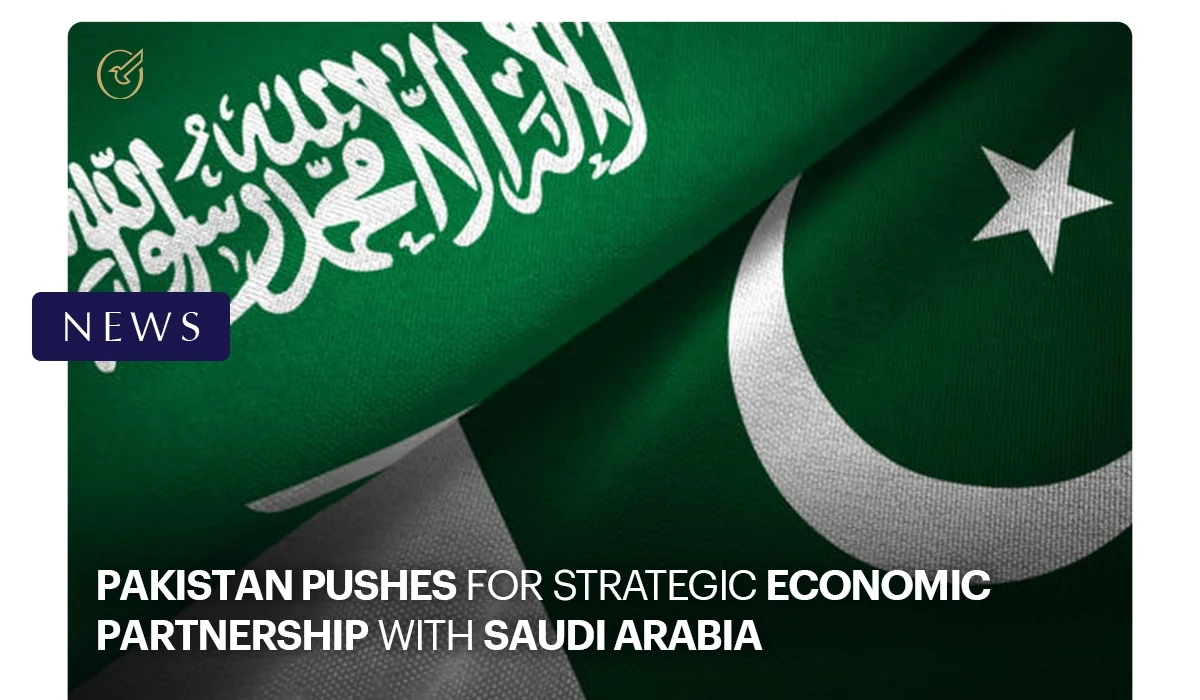
ISLAMABAD: Prime Minister Shehbaz Sharif on Tuesday welcomed a high-level Saudi business delegation at the Prime Minister’s House and invited investors from the Kingdom to explore opportunities across Pakistan’s priority sectors, including agriculture, infrastructure, energy, real estate, and information technology.
Prince Mansour bin Mohammed Al Saud, Chairman of the Saudi-Pak Joint Business Council, led the delegation. During the meeting, the Prime Minister conveyed his respects to Custodian of the Two Holy Mosques King Salman bin Abdulaziz Al Saud and Crown Prince and Prime Minister Mohammed bin Salman.
Sharif underscored the “deep-rooted and brotherly relationship” between the two nations and stressed the need to translate this longstanding partnership into a mutually beneficial strategic economic alliance, in line with the Crown Prince’s vision for expanded regional cooperation.
He said the visit would build on earlier engagements and pave the way for new memorandums of understanding across various sectors.
The Saudi delegation conveyed interest in a broad range of investment avenues, including agriculture, ports, highways, airport outsourcing, real estate, energy, power distribution and information technology.
The Prime Minister described the present moment as an opportune time to deepen bilateral economic ties through both government-to-government and business-to-business channels.
In response, Prince Mansour thanked the Prime Minister for the warm reception and reaffirmed Saudi Arabia’s continued commitment, through both government and private sectors, to strengthening commercial and investment relations with Pakistan.
The delegation is scheduled to hold further meetings with senior government officials and private-sector representatives during its visit.
The engagement comes amid Islamabad’s renewed efforts to attract foreign investment and diversify its economic partnerships, with senior members of the federal cabinet in attendance, underscoring the government’s emphasis on the visit’s strategic significance.
Dedicated and detail-oriented SEO Content Writer, Real Estate Writer, and Research Analyst based in Islamabad, with proven expertise in developing accurate, valuable, and well-researched content. Skilled in analytical writing, market research, and reporting, with the ability to turn insights into clear, professional, and impactful content. Passionate about exploring new ideas, analyzing industry trends, and contributing to high-quality writing and research-driven projects.
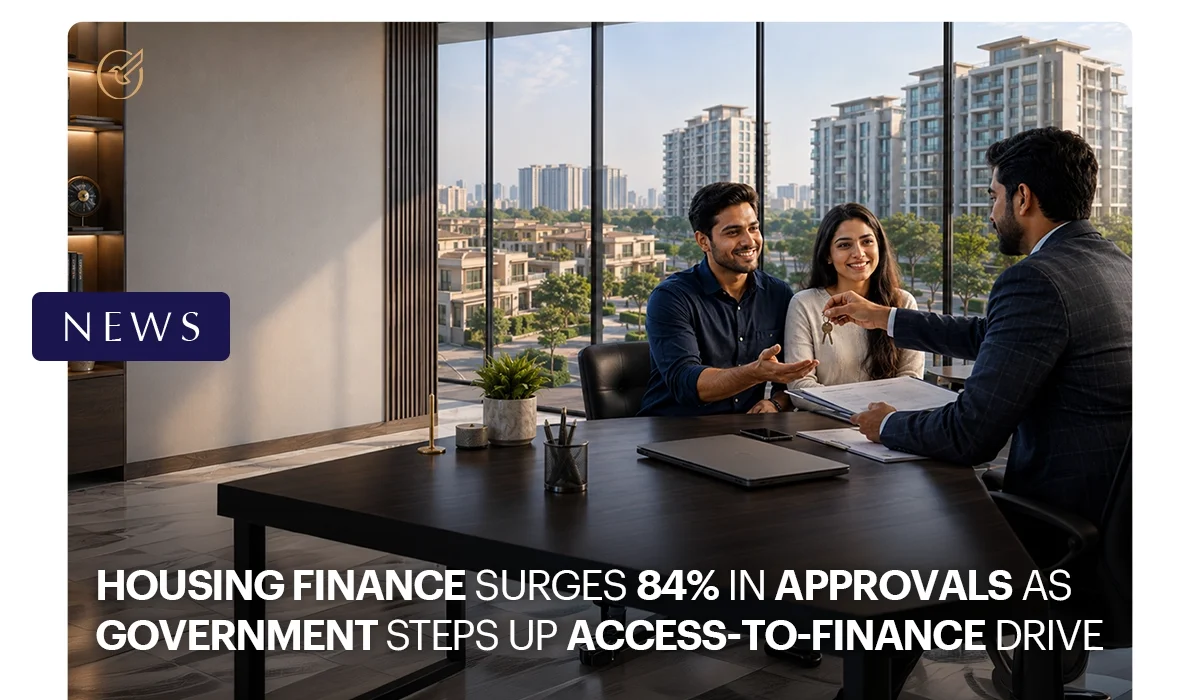
ISLAMABAD: Federal Finance Minister Senator Muhammad Aurangzeb chaired the fortnightly Access to Finance Steering Committee meeting on Monday, reporting sharp gains across housing, agriculture, SME and export financing since the close of FY26.
Total housing finance climbed from Rs294 billion at end-June to Rs307 billion by mid-August. Under the Wazir-e-Azam Apna Ghar Program, applications rose 52 percent to nearly 139,000, while approvals surged 84 percent to over 46,000, with approved financing nearly doubling to Rs279 billion. Loans disbursed increased 59 percent, crossing Rs38 billion.
The Committee credited the momentum to regulatory reforms, including the State Bank’s revised housing finance rules, a 90:10 loan-to-value ratio and a 65 percent debt-burden ratio, alongside passage of the Financial Institutions (Recovery of Finances) (Amendment) Act, 2026, aimed at strengthening mortgage recovery and lender confidence.
Agriculture borrowers grew to 3.37 million, adding roughly 115,000 since June, with sector financing steady near Rs1.26 trillion. The Zarkhez-e Asaan Zarai Qarza scheme for uncollateralised farm lending recorded over 58,000 registrations.
SME formal financing stood at Rs1.05 trillion across some 330,000 businesses, with a credit-scoring pilot underway across 13 banks. Officials set medium-term targets of Rs1.5 trillion in combined agriculture and SME financing by June 2027, rising to Rs2 trillion by June 2028.
On exports, the newly effective Performance Based Rebate on Incremental Exports offers exporters a 1 percent rebate for growth up to 10 percent, and 2 percent beyond that. The Pakistan Accelerated Vehicle Electrification Programme also gained pace, with EV deliveries tripling to over 1,500 units.
Aurangzeb called for tighter bank-wise monitoring and broader public awareness to sustain credit growth across housing, farming and enterprise sectors.
BBC-featured Content Specialist with a sharp eye for search intent and a proven ability to turn content into a growth engine. I leverage cutting-edge digital marketing tools to craft strategies that fuel organic traffic, amplify brand growth, and own the local SEO landscape, particularly across the competitive real estate market. I help brands dominate search rankings and convert visibility into measurable business success.
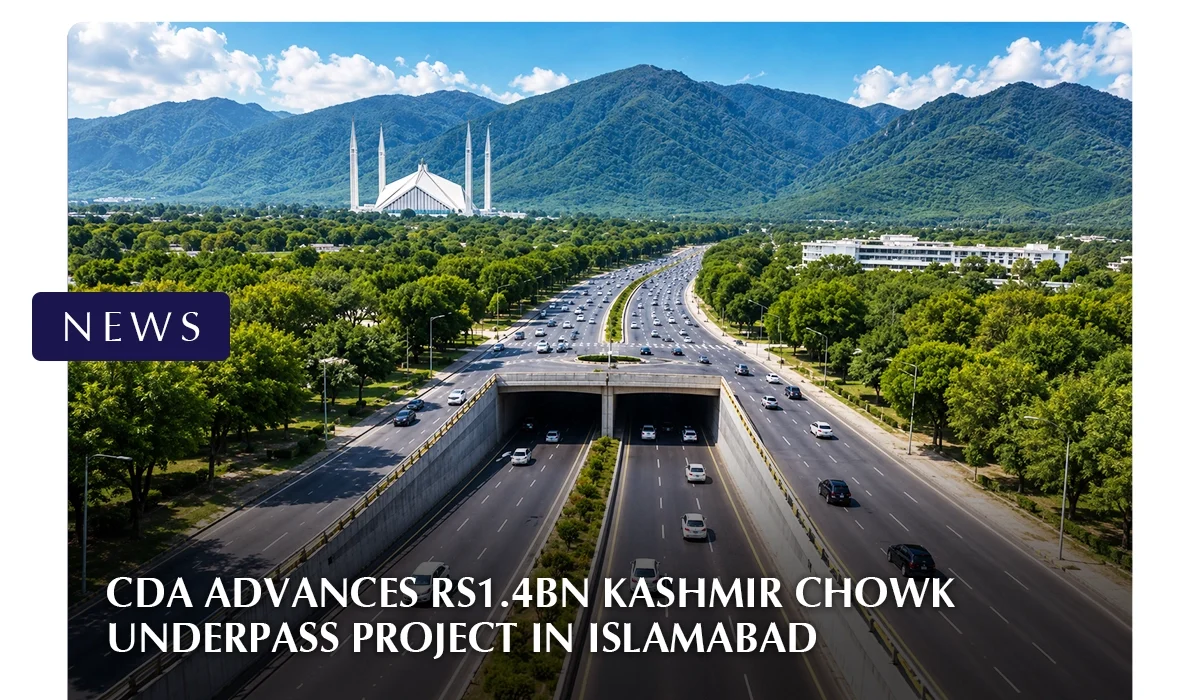
ISLAMABAD: The Capital Development Authority (CDA) has moved forward with plans to construct an underpass at Kashmir Chowk on Murree Road, with the project estimated to cost around Rs1.4 billion.
The proposed underpass, located at Dhokri Chowk near Islamabad Club, is intended to improve traffic movement at the busy intersection. Under the planned arrangement, vehicles travelling from the Serena side towards Rawalpindi will use the underpass, while traffic heading towards Murree will pass over its upper section.
CDA has opened technical bids submitted by Habib Construction Services and M/s Kamran Khan (Kundi Group). During the evaluation process, Kundi Group was declared non-responsive and subsequently filed a grievance with the civic authority. Financial bids will remain unopened until the complaint is decided. Officials expect the matter to be resolved within 15 days.
Separately, CDA is also preparing another underpass at the junction of Faisal Avenue and Margalla Road, where the PC-I is being finalised before the tendering process begins.
The projects form part of CDA’s broader road infrastructure programme aimed at improving traffic flow across Islamabad. Meanwhile, the federally funded 10th Avenue project remains incomplete, with about half of its work still pending despite its original 2024 completion target.
BBC-featured Content Specialist with a sharp eye for search intent and a proven ability to turn content into a growth engine. I leverage cutting-edge digital marketing tools to craft strategies that fuel organic traffic, amplify brand growth, and own the local SEO landscape, particularly across the competitive real estate market. I help brands dominate search rankings and convert visibility into measurable business success.
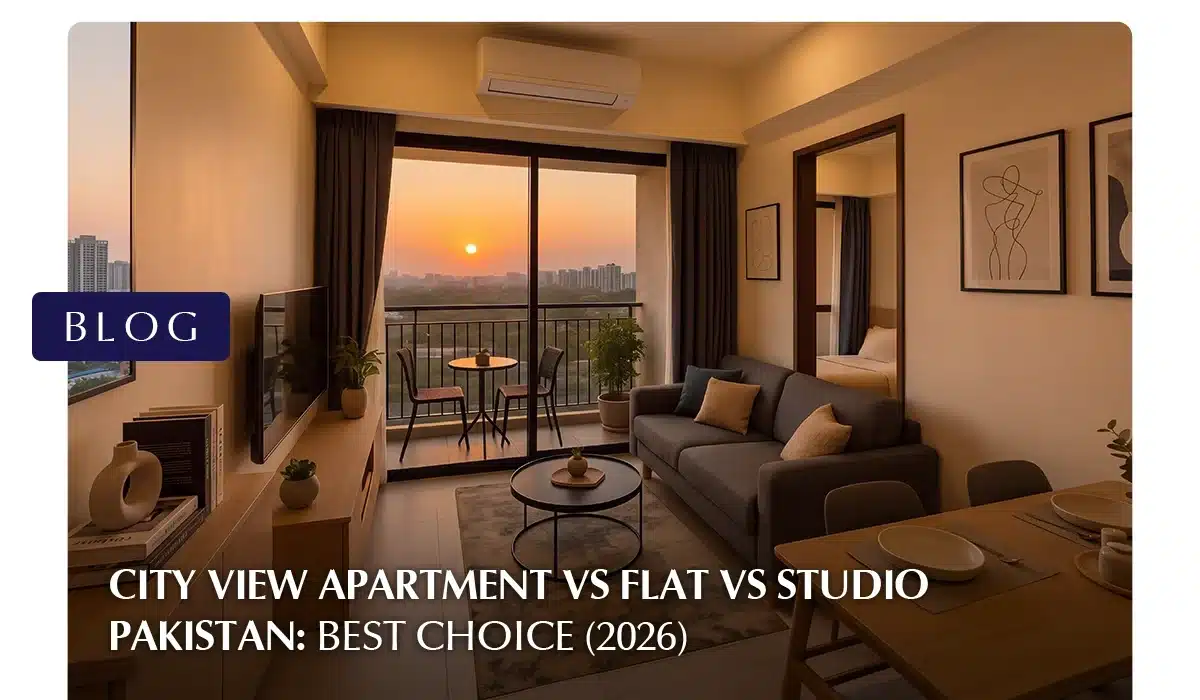
If you’ve spent any time browsing listings in Islamabad, Lahore, or Karachi, you’ve probably noticed that every other project claims a “stunning city view” or a “panoramic skyline.” But when it comes down to signing the paperwork, most buyers freeze at one question: should I go for a city-view apartment, a regular flat, or a compact studio? This City View Apartment vs Flat vs Studio Pakistan comparison isn’t just about square footage; it’s about lifestyle, budget, resale value, and how you plan to use the property. In this guide, we’ll break down what each option actually means, what it costs, and how to decide which one fits your goals.
Apartment vs Flat in Pakistan
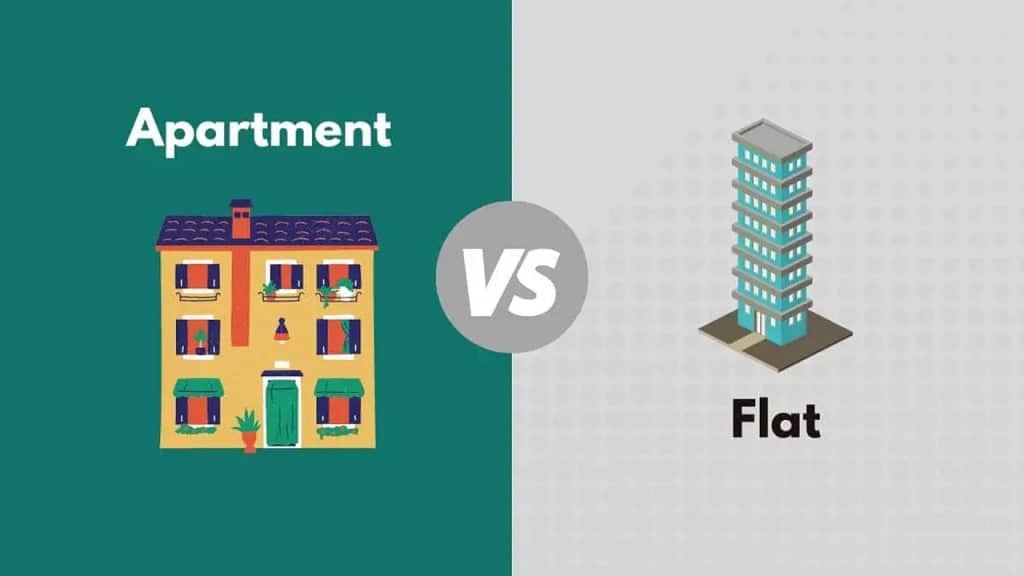
Before we even get to the City View Apartment vs Flat vs Studio Pakistan debate, let’s settle something that trips up a lot of first-time buyers: is an apartment different from a flat? In short, no. “Flat” is the British-English term, more common in older listings and conversational use.
“Apartment” is the American-English equivalent, and it’s increasingly used by developers to market newer, more premium projects. Both refer to the same thing: a self-contained residential unit within a larger building, sharing structure and common areas with other owners.
What actually varies isn’t the word; it’s the building. A “flat” in a well-managed, secure block with a great view can easily outperform an “apartment” in a poorly maintained tower.
So when you’re evaluating apartment types Pakistan has to offer, don’t let the label do your thinking for you. Focus on the block quality, developer reputation, floor level, layout, and increasingly the view.
What Is a Studio Apartment?
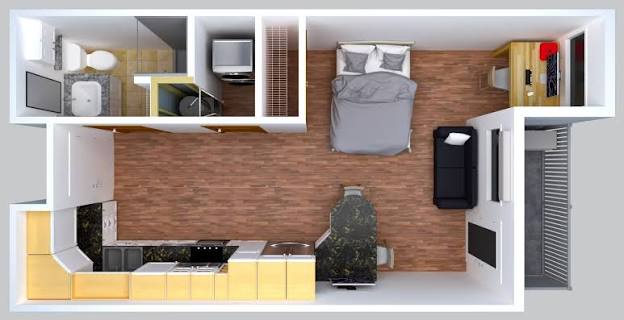
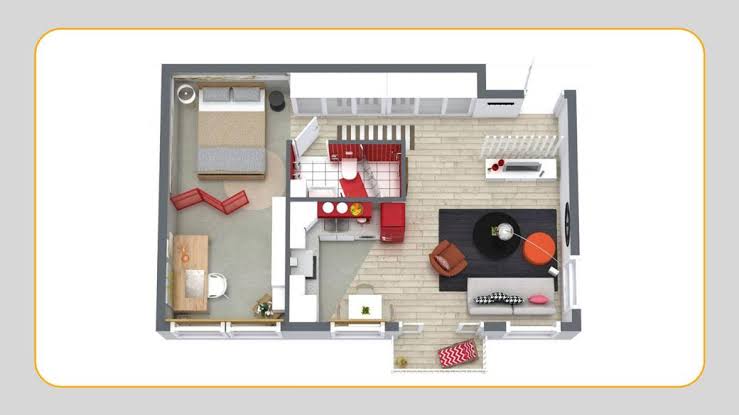
A studio is the smallest and most affordable unit in the City View Apartment vs Flat vs Studio Pakistan comparison. It’s essentially one open room that combines your bedroom, living room, and kitchen into a single space, with only the bathroom enclosed separately.
Studios are popular among:
Students studying away from home
Young professionals starting their first job in a new city
Bachelors who don’t need extra rooms
Overseas Pakistanis looking for an easy-entry investment property
In Islamabad, Lahore and Karachi, prices vary based on sector and proximity to commercial hubs. The appeal here is low maintenance, lower utility bills, and quicker resale in dense urban pockets, but the tradeoff is limited privacy and no separate sleeping area, which doesn’t suit couples or small families.
What Is a Flat (Regular Apartment)?
A flat or standard apartment usually comes with at least one separate, enclosed bedroom, a distinct living area, a kitchen, and one or more bathrooms. Depending on the number of bedrooms, flats in Pakistan are generally categorised as:
1-bedroom flats
2-bedroom flats
3-bedroom flats
4-bedroom flats
This is where most of the apartment types Pakistan buyers search for actually fall; the “regular” flat category makes up the bulk of listings in Karachi, Lahore, and Islamabad. Flats offer a balance: more space and privacy than a studio, without jumping into penthouse-level pricing. If you’re raising a family or need a dedicated home office, a flat is usually the more practical choice over a studio.
What Is a City View Apartment?
This is where things get interesting and where most generic “types of apartments” articles fall short. A city view apartment isn’t a separate structural category like a studio or duplex; it’s a positioning within a building.
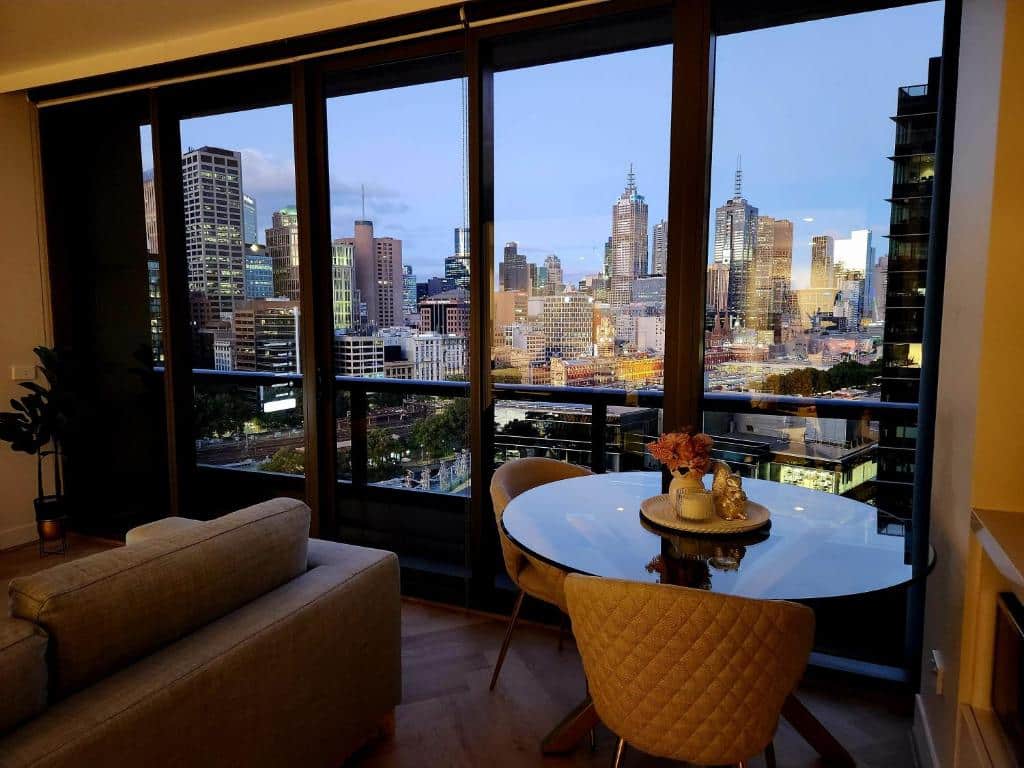
It refers to a unit studio, 1-bed, 2-bed, or penthouse that’s placed on a higher floor or oriented to face a landmark, skyline, park, or mountain range, rather than facing an internal courtyard, parking lot, or a neighbouring building’s wall.
In the ongoing City View Apartment vs Flat vs Studio Pakistan conversation, this is often the deciding factor for investors and end-users alike. Developers routinely charge a premium, often 10% to 25% more for units with a confirmed, unobstructed view. Why? Because view units:
Command higher resale value over time
Attract better rental yields, especially from expats and corporate tenants
Rarely lose their view (unlike lower floors, which can get blocked by future construction)
Offer better natural light and ventilation
If you’re comparing a plain flat against a city view apartment at similar square footage, the view unit is almost always the stronger long-term investment provided the building itself is well-managed, and the developer has a solid track record.
City View Apartment vs Flat vs Studio Pakistan
Feature
Studio
Regular Flat
City View Apartment
Typical Size
250–800 sq ft
500–1,600 sq ft
Varies (studio to 3-bed)
Privacy
Low
Moderate to High
Depends on unit type
Price Premium
Lowest
Mid-range
10–25% higher than same-size non-view unit
Rental Yield
Good in student/business areas
Steady, family-driven demand
Highest, especially for expats/corporate tenants
Resale Value
Moderate
Reliable
Strongest long-term appreciation
Best For
Singles, students, quick investment entry
Couples, families
Investors, end-users wanting lifestyle + ROI
Maintenance
Minimal
Moderate
Moderate to high (premium buildings)
When you lay it out this way, the City View Apartment vs Flat vs Studio Pakistan decision becomes less about “which type is objectively best” and more about matching the unit to your specific goal, whether that’s affordability, family space, or long-term capital growth.
Which One Should You Buy? A Decision Framework
Here’s a practical way to think through the City View Apartment vs Flat vs Studio Pakistan decision based on who you are:
If you’re a student or single professional on a budget, a studio makes the most sense. Lower purchase price, lower utility bills, and easier maintenance mean you can get into the property market without overextending yourself financially.
If you’re a couple or small family, a 1- or 2-bedroom flat gives you the separation and space you need without the premium pricing of a view unit. This is the sweet spot for most middle-income buyers exploring apartment types Pakistan offers today.
If you’re an investor or overseas Pakistani, a city view apartment, even in a smaller configuration like a 1-bed or studio, tends to deliver the best combination of rental demand and capital appreciation.
Buyers who are not living in the unit year-round often prioritise view and building reputation over raw square footage, since these units rent out faster and hold value better.
If you want to future-proof your investment, choosing a city view unit protects you from the risk of your view getting blocked by future construction nearby, which is a real concern in fast-developing sectors of Islamabad and Lahore.
Best Flat to Buy in Islamabad
If Islamabad is on your radar, here’s what actually matters before you finalise a purchase, beyond just picking between a studio, flat, or city view unit:
NOC status: Only buy in NOC-approved societies or developments to avoid legal complications down the line.
Developer track record: Look at the builder’s delivery history on previous projects, not just their marketing brochures.
Payment plan flexibility: Instalment-based plans are common in Islamabad; compare down payment percentages and possession timelines across projects.
Amenities and security: Gated access, 24/7 surveillance, parking capacity, and firefighting systems matter more than they seem at first glance.
View and floor premium: Decide whether paying extra for a confirmed skyline or landmark view is worth it for your rental or resale goals.
A Real Example: Citadel One3 in Islamabad
To put the “city view” concept into context, it’s worth looking at a live example. Citadel One3, developed by Chakor, is a 40+ story residential and commercial tower coming up on Jinnah Avenue in Blue Area, Islamabad. What makes it a relevant case study in this City View Apartment vs Flat vs Studio Pakistan discussion is exactly the positioning we’ve been talking about the project is built around: panoramic views of the Faisal Mosque and F-9 Park, two of Islamabad’s most recognisable landmarks.
Beyond the view itself, the project spans roughly 27,500 sq ft of total area and includes amenities aimed squarely at long-term value and lifestyle appeal: a culinary court, dedicated sports and kids’ play areas, a gym, smart parking for over 350 cars, rental stay management for investors, advanced firefighting systems, secure entry and exit points, and 24/7 surveillance. Its location in the heart of Blue Area also plays into the “centralised city living” pitch that’s become common among premium Islamabad developments.
Projects like Citadel One3 illustrate why the city view angle matters so much in today’s market; it’s not just a marketing term, it’s increasingly a structural part of how developers price and position units, and it’s a major factor buyers should weigh alongside apartment size and layout.
Final Thoughts
At the end of the day, the City View Apartment vs Flat vs Studio Pakistan decision comes down to matching the unit to your life stage and financial goals rather than chasing the “best” option in the abstract. A studio works if you’re optimising for affordability and low maintenance. A flat makes sense if you need space and privacy for a family. And a city view apartment is worth the premium if you’re playing the long game on rental income and resale value.
Whichever direction you lean, don’t get distracted by whether a listing says “flat” or “apartment”; that’s just terminology. What actually determines whether you’ve made a smart purchase is the building quality, the developer’s reputation, the floor and orientation of the unit, and whether the price reflects genuine long-term value. Take the time to compare a few projects side by side, ask about view guarantees in writing, and always verify NOC and documentation before you commit; that discipline will serve you far better than any single label ever could.
Dedicated and detail-oriented SEO Content Writer, Real Estate Writer, and Research Analyst based in Islamabad, with proven expertise in developing accurate, valuable, and well-researched content. Skilled in analytical writing, market research, and reporting, with the ability to turn insights into clear, professional, and impactful content. Passionate about exploring new ideas, analyzing industry trends, and contributing to high-quality writing and research-driven projects.
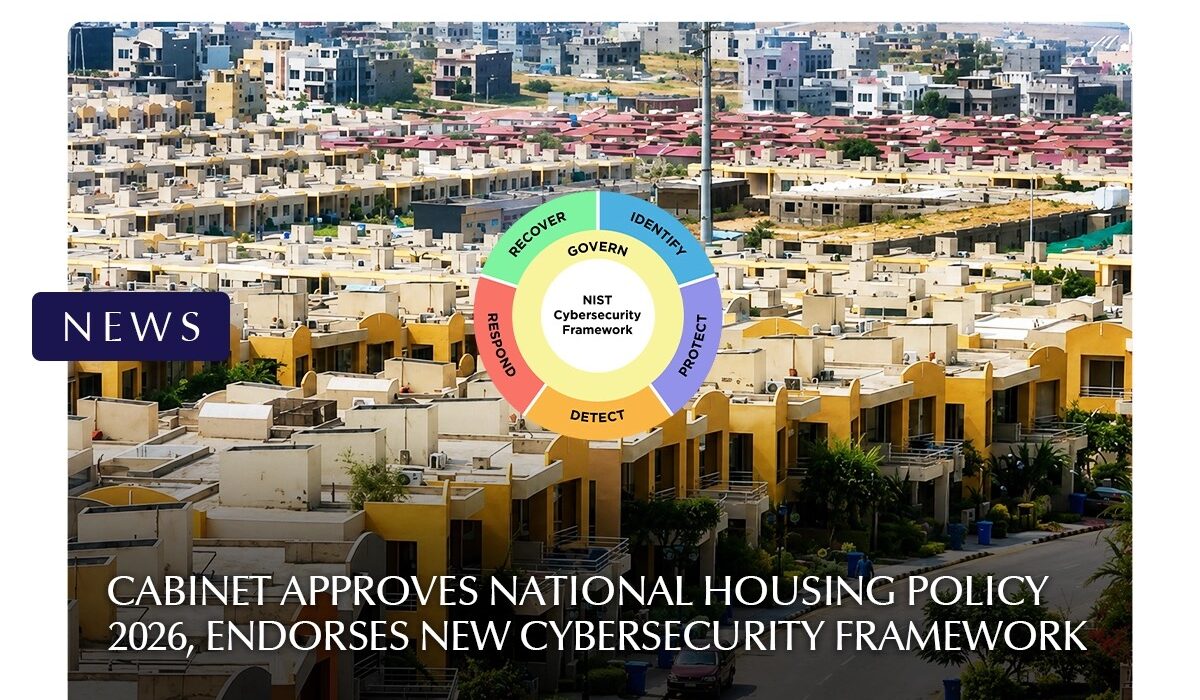
ISLAMABAD: The federal cabinet, chaired by Prime Minister Shehbaz Sharif, has approved the National Housing Policy 2026 together with a corresponding implementation plan. Under the policy, housing projects will be required to fully observe zoning regulations, with priority given to vertical construction to improve land-use efficiency.
Officials noted the policy was drafted with input from local and international experts, along with federal, provincial, and development-sector stakeholders, aiming to ensure sustainable and quality housing nationwide. Energy-efficiency standards have also been folded into the policy framework to align new construction with environmental goals.
The cabinet was additionally briefed on the Apna Ghar housing scheme, revealing that banks have sanctioned loans worth Rs220 billion for prospective homeowners, of which more than Rs32 billion has already been disbursed.
In a separate move, the cabinet approved withdrawing Pakistan’s earlier notice to terminate its 1981 bilateral investment treaty with Sweden, based on a summary presented by the Board of Investment.
On the technology front, the Ministry of Information Technology introduced the draft Pakistan Information Security Framework 2026 (PISF 2026), developed under the CERT Rules 2023. The framework is designed to establish unified baseline cybersecurity standards with centralized oversight. The cabinet approved it as a key policy document and directed its timely implementation.
Further ratifications included proposed amendments to the Pakistan Oil Refining Policy 2023, aimed at upgrading refineries to strengthen energy supply, along with decisions made during recent Economic Coordination Committee and Cabinet Committee on Legislative Cases meetings.
BBC-featured Content Specialist with a sharp eye for search intent and a proven ability to turn content into a growth engine. I leverage cutting-edge digital marketing tools to craft strategies that fuel organic traffic, amplify brand growth, and own the local SEO landscape, particularly across the competitive real estate market. I help brands dominate search rankings and convert visibility into measurable business success.
ISLAMABAD: The Capital Development Authority (CDA) collected Rs. 16.44 billion during the opening two days of its ongoing commercial plot auction at Islamabad’s Jinnah Convention Centre, with a third and final round of bidding still ahead. The first day alone brought in Rs. 13.81 billion, while the second added a further Rs. 2.63 billion to the tally.
Tuesday’s proceedings featured strong demand for agricultural land along Murree Road, where Agro Farm No. 18 sold for Rs. 1.212 billion and Agro Farm No. 17-A brought in Rs. 966 million.
Commercial shop units in the Blue Area Parking Plaza also performed well, with three individual units fetching between roughly Rs. 147 million and Rs. 154 million apiece.
Not every offering found a buyer, however. Two commercial plots in Sector C-13, a site that has remained mired in controversy for nearly two decades, failed to attract meaningful bids despite CDA officials anticipating combined proceeds exceeding Rs. 10 billion.
The sector was originally acquired under the 2007 Land Sharing Policy, but many of the original landowners say they are still waiting to be compensated or resettled.
Affected residents have raised objections to CDA continuing to market land from the sector while their claims remain unresolved. According to landowner accounts, the CDA Board approved a plan in 2023 to compensate eligible families with residential plots in the adjacent Sector C-14, and revenue authorities subsequently completed ownership verification.
Despite this, no allotments have reportedly been issued. The dispute has also drawn intervention from the Islamabad High Court, which ordered CDA to settle outstanding compensation, though claimants say that order has yet to be enforced.
The auction is scheduled to conclude on Thursday, with the authority expressing hope that the final day will generate additional revenue from the sale of remaining commercial properties across the capital.
Dedicated and detail-oriented SEO Content Writer, Real Estate Writer, and Research Analyst based in Islamabad, with proven expertise in developing accurate, valuable, and well-researched content. Skilled in analytical writing, market research, and reporting, with the ability to turn insights into clear, professional, and impactful content. Passionate about exploring new ideas, analyzing industry trends, and contributing to high-quality writing and research-driven projects.
KARACHI: A high-level United States business delegation wrapped up a two-day visit to Karachi on Sunday, engaging with Sindh’s provincial leadership to assess investment prospects across multiple sectors under the facilitation of the Special Investment Facilitation Council (SIFC).
On the visit’s second day, delegates held meetings with provincial ministers to review opportunities tied to major development initiatives, including the Bin Qasim Industrial Park and Karachi Industrial Park, alongside other proposed schemes designed to expand industrial and commercial output in the province.
The delegation also received briefings on the Sindh Business One-Stop Shop, Keti Bandar Port, the NED Tech Park, and the proposed Sindh International Financial Centre, with provincial officials detailing each project’s scope and investment potential.
A separate session with the Pakistan Business Council broadened the discussion to capital markets, agriculture, textiles, energy, minerals, and healthcare, among other economic segments.
American delegates conveyed confidence in Pakistan’s strengthening investment climate, citing expanding opportunities across industries. Business representatives further stressed that sustained investor confidence hinges on policy continuity and streamlined regulatory procedures, while crediting SIFC’s coordinating role in advancing ongoing investment efforts.
The visit adds to a string of recent engagements aimed at deepening US-Pakistan commercial ties, with Sindh positioning its industrial parks, port infrastructure, and financial-sector projects as key entry points for foreign capital amid the province’s broader push to court international investors.
BBC-featured Content Specialist with a sharp eye for search intent and a proven ability to turn content into a growth engine. I leverage cutting-edge digital marketing tools to craft strategies that fuel organic traffic, amplify brand growth, and own the local SEO landscape, particularly across the competitive real estate market. I help brands dominate search rankings and convert visibility into measurable business success.