Pakistan–Uzbekistan Economic Ties
CategoriesNews Developments Economy Investment Trade

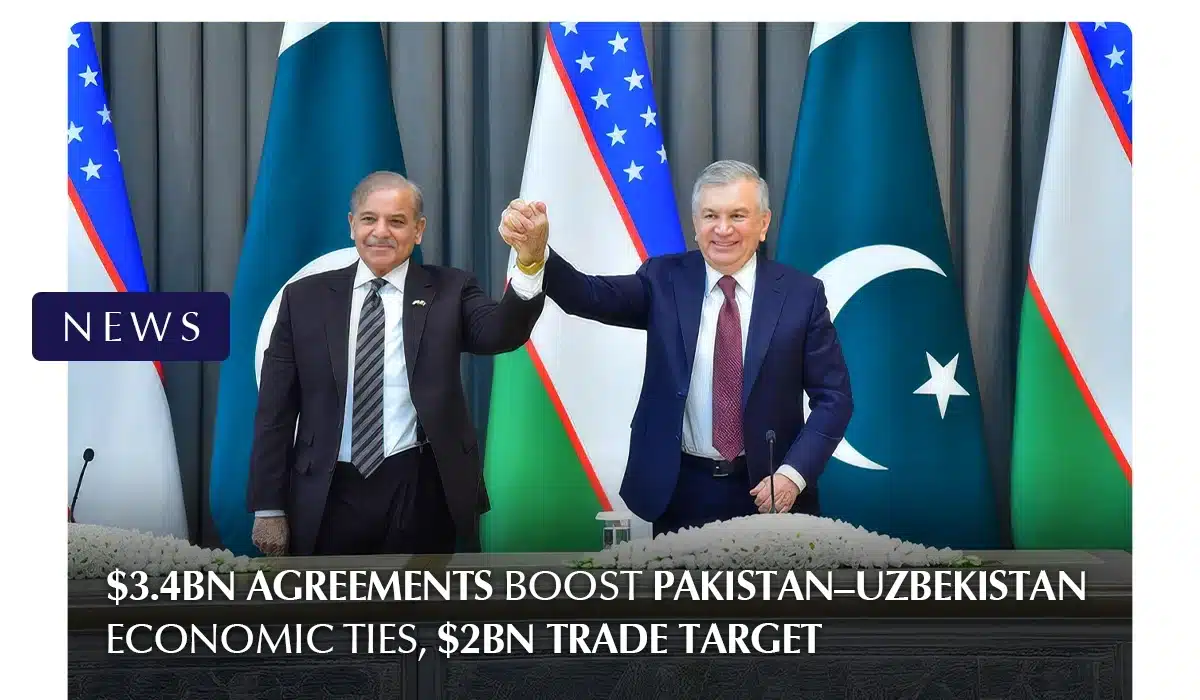
$3.4bn Agreements Boost Pakistan-Uzbekistan Economic Ties, $2bn Trade Target

ISLAMABAD: Pakistan and Uzbekistan signed Business-to-Business (B2B) agreements worth $3.4 billion at the Pakistan–Uzbekistan Business Forum in Islamabad, marking a major step forward in bilateral economic cooperation.

The forum was attended by Prime Minister Shehbaz Sharif and visiting Uzbek President Shavkat Mirziyoyev, who is on a two-day state visit to Pakistan. Addressing business leaders and ministers from both sides, Prime Minister Sharif invited Uzbek firms to explore investment opportunities in Pakistan’s textile, pharmaceutical, mining, agriculture and tourism sectors.

The private-sector agreements span multiple industries, including textiles, pharmaceuticals, leather, engineering goods, and agriculture. Both leaders assured investors of a conducive business environment and pledged zero tolerance for corruption and bureaucratic hurdles. Prime Minister Sharif described himself as the “CEO of Pakistan” for the forum and assured business leaders that any bottlenecks would be removed promptly.

The two countries also signed a protocol to raise bilateral trade to $2 billion within five years. Both sides termed the target “ambitious yet achievable,” emphasizing that structured programs and policy frameworks are already in place to facilitate growth. Uzbekistan offered 10-year tax exemptions and support to Pakistani pharmaceutical companies and invited Pakistani expertise to manage approximately 30 high-tech textile enterprises.

Connectivity remained a central focus during the visit. Both countries reaffirmed their commitment to the Uzbekistan–Afghanistan–Pakistan (UAP) Railway Project and endorsed the Termiz–Kharlachi route, recognizing its importance for regional integration and trade expansion.

In addition, the Anti-Corruption Agency of Uzbekistan and Pakistan’s National Accountability Bureau signed an MoU to strengthen cooperation against corruption. Later, President Asif Ali Zardari conferred the Nishan-e-Pakistan upon President Mirziyoyev in recognition of his efforts to strengthen bilateral ties.

The visit underscored a shared commitment to deepening strategic partnership and expanding economic collaboration between the two countries.

For more news on the economy, real estate and development, visit Chakor Ventures.

CategoriesNews Economy Investment

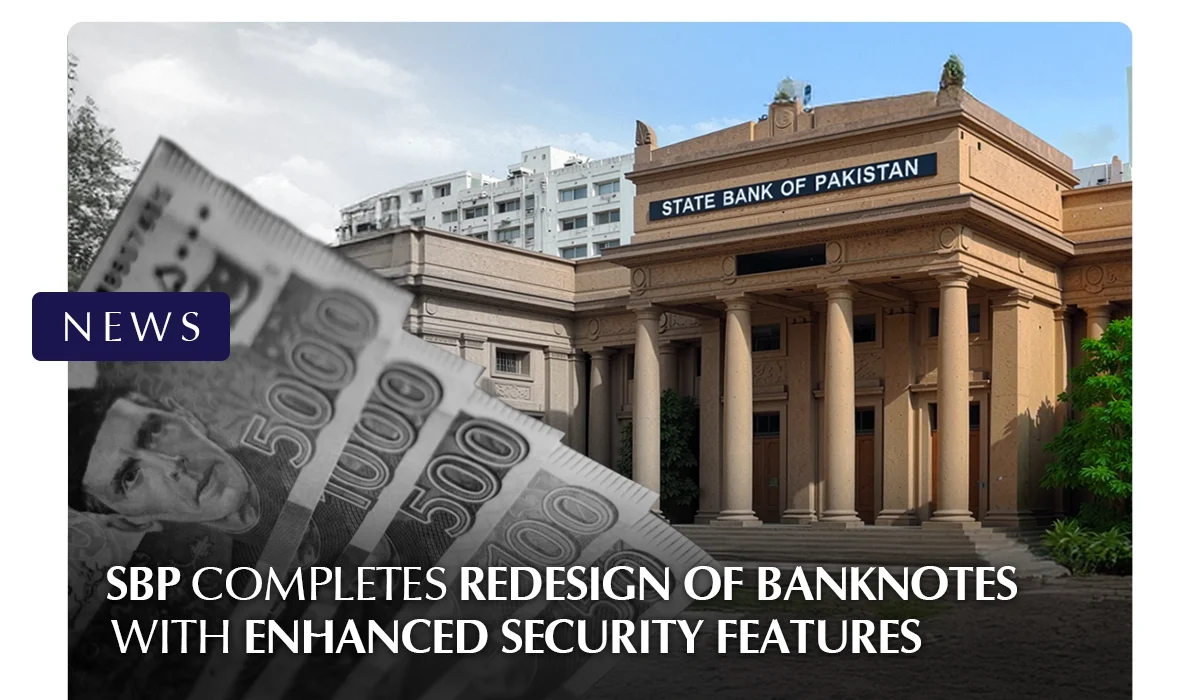
SBP Completes Redesign of Banknotes with Enhanced Security Features

ISLAMABAD: The State Bank of Pakistan (SBP) has completed the development of new banknote designs incorporating updated security elements and has submitted them to the federal cabinet for formal approval. The progress was shared during a meeting of the Senate Standing Committee on Finance and Revenue.

According to SBP Governor Jameel Ahmad, the proposed designs have already been cleared by the central bank’s board. He informed lawmakers that the printing process will commence once the cabinet grants its approval. The introduction of the new notes into circulation will take place gradually, beginning after sufficient stock has been produced to replace existing notes.

The redesign initiative is intended to strengthen safeguards against counterfeiting and modernise Pakistan’s currency framework. Officials indicated that more than one denomination may be printed at the same time; however, no details were provided regarding which notes will be released first.

At present, currency denominations in circulation include Rs10, Rs20, Rs50, Rs75, Rs100, Rs500, Rs1,000 and Rs5,000. The committee session, chaired by Senator Saleem Mandviwala, also addressed matters related to financial oversight and regulatory administration.

In a separate development, the SBP’s Monetary Policy Committee decided to maintain the benchmark interest rate at 10.5 percent in its first meeting of 2026. The rollout of the redesigned currency will proceed once the necessary approvals are completed and production benchmarks are achieved.

For more news on the economy, real estate and development, visit Chakor Ventures.

CategoriesConstruction News Urban Developments & Planning

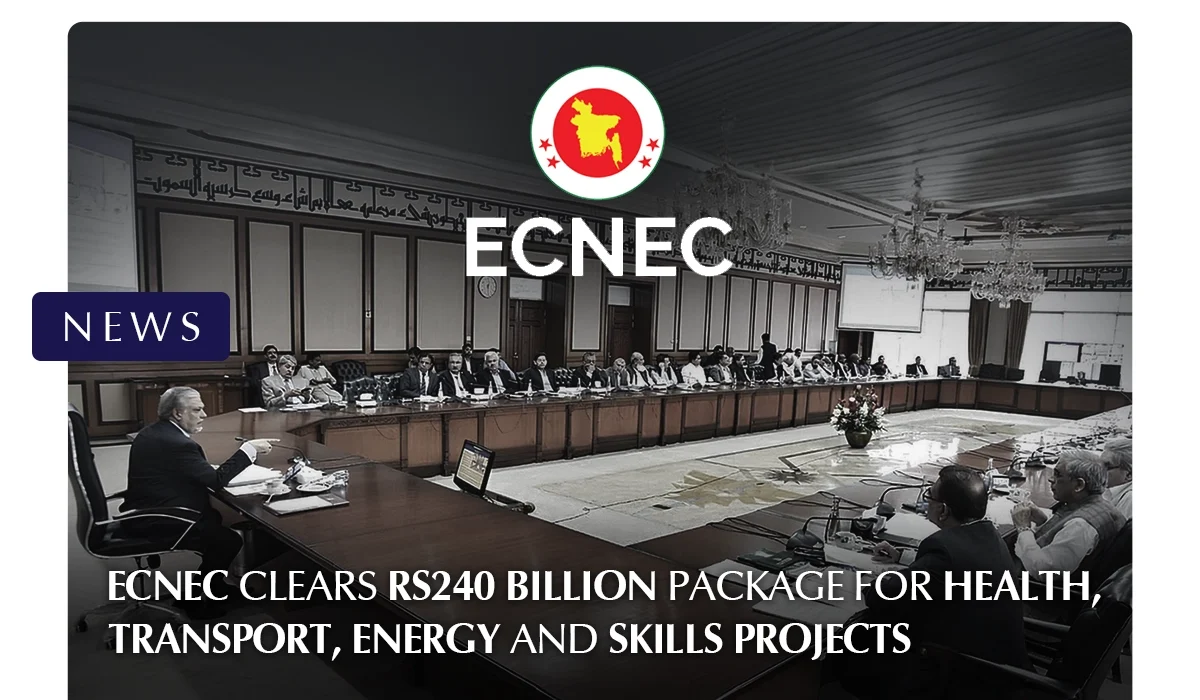
ECNEC Clears Rs240 Billion Package for Health, Transport, Energy and Skills Projects

ISLAMABAD: The Executive Committee of the National Economic Council (ECNEC) has given the green light to four public sector development projects with a total estimated cost exceeding Rs240 billion. The approvals were granted during a meeting chaired by Deputy Prime Minister Ishaq Dar, according to an official release.

One of the key initiatives involves expanding cardiac care facilities at a major medical institute in Rawalpindi, aimed at strengthening specialised healthcare services and increasing treatment capacity.

The committee also approved a nationwide youth-focused skills programme intended to enhance vocational and technical training opportunities. The initiative is designed to equip young people with market-relevant skills to improve employability.

In the transport sector, ECNEC endorsed the development of a new bus rapid transit corridor in Karachi. The project is expected to support urban mobility by providing an organised public transport system along a key route in the city.

Additionally, a hydropower project with a planned generation capacity of 34.5 megawatts in Gilgit-Baltistan received approval. The scheme is expected to contribute to regional electricity supply and support local infrastructure development.

The meeting was attended by federal and provincial officials, including representatives from finance, planning, water resources, defence, and technical training institutions. The approved projects span multiple sectors, reflecting ongoing efforts to address infrastructure, energy, healthcare, and workforce development needs through public investment.

For more news on economy, real estate and development, visit Chakor Ventures.

CategoriesNews Construction Developments Economy Investment Urban Developments & Planning

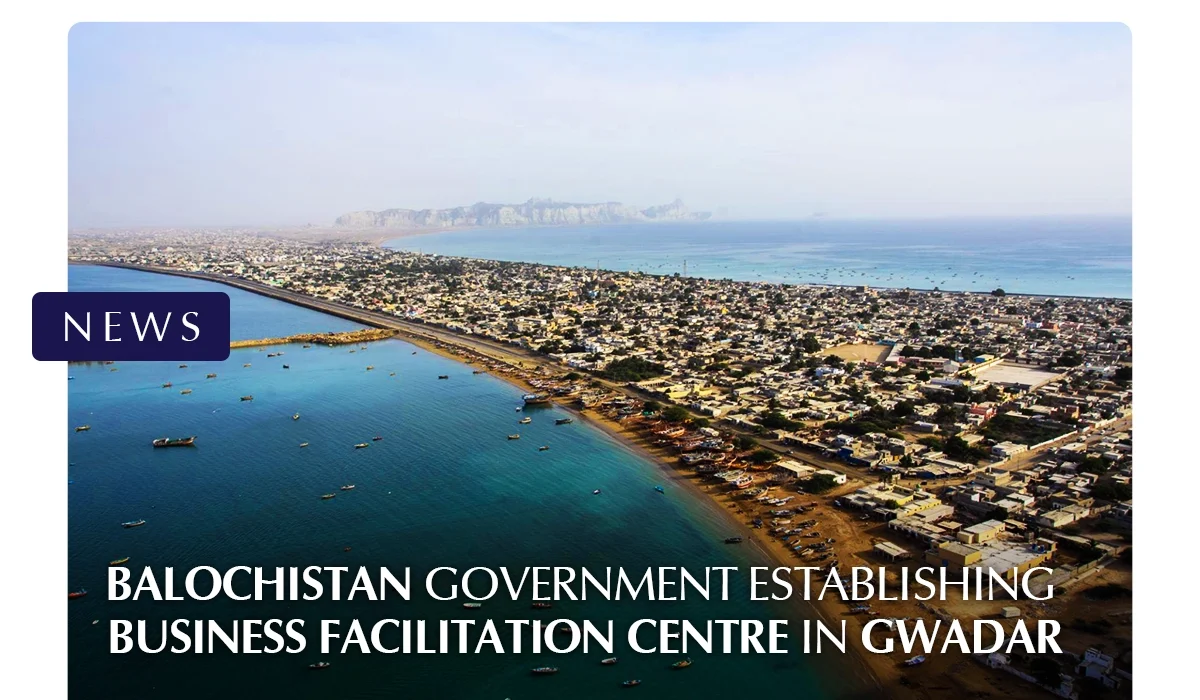
Balochistan Government Establishing Business Facilitation Centre in Gwadar

GWADAR: The Balochistan government is in the process of setting up a Business Facilitation Centre (BFC) in Gwadar to provide administrative and regulatory services to the business community. The facility is expected to become operational in the near future.

The centre will operate as a one-window platform, bringing together representatives from various government departments to process applications and approvals required for business activities. Services to be offered include the issuance of no-objection certificates (NOCs), licenses, permits, and other regulatory clearances needed to initiate or expand commercial operations.

A digital coordination system is being introduced to connect relevant departments and support the processing of applications. Business Facilitation Officers will be stationed at the centre to assist applicants and manage documentation and procedural requirements.

The initiative is part of ongoing administrative measures aimed at improving service delivery for investors and businesses operating in Gwadar. The centre is intended to centralise procedures that are currently handled by multiple offices.

The decision to establish the facility was discussed during meetings between representatives of the business community and provincial authorities responsible for investment and trade. The Business Facilitation Centre will function as a dedicated point of contact for investors seeking regulatory approvals related to business operations in Gwadar.

For more news on economy, real estate and development, visit Chakor Ventures.

CategoriesNews Developments Urban Developments & Planning

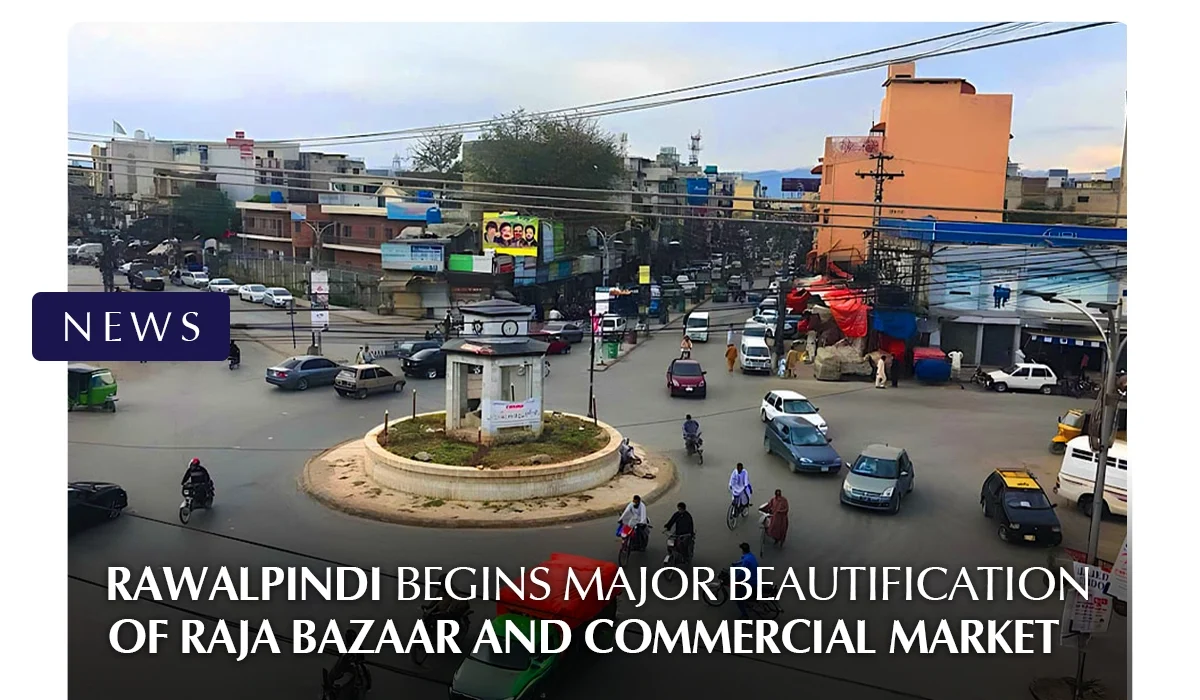
Rawalpindi Begins Major Beautification of Raja Bazaar and Commercial Market

RAWALPINDI: The Rawalpindi Municipal Corporation (RMC) is nearing completion of a large-scale urban upgrade in the historic Raja Bazaar and the city’s busy Commercial Avenue Market, with most underground utility work already finished and beautification efforts now underway.

Municipal officials report that around 80 percent of underground cabling has been completed along the key commercial stretch of Raja Bazaar, while nearly 90 percent of similar work has been finalised in Commercial Avenue Market. The project, valued at Rs875 million, is scheduled for completion by May 30, with the transformed areas expected to reopen to the public in June.

The next phase in Raja Bazaar includes restoring old building façades, installing uniform signboards, constructing tuff-tiled pedestrian walkways, upgrading pavements, and adding public washrooms and seating areas. Decorative lighting, flower pots, and greenery will also be introduced to improve the visual appeal. Once finished, the market will operate as a pedestrian-friendly walking street.

In Commercial Avenue Market, beautification has begun following the relocation of utilities. Similar improvements are planned to enhance infrastructure and create a more organised shopping environment.

Officials say the initiative, launched under Punjab’s broader urban improvement drive, aims to boost cleanliness, modernise infrastructure, and create a healthier and more attractive setting for residents and visitors. Authorities believe the revamped markets will encourage increased foot traffic and commercial activity, positioning both locations as vibrant, accessible urban destinations.

For more news on economy, real estate and development, visit Chakor Ventures.

CategoriesNews Property Taxes

FBR Tax Collection Rises 16% in January to Rs1.03 Trillion

ISLAMABAD: The Federal Board of Revenue (FBR) recorded a notable rise in tax collection during January, signalling renewed momentum in Pakistan’s revenue performance. The authority collected Rs1.031 trillion for the month, reflecting a 16 percent increase compared to the same period last year. Although the figure fell slightly short of the monthly target, it points to strengthening fiscal trends heading into the second half of the financial year.

Officials reported particularly strong gains in direct taxation, while indirect taxes showed moderate improvement. January’s income tax receipts posted an impressive 26 per cent year-on-year surge, indicating better enforcement and progress in resolving outstanding tax matters. Sales tax collection also grew by 12 per cent, supported by a rebound in large-scale manufacturing activity.

For the first seven months of FY26, total tax collection reached Rs7.176 trillion, representing an 11 per cent increase from the previous year, though still below the projected target. Shortfalls were largely linked to weaker domestic sales tax performance and earlier uncertainty surrounding the super tax. A recent court decision upholding the levy is expected to generate significant additional revenue, helping narrow the gap in the coming months.

Refund disbursements rose moderately during the period, reflecting improved processing and compliance mechanisms. Federal Excise Duty outperformed expectations, while income tax, sales tax, and customs duties all registered year-on-year growth despite missing individual targets.

FBR officials attribute the improved performance to ongoing structural reforms, expanded digital monitoring, and enhanced enforcement efforts that are broadening the tax base and encouraging voluntary compliance. With economic activity gradually picking up, authorities remain hopeful that sustained growth in manufacturing and trade will help the country move closer to achieving its full-year revenue objectives.

For more news on economy, real estate and development, visit Chakor Ventures.

Industrialists Welcome PM’s Relief Package
CategoriesNews Economy Investment

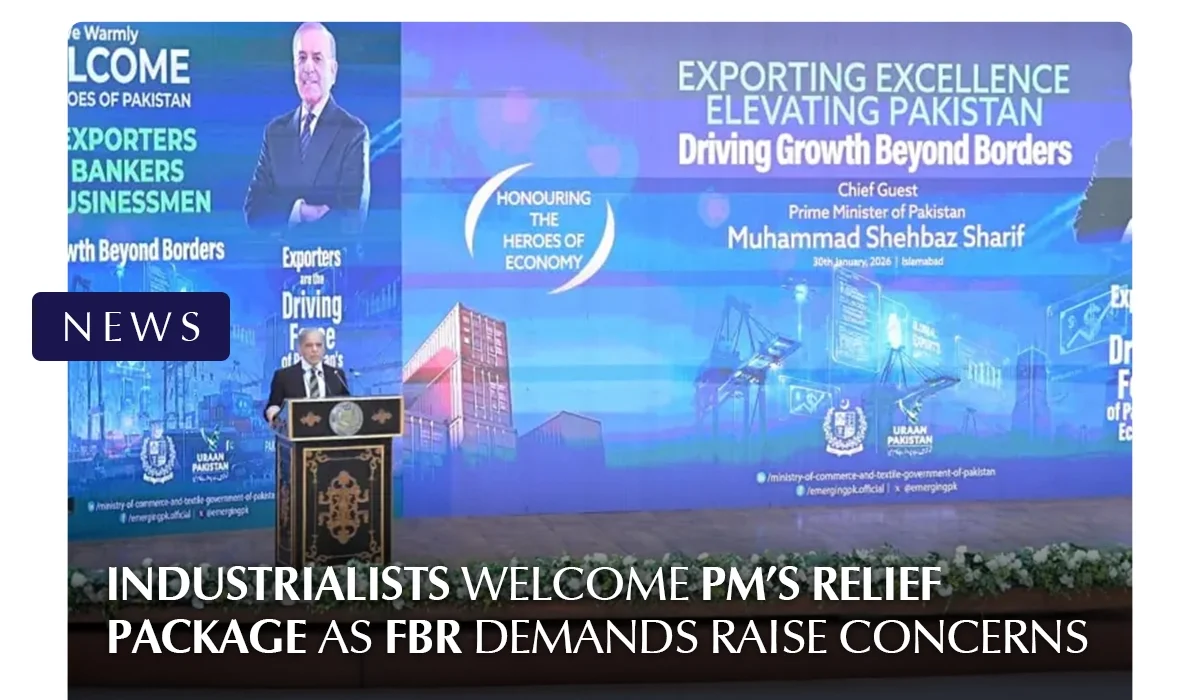
Industrialists Welcome PM’s Relief Package as FBR Demands Raise Concerns

KARACHI: Business leaders across Pakistan have welcomed the relief package announced by Prime Minister Shehbaz Sharif, calling it a timely intervention to ease mounting cost pressures on industry and exporters. However, foreign investors have simultaneously raised concerns over fresh tax demands issued by the Federal Board of Revenue (FBR).

The prime minister’s package includes a reduction of Rs4.04 per unit in electricity tariffs for industry, lower wheeling charges, and a cut in the export refinance scheme rate from 7.5% to 4.5%. Exporters will also receive “blue passports” to facilitate international business travel.

While domestic industry leaders described the measures as bold and supportive, the Overseas Investors Chamber of Commerce and Industry (OICCI) urged authorities to show flexibility on tax compliance deadlines. Its chief executive, M. Abdul Aleem, suggested that outstanding super tax demands be adjusted against pending tax refunds before requiring additional payments, calling for a more business-friendly approach.

Export associations echoed the positive sentiment. Representatives of the Pakistan Hosiery Manufacturers and Exporters Association said the energy and financing relief would help struggling exporters remain competitive amid high global cost pressures and liquidity constraints.

Similarly, the Korangi Association of Trade and Industry noted that lower power tariffs and cheaper financing could stimulate production, revive industrial activity, and support export growth.

Despite fiscal challenges, the relief package has been widely viewed as a step toward stabilizing industry, though tax policy uncertainties continue to weigh on investor confidence.

For more news on real estate and development, visit Chakor Ventures.

CategoriesNews Economy Investment

Gold, Silver Prices Plunge After Record Rally, Wiping Out $3.4 Trillion in Value

Global gold and silver markets experienced a sharp reversal after a historic price rally earlier this week, erasing roughly $3.4 trillion in market value as investors rushed to take profits and reduce exposure to volatile assets.

Precious metals had surged to unprecedented levels in recent sessions, with gold approaching around $5,600 per ounce and silver crossing above $120 per ounce, benchmarks rarely seen outside exceptional market conditions. However, a broad sell-off in major equities, particularly in U.S. technology and artificial intelligence sectors, dampened risk sentiment and triggered significant declines in commodity trading.

Gold prices fell sharply from their record peak, retreating by nearly $500 per ounce in recent trading. Silver also surrendered gains, sliding after reaching new highs that had drawn speculative interest from investors seeking safe-haven assets amid global uncertainty.

Analysts note that the steep drop highlights how rapidly prices can adjust after an intense surge driven by speculative inflows. Bullion markets, which saw unprecedented turnover and record trading volumes in the weeks leading up to the retreat, reacted sensitively to shifts in broader financial markets as traders recalibrated positions and exited volatile holdings.

Despite the recent pullback, longer-term factors such as geopolitical tensions, inflationary pressures, and ongoing central bank purchases continue to lend structural support to gold and silver. Still, the swift reversal serves as a reminder that even traditionally defensive assets can experience dramatic price swings when market sentiment shifts.

Investors are watching closely to see whether the latest correction signals a temporary pullback or the beginning of a wider recalibration in precious metals markets.

CategoriesNews Architecture Developments Tourism

Punjab-Backed WCLA Project to Transform Old Anarkali

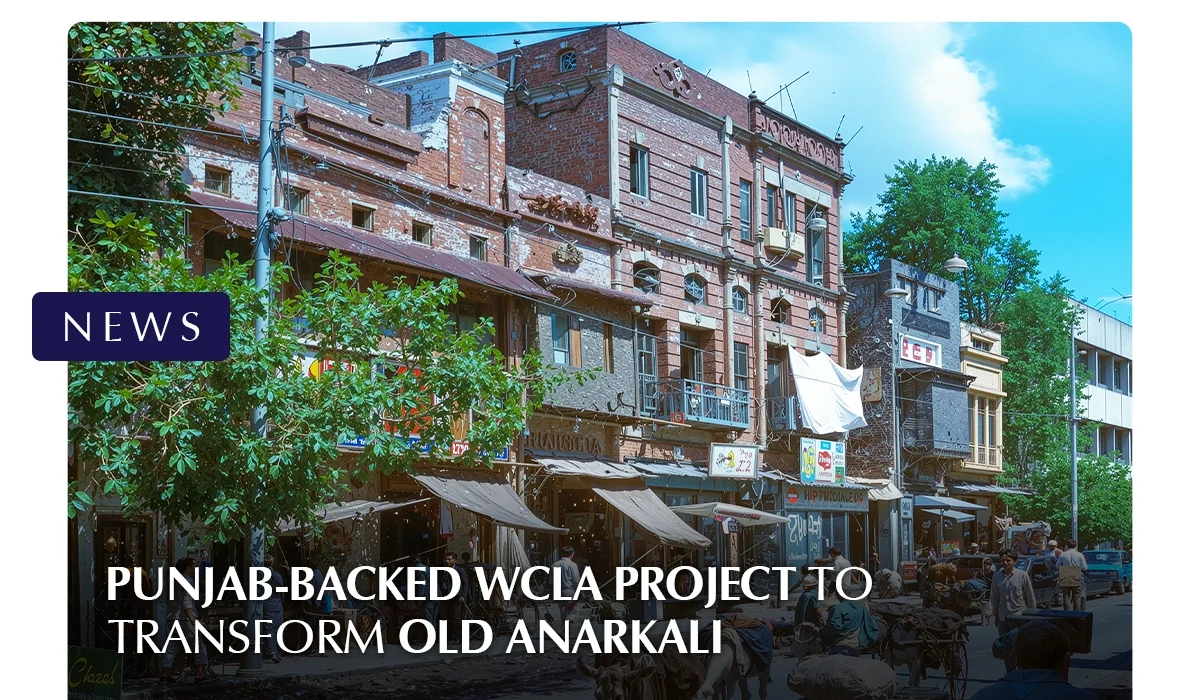
LAHORE: The Punjab government has directed the Walled City of Lahore Authority to begin a large-scale heritage restoration project in Old Anarkali. The initiative reflects a renewed focus on protecting Lahore’s historic identity. Officials describe it as one of the most significant conservation efforts in the area in recent years.

The project is estimated to cost Rs 1.097 billion. Work is expected to continue through December 2027. The restoration covers the historic stretch between Jain Temple and Lohari Gate, an area known for its architectural and cultural value.

The plan includes street resurfacing and improved pedestrian pathways. Modern underground electrical wiring will replace overhead cables. Street lighting will also be upgraded to improve safety and visual appeal. Authorities will introduce uniform shop signage to create a more organized streetscape. Directional signs will be installed to help visitors navigate the area.

Landscaping is another key component. Both hard and soft landscape features will be added to enhance the environment without disturbing the historic character. Selected building facades will undergo careful conservation to retain their original appearance.

A key part of the initiative focuses on the restoration of 71 building façades in both Old and New Anarkali, including 29 structures located within Old Anarkali. Prominent sites such as the Old Anarkali Food Street, Nashaman Building, and Bakhshi Market are also included in the conservation plans, highlighting the project’s emphasis on preserving well-known commercial and cultural landmarks.

Officials say the goal is to balance heritage preservation with modern urban needs. The project also aims to support tourism and local businesses. By improving infrastructure and restoring visual harmony, the government hopes to revive the historic charm of Old Anarkali.

The initiative forms part of broader provincial efforts to conserve heritage zones across Lahore while promoting sustainable urban development.

For more news on real estate and development, visit Chakor Ventures.

CategoriesNews Construction Developments Urban Developments & Planning

KP Approves Comprehensive Revitalisation Blueprint for Peshawar

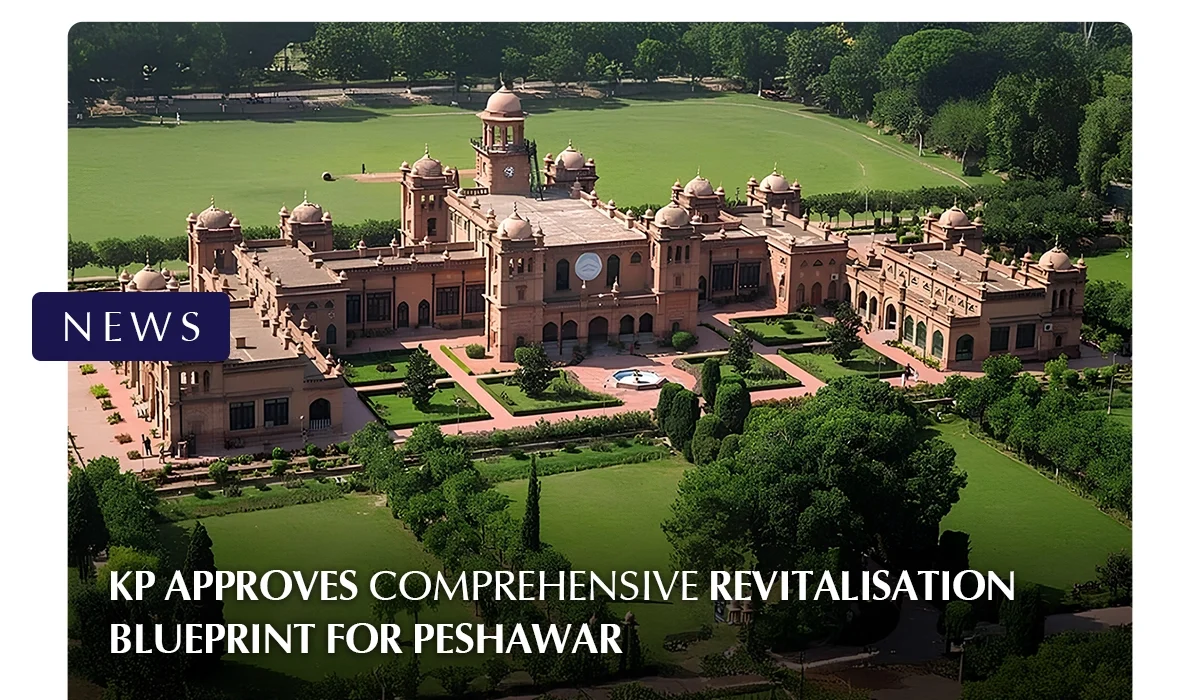
PESHAWAR: The Khyber Pakhtunkhwa government has granted initial approval to a wide-ranging urban revitalisation plan aimed at reshaping Peshawar into a more modern, livable, and well-connected city. The decision was made during a high-level review meeting chaired by the provincial chief minister, who directed departments to prioritise projects that are both technically sound and practically achievable.

The proposed plan spans multiple sectors and will be executed through coordinated efforts of key provincial departments and development authorities. A major focus will be on upgrading dozens of important city roads to improve traffic flow and accessibility. Authorities also intend to install underground electricity cabling along selected corridors to enhance safety and urban aesthetics.

To ease congestion, several underpasses are proposed at high-traffic intersections, alongside a new link road connecting the Hayatabad Industrial Estate with major surrounding routes. Urban beautification and recreation also form a central component of the initiative, with plans for theme parks, a modern children’s park, and new public landmarks designed to enhance community spaces.

Heritage preservation is included through proposed conservation work in the historic Walled City, while technical studies are being planned to guide improvements in public transportation. Infrastructure upgrades will extend to water supply, sanitation, irrigation channels, street lighting, and waste management systems. New municipal facilities, including slaughterhouses and sewerage treatment infrastructure, are also part of the blueprint.

The chief minister emphasised the timely completion of feasibility studies and planning documentation to prevent delays and ensure that development delivers visible improvements to residents. The revitalisation program is expected to significantly enhance Peshawar’s infrastructure, environmental conditions, and overall quality of urban life.

For more news on real estate and development, visit Chakor Ventures.