Stay informed with the latest developments in real estate, business, and investment trends across Pakistan and beyond. Chakor News delivers timely updates, expert insights, and market analysis to help you make informed decisions. Whether it’s project launches, economic shifts, or updates on regulatory changes, our news coverage keeps you ahead of the curve. Explore reliable stories, impactful headlines, and trusted reporting—only on Chakor News.
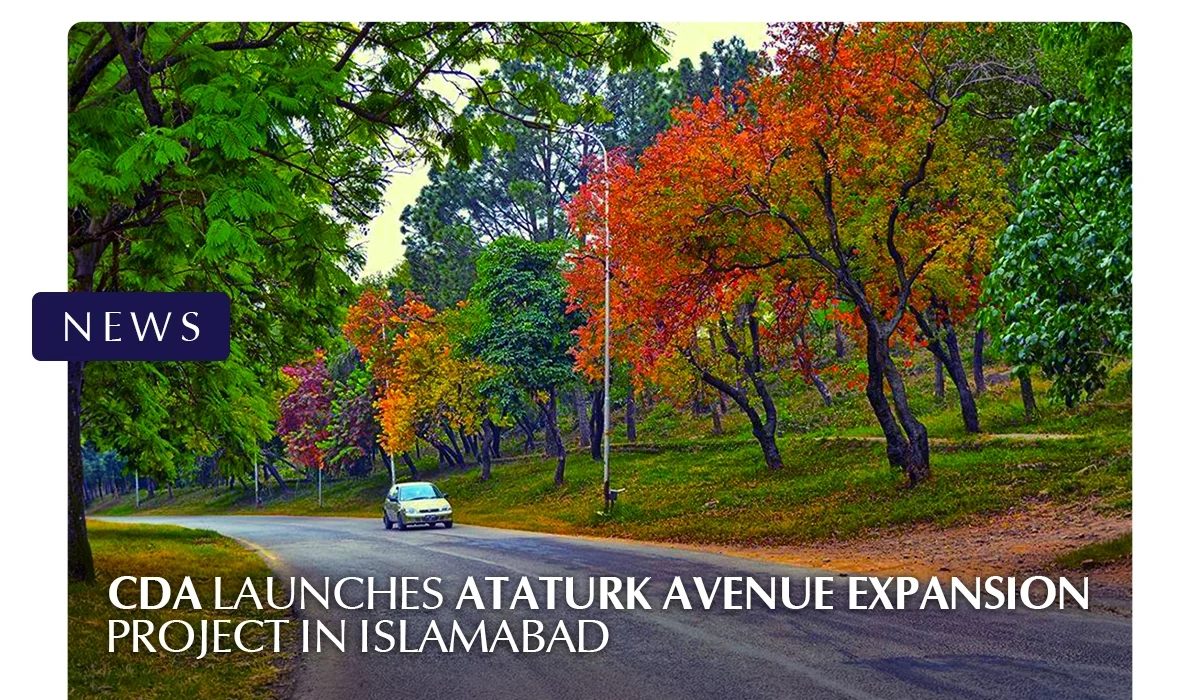
ISLAMABAD: The Capital Development Authority has started construction work on Ataturk Avenue to widen the road between D-Chowk and Ayub Chowk. The road will be expanded from a single lane into a two-way carriageway. The project will cost Rs. 241 million and is expected to finish within two months.
Since March 31, the avenue has been closed to traffic while construction is ongoing. Islamabad Traffic Police has set up alternate routes to help commuters get around the affected area.
The CDA has also taken steps to protect trees along the route, following heavy criticism over a similar project in 2018 when more than a hundred trees were cut down. This time, the authority says no trees will be removed. Twelve trees that fall in the path of construction are being dug up and moved to nearby locations. CDA spokesperson Shahid Kiani invited journalists and environmentalists to visit the site and see the process for themselves.
The project is being carried out under the supervision of the Environment Protection Agency, which had previously raised objections over tree cutting on the same stretch.
Apart from widening the road, the project also includes building dedicated cycling lanes and improving the overall layout of the avenue to reduce traffic congestion.
Residents have been asked to plan their travel in advance and follow instructions from traffic police during the construction period.
BBC-featured Content Specialist with a sharp eye for search intent and a proven ability to turn content into a growth engine. I leverage cutting-edge digital marketing tools to craft strategies that fuel organic traffic, amplify brand growth, and own the local SEO landscape, particularly across the competitive real estate market. I help brands dominate search rankings and convert visibility into measurable business success.
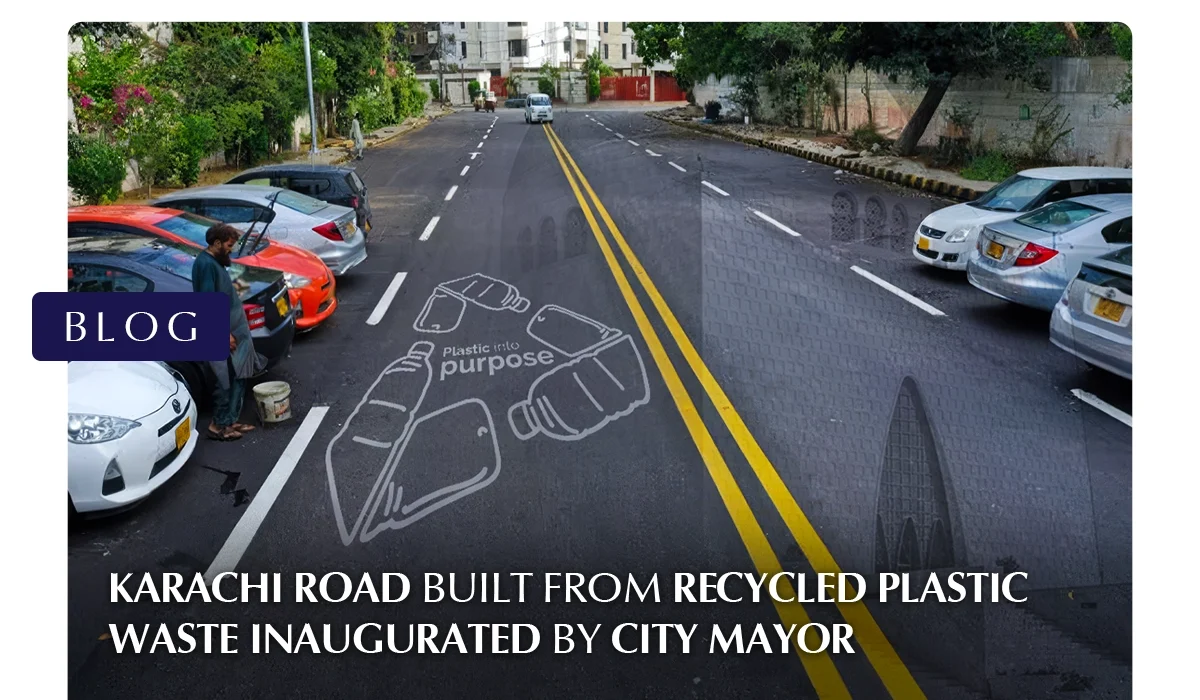
KARACHI: Karachi Mayor Murtaza Wahab on Monday inaugurated a road near the English Biscuit Manufacturers (EBM) facility constructed using recycled industrial plastic waste, marking a notable convergence of private-sector sustainability efforts and urban infrastructure development in Pakistan’s largest city.
The road, located adjacent to EBM’s Karachi manufacturing plant, was developed in partnership with Concept Loop and is designed to divert low-value plastic waste from landfills by converting it into durable road material. The initiative is part of EBM’s broader circular economy agenda and is presented as a scalable model for integrating recycled materials into national infrastructure projects.
Speaking at the inauguration, Mayor Wahab described the project as “practical innovation that Karachi needs,” adding that it addresses both infrastructural deficiencies and environmental challenges simultaneously. EBM Executive Director Shahzain Munir emphasised the company’s commitment to long-term value creation through circular solutions and called for stronger public–private collaboration to scale such initiatives nationwide.
The inauguration ceremony also featured public awareness activities on sustainable waste management practices.
Separately, Mayor Wahab laid the foundation stone for the rehabilitation of Mirza Adam Khan Road in Lyari Town on the same day, at an estimated cost of Rs400 million. The project encompasses a 4.48-kilometre dual carriageway, a 4.61-kilometre drainage line, and an 18-inch sewerage line, with completion targeted before 30 June 2026. The mayor noted the road is a key artery connecting the Mauripur Road and Garden areas and forms part of the broader Lyari Transformation Project, valued at approximately Rs5 billion in its first phase.
BBC-featured Content Specialist with a sharp eye for search intent and a proven ability to turn content into a growth engine. I leverage cutting-edge digital marketing tools to craft strategies that fuel organic traffic, amplify brand growth, and own the local SEO landscape, particularly across the competitive real estate market. I help brands dominate search rankings and convert visibility into measurable business success.
KARACHI: The Pakistan Stock Exchange suffered a sharp sell-off on Monday as escalating hostilities in the Middle East drove the KSE-100 Index down 3,500 points to 148,201, from a previous close of 151,707.
The decline is the latest in a string of war-driven corrections. Earlier this month, the index shed over 16,000 points in a single session, its steepest single-day fall on record, triggering a temporary halt under PSX circuit-breaker regulations. The conflict, sparked by joint U.S.-Israeli strikes on Iran, has since cast a long shadow over domestic markets.
The turmoil is not confined to Pakistan. Global markets have been broadly rattled, with hedge funds in Europe rapidly unwinding leveraged positions and volatility spreading across U.S. Treasuries, gold, and currencies. The closure of the Strait of Hormuz, a conduit for roughly 20% of the world’s oil and gas supplies, has produced what the International Energy Agency has called the largest supply disruption in the history of the global oil market, with Gulf production cuts exceeding 10 million barrels per day.
Oil prices surged further after Yemen’s Houthi movement launched ballistic missiles at Israeli targets over the weekend, widening the regional conflict. Brent crude climbed 2.47% to approximately $115.35 per barrel, up nearly 36% since hostilities began on February 27.
As a net oil importer, Pakistan faces compounding risks, inflationary pressure, current account stress, and currency vulnerability. While AKD Securities has suggested the direct economic impact remains manageable, analysts broadly agree that market recovery hinges on the conflict’s trajectory.
BBC-featured Content Specialist with a sharp eye for search intent and a proven ability to turn content into a growth engine. I leverage cutting-edge digital marketing tools to craft strategies that fuel organic traffic, amplify brand growth, and own the local SEO landscape, particularly across the competitive real estate market. I help brands dominate search rankings and convert visibility into measurable business success.
ISLAMABAD: The federal government is working on a comprehensive tax-free real estate investment package designed to attract overseas Pakistanis and foreign investors, with the proposal already submitted to the International Monetary Fund (IMF) for review and approval.
According to official sources, the initiative aims to remove long-standing procedural barriers that have historically deterred expatriates from investing in Pakistan’s property sector. The package is structured to channel foreign currency, particularly US dollars, into the country’s real estate and construction sectors, providing a much-needed boost to both.
The proposed reforms are expected to create more secure real estate options for overseas Pakistanis looking to enter Pakistan’s property market.
Among the key measures under consideration is the establishment of dedicated special investment zones for real estate development, offering streamlined approval processes, infrastructure support, and additional financial incentives to encourage large-scale projects. Authorities are also exploring the introduction of Real Estate Investment Trusts (REITs) and escrow accounts for property transactions, moves intended to enhance transparency and significantly reduce the risk of fraud for investors operating from abroad.
These measures may also increase confidence in real estate investment by improving transparency and reducing procedural risks.
The government is additionally seeking to revise existing taxes on property transactions as part of the broader reform package, though these adjustments remain subject to IMF concurrence. Notably, most of the proposed benefits are expected to be available exclusively to tax filers, with non-filers receiving limited relief under the current framework.
Officials have indicated that the initiative is partly motivated by evolving economic conditions in Gulf countries, where many overseas Pakistanis are based, presenting an opportunity to redirect investment flows back to Pakistan amid regional uncertainties.
Sources familiar with the matter suggest the package could be officially announced as early as next month, pending final regulatory approvals. If implemented, the scheme would represent one of the most substantial efforts in recent years to integrate the Pakistani diaspora more meaningfully into the country’s economic development.
Dedicated and detail-oriented SEO Content Writer, Real Estate Writer, and Research Analyst based in Islamabad, with proven expertise in developing accurate, valuable, and well-researched content. Skilled in analytical writing, market research, and reporting, with the ability to turn insights into clear, professional, and impactful content. Passionate about exploring new ideas, analyzing industry trends, and contributing to high-quality writing and research-driven projects.
KARACHI: Gold prices in Pakistan continued their volatile trajectory on Wednesday, recording a sharp increase of Rs15,200 per tola to reach Rs479,262, according to the All-Pakistan Gems and Jewellers Sarafa Association. The price of 10-gram gold also climbed by Rs13,031, settling at Rs410,889.
The latest surge follows a turbulent few sessions in the domestic market. Gold had previously risen by Rs16,300 per tola on Tuesday before that gain came on the heels of a steep decline of approximately Rs43,000, underscoring the extreme price swings that have characterized the market in recent days.
The domestic rally closely tracked developments in the international market, where spot gold prices rose nearly 2% to $4,554.97 per ounce after hitting a four-month low earlier in the week. US gold futures for April delivery posted an even sharper gain of 3.5 percent, reaching $4,553.60 per ounce, according to Reuters.
Market analysts attributed the rebound to easing inflation concerns, partly stemming from a recent decline in global oil prices. However, persistent geopolitical tensions in the Middle East continue to cast a shadow of uncertainty over commodity markets, sustaining demand for gold as a protective asset.
Adnan Agar, Director at Interactive Commodities, offered a broader perspective on gold’s evolving role, noting that the metal has transitioned from a traditional safe-haven instrument to a recognized long-term investment class. He attributed this shift largely to aggressive gold purchases by central banks worldwide, as nations seek to reduce their dependence on the US dollar.
Looking ahead, futures market speculation suggests a potential price correction as markets enter their next phase. Analysts also cautioned that any escalation in crude oil prices could trigger broader inflationary pressures, potentially compelling central banks to curtail gold purchases.
Silver prices edged up by Rs370 per tola to Rs7,824, while the Pakistani rupee gained marginally, rising Rs0.01 to Rs279.21 against the US dollar in the interbank market.
Dedicated and detail-oriented SEO Content Writer, Real Estate Writer, and Research Analyst based in Islamabad, with proven expertise in developing accurate, valuable, and well-researched content. Skilled in analytical writing, market research, and reporting, with the ability to turn insights into clear, professional, and impactful content. Passionate about exploring new ideas, analyzing industry trends, and contributing to high-quality writing and research-driven projects.
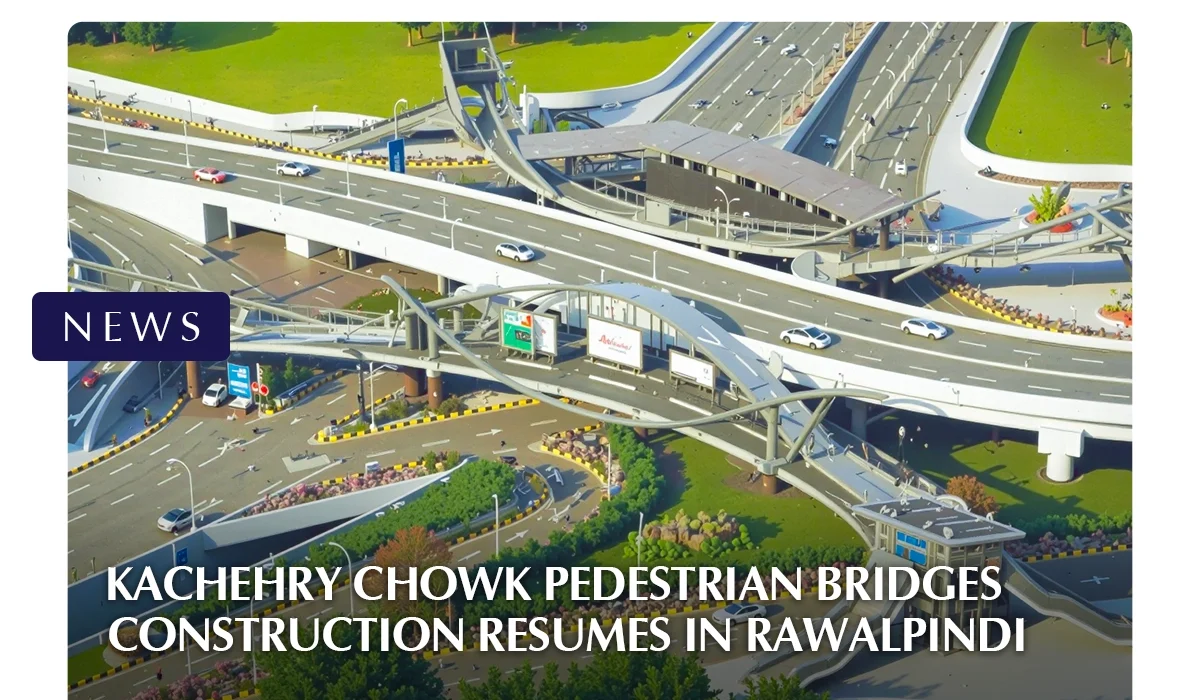
RAWALPINDI: Construction of pedestrian bridges under the Kutchery Chowk remodelling project commenced on Monday, March 24, 2026, following a brief suspension during the Eid holidays. The bridges are expected to be completed within one month, according to Punjab Highway Department Superintendent Engineer Ashfaq Sulheri.
The construction encompasses two interconnected bridges: the first spanning from Rashid Minhas Road, near the Federal Board of Revenue building, to Jhelum Road at the gate of the district courts; and the second connecting Fatima Jinnah University to the Adiala Road bus stand. Officials described the structure as the first state-of-the-art pedestrian bridge of its kind under the project.
Mr. Sulheri stated that the bridges were necessitated by the concentration of district courts, administrative offices, and police headquarters in the vicinity, creating a critical need for dedicated pedestrian access across the main square without the use of flyovers, underpasses, or ground-level roads.
The overall Rs19 billion remodelling project has surpassed 74 per cent completion. Structures for two flyovers and three underpasses have been fully built, over 50 per cent of road work has been carried out, and finishing work on the Jinnah Park flyover is currently underway.
Drainage infrastructure is near completion, with rainwater to be collected in sump wells and discharged into nearby nullahs, which will also serve to irrigate green belts along the square.
Upon full completion, more than 250,000 vehicles are expected to pass through Kutchery Chowk daily without traffic signals or congestion. The Parks and Horticulture Agency has been assigned a revised horticulture plan, with work already initiated at Jinnah Park.
Divisional Commissioner Abdul Aamer Khattak has urged authorities to adhere to the stipulated timeframe, citing ongoing road closures affecting motorists. The project is on course for completion by the end of April 2026.
BBC-featured Content Specialist with a sharp eye for search intent and a proven ability to turn content into a growth engine. I leverage cutting-edge digital marketing tools to craft strategies that fuel organic traffic, amplify brand growth, and own the local SEO landscape, particularly across the competitive real estate market. I help brands dominate search rankings and convert visibility into measurable business success.
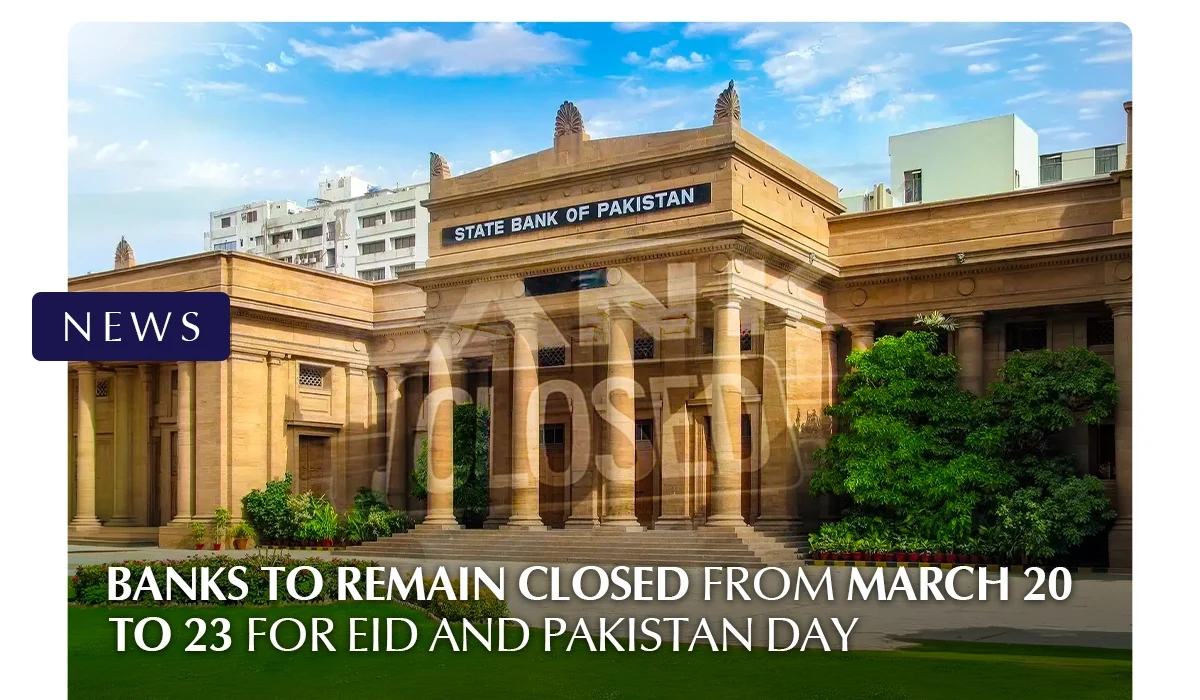
ISLAMABAD: The State Bank of Pakistan (SBP) has announced that banks and financial institutions across the country will remain closed for four consecutive days from March 20 to March 23 due to Eid-ul-Fitr holidays, the weekly weekend, and Pakistan Day.
According to the central bank’s schedule, March 20 and 21 will be observed as public holidays on account of Eid al-Fitr. These will be followed by the regular weekly holiday on Sunday, March 22, and a public holiday on March 23 to mark Pakistan Day.
The closure will apply to all commercial banks, development finance institutions, and microfinance banks operating nationwide. The State Bank of Pakistan will also remain closed during this period.
Following the holiday break, normal banking operations are expected to resume on March 24.
The federal government has already declared Eid holidays for both five-day and six-day working offices, aligning with the banking schedule. The extended closure period may affect routine financial transactions, including in-branch services and processing activities.
Customers are expected to rely on digital banking channels and ATMs for essential services during the holiday period.
BBC-featured Content Specialist with a sharp eye for search intent and a proven ability to turn content into a growth engine. I leverage cutting-edge digital marketing tools to craft strategies that fuel organic traffic, amplify brand growth, and own the local SEO landscape, particularly across the competitive real estate market. I help brands dominate search rankings and convert visibility into measurable business success.
ISLAMABAD: The Capital Development Authority (CDA) has announced plans to introduce dedicated bicycle tracks across Islamabad as part of efforts to promote sustainable transportation and improve urban mobility.
According to officials, the initiative aims to develop a comprehensive network of cycling lanes across various sectors and major roads in the federal capital. The project is intended to provide residents with an alternative mode of transport while reducing traffic congestion and environmental impact.
The bicycle track plan is part of broader urban development measures focused on enhancing public infrastructure and encouraging healthier commuting options. Authorities indicated that the project will include proper planning for connectivity between different sectors, ensuring accessibility and usability for daily commuters.
In addition to promoting cycling culture, the initiative is expected to contribute to environmental goals by reducing carbon emissions associated with conventional transport. Officials also highlighted that the development of cycling infrastructure aligns with efforts to modernize the city’s transport system and improve the quality of life for residents.
The CDA has previously undertaken planning for large-scale cycling networks, including proposals for extensive bicycle lanes and supporting facilities such as parking stands and safety infrastructure.
While detailed timelines for the latest phase have not been disclosed, the authority has indicated that the project will be implemented in stages as part of ongoing development efforts in the capital.
The initiative reflects a continued focus on sustainable urban planning and the introduction of alternative transport solutions in Islamabad.
BBC-featured Content Specialist with a sharp eye for search intent and a proven ability to turn content into a growth engine. I leverage cutting-edge digital marketing tools to craft strategies that fuel organic traffic, amplify brand growth, and own the local SEO landscape, particularly across the competitive real estate market. I help brands dominate search rankings and convert visibility into measurable business success.
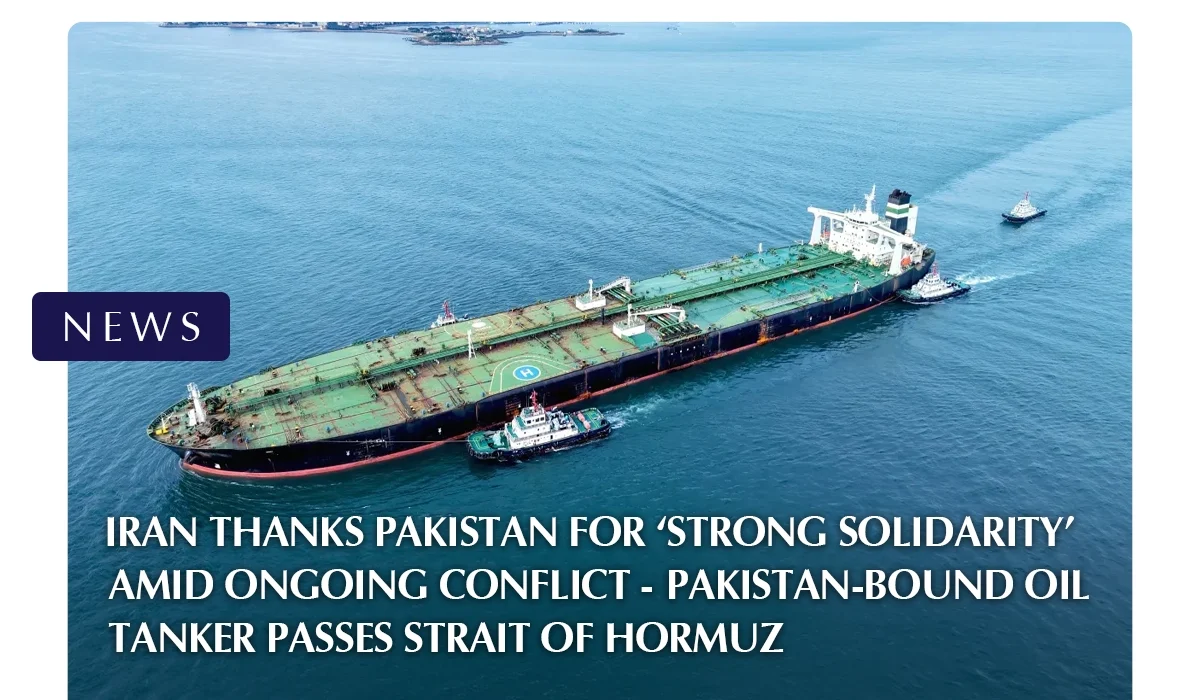
ISLAMABAD: A Pakistan-bound oil tanker successfully transited the Strait of Hormuz over the weekend, marking the first recorded passage of a non-Iranian cargo vessel through the waterway since Iran close strait of hormuz and imposed restrictions on shipping following the outbreak of hostilities on February 28.
The Aframax-class tanker, operated by Pakistan National Shipping Corporation, completed its Strait of Hormuz transit on approximately March 15 after loading crude oil at Das Island in Abu Dhabi. The vessel was recorded navigating along the Iranian coastline of the Strait of Hormuz before altering course eastward toward Pakistan, where it is expected to dock on March 17.
Maritime intelligence firm MarineTraffic confirmed it was the first non-Iranian cargo ship to transit the Strait of Hormuz with its Automatic Identification System signal active, indicating that select nations have succeeded in securing negotiated passage through the strait.
Iran Strait of Hormuz Importance
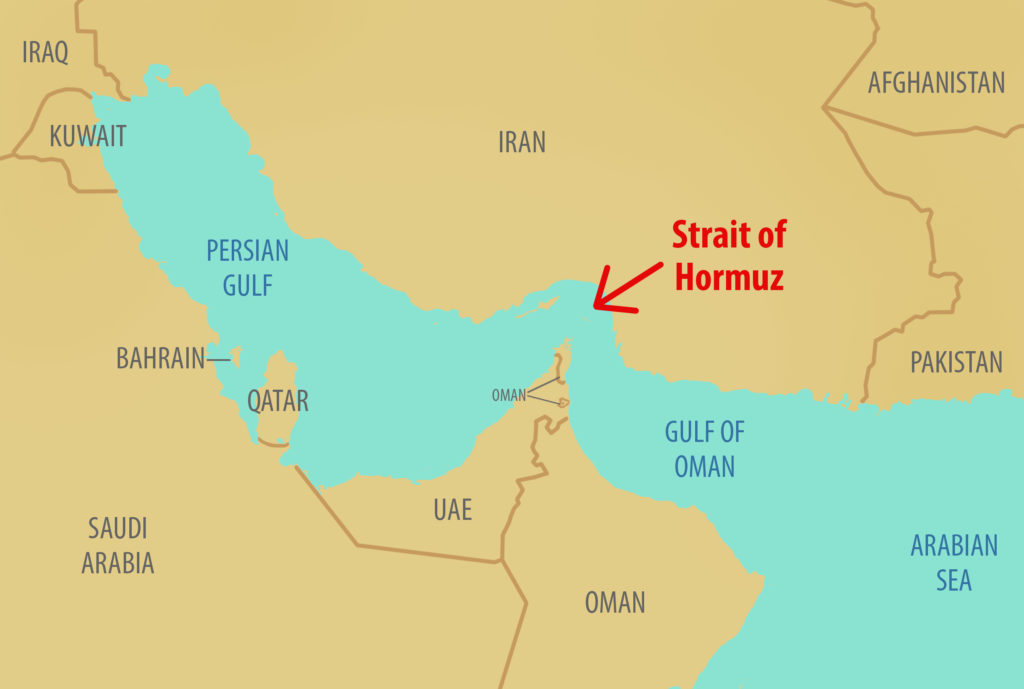
The Strait of Hormuz is a narrow waterway between Iran and Oman connecting the Persian Gulf to the Gulf of Oman and the Arabian Sea. At its narrowest navigable point, the Strait of Hormuz measures only 3.2 kilometres wide in each direction, yet serves as the transit corridor for approximately one-fifth of the world’s daily crude oil supply and one quarter of global seaborne liquefied natural gas exports.
There is no commercially viable alternative route for Gulf producers, making the Strait of Hormuz the most critical maritime chokepoint in the global energy system. Since Iranian forces effectively closed the Strait of Hormuz to the majority of international shipping, Brent crude has surged more than 40 percent, trading above $100 per barrel as of this week.
Iran Publicly Thanks Pakistan for ‘Strong Support’
The successful Strait of Hormuz transit prompted an immediate public response from Tehran. Iranian Foreign Minister Abbas Araghchi, in a post in Urdu on X formerly Twitter on Monday, extended his “heartfelt gratitude to the government and people of Pakistan for their strong expression of solidarity and support with the people and government of the Islamic Republic of Iran.” He further affirmed that Iran stood with steadfastness in defence of its sovereignty and territorial integrity.
The statement reflects Iran’s policy of selectively permitting Strait of Hormuz passage to vessels from nations it regards as neutral or sympathetic. Pakistan’s Foreign Office has formally described Islamabad’s role throughout the conflict as that of a “bridge builder” a posture that has yielded a direct economic benefit in the form of access through the Strait of Hormuz that Western-aligned nations currently cannot secure.
Naval Operation and Selective Access
In the days preceding the Strait of Hormuz transit, Pakistan’s navy launched Operation Muhafiz-ul-Bahr to safeguard commercial shipping lanes and Pakistani-flagged vessels in regional waters. Naval authorities established contact with Iranian counterparts ahead of the passage. A military source confirmed no escort was ultimately required for the vessel.
Iran’s selective approach to the Strait of Hormuz blockade has extended to other nations as well.
Pakistan’s Economic Exposure
Pakistan’s dependence on the Strait of Hormuz is among the most acute of any economy in the region. Approximately 80 percent of the country’s crude oil imports are ordinarily routed through the strait, and nearly 90 percent of its liquefied natural gas is sourced from Qatarall of which transits the Strait of Hormuz.
With strategic petroleum reserves of only 10 to 14 days, Pakistan has limited capacity to absorb prolonged disruption. The government has already enacted its largest single fuel price revision on record, raising petrol to Rs 321 per litre and diesel to Rs 335 per litre, an increase of 17 to 20 percent in a single adjustment.
A second PNSC tanker, which loaded crude at Saudi Arabia’s Red Sea port of Yanbu, was approximately three sailing days from Pakistan at the time of reporting. Pakistan’s finance ministry confirmed petroleum stocks remain comfortable, with supply coverage extending into mid-April, while diversification of import routes beyond the Hormuz corridor remains actively underway.
Pakistan’s Diplomatic Posture
The tanker’s Strait of Hormuz passage is the most concrete economic outcome of Pakistan’s diplomatic engagement since hostilities began. Prime Minister Shehbaz Sharif travelled to Saudi Arabia on March 12 for a meeting with Crown Prince Mohammed bin Salman.
At the United Nations Security Council, Pakistan maintained a calibrated position condemning strikes on Iran, affirming solidarity with Gulf states, and consistently urging all parties toward a negotiated resolution to the Hormuz crisis.
Whether the access Pakistan has secured through the Hormuz can be sustained, and whether it proves sufficient to shield an economy so heavily dependent on this single passage, remains the defining economic question for Islamabad in the weeks ahead.
BBC-featured Content Specialist with a sharp eye for search intent and a proven ability to turn content into a growth engine. I leverage cutting-edge digital marketing tools to craft strategies that fuel organic traffic, amplify brand growth, and own the local SEO landscape, particularly across the competitive real estate market. I help brands dominate search rankings and convert visibility into measurable business success.
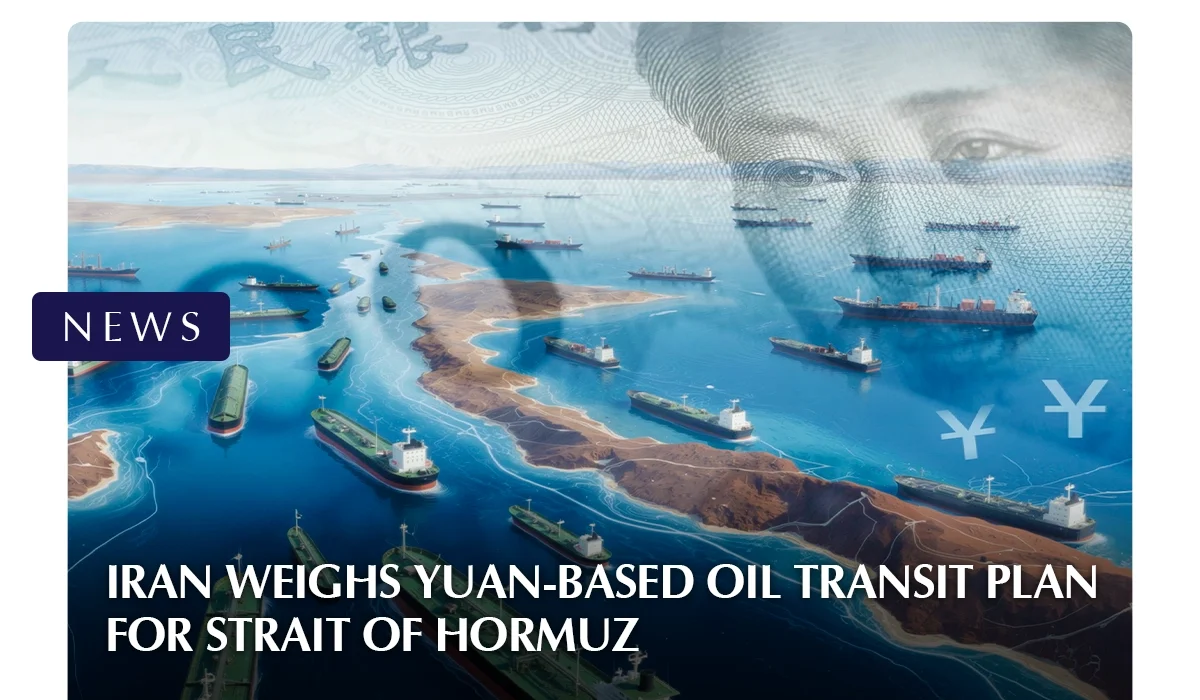
TEHRAN/BEIJING: Iran is weighing a proposal to allow a limited number of oil tankers to transit the Strait of Hormuz, provided the associated cargo is traded exclusively in Chinese yuan, according to a senior Iranian official cited by CNN.
The condition would mark a significant departure from the dollar-denominated conventions that govern the vast majority of global oil transactions. Iranian Foreign Minister Abbas Araghchi has confirmed that the strait remains open to international shipping, with the explicit exclusion of vessels linked to the United States and Israel.
The proposal aligns with Beijing’s longstanding objective of internationalising the yuan in global commodity markets. Approximately 45 per cent of China’s crude oil imports pass through the Strait of Hormuz, making uninterrupted access a strategic priority for the world’s second-largest economy.
For Tehran, the arrangement offers a means of circumventing US sanctions that have severely constrained its economy, while deepening financial ties with one of its principal oil importers and reducing dependence on the dollar-dominated financial system.
The Strait’s effective closure, following joint US-Israeli military operations that began on 28 February, has severely disrupted global energy markets. Brent crude surpassed $100 per barrel on 8 March, peaking at $126. Vessel traffic has declined by approximately 97 per cent since 2 March, with only ships from nations Iran considers friendly, including India, China, and Turkey, granted limited passage.
US President Donald Trump has announced that the Navy will begin escorting oil tankers through the waterway and has claimed that American forces conducted strikes on Iran’s Kharg Island, the country’s primary oil export terminal.
BBC-featured Content Specialist with a sharp eye for search intent and a proven ability to turn content into a growth engine. I leverage cutting-edge digital marketing tools to craft strategies that fuel organic traffic, amplify brand growth, and own the local SEO landscape, particularly across the competitive real estate market. I help brands dominate search rankings and convert visibility into measurable business success.