
Pakistan’s Reserves Rise by $23m, Signalling Steady Financial Recovery
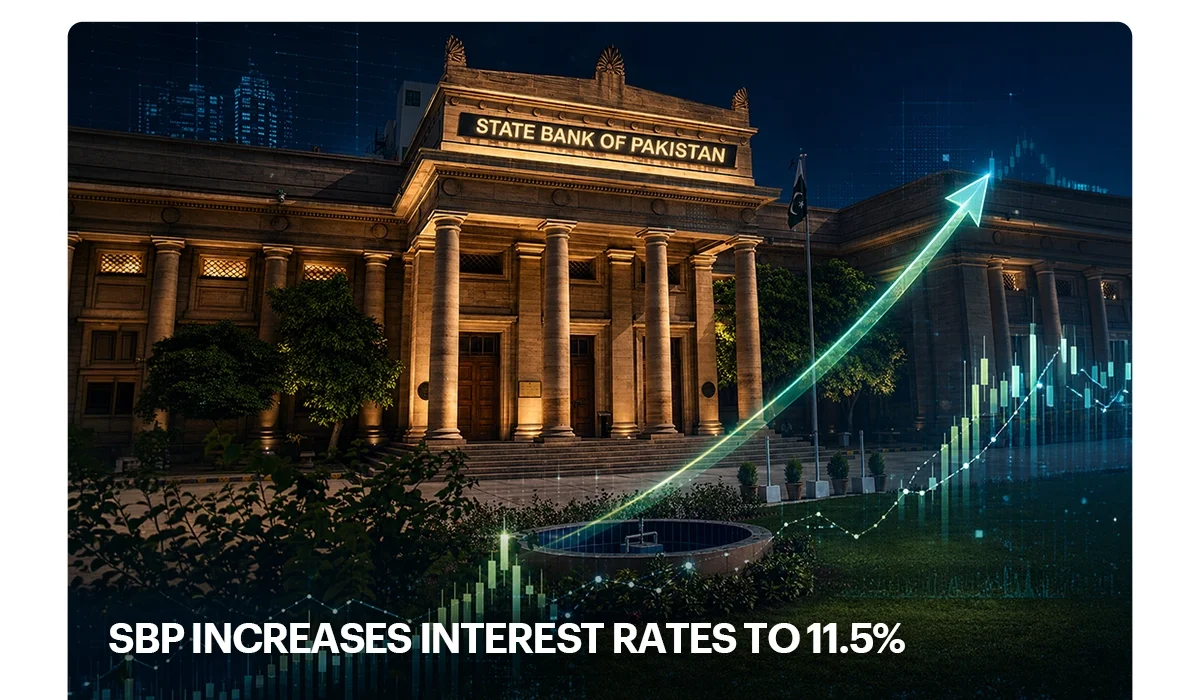
Pakistan’s foreign exchange reserves continued their gradual upward trend this week, with the State Bank of Pakistan (SBP), the country’s central bank, reporting a $23 million increase for the week ended April 30, 2026. While the figure itself is modest, it reflects an incremental recovery that economists and policymakers have been closely tracking as Pakistan works to stabilise its external financial position.
Foreign exchange reserves, in the simplest terms, are the dollars and other foreign currencies that a country keeps in reserve. Think of them as the national savings account held in foreign money. These reserves are used to pay for imports, repay foreign loans, stabilise the national currency, and demonstrate to the rest of the world that a country can meet its financial obligations. When they rise, it signals strength. When they fall, alarm bells ring.
The Numbers at a Glance
The State Bank of Pakistan reported a $23 million increase in its foreign exchange reserves during the week ended April 30, 2026, which reached $15.85 billion. The country’s total liquid foreign reserves stood at $21.29 billion, of which commercial banks held net reserves of $5.44 billion.
The data also showed a slight increase in commercial banks’ reserves, which grew by $170,000 to reach $5.4428 billion. Overall, Pakistan’s total foreign exchange reserves recorded a combined increase of $24.5 million, bringing the national total to $21.2935 billion.
It is important to understand the difference between these two figures. The SBP’s reserves of $15.857 billion are the government-held reserves that are directly available for managing exchange rate pressures, paying sovereign debt, and financing critical imports.
The commercial banks’ reserves are separately managed and not directly deployable by the government in the same way. Together, the two pools form Pakistan’s total liquid foreign reserves.
What This Means for the Rupee
Alongside the reserves data, the currency market provided a broadly stable reading. The rupee saw a marginal gain of Rs 0.01 against the US dollar, closing at 278.71 in the interbank market against the previous close of 278.72.
A one-paisa movement is numerically negligible. But what it signals is arguably more important than the size of the shift: the rupee is not under fresh pressure. For a currency that spent years in near free-fall, losing more than half its value against the dollar between 2021 and 2023, a period of exchange rate stability is itself a meaningful development.
Stability in the rupee directly benefits ordinary Pakistanis, as it prevents further spikes in the prices of imported goods from fuel and edible oil to medicines and electronics.
The IMF Dimension: A Critical Near-Term Catalyst
The weekly reserve figure gains considerably more weight when placed in the context of an anticipated IMF disbursement that has been the focus of Pakistan’s financial managers and market observers alike.
The IMF Executive Board was scheduled to consider Pakistan’s Staff-Level Agreement on May 8, 2026. If approved, the country was expected to receive around $1.2 billion in fresh funding under its ongoing financial support programme.
The Ministry of Finance and the State Bank of Pakistan showed unanimous optimism over economic growth and achieving fiscal and current account targets, with the development coming amid anticipated approval of disbursements worth over $1.2 billion by the IMF.
SBP Governor Jameel Ahmad, testifying before the National Assembly’s Standing Committee, stated that the current fiscal year would end with foreign exchange reserves of $17 billion. The IMF staff mission was also expected to visit Islamabad on May 15 for finalisation of the next fiscal year (2026–27) budget in consultation with the Ministry of Finance, the SBP, the FBR, and the Power and Petroleum Divisions.
Taken together, these developments paint a picture of a government actively managing its external financing calendar and, for the moment, keeping pace with its obligations.
Gold Markets: A Parallel Development
The week’s financial news was not limited to reserves. Pakistan’s domestic gold market saw a sharp upward movement, closely tracking international price gains.
In the local market, the price of gold per tola jumped Rs7,800 to settle at Rs496,762, according to rates issued by the All-Pakistan Gems and Jewellers Sarafa Association.
Similarly, the price of 10-gram gold increased by Rs6,687 to Rs425,893. Internationally, spot gold gained 1% to $4,733.59 per ounce, after touching a two-week high earlier in the trading session.
The rally was driven by geopolitical factors: improving sentiment around a potential US-Iran diplomatic agreement eased fears of prolonged instability and lowered expectations of persistently high interest rates, both of which support investor appetite for gold.
Interactive Commodities Director Adnan Agar, commenting on the market, noted that gold had shown strong intraday volatility. He stated that for the bullish trend to continue, gold would need to cross and close above $4,875, with the next target at $4,850, followed by $4,900, and eventually the psychologically important $5,000 mark. He cautioned that if the market closed below $4,700, it would enter a dangerous zone where prices could decline towards $4,500.
Expert Analyst Perspectives – Cautious Optimism from Markets
Mohammad Sohail, CEO of Topline Securities, one of Pakistan’s leading brokerage firms, attributed the broader reserve improvement trend to a combination of policy actions and improving fundamentals.
He noted that the rise in foreign exchange reserves reflects improved external account management, higher remittances, better exports, and disciplined policy actions under the IMF’s guidance. He had also projected that reserves would surpass $17 billion by June 2026, citing strong remittances and a reduction in interest payments as key drivers.
Analysts at Arif Habib Limited provided a useful benchmark for measuring the practical impact of reserve movements. Following an earlier reserve jump triggered by an IMF disbursement, they calculated that the improvement in reserves had strengthened Pakistan’s external buffer, with import cover rising from 2.41 months a week earlier to 2.62 months, based on average imports of the last three months.
The number of months a country could theoretically continue importing without any new foreign inflows is a key health metric for any economy’s reserve position. Three months is the internationally recognised minimum safe threshold.
More broadly, market analysts pointed to the investment dimension of rising reserves. Analysts noted that stronger reserves reduce perceived risk, making Pakistan a relatively more attractive destination for portfolio and direct investments.
This shift could gradually ease borrowing costs and improve access to international capital markets. However, the same analysts added that confidence remains highly sensitive to policy consistency and global economic conditions.
A Dissenting, Structural View
Not all expert commentary has been optimistic. Dr. Raania Ahsan, a PhD economist and former Executive Director General at the Board of Investment in the Prime Minister’s Office, offered a sharper and more cautionary assessment in a widely-read analysis published in The Express Tribune in April 2026.
She argued that Pakistan’s external stability is measured more in optics than in underlying strength, warning that the country’s reserves are not entirely organic, being built on a combination of IMF disbursements, bilateral deposits, and administrative controls on imports and currency movement. In other words, they reflect managed stability, not deep structural health.
She flagged the reported repayment of billions to the UAE funds that had been rolled over annually as signalling the erosion of the assumed rollover comfort, noting that the transition from rollover to repayment fundamentally alters the external financing equation.
On the role of the IMF, Dr. Ahsan drew a critical distinction: stabilisation should not be mistaken for resolution. The IMF addresses liquidity issues. Pakistan’s challenge is one of structural solvency.
She concluded that Pakistan’s current external stability is sustained not by expansion but by compression through restricted imports, managed currency markets, and tight interest rates.
These measures have bought time but have not resolved the underlying imbalance between what the country earns and what it spends in foreign exchange. Exports remain narrow and insufficient.
A separate risk scenario, cited in regional financial coverage, added a sobering stress-test dimension: analysts noted that Pakistan has very limited room to absorb a fuel price hike because of its thin foreign exchange reserves, dependence on imported energy, and reliance on IMF-backed reforms, underscoring that the reserve cushion, while growing, remains sensitive to external commodity shocks.
Conclusion
Pakistan’s $23 million weekly increase in SBP foreign exchange reserves is, in isolation, a small number. But it belongs to a consistent pattern of week-on-week improvement that reflects a country working methodically to rebuild its financial resilience. The stability of the rupee, the improving reserve trajectory, and the anticipated IMF disbursement together paint a cautiously constructive picture.
Yet, as both market analysts and independent economists make clear, the headline reserve figure tells only part of the story. The reserves are still supported by external financing rather than export-driven organic growth, and the gap between managed stability and durable resilience remains real. The question Pakistan’s economy must ultimately answer, as Dr. Ahsan pointedly framed it, is not whether it can meet its next obligation, but whether it can build a system that stops depending on constantly preparing for the next one.
Citations
- Hanif, U. (2026, May 8). Foreign reserves rise by $23m. The Express Tribune. https://tribune.com.pk/story/2606902/foreign-reserves-rise-by-23m
- Pakistan’s foreign exchange reserves rise by $23 million in a week. (2026, May 7). Dunya News. https://dunyanews.tv/en/Business/950262-pakistans-foreign-exchange-reserves-rise-by-23-million-in-a-week
- Kiani, K. (2026, May 7). Finance ministry, SBP show optimism over economic growth amid expected $1.2bn tranche from IMF. Dawn. https://www.dawn.com/news/1998450
- SBP Reserves Increase By $730 Million Just Weeks Ahead of Next IMF Meeting. (2026, April 30). ProPakistani. https://propakistani.pk/2026/04/30/sbp-reserves-increase-by-730-million-just-weeks-ahead-of-next-imf-meeting/
- Pakistan’s Forex Reserves Rise by $730 Million Ahead of IMF Board Review. (2026, April 30). Bloom Pakistan. https://bloompakistan.com/pakistans-forex-reserves-rise-ahead-of-imf-review/
- Pakistan foreign exchange reserves jump sharply. (2026, April 30). Times of Islamabad. https://timesofislamabad.com/30-04-2026/pakistan-foreign-exchange-reserves-jump-sharply/
- Ahsan, R. (2026, April 20). Between reserves and reality: external sector under pressure. The Express Tribune. https://tribune.com.pk/story/2603647/between-reserves-and-reality-external-sector-under-pressure
- Pakistan’s foreign reserves reach $21.09b, boosted by IMF inflows. (2025, December 19). The Express Tribune. https://tribune.com.pk/story/2582945/import-cover-improves-to-262-months
- Pakistan exceeds IMF target as SBP reserves reach $14.5 billion. (2025, July 3). Geo.tv. https://www.geo.tv/latest/612144-pakistan-exceeds-imfs-target-with-sbps-reserves-reaching-145bn
- Pakistan reserves could plunge to $1.6 billion by 2028 over fuel shock: Report. (2026). ProKerala / South China Morning Post report. https://www.prokerala.com/news/articles/a1757934.html

BBC-featured Content Specialist with a sharp eye for search intent and a proven ability to turn content into a growth engine. I leverage cutting-edge digital marketing tools to craft strategies that fuel organic traffic, amplify brand growth, and own the local SEO landscape, particularly across the competitive real estate market. I help brands dominate search rankings and convert visibility into measurable business success.