
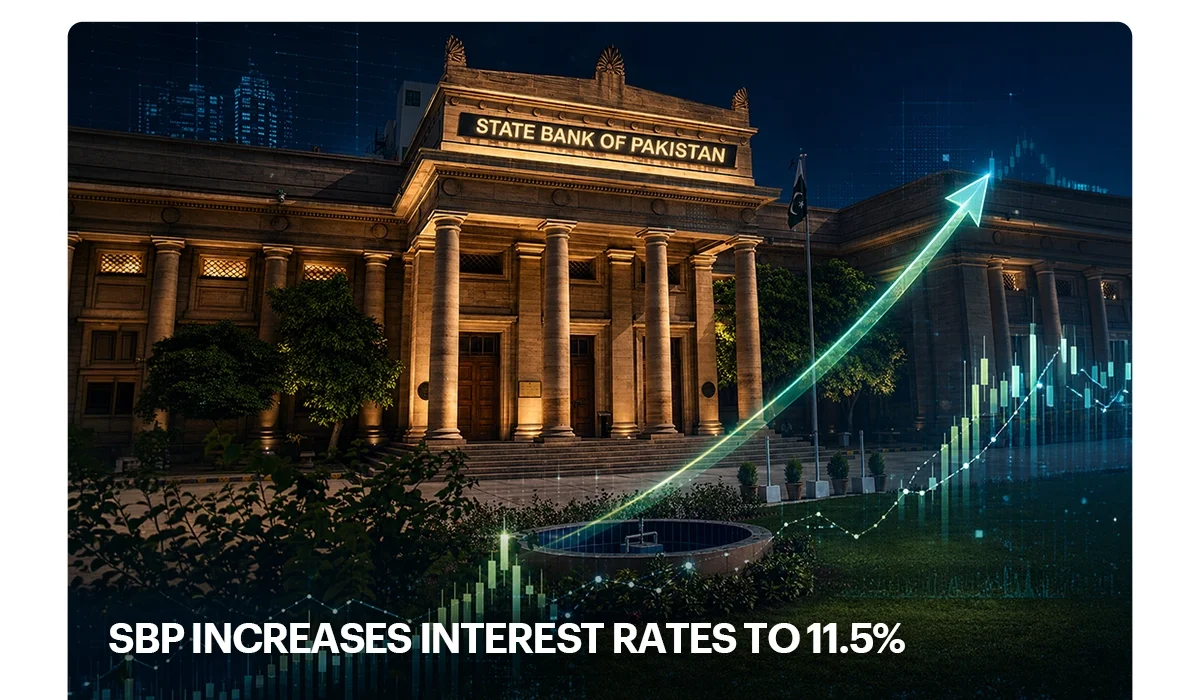

On Monday afternoon, Pakistan’s central bank changed a number that touches nearly every aspect of economic life in the country, from car loans to factory financing. The State Bank of Pakistan (SBP) raised its policy rate by one full percentage point, from 10.5% to 11.5%, effective April 28, 2026. It was the first rate hike in nearly three years, and it caught most analysts off guard.
What Is the Policy Rate, and Why Does It Matter?
Think of the policy rate as the master dial controlling the cost of money in the economy. When the SBP raises it, commercial banks charge more on loans for homes, businesses, and cars. The idea is that pricier credit discourages excessive spending, which in theory slows inflation. When it cuts rates, borrowing gets cheaper, and the economy is nudged to grow faster.
What Prompted This Decision?
The SBP pointed squarely at the ongoing Middle East conflict. The war has pushed up global oil prices, raised freight charges for ships, and increased cargo insurance premiums. For Pakistan, a net energy importer, these translate directly into higher fuel, transport, and electricity costs at home.
Inflation, measured by the Consumer Price Index, stood at 7.3% in March 2026, reflecting moderate but persistent price pressures. Core inflation, the stickier, underlying measure that excludes volatile food and energy, climbed to 7.8%. Both were trending in the wrong direction.
The MPC’s own assessment was stark: the current supply shock may push inflation to double digits in the coming months, and it is expected to stay above the 5–7% target range for most of FY27. The SBP decided that waiting would be riskier than acting early.
Why Were Analysts Surprised?
Economists were divided over the SBP’s 100 bps rate hike, reflecting a broader debate over whether interest rates are the right tool for a supply-driven inflation shock.
Dr. Khaqan Najeeb, former adviser to the Ministry of Finance, called it “a strong pre-emptive response to a classic external supply shock,” but said the size of the move appeared high. In his view, a smaller increase may have sent the same signal while preserving policy flexibility.
That signalling effect is important: central banks raise rates not only to cool demand, but also to shape expectations and discourage businesses and workers from assuming inflation will keep rising.
Dr. Ashfaque Hasan Khan disagreed more strongly, arguing that the inflation pressure was not demand-led: “The rising prices are not due to excessive demand. They are primarily caused by increasing oil prices and supply chain disruptions, factors over which we have no control. The shock is coming from the supply side, for which interest rate is not an ideal policy instrument.”
He also warned that higher rates would raise the government’s borrowing costs and worsen fiscal pressure, adding, “Since we had committed to the IMF in the last review, we had to increase the interest rate. This has nothing to do with Pakistan’s current economic fundamentals.”
The Bigger Picture
Pakistan’s economy has been in recovery mode. Real GDP grew 3.8% in the first half of FY26, compared to just 1.9% in the same period a year earlier, while the current account posted a small surplus during July–March, supported by resilient workers’ remittances.
FX reserves stood at around $15.8 billion as of April 24, with the SBP projecting a rise above $18 billion by June 2026, partly buoyed by a Eurobond issuance, Pakistan’s first return to international capital markets in over four years.
The less comfortable side: tax collection fell short of target by Rs 611 billion through March, and GDP growth for FY26 is now expected at the lower end of the projected range.
What It Means in Practice
Higher rates mean more expensive loans across the board. Small businesses relying on bank credit will feel the squeeze most. Savers, on the other hand, typically earn better returns when rates rise. For the government, servicing Pakistan’s large domestic debt becomes costlier, adding pressure to an already strained budget.
What to Watch Next
The next MPC meeting in June coincides with the federal budget, making it one of the most consequential economic moments of the year. If Middle East tensions cool and oil prices ease, the case for further hikes weakens, and cuts could return sooner than expected. If the conflict deepens, more tightening cannot be ruled out.
The clearest indicator to watch is core inflation. If it stabilises over the coming months, the rate hike is doing its job. If it keeps rising despite higher borrowing costs, it would suggest the real problem lies beyond the reach of monetary policy in global commodity markets and fiscal decisions that only the government can make.
For more news on real estate and Special Reports, visit Chakor Ventures.
Citations
-
- The Express Tribune — SBP hikes interest rates by 100 basis points to 11.5%, April 27, 2026
- Dawn — Central bank increases policy rate by 100 bps to 11.5pc, April 27, 2026
- ARY News — State Bank announces latest monetary policy, April 27, 2026
- The News International — SBP hikes policy rate by 100bps to 11.5pc, April 28, 2026
- The Nation — SBP increases policy rate by 100bps to 11.5pc, April 28, 2026
- The Express Tribune — SBP hikes policy rate to 11.5%, April 28, 2026

BBC-featured Content Specialist with a sharp eye for search intent and a proven ability to turn content into a growth engine. I leverage cutting-edge digital marketing tools to craft strategies that fuel organic traffic, amplify brand growth, and own the local SEO landscape, particularly across the competitive real estate market. I help brands dominate search rankings and convert visibility into measurable business success.
