CategoriesNews

Punjab Rolls Out Historic Cleanliness and Transit Reforms

LAHORE: Chief Minister Punjab Maryam Nawaz Sharif has approved expansive reforms under the ‘Suthra Punjab’ programme during a high-level review meeting aimed at modernizing the province’s sanitation infrastructure.

The plan includes introducing electric sanitation vehicles, launching a Waste-to-Value initiative, integrating digital transparency systems, and enforcing strict penalties to curb littering. Authorities were directed to roll out the Waste-to-Value implementation plan by mid-January, with officials noting that legal action against littering will follow a 15-day monitoring period.

In a separate development, President PML-N Muhammad Nawaz Sharif chaired a special meeting that approved the Gujranwala Mass Transit Project. Chief Minister Maryam Nawaz Sharif and Federal Defence Minister Khawaja Muhammad Asif attended the session.

Nawaz Sharif termed the project a long-overdue right of the people of Gujranwala and expressed satisfaction over the Punjab government’s ongoing development initiatives.

Meanwhile, the Punjab government has formed a 15-member steering committee to eradicate forced child labour across the province. Chaired by Senior Provincial Minister Marriyum Aurangzeb, with former MNA Mohsin Shahnawaz Ranjha as Co-Chairman, the committee includes provincial ministers, departmental secretaries, Chairman PITB and DIG Police.

It will map sectors where forced child labour exists, gather data from key industries, and establish an AI- and GIS-enabled central data bank. The committee will also propose alternatives for affected children and develop short-, medium-, and long-term strategies. Punjab’s comprehensive measures are expected to significantly enhance its global ranking in child protection.

CategoriesNews

Islamabad’s Roads Get a Makeover as CDA Begins Infrastructure Overhaul

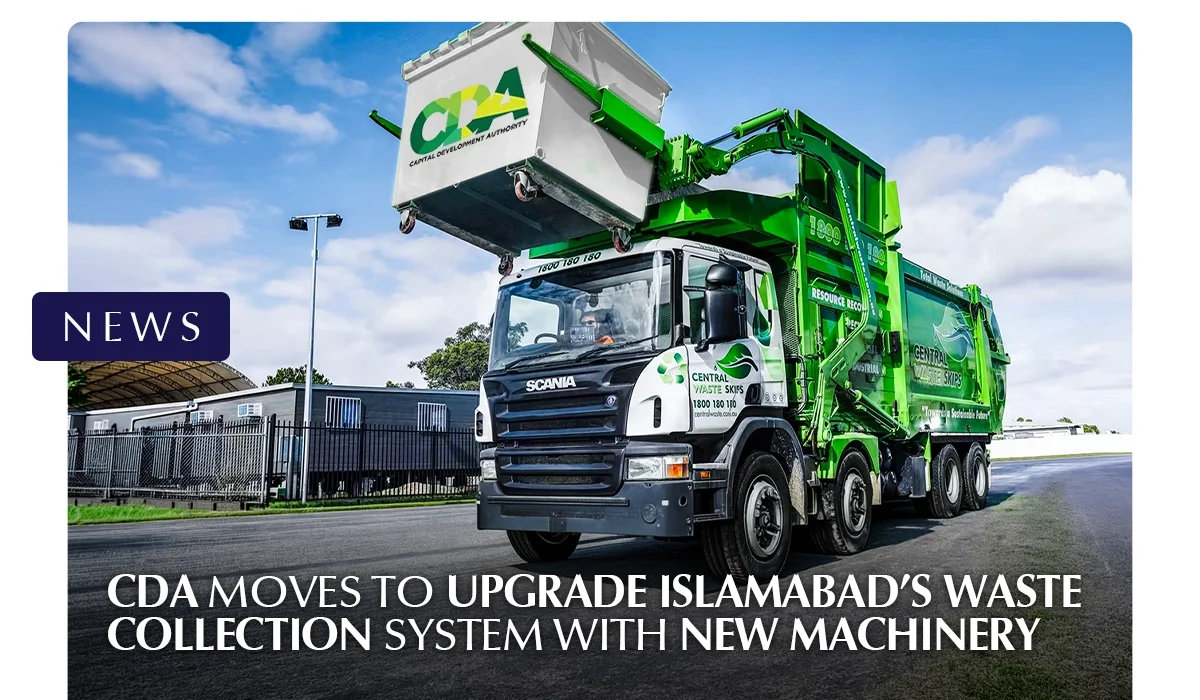
ISLAMABAD: The Capital Development Authority (CDA) has launched an extensive rehabilitation and upgradation project aimed at improving the city’s infrastructure, with work already underway on road recarpeting, lane markings, and the restoration of zebra crossings.

The project, which was outlined in a recent meeting chaired by CDA Chairman Mohammad Ali Randhawa, focuses on key areas of Islamabad, including commercial zones and busy highways. Machinery Pool Organisation will begin recarpeting roads in high-traffic areas, such as Blue Area, F-6 Super Markaz, and F-7 Jinnah Super Markaz. In addition, the first phase will see the upgradation of streets in I-14 and the recarpeting of roads in the D-12 Markaz and E-12 sectors.

Restoration work on zebra crossings, particularly near hospitals, educational institutions, and major highways, has already started. The project also aims to improve safety with the installation of new streetlights, the repair of existing poles, and the installation of signage boards and speed breakers for better public guidance.

The CDA plans to address the city’s drainage and sewage systems as part of the infrastructure overhaul, covering all service manholes and improving stormwater management.

This ambitious project is expected to enhance the overall road safety and quality of life for Islamabad’s residents, ensuring smoother traffic flow and safer pedestrian crossings across key areas of the capital.

CategoriesCitadel 7

GREE and Chakor Ventures Announce Strategic Partnership for Citadel 7 HVAC Systems

GREE and Chakor Ventures Announce Strategic Partnership for Citadel 7 HVAC Systems

GREE to deliver advanced, energy-efficient climate solutions for Islamabad’s next-generation commercial landmark

Islamabad, November 20, 2025: GREE and Chakor Ventures have officially entered into a strategic partnership, marked by a signing ceremony held to formalize GREE’s role as the HVAC solutions provider for Citadel 7.

Under this agreement, GREE will supply its advanced, energy-efficient air-conditioning systems for the landmark commercial tower, ensuring world-class climate control and long-term operational performance.

This collaboration represents a major milestone for Pakistan’s real estate and infrastructure sectors, uniting two industry leaders with a shared commitment to innovation, sustainability, and high-quality development.

Chakor Ventures, a forward-looking property development firm, is redefining Pakistan’s built environment through projects that emphasize smart, efficient, and future-ready design. Citadel 7 is one of the company’s most ambitious developments, a modern corporate landmark set to reshape Islamabad’s commercial landscape.

The tower integrates contemporary architecture with intelligent building systems, placing strong emphasis on energy efficiency, smart management, and a seamless user experience.

With sustainability at its core, Citadel 7 incorporates eco-friendly solutions, low-energy consumption models, and advanced technology integration. This makes the development an ideal match for GREE’s high-performance HVAC systems, which are engineered to deliver superior efficiency and reduced operational costs.

As the world’s largest manufacturer of air-conditioning equipment and the top-ranked brand in the 2024 Euromonitor Report, GREE brings global leadership and cutting-edge engineering to the project.

The company’s high-efficiency inverter systems, coupled with smart controls and self-diagnostic capabilities, ensure reliable, optimized climate management with minimal maintenance. Their robust performance in diverse and harsh weather conditions further reinforces their suitability for a high-demand development like Citadel 7.

The alignment between GREE’s proven HVAC excellence and Citadel 7’s smart, future-ready infrastructure creates a powerful synergy that elevates the project’s overall impact. Together, the organizations are setting new benchmarks of quality, transparency, and innovation for Pakistan’s next generation of commercial developments.

CategoriesNews

Forbes Lauds Punjab’s ‘Suthra Punjab’ as World’s Largest Integrated Waste Management Program

LAHORE: The American business magazine Forbes has praised the Punjab government’s “Suthra Punjab” initiative, recognizing it as the world’s largest integrated waste management system. The report highlights that the government delivered a province-wide solution to long-standing waste challenges within just eight months.

According to Forbes, the Suthra Punjab program has transformed urban cleanliness across the province, with 50,000 tons of waste collected daily. The initiative has significantly reduced pollution levels, revitalized public spaces, and introduced regular waste collection services to millions of residents, many receiving such services for the first time.

The program has also generated over 100,000 jobs, contributing to both environmental improvement and economic uplift. Its international relevance was underscored at COP30, where it was presented as a model of “Integrated Waste and Climate Action,” offering a benchmark for other countries seeking sustainable, scalable waste management solutions.

Forbes notes that the success of Suthra Punjab is rooted in an innovative three-tier financing framework that blends public and private funding. The model includes modest user fees to promote community ownership, government seed grants for essential services such as street sweeping, and revenue streams unlocked through carbon credits and energy sales from waste-to-energy projects. All financial flows are routed through an escrow account managed by the waste authority to ensure full transparency.

Positioned as a learning opportunity for policymakers worldwide, the Suthra Punjab initiative demonstrates how coordinated financing, strategic planning, and community engagement can drive rapid environmental transformation.

CategoriesCitadel 7

Investment Bonds, Investment Certificates Can’t Beat Tangible Returns of Real Estate

What Are Investment Bonds?

Investment bonds are a type of fixed-income security that allows you to lend money to an issuer, like a government or company, in exchange for regular interest payments and the promise to get your money back at a future date.

Here’s how they work:

  • Issuer: When you buy a bond, you’re lending your money to an issuer (a government, corporation, or another entity).
  • Coupon: In return, you receive interest payments (also known as the “coupon”) regularly, usually every six months or annually.
  • Maturity: The bond has a set maturity date, which is when the issuer will pay back your original investment, called the par value.
  • Par Value: This is the face value of the bond. It’s what the issuer will pay back when the bond matures.

Bond prices can fluctuate in the market. If interest rates rise, bond prices usually fall, and vice versa. This is important if you plan to sell the bond before it matures.

There are different types of bonds:

Pakistan Investment Bonds

  • Government Bonds: Issued by national governments, they’re considered very safe.
  • Corporate Bonds: Issued by companies, offering higher interest but carrying more risk.
  • PIBs (Pakistan Investment Bonds): Issued by the Pakistani government, typically offering fixed returns with lower risk.
  • Sukuk: Islamic bonds that follow Shariah law, providing returns in a way that complies with Islamic finance principles.

Who invests in bonds?

Bonds attract a wide range of investors:

  • Conservative investors looking for stable returns.
  • Retirees seeking regular income.
  • Institutional investors like pension funds and insurance companies.
  • Governments and corporations may also invest in bonds to diversify their portfolios.

Understanding Investment Certificates

Pakistan investment certificate

An investment certificate is a savings product where you invest a lump sum of money for a set period. In return, you earn interest over the life of the certificate. These are similar to fixed-term deposits, but they often offer greater flexibility and better terms.

How They Pay Returns

When you invest in an investment certificate, you either receive regular interest payments throughout the term or a lump sum at the end, depending on the type of certificate. The returns are typically fixed, which means you know exactly how much you’ll earn by the end of the term.

Risk Profile

Investment certificates are generally considered low-risk. They are a safe investment options in Pakistan, especially if issued by trusted banks or governments. However, the trade-off is that their returns tend to be lower compared to riskier investments like stocks or real estate.

Comparison with Bonds

Investment certificates are similar to bonds in that both offer fixed returns. However, certificates usually don’t have the same level of market fluctuation as bonds.

Unlike bonds, investment certificates are non-tradable, which means you can’t sell them before the maturity date.

Bonds, especially government or corporate ones, might offer higher returns, but they also come with the risk of price changes due to market conditions.

Investment certificates, in contrast, provide guaranteed returns and are typically more stable.

A Closer Look at Pakistan Investment Bonds (PIBs)

State bank of Pakistan building

Pakistan Investment Bonds are long-term debt securities issued by the State Bank of Pakistan on behalf of the government. When you invest in PIBs, you’re lending money to the government in exchange for regular interest payments and the return of your principal at maturity. PIBs are considered a safe investment because the government backs them.

Tenors (3, 5, 10, 20 Years)

PIBs come in different tenors, or durations, depending on how long you’re willing to invest your money. The available tenors typically range from:

  • 3 years
  • 5 years
  • 10 years
  • 20 years

The longer the tenor, the longer your money stays invested, but the potential for higher interest payments also increases.

Fixed vs Floating Coupons

PIBs offer both fixed and floating coupon rates.

  • Fixed coupons provide a consistent interest rate throughout the life of the bond.
  • Floating coupons are linked to an external benchmark, such as the KIBOR (Karachi Interbank Offered Rate), meaning the interest rate can change over time.

Semi-Annual Interest Payments

PIBs pay interest semi-annually, meaning you’ll receive coupon payments every six months. This offers a steady stream of income during the life of the bond.

Government Guarantee & Safety

PIBs are considered low-risk because the Pakistani government guarantees them. This makes them a safer option than corporate bonds or other investments, as the government’s default risk is low.

Limitations of PIBs

While PIBs are safe, there are some limitations to consider:

  • Low Yield vs Inflation: The returns on PIBs may not always keep up with inflation, especially during times of high inflation. This can lead to a lower real return.
  • Interest Rate Risk: If market interest rates rise, the value of existing PIBs may fall, especially for long-term bonds with fixed coupons. This makes PIBs less attractive if you’re looking for higher returns in a rising interest rate environment.

Benefits of Investment Bonds & Certificates

  • Stability and Predictable Income: Investment bonds and certificates offer fixed or predictable returns, ensuring a steady flow of income for investors.
  • Capital Preservation: These investments are designed to preserve your initial investment while providing returns, making them a safer option compared to more volatile assets like stocks.
  • Lower Volatility than Stocks: Unlike stocks, which can experience significant price swings, investment bonds and certificates are generally more stable, offering less risk and greater reliability.
  • Portfolio Diversification: Including bonds and certificates in your investment portfolio helps you diversify risk. Combining them with stocks and real estate can lead to a balanced, well-rounded strategy.
  • Liquidity (for PIBs): Pakistan Investment Bonds (PIBs) have an active secondary market, allowing investors to buy and sell bonds before they mature, improving their liquidity.
  • Easy, Low-Effort Passive Income: Bonds and certificates are low-maintenance investments. Once purchased, they generate regular income with minimal effort, making them an excellent option for passive income.

The Limitations of Bonds in Pakistan’s Economic Environment

Bonds, particularly in Pakistan’s current economic landscape, have several limitations that investors should consider before committing their money.

High Inflation and Negative Real Returns

One of the most significant challenges with bonds in Pakistan is high inflation. While bonds provide fixed interest payments, inflation erodes the real returns over time.

If inflation rises above the interest rate on the bond, the purchasing power of the returns diminishes, and in some cases, it may result in negative real returns.

Pakistani Rupee Devaluation and Global Purchasing Power

The devaluation of the Pakistani Rupee (PKR) is another major risk. As the value of the PKR falls against other major currencies, the returns from bonds, especially those paid in PKR, lose their value when measured in foreign currencies.

This decreases the global purchasing power of your bond returns, making them less appealing for international investors or those who depend on foreign currency.

Fixed Returns vs Rising Property Prices

Bonds offer fixed returns, which can be an issue when compared to the rising prices of real estate. In Pakistan, property values have historically appreciated much faster than the returns offered by government bonds or investment certificates.

As a result, fixed returns from bonds often fail to match the wealth-building potential of real estate, which can be a more profitable long-term investment.

Interest Rate Fluctuations Impact Bond Value

Bonds are also highly sensitive to interest rate changes. When market interest rates increase, the value of existing bonds tends to decrease. This is particularly true for long-term bonds with fixed interest rates, as their coupon payments become less attractive compared to newly issued bonds with higher rates. This interest rate risk can lead to losses if bonds are sold before maturity.

Reinvestment Risk

Another limitation is reinvestment risk. This occurs when the bond’s interest payments or the principal repayment at maturity are reinvested at a rate lower than the original bond’s coupon rate.

In a low-interest-rate environment, investors may face the challenge of reinvesting at a less favourable rate, which can lower their overall return on investment.

Liquidity Issues in Corporate Bonds

While government bonds like Pakistan Investment Bonds (PIBs) are generally liquid, corporate bonds in Pakistan can present liquidity issues. Many corporate bonds, especially those from smaller companies, lack a robust secondary market.

This makes it harder for investors to sell these bonds quickly at a fair price, potentially leading to liquidity risks and lower-than-expected returns if the bonds are sold prematurely.

Why Real Estate Outperforms Bonds in Tangible Wealth Growth?

real estate investing in Pakistan

Dual Returns: Capital Appreciation + Rent
Real estate provides two sources of income: capital appreciation (property value increase) and rental income. This makes it more profitable than bonds, which only offer fixed interest payments.

Value Appreciation Outpaces Inflation
Property values often rise faster than inflation, making real estate a better option for long-term growth. Bonds, on the other hand, may not keep up with inflation, leading to lower real returns.

Tangible Ownership and Control
Real estate is a physical asset you own and control. For example, you can invest in corporate towers in Pakistan. Unlike bonds, you can make decisions that directly affect the value of your property, such as renting it out or making improvements.

Leverage: Banks Finance Real Estate
You can borrow money to invest in real estate, using leverage to buy bigger properties and increase your returns. Bonds can’t be leveraged in the same way.

Hedge Against Currency Depreciation
Real estate helps protect against currency devaluation. In Pakistan, as the value of the Rupee decreases, property values and rents tend to rise, keeping your investment safe.

Strong Demand in Urban Centers
As Pakistan’s cities grow, there’s a high demand for housing and commercial properties, driving property prices up.

Limited Supply → Rising Property Values
The supply of land in prime locations is limited, which pushes property values higher over time. This natural scarcity makes real estate a great long-term investment.

Real Estate vs Investment Bonds

Factor Real Estate Investment Bonds
Return Type Dual returns: Capital appreciation + rental income Fixed or variable interest payments
Long-term Growth Typically high due to property value appreciation Limited, as returns are fixed and may not keep up with inflation
Inflation Protection Strong, as property values and rents often rise with inflation Weak, fixed returns may be eroded by inflation
Leverage Availability High: Can borrow money to increase investment size Low: Bonds cannot be leveraged in the same way
Liquidity Low: May take time to sell property at desired price High: Can be sold in secondary markets (except corporate bonds)
Risk Factors Market fluctuations, interest rates, economic conditions, and location risks Interest rate risk, credit/default risk, inflation risk
Tangibility Physical asset you can control and improve Intangible financial instrument
Income Potential High: Rental income + long-term value increase Fixed income typically offers lower returns over time

Pakistan Market Analysis: Past 10–20 Years

In the following section, you will find a comprehensive analysis of the Pakistani market over the past 10-20 years.

Property Values vs PIB Yields

Property prices in Pakistan have outpaced PIB yields over the last decade. While PIBs offer returns of around 11-12% annually, real estate has provided higher returns through both value appreciation and rental income.

Inflation Trends & Real Return Erosion

High inflation in Pakistan, often exceeding 10%, has eroded the real returns from PIBs. Unlike bonds, real estate typically appreciates with inflation, offering better protection against rising costs.

Rental Yield Averages

Rental yields in Pakistan’s major cities average around 2-4% per year. Though lower than PIB returns, real estate’s combined rental income and capital appreciation offer higher overall returns.

Historical Government Bond Returns

PIBs provide stable but modest returns. However, real estate often outperforms, with greater growth potential and income opportunities over time.

Impact of PKR Depreciation on Real Returns

Depreciation of the PKR reduces the real returns from PIBs when they are converted into foreign currency. Real estate, on the other hand, tends to rise with inflation and offers a better hedge against currency devaluation.

This was all about investment bonds and investment certificates in Pakistan. For more information on real estate investing in Pakistan, visit Chakor blog

FAQ: Investment Bonds vs Real Estate

1. Are investment bonds safer than real estate?
Investment bonds are generally safer, offering stable returns, but real estate has higher long-term growth potential.

2. Can real estate outperform PIBs?
Yes, real estate often outperforms PIBs due to capital appreciation and rental income.

3. Do PIBs provide protection against inflation?
No, PIBs may not keep up with inflation, whereas real estate typically appreciates with inflation.

4. Is it easier to sell real estate compared to bonds?
No, real estate is less liquid than bonds, which can be easily traded in the secondary market.

5. Can I use leverage with PIBs?
No, you cannot leverage PIBs like you can with real estate investments.

CategoriesCitadel 7

Real Estate Investing in Pakistan 2025: Powerful Beginner Guide

Real estate has always been one of the safest and most rewarding ways to build wealth, but in Pakistan, the opportunity becomes even more exciting as we approach 2026. With the market stabilising after years of economic uncertainty, major infrastructure projects moving forward, and a rising demand for quality housing, Pakistan’s property sector is entering a phase many experts believe could redefine long-term investment potential. This guide breaks down everything you need to know about real estate investing in Pakistan, from market trends and investment types to step-by-step strategies that help you get started confidently in 2026.

For complete details, keep reading the Chakor Blog.

Why 2026 Is a Strong Year for Real Estate Investing in Pakistan?

2026 is shaping up to be one of the most promising years for real estate investing in Pakistan. After several years of economic uncertainty, the real estate market is entering a phase of stability, growth, and renewed investor confidence. Here’s why the upcoming year stands out:

Macro Stabilisation and Improved Credit Ratings

Pakistan’s economic indicators are slowly improving. International agencies have upgraded the country’s credit outlook, which shows growing confidence in its financial stability.

A more stable economy usually leads to stronger investment flows, healthier development activity, and better long-term returns in property.

Policy consistency and government efforts to revive investor trust also play a key role in creating a safer environment for beginners.

Rising Housing Demand and Urbanisation

Pakistan faces a long-standing housing shortage. Millions of people need affordable homes, and the gap keeps growing as more families move to major cities like Lahore, Islamabad, and Karachi.

Urbanisation is accelerating, driving demand for residential projects, apartments, rental spaces, and mixed-use developments. This strong demand supports steady price appreciation and makes real estate a reliable long-term asset.

Market Correction in 2023–24 Created Fresh Opportunities

The property market went through a correction phase during 2023 and 2024. High inflation, slower economic growth, and economic pressure led many investors to hold back.

Prices in several areas became more realistic, reducing the risk of overvaluation. For new investors, this creates a valuable entry point. Buying after a correction often leads to better returns once the market recovers.

Government-Backed Housing and Development Initiatives

The government continues to promote housing and infrastructure development. Policies that support construction, encourage private developers, and expand urban planning all contribute to stronger real estate growth.

Improved road networks, new housing schemes, and reforms to development authorities make it easier for investors to find approved, well-planned projects.

Inflation Normalisation and Expected Recovery Cycle

Although inflation has been a challenge, it has started to ease. As purchasing power improves and economic pressure reduces, real estate activity typically rises.

Historically, property markets in Pakistan perform strongly during recovery cycles, with higher transaction volumes and faster price growth.

Overall, 2026 offers a rare combination of stability, demand, and opportunity, making it one of the best times for beginners to enter the real estate market with confidence.

Understanding Real Estate Investing in Pakistan

Real estate investing in Pakistan offers many options for beginners. Each type of investment works differently and carries its own risks, benefits, and timelines. Understanding these options helps you choose what fits your budget, goals, and comfort level.

Key Options Available for Real Estate Investing in Pakistan

The following are some of the key options for real estate investing in Pakistan

Files (Pre-Allocation Plots) | Real Estate Investing in Pakistan

Files are documents that represent a future plot in a housing society where development has not yet been completed. They are popular among investors seeking low-cost, high-return opportunities.

  • Plot location is unassigned, and the area is usually undeveloped.
  • Cheaper than developed plots; strong appreciation potential once development begins.
  • Higher risks due to delays, NOC problems, or possible project cancellation.
  • Always verify the society’s NOC and legal status before buying.

Residential Plots | Real Estate Investing in Pakistan

These are plots with fixed locations inside legally approved housing schemes. They offer stability and long-term growth for new and experienced investors.

  • Located within approved societies with clear development plans.
  • Popular for long-term holding or building a house.
  • Strong demand due to Pakistan’s ongoing housing shortage.
  • Less risky than files but come at a higher purchase price.

Houses / Constructed Units

Constructed homes provide immediate usability, either for personal living or rental income. They are considered stable, long-term investments.

  • Offer instant rental income as soon as they’re occupied.
  • Good appreciation in fully developed and high-demand areas.
  • Higher upfront investment due to land + construction cost.
  • Require periodic maintenance and repair budgeting.

Apartments | Real Estate Investing in Pakistan

Apartments are increasingly popular in major cities due to urbanisation and limited land availability. They provide steady rental returns and lower maintenance costs.

  • Strong rental demand from professionals and small families.
  • Lower maintenance compared to houses.
  • Benefit from prime urban locations in Karachi, Lahore, and Islamabad.
  • Ideal for investors wanting predictable, long-term rental income.

Commercial Properties (Shops, Offices, Plazas)

Commercial units attract business tenants and generally offer higher rental yields, making them a strong option for investors with larger budgets.

  • Provide higher rental returns than residential properties.
  • Prime locations attract reliable, long-term tenants.
  • More sensitive to economic activity and business cycles.
  • Higher vacancy risk in low-traffic or underdeveloped areas.
  • Best suited for established commercial zones with strong footfall.

Open Land / Speculative Outskirts

This refers to undeveloped land typically located on the outskirts of major cities or near future development corridors. It offers high potential but comes with elevated risks.

  • Low entry cost and potentially high future returns.
  • Requires strict legal checks and a long-term investment mindset.
  • Often lacks basic services like roads, utilities, and approvals.
  • Best for investors who can wait several years for development.

Fractional Ownership / PropTech Platforms

Fractional ownership lets investors buy a share of a property instead of the entire asset. Powered by PropTech platforms, it makes real estate more accessible.

  • Requires small investment amounts to access premium properties.
  • Rental income and appreciation are shared among investors.
  • Reduces individual risk and improves portfolio diversification.
  • Great option for beginners or small-budget investors.

Rental vs Capital-Gain Strategy | Real Estate Investing in Pakistan

In this section, you will learn the difference between a rental and a capital-gain strategy.

Rental Income Strategy

Rental investing focuses on generating monthly cash flow by leasing out property. It is ideal for investors seeking stability and consistent returns.

  • Influenced by location, property type, area demand, and property condition.
  • Urban areas and commercial markets typically offer higher yields.
  • Best for risk-averse investors looking for predictable income.

Capital-Gain Strategy

Capital gain investing focuses on long-term appreciation as property values increase over several years.

  • Driven by new infrastructure (roads, metro, highways).
  • Population growth and societal development boost value.
  • Proximity to schools, hospitals, and markets increases demand.
  • Ideal for 4–7 year holding periods in developing areas.

When to Choose Each Strategy? | Real Estate Investing in Pakistan

Choose Rental Income if you want:

  • Steady monthly returns
  • Lower investment risk
  • Long-term stability

Choose Capital Gains if you want:

  • Higher long-term profit potential
  • To invest in developing or expanding areas
  • To hold property for several years (4–7+)

Balanced Approach:

  • Many investors combine both strategies to achieve stable income + strong long-term growth.

Top Investment Opportunities in Pakistan for 2026

Real Estate Investing in Pakistan

In the following sections, you will find some of the best cities in Pakistan to invest in real estate.

1. Lahore – High Development Growth & Stable Demand

Lahore remains one of Pakistan’s strongest real estate markets. The city has consistent population growth, strong purchasing power, and steady demand for both residential and commercial properties.

Real estate in Lahore benefits from:

  • Rapidly expanding housing societies
  • Continuous infrastructure development
  • High resale activity and investor confidence

Key investment zones include DHA Lahore, Bahria Town, Lake City, LDA-approved societies, and areas along the Lahore Ring Road. Lahore offers balanced opportunities for both short-term gains and long-term appreciation.

2. Islamabad / Rawalpindi – Premium, Long-Term Quality Markets

Islamabad and Rawalpindi attract investors who want long-term stability and premium living standards. These cities have strong demand driven by security, better urban planning, and the ongoing development of high-quality housing projects.

Why investors prefer the Twin Cities:

  • Strong presence of overseas buyers
  • High-end societies with reliable development standards
  • Rising apartment culture due to vertical construction trends

Popular areas include DHA Islamabad, Gulberg Islamabad, Bahria Town Phase 8, and new developments near the Rawalpindi Ring Road. These locations are known for stable prices and consistent long-term growth.

3. Karachi – Commercial Powerhouse with Strong Rental Income

Karachi is Pakistan’s largest economic hub. It offers some of the best rental yields in the country due to high population density and demand for both residential and commercial units.

Investment advantages:

  • Strong commercial activity
  • High rental demand for apartments and shops
  • Large and diverse property options

Top zones include DHA Karachi, Gulshan-e-Iqbal, Gulistan-e-Jauhar, Scheme 33, and the developing areas around Malir Expressway. Karachi is ideal for investors looking for steady monthly rental income and long-term commercial growth.

4. Emerging Regions – Gwadar & CPEC-Linked Zones

Emerging regions offer long-term potential for investors with higher risk tolerance. Gwadar, in particular, is tied to CPEC and port-related expansion.

Why these areas are promising:

  • Large infrastructure projects planned
  • Expected long-term economic growth
  • Low entry cost compared to major cities

These locations are best suited for investors who are willing to wait several years for development to materialize. Returns can be strong once major projects become operational.

High-Potential Property Types in Each City | Real Estate Investing in Pakistan

In the following tables, you will find high-potential property types:

Plots, Apartments, and Commercial Options

Property Type Key Benefits Best Cities
Plots – Strong long-term appreciation- Higher returns after infrastructure upgrades Lahore, Islamabad
Apartments – Excellent rental income in dense areas- Fast-growing trend- Affordable for beginners Karachi, Islamabad
Commercial Properties – High rental yields- Strong business demand- Suitable for larger budgets Karachi, Central Lahore, Islamabad

Infrastructure-Driven Growth Pockets

Growth Area Why It Matters Cities Impacted
Ring Road Corridors – Better accessibility- Increased land value- Attracts new housing & commercial projects Lahore, Rawalpindi
DHA Phases (All Major Cities) – Reliable development- High buyer demand- Safer, high-liquidity investment Lahore, Karachi, Islamabad
New Highways, Interchanges & Metro Routes – Strong connectivity boost- Opens new investment zones- Pushes property prices upward Across major metros

Step-by-Step Guide for First-Time Real Estate Investing in Pakistan

Real Estate Investing in Pakistan

Real estate investing in Pakistan becomes much easier when you follow a clear, structured process. These steps help beginners avoid mistakes, check legal safety, and make confident decisions.

Step 1 — Define Your Budget & Goals

Start by deciding how much you can afford to invest.
Keep your budget realistic and include all costs such as transfer fees, taxes, and agent commissions.

Then define your goals:

  • Do you want long-term appreciation?
  • Do you want rental income each month?
  • Are you investing to build a home in the future?
  • Are you looking for a safe, low-risk option or higher-growth potential?

Your budget and goals will guide you toward the right city, project, and property type.

Step 2 — Research Market Rates & Locality

Research is the backbone of real estate investing in Pakistan.
Always compare:

  • Current market prices
  • Trends in price growth
  • Nearby infrastructure (roads, schools, markets, transport)
  • Future development plans

Use trusted sources like property portals, local market surveys, and multiple real estate agents.
Visit the area in person if possible. Look at roads, access points, utilities, water supply, and general surroundings.

A location with strong infrastructure and high demand often delivers the best returns.

Step 3 — Verify NOCs & Legal Documentation

Legal verification is essential for safe real estate investing in Pakistan.
Never skip this step.

Check Society and Project Approvals

Make sure the project is approved by the correct authority:

  • LDA — Lahore Development Authority
  • CDA — Capital Development Authority (Islamabad)
  • RDA — Rawalpindi Development Authority
  • SBCA — Sindh Building Control Authority (Karachi)

You can verify approvals through:

  • Official government websites
  • Visiting the authority office
  • Calling the relevant helpdesk
  • Checking documents provided by the seller

Verify Property Documents

Ask for these documents and check them carefully:

  • Allotment Letter: Confirms plot allocation from the society.
  • Transfer Letter: Confirms ownership transfer from the seller to you.
  • Registry (Registry Deed): Legal proof of land ownership registered in government records.
  • Fard (Record of Rights): Confirms land details and ownership history.

If anything seems unclear, consult a property lawyer before paying money.

Step 4 — Choose a Reliable Agent or Developer

A good agent or developer can save you from major losses.

Check Credentials

  • Ask for their license or registration.
  • Check if they have a physical office.
  • Ask for references from past clients.
  • Look for developers with strong track records and completed projects.

Cross-Verify With Multiple Sources

Never rely on one person.
Speak to at least 2–3 agents about prices.
Visit the society’s own office to confirm details.
This helps you avoid misinformation or inflated prices.

Step 5 — Understand the Buying Process

The buying process in Pakistan has a few important steps.
Understanding them prevents confusion and protects you from fraud.

Token Money

This is a small amount you pay to show serious interest.
It temporarily reserves the property for you.
Always ask for a written receipt.

Bayana

Bayana is the formal commitment amount.
It locks the deal between buyer and seller.
A written agreement is signed with terms and timelines.
If you back out later without a solid reason, you may lose this amount.

Sale Agreement

This is a complete legal contract that includes:

  • Price
  • Payment schedule
  • Transfer date
  • Boundaries and details of the property

Read it carefully. Ask a lawyer to check it if needed.

Payment Through Pay Order / Cheque

Always make payments through bank channels.
Pay orders and cheques provide proof of payment and protect you legally.
Avoid cash payments unless absolutely necessary.

Step 6 — Post-Purchase: When to Hold, Rent, or Sell

Your strategy after buying the property will shape your returns.

Best Holding Periods (4–7 Years Recommended)

Real estate is slow but steady.
Most projects show strong appreciation after 4–7 years, when development is complete and the population increases.
Avoid expecting quick profits within a few months.

Market Timing Strategies

  • Sell when development increases and demand rises.
  • Hold during uncertain economic periods.
  • Rent out if you want a monthly income.
  • Monitor new infrastructure projects, which can boost property value.

A well-timed sale or rental decision can significantly improve your return on investment.

Risks to Consider Before Real Estate Investing in Pakistan

Real Estate Investing in Pakistan

Risk What It Means Why It’s a Problem How to Avoid It
Overinvestment & Price Bubbles Too many people invest at once, causing prices to rise unnaturally. Prices become inflated and may crash later, leading to losses. • Don’t follow hype. • Compare prices with similar areas. • Check real development on ground. • Choose areas with real demand, not just marketing.
Legal or Approval Issues in New Societies Societies selling plots without proper NOCs or authority approval. Can face bans, legal action, land disputes, or cancellation. • Verify NOCs with CDA/LDA/RDA/SBCA. • Request official documents. • Avoid relying solely on agents. • Prefer trusted developers.
Market Liquidity Challenges Hard to sell property quickly when the market slows. Your money may get stuck for months with no buyers. • Invest long-term funds only. • Choose high-demand localities. • Expect 3–6 months minimum selling time.
Rental Market Fluctuations Rental demand and rental income can change. Income may drop due to oversupply, economic issues, or shifting population. • Research rental demand. • Choose areas with strong job markets. • Don’t depend fully on rental income.
Unrealistic Return Expectations Expecting quick profits or high returns without research. Leads to disappointment, rushed decisions, and risky investments. • Plan for 4–7 years holding. • Study market cycles. • Diversify with stocks/gold. • Understand each property grows differently.


Before investing in real estate in 2026, it’s important to understand the risks. The property market in Pakistan offers strong opportunities, but it also has challenges that beginners often overlook. Knowing these risks will help you make safer and smarter decisions.

Overinvestment and Price Bubbles

Overinvestment happens when too many people invest in real estate at the same time. This pushes property prices higher than their actual value.
When prices rise too fast without real demand, a price bubble forms. Bubbles eventually burst, and prices drop sharply.

In Pakistan, some areas become “hot spots” due to hype, ads, or social media buzz. Beginners often rush in without checking real demand or development progress.

How to avoid this risk:

  • Don’t follow trends blindly.
  • Compare prices with nearby areas.
  • Check actual development on-ground, not just brochures.
  • Focus on locations with real population growth and infrastructure.

Legal or Approval Issues in New Societies

Many new housing societies in Pakistan start selling plots before getting NOCs (No Objection Certificates) or legal approvals. This is a major risk.

If a society is not approved by the development authority, it may face:

  • construction bans
  • legal action
  • land disputes
  • cancellation of the entire project

This can freeze your investment for years or make it impossible to sell.

How to avoid this risk:

  • Check NOC status with CDA, LDA, RDA, SBCA, or the relevant authority.
  • Ask for verified documents (allotment letter, sale deed, map approval).
  • Never rely only on the agent’s word.
  • Prefer well-known, reputable developers.

Market Liquidity Challenges

Real estate is not a liquid market. It can take weeks or months to sell a property, even in popular areas. If the market slows down, selling becomes even harder.

In Pakistan, liquidity drops when:

  • political conditions are unstable
  • interest rates rise
  • investor activity slows
  • too many people try to sell at the same time

This means you might not be able to withdraw your money when you need it.

How to avoid this risk:

  • Only invest money you won’t need soon.
  • Choose high-demand areas with strong resale activity.
  • Keep realistic timelines for selling (3–6 months minimum).

Rental Market Fluctuations

Rental income is a common goal for investors, but rental markets can fluctuate.
Factors that can lower rental income include:

  • oversupply of apartments or houses
  • economic slowdowns that reduce tenants’ ability to pay
  • population shifts to other areas
  • increasing maintenance costs

Rental yields in some cities, especially Karachi, can be inconsistent year-to-year.

How to avoid this risk:

  • Study rental trends before buying.
  • Choose areas with stable job markets and universities.
  • Don’t rely only on rental income to cover all costs.

Avoiding Unrealistic Return Expectations

Many new investors expect fast profits. However, real estate in Pakistan is usually a long-term investment.
Returns depend on:

  • development speed
  • infrastructure growth
  • overall economic stability
  • government policies
  • project quality

Quick flipping is risky, especially in an uncertain market.

How to avoid this risk:

  • Plan for a holding period of 4–7 years.
  • Understand that every property grows at a different pace.
  • Study past market cycles.
  • Balance your portfolio with other investments like stocks or gold.

Comparison Table: Real Estate vs Stocks vs Gold in Pakistan

Factor Real Estate Stocks Gold
Risk Level Low to moderate; prices change slowly High prices rise and fall quickly Low to moderate; influenced by global markets
Starting Capital High; requires large budget Very low; start with a few thousand rupees Low; can buy small quantities
Income Potential Yes—monthly rent + long-term appreciation Yes—dividends + share price growth No monthly income; only price appreciation
Liquidity Low; takes time to find a buyer Very high; can sell anytime High; easy to sell in the market
Inflation Protection Strong; property values and rents rise with inflation Moderate; depends on market performance Strong; gold rises during inflation
Volatility Stable and slow-moving Highly volatile Less volatile than stocks; fluctuates with global trends
Tangibility Physical, usable asset Paper/ digital asset Physical asset
Regulation Mixed; requires NOC verification Strongly regulated (SECP + PSX) Market-driven; considered safe-haven asset
Long-Term Growth Strong, especially in growing cities Strong with compounding; higher risk Moderate; long-term value increases slowly
Short-Term Profit Not ideal; slow price movement Possible but risky Possible during inflationary spikes
Best For Long-term investors, overseas Pakistanis, beginners wanting stability Active investors who understand risk People seeking stability and inflation protection
Main Advantage Dual income: rent + value gain Easy entry + fast liquidity Safe store of value
Main Disadvantage High entry cost + low liquidity High volatility + emotional risk No rental income; storage concerns
2026 Outlook Strong due to market recovery + housing demand Positive, but depends on economic stability Stable; rises with inflation or uncertainty

For more information on investment opportunities in Pakistan, visit Chakor blogs.

CategoriesConstruction Developments News

Green Transit Boost: Maryam Nawaz Poised to Unveil Rawalpindi’s New Electric Bus Fleet

RAWALPINDI: The district administration will launch the first phase of Rawalpindi’s electric bus service next week, with Punjab Chief Minister Maryam Nawaz expected to inaugurate the project. The initiative forms part of the provincial government’s plan to introduce environmentally friendly public transport in the garrison city.

A total of 80 electric buses will operate on 10 routes covering 86 kilometres. In the first phase, 45 buses, delivered last month, will be deployed. The inauguration, initially scheduled for October 15, was postponed due to the Tehreek-i-Labbaik Pakistan protest in Islamabad.

Preparations for the launch are underway. A temporary charging station has been established at the old General Transport Service (GTS) bus stand on Adamjee Road, while two additional charging stations at the Peshawar Road bus stand are expected to be completed by December. These will support the induction of 35 more buses in the second phase. A third phase, involving 30 additional buses, will commence after construction at Kutchery Chowk is completed.

Officials said staff recruitment and driver training have been finalised. Buses are currently parked at the GTS bus stand and the Metro Bus Service Command and Control Centre on Haider Road. Due to ongoing construction at Kutchery Chowk, temporary route adjustments will remain in place.

Deputy Commissioner Dr Hassan Waqar Cheema said the service will link key locations, including the airport, railway station, metro stations, and major transport hubs, and will connect Rawalpindi with parts of Islamabad. A dedicated depot will also be built on 28 kanals of land along Peshawar Road to house the growing fleet.

Announced routes include Railway Station to Lahore High Court, Koral Chowk to Fawara Chowk, Umar Baig Chowk to Mandi Mor, Munawar Colony to Saddar, Marrir Chowk to Motorway Mor, and Faizabad to Tramri Chowk.

Pakistan, US Explore New Avenues for Economic and Investment Partnership
CategoriesNews

Pakistan, US Explore New Avenues for Economic and Investment Partnership

ISLAMABAD: Pakistan and the United States signaled fresh momentum in bilateral economic engagement on Friday as Deputy Prime Minister and Foreign Minister Ishaq Dar met with US Chargé d’Affaires Natalie Baker in Islamabad.

According to Pakistan’s Foreign Office, the discussion centered on strengthening cooperation in investment, technology, and critical minerals.

Dar highlighted the increasing participation of American firms in Pakistan’s economy, pointing to the recent launch of the country’s first Google Chromebook assembly line in Haripur.

The facility, inaugurated earlier this month, was established through a collaboration involving Google, Tech Valley, the Government of Pakistan, the National Radio & Telecommunications Corporation, and Allied Corporation. Officials view the project as a significant step toward expanding Pakistan’s technology manufacturing capacity.

Interest from US companies has also grown in the mining and minerals sector. Nova Minerals, a US-based firm, recently expressed intent to pursue long-term investment opportunities, underscoring Pakistan’s substantial but underdeveloped mineral resources.

The meeting occurred shortly after Pakistan dispatched its inaugural shipment of critical minerals to the United States under a $500 million cooperation framework between US Strategic Metals (USSM) and Pakistan’s Frontier Works Organization (FWO). The agreement is designed to support joint development of the mineral value chain, including exploration work, processing, and the eventual establishment of refining operations within Pakistan.

The first consignment included antimony, copper concentrate, and rare earth elements such as neodymium and praseodymium, all sourced and prepared domestically. Officials say the multi-stage partnership enhances Pakistan’s prospects in the global critical minerals market and could encourage additional foreign investment.

Both delegations also exchanged perspectives on broader regional and international developments, reaffirming their commitment to continued dialogue.

Lok Virsa Museum | A Guide to Fascinating Heritage 2025
CategoriesCitadel 7 Tourism

Lok Virsa Museum | A Guide to Fascinating Heritage 2025

The Lok Virsa Heritage Museum in Islamabad is one of Pakistan’s most celebrated cultural landmarks, offering a deep and immersive look into the nation’s diverse folk traditions, ethnic identities, and historical journeys. The museum brings culture to life through dynamic displays, living crafts, music, and festivals. This comprehensive guide provides detailed insights into its history, layout, exhibitions, lok virsa timing, festivals, and everything you need to know before visiting.

What is Lok Virsa?

lok virsa heritage museum main entrance

Lok Virsa, which translates to “People’s Heritage,” is an institution dedicated to safeguarding the cultural traditions of Pakistan. It serves as a national platform for documenting oral histories, folk music, regional crafts, and traditional lifestyles.

The organization functions under the National Institute of Folk & Traditional Heritage and works to preserve both tangible and intangible cultural assets.

Lok Virsa’s role extends far beyond museum exhibits; it fosters cultural awareness through research projects, publications, field surveys, workshops, and festivals.

By creating spaces where artisans, musicians, and cultural practitioners can actively showcase their work, Lok Virsa ensures that heritage remains a living and evolving part of Pakistan’s identity.

History & Evolution of Lok Virsa Islamabad

The history of the Lok Virsa Museum reflects Pakistan’s long-standing commitment to preserving its cultural diversity. The institution began in 1974, with its first significant expansion in 1982 when the Folk Art Museum was established.

Over the years, the museum evolved in structure and purpose, becoming a comprehensive ethnology center documenting Pakistan’s living traditions.

In 2002, Lok Virsa was granted autonomous status, giving it greater flexibility to execute cultural projects and manage its growing archives.

A major renovation in 2004 transformed the museum into what is now known as the Pakistan National Museum of Ethnology, commonly called the Heritage Museum.

Additional expansions, such as the opening of the Pakistan Monument Museum in 2010 and the Sufis and Shrines Gallery in 2013, further enhanced its cultural scope.

Today, Lok Virsa stands as one of the most significant cultural institutions in the country and a premier destination for heritage tourism.

Lok Virsa Location

Lok Virsa is situated on Garden Avenue in the picturesque Shakarparian Hills of Islamabad. Lok Virsa location is not only central but also symbolic, as the surrounding landscape complements the museum’s cultural ambiance.

The elevated site provides a serene environment that contrasts with the bustling city, making it a refreshing destination for visitors.

Its proximity to notable attractions like the Pakistan Monument, Rose and Jasmine Garden, and several viewpoints makes it easily accessible and ideal for day trips.

Whether arriving by personal car, taxi, or a ride-hailing service, visitors find the route straightforward and the area welcoming for families and tourists alike.

Museum Structure, Layout & Experience

artifacts places inside lok virsa museum

The Lok Virsa Heritage Museum features a well-designed blend of indoor and outdoor spaces that collectively represent the cultural tapestry of Pakistan. The indoor galleries occupy roughly 20,000 square feet within the larger 60,000-square-foot complex.

These galleries use life-size dioramas, reconstructed environments, and immersive displays to convey the daily lives, traditions, and rituals of various ethnic groups.

Visitors walk through villages, marketplaces, traditional homes, and historical scenes that reflect the lifestyles of different regions.

In addition to the indoor exhibits, Lok Virsa includes several specialized galleries. The Sufis and Shrines Hall, for example, offers a spiritual journey through the imagery and music of Pakistan’s revered Sufi saints, showcasing shrines, devotional traditions, and qawwali performances.

The Historical Timeline Gallery provides a narrative arc beginning from ancient Indus Valley civilizations and moving through Islamic, Mughal, and modern eras.

The outdoor section of the museum is equally engaging. It features an extensive open-air space with an amphitheatre, artisan bazaar, and walkways designed to resemble traditional Pakistani towns.

Here, artisans work on pottery, fresco art, embroidery, and woodcraft as visitors watch and interact with them. Live performances of folk music and qawwali enhance the atmosphere, creating a dynamic cultural experience rarely found in traditional museum settings.

Exhibitions & Collections

lok virsa museum galleries

The exhibitions at Lok Virsa represent a comprehensive portrayal of Pakistan’s cultural diversity. Each regional gallery focuses on the specific traditions, crafts, and lifestyles of the province it represents.

  • The Punjab gallery showcases phulkari embroidery and folk music;
  • Sindh’s gallery highlights ajrak, rilli quilts, and Sufi heritage;
  • Balochistan features its nomadic crafts and distinctive embroidery styles;
  • Khyber Pakhtunkhwa offers insights into Pashtun jewelry, architecture, and social traditions;
  • and the galleries for Gilgit-Baltistan and Kashmir highlight mountain culture, woolen crafts, and intricate wooden architecture.

Beyond regional representation, the museum displays an impressive collection of handcrafted items, including pottery, ceramics, embroidered garments, metalwork, and musical instruments.

These artifacts not only illustrate the artistic talent of Pakistani artisans but also serve as historical markers of cultural evolution.

Many exhibits depict festivals, ceremonial practices, and domestic life, providing visitors with a holistic understanding of social customs.

Lok Virsa Festival & Lok Virsa Mela

One of the most vibrant features of Lok Virsa is its festivals, commonly known as the Lok Virsa Mela. These events transform the museum grounds into a bustling cultural fair, featuring music, dance, craft stalls, food courts, and traditional performances.

Each festival celebrates Pakistan’s provincial diversity by creating spaces where regional cultures are showcased through live demonstrations, storytelling, and performances.

Artisans from across the country travel to these events to display their crafts, share their skills, and interact with visitors.

Lok Virsa also organizes cultural weeks dedicated to specific provinces, thematic Sufi festivals, seasonal spring festivals, and special national day celebrations.

These events offer visitors a rare opportunity to witness authentic cultural expressions, making festival days the best time to explore Lok Virsa for those seeking an enriched, interactive experience.

Research, Archive & Media Facilities

lok virsa museum murals

Lok Virsa is not only a museum, it is a research powerhouse. The Lok Virsa Heritage Library houses more than 32,000 books, manuscripts, research papers, and archival reports on subjects such as anthropology, ethnology, folk literature, art history, and traditional craftsmanship.

This makes it a valuable resource for scholars, students, and cultural researchers seeking deep insights into Pakistan’s heritage.

The Virsa Research & Publication Centre conducts extensive field surveys across Pakistan, interviewing elders, artisans, musicians, and community historians to preserve oral traditions that might otherwise be lost.

Its publications play a vital role in documenting regional stories, folk genres, and disappearing crafts.

Complementing this is the Virsa Media Centre, which produces documentaries, records folk music, and maintains audio-visual archives.

With thousands of hours of recordings and over 50 cultural documentaries, the media center ensures that the living sounds and stories of Pakistan are preserved for future generations.

Visitor Information

Lok Virsa offers accessible and family-friendly visitor facilities, making it suitable for tourists, families, and school trips. The museum is generally open from Tuesday to Sunday, typically from morning until early evening, with Mondays reserved as a weekly holiday.

Fridays usually include a midday prayer break. Ticket prices are affordable, with discounted rates for students and free entry for young children.

Visitors also have access to parking, clean restrooms, a prayer area, and seating spots throughout the complex. During festivals or melas, food stalls become available, offering traditional snacks and meals.

The museum’s spacious design allows comfortable movement, and many areas are wheelchair accessible.

Why Visit Lok Virsa Museum?

Lok Virsa Islamabad stands out as a must-visit destination because it offers a unique opportunity to explore Pakistan’s cultural diversity in one immersive setting.

The museum’s combination of indoor galleries and outdoor artisan spaces provides a rich blend of education and entertainment. Families appreciate its child-friendly environment, while researchers and students benefit from the extensive archives and library.

Cultural travelers, photographers, and vloggers find endless inspiration in the displays, crafts, architecture, and live performances.

Whether you are a local resident or an international tourist, Lok Virsa offers a meaningful encounter with the traditions that define Pakistan.

Visitor Tips

To make the most of your visit, consider exploring Lok Virsa during the cooler months of winter and spring, when outdoor spaces are more enjoyable. Checking festival schedules in advance can significantly enhance your experience, as mela days offer the most vibrant displays of culture.

Plan to spend at least two to three hours if you want to explore both indoor and outdoor areas thoroughly. Combining your visit with nearby attractions like the Pakistan Monument can create a complete cultural outing in Islamabad.

Carrying a camera is recommended, as the museum offers beautiful photography opportunities.

FAQs

What is Lok Virsa Heritage Museum?

It is Pakistan’s national ethnology museum dedicated to showcasing the cultural diversity, traditions, crafts, and heritage of the country.

Where is Lok Virsa located?

The museum is located on Garden Avenue in Shakarparian Hills, Islamabad.

What are Lok Virsa’s timings?

Typically open Tuesday to Sunday from morning to early evening; closed on Monday.

What is the Lok Virsa Mela?

It is a cultural festival featuring traditional music, crafts, food, dance, and performances representing Pakistan’s regional heritage.

Is Lok Virsa suitable for families and children?

Yes, it is an ideal destination for families, school trips, and cultural education.

Conclusion

The Lok Virsa Heritage Museum is a living celebration of Pakistan’s cultural richness. It preserves centuries-old traditions while providing a vibrant platform for artisans and performers to share their talents.

With its blend of galleries, festivals, research facilities, and interactive cultural experiences, Lok Virsa stands as one of the most popular Islamabad tourist places.

Whether you’re interested in learning about regional histories, exploring traditional crafts, or attending a lively cultural mela, a visit to Lok Virsa promises both education and enjoyment. For more information on places of natural and cultural significance such as Badshahi masjid, visit Chakor blogs. 

Pakistan Pushes for 3.5% Growth Against the Tide of Devastating Floods
CategoriesNews

Pakistan Pushes for 3.5% Growth Against the Tide of Devastating Floods

ISLAMABAD: Pakistan expects its economy to grow by approximately 3.5% in the current financial year despite widespread destruction caused by this year’s monsoon floods, Finance Minister Muhammad Aurangzeb said in an interview with Chinese media on Tuesday.

Pakistan faced yet another devastating monsoon season, which triggered massive flooding across multiple regions. More than 1,000 people and 22,000 livestock have been lost since late June, while floodwaters have destroyed crops spread over 2.2 million acres of farmland.

The scale of the disaster affected more than 4.5 million people and forced authorities to evacuate over 2.6 million residents from high-risk zones.

Despite the setbacks, Aurangzeb expressed confidence in the country’s economic trajectory. “We grew at 3% GDP last year,” he said, adding that although growth had initially been projected at over 4% for the current year, the floods have weakened the outlook. “Still, I’m quite hopeful that we can manage anything close to 3.5% during this fiscal year.”

The minister said Pakistan’s broader economy was showing signs of recovery, supported by easing inflation, strengthened foreign exchange reserves, and renewed confidence from international rating agencies.

Fitch, S&P, and Moody’s all upgraded Pakistan’s outlook earlier this year, marking the first time in nearly three years that their assessments have aligned.

Aurangzeb also highlighted progress on long-delayed privatization initiatives. He pointed to the recent sale of the First Women’s Bank to a United Arab Emirates conglomerate, describing it as a long-standing item on the government’s privatization agenda.

Pakistan International Airlines is next in line, and the minister said he is “very sanguine” that the national carrier will be privatized before the end of the year.

Emphasizing the importance of Pakistan’s partnership with China, Aurangzeb noted that economic cooperation between the two countries is entering a new phase.

After years focused on infrastructure under the China-Pakistan Economic Corridor, the relationship is now shifting toward industrialization, which he described as key to Pakistan’s long-term prosperity.