
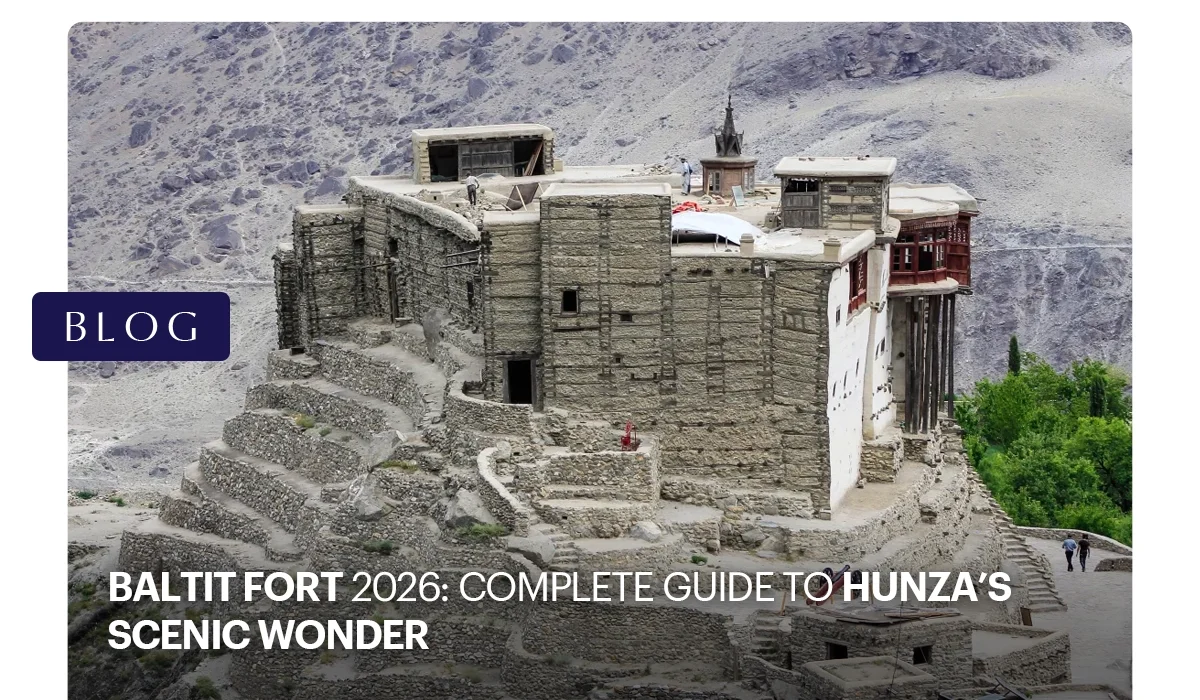

Baltit Fort stands as one of Pakistan’s most iconic historical landmarks. Located in Karimabad, this centuries-old fort is believed to be about 700 years old, with some parts tracing even older origins. Once home to the rulers of Hunza, the fort is famous for its unique blend of architectural styles and its commanding views over the valley. Today, it serves as a cultural museum, offering insight into the region’s past. Its history, location, and striking design make it an important symbol of Hunza’s heritage.
Quick Facts
| Feature | Details |
| Location | Karimabad, Hunza Valley, Gilgit-Baltistan, Pakistan |
| Age | About 700 years old |
| Built by | Rulers (Mirs) of Hunza |
| Status | Museum / heritage site |
| UNESCO | Tentative List |
| Setting | Hilltop overlooking Hunza Valley |
What Is Baltit Fort?
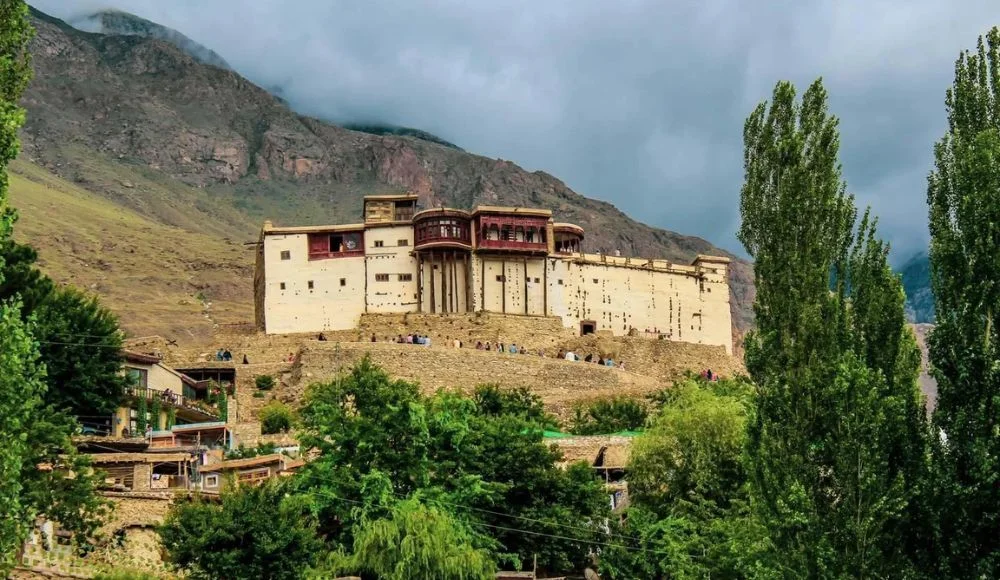
Baltit Fort is a historic fort in Karimabad, in the Hunza Valley of Gilgit-Baltistan, Pakistan. It is one of the most famous landmarks in Hunza and is known for its unique design and long history. The fort stands on a hilltop and overlooks the valley below.
Former Royal Residence
It was once the royal residence of the rulers of Hunza, known as the Mirs. It served as their home and center of power for many centuries. From here, they managed the region and protected their territory.
Strategic Hilltop Fort
The fort was built in a strategic location on a high hill. This position allowed it to defend against attacks and also provided wide views of the surrounding mountains and valleys. Its design reflects both local building styles and influences from nearby regions.
Cultural Landmark in Hunza
Today, it is an important cultural landmark in Hunza. It has been restored and is now open to visitors as a museum. It represents the history, architecture, and traditions of the Hunza Valley.
Where Is Baltit Fort Located in Hunza Valley?
Fort is located in Karimabad, in the Hunza Valley of Gilgit-Baltistan, Pakistan. It stands on a hilltop above the town, offering wide views of the surrounding valley and mountains.
The Baltit fort location is easy to identify once you reach Karimabad. The fort sits above the main settlement, which was once the capital of the former Hunza State. This elevated position made it ideal for defense and for overseeing the valley.
When people search for Baltit Fort Karimabad, they are referring to this exact hilltop site in the heart of the town. Karimabad is one of the most visited places in Hunza, and the fort is its most famous landmark.
It is surrounded by high peaks and overlooks the valley below, enhancing both its beauty and historical importance.
How to Reach Baltit Fort Hunza?
Here are the main ways to reach the fort:
- By Air (via Gilgit):
Take a flight to Gilgit from Islamabad. From Gilgit, the fort is about a 2–3 hour drive by car or taxi. - By Road (via Karakoram Highway):
Travel from Islamabad to Hunza via the Karakoram Highway. The journey takes around 12–16 hours, depending on road conditions. - From Karimabad:
Once in Karimabad, it is a short uphill walk or a drive. Most visitors prefer walking through the local streets. - Local Transport:
Taxis and private cars are easily available in Hunza for reaching the fort from nearby areas.
Baltit Fort History?
The fort has a long and layered history that reflects the culture and power of Hunza Valley. It served as a royal residence, a defensive stronghold, and today, a preserved heritage site. Its story spans several centuries, from early construction to modern restoration.
Origins and Early Construction
This is widely known as being about 700 years old, which is the most common timeline used in travel and historical descriptions. This places its main development around the 14th–15th century.
However, some sources suggest that parts of the fort may be much older. The core structure, especially its earliest defensive elements, could date back to around the 8th century. This means the fort was not built at once but developed over time in different phases.
The design reflects this long evolution. Builders used local stone and timber to create a strong structure that could handle harsh weather and earthquakes. Over the centuries, new sections were added, shaping the fort into what we see today.
Royal Residence of Hunza
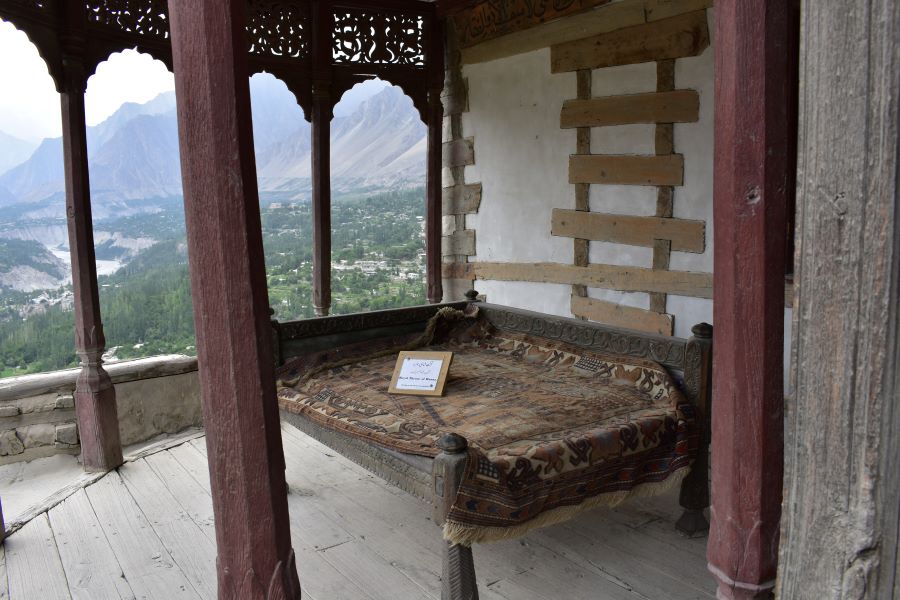
For many generations, this was the home of the rulers of Hunza, known as the Mirs. It was not just a house but the center of power in the region.
From this hilltop location, the Mirs could control the surrounding valley and monitor important trade routes. The fort’s elevated position gave it a clear strategic advantage, making it easier to defend against attacks.
Inside, the fort served both public and private functions. It had spaces for meetings, living quarters for the royal family, and areas for managing local affairs. This made it the political and administrative heart of Hunza for centuries.
Abandonment and Restoration
This remained in use until 1945, when the ruling family moved to a more modern residence. After that, the fort was left empty and began to fall into disrepair.
Over time, weather and neglect caused serious damage to the structure. There was a real risk that the fort could collapse if no action was taken.
In the 1990s, a major restoration project was started to save the fort. The work focused on preserving its original design while strengthening the structure. By 1996, the restoration was completed.
Today, it is open to visitors as a museum. It stands as a symbol of Hunza’s history and offers insight into the region’s royal past and architectural heritage.
How Old Is Baltit Fort?
Baltit Fort is about 700 years old, although parts of the structure may date back to the 8th century. The main fort was built and expanded during the 14th to 15th century. However, earlier sections may have existed as a simple defensive structure before that.
So, while the visible fort is around 700 years old, its origins could be much older.
Why is The Fort Famous?
Baltit Fort is famous for its scenic location, rich history, and unique design. It is one of the most well-known landmarks in Hunza Valley and attracts visitors from around the world.
Stunning Views of Hunza Valley
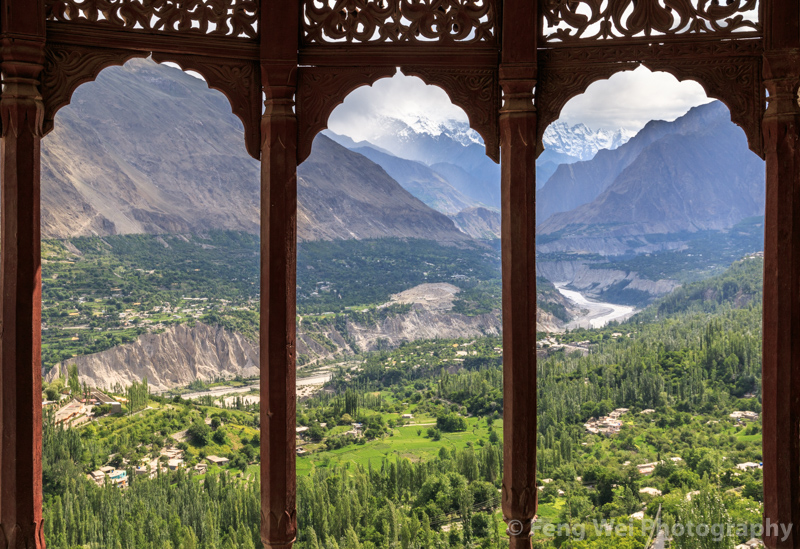
From the top, you can see wide views of Hunza Valley, including mountains, villages, and green fields. The view is one of the main reasons people visit the fort.
Royal Heritage
It was once the home of the rulers of Hunza, known as the Mirs. It served as a royal residence for many years. This gives the fort strong historical importance and connects it to the region’s past.
Unique Architecture
The design of Baltit Fort is different from many other forts. It is built with stone and wood, which helps it stay strong in harsh weather. The structure also shows influences from Tibetan and Central Asian styles, making it architecturally unique.
Cultural Significance
Baltit Fort is an important cultural symbol in Hunza. It represents the traditions, history, and identity of the local people. Today, it is preserved as a museum and helps visitors learn about the region’s heritage.
Architecture and Design of Baltit Fort Hunza Valley
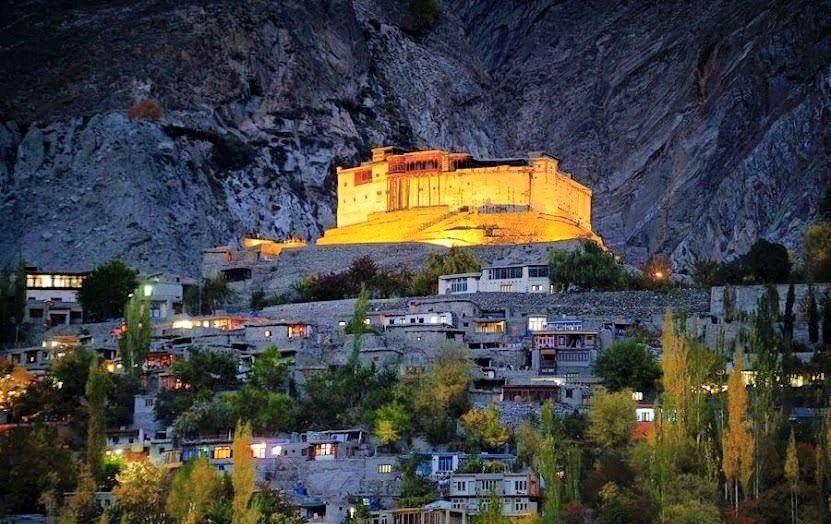
Baltit Fort features a unique architectural style that blends local building methods with influences from Tibet and Central Asia. Its design reflects both practicality and cultural exchange over centuries. Baltit Fort is built on a high hill above Karimabad in Hunza Valley.
This elevated position gives it a strong natural advantage. It overlooks the entire Hunza Valley and offers wide views of the surrounding mountains. However, the exact Baltit Fort height is unknown.
Architectural Features
- Stone and timber structure
The fort is built using a mix of stone and wood. Stone provides strength, while timber adds flexibility and support. This combination helps the structure last for centuries. - Earthquake-resistant design
The use of timber within stone walls allows the building to absorb shocks. This makes the fort more stable during earthquakes, which are common in mountainous regions like Hunza. - Multi-level construction
Baltit Fort has multiple floors built upward on a hill. This vertical design helped save space and improved defense. - Thick defensive walls
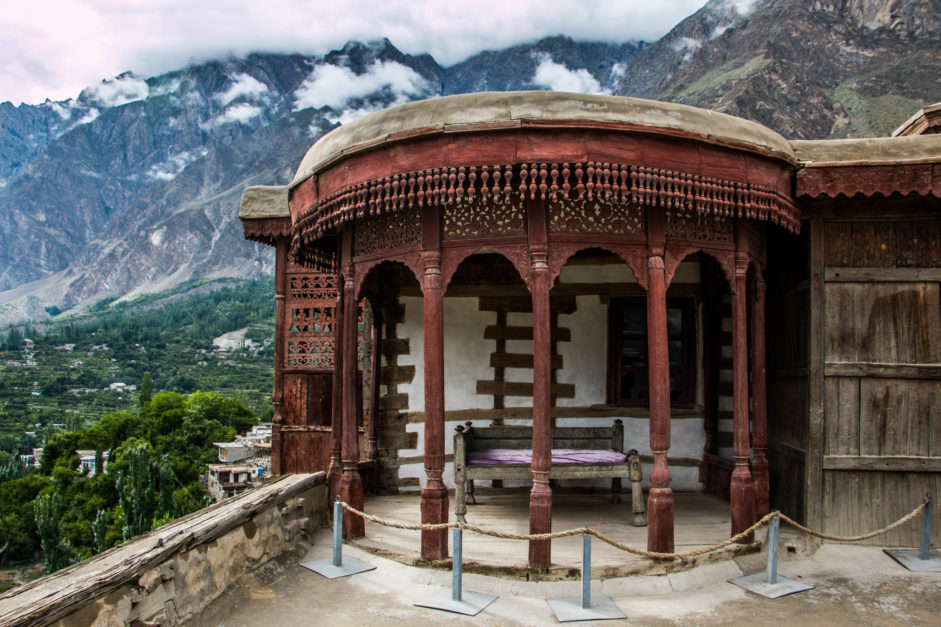
The walls are strong and thick, offering protection against harsh weather and past invasions. - Wooden balconies and carvings
The upper sections include wooden balconies with detailed carvings. These reflect traditional craftsmanship.
Cultural and Regional Influences
- Tibetan influence
The structure resembles Tibetan-style buildings, especially in its form and use of wood. - Central Asian elements
Some design features show links to Central Asian architecture, due to historical trade and cultural exchange. - Local Hunza craftsmanship
The construction also uses local techniques suited to the mountain environment.
Overall, the architecture of Baltit Fort is not just about strength and defense. It also shows a blend of cultures and practical design suited to its location in Hunza Valley.
Baltit Fort and UNESCO Status
Baltit Fort is listed on the UNESCO Tentative List, which means it has been proposed for future World Heritage status but is not yet officially inscribed.
The listing highlights the fort’s heritage significance as an important cultural and historical site in northern Pakistan. It represents the region’s traditional architecture, royal history, and strategic role in the Hunza Valley.
According to UNESCO, sites on the Tentative List are recognized for their potential global value and are considered for full World Heritage status in the future.
Being on this list helps raise awareness about Baltit Fort and supports efforts to preserve it as a key part of the region’s cultural heritage.
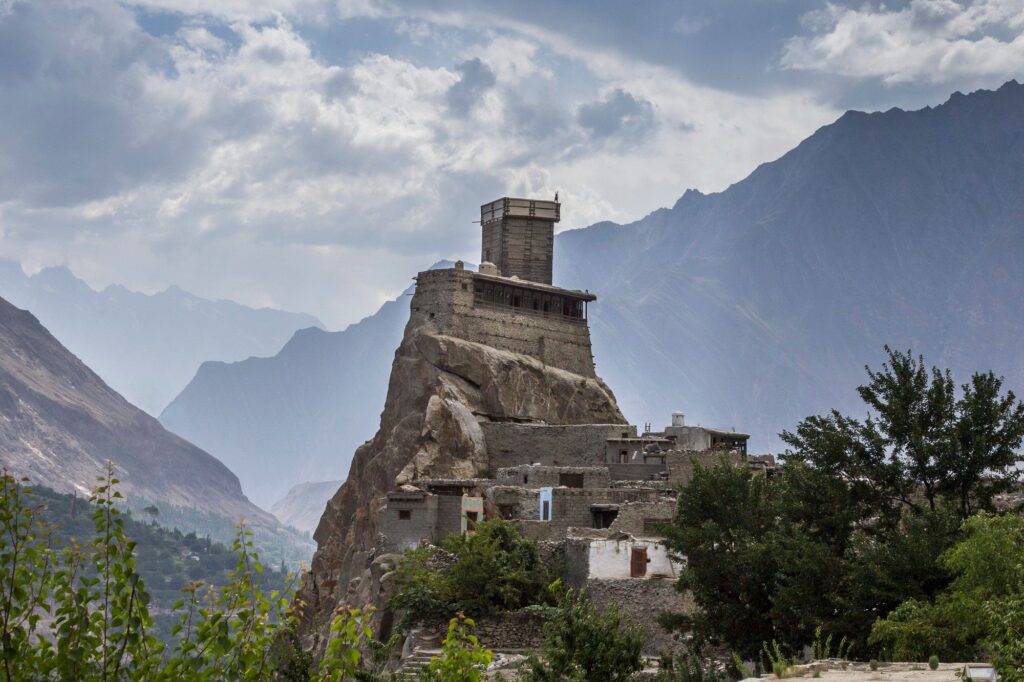
Baltit Fort vs Altit Fort
| Feature | Baltit Fort | Altit Fort |
| Age | About 700 years old (with older origins) | Over 900 years old |
| Location | Hilltop above Karimabad | Cliff edge above Altit village |
| Architecture Style | Palace-like structure with multiple levels | Compact and fortress-like design |
| Construction Material | Stone and timber (layered for strength) | Stone, wood, and mud |
| Design Influence | Tibetan and Central Asian influence | More local and defensive design |
| Main Purpose | Royal residence of the Mirs of Hunza | Early seat of power and defense fort |
| Layout | Larger, more open interior spaces | Narrow passages and tighter spaces |
| Views | Wide panoramic views of Hunza Valley | Strategic views for defense and control |
| Historical Role | Political and royal center | Defensive stronghold and early governance center |
Visiting Baltit Fort in Hunza
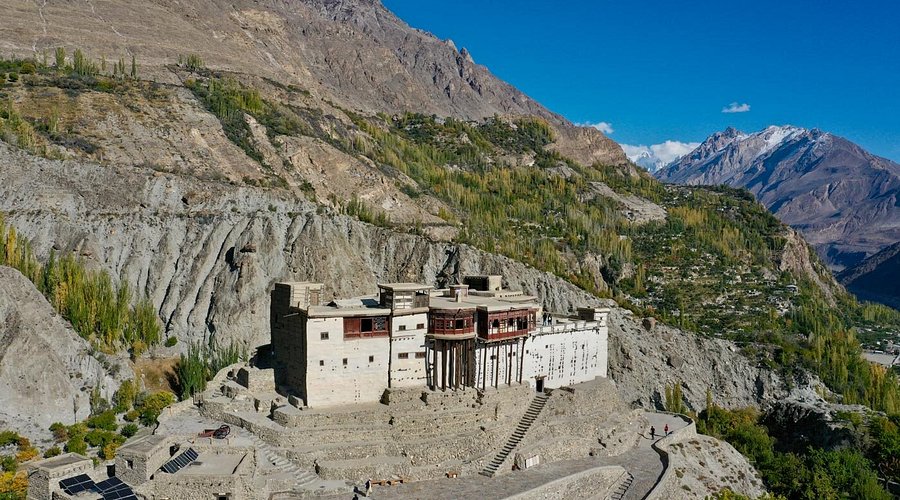
Visiting Baltit Fort offers a mix of history, culture, and scenic views over Hunza Valley.
Museum Experience
Inside the fort, you can walk through restored rooms that show:
- How the rulers of Hunza lived
- old furniture and tools
- traditional living spaces
Each section gives a clear idea of daily life in the past.
Views From The Top
Baltit Fort is built on a high point above Karimabad. From the top, you can see:
- wide views of Hunza Valley
- nearby mountains and glaciers
- traditional houses below
The viewpoint is one of the main reasons visitors come here.
Cultural Exhibits
The fort also displays:
- local crafts and heritage items
- historical objects from Hunza
- information about regional culture
Conclusion
Baltit Fort is a key landmark in Hunza Valley, located above Karimabad. With a history of about 700 years, it reflects the legacy of the region’s rulers and their way of life. Today, it stands as a preserved museum that highlights the culture and heritage of Hunza. Its design, location, and history make it an important symbol of the area.
FAQs – Baltit Fort
The following are some of the top FAQs.
What is the entry fee for Baltit Fort?
The entry fee for Baltit Fort may vary for local and foreign visitors. It is best to check updated prices at the ticket counter or through local sources before visiting.
What is the special thing about Baltit Fort?
Baltit Fort is known for its rich history, unique architecture, and hilltop location. It offers panoramic views of Hunza Valley and reflects the cultural heritage of the region.
How high is Baltit Fort?
There is no widely confirmed exact height of Baltit Fort.
Who built the Baltit Fort?
Baltit Fort was built and expanded by the rulers of Hunza, known as the Mirs. Over time, different parts were added and improved.
What is the history of Baltit Fort?
Baltit Fort has a history of about 700 years, with older parts possibly dating back even further. It served as the royal residence of the Mirs of Hunza until it was abandoned in 1945 and later restored.
What is the architecture of the Baltit Fort?
The fort features a mix of stone and timber construction. Its design shows Tibetan and Central Asian influences and includes multiple levels with strong structural support.
Which fort is famous in Gilgit?
Several forts are known in the Gilgit region, but Baltit Fort is among the most popular due to its history, location, and preservation.
Which fort is famous in Gilgit-Baltistan?
Gilgit-Baltistan is home to several historic forts, but Baltit Fort and Altit Fort are among the most well-known.
Best guided tour options for Baltit Fort
Guided tours are available through local travel agencies and tour operators in Hunza. Many offer combined tours of Baltit Fort, Altit Fort, and nearby attractions.
How to book a guided tour of Baltit Fort?
You can book a guided tour through local travel agencies, hotels in Karimabad, or online travel platforms that offer Hunza tour packages.
Top-rated travel agencies offering Baltit Fort trips.
Several travel agencies in Pakistan provide Hunza tours that include Baltit Fort. It is recommended to check reviews and compare packages before booking.
What are the best hotels near Baltit Fort for a family stay?
Karimabad offers a range of family-friendly hotels and guesthouses. Many provide comfortable stays with views of Hunza Valley and easy access to the fort.
How to buy tickets online for Baltit Fort visit.
Online ticket booking is not always available. Most visitors purchase tickets directly at the entrance of Baltit Fort.
Baltit Fort opening hours and ticket prices.
Baltit Fort is generally open during daytime hours. Ticket prices may vary, so it is best to confirm locally before your visit.
Are there any recommended local eateries close to Baltit Fort?
Yes, there are several local restaurants and cafés in Karimabad, search them up on Google.
Local transportation services to Baltit Fort from nearby cities
Visitors can reach Baltit Fort via local taxis, private cars, or transport services from nearby cities like Gilgit.
What are the costs associated with entering Baltit Fort?
The main cost is the entry ticket. Additional costs may include guided tours, transportation, and nearby accommodation depending on your travel plans.
For more informative blogs on topics like Altit Fort and Shakarparian, visit Chakor Blogs.
Read More:
- Derawar Fort: Complete Guide to Bahawalpur’s Desert Jewel
- Reviving History: Restored Heritage Properties in Islamabad
- 10 Incredible Haunted Places in Pakistan to Explore

BBC-featured Content Specialist with a sharp eye for search intent and a proven ability to turn content into a growth engine. I leverage cutting-edge digital marketing tools to craft strategies that fuel organic traffic, amplify brand growth, and own the local SEO landscape, particularly across the competitive real estate market. I help brands dominate search rankings and convert visibility into measurable business success.
