
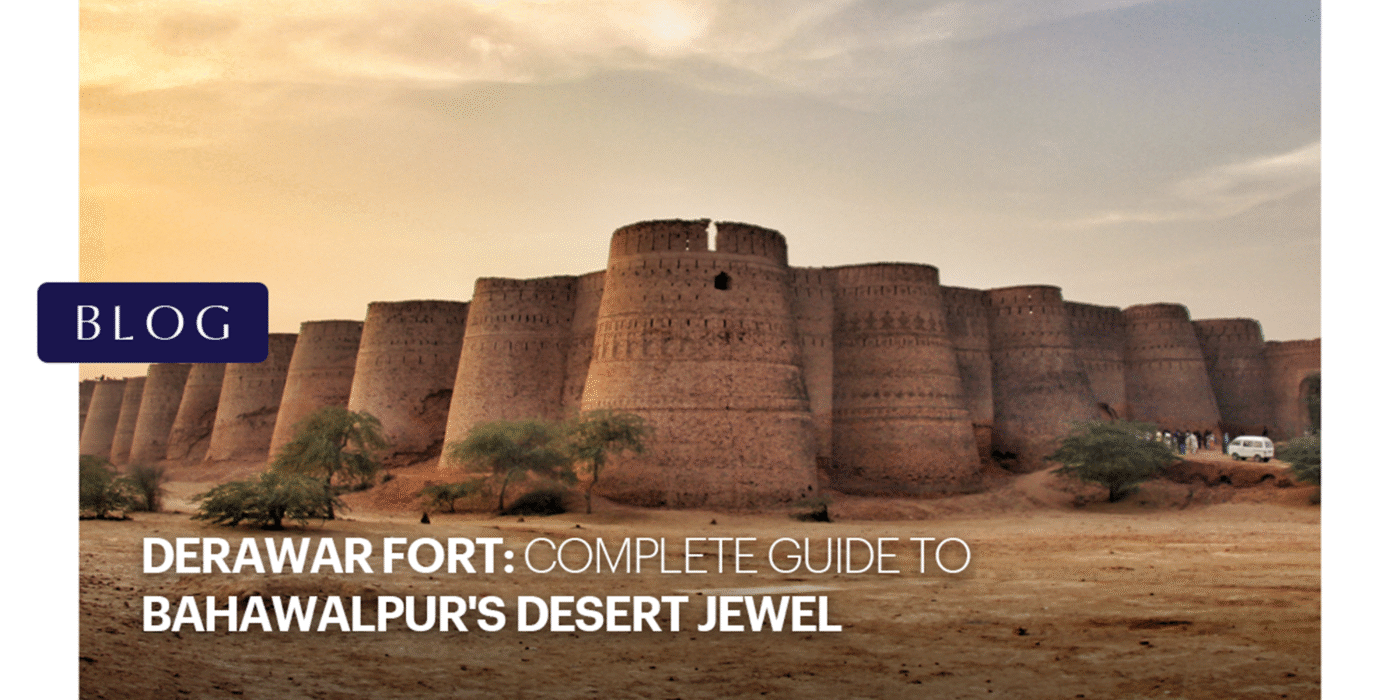

Rising dramatically from the endless golden sands of the Cholistan Desert, Derawar Fort is one of Pakistan’s most breathtaking and historically significant landmarks. This colossal square fortress has stood for over a thousand years, silently witnessing the rise and fall of empires, the passage of desert caravans, and the grandeur of royal courts. Whether you are a history enthusiast, an architecture lover, or an adventurous traveller, Derawar Fort offers an experience unlike any other in South Asia.
What is Derawar Fort?
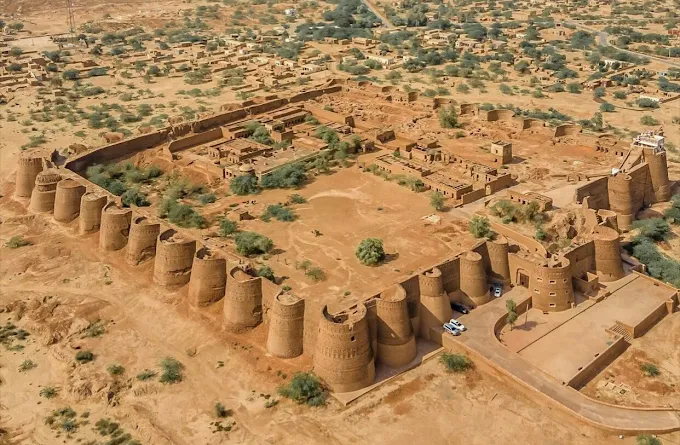
Derawar Fort Bahawalpur is a massive square fortification built of baked clay bricks, rising 30 meters high from the flat sands of the Cholistan Desert in southern Punjab, Pakistan. Its forty enormous circular bastions, visible for miles across the open desert, make it one of the most visually striking forts on the entire subcontinent. The walls stretch over 1,500 meters in perimeter, enclosing a world of royal history, military legacy, and architectural brilliance.
The fort is not merely a tourist attraction; it is a living monument to the people, rulers, and civilizations that shaped the culture of the Cholistan region for centuries.
Where is Derawar Fort Located?
Derawar Fort is located in Tehsil Yazman, Bahawalpur District, Punjab, Pakistan. It sits approximately 130 kilometers south of Bahawalpur city and about 20 kilometers south of Ahmedpur East, deep within the Cholistan Desert, also known locally as the Rohi Desert.
Derawar Fort Bahawalpur is not just a geographic pairing; the two are deeply intertwined in history. The fort served as the desert stronghold of the Nawabs of Bahawalpur for centuries and remains in the possession of the Abbasi family, the descendants of those very rulers, to this day.
The fort’s position was no accident. It was strategically placed at a critical point where deep underground water deposits and remnants of the ancient Hakra River could be accessed. This made Derawar an essential stopping and watering point for caravans crossing the vast desert on trade and pilgrimage routes connecting Central Asia, the subcontinent, and Mecca.
Derawar Fort History: A Thousand Years of Power
The story of Derawar Fort history stretches back over eleven centuries, making it one of the oldest surviving fortifications in Pakistan.
Origins: The Bhatti Rajputs (9th Century)
Derawar Fort was originally built in 858 AD by Rai Jajja Bhatti, a Hindu Rajput ruler of the Bhatti clan. It was constructed as a tribute to Rawal Deoraj Bhatti, the king of Jaisalmer. The fort was initially called “Dera Rawal,” which over time became “Dera Rawar” and eventually evolved into the name we know today, Derawar.
For several centuries, the fort remained under the control of the Rajput Bhatti royal family of Jaisalmer. It served as a military stronghold protecting the desert trade routes that connected Iran, Afghanistan, and Central Asia to the heart of the subcontinent.
The Nawabs of Bahawalpur Take Control (18th Century)
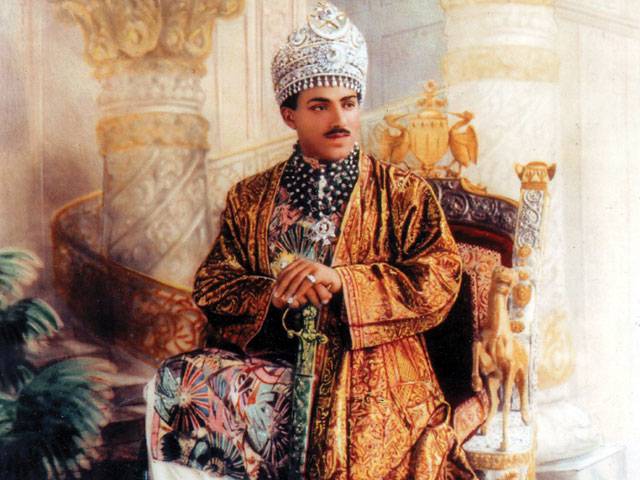
In the 18th century, the political landscape of the Cholistan Desert shifted dramatically. The Nawab of Bahawalpur, Sadeq Mohammad Khan I, captured the fort in 1733. The Nawab transformed what was a Rajput desert outpost into a symbol of Muslim royal power in the region, adding the iconic bastions, reinforced brick walls, and the grand architectural features that define the fort today.
In 1747, the fort temporarily slipped from the Nawabs’ hands due to military preoccupations elsewhere, but they recaptured it in 1804, and it remained their prized desert fortress for generations. Nawab Sadeq Muhammad Khan Abbasi V, the 12th and last ruler of the Bahawalpur State, was born within the fort’s walls in 1904, a testament to the fort’s deep integration into Bahawalpur’s royal identity.
British Era and Beyond
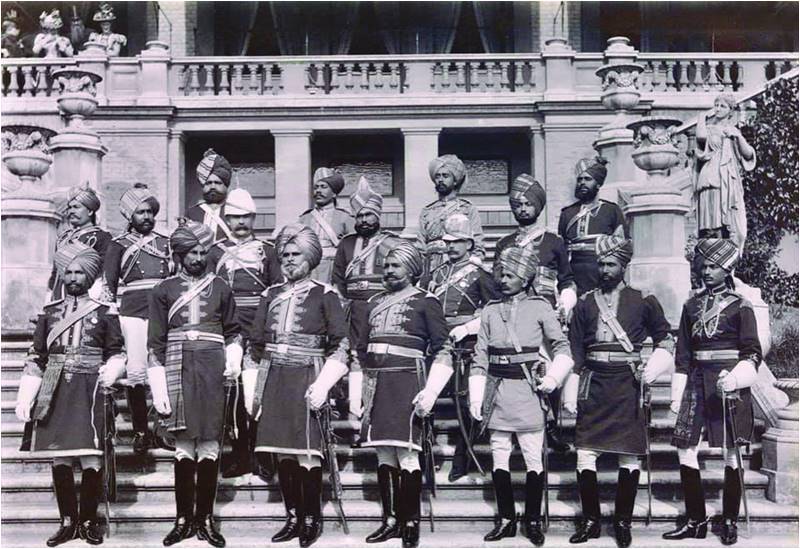
During British rule, Derawar Fort took on a darker role; it was used to house prisoners and even served as a site of executions. During the period around the 1965 war with India, several structures inside the fort were demolished to make room for military training activities, causing irreversible damage to parts of its interior.
In more recent history, Google honoured the fort with a special Doodle on Pakistan’s 75th Independence Day, recognizing it as a symbol of Pakistani antiquity and adaptability. In 2016, the Pakistani government submitted “Derawar and the Desert Forts of Cholistan” to UNESCO for consideration as a World Heritage Site, a long-overdue recognition of its global significance.
Derawar Fort Architecture: A Marvel in Brick and Stone
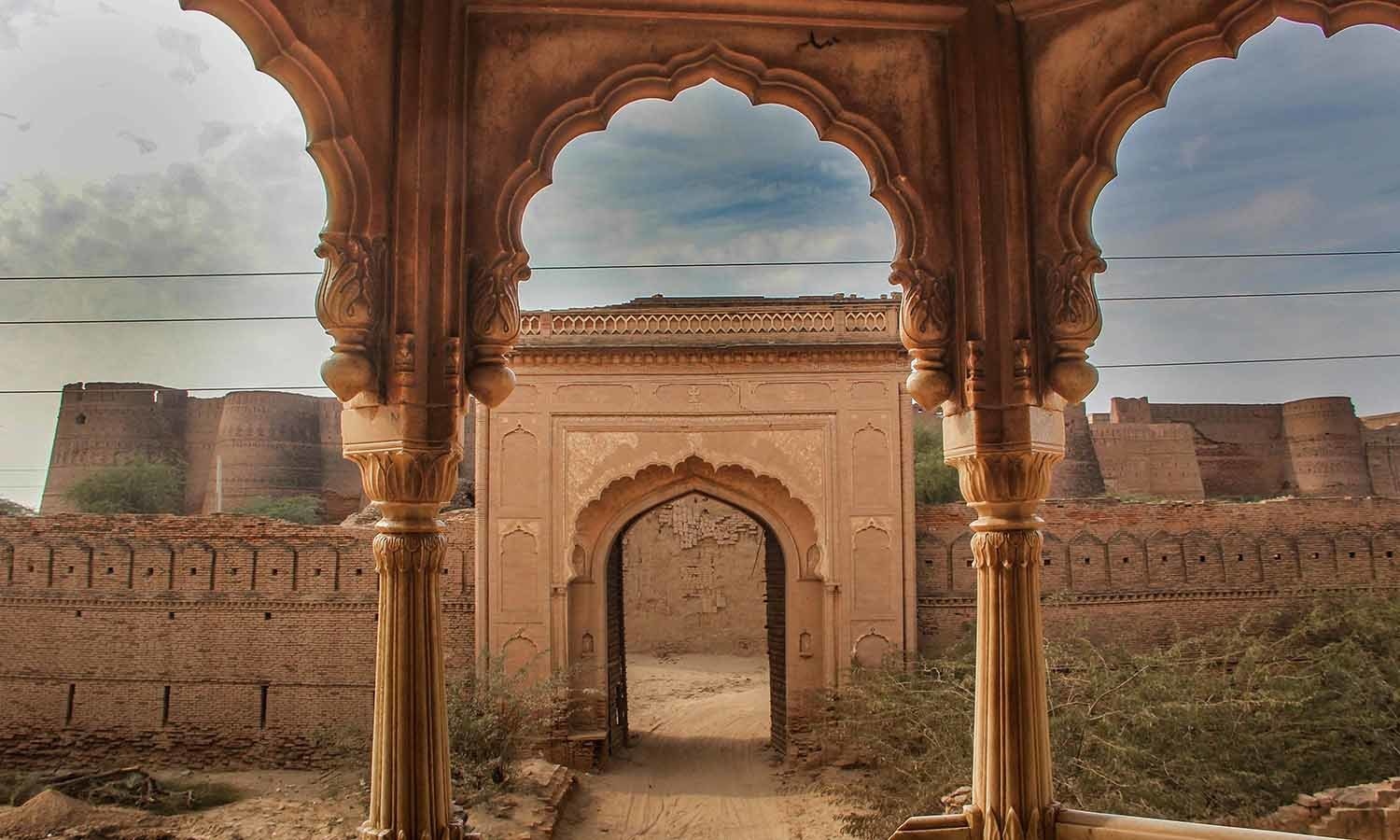
Derawar Fort architecture is where this monument truly sets itself apart from every other fort in Pakistan. The sheer scale, symmetry, and craftsmanship of the structure are extraordinary, especially considering it rises from a flat, featureless desert landscape with no natural elevation to aid its defense.
-
The Structure

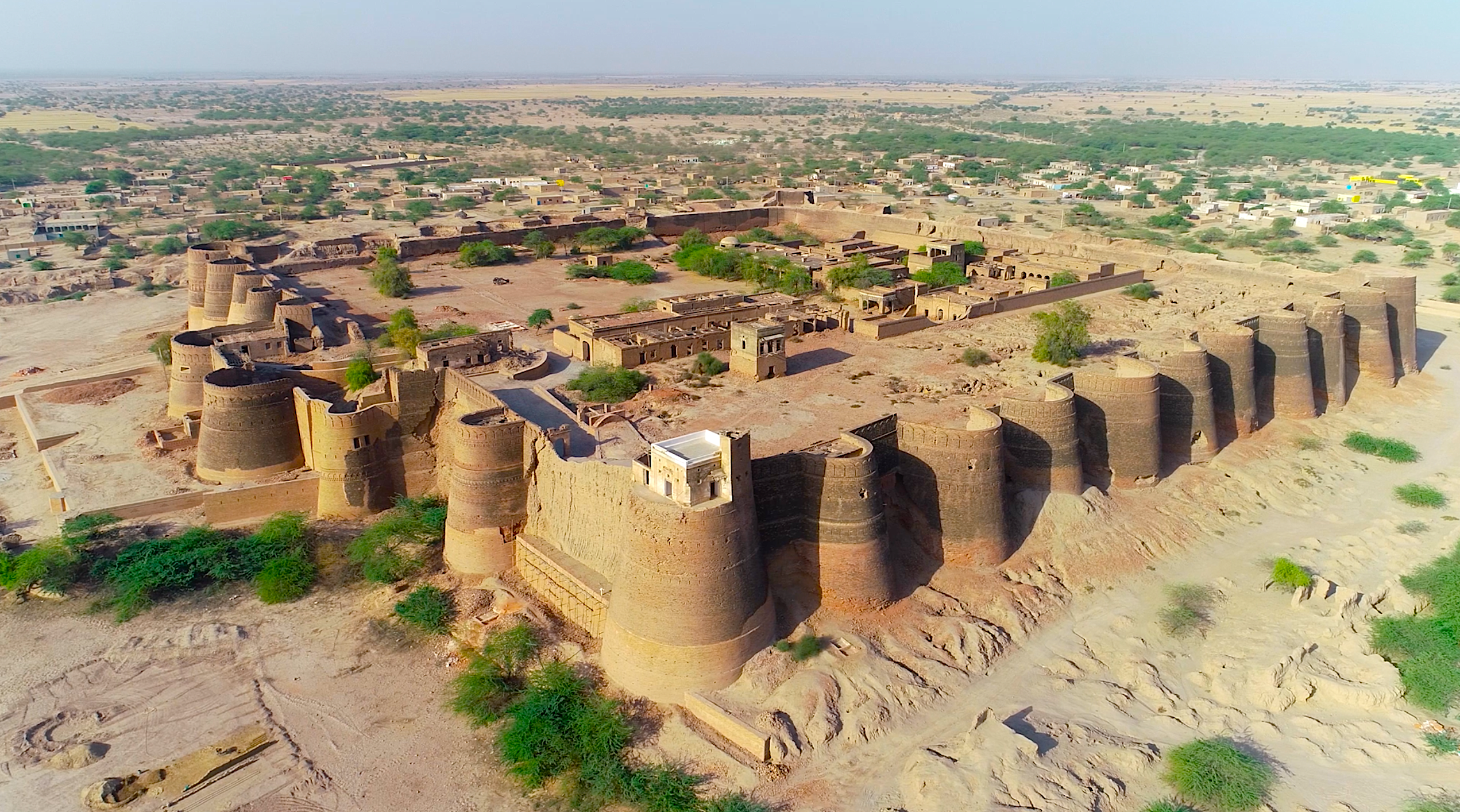
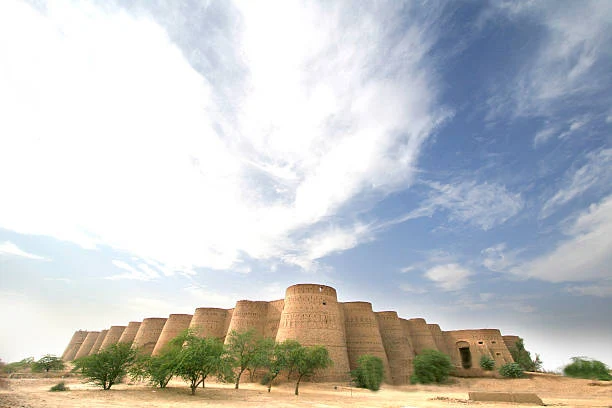
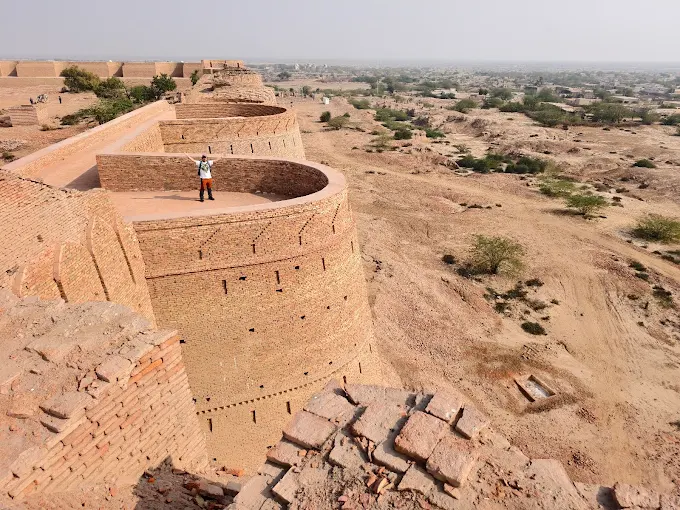
The fort is a massive square structure built entirely of baked clay bricks. Its walls have a perimeter of 1,500 meters and stand up to thirty meters high. Forty circular bastions, ten on each side of the square, surround the fort and are decorated with intricately carved geometric patterns cut directly into the brickwork.
These bastions can be seen from many miles across the flat desert, making Derawar Fort visible long before you reach it, a deliberate statement of power and presence.
-
The Interior

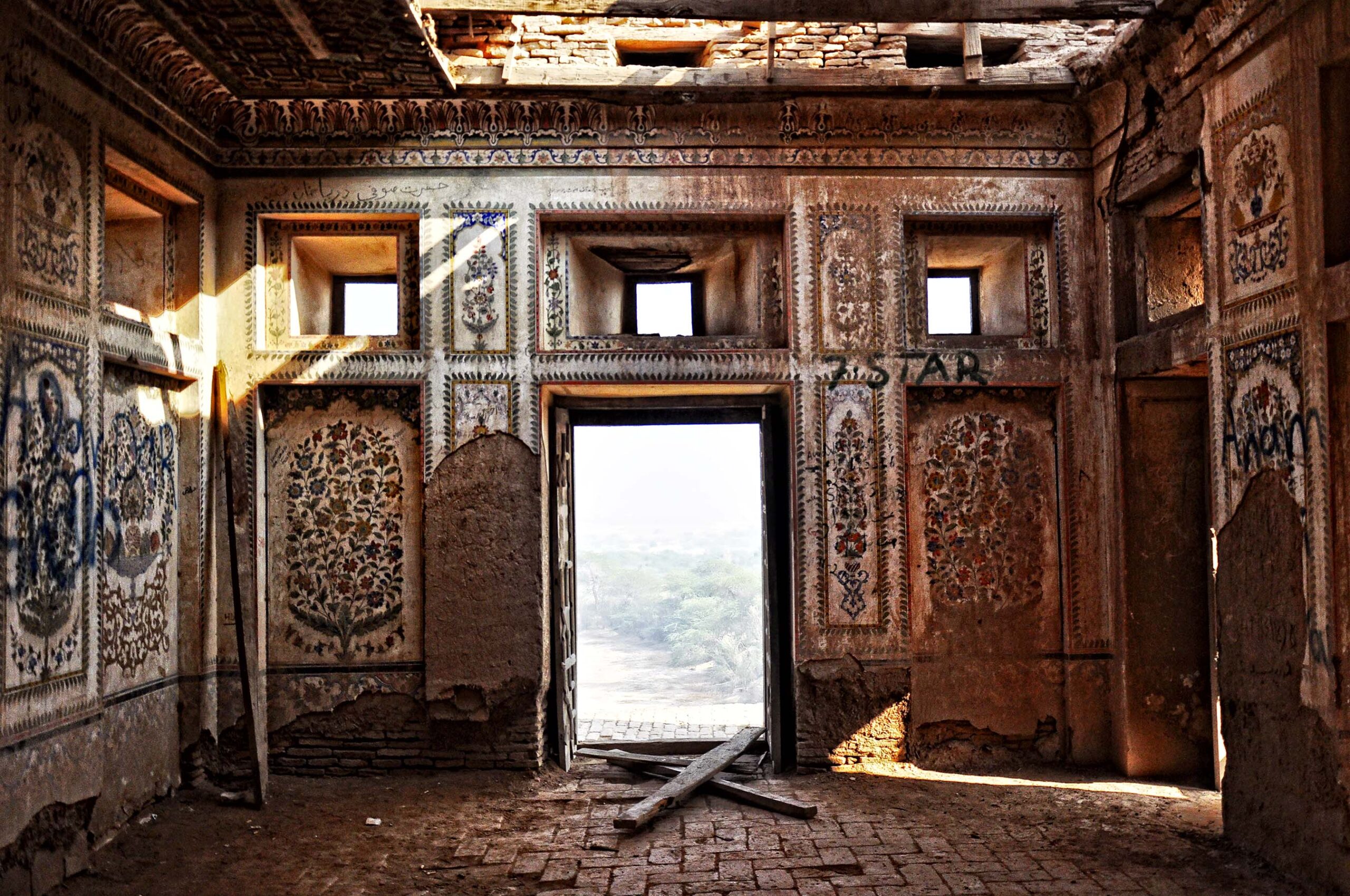
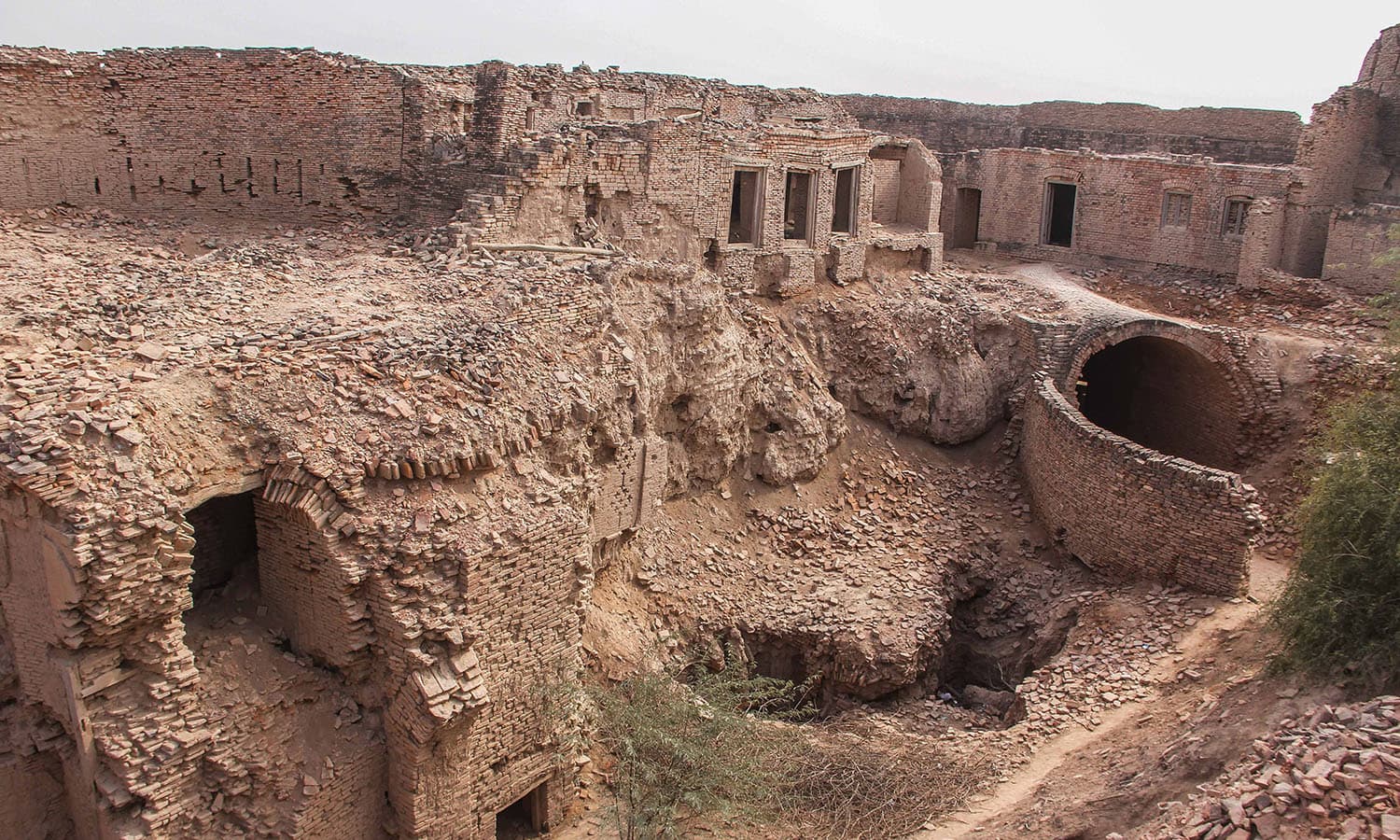
Inside the fort, there are remains of imperial quarters, residential rooms, offices, a small prison, a water pond, and even an ancient gallows, each telling a different chapter of the fort’s long history. Even the architecture of its dungeons, once accessible through tunnelled stairways, carries a haunting charm.
One of the most remarkable and lesser-known features of Derawar Fort is its underground connectivity. A long underground tunnel once connected the fort directly to the Sadiq Garh Palace in Bahawalpur. The fort was also connected to other fortifications across the Cholistan Desert through a network of underground passages, reflecting the Nawabs’ sophisticated military and logistical strategy.
-
Nearby Monuments
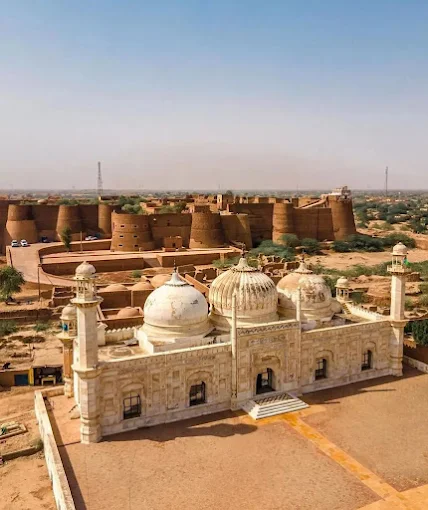
Just outside the fort walls stands the stunning Abbasi Mosque (also called the Moti or Pearl Mosque), a beautifully proportioned white structure that provides a striking visual contrast to the red-brown fort behind it. Adjacent to the mosque lies the cemetery of the Nawabs of Bahawalpur, filled with ornate, richly decorated tombs featuring elaborate tilework and domed structures.
Derawar Fort and the Cholistan Desert: Part of a Greater Legacy
Derawar Fort Cholistan is not simply a single monument standing alone in the desert; it is the crown jewel of an entire network of historic forts that once spanned the Cholistan landscape. This network included Meergarh, Jaangarh, Marotgarh, Maujgarh, Dingarh, Khangarh, Khairgarh, Bijnotgarh, and Islamgarh, a chain of fortifications that protected desert caravan routes, controlled water resources, and maintained order across an otherwise inhospitable terrain.
These forts protected and enabled the desert caravan routes, the mercantile routes from Central Asia to the heart of the subcontinent, and the pilgrimage routes between Mecca and India. Of all these forts, Derawar Fort is by far the best surviving example, and it is the only one that continues to draw visitors from across Pakistan and the world.
Conservation Crisis: A Heritage Under Threat
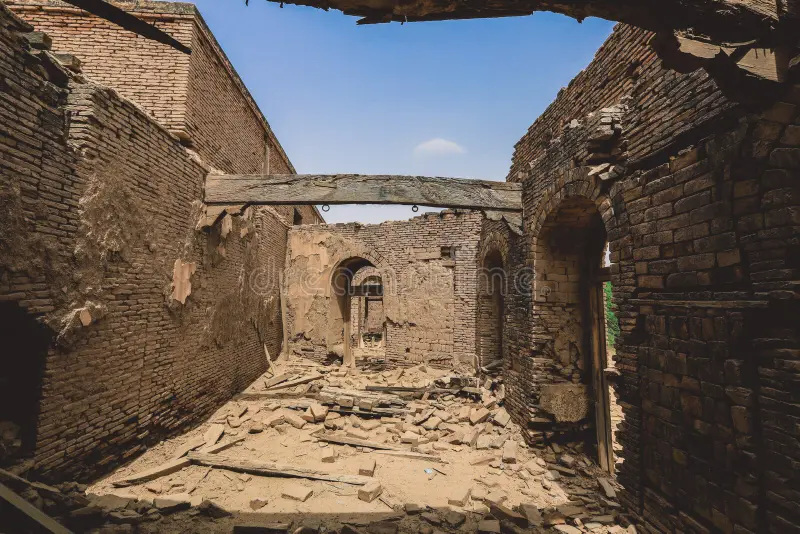 Despite its legendary status, Derawar Fort is facing a serious conservation crisis. The exterior walls and bastions remain visually impressive, but the fort’s interior is rapidly deteriorating. Fallen roofs, crumbling walls, and damaged structures paint a picture of years of neglect and underfunding.
In 2019, the Punjab government allocated Rs. 46 million for conservation work, including the underpinning of damaged bastions, wall repairs, and the restoration of the main entrance platform. However, heritage activists and researchers argue that these efforts are far too limited for a monument of this scale and significance.
The fort is crumbling and necessitates urgent, large-scale preservation work. With its UNESCO tentative listing at stake, the pressure is mounting on both the Abbasi family, which still owns the fort, and the government of Pakistan to take decisive action before any more of this irreplaceable heritage is lost.
Visiting Derawar Fort: Practical Travel Tips
Planning a visit to Derawar Fort requires some preparation, but the experience is absolutely worth the effort.
Best time to visit: October to February, when the desert climate is cool and manageable. Summer temperatures in the Cholistan Desert can be extreme, making visiting uncomfortable or even dangerous.
How to get there: Travel from Bahawalpur city toward Ahmedpur East, then head south into the desert. The trip is a full-day excursion that includes a three- to four-hour four-wheel-drive journey led by local guides familiar with the desert terrain. A sturdy 4×4 vehicle is essential.
Entry permission: The fort remains private property owned by the Abbasi family, and visitors wishing to enter the interior must obtain special permission from the Nawab’s family in advance. The exterior and surrounding mosques and mausoleums can generally be visited without restriction.
What to see nearby: The Abbasi Mosque, the Nawabs’ ornate mausoleum complex, and the surrounding desert landscape are all part of the experience.
Frequently Asked Questions
Who built Derawar Fort?
In 858 AD, the Derawar fort built by Rai Jajja Bhatti and later rebuilt in its current form in 1732 by Nawab Sadeq Muhammad Khan I of Bahawalpur.
How old is Derawar Fort?
The fort is over 1,100 years old, dating back to the 9th century AD.
Is Derawar Fort on the UNESCO World Heritage List?
It is currently on UNESCO’s tentative list, submitted by Pakistan in 2016 under the title “Derawar and the Desert Forts of Cholistan.”
Can tourists visit Derawar Fort?
Yes. The exterior, mosque, and mausoleum are accessible to visitors. Entering the interior requires advance permission from the Abbasi family.
Final Thoughts
Derawar Fort is more than a crumbling relic in the desert; it is a living, breathing testament to over a thousand years of human civilization, royal ambition, architectural ingenuity, and cultural resilience. From the Bhatti Rajputs who first raised its walls to the Abbasi Nawabs who gave it the grandeur it carries today, every brick of this extraordinary fortress tells a story worth preserving.
If Pakistan has a monument that deserves the full attention of heritage bodies, travel writers, and future generations alike, it is Derawar Fort, the undisputed crown of the Cholistan Desert.
For more informative blogs on topics like lok virsa heritage museum and Shakarparian, visit Chakor Blogs.
Read More:
- Tomb of Jahangir 2026: Lahore’s Remarkable Mughal Heritage
- All You Need to Know About Tomb of Quaid e Azam
- 10 Incredible Haunted Places in Pakistan to Explore

Dedicated and detail-oriented SEO Content Writer, Real Estate Writer, and Research Analyst based in Islamabad, with proven expertise in developing accurate, valuable, and well-researched content. Skilled in analytical writing, market research, and reporting, with the ability to turn insights into clear, professional, and impactful content. Passionate about exploring new ideas, analyzing industry trends, and contributing to high-quality writing and research-driven projects.
