BBC-featured Content Specialist with a sharp eye for search intent and a proven ability to turn content into a growth engine. I leverage cutting-edge digital marketing tools to craft strategies that fuel organic traffic, amplify brand growth, and own the local SEO landscape, particularly across the competitive real estate market. I help brands dominate search rankings and convert visibility into measurable business success.
ISLAMABAD: Pakistan and the United States signaled fresh momentum in bilateral economic engagement on Friday as Deputy Prime Minister and Foreign Minister Ishaq Dar met with US Chargé d’Affaires Natalie Baker in Islamabad.
According to Pakistan’s Foreign Office, the discussion centered on strengthening cooperation in investment, technology, and critical minerals.
Dar highlighted the increasing participation of American firms in Pakistan’s economy, pointing to the recent launch of the country’s first Google Chromebook assembly line in Haripur.
The facility, inaugurated earlier this month, was established through a collaboration involving Google, Tech Valley, the Government of Pakistan, the National Radio & Telecommunications Corporation, and Allied Corporation. Officials view the project as a significant step toward expanding Pakistan’s technology manufacturing capacity.
Interest from US companies has also grown in the mining and minerals sector. Nova Minerals, a US-based firm, recently expressed intent to pursue long-term investment opportunities, underscoring Pakistan’s substantial but underdeveloped mineral resources.
The meeting occurred shortly after Pakistan dispatched its inaugural shipment of critical minerals to the United States under a $500 million cooperation framework between US Strategic Metals (USSM) and Pakistan’s Frontier Works Organization (FWO). The agreement is designed to support joint development of the mineral value chain, including exploration work, processing, and the eventual establishment of refining operations within Pakistan.
The first consignment included antimony, copper concentrate, and rare earth elements such as neodymium and praseodymium, all sourced and prepared domestically. Officials say the multi-stage partnership enhances Pakistan’s prospects in the global critical minerals market and could encourage additional foreign investment.
Both delegations also exchanged perspectives on broader regional and international developments, reaffirming their commitment to continued dialogue.
BBC-featured Content Specialist with a sharp eye for search intent and a proven ability to turn content into a growth engine. I leverage cutting-edge digital marketing tools to craft strategies that fuel organic traffic, amplify brand growth, and own the local SEO landscape, particularly across the competitive real estate market. I help brands dominate search rankings and convert visibility into measurable business success.
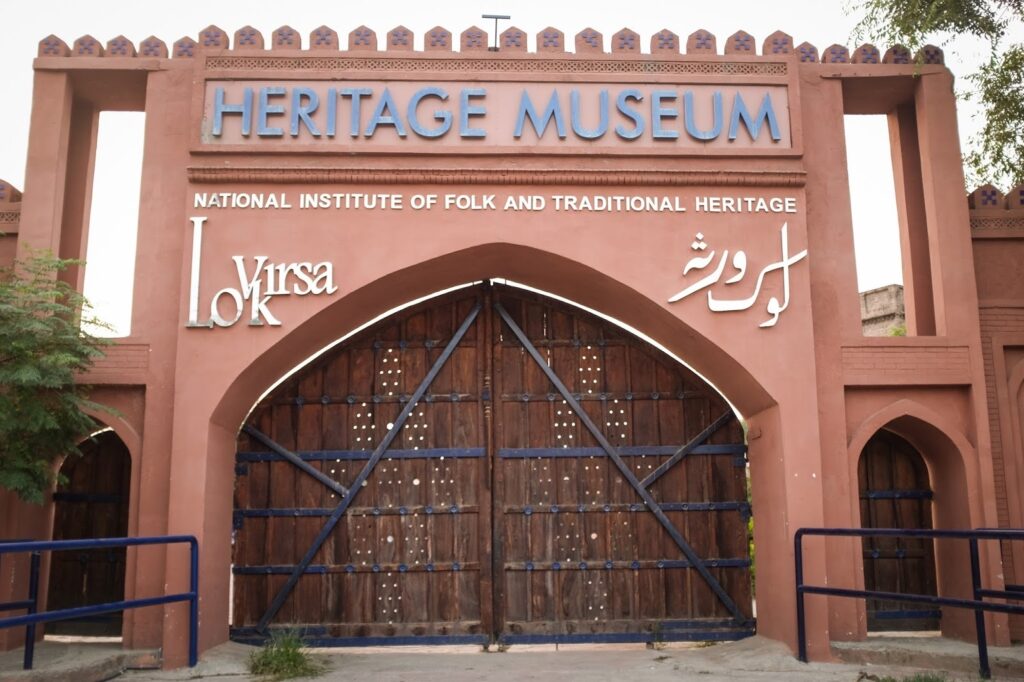
The Lok Virsa Heritage Museum in Islamabad is one of Pakistan’s most celebrated cultural landmarks, offering a deep and immersive look into the nation’s diverse folk traditions, ethnic identities, and historical journeys. The museum brings culture to life through dynamic displays, living crafts, music, and festivals. This comprehensive guide provides detailed insights into its history, layout, exhibitions, lok virsa timing, festivals, and everything you need to know before visiting.
What is Lok Virsa?
Lok Virsa, which translates to “People’s Heritage,” is an institution dedicated to safeguarding the cultural traditions of Pakistan. It serves as a national platform for documenting oral histories, folk music, regional crafts, and traditional lifestyles.
The organization functions under the National Institute of Folk & Traditional Heritage and works to preserve both tangible and intangible cultural assets.
Lok Virsa’s role extends far beyond museum exhibits; it fosters cultural awareness through research projects, publications, field surveys, workshops, and festivals.
By creating spaces where artisans, musicians, and cultural practitioners can actively showcase their work, Lok Virsa ensures that heritage remains a living and evolving part of Pakistan’s identity.
History & Evolution of Lok Virsa Islamabad
The history of the Lok Virsa Museum reflects Pakistan’s long-standing commitment to preserving its cultural diversity. The institution began in 1974, with its first significant expansion in 1982 when the Folk Art Museum was established.
Over the years, the museum evolved in structure and purpose, becoming a comprehensive ethnology center documenting Pakistan’s living traditions.
In 2002, Lok Virsa was granted autonomous status, giving it greater flexibility to execute cultural projects and manage its growing archives.
A major renovation in 2004 transformed the museum into what is now known as the Pakistan National Museum of Ethnology, commonly called the Heritage Museum.
Additional expansions, such as the opening of the Pakistan Monument Museum in 2010 and the Sufis and Shrines Gallery in 2013, further enhanced its cultural scope.
Today, Lok Virsa stands as one of the most significant cultural institutions in the country and a premier destination for heritage tourism.
Lok Virsa Location
Lok Virsa is situated on Garden Avenue in the picturesque Shakarparian Hills of Islamabad. Lok Virsa location is not only central but also symbolic, as the surrounding landscape complements the museum’s cultural ambiance.
The elevated site provides a serene environment that contrasts with the bustling city, making it a refreshing destination for visitors.
Its proximity to notable attractions like the Pakistan Monument, Rose and Jasmine Garden, and several viewpoints makes it easily accessible and ideal for day trips.
Whether arriving by personal car, taxi, or a ride-hailing service, visitors find the route straightforward and the area welcoming for families and tourists alike.
Museum Structure, Layout & Experience
The Lok Virsa Heritage Museum features a well-designed blend of indoor and outdoor spaces that collectively represent the cultural tapestry of Pakistan. The indoor galleries occupy roughly 20,000 square feet within the larger 60,000-square-foot complex.
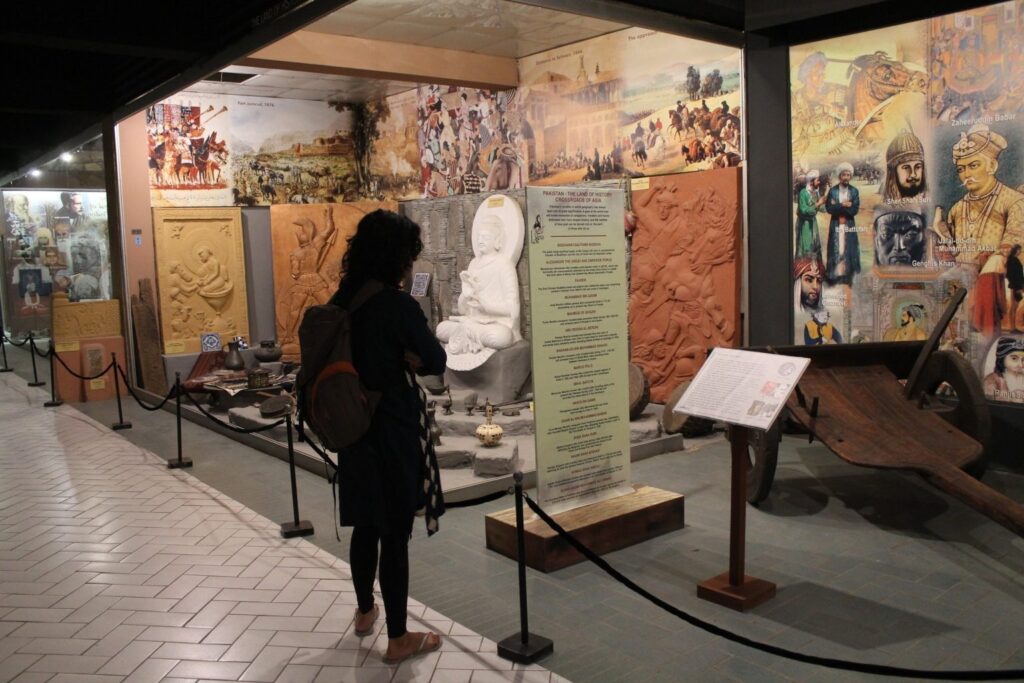
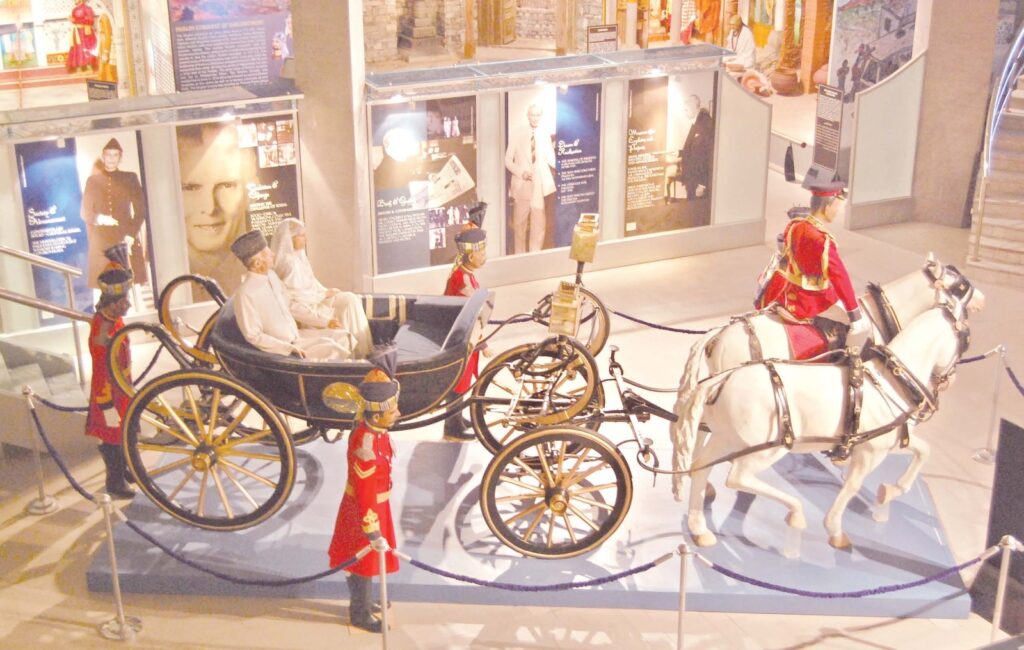
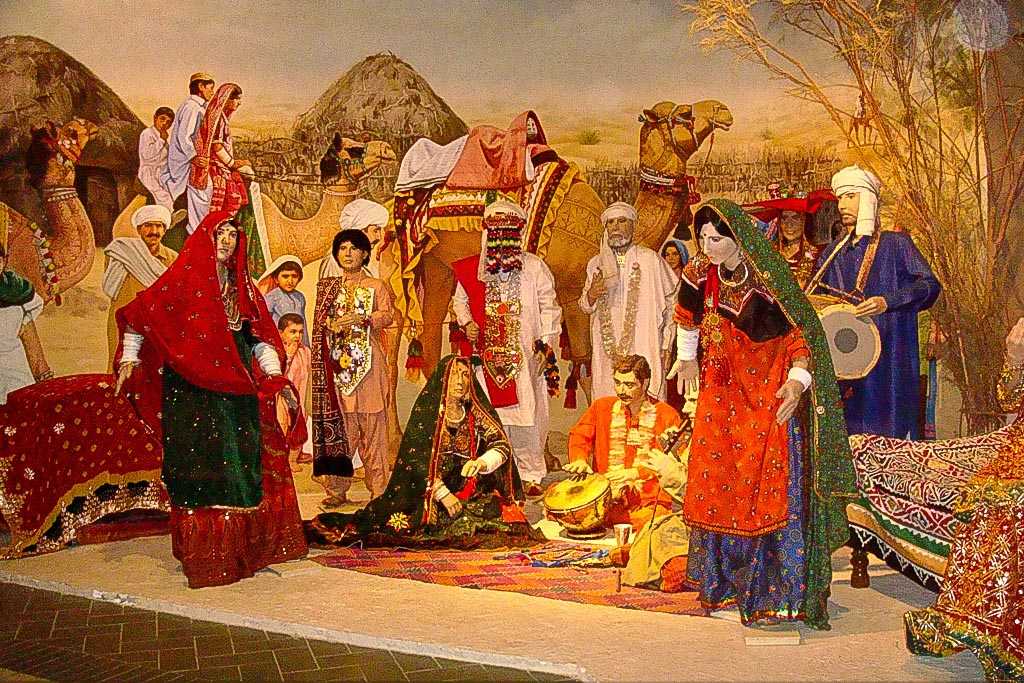
These galleries use life-size dioramas, reconstructed environments, and immersive displays to convey the daily lives, traditions, and rituals of various ethnic groups.
Visitors walk through villages, marketplaces, traditional homes, and historical scenes that reflect the lifestyles of different regions.
In addition to the indoor exhibits, Lok Virsa includes several specialized galleries. The Sufis and Shrines Hall, for example, offers a spiritual journey through the imagery and music of Pakistan’s revered Sufi saints, showcasing shrines, devotional traditions, and qawwali performances.
The Historical Timeline Gallery provides a narrative arc beginning from ancient Indus Valley civilizations and moving through Islamic, Mughal, and modern eras.
The outdoor section of the museum is equally engaging. It features an extensive open-air space with an amphitheatre, artisan bazaar, and walkways designed to resemble traditional Pakistani towns.
Here, artisans work on pottery, fresco art, embroidery, and woodcraft as visitors watch and interact with them. Live performances of folk music and qawwali enhance the atmosphere, creating a dynamic cultural experience rarely found in traditional museum settings.
Exhibitions & Collections
The exhibitions at Lok Virsa represent a comprehensive portrayal of Pakistan’s cultural diversity. Each regional gallery focuses on the specific traditions, crafts, and lifestyles of the province it represents.
The Punjab gallery showcases phulkari embroidery and folk music;
Sindh’s gallery highlights ajrak, rilli quilts, and Sufi heritage;
Balochistan features its nomadic crafts and distinctive embroidery styles;
Khyber Pakhtunkhwa offers insights into Pashtun jewelry, architecture, and social traditions;
and the galleries for Gilgit-Baltistan and Kashmir highlight mountain culture, woolen crafts, and intricate wooden architecture.
Beyond regional representation, the museum displays an impressive collection of handcrafted items, including pottery, ceramics, embroidered garments, metalwork, and musical instruments.
These artifacts not only illustrate the artistic talent of Pakistani artisans but also serve as historical markers of cultural evolution.
Many exhibits depict festivals, ceremonial practices, and domestic life, providing visitors with a holistic understanding of social customs.
Lok Virsa Festival & Lok Virsa Mela
One of the most vibrant features of Lok Virsa is its festivals, commonly known as the Lok Virsa Mela. These events transform the museum grounds into a bustling cultural fair, featuring music, dance, craft stalls, food courts, and traditional performances.
Each festival celebrates Pakistan’s provincial diversity by creating spaces where regional cultures are showcased through live demonstrations, storytelling, and performances.
Artisans from across the country travel to these events to display their crafts, share their skills, and interact with visitors.
Lok Virsa also organizes cultural weeks dedicated to specific provinces, thematic Sufi festivals, seasonal spring festivals, and special national day celebrations.
These events offer visitors a rare opportunity to witness authentic cultural expressions, making festival days the best time to explore Lok Virsa for those seeking an enriched, interactive experience.
Research, Archive & Media Facilities
Lok Virsa is not only a museum, it is a research powerhouse. The Lok Virsa Heritage Library houses more than 32,000 books, manuscripts, research papers, and archival reports on subjects such as anthropology, ethnology, folk literature, art history, and traditional craftsmanship.
This makes it a valuable resource for scholars, students, and cultural researchers seeking deep insights into Pakistan’s heritage.
The Virsa Research & Publication Centre conducts extensive field surveys across Pakistan, interviewing elders, artisans, musicians, and community historians to preserve oral traditions that might otherwise be lost.
Its publications play a vital role in documenting regional stories, folk genres, and disappearing crafts.
Complementing this is the Virsa Media Centre, which produces documentaries, records folk music, and maintains audio-visual archives.
With thousands of hours of recordings and over 50 cultural documentaries, the media center ensures that the living sounds and stories of Pakistan are preserved for future generations.
Visitor Information
Lok Virsa offers accessible and family-friendly visitor facilities, making it suitable for tourists, families, and school trips. The museum is generally open from Tuesday to Sunday, typically from morning until early evening, with Mondays reserved as a weekly holiday.
Fridays usually include a midday prayer break. Ticket prices are affordable, with discounted rates for students and free entry for young children.
Visitors also have access to parking, clean restrooms, a prayer area, and seating spots throughout the complex. During festivals or melas, food stalls become available, offering traditional snacks and meals.
The museum’s spacious design allows comfortable movement, and many areas are wheelchair accessible.
Why Visit Lok Virsa Museum?
Lok Virsa Islamabad stands out as a must-visit destination because it offers a unique opportunity to explore Pakistan’s cultural diversity in one immersive setting.
The museum’s combination of indoor galleries and outdoor artisan spaces provides a rich blend of education and entertainment. Families appreciate its child-friendly environment, while researchers and students benefit from the extensive archives and library.
Cultural travelers, photographers, and vloggers find endless inspiration in the displays, crafts, architecture, and live performances.
Whether you are a local resident or an international tourist, Lok Virsa offers a meaningful encounter with the traditions that define Pakistan.
Visitor Tips
To make the most of your visit, consider exploring Lok Virsa during the cooler months of winter and spring, when outdoor spaces are more enjoyable. Checking festival schedules in advance can significantly enhance your experience, as mela days offer the most vibrant displays of culture.
Plan to spend at least two to three hours if you want to explore both indoor and outdoor areas thoroughly. Combining your visit with nearby attractions like the Pakistan Monument can create a complete cultural outing in Islamabad.
Carrying a camera is recommended, as the museum offers beautiful photography opportunities.
FAQs
What is Lok Virsa Heritage Museum?
It is Pakistan’s national ethnology museum dedicated to showcasing the cultural diversity, traditions, crafts, and heritage of the country.
Where is Lok Virsa located?
The museum is located on Garden Avenue in Shakarparian Hills, Islamabad.
What are Lok Virsa’s timings?
Typically open Tuesday to Sunday from morning to early evening; closed on Monday.
What is the Lok Virsa Mela?
It is a cultural festival featuring traditional music, crafts, food, dance, and performances representing Pakistan’s regional heritage.
Is Lok Virsa suitable for families and children?
Yes, it is an ideal destination for families, school trips, and cultural education.
Conclusion
The Lok Virsa Heritage Museum is a living celebration of Pakistan’s cultural richness. It preserves centuries-old traditions while providing a vibrant platform for artisans and performers to share their talents.
With its blend of galleries, festivals, research facilities, and interactive cultural experiences, Lok Virsa stands as one of the most popular Islamabad tourist places.
Whether you’re interested in learning about regional histories, exploring traditional crafts, or attending a lively cultural mela, a visit to Lok Virsa promises both education and enjoyment. For more information on places of natural and cultural significance such as Badshahi masjid, visit Chakor blogs.
BBC-featured Content Specialist with a sharp eye for search intent and a proven ability to turn content into a growth engine. I leverage cutting-edge digital marketing tools to craft strategies that fuel organic traffic, amplify brand growth, and own the local SEO landscape, particularly across the competitive real estate market. I help brands dominate search rankings and convert visibility into measurable business success.
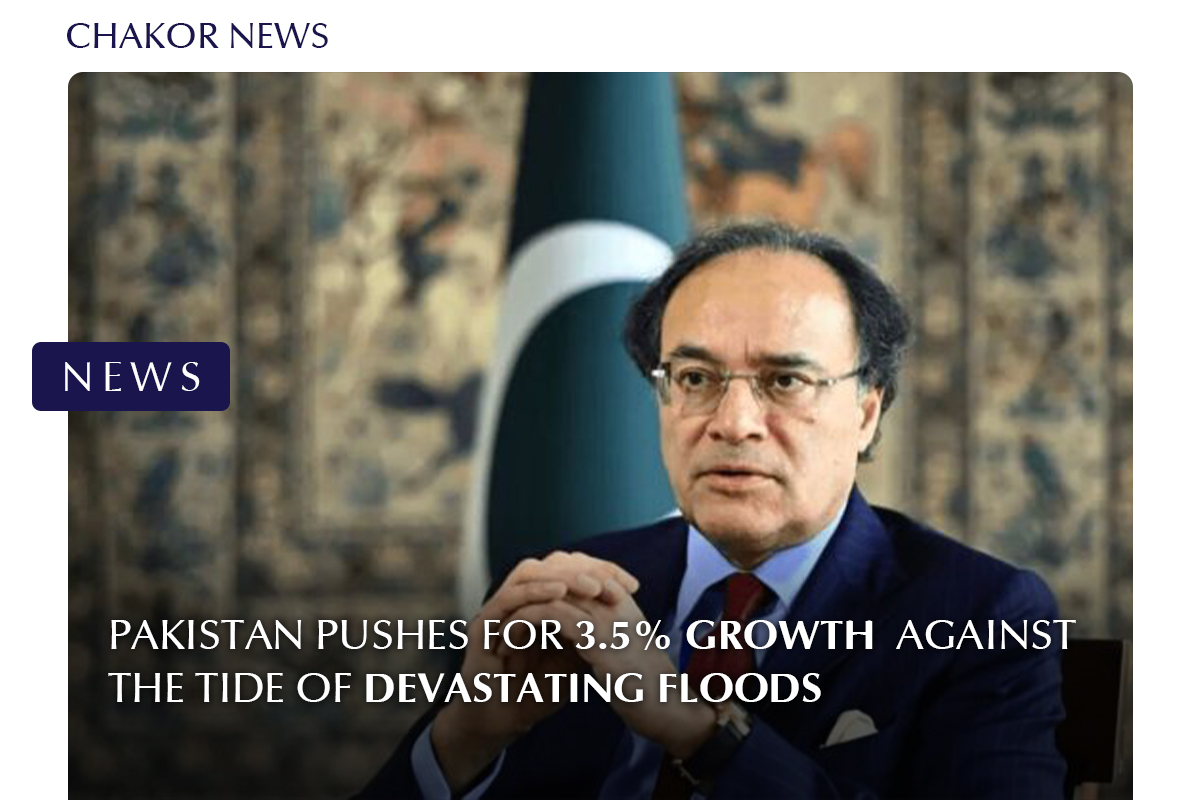
ISLAMABAD: Pakistan expects its economy to grow by approximately 3.5% in the current financial year despite widespread destruction caused by this year’s monsoon floods, Finance Minister Muhammad Aurangzeb said in an interview with Chinese media on Tuesday.
Pakistan faced yet another devastating monsoon season, which triggered massive flooding across multiple regions. More than 1,000 people and 22,000 livestock have been lost since late June, while floodwaters have destroyed crops spread over 2.2 million acres of farmland.
The scale of the disaster affected more than 4.5 million people and forced authorities to evacuate over 2.6 million residents from high-risk zones.
Despite the setbacks, Aurangzeb expressed confidence in the country’s economic trajectory. “We grew at 3% GDP last year,” he said, adding that although growth had initially been projected at over 4% for the current year, the floods have weakened the outlook. “Still, I’m quite hopeful that we can manage anything close to 3.5% during this fiscal year.”
The minister said Pakistan’s broader economy was showing signs of recovery, supported by easing inflation, strengthened foreign exchange reserves, and renewed confidence from international rating agencies.
Fitch, S&P, and Moody’s all upgraded Pakistan’s outlook earlier this year, marking the first time in nearly three years that their assessments have aligned.
Aurangzeb also highlighted progress on long-delayed privatization initiatives. He pointed to the recent sale of the First Women’s Bank to a United Arab Emirates conglomerate, describing it as a long-standing item on the government’s privatization agenda.
Pakistan International Airlines is next in line, and the minister said he is “very sanguine” that the national carrier will be privatized before the end of the year.
Emphasizing the importance of Pakistan’s partnership with China, Aurangzeb noted that economic cooperation between the two countries is entering a new phase.
After years focused on infrastructure under the China-Pakistan Economic Corridor, the relationship is now shifting toward industrialization, which he described as key to Pakistan’s long-term prosperity.
BBC-featured Content Specialist with a sharp eye for search intent and a proven ability to turn content into a growth engine. I leverage cutting-edge digital marketing tools to craft strategies that fuel organic traffic, amplify brand growth, and own the local SEO landscape, particularly across the competitive real estate market. I help brands dominate search rankings and convert visibility into measurable business success.
KARACHI: Gold prices retreated on Wednesday as both global and domestic markets recorded declines following a brief period of stability.
In international trading, the price of gold slipped by $10 per ounce, bringing the global rate down to $4,124. The dip in the global bullion market was mirrored in Pakistan, where local gold prices also moved lower.
According to market figures, the price of 24-karat gold per tola in Pakistan dropped by Rs. 1,000, closing at Rs. 434,762. Similarly, the rate for 10 grams of 24-karat gold fell by Rs. 857, settling at Rs. 372,738.
Silver prices also softened. The cost of one tola of silver decreased by Rs. 81, bringing the new price to Rs. 5,434. Meanwhile, the rate for 10 grams of silver declined by Rs. 69, now standing at Rs. 4,658.
Market analysts attribute the declines to shifting global economic sentiment, which has influenced demand for precious metals over the past week.
BBC-featured Content Specialist with a sharp eye for search intent and a proven ability to turn content into a growth engine. I leverage cutting-edge digital marketing tools to craft strategies that fuel organic traffic, amplify brand growth, and own the local SEO landscape, particularly across the competitive real estate market. I help brands dominate search rankings and convert visibility into measurable business success.
When buying or selling property in Pakistan, knowing how plot sizes are measured and converted is essential, since plot size conversion in Pakistan varies based on regions. Different regions use different units; Punjab and Islamabad commonly use Marla and Kanal, while Sindh mostly measures land in Square Yards or Square Feet. A Marla, Kanal, Acre, Square Yard, Square Foot, and Square Meter are all units used to measure land area. Understanding their conversions ensures accurate valuation and smarter real estate decisions. For more details, visit Chakor blogs.
Before we go further, if you’d rather avoid manual calculations, Chakor’s Plot Size Conversion Calculator has you covered. Convert any area into all common plot measurement units in Pakistan with a single click.
Common Land Measurement Units in Pakistan
In Pakistan, different land measurement units are used depending on the region. The most common ones are:
Marla,
Kanal,
Acre,
Square Yard,
Square Foot,
and Square Meter.
A Marla and a Kanal are traditional South Asian units that date back to the British era. These were introduced to standardize land records, but over time, different regions began using slightly different measurements.
That’s why one Marla can mean 225, 250, or 272.25 square feet, depending on the city or housing scheme.
Standard
1 Marla = Square Feet
Square Yards
Square Meters
Traditional (Revenue Standard)
272.25
30.25
25.29
Municipal / Housing Standard
250
27.78
23.23
Lahore / Local Standard
225
25
20.90
A Kanal equals 20 Marla, and an Acre equals 8 Kanal. Smaller plots are often measured in Square Feet or Square Yards, while larger agricultural lands are recorded in Acres or Square Meters.
Understanding these differences helps buyers and sellers compare plot sizes accurately and avoid confusion during property transactions.
Marla Conversion Guide
Understanding how a Marla is converted to square feet, square yards (gazz), or square meters is essential when buying or selling property in Pakistan. Different housing societies and cities follow slightly different standards, mainly 225 sq ft, 250 sq ft, or 272.25 sq ft per Marla.
Let’s break down each conversion step by step.
1 Marla to Square Feet: How Many Square Feet in a Marla?
Since Kanal is one of the most commonly used units, especially in Punjab and Islamabad, knowing how it converts into Marla, Square Feet, Square Yards, and Square Meters helps you accurately compare or evaluate plots.
1 Kanal is Equal to How Many Square Feet?
The number of square feet per Kanal depends on the Marla standard used in your area. Different regions and housing schemes in Pakistan use slightly different definitions of a Marla, which directly affects the measurement of a Kanal.
Since 1 Square Yard = 9 Square Feet and 1 Square Foot = 0.092903 Square Meters, you can convert Kanal into other units using simple multiplication.
Standard (Marla size)
1 Kanal = (sq ft)
1 Kanal = (sq yd)
1 Kanal = (sq m)
British / Revenue Record Standard (272.25)
5,445
605
505.86
Municipal / Housing Scheme Standard (250)
5,000
555.56
464.52
Lahore / Older Urban Standard (225)
4,500
500
418.06
Formulas:
To Square Yards: Kanal × (20 × Marla sq ft ÷ 9)
To Square Meters: Kanal × (20 × Marla sq ft × 0.092903)
Example: If your housing society uses 250 sq ft per Marla, and you have 3 Kanal:
Square Feet: 3 × 5,000 = 15,000 sq ft
Square Yards: 3 × 555.56 ≈ 1,667 sq yd
Square Meters: 3 × 464.52 ≈ 1,393.56 sq m
Acre and Hectare References
When dealing with large land areas in Pakistan, especially for agricultural or industrial plots, Acre and Hectare are the standard units used instead of Marla or Kanal. Understanding their relationships with other local units, such as Kanal, Marla, Bigha, Killa, and Murabba, helps ensure accuracy when buying or selling land.
This is a fixed, internationally recognized conversion that doesn’t change across regions. It also equals:
1 Acre = 4,840 Square Yards
1 Acre = 4,047 Square Meters
Hectare Conversion
1 Hectare = 2.47 Acres = approximately 20 Kanal
The exact conversion is: 1 Hectare = 10,000 Square Meters = 107,639 Square Feet)
Hectares are more commonly used in agricultural records, land surveys, and government documentation.
Traditional Agricultural Units in Pakistan
Besides Acres and Hectares, rural areas and older land records often use local units such as Murabba, Bigha, and Killa.
Unit
Equivalent
Approx. Area (sq ft)
Used In
Murabba
25 Acres
≈ 1,089,000 sq ft
Punjab (agricultural records)
Killa
1 Acre = 8 Kanal
43,560 sq ft
Common across Punjab & Sindh
Bigha
≈ 4 Kanal
21,780 sq ft
Punjab, KPK, rural areas
These units are mostly found in revenue and agricultural land documentation. In urban housing societies, Kanal and Marla remain standard.
Regional Standards
Pakistan doesn’t follow a single unified land measurement standard. Instead, each region or housing scheme can adopt slightly different definitions for the size of a Marla, and therefore, Kanal and Acre equivalents differ too.
Punjab and Islamabad
Standard Used: 1 Marla = 272.25 sq ft
1 Kanal = 20 Marla = 5,445 sq ft
This is often called the Revenue or British Standard, used in official land records, large housing schemes, and government property files.
Common in Islamabad, Rawalpindi, Multan, Faisalabad, and many parts of Punjab.
Lahore and Private Housing Schemes
Standard Used: 1 Marla = 225 sq ft
1 Kanal = 20 Marla = 4,500 sq ft
Adopted by some municipal and private developers for compact plot sizing.
Often found in older societies or local municipal layouts where land divisions were made decades ago.
Khyber Pakhtunkhwa (KPK)
Standard Used: 1 Marla = 250 sq ft
1 Kanal = 20 Marla = 5,000 sq ft
Many housing schemes in Peshawar, Mardan, and nearby regions follow this middle standard.
To make land measurements easier to understand, here’s a combined conversion chart that summarizes how Marla and Kanal relate to other common units, Square Feet, Square Yards, and Square Meters, based on the three major standards used in Pakistan.
These quick reference tables will help you compare plot sizes across different cities and housing societies.
Revenue / British Standard Marla = 272.25 sq ft
Unit
To Square Feet (sq ft)
To Square Yards (sq yd)
To Square Meters (sq m)
To Kanal
To Marla
1 Marla
272.25
30.25
25.29
0.05
1
1 Kanal
5,445
605
505.86
1
20
1 Acre
43,560
4,840
4,047
8
160
Municipal / KPK Standard Marla = 250 sq ft
Unit
To Square Feet (sq ft)
To Square Yards (sq yd)
To Square Meters (sq m)
To Kanal
To Marla
1 Marla
250
27.78
23.23
0.05
1
1 Kanal
5,000
555.56
464.52
1
20
1 Acre
43,560
4,840
4,047
8.71
174.24
Lahore / Old Urban Standard Marla = 225 sq ft
Unit
To Square Feet (sq ft)
To Square Yards (sq yd)
To Square Meters (sq m)
To Kanal
To Marla
1 Marla
225
25
20.90
0.05
1
1 Kanal
4,500
500
418.06
1
20
1 Acre
43,560
4,840
4,047
9.68
193.60
FAQs – Plot Size Conversion in Pakistan
1 marla is equal to how many square feet?
1 Marla equals 272.25 sq ft (standard), but it can also be 250 or 225 sq ft depending on the region.
1 kanal is equal to how many square yards?
1 Kanal equals 605 sq yd (standard), or 555.56 sq yd and 500 sq yd under other local standards.
How to convert square meters to marla?
Divide square meters by 25.29 (for 272.25 sq ft standard) to get marlas.
How many marla in 1 kanal?
There are 20 marla in 1 kanal everywhere in Pakistan.
What is 1 kanal in square feet?
1 Kanal equals 5,445 sq ft (standard), or 5,000 and 4,500 sq ft in alternate standards.
What is 1 marla to square feet?
1 Marla equals 272.25 sq ft (standard), or 250/225 sq ft regionally.
1 marla is equal to how many square feet
It equals 272.25 sq ft under the revenue standard.
One marla is equal to how many square feet?
One Marla = 272.25 square feet on average.
What is 1 marla equal to square feet?
1 Marla = 272.25 sq ft (standard).
Convert marla to square feet.
Multiply the number of Marla by 272.25 to get square feet.
1 Marla to square yard plot size conversion in Pakistan.
Divide total sq ft by 9 to get square yards.
1 marla to square yard plot size conversion in Pakistan.
1 Marla = 30.25 sq yd (standard).
Define Marla conversion to square yards.
1 Marla = 25–30.25 sq yd depending on standard used.
Convert square yard to marla.
Multiply square yards by 9, then divide by 272.25.
1 Square feet to marla plot size conversion in Pakistan.
Divide square feet by 272.25.
Convert Square meter to marla.
Divide square meters by 25.29 (standard).
Marla to square meter plot size conversion in Pakistan.
1 Marla = 25.29 sq m (standard).
Convert marla to square meter.
Multiply Marla by 25.29 to get square meters.
What is 1 Meter square to marla?
1 m² = 0.0395 Marla (approx., standard).
1 Kanal to marla plot size conversion in Pakistan.
1 Kanal = 20 Marla.
1 kanal is equal to marla?
1 Kanal equals 20 Marla everywhere in Pakistan.
Convert marla to kanal.
Divide total Marla by 20 to get Kanal.
1 kanal equal to how many square feet?
1 Kanal = 5,445 sq ft (standard).
One kanal is equal to how many square feet?
One Kanal = 5,445 sq ft by revenue record.
Plot size conversion in Pakistan; Kanal to square feet is?
Multiply Kanal by 5,445 to get square feet.
Kanal to square yard is?
1 Kanal = 605 sq yd (standard).
One kanal is equal to how many square yards?
One Kanal = 605 square yards under standard measure.
1 kanal is equal to square yards plot size conversion in Pakistan.
1 Kanal = 605 sq yd (standard), varies by region.
Kanal to square meter plot size conversion in Pakistan.
1 Kanal = 505.86 sq m (standard).
Convert 1 kanal to meter square.
1 Kanal = 505.86 square meters (standard).
Square meter to kanal plot size conversion in Pakistan.
Divide square meters by 505.86.
Meter square to kanal plot size conversion in Pakistan.
1 m² = 0.001977 Kanal (approx.).
Square yard to kanal plot size conversion in Pakistan.
Divide square yards by 605.
Square meters to kanal plot size conversion in Pakistan.
Divide total square meters by 505.86.
This was all about plot size conversion in Pakistan. For more information on relevant topics, visit Chakor blogs.
BBC-featured Content Specialist with a sharp eye for search intent and a proven ability to turn content into a growth engine. I leverage cutting-edge digital marketing tools to craft strategies that fuel organic traffic, amplify brand growth, and own the local SEO landscape, particularly across the competitive real estate market. I help brands dominate search rankings and convert visibility into measurable business success.
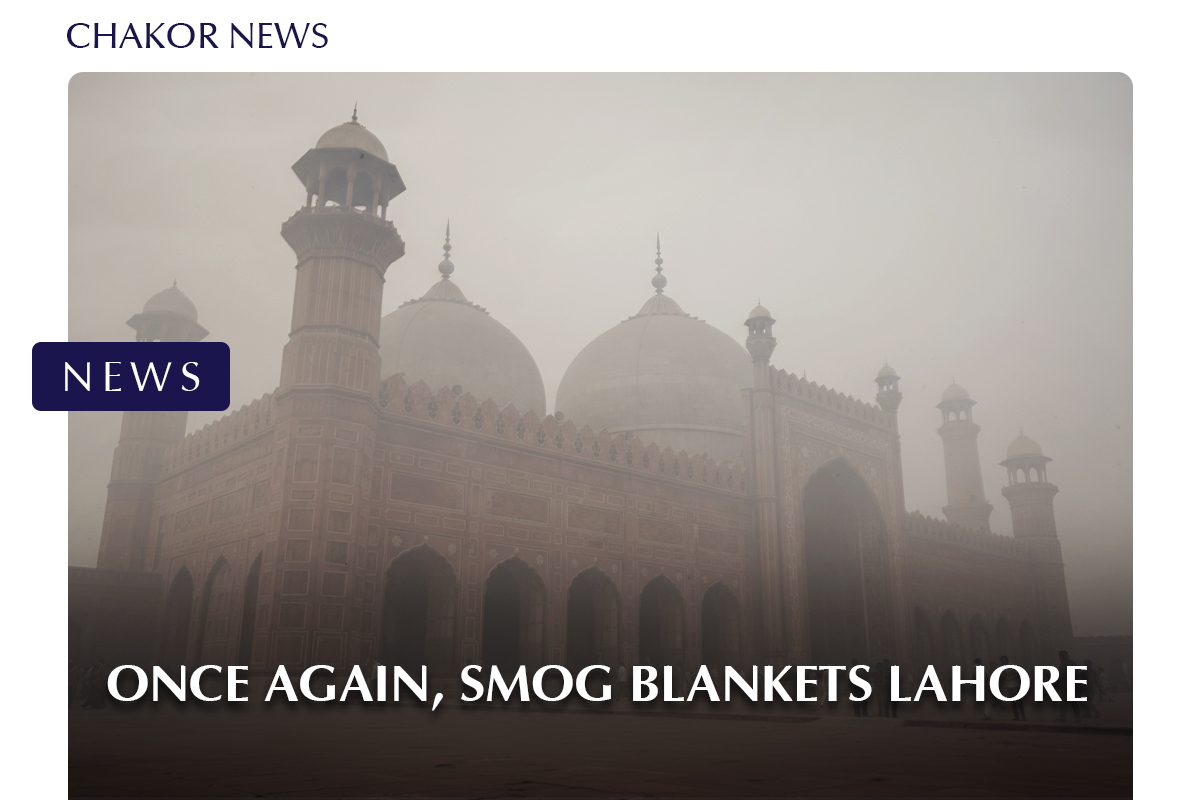
LAHORE — Lahore’s air quality declined on Tuesday as smog returned after a week, prompting updated health advisories from authorities.
Data from IQAir, a global air monitoring agency, showed the city’s Air Quality Index (AQI) soaring to 567, a level deemed “hazardous” and among the highest recorded globally. By Tuesday evening, multiple stations across Lahore reported severe pollution readings of 435 at the CERP Office, 428 on Ravi Road, and 358 in Model Town, leaving millions of residents struggling under a veil of toxic air.
Medical experts have warned citizens, especially children, senior citizens, and individuals with asthma or other respiratory conditions, to stay indoors. Those compelled to go outside have been urged to wear N95 or KN95 masks.
The city’s skyline remained obscured under a greyish haze, the result of vehicle emissions, industrial discharge, and crop residue burning, turning daylight into a muted orange gloom.
In response, the Punjab Police expanded their anti-smog operations, registering 26 new cases in the past day and issuing fines totaling more than Rs1 million. Cumulatively, since the beginning of the year, 2,388 cases have been filed, 2,106 individuals arrested, and over Rs230 million in fines collected for environmental violations, including the operation of smoke-emitting vehicles and unauthorized burning activities.
Inspector General of Police Dr. Usman Anwar has instructed officers to maintain a zero-tolerance policy toward those contributing to air pollution.
Meanwhile, IQAir reported that Pakistan’s average PM2.5 level in 2024 has reached 73.7 µg/m³, nearly 15 times above the WHO-recommended limit, placing the nation as the third most polluted country in the world.
Authorities have reiterated calls for citizens to minimize outdoor exposure as Lahore endures yet another surge of toxic smog.
BBC-featured Content Specialist with a sharp eye for search intent and a proven ability to turn content into a growth engine. I leverage cutting-edge digital marketing tools to craft strategies that fuel organic traffic, amplify brand growth, and own the local SEO landscape, particularly across the competitive real estate market. I help brands dominate search rankings and convert visibility into measurable business success.
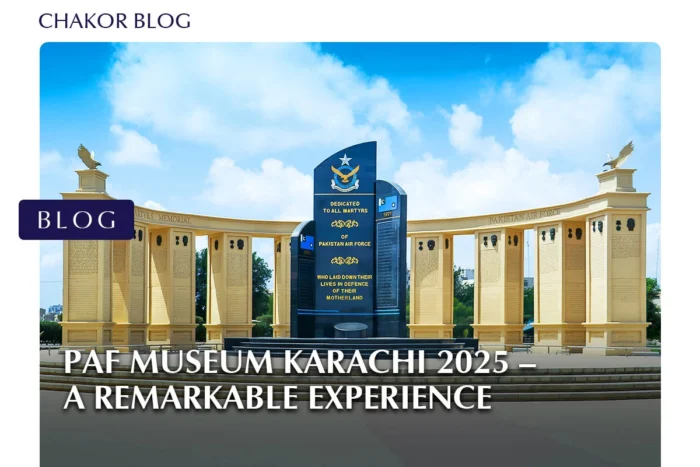
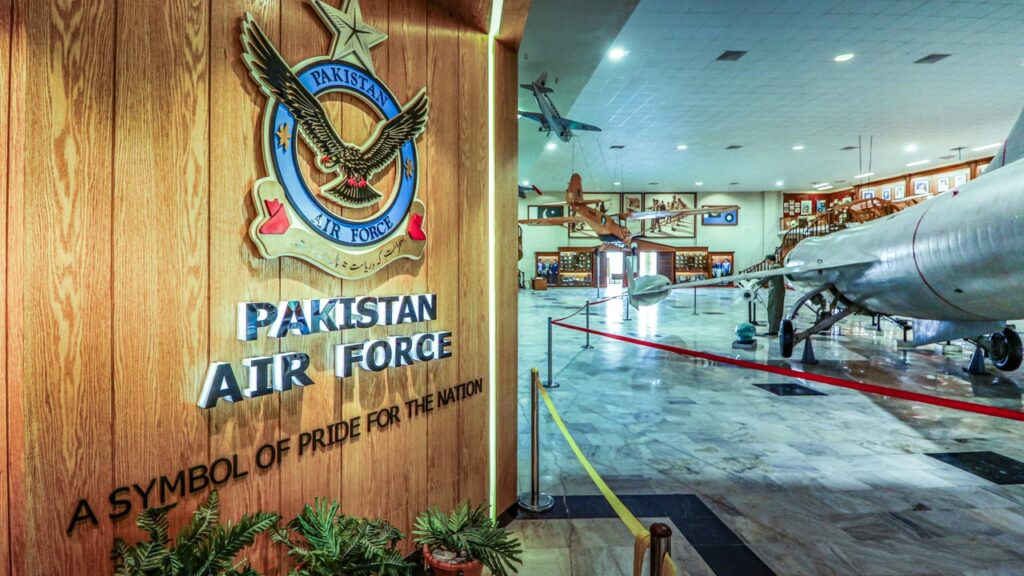
Ever wondered what it feels like to stand beneath the same fighter jets that once ruled the skies? The PAF Museum Karachi brings Pakistan’s aviation legacy to life with real aircraft from legendary missions, powerful war stories, and interactive flight simulators that let you experience the thrill of flying. As one of Karachi’s most fascinating tourist attractions, it celebrates the bravery, innovation, and pride of the Pakistan Air Force in a way that captivates both adults and children alike. For more details on its history, ticket prices, and visitor tips, keep reading Chakor Blog.
Located about 12 kilometers from Karachi city center, the PAF Museum is easily accessible by bus, taxi, Careem, Uber, and rickshaw.
Prominent nearby landmarks include the Karsaz Flyover and PAF Base Faisal, making it easy for first-time visitors to find their way.
History of PAF Museum Karachi (1940s – 2000s)
The history of the PAF museum is presented in the following sections in chronological order.
1940s–1950s: From British Hangars to National Heritage
The origins of the PAF Museum Karachi date back to the British colonial era, when two massive hangars were constructed at Drigh Road (present-day PAF Base Faisal) for aircraft maintenance and training.
Following Pakistan’s independence in 1947, these hangars became part of the newly formed Pakistan Air Force, but over time, they were abandoned and fell into disuse.
Their historical significance, however, remained intact, serving as silent witnesses to the evolution of South Asia’s early aviation history.
1980s–1990s: Vision and Establishment
Decades later, Air Commodore (retd.) Usman Ghani, then Base Commander of PAF Faisal, envisioned transforming these neglected hangars into a museum dedicated to preserving the Pakistan Air Force’s glory and legacy.
His goal was to create a space where citizens could explore the Air Force’s achievements and sacrifices. The project was approved, and work began under his leadership, setting the stage for one of Karachi’s most iconic landmarks.
1997: Inauguration and Public Opening
After meticulous planning and development, the PAF Museum was inaugurated on 14 August 1997, in symbolic alignment with Pakistan’s Independence Day, a tribute to the nation’s spirit of resilience.
It officially opened to the public in October 1997, showcasing a collection of fighter aircraft, radars, weapons, and aviation memorabilia that chronicled the Pakistan Air Force’s journey from its early years to its modern-day achievements.
1999–2004: Expansion and Growth
Between 1999 and 2004, the museum underwent a major transformation. New additions included children’s play areas, amusement rides, landscaped gardens, and eateries, making it both an educational and recreational destination.
These enhancements turned the PAF Museum into one of Karachi’s most-visited family attractions, blending historical reverence with engaging experiences for all ages.
2005–Present: A Living Legacy of Pride & Patriotism
Today, the PAF Museum Karachi stands as a living tribute to Pakistan’s aviation heritage, symbolizing decades of courage, innovation, and national pride.
It continues to inspire visitors with its impressive collection of aircraft, war stories, and modern interactive exhibits, serving not only as a museum but as a beacon of history and inspiration for generations to come.
PAF Museum Karachi Opening Timings
According to verified information from the official PAF Museum Karachi website, the museum welcomes visitors throughout the week with the following schedule.
Day
Verified Timings
Monday–Thursday
9 AM – 9 PM
Friday
3 PM – 10 PM
Saturday–Sunday
9 AM – 10 PM
Dress Code
The PAF Museum Karachi remains open year-round, including public holidays, making it a convenient destination for families, students, and tourists.
To maintain decorum and respect for the site’s national significance, shorts are not allowed inside the museum premises.
Visitors are encouraged to dress modestly and follow all posted guidelines during their visit.
Best Time to Visit
For the most enjoyable experience, plan your visit in the late afternoon or early evening, when the weather is cooler and the lighting beautifully enhances the aircraft displays and outdoor exhibits.
The evening ambiance also allows visitors to appreciate the illuminated aircraft park and landscaped surroundings, offering an unforgettable glimpse into Pakistan’s proud aviation
PAF Museum Karachi Ticket Price
The PAF Museum Karachi offers affordable entry for all visitors, ensuring that families, students, and history enthusiasts can enjoy this national landmark.
Below are the official ticket prices as listed on the museum’s verified sources:
Category
Ticket Price (PKR)
Adults
150
Children (3–12 years)
50
Students (up to Matric)
50
Armed Forces Personnel
50
PAF Personnel (Mon, Wed, Sat)
Free
Senior Citizens (60+)
Free
People with Disabilities
Free
Parking Fees
Convenient parking facilities are available within the museum premises at the following rates:
Car / Jeep / Van: Rs. 100
Motorcycle / Rickshaw: Rs. 50
Bus / Coaster: Rs. 350
The museum maintains reasonable and inclusive pricing to encourage visitors from all walks of life. Free entry for senior citizens, PAF personnel, and persons with disabilities reflects the institution’s commitment to accessibility and respect for service and community.
Tickets can be purchased directly at the entrance, and it’s recommended to carry cash, as card payment facilities may be limited.
Exhibits and Attractions at PAF Museum Park Karachi
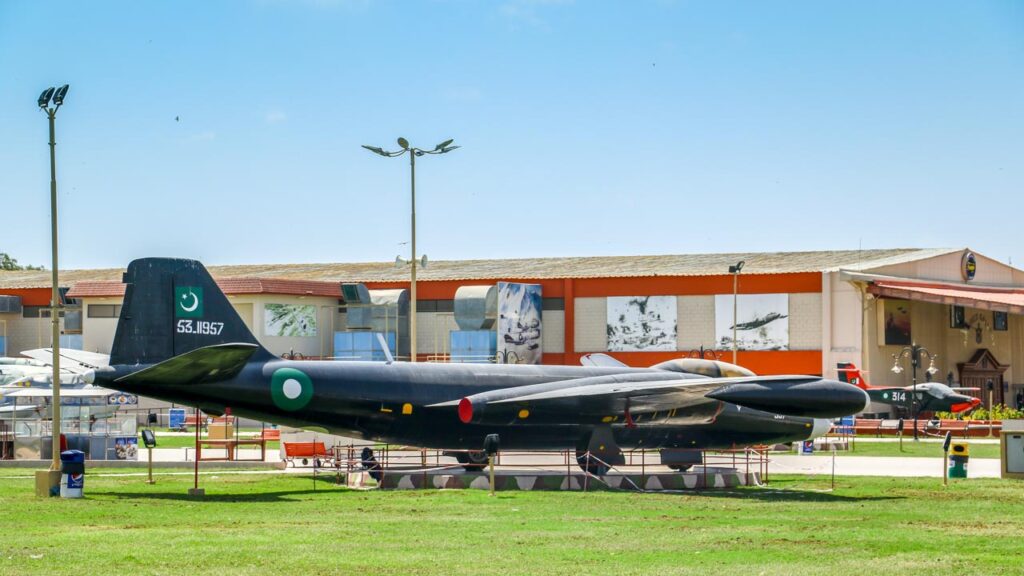
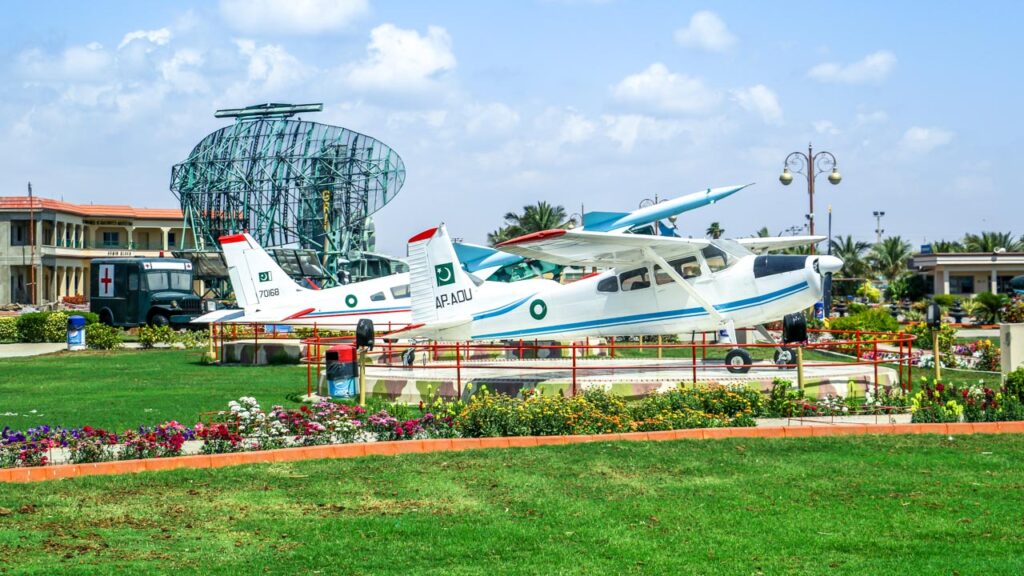
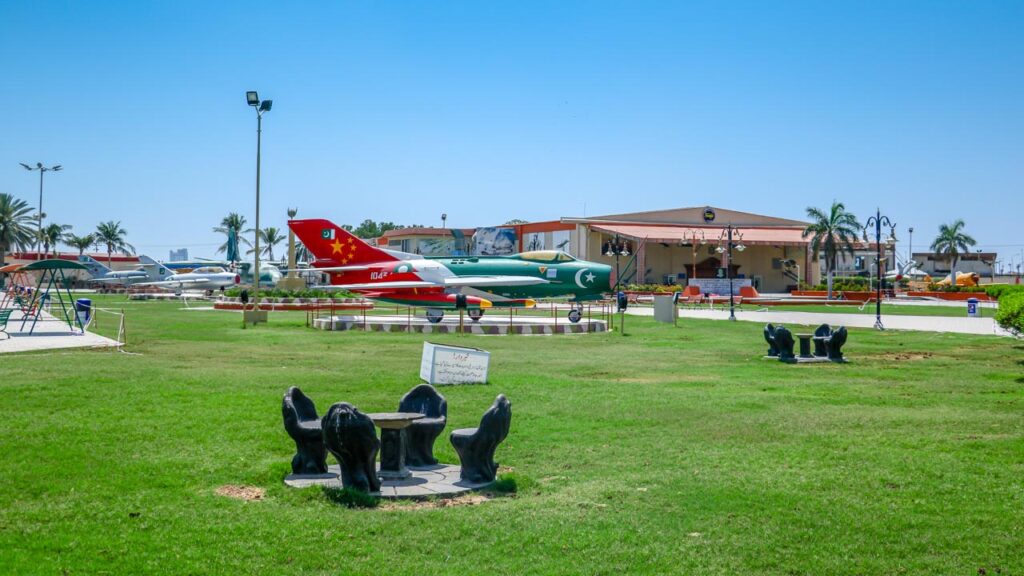
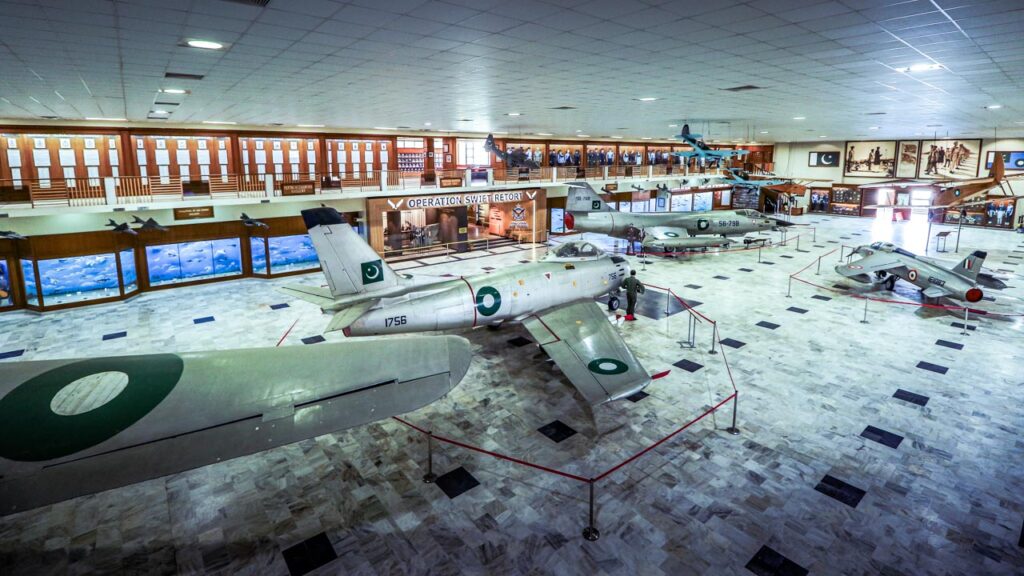
The PAF Museum Karachi is home to an impressive open-air exhibition featuring over 50 aircraft, radars, and missile systems, making it one of the most comprehensive aviation displays in South Asia. The outdoor park is beautifully landscaped, with green lawns, shaded benches, and picnic-friendly areas, creating a relaxing yet awe-inspiring environment for visitors.
Among the most notable aircraft showcased in the outdoor section are:
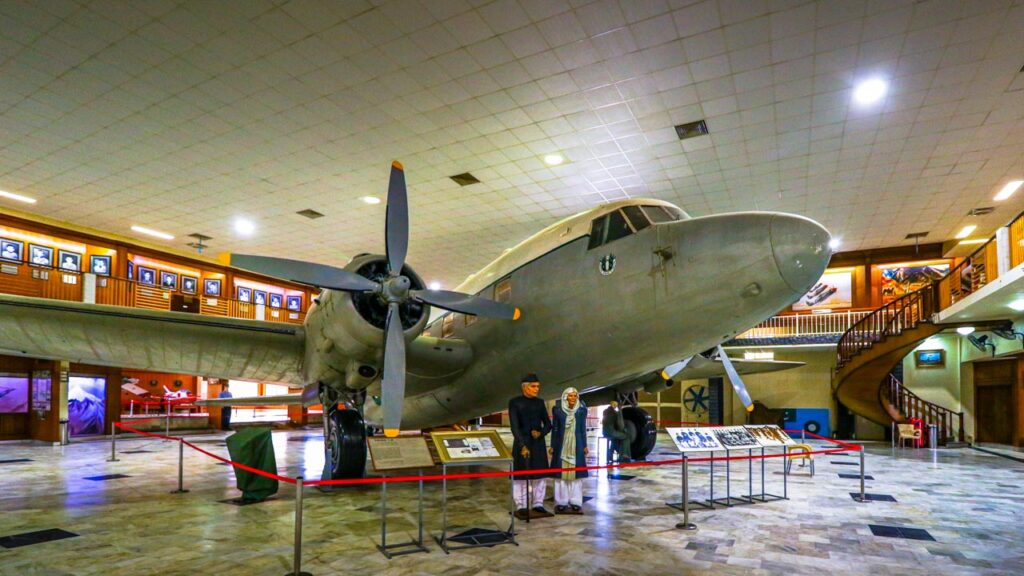
Vickers VC.1 Viking – the historic aircraft once used by Quaid-e-Azam Muhammad Ali Jinnah.
Folland Gnat – an Indian Air Force jet captured during the 1965 Indo-Pak War.
Martin B-57 Canberra – a bomber that served prominently in Pakistan’s air defense.
North American F-86 Sabre – one of the iconic fighters that earned glory in air battles.
Lockheed F-104 Starfighter – a supersonic aircraft representing PAF’s modernization.
Dassault Mirage 5 – a high-speed jet integral to the Air Force’s strike capability.
Shenyang F-6 – a backbone of PAF’s fighter fleet for decades.
Captured and Foreign Aircraft
The museum also preserves aircraft from foreign air forces, symbolizing the valor and victories of the Pakistan Air Force in combat:
Indian Air Force Folland Gnat – captured intact during the 1965 War.
Afghan Air Force MiG-21 – representing regional air engagements.
Iraqi Air Force Antonov An-12 – another rare aircraft now part of the museum’s international collection.
Special Galleries
Inside the museum complex, several themed galleries highlight defining moments in Pakistan’s aerial history:
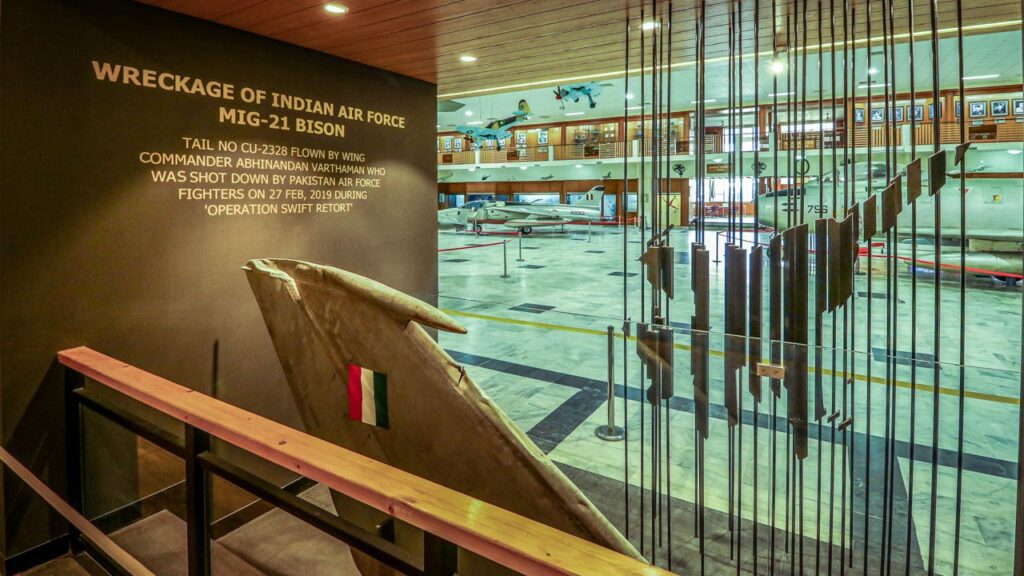
Operation Swift Retort Gallery: Features a statue of Indian Air Force Wing Commander Abhinandan Varthaman, along with the fuselage and tail section of his MiG-21, marking a modern chapter in Pakistan’s defense success.
Jinnah’s Aircraft Display: Houses the Vickers VC.1 Viking, the very plane used by Muhammad Ali Jinnah, the founder of Pakistan, a treasured piece of national history.
Indoor Displays
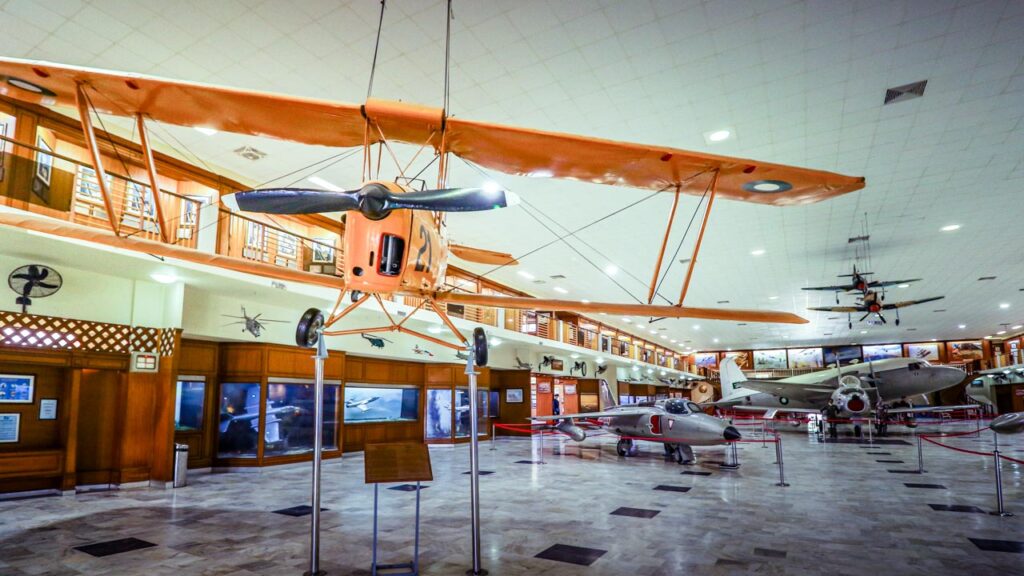
Beyond the outdoor park, visitors can explore the indoor museum halls, which feature:
Historical photographs and uniforms tracing PAF’s evolution.
Scale models of aircraft, radar systems, and missile displays.
PAF memorials honoring the heroes who defended Pakistan’s skies.
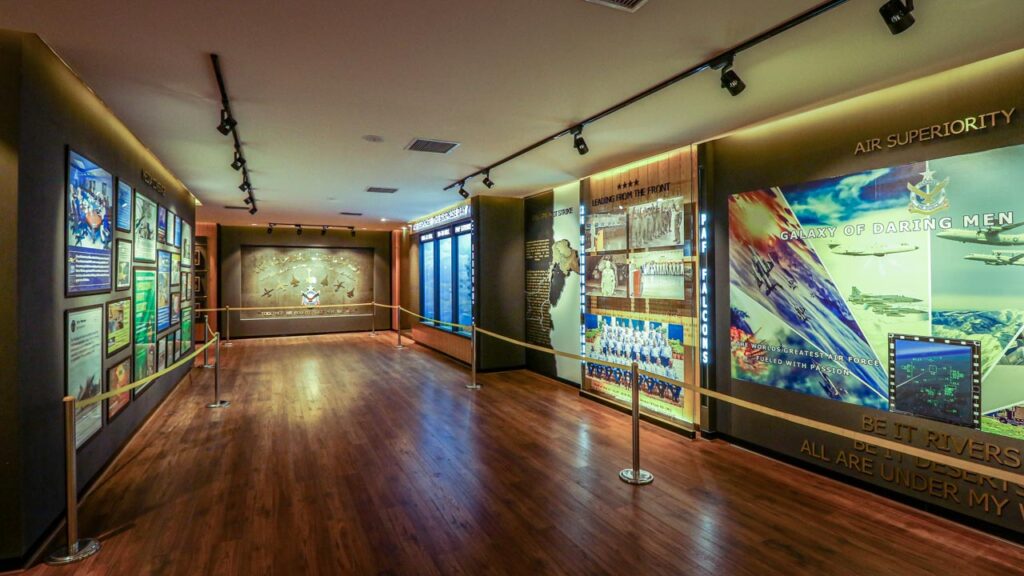
Interactive multimedia installations and flight simulator experiences, giving visitors a hands-on understanding of aviation technology and the thrill of flying.
Together, these exhibits make the PAF Museum Karachi not just a collection of machines but a living chronicle of Pakistan’s aerial triumphs, sacrifices, and technological advancement.
Facilities and Visitor Experience
The following are some of the key facilities available at the PAF Museum Karachi, ensuring a comfortable and enjoyable visit for everyone:
Cafe and Refreshments: The museum features a clean and well-maintained café and canteen offering snacks, drinks, and light meals. It’s a perfect spot to relax and recharge after exploring the exhibits or enjoying the aircraft park.
Children’s Play-Land: A dedicated play area with swings, merry-go-rounds, and entertainment simulators keeps younger visitors entertained. It combines fun and education, making the museum an engaging experience for families with children.
Picnic and Seating Areas: The museum’s spacious outdoor park includes ample shaded seating and picnic areas. Visitors can unwind on beautifully landscaped lawns surrounded by historic aircraft and peaceful greenery.
Souvenir Shops and Amenities: Souvenir shops within the premises offer PAF-themed merchandise, model aircraft, and keepsakes. Visitors can also access clean restrooms and drinking water facilities located conveniently throughout the grounds.
Wheelchair Accessibility and Clean Environment: The PAF Museum Karachi is wheelchair-accessible, with smooth walkways and ramps to facilitate easy movement for all visitors. The entire complex is maintained with high cleanliness standards, providing a safe, educational, and family-friendly environment suitable for both local and international tourists.
How to Reach the PAF Museum Karachi?
The PAF Museum Karachi is conveniently situated on Shahrah-e-Faisal, adjacent to PAF Base Faisal and near the Karsaz Flyover, making it one of the most accessible attractions in the city.
It’s located approximately 12 kilometers from the city center (Saddar), a short drive through one of Karachi’s main arteries.
Transport Options
Visitors can easily reach the museum via:
Taxi or Ride-Hailing Apps: Careem and Uber offer direct routes to the entrance.
Public Transport: Local bus routes #12 and #17 pass close to the museum.
Rickshaw: A budget-friendly option for nearby travelers.
Private Vehicle: On-site parking is available for cars, motorcycles, and buses.
The clear signage along Shahrah-e-Faisal and its proximity to major landmarks make navigation straightforward even for first-time visitors.
Visitor Tips
Plan Your Visit Wisely: To make the most of your trip, plan a weekday visit to avoid the larger weekend crowds. The museum’s spacious grounds are best explored in late afternoon or evening, when the lighting enhances both comfort and photography.
Dress and Conduct: Visitors are requested to dress modestly; shorts are not allowed on the museum premises. Respect for the site’s national and military significance is encouraged at all times.
Photography and Payments: Photography is permitted in open areas, though it’s best to confirm at the entrance regarding indoor exhibits. Carry cash, as card payment options are limited at the ticket counters and kiosks.
Capture the Experience: Evening visits offer stunning views of illuminated aircraft and monuments, making for some of the best photo opportunities in Karachi.
Why Visit the PAF Museum Karachi
A National Symbol of Pride: The PAF Museum Karachi stands as a proud tribute to Pakistan’s aerospace history and military excellence, showcasing the courage, innovation, and achievements of the Pakistan Air Force.
Blend of Education and Recreation: It offers a perfect balance between learning and leisure, allowing visitors to explore historical aircraft, interactive galleries, and flight simulators in an engaging environment.
Family-Friendly and Affordable: With affordable ticket prices, clean surroundings, and safe, open spaces, the museum is an ideal destination for families, students, and tourists alike.
One of Karachi’s Top Attractions: As one of the most-visited tourist spots in Karachi, the museum continues to inspire national pride and curiosity, making it a must-see landmark for anyone exploring the city.
BBC-featured Content Specialist with a sharp eye for search intent and a proven ability to turn content into a growth engine. I leverage cutting-edge digital marketing tools to craft strategies that fuel organic traffic, amplify brand growth, and own the local SEO landscape, particularly across the competitive real estate market. I help brands dominate search rankings and convert visibility into measurable business success.
ISLAMABAD: Prime Minister Shehbaz Sharif on Monday announced that financial assistance under the Benazir Income Support Programme (BISP) will be disbursed through digital wallets starting from Ramazan, marking a significant milestone in Pakistan’s transition toward a cashless economy.
Chairing a high-level meeting to review progress on the digitalisation of payment systems, the prime minister described the move as the beginning of a “new chapter” in the country’s economic transformation.
He emphasised that adopting digital financial systems would help ensure sustainable economic growth, enhance governance, and reduce corruption by promoting transparency and efficiency.
According to an official statement, the operationalisation of 10 million digital wallets under BISP will be completed by the end of this month. The initiative forms part of the government’s broader strategy to accelerate digital transformation across financial and public sectors.
The Prime Minister Shehbaz Sharif said Pakistan must keep pace with the world’s rapid shift toward digital economies. “Digital payments will enhance transparency and efficiency while reducing corruption,” he noted, adding that the government’s early focus on digital transformation is now producing tangible results.
The meeting was informed that Raast QR codes are now being used to facilitate payments for electricity and gas bills, enabling billions of rupees in digital transactions.
Furthermore, the Islamabad government services mobile application has been integrated with Raast, while the issuance of new business licences has been linked to digital payment systems. QR codes have also been introduced at retail outlets to encourage electronic transactions.
The prime minister was informed that 68 per cent of the population has achieved financial inclusion, and he directed officials to further expand this coverage and meet all economic targets within defined timelines.
BBC-featured Content Specialist with a sharp eye for search intent and a proven ability to turn content into a growth engine. I leverage cutting-edge digital marketing tools to craft strategies that fuel organic traffic, amplify brand growth, and own the local SEO landscape, particularly across the competitive real estate market. I help brands dominate search rankings and convert visibility into measurable business success.
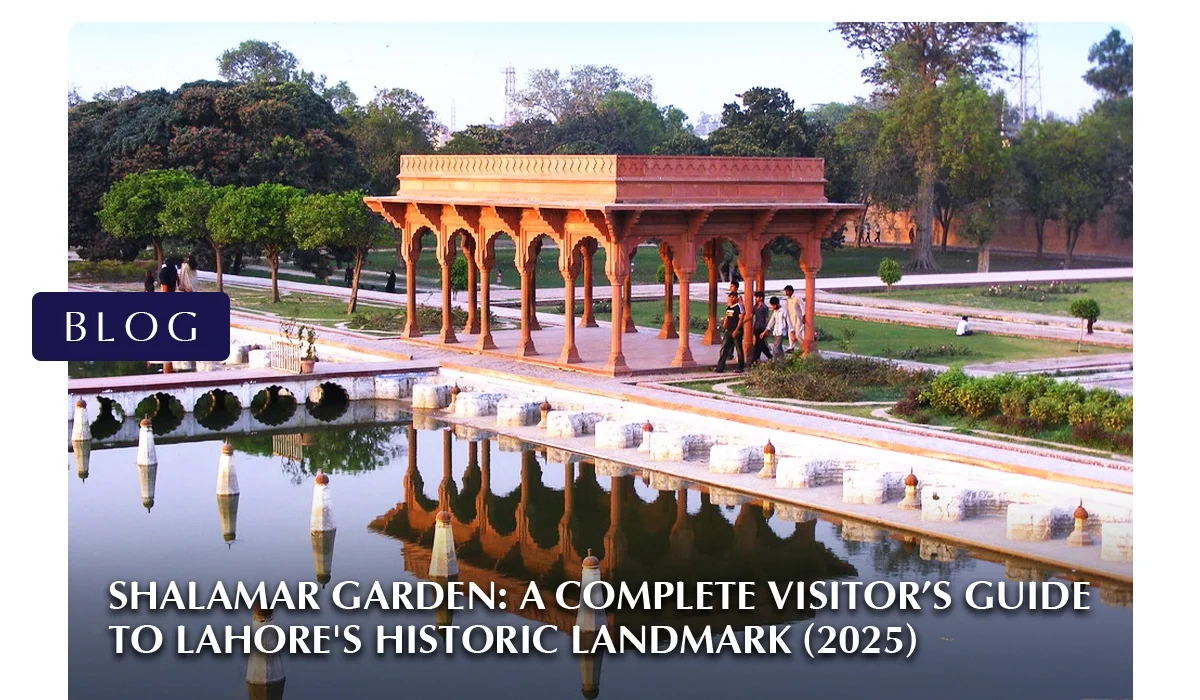
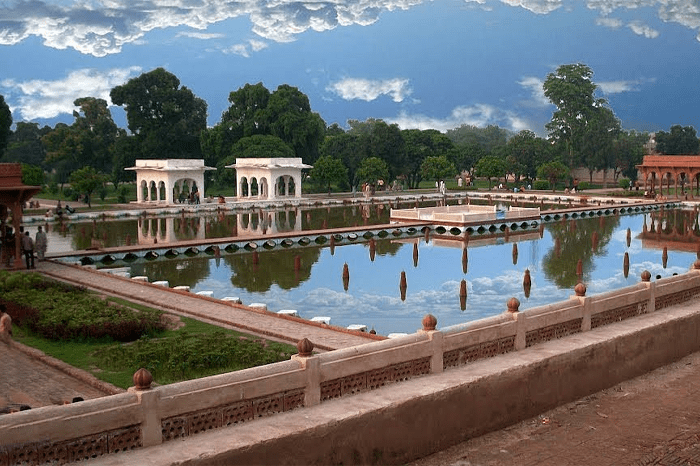
Built during the golden age of the Mughal Empire, Shalamar Garden in Lahore stands as a timeless symbol of beauty, art, and royal elegance. Designed by Emperor Shah Jahan in 1641, this UNESCO World Heritage Site reflects the perfection of Mughal architecture. From intricate marble pavilions to 400 sparkling fountains and lush greenery, every corner of Shalamar Garden Lahore tells a story of grace and grandeur. In this blog, you’ll find everything you need to know, from its history and architecture to Shalamar Garden’s timing and travel tips.
Why Visit Shalamar Garden Lahore?
Shalamar Garden is one of the most remarkable landmarks in Lahore and a proud reminder of the Mughal Empire’s architectural brilliance. Built in the 17th century under Emperor Shah Jahan, it reflects the Mughal vision of paradise on earth: a perfect balance of design, nature, and water.
UNESCO World Heritage Site
Shalamar Garden was added to the UNESCO World Heritage list in 1981 as part of Lahore Fort and Shalamar Garden. It is protected for its cultural and historical importance. The garden’s water system, architecture, and layout represent the finest achievements of Mughal-era engineering and aesthetics.
Unique Value Among Mughal Gardens
Designed in the Charbagh style, a Persian-inspired four-part layout divided by water channels and walkways.
Built on three descending terraces, each serving a unique function: royal, residential, and public.
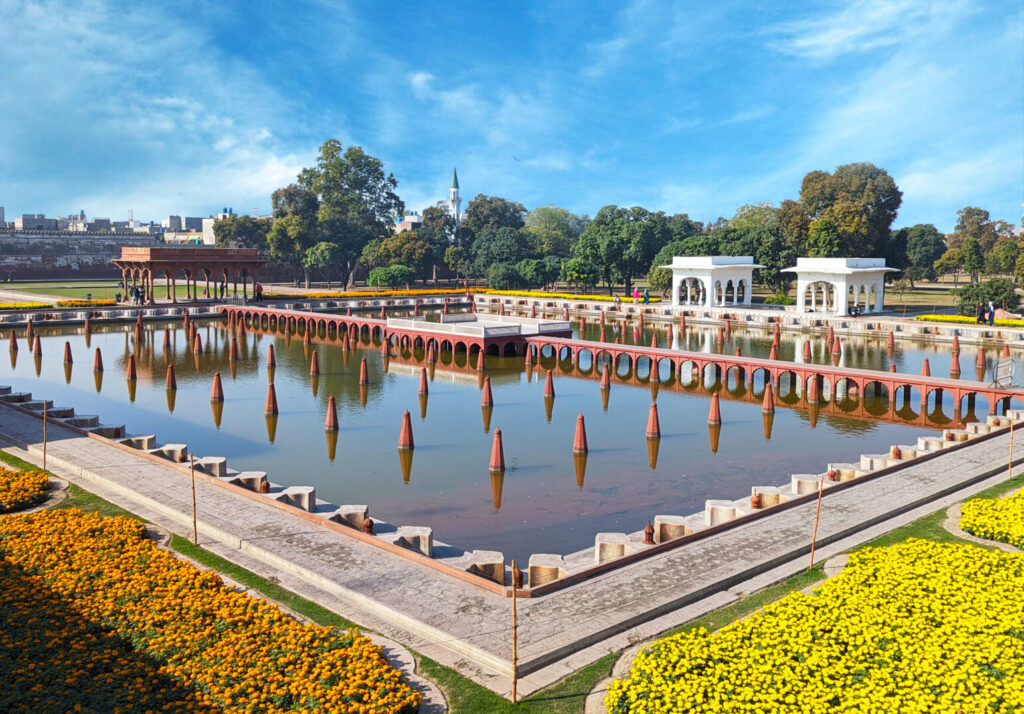
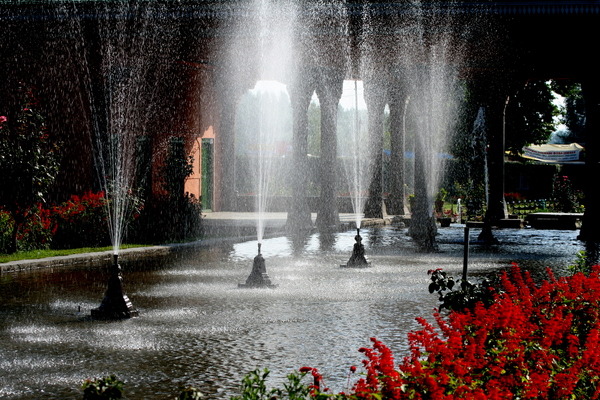
Home to 410 fountains, marble pavilions, and elegant cascades that create a soothing atmosphere.
Represents the height of Mughal garden art, combining geometry, beauty, and spiritual symbolism.
Location and Appeal
Shalamar Garden is located in Baghbanpura, Lahore, about five kilometers from the Walled City. Its serene setting, flowing water, and lush greenery make it a peaceful retreat for locals and tourists alike.
The garden’s charm lies in its quiet elegance, a perfect place to experience Lahore’s royal past in a calm, natural environment.
Location Information
Detail
Information
Address
Shalamar Garden is located in Baghbanpura, Lahore, about 5 kilometers from Delhi Gate on the Grand Trunk Road.
Size and Area
16 hectares (approximately 40 acres).
Date of Construction
Construction began in 1641 and was completed in 1642 under the rule of Emperor Shah Jahan.
UNESCO World Heritage Status
Inscribed on the UNESCO World Heritage list in 1981 as part of “Lahore Fort and Shalamar Gardens.”
Address
Shalamar Garden is located in Baghbanpura, Lahore, about five kilometers from Delhi Gate on the Grand Trunk Road. The site is easily accessible by car, taxi, or public transport from anywhere in the city.
Size and Area
The garden covers around 16 hectares, which is roughly 40 acres of land. It is one of the largest surviving Mughal gardens in Pakistan and is known for its wide layout, long water channels, and open green spaces.
Date of Construction
Work on Shalamar Garden began in 1641 during the reign of Emperor Shah Jahan. It was completed in 1642, taking just over a year to finish.
The emperor ordered its creation as a royal retreat and a reflection of paradise on earth.
UNESCO World Heritage Status
In 1981, Shalamar Garden was added to the UNESCO World Heritage list as part of “Lahore Fort and Shalamar Gardens.” This status highlights its cultural, architectural, and historical importance as one of the finest examples of Mughal garden design in the world.
History of Shalamar Garden
The Shalamar Garden has a rich history that reflects the vision and artistry of the Mughal Empire. It was designed as a royal retreat and a symbol of peace, beauty, and power. The story of its creation and preservation spans several centuries.
Inspiration and Early Concept (Early 1600s)
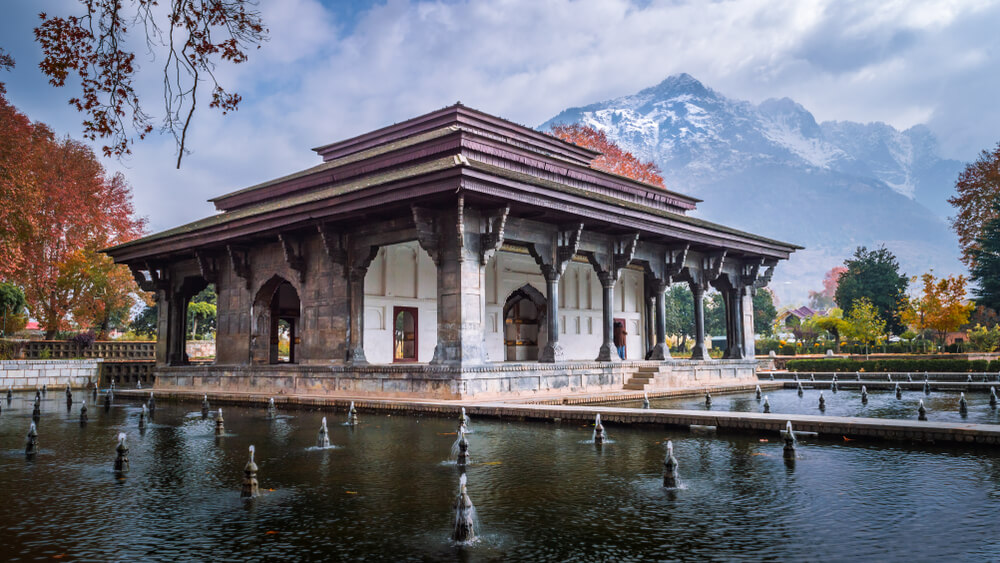
The idea for Shalamar Garden was inspired by the earlier Shalimar Gardens in Kashmir, which were built during the reign of Emperor Jahangir. The Mughal emperors were known for their love of gardens that combined water, greenery, and architecture to represent paradise on earth.
When Emperor Shah Jahan came to power, he wanted to create a similar masterpiece in Lahore, a city he considered the heart of Mughal culture.
Construction under Shah Jahan (1641–1642)
The construction of Shalamar Garden began in 1641 and was completed in 1642. It was built under the rule of Emperor Shah Jahan, the same emperor who commissioned the Taj Mahal.
The garden was designed with help from Ali Mardan Khan, a nobleman and engineer in the Mughal court who supervised its planning and water systems. The project also involved skilled architects, gardeners, and craftsmen from across the empire.
Together, they created a garden that blended Persian style with Mughal refinement, using advanced hydraulic systems and artistic design.
Use During the Mughal Era (1642–1707)
During the Mughal period, Shalamar Garden served as a royal leisure retreat and a venue for official receptions and celebrations. Members of the royal family often visited the garden to relax by the fountains and enjoy musical performances.
It was a private sanctuary that symbolized the grandeur and grace of the Mughal court.
Sikh and Colonial Periods (1799–1947)
After the decline of the Mughal Empire, the garden fell under Sikh rule in the early 19th century. During this time, parts of the garden were damaged, and some decorative elements were removed.
The once private royal retreat became a public space but lost much of its original splendor. When the British colonial government took control of Lahore, they recognized the garden’s historical importance and began basic restoration work.
Pathways and fountains were repaired, and some sections were rebuilt to preserve the original Mughal layout.
Modern Era and UNESCO Recognition (1947–Present)
In the 20th century, Shalamar Garden received greater protection as Pakistan’s government and international organizations focused on conserving Mughal heritage.
In 1981, it was declared a UNESCO World Heritage Site, ensuring ongoing preservation efforts.
Today, it stands as a reminder of Lahore’s royal past and remains one of the city’s most visited historical attractions.
Architecture & Layout
The Shalamar Garden is a masterpiece of Mughal design where nature, architecture, and symmetry come together beautifully. Every part of the garden was built with purpose and precision, creating a calm and balanced atmosphere.
Persian-Style Charbagh Design
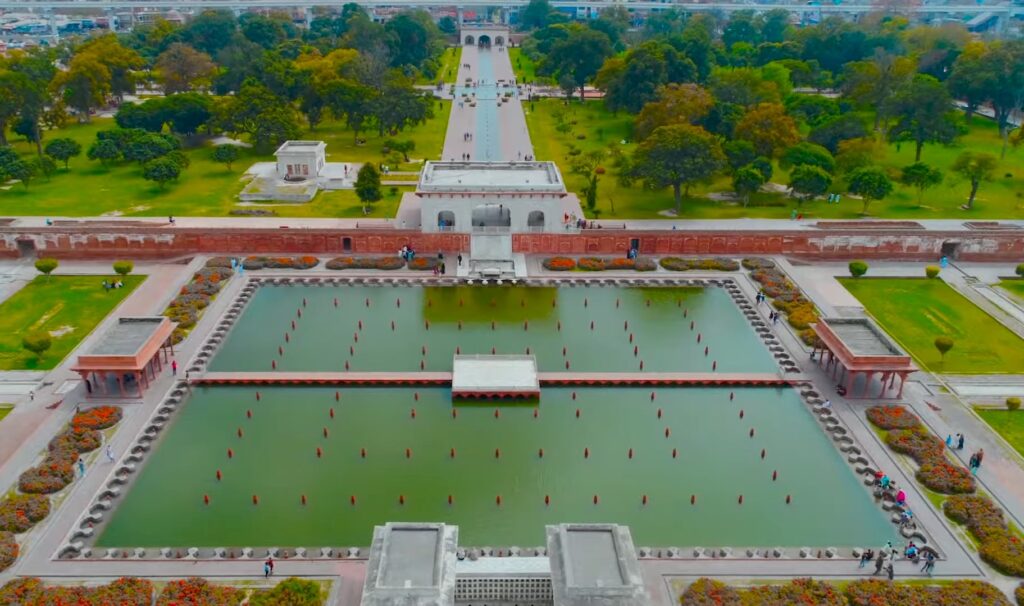
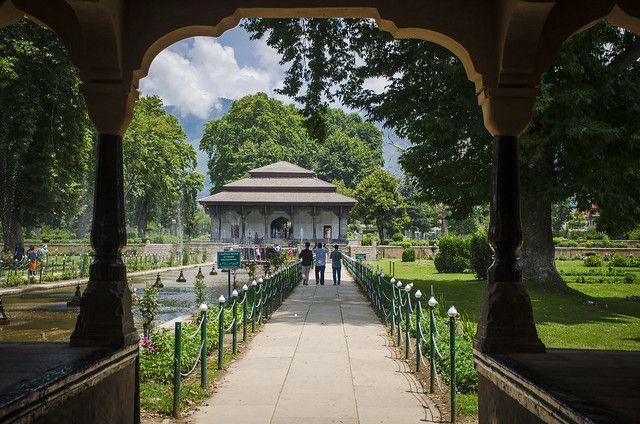
The garden’s layout follows the Persian Charbagh style, which represents paradise through water, greenery, and geometry. It is built on three descending terraces, each with its own name and purpose.
Bagh-e-Farah Baksh means The Bestower of Pleasure. It was used by the royal family for private gatherings.
Bagh-e-Faiz Baksh means The Bestower of Goodness. It was meant for guests and court officials.
Bagh-e-Hayat Baksh means The Bestower of Life. It was open for the public and special events.
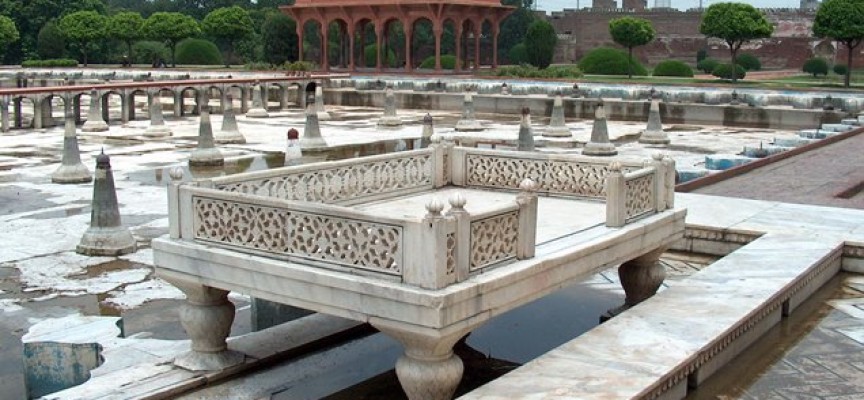
The terraces are connected through marble cascades and flowing water channels. The gradual slope allows water to move smoothly from one terrace to the next, creating a peaceful sound and a cooling effect in the air.
Dimensions and Structure
Shalamar Garden stretches about 658 meters from north to south and 258 meters from east to west. The rectangular shape and balanced proportions highlight Mughal love for order and harmony.
The entire garden is enclosed by high brick walls with arched entrances and decorated patterns that separate it from the busy surroundings.
Water Engineering and Fountains
The water system of the garden is one of its most impressive features. There are more than 410 fountains arranged across the three terraces.
These fountains are powered by a natural pressure system that pushes water through stone channels into pools and marble basins.
The sound of running water and the sight of fountains create a refreshing and relaxing atmosphere. The design shows the advanced understanding of engineering during the Mughal period.
Walls, Pavilions, and Plantings
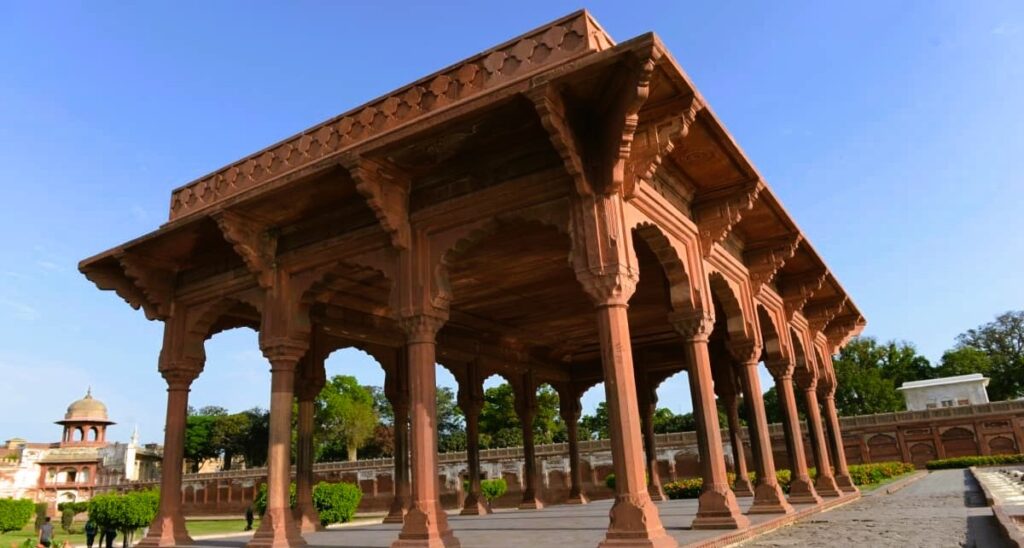
Tall red sandstone walls protect the garden from outside noise and heat. Inside, beautifully designed pavilions and baradaris add elegance to the open landscape. These structures have marble floors, carved pillars, and open spaces that let air and light flow freely.
Rows of cypress and poplar trees line the walkways, symbolizing strength and life. Flowering plants and fruit trees fill the garden with color and fragrance.
Every element is arranged in perfect symmetry, making Shalamar Garden not just a garden but a living work of art.
Visitor Information
Detail
Information
Date of Construction
1641–1642
Opening Hours
8:00 AM – 6:00 PM
Entry Fee
Affordable; discounts for students and children
Means of Transport
Car, taxi, public transport, ride-sharing apps
Nearby Attractions
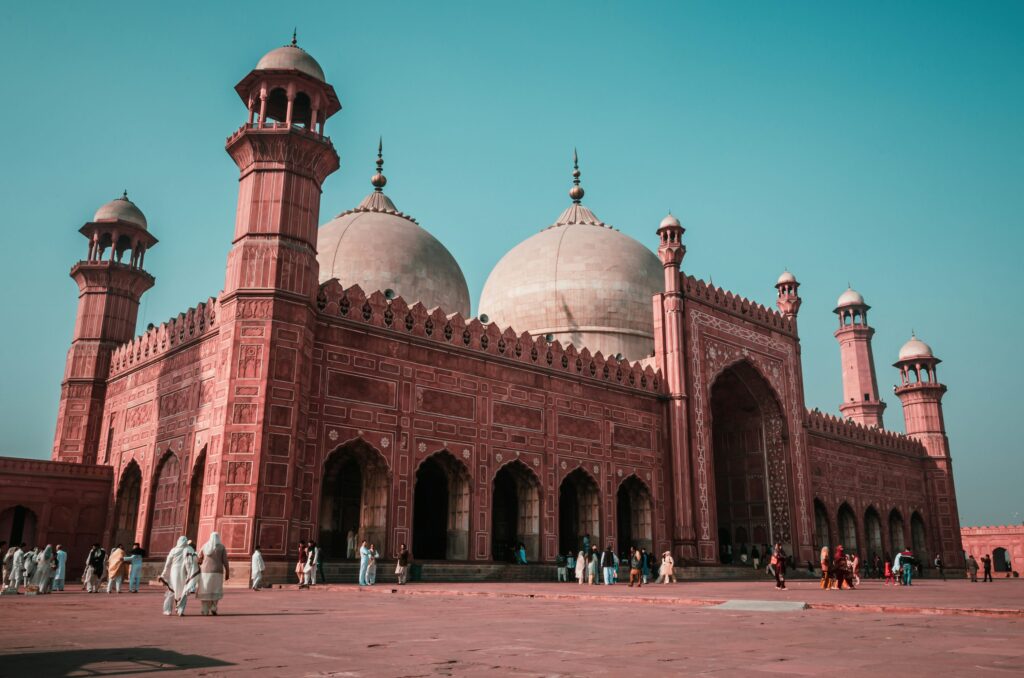
Lahore Fort, Badshahi Mosque, Walled City of Lahore
Visiting Shalamar Garden is a must for anyone exploring Lahore. The site is easy to reach, well-maintained, and open to visitors throughout the week. Here is everything you need to know before planning your visit.
Opening Hours
Shalamar Garden is open daily from 8:00 AM to 6:00 PM. It is best to confirm the timing before your visit, as hours may vary slightly on public holidays or during special events.
Entry Fee
The entry fee is generally affordable for both locals and tourists. Children, students, and senior citizens may receive discounted rates. It is recommended to check the latest ticket price at the entrance gate.
How to Reach?
The garden is located in Baghbanpura, Lahore, near the Grand Trunk Road. It is about five kilometers from the Walled City and can be reached easily by car, taxi, or public transport.
Visitors can also hire ride-sharing services from anywhere in Lahore. The route is straightforward, and signboards along the way guide visitors to the main entrance.
Best Time to Visit
The best time to visit Shalamar Garden is in the morning or early afternoon. During these hours, the temperature is pleasant, and the fountains are active. The natural light highlights the marble structures and water reflections beautifully.
Late afternoon is also a good time for photography as the sun softens and the garden grows quieter.
Nearby Attractions
Shalamar Garden is part of the “Lahore Fort and Shalamar Gardens” UNESCO World Heritage group. It pairs perfectly with a visit to Lahore Fort, which is located a short drive away. Other nearby attractions include:
Masterpiece of Mughal Design: Represents the height of Mughal garden architecture with perfect symmetry, proportion, and balance.
UNESCO Recognition: Listed under UNESCO World Heritage criteria (i), (ii), and (iii) for its outstanding cultural and artistic value.
Architectural Harmony: Combines architecture, water channels, fountains, and vegetation in a seamless, peaceful layout.
Engineering Excellence: Features an advanced hydraulic system that still functions, showing the skill of Mughal engineers.
Natural Beauty: Shaded trees, flowing water, and open terraces create a refreshing and serene environment.
Well Preserved: One of the best-preserved Mughal gardens in South Asia, maintaining its original layout and design for nearly four centuries.
Cultural Symbol: Stands as a timeless reminder of Lahore’s royal heritage and the artistic brilliance of the Mughal Empire.
FAQs About Shalamar Garden
Following are some of the top FAQs regarding Shalamar Garden, Lahore.
Who built Shalamar Garden at Lahore? Emperor Shah Jahan built the Shalamar Garden in 1641–1642.
What is the history of Shalamar Garden? It was built during the Mughal era as a royal retreat and symbolizes paradise on earth.
Who built the Lahore Fort and Shalamar Gardens? The Lahore Fort was also expanded and beautified by Emperor Shah Jahan, though its foundation dates back to earlier Mughal rulers.
Where does the name Shalamar come from? The name “Shalamar” is derived from Sanskrit, meaning “abode of love” or “place of joy.”
What is the entry fee for Shalamar Garden? The entry fee is affordable for locals and tourists, with possible discounts for students and children.
What is special about Lahore Fort and Shalamar Garden? It showcases perfect Mughal symmetry, with flowing fountains, marble terraces, and lush greenery.
What is Shalamar famous for? Shalamar Garden is famous for its 410 fountains, three terraces, and UNESCO World Heritage status.
What do you see when you visit Shalamar Garden? Visitors can explore water channels, marble pavilions, shaded trees, and historic Mughal architecture.
What does the word Shalamar mean? It means “abode of love” or “place of beauty.”
How much is the ticket for Shalamar Bagh Lahore? Tickets are inexpensive and vary slightly by visitor category.
What is the entry fee for Shalamar Bagh? The ticket price is modest, making it accessible for everyone.
How much is the entrance to Shalamar Gardens Lahore? Entry fees are affordable and can be confirmed at the gate or via local tourism offices.
What is the best time to visit Shalamar Bagh? Morning or early afternoon is ideal to enjoy pleasant weather and active fountains.
What is the best time of year to visit Shalamar Park? Spring and autumn are best, with mild temperatures and blooming gardens.
What is Shalimar Bagh famous for? It is known for its Mughal design, marble terraces, fountains, and peaceful atmosphere.
For more information on popular tourist places, visit Chakor blogs.
BBC-featured Content Specialist with a sharp eye for search intent and a proven ability to turn content into a growth engine. I leverage cutting-edge digital marketing tools to craft strategies that fuel organic traffic, amplify brand growth, and own the local SEO landscape, particularly across the competitive real estate market. I help brands dominate search rankings and convert visibility into measurable business success.
RAWALPINDI: The Government of Punjab has launched Phase-III of the Himmat Card Programme in Rawalpindi, reaffirming its commitment to empowering persons with disabilities through inclusive welfare initiatives.
The ceremony, organized by the Department of Social Welfare and Baitul Mal Punjab, was held on Wednesday and attended by senior government officials, parliamentarians, and representatives from various districts.
Punjab Minister for Social Welfare and Baitul Mal, Sohail Shaukat Butt, graced the occasion as the chief guest and distributed assistive devices to 65 persons with disabilities and Himmat Cards to 45 beneficiaries. The assistive devices included tricycles, electric and manual wheelchairs, and other mobility aids.
Speaking at the ceremony, Sohail Shaukat Butt announced that the provincial government has set an ambitious target of distributing 200,000 Himmat Cards among persons with disabilities by next year.
Highlighting the initiative’s progress, he shared that 65,000 beneficiaries received Himmat Cards and assistive devices last year, and that this year the number has increased to 100,000. Under the programme, each beneficiary receives Rs 10,500 on a quarterly basis to support their livelihood and accessibility needs.
The Himmat Card Programme, initiated by the Punjab government, aims to provide financial assistance, mobility support, and opportunities for social inclusion to persons with disabilities across the province.
BBC-featured Content Specialist with a sharp eye for search intent and a proven ability to turn content into a growth engine. I leverage cutting-edge digital marketing tools to craft strategies that fuel organic traffic, amplify brand growth, and own the local SEO landscape, particularly across the competitive real estate market. I help brands dominate search rankings and convert visibility into measurable business success.