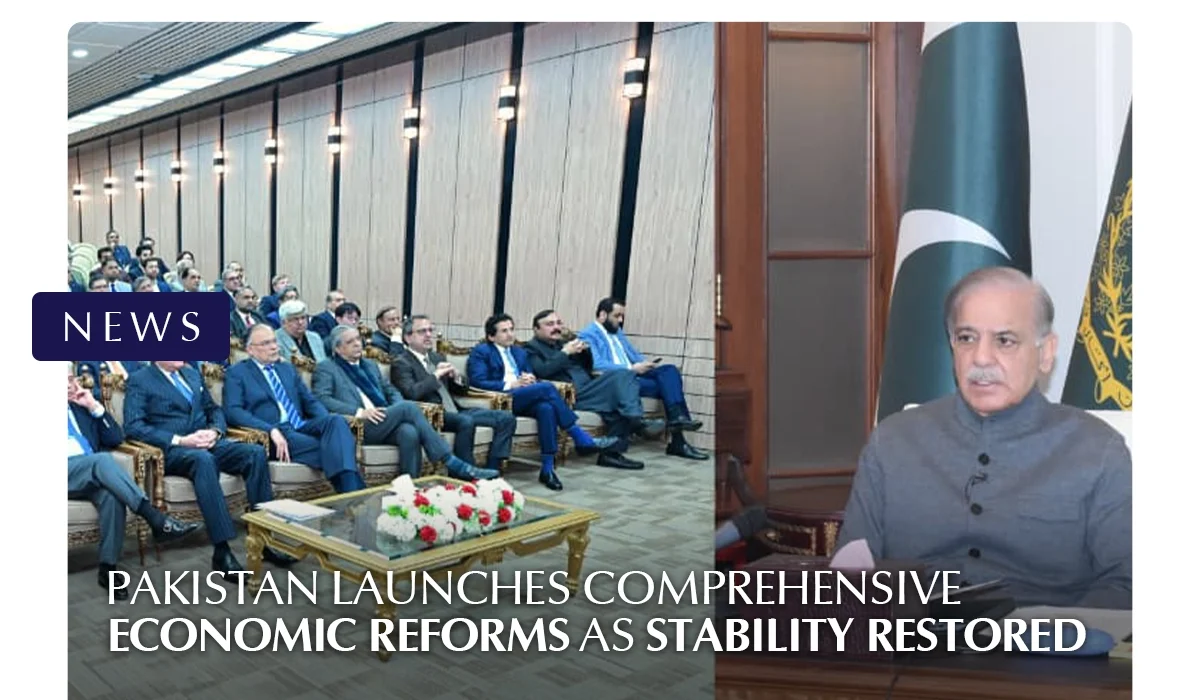
ISLAMABAD: Prime Minister Shehbaz Sharif officially launched the government’s Economic Governance Reforms on Wednesday, marking a significant step towards long-term economic stability and growth. The reforms come after two years of challenging decisions, during which macroeconomic stability was restored, inflation was reduced to 4.5%, and foreign exchange reserves rose to over $21 billion.
At the launch ceremony, Prime Minister Sharif detailed the economic difficulties inherited in early 2024, including 30% inflation and critically low reserves. He emphasised that the government’s focus on structural reforms, such as withdrawing unsustainable subsidies, tightening fiscal discipline, and implementing privatisation measures, was crucial in navigating the crisis. As a result, the country saw a positive shift in economic indicators, with the current account improving from a $3.3 billion deficit to a $1.9 billion surplus.
The reforms also led to an increase in the tax-to-GDP ratio, from 8% to over 10%, and to the addition of over 1 million new taxpayers. Tax collection grew by 26% in 2025, facilitated by the government’s push for digitisation.
Finance Minister Muhammad Aurangzeb provided further insights, noting that GDP growth reached 3.1% in FY25 and 3.71% in the first quarter of FY26, despite external shocks. He also highlighted the reduction of public debt from 75% to 70% of GDP and early debt repayments that saved the country Rs 3.5 trillion in interest costs.
The government’s 142-reform agenda spans critical sectors, including taxation, energy, privatisation, and digital governance, with the aim of establishing a sustainable, private-sector-driven economy.
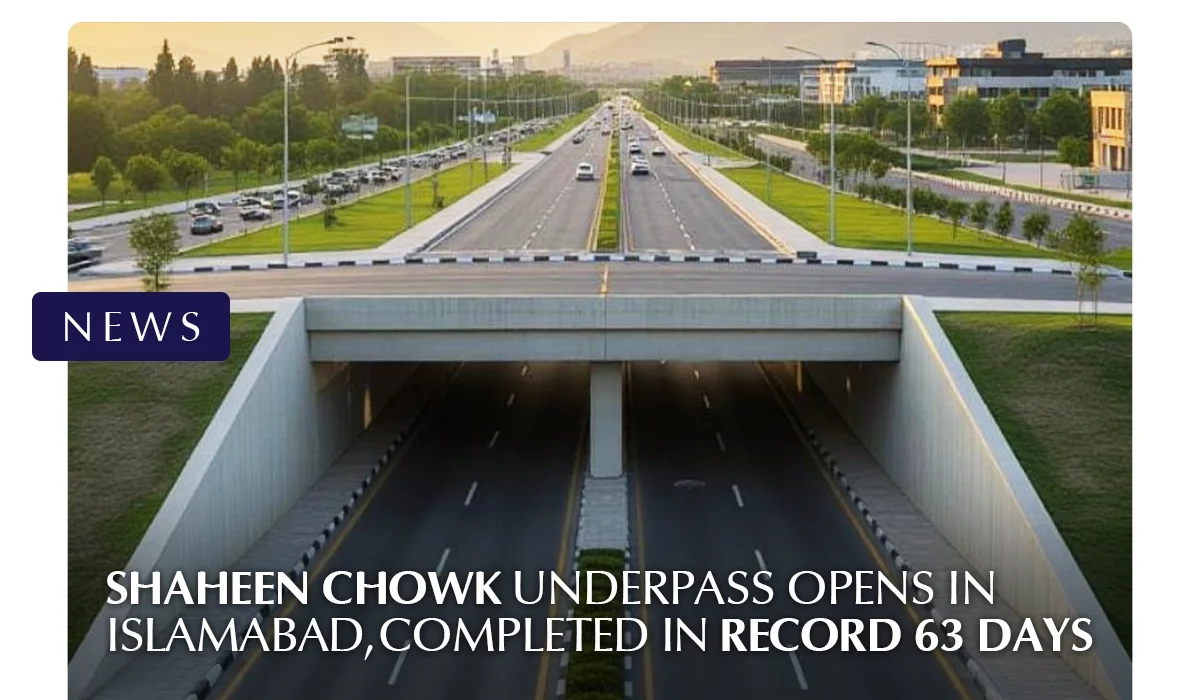
ISLAMABAD: The Shaheen Chowk Underpass, located at the busy intersection of Khyaban-e-Iqbal and 9th Avenue, was officially opened for traffic today, marking a significant milestone for Islamabad’s infrastructure. The project, completed by the Capital Development Authority (CDA), was delivered in an impressive 63 days, far ahead of its expected completion time. Dubbed a New Year’s gift to the city, this rapid development is expected to significantly alleviate traffic congestion in the area.
During the opening ceremony, Interior Minister Syed Mohsin Naqvi shared that Prime Minister Shehbaz Sharif would lead the formal inauguration of the underpass. Reflecting on the city’s infrastructure progress, Naqvi expressed pride in the numerous development projects completed in the Islamabad Capital Territory this year and reiterated his confidence that the pace of development would double in the upcoming year.
The event was attended by key figures, including the Minister of State for Interior, Talal Chaudhry, and the CDA Chairman, Muhammad Ali Randhawa.
In addition to the underpass, Naqvi announced plans to construct seven to eight cricket grounds and a grand cricket stadium in Islamabad to enhance the capital’s sports infrastructure.
Minister Naqvi also revealed that the M-Tag system, which is required for vehicles entering Islamabad, has been granted a 15-day extension. The new deadline offers additional time for compliance, postponing enforcement of the system, which was initially set for January 1.
The completion of the Shaheen Chowk Underpass in just 63 days underscores the government’s commitment to swift infrastructure development. It is expected to significantly improve traffic flow in one of Islamabad’s most congested areas.
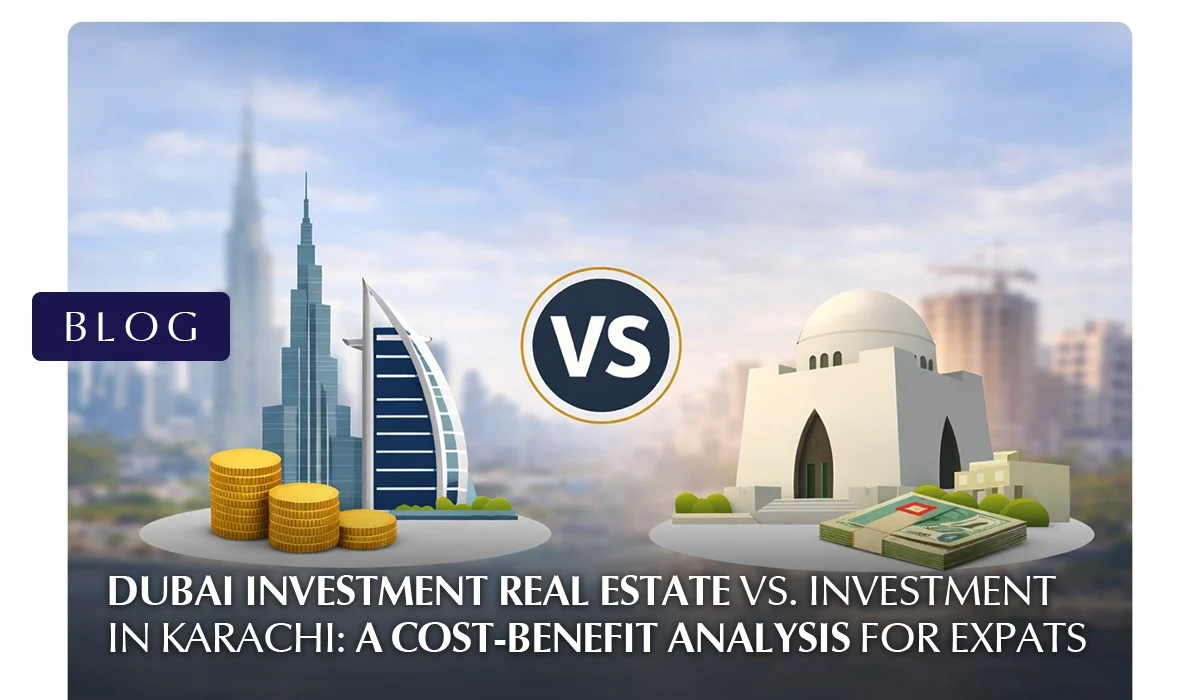
Real estate remains a preferred long-term wealth strategy for expats due to its ability to generate steady income, preserve capital, and hedge against inflation. Among popular choices, Dubai investment real estate offers global exposure, tax efficiency, and regulatory transparency, while investment in Karachi stands out for affordability and strong local demand. This cost-benefit comparison explores both markets in detail. For further details, keep reading.
Overview of Dubai Investment Real Estate
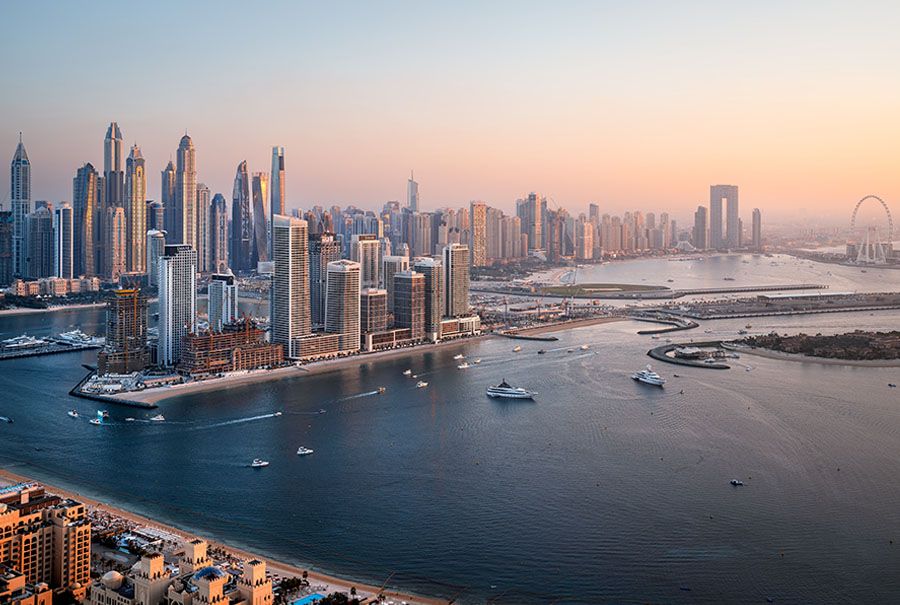
Dubai investment real estate continues to attract expats due to its stability, strong governance, and globally connected market. The city offers a structured and transparent property environment that appeals to investors seeking long-term growth, consistent income, and capital protection.
Why Expats Choose Dubai for Property Investment
Dubai’s real estate market is designed to accommodate international investors with minimal friction.
Key advantages include:
Tax efficiency: No property tax, no capital gains tax, and no tax on rental income
Clear legal framework: Strong regulations protecting investor rights
High global demand: Fueled by tourism, business activity, and population inflows
Strong resale potential: Higher liquidity compared to many regional markets
Rental Yields and Capital Growth Potential
Dubai offers a well-balanced return profile for property investors.
Attractive rental yields in both established and emerging communities
Long-term capital appreciation supported by infrastructure growth and urban expansion
Consistent tenant demand from professionals, families, and short-term renters
Market Structure and Development Planning
A key strength of Dubai investment real estate is its master-planned approach to urban development.
Integrated communities combining residential, retail, leisure, and transport access
Focus on quality construction and long-term livability.
Planned infrastructure reduces investment risk and supports property value.
Accessibility for Expat Investors
Expats benefit from multiple pathways to enter the Dubai property market:
Flexible payment options
Financing solutions available to non-residents
Designated freehold areas allowing foreign ownership
Although initial investment costs are higher, Dubai investment real estate offers expats a secure, tax-efficient, and globally competitive market, making it a strong option for those prioritising stability, transparency, and long-term returns.
Investment in Karachi Real Estate
When evaluating investment in Karachi, expats and overseas Pakistanis often see the city as a high-potential but higher-risk market. As Pakistan’s financial and commercial hub, Karachi continues to attract real estate investors due to its large population, constant housing demand, and comparatively low entry costs.
Despite economic fluctuations, Karachi’s real estate sector remains resilient, particularly in well-planned communities and high-demand urban zones.
Affordability and Entry Costs
One of the strongest advantages of investment in Karachi is affordability. Compared to Dubai investment real estate, the capital required to enter Karachi’s property market is significantly lower, making it accessible to a broader range of investors.
Residential apartments, plots, and commercial units are available at prices far below international markets.
Expats can diversify their portfolios by owning multiple units in Karachi for the cost of a single property in Dubai.
Areas such as DHA, Clifton, Bahria Town Karachi, and Gulshan-e-Iqbal remain popular due to better infrastructure, security, and resale value.
Lower acquisition costs allow investors to focus on rental income strategies or land appreciation without heavy financial leverage.
Rental Yields and Return Potential
From a yield perspective, Karachi real estate can be attractive, especially in mid- to high-demand neighbourhoods.
Rental yields typically range between 5% and 7%, depending on property type and location.
Apartments near business districts, educational institutions, and commercial centres tend to generate stable rental income.
Commercial properties and mixed-use developments often outperform residential assets in terms of yield.
Capital appreciation is generally slower and less predictable than Dubai investment real estate, but long-term investors have historically benefited from land value growth in prime zones.
Demand Drivers in Karachi
Several structural factors continue to support real estate demand in Karachi:
Population growth: Karachi is one of the world’s largest cities, with constant migration from other regions.
Cultural preference for real assets: Real estate remains a preferred store of value in Pakistan, especially during inflationary periods.
Overseas Pakistani investment: Many expats invest in Karachi for long-term family security and future relocation.
These factors collectively support liquidity and ongoing transaction activity, particularly in established areas.
Risks and Challenges for Expats
While the upside is clear, investment in Karachi also carries notable challenges—especially for expats investing remotely.
Regulatory and documentation risks: Title verification, approvals, and land records can be complex without local expertise.
Market volatility: Property prices can be affected by economic conditions, currency fluctuations, and political uncertainty.
Infrastructure inconsistencies: Outside premium developments, issues such as utilities, road access, and maintenance can impact rental appeal.
Lower transparency: Compared to Dubai investment real estate, the market lacks centralised regulatory oversight and standardised processes.
For expats, these risks make developer reputation, due diligence, and legal verification critical to investment success.
Karachi Real Estate: Best Fit for Which Investors?
Karachi real estate is best suited for:
Investors seeking lower entry costs
Overseas Pakistanis with local market knowledge or trusted partners
Long-term investors prioritising rental income and land appreciation
Buyers are comfortable managing higher risk for potentially higher local returns
Unlike Dubai investment real estate, which appeals to global investors seeking stability and regulatory clarity, Karachi rewards investors who can navigate local dynamics effectively.
Cost-Benefit Comparison: Dubai Investment Real Estate vs. Investment in Karachi
For expats, choosing between Dubai investment real estate and investment in Karachi comes down to balancing cost, returns, risk, and long-term stability. While both markets offer attractive opportunities, they serve very different investor profiles.
Side-by-Side Cost-Benefit Analysis | Dubai Investment in Real Estate Vs. Investment in Karachi
Factor
Dubai Investment Real Estate
Investment in Karachi
Entry Cost
High initial capital required, especially in prime areas like Downtown Dubai, Dubai Marina, and Dubai Hills Estate
Significantly lower entry cost, making it accessible to small and mid-level investors
Tax Environment
No property tax, no capital gains tax, and no tax on rental income – a significant advantage for expats
Subject to capital gains tax, withholding tax, and local government fees
Rental Yield
Moderate to high (generally 5–8%), particularly in high-demand communities
Comparable or slightly higher yields in some areas, driven by strong local demand
Capital Appreciation
Strong long-term appreciation backed by infrastructure growth, tourism, and foreign investment
Appreciation potential exists, but it is more dependent on local economic and political stability
Market Transparency
Highly regulated, transparent, and investor-friendly legal framework
The regulatory environment can be inconsistent; due diligence is critical
Liquidity & Resale
High liquidity with strong international buyer demand
Moderate liquidity; resale timelines can be longer
Currency Risk
Stable currency (AED pegged to USD) reduces exchange-rate risk
Higher currency volatility can impact real returns for overseas investors
Risk Profile
Lower overall risk with global investor confidence
Higher risk but potentially higher rewards for informed investors
Cost Perspective: Affordability vs. Premium Investment
From a cost standpoint, investment in Karachi is far more affordable. Investors can enter the market with a fraction of the capital required in Dubai, especially in emerging residential or mixed-use developments.
This makes Karachi attractive for expats seeking diversification without committing significant upfront capital.
In contrast, Dubai investment real estate is a premium market. While entry costs are higher, investors gain access to world-class infrastructure, regulated property ownership, and a globally recognised real estate ecosystem.
Benefit Perspective: Stability vs. Yield Potential
Dubai’s biggest advantage lies in stability and predictability. Tax-free returns, strong legal protection, and consistent demand from expats and tourists make it ideal for long-term wealth preservation and steady rental income.
Karachi, on the other hand, offers higher yield potential relative to cost, particularly in well-located residential and commercial areas.
However, these benefits come with increased exposure to regulatory, economic, and currency risks, factors expats must carefully assess.
Which Market Makes Sense for Expats?
Choose Dubai investment real estate if you value:
Tax efficiency
Currency stability
Strong resale liquidity
Lower investment risk
Choose investment in Karachi if you prioritise:
Lower entry costs
Higher yield potential on smaller capital
Long-term growth driven by local demand
Practical Tips for Expats Investing in Dubai vs. Karachi
Investing in real estate as an expat in Dubai or Karachi requires an understanding of local financing, legal frameworks, and potential risks. Both markets offer distinct advantages but demand different strategies for success.
Dubai Investment Real Estate
Dubai’s property market is well-regulated and expat-friendly, but choosing the right investment approach is crucial.
Expats can access mortgages with a down payment of 20-25%, depending on the lender and property value.
Loan terms typically extend up to 25 years with specific income and employment criteria.
Invest in freehold zones approved for foreign ownership.
Verify property registration with the Dubai Land Department and ensure all contracts are legally compliant.
Work with RERA-registered brokers for added security.
Rental Yield: Focus on well-connected, mid-market properties for steady cash flow.
Capital Appreciation: Ideal for long-term investments in emerging areas with growth potential.
Investing in Karachi
Karachi offers a more affordable entry point but requires careful market understanding and local expertise.
Invest in projects from reputable developers with verified titles to avoid legal issues.
Collaborate with trusted local lawyers and consultants to navigate Karachi’s complex regulatory environment.
Assess rental demand, infrastructure plans, and the ease of selling the property if needed. Established areas tend to offer more stable returns than speculative developments.
In conclusion, both Dubai investment real estate and Karachi investment offer unique advantages for real estate investors. Dubai provides tax benefits, global appeal, and long-term growth potential. In contrast, Karachi offers affordability, strong local demand, and attractive rental yields. The choice depends on individual investment goals, whether seeking global diversification or high returns in a more affordable market. Assess your priorities and financial objectives to make the right decision.
The following are the FAQs regarding Dubai investment real estate.
How much do I need to invest in Dubai real estate?
It varies by location, but investments can start from around 500,000 AED for a property.
What is the minimum investment in Dubai real estate?
The minimum investment is typically 500,000 AED, depending on the property type.
Is investing in Dubai real estate worth it?
Yes, Dubai offers tax advantages, strong growth potential, and global appeal.
How much money do I need to invest in Dubai?
A minimum of 500,000 AED is required for most properties, though it varies by area.
Which investment gives the highest return in the UAE?
Real estate, especially in prime locations, typically offers the highest returns.
Is Dubai real estate a good investment?
Yes, Dubai real estate has strong growth potential, tax incentives, and high demand.
Do real estate agents in Dubai make money?
Yes, agents earn commission fees typically ranging from 2-5% of the property value.
Is it better to rent or buy in Dubai?
It depends on your long-term plans, but buying can offer stability and potential capital growth.
Which is the best property to invest in Dubai?
Properties in areas like Downtown, Dubai Marina, and Palm Jumeirah are highly recommended.
Which part of Dubai is best for investment?
Downtown Dubai, Dubai Marina, and Dubai Hills Estate are top investment areas.
Which area in Dubai has the highest rental yield?
Areas like Dubai Marina, Jumeirah Village Circle, and International City have high rental yields.
Where is the best place to buy property in Dubai 2026?
Emerging areas like Dubai Creek Harbour and Dubai South are expected to offer good returns in 2026. Another great investment option is luxury residential complex in Dubai by Chakor Ventures.
Is Dubai real estate a good investment?
Yes, with strong capital appreciation and high rental yields, it remains an attractive option.
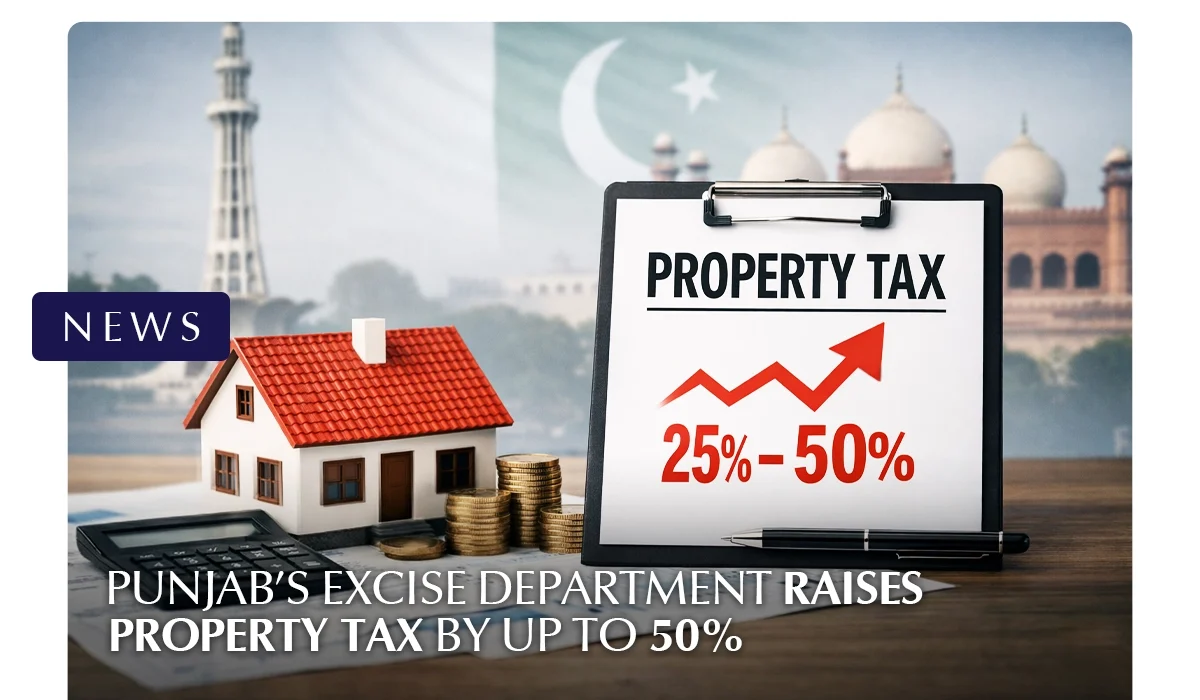
RAWALPINDI: The Excise and Taxation Department of Punjab has recently implemented a significant increase in property tax rates, raising them by 25% to 50%. This hike follows a revision of property DC rates across the province.
In addition to the increased property rates, the department has sent out new tax notices for the upcoming financial year. Citizens are now required to pay their taxes by December 22, even though the notices were sent after this deadline, resulting in additional surcharges on their bills.
The department’s move is part of broader changes made earlier this year when tax rates were increased in January, extending the tax net to include smaller properties, such as homes under 5 marlas, as well as widows. Citizens have also received notices for outstanding taxes spanning the past 1 to 3 years.
Under the revised tax structure, Rawalpindi city has been divided into three categories (A, B, and C), and property taxes are now being calculated according to the new rates based on property size. For instance, individuals who previously paid 25,000 PKR in taxes have now received notices for 50,000 PKR.
While the financial year ends on June 30, tax defaulters are typically given a grace period, yet the Excise Department has already sent out notices for the 2025-2026 financial year. Citizens have raised concerns over the fairness of these actions, demanding intervention from the Chief Minister of Punjab and the Provincial Minister of Taxation to address these unjustified penalties and excessive tax rates.
ISLAMABAD: The Pakistan Bar Council (PBC) has strongly opposed the Punjab Protection of Ownership of Immovable Property Act, 2025, terming it unconstitutional, unlawful, and detrimental to the country’s judicial system. The council warned the Punjab government against implementing what it described as the “illegal aspirations of land mafias” and demanded the immediate withdrawal of the law.
Presiding over the PBC’s 247th meeting at the Supreme Court Building in Islamabad, Vice Chairman Chaudhry Tahir Nasrullah Warraich said the outgoing cabinet had unanimously rejected the Act. The council also called on the Punjab government to issue an apology to the Lahore High Court (LHC) for what it termed an inappropriate response following judicial intervention.
The PBC maintained that the law conflicts with key legal frameworks, including the Civil Procedure Code, Criminal Procedure Code, Qanoon-i-Shahadat (Evidence Act), and the Illegal Dispossession Act. It expressed concern that the Act empowers deputy commissioner-led committees to decide property disputes, creating a parallel system of jurisprudence that bypasses civil courts and undermines judicial supremacy.
On December 22, LHC Chief Justice Aalia Neelum suspended the operation of the Act and referred the matter to a full bench for adjudication. The move was subsequently endorsed by lawyers’ associations across the province on December 24.
The council praised the LHC for what it called a timely and necessary intervention, warning that the legislation erodes civil rights and allows executive officials to exercise judicial authority. It further cautioned that failure to take corrective measures within days could compel the legal community to launch a nationwide movement in defence of judicial independence and the rule of law.
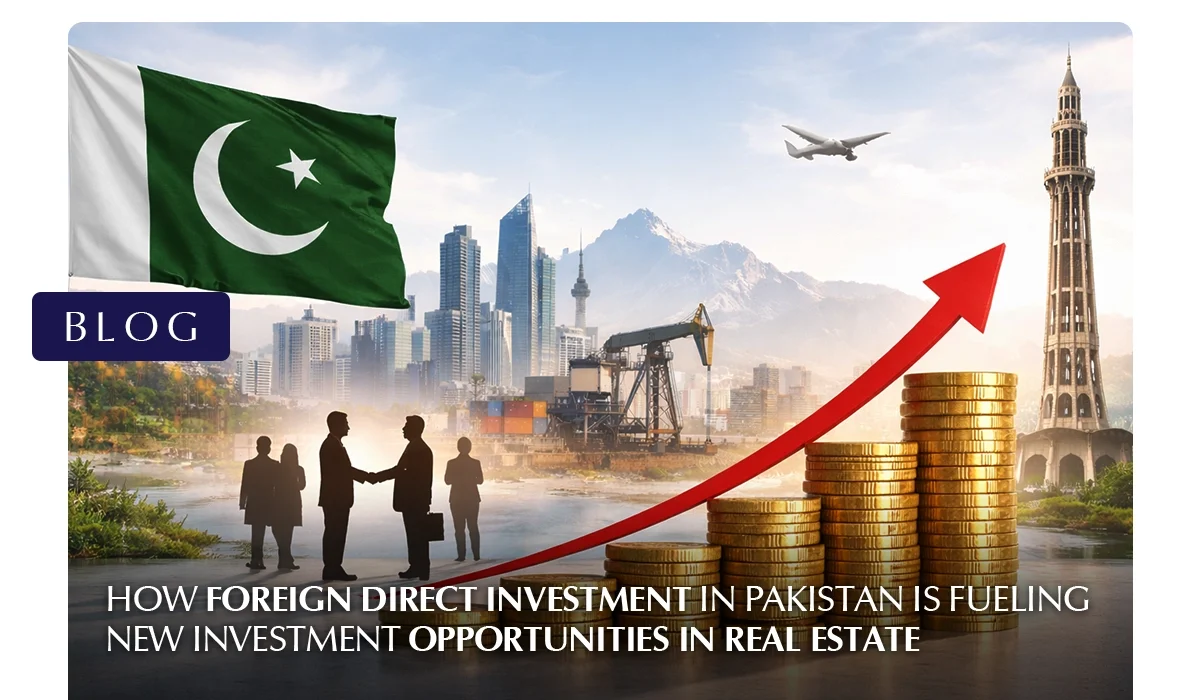
Foreign Direct Investment refers to investment made by a foreign individual or company into business ventures in another country, often through establishing operations, acquiring assets, or purchasing shares in local businesses. For Pakistan, Foreign Direct Investment in Pakistan is a vital driver of economic growth, offering numerous benefits such as job creation, technology transfer, and a boost to local industries. It helps improve infrastructure, enhances productivity, and strengthens the overall economy.
In this blog, we will explore the current trends in Foreign Direct Investment in Pakistan, identify key sectors attracting foreign investments, and highlight the opportunities available for investors. Whether you’re a potential investor or simply interested in Pakistan’s economic landscape, this guide will provide valuable insights into why Foreign Direct Investment in Pakistan matters now more than ever.
What Is Foreign Direct Investment in Pakistan & Why It Matters
Foreign Direct Investment in Pakistan is when a person or company from one country invests directly in a business or asset in another country. This type of investment usually involves setting up operations, like building factories, purchasing a company, or expanding an existing business.
Unlike other forms of foreign investment, such as portfolio investments (where investors buy stocks or bonds in foreign markets without gaining control of a business), Foreign Direct Investment in Pakistan involves a long-term commitment and a more active role in the local economy.
Foreign Direct Investment in Pakistan is crucial for Pakistan’s growth, as it brings several key benefits:
Job Creation: When foreign companies invest in Pakistan, they often build factories or set up offices, creating new jobs for the local workforce. For example, when a global tech company opens a factory, it employs local workers, boosting employment.
Technology and Expertise Transfer: Foreign investors often bring in advanced technology and management techniques, helping local businesses improve their processes. This can raise the overall efficiency of industries in Pakistan, like the textile or manufacturing sectors.
Export Growth: Foreign Direct Investment in Pakistan can lead to more local businesses producing goods for export. For instance, if a foreign company invests in Pakistan’s agricultural sector, it might help improve farming techniques, leading to better-quality produce for international markets.
Infrastructure Development: Foreign investments often contribute to improving a country’s infrastructure. For example, the construction of new roads, ports, and energy plants may be a part of foreign investment deals, which helps boost the economy in the long run.
The Current State of Foreign Direct Investment in Pakistan (2025)
Foreign Direct Investment in Pakistan has shown mixed trends, with occasional growth despite economic challenges. Here’s a breakdown of the current situation:
Recent Foreign Direct Investment in Pakistan Trends
November 2025: Foreign Direct Investment in Pakistan increased by $179 million compared to prior months.
FY 2024–25 (H1): Foreign Direct Investment in Pakistan inflows reached USD 1.33 billion, reflecting a growth trend.
Long-Term Investment Levels
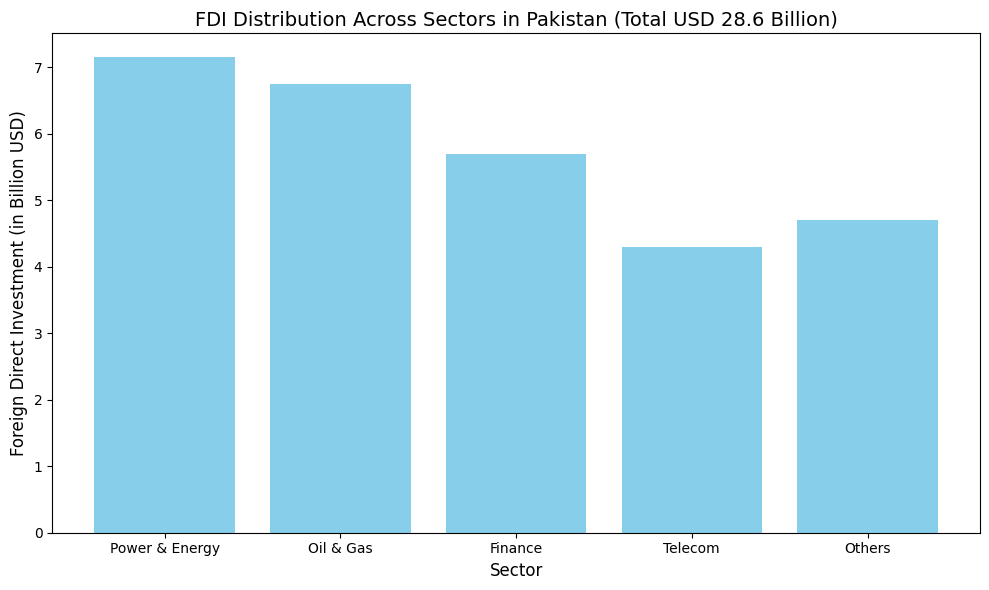
Cumulative Foreign Direct Investment in Pakistan stock: Approximately USD 28.6 billion by the end of 2022.
Key sectors: Power, oil & gas, finance, telecom are the primary recipients of foreign investment.
Volatility in Foreign Direct Investment in Pakistan Inflows
Foreign Direct Investment in Pakistan is volatile due to factors like political instability, inflation, and exchange rate fluctuations.
Some months see lower inflows, especially during periods of political uncertainty.
Foreign Direct Investment in Pakistan as a Percentage of GDP
Foreign Direct Investment in Pakistan contributes around 1-2% of Pakistan’s GDP, supplementing domestic investments and supporting key sectors.
Historical data shows fluctuations, but overall foreign direct investment in Pakistan remains an important part of the economy.
Key Sources of Foreign Investment in Pakistan
Foreign direct investment in Pakistan comes from several key countries, each contributing significantly to various sectors of the economy. Here’s a breakdown of the major investors:
1. China: The Largest Investor
Share of FDI: Over 25% of total foreign investments
Key Projects:
China-Pakistan Economic Corridor (CPEC): A major infrastructure initiative involving roadways, energy projects, and industrial zones.
Sectors: Energy, infrastructure, transport, industrial zones
Impact: Long-term investment focusing on connectivity and economic development.
China’s investments are largely concentrated in energy and infrastructure, with the CPEC project acting as the backbone of its economic partnership with Pakistan.
2. United Kingdom
Investment Focus:
Financial services
Telecommunications
Consumer goods
Energy
Contribution: Strong trade ties and joint ventures in various sectors
Key Advantage: Long-standing historical connections that foster trust and collaboration between both countries.
3. Hong Kong
Investment Focus:
Banking
Manufacturing
Technology
Contribution: Facilitates investments from mainland China and other global investors.
Key Advantage: Favourable tax policies and business environment for companies seeking to operate in Pakistan.
Key Contribution: US companies are involved in setting up joint ventures and technology-based investments.
Switzerland:
Investment Focus: Energy, industrial sectors, and pharmaceuticals
Key Contribution: Swiss investors are significant in managing resources, energy projects, and pharmaceutical investments.
Foreign Investment Breakdown by Country
Country
Foreign Direct Investment in Pakistan Share
Primary Sectors
Key Projects
China
25%+
Energy, Infrastructure, Transport
CPEC (Energy, Roads, Industrial Zones)
United Kingdom
Moderate
Financial Services, Telecommunications, Energy
Joint Ventures, Infrastructure Projects
Hong Kong
Moderate
Banking, Manufacturing, Technology
Investment Facilitation from China
United States
Moderate
Technology, Consumer Goods, Finance
Technology, Joint Ventures
Switzerland
Moderate
Energy, Pharmaceuticals, Industrial
Energy Projects, Industrial Ventures
Top Sectors Attracting Foreign Direct Investment in Pakistan
Foreign Direct Investment in Pakistan is flowing into several key sectors that show strong growth potential and opportunities. These sectors not only contribute to the country’s economic development but also present promising returns for foreign investors. Here are the major sectors that are attracting the most foreign investment:
Power & Energy
Why it’s appealing: Pakistan’s power sector faces huge capital demands due to energy shortages and the need for modern infrastructure. The government’s efforts to privatise state-owned companies and offer incentives for foreign investors in renewable energy and traditional power generation make it an attractive sector.
Key opportunity: Investment in solar, wind energy, and hydropower projects is growing, as the country shifts toward more sustainable and cost-effective sources of energy.
Oil & Gas
Why it’s appealing: Pakistan is home to significant oil and gas reserves, particularly in its northern and southwestern regions. As energy consumption increases, there’s a need for modernising and expanding extraction and refining capacities.
Key opportunity: Foreign investors are particularly interested in the exploration, production, and distribution of oil and gas, with companies aiming to meet the growing domestic demand and export potential.
Financial Services (Banks & Insurance)
Why it’s appealing: The financial services sector is rapidly expanding as Pakistan’s middle class grows, leading to more demand for banking, insurance, and investment services. The government is pushing for financial inclusion and improving the regulatory environment, which encourages foreign investment.
Key opportunity: There’s an increasing demand for digital banking, insurance, and fintech solutions, with foreign investors looking to partner with or acquire local banks and financial institutions.
IT & Telecom
Why it’s appealing: Pakistan’s digital economy is booming, and the country has a growing tech-savvy youth population. The IT sector, including software development and tech startups, offers tremendous potential for growth. The telecom sector is also expanding, with increasing mobile and internet penetration.
Key opportunity: Investors are particularly focused on the IT outsourcing, mobile networks, and digital infrastructure, which are essential for the country’s evolving digital landscape.
Infrastructure & Transport
Why it’s appealing: Pakistan’s strategic location as a gateway to Central Asia and the Middle East makes infrastructure development crucial for trade and commerce. Investments in roads, ports, and airports are growing, especially as the country is working to develop its CPEC (China-Pakistan Economic Corridor) projects.
Key opportunity: Logistics, road networks, ports, and railway projects are major areas where foreign investors see high returns, particularly in public-private partnerships.
Real Estate & Construction
Why it’s appealing: With a rapidly growing urban population and increasing demand for housing, Pakistan’s real estate and construction sectors are experiencing a boom. There’s significant potential in both residential and commercial property development.
Key opportunity: Residential developments, retail spaces, and mixed-use developments are attracting foreign investors, especially in major cities such as Karachi, Lahore, and Islamabad, where demand for real estate continues to rise.
Investment Opportunities in Pakistan
Opportunity Area
Key Details
Growth Potential
Special Economic Zones & Policy Supports
Islamabad Model SEZ, $2.5B investment target, incentives for investors
High, Tax breaks, improved regulations, fast approvals
Technology & Digital Economy
IT outsourcing, fintech innovations, and growing demand for digital solutions
High, expanding tech industry and digital services
Green Energy & Solar Power
Solar power, renewable energy initiatives
High, Vast solar potential, government incentives
Manufacturing & Exports
Garments, electronics, and industrial production
Moderate, Increased demand, labour cost advantages
Agriculture & Food Processing
Large domestic market, modernising agricultural practices
Moderate, Export potential and local consumption growth
Real Estate & Urban Growth
Urbanisation is driving housing and commercial space demand
High, growing cities, expanding middle class
Infrastructure & Public-Private Projects
Ports, transport networks, and privatisations
High, Essential projects for improving connectivity
a. Special Economic Zones & Policy Supports
Pakistan has established Special Economic Zones (SEZs) to attract foreign investment, offering numerous incentives, such as tax breaks and reduced tariffs. A notable example is the Islamabad Model Special Economic Zone, designed to attract $2.5 billion in investments.
These zones offer streamlined processes, dedicated infrastructure, and other incentives to make business operations smoother and more profitable for foreign investors.
Key policy supports include:
Pakistan Investment Policy 2023: Designed to enhance the business climate by reducing barriers for foreign investors.
Board of Investment (BOI) and Special Investment Facilitation Council (SIFC): These institutions work closely with foreign investors to ensure smoother processes and faster project approvals.
These policies and SEZs are designed to foster a more investor-friendly environment, making Pakistan an increasingly attractive investment destination.
b. Growing Sectors to Watch
Technology & Digital Economy:
Pakistan’s IT outsourcing and fintech sectors are rapidly growing.
The country is emerging as a hub for global IT companies due to its skilled workforce and competitive costs.
Fintech innovations are gaining traction, with growing demand for digital payment solutions and financial inclusion.
Green Energy & Solar Power:
Pakistan has vast solar power potential, with high solar radiation levels.
The government is offering incentives for solar power projects as part of its renewable energy goals.
This sector presents a promising opportunity for foreign investors, given the global push for green energy.
Manufacturing & Exports:
Garments and electronics manufacturing are expanding due to both domestic and international demand.
Pakistan’s competitive labour costs and improving industrial infrastructure create significant growth opportunities in these sectors.
Agriculture & Food Processing:
Agriculture remains a critical part of Pakistan’s economy, and food processing is a growing investment area.
The country’s large domestic market, combined with modernisation efforts in agriculture, offers potential for food exports and agribusiness investments.
c. Real Estate & Urban Growth
As Pakistan undergoes rapid urbanisation, the demand for housing and commercial space is on the rise. Key points include:
Growing Cities: Major cities like Lahore, Karachi, and Islamabad are seeing increased demand for residential and commercial properties.
Expanding Middle Class: An increasing middle class is driving demand for better housing and commercial spaces.
These trends create lucrative investment opportunities in real estate development and urban infrastructure.
d. Infrastructure & Public-Private Projects
Pakistan’s infrastructure is set for major growth, with ongoing privatisations and large-scale public-private partnership (PPP) projects. Investment opportunities include:
Ports: Expanding Pakistan’s trade capacity.
Transport Networks: Upgrades in roads, railways, and public transport systems.
Privatisation Efforts: The government is privatising key sectors, creating opportunities for foreign investments in utilities, telecom, and energy.
These infrastructure developments offer long-term investment potential and are key to improving the country’s economic connectivity.
Challenges & What Needs Improvement
While Pakistan offers significant opportunities for foreign direct investment, several challenges still need to be addressed to unlock its full potential. Here are the key concerns for investors:
Regulatory Red Tape and Bureaucratic Delays
Complex and slow regulatory procedures
Lengthy approval processes for permits and business setups
Bureaucratic hurdles that can discourage foreign investors looking for efficiency
Security and Political Risk Perceptions
Internal political instability and regional tensions contribute to security concerns
Frequent changes in government and policies create uncertainty
Lack of long-term stability in laws and regulations
Currency Volatility and Macroeconomic Instability
Frequent fluctuations in the exchange rate cause financial losses for investors
Inflationary pressures and unpredictable fiscal policies
Economic instability can undermine investor confidence
Dependency on IMF/Loans
Heavy reliance on the International Monetary Fund (IMF) and foreign loans
Fiscal constraints imposed by loan agreements reduce government spending on development projects
Policy adjustments under IMF programs may limit incentives for foreign investors
Infrastructure Gaps
Gaps in transport, energy, and communications infrastructure
Poor infrastructure increases operational costs and affects business efficiency
Infrastructure deficiencies can deter large-scale investments
Government Initiatives & Reforms
The Pakistani government has introduced several key initiatives and reforms aimed at boosting Foreign Direct Investment. These efforts are designed to attract foreign capital, streamline investment processes, and improve the overall investment climate.
Adoption of Newer Investment Policies to Attract Foreign Investment
Pakistan Investment Policy 2023: Aimed at providing better incentives for foreign investors, including tax exemptions, ease of doing business, and improved legal protections.
Special Economic Zones (SEZs): Establishment of SEZs across Pakistan to offer investors benefits such as tax holidays, reduced tariffs, and fast-tracked infrastructure development.
Greenfield Investments: Promotion of new, foreign-owned businesses to invest in Pakistan’s sectors like manufacturing, technology, and renewable energy.
Reforms in Taxation: Simplification of tax systems to make investing in Pakistan more transparent and predictable for foreign companies.
Attractive Terms for Foreign Investors: The government is also offering guarantees for the repatriation of profits and capital.
Institutional Frameworks (SIFC) to Fast-Track Foreign Projects
Special Investment Facilitation Council (SIFC): A dedicated government body formed to expedite the process of foreign investment. SIFC is responsible for resolving bureaucratic hurdles, offering one-window operations for investors, and overseeing high-priority projects.
Streamlined Approvals: SIFC provides a fast-tracked approval process for foreign projects, including necessary permits and licenses, making it easier for foreign companies to set up operations in Pakistan.
Policy Coordination: SIFC coordinates with multiple government departments to ensure a unified approach toward investment attraction and facilitates dispute resolution.
Privatisation Efforts (E.g., Major Sales Like PIA)
Privatisation of State-Owned Enterprises (SOEs): The government has been gradually privatising major state-owned enterprises (SOEs) like Pakistan International Airlines (PIA), Pakistan Steel Mills, and others. These privatisations are designed to attract foreign investors and bring in capital and expertise to improve efficiency.
Public-Private Partnerships (PPPs): Encouraging foreign investment through PPPs in sectors such as infrastructure, energy, and transport, creating opportunities for foreign companies to manage and invest in key sectors.
Boost to FDI: These privatisation efforts indirectly stimulate Foreign Direct Investment in Pakistan by opening up state-owned industries to the global market, creating space for foreign expertise and investment in sectors that were previously under government control.
Conclusion | Foreign Direct Investment in Pakistan
In conclusion, Pakistan is actively enhancing its investment climate through policy reforms, institutional frameworks like SIFC, and privatisation efforts. These initiatives aim to attract foreign direct investment, offering significant opportunities in sectors such as energy, technology, and infrastructure, positioning Pakistan as an appealing destination for global investors in 2025.
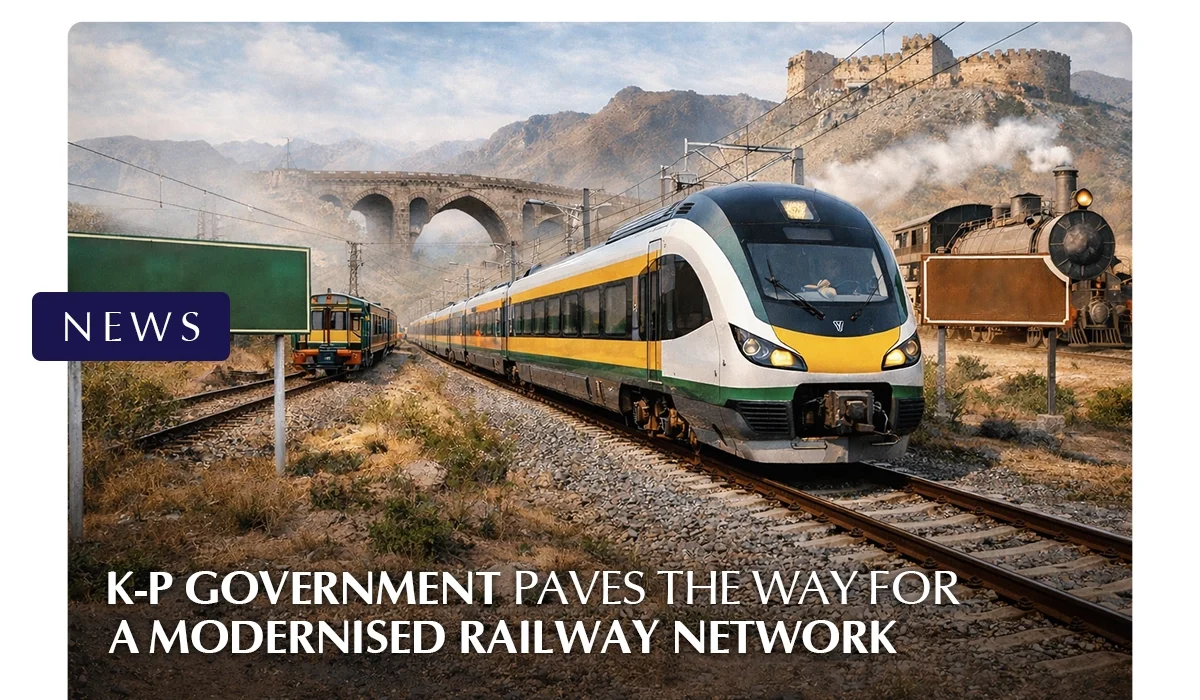
PESHAWAR: The Khyber-Pakhtunkhwa (KP) government has announced plans to introduce modern train services across the province, with a major focus on the proposed Kohat-Kharlachi rail link. This decision was made during a high-level meeting chaired by Chief Minister Sohail Afridi at the KP House in Islamabad.
The Kohat-Kharlachi railway project involves the construction of a 192-kilometre rail track at an estimated cost of $642 million. The project is expected to be completed within two years, with the feasibility study already finalised and land acquisition currently underway. The chief minister emphasised that the project is crucial to improving public transportation, boosting trade, and enhancing economic activity in the region.
Additionally, the meeting discussed a proposal to operate a safari train along the 32-kilometre Jamrud-Landi Kotal railway track to promote tourism. The chief minister directed the relevant authorities to devise detailed plans with clear timelines for all railway projects to ensure timely implementation.
The meeting also highlighted the need for improved cooperation between the KP government and Pakistan Railways to ensure the success of these initiatives. Chief Minister Afridi reiterated his full support for Pakistan Railways, stressing the government’s commitment to providing efficient and accessible public transport services throughout the province.
This initiative is part of the provincial government’s broader vision to modernise infrastructure and stimulate economic development through enhanced transportation networks. The KP government is determined to make significant strides in improving the region’s connectivity and boosting commercial activities.
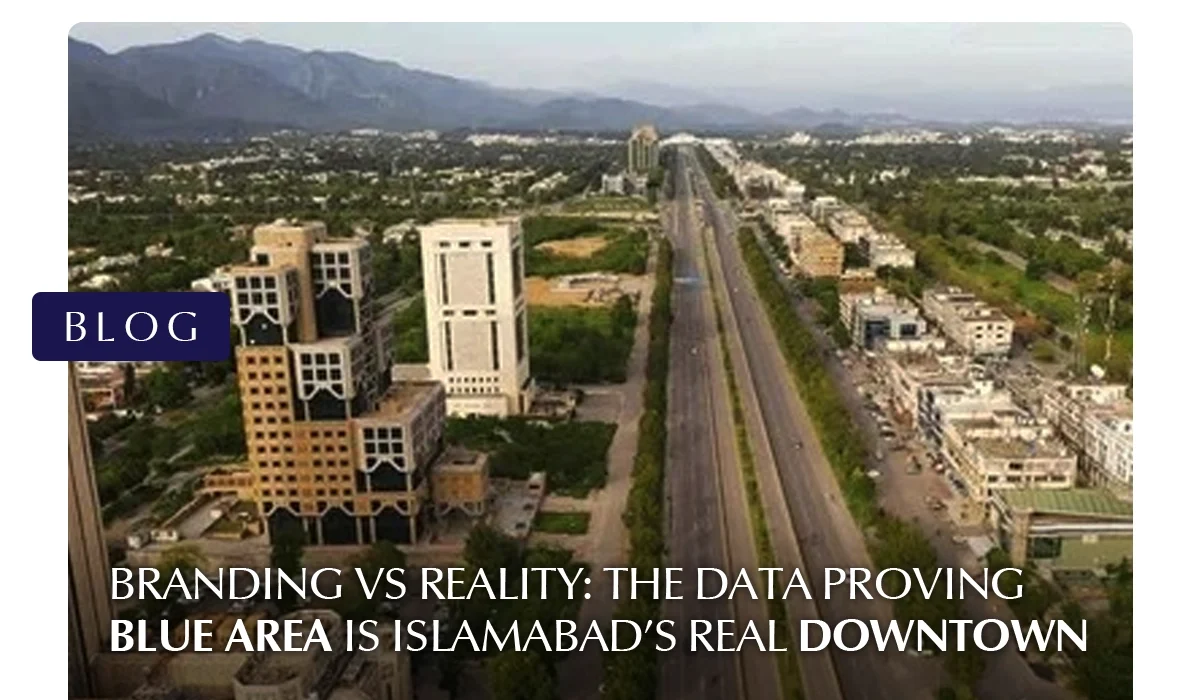
Islamabad’s commercial landscape is often described using the word “downtown Islamabad,” yet the city has never had an officially designated central business district. As urban expansion accelerated and new mixed-use developments emerged, multiple areas began marketing themselves as downtowns, creating confusion between real estate branding and economic reality.
In the absence of a formally planned CBD, perception has increasingly replaced evidence in shaping market narratives. This blog cuts through that ambiguity by relying strictly on multi-year commercial real estate data from 2018 to 2024, comparing long-term value trends, price-per-square-foot behaviour, and market stability across Islamabad’s major commercial zones to examine how actual downtown centrality is formed and sustained.
Indicator
Blue Area
New Blue Area
Gulberg
Park View City
Price per Sq. Ft (2024)
~PKR 500,000
Growing
~PKR 90,000
~PKR 81,000
Long-Term Growth
+196% (2018–24)
Positive (Since 2020)
Moderate
Moderate
6-Month Momentum
+22%
+4%
−8%
+6%
Market Stability
Very High
Medium
Low
Medium
Commercial Density
Highest
Rising
Low
Low
Growth Driver
Commercial Core
Core Extension
Residential-led
Residential-led
CBD Qualification
Yes
Emerging Extension
No
No
Islamabad’s Commercial Evolution and the Absence of a Planned CBD
Sector-Based Planning Without a Central Core
The original Islamabad master plan followed a low-density, sector-based layout. Commercial activity was distributed across local-sector markets rather than concentrated in a single central business district. Administrative and commercial functions were also spatially separated.
Population Growth Beyond Early Projections
Over time, Islamabad urban growth far exceeded early planning assumptions. The city’s population crossed two million, sharply increasing demand for housing and services. This growth placed pressure on land and infrastructure across the metropolitan area.
Rapid Expansion of the Built-Up Area
Islamabad’s built-up area expanded from about 58 km² in 2000 to nearly 256 km² by 2020. This represents more than a fourfold increase in urbanised land. Most of this growth occurred through horizontal expansion rather than vertical development.
Residential-Led Sprawl and Mixed-Use Development
Large-scale residential projects led the city’s outward expansion. Commercial and office spaces followed mainly to serve local residential demand. These areas functioned as mixed-use zones rather than high-density commercial centres.
How Downtown Islamabad Confusion Emerged
With no formally planned CBD, multiple areas began presenting themselves as downtown Islamabad. Real estate branding filled the gap left by planning ambiguity. This created confusion between perceived centrality and actual economic function within Islamabad’s commercial development.
Why Blue Area Became Islamabad’s Commercial Spine?
Central Position Along Jinnah Avenue
The Blue Area Islamabad history is inseparable from its strategic location along Jinnah Avenue. This corridor functions as Islamabad’s primary east–west axis, linking major residential sectors with administrative and institutional zones.
Located on Islamabad’s main arterial road
Direct connectivity to key sectors and civic areas
High visibility and accessibility for businesses
Planned Commercial Strip to Functional Core
Blue Area was originally designed as a mid-rise, mixed-use commercial strip. Over time, however, market demand reshaped its role. As Islamabad expanded, dispersed sector markets proved insufficient for large-scale corporate activity.
Initial mid-rise zoning
Gradual market-led densification
Shift from dispersed markets to centralised offices
Concentration of Corporate Headquarters
One of the defining features of Blue Area is the clustering of Islamabad corporate offices. Major national and multinational firms established headquarters in the area due to its centrality and prestige.
This concentration generated agglomeration benefits, attracting more firms and reinforcing commercial depth.
Presence of financial, telecom, and service-sector firms
High corporate visibility and institutional clustering
Strong demand for premium office space
Proximity to Administrative and Government Institutions
Blue Area’s rise was reinforced by its closeness to key government and administrative centres. Ministries, regulatory bodies, and public-sector offices are located in adjacent zones. This proximity supports frequent interaction between corporate and institutional actors.
Easy access to government offices
Strategic for policy, finance, and corporate coordination
Infrastructure, Transit, and Market Convergence
Factor
Impact on Commercial Centrality
Wide boulevards
Supports high traffic and visibility
Public transport corridors
Enhances accessibility and footfall
Traffic convergence
Increases market activity and liquidity
Evolution Into a High-Value Commercial Core
Over time, limited land supply and rising demand transformed Blue Area into Islamabad’s highest-value commercial zone. Mid-rise structures gave way to high-density, vertical development. This evolution cemented Blue Area as the city’s primary commercial spine rather than just another business district.
Long-Term Commercial Property Trends (2018–2024)
Analysing Islamabad commercial property price trends over multiple years provides a clearer picture of true market strength. Long-term trends reveal whether value growth is structural or driven by short-lived speculation. Between 2018 and 2024, distinct patterns emerged across Islamabad’s major commercial areas.
Blue Area: Sustained and Compounding Growth
Blue Area demonstrated the strongest long-term performance in the city.
Price per sq. ft increased by approximately 196%
From ~PKR 130,000 in 2018
To ~PKR 385,000 in 2024
Growth followed a steady, compounding trajectory
No sharp spikes or sudden corrections were observed
This pattern indicates persistent demand, limited land supply, and strong commercial fundamentals. Such stability is characteristic of mature downtown Islamabad markets rather than emerging or speculative zones.
Index Growth and Market Depth
In addition to rising prices, Blue Area’s commercial index nearly tripled over the same period.
Index growth reflects:
Appreciation
Transactional activity
Market stability
Rising index values signal depth and liquidity
Confirms that Blue Area real estate growth is structurally driven
Comparison With Peripheral Commercial Areas
Area
Growth Pattern
Primary Driver
Market Behavior
Blue Area
Compounding, consistent
Commercial core demand
Stable, resilient
Gulberg
Uneven growth
Horizontal expansion
Post-speculative correction
Park View City
Accelerated phases
Residential demand
Cycle-sensitive
Compounding Growth vs Speculative Spikes
Long-term Islamabad land value appreciation reflects economic centrality. Sustained growth indicates enduring demand and institutional presence. Short-term spikes, however, often result from speculation, marketing, or development announcements.
Between 2018 and 2024, Blue Area consistently outperformed peripheral markets. Its growth was gradual, predictable, and resilient, traits that distinguish a true commercial core from areas driven by temporary hype.
Short-Term Market Momentum and Liquidity Signals
While long-term trends show structural strength, Islamabad real estate momentum over shorter timeframes reveals real-time market sentiment. Six-month, one-year, and two-year growth rates indicate liquidity, buyer urgency, and confidence. These indicators help distinguish stable commercial cores from cycle-sensitive developments.
Blue Area Downtown Islamabad: Strong Momentum in a Mature Market
Blue Area stands out sharply in short-term performance.
6-month growth: ~22%
1-year growth: ~52%
2-year growth: ~102%
Such acceleration in an already high-value market is rare. Mature commercial districts typically show slower short-term movement due to pricing stability. In Blue Area’s case, strong Blue Area property demand reflects high liquidity, limited supply, and sustained interest from end-users and institutional buyers.
This level of momentum signals not speculation, but confidence in long-term commercial relevance.
Performance of Other Commercial Areas
Area
6-Month Trend
1-Year Trend
Market Signal
Blue Area
+22%
+52%
High liquidity, strong demand
New Blue Area
+4%
+15%
Early-stage consolidation
Gulberg
−8%
−14%
Market correction
Park View City
+6%
+39%
Residential-cycle driven
2024 Snapshot | Downtown Islamabad
Citywide averages often hide important variations within commercial districts. A block-level comparison provides a clearer view of where value, demand, and liquidity are most concentrated. In 2024, data from key commercial blocks highlights the sharp hierarchy within Price per square foot Islamabad markets.
Blue Area Block C: Peak Commercial Value
Blue Area Block C stands at the top of Islamabad’s commercial market.
Price per sq. ft: ~PKR 500,000
3-month growth: ~15%
1-year growth: ~63%
Commercial index: ~558
These figures place Block C firmly as the Islamabad most expensive commercial area. High quarterly growth at such elevated price levels signals intense demand, limited supply, and strong transactional liquidity.
Comparative Snapshot of Key Commercial Blocks
Area
Price per Sq. Ft
3-Month Change
1-Year Change
Index
Blue Area – Block C
~PKR 500k
+15%
+63%
558
Gulberg Civic Centre
~PKR 90k
+3%
−4%
172
Park View Downtown Islamabad
~PKR 81k
+6%
+26%
123
Why Peripheral “Downtown Islamabad” Don’t Behave Like Downtowns
Residential-led appreciation dominates growth
Commercial activity serves nearby residential communities rather than the citywide economy.
Price increases follow housing cycles, not commercial absorption.
Horizontal expansion replaces density
Peripheral zones expand outward through new land development.
Land supply remains relatively flexible, limiting long-term value pressure.
True downtown Islamabad rely on vertical consolidation due to land scarcity.
Greater exposure to speculative corrections
Rapid price increases are often driven by marketing and speculation.
Gulberg experienced negative momentum following earlier gains.
Speculative markets lose liquidity quickly when sentiment shifts.
Lack of institutional and corporate clustering
Peripheral areas do not host dense clusters of corporate headquarters.
Financial institutions and major offices are limited.
Agglomeration benefits remain weak or absent.
Function as local service markets
Most businesses cater to the surrounding residential populations.
Economic activity is localised rather than metropolitan in scale.
Despite branding, these areas do not operate as true downtown Islamabad mixed-use developments.
Long-standing commercial nucleus since early city development
Recently developed through outward expansion
Land value dominance
Highest price per square foot in the city
Significantly lower and cycle-sensitive
Corporate density
Dense clustering of national and multinational offices
Scattered, small-scale commercial presence
Administrative presence
Close proximity to major ministries and institutions
Limited or indirect access
Transit centrality
Located on Jinnah Avenue with major traffic convergence
Dependent on local access routes
Vertical development leadership
High-rise and high-density commercial zoning
Predominantly low- to mid-rise development
What This Means for Investors, Developers, and Policymakers
Islamabad’s commercial data does more than explain where downtown Islamabad is. It clarifies how different stakeholders should respond to the city’s evolving commercial hierarchy. The implications vary by role, but all point toward the continued importance of the central commercial corridor.
For Investors: Liquidity and Risk Profile
From an Islamabad commercial investment perspective, Blue Area offers a fundamentally different risk–return profile than peripheral markets. Its long-term appreciation, high transaction volume, and short-term momentum indicate strong liquidity.
High buyer depth reduces exit risk.
Price stability limits downside volatility.
End-users, not speculation, drive demand
This makes Blue Area investment potential more suitable for capital preservation and steady returns than for quick speculative gains.
For Developers: Vertical Opportunity Zones
Developers face a clear choice between horizontal expansion and vertical optimisation. Blue Area and its extension favour density-driven development due to land scarcity and sustained demand.
Factor
Central Corridor
Peripheral Areas
Growth model
Vertical densification
Horizontal expansion
Demand driver
Commercial absorption
Residential spillover
Value creation
Per sq. ft optimisation
Per plot expansion
Vertical commercial projects align more closely with proven market behaviour in the core.
For Policymakers: Densification vs Sprawl
An effective Islamabad urban policy must balance growth with efficiency. Strengthening the central commercial spine reduces infrastructure duplication and transportation strain. Densification within established corridors supports sustainable urban form.
Conclusion | Downtown Islamabad
Commercial data clearly shows that actual downtown Islamabad centrality is built through sustained value, density, and institutional concentration, not branding. Across both long-term and short-term indicators, Blue Area consistently outperforms all other locations. As the city continues to grow, strengthening this established core remains the most efficient and economically sound path forward.
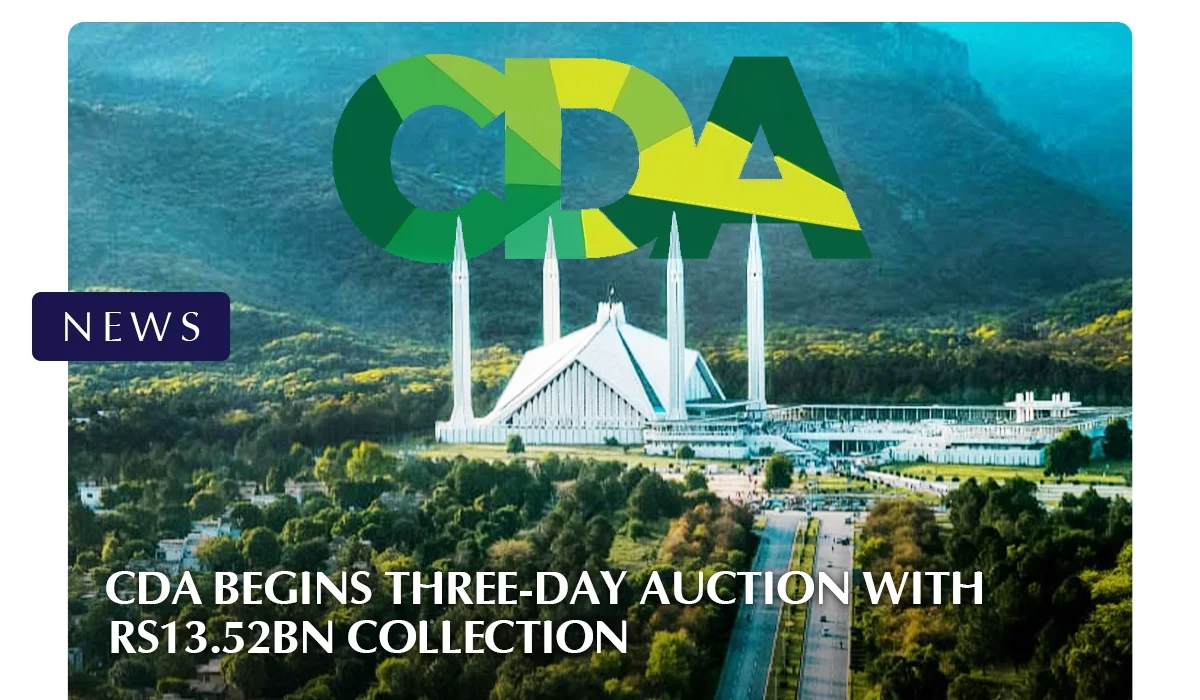
ISLAMABAD: The Capital Development Authority (CDA) generated Rs13.52 billion on Monday from the first day of its three-day public auction of residential and commercial plots held at the Jinnah Convention Centre.
According to an official statement, four plots were successfully auctioned during the opening session, including two commercial plots in the Blue Area and two agro farm plots under the Orchards Scheme on Murree Road. Blue Area Plot No. 15, located in the F-8/G-8 sector, was sold for Rs3.52 billion, while Plot No. 17 in the same area fetched Rs9.15 billion. In addition, Plot No. 37/C of the Orchards Scheme was auctioned for Rs42.20 crore, and Plot No. 37/D was sold for Rs42 crore.
The CDA stated that the auction will continue until December 24, during which various categories of residential and commercial plots will be offered to investors. These include plots in different centres, the E-11 Northern Strip, agro farms, petrol pump sites, and constructed shops in the Blue Area. Residential plots from multiple sectors are also part of the auction.
To encourage investor participation, the authority has introduced several incentives, including a five per cent discount on commercial plots for payments made in US dollars and an additional five per cent concession for lump-sum payments made within 30 days of bid approval. Building plan approval will be granted after an initial 25 per cent payment, while possession of plots will be handed over upon payment of 75 per cent of the total amount.
Following the completion of the auction, all bids will be submitted to the CDA Board for approval. CDA Chairman Mohammad Ali Randhawa stated that the revenue generated from the auction will be utilised for development, construction, and beautification projects across Islamabad.
For more news, visit Chakor Ventures.
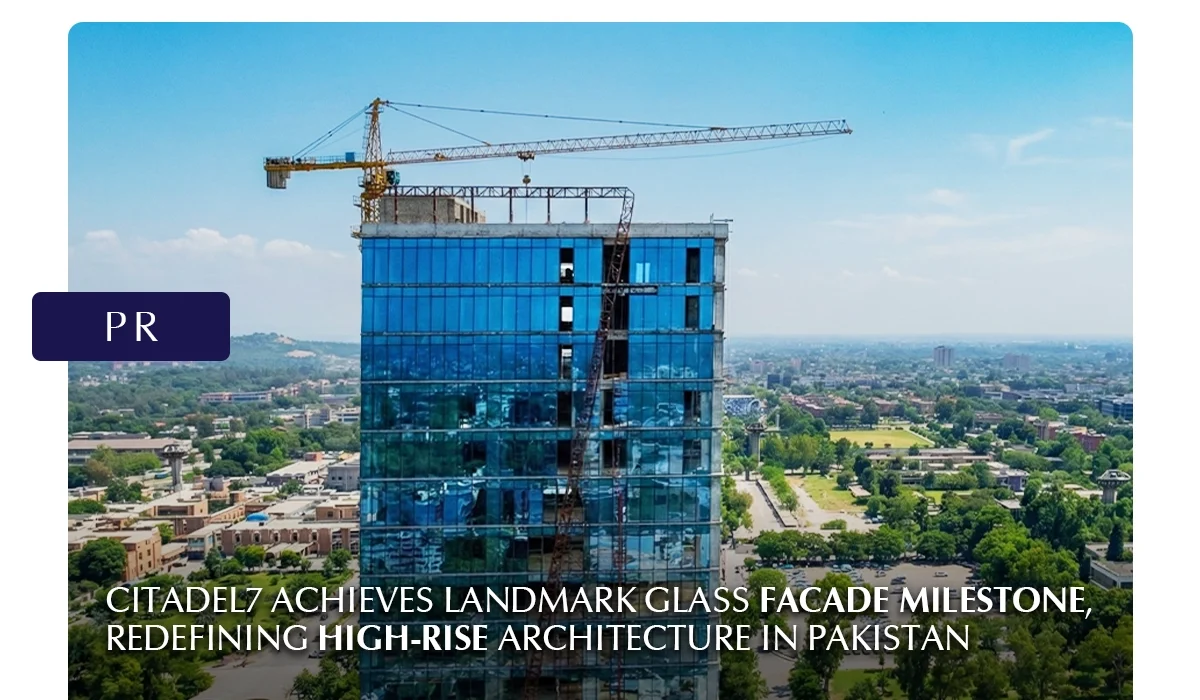
Islamabad, December 22, 2025: A significant construction milestone has been achieved, with Citadel 7’s iconic glass facade now in place. As a result, prices for Citadel 7 units are set to change soon, reflecting the project’s growing value. The achievement marks a transformative moment in Pakistan’s architectural and real estate landscape and positions Citadel 7 as the country’s first 3D glass high-rise corporate tower.
Developed by Chakor Ventures and located in Islamabad’s prestigious Blue Area, Citadel 7 features Pakistan’s most premium and technologically advanced facade to date. The fully imported 3D glass system showcases exceptional precision, innovation, and contemporary design, seamlessly blending aesthetics with advanced engineering.
This development is the result of a landmark collaboration between Gutmann (Germany), a globally renowned glass facade systems manufacturer, and ZKS (Pakistan), a leading facade solutions provider. Their combined expertise has delivered climate-resilient, world-class facade technology tailored to local conditions.
Citadel 7 is also Pakistan’s first 3D glass building with pop-out windows, enhancing natural ventilation, daylight control, and energy efficiency. With LEED-aligned design, thermal insulation, and soundproofing, Citadel 7 stands as a future-forward landmark defining the next era of glass high-rise architecture in Pakistan.