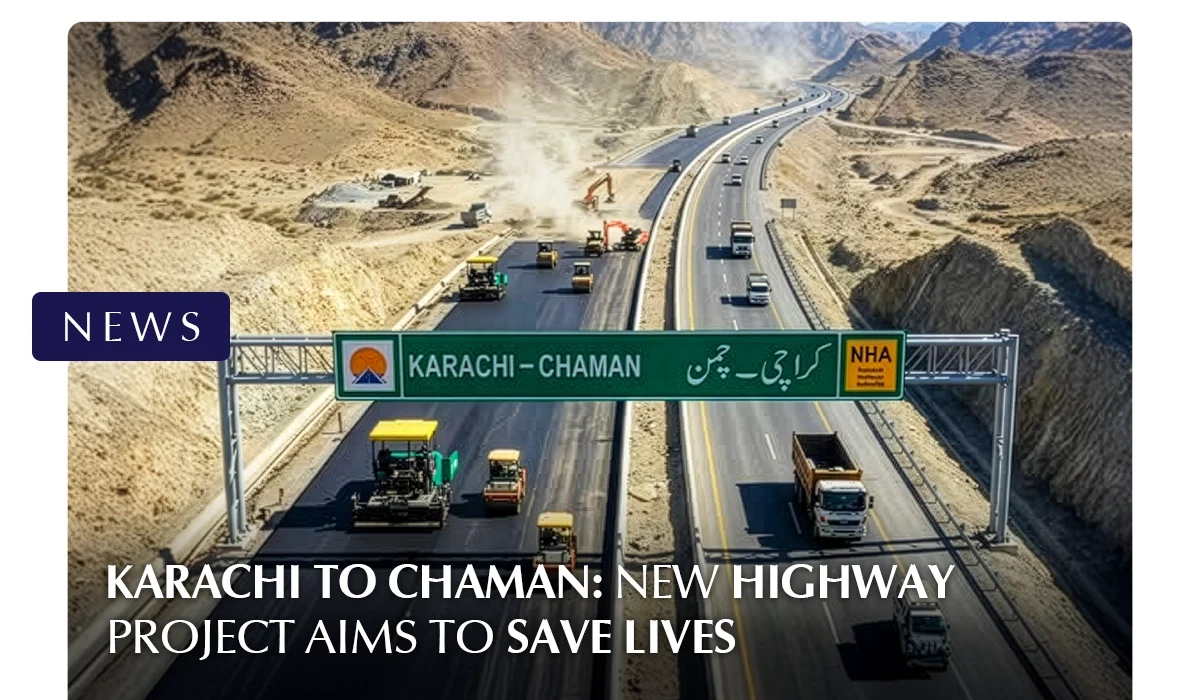
KARACHI: Prime Minister Shehbaz Sharif has announced that construction work on the Karachi–Chaman highway has officially started. He said the project will be completed in one year. Earlier, it was expected to take two years.
The prime minister called the highway a major step for safer travel. He said the current route has a long history of deadly accidents. The new highway will improve road safety and regional connectivity.
PM Sharif told the federal cabinet that he recently visited Quetta. He laid the foundation stone of the highway there. The road will be nearly 850 kilometres long. It will link Karachi to Chaman through key areas of Balochistan.
He said the project will cost around Rs400 billion. The entire cost will be paid by the federal government. He explained that funds were arranged through savings. These savings came when the government did not reduce fuel prices despite falling global oil prices. He said this money is now being used for national development.
The prime minister also highlighted support for farmers. He said a Rs75 billion agricultural package for Balochistan has been completed. Out of this, Rs50 billion was provided by the federal government. He added that solar energy solutions are being introduced to reduce dependence on unreliable electricity. Farmers can now irrigate their lands using solar panels.
He also shared updates about Daanish schools in the province. He said construction has begun and contractors are mobilised. He added that the plan has expanded from five schools to seven. The goal is to improve education and opportunities in underserved areas.
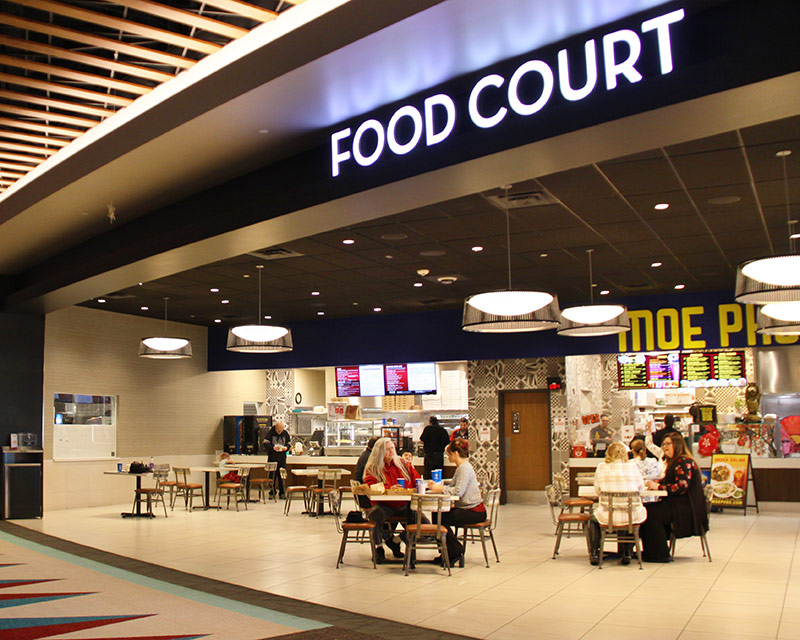
Food Court Investment within shopping malls is emerging as a lucrative and promising opportunity in retail real estate. With growing demand for dining experiences that combine convenience and variety, food courts are becoming a central feature of shopping destinations. If you are an investor or business owner looking to capitalize on this trend, a food court investment could be your next smart move.
If you’re searching for an investment opportunity, a food court in a shopping mall can be your best option. This guide will help you make an informed decision as both a buyer and an investor.
What Is Food Court Investment?
A food court investment refers to investing in retail spaces within shopping malls that are designated for food services. These spaces usually house multiple food vendors offering a variety of dining options, from fast food to international cuisine, all under one roof. Food courts have become essential in attracting and retaining mall visitors, making them a vital revenue source for mall owners and a profitable venture for food business owners.
Why Invest in Food Court Spaces?
1. High Foot Traffic & Built-In Customers
Food courts naturally attract significant foot traffic, as people flock to malls not only to shop but also to dine. This high foot traffic ensures consistent visibility and sales for tenants, making it an appealing investment for those seeking reliable returns.
2. Steady Rental Income
Food courts typically offer long-term leases to food vendors, providing mall owners with steady, predictable rental income. Unlike traditional retail spaces, which may experience seasonal fluctuations, food courts can maintain a consistent revenue stream due to the demand for dining options.
3. Lower Operational Costs
Compared to standalone restaurants, food courts offer significant savings in operational costs. Mall management handles most of the common areas (e.g., cleaning and security), thereby reducing maintenance costs. Additionally, food vendors benefit from the mall’s marketing and branding support.
4. Strong Customer Experience
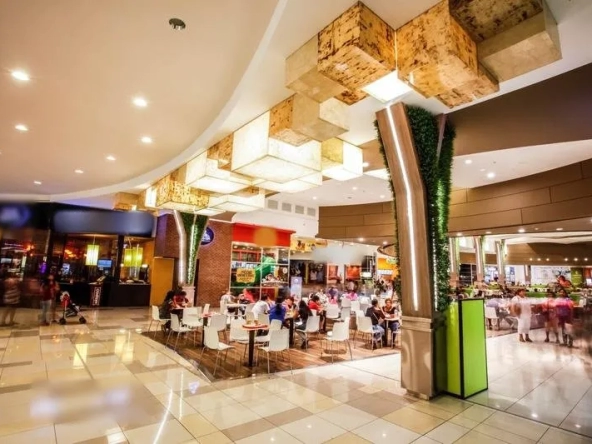
Modern food courts provide more than just a place to eat; they offer a complete dining experience, with amenities such as communal seating, diverse food options, and entertainment. This increases dwell time, which in turn boosts overall sales for vendors and the mall.
Market Trends & Consumer Behavior
Modern malls are evolving from traditional retail spaces into experience-driven hubs, with food court investment playing a central role. In urban centers, consumers are increasingly combining shopping with social dining, transforming the way people experience malls. Today’s shoppers seek a holistic experience that combines shopping, entertainment, and dining, making food courts a critical element of successful mall operations.
As urbanization increases, the demand for diverse dining experiences has grown. Consumers, especially in metropolitan cities like Islamabad, are moving towards a culture where dining out is not just about food but about socializing and enjoying the atmosphere. Food courts are central to this change, offering variety, convenience, and affordability.
Why Islamabad’s Food Court Market Matters
Islamabad is emerging as a fast-growing retail hub, with new commercial projects under development. The city’s middle class is growing, and its dine-out culture is becoming more prominent. As urban centers continue to expand, there is increasing demand for restaurant space in Islamabad, making the food court market an ideal investment opportunity. The shift towards mixed-use developments, where retail and food offerings are integrated, further highlights the potential for food court investments in the region.
Citadel 7: A Prime Investment Opportunity in Islamabad
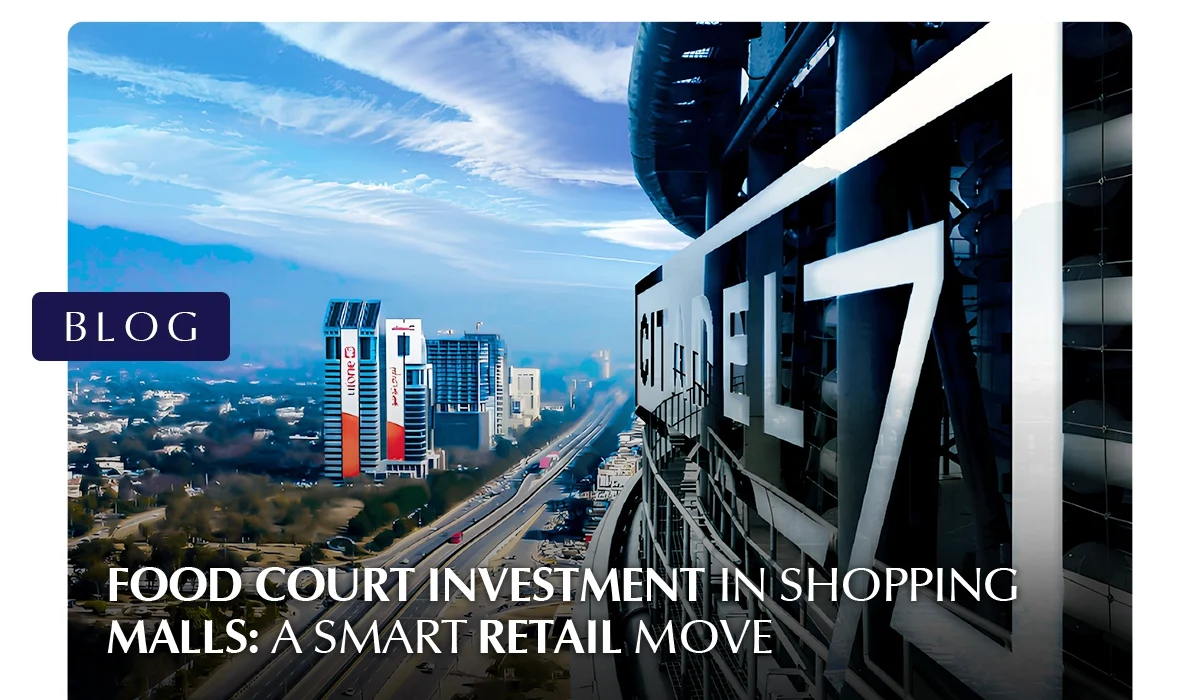
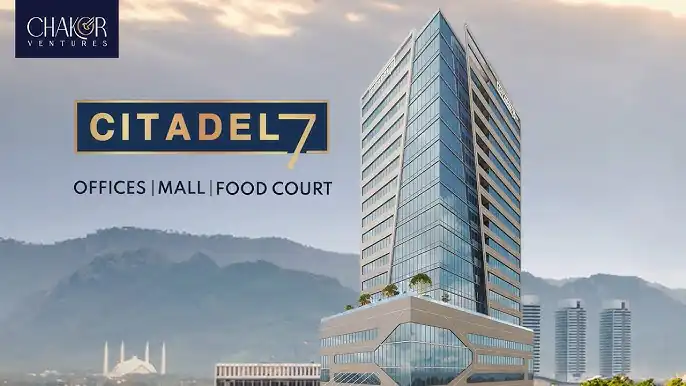
Citadel 7 stands as one of Islamabad’s premier mixed-use developments, offering a unique opportunity for investors looking to capitalize on the city’s growing demand for food court spaces. Strategically located in the heart of the city, Citadel 7 combines retail, dining, and corporate offices, delivering a dynamic and modern shopping and business experience. Situated in a prime location, Citadel 7 combines retail, and dining to create a dynamic shopping experience.
What Makes Citadel 7 Mall Different?
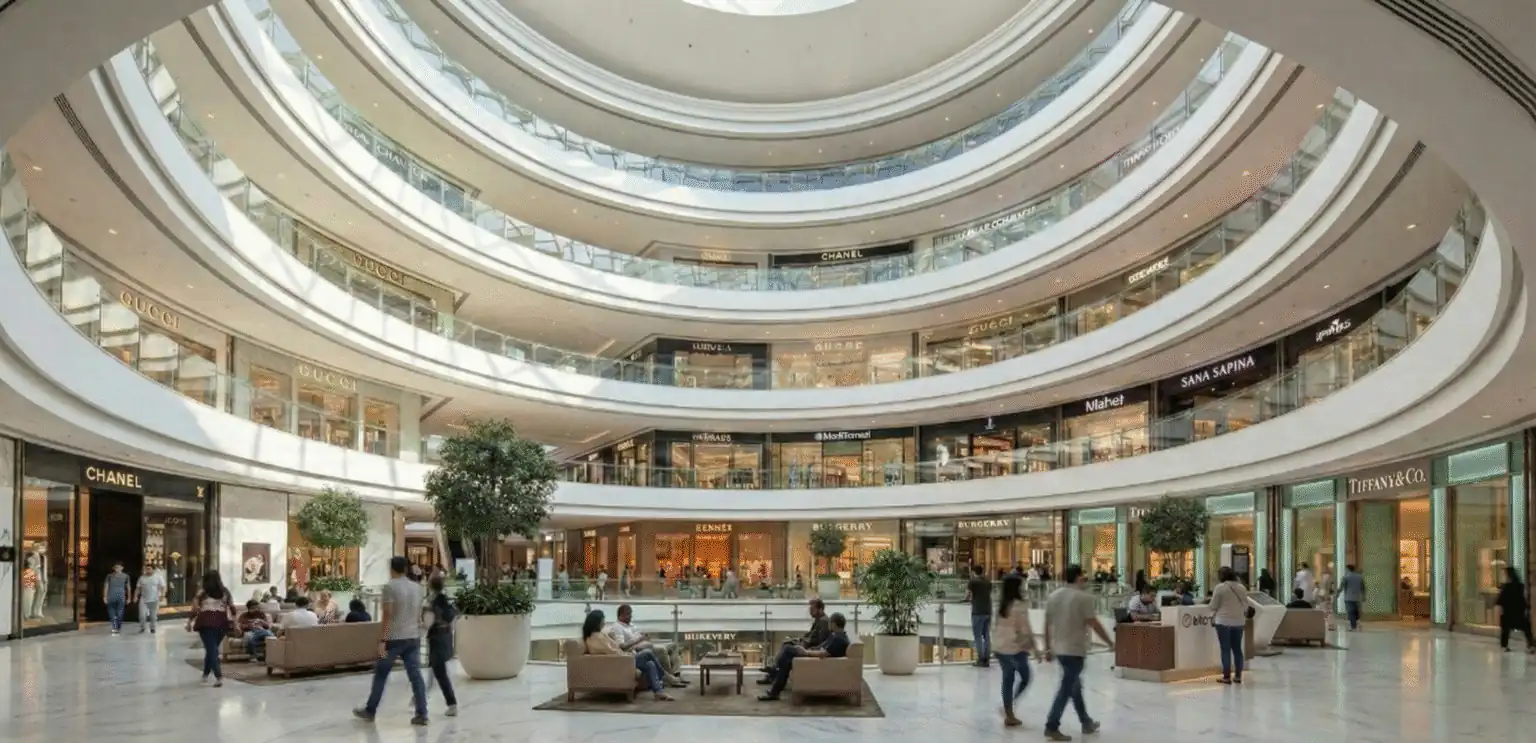
Citadel 7 retail is more than just a mall; it’s an experience-driven retail hub that offers premium shopping, luxury dining, and cutting-edge corporate spaces all under one roof. What sets Citadel 7 apart is its modern architectural design, featuring luxury amenities, green spaces, and advanced technology. This integrated approach ensures that Citadel 7 is not just a place to shop, but a complete lifestyle experience for visitors and tenants alike.
Located on Jinnah Avenue, the city’s busiest commercial corridor, Citadel 7 caters to a diverse customer base. Its design includes open spaces, contemporary interiors, and a balanced blend of retail, dining, and corporate spaces that keep customers engaged longer, an essential factor for the success of its food court.
Mall Structure & Food Court
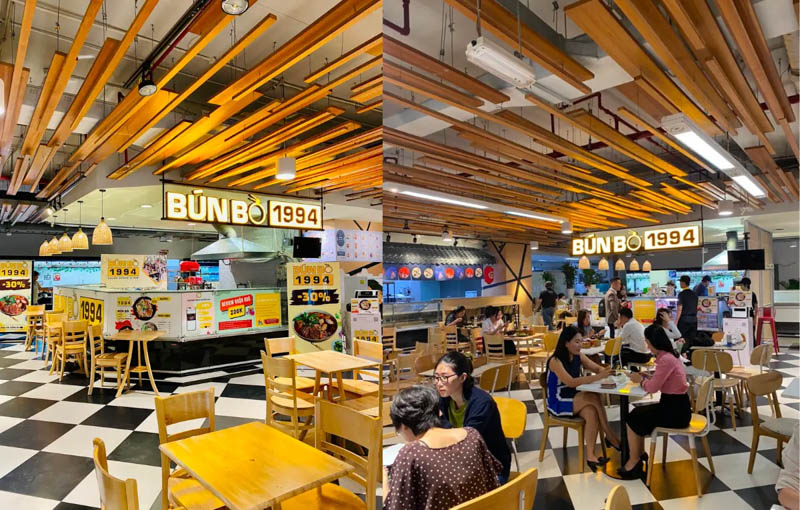
Citadel 7’s food court is an integral part of the mall’s multi-use structure. Located strategically on the 5th floor, the food court is easily accessible and offers a wide variety of dining options from local eateries to international chains. The food court will be designed with modern interiors and comfortable seating, creating an inviting atmosphere that will encourage visitors to relax, socialize, and enjoy their meals. As part of Citadel 7’s vision, the food court will become a dynamic space where shoppers and visitors can unwind, making it a central gathering point within the mall.
Citadel 7’s design ensures that the food court investment is positioned not only to serve shoppers but also to attract foot traffic from visitors who come to experience its shopping and social spaces.This makes the food court a key component of the mall, ensuring it remains a high-traffic area throughout the day.
Food Court as a Footfall Engine
Citadel 7’s food court acts as a powerful footfall engine. The mall’s unique location, combined with its diverse consumer offerings, ensures that visitors flock to the mall not just for shopping but also for dining and entertainment. As consumers increasingly view dining as a social experience, food court investment in Citadel 7 will become a central gathering point for families, friends, and professionals, which in turn drives high foot traffic for food vendors.
The mall attracts shoppers, professionals, and tourists, ensuring that its food court benefits from a steady stream of potential customers. The convenience of having diverse dining options under one roof is a key factor in ensuring high customer retention and repeat visits.
Why food court investment in Citadel 7 is a Smart Investment:
High Footfall: Located in a central area of Islamabad, Citadel 7 attracts a diverse group of shoppers, professionals, and tourists. This guarantees consistent foot traffic, giving food court tenants access to a high-volume customer base.
Diverse Consumer Base: The mall draws a wide range of consumers, from local residents to international visitors, creating an excellent environment for food court tenants to cater to diverse tastes and preferences.
State-of-the-Art Facilities: Citadel 7 features modern infrastructure, luxury amenities, and a prime location, making it an attractive destination for high-quality food-court operators and premium brands.
Dine-In Experience Trend: As more people opt for a complete shopping and dining experience, Citadel 7’s food court is well-positioned to meet this demand, making it an ideal choice for both customers and investors.
The Future Trend: Food Court Growth in Islamabad
The future of food court investment in Islamabad looks promising. With the rapid growth of the city’s middle class and the rise of a more dynamic dine-out culture, demand for quality food court spaces is set to increase. As urbanization continues, malls like Citadel 7 are expected to lead the charge in catering to the growing desire for integrated shopping and dining experiences.
The Future of Citadel 7’s Food Court
With the growing trend of food court investment, Citadel 7 offers an exceptional opportunity for investors seeking high returns. Due to its prime location, state-of-the-art infrastructure, and the rising demand for quality dining options, food court investment at Citadel 7 is set to make it one of the leading food court destinations in Islamabad.
Key Malls in Islamabad with Food Courts
Below is a comprehensive table summarizing the key malls in Islamabad with food courts, highlighting the floor location, and additional details for each:
Mall Name
Food Court Floor / Level
Location (Area/Sector)
Notes / Specific Details
The Centaurus Mall
4th Floor (Food Court)
Jinnah Ave, F‑8/4, Islamabad
Well‑established food court with local & international brands including KFC, McDonald’s, Hardee’s, Subway & more.
Giga Mall
2nd Floor
DHA Phase II, Main GT Road, Islamabad
Food court and dining outlets operate on the mall’s middle floors and are available for leasing.
Pak China Mall
5th Floor (Food Court)
Sector G‑9, Islamabad
The official listing confirms the food court on the 5th floor.
Mall of Islamabad
4th Floor
Jinnah Ave, New Blue Area, Islamabad
Food court & dining zone known as an attraction
Safa Gold Mall
7th Floor
F‑7 Markaz, Islamabad
Listed as having a food court area; some local listings reference upper floors, but the exact official floor is not published.
Zeta‑1 Mall
3rd Floor (Food Courts)
Main GT Road, Opposite DHA Phase 2, Zone 5, Islamabad
The food court area on the 3rd floor is actively being leased.
Investor Guide: How to Evaluate Food Court Investments in the Blue Area
When considering an investment in a food court in Islamabad’s Blue Area, it’s crucial to assess key factors such as foot traffic, demographics, location advantages, and long-term rental potential. The Blue Area, the city’s commercial heart, sees significant footfall from professionals, tourists, and residents alike, making it a prime location for food-court investments.
Why Citadel 7 Food Court Stands Out:
Among the various opportunities in the Blue Area, Citadel 7 stands out as an exceptional investment option. Its prime location in the bustling commercial district ensures high visibility and constant foot traffic. The state-of-the-art infrastructure, combined with luxury amenities and modern design, makes Citadel 7’s food court an attractive hub for both premium food brands and diverse consumer groups.
Investors should evaluate factors such as rental yield, consumer demand, and the mall’s ability to attract consistent foot traffic. Citadel 7, with its prime location and high-quality facilities, offers strong potential for long-term rental income and a steady return on investment.
Conclusion
Food Court Investment in shopping malls is a smart retail real estate move, especially in bustling cities like Islamabad. The trend towards experience-driven retail hubs, where food courts play a central role, is set to continue growing as urbanization and demand for social dining increase.
With Citadel 7 offering an exceptional investment opportunity due to its prime location, state-of-the-art facilities, and strong rental potential, it stands out as one of the best food-court investment options in Islamabad.
The future of shopping malls is no longer defined by rows of shops and transactional retail alone. Across the world and increasingly in Pakistan, shopping malls are transforming into immersive lifestyle destinations where shopping blends seamlessly with dining, entertainment, and social experiences. As consumer expectations evolve and digital retail reshapes buying habits, malls that focus on experience, accessibility, and premium environments are emerging as clear winners.
In modern retail Pakistan, this shift is particularly significant. Urban centers like Islamabad are witnessing a growing demand for well-designed, secure, and experience-driven retail spaces. Premium malls are stepping in to meet this demand, redefining how people shop, socialize, and spend their time.
The Evolution of Shopping Malls in Pakistan
Shopping malls in Pakistan have undergone a visible transformation over the last two decades. Early retail centers primarily served as enclosed marketplaces, offering convenience rather than experience. Today, however, the expectations of shoppers have changed.
Modern consumers seek comfort, aesthetics, brand variety, dining options, and seamless movement all within a single destination. This evolution mirrors global retail trends and highlights how modern retail in Pakistan is aligning with international standards. As a result, premium malls are no longer a luxury concept; they are becoming a necessity for future-ready cities.
Sr. No.
Mall Name
Relevance to the Future of Shopping Malls
1
Centaurus Mall
Represents early premium mall trends in Pakistan by combining retail, dining, and entertainment in a single destination format.
2
Giga Mall
Demonstrates how large-scale malls cater to family-focused experiences, a key pillar of modern retail in Pakistan.
3
Blue World Trade Center
Highlights the growing importance of mixed-use retail environments in shaping the future of shopping malls.
4
Safa Gold Mall
Reflects premium mall trends through its focus on luxury brands and upscale shopping experiences.
5
Olympus Mall
Shows how contemporary mall design and diverse retail mixes support evolving consumer expectations.
6
Mall of Islamabad
Represents the expansion of modern retail Pakistan into suburban communities.
7
Al-Janat Mall
Emphasizes convenience-led retail combined with entertainment, aligning with changing urban lifestyles.
8
Amazon Outlet Mall
Illustrates diversification in retail formats, adding value-driven options within the future of the shopping malls ecosystem.
What Defines the Future of Shopping Malls Globally
The future of shopping malls is being shaped by a few defining principles that go beyond traditional retail:
Experience-first environments that encourage longer visits
Efficient layouts that maximize visibility and shopper flow
Integrated dining and leisure as core attractions
Sustainable and energy-efficient design
Prime urban locations that ensure consistent footfall
These global shifts directly influence premium mall trends, setting new benchmarks for retail success and long-term viability.
Why Premium Malls Win in Modern Retail Pakistan
Experience Over Transactions
Premium malls are designed to be destinations rather than stopover points. Spacious corridors, thoughtfully planned layouts, and a mix of retail, dining, and leisure ensure that visitors stay longer and engage more deeply with the space.
Strategic Location and Accessibility
Visibility and accessibility are critical to retail success. Premium malls are typically located in high-traffic urban corridors, ensuring steady footfall from professionals, families, and city visitors throughout the day.
Retail-Optimized Design
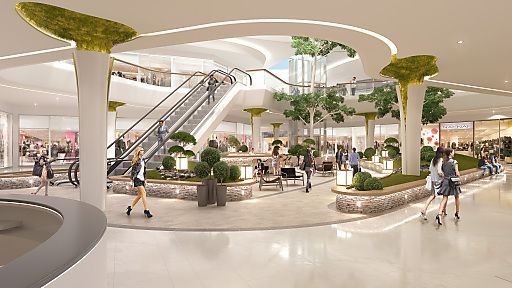
From floor layouts to vertical circulation, premium malls are engineered to enhance retail performance. Easy navigation, escalator-led movement, and clear zoning increase customer comfort and benefit retailers through higher engagement.
These advantages place premium malls at the center of the future of shopping malls in Pakistan.
Citadel 7 Mall: A Case Study in the Future of Shopping Malls
A Celebration of Immersive Shopping Elegance
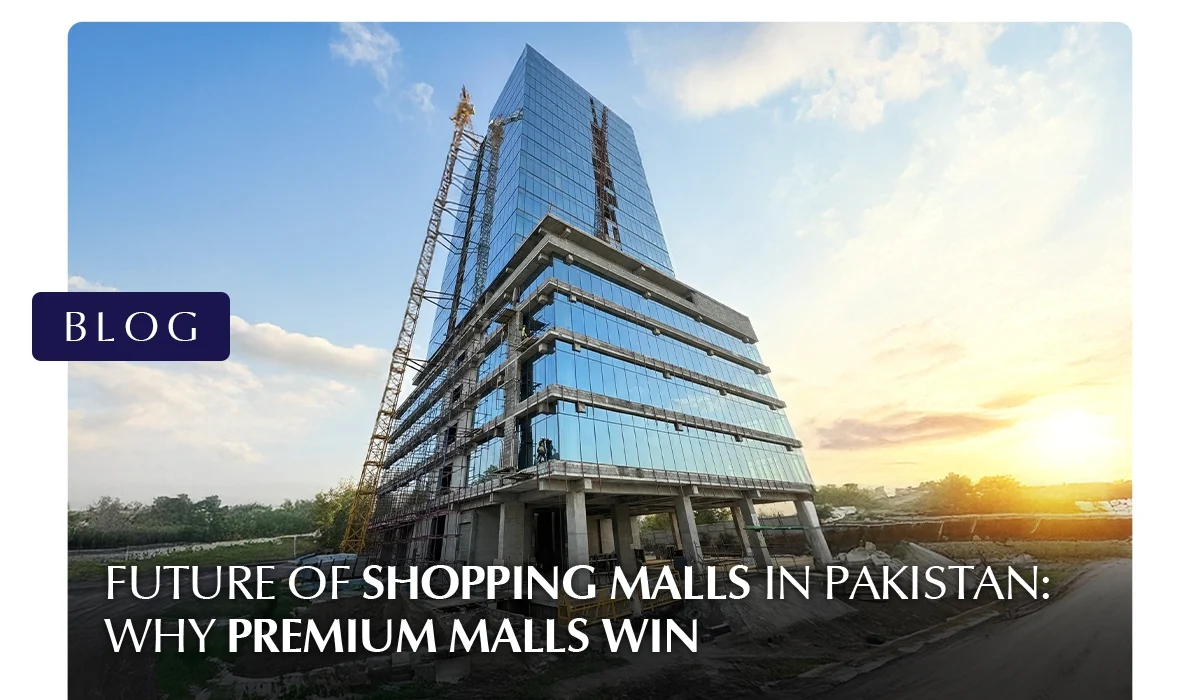
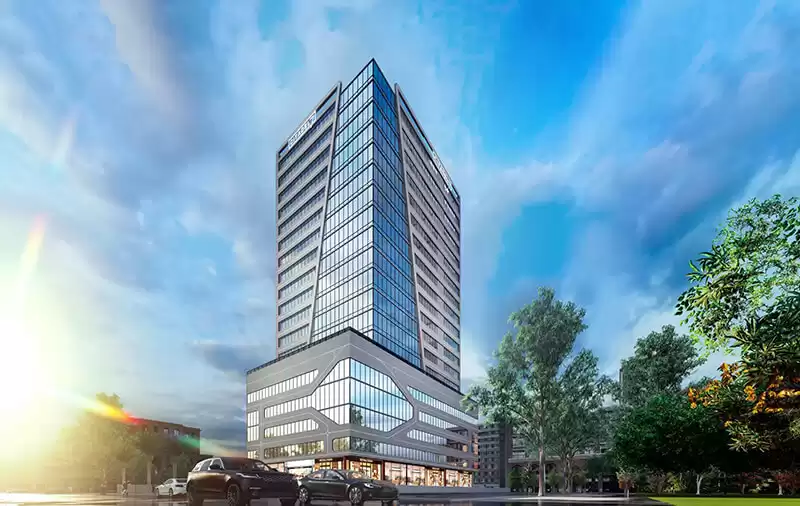
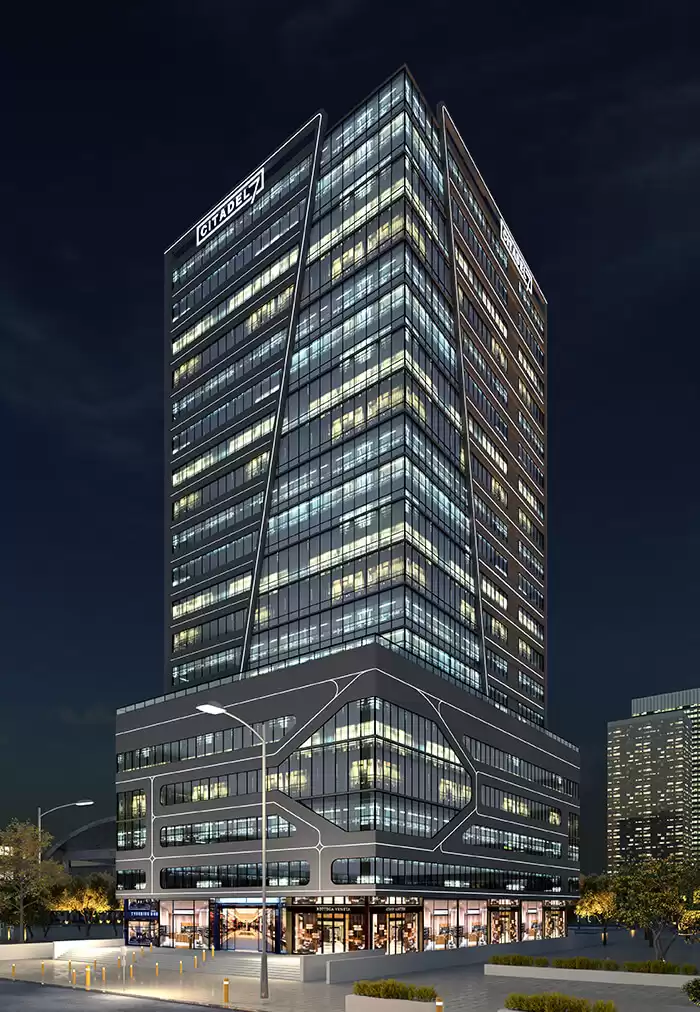
Developed by Chakor Ventures, Citadel 7 Mall represents a new benchmark in premium retail development. Designed as a four-level shopping mall, Citadel 7 offers an immersive retail experience that brings top-end brands and international fashion labels under one roof.
Wide concourses and spacious corridors allow visitors to shop comfortably even during peak hours, making the experience refined and unhurried regardless of footfall volume.
Designed for Retail Success: Inside Citadel 7 Mall
Optimized Mall Layout
Citadel 7 Mall is carefully planned to maximize retail performance:
5 total floors
4 retail shop floors
1 dedicated food court
Layouts designed for maximum visibility and shopper engagement
Retail spaces suitable for diverse business needs, from high-visibility ground-floor units to upper-level boutiques
Seamless Vertical Circulation
High-speed escalators ensure smooth movement across floors, eliminating congestion and enhancing customer flow. Efficient circulation allows visitors to explore the entire mall comfortably, increasing exposure for all retail units.
Dining as an Experience
Citadel 7 elevates dining beyond the conventional food court. A dedicated food court attracts families and groups, while the 5th-floor fine-dining restaurant offers a premium culinary experience with:
Elegant indoor seating
A terrace providing panoramic views of Islamabad
This blend of casual and fine dining reflects evolving premium mall trends where food becomes a central attraction.
Location Advantage: Why Prime Positioning Matters for the Future of Shopping Malls
Commanding Presence on Jinnah Avenue
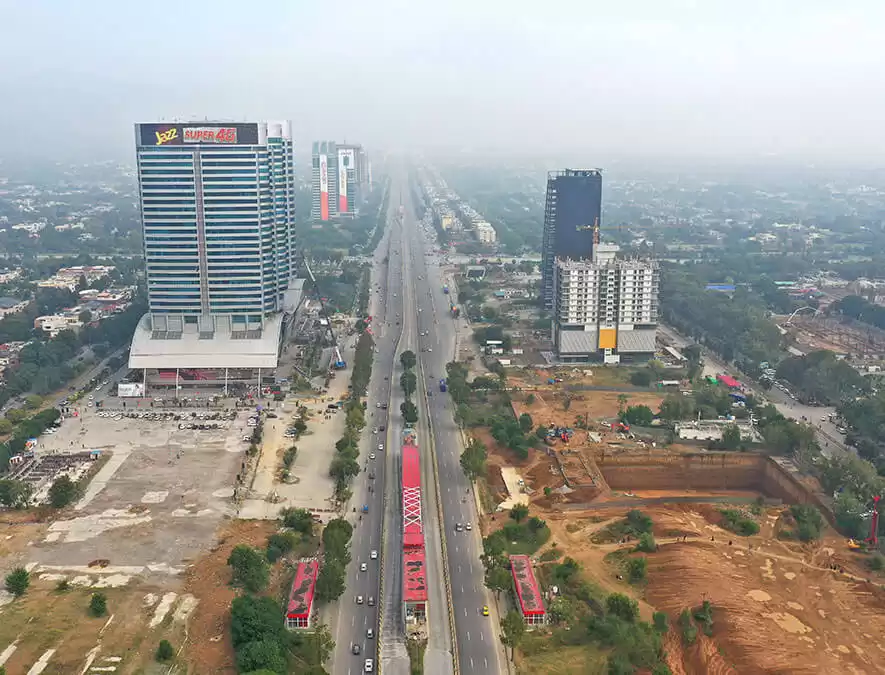
Citadel 7 Mall enjoys a prime position on Jinnah Avenue, Islamabad’s most prominent commercial and cultural artery. This location ensures a constant flow of professionals, families, and urban explorers throughout the day.
Strategic Dual Connectivity
The project also borders Ibn-e-Sina Road, offering immediate proximity to PIMS Hospital, one of the city’s most significant landmarks. This dual access enhances connectivity and contributes to consistent foot traffic.
At the Heart of Blue Area
Located in the Blue Area and directly opposite Centaurus Mall, Citadel 7 stands at the center of Islamabad’s premium commercial activity, reinforcing its position as a future-ready retail destination.
Amenities That Future-Proof Retail Investments
Citadel 7 Mall is designed with long-term performance in mind, offering amenities aligned with the future of shopping malls:
Dedicated food court
Professional mall management
Energy-efficient design supporting sustainability
24/7 security
Over 1,200 parking spaces, including four basement levels and CDA-approved outdoor parking
High-speed internet and mobile coverage throughout the mall
Effortless parking transforms arrival into a refined prelude, setting the tone for the overall shopping experience.
Why Citadel 7 Aligns with the Future of Shopping Malls in Pakistan
From an investment and retail perspective, Citadel 7 Mall reflects the core principles of modern retail in Pakistan:
Strong rental yield potential driven by prime location and footfall
Long-term capital appreciation in the Blue Area
Low vacancy risk due to demand for premium retail units
Retail units starting from 160k per sq. ft
Planned completion by December 2026
These factors position Citadel 7 as a sustainable, future-ready retail ecosystem rather than a conventional mall.
The Road Ahead: What the Future Holds for Shopping Malls in Pakistan
As cities grow and consumer lifestyles evolve, the future of shopping malls in Pakistan will increasingly favor premium developments that combine retail, dining, accessibility, and experience. Malls that embrace thoughtful design, strategic locations, and lifestyle integration will define the next chapter of urban retail.
Conclusion
The future of shopping malls lies in premium, experience-led environments that offer more than just shopping. In modern retail Pakistan, premium malls are emerging as social hubs, lifestyle destinations, and long-term investment assets.
Projects like Citadel 7 Mall demonstrate how forward-thinking development can align global retail trends with local urban needs, setting new standards for retail excellence and shaping the future of shopping in Pakistan.
For more informative blogs on the best retail investments, visit Chakor Ventures.
ISLAMABAD: The Capital Development Authority has moved forward with plans to connect Margalla Avenue to the Peshawar Motorway (M-1), marking a significant step toward enhancing regional traffic flow and improving access to the federal capital.
CDA has invited tenders for the construction of the final 2.7-kilometre stretch of Margalla Avenue, which will include an interchange on GT Road. According to officials, technical bids will be opened on January 23, and the project is expected to be completed within eight months once construction begins.
At the road’s endpoint near Sangjani Grid Station, the National Highway Authority will undertake construction of an additional 2.5-kilometre section within Rawalpindi’s jurisdiction. This section will connect the route to M-1 near the AWT Housing Society. NHA has already awarded a Rs 4.1 billion contract for this segment to the National Logistic Cell.
The project, which has been under discussion for nearly five years, is designed as a three-lane dual carriageway with two-lane service roads, featuring a cloverleaf interchange. Once completed, it will provide a six-lane alternative route for commuters travelling between Islamabad and GT Road (N-5), easing congestion on existing arteries.
Separately, CDA officials confirmed preparations to invite bids for an underpass near Islamabad Club on Murree Road, with the design currently undergoing finalisation. The authority stated that these initiatives align with its broader agenda to enhance urban mobility and road infrastructure in the capital.
ISLAMABAD: The Capital Development Authority has intensified its anti-encroachment campaign in the federal capital, successfully retrieving more than 900 kanals of valuable state land from illegal occupants during a recent enforcement operation.
Progress of the drive was reviewed in a high-level meeting at CDA Headquarters, chaired by Muhammad Ali Randhawa, Chairman CDA and Chief Commissioner Islamabad. Senior officials from the Authority’s enforcement, planning, environment, and administration wings attended the meeting.
Officials briefed that a focused operation was carried out against land mafia elements in the Diplomatic Enclave and adjoining areas, including the former Muslim Colony. The campaign was conducted in line with orders of the Islamabad High Court, ensuring due legal process. A temporary site office was established on the Chairman’s directives, where officials from the Revenue and Planning Wings reviewed ownership claims and resolved legitimate cases in accordance with the law.
CDA further confirmed that FIRs are being registered against those involved in illegal occupation of state land and misleading citizens through unauthorised constructions. The Enforcement Wing is operating with the full support of the District Administration and Islamabad Police.
Chairman CDA emphasised that all genuine claims would be handled fairly while reaffirming the Authority’s commitment to organised urban planning, protection of state land, and elimination of encroachments across Islamabad.
CDA has appealed to citizens to cooperate with authorities and promptly report any illegal construction or encroachment. The Authority noted that state land worth billions of rupees has been recovered so far as part of these ongoing enforcement efforts.