


Inheriting property comes with more than just paperwork; it often raises a practical question families aren’t sure how to answer: what does the inherited property tax Pakistan actually mean once a house, plot, or commercial property passes into your name? Is there a tax bill waiting immediately, or does it only apply later, when you decide to sell?
This guide clears up that confusion by explaining how the inherited property tax Pakistan works today, including the key changes introduced through the Finance Bill 2026.
Is There Inheritance Tax in Pakistan?
When people search for inherited property tax Pakistan, the first thing they usually want to know is whether inheriting a property triggers an immediate tax bill. It doesn’t. Pakistan does not levy any inheritance tax, estate tax, or gift tax. This has been confirmed repeatedly by official sources, including PwC’s Worldwide Tax Summaries, which states plainly that there are no inheritance, estate, or gift taxes in Pakistan.
Selling Inherited Property Pakistan

This means that when a parent, spouse, or relative passes away and leaves behind immovable property, the legal heirs do not pay any tax simply for receiving their share. The Federal Board of Revenue (FBR) does not collect inheritance tax Pakistan on the transfer itself.
However, this doesn’t mean the topic of inherited property tax Pakistan ends there. The real complexity and the real tax exposure show up later, when an heir decides to sell that inherited asset. That’s where selling inherited property Pakistan becomes a very different conversation from simply receiving it.
Why the Inherited Property Tax Pakistan Conversation Has Changed in 2026
For years, the rules governing inherited property tax Pakistan existed in something of a grey zone, especially regarding family settlements. The Finance Bill 2026 changed that. The Federal Government introduced a significant relief measure to address long-standing ambiguities in how the cost basis of inherited immovable property is determined and how family settlements following a death should be taxed.
Previously, when family members reached a mutual settlement about how to divide a deceased relative’s property rather than going through formal succession or probate, tax authorities often treated that settlement as a separate, fresh transaction subject to capital gains tax. This created real uncertainty around inherited property tax Pakistan for ordinary families simply trying to divide assets amicably.
Through the Finance Bill 2026, the government inserted an explanation into Section 79 of the Income Tax Ordinance, 2001, clarifying that the transmission of an asset to a beneficiary upon someone’s death also includes transmission through family settlements arrived at among family members following that death.
In other words, family settlements are now treated the same as direct inheritance for tax purposes. This clarification is declaratory, meaning it reflects how the law was always intended to work, thereby providing retrospective relief to families who may have faced adverse treatment in earlier tax years. For anyone researching inherited property tax Pakistan, this is one of the most important updates of the year.
The Second Major Shift: A Proposed Capital Gains Tax on Inherited Property Sales

While the family settlement clarification is a relief measure, another development in 2026 moves in the opposite direction. The National Assembly’s Standing Committee on Finance and Revenue approved a proposal to formally impose capital gains tax on the sale of inherited properties and plots, as part of the broader tax measures under the Finance Bill 2026.
FBR property tax officials explained the mechanism during committee deliberations: the property’s market value at the time of the original owner’s death would be treated as the acquisition cost for calculating capital gains tax when the property is eventually sold.
For example, if a plot was worth Rs. 8 million at the time of the owner’s death and is later sold for Rs. 10 million, capital gains tax would apply only to the Rs. 2 million increase in value, not the entire sale price.
The Valuation Date Debate: Death vs. Transfer
There was some debate within the committee about exactly which date should be used for valuation. Committee Chairman Syed Naveed Qamar suggested that the property’s original value should instead be calculated from the date ownership is formally transferred to the heir, rather than the date of death a recommendation the committee ultimately endorsed for standard inheritance cases.
However, for property transferred through family settlement arrangements, the valuation date would remain the original owner’s death date to provide legal certainty. This distinction matters a great deal for anyone trying to understand inherited property tax Pakistan in practical terms, since the exact valuation date directly affects how much capital gains tax will eventually be owed.
Tax authorities have framed this measure as a way to remove ambiguity and create a clear, consistent system for taxing gains from inherited assets, rather than leaving heirs and tax officers to argue over interpretation.
For families navigating inherited property tax Pakistan questions, this is a welcome move toward predictability, even if it formalises a tax obligation that previously existed in a more uncertain form.
How Capital Gains Tax Actually Works on Inherited Property
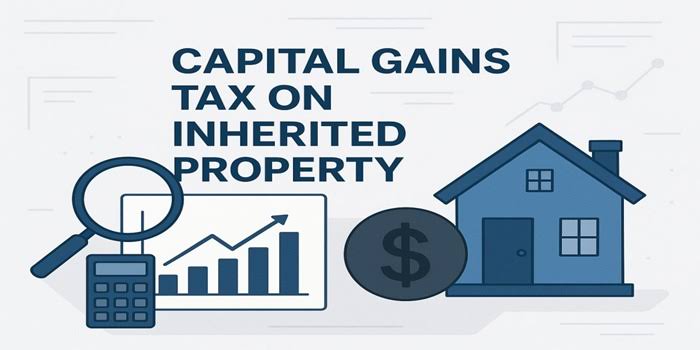
To fully understand the inherited property tax in Pakistan, it helps to separate two moments in time: the moment you inherit and the moment you sell.
- At the moment of inheritance, there’s no tax. The property simply passes to you as a legal heir once the proper succession process is completed.
- At the moment of sale, FBR applies what’s often called a “step-up basis.” Instead of calculating your capital gain from the original owner’s purchase price decades ago, FBR treats the fair market value of the property at the time of inheritance as your acquisition cost. You only pay capital gains tax on the increase in value from that inherited value to your eventual sale price. This is a fairer approach and a key reason why inherited property tax Pakistan obligations are often smaller than people initially fear.
The holding period for calculating your rate typically runs from the date the property was transferred into your name, the date of mutation or succession, not from when the original owner first purchased it. This detail matters a lot when working out your specific inherited property tax Pakistan liability.
Selling Inherited Property in Pakistan: The Practical Steps
Understanding inherited property tax Pakistan in theory is one thing; actually navigating the process of selling inherited property Pakistan is another. Here’s the general sequence heirs typically need to follow before a sale can legally proceed:
- Obtain the death certificate.
- Apply for a Legal Heirship Certificate or Succession Certificate.
- Complete mutation of the inherited property.
- Record the inherited property in your FBR tax return.
- Confirm current FBR compliance requirements before selling.
- Settle any applicable taxes at the point of sale.
Throughout this process, maintaining organised documentation the death certificate, succession or heirship certificate, mutation confirmation, original property documents, CNIC copies of all heirs, and FBR valuation records makes the eventual sale far smoother.
Frequently Asked Questions
No. There is no inheritance tax, estate tax, or gift tax in Pakistan. The topic of inherited property tax Pakistan only becomes relevant when you later sell the property.
Capital gains tax applies to the difference between the property’s fair market value at the time of inheritance and its eventual sale price, not the original owner’s purchase price.
Yes, significantly. Active and late filers generally face a flat capital gains rate, while non-filers can face substantially higher rates depending on income.
Two major things: family settlements after a death are now explicitly treated the same as direct inheritance for cost-basis purposes, and a formal mechanism for taxing capital gains on inherited property sales has been endorsed, using either the death date or transfer date for valuation depending on the circumstances.
Final Thoughts
The reality of inherited property tax Pakistan in 2026 is more nuanced than a simple yes-or-no answer. Inheriting property remains tax-free at the point of transfer, which is genuinely good news for families. But selling inherited property Pakistan carries real capital gains tax implications, and the rules have just been sharpened through the Finance Bill 2026, bringing both new clarity for family settlements and a more formal framework for taxing gains on eventual sales.
Given how quickly these rules are evolving, it’s worth confirming the final enacted provisions with a tax professional or FBR-registered consultant before finalising any sale, so your understanding of inherited property tax Pakistan stays current with the latest legal position.
For more information on similar topics like non-adjustable vs adjustable property tax in Pakistan, visit Chakor blogs.
Read More:

Dedicated and detail-oriented SEO Content Writer, Real Estate Writer, and Research Analyst based in Islamabad, with proven expertise in developing accurate, valuable, and well-researched content. Skilled in analytical writing, market research, and reporting, with the ability to turn insights into clear, professional, and impactful content. Passionate about exploring new ideas, analyzing industry trends, and contributing to high-quality writing and research-driven projects.
