


Lahore Fort, also known as Shahi Qila, is one of Pakistan’s most remarkable historical landmarks. Located at the northwestern corner of Lahore’s Walled City, this centuries-old fortress reflects the Mughal Empire’s grandeur through its monumental gateways, marble palaces, royal courtyards, and intricate decorations.
Although the site has ancient origins, Mughal Emperor Akbar began rebuilding Lahore Fort in 1566. His successors, including Jahangir, Shah Jahan and Aurangzeb, added many of its most celebrated structures. Today, the fort is part of a UNESCO World Heritage Site and remains a major attraction for visitors interested in Pakistan’s history and architecture.
Whether you want to explore Shahi Qila’s history, learn who built it, or check the latest ticket prices and timings, this guide covers everything you need to know.
Lahore Fort at a Glance
Here are the essential facts about Lahore Fort before exploring its history and attractions.
| Information | Details |
| Name | Lahore Fort |
| Also known as | Shahi Qila |
| Location | Northwestern corner of the Walled City, Lahore, Punjab, Pakistan |
| Major Mughal reconstruction | Began in 1566 under Emperor Akbar |
| Architectural style | Mughal architecture with Islamic, Persian and regional influences |
| Historical rulers | Akbar, Jahangir, Shah Jahan, Aurangzeb and later Sikh rulers |
| UNESCO World Heritage status | Inscribed in 1981 alongside Shalimar Gardens |
| Notable surviving monuments | 21 |
| General entry ticket | PKR 100 for Pakistani visitors |
| Student ticket | PKR 30 |
| Foreign visitor ticket | PKR 1,000 |
| Opening time | 8:00 AM |
| Closing time | Half an hour before sunset |
| Suggested visit duration | Approximately 2–3 hours |
Who Built Lahore Fort (Shahi Qila)?
Mughal Emperor Akbar extensively rebuilt Lahore Fort beginning in 1566. However, the fortification existed long before his reign, and several later Mughal emperors contributed to the buildings and architectural features visible today.
If you’re wondering who built Shahi Qila Lahore, Akbar is the principal ruler associated with its present Mughal form. His work introduced substantial brick and sandstone fortifications, royal accommodation and important administrative spaces.
The question of who built Shahi Qila has a more complex historical answer because the fortress was developed over several centuries. No single emperor completed it; successive rulers built and expanded it over time.
Jahangir expanded parts of the royal complex and contributed to its decorative architecture. Shah Jahan introduced elaborate marble buildings, including the celebrated Sheesh Mahal, while Aurangzeb commissioned the monumental Alamgiri Gate.
These contributions explain why Lahore Fort contains different architectural styles within the same fortified complex.
| Ruler | Major contribution to Lahore Fort |
| Emperor Akbar | Major reconstruction beginning in 1566, fortifications and royal structures |
| Emperor Jahangir | Development of Jahangir’s Quadrangle and decorative work |
| Emperor Shah Jahan | Sheesh Mahal, marble palaces and richly decorated royal buildings |
| Emperor Aurangzeb | Alamgiri Gate |
| Maharaja Ranjit Singh | Sikh-era buildings, fortifications and alterations |
Therefore, while the commonly accepted answer to “Shahi Qila was built by whom?” is Emperor Akbar, its surviving architecture reflects the work of multiple generations.
History of Shahi Qila Lahore
The history of Shahi Qila stretches across several periods of South Asian history. From early fortifications to Mughal royal residences, Sikh occupation and British administration, the fortress witnessed major political and architectural changes.
Understanding these periods helps explain why Lahore Fort is more than an impressive monument. It is a record of the changing powers that controlled Lahore.
Early History of Lahore Fort
Lahore Fort’s origins predate the Mughal Empire. Archaeological and historical evidence indicates that people occupied the area long before the surviving Mughal buildings were constructed.
Early historical accounts refer to fortifications in Lahore during the medieval period, including an earlier mud-brick fort. The site changed repeatedly as different rulers took control of the city.
Because earlier structures were destroyed, rebuilt or incorporated into later construction, it is difficult to establish one precise founding date for the original fortress.
The fort’s location near the historic urban centre made it important for controlling access, maintaining defences, and administering the surrounding region.
Lahore Fort During Emperor Akbar’s Reign
The most significant transformation began during the reign of Mughal Emperor Akbar, who started rebuilding Lahore Fort in 1566.
Akbar’s reconstruction introduced substantial masonry construction, using baked bricks and red sandstone. The fort became an important military, administrative and royal complex, reflecting Lahore’s growing significance within the Mughal Empire.
Architectural elements from this period include impressive gateways, courtyards and buildings designed for royal administration.
Akbar’s work laid the foundation for the fort’s later development. Rather than replacing the entire complex each time, subsequent emperors adapted and expanded what earlier rulers had established.
Lahore Fort Under Jahangir, Shah Jahan and Aurangzeb
The 17th century brought some of the most elaborate additions to Shahi Qila.
Emperor Jahangir contributed to the complex’s royal courtyards and decorative features. His reign is especially associated with developing Jahangir’s Quadrangle and constructing the fort’s monumental Picture Wall.
Under Shah Jahan, Lahore Fort became increasingly refined. White marble, intricate inlay work, decorated screens and mirror mosaics transformed parts of the fortress into luxurious royal spaces.
Among Shah Jahan’s most important contributions were the Sheesh Mahal, Naulakha Pavilion and several private and ceremonial buildings.
Aurangzeb later added the imposing Alamgiri Gate on the fort’s western side. Its monumental design reinforced the fortress’s connection with the surrounding Mughal landscape, including Badshahi Mosque.
Together, these reigns shaped the architectural identity for which Lahore Fort is famous today.
Shahi Qila During Sikh and British Rule
Following the decline of Mughal power, Lahore Fort passed through periods of political instability before becoming an important centre under Sikh rule.
Maharaja Ranjit Singh, who established Lahore as the capital of his Sikh Empire, used the fort as a royal residence. Sikh-era additions and alterations included residential structures, defensive works, and other buildings that served the new administration.
After the British annexation of Punjab in 1849, the fort came under colonial control. The complex served military and administrative purposes.
These later periods changed the use and condition of several historic buildings, adding further layers to the site’s history.
Lahore Fort After Pakistan’s Independence
After Pakistan gained independence in 1947, Lahore Fort remained one of the country’s most important historical monuments.
The international community recognised its significance in 1981 when UNESCO inscribed Lahore Fort and Shalimar Gardens together on the World Heritage List.
Since then, conservation work has focused on protecting architectural features, stabilising historic structures and restoring decorative surfaces.
Today, Lahore Fort continues to function as a public heritage attraction, preserving evidence of Lahore’s political, artistic and cultural history.
Timeline of Lahore Fort’s History
| Historical period | Important development |
| Pre-Mughal period | Earlier settlement and fortifications occupied the site |
| 1566 | Akbar began the major Mughal reconstruction |
| 1617–1618 | Jahangir-era development of the northern royal court |
| 1624–1625 | Decorative work began on the Picture Wall |
| 1631–1632 | Shah Jahan’s major palace and decorative additions |
| 1670s | Construction of the Alamgiri Gate under Aurangzeb |
| Early 19th century | Major use and alterations under Sikh rule |
| 1849 | British annexation of Punjab |
| 1947 | Lahore Fort became part of independent Pakistan |
| 1981 | UNESCO World Heritage inscription |
Architecture of Lahore Fort
Lahore Fort’s architecture reflects the Mughal Empire’s artistic development across different reigns.
Spread over more than 20 hectares, the fortress contains 21 notable surviving monuments. Its buildings include audience halls, royal residences, mosques, courtyards, monumental gates and intricately decorated pavilions.
Earlier Mughal construction, particularly under Akbar, relied heavily on baked brick and red sandstone. Structural strength, impressive proportions and carved decorative details characterised many buildings of this period.
Later architecture introduced increasingly elaborate artistic elements.
Under Shah Jahan, white marble became particularly prominent. Carved screens, floral inlays, glazed tilework, mirror mosaics and decorative plaster transformed royal interiors into carefully composed spaces.
The fort also demonstrates the interaction of Islamic, Persian, Hindu and other regional artistic traditions. These influences can be seen in its decorative motifs, architectural forms, materials and craftsmanship.
Unlike a monument built from a single architectural plan, Lahore Fort developed gradually. This mixture of styles is part of what makes it historically valuable.
Famous Places to See Inside Lahore Fort
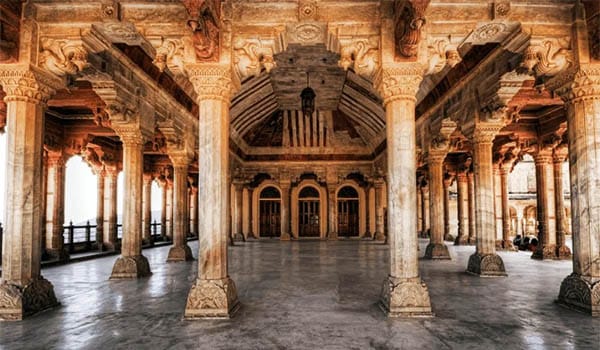
Lahore Fort contains some of Pakistan’s finest surviving examples of Mughal architecture. Its palaces, gates, and courtyards offer a glimpse into royal life, ceremonial traditions, and architectural craftsmanship.
These are some of the most important attractions inside Shahi Qila Lahore.
1. Sheesh Mahal (Palace of Mirrors)
Sheesh Mahal is one of the most celebrated buildings in Lahore Fort. Built during Shah Jahan’s reign in the early 1630s, the palace is famous for its remarkable mirror mosaic decorations.
Its walls and ceilings incorporate carefully arranged pieces of reflective glass, intricate patterns and ornamental details. These decorations were designed to create an elaborate interior environment within the royal palace.
Marble screens and fine decorative craftsmanship add to its architectural significance.
The name Sheesh Mahal means Palace of Mirrors, reflecting the feature for which it is best known.
For visitors interested in Mughal artistic techniques, Sheesh Mahal offers one of the clearest examples of the sophistication achieved during Shah Jahan’s reign.
2. Alamgiri Gate
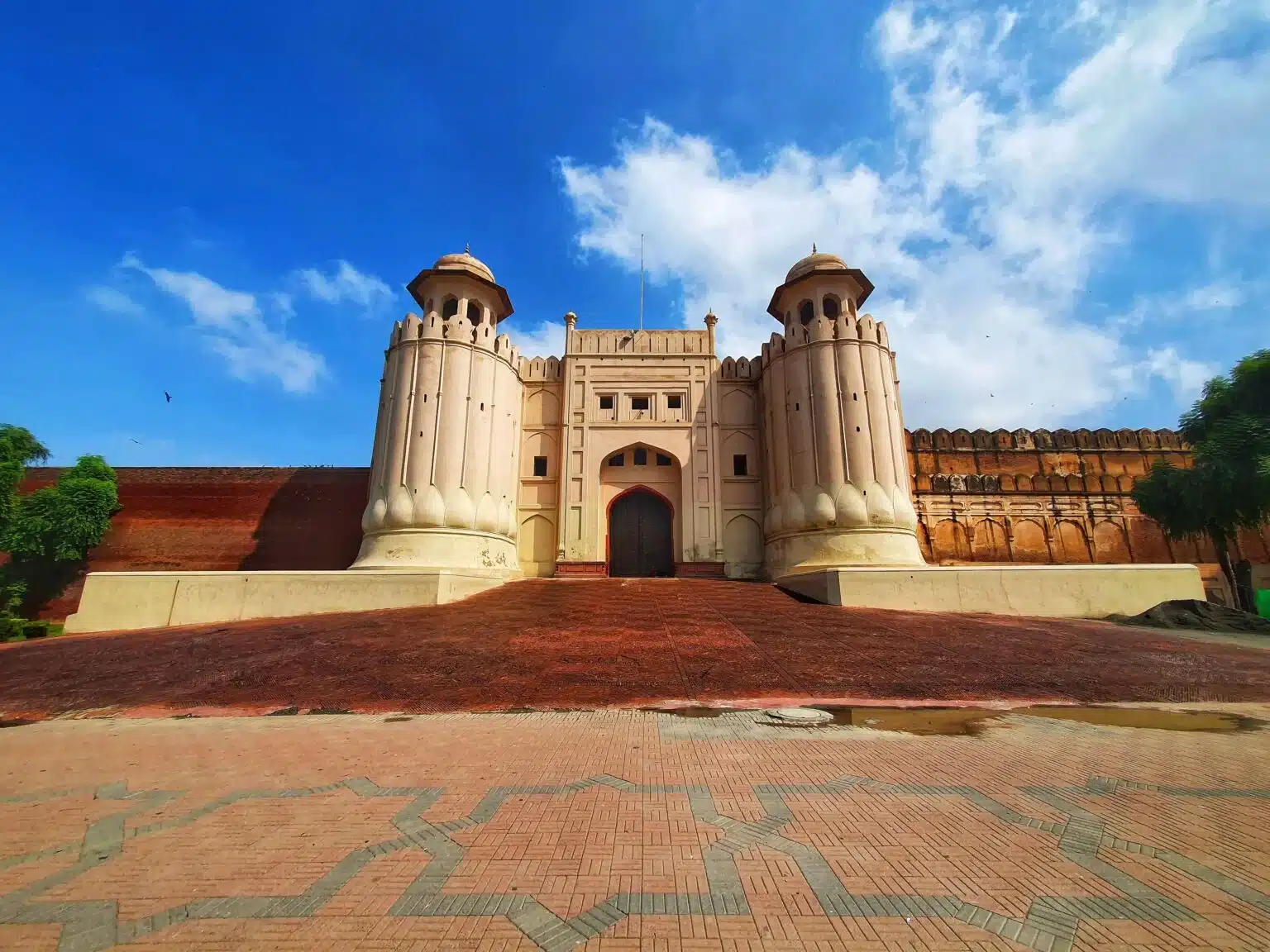
Alamgiri Gate is one of the most recognisable structures associated with Lahore Fort.
Commissioned by Mughal Emperor Aurangzeb in the 1670s, the monumental gateway stands on the fortress’s western side, facing Hazuri Bagh and Badshahi Mosque.
Its imposing entrance is flanked by two large semicircular bastions with distinctive decorative bases and domed pavilions above.
The gateway was designed on a grand scale, allowing royal processions, including elephant-mounted visitors, to pass through.
Today, Alamgiri Gate remains an iconic architectural symbol of Lahore and a prominent feature of the historic cityscape.
3. Naulakha Pavilion
Naulakha Pavilion is a marble structure associated with Emperor Shah Jahan.
Located near Sheesh Mahal, the pavilion is best known for its distinctive curved roof, elegant proportions, and refined marble decoration.
Its architecture reflects the Mughal preference for carefully balanced forms and intricate craftsmanship.
The pavilion is named after the traditional account that it cost nine lakh rupees to build.
Although smaller than several other buildings inside Lahore Fort, Naulakha Pavilion stands out because of its graceful design and artistic detailing.
4. Lahore Fort Picture Wall
The Picture Wall is one of Shahi Qila’s most extraordinary decorative features.
It was built and decorated during the reigns of Jahangir and Shah Jahan. The wall features numerous decorative panels with glazed tiles, mosaics, and intricate imagery.
The designs include artistic representations of animals, courtly activities, floral patterns and other decorative subjects.
The Picture Wall is especially important for its scale and the variety of techniques used to create its ornamentation.
Conservation projects have revealed and preserved sections of its historic decoration, allowing visitors to appreciate the craftsmanship that once adorned the royal fortress.
5. Diwan-e-Aam
Diwan-e-Aam, meaning Hall of Public Audience, served as the administrative and ceremonial centre of Mughal rule.
Audience halls provided spaces where emperors could receive officials, petitioners and other visitors according to court traditions.
The architectural arrangement emphasises openness, symmetry and the authority of the royal court.
Although parts of the structure changed and were rebuilt across different historical periods, Diwan-e-Aam remains an important reminder that Lahore Fort was not merely a defensive fortress.
It also served as a centre of government and public royal ceremony.
6. Moti Masjid (Pearl Mosque)
Moti Masjid is a historic mosque inside Lahore Fort, generally associated with Shah Jahan’s reign.
Its name means Pearl Mosque, reflecting the graceful appearance of its white marble architecture.
Compared with the fort’s monumental audience halls and gateways, Moti Masjid is relatively modest in scale. Its design relies on balanced proportions, marble surfaces and restrained decorative detail.
The mosque served religious functions within the royal complex and later changed use under successive administrations.
Its peaceful architectural character contrasts with the imposing defensive structures surrounding the palace complex.
Shahi Qila Lahore Ticket Price
The Shahi Qila Lahore ticket price depends on the visitor category. The official Lahore Fort website currently publishes separate admission charges for Pakistani visitors, students and foreign nationals.
Lahore Fort Entry Ticket Prices
| Visitor category | Ticket price |
| Pakistani general admission | PKR 100 |
| Student admission | PKR 30 |
| Foreign visitor admission | PKR 1,000 |
These admission rates are published on the official Lahore Fort website and were checked on October 12, 2026.
Visitors should also be aware that certain guided tours, special-access experiences and organised heritage activities may require separate tickets.
If you are checking the Shahi Qila ticket price before planning a visit, confirm the latest charges through the official Lahore Fort website, particularly if you are visiting after the date shown above.
Shahi Qila Lahore Timing and Opening Hours
According to the official Lahore Fort website, the published visiting hours are:
| Visiting information | Official published schedule |
| Opening time | 8:00 AM |
| Closing time | Half an hour before sunset |
The Shahi Qila Lahore timing is linked to sunset, so the actual closing time changes with the season.
Visitors should not assume the fort always closes at a fixed afternoon hour.
Special events, maintenance work, public holidays or operational arrangements may also affect entry to certain areas.
To avoid inconvenience, check the latest official information before travelling and allow enough time to explore the main monuments during daylight.
Where Is Lahore Fort Located?
Lahore Fort is located at the northwestern corner of the Walled City of Lahore, in Punjab, Pakistan.
The fortress stands close to some of the city’s best-known historical landmarks, including Badshahi Mosque and Hazuri Bagh.
Its Alamgiri Gate faces the open historic space between the fort and Badshahi Mosque, creating one of Lahore’s most recognisable architectural settings.
Visitors can locate the monument using an online map by searching for Lahore Fort or Shahi Qila Lahore.
Because the surrounding historic district has narrow roads, pedestrian areas, and changing access arrangements, confirm the current visitor entrance and transport drop-off point before arriving.
Location: View Lahore Fort on Google Maps
Best Time to Visit Lahore Fort
The best time to visit Lahore Fort depends on the weather and the kind of sightseeing experience you prefer.
For many visitors, the cooler months from November to February offer more comfortable conditions for exploring the fort’s expansive courtyards and outdoor areas.
During Lahore’s hotter months, a morning visit is generally preferable. Arriving early makes walking between monuments more manageable before afternoon temperatures rise.
Morning light can also be ideal for photographing the fort’s gateways, courtyards, and architectural details.
Regardless of the season, visitors should remember that Lahore Fort covers a considerable area, with many sections requiring walking outdoors.
Comfortable footwear, drinking water and appropriate sun protection can make the experience easier.
How to Explore Lahore Fort
A general visit to Lahore Fort takes about two to three hours, though visitors interested in architecture, history, and photography may prefer to spend longer.
A useful way to explore Shahi Qila is to pair its major historical buildings with the stories of the rulers who built them.
Begin at the designated visitor entrance and learn about the fort’s development under Akbar. From there, explore the accessible royal courtyards and audience halls to understand how the complex functioned as both a palace and an administrative centre.
Continue to the buildings associated with Jahangir and Shah Jahan, noting changes in construction materials and decorative styles.
If access is permitted, prioritise Sheesh Mahal and Naulakha Pavilion for their marble architecture and artistic details. The Picture Wall is another essential feature for understanding Mughal decoration and craftsmanship.
Some specialised tours provide access to areas not normally included in standard visits. Check availability, prices and conditions through official heritage channels.
After a long day of sightseeing, many visitors like to end the trip with a proper meal. Our list of fine dining restaurants in Lahore covers options across the city.
Why Is Lahore Fort a UNESCO World Heritage Site?
Lahore Fort became part of a UNESCO World Heritage property in 1981, alongside the historic Shalimar Gardens.
UNESCO recognises these two royal complexes as outstanding examples of Mughal artistic and architectural achievement during the 16th and 17th centuries.
Lahore Fort represents the monumental architecture of Mughal heritage, while Shalimar Gardens showcases the period’s sophisticated approach to landscape design and water features.
The fort’s 21 surviving monuments show Mughal architecture’s progression from the relatively robust brick-and-sandstone buildings of Akbar to the elaborate marble palaces and decorative craftsmanship of Shah Jahan’s reign.
Its structures also reveal a combination of Islamic, Persian, Hindu and other artistic influences that shaped the Mughal architectural tradition.
UNESCO recognition reinforces the importance of preserving Lahore Fort for future generations.
Although the fort and Shalimar Gardens share a single World Heritage inscription, they are separate sites in Lahore.
Places to Visit Near Lahore Fort
A visit to Shahi Qila can easily form part of a broader exploration of Lahore’s historic district.
Badshahi Mosque
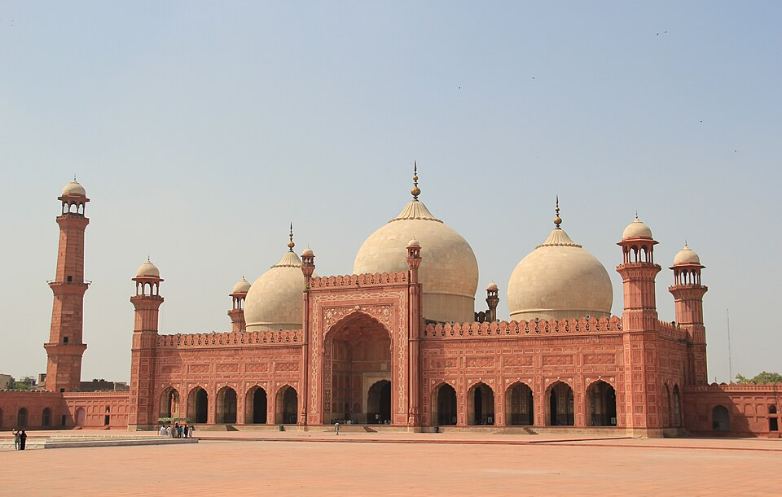
Located opposite the fort’s Alamgiri Gate, Badshahi Mosque is one of Lahore’s most recognisable Mughal landmarks. Commissioned during Aurangzeb’s reign, it provides an architectural connection to the fort’s later Mughal period.
Hazuri Bagh
Hazuri Bagh occupies the historic open space between Lahore Fort and Badshahi Mosque. Its location makes it particularly relevant for understanding the relationship between the area’s major monuments.
Fort Road Food Street
The nearby Fort Road area offers opportunities to experience Lahore’s food culture while viewing parts of the surrounding historic cityscape. If you want an evening meal with a view, our guide to the rooftop restaurants in Lahore is a good place to start, and visitors travelling with kids can check the best restaurants in Lahore for family.
Visitors planning to explore several attractions should check each attraction’s opening hours and entry arrangements, as they may differ from Lahore Fort’s.
Frequently Asked Questions About Lahore Fort
Who built Shahi Qila Lahore?
Mughal Emperor Akbar began the major reconstruction of Lahore Fort in 1566. However, the site contained earlier fortifications, and later emperors, including Jahangir, Shah Jahan and Aurangzeb, added important buildings.
When was Lahore Fort built?
Akbar began developing the foundations of the present Mughal-era fort in 1566. The site’s earlier history extends back centuries, so 1566 should not be treated as the date of its original foundation.
What is the history of Shahi Qila?
Shahi Qila’s history includes pre-Mughal fortifications, Akbar’s major reconstruction, architectural expansion under later Mughal rulers, Sikh-era occupation, and changes during British rule. It became part of a UNESCO World Heritage property in 1981.
What is the Shahi Qila Lahore ticket price?
The official website publishes general admission at PKR 100 for Pakistani visitors, PKR 30 for students and PKR 1,000 for foreign visitors. These rates were checked on October 12, 2026, and should be reconfirmed before visiting.
What are the Shahi Qila Lahore timings?
The official published opening time is 8:00 AM, and the fort closes half an hour before sunset. The exact closing time therefore varies throughout the year.
Is Lahore Fort the same as Shahi Qila?
Yes. Lahore Fort and Shahi Qila are two names for the same historic fortress in Lahore’s Walled City. Shahi Qila is the name commonly used locally.
Why is Lahore Fort famous?
Lahore Fort is famous for its Mughal architecture, royal palaces, Sheesh Mahal, Picture Wall, Naulakha Pavilion and Alamgiri Gate. It is also recognised internationally as part of a UNESCO World Heritage property.
How much time is needed to visit Lahore Fort?
Approximately two to three hours is a reasonable estimate for a general sightseeing visit. Visitors who want to explore the architecture in greater detail, take photographs or join guided experiences may need additional time.
Conclusion
Lahore Fort is one of Pakistan’s most significant historical landmarks, preserving centuries of Mughal architecture and later political history within a single fortified complex. From Akbar’s reconstruction to Shah Jahan’s marble palaces and Aurangzeb’s monumental gateway, Shahi Qila reveals how successive rulers shaped Lahore’s architectural heritage.
Whether you’re visiting for its history, photography, or remarkable monuments, check the latest ticket prices and timings beforehand to make the most of your visit.
Lahore’s heritage sits alongside a fast-growing modern skyline. Chakor Ventures, Pakistan’s leading real estate developer, is shaping the city’s business district with the Citadel Prime corporate and apartment building. If you follow the property market as closely as the city’s history, explore our guide to real estate investment in Pakistan.
References
- UNESCO World Heritage Centre — Fort and Shalamar Gardens in Lahore
- Punjab Walled City Authority — Lahore Fort
- Official Lahore Fort Website — Ticket Prices and Timings
- Department of Archaeology and Museums — Lahore Fort
- Punjab Walled City Authority — Picture Wall
- Punjab Walled City Authority — Naulakha Pavilion

BBC-featured Content Specialist with a sharp eye for search intent and a proven ability to turn content into a growth engine. I leverage cutting-edge digital marketing tools to craft strategies that fuel organic traffic, amplify brand growth, and own the local SEO landscape, particularly across the competitive real estate market. I help brands dominate search rankings and convert visibility into measurable business success.
