
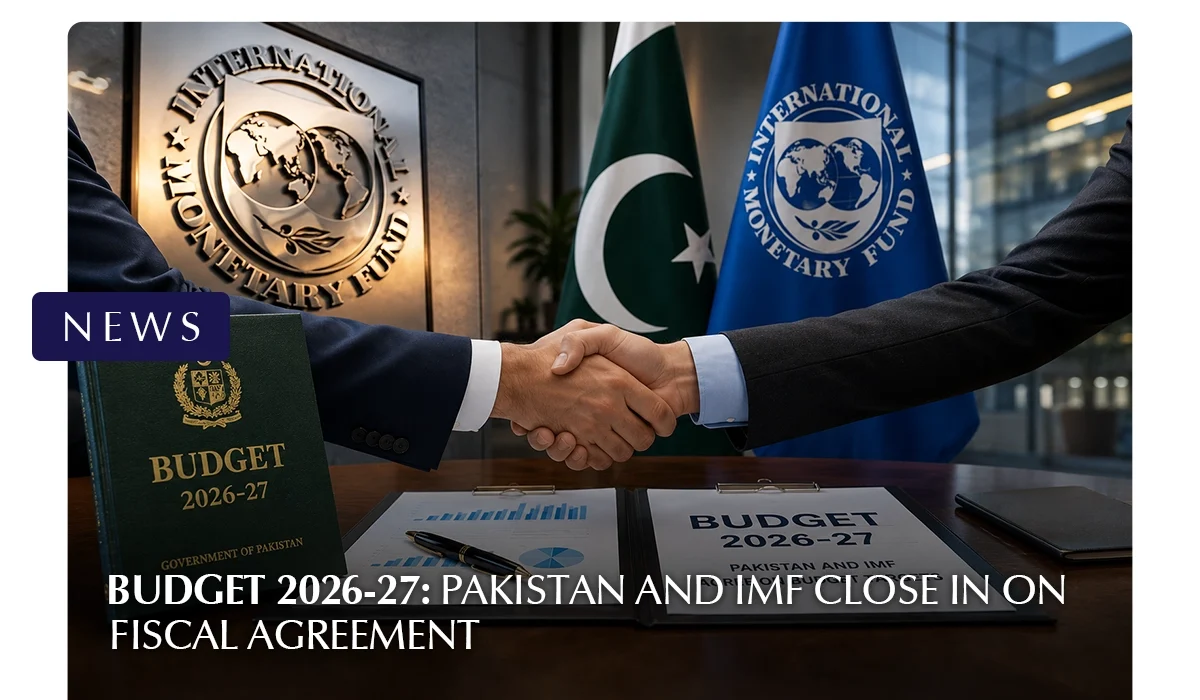

ISLAMABAD: Pakistan’s federal budget negotiations with the International Monetary Fund have stretched beyond their original deadline, with both sides working to finalise key fiscal parameters ahead of the anticipated budget presentation on June 5, 2026.
The IMF mission, which had been scheduled to conclude discussions on Wednesday, extended its stay in Islamabad to resolve a handful of remaining outstanding issues. Sources familiar with the matter confirmed that most points of contention have been settled, signalling broad alignment between the two parties on the fiscal framework for the upcoming year.
On the revenue front, the Federal Board of Revenue has been assigned an ambitious collection target of Rs15.264 trillion for the next fiscal year, with an interim benchmark of Rs7.022 trillion due by December 2026. The Fund has recommended an 18% increase in petroleum levy collections, pushing the total petroleum development levy target to Rs1.73 trillion, with the per-litre levy potentially rising to Rs100. Additional revenues of Rs 95 billion are expected through tax audits, while Rs 50 billion in sector-specific recoveries are being sought from sugar, cement, tobacco, and fertiliser industries.
Provinces have been directed to contribute meaningfully to fiscal consolidation, with a combined surplus target of nearly Rs2 trillion and an additional revenue generation requirement of Rs430 billion. Provincial development allocations, meanwhile, are proposed to increase from Rs2.1 trillion to Rs2.5 trillion.
On the expenditure side, defence spending is set to rise modestly to Rs2.665 trillion, while debt servicing remains the dominant fiscal pressure, with interest payments projected at Rs7.8 trillion. Pakistan’s total external financing requirements are estimated at $21.2 billion.
In a notable social measure, quarterly disbursements under the Benazir Income Support Programme are set to increase from Rs14,500 to Rs18,000. Public sector development spending has been projected at approximately Rs. 968 billion.
The IMF has also called for Rs430 billion in new tax measures and a phase-out of incentives for special economic zones by 2035. Looking ahead, economic growth is projected at 3.5% with average inflation expected at 8.4%.
For more news on real estate and special reports, visit Chakor Ventures.
Sources:

Dedicated and detail-oriented SEO Content Writer, Real Estate Writer, and Research Analyst based in Islamabad, with proven expertise in developing accurate, valuable, and well-researched content. Skilled in analytical writing, market research, and reporting, with the ability to turn insights into clear, professional, and impactful content. Passionate about exploring new ideas, analyzing industry trends, and contributing to high-quality writing and research-driven projects.
