
Climate Change in Pakistan 2025
CategoriesUrban Developments & Planning

Impacts of Climate Change in Pakistan: Floods, Heatwaves

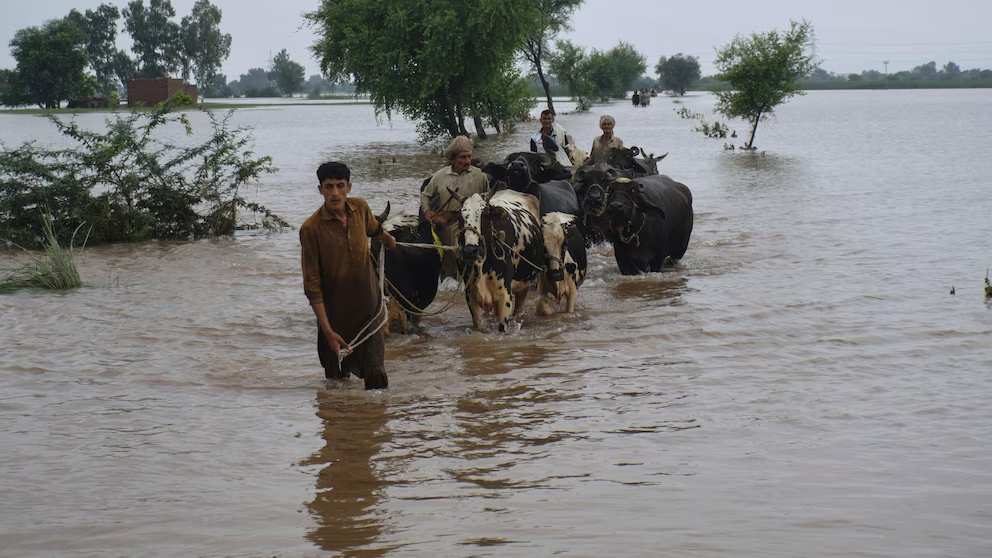
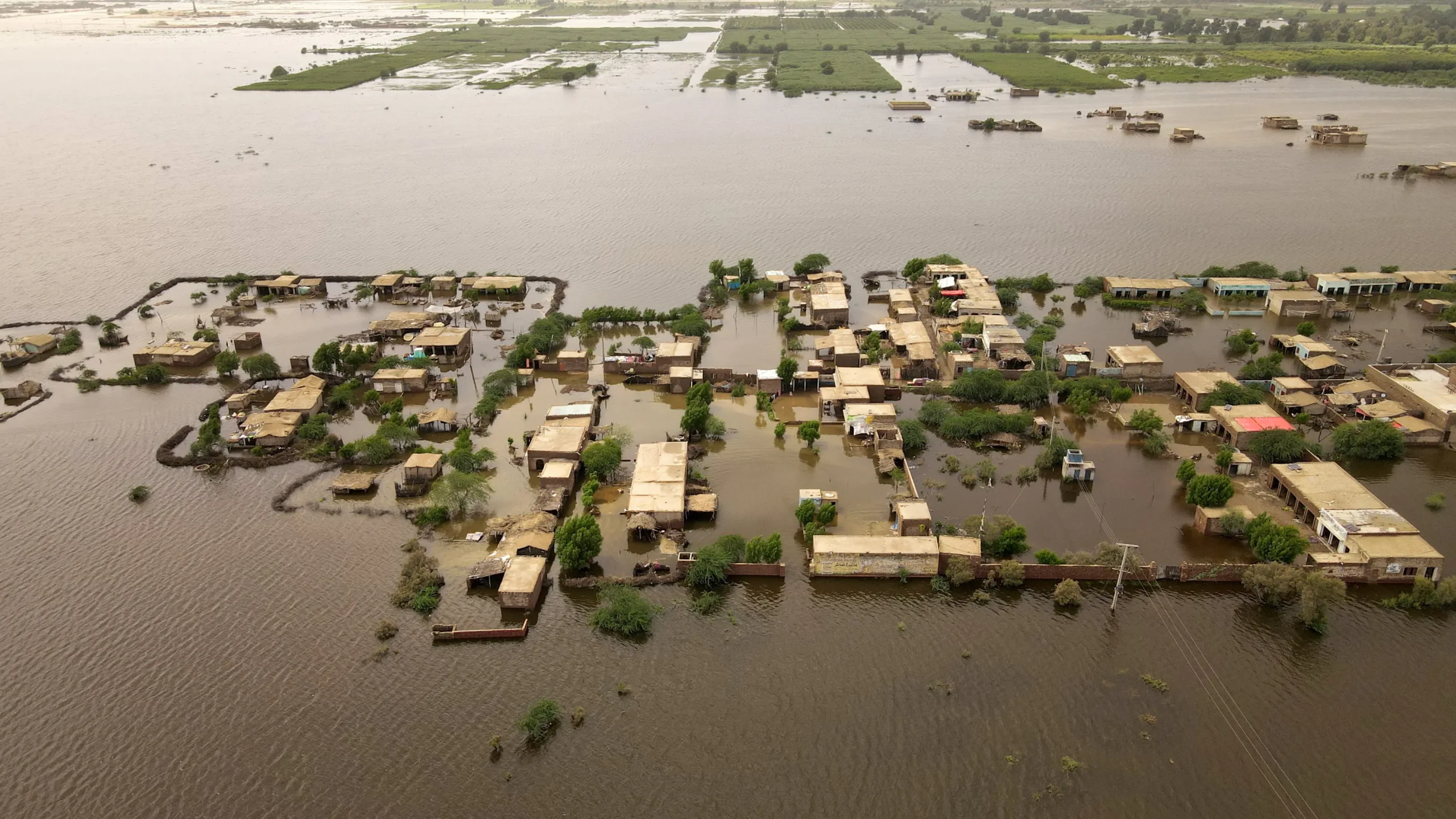
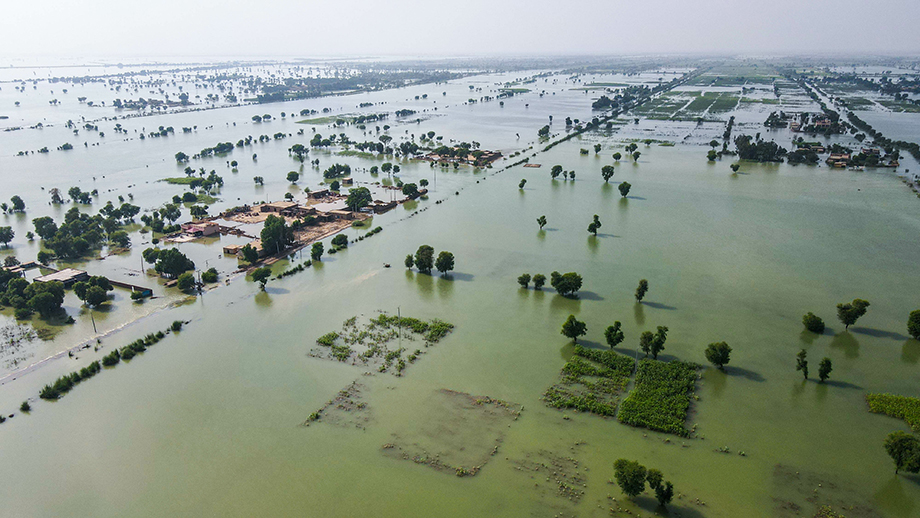
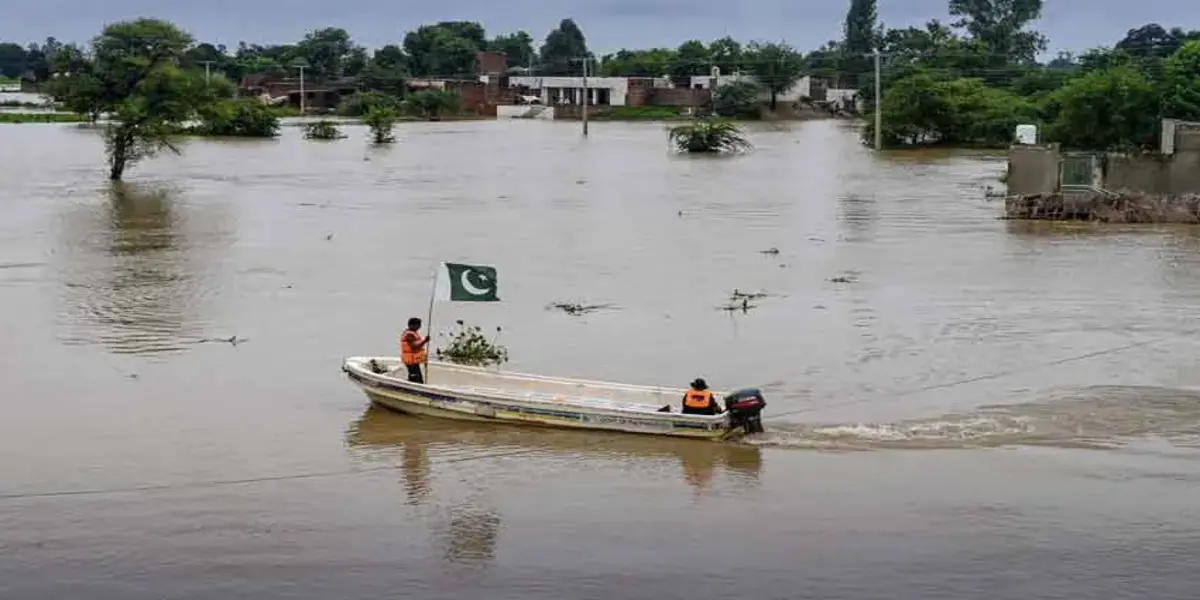
Pakistan in 2025 is no longer waiting for climate change, it is living through it. Flooded streets in Punjab, parched fields in Sindh, and cloudbursts tearing through northern valleys paint a grim picture of a nation caught in nature’s crossfire. What was once a distant warning has become a daily reality.

According to the United Nations and NASA, climate change is the long-term alteration of temperatures and weather patterns caused largely by human activities, particularly the burning of fossil fuels that release greenhouse gases. 

The IPCC warns that global warming is amplifying extreme events, heavier rains, longer droughts, deadlier heatwaves, with devastating intensity in vulnerable regions.

Pakistan, despite contributing less than 1% of global emissions, ranks among the most climate-vulnerable countries in the world. Its geography, from Himalayan glaciers to the Indus delta, places millions at the mercy of shifting monsoons, rising temperatures, and unstable river systems. 

For farmers, children, and urban communities alike, climate change is not an abstract concept. The effects of climate change in Pakistan nightmare are like a storm that has already arrived, demanding resilience and urgent action.

Before working towards a solution it is necessary to have a clear understanding of the issue. In this blog Chakor lets you explore more about climate change.

What is Climate Change?

Climate change refers to long-term shifts in global climate patterns, primarily driven by human activities. As explained by the United Nations, NASA, and the IPCC, while Earth’s climate has naturally fluctuated for millennia, the current pace of warming is unprecedented. 

Climate change in Pakistan

The widespread burning of fossil fuels, rapid industrialization, and deforestation have accelerated greenhouse gas emissions to levels unseen in human history, altering weather systems and destabilizing natural balances.

What are the Causes of Climate Change in Pakistan?

There are multiple reasons for climate change in Pakistan. At the heart of this crisis are greenhouse gases (GHGs), which trap heat in the atmosphere much like a blanket around the Earth. The EPA identifies carbon dioxide (CO₂) from burning coal, oil, and gas as the largest contributor, followed by methane (CH₄) released from agriculture, landfills, and energy production. 

Deforestation compounds the problem by reducing nature’s ability to absorb CO₂. The result is a rapidly warming planet that disrupts rainfall, fuels heatwaves, and melts glaciers at alarming rates.

Global Impacts

Effects of climate change are both global and uneven. According to NASA, the planet’s average surface temperature has already increased by 1.2°C above pre-industrial levels, making the last decade the hottest on record. If unchecked, the world could heat by up to 3.1°C by 2100

The World Health Organization (WHO) warns that climate change is already responsible for over 250,000 additional deaths annually worldwide due to malnutrition, malaria, diarrhea, and heat stress.

Extreme weather prolonged droughts, erratic monsoons, violent cyclones is disrupting food systems and displacing millions.

Pakistan’s Contribution vs. Vulnerability

Here lies one of the starkest injustices of the climate crisis: Pakistan contributes less than 1% to global emissions, yet it is among the 10 most climate-vulnerable countries bearing the impacts of climate change in Pakistan.. 

Its geography makes it uniquely exposed from melting glaciers in the north, fertile but flood-prone plains in the center, to a fragile coastline in the south. 

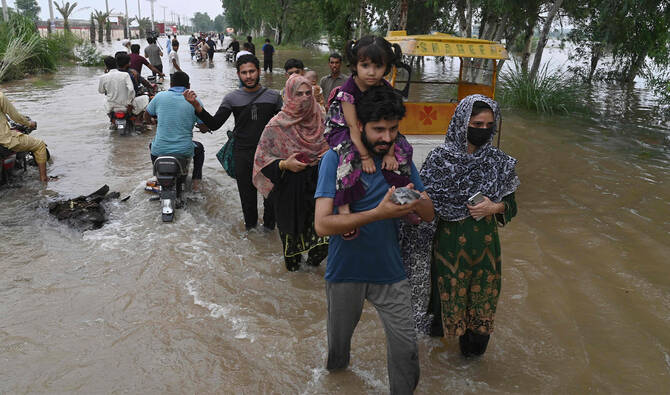
The 2022 super floods displaced over 33 million people, a figure greater than the population of Australia, and in 2025, Punjab and Sindh again face devastating riverine floods and heatwaves.

Indicator Global Context Pakistan Context
Average temperature rise since pre-industrial era +1.2°C (NASA, IPCC) +0.6°C to +1°C above 1960s baseline (World Bank Climate Portal)
Projected rise by 2100 if unchecked Up to +3.1°C (IPCC) Could exceed +2.5°C in South Asia (World Bank)
Main GHG contributors CO₂ (coal, oil, gas), CH₄ (agriculture, energy) (EPA) Energy sector ~46%, agriculture ~41% (UNEP GRID Pakistan)
Share in global emissions 100% <1% (UNDP, World Bank)
Health impact 250,000+ additional global deaths annually (WHO) Climate-sensitive diseases rising: dengue, diarrhea, heat stress (WHO, UNICEF Pakistan)
Extreme events Rising sea levels, droughts, cyclones, wildfires 2022 floods affected 33M people; 2025 riverine floods displacing hundreds of thousands (Al Jazeera, Reuters)


A Cruel Paradox

The numbers tell a painful story: those who pollute the least pay the highest price. For Pakistan, climate change is not an academic debate, it is a lived crisis eroding livelihoods, damaging health, and threatening survival itself. 

The melting of Himalayan glaciers, erratic monsoons, and deadly heatwaves make it clear: unless global emissions are curbed and local resilience strengthened, Pakistan’s future remains hostage to forces it did little to unleash.

The 2025 Catastrophes: A Nation in Crisis

Pakistan in 2025 is not facing ordinary weather, it is facing extremes amplified by climate change. Scientists warn that rising global temperatures are making floods heavier, heatwaves deadlier, droughts harsher, and cloudbursts more violent. These are not natural “disasters” in isolation, but climate-driven phenomena, reshaped by human activity and global warming.

Catastrophic impacts of climate change

Floods in Pakistan 2025

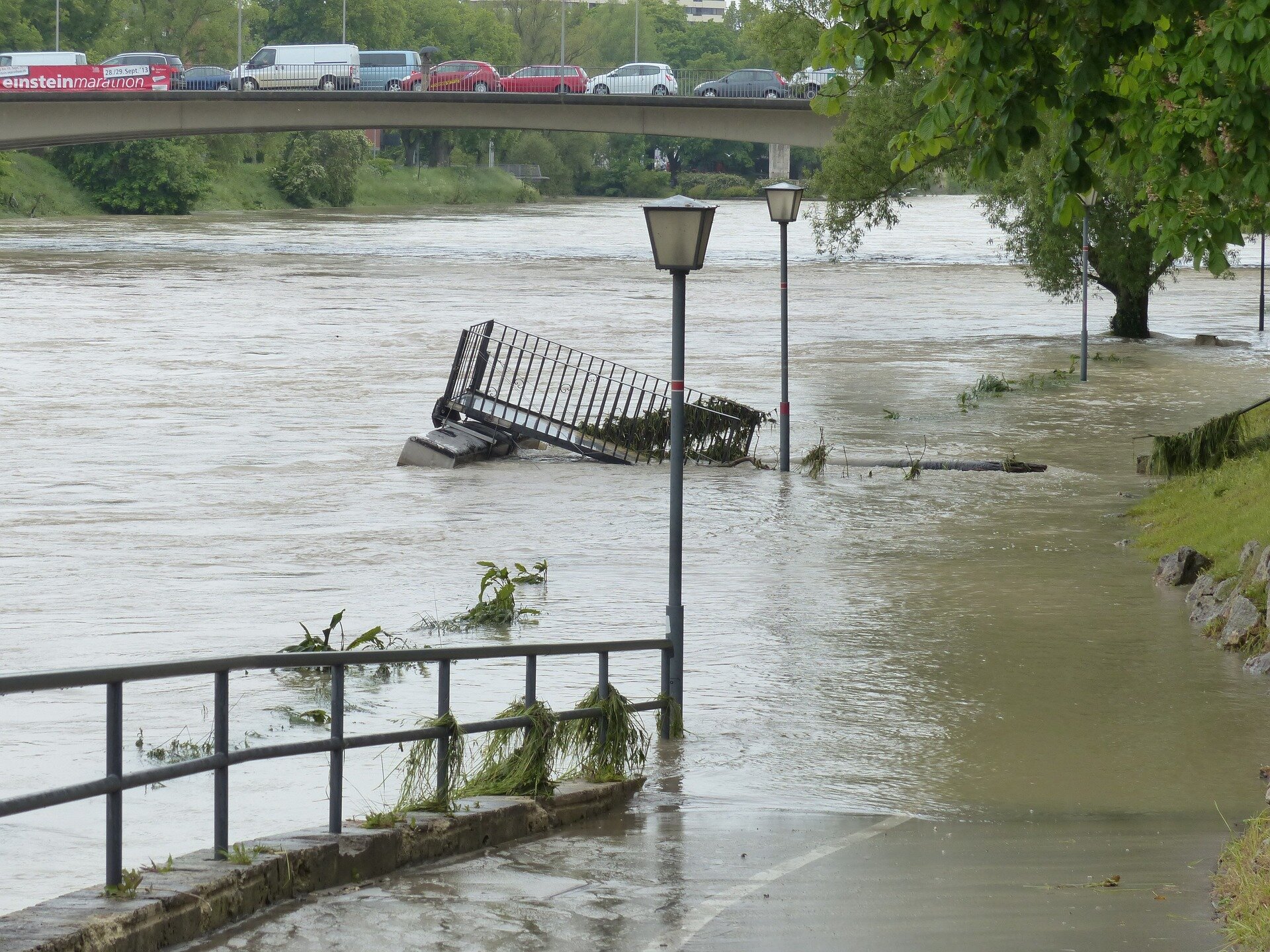
Flooding in Pakistan is one of the clearest signs of climate stress. Riverine floods occur when rivers swell beyond their banks due to excessive rainfall or glacial melt, while flash floods are sudden torrents from cloudbursts or intense downpours in hilly terrain.

Climate scientists, including those at World Weather Attribution (WWA) and the IPCC, stress that global warming increases atmospheric moisture by ~7% per 1°C of warming, making monsoon rains heavier and floods more destructive.

  • Over 300 lives lost, including 140 children (WWA).
  • 230 mm of rainfall in Rawalpindi in just 24 hours, overwhelming urban drainage.
  • Thousands of homes collapsed in informal settlements.
  • Riverine floods in Punjab swept through Punjab and Sindh, submerging croplands.
  • Flash floods in KP destroyed mountain roads, bridges, and schools.
  • WWA study: rainfall intensity was 22% higher due to climate change.

Flood in Pakistan 2025

Impact Area Key Figures
Death toll 300+ (140 children)
Rainfall peak 230 mm in Rawalpindi (24 hrs)
Displacement Hundreds of thousands
Infrastructure damage Collapsed homes, washed-out bridges
Attribution 22% stronger rainfall due to climate change

Droughts | Impact of Climate Change on Water Resources in Pakistan

Droughts represent the opposite extreme prolonged water shortages caused by reduced rainfall, rising evaporation, and overuse of resources. 

Scientists (UNEP, World Bank) note that climate change disrupts rainfall cycles, while glacier retreat reduces Pakistan’s natural water storage. 

This creates a paradoxical cycle where floods and droughts occur in quick succession, a trend already visible in South Asia.

  • Balochistan and Sindh faced crop failures after monsoons.
  • Farmers describe agriculture as “gambling with nature” (Al Jazeera).
  • Erratic rainfall and glacial melt deepened water stress.
  • Soil erosion post-flood further reduced crop yields.
  • Canal water shortages triggered local disputes in Punjab. 

Drought Impacts 2025

Sector Affected Consequences
Agriculture Crop failures
Water Resources Lower river flows, dried canals
Farmers Lost incomes, migration
Economy GDP hit, food inflation soared


Heatwaves 

A heatwave is a prolonged period of extreme heat that exceeds the usual climate norms of an area. According to NASA and WHO, climate change increases both the frequency and severity of heatwaves by trapping more heat in the atmosphere.

Heatwaves in Pakistan

Urban “heat islands” where concrete and pollution trap warmth make cities like Karachi and Lahore even more dangerous. Scientists call heatwaves “silent killers”, as deaths rise gradually through dehydration, stroke, and respiratory stress.

  • 600+ deaths recorded across Sindh & Balochistan (Al Jazeera).
  • Temperatures exceeded 50°C in Jacobabad and Karachi.
  • Outdoor labor became impossible for millions.
  • Energy blackouts worsened the crisis, leaving millions without cooling.
  • 11 million children under five are exposed to smog in Punjab (UNICEF). 

Heatwave Impacts 2024–2025

Indicator Figures
Deaths 600+
Temp peaks >50°C
Children affected 11M under-5s exposed to smog
Health impact Heat stroke, respiratory illness
Economic loss Lower productivity, energy costs

Cloudbursts

A cloudburst is an extreme downpour in a very short time, often releasing more than 100 mm of rain within an hour. Global warming fuels these events: warmer air holds more water vapor, which can suddenly release as violent rainfall. 

In mountainous regions like KP and Gilgit-Baltistan, cloudbursts quickly turn into flash floods and landslides, overwhelming communities. The Conversation and Islamic Relief report that Pakistan’s northern valleys are now highly exposed to this new “normal.”

  • Swat, Bajaur, and Chitral valleys hit by torrential bursts.
  • Homes swept away in minutes.
  • Mountain roads collapsed, isolating villages.
  • Schools and clinics destroyed, families displaced.
  • Thousands required emergency shelter and aid (Islamic Relief). 

Cloudburst Impacts 2025

Region Consequences
KP (Swat, Bajaur) Villages flooded, homes destroyed
Chitral & GB Roads cut off, communities isolated
Social impact Schools & clinics lost, displacement
Humanitarian Thousands in need of relief camps


Pakistan’s 2025 Climate Catastrophes At a Glance

Disaster Key Impacts Climate Link
Floods 300+ killed, Punjab & Sindh submerged Warmer air = heavier monsoons
Droughts Crop failures, food insecurity Glacier retreat + erratic rain
Heatwaves 600+ deaths, 50°C peaks Greenhouse gas warming
Cloudbursts Flash floods in KP/GB Warmer air holds more moisture


Impact on Lives and Livelihoods

Climate change is not only destroying landscapes, it is dismantling lives. In Pakistan, the brunt of these disasters falls heaviest on those least able to defend themselves: children and farmers. 

From polluted air and flooded schools to parched farmlands and lost harvests, the everyday struggle of survival is becoming harsher each year.

Children at the Frontlines

Children are the most vulnerable to climate shocks, and in Pakistan they are bearing the heaviest burden. Scientists and humanitarian agencies warn that floods, droughts, heatwaves, and toxic air are creating a “triple threat” for child health, education, and survival. 

According to UNICEF, millions of Pakistani children are caught in the crossfire of a crisis they did not cause.

  • 6+ million children will be directly affected by floods and landslides in 2024.
  • 11 million children under five in Punjab are exposed to toxic air and smog.
  • Malnutrition rates rising as repeated disasters disrupt food supplies.
  • Collapsed schools and unsafe shelters interrupt education.
  • Lack of climate-resilient infrastructure leaves children vulnerable in both rural and urban settings.
Indicator Figure / Impact Source
Children affected by 2024 floods/landslides 6 million+ UNICEF
Children exposed to toxic air in Punjab 11 million under 5 UNICEF
Education impact Schools destroyed or unsafe after floods UNICEF/UNDP
Health risks Malnutrition, respiratory illness, waterborne disease WHO, UNICEF


Climate Change Impact on Agriculture in Pakistan

Agriculture is the backbone of Pakistan’s economy and the livelihood for millions yet it is under siege from climate extremes. As the Pakistan Bureau of Statistics (PBS) notes, agriculture contributes 24% of GDP and supports nearly 40 million people. 

Floods wash away fields, droughts parch the soil, and heatwaves scorch crops before harvest. Farmers are describing their lives as “gambling with nature,” never knowing if the season will bring too much water or none at all.

Impacts of climate change on agriculture

  • Wheat and cotton yields fell by 13.5% in 2025 due to floods and erratic rainfall (Al Jazeera, PBS).
  • Repeated climate disasters are forcing rural families into migration.
  • The 2022 super floods displaced 8 million people, many of them farmers (UNDP).
  • Livestock losses add to food insecurity, reducing household income.
  • Farmers in Sindh and Balochistan face mounting debts as crops fail year after year.
Indicator Figure / Impact Source
Share of GDP 24% PBS
Population supported 40 million PBS
Crop decline (wheat, cotton) –13.5% in 2025 PBS, Al Jazeera
Displacement (2022 floods) 8 million people UNDP
Livelihood stress Rising debt, forced migration UNDP, Al Jazeera


Scientific Evidence and Attribution

The climate disasters of 2025 are not accidents of nature; they are backed by clear scientific evidence linking them to global warming. Studies by World Weather Attribution (WWA) and the IPCC confirm that what once seemed like “natural” extremes now carry an undeniable climate fingerprint.

  • The 2025 floods were not rare meteorologically, but global warming made them 22% more intense. Warmer air holds more moisture, meaning when the monsoon arrives, it does so with unprecedented fury.
  • Historical monsoon data now shows a consistent shift in patterns: rains arrive erratically, fall harder, and cause wider destruction than in past decades.
  • Pakistan sits at the foot of the Himalayan and Karakoram ranges, home to 13,000+ glaciers. As these glaciers melt faster due to warming, they swell rivers during monsoons, increase the risk of glacial lake outburst floods (GLOFs), and simultaneously reduce long-term water availability.
  • Scientists warn that without drastic global emission cuts, South Asia will continue to experience both mega-floods and crippling droughts, putting millions at risk.

Government Response & Climate Adaptation Challenges | Future Threats of Climate Change in Pakistan

Pakistan’s response to climate disasters has been a mixture of resilience, underfunding, and systemic weaknesses. Dealing with climate change challenges in Pakistan should be the top priority of officials and relevant authorities at this moment. The scale of repeated disasters has outpaced institutional capacity, leaving long-term adaptation still more aspiration than reality.

  • After the 2022 super floods, recovery needs were estimated at $16.3 billion yet only about half that funding ever materialized, delaying reconstruction and leaving communities exposed when the 2025 floods struck.
  • According to WWA and UNDP estimates, Pakistan will require nearly $152 billion in adaptation investment by 2030 to build climate resilience. This includes strengthening river embankments, redesigning cities, building water reservoirs, and modernizing agriculture. As of now, this funding remains largely unmet.
  • Weak governance compounds the challenge:

    • Urban planning failures mean cities like Karachi, Lahore, and Rawalpindi are repeatedly flooded due to clogged drains and unregulated expansion.
    • Deforestation in the north strips natural defenses, increasing landslide and flood risk.
    • Weak enforcement of building codes leaves homes in floodplains and seismic zones dangerously fragile.

In the absence of climate-smart governance, every heavy rain becomes a disaster and every heatwave a humanitarian crisis. The gap between policy on paper and action on the ground continues to widen, leaving Pakistan locked in a cycle of response rather than prevention.

Humanitarian Impact

Climate change in Pakistan is not just an environmental crisis it is a human tragedy. Disasters strip people of homes, safety, and dignity, leaving millions in a constant state of vulnerability.

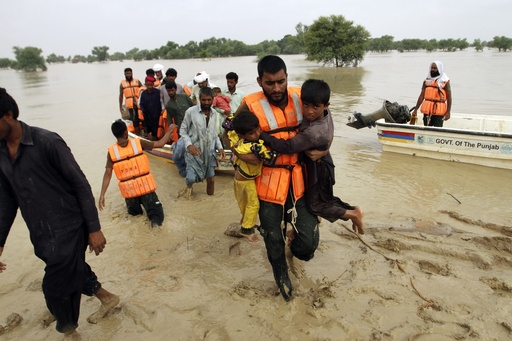
  • Mass displacement: Hundreds of thousands have been forced to leave their homes in search of safer ground, many ending up in temporary shelters or informal camps.
  • Lives lost: Rising death tolls come not only from drowning and collapsing homes, but also from secondary effects like disease outbreaks.
  • Children at risk: Malnutrition, diarrhea, dengue, and other waterborne diseases have surged, leaving children most exposed. Lack of safe drinking water and healthcare worsens survival rates.
  • Mental health toll: Beyond physical destruction, families suffer trauma from repeated losses of loved ones, livelihoods, and stability. Anxiety, grief, and hopelessness have become silent but widespread consequences.

Agriculture & Food Security

Agriculture, the lifeline of Pakistan’s economy and food supply, is under siege. Climate extremes repeatedly batter farmland, eroding both yields and farmer resilience.

  • Farmlands submerged: Wheat, rice, and sugarcane fields in Punjab and Sindh are frequently lost to floods.
  • Drought cycles: Where water once brought life, scarcity now withers crops, making farming unsustainable in regions like Balochistan.
  • Livestock losses: Cattle, goats, and poultry perish during floods and droughts, cutting off both nutrition and income for rural households.
  • Rising prices: With less supply reaching markets, food inflation spikes, making staples unaffordable for the poor.
  • Future insecurity: Climate models warn that without adaptation, Pakistan could face chronic food shortages, with millions at risk of hunger.

Economic and Social Fallout

Every climate disaster translates into economic loss, social strain, and institutional breakdown. For Pakistan, the cost is counted in billions, but the impact goes far beyond numbers.

  • GDP shocks: Climate disasters cut deep into growth, draining productivity and revenues. Inflation spikes follow as food and energy supplies falter.
  • Infrastructure losses: Roads, bridges, schools, and hospitals are destroyed, with reconstruction costs running into billions.
  • Urban flooding: Cities like Lahore and Karachi are overwhelmed by poor drainage and unplanned expansion, turning monsoon rains into urban disasters.
  • Forced migration: With rural livelihoods destroyed, millions move to cities, stretching already scarce resources, housing, and services.
  • Widening inequality: Vulnerable groups bear the greatest cost, deepening poverty and social instability.

Adaptation vs. Aid

Pakistan’s experience reveals a dangerous cycle: disaster strikes, aid arrives, recovery begins, and then disaster strikes again. This cycle is unsustainable. What is needed is adaptation, not just aid.

  • Aid fatigue: Repeated crises have left global donors stretched, sparking calls to shift from relief to resilience.
  • Preparedness tools: Early warning systems, strengthened river embankments, and sustainable water reservoirs are urgently required.
  • Resilient farming and housing: Climate-smart agriculture, drought-resistant crops, and adaptive urban architecture can protect communities.
    Financing gap: Pakistan requires massive climate finance for adaptation but current funding falls drastically short of needs.

The Road Ahead: What’s Next for Pakistan?

The burning question is how to control climate change in Pakistan? The future of Pakistan is uncertain, but one truth is clear: climate extremes will intensify. Scientists warn that without urgent action, floods, droughts, and sea level rise will strike harder and more often.

Mega-floods are expected to become more frequent as monsoon systems bring record-breaking rainfall. Rivers in Punjab and Sindh will overflow, overwhelming embankments and washing away entire communities. To counter this, Pakistan must strengthen flood defenses, enforce zoning laws against building in floodplains, and expand early warning systems. Without these measures, every monsoon season will be a new disaster.

Droughts will also deepen. Rising temperatures and shrinking glaciers will reduce the Indus River’s flows, threatening agriculture and drinking water. Pakistan will need better water storage, efficient irrigation systems, and a shift toward drought-resistant crops. Policies encouraging smart farming and discouraging wasteful practices are critical to securing the nation’s food supply.

Sea level rise poses another grave risk, especially for coastal Sindh. Saltwater intrusion will poison farmland, while low-lying settlements face submergence. Building coastal defenses, restoring mangroves, and planning for gradual relocation must become part of national strategy.

By 2047, as Pakistan approaches its centenary, the country faces a defining question: will it adapt and build resilience, or collapse under climate pressure? The answer depends on whether urgent reforms are made stronger governance, sustainable urban planning, reforestation, and integration of climate risks into development policies.

Survival will demand more than aid or temporary fixes. Pakistan must embrace bold, long-term reforms, supported by global cooperation and local accountability. Without this shift, the road ahead will grow darker. With it, there is still hope for a safer, more resilient future.

Conclusion

Pakistan’s reality in 2025 is a stark reminder of climate injustice a nation contributing less than 1% of global emissions is enduring some of the world’s harshest floods, droughts, and heatwaves. The call to action is urgent: Pakistan must invest in early warning systems, resilient cities, and climate-smart agriculture, but it cannot do so alone. The global community has a moral duty to stand with countries on the frontline, providing finance, technology, and solidarity. If the world fails to find a solution for climate change in Pakistan, our struggle today will become everyone’s tomorrow.

CDA to Launch Free Wi-Fi at 30 Key Spots in Islamabad
CategoriesNews

CDA to Launch Free Wi-Fi at 30 Key Spots in Islamabad

The digital connectivity initiative aims to transform the capital into Pakistan’s first free Wi-Fi city

Islamabad: The Capital Development Authority (CDA) has unveiled a plan to provide free Wi-Fi services across Islamabad, beginning with 30 prime locations in the first phase.

The initiative, aligned with Prime Minister Shehbaz Sharif’s vision and the directives of Interior Minister Syed Mohsin Naqvi, was finalized in a meeting chaired by Muhammad Ali Randhawa, Chairman and Chief Commissioner of Islamabad. Senior officials, including NTC Managing Director Major General (r) Ali Farhan, Member Finance Tahir Naeem, Member Planning Dr. Khalid Hafiz, and Member Engineering Syed Nafasat Raza, also participated.

Free Wi-Fi will be available at major commercial centers, Metro and Electric Feeder Bus stations, and popular parks, ensuring public accessibility. While NTC will operate and maintain the system, CDA’s technical team will provide ongoing support.

Randhawa emphasized the development of a self-sustaining operational and marketing model, where revenue generated will fund maintenance and upgrades. Officials noted that the initiative marks a step toward transforming Islamabad into a “free Wi-Fi city.”

The meeting also reviewed civic projects, including rainwater harvesting, removal of allergy-causing paper mulberry trees, and a large-scale tree plantation drive with third-party monitoring.

Flash Floods in Pakistan
CategoriesFeatured blog Urban Developments & Planning

Flash Floods in Punjab 2025 | Causes & History

In August 2025, Punjab found itself once again at the mercy of swollen rivers, torrential monsoon rains, and a worsening climate crisis. With India releasing water from overflowing dams and relentless monsoon rains hammering the region, districts like Kasur, Bahawalnagar, and Narowal face mass evacuations. In that sense it won’t be wrong to say that India was the reason for floods in Pakistan.

The flood situation near Chenab river looks bad as the river threatens to burst its banks at multiple points, while health risks, displacement, and infrastructure collapse escalate by the hour.

Floods in Punjab is not just a seasonal thing, it’s a rapidly intensifying emergency fueled by climate extremes, fragile infrastructure, and decades of unpreparedness. As the situation grows more critical, the country watches, once again, as this “natural disaster” once again exposes the cracks in man-made systems.

In this article we delve into the history, root causes and unfolding impact of the crisis, aiming to uncover deeper insights and explore meaningful solutions.

Historical Background of Floods in Punjab

The flood situation in Punjab is not something new. Sitting at the heart of the Indus River Basin, the province has always carried both the blessings of fertile plains and the risks of devastating river overflows. History shows that whenever the monsoon turns violent or rivers receive sudden surges from upstream, Punjab becomes one of the first regions to bear the brunt.

floods in Punjab 2025

List of Floods in Punjab

Here’s a list of floods in Punjab since the independence

Year / Event Description
1950 Floods Among the earliest major riverine floods in post-independence Pakistan. Torrential monsoon rains overflow rivers, destroying villages, farmland, and infrastructure across central Punjab.
1973 Floods Destructive monsoon season: the Indus and its tributaries—including the Chenab and Ravi—flood vast areas. Punjab’s low-lying plains, especially in southern districts, face widespread submersion.
1988 Ravi Flood Severe monsoon rains and swollen rivers cause widespread flooding across Punjab and Sindh, leading to hundreds of deaths and massive crop losses. Nearly 9,000 villages are flooded or washed away, affecting 3.4 million people.
1992 Floods Heavy rainfall in the Jhelum and Chenab catchments worsens the flood situation. Districts such as Jhang, Sialkot, and Gujrat suffer extensive crop and livestock losses, with damage measured in billions of rupees.
2010 Super Floods The most devastating flood in Pakistan’s history, impacting more than 20 million people and submerging one-fifth of the country. Punjab suffers severely as the Indus and Chenab overflow, destroying agricultural lands, homes, and infrastructure.
2014 Chenab Floods The Chenab River overflows, causing major displacement and destruction in Jhang, Multan, and Muzaffargarh. These floods are among the most destructive recent events in Punjab.
2022 Floods While Sindh and Balochistan bear the brunt, Punjab endures both urban flooding in Lahore and Rawalpindi and riverine floods in its southern districts due to poor drainage and heavy flows.
2025 Floods A severe ongoing crisis: Punjab records 165 deaths, 584 injuries, and over 150,000 evacuated, including 24,000+ relocated from at-risk zones. Critical water flow levels persist, especially at Head Marala and across the Ravi, Sutlej, and Chenab rivers. Urban cities like Lahore and Rawalpindi face worsening waterlogging.

Patterns of Flooding in Punjab

Punjab’s flooding can broadly be divided into two categories:

Riverine Floods


  • Triggered when the Indus and its tributaries; Chenab, Ravi, Sutlej, and Jhelum  overflow after heavy rainfall or upstream releases.

Riverine punjab floods

  • These floods are widespread, slower in onset compared to flash floods, but devastating in scale wiping out villages, crops, and infrastructure across central and southern Punjab.

Flash Floods


  • Occur in foothill regions and urban centers.
  • Districts like Rawalpindi, DG Khan, and Rajanpur are particularly exposed due to hill torrents and seasonal streams.
  • Leh Nullah in Rawalpindi is a recurring example of urban flash flooding, where sudden cloudbursts turn drains into raging torrents

Reasons of Flood in Punjab – 2025 and Beyond

Floods in Punjab arise from a complex mix of climate change, natural hydrological cycles, and human-driven factors. 

Climate Change Drivers

  • More Intense Monsoons: Rising global temperatures allow the atmosphere to hold more moisture, leading to heavier, more erratic monsoon downpours. Punjab has increasingly experienced prolonged and concentrated rainfall events, pushing rivers to flood levels that overwhelm defenses.
  • Glacial Melt and GLOFs: Glaciers in the Hindu Kush–Karakoram–Himalaya ranges are retreating rapidly. This contributes additional flows to the Indus River system and raises the risk of Glacial Lake Outburst Floods (GLOFs). Such sudden releases of water amplify downstream flooding risks, directly affecting Punjab’s river basins.
    Glacial Lake Outburst Floods
  • Heatwaves: Severe heatwaves accelerate glacier melt while also creating low-pressure systems that draw in heavier monsoon rains. This combination intensifies flood patterns, linking extreme heat directly to subsequent flooding.
  • Scientific Consensus: Climate science consistently shows that human-caused climate change is amplifying both the frequency and intensity of extreme weather events. For Punjab, this translates into more volatile monsoon systems and greater flood risk year after year.

Natural and Hydrological Factors

  1. Monsoon Season (June–September): The monsoon remains one of the primary reasons for flood in Lahore Pakistan. While expected annually, rainfall patterns have become less predictable, with sudden surges in intensity causing extensive flooding across Punjab.
  2. Saturated Soil: Pre-monsoon rainfall often leaves the soil waterlogged. When heavier monsoon rains arrive, the ground cannot absorb further water, resulting in rapid runoff and widespread inundation.
  3. Topography: Punjab’s flat plains, while agriculturally productive, are highly vulnerable to flooding. Water from northern regions flows downstream into Punjab’s low-lying districts, where it spreads quickly across large areas.
  4. Dam Releases and River Overflows: Reservoirs reaching near capacity and water releases from upstream dams can create sudden surges. In 2025, such releases combined with heavy rainfall to raise water levels in the Ravi, Sutlej, and Chenab, worsening flood conditions in multiple districts. The river Ravi map shows how bad the flood situation has gone.

Human-Induced Factors

  1. Deforestation: The loss of forest cover has reduced natural water absorption. Without tree cover, rainfall turns more rapidly into surface runoff, increasing both the volume and speed of floodwaters.
  2. Unplanned Urbanization and Encroachments: Rapid urban expansion has paved over natural drainage zones and narrowed or blocked traditional waterways. Cities such as Lahore and Rawalpindi now face recurrent urban flooding due to clogged drains and encroached nullahs.
  3. Poor Drainage Infrastructure: Outdated canals, embankments, and sewers limit the ability to manage excess water. Sedimentation reduces river capacity, while weak urban drainage leads to waterlogging and flash floods during heavy rains.
  4. Weak Forecasting and Preparedness: Although early flood warning systems have improved, gaps remain in community-level awareness and evacuation readiness. Many residents hesitate to evacuate or receive warnings too late, contributing to greater losses during major floods.

The 2025 Floods – Punjab in Crisis

The 2025 monsoon season is unfolding as one of the most destructive in Punjab’s recent history. Weeks of heavy rainfall, combined with river overflows and sudden dam releases, place large parts of the province under emergency.

FFD Lahore Report

Geographic Spread

Flood alerts remain in place across Kasur, Okara, Pakpattan, Bahawalnagar, Narowal, Multan, Sialkot, Wazirabad and Muzaffargarh. As flood alerts spread across central Punjab, the river Ravi map clearly shows how overflowing waters move from upstream barrages into low-lying districts like Kasur and Okara, placing thousands of residents at risk. NDMA reports that river flows at multiple barrages exceed danger thresholds, forcing authorities to relocate communities in flood prone areas in Punjab. 

Casualties and Displacement

The floods claim 165 lives so far and injure more than 580 people. Over 24,000 residents evacuate from affected districts, while relocation advisories impact nearly 150,000 people. Many families, however, remain reluctant to leave their homes due to concerns over livestock and property.

Head Marala Flood

The Head Marala Barrage on the Chenab River, located near Sialkot, is once again emerging as a critical flashpoint in the 2025 floods. Current inflows at Head Marala are recorded at dangerously high levels, placing it among the most at-risk points in Punjab’s river system. Authorities continue round-the-clock monitoring as the situation evolves.

Head Marala Floods

Water levels at this key control point directly affect several downstream districts, including Sialkot, Hafizabad, Narowal, and Jhang, all of which remain on high alert. 

Evacuations are underway in vulnerable villages, with families being moved to safer ground to prevent casualties. The rising flows at Head Marala are compounded by continuous monsoon rains and upstream water releases, leaving little buffer for safe management.

Livelihood Impact

Thousands of acres of farmland remain submerged. Standing crops of maize, rice, and sugarcane suffer extensive losses at critical stages of growth. Livestock mortality rises to more than 120 animals, while many farmers are compelled to sell surviving cattle at distress prices due to feed shortages.

Urban Flooding

Punjab’s cities face their own crisis. Lahore, Rawalpindi, and Gujranwala divisions experience widespread waterlogging as drainage systems fail. Major roads in Lahore remain under water, while Rawalpindi once again struggles with the overflow of Leh Nullah after cloudbursts.

Health Crisis

Overcrowded relief shelters and stagnant water create conditions for disease outbreaks. Cases of malaria, dengue, diarrheal illnesses, skin infections, and snake bites continue to rise in flood-hit areas, putting pressure on already strained healthcare facilities.

Social, Economic, and Environmental Impacts

The ongoing floods disrupt Punjab at every level from household livelihoods to national food security and long-term environmental stability.

Agriculture

Punjab, which produces nearly 70% of Pakistan’s staple crops, faces major agricultural losses. Inundation of rice and maize fields in Kasur, Okara, and Bahawalnagar threatens food supply and market stability. Prolonged waterlogging damages soil quality, raising concerns for future harvests.

Economy

Infrastructure takes a severe hit. Roads, bridges, irrigation canals, and power lines remain damaged or inaccessible, disrupting connectivity and trade. Local markets in southern Punjab struggle to reopen, while small and medium enterprises face closures that push economic losses into the billions of rupees.

Humanitarian Challenges

Authorities establish over 300 relief camps, but occupancy remains low as families hesitate to leave behind homes and livestock. Camps that do fill quickly become overcrowded, with inadequate sanitation and shortages of clean water, medicines, and animal fodder.

Environmental Consequences

Floodwaters erode soils, damage riverbank wetlands, and uproot vegetation. Deforestation and habitat destruction reduce Punjab’s natural flood defenses, leaving the province more vulnerable to future climate-related disasters.

Urban Flooding in Punjab

Beyond riverine floods, Punjab’s urban centers face an equally urgent challenge: urban flooding. The 2025 monsoon demonstrates once again how unprepared cities are for extreme weather.

Causes of Urban Flooding

  • Rapid urban expansion replaces green zones with concrete.
  • Encroachments on nullahs and blocked drains reduce water-carrying capacity.
  • Aging sewer systems in cities such as Lahore and Faisalabad collapse under intense rainfall.

Case Study: Leh Nullah, Rawalpindi

Each year, Leh Nullah in Rawalpindi overflows during cloudbursts, and 2025 is no exception. Surrounding neighborhoods remain inundated, forcing urgent evacuations and highlighting the absence of long-term structural solutions.

Leh Nullah in Rawalpindi overflows

A Broader Perspective

Urban flooding is not only about heavy rainfall it reflects governance and planning failures. With Punjab’s urban population expanding rapidly, drainage upgrades, zoning enforcement, and sustainable city planning are essential to reduce recurring urban flood disasters.

Government & Institutional Response

Punjab’s flood crisis in 2025 triggers an extensive response from government institutions, disaster authorities, and the military. While relief operations are underway, gaps remain in preparedness and service delivery.

NDMA and PDMA Punjab Actions

The National Disaster Management Authority (NDMA) and Punjab Provincial Disaster Management Authority (PDMA) issue timely flood alerts (Ravi river flood alert) as river flows rise to exceptionally high levels. These agencies coordinate large-scale evacuations, moving more than 24,000 people out of high-risk areas and advising nearly 150,000 residents to relocate from vulnerable districts.

Rescue Operations

Rescue 1122 conducts over 500 emergency operations, deploying boats and medical teams to assist stranded residents. Their efforts include transferring families from submerged villages, providing first aid, and delivering supplies to areas cut off by floodwaters.

Military Involvement

The Pakistan Army is deployed in critical districts such as Narowal, where it provides logistical support, rescue boats, and relief supplies. Military teams also help reinforce embankments and deliver rations to displaced families in inaccessible areas.

Operational Gaps

Despite swift mobilization, several shortcomings limit the effectiveness of the response:

  • Camp Conditions: More than 300 relief camps are operational, but facilities remain inadequate. Families hesitate to relocate as livestock central to rural livelihoods is not accommodated.
  • Health and WASH Services: Overcrowded shelters face shortages of clean water, sanitation, and medical supplies, leading to increased cases of malaria, dengue, and diarrheal disease.
  • Weak Enforcement of Land-Use Laws: Settlements in floodplains and encroached waterways worsen the scale of the disaster. Zoning laws and regulations, though present, remain poorly enforced.

International & Humanitarian Role

As Punjab grapples with the floods, international agencies and local NGOs step in to support relief and long-term resilience.

OCHA and UN Priorities

The UN Office for the Coordination of Humanitarian Affairs (OCHA) emphasizes urgent needs in water, sanitation, and hygiene (WASH), healthcare, and fodder for livestock. These areas are critical as families face shortages of clean drinking water, rising health risks, and an inability to sustain surviving animals.

NGO Assistance

Local and international NGOs provide:

  • Hygiene kits to reduce disease spread in shelters.
  • Temporary shelters for displaced families.
  • Veterinary services and animal fodder to support farmers who depend heavily on livestock for their livelihoods.

Policy Lessons and Future Direction

Development and research groups stress that emergency relief is only part of the solution. Policy discussions highlight the importance of integrating climate adaptation into both urban planning and agriculture. Lessons include upgrading drainage infrastructure in cities, enforcing zoning laws, and promoting resilient farming practices to withstand future climate shocks.

Future Steps – What Must Change

The 2025 floods in Punjab highlight the urgent need to shift from reactive relief operations to long-term prevention and resilience. Both government institutions and local communities must take concrete steps to reduce future risks.

Government Level

  1. Expand Water Storage Capacity: Pakistan’s reservoirs currently hold far less than global averages, leaving little buffer during extreme floods. Experts recommend raising storage capacity by at least 22 billion cubic meters (BCM) to manage peak flows and ensure water availability during dry periods.
  2. Upgrade Drainage, Canals, and Embankments: Aging infrastructure across Punjab including canals, storm drains, and embankments — must be rehabilitated and expanded. Proper maintenance reduces the chances of breaches and ensures floodwaters can be diverted safely.
  3. Strengthen Transboundary Water Cooperation: Upstream water releases remain a recurring source of flooding in Punjab. Strengthening transboundary cooperation under the Indus Waters Treaty framework can help improve data-sharing, flow forecasting, and joint management of river systems.
  4. Integrate Climate Adaptation into Urban Planning: Punjab’s cities face growing urban flooding risks. Integrating climate adaptation measures into master plans such as flood zoning, permeable pavements, green corridors, and protected wetlands is essential to make urban growth more sustainable.

Community & Individual Level

  1. Rainwater Harvesting at Household Level: Installing rooftop and household rainwater harvesting systems reduces runoff pressure while providing communities with a supplementary water source during dry spells.
  2. Tree Plantation and Soil Management: Reforestation and sustainable land-use practices restore natural buffers, reduce surface runoff, and improve groundwater recharge. Community-led tree planting drives can play a vital role.
  3. Preparedness and Emergency Awareness: Families need emergency kits, evacuation plans, and awareness of local shelters. Training at the community level ensures faster response when early warnings are issued.

Lessons & Way Forward

Floods in Punjab have become a recurring tragedy, but history shows that the scale of damage is not inevitable.

Past Disasters Show a Pattern

The 2010 super floods, the 2014 Chenab floods, and the 2022 nationwide floods all demonstrated how reactive policies and emergency-only strategies fail to protect vulnerable communities. Each time, warnings were available, yet preparedness and enforcement fell short.

Learning from Global Examples

Countries such as Bangladesh and the Netherlands demonstrate the power of proactive planning. Bangladesh has reduced disaster mortality through early warning systems, community drills, and cyclone shelters. The Netherlands invests in advanced flood defenses, including dikes and storm surge barriers, combined with nature-based solutions.

Shifting from Relief to Prevention

Pakistan must adopt a prevention-centric flood management approach. This means prioritizing early warning systems, enforcing floodplain zoning, upgrading infrastructure, and integrating climate resilience into all levels of planning. Relief operations save lives in the short term, but prevention ensures long-term security for both people and the economy.

Flood Prevention & Mitigation – Global Lessons

Punjab’s recurring floods show that Pakistan cannot rely on emergency relief alone. Building resilience requires learning from global best practices where countries have successfully reduced the human and economic toll of flooding. These lessons fall into two broad categories: structural engineering solutions and non-structural policy and community measures.

Structural Solutions (Engineering)

  1. Large Dams, Barrages, and Flood Reservoirs:  Major infrastructure plays a crucial role in regulating river flows during peak floods. Pakistan’s existing structures, such as Tarbela dam and Mangla Dam, demonstrate this value both absorbed massive inflows during the 2010 super floods, preventing further devastation downstream. However, storage capacity remains critically low relative to demand, leaving little margin for extreme weather events.
  2. Small Dams for Localized Irrigation: While small dams are useful for irrigation and local water storage, they are not substitutes for the large-scale storages needed to buffer riverine floods. Instead, they complement broader flood management by supporting agriculture and reducing dependence on seasonal rainfall.
  3. Stormwater Retention Ponds and Green Corridors: Cities around the world invest in stormwater retention ponds and green drainage corridors to capture and redirect excess rainwater. These systems slow down runoff, reduce the burden on sewers, and mitigate urban flooding. For Punjab’s rapidly urbanizing centers, such solutions are increasingly vital to prevent streets and neighborhoods from turning into flood zones.

Non-Structural Measures (Policy & Community)

Early Warning Systems

Technology-driven early warning is one of the most effective tools to save lives. Countries with AI-based weather radars, satellite monitoring, and localized alert systems issue community-level warnings well in advance of flood peaks. Strengthening Pakistan’s meteorological systems and ensuring that warnings reach vulnerable households on time can significantly reduce casualties.

Zoning and Land Use Planning

Strict zoning laws that prevent construction in floodplains are key to reducing exposure. In many parts of the world, governments enforce bans on settlements near rivers and drainage channels to minimize future risks. Punjab’s recurring urban flooding highlights the need for robust enforcement of such laws, combined with penalties for illegal encroachments.

Wetland Restoration and Afforestation

Wetlands act as natural sponges, storing floodwater and gradually releasing it. Combined with afforestation, they provide cost-effective flood control while improving biodiversity. Countries like the Netherlands integrate wetlands into flood defenses, while Bangladesh promotes mangrove plantations for coastal resilience. Punjab too can benefit from reforesting watersheds and protecting wetlands along rivers.

Community Preparedness

Infrastructure alone cannot prevent disaster without community participation. Evacuation drills, awareness campaigns, and training ensure that residents know how to respond when warnings are issued. Bangladesh’s model where local volunteers, community shelters, and awareness programs drastically reduce disaster deaths offers practical lessons for Pakistan.

Conclusion

The 2025 flood condition in Punjab stands as a stark reminder that the province is facing not just a natural hazard, but a climate-amplified crisis made worse by weak governance, poor urban planning, and unprepared infrastructure. Torrential rains, river surges, and upstream releases expose how vulnerable Punjab has become and how much more frequent and destructive such events are under climate change.

Pakistan cannot afford to let this cycle repeat itself every monsoon. Each year of reactive relief and patchwork solutions only deepens the losses for families, farmers, and the national economy. What is urgently needed is a comprehensive shift toward resilience and prevention.

That means investment in structural measures such as modern dams, upgraded drainage networks, and reinforced embankments. It also requires non-structural solutions, stronger zoning laws, community awareness campaigns, restoration of wetlands and forests, and improved early warning systems.

Floods will remain a part of Punjab’s geography, but they do not have to define its future. With the right policies, infrastructure, and community participation, Pakistan can transform recurring disasters into manageable risks.

For more informative blogs like Urban Flooding in Pakistan, visit Chakor blogs.

Residents Oppose New Plots in FGEHA’s Kuri Road Housing Scheme
CategoriesNews

Residents Oppose New Plots in FGEHA’s Kuri Road Housing Scheme

Proposed layout changes spark environmental and community concerns in Islamabad


Islamabad: The Federal Government Employees Housing Authority’s (FGEHA) Kuri Road housing project has once again come under scrutiny as residents strongly oppose a proposed revision to its layout plan. The Pakistan Housing Authority Foundation (PHAF) has submitted a request to the Capital Development Authority (CDA) seeking approval for over 20 new residential plots and the relocation of 13 existing ones.

Originally launched in 2012 for federal officers of BPS-20 to BPS-22, the scheme was designed with greenbelts, parks, and playgrounds to preserve the area’s environment and livability. Residents, many of them retired senior bureaucrats, argue that carving out additional plots on reserved green spaces would violate the Environmental Impact Assessment (EIA) cleared by the Environmental Protection Agency (EPA).

In a joint statement, residents appealed to Prime Minister Shehbaz Sharif to halt the plan, calling it contrary to his government’s environmental agenda, including the “One daughter, one shajr” campaign.

The CDA, through a public notice on August 11, invited objections from stakeholders, confirming the proposal is under review. Residents warn approval would set a damaging precedent, reducing quality of life and threatening Islamabad’s green character.

Property Management Companies in Pakistan
CategoriesReal Estate

Top 10 Property Management Companies in Pakistan

In Pakistan’s fast-evolving real estate market, property management companies play a crucial role in helping landlords, investors, and overseas Pakistanis manage their assets efficiently. Whether it’s handling tenants, maintaining properties, or ensuring timely rent collection, a professional property management firm can save time, reduce stress, and maximize returns. 

In this blog, we explore the top property management companies in Pakistan, what services they offer, and how to choose the right one for your real estate needs.

What is Property Management?

In Pakistan, where the property market is booming and urban centers are expanding rapidly, it has become an essential service rather than a luxury. There are a lot of property management companies in Pakistan offering quite beneficial services.

From residential apartments and houses to commercial plazas and even large industrial sites, property management ensures that properties are not only maintained but also generate consistent returns.

In today’s fast-paced environment, property management in Pakistan goes beyond taking care of buildings. It’s more about protecting investments, ensuring tenant satisfaction, and maximizing long-term value. 

By entrusting professionals with the daily details, property owners can relax while their assets continue to work for them.

Top Property Management Companies in Pakistan

  • Sapphire Properties
  • Universal Marketing
  • Zameen
  • Graana
  • The Cloud Services
  • Apnelinks
  • SkyOne Real Estate
  • Square Nine International
  • Property Hub
  • Zem Builders

Sapphire Properties

Offers a wide range of real estate services:
Sapphire properties

  • Land acquisition
  • Real estate consultancy
  • Society development
  • Portfolio management
  • Joint venture support 
  • Serves Lahore, Islamabad, Murree, Rawalpindi, and Karachi.
  • Targets expat Pakistanis with dedicated investment and consultancy services.

Universal Marketing Inc.

Services include:

  • Property investment guidance
  • Real estate consultancy
  • Project development support
  • After-sales customer service
  • 24/7 consultation
  • Expert investment advice 
  • Operates mainly in Peshawar with a focus on consistent client engagement.

Zameen

Large-scale real estate platform for:

Zameen

  • Buying, selling, and renting properties across Pakistan.
  • Project marketing for developers.
  • Investment consultation. 
  • Offers data-driven property valuations and portfolio services.
  • Also has a mobile app for users and agents.

Graana

Offers:
Graana

  • Verified listings for rent, sale, and purchase.
  • Property investment services via Imarat Group Projects.
  • Vetted legal and approval processes for safe investments.
  • Support for both end-users and investors via Property Ownerships, Approvals, Demand and Delivery model. 

Apnelinks

Offers comprehensive digital property management:

  • Renting, tenant relations, and maintenance.
  • All services are managed through a smart account via their digital platform. 
  • Services include:
    • Property Management – covers operations, tenant services, and upkeep.
    • Project Management – for real estate developments.
    • Investment Management – includes market research, advisory, and value optimization.
    • Portfolio Creation & Strategy Planning – helping clients build and manage real estate portfolios.
  • Strong focus on tech-enabled, user-friendly service for investors and homeowners.

The Cloud Services

Leading real estate and property development company based in Islamabad.

  • Key services include:
    • Luxury apartment & villa development in areas like Mumtaz City, Gulberg Greens, and B-17.
    • Smart building solutions with integrated voice/data connectivity.
    • Energy-efficient design and construction, lowering long-term management and operational costs.
    • Emphasis on technology-driven, sustainable housing and signature developments.
  • Focused more on property development and sales than day-to-day tenant management.

Property Hub

Property Hub delivers customized property management solutions, covering services such as tenant screening and routine upkeep. Their team is recognized for its reliability and prompt support.

Square Nine International

Specializing in upscale real estate, Square Nine International offers complete management services, from property upkeep to securing qualified tenants. They are a top choice for owners of luxury residences.

Square nine

SkyOne Real Estate

SkyOne Real Estate oversees both its own developments and those of its affiliated partners. Their strong relationships with tenants and builders alike make them a trusted and efficient property management provider.

Zem Builders

Zem Builders provides comprehensive real estate development and property management services, focusing on premium residential and commercial projects. Known for their innovative design and attention to detail, they also offer post-possession management, ensuring that properties remain well-maintained and tenants are properly supported. Their commitment to quality and customer satisfaction sets them apart in the market.

Types of Property Management

Property management in Pakistan isn’t a one-size-fits-all service. Different types of properties demand different strategies, expertise, and levels of involvement. Whether it’s ensuring smooth rent collection in an apartment building or managing large-scale industrial spaces, property management companies adapt their services to match the property’s unique needs.

Residential Property Management

This is the most common type of property management in Pakistan, especially in cities like Lahore, Karachi, and Islamabad where rental demand is high.

  • Managing houses, apartments, and rental units
  • Tenant screening and lease agreements
  • Collecting monthly rent on time
  • Handling maintenance requests and emergency repairs
  • Ensuring tenant satisfaction to reduce turnover

Commercial Property Management

Commercial properties often require a more professional, business-oriented approach. These properties are typically high-value and high-visibility investments.

Commercial Property Management

  • Managing corporate offices, shopping plazas, and retail outlets
  • Ensuring consistent rental yields through reliable tenants
  • Overseeing maintenance of shared spaces like lobbies, elevators, and parking areas
  • Handling marketing and leasing for vacant spaces
  • Compliance with local business and commercial property regulations

Industrial Property Management

Industrial property management is less common but highly specialized in Pakistan. It’s crucial for investors who own warehouses, factories, and logistics hubs.

  • Supervising warehouses, factories, and storage facilities
  • Ensuring compliance with safety and industrial regulations
  • Coordinating with contractors and vendors for repairs and upgrades
  • Managing large-scale leases with companies for long-term use
  • Providing security and access control

Mixed-Use Property Management

As urban centers evolve, mixed-use properties are gaining popularity in Pakistan especially in developments that combine residential, retail, and office spaces.

  • Coordinating multiple property types under one roof
  • Balancing needs of residents, shop owners, and office tenants
  • Handling marketing and leasing across different sectors
  • Ensuring smooth operations and upkeep of shared spaces
  • Maximizing rental yields through diverse income streams 

Services Offered by Property Management Companies

Property management companies in Pakistan are more than just middlemen between landlords and tenants. They offer a wide range of services designed to protect your investment, reduce stress, and maximize returns. From handling tenants to managing finances, here’s what they bring to the table:

Tenant Management

The heart of property management lies in dealing with tenants. Companies take care of the entire process so property owners don’t have to worry about day-to-day interactions.

  • Screening tenants to ensure reliability and minimize risks
  • Drafting and managing leasing agreements in line with local laws
  • Collecting rent on time and following up on delays
  • Handling tenant complaints and ensuring satisfaction

Maintenance & Repairs

Well-maintained properties retain higher value and attract better tenants. Property management companies ensure your property stays in top shape.

  • Routine upkeep such as cleaning, plumbing, and electrical checks
  • Handling emergency repairs swiftly to reduce downtime
  • Outsourcing contractors and monitoring their work for quality assurance
  • Scheduling preventive maintenance to avoid costly damage in the future

Legal & Documentation Support

Navigating Pakistan’s property laws can be complicated. Professional management companies simplify the process by handling all paperwork and compliance.

  • Preparing and securing tenancy contracts
  • Ensuring compliance with local tenancy laws and regulations
  • Managing registration of property documents when needed
  • Resolving disputes through legal support and mediation

Financial Management

Keeping track of finances is essential for property owners, especially overseas Pakistanis. Property managers ensure complete transparency and proper reporting.

  • Rent accounting and maintaining detailed financial records
  • Expense tracking for repairs, maintenance, and services
  • Preparing ROI reports to show income versus expenses
  • Offering online access to financial data for easy monitoring

Marketing & Leasing Services

Vacant properties can be costly. Property management companies work to minimize vacancy periods and secure reliable tenants.

  • Advertising vacant units on property portals and local platforms
  • Showcasing properties through professional photos and listings
  • Handling property viewings with potential tenants
  • Negotiating leases to ensure fair rental terms and steady income

How to Choose the Right Property Management Company?

Selecting the right property management company is key to protecting your investment and ensuring long-term returns. Here are the most important factors to consider:

Experience & Track Record

Look for a company with proven experience in managing properties similar to yours, whether residential, commercial, or luxury. Ask for case studies or references.

Range of Services

A good property management firm should offer end-to-end solutions: tenant screening, rent collection, maintenance, legal compliance, and regular reporting.

Communication & Transparency

Clear, consistent communication is vital. Choose a company that provides regular updates, responds promptly to queries, and offers transparent billing practices

Local Market Knowledge

Firms with deep understanding of local real estate trends can better price, market, and manage your property.

Reputation & Reviews

Check client reviews, testimonials, and third-party ratings. A well-reviewed company is more likely to deliver professional and reliable service.

Fee Structure

Understand how they charge, flat fee, percentage-based, or service-specific. Ensure there are no hidden costs and that the pricing matches the value offered.

Technology & Tools

Companies that leverage digital platforms for property listings, rent collection, and maintenance requests often offer more efficient service.

Conclusion

Property management companies are there for property owner’s convenience. It’s important to choose the one that suits your requirements.

For more information on similar blogs e.g “Property Registration in Pakistan”, visit Chakor blogs!

FAQs

Here are the FAQs on property management companies in Pakistan.

What services do property management companies in Pakistan typically offer?

They handle tenant management, rent collection, maintenance, and legal compliance.

How much do property management services cost in Pakistan?

Fees usually range from 5% to 10% of monthly rent or a fixed amount.

Are property management companies useful for overseas Pakistanis?

Yes, they offer remote management, reporting, and tenant handling for overseas clients.

How can I verify if a property management company is reliable?

Check reviews, registration, experience, and request references or past project details.

Can a property management company handle legal disputes with tenants?

Yes, many offer basic legal support for evictions, lease issues, and rent defaults.

Punjab CM Launches Free Housing Allotment for Industrial Workers
CategoriesNews

Punjab CM Launches Free Housing Allotment for Industrial Workers

Punjab CM announces 750 flats in Kasur and Lahore under the labor welfare scheme, with special quotas for widows and disabled workers.


Lahore: Chief Minister of Punjab Maryam Nawaz Sharif has initiated the allotment of free-of-cost flats for industrial workers, terming it a milestone in her labor-friendly vision.

Under the scheme, applications are now open for 750 flats in the Workers Welfare Complex, Sundar Industrial Estate Kasur (Phase-I). A special three percent quota has been set aside for widows of deceased workers and two percent for disabled workers.

In this first phase, workers from Lahore and Kasur districts are eligible, with two-thirds of the quota for Kasur and one-third for Lahore. The deadline for applications is September 8.

Maryam Nawaz directed that application forms be made freely accessible on the official websites www.pwwf.punjab.gov.pk and www.labour.punjab.gov.pk. Forms are also available at the offices of the Director of Labour Welfare (North) and Deputy Director Labour Welfare (South). Helplines 049-2724261, 0331-4436944, and 042-99260240 have been set up for assistance.

Separately, during her meeting with Expo Association GM Achinoki Manatsu, Maryam Nawaz praised the theme of World Expo 2025: “Designing Future Society for Our Lives.” She emphasized Punjab’s strengths in handicrafts, natural resources, and skilled artisans, highlighting the province’s growing global recognition

Property Registration in Pakistan
CategoriesReal Estate

Property Registration in Pakistan: Complete 2025 Guide

Purchasing a property is considered undoubtedly one of the most reliable, conservative and safe investments in Pakistan. However, a vast majority of people get into the business without having any prior knowledge about property registration. Without proper registration, even the purchase of a house, plot, or commercial shop remains legally incomplete. 

The government has further strengthened property laws and digitalized registration systems across provinces to make the process more transparent and less time-consuming. With online registration portals now active in Punjab and Sindh, property buyers can initiate their cases digitally, pay government fees online, and track applications in real time. 

In this blog, Chakor Ventures – best real estate developer in Pakistan has come up with a detailed and step-by-step guide on how to register your property in Pakistan. 

What Is Property Registration?

Property registration is the legal process of recording ownership of immovable property with the government. It ensures the buyer’s title is recognized under the law.

  • Registry (Bay-Nama): A sale deed or transfer document recorded with the sub-registrar.
  • Mutation (Inteqal): Entry of ownership in land revenue records after registry.
  • Property Transfer: Broader term covering sale, gift, inheritance, or exchange.

The process is governed by:

  • Registration Act, 1908 – regulates registration of deeds.
  • Land Revenue Act, 1967 – deals with revenue records and mutation.
  • Stamp Act, 1899 – defines stamp duty and fee structures.

3. Why Property Registration Is Important?

Property registration is a crucial step when transferring the property. The reasons are mentioned below:

Registration of Property

  • Establishes undisputed legal ownership.
  • Protects buyers from fraudulent claims or fake documents.
  • Grants full rights to sell, lease, or gift the property.
  • Enables use of property as collateral for loans.
  • Serves as evidence in court disputes or successin claims.

Key Documents Required for Registration

Here is a complete list of required documents for the property registration process:

  • CNICs of buyer, seller, and witnesses.
  • Sale deed (Bay-Nama).
  • Ownership certificate (Fard).
  • NOC for registration of property from housing society or development authority.
  • Encumbrance certificate confirming no legal disputes.
  • Power of attorney (if transaction through an agent).
  • Affidavit confirming transaction authenticity.
  • Tax receipts: Stamp Duty, Capital Value Tax (CVT), and registration fee.

Step-by-Step Property Registration Manual Process

Manual property registration involves the following steps: 

  1. Verify title and ownership (Fard) at the local land records office.
  2. Prepare sale deed through a licensed deed writer.
  3. Pay government fees (stamp duty, CVT, registration).
  4. Appear before sub-registrar with two witnesses.
  5. Biometric verification via NADRA system.
  6. Receive registered deed within 7–14 working days.

e-Registration of Property (Punjab & Sindh)

Punjab and Sindh governments have initiated online property registration which allows people to check property registration details online and easily complete the registration process without having to visit registrar offices.

Punjab Property e-Registration (PLRA) Step-by-Step (2025)

Punjab property registration process is now online and the process involves following steps.

PLRA

Step 1: Account & Sign-In

  1. Go to the PLRA website and select “Access e-Registration Portal.”
  2. Enter your CNIC and security code to log in.
  3. If you are new, create an account first, then sign in.

Step 2: Start a New Registry (اندراجِ رجسٹری)

  1. On the dashboard, review registry number, tehsil, and registry type.
  2. Click “اندراجِ رجسٹری” to begin a new entry.
  3. Fill in all required registry details for the property.
  4. Scroll to e-Stamp fee submission and open it.
  5. Enter your e-Stamp challan information and save.

Step 3: Record Fee Payments (e-Stamp, Tax on property registration, Service Charges)

  1. Paste the same challan number for the council where required.
  2. Enter CPR number, bank name, and branch to record taxes paid from your bank challan.
  3. Open Advance Tax and enter the CPR number again.
  4. Open PLRA Service Charges and input the submitted challan number.
  5. Save after each entry.
  6. A new Registry Details screen will appear; complete any remaining fields and save.

Step 4: Enter Buyer (Mushtari) Details

  1. Click “Mushtry / Mushtari” (Buyer) and enter:
  2. CNIC, name, father/spouse name, nationality, relation, etc.
  3. Add property identifiers: Property number/unit, area/measurement, Khasra/Khewat/Khatooni as applicable.

Step 5: Enter Witnesses’ Details

  1. Add two witnesses with CNICs and personal particulars.
  2. Review all spellings and numbers carefully.
  3. Complete any remaining property details if prompted.

Step 6: Upload Supporting Documents

Attach clear scans of:

  • Buyer/seller CNICs
  • e-Stamp challan and CPR
  • Paid bank challans (advance tax, service charges)
  • NOC/society or authority letters, ownership papers
  • Power of Attorney (if applicable)
  • Affidavits and any other portal-required documents
    Then save.

Step 7: Generate & Review the Draft Registry

  1. Use “Print Registry” to generate the draft.
  2. Cross-check every field against your documents.
  3. Fix errors now to avoid queries or rejection.

Step 8: Submit to the Registrar

  1. Finalize the file in the portal.
  2. Submit electronically to the Sub-Registrar’s office.
  3. Note your application/registry number for tracking.

Sindh e-Registration Portal

Allows online application and challan payment, though physical verification remains necessary. Here are the following step for e-registration in sindh

SLRA

  1. Create an account on the relevant portal.
  2. Enter sale deed and challan details.
  3. Upload required documents.
  4. Submit online application.
  5. The Registrar’s office verifies and finalizes registration.

Property Registration Charges 2025

Fee structures and timeframes can slightly vary depending on Province, City/Tehsil, type of property (urban/rural, commercial/residential), filer vs. Non-filer status.

Jurisdiction Stamp Duty Capital Value Tax (CVT) Registration Fee
Punjab 1% (urban areas) 2% 1%
Sindh 2% 2% 1%


How to Avoid Property Fraud and Scams?

When registering property in Pakistan, buyers must stay alert to common scams such as fake or forged ownership documents, double registry where a single property is sold to multiple buyers, brokers charging inflated fees, illegal encroachments or occupation, and misuse of power of attorney through identity theft. 

To avoid these risks, it is essential to use only official government portals such as PLRA in Punjab, SLRA in Sindh, or the relevant Board of Revenue portals. Always verify the seller’s ownership title and any encumbrances before proceeding, and hire licensed lawyers or deed writers to prepare and review documents. 

Keep all original papers in a safe location, and most importantly, physically visit the property before making the final payment to ensure the transaction is both secure and legally sound.

Conclusion

Property registration in Pakistan is not just a formality, it is the foundation of secure and legal ownership. With digital reforms (Punjab & Sindh) the process is faster and more transparent, but due diligence remains essential. Whether you are a local buyer, an overseas investor, or inheriting property, always ensure registration through legal and official channels.

FAQs

How long does property registration take?

 7–14 working days for manual, 3–7 days for e-registration (if documents are complete).

Can I register property online?

Yes, in Punjab and Sindh through official portals.

What happens if I don’t register my property?

Ownership remains incomplete, and you risk legal disputes or losing rights.

What’s the difference between Inteqal and Registry?

 Registry records the transaction, while Inteqal updates ownership in revenue records.

How to check property registration online?

You can visit the relevant government official portals. PLRA for Punjab and SLRA for Sindh. 

Is biometric verification mandatory?

Yes, biometric through NADRA is compulsory in all provinces.

Is property registration available in Islamabad?

No, Property registration is not fully available in Islamabad.

Do Property registration charges are same in all cities?

No, property verification charges vary for each city. For instance; property registration charges in karachi are different from property registration charges in Lahore and so on.

Transfer of Property Act in Pakistan
CategoriesReal Estate Taxes

Key Clauses of Transfer of Property Act in Pakistan for Buyers

Imagine Mr. Hamid Ali, a first-time investor in Lahore. He had saved for years to buy a small commercial space, but when the agreement papers landed on his table, he felt lost in legal jargon. Terms like “lease” under the Transfer of Property Act, mortgage clauses, and Section 59 made no sense to him. Many investors like Ali face the same challenge: real estate contracts filled with technicalities that can either safeguard your future or leave you vulnerable. This is where understanding the Transfer of Property Act in Pakistan becomes crucial. The Transfer of Property Act (TPA) governs how property is transferred, leased, mortgaged, or sold in Pakistan. It’s not just a legal document; it’s the foundation that ensures transparency and fairness in real estate transactions. Let’s break it down in simple, conversational terms so you can make informed decisions.

What Is the Transfer of Property Act in Pakistan?

The Transfer of Property Act, enacted during British India and still applicable in Pakistan with modifications, regulates the transfer of immovable property. In essence, it outlines who can transfer property, the rights they have, and how these rights are transferred to others.

Property Transfer Act in Pakistan

One of its most important clauses, Section 6 of the Transfer of Property Act, defines what can and cannot be transferred. For example, property tied to future inheritance or restricted by law cannot be transferred. This clause protects buyers from fraudulent or invalid sales.

Lease Under the Transfer of Property Act

A common transaction in real estate is leasing property. But what exactly is a lease?

Under the Act, a lease is defined as the transfer of the right to enjoy a property for a specified time in exchange for rent or compensation. This differs from ownership here; you don’t “own” the property but have the legal right to use it.

Rights of Tenants Under the Transfer of Property Act

Tenants are also given legal protection:

  • The right to peaceful enjoyment of the property.
  • The right to claim damages if the landlord fails to maintain the premises.
  • The right to remain on the property for the duration of the lease unless lawfully terminated. 

This ensures that both landlords and tenants are bound by fair rules, reducing disputes.

Difference Between Lease and License Under the Transfer of Property Act

Many confuse a lease with a license, but the Act draws a clear distinction.

  • Lease: Grants an interest in the property with legal rights to enjoy it for a period.
  • License: Merely allows the licensee to use the property without creating any legal interest.

For instance, if Ali rents an office space for 5 years, that’s a lease. But if he only gets permission to use a hall for a one-day event, that’s a license.

Different Types of Mortgage Under the Transfer of Property Act

Buying property often involves financing, and mortgages are a central part of the process. It defines different types of mortgages under the Transfer of Property Act, including:

  • Simple Mortgage: Property is security, but possession remains with the owner.
  • Mortgage by Conditional Sale: Ownership shifts if repayment is not made.
  • Usufructuary Mortgage: The lender gets possession and uses the income from the property.
  • English Mortgage: Property is transferred outright but reverts when the loan is repaid. 

Each type carries unique rights and responsibilities, making it essential for buyers to know what they’re signing up for.

Why Buyers Must Understand the Act

The Transfer of Property Act in Pakistan is not just for lawyers; it’s for anyone looking to invest in property. Whether it’s ensuring your lease is valid, knowing your rights as a tenant, or confirming that your mortgage terms are fair, these clauses directly impact your financial future. Ali’s story reminds us that a lack of awareness can lead to confusion or even fraud. But with basic knowledge of the Act, buyers can protect themselves from risks.

How Chakor Ventures Helps You Navigate Property Laws

At Chakor Ventures, we believe real estate investment should be transparent and stress-free. That’s why we don’t just develop properties; we guide investors through critical legal frameworks like the Transfer of Property Act. From understanding the rights of the lessee under the Transfer of Property Act to ensuring compliance with Section 6 and Section 59, we help you make informed decisions that keep your investments secure and profitable. If you’d like a deeper dive into the clauses, check out our detailed guide here: Transfer of Property Act Pakistan.

Why the Transfer of Property Act Matters for Every Buyer and Investor

The Transfer of Property Act Pakistan is the backbone of real estate transactions. It explains everything from leases to mortgages, ensuring transparency between buyers, sellers, and tenants. Key provisions like Section 6 and Section 59, along with clarity on the difference between lease and license under the Transfer of Property Act, can help you avoid costly mistakes. So, whether you’re leasing a property, mortgaging for a new home, or renting out a commercial space, understanding the Act gives you control and confidence. And with Chakor Ventures by your side, navigating Pakistan’s complex real estate laws becomes simpler, smarter, and far more secure.

FAQs

  1. What is the Transfer of Property Act in Pakistan?
    The Transfer of Property Act Pakistan governs how immovable property is transferred, leased, mortgaged, or sold. It ensures transparency and fairness between buyers, sellers, and tenants in real estate transactions.
  2. What is the difference between a lease and a license under the Transfer of Property Act?
    A lease creates a legal interest in the property, granting tenants rights to enjoy it for a set period. A license, on the other hand, only permits usage without transferring any legal interest.
  3. What are the different types of mortgage under the Transfer of Property Act?
    The Act defines several types of mortgages, including simple mortgage, mortgage by conditional sale, usufructuary mortgage, and English mortgage, each carrying unique rights and responsibilities.
  4. Why should property buyers understand Section 6 and Section 59 of the Transfer of Property Act?
    Section 6 defines what property can or cannot be transferred, while Section 59 deals with the legal requirements of mortgage deeds. Knowing these safeguards buyers from invalid agreements and fraud.
Pakistan Approves Green Taxonomy to Boost Climate Investment
CategoriesNews

Pakistan Approves Green Taxonomy to Boost Climate Investment

The framework aims to direct finance into sustainable growth and climate resilience, ensuring transparency in green projects


Islamabad: Pakistan has formally approved the Pakistan Green Taxonomy, a landmark framework designed to channel investment toward climate resilience and sustainable growth. Backed by the World Bank, the initiative introduces a clear system to classify and prioritize green projects, enhancing transparency in sustainable finance.

Developed by the Ministry of Climate Change and Environmental Coordination in partnership with the Ministry of Finance, the State Bank of Pakistan, and the World Bank, the taxonomy was reviewed by key ministries before receiving final approval from the Economic Coordination Committee (ECC).

Officials highlighted that the taxonomy will help policymakers, banks, and investors align financial decisions with national climate goals while preventing “greenwashing” and ensuring credibility in green financing.

The approval comes as Pakistan faces growing climate risks, including heavy rains, flash floods, and declining crop yields. Authorities believe the taxonomy will steer investment into renewable energy, resilient infrastructure, and environmental protection projects—helping bridge the country’s sustainable development financing gap.

By unlocking private capital, particularly from commercial banks, Pakistan aims to position itself as a competitive destination for global green investment. Officials noted this marks a significant step toward embedding climate considerations into economic planning and achieving long-term sustainable growth.

Pakistan Railways to Outsource 11 Trains Under Modernization Drive
CategoriesNews

Pakistan Railways to Outsource 11 Trains Under Modernization Drive

Federal Minister Hanif Abbasi unveils digital ticketing, freight expansion, and infrastructure upgrades to revive Pakistan Railways.


Islamabad: Federal Minister for Railways Hanif Abbasi announced on Sunday that 11 passenger trains will be outsourced as part of Pakistan Railways’ wider modernization agenda aimed at improving efficiency, services, and revenue.

Speaking to journalists, Abbasi said the state-run enterprise, long criticized for stagnation, is now entering a phase of transformation. Ticketing has already been digitized, allowing passengers to book through 16 banks, Easypaisa, and Ufone Bank. To tackle fare evasion, ticket checkers will soon be equipped with handheld devices, a move expected to save nearly Rs1 billion annually.

The ministry has also shifted to an e-office system to streamline internal operations. Freight operations, Abbasi emphasized, will be prioritized to generate additional revenue that will be reinvested into passenger facilities.

On the infrastructure front, work is progressing on the 480-kilometer Rohri–Karachi track upgrade, with support anticipated from the Asian Development Bank. Further projects are also being coordinated with provincial governments in Sindh, Punjab, and Balochistan.

Abbasi reiterated that these reforms are intended to restore public confidence in Pakistan Railways while aligning the sector with modern, sustainable practices.