
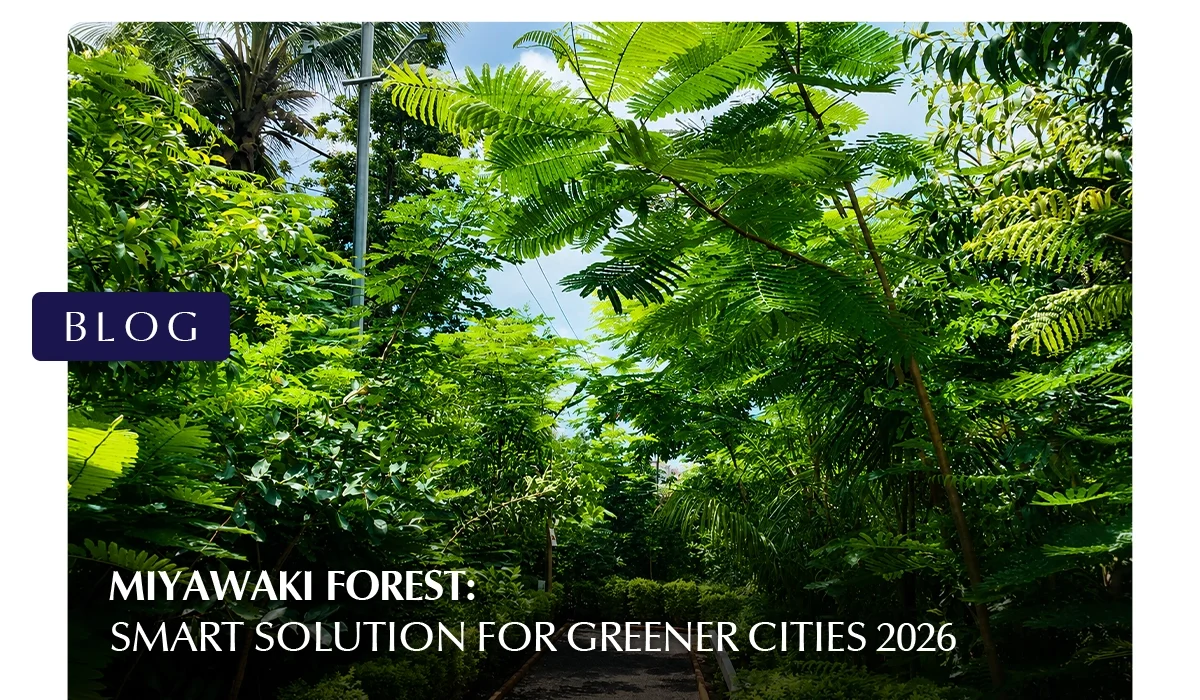

Cities are getting hotter. Green spaces are shrinking. Biodiversity is disappearing from urban landscapes at an alarming rate. The world urgently needs a smart, scalable, and proven solution. The Miyawaki Forest is exactly that.
This rapid urban reforestation method is transforming roadsides, school grounds, and barren plots into thriving ecosystems. It is gaining momentum across Asia, Europe, the Americas, and the Middle East.
Quick Facts: Miyawaki Forest at a Glance
| Factor | Detail |
| Invented By | Professor Akira Miyawaki, Japan (1970s) |
| Minimum Land Required | As small as 9 sq meters |
| Planting Density | 3 saplings per square meter |
| Growth Speed | Up to 10x faster than conventional forests |
| Self-Sustaining After | 2–3 years |
| Global Trees Planted | 40+ million native trees worldwide |
| Also Known As | Pocket Forest, Tiny Forest, Urban Mini-Forest |
What Is a Miyawaki Forest?
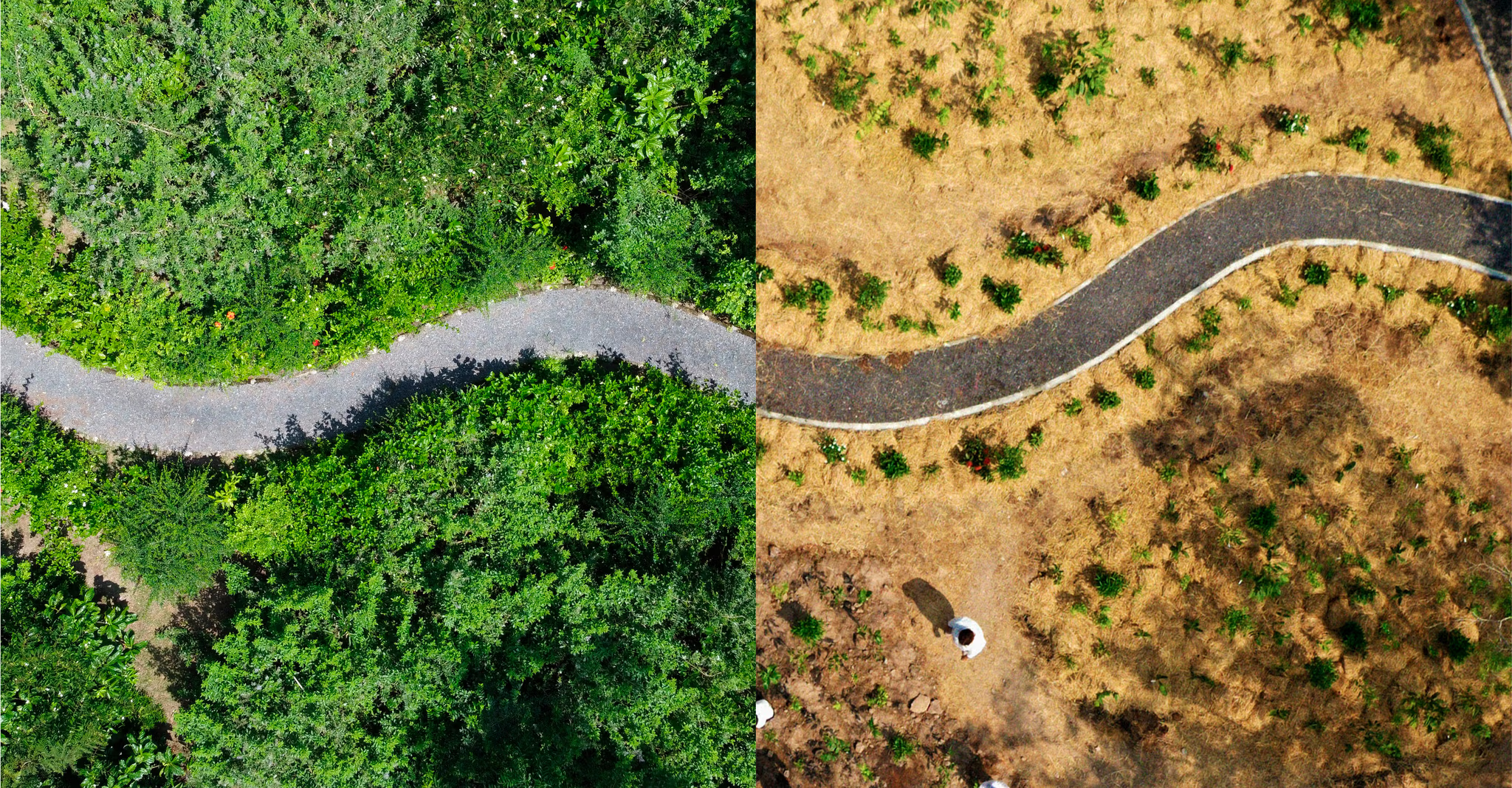
A Miyawaki Forest is a dense, multi-layered plantation of native trees and shrubs. It is grown on very small plots of land. The method recreates the structure of a natural, mature forest but in a fraction of the time. It is also known as a Tiny Forest or Pocket Forest. These names all refer to the same core concept: planting diverse native species in close proximity to mimic how nature builds forests.
The minimum land required is 9 square meters. This makes it perfect for cities where open land is scarce.
Who Was Akira Miyawaki?
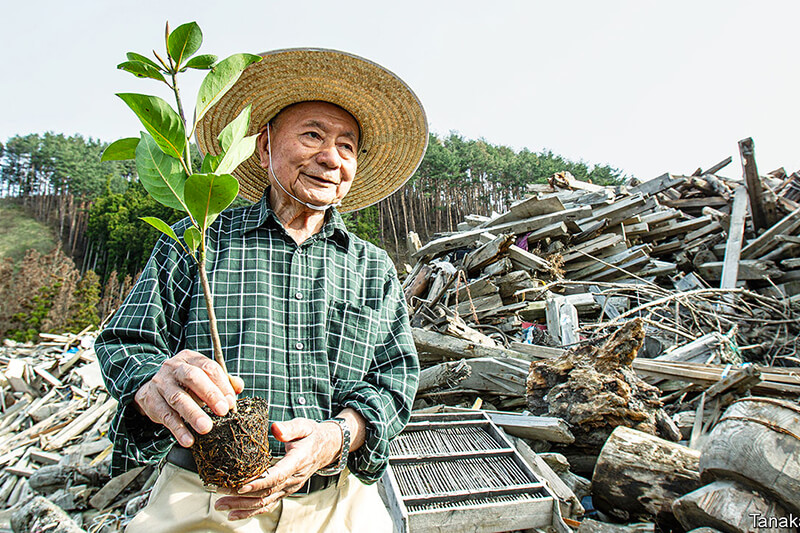
The method is named after Professor Akira Miyawaki. He was a Japanese botanist and plant ecology expert. He spent over 40 years studying how native forests naturally regenerate.
His research led him to a powerful conclusion. If you plant the right native species, in the right density, the forest takes care of itself. He educated people on planting across more than 1,700 sites worldwide. Over 1,400 of those were in Japan alone. His work has resulted in the protection of more than 3,000 primary forests and the planting of over 40 million native trees globally. His legacy is now growing faster than ever.
The Core Principle: Potential Natural Vegetation
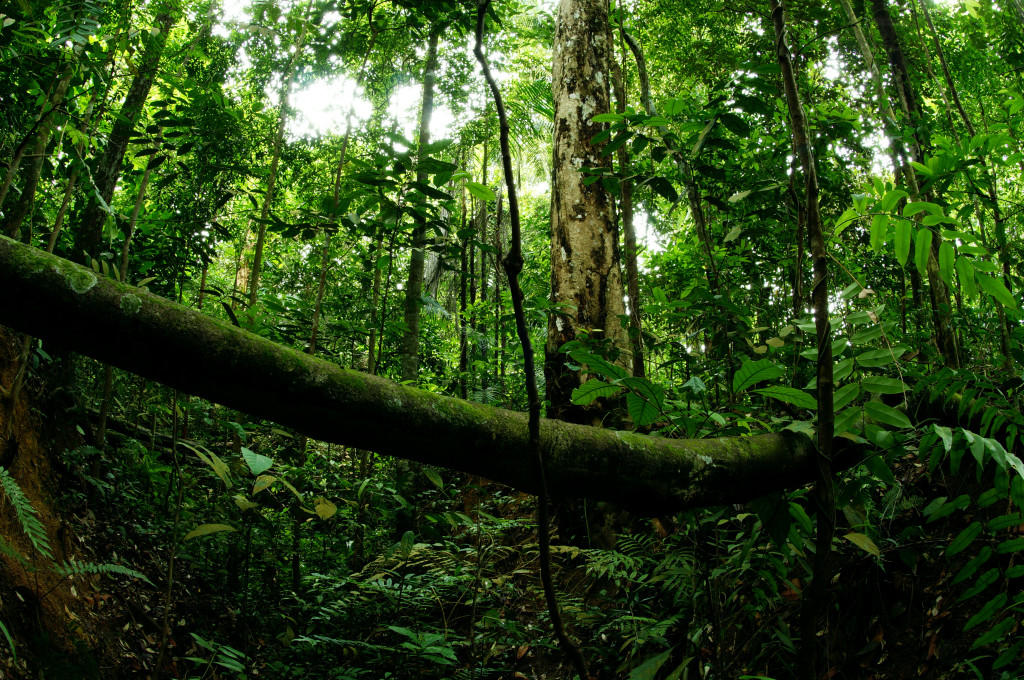
Every region on Earth has a natural plant community that would thrive there without human interference. Scientists call this the Potential Natural Vegetation (PNV).
The Miyawaki Forest method is built on this concept. Only species that belong naturally to a given area are selected. These indigenous plants have spent thousands of years adapting to the local soil, rainfall, and climate. They do not need fertilisers. They do not need pesticides. They simply grow.
This is what makes the approach fundamentally different from conventional tree planting.
How Does the Miyawaki Method Work?
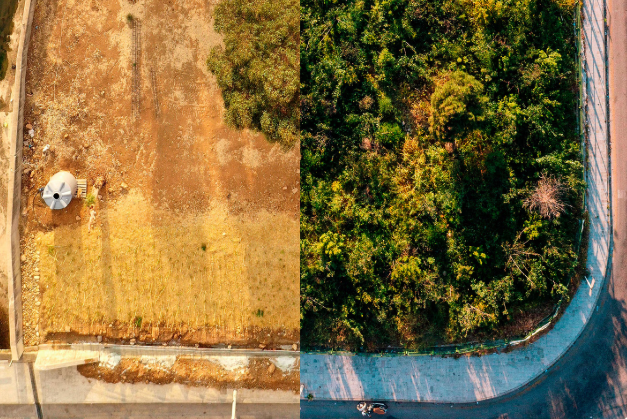
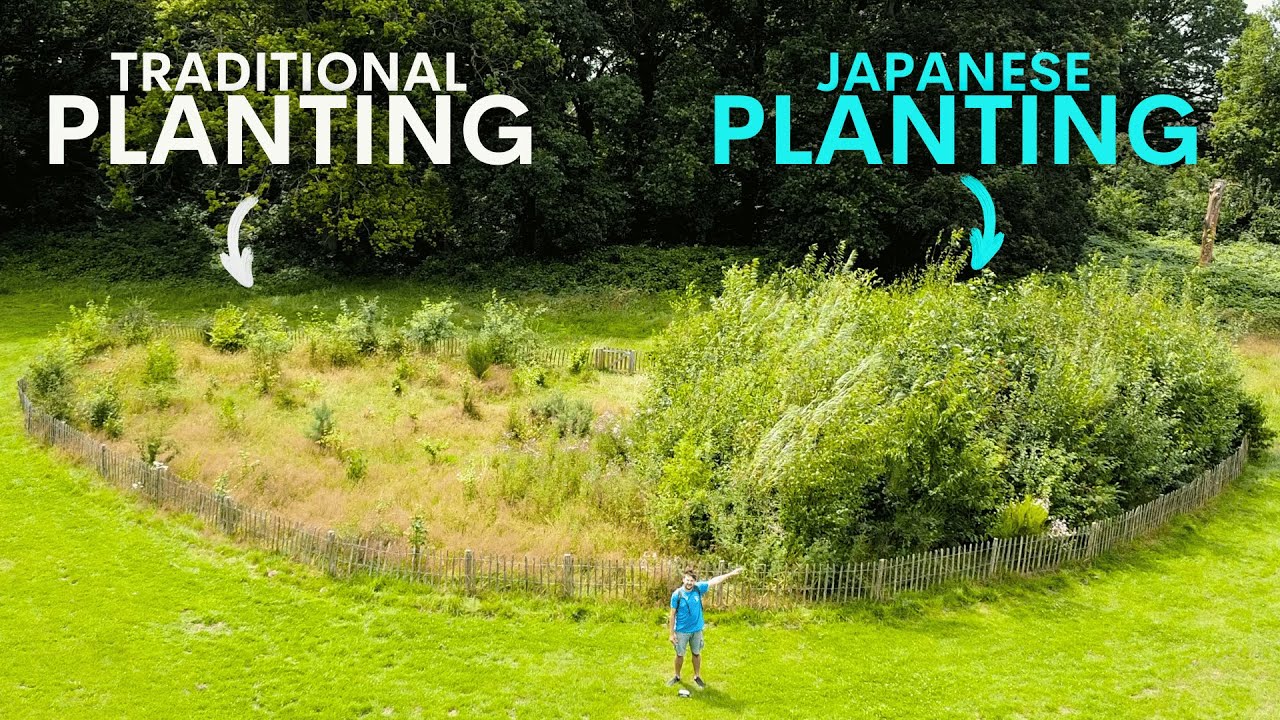
The science behind a Miyawaki Forest is elegant. When native trees are planted very close together, they compete for sunlight. This competition forces them to grow rapidly upward rather than spread sideways.
The result is fast, dense, vertical growth. The canopy closes quickly. It shades out weeds. Leaf litter builds up. Soil fertility improves. Insects, birds, and beneficial fungi arrive naturally. The entire ecosystem assembles itself.
After just two to three years, the forest becomes completely self-sustaining. No watering. No weeding. No maintenance required.
Studies and practitioners report that a Miyawaki Forest can grow up to 10 times faster than a conventional plantation. It can also support up to 30 times more biodiversity. It is worth noting that some ecologists have raised questions about these figures. The faster growth may reflect quicker ecological succession rather than raw tree height. This distinction matters for setting realistic expectations.
The 4-Step Planting Process
Planting a Miyawaki Forest follows a clear, structured process.
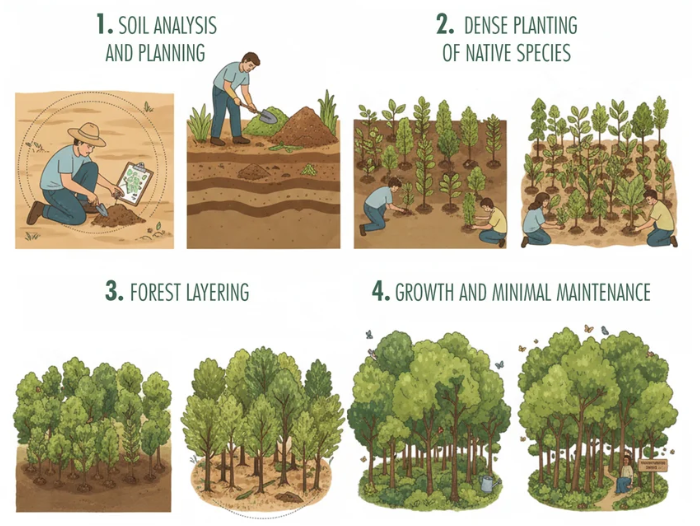
Step 1: Survey and Identify Native Species
The first step is to study the site carefully. Botanists identify which species would naturally grow within about 20 kilometres of the location. A recommended diversity range is 50 to 100 native species. Local and indigenous knowledge is invaluable at this stage.
Step 2: Prepare the Soil
Urban soils are often compacted and nutrient-poor. The soil is improved by digging pits and incorporating organic matter. Compost, manure, and dead vegetation are commonly used. A slight mound is sometimes built to mimic the natural forest floor. Cardboard and a thick layer of wood chips or compost are placed on top to suppress weeds and retain moisture.
Step 3: Dense Planting
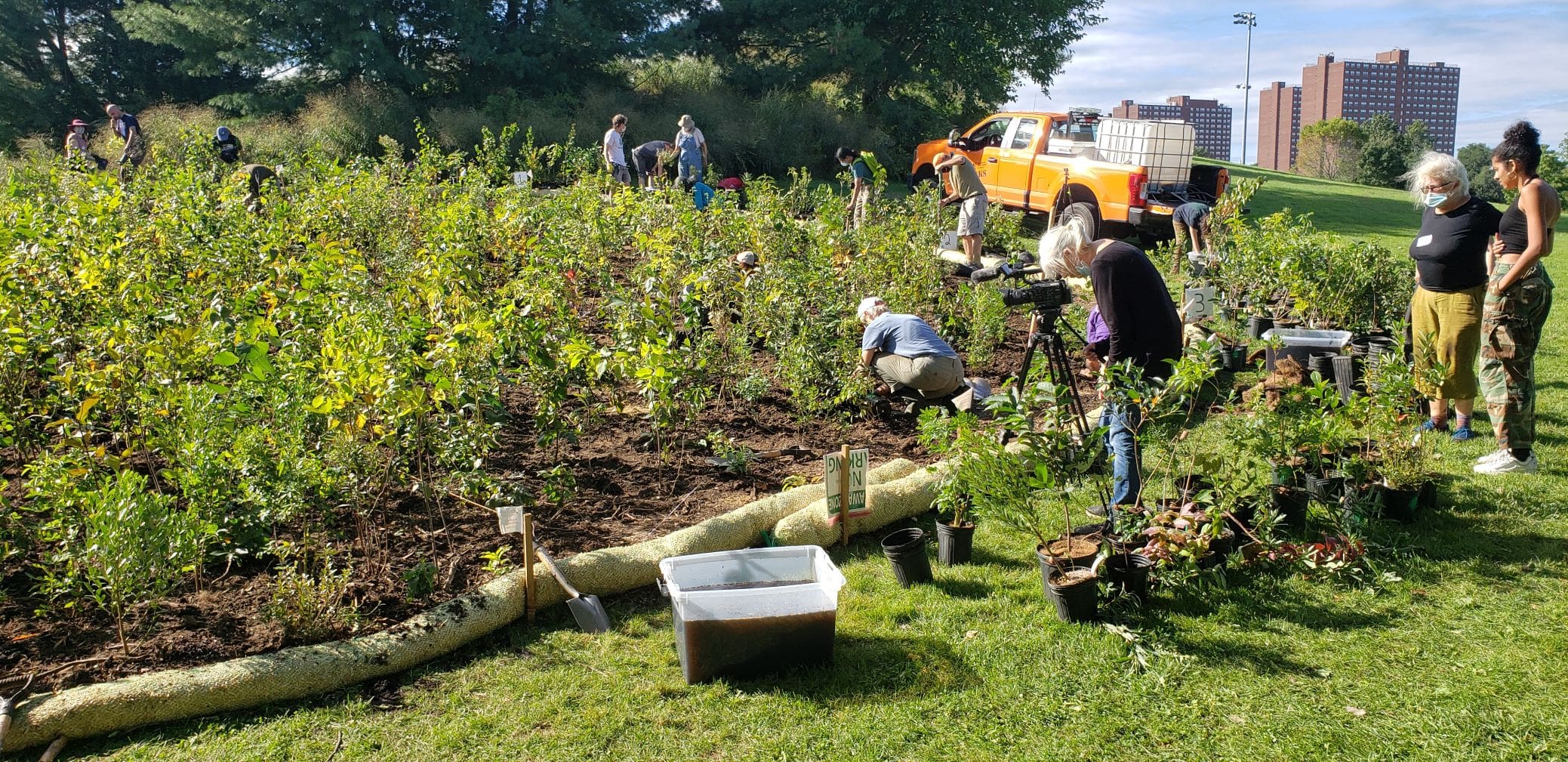
Saplings up to 80 centimetres tall are planted at approximately 3 per square metre. No two saplings of the same species are placed next to each other. All species are planted at the same time. This random, diverse arrangement mirrors how a natural forest seed bank works.
Step 4: Early Maintenance
The forest needs watering and weeding for the first two to three years. This is the most demanding phase. After that, the forest becomes independent. The investment of time and effort in the early years pays off for decades.
Key Benefits of a Miyawaki Forest in Urban Areas
A Miyawaki Forest delivers rapid environmental, social, and economic benefits, making it one of the most effective nature-based solutions for modern cities.
Environmental Impact
A Miyawaki Forest delivers measurable environmental benefits quickly.
It sequesters carbon faster than slow-growing conventional forests. It creates a cooling microclimate that directly reduces the urban heat island effect. Dense canopy cover lowers local temperatures. Root systems improve water infiltration and reduce surface run-off. Soil erosion is significantly reduced on previously bare urban land.
Biodiversity Recovery
Urban areas are biological deserts for most wildlife. A Miyawaki Forest changes rapidly. The dense, layered structure provides habitat for birds, insects, pollinators, and soil organisms. Biodiversity appears within months of planting.
Community and Social Benefits
The benefits extend beyond ecology. UNESCO has actively endorsed the use of Miyawaki Forest planting within urban schools. Children learn directly about native ecosystems. Communities come together during planting events. Access to green space improves mental health and physical well-being.
Barren roadsides, abandoned lots, school yards, and even landfills have been transformed through this approach.
Long-Term Cost Efficiency
The upfront cost is higher than that of conventional tree planting. However, the long-term cost is very low. Once established, the forest needs almost no maintenance. It functions entirely on its own. For municipalities managing tight budgets, this is a significant advantage.
Miyawaki Forests Around the World
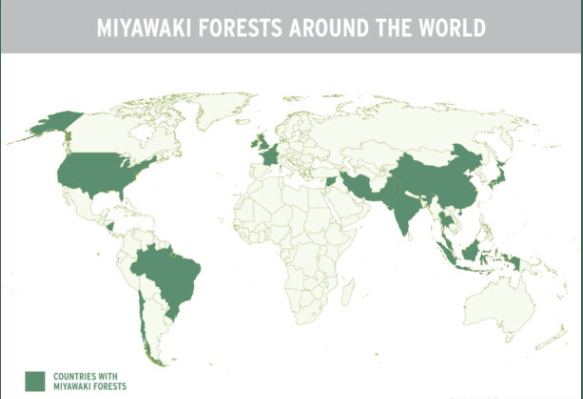
The global adoption of the Miyawaki Forest method tells a compelling story.
- Japan remains the origin and heartland of the method. Thousands of sites have been established across the country since the 1970s.
- India has seen rapid scaling. Shubhendu Sharma founded Afforestt and applied the Miyawaki method to urban plots across Indian cities. The model attracted global attention and inspired organizations worldwide.
- Pakistan has embraced the method at a governmental level. The Parks and Horticulture Authority of Lahore announced plans to develop what was described as Asia’s largest Miyawaki urban forest. The project planned to plant 112,500 indigenous trees across 100 Kanals in China Park near Saggian Bridge. An additional 15 locations across Lahore were included in the plan. The Nature Conservation Society of Pakistan has also established Miyawaki Forest plots in Sialkot, within Shahab U Din Park.
- The United States has seen projects in Cambridge, Massachusetts, where a forest was planted over a landfill in Danehy Park, and in Los Angeles, inside Griffith Park.
- Brussels, Belgium, has planted a 770-square-meter pocket forest of 20 native species within the city.
- The Yakama Nation in Washington State planted seven pocket forests of 47 native species on a rehabilitation facility, totalling over 23,000 square feet.
These examples span continents, climates, and cultures. The method adapts wherever the right expertise and commitment are applied.
Honest Assessment: Pros and Cons
No solution is without limitations. A balanced view of the Miyawaki Forest method is important for anyone considering it.
Advantages
- Rapid establishment of a dense, functional forest on small urban land
- High biodiversity from the earliest stages
- Self-sustaining after just two to three years
- Applicable on plots as small as 9 square meters
- Builds community engagement and environmental awareness
- Effective across diverse climates, including arid and semi-arid zones
Limitations and Criticisms
- High upfront cost. Sourcing large numbers of native nursery saplings is expensive. Quality native stock is not always available.
- Disputed growth claims. The widely cited “10x faster growth” figure has been questioned by forestry researchers. The evidence may reflect faster ecological succession rather than actual growth rates.
- Not scalable for large areas. The method is intensive and impractical for reforesting vast tracts of land.
- Water demands in early years. In dry or Mediterranean climates, the initial watering requirement can be costly and resource-intensive.
- Expertise is essential. Without proper botanical knowledge, poorly chosen species can result in an ecologically weak or disorganized plant community.
- Wildfire risk. In fire-prone regions, very dense planting can increase fire hazard. Modified, less dense planting is recommended in these areas.
- CSR exploitation concerns. Some critics have raised concerns that the method has been promoted primarily to attract corporate social responsibility funding, without rigorous outcome monitoring.
Being aware of these limitations helps cities and organizations design better, more accountable projects.
Is a Miyawaki Forest Right for Your City?
Before starting a project, ask these practical questions.
Does the site receive adequate rainfall, or can water be supplied for the first three years? Is native nursery stock available locally? Is there a qualified botanist or ecologist available to guide species selection? Is the community willing to participate in early maintenance? Are there fire risk considerations that require adjusted planting density?
If the answers are largely yes, a Miyawaki Forest project is likely viable and worthwhile.
The Road Ahead: Miyawaki Forests in 2026
Urban heat, biodiversity collapse, and climate anxiety are defining challenges of this decade. City planners are under pressure to act. Nature-based solutions are moving from optional to essential.
The Miyawaki Forest fits perfectly into this shift. It works on small, affordable plots. It delivers results within years, not decades. It engages communities. It builds resilience.
In 2026, governments, schools, corporations, and neighbourhoods worldwide are increasingly choosing the Miyawaki method as part of their urban greening strategies. Pakistan’s large-scale government projects, UNESCO’s school programs, and grassroots NGO initiatives in dozens of countries all point in the same direction.
The question for cities is no longer whether to plant a Miyawaki Forest. The question is where to start.
Conclusion
The Miyawaki Forest is not a miracle solution. It is a well-researched, nature-based technique with a strong track record across diverse environments. It delivers rapid biodiversity gains, carbon sequestration, cooling effects, and community value to urban spaces that desperately need them.
Used thoughtfully, with proper expertise and honest expectations, it is one of the most powerful tools available to cities in 2026. Small forests can create large change. The time to plant is now.
For more informative blogs on topics like Islands of Pakistan and Gurudwara Janam Asthan Nankana Sahib, visit Chakor Blogs.
Sources
- Potential Natural Vegetation
- Unesco
- Parks and Horticulture Authorities
- Nature Conservation Society of Pakistan
Frequently Asked Questions
Practitioners report growth up to 10 times faster than conventional forests. However, this figure refers to the rate of ecological development, not just tree height, and remains debated among scientists.
As little as 9 to 92 square meters is sufficient for a meaningful forest.
The standard density is approximately 3 saplings per square meter.
Yes, with adequate watering for the first 2 to 3 years. Projects have succeeded in Jordan, the Persian Gulf region, and parts of Pakistan.
Professor Akira Miyawaki, a Japanese botanist, developed and refined the method over four decades of research and field work.

Dedicated and detail-oriented SEO Content Writer, Real Estate Writer, and Research Analyst based in Islamabad, with proven expertise in developing accurate, valuable, and well-researched content. Skilled in analytical writing, market research, and reporting, with the ability to turn insights into clear, professional, and impactful content. Passionate about exploring new ideas, analyzing industry trends, and contributing to high-quality writing and research-driven projects.
