
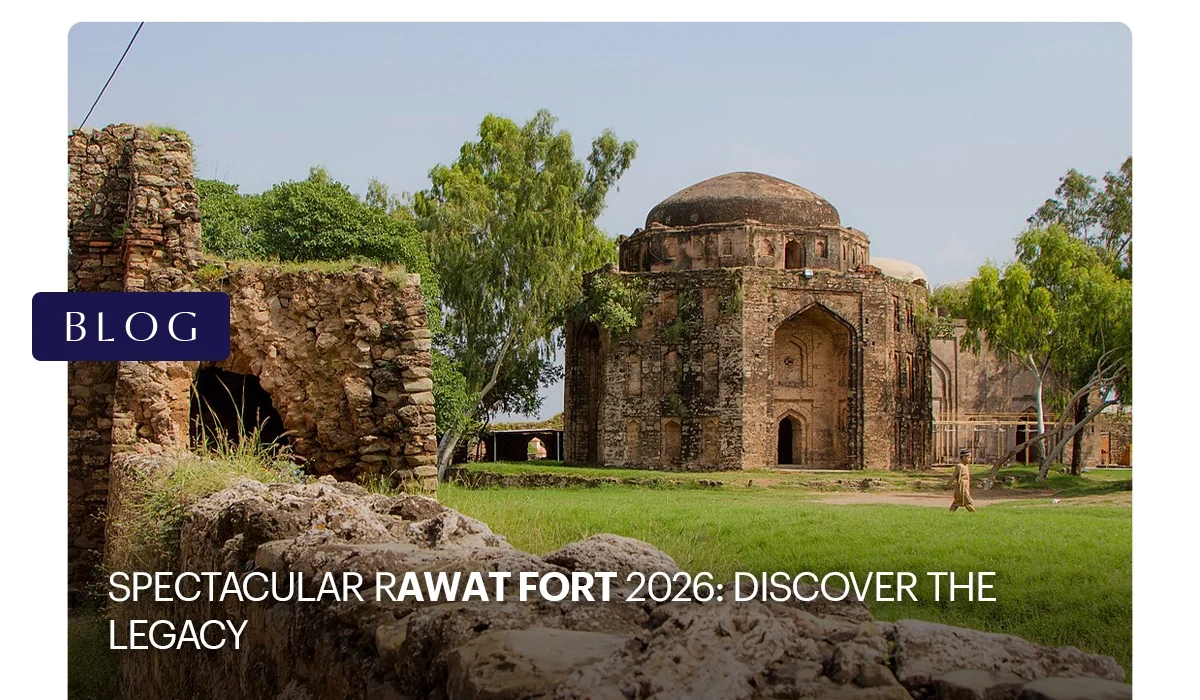

Pakistan is full of cultural heritage sites. Rawat Fort is one of them. It stands quietly on the Grand Trunk Road, just 17 kilometres east of Rawalpindi. Hundreds of thousands of vehicles pass it every day. Most drivers never look twice. But behind those weathered stone walls lies one of the most layered historical stories in all of Punjab.
This guide covers everything a history lover needs to know about Rawat Fort, including its origins, battles, architecture, and how to visit it today.
Rawat Fort
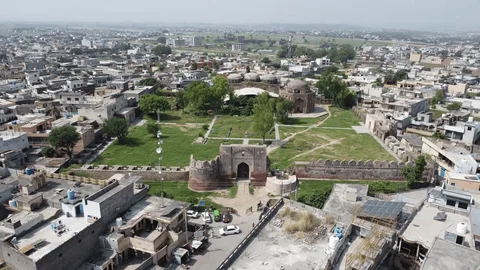
Rawat Fort is a fortified caravanserai located in Rawat, Punjab, Pakistan. It sits on the Pothohar Plateau, near Rawalpindi. The fort is also known as Sarai Rawat. The name itself tells you something important. “Rawat” derives from the Arabic word “rabat”, meaning roadside inn or caravanserai. This was not originally a military fortress. It began as a rest stop for travellers on the world’s oldest highway.
The structure is nearly square. It measures 93.5 × 106.3 metres and encloses a courtyard of roughly 10,000 square metres. It has two main entrances. Corner towers once stood on the northern and southern ends. Inside, you will find a three-domed mosque, an octagonal tomb, scattered graves, and cell-like rooms lining the perimeter walls.
Rawat Fort is a federally protected Cultural Heritage Site of Punjab. It is managed by the Ministry of Information, Broadcasting and National Heritage.
Quick Facts About Rawat Fort
| Feature | Detail |
| Local Name | قلعہ روات / Sarai Rawat |
| Location | Rawat Town, Punjab, Pakistan |
| Distance from Rawalpindi | 17–18 km east on GT Road (N-5) |
| Founded | Early 15th century (Delhi Sultanate) |
| Fortified By | Gakhar Clan (16th century) |
| Dimensions | 93.5 × 106.3 metres |
| Key Structures | Three-domed mosque, Octagonal tomb |
| Who Is Buried Here | Sultan Sarang Khan & his 16 sons |
| Battle Date | 1546 CE |
| Heritage Status | Federally Protected Cultural Heritage Site |
| UNESCO Status | Not listed |
| Best Visit Season | October to March |
| Entry Fee | Free |
The History of Rawat Fort
Some historians push the story back even further. According to local tradition, the site may have earlier roots going back to 1036–1039 CE. It is believed to have connections with Sultan Masud I, son of the famous Mahmud of Ghazna. However, this claim is contested. The dates do not align cleanly with the surviving architectural evidence.
Origins: A Caravanserai on the Grand Trunk Road
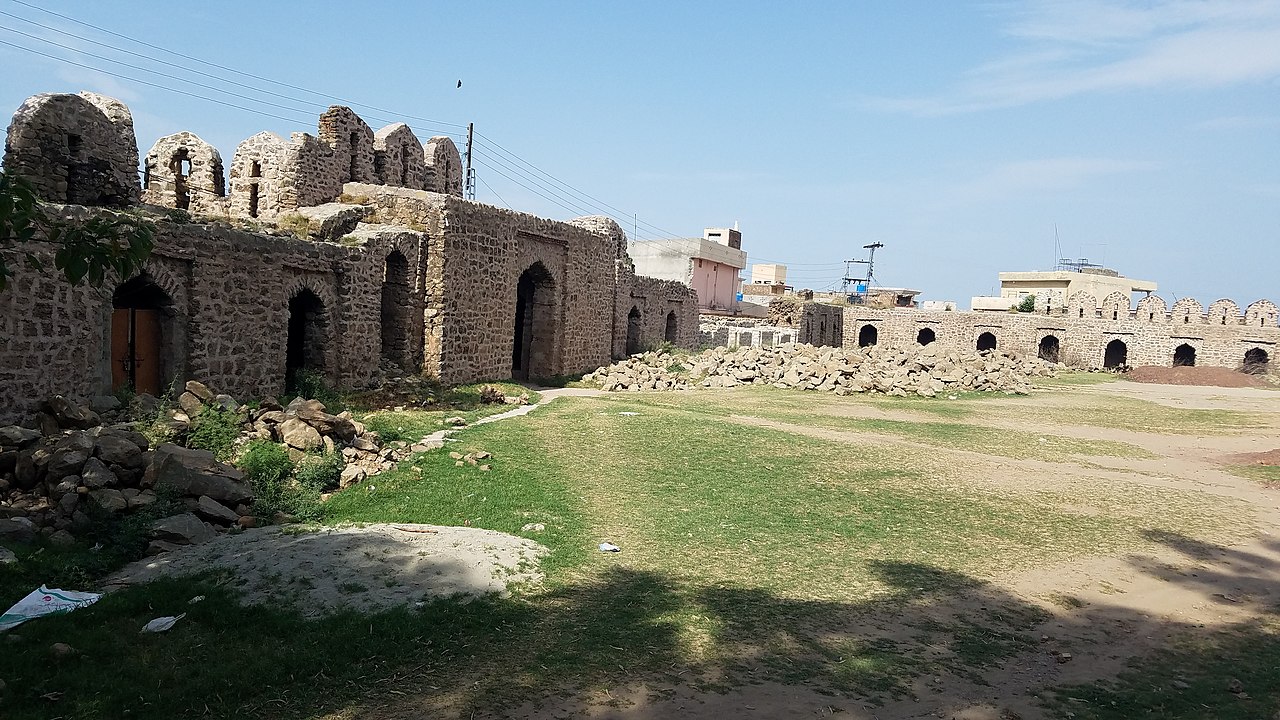
The story of Rawat Fort begins in the early 15th century. The Delhi Sultanate founded it as a caravanserai. At that time, the Pothohar region was under the control of Malik Jasarat, who is considered its original builder.
The original structure followed the classic Persian rebat design. This pattern was common between the 8th and 12th centuries. It featured two tall gates high enough for heavily loaded camels, corner towers, and an inner courtyard. The fort originally had up to 76 individual cells. These were small rooms rented out to travelling merchants. Comfort and commerce went hand in hand here.
The Gakhar Fortification
In the 16th century, the character of Rawat Fort changed completely. The Gakhar clan transformed it from a peaceful rest stop into a military stronghold.
The Gakhars were a powerful warrior tribe native to the Pothohar Plateau. They were loyal supporters of the Mughal Emperor Humayun. When Sher Shah Suri, the powerful Pashtun king, began expanding his control over northern India, the Gakhars became a target.
Sultan Sarang Khan Gakhar led the resistance. He had deep roots in the region. Emperor Babur himself had rewarded Sarang Khan in 1525, granting him the Potohar estate in recognition of his loyalty. That bond between the Gakhars and the Mughal dynasty would define and ultimately cost everything.
The Battle of Rawat Fort (1546): Sarang Khan’s Last Stand
This is the most powerful chapter in the story of Rawat Fort.
When Sher Shah Suri drove Humayun out of India, he needed to eliminate Gakhar resistance in the Pothohar region. He constructed the massive Rohtas Fort about 50 miles from Rawat and placed a garrison of 12,000 soldiers there under his general Khawas Khan. The message was clear: the Gakhars would be crushed.
Sher Shah Suri died in 1545. The battle at Rawat Fort took place in 1546. This means Sultan Sarang Khan was actually fighting Islam Shah Suri, Sher Shah’s son, not Sher Shah himself. Pakistan’s Archaeology Department confirms this timeline. It is a small but important correction that changes how we read the fort’s history.
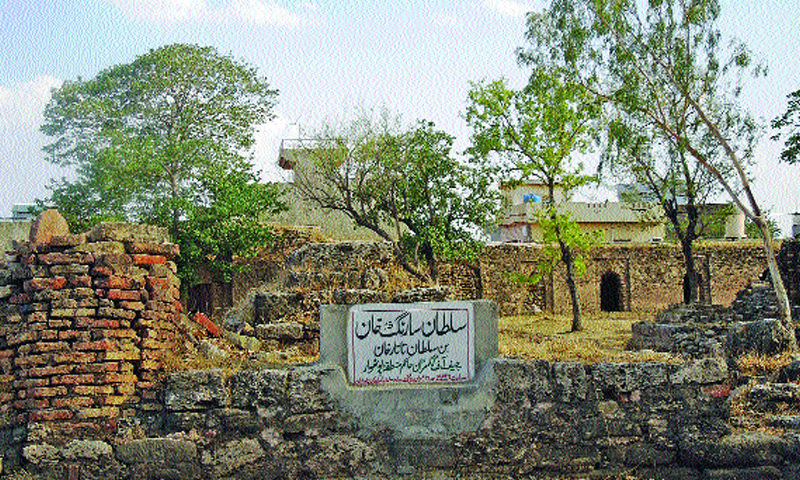
The battle itself was brutal and final. Sultan Sarang Khan was struck by a spear and killed. Sixteen of his sons also died fighting alongside him. They were buried inside the fort. The courtyard that once hosted travelling merchants became a graveyard for an entire dynasty.
Sarang Khan’s brother, Adam Khan Gakhar, took over leadership of the tribe after Sarang Khan’s death.
After the Battle: Colonial Use and Abandonment
The fort continued to stand long after the battle. Local accounts suggest that British authorities also used the building during the colonial period. It was abandoned after the Partition of the subcontinent in 1947. The mosque inside, however, was never abandoned. It continues to function as the area’s Markazi Jamia Masjid. Locals still offer Friday and Eid prayers within its centuries-old walls.
The 1893–94 Rawalpindi District Gazetteer described Rawat as “the first camping ground from Rawalpindi on the Grand Trunk Road towards Jhelum.” Even in the British era, the fort’s importance was tied to its tomb and the road leading to it.
Architecture of Rawat Fort
The Gates
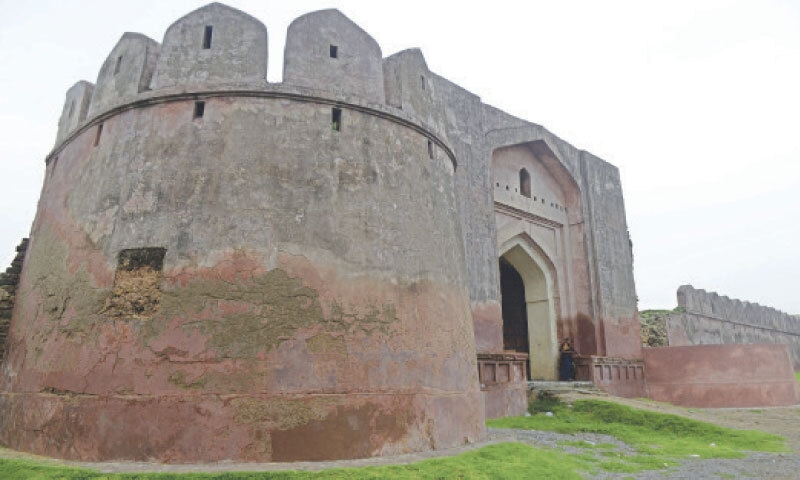
The fort originally had three gateways: east, north, and south. The eastern gate is the primary entrance. These gates were built tall and wide to accommodate heavily laden camels, a direct feature of the Persian rebat design. The original main gate has since vanished. The government has installed iron gates in its place.
The Three-Domed Mosque
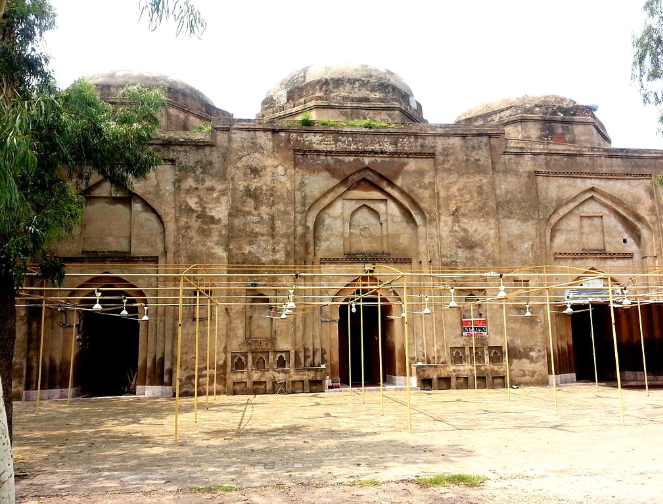
The mosque runs along the western wall. It measures 29.5 × 12.1 metres. Three connected bays, each capped by a dome, form its silhouette. Arched openings mark each bay on the facade. The old tile flooring has been lost. Small modern modifications have changed parts of the interior. But the mosque remains a living building, not a relic frozen in time.
From the roof of this mosque, you can see the Mankiala Stupa. This is a 2nd-century Gandhara-era Buddhist monument located roughly three miles to the southeast. The view connects Rawat Fort to an even older layer of human history on the Pothohar Plateau.
The Octagonal Tomb of Sultan Sarang Khan
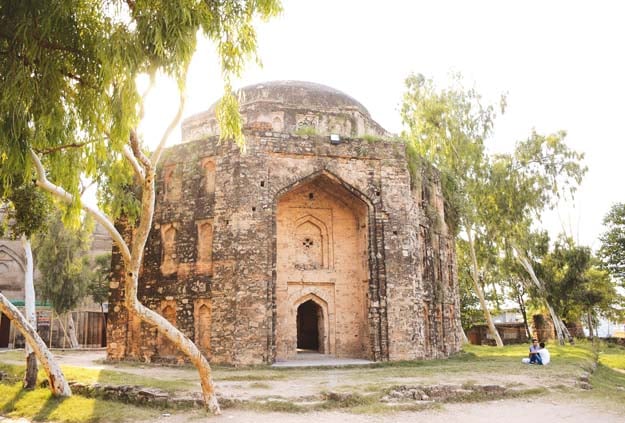
This is the most architecturally striking structure inside Rawat Fort. The tomb is octagonal, with a diameter of 16.6 metres. A large dome crowns it. Each entrance features a deep pishtaq, a recessed arched portal common in Mughal-era tombs. The walls are high with panel detailing and arched openings.
No marble cenotaph survives inside. It was likely removed or destroyed through vandalism or careless restoration work. But the structure itself still radiates a solemn authority. Standing beside it, you feel the weight of what happened here in 1546.
The Courtyard, Cells, and Hidden Features
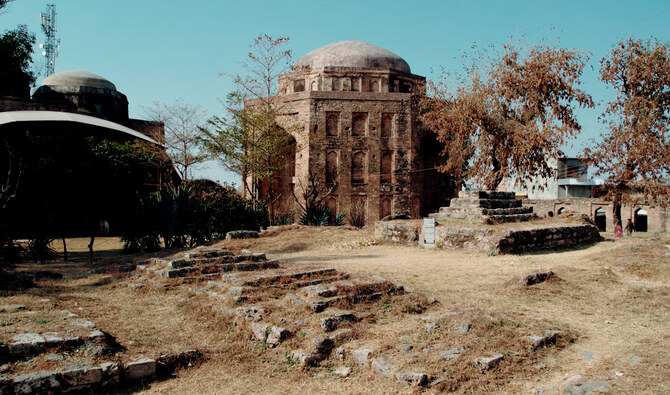
The smaller graves scattered through the courtyard are believed to belong to Sarang Khan’s 16 sons. The cell-like rooms along the interior perimeter walls were originally merchant quarters.
Archaeologists have also found evidence of a hamam (bathhouse) inside the fort. A spring well once stood in the main courtyard, supplying water for animals and travellers. These features reveal that Rawat Fort was once a fully self-contained stop on one of Asia’s busiest roads.
Conservation Status: A Heritage Under Threat
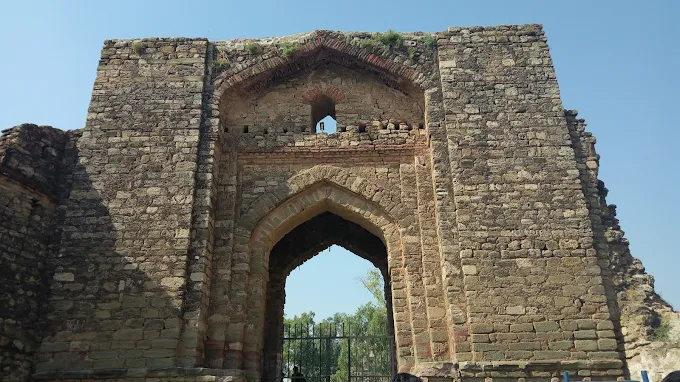
The state of Rawat Fort today is both hopeful and troubling.
On the hopeful side, the government has invested in preservation. In November 2016, a conservation plan was officially commissioned. In March 2017, Rs. 50 million was allocated for the first phase of restoration work. In 2020–21, an additional Rs. 5.6 million was allocated through the Public Sector Development Programme. Restoration work was still underway as recently as early 2025.
On the troubling side, the results have been uneven. The east gate was white-washed during restoration, a decision widely criticised for erasing the fort’s time-worn character. Urban encroachment has swallowed three of the fort’s four sides. Nearby residents have dismantled old medieval bricks to use in constructing modern homes. Bats roost in the dome. Fissures run through the walls. There are no security guards at the entrance.
There is also a jurisdiction problem. The federal Archaeology and Museum Department and the Punjab provincial government have both claimed jurisdiction over the site. This administrative limbo has significantly slowed preservation.
Visitor Guide to Rawat Fort (2026)
How to Get There
Rawat Fort sits on GT Road (N-5), about 17–18 km east of Rawalpindi city centre. From Rawalpindi, allow 40–60 minutes by car, depending on traffic. From Islamabad, the drive takes approximately 25–30 minutes. Public buses and wagons run to Rawat town. From Rawat town, a short rickshaw ride will bring you to the fort.
GPS Coordinates: 33°29′53″N, 73°11′39″E
When to Visit
October to March is the best season. The weather is cool and clear. For photography, aim for early morning or late afternoon. Avoid midday visits in summer; the heat on the GT Road corridor is intense.
How Much Time to Allow
A brisk visit takes 45 minutes. A thorough exploration of the mosque, tomb, perimeter cells, and courtyard takes 60 to 90 minutes. Add extra time if you plan to photograph in detail or read the signage carefully.
What to See First
Start at the eastern main gate. Study the gateway architecture. Move into the courtyard. Visit the mosque first, then walk to the octagonal tomb. Pay attention to the smaller graves around the courtyard. If the roof access is open, climb up for the view of the Mankiala Stupa on the horizon.
Nearby Attractions
- Mankiala Stupa: 3 miles southeast; a 2nd-century Buddhist monument
- Rohtas Fort: ~50 miles away; UNESCO World Heritage Site connected to the same historical conflict
- Pharwala Fort: another Gakhar-period fort in the Rawalpindi area
- Taxila: one of the great ancient cities of the subcontinent, within easy driving distance, and home to the famous Taxila Museum a must-visit for history lovers and tourists.
Why Rawat Fort Deserves More Attention
Rawat Fort is not famous. It does not appear on any international heritage list. There are no guided tours, no gift shops, no visitor centres. But that is precisely what makes it extraordinary for a serious history lover.
This is a place where the entire sweep of medieval Punjab played out trade, power, loyalty, betrayal, and sacrifice on a single stretch of road. The Gakhar tribe fought to the last man here. A father and sixteen sons are buried inside its walls. The mosque where they prayed still calls the azan five times a day.
Every stone in Rawat Fort has a story. Most of those stories are still waiting to be told properly.
Frequently Asked Questions
The Delhi Sultanate founded it as a caravanserai in the early 15th century. The Gakhar clan later fortified it in the 16th century.
It is located in Rawat town, Punjab, Pakistan, 17 km east of Rawalpindi on the Grand Trunk Road.
Sultan Sarang Khan Gakhar and his 16 sons, who died in the 1546 battle against Suri forces, are buried inside the fort.
October to March offers the best weather. Early morning visits are ideal for photography.
No. It is a federally protected Cultural Heritage Site of Punjab, but it does not hold UNESCO status.
Conclusion
History lovers will find Rawat Fort deeply rewarding. It does not offer polished displays or guided tours. It offers something far more valuable: raw, unfiltered contact with the past. You walk the same courtyard where caravans once unloaded their goods. You stand beside the graves of men who died defending their home. You look out from the mosque roof and see a Buddhist stupa on the horizon, reminding you that this land holds centuries upon centuries of human story.
The biggest threat to Rawat Fort is not time. It is indifference. Urban encroachment, administrative disputes, and inconsistent funding are slowly erasing what centuries of weather could not destroy. Awareness is the first step toward preservation.
For more informative blogs on topics like Altit Fort and Gurudwara Janam Asthan Nankana Sahib, visit Chakor Blogs.
Sources:
- Historical Sites – Punjab
- MINISTRY OF INFORMATION AND BROADCASTING (MOIB) Pakistan
- National Heritage and Culture Division
- Department of Archaeology & Museums (DOAM)
- Gazetteer of the Rawalpindi DISTRICT 1893-94
- Public Sector Development Programmes (PSDP)

Dedicated and detail-oriented SEO Content Writer, Real Estate Writer, and Research Analyst based in Islamabad, with proven expertise in developing accurate, valuable, and well-researched content. Skilled in analytical writing, market research, and reporting, with the ability to turn insights into clear, professional, and impactful content. Passionate about exploring new ideas, analyzing industry trends, and contributing to high-quality writing and research-driven projects.
