
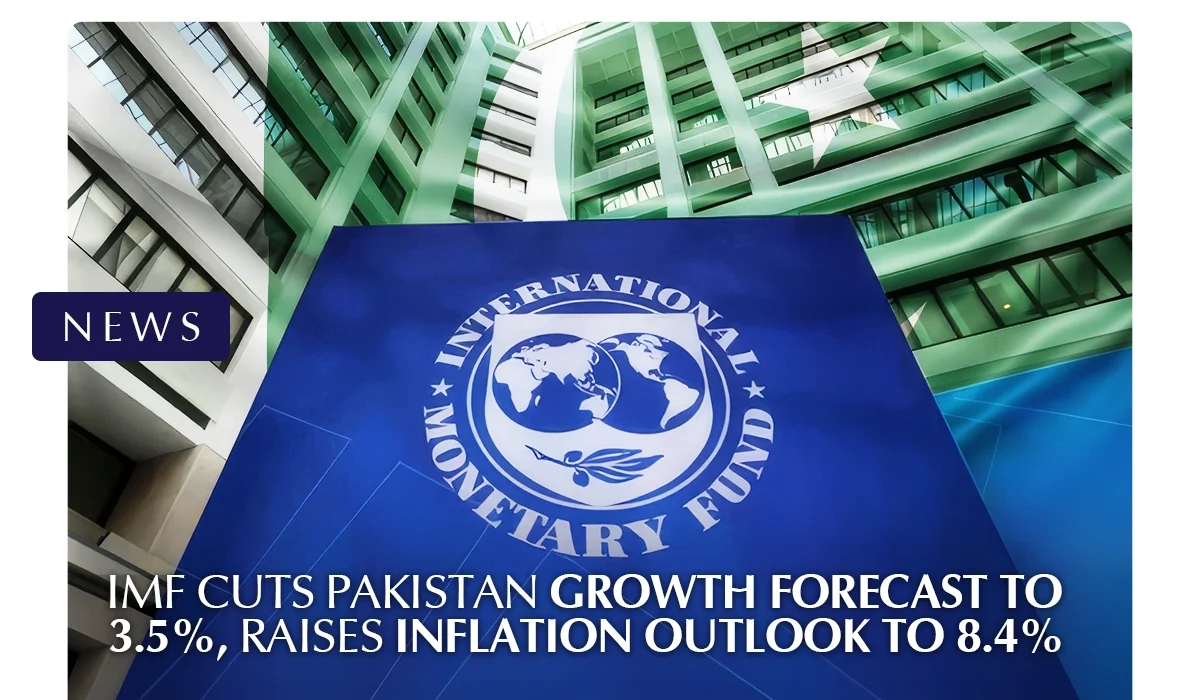

ISLAMABAD: The International Monetary Fund (IMF) has lowered its growth forecast for Pakistan. For the fiscal year 2026–27, the Fund now expects the economy to grow by 3.5 percent, down from its earlier estimate of 4.1 percent. The figures were published in the IMF’s World Economic Outlook report at its spring meetings.
For the current fiscal year, 2025–26, the growth estimate stays at 3.6 percent. The inflation forecast, however, has been raised. Prices are now expected to rise by 7.2 percent this year, up from 6.3 percent previously. For next year, inflation is forecast at 8.4 percent, compared to an earlier estimate of 7 percent.
The IMF linked the weaker outlook mainly to the conflict in the Middle East. The conflict has pushed oil prices higher and heightened global economic uncertainty. Pakistan imports around 90 percent of its energy from the region, which makes it more vulnerable to these developments than many other countries.
On trade and external payments, Pakistan’s current account deficit is expected to be about 0.4 percent of GDP this fiscal year. That figure is projected to rise to around 0.9 percent of GDP, roughly five billion US dollars, in fiscal year 2026–27. The IMF’s worst-case scenario assumes oil prices between $100 and $120 per barrel.
For more news on the economy, real estate, and development, visit Chakor Ventures.

BBC-featured Content Specialist with a sharp eye for search intent and a proven ability to turn content into a growth engine. I leverage cutting-edge digital marketing tools to craft strategies that fuel organic traffic, amplify brand growth, and own the local SEO landscape, particularly across the competitive real estate market. I help brands dominate search rankings and convert visibility into measurable business success.
