CategoriesFeatured blog

Chakor Celebrates Huzaifa & Huzaima’s Win at Asia Pacific Padel Tour Opener

The Asia Pacific Padel Tour kicked off its opening round in Karachi on October 31, 2025, bringing together some of the region’s most promising athletes for an electrifying start to the tournament. Among them, local sensations Huzaifa and Huzaima delivered a standout performance, dominating their first-round match with a commanding 6–2 victory and capturing the attention of fans and fellow competitors alike.

The event served as a vibrant showcase of talent and sportsmanship, uniting players from across the region at Legends Arena and marking the start of an exciting three-day tournament. With a total prize pool of $13,000 to be awarded at the conclusion of the event, the competition features male, female, and mixed categories. The Karachi leg has already seen strong participation and enthusiastic local support, reflecting the city’s growing passion for padel and its place as a rising destination on the Asia Pacific Padel Tour circuit.

Among the supporters celebrating this milestone was Chakor, the duo’s official sponsor. Chakor continues to champion emerging athletes in Pakistan through its support and initiatives. With this win, Huzaifa and Huzaima have not only demonstrated their skill and determination but also highlighted the importance of local initiatives that empower players to perform at an international level.

CategoriesArchitecture

Noor Mahal Bahawalpur: A Timeless Symbol of Royal Grandeur

Tales of love, luxury, and mystery surround the magnificent Noor Mahal Bahawalpur, a palace that glows like a dream under the evening sky. Some say it was built for a queen who never stayed there. Others believe it hides secrets still buried within its walls.

Standing in the royal city of Bahawalpur, the Palace of Lights has witnessed years of grandeur, silence, and rebirth. Its sparkling chandeliers, marble floors, and breathtaking design make it one of the most captivating landmarks in Pakistan, a place where history still feels alive.

In this blog, Chakor brings you a complete guide to Noor Mahal Bahawalpur, including its history, location, and the fascinating stories that make this palace a timeless symbol of elegance.

Key Information About Noor Mahal

Category Detail
Location Bahawalpur, Punjab, Pakistan
Coordinates 29.3792° N, 71.6679° E
Architectural Style Italian château on neoclassical lines
Architect Mr. Heenan (British state engineer)
Construction Started 1872
Completed 1875
Total Size 44,600 sq. ft. (4,140 m²)
Access Route Ahmedpur Road, near the Cantonment area
Surroundings Lush gardens and open lawns
Nearby Landmarks Darbar Mahal, Gulzar Mahal
Current Management Pakistan Army
Public Access Open for visitors, guided tours, and photography
Google Maps Tip Search “Noor Mahal Bahawalpur” for location and directions

Noor Mahal Location

location map of the palace

Noor Mahal is located in the historic city of Bahawalpur, Punjab, Pakistan. The palace sits close to the Cantonment area and can be easily reached through Ahmedpur Road, one of the city’s main routes. Its coordinates are around 29.38° N and 71.67° E, placing it right in the center of Bahawalpur’s heritage zone.

Surroundings and Nearby Attractions

The Noor Mahal in Bahawalpur is surrounded by lush green gardens, adding to its royal and peaceful charm. Just a few minutes away, visitors can explore other stunning palaces such as:

  • Darbar Mahal
  • Gulzar Mahal

These nearby sites together highlight the rich Nawabi history of Bahawalpur. The area is quiet, well-maintained, and perfect for sightseeing or photography.

Access and Management

Noor Mahal is maintained by the Pakistan Army, which ensures its preservation and upkeep. Although it is under military management, the palace is open to the public for tours, photography, and educational visits.

Visitor Tip

You can easily find the palace on Google Maps by searching “Noor Mahal Bahawalpur.” It provides directions, reviews, and nearby attractions to help you plan your visit more conveniently.

Noor Mahal History

noor mahal museum exterior night view

Category Details
Construction Period 1872 – 1875
Commissioned By Nawab Sadiq Muhammad Khan IV
Purpose Built for Maharani Noor Bakht Begum
Construction Cost Rs. 1.2 million
Imported Materials Marble, chandeliers, and furniture from England and Italy
Notable Guests & Events Prince Albert Victor (1890), Sir McOrth Beck (1892), Queen Victoria’s Jubilee (1897)
Mosque Addition 1906 by Nawab Muhammad Bahawal Khan V
Ownership Timeline Auqaf Department (1956) → Leased to Pakistan Army (1971) → Purchased by Army (1997)
Protected Monument Declared in 2001
Current Use Managed by Pakistan Army, open to visitors and tourists
Cultural Significance Symbol of Bahawalpur’s Nawabi heritage and royal legacy

1872–1875: A Palace Born from Royal Vision

The story of Noor Mahal Bahawalpur began in 1872, when Nawab Sadiq Muhammad Khan IV, known as the “Shahjahan of Bahawalpur,” decided to build a palace that reflected his refined taste and love for European architecture. The palace was completed in 1875 at a cost of around Rs. 1.2 million, a huge sum for its time.

It was designed by Mr. Heenan, a British state engineer who followed the Italian chateau style with neoclassical and Corinthian influences.

Most of the building materials and furnishings were imported from England and Italy, including marble, chandeliers, and furniture, which gave the palace a distinct European charm.

1875–1890: Built for Love and Surrounded by Legend

Noor Mahal was built for Maharani Noor Bakht Begum, the Nawab’s wife. But according to local legend, she stayed there for only one night after realizing she could see a graveyard (Basti Maluk Shah) from her balcony. The superstition surrounding this view led her to never return, leaving the palace mostly unused as a residence.

Afterward, the Nawab turned the building into a state guest house, where royal guests and British officials were hosted in true Bahawalpur style.

1890–1930s: Royal Events and Distinguished Guests

In the late 19th and early 20th centuries, Noor Mahal became a stage for royal hospitality. Historical records mention several notable visits and events:

  • Prince Albert Victor of Wales visited in 1890.
  • Sir McOrth Beck, the Finance Commissioner of Punjab, stayed with his family in 1892.
  • The 60th birthday of Queen Victoria was celebrated here in 1897.
  • Later, during the early 1930s, Nawab rulers hosted jubilee celebrations and state functions at the palace.

These grand gatherings reflected Bahawalpur’s close ties with the British Empire and showcased the state’s wealth and sophistication.

1906: Expansion and Religious Addition

In 1906, Nawab Muhammad Bahawal Khan V added a beautiful mosque within the palace grounds.

Its design was inspired by the mosque at Aitchison College, Lahore, blending Islamic architecture with European detail.

The palace complex included spacious lawns, water tanks, and fountains, creating a royal setting for receptions and state ceremonies.

1956–2001: From Royal Residence to Public Heritage

After the merger of Bahawalpur State with Pakistan in 1956, Noor Mahal was transferred to the Auqaf Department. Later, it was leased to the Pakistan Army in 1971, who began using it as a state guest house and Army club.

In 1997, the Pakistan Army purchased Noor Mahal for Rs. 119 million, ensuring its preservation and restoration. Restoration work revived its original design, including repairs to the domes, interiors, and gardens.

In 2001, the palace was officially declared a protected monument by the Department of Archaeology, allowing the public to visit it.

Since then, Noor Mahal has become a popular tourist attraction and cultural landmark, representing the royal history of Bahawalpur.

2001–Present: A Legacy That Still Shines

Noor Mahal stands today as a symbol of love, art, and royal grandeur. Its history carries both romance and mystery; from a queen who never stayed to an empire that once celebrated under its chandeliers. Each corner of the palace tells a story, reminding visitors of Bahawalpur’s glorious past.

Noor Mahal Architecture

inner darbar hall noor mahal

Category Details
Architectural Fusion Italian château with neoclassical and Islamic influences
Architect Mr. Heenan (British state engineer)
Total Area 44,600 square feet (4,140 m²)
Layout 32 rooms, 14 basement rooms, 6 verandas, 5 domes
Key Exterior Elements Corinthian columns, arched windows, vaulted ceilings
Interior Features Mosaic flooring, carved woodwork, painted ceilings
Main Hall Durbar Hall used for royal meetings and receptions
Mosque Addition Added in 1906 by Nawab Muhammad Bahawal Khan V
Current Function Partly a museum showcasing royal artifacts and furniture
Cultural Value Represents the artistic fusion of East and West in Bahawalpur’s royal heritage

The architecture of Noor Mahal Bahawalpur is one of the finest examples of how art and culture can merge across continents. Its design brings together European creativity and local craftsmanship, creating a palace that looks as breathtaking today as it did more than a century ago.

A Blend of East and West

interior view of noor mahal

The architecture of Noor Mahal Bahawalpur is a perfect mix of Italian château style, neoclassical grace, and Islamic influences. This unique combination makes it one of the most beautiful and balanced palace designs in Pakistan.

The palace was designed by Mr. Heenan, a British state engineer who brought European planning to the royal city.

His vision combined Western symmetry with local craftsmanship, giving Noor Mahal a style that feels both foreign and familiar.

Key features include:

  • Italian and neoclassical design elements
  • Islamic domes and arches
  • Balanced proportions and elegant façade

Grand Structure and Layout

noor mahal bahawalpur enterance exterior view

Spread across 44,600 square feet, Noor Mahal’s layout reflects royal precision and luxury. The palace includes 32 rooms, with 14 rooms in the basement, 6 verandas, and 5 grand domes rising above the roofline.

Its exterior is framed with Corinthian-style columns and tall arched windows. Inside, vaulted ceilings and intricate wall designs add height and depth to the halls. The structure allows sunlight to filter through, brightening the entire palace during the day.

Highlights of the layout:

  • Total Area: 44,600 sq. ft.
  • 32 rooms and 14 basement chambers
  • 6 spacious verandas and 5 domes
  • Open design with natural light and ventilation

Ornate Interiors and Imported Elegance

Stepping inside Noor Mahal feels like entering a piece of royal art. The interior is decorated with chandeliers, carpets, and furniture imported from England and Italy, all carefully chosen by the Nawab himself.

Walls are adorned with mosaic patterns, carved woodwork, and frescoes that show the artistic richness of the era. The glowing chandeliers reflect off polished marble floors, adding to the palace’s golden charm.

Interior highlights:

  • Imported European furniture and décor
  • Handcrafted mosaic and tile flooring
  • Crystal chandeliers and carved ceilings
  • Royal portraits and vintage décor pieces

The Durbar Hall

Durbar Mahal Interior View

At the heart of Noor Mahal lies the grand Durbar Hall, a royal chamber once used for meetings, celebrations, and state functions. The hall has a vaulted ceiling, sparkling chandeliers, and detailed floor designs that still impress visitors today.

Standing inside Durbar Hall gives a glimpse into the luxury and prestige of Bahawalpur’s Nawabi court. The acoustics and lighting of the room were designed to enhance both conversation and ceremony.

The Mosque and Museum

Mosque near noor mahal

In 1906, Nawab Muhammad Bahawal Khan V expanded Noor Mahal by adding a mosque inside the palace grounds. 

Its design was inspired by the mosque at Aitchison College, Lahore, reflecting a perfect balance of Islamic beauty and European proportion.

Today, a part of Noor Mahal serves as a museum that displays items from the Nawabi era, such as:

  • Antique swords and shields
  • Royal coins and manuscripts
  • Vintage furniture and carpets
  • Historical portraits and paintings

A Living Work of Art

Every detail of Noor Mahal tells a story of craftsmanship and cultural fusion. From its grand domes and Corinthian pillars to the quiet beauty of its mosque, the palace stands as a living example of art and history meeting.

Noor Mahal in Bahawalpur’s Heritage

Noor Mahal is more than just a palace; it is the heart of Bahawalpur’s royal identity. Standing tall for more than a century, it continues to represent the city’s golden Nawab era and its legacy of cultural prosperity. The palace is often seen as a symbol of art, elegance, and royal dignity that defined Bahawalpur’s past.

Symbol of Nawabi Grandeur

During the time of the Nawabs of Bahawalpur, Noor Mahal reflected the power and progress of the Nawabs. The palace’s European-inspired design and lavish interiors showed how advanced and creative the Bahawalpur State was compared to other regions of the subcontinent.

Today, Noor Mahal still carries the essence of that royal age. It connects modern visitors with a time when Bahawalpur flourished as a center of wealth, education, and architecture.

A Jewel Among Bahawalpur’s Palaces

Bahawalpur is home to many royal structures, but Noor Mahal remains one of its most photographed and well-preserved palaces. Alongside it stand other magnificent landmarks such as Darbar Mahal, Gulzar Mahal, and Sadiq Garh Palace.

Each of these palaces tells its own story, yet Noor Mahal stands out for its unique blend of Italian and Islamic architecture and its accessibility to the public. 

Its lighting at night, surrounded by green lawns, makes it a favorite spot for visitors and photographers.

Among Bahawalpur’s royal buildings:

Gulzar_Mahal_Bahawalpur

  • Noor Mahal – Italian and Islamic design, open to visitors
  • Darbar Mahal – Red sandstone and Mughal-inspired architecture
  • Gulzar Mahal – Reserved for state guests, white domes and arches
  • Sadiq Garh Palace – Once the largest palace in the region, now closed for restoration

Role in Heritage and Tourism

Noor Mahal plays an important part in heritage tourism and cultural preservation. Managed by the Pakistan Army, the palace welcomes both local and international tourists year-round. It is also used for guided tours, exhibitions, and heritage festivals, promoting the region’s history and royal art.

The Government of Punjab and the Tourism Development Corporation (TDCP) have included Noor Mahal in their heritage tourism initiatives, helping preserve its charm and make Bahawalpur a key cultural destination in southern Punjab.

Visiting Information

noor mahal aerial view

Category Details
Open Hours 9:00 AM to 10:00 PM (daily)
Management Pakistan Army, Ministry of Defence
Entry Access Open to visitors, students, and for photography
Museum Access Includes royal artifacts, portraits, and weaponry
Best Visiting Time Winter evenings for lighting and photography

Noor Mahal Bahawalpur is open to visitors throughout the week and welcomes everyone who wishes to explore its royal beauty. The palace remains one of the most accessible and well-maintained heritage sites in southern Punjab.

Visiting Hours and Access

The palace is open daily from 9:00 AM to 10:00 PM. It is managed by the Pakistan Army under the Ministry of Defence, ensuring proper care, security, and preservation.

Entry is allowed for tourists, students, and photography sessions, making it a favorite spot for families, history lovers, and travelers.

Visitors can stroll through the palace, admire its architecture, and explore its museum section.

Museum and Exhibits

artifacts inside museum

Inside the palace, a small museum displays artifacts, portraits, coins, furniture, and historical weaponry from the Nawabi period. These exhibits offer a close look at the life and legacy of Bahawalpur’s royal family.

Best Time to Visit

The most enjoyable time to visit Noor Mahal is during winter evenings, when the weather is pleasant and the palace is beautifully lit. The warm lights highlight its white façade, creating perfect conditions for photography and sightseeing.

 Fun Facts

Beyond its visual beauty, a few interesting facts keep its charm alive.

  • It is believed that a map and coins of Bahawalpur were buried in the palace’s foundation during construction as a royal symbol of prosperity.
  • The queen who inspired its construction stayed in the palace for only one night, giving rise to one of the most famous legends of Bahawalpur.
  • Often called the “Mini Versailles of Bahawalpur”, the palace is admired for its European elegance and perfect symmetry.

These stories continue to draw historians, tourists, and photographers who want to experience the mystery behind its walls.

FAQs

Where is Noor Mahal located in Bahawalpur?

Noor Mahal is located near the Cantonment area of Bahawalpur, Punjab, and can be easily reached through Ahmedpur Road.

Who built Noor Mahal and when?

The palace was built by Nawab Sadiq Muhammad Khan IV between 1872 and 1875, designed by Mr. Heenan, a British state engineer.

What is the history behind Noor Mahal?

Noor Mahal was built for Maharani Noor Bakht Begum, but she spent only one night there. Over time, the palace became a royal guesthouse, later managed by the Pakistan Army, and was declared a protected monument in 2001.

Is Noor Mahal open for public visits?

Yes, Noor Mahal is open daily from 9:00 AM to 10:00 PM for the public, including students, tourists, and photographers.

What is special about Noor Mahal’s architecture?

The palace is famous for its Italian château design, neoclassical structure, and Islamic domes. Its Corinthian columns, imported chandeliers, and ornate interiors make it a rare example of architectural fusion in Pakistan.

Conclusion

Noor Mahal Bahawalpur remains a timeless symbol of royal heritage and architectural beauty. Its elegant design and rich history reflect the cultural pride of Bahawalpur. As one of Pakistan’s most treasured landmarks, it continues to inspire visitors with its charm and grandeur. Protecting and preserving this masterpiece ensures that future generations can experience the same beauty that has stood for more than a century.

For more information on historic landmarks like the Tomb of Quaid-e-Azam, visit Chakor blogs.
CategoriesConstruction News

Work on Kachehri Chowk flyovers and underpasses to start in early November

RAWALPINDI: The long-awaited remodeling of Kachehri Chowk, one of Rawalpindi’s busiest intersections connecting the city, cantonment area, and GT Road, is scheduled to begin in early November. Work has already commenced on the University side, with the formal launch expected in the first week of the month.

According to officials, the project includes the construction of flyovers and underpasses stretching from Police Annex Chowk to University Chowk to ease severe congestion at the intersection, which sees more than 200,000 vehicles pass daily. Once construction begins, Kachehri Chowk will be fully closed to traffic.

The City Traffic Police has issued a detailed diversion plan to manage the expected disruption. Traffic from Rawat T-Chowk to the Old Airport will be rerouted via Bahria Town Phase-I and Gulraiz, while vehicles from Jhelum Road heading toward Peshawar Road, the Motorway, or Saddar will be diverted through Morgah Turn, Defence Road, and other designated routes.

Additional officers will be deployed in three shifts, with regular updates shared through public address systems and media platforms.

The project was initially proposed as Pakistan’s first double underpass scheme, but was terminated in 2023 due to high costs, land acquisition challenges, and security concerns. The estimated project cost now stands at Rs6.4 billion.

Meanwhile, the Communication and Works Department is overseeing several complementary infrastructure initiatives, including the Rs2.3 billion Nawaz Sharif Flyover at Khawaja Corporation Chowk and the Rs4.39 billion Mall Road underpass project. 

Once completed, these developments are expected to create a signal-free corridor from Kachehri Chowk to the motorway junction, significantly improving traffic flow across the city.

CategoriesClimate Change News

Flood-hit Pakistani farmers to sue German energy and cement giants for climate damage

ISLAMABAD: A group of 43 farmers from Pakistan’s Sindh province has initiated legal action against two German companies, RWE and Heidelberg Materials, alleging that their greenhouse gas emissions contributed to the catastrophic floods that struck Pakistan in 2022.

Lawyers representing the farmers have sent formal letters before action to the two firms, signaling their intention to file lawsuits in December if the companies do not acknowledge liability or agree to compensation. The farmers estimate their total damages at about €1 million after losing two rice and wheat harvests when their land remained submerged for over a year.

According to the Global Climate Risk Index, Pakistan was the country most affected by extreme weather events in 2022, when monsoon rains flooded one-third of the country, killing at least 1,700 people, displacing 33 million, and causing economic losses estimated at $30 billion.

Figures from the Climate Accountability Institute attribute 0.68% of global industrial greenhouse gas emissions since 1965 to RWE and 0.12% to Heidelberg Materials. RWE said it could not comment beyond what had appeared in the media, while Heidelberg confirmed receiving a legal letter and said it was reviewing the matter.

The case forms part of a growing wave of international climate litigation, following recent actions in Europe and Asia against major emitters. It follows a previous case brought against RWE by a Peruvian farmer, in which a German court ruled that companies could, in principle, be held liable for climate-related damages, though that claim was ultimately dismissed.

The Pakistani farmers’ legal team plans to present studies linking human-induced climate change to the 2022 floods. The action is supported by the European Center for Constitutional and Human Rights, which is also backing a similar case against Swiss cement company Holcim. If the firms do not respond, the case is expected to be filed in Germany in December.

CategoriesNews

Punjab imposes ban on unplanned urban development to curb environmental damage

LAHORE: The Punjab government has imposed a province-wide ban on unplanned urban development activities that violate district master plans, aiming to control unregulated expansion and protect the province’s green spaces.

During a meeting at the Housing Department, it was decided that the approval of all private housing societies will now be strictly in line with district master plans.

Officials have been instructed to ensure rigorous scrutiny before granting approvals to prevent violations that contribute to environmental degradation.

A spokesperson for the department stated that unplanned urbanization has led to the destruction of green spaces and a rise in smog levels.

The spokesperson added that the government’s top priorities include protecting citizens’ lives and property, as well as promoting sustainable development.

He further noted that comprehensive planning is underway to regulate private housing societies across the province, with the new measures expected to help preserve green zones and improve air quality.

In a separate development, Pakistan Railways has terminated a 25-year-old contract for coolie, luggage, and parcel handling at Lahore Railway Station.

The station manager will now oversee these operations directly, ending the requirement for porters to pay commissions to contractors.

CategoriesFeatured blog

Empowering Futures: Chakor Foundation Awards Scholarships to Mardan Students

A notable ceremony was held at Deluxe Hall, Mardan, on October 26, where the Chakor Foundation furthered its mission to expand educational opportunities by awarding six-year scholarships to 53 deserving students from underprivileged backgrounds. The event represented a significant step in the Foundation’s ongoing efforts to support talented individuals who face financial constraints but demonstrate exceptional commitment and promise in their pursuit of education.

Empowering Students Through Education

abbas khan addressing to the scholarships award ceremony

At the ceremony, Mr. Muhammad Abbas Khan, CEO of Chakor Foundation and Chakor Ventures, personally announced the scholarships for the 53 selected students. Each scholarship covers tuition, transport, uniforms, and stationery, and spans two years of college and four years of university education.

The event was graced by Prof. Jehan Zeb, Director (Chairman) of the Board of Intermediate and Secondary Education (BISE) Mardan, who attended as the chief guest.

In his address, Prof. Jehan Zeb commended the Foundation’s commitment to educational development and announced that BISE Mardan will fully support and collaborate with the Chakor Foundation to further expand its scholarship initiative.

This initiative is part of the Foundation’s flagship Student Scholarship Program, which aims to make higher education accessible for youth from low-income backgrounds.

Beyond financial aid, the program provides mentorship, skill development, and career guidance, ensuring recipients have the support they need to thrive academically and professionally.

A Message of Hope and Responsibility

Addressing the students, Mr. Abbas Khan called the occasion “a very special day,” urging them to work tirelessly and make the most of the opportunity they had earned through dedication and talent.

He reminded the young scholars that they represent the bright future of Pakistan and their region, saying, “Make the most of this opportunity and reach the place where we, and your parents, dream to see you.”

Drawing from his own experience studying abroad, he encouraged students to complement their education with practical skills, technological expertise, critical thinking, and strong communication abilities.

He emphasized that success in today’s competitive world requires innovation and character, advising them to think beyond jobs and focus instead on creating solutions and ventures that address market needs, citing examples such as Airbnb, JazzCash, and InDrive.

Mr. Abbas Khan also announced that the Foundation plans to award 50 to 60 six-year scholarships every year, continuing its long-term commitment to educational uplift. He highlighted other ongoing initiatives, including interest-free loans for youth entrepreneurship and job placement support for graduates.

Another representative of the Chakor Foundation highlighted that the initiative reflects the organization’s belief in long-term impact over one-time assistance. “True empowerment begins when education is paired with opportunity,” the representative said, adding that “our goal is to help students not only earn degrees but also build the confidence to lead change within their communities.”

muhammad Abbas khan presenting scholarship certificate to a female student

This year’s recipients included 41 female and 12 male students, a fact Mr. Khan described as a “source of immense pride,” reflecting the growing academic excellence of young women in the region.

Extending Impact Beyond Education

In addition to the scholarship program, the Chakor Foundation has been actively implementing community development initiatives. The Foundation recently distributed over 32,000 school uniforms to deserving students across various institutions, helping families reduce educational expenses. 

Furthermore, 22 madrassas have been solarised under its clean energy initiative, ensuring continuous access to electricity and promoting sustainable energy practices in local communities.

These parallel efforts underline the Foundation’s broader mission, combining education, infrastructure, and social empowerment to improve the quality of life across the region.

A Broader Vision

muhammad abbas khan addressing to the ceremony

Reiterating the Foundation’s core objectives, Mr. Abbas Khan stated that the Chakor Foundation’s vision centers on the social and economic development of Pakistan’s underserved communities. 

Under his leadership, the Foundation has invested not only in education but also in employment programs, skills training, and industrial development in Mardan, creating local job opportunities and reducing urban migration pressures.

A visionary entrepreneur, Mr. Abbas Khan is also recognized for his work through Chakor Ventures, where he continues to lead sustainable infrastructure projects that attract international investment and drive economic progress in Pakistan. His leadership philosophy emphasizes empowerment, self-reliance, and community well-being.

As the event concluded, his message resonated deeply with the audience:
“One day, I want to see you standing on this very stage.”

That vision, of education, empowerment, and opportunity, remains the cornerstone of the Chakor Foundation’s mission to build a more inclusive and prosperous future for Pakistan.

CategoriesCitadel 7

Toxic smog chokes Lahore: farmers face arrest for illegal stubble burning

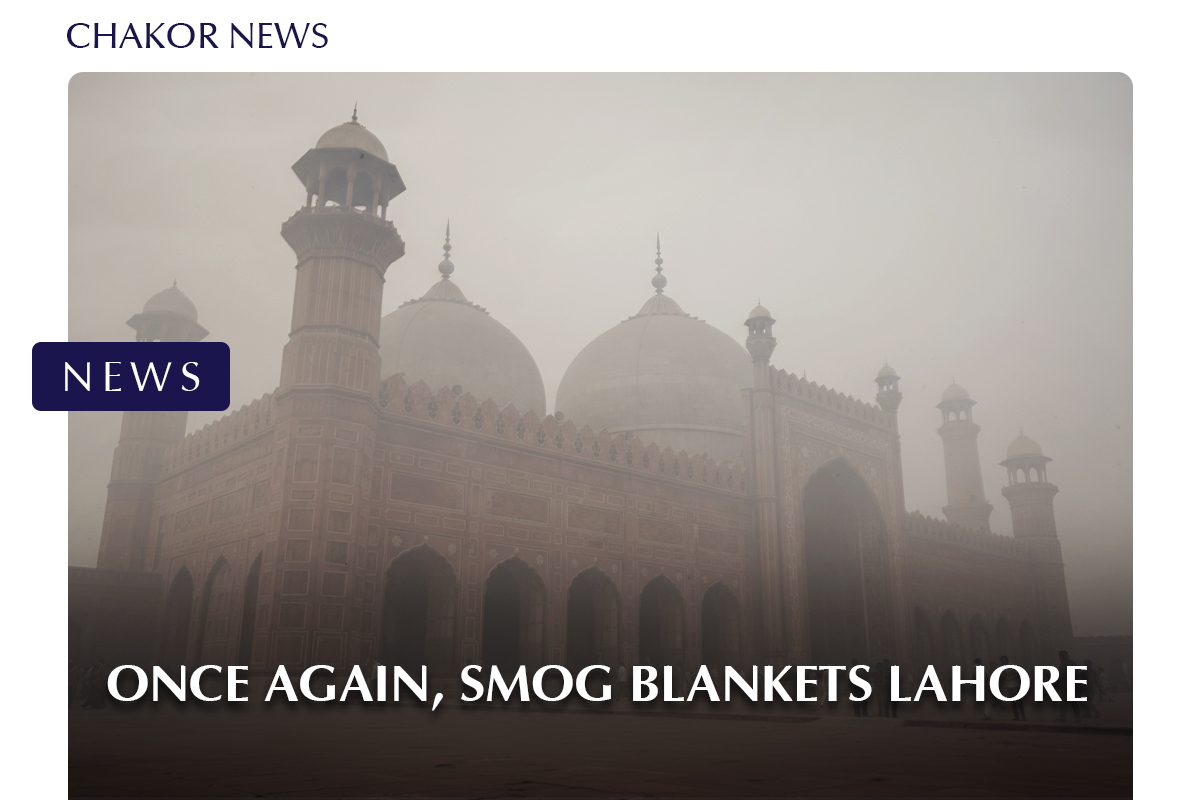
LAHORE: The worsening smog crisis in Lahore reached ‘hazardous’ levels on Sunday, with authorities reporting hazardous air quality and launching intensified efforts to curb pollution across the city.

Data from the Punjab Environment Protection Agency (EPA) showed that the Air Quality Index (AQI) surged to 388 by 9 a.m., placing Lahore among the most polluted cities globally and sparking renewed health concerns for its residents. Officials said the dangerous air levels were caused by both domestic emissions and pollutants drifting in from neighboring India.

Punjab EPA Project Director Sajid Bashir explained that seasonal wind patterns known as the East Corridor allow contaminants from northeastern India to enter Lahore during the smog season. He said emissions from Diwali celebrations and stubble burning in the Indian state of Punjab had compounded the city’s already critical air quality.

To address local sources of smog, the provincial Environment Department has implemented a stringent enforcement strategy. Newly established Quick Response Forces equipped with modern vehicles have been deployed to monitor agricultural areas and immediately extinguish crop residue fires.

Bashir warned that strict legal action would be taken against anyone found engaging in illegal burning, including the registration of cases, arrests, and financial penalties.

Officials said the government’s enhanced anti-smog operations are aimed at protecting public health and mitigating the severe impact of air pollution that continues to blanket Lahore each winter.

CategoriesNews

Amid rising smog, Punjab government mandates face masks for police, workers

LAHORE: The Punjab government has made face masks mandatory for all traffic police officers and “Suthra Punjab” field workers as part of a province-wide effort to tackle worsening smog conditions. The directive comes after Lahore was ranked the second most polluted city in the world, with an Air Quality Index (AQI) of 218, just behind Delhi.

Senior Minister Marriyum Aurangzeb, who heads the environment department, said the measure aims to protect frontline workers regularly exposed to vehicular emissions and hazardous air. She added that the provincial machinery is fully mobilized to combat smog and protect public health.

Authorities have attributed the recent surge in pollution to stubble burning and Diwali fireworks in Indian Punjab, with polluted winds drifting into Lahore and Kasur from neighboring Indian cities such as Amritsar, Patiala, and Ferozepur. The Punjab Pollution Control Board (India) has identified 663 villages as stubble-burning hotspots, contributing significantly to cross-border pollution.

In response, the LDA, WASA, PHA, LWMC, and EPA have launched anti-smog operations involving water sprinkling, anti-smog guns, and dust control at construction sites. Emission monitoring has been intensified for vehicles, brick kilns, and industries, while Lahore’s entry points now have stricter inspection checkpoints.

The newly established Smog Monitoring and Control Center is now fully operational, gathering real-time data to support timely government action. According to forecasts, Lahore’s AQI is expected to stay between 210 and 240, with winds of 3–6 km/h, which will gradually improve air quality in the coming days.

The Punjab government has urged citizens to wear masks, avoid unnecessary travel, and limit outdoor exposure, especially for children, the elderly, and respiratory patients. It has also encouraged residents to plant greenery to help absorb airborne pollutants.

CategoriesClimate Change

Smog in Pakistan 2025: Causes, Cities Affected & How to Stay Safe

Smog in Pakistan has turned into a fifth season. Every winter, thick layers of smog engulf Pakistan’s major cities, turning the skies grey and the air toxic. From Lahore to Faisalabad, poor air quality has become a recurring crisis linked to vehicle emissions, industrial smoke, and crop burning. As pollution peaks between October and January, smog threatens health, disrupts daily life, and highlights the urgent need for cleaner energy and stronger environmental action. In this blog, Chakor answers all your questions about smog in Pakistan.

Category Smog in Pakistan: Key Details
Top Affected Cities Lahore, Faisalabad, Gujranwala, and Multan all report AQI levels ranging from “very unhealthy” to “hazardous” during October–January. Smog in Islamabad has also been an issue in recent years.
Most Impacted City | Smog in Lahore Lahore often ranks among the most polluted cities globally, with AQI readings exceeding 400–600 during peak smog in Pakistan.
Main Causes of Smog in Pakistan Vehicle emissions, industrial smoke, brick kilns, and post-harvest crop burning worsen in stagnant winter air and temperature inversions.
Season of Smog in Pakistan October to January, when dry, cold weather traps pollutants near the ground, creating thick layers of smog.
 Smog in Pakistan | Health Impacts Respiratory illnesses, eye irritation, heart complications, and a higher risk for children, the elderly, and those with asthma.
Short-Term Measures School closures, work-from-home directives, mask mandates, and traffic restrictions during severe smog spikes.
Long-Term Government Actions Enforcement of Smog Prevention Rules 2023, conversion of brick kilns to zig-zag technology, introduction of Euro-5 and Euro-6 fuels, and development of a UNEP-supported Smog Mitigation Plan.
Local Preventive Steps Use N95/KN95 masks, limit outdoor activity, maintain vehicles, avoid open burning, and plant more trees to improve local air quality.
Future Prevention Goals of Smog in Pakistan Strengthen vehicle inspection systems, expand clean-fuel infrastructure, support farmers in residue-to-energy initiatives, and align national air-quality targets with WHO standards (PM2.5 ≤ 5 µg/m³).

Smog Definition

traffic view during smog hours

Smog is a thick, dirty haze that forms when pollutants in the air mix and react with sunlight. These pollutants, such as nitrogen oxides (NOx) from vehicle exhaust, volatile organic compounds (VOCs) from fuel vapors, and gases such as sulfur dioxide and ammonia, combine to form ground-level ozone and tiny particulate matter (PM2.5).

Sometimes, a weather condition called a temperature inversion traps this polluted air close to the ground, prolonging the smog in Pakistan and making it harder for people to breathe.

Difference Between Smog and Smoke

Smoke is a visible mixture of gases and tiny solid particles released from burning materials like wood, coal, or fuel. Smog, on the other hand, is a mixture of smoke and fog formed when pollutants react with sunlight, creating a thick, toxic haze that lingers in the air.

Difference Between Fog and Smog

Fog is a natural weather phenomenon made up of tiny water droplets suspended in the air, usually forming when humidity is high and temperatures drop. Smog, however, is a mixture of fog and air pollutants such as smoke and chemicals, giving it a brownish or grey color and making it harmful to breathe.

Types of Smog

Smog appears in different forms depending on the main pollutants and the weather conditions. Here are the two primary types recognized by experts:

  • Sulfurous Smog (London Smog): This type develops when sulfur oxides from burning coal or other sulfur-rich fuels combine with high humidity and suspended particles. The result is dense, grey-black air that can severely impair visibility and respiratory health.
  • Photochemical Smog (Los Angeles Smog): This form occurs mainly in sunny urban environments with large numbers of vehicles. Nitrogen oxides and hydrocarbon vapours react under sunlight to form ground-level ozone and other harmful compounds. It often appears as a brownish haze, reduces visibility, irritates eyes and lungs, and damages plants.

Causes of Smog in Pakistan

smog in pakistan animation

Smog in Pakistan is caused by a mix of human activities, industrial emissions, and weather conditions that trap pollutants near the ground. Each year, from late October to January, dense smoke and fog create a thick grey haze over Lahore, Faisalabad, Gujranwala, and other cities in Punjab.

Transport Emissions

Vehicles are the leading source of urban air pollution.

  • Old and poorly maintained cars, buses, and rickshaws release heavy smoke, NOx, and VOCs.
  • Use of low-quality, high-sulfur fuels worsens exhaust pollution.
  • Weak inspection and enforcement allow smoke-emitting vehicles to stay on roads.

Brick Kilns and Industrial Pollution

Brick Kilns causing smog in pakistan

Brick kilns and small factories produce large amounts of PM2.5 particles.

  • Traditional kilns burn coal, rubber, and crop waste, creating dense black smoke.
  • Many kilns operate near cities such as Sheikhupura, Kasur, and Gujranwala, increasing local pollution.
  • Industries using low-grade furnace oil or lacking emission filters add further pollutants to the air.

Crop Residue Burning | Smog in Pakistan

a farmer burning crop residue causing smog in pakistan

Post-harvest burning of rice straw is a major seasonal contributor to smog.

  • Farmers burn leftover stubble in October and November to clear land for wheat planting.
  • This releases smoke, soot, carbon monoxide, and methane, worsening air quality.
  • Research shows it accounts for 30–40% of PM2.5 in Lahore during the peak smog season.
  • The smoke lingers for days due to cold, still air and low wind speeds.

Construction Dust, Generators, & Waste Burning | Smog in Pakistan

Construction Dust causes smog

Every day, urban activities add to year-round pollution.

  • Construction sites and roadwork generate heavy dust.
  • Diesel generators used during power outages emit thick black smoke.
  • Open burning of garbage and plastic waste releases toxic fumes.
    These sources continuously increase particulate matter and deepen the winter haze.

Weather and Climate Factors

weather causing smog

Weather conditions intensify smog in Pakistan formation.

  • In winter, temperature inversion traps polluted air close to the ground.
  • Climate change has lengthened and increased the frequency of these inversion periods.
  • Low rainfall and weak winds prevent pollutants from dispersing, allowing smog to persist across the Indus Basin region.

Hazardous Smog Effects on Health

Effects of Smog in Pakistan on Health

  • Respiratory Problems: Smog irritates the airways, causing coughing, wheezing, asthma attacks, and chronic bronchitis.
  • Eye and Throat Irritation: Polluted air leads to burning eyes, sore throat, and watery discharge, especially in children and outdoor workers.
  • Heart and Lung Diseases: Long-term exposure increases the risk of heart attacks, stroke, and lung infections.
  • Reduced Immunity: Continuous inhalation of fine particles weakens the immune system, making the body more prone to infections.
  • Harm to Children and Elderly: Kids, pregnant women, and older adults are more vulnerable due to weaker respiratory and immune systems.
  • Decreased Visibility and Accidents: Dense smog lowers visibility, leading to more road accidents and transport delays.

Global and Regional Factors Amplifying Pakistan’s Smog

Global Factors Causing Smog in Pakistan Regional Factors Causing Smog in Pakistan
Rising Temperatures: Pakistan is warming faster than the global average, accelerating chemical reactions between nitrogen oxides (NOx) and volatile organic compounds (VOCs), thereby increasing ground-level ozone. Crop Burning in Northern India: Large-scale stubble burning in Indian Punjab and Haryana (Oct–Nov) produces smoke that drifts into Pakistan via shared wind corridors.
Longer Dry Spells: Climate change has reduced winter rainfall, particularly in Punjab, preventing natural cleansing of pollutants. Regional Airflow Patterns: The bowl-like shape of the Indo-Gangetic Plain, bordered by the Himalayas, traps polluted air over Pakistan’s Punjab region.
Temperature Inversions: More frequent and longer-lasting winter inversions trap cool, polluted air near the ground. Shared Emission Sources: Both India and Pakistan depend heavily on coal, diesel, and open burning, adding to the shared haze.
Changing Wind Patterns: Altered monsoon and post-monsoon winds due to global warming have weakened air circulation, allowing pollutants to stagnate. Transboundary Pollution: Cross-border movement of pollutants from northern India worsens smog levels in eastern Punjab and Lahore.
Climate Impact Summary: Hotter, drier, and more stagnant weather conditions are becoming common, ideal for trapping smog. Need for Regional Cooperation: UNEP and SAARC advocate for joint monitoring, data sharing, and coordinated air-quality management between Pakistan and India.

Cities Hit the Worst by Smog in Pakistan

lahore through smog

Punjab’s major cities experience severe air pollution each winter, turning the region into one of the world’s most dangerous smog zones.

  • Lahore: Faces AQI levels between 400–600, making it one of the most polluted cities globally.
  • Kasur & Sheikhupura: Nearby crop residue burning adds thick smoke to Lahore’s atmosphere.
  • Faisalabad: Suffers from industrial emissions and vehicle exhaust, reducing visibility during the winter months.
  • Gujranwala: High brick kiln activity and factory smoke contribute to persistent haze.
  • Multan: Dust from construction and urban traffic keeps pollution levels elevated.

Measures Taken by the Government to Tackle Smog in Pakistan

Federal and provincial governments are implementing short- and long-term measures to reduce smog in Pakistan.

  • Short-Term Measures (Nov–Dec 2024): Schools and offices closed during peak smog. Work-from-home policy introduced to reduce traffic. Masks made mandatory. Heavy vehicles are banned inside city limits. Public parks and museums closed on high-AQI days.
  • Punjab EPA Smog Rules 2023: Ban on low-grade fuels. Mandatory cleaner energy use. Regular inspections and fines for vehicles and industries emitting smoke. New air-quality monitoring systems in major cities.
  • Brick Kiln Modernization: Zig-zag kiln technology promoted for cleaner burning. Non-compliant kilns shut down during smog season. More than 70% of kilns in Punjab have been upgraded.
  • Vehicle and Fuel Upgrade Plan: Euro-5 fuel in use nationwide. Euro-6 standard targeted by 2030. Vehicle fitness centers launched to phase out unfit vehicles.
  • UNEP–Punjab Smog Roadmap: Stricter fines for high emitters. Air-quality data added to urban planning. Public awareness programs for clean fuels, waste management, and green transport.

Actions for Individuals & Institutions to Tackle Smog in Pakistan

Citizens and organizations are urged to take daily actions to reduce exposure and emissions.

  • Individuals: Wear N95 or KN95 masks. Check AQI before going outdoors. Limit unnecessary driving and energy use.
  • Commuters: Carpool or use public transport. Keep vehicles well-maintained. Avoid idling engines. Use low-sulfur fuels.
    At Home: Avoid burning garbage. Reduce diesel generator use. Choose energy-efficient lights and appliances.
  • Farmers and Communities: Stop stubble burning. Use Happy Seeder and Super-SMS machines. Turn residue into compost or biofuel. Plant trees and reduce construction dust by watering and covering sites.
  • Schools and Offices: Use HEPA air purifiers. Move outdoor activities indoors when AQI exceeds 150. Shift to online work or learning when AQI reaches 300.

Conclusion | Smog in Pakistan

Smog in Pakistan is a recurring public health crisis caused by vehicle emissions, industrial pollution, and crop burning, worsened by climate change. Temporary measures offer short relief, but lasting improvement needs cleaner fuels, modern kilns, and strict enforcement. With collective action and sustained commitment, Pakistan can work toward clearer skies and healthier air for all. For more information on similar informative topics, visit Chakor blogs.

FAQs About Smog in Pakistan

What is smog definition and smog meaning?

 Smog definition refers to polluted air formed when smoke, dust, and fog mix with chemical pollutants. Smog meaning is the presence of dirty haze in the atmosphere that makes breathing difficult and reduces visibility.
What are the causes of smog and consequences of smog?

 The main causes of smog include vehicle emissions, brick kilns, crop burning, and industrial smoke. The consequences of smog are respiratory issues, eye irritation, heart problems, and reduced visibility that leads to accidents.

What is photochemical smog and how is it different from fog or smoke?

 Photochemical smog forms when sunlight reacts with vehicle exhaust gases, creating harmful ozone. The difference between fog and smog is that fog is natural moisture, while smog contains pollutants. The difference between smog and smoke is that smoke comes from burning materials, but smog is a mix of smoke, fog, and pollutants.

What is smog in Lahore and how bad is Lahore smog today?

 Smog in Lahore peaks from October to January when AQI levels reach hazardous levels. Lahore smog today often exceeds 400–600 AQI, making the city one of the most polluted globally.

What is smog holiday and why was there a holiday in Lahore due to smog?

 A smog holiday is declared when air quality becomes dangerous. The holiday in Lahore due to smog was announced by the Punjab government to reduce outdoor exposure and traffic pollution during extreme smog days.

What is Lahore High Court smog order and Lahore High Court smog case?

 The Lahore High Court smog order directed the Punjab government to impose smog holidays, monitor emissions, and implement control measures. The Lahore High Court smog case emphasized public health protection and strict enforcement of environmental rules.

What is Punjab govt smog holiday notification and smog holidays in Punjab 2023 notification?

 The Punjab govt smog holiday notification and smog holidays in Punjab 2023 notification announced closures of schools, offices, and public places across Lahore, Faisalabad, and Gujranwala due to worsening air quality.

What is smog in Islamabad and smog Islamabad situation?

 Smog in Islamabad has increased in recent years, mainly due to rising traffic and construction activity. The smog Islamabad levels remain lower than Lahore but still reach unhealthy AQI ranges in winter.

What does smog awareness in Urdu aim to achieve?

 Smog awareness in Urdu focuses on educating citizens about pollution sources, preventive steps, and health risks. It encourages mask use, reduced driving, and tree planting.

What is smog chart and how does it help?

 A smog chart shows AQI categories from good to hazardous, helping people track daily air quality and decide when to limit outdoor activity.

What is smog lockdown in Lahore and how does it relate to smog news?

 Smog lockdown in Lahore refers to temporary restrictions on traffic and industries to control pollution. Smog news updates these measures and daily air quality levels for public awareness.

What are future prevention goals of smog in Pakistan?

 Future prevention goals of smog in Pakistan include expanding clean-fuel use, enforcing vehicle inspections, promoting residue-to-energy farming, and aligning air-quality targets with WHO standards.

CategoriesNews

Smog offenders busted: Lahore Police go after dirty air culprits

LAHORE: Lahore Police have intensified their operations against individuals and businesses contributing to environmental pollution as part of the city’s ongoing anti-smog campaign.

According to a statement issued on Monday, police have arrested 83 people and registered 77 cases during the latest phase of the drive. Of those detained, 68 individuals were apprehended for emitting harmful smoke from factories, brick kilns, and vehicles, nine were caught burning tires, plastic, and shopping bags, and six were caught burning crop residue.

The arrests were made across multiple divisions, including 42 from Saddar, 14 from City, 13 from Cantt, six from Civil Lines, five from Model Town, and three from Iqbal Town Division.

Capital City Police Officer (CCPO) Bilal Siddique Kamyana said that full enforcement of anti-smog Standard Operating Procedures (SOPs) is being ensured, with police extending legal support to other departments addressing environmental violations. 

He added that the Punjab Safe Cities Authority’s surveillance cameras are being used to identify and track offenders.

Kamyana directed police officials to accelerate operations against all elements contributing to air pollution and to act without discrimination. “Clean air is the best gift we can give to our future generations,” he said, urging citizens to cooperate in the fight against smog.

The crackdown comes as Lahore faces worsening air quality ahead of the winter smog season, driven by industrial emissions, vehicle smoke, and open burning.