New Partnership Aims to Turn Gwadar into a Thriving Trade and Industrial Hub Under CPEC Vision
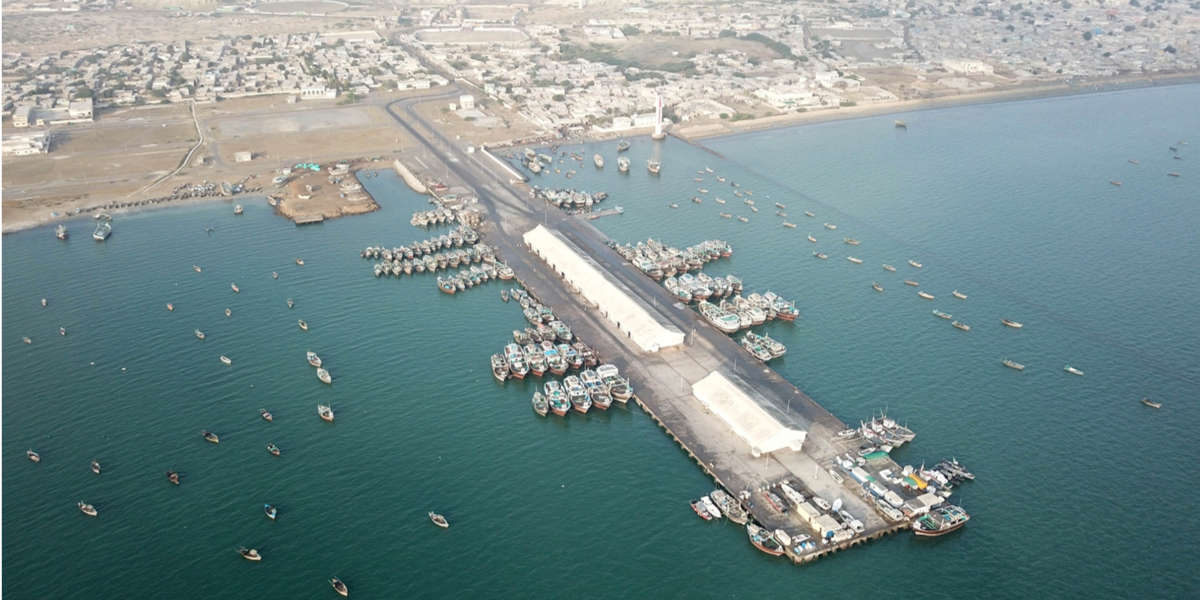
Karachi: In a move set to accelerate economic activity in Pakistan’s southwestern region, the Gwadar Port Authority (GPA) has signed a letter of intent with China’s Xinning Enterprise to fast-track the development of the Gwadar Free Zone. This collaboration is geared toward attracting industrial and commercial investment and enhancing Gwadar’s role as a strategic trade and transshipment hub.
The letter was received by Umer Zaffar Shaikh, Additional Secretary of the Ministry of Maritime Affairs, on behalf of the GPA, while Yi Jiang signed on behalf of Xinning. Gwadar Port Authority Chairman Noorul Haq Baloch also attended the signing ceremony via video link.
The partnership focuses on relocating industries to Gwadar, optimizing infrastructure, and boosting commercial operations within the Free Zone. Federal Minister for Maritime Affairs Muhammad Junaid Anwar Chaudhry lauded the initiative, stating that Xinning’s involvement will strengthen port functionality and foreign investment.
He assured that all developments will comply with Pakistan’s legal framework and highlighted the strategic importance of Gwadar in the China-Pakistan Economic Corridor (CPEC).
This agreement underscores Gwadar’s growing relevance in regional trade and signals a significant step in Pakistan’s long-term maritime and economic development strategy.
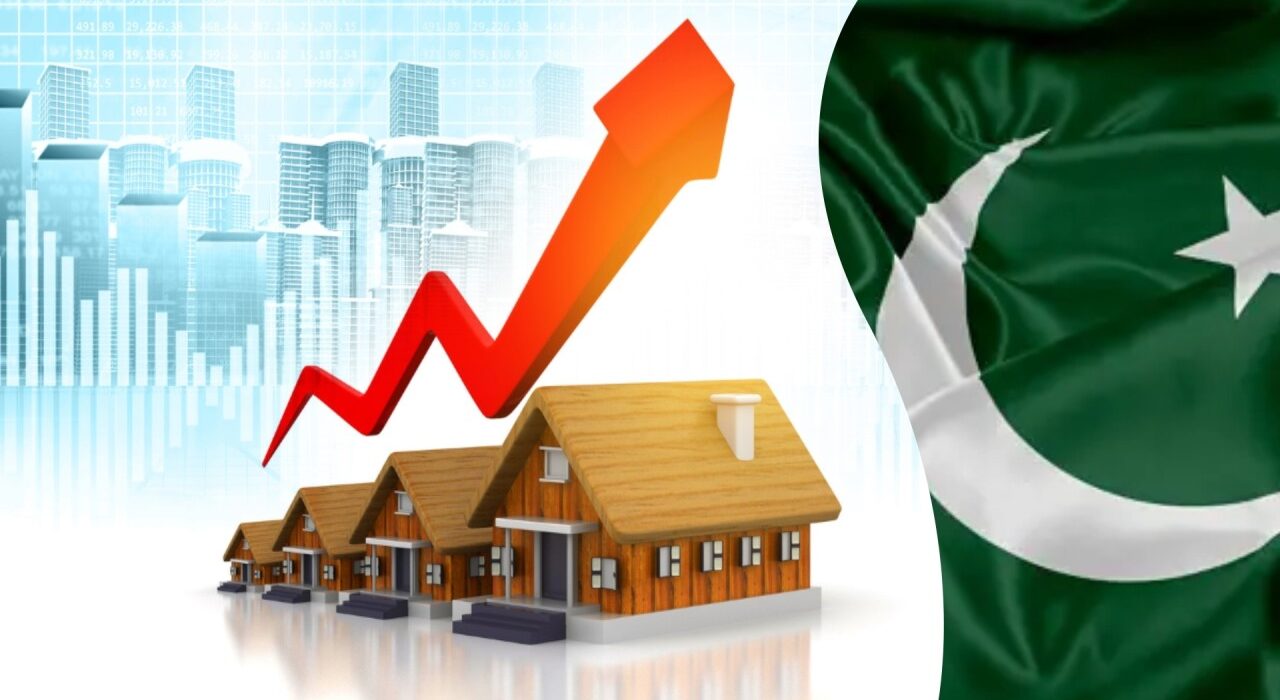
The story of Pakistan’s real estate market is deeply intertwined with the country’s history. From the earliest days after Partition to the present moment, real estate has mirrored the nation’s struggles, ambitions, and transformations. This blog traces the evolution of Pakistan real estate, highlighting key milestones, market shifts, and emerging trends, while offering insights into the current situation of real estate in Pakistan and its future potential. It’s also part of our Independence Day blog series, showing how real estate development has become a cornerstone of national progress.
1947–1970: The Foundational Phase
After Partition, Pakistan faced the monumental task of building cities to accommodate millions of migrants. Urban land was scarce, and planning policies were rudimentary. Karachi, the initial capital, experienced unplanned urban sprawl. Cities like Lahore and Peshawar struggled to cope with the sudden population boom.
In response, early housing schemes like Nazimabad and PECHS in Karachi and Model Town in Lahore were launched to create affordable housing. The government initiated the first regulatory frameworks, such as the 1959 Land Acquisition Act, to manage development and distribution of land.
Key Characteristics:
Government-led land schemes
Absence of private developers
Emphasis on housing migrants
No vertical development
This era laid the groundwork for what would become a multi-billion-rupee industry.
1971–1990: Regulation and Expansion
The 1970s brought more regulation and a renewed focus on urban development. The Housing and Physical Planning Department (HPPD) was formed to address the growing demand for structured housing and town planning.
The Defence Housing Authority (DHA), though initially formed in the 1970s for military personnel, gradually gained traction with civilians as well. Large-scale private developers were still not dominant, but there was growing interest in real estate as an investment vehicle.
Notable Shifts:
Development of Gulshan-e-Iqbal and Gulistan-e-Jauhar in Karachi
Rise of cooperative housing societies in Lahore and Islamabad
Increased construction of plazas and commercial markets
This era introduced the idea of real estate as a savings tool for the middle class, setting the foundation for speculative growth in the following decades.
1991–2010: The Boom Years
The real estate sector entered a phase of rapid growth. Economic liberalization, overseas remittances, and the increasing demand for housing drove prices up. Large developers began to emerge, leading to more planned urban expansion.
DHA expanded rapidly. Bahria Town entered the scene in the late 1990s and quickly became a game-changer by offering gated communities with modern infrastructure.
Key Trends:
Gated housing societies became standard
Real estate was seen as a top investment
Speculation became common
Overseas Pakistanis drove up demand
This was a turning point in the evolution of Pakistan real estate, as the sector became more organized and investor-focused. Private developers started delivering mega housing projects, redefining urban living.
2011–2021: Digital Transformation and Demand Surge
This decade saw the advent of real estate portals like Zameen.com and Graana, transforming how people searched, bought, and sold properties. Information became more accessible, and market transparency improved.
Pakistan also saw record-breaking foreign remittances and local investment in real estate during this time. Housing demand increased due to the country’s rapidly growing population.
Key initiatives included:
Naya Pakistan Housing Scheme: Aimed to build 5 million affordable homes
RERA (Real Estate Regulatory Authority) proposals: Intended to bring transparency
Technology began playing a key role:
Virtual tours
3D visualization
Digital land records in Punjab and KPK
This digital shift brought the real estate industry closer to global standards.
2022–2024: Uncertainty and Slowdown
April 2022 marked a significant political shift with the removal of the PTI-led government. Their tax amnesty schemes had previously fueled massive growth in the sector.
The new administration introduced stricter tax measures and removed amnesties, leading to a cooling of the market. Simultaneously, macroeconomic instability—including high inflation and currency depreciation—shrunk purchasing power.
Key Impacts:
Real estate transactions declined
Developers like DHA reported slower activity
Speculative investments reduced
These changes sparked concern about the current situation of real estate in Pakistan, but also laid the groundwork for a more transparent, structured future.
2024–2025: Early Signs of Recovery
Amid uncertainty, a critical development occurred: the State Bank of Pakistan slashed interest rates from 22% to 13% in just a few months. This triggered optimism in the market.
Why This Matters:
Bank deposits became less attractive
Investors began seeking alternative avenues—like real estate
Developers started launching projects again
Industry analysts project interest rates could fall to single digits by March 2025—creating favorable conditions for mortgage and construction financing.
High-Rise and Mixed-Use Projects Gain Momentum
A major transformation in the real estate trends in Pakistan has been the shift from horizontal to vertical growth. With land scarcity and increasing urbanization, cities are moving upward.
Commercial Real Estate Trends:
CBD Lahore: A dedicated commercial zone attracting multinational businesses
IT Parks in Islamabad: Government-supported innovation hubs
High-rise apartments: Emerging in Lahore, Islamabad, and Karachi
Mixed-use developments that combine residential, commercial, and recreational spaces are gaining popularity. These trends are reshaping how Pakistanis live and work.
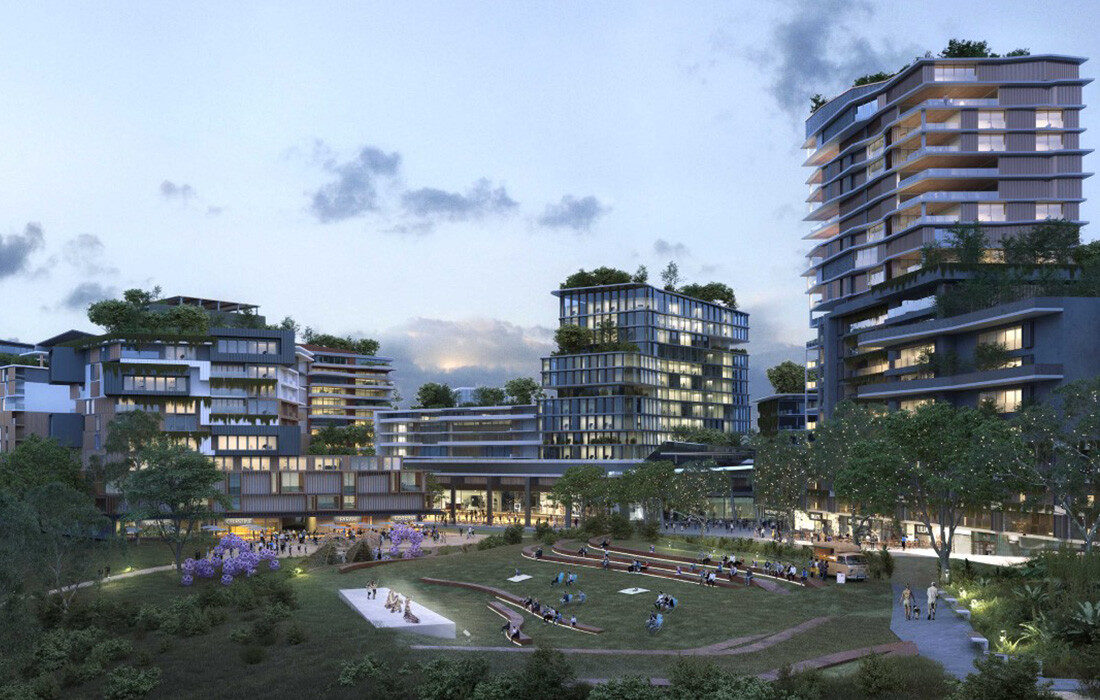
Citadel 7: A New Era of Innovation
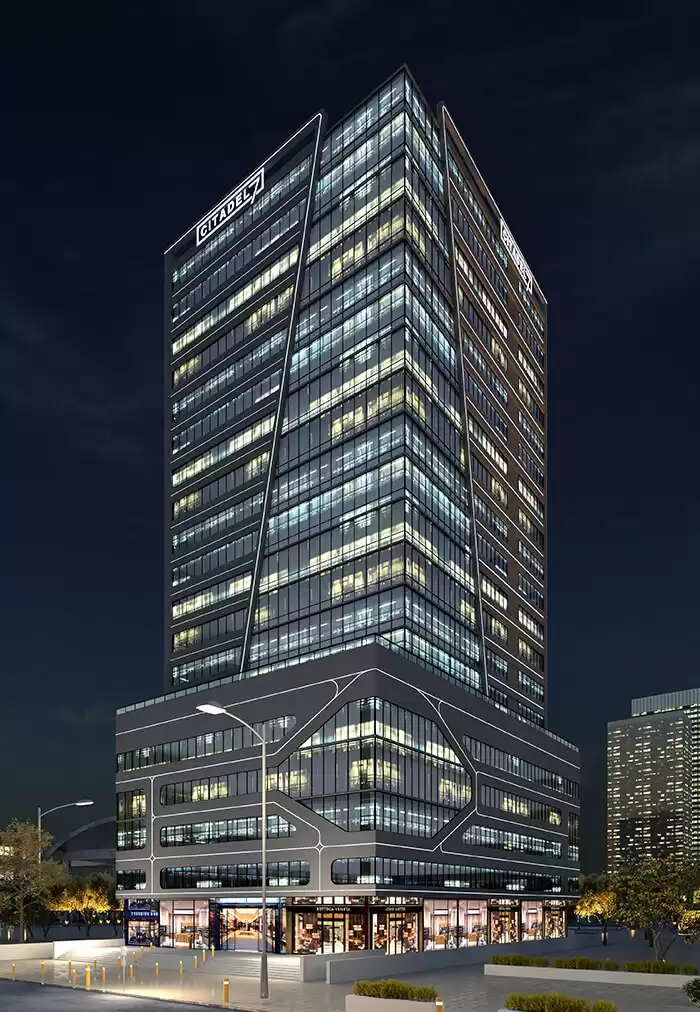
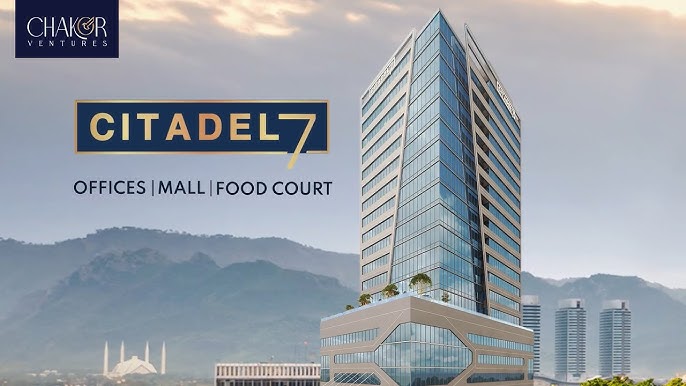
In the heart of Islamabad’s Blue Area, Citadel 7 corporate tower Islamabad stands tall—both literally and symbolically. It reflects the next generation of Pakistan’s real estate vision: tech-integrated, strategically located, and future-ready.
What Makes It Unique:
Smart building features and modern architecture
Prime business location at the capital’s commercial hub
Designed for a hybrid workforce with premium workspaces and lifestyle facilities
Citadel 7 is not just another high-rise—it’s a blueprint for what’s possible. Where traditional landmarks once marked progress through size, Citadel 7 marks it through innovation.
Population Pressure and Housing Demand
Pakistan’s current population exceeds 260 million. Housing demand far exceeds supply. A study by the World Bank reveals that Pakistan needs 5 million new homes to accommodate renters alone.
Addressing this gap could:
Stimulate construction
Create jobs
Expand middle-class housing options
Serviced apartments, short-term rentals, and co-living spaces are also rising in popularity, particularly in high-tourism areas like Murree, Naran, and Hunza.
Innovation and Sustainability Are the Future
The best real estate in Pakistan will increasingly reflect global trends:
Green building standards
Digital transactions using blockchain
Smart city infrastructure
Shared workspaces, e.g., WeWork-style office setups, are already popular in Lahore and Karachi.
Sustainability certifications and eco-friendly developments are becoming the new gold standard for real estate developers.
Challenges That Still Need Solving
While the industry is evolving, it still faces serious challenges:
Policy inconsistency
Tax confusion
Corruption in land acquisition
Lack of reliable urban data
Improving transparency, streamlining regulations, and adopting tech can resolve many of these issues.
A Look Ahead: Real Estate Market 2025 and Beyond
Despite recent struggles, experts believe the market is set to rebound by mid-to-late 2025. Here’s why:
Interest rate cuts will unlock capital
Urbanization trends will continue
High-rise developments will become the norm
Digitalization will streamline transactions
Demand for housing will remain high
Investors looking for the top real estate trends should focus on:
Commercial high-rises
Mixed-use developments
Serviced apartments
Eco-certified housing
Final Thoughts: From Partition to Progress
From emergency shelters in 1947 to smart skyscrapers in 2025, the evolution of Pakistan real estate tells a powerful story of resilience, ambition, and reinvention.
The real estate trends in Pakistan reflect the nation’s ongoing transition—from rural to urban, informal to regulated, fragmented to integrated.
Projects like Citadel 7 represent a bold new chapter—where design meets data, and growth meets governance.
This blog is part of our Independence Day blog series, connecting the dots between past, present, and future.
Because building homes, offices, and cities isn’t just construction—it’s nation-building.
Punjab Government and Pakistan Railways Join Forces for Eco-Friendly Urban Renewal
Lahore, August 5, 2025: In a landmark move towards sustainable city development, the Punjab Government, in collaboration with Pakistan Railways, has launched the Green Corridor Project, aimed at turning a 40-kilometer railway stretch between Shahdara and Raiwind into a vibrant, eco-friendly urban zone.
The PKR 2.25 billion project will cover 700 kanals of railway-adjacent land and is expected to be completed within a year. Designed to reduce pollution and beautify Lahore’s urban fabric, the corridor will include green belts, public spaces, and repurposed railway carriages transformed into libraries, cafés, and cultural hubs.
The route is divided into four segments for efficient development: Shahdara to Lahore Railway Station, Walton, Walton to Kot Lakhpat, and Raiwind. All segments will be developed simultaneously to meet the ambitious timeline.
The PC-1 has been submitted for final approval, marking a key step forward. Federal Minister for Railways Muhammad Hanif Abbasi lauded Chief Minister Maryam Nawaz for her commitment to sustainable urban initiatives.
“This corridor won’t just enhance Lahore’s landscape — it will set a precedent for green transformation across Pakistan,” Abbasi stated.
The project is poised to become a flagship model for eco-conscious infrastructure nationwide.
Architecture in Pakistan is more than just the design of buildings—it’s a record of our identity, culture, and progress. From Mughal-inspired domes to LEED-certified skyscrapers, Pakistan’s architects have sculpted our skylines and streetscapes with vision, artistry, and grit. This blog presents a curated list of 55 famous architects of Pakistan who’ve shaped the country’s architectural landscape across generations and disciplines.
Whether you’re looking for the best architects of Pakistan, exploring the list of architects in Pakistan, or wondering who is known as the architect of Pakistan, this comprehensive guide is your starting point. It’s also part of our ongoing Independence Day blog series, tying architecture to nation-building and identity.
These individuals laid the foundation of Pakistan’s architectural identity post-1947. Their legacy continues to inspire modern practice.
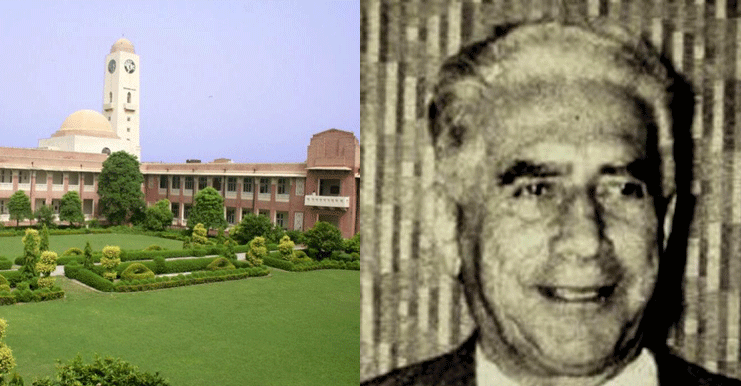
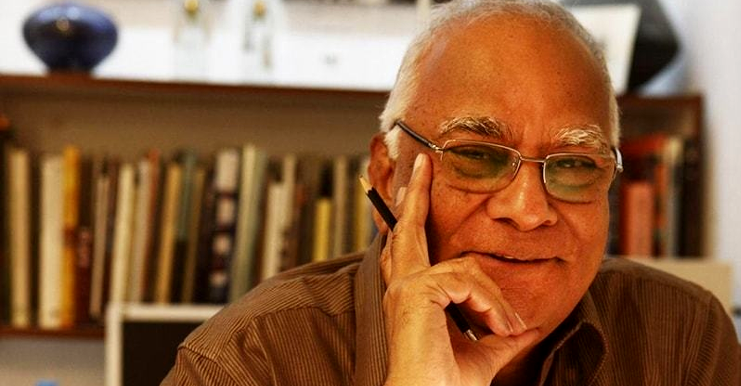
Habib Fida Ali: A minimalist modernist known for blending form and functionality with grace. He was Pakistan’s first formally trained architect from Karachi
Notable Work: Shell House, LUMS campus buildings.
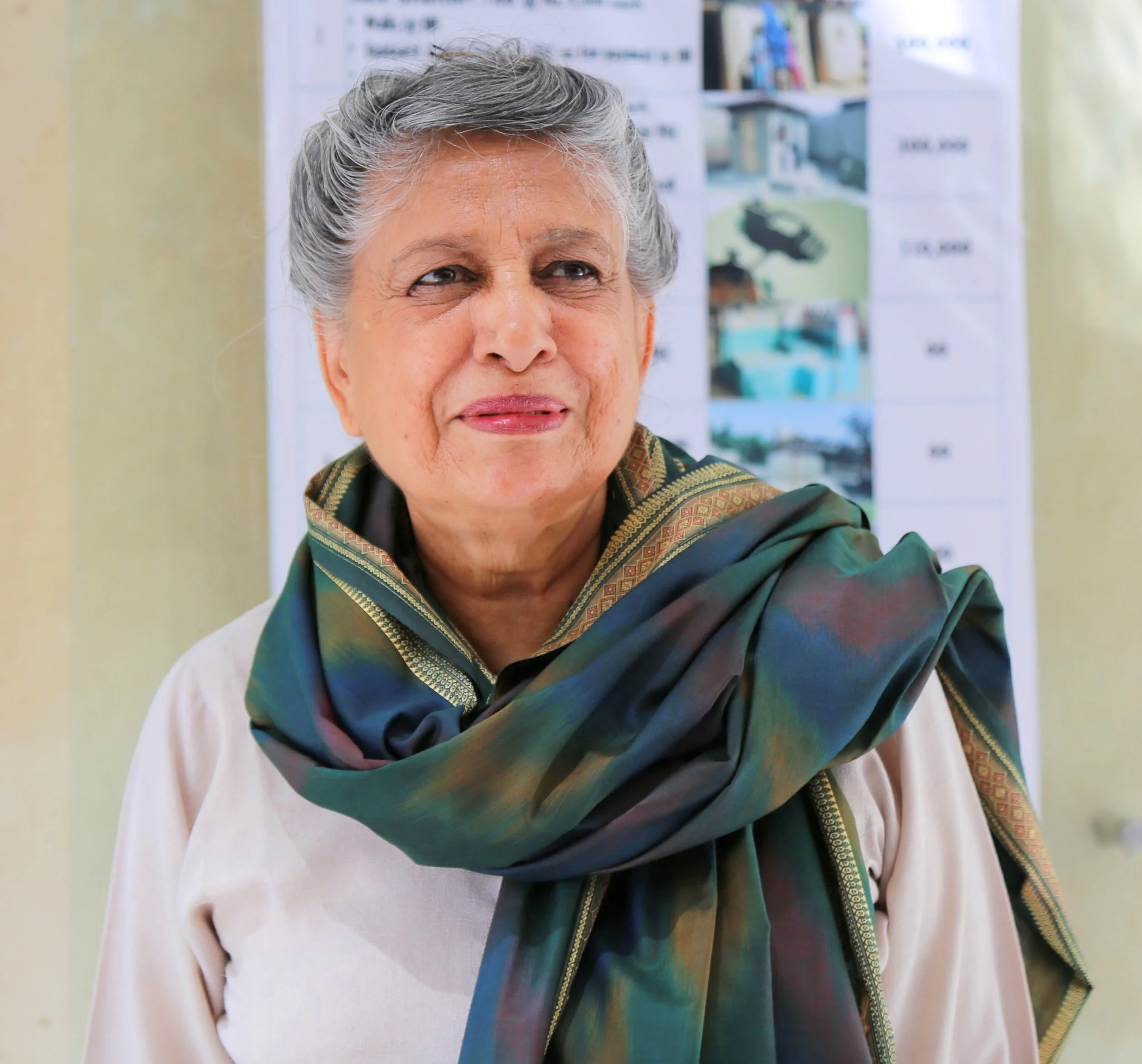
Yasmeen Lari: Pakistan’s first female architect and a global voice for sustainable, humanitarian design. She shifted from modernist buildings to post-disaster housing.
Notable Work: Makli eco-village, Zero Carbon Shelters for flood victims.
Nayyar Ali Dada: Celebrated for his fusion of tradition with modernism. He brought cultural sensitivity into public buildings.
Notable Work: Alhamra Arts Council, Gaddafi Stadium.
Kamil Khan Mumtaz: An advocate of regionalism and Islamic architectural heritage in modern design. His work focuses on ecological sensitivity.
Notable Work: Beaconhouse National University campus.
Arif Hasan: Urban planner and architect who champions participatory design and inclusive planning.
Notable Work: Orangi Pilot Project, Karachi Master Plans.
Tariq Hassan: Known for his civic and institutional buildings with strong visual presence.
Notable Work: Multiple civic infrastructure projects in Islamabad.
Shahab Ghani Khan: A corporate sector architect with a signature clean aesthetic and spatial clarity.
Notable Work: MCB Tower, Karachi.
Abdur Rahman Hye (A.R. Hye): Among the earliest public sector architects of Pakistan, he introduced climatic responsive architecture.
Notable Work: Government buildings across Lahore and Islamabad.
William P. Meredith: Foreign-born architect who helped design early civic infrastructure during the formation years of Pakistan.
Notable Work: Contribution to initial Islamabad layout.
Dr. Gulzar Haider: A poet, professor, and architect who brought intellectual depth to architectural discourse.
Notable Work: Islamic architectural theory and practice.
Modern & Post-Independence Architects
These are the architects shaping Pakistan’s modern face post-1990s—with a balance of technology, sustainability, and cultural relevance.
Najeeb Umar: Blends modern techniques with traditional crafts in large-scale projects.
Notable Work: Civic centers and private educational campuses.
Raza Ali Dada: Known for public projects that respect context while innovating spatially.
Notable Work: Collaborations with Nayyar Ali Dada on cultural centers.
Amjad Ali Khan: Focuses on institutional design, especially within education and health sectors.
Notable Work: University master planning.
Akeel Bilgrami: A Karachi-based architect with a reputation for high-end residential and commercial design.
Notable Work: Mixed-use towers in Clifton.
Imran Qureshi: Merges visual art with architectural thought, especially in urban installations.
Omar Hasan: Focuses on minimalism, energy efficiency, and modular construction.
Notable Work: Eco-villas and smart homes.
Nayyar Javed: Works on improving healthcare infrastructure with practical, scalable models.
Notable Work: Modular hospital units.
Imran Qadir: Advocates for vertical expansion and city densification.
Notable Work: Mid-rise apartment and office blocks.
Saifullah Lone: Known for climate-responsive designs in northern Pakistan.
Notable Work: Resorts and public buildings in Gilgit-Baltistan.
Farooq Hassan: Combines design with architectural photography and education.
Notable Work: Documentaries on Pakistan’s changing skyline.
Urban Planners & Conservationists
These architects didn’t just build—they protected and preserved. Their work in conservation, adaptive reuse, and sustainable planning has been essential in shaping public memory and civic identity.
Zain Mustafa: A conservationist and educator, Zain advocates for reimagining Islamic heritage through spatial storytelling.
Notable Work: Sufi shrines, design education in heritage.
Hammad Husain: A renowned conservation architect and academic documenting post-colonial architecture.
Notable Work: Preservation of modernist buildings.
Saima Iqbal: Champion of adaptive reuse and community-driven heritage mapping.
Notable Work: Transformation of old buildings into libraries.
Asad I. A. Khan: Expert in disaster-resilient and inclusive design.
Notable Work: Flood-proof homes in Punjab.
Zohra Rahman: Uses design for advocacy in marginalized communities.
Notable Work: Women-led community spaces.
Bilal Habib: Focuses on landscape and urban ecology.
Notable Work: Greenbelt development in Karachi.
Marvi Mazhar: Heritage activist preserving Karachi’s old city.
Hammad Nazir: Blends architectural photography with immersive design.
Notable Work: Photographic archives of vanishing architecture.
Cross-Disciplinary & Influential Architects
Dr. Nadeem Omar Tarar: Works at the intersection of architecture, anthropology, and cultural studies.
Notable Work: Writings on colonial urban legacies.
Sajida Vandal: Pioneer in heritage policy and cultural management.
Notable Work: Training programs for young conservationists.
Sarosh Waqar Khan: Advocates for universal design and accessibility.
Notable Work: Design standards for disability inclusion.
Urooj Murtaza: Uses architecture for policy advocacy and civic awareness.
Notable Work: Civic education spaces.
Mudassir Azeem: Designs interactive public architecture and urban research.
Notable Work: Public installations and street art in Lahore
Final Thoughts
This blog is part of our Independence Day storytelling series, which explores how architecture contributes to identity, economy, and civic memory in Pakistan. From the iconic mosques and modern high-rises to socially impactful housing and gender-inclusive planning—these 55 architects are shaping not just skylines, but also the story of Pakistan.
Architecture doesn’t just shape skylines. It shapes societies.
This article is Part 4 of our Independence Day Blog Series, where we explore how Pakistan’s infrastructure, cities, and design reflect deeper values of unity, progress, and national purpose. In this blog, we break down the real reason architecture matters: because it gives structure to our values, shape to our identity, and a foundation for national growth.
Let’s dive in.
Architecture Defines a Nation’s Face
Every country has symbols: a flag, an anthem, a national animal. But few symbols are as visible—or as permanent—as architecture.
Think of the Mughal era. The role of art and architecture of Muslims in the subcontinent gave us iconic structures: Badshahi Mosque, Shalimar Gardens, Lahore Fort. These weren’t just beautiful landmarks—they were bold expressions of culture, confidence, and intention.
Fast forward to today. The Parliament House. The Supreme Court. The Pakistan Monument. These buildings do more than serve a function. They carry meaning. They reflect who we are as a nation—and how we feel about the institutions that represent us.
That’s the true role of architecture in shaping cities. It defines how we see ourselves. It reflects the values we claim.
Housing: The Most Human Architecture of All
When we talk about nation-building, we have to talk about homes. Because no nation can succeed if its people don’t have shelter.
Public housing is more than walls and roofs. It’s an expression of national care. It’s a government saying, “You matter.”
But here’s the catch: poorly planned housing leads to frustration, isolation, and urban decay. Great housing, on the other hand, creates trust, stability, and community.
That’s why the role of architecture in shaping cityscapes is so crucial. Great housing needs to be part of a system. Near transport. Near jobs. Near schools. With green spaces and places to gather.
Because a home is where a life begins—but a neighbourhood is where it thrives.
Civic Buildings = Civic Trust
Every time you step into a city hall, a courthouse, or a government office, architecture is speaking to you.
Is it saying “you’re welcome”?
Or is it saying “you don’t belong here”?
That’s why civic buildings matter so much. They are physical symbols of democracy, justice, and accountability.
Historically, colonial powers used architecture to project authority. Giant facades. Domes. Arches. The idea was clear: this is who’s in charge.
Modern civic buildings should do the opposite. They should invite, involve, and inspire.
Because if architecture is going to play a role in nation-building, it has to create spaces where people feel heard. Spaces that say: “this country belongs to you.”
Public Spaces = Social Glue
Cities aren’t just about buildings. They’re about people. And people need places to connect.
That’s where architecture steps in again.
Well-designed public spaces—parks, plazas, libraries, walkways—don’t just make cities pretty. They make cities livable.
They promote mental health.
They promote diversity.
They promote unity.
The role of architecture in shaping society goes beyond construction. It builds interaction, belonging, and shared experience.
When you design for inclusion, you design for strength. And that’s how you build a resilient nation.
Architecture = Jobs + Growth + Impact
Architecture isn’t just about form. It’s also about function. And one of those functions? Fueling the economy.
From design to construction to tourism, architecture creates thousands of jobs. It drives urban renewal. It attracts investment. It raises property values.
And few examples in Pakistan illustrate this better than Citadel 7.
Located in Islamabad’s Blue Area, Citadel 7 is a state-of-the-art corporate tower Islamabad that contributes to national development in three ways:
Employment: Construction and long-term operations support hundreds of jobs.
Design Innovation: The 3D glass facade and intelligent architecture raise the bar for future projects.
Urban Impact: It enhances Islamabad’s skyline, aligns with the capital’s master plan, and boosts business confidence in Pakistan.
Citadel 7 isn’t just real estate. It’s a message built in glass and steel.
A signal that says: we’re building smart. We’re building forward. We’re building a better Pakistan.
Sustainability Is the Future
We can’t talk about architecture today without talking about the environment. Because the cities of the future will be sustainable—or they won’t work at all.
Good architecture now means:
Green roofs and vertical gardens
Energy-efficient materials
Solar panels and rainwater collection
Spaces designed to reduce heat and waste
This kind of architecture isn’t just good for the planet. It’s good for people. It lowers bills. Improves health. Creates long-term stability.
That’s why the role of architecture in shaping cities now includes ecological responsibility. And why nation-building has to include climate-smart construction.
Measurement: How You Know It’s Working
Can you measure architecture? Yes. And you should.
Cities around the world now assess architectural impact through:
Mobility and walkability scores
Access to green space
Building efficiency
Public satisfaction
Why? Because what you don’t measure, you can’t improve.
If architecture is going to support social equity, economic growth, and climate resilience, we need to track how it performs. That’s how we ensure cities evolve—and nations progress.
Final Thoughts: Build More Than Buildings
In this Independence Day blog series, we’ve looked at how roads, monuments, and cities tell the story of Pakistan.
But here’s the truth:
The real story isn’t in the stone.
It’s in the strategy.
Architecture builds more than buildings.
It builds unity.
It builds opportunity.
It builds identity.
So the next time someone says “architecture is just design,” remind them:
Design is destiny.
And in Pakistan, projects like Citadel 7 are proving that our destiny is being built with thought, care, and purpose.
Most cities happen by accident. Islamabad was built on purpose.
In this article, you’ll learn why Islamabad is more than just a capital — it’s a masterclass in national planning. And more importantly, why Pakistan today needs to revisit the principles that built it.
The Problem With Most Cities
If you’ve ever lived in or visited a major city in Pakistan — whether it’s Karachi, Lahore, or Peshawar — you already know the challenges.
Unplanned growth.
Overcrowded streets.
Poor waste management.
Lack of green space.
And a traffic situation that feels more like survival training than commuting.
It’s not just frustrating — it’s costly. Poorly designed cities affect quality of life, economic productivity, mental health, and even how we think about the future. And the worst part? These issues didn’t appear overnight. They’re the result of decades of building without long-term thinking.
Which brings us to Islamabad — a city that flipped the script.
Islamabad Wasn’t an Upgrade. It Was a Clean Slate.
In the early 1960s, Pakistan’s leadership faced a big decision. Karachi, though vibrant and economically vital, was bursting at the seams. It struggled with crowding, outdated infrastructure, and remnants of colonial layout. Pakistan needed a capital that felt new — one that would represent the country’s future, not its past.
That’s when they made a bold move.
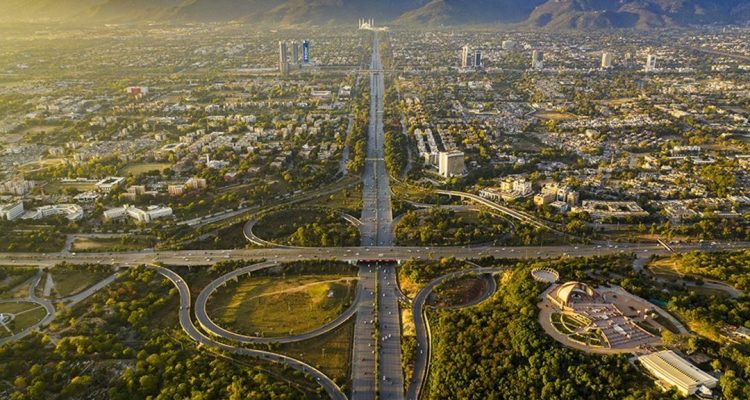
Instead of fixing what was already broken, they decided to start fresh. They selected a site in the northern foothills of Punjab, surrounded by the Margalla Hills. It wasn’t just about geography. It was about philosophy.
The government brought in Constantinos A. Doxiadis, a respected architect and urban planner from Greece, to lead the project. His approach was different. Instead of expanding a city, he would design one from scratch.
And the results speak for themselves.
A City That Thinks Before It Builds
Doxiadis didn’t just design streets and buildings. He designed a system of life. Islamabad was divided into clearly defined zones: residential, diplomatic, commercial, educational, and green. Each sector was placed with thought. Roads were laid out like a grid for easy navigation. Heights of buildings were controlled to protect the natural skyline and maintain harmony with the Margalla Hills.
Green belts were added not as decoration but as essential breathing space. Parks were part of every residential sector. Schools and mosques were within walking distance of homes. Everything was about balance — between nature and progress, between community and convenience.
This wasn’t just urban planning. It was vision-driven development.
The result? A city that functions smoothly, feels breathable, and still ranks as one of the most livable urban areas in South Asia.
Why This Matters (Right Now)
Islamabad is proof that long-term planning works. It’s also proof that a better Pakistan is possible — if we’re willing to think ahead.
Because the truth is: Pakistan is growing. Fast. Its cities are expanding. But the way we’re building right now isn’t sustainable.
We’re adding concrete faster than we’re building community. We’re prioritizing short-term gain over long-term livability. And we’re replicating the very mistakes Islamabad was built to avoid.
But it doesn’t have to be that way.
Islamabad gives us a clear lesson: when you plan well, you don’t just create a place — you create a future.
The Heart of the Capital: Blue Area
If Islamabad is a city of vision, Blue Area is its commercial core.
Designed to be the capital’s main business district, Blue Area runs along Jinnah Avenue and lies next to government institutions, diplomatic enclaves, and top hotels. It’s the perfect location for businesses that want visibility, access, and prestige.
Over the years, Blue Area has hosted banks, corporate offices, tech firms, and startups. It’s been the face of Pakistan’s formal economy in its capital.
But here’s the reality: the business world is changing — fast.
Today’s companies need smarter buildings. They need digital infrastructure. They need sustainability, flexibility, and premium design. That means Blue Area must evolve if it wants to stay at the center of Pakistan’s economic future.
Located in the heart of Blue Area, Citadel 7 isn’t just another office tower. It’s a symbol of what happens when business development meets smart design.
Built with a sleek 3D glass façade, equipped with intelligent systems, and developed for high-end commercial use, Citadel 7 is what future-ready looks like. It doesn’t just offer space — it offers an environment. A place where global businesses, tech firms, and progressive enterprises can thrive.
It also mirrors the very idea Islamabad was founded on: planned progress.
Citadel 7 doesn’t disrupt the city’s vision — it enhances it, showing how modern architecture and original planning can work together. Just as Islamabad reflected Pakistan’s ambition in the 1960s, Citadel 7 reflects what that ambition looks like in the 2020s.
Key Takeaway: Plan First. Build Second.
Here’s the simple truth: Pakistan doesn’t need more buildings. It needs more thinking behind the buildings.
Every city expansion, every housing scheme, every tech zone — they all need to ask the same questions:
Who is this serving?
What problems are we solving?
What will this place look like in 20 years?
That’s what made Islamabad work. It wasn’t just a project — it was a plan. And not just a plan for today, but one that could adapt and grow for decades.
Imagine if every new city followed that model. Imagine if housing colonies were designed with walkability, parks, schools, and clean water from the start. Imagine if roads weren’t just wide — they were smart. If buildings weren’t just tall — they were sustainable.
The answer to so many of Pakistan’s challenges lies in those three words: Plan. Before. Build.
Final Thoughts
Islamabad is more than a capital. It’s a quiet success story in a country often too focused on its failures. It’s not perfect. But it’s proof of what happens when we dare to dream, design, and deliver with discipline.
As we celebrate Pakistan’s independence, we’re reminded of our nation’s struggles, sacrifices, and hopes. But we also need to talk about systems. About infrastructure. About how we build the environments that shape our lives.
Because a better Pakistan isn’t just a slogan. It’s a structure.
And if we want our future to look different — we need to start building it that way.
In Foundations of Freedom blog, we explored how Pakistan was built on ambition, faith, and the dream of self-determination. In this second installment, we explore how national architecture became a living expression of that dream, forming the visible soul of a young and determined nation.
Foundations of a New Identity
When Pakistan emerged on the map in 1947, it wasn’t just claiming a geography—it was asserting an idea. A new Muslim state needed symbols to represent its values, aspirations, and unity. In this formative era, architecture became a crucial tool. Every minaret, dome, arch, and corridor built in those early years carried more than function—it carried meaning. These structures were meant to anchor a national identity, inspire citizens, and declare Pakistan’s place on the world stage.
Minar-e-Pakistan: The Tower of Resolve
Standing in the heart of Iqbal Park, Lahore, Minar-e-Pakistan is among the most iconic national monuments. Constructed between 1960 and 1968, this 70-meter-high minaret marks the very ground where the Lahore Resolution was passed on March 23, 1940—a defining moment in the creation of Pakistan.
Designed by Nasreddin Murat-Khan, a Russian-born Pakistani architect, the structure beautifully blends Islamic, Mughal, and modern architectural styles. Its base is shaped like a flower petal, rising into a spiraling tower that transitions from rough stone to polished marble—a metaphor for Pakistan’s journey from struggle to refinement.
Inscriptions of the Lahore Resolution, Quranic verses, and excerpts from key historical speeches reinforce the tower’s symbolic power. It is not merely a tribute to the past but a national declaration in concrete, asserting identity, purpose, and unity.
Faisal Mosque: A Modernist Masterpiece
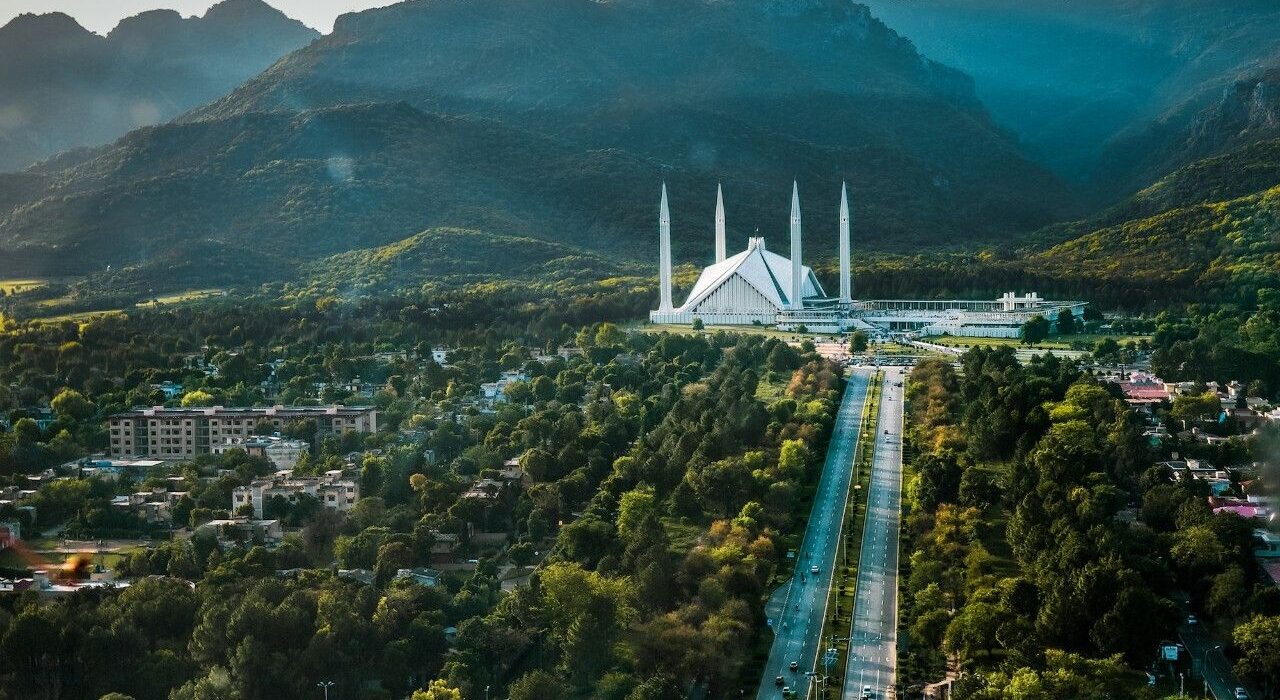
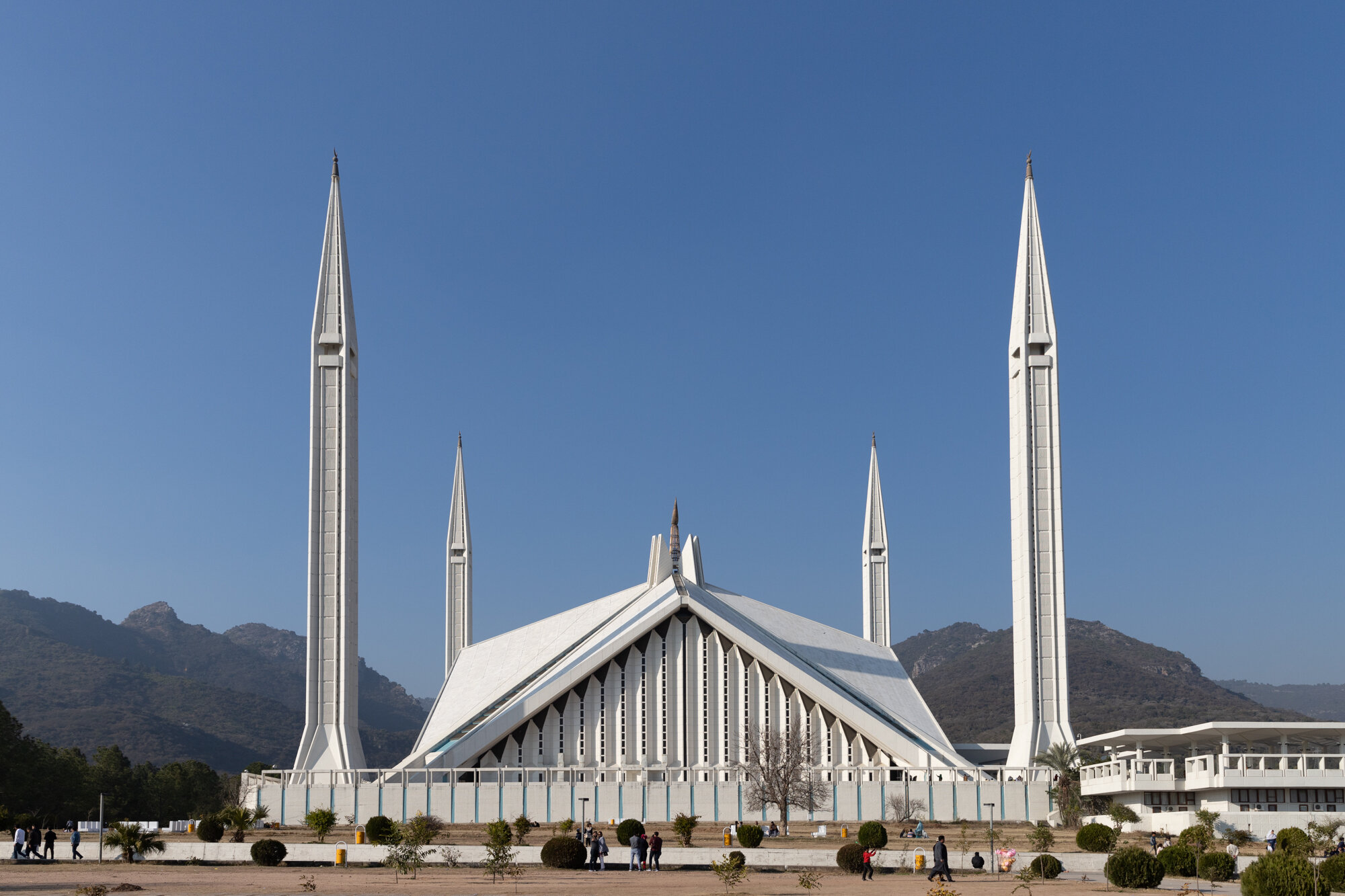
Perched at the foothills of Islamabad’s Margalla Hills, the Faisal Mosque is one of the largest and most unique mosques in the world. Completed in 1986 and named after King Faisal of Saudi Arabia, who funded its construction, the mosque redefined Islamic architecture in the region.
Designed by Turkish architect Vedat Dalokay, the structure deviates sharply from traditional South Asian mosque designs. There are no domes, no minarets in the usual form—only four pointed spires and a triangular, tent-like roof that mirrors the peaks of the Margallas.
The minimalist and geometric design is a deliberate attempt to fuse modernism with Islamic spirituality. Inside, the spacious prayer hall is free of columns, allowing uninterrupted space for thousands of worshippers. From afar, it appears as a monumental tent in silent prayer—at once humble and majestic.
Faisal Mosque doesn’t just function as a house of worship—it stands as a beacon of Pakistan’s forward-looking identity, where faith meets innovation.
Badshahi Mosque: Legacy of the Mughals
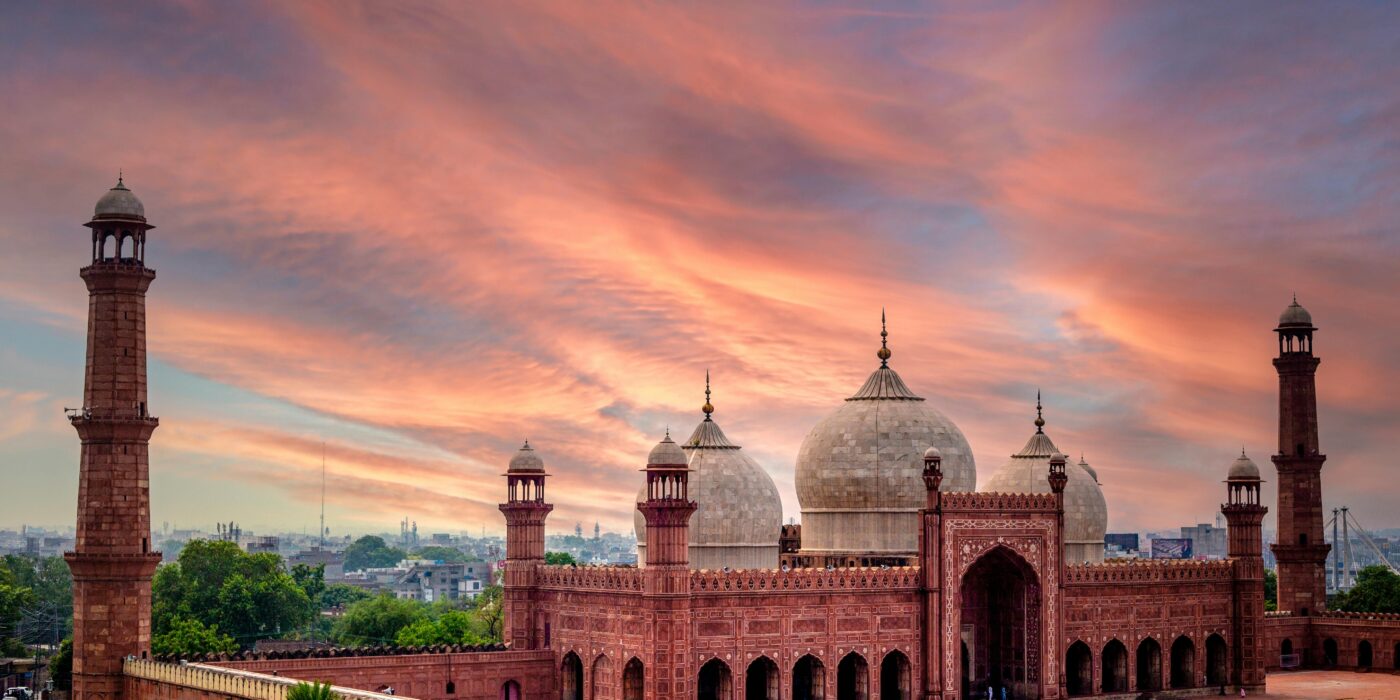
Constructed in 1673 by Mughal Emperor Aurangzeb, Badshahi Mosque in Lahore is one of the most magnificent examples of Mughal architecture in the world. Though it predates Pakistan by centuries, it has become an enduring symbol of spiritual and cultural pride.
Built entirely in red sandstone with white marble inlay, the mosque can accommodate over 55,000 worshippers, making it one of the largest mosques globally. Its grandeur lies in its symmetrical design, massive domes, and towering minarets that frame Lahore’s skyline.
Source: Pexels
The inner courtyard, with its sprawling marble floor, reflects the discipline and grandeur of Mughal aesthetics. Yet, its function remains simple: a sanctuary for prayer, unity, and reflection.
Badshahi Mosque represents the deep historical roots of Islam in the subcontinent, and in the modern era, it has become a reminder that Pakistan’s identity is not new—it is the continuation of a much older civilizational legacy.
Noor Mahal: Royal Elegance in the Desert
Located in Bahawalpur, the Noor Mahal is a lesser-known but equally stunning architectural jewel. Built in 1872 during British rule by the Nawab of Bahawalpur, this palace draws heavily on Italian and neoclassical styles, with columns, verandas, and expansive halls.
Despite its European aesthetic, the palace was intended for the Nawab’s family and represents the fusion of Eastern luxury with Western elegance. With over 30 rooms, underground chambers, and a ballroom, the structure showcases the prosperity of the princely state at its peak.
Today, Noor Mahal is managed by the Pakistan Army and remains open to the public. Its beauty lies not only in its architectural finesse but in the fact that it narrates a time when Bahawalpur stood as a center of art, culture, and refinement.
Derawar Fort: Fortress of the Desert
Towering over the Cholistan Desert like a mirage, Derawar Fort is one of the most dramatic and awe-inspiring historical structures in Pakistan. Believed to have been originally built in the 9th century and later reconstructed by the Abbasi rulers, the fort comprises forty massive bastions that rise over 30 meters high and span more than 1.5 kilometers in circumference.
Its remote location and towering presence evoke a sense of ancient mystery. Derawar was a strategic military and trade post, guarding the caravan routes that once crossed the desert. The thick sandstone walls served as both defense and status symbol for the Nawabs of Bahawalpur.
Today, despite its deteriorating condition, Derawar Fort is a national treasure—a physical link to the frontier spirit and resilience of Pakistan’s desert cultures.
Fort Munro: Colonial Charm in the Highlands
Nestled in the Sulaiman Range of southern Punjab, Fort Munro offers a very different kind of architectural narrative. Named after British Colonel Munro in the late 19th century, it was developed as a hill station for British officials seeking respite from the summer heat.
Colonial-era bungalows, rest houses, and administrative buildings still dot the landscape, creating an atmosphere of quiet charm. The architecture here is simple yet strategic, focused on climatic comfort and functionality.
What makes Fort Munro unique is its role in bringing development to the Dera Ghazi Khan region and how it blends colonial utility with natural beauty. It reminds us that architectural heritage can also exist in modesty, not just grandeur.
Frere Hall: Venice in Karachi
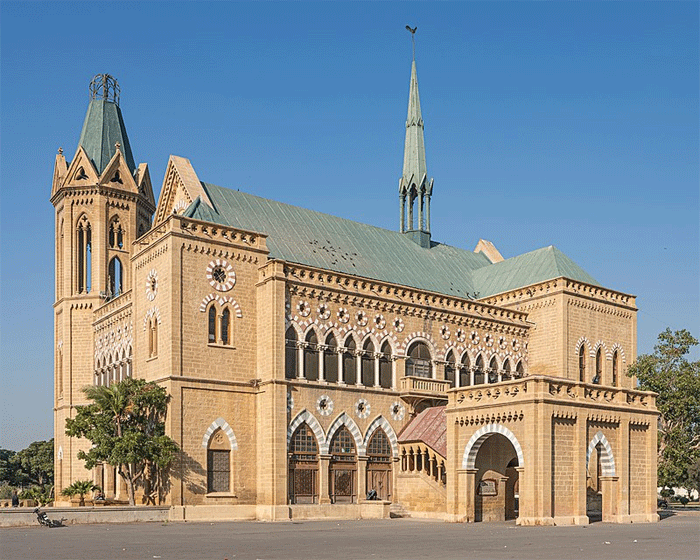
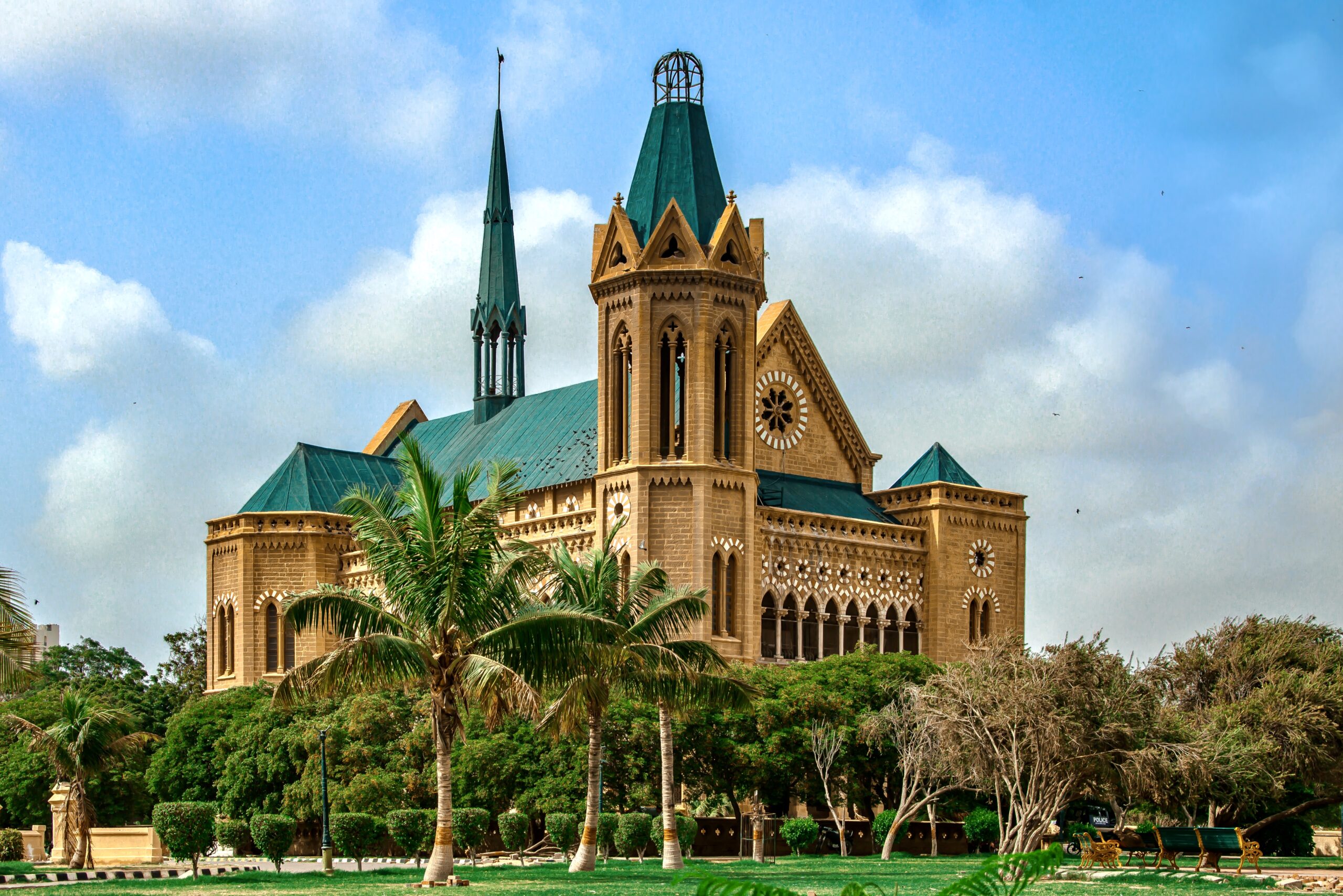
In the bustling heart of Karachi, Frere Hall stands as a testament to colonial-era design and civic pride. Built in 1865, it is designed in the Venetian Gothic style, featuring pointed arches, ribbed vaults, and lancet windows that wouldn’t be out of place in Renaissance Europe.
Originally built as a town hall during British rule, Frere Hall has evolved into a cultural center, housing an art gallery, library, and public gardens. Its interior ceilings are adorned with murals by Sadequain, one of Pakistan’s most celebrated artists, further enriching its cultural value.
Frere Hall is not just a relic of the past—it is a living institution, blending artistic expression, historical memory, and urban vitality.
Pakistan Monument: Unity in Stone
One of the newer additions to Pakistan’s architectural landscape, the Pakistan Monument in Islamabad was inaugurated in 2007 as a tribute to the sacrifices made during the independence movement.
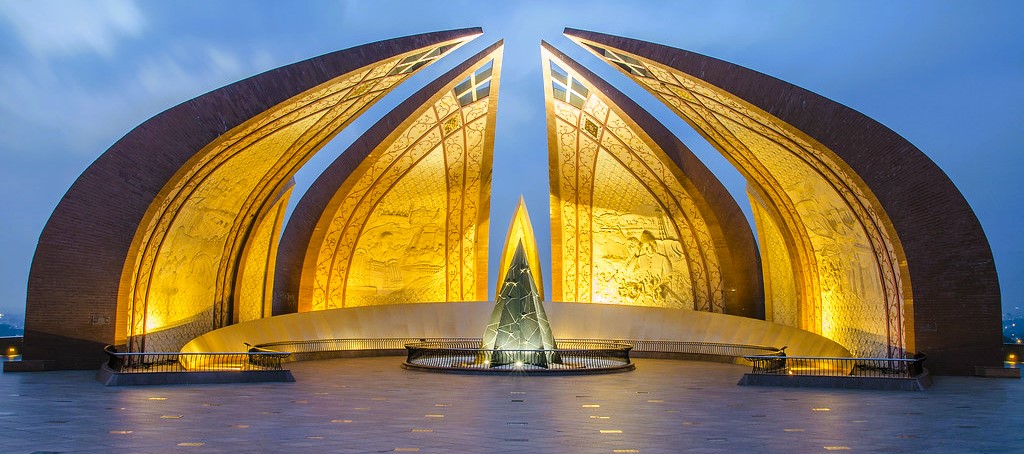
Designed by architect Arif Masood, the structure resembles a blooming flower, with four large petals representing Punjab, Sindh, Khyber Pakhtunkhwa, and Balochistan, and three smaller petals symbolizing the country’s minority regions. At its base, a museum showcases key moments from the country’s struggle for freedom.
The Pakistan Monument is a symbol of national unity and inclusivity, reminding visitors that Pakistan is not a monolith, but a mosaic of cultures, histories, and dreams.
A Nation Built in Stone and Spirit
Pakistan’s architecture tells a story that no textbook can fully capture. From the regal grace of Noor Mahal to the modern elegance of Faisal Mosque, and from fortresses in deserts to colonial halls by the sea, these buildings are our silent storytellers.
They hold within them our history, diversity, and aspirations. And as we mark another Independence Day, we honor not just the leaders and movements—but also the architects, artisans, and visionaries who built the soul of Pakistan in stone.
Monsoon Safety Campaign Targets Encroachments Threatening Flood Management in Rawalpindi
Rawalpindi, July 31, 2025: The Rawalpindi Development Authority (RDA) has kicked off a primary monsoon enforcement drive against illegal constructions and encroachments near natural drains and dams across the city, acting on the directives of Director General Kinza Murtaza.
The initiative, launched to enhance public safety during monsoon season, began with targeted operations along Adyala Road, Dhamial Road, Dhamial-Kalyal Link Road, and the surrounding areas. Ten notices were issued to property owners for hazardous and unauthorized developments that obstruct stormwater flow and increase urban flooding risks.
Enforcement teams, led by Assistant Director Shiza Tanweer and Building Surveyor Aamir Mahmood Malik, also conducted inspections at Jawa and Misriot Dams to assess flood vulnerabilities and potential water contamination threats.
DG Kinza Murtaza emphasized zero tolerance for violations, especially for illegal structures along drainage channels, aligning with the strict urban safety mandate of Punjab Chief Minister Maryam Nawaz Sharif. She highlighted that this campaign is part of RDA’s larger strategy for sustainable urban planning and climate-resilient infrastructure.
Citizens are urged to cooperate and avoid illegal construction near nullahs and dams, safeguarding the city from future environmental risks.
The story of Pakistan’s architecture is not just about buildings; it’s about identity, transition, and nation-building. As the country emerged from the shadow of British rule in 1947, the built environment became a canvas upon which cultural memory, political aspirations, and modern ambitions were all painted. From grand colonial architecture in Lahore to the humble beginnings of post-colonial architecture in Pakistan, each structure told a story of who we were and who we were becoming.
Colonial Architecture in Pakistan: Symbols of Power and Control
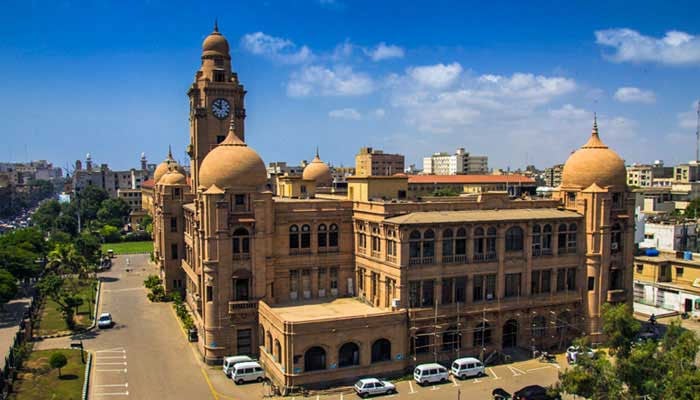
Before independence, British colonial architecture in Pakistan was primarily about establishing authority. Buildings in Lahore, Karachi, and other major cities showcased colonial architecture features that reflected the British desire to imprint their governance and culture.
Key elements of colonial architecture included:
Tall columns and symmetrical facades
Arched windows and wide verandas
Clock towers and domed roofs
High ceilings for natural cooling
Integration of local materials and crafts for cost and aesthetics
Types of Colonial Architecture & Notable Examples
The types of colonial architecture found in Pakistan span public, educational, administrative, and civic buildings. These structures still define the skyline and cultural identity of major cities.
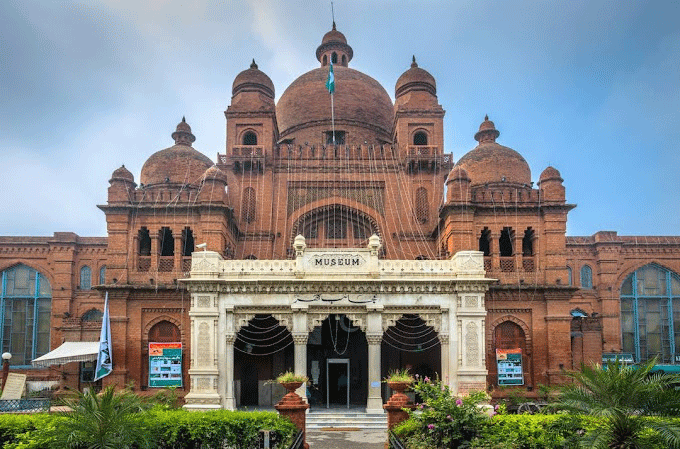
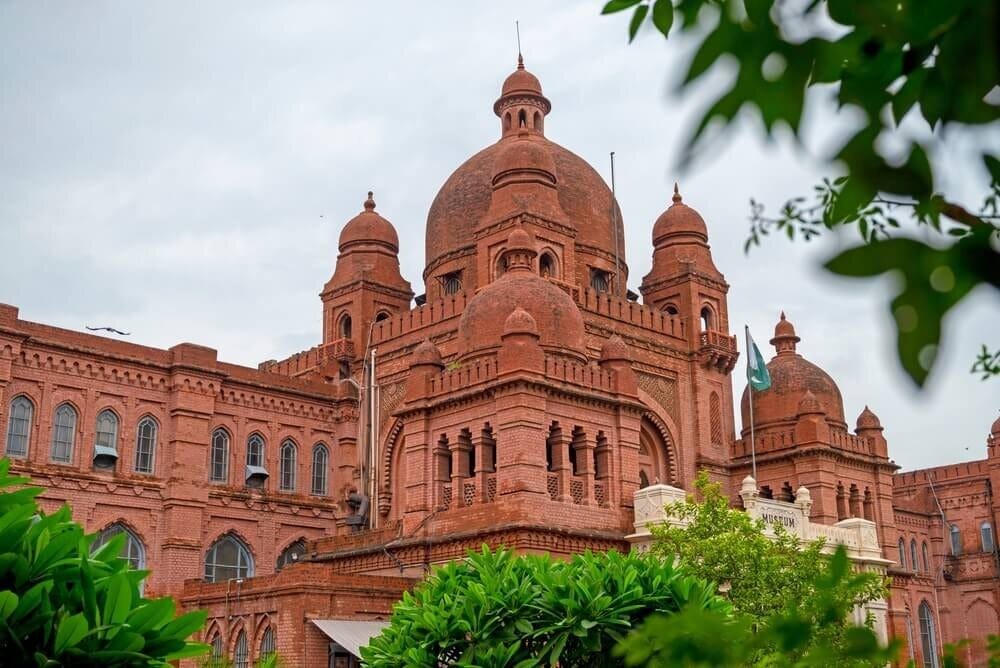
1. Lahore Museum
Built in 1890 to honor Queen Victoria’s Jubilee, Lahore Museum is a masterpiece of red brick Indo-Saracenic design, blending Islamic art with British architectural planning.
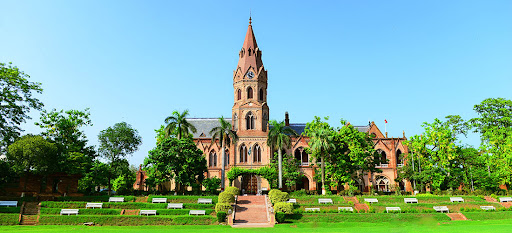
2. Government College University, Lahore
Established in 1877, this neo-Gothic marvel features an octagonal tower, pointed arches, and Chiniot stone — an embodiment of colonial architecture characteristics.
3. Frere Hall, Karachi
Constructed in 1865, Frere Hall stands as a prime example of British colonial architecture in Pakistan. Designed in Venetian Gothic style, it combines flying buttresses, ribbed vaults, and sandstone from Thar and Rajasthan.
4. Chief Minister House, Nathiagali
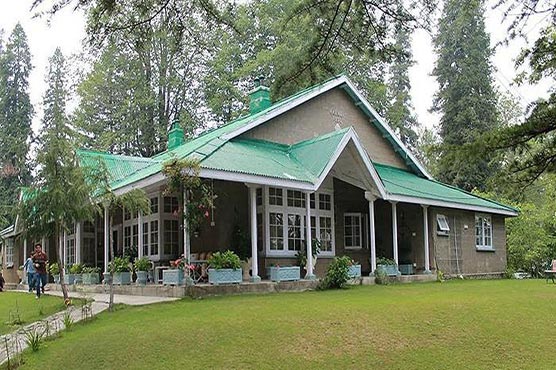
A lesser-known gem, this English-style villa with its wooden pitched roof and marbled verandas shows how elements of colonial architecture were adapted to regional climates.
Post-Colonial Architecture: From Survival to Sovereignty
Post-independence, Pakistan faced the task of defining its identity not just politically — but architecturally. This gave rise to post-colonial architecture in Pakistan, which sought to blend Islamic traditions with modernist ideals.
Key Themes:
Islamic Modernism: Geometric minimalism fused with faith-inspired motifs.
Monumentality as National Identity: Structures like Minar-e-Pakistan and Mazar-e-Quaid symbolized national pride.
Urban Planning: The creation of Islamabad under Greek architect Doxiadis ushered in a modern vision of Pakistan.
Iconic Post-Colonial Buildings
Here are some of the most iconic post colonial buildings in Pakistan
Faisal Mosque
The Faisal Mosque is arguably the most iconic post-independence structure in Pakistan. Designed by Turkish architect Vedat Dalokay, the mosque defies traditional domes and minarets by incorporating a tent-like structure inspired by Bedouin desert tents. Completed in 1986, its minimalist, angular design integrates modern engineering with Islamic symbolism, making it a marvel of modern Islamic architecture. It can accommodate over 100,000 worshippers and remains a spiritual and architectural landmark in the capital.
National Monument Islamabad
Inaugurated in 2007, the National Monument symbolizes the four provinces and three territories of Pakistan through its four blooming petal-like structures. Designed by architect Arif Masood, the monument is located on the Shakarparian Hills and serves as a tribute to the sacrifices of the Pakistani people. Its inner walls are adorned with artwork depicting important landmarks and heroes of the freedom struggle, making it a national symbol of unity and progress.
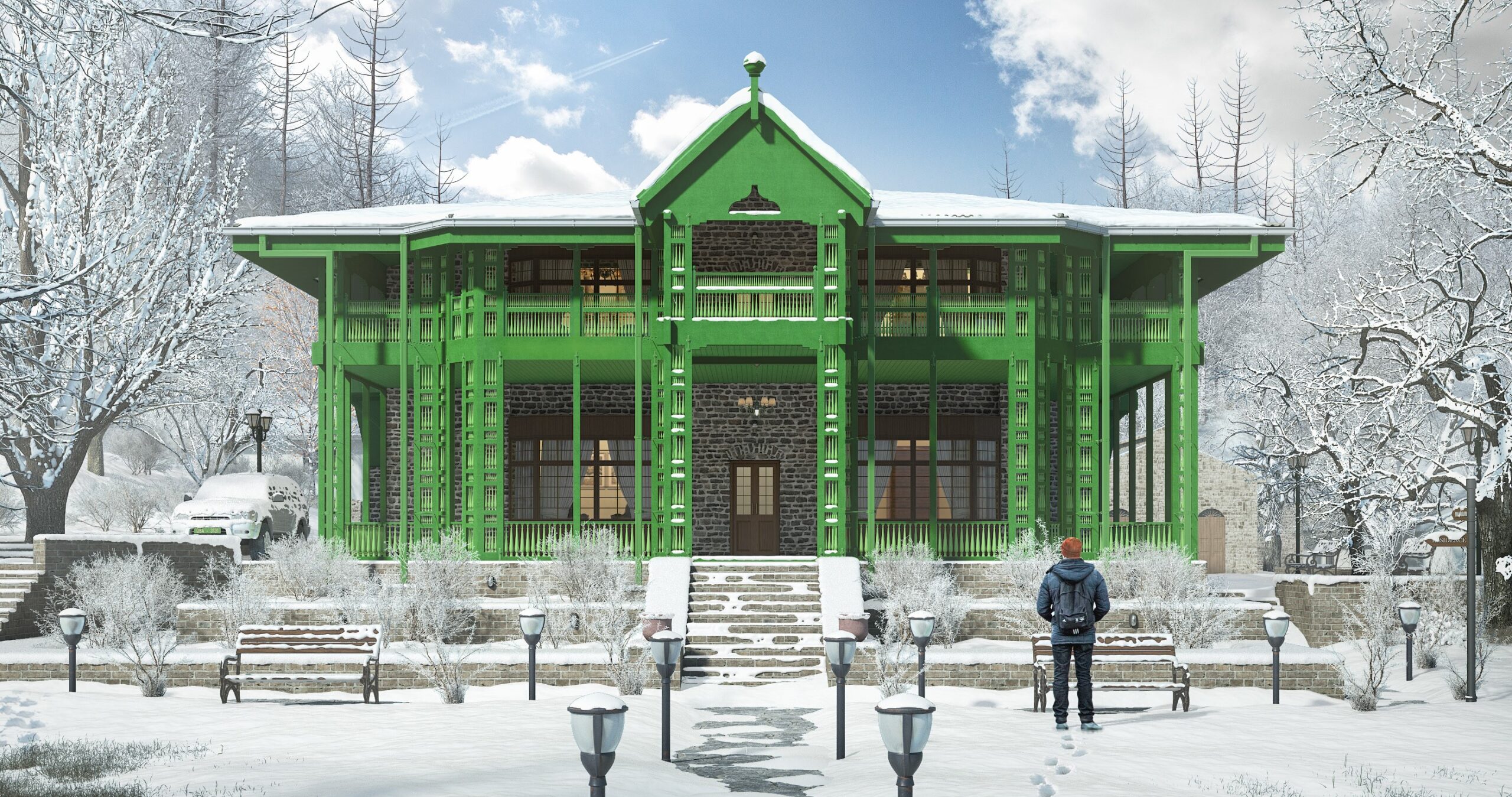
Ziarat Residency
Though originally built in the colonial era, Ziarat Residency gained profound post-colonial significance as it became the final resting place of Quaid-e-Azam Muhammad Ali Jinnah. The building is now considered a national monument, representing the early struggle of the nation and the personal sacrifice of its founder. Its restoration after a 2013 terrorist attack was seen as an act of national resilience and respect.
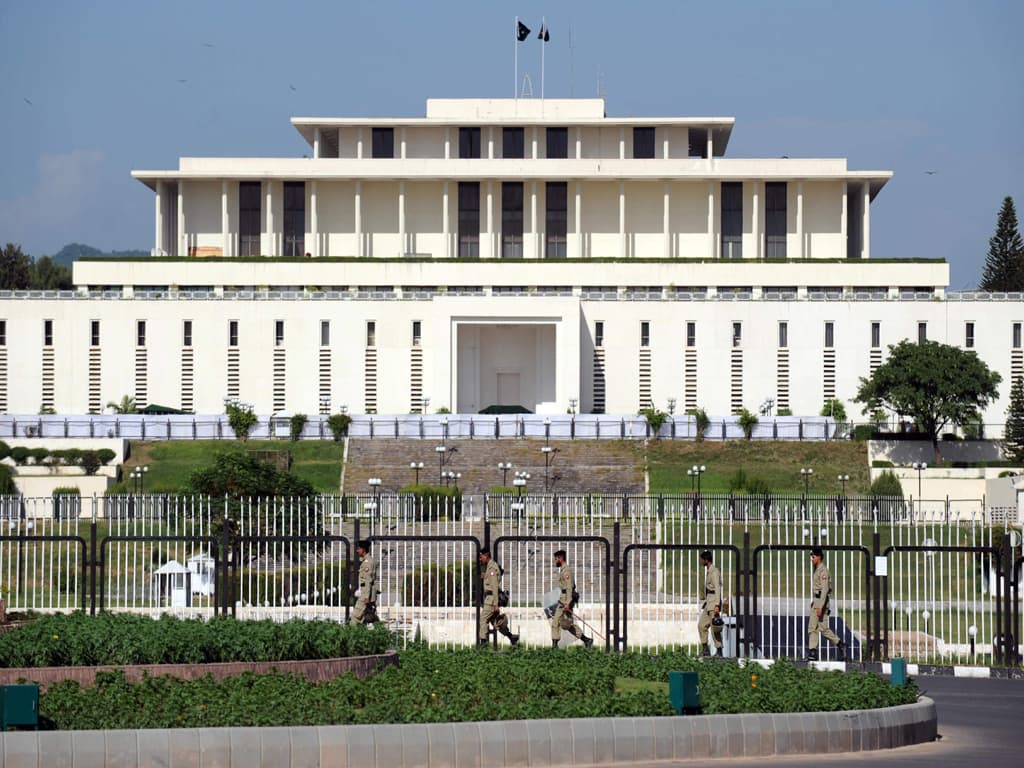
Aiwan-e-Sadr (President House), Islamabad
Completed in the 1980s, Aiwan-e-Sadr is the official residence and workplace of the President of Pakistan. The structure exhibits modern Islamic architecture with traditional domes, expansive courtyards, and intricate marble work — symbolizing the authority and sovereignty of Pakistan’s democratic leadership.
Supreme Court Building, Islamabad
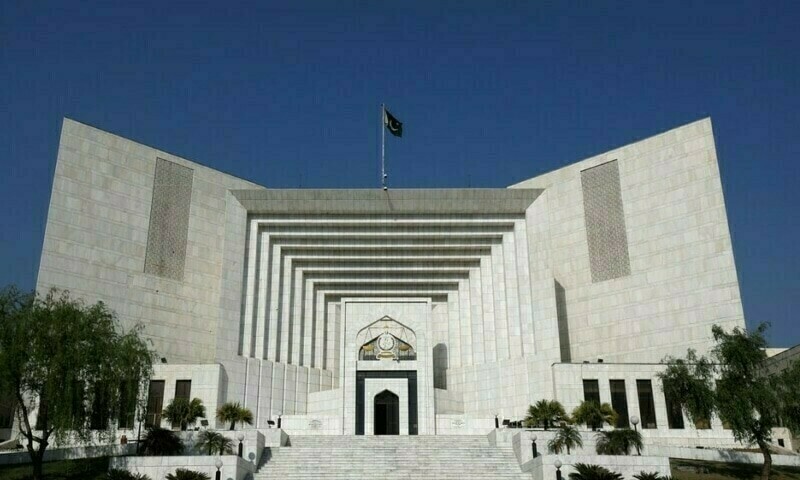
Designed by Kenzo Tange, a world-renowned Japanese architect, the Supreme Court building of Pakistan reflects a unique blend of Japanese minimalism and Islamic geometry. It represents the values of justice, rule of law, and democratic governance in the post-independence era.
Architecture as a Language of Transition
So, what is colonial architecture today in the Pakistani context? It is a visual reminder of where we started. While its characteristics reflected control, order, and formality, they also laid the groundwork for our understanding of planning, engineering, and civic design. The transition from colonial architecture in Pakistan to post-colonial forms was not just about style; it was about reclaiming identity. Architecture became a tool for self-expression, cultural assertion, and future vision.
Just as the Past Shaped Our Identity, Citadel 7 Defines Our Future
In the heart of Islamabad, Citadel 7 Corporate Tower by Chakor Ventures rises with the spirit of a new era. As Islamabad’s emerging city centre, it echoes the same ambition once reflected in colonial and post-independence architecture: the drive to inspire, to progress, and to belong.
Much like the Indo-Saracenic monuments of the past, Citadel 7 blends innovation with tradition, standing not just as a corporate tower — but as a symbol of the next chapter in Pakistan’s journey.
A new age of architecture, business, and national pride begins here.
Final Thoughts
From colonial architecture in Lahore to post-colonial architecture in Pakistan, our built environment tells the story of our political evolution, cultural heritage, and national aspirations. Understanding what colonial architecture is, appreciating its features, and preserving these buildings isn’t about glorifying the past — it’s about learning from it to shape a more confident future.
As we honor our architectural legacy, we must also embrace the responsibility to build structures that stand for freedom, resilience, and identity — just as Citadel 7 stands today.
Strategic Facilities to Enhance Travel Experience and Generate PKR 200 Million Annually
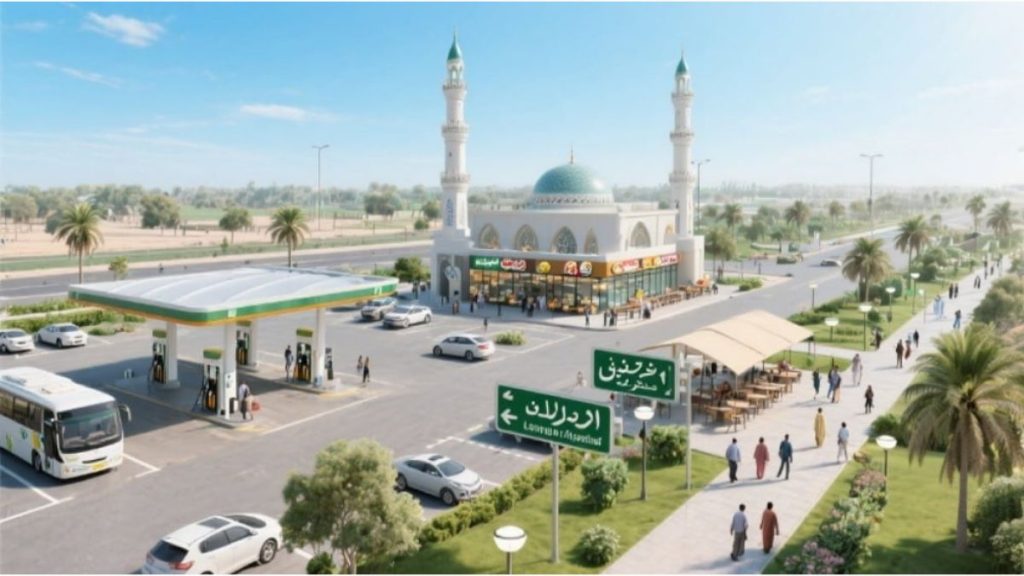
Lahore, July 29, 2025: The Lahore Ring Road Authority (LRRA) has announced a major initiative to enhance commuter convenience with the development of six state-of-the-art rest areas along key points of the Ring Road.
Each rest area will feature essential amenities, including petrol stations, food outlets, tuck shops, mosques, and restrooms, ensuring a more comfortable travel experience for thousands of daily users and commercial vehicles navigating the city’s high-speed corridor.
The sites—strategically located at Adda Plot, Halloki, Kamahan, opposite the airport, and Mehmood Booti—will each cover 4.5 to 5 kanal and be leased out through a competitive bidding process to financially sound individuals and firms. The lease agreements have been finalized, and offers will be invited shortly.
Officials project over PKR 200 million in annual revenue from the leasing of these rest stops, aligning with the government’s broader agenda to modernize urban infrastructure and enhance public services.
This initiative not only supports safer and more efficient travel but also introduces a new commercial model to revitalize Lahore’s roadways through sustainable public-private collaboration.



 Notable Work: Shell House, LUMS campus buildings.