
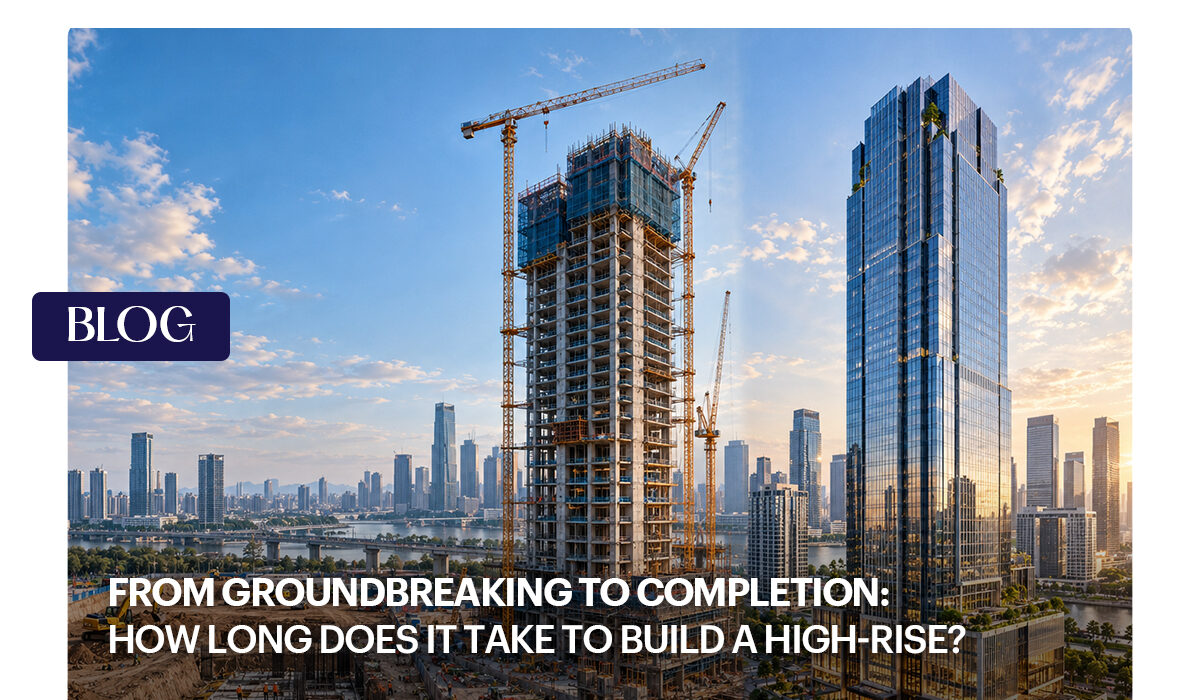

Most high-rise buildings take 2 to 5 years to complete, from groundbreaking to handover. A typical 20- to 30-storey tower takes about 2.5 to 3.5 years to build. Supertall skyscrapers can take 5 to 6 years or more. Height, structural system, and construction technology all shape where a project lands on that scale.
Anyone watching a tower rise on the skyline eventually asks the same question: how long did that actually take? The honest answer is that it depends, but not in a vague way.
High-rise construction time follows well-documented patterns, from the pace of a standard concrete pour to record-breaking modular builds from China. This guide breaks down what really determines how long a high-rise takes to build, stage by stage, with real benchmarks and a look at how Pakistan’s fastest towers compare.
What Counts as a High-Rise, Mid-Rise, or Skyscraper?
Before comparing timelines, it helps to define the building types themselves, since a 10-storey block and an 80-storey tower follow very different schedules.
| Building type | Typical height/floors | Notes |
| Low-rise | Up to around 6–7 storeys | Usually built without lifts |
| Mid-rise | Roughly 5 to 10 storeys | Lift-equipped, moderate structural complexity |
| High-rise | 7+ storeys, or around 18 metres and above | Definitions vary by country; height beyond the reach of standard firefighting equipment is a common threshold |
| Skyscraper | Generally 150 metres and above today | The term first described 10- to 20-storey buildings in the 1880s; height relative to width matters more than a fixed number |
Is 20 floors a skyscraper? Not by most modern definitions, though it easily counts as a high-rise. A 7-storey building sits right at the boundary between mid-rise and high-rise, depending on the country’s building code.
And a 100-metre or 300-foot tower is a tall high-rise, but still short of the 150-metre mark most architects use for “skyscraper.”
High-Rise Construction Time: What the Data Actually Shows
For most projects, high-rise construction time takes 2 to 5 years, start to finish. That range is wide because it covers everything from a straightforward 15-storey residential block to an 80-storey mixed-use tower with a podium, basements, and a complex facade.
| Tower size | Typical total timeline – High-Rise Construction Time |
| 10–20 storeys | 1.5 to 2.5 years |
| 20–35 storeys | 2.5 to 3.5 years |
| 35–60 storeys | 3.5 to 5 years |
| 60+ storeys/supertall | 5 to 7 years or more |
These are averages, not guarantees. A well-financed, well-managed project with modern formwork can beat its band; a project held up by permitting delays, financing gaps, or a difficult site can run well past it.
In the US specifically, one industry study puts the average time to build a high-rise apartment building at 28 months, up from 22 months in 2009, a reminder that timelines have lengthened in some markets even as technology improves, largely due to financing and material-cost pressures.
The average duration for a 20-storey residential building in major Pakistani cities generally falls toward the middle of this range. A well-capitalised commercial or mixed-use high-rise in Karachi has completed structural work on more than 30 floors in as little as 16 months, though structural completion is only part of the picture; interior fit-out, MEP work, and handover typically add another 12 to 18 months. A realistic total for a fast-moving 20-storey residential project in Karachi, Lahore, or Islamabad is closer to 2.5 to 3.5 years.
Citadel 7: A Local Example of Disciplined Scheduling
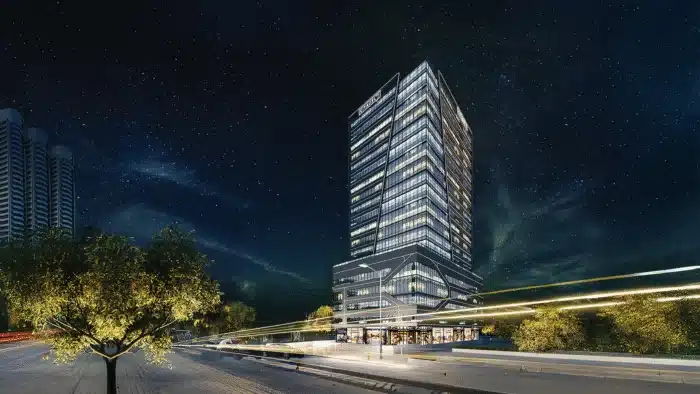
Islamabad’s own skyline offers a case in point. Citadel 7, Chakor Ventures’ commercial tower in Blue Area, wrapped construction 90 days ahead of its promised completion date, with handover running from October through December 2026.
It’s a practical illustration of the same factors this guide covers: realistic scheduling, consistent financing, and disciplined project management, translating into a tower that beat its own timeline rather than slipping past it.
How Long to Build a Skyscraper: A Stage-by-Stage Timeline
Every high-rise, regardless of size, moves through the same seven broad stages. Knowing how long each one typically takes helps explain why the overall timeline lands where it does.
- Pre-construction and design (typically 6–18 months): feasibility studies, architectural and structural design, and early engineering.
- Permitting and approvals (typically 3–12 months, often overlapping with design): this stage varies most by jurisdiction, and rarely gets counted in “construction time” headlines even though it can add a year or more before ground is broken.
- Site preparation and foundation (typically 2–6 months): excavation, piling, and the foundation slab, deeper and more involved for taller towers.
- Structural framing is the largest chunk of time on any high-rise, and the floor-by-floor climb where formwork technology has the biggest impact on speed.
- Building envelope (often overlaps with framing, a few floors behind): facade, curtain wall, and roofing.
- MEP systems installation: electrical, plumbing, HVAC, and elevators, usually running in parallel with interior work.
- Interior fit-out, testing, and handover (typically 6–12 months for a large tower): finishes, inspections, and the handover process itself.
Structural framing deserves a closer look because it’s the stage most people picture when they think about how long it takes to build a skyscraper. A basic floor cycle the time to form, pour, and cure one level before starting the next commonly runs 8 to 12 days with conventional methods.
High-Rise Construction Timeline: What Moves the Schedule
A handful of variables explain most of the difference between a fast high-rise construction time and a slow one:
- Height and floor count. More floors means more repetitions of the same structural cycle, so total time scales with height even when the per-floor pace stays constant.
- Structural system. Reinforced concrete, structural steel, and composite systems all have different speed profiles; steel-framed towers benefit from components fabricated off-site and assembled quickly on site.
- Soil conditions and foundation type. Deep piling or difficult ground can add months before the structure even breaks the surface.
- Formwork technology. The single biggest lever available to a contractor, the difference between conventional formwork and a jump-form or aluminium system can cut floor-cycle time by close to half.
- Weather and site logistics. Monsoon seasons, extreme heat, and congested urban sites all slow the pace of pours and material deliveries.
- Permitting and regulatory approval. Often the least visible factor, and frequently the one that adds the most unplanned time.
- MEP and facade complexity. A tower with an elaborate curtain wall or dense mechanical systems takes longer to finish than a simpler box, even at the same height.
- Financing continuity. Interrupted funding is one of the most common causes of real-world schedule delays.
Tower Completion Time: Real-World Benchmarks
Global benchmarks put these High-Rise Construction Time numbers in perspective.
The Burj Khalifa, the world’s tallest building at 828 metres, took around six years to build, starting in January 2004 and officially opening in January 2010. At its peak, close to 12,000 workers were on site each day, and the project consumed an estimated 22 million person-hours of labour before completion.
The Empire State Building remains one of the fastest major skyscrapers ever built, despite being completed nearly a century ago. Steel erection alone ran at roughly four and a half storeys a week, and the entire building went from broken ground to a finished, tenant-ready tower in about one year and 45 days.
Counting the design and contract phase before construction started, the whole project took about twenty months. It’s a useful reminder that tower completion time is shaped as much by planning discipline and design simplicity as by modern technology.
Mini Sky City, a 57-storey tower in Changsha, China, is the modern speed record: the tower itself went up in just 19 working days on site, at a pace of about three floors a day, using modules fabricated off-site over four and a half months beforehand. It’s a genuinely remarkable case study in modular construction but worth a note of caution.
The same company later announced plans for an even taller, 220-storey version to be built in 90 days; regulators halted that project before completion over safety concerns, and it was never finished. The lesson: modular speed records are real, but they don’t automatically scale to every height or every regulatory environment.
Pakistan’s own high-rises are increasingly competitive on speed. One large commercial tower in Karachi, standing more than 30 storeys above two basement levels, completed its entire structural framework in around 16 months, a pace that compares well against international benchmarks for a building of similar size.
Chakor Ventures’ Citadel 7, a commercial tower in Islamabad’s Blue Area, offers a further example: construction wrapped 90 days ahead of its promised completion date, with handover running from October through December 2026.
As with any tower, these figures reflect strong scheduling and structural progress; full completion, including interiors and handover, typically takes noticeably longer on projects without the same discipline.
What Are the Fastest Construction Technologies for High-Rise Buildings?
The technologies that most reliably shrink high-rise construction time all target the same bottleneck: the floor-by-floor structural cycle.
- Aluminium formwork systems typically reduce a floor cycle to around 7 to 8 days, compared with 8 to 12 days for conventional formwork, and can be reused hundreds of times across a project.
- Jump-form (climbing formwork) systems go further, often achieving 5- to 6-day cycles for core walls and vertical elements, because the formwork climbs the building on its own, supported by the concrete already poured, rather than relying on cranes or scaffolding.
- Precast and prefabricated components, staircases, facade panels, and reinforcement cages are manufactured off-site under controlled conditions and simply installed on arrival, cutting both time and on-site labour.
- Post-tensioning allows for larger, thinner slabs with fewer support columns, which can simplify and speed up the structural sequence on commercial towers.
- 4D BIM and digital scheduling link a 3D building model directly to the project timeline, making it far easier to spot and resolve clashes and delays before they happen on site rather than after.
Can Modular Construction Reduce High-Rise Construction Time?
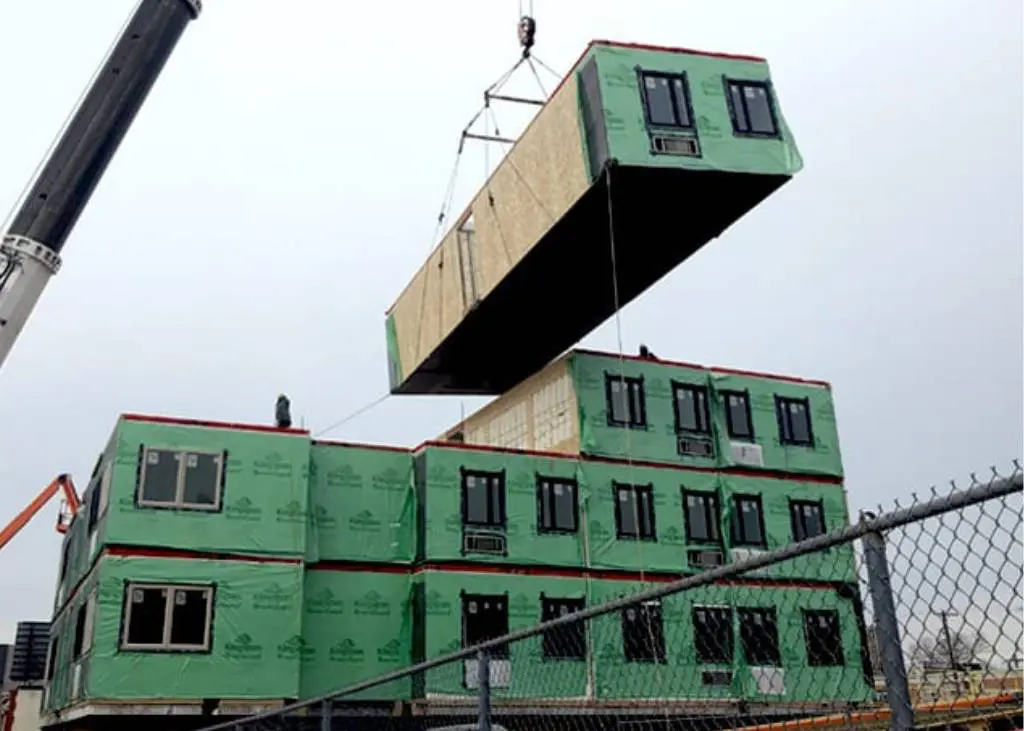
Yes, modular and prefabricated construction can meaningfully reduce high-rise completion time, and the effect is most dramatic when most of the building is manufactured off-site before assembly begins.
China’s Mini Sky City, referenced above, is the clearest example: three floors a day on site, because the heavy fabrication work had already happened in a factory.
A broader comparison of global modular projects has found that China consistently achieves the fastest construction rates with this approach, largely because of the scale of its factory-based steel module manufacturing.
That said, modular construction isn’t a universal shortcut to reduce high-rise construction time.. It works best on repetitive floor plans, like hotels, apartments, and student housing, where the same unit is built hundreds of times.
It’s a harder fit for towers with highly customised layouts, luxury finishes, or irregular floor plates, and it requires significant upfront investment in factory capacity and logistics, which is why adoption still varies enormously by market.
The Impact of Prefabrication on High-Rise Construction Time in Pakistan
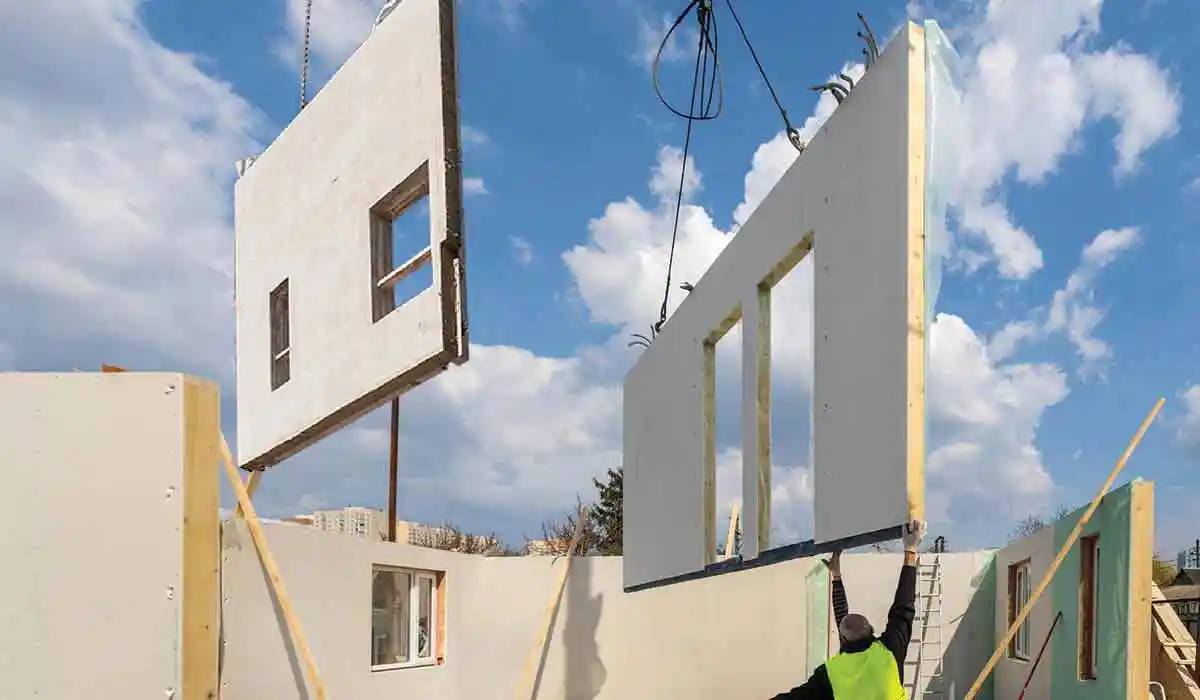
Prefabrication is still an emerging practice in Pakistan’s construction sector rather than a mainstream one. Conventional, on-site construction remains the default for most high-rise projects, and research notes that prefabricated methods are less widely adopted here than in markets like China or the Gulf.
That’s beginning to shift: provincial governments have held discussions with Chinese prefabrication firms on large-scale housing schemes, and modular approaches are gaining attention as a way to address the delays, rising material costs, and labour shortages that affect conventional projects.
For now, prefabrication’s real impact on high-rise construction timelines in Pakistan is greatest in the housing and affordable-development segment rather than in commercial towers, where site-specific design and finishing standards still favour conventional methods. That’s likely to change as local supply chains for precast and modular components mature.
Building Materials That Reduce High-Rise Construction Time
Beyond formwork and modular assembly, certain material choices consistently shave off high-rise construction time:
- Precast concrete elements (columns, beams, staircases, facade panels) arrive ready to install, eliminating on-site curing time.
- Engineered structural steel, fabricated to precise specifications off-site, assembles faster than a comparable reinforced-concrete frame and reduces weather-related delays.
- Aluminium formwork panels are as much a materials choice as a technology choice; their light weight and reusability enable fast floor cycles.
- Unitised curtain wall systems, where entire facade panels are built and glazed in a factory, install far faster than facades assembled piece by piece on site.
Project Management Software for Faster High-Rise Schedules – High-Rise Construction Time
Scheduling software doesn’t pour concrete, but it’s increasingly a genuine factor in whether a high-rise stays on schedule. For large, complex towers, enterprise-grade critical-path scheduling tools like Oracle Primavera P6 remain the industry standard, valued for handling thousands of interdependent tasks and flagging exactly how a delay in one trade will ripple through the rest of the schedule.
Broader construction management platforms, such as Procore and Autodesk Build, are common choices for general contractors who need scheduling alongside budgeting, document control, and field reporting in one system. The common thread: real-time schedule visibility lets project managers catch small slips before they become months of delay.
What to Look for in a Contractor Built for Speed – High-Rise Construction Time
Choosing a construction partner for a fast, reliable high-rise project comes down to a few concrete signals, more useful than any list of company names:
- A verifiable track record of on-time delivery on projects of similar height and complexity, not just an impressive portfolio.
- In-house or committed access to modern formwork systems, aluminium or jump-form capability signals a contractor is set up for realistic floor cycles, not conventional ones.
- Experienced structural and MEP project management, since coordination between trades drives most real-world delays.
- Active use of scheduling software for critical-path planning, rather than manual, spreadsheet-based tracking.
- Financial stability and secured funding for the full project, since interrupted financing remains one of the most common causes of stalled towers.
Developers with strong international engineering standards and access to global capital tend to hold schedules more reliably than smaller, locally financed projects; one reason Chakor, backed by its European FDI credentials, has structured its own high-rise developments around these same principles: modern construction methods, disciplined project management, and funding secured before ground is broken.
FAQs – High-Rise Construction Time
How long does it typically take to complete a high-rise construction project?
Most high-rise projects take 2 to 5 years from groundbreaking to handover, though the number depends heavily on height and structural complexity. A mid-sized 20- to 30-storey tower typically takes 2.5 to 3.5 years, while supertall buildings can take 5 to 7 years or more, including design, permitting, and finishing.
How long did the Burj Khalifa take to build? High-rise construction time.
The Burj Khalifa took approximately 6 years to build, with construction starting in January 2004 and the tower opening in January 2010.
Can modular construction really cut high-rise completion time?
Yes, significantly, when the building design suits it. China’s Mini Sky City went from foundation to a completed 57-storey structure in just 19 working days on site, because most of the building had already been manufactured in modules beforehand.
How fast can China build a skyscraper?
Faster than almost anywhere else, when it uses modular methods. China’s Broad Sustainable Building assembled a 57-storey tower in 19 working days at a rate of about three floors per day.
What is the fastest a high-rise floor has ever been built? High-rise construction time.
Using jump-form or climbing formwork systems, contractors have achieved core-wall cycle times of around 5 to 6 days per floor, compared with roughly 8 to 12 days using conventional methods.
The Bottom Line – High-Rise Construction Time
High-rise construction time isn’t a single number; it’s a range shaped by height, structural system, technology, and how well a project is financed and managed.
For more informative blogs on topics like high-rise city view apartments, visit Chakor.
Read More:

BBC-featured Content Specialist with a sharp eye for search intent and a proven ability to turn content into a growth engine. I leverage cutting-edge digital marketing tools to craft strategies that fuel organic traffic, amplify brand growth, and own the local SEO landscape, particularly across the competitive real estate market. I help brands dominate search rankings and convert visibility into measurable business success.
