
Special Report
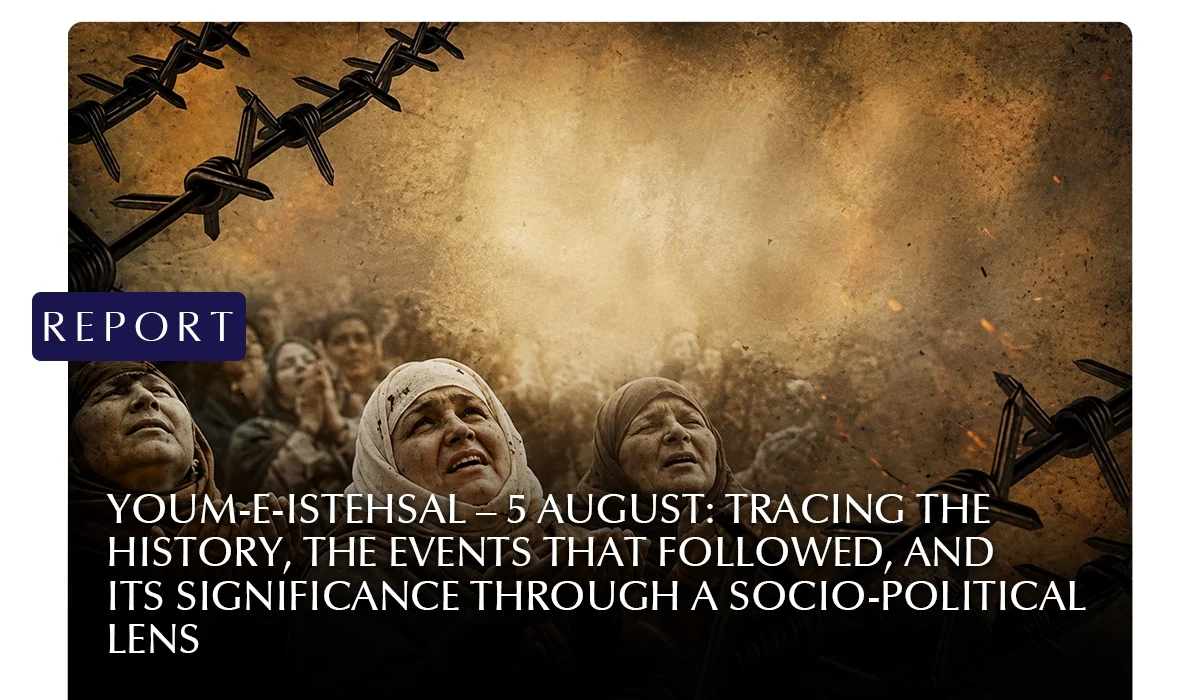
Every year on 5 August, Pakistan observes Youm-e-Istehsal (“Day of Exploitation”), commemorating the anniversary of India’s 2019 decision to revoke Articles 370 and 35A of its constitution, which had granted special autonomous status to Jammu and Kashmir. Islamabad regards that move as a unilateral and illegal change to the disputed region’s status, in violation of UN Security Council resolutions calling for a plebiscite on Kashmir’s future. New Delhi, for its part, maintains that the action was an internal constitutional matter and that Jammu and Kashmir is an integral part of India, a position Pakistan does not recognise.
The day was first observed nationally in 2020, on the one-year anniversary of the move, and has since become a fixture of Pakistan’s official calendar tied to the broader Kashmir dispute with India.
Article 370 and Kashmir’s Special Status
Article 370 gave Jammu and Kashmir special constitutional status, including greater autonomy over internal matters. Article 35A allowed the region to define permanent residents and related property and employment rights.
On August 5, 2019, India revoked Article 370 and divided the former state into the union territories of Jammu and Kashmir and Ladakh. India’s Supreme Court upheld the decision in December 2023.
Impact on Rights and International Law Concerns
The 2019 decision was followed by security restrictions, internet shutdowns, and detentions. Human rights groups and some UN officials raised concerns about civil liberties and demographic changes.
Pakistan continues to raise the Kashmir issue internationally, while India maintains that the constitutional changes were an internal and lawful matter.
Political Significance
For Pakistan, 5 August carries weight on several levels:
- Diplomatic positioning: The day is used to reaffirm Pakistan’s long-standing call for Kashmiris’ right to self-determination under UN resolutions, and to keep the dispute visible on international platforms.
- National consensus symbol: Observance draws participation from the government, opposition parties, and the military leadership alike, signalling rare unity on the Kashmir issue across Pakistan’s otherwise polarised political spectrum.
- Domestic messaging: It reinforces the state narrative that Pakistan’s foreign policy remains anchored in support for Kashmiris, a position with deep resonance in domestic public opinion.
- Annual diplomatic renewal: Each anniversary is used to argue that India’s 2019 action has not altered the disputed status of the territory under international law, nor diminished Kashmiri aspirations for self-determination.
How Pakistan Observes the Day — Government Level
This year, on Wednesday, 5 August 2026, the observance is being marked as follows:
- No public holiday: The Cabinet Division clarified in advance that 5 August 2026 would not be a public holiday, despite social media speculation.
- Nationwide one-minute silence: On the Prime Minister’s directions, a coordinated one-minute silence is being observed across the country at 9:00 a.m., with the Cabinet Division instructing all federal ministries, provincial governments, constitutional offices, and law enforcement agencies to ensure uniform participation. Sirens are sounded to mark the moment.
- Official rallies: A rally is being held on Constitution Avenue in Islamabad, with participation from federal ministers and parliamentarians. Similar rallies are taking place across all four provinces, as well as Azad Jammu and Kashmir and Gilgit-Baltistan.
- Leadership statements: President Asif Ali Zardari and Prime Minister Shehbaz Sharif issued separate messages reaffirming Pakistan’s solidarity with Kashmiris, describing 2019’s action as unlawful and vowing to continue raising the issue at international forums.
- Media directives: The government has directed wide publicity of the observance through both English and Urdu print and electronic media.
How Individuals and Civil Society Mark the Day
- Public participation in the silence and rallies: Citizens are encouraged to pause at 9:00 a.m. alongside the official observance, and many join organised rallies and seminars in their cities.
- Seminars and awareness events: Universities, civil society organisations, and political parties typically hold seminars, panel discussions, and awareness drives on the Kashmir dispute around this date.
- Media and cultural productions: Television channels, radio stations, and print media run special segments, documentaries, and opinion pieces; in past years, this has included patriotic songs and productions by state media bodies.
- Social media campaigns: Hashtags and solidarity posts circulate widely, with individuals sharing content in support of Kashmiris’ right to self-determination.
- Kashmiri diaspora and APHC-linked activities: Kashmiri groups both in Pakistan-administered areas and internationally, including calls from the All Parties Hurriyat Conference, urge a general shutdown and protest rallies in Indian-administered Jammu and Kashmir, in parallel with Pakistan’s domestic observance.
This was all about Youm-e-Istehsaal For more information on relevant issues, please visit Chakor.

BBC-featured Content Specialist with a sharp eye for search intent and a proven ability to turn content into a growth engine. I leverage cutting-edge digital marketing tools to craft strategies that fuel organic traffic, amplify brand growth, and own the local SEO landscape, particularly across the competitive real estate market. I help brands dominate search rankings and convert visibility into measurable business success.
