
CategoriesDams Entertainment

Khanpur Dam: Epic Scenic Adventure Guide

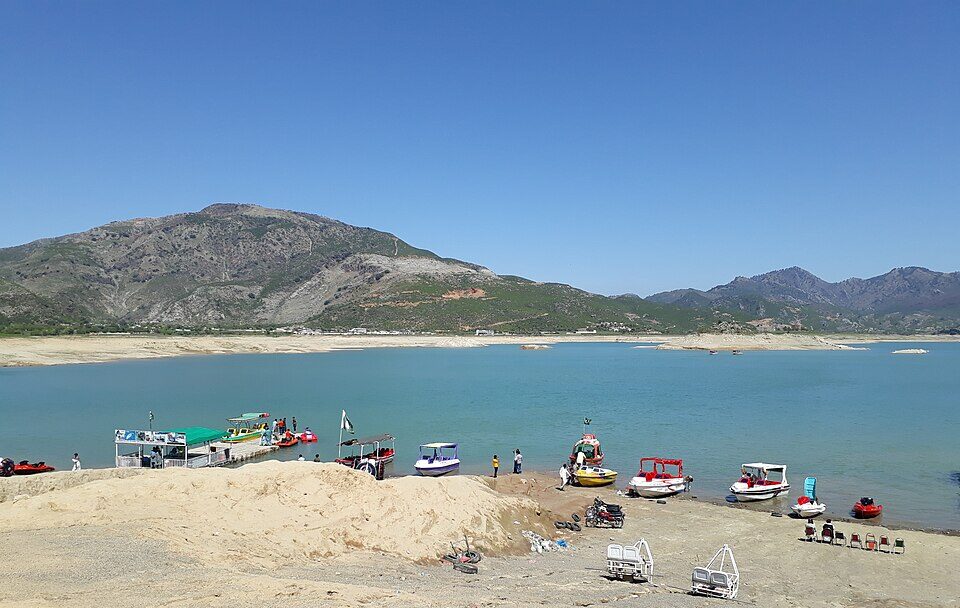
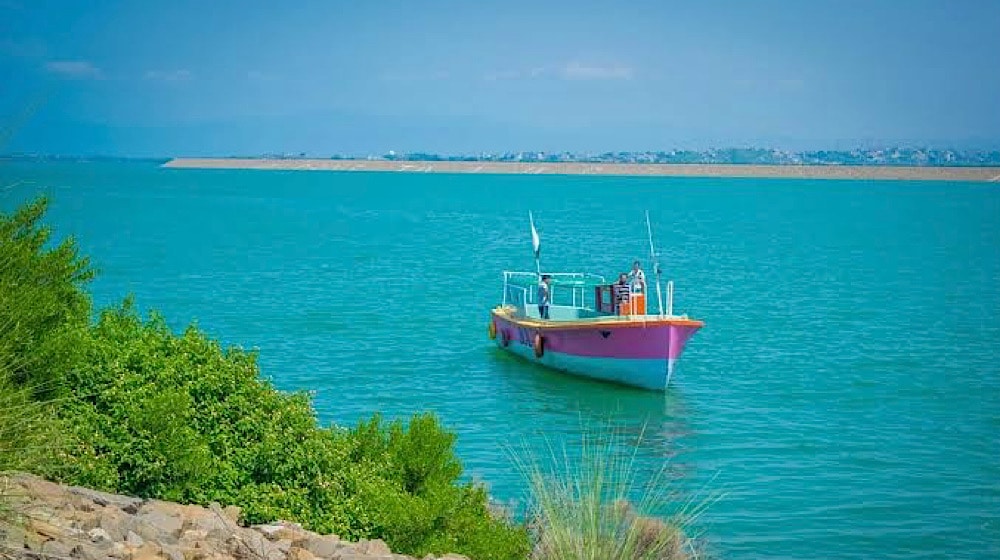
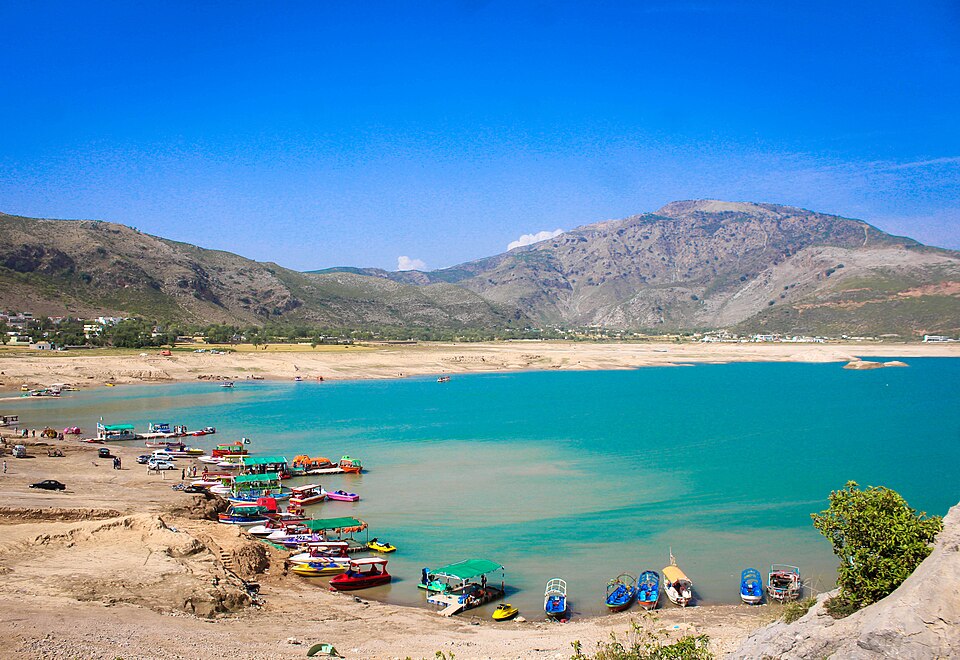
Khanpur Dam is one of the most exciting and scenic outdoor destinations near Islamabad. Known for its turquoise waters, rocky hills, and high-energy adventure scene, the dam has become a favourite spot for families, students, photographers, and thrill seekers alike.

Beyond being a vital water reservoir, Khanpur Dam now offers water sports, paragliding, camping, hiking, and boating, making it a complete outdoor getaway within easy reach of the capital.

This guide covers Khanpur Dam location, distance, weather, resorts, viewpoints, spillway, water sports, and activities, everything you need to plan the perfect visit.

About Khanpur Dam
khanpur dam islamabad

Khanpur Dam is a major water reservoir built on the Haro River in Khyber Pakhtunkhwa. While its primary function is to supply drinking water to Islamabad and Rawalpindi and support irrigation, its dramatic landscape has transformed it into a tourism hotspot in Islamabad.

Key Facts at a Glance

Feature Detail
River Haro River
Purpose Water supply + Irrigation
Region Near Khanpur, Khyber Pakhtunkhwa
Popular For Tourism, water sports, adventure

Why It’s Famous Today

  • Crystal-blue lake surrounded by rugged hills
  • Wide range of adventure sports
  • Scenic picnic and photography locations
  • Easy day trip from Islamabad

The mix of natural beauty and outdoor recreation gives the Khanpur Dam Islamabad region a unique appeal.

Khanpur Dam Location and Distance

 The Khanpur Dam location is near the town of Khanpur in Khyber Pakhtunkhwa, situated between Taxila and Haripur. The dam is built on the Haro River and lies within a rocky gorge surrounded by low hills, giving the area a dramatic and scenic landscape.

Although it is outside Islamabad’s city limits, the dam is close enough to serve as a convenient day-trip destination for residents of the capital and Rawalpindi.

Its position between historic Taxila and the green hills of Haripur also makes it a natural stop for travellers exploring northern Pakistan.

Khanpur Dam Distance from Major Cities

The dam’s accessibility is one of the reasons it is so popular. Travel times are manageable even for short weekend outings.

Route Distance Average Travel Time
Khanpur Dam distance from Islamabad 45–50 km About 1 hour
Rawalpindi to Khanpur Dam 50–55 km 1–1.5 hours
Taxila to Khanpur Dam 20–25 km 30–40 minutes
Haripur to Khanpur Dam 35–40 km 45–60 minutes
Lahore to Khanpur Dam distance 300–320 km 5–6 hours

Travel times may increase during peak traffic hours or holiday weekends.

Best Routes to Reach Khanpur Dam
khanpur dam islamabad

Visitors usually choose one of the following road routes:

From Islamabad / Rawalpindi:

  • Islamabad → Taxila → Khanpur Road
  • Islamabad → GT Road → Taxila → Khanpur

From the Haripur side:

  • Haripur → Khanpur Road

These routes are generally well-maintained, but some stretches near the dam become narrow and winding as you approach the hills.

Transport Options

Following are some of the transport options:

By Private Car

Driving is the most convenient option. It allows flexibility for stops at viewpoints and easy transport of picnic supplies or adventure gear.

By Ride-Hailing Services

Ride-hailing apps operate between Islamabad and Khanpur Dam. This is suitable for small groups but may be costlier for round trips.

By Tour Operators

Adventure clubs and tour companies often run:

  • Day trips from Islamabad
  • Group packages including water sports
  • Camping and paragliding tours

Parking and Arrival Area

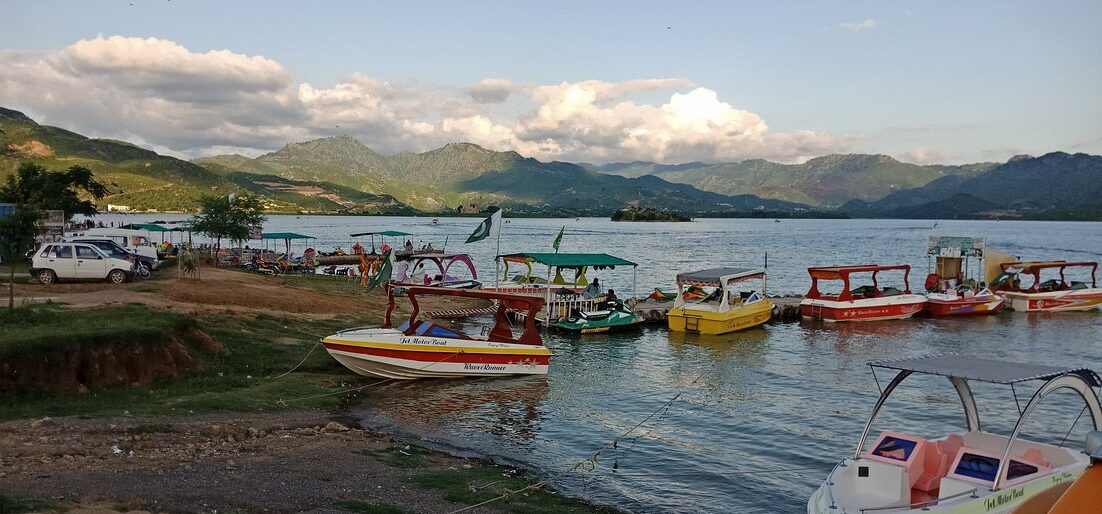
Near the lakeside activity zones, visitors will find:

  • Open parking areas for cars and vans
  • Designated drop-off points for tour groups
  • Small stalls and adventure operator counters

On busy weekends, parking areas close to the water fill early, so arriving in the morning is recommended.

Travel Tips Based on Distance

  • Start early if travelling from Islamabad to avoid city traffic
  • Keep extra travel time during weekends or holidays
  • Ensure fuel tanks are sufficient, as fuel stations are limited near the dam
  • Use GPS navigation, but follow local signage near the final approach

Khanpur Dam Weather and Best Time to Visit

khanpur dam islamabad paragliding

The experience at Khanpur Dam can vary greatly depending on the weather. Because most activities here are outdoors, including boating, water sports, hiking, and paragliding, choosing the right season and time of day can make a big difference.

Khanpur Dam Weather Overview

Khanpur Dam has a semi-arid climate with hot summers and mild winters. The surrounding rocky hills can intensify daytime heat, while evenings near the water often feel cooler due to lake breezes.

Season Temperature Trend Conditions
Spring (Mar–Apr) Mild to warm Clear skies, pleasant
Summer (May–Aug) Hot Sunny, strong sunlight
Monsoon (Jul–Sep) Warm with rain Occasional showers
Autumn (Oct–Nov) Comfortable Dry and clear
Winter (Dec–Feb) Cool Crisp air, sunny days

Best Time to Visit Khanpur Dam

khanpur dam islamabad suring summers

Spring

Spring is considered one of the best times to visit. The weather is pleasant, the landscape looks fresh, and outdoor activities are comfortable throughout the day.

Best for:

  • Water sports
  • Hiking and sightseeing
  • Photography

Summer

Summer is peak season for water-based fun, though daytime temperatures can be high.

Tips for summer visits:

  • Plan water sports in the morning or late afternoon
  • Carry sun protection and plenty of water
  • Avoid rocky hikes during peak heat

Monsoon

The monsoon season brings occasional rain, making the scenery greener but also increasing the risk of slippery surfaces.

Keep in mind:

  • Water activities may be paused during heavy rain
  • Trails and rocks can be slippery
  • Always check the forecast before visiting

Autumn

Autumn offers comfortable weather and clear skies, making it another excellent time to visit.

Ideal for:

  • Paragliding
  • Picnics and family outings
  • Scenic drives and viewpoints

Winter

Winter days are cool but often sunny, making them suitable for relaxed outdoor trips.

Best for:

  • Hiking and nature walks
  • Photography
  • Quiet picnics

Water sports may be less popular due to cooler water temperatures.

Best Time of Day to Visit

Time of Day Experience
Morning Cool air, calm water, fewer crowds
Midday Bright sunlight, peak for water sports
Late Afternoon Pleasant breeze, good for sightseeing
Evening Scenic sunsets, relaxing atmosphere

Mornings and evenings are the most comfortable, especially in summer.

Weather Tips for Visitors

  • Check the forecast before planning paragliding or boating
  • Wear breathable clothing in summer
  • Bring a light jacket in winter evenings
  • Use sunscreen and hats year-round
  • Stay hydrated, especially during hot months

Quick Planning Guide

Goal Best Season Best Time
Water sports Spring, Summer Morning / Late afternoon
Paragliding Spring, Autumn Late morning
Hiking Autumn, Winter Morning
Photography Autumn, Winter Sunrise / Sunset
Family picnic Spring, Autumn Afternoon

Khanpur Dam Activities and Things to Do

khanpur dam islamabad waterskiing

There is no shortage of Khanpur Dam activities for visitors of all ages.

Khanpur Dam Water Sports

The dam is widely known for its water adventure scene.

Popular water sports include:

  • Jet skiing
  • Speed boating
  • Banana boat rides
  • Wake tubing
  • Cliff diving (with guides)

These activities are operated by local adventure providers near the lakeshore.

Paragliding in Khanpur Dam
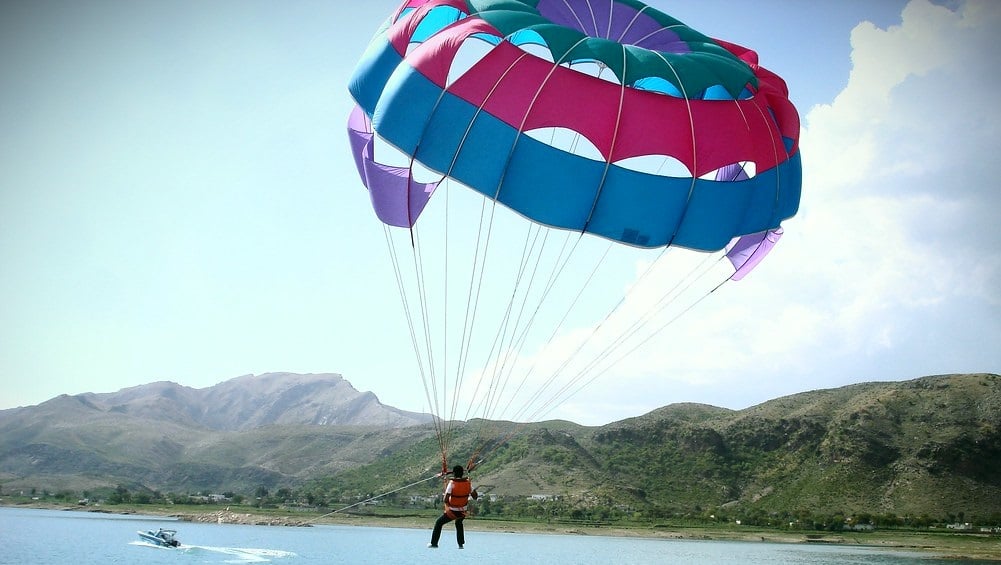
khanpur dam islamabad parasailing

Paragliding at Khanpur Dam is a major highlight for thrill-seekers.

Khanpur Dam Paragliding offers:

  • Tandem flights with trained pilots
  • Panoramic views of the lake and hills
  • Unique photo and video opportunities

Flights operate depending on wind and weather conditions.

Land-Based Adventure Activities

rock climbing at khanpur dam islamabad

Land adventures include:

  • Rock climbing
  • Rappelling
  • Hiking trails in the surrounding hills
  • Camping under the stars

These activities make the area popular for student trips and group outings.

Khanpur Dam Island and Viewpoints

One of the most visually striking aspects of Khanpur Dam is its combination of open water, rugged hills, and elevated vantage points. These natural features create excellent opportunities for sightseeing, photography, and peaceful moments away from the more crowded adventure zones.

Khanpur Dam Island
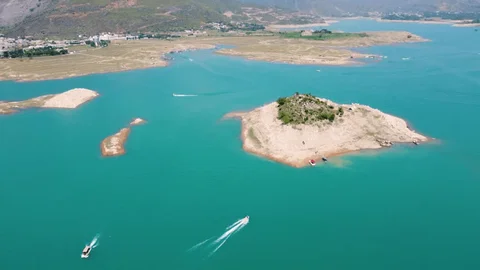
Khanpur Dam Island arial view

A small landmass commonly referred to as Khanpur Dam Island sits within the reservoir and is one of the lake’s most talked-about features. While not a developed island in the traditional sense, it appears like an isolated patch of land surrounded by deep blue water, making it a scenic highlight.

What Makes the Island Special

  • Surrounded by calm lake waters
  • Dramatic backdrop of rocky hills
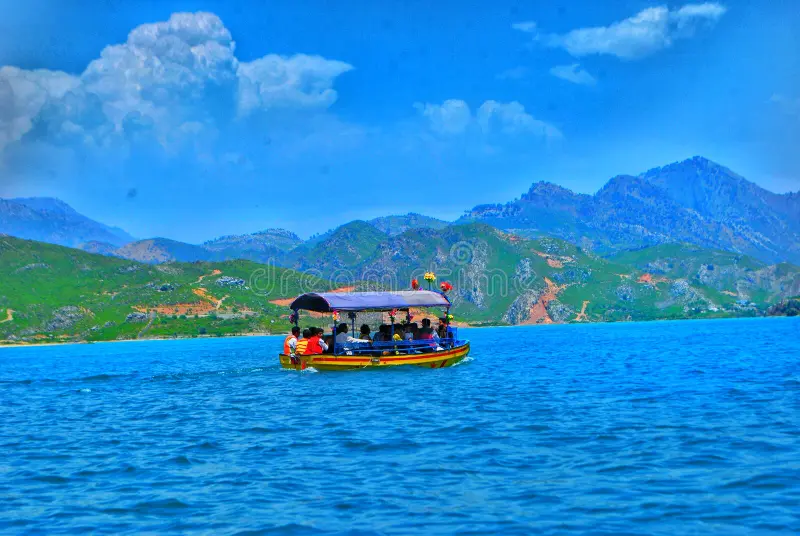
  • Popular stop during boat rides
  • Ideal for photography from a distance

Boat operators often take visitors near the island area, giving them a close-up view and a chance to capture panoramic photos of the reservoir.

Things to Know Before Visiting

  • Direct access to the island itself may not always be permitted
  • Conditions depend on water levels and operator policies
  • Always follow safety instructions during boat trips

Khanpur Dam Viewpoint Areas

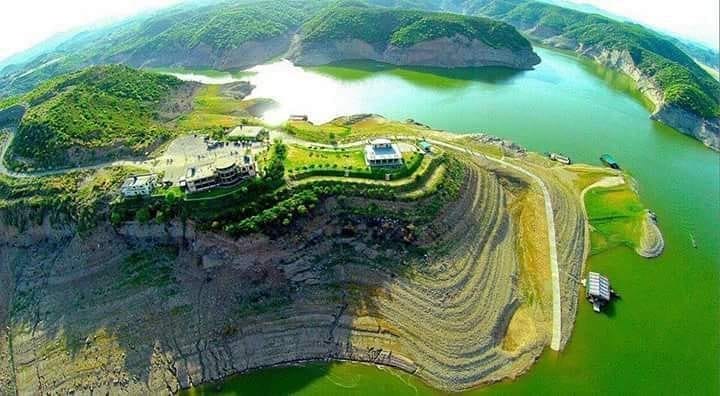
The surrounding terrain offers several natural Khanpur Dam viewpoints where visitors can enjoy elevated views of the reservoir.

Common Viewpoint Locations

  • Hilltops along the approach road
  • Rocky ledges near adventure activity zones
  • Elevated roadside stops overlooking the lake

These spots allow visitors to see the full expanse of the water, the spillway area in the distance, and the surrounding landscape.

Best Times to Visit Viewpoints
Khanpur Dam

Time Why It’s Ideal
Early Morning Soft light, calm surroundings
Late Afternoon Cooler weather, clearer skies
Sunset Golden reflections on the lake

Sunset is particularly popular because the changing light enhances the contrast between the blue water and the brown hills.

Photography Opportunities

The island and viewpoints are especially attractive to photographers.

Popular photo subjects include:

  • Wide landscape shots of the reservoir
  • Boats moving across the water
  • Reflections during sunset
  • Aerial-style views from higher ground

A zoom lens can help capture the island more clearly from a distance.

Why These Spots Are Worth Visiting

The Khanpur Dam Island and surrounding viewpoints offer a calmer, more scenic side of the destination. They balance out the high-energy water sports areas by providing space for:

  • Quiet reflection
  • Scenic walks
  • Photography
  • Enjoying nature’s scale and beauty

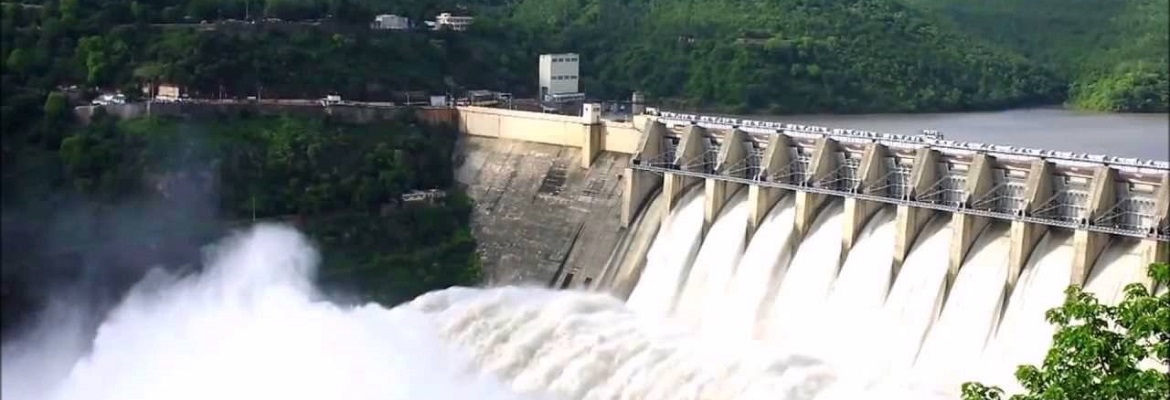
Khanpur Dam Spillway
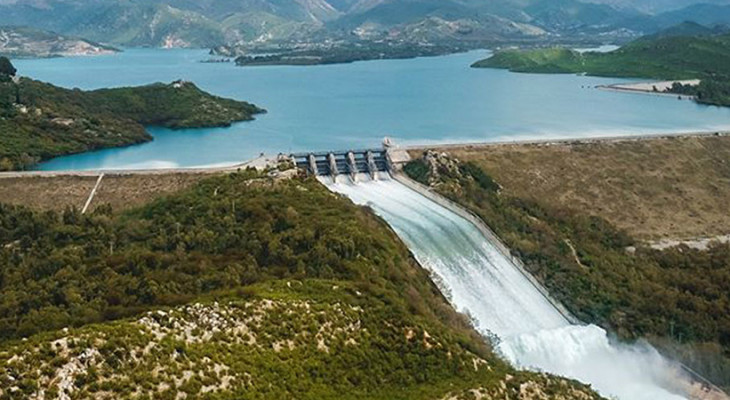
Khanpur Dam Spillway

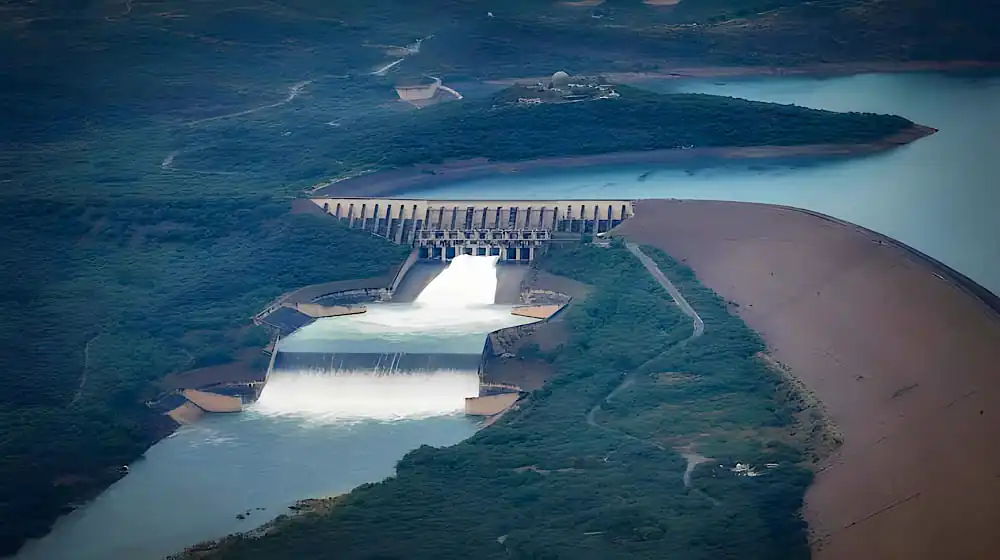
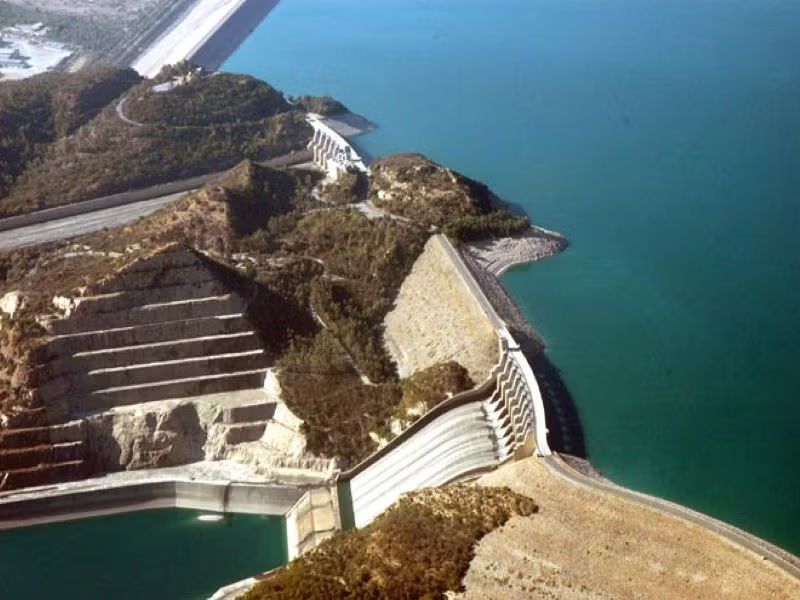
The Khanpur Dam spillway is one of the most important structural features of the dam. While many visitors come for recreation and adventure, the spillway highlights the dam’s engineering and plays a vital role in water management and safety.

What is the Spillway?

A spillway is a controlled channel that allows excess water to flow out of a reservoir when water levels rise beyond safe limits. At Khanpur Dam, the spillway helps regulate the reservoir’s capacity and prevents overflow that could damage the structure or surrounding areas.

Viewing the Khanpur Dam Spillway

Direct access to the spillway is often restricted for safety reasons, but visitors may view it from:

  • Elevated viewpoints around the reservoir
  • Designated observation areas
  • Roadside vantage points at a safe distance

Always follow local guidelines and avoid entering restricted zones.

Photography Opportunities

The spillway becomes especially impressive when water is flowing at full force.

Ideal conditions for photos:

  • After heavy rainfall
  • Clear daylight for sharp contrast
  • From elevated viewpoints for a wide-angle shot

Long-exposure photography can capture the smooth motion of cascading water.

Khanpur Dam Resort and Hotels

Khanpur Dam Resort

While many visitors explore Khanpur Dam as a day trip, staying overnight allows more time to enjoy the scenery, adventure activities, and peaceful atmosphere around the reservoir. Accommodation options range from basic guest houses to private resorts and organised camping experiences.

Khanpur Dam Resort Options

A few private facilities and lakeside setups operate near the dam, offering a resort-style experience for visitors who want comfort alongside adventure.

What Resorts Typically Offer

  • Rooms or huts with views of the lake or surrounding hills
  • On-site dining or BBQ arrangements
  • Activity packages including water sports or paragliding
  • Outdoor seating areas for relaxation

These resorts are often chosen by families, couples, and corporate groups looking for a short getaway close to nature.

Area Type of Accommodation Distance to Dam
Khanpur Town Guest houses, small hotels 10–15 minutes
Taxila Budget and mid-range hotels 30–40 minutes
Haripur Hotels and lodges 45–60 minutes
Islamabad Wide range of hotels About 1 hour

Staying in Islamabad provides the most comfort and dining options, while staying closer to Khanpur allows earlier access to activities.

Camping Near Khanpur Dam
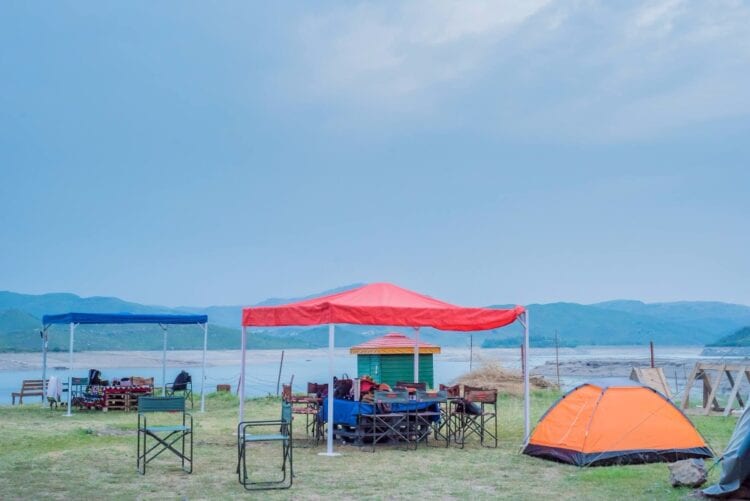
Camping Near Khanpur Dam

Camping is a popular alternative for adventure enthusiasts.

Camping Options Include

  • Organised camping trips by adventure clubs
  • Tented stays near designated safe areas
  • Group camping packages with meals and activities

Camping allows visitors to enjoy the night sky, early morning lake views, and a quieter environment after day tourists leave.

Travel Tips for Visiting Khanpur Dam

Safety Tips

  • Always wear life jackets during water sports
  • Choose certified operators
  • Avoid slippery rocks during the monsoon

Comfort Tips

  • Carry sunscreen and hats
  • Wear sturdy shoes
  • Bring extra water

Timing Tips

  • Arrive early on weekends
  • Avoid midday heat in summer
  • Check the weather before booking paragliding

Frequently Asked Questions

How far is Khanpur Dam from Islamabad?

The Khanpur Dam distance from Islamabad is about 45–50 km.

What activities are available at Khanpur Dam?

Visitors can enjoy water sports, paragliding, hiking, camping, boating, and photography.

Is paragliding available at Khanpur Dam?

Yes, Khanpur Dam Paragliding is a popular activity when weather conditions are suitable.

What is the best season to visit Khanpur Dam?

Spring and autumn provide the most comfortable weather.

Final Thoughts

Khanpur Dam offers a rare blend of natural beauty and high-energy adventure close to Islamabad. With its exciting water sports, scenic viewpoints, paragliding experiences, and relaxing picnic spots, it remains one of the top outdoor destinations in the region. Whether you’re looking for adrenaline or a peaceful lakeside escape, Khanpur Dam delivers both in one unforgettable setting.

For more informative blogs on topics like Daman-e-Koh, visit Chakor Blogs.

CategoriesDams Developments

Mangla Dam Pakistan: Present Challenges & Future 2025

Mangla Dam is more than concrete and rock, it’s a lifeline for Pakistan’s water and energy needs. Built on the Jhelum River in the 1960s, this engineering marvel has powered irrigation, generated clean electricity, and shielded millions from floods for decades. Today, it stands not only as a symbol of national progress but also as a reminder of the urgent need to manage water and energy resources wisely in a changing climate. 

Fast Facts & Key Specs

Feature Details
Location Jhelum River, near Mirpur (AJK) and Jhelum District, Punjab
Dam Type & Size Earth and rockfill embankment; ~147 meters high; ~3,140 meters crest length
Commissioning Completed in 1967 as part of the Indus Basin Project
Storage & Levels Original gross storage: ~5.9 MAF; Raised conservation level: 1242 ft; Dead storage level: 1050 ft
Power Generation 10 hydropower units; ~1,070 MW operational; ~1,310 MW planned with upgrades


History & Construction Timeline

The story of Mangla Dam begins in the 1950s, when Pakistan faced urgent challenges of water scarcity and irrigation management after the signing of the Indus Waters Treaty. To ensure secure and reliable water supplies, the project became part of the broader Indus Basin Replacement Works.

1950s–1960s: Planning and Launch

  • The dam was designed to harness the Jhelum River’s potential for irrigation and power generation.
  • Construction began in 1961, led by international engineers and local expertise, marking one of the largest development projects in Pakistan at the time.

Engineering Adaptations

  • Mangla was built under a “design as you build” philosophy. Engineers adapted to on-site conditions such as sheared clays and included auxiliary works like the Jari Dam to stabilize the system.
  • These adaptations allowed the project to maintain momentum and reach completion ahead of schedule.

Completion in 1967

By 1967, Mangla was fully operational, ranking as one of the largest earth and rockfill dams in the world.

mangla Dam Hydro Powerplant

Initial features included:

    • Four main embankments forming the dam structure.
    • Main and emergency spillways for safe water discharge.
    • Five tunnels constructed for water conveyance and power generation.
    • A staged powerhouse designed for phased installation of turbines and expansion over time.

Mangla Dam’s construction not only transformed Pakistan’s irrigation and energy landscape but also set a benchmark in large-scale engineering for the region.

The Raising Project (2004–2009)

By the early 2000s, Mangla Dam had lost a significant share of its storage due to continuous sedimentation. This reduction threatened irrigation supplies, power generation, and flood protection. To overcome these challenges, the Mangla Dam Raising Project was launched between 2004 and 2009, marking one of Pakistan’s most ambitious water infrastructure upgrades.

Why It Was Carried Out

  • Sedimentation had reduced effective storage, undermining agricultural and energy needs.
  • Flood routing capacity was compromised, raising risks during high inflows.
  • Pakistan’s growing energy demand called for restoring and expanding hydropower potential.

Key Works Undertaken

The project raised the dam’s height by 30 feet, which transformed its capacity and resilience. Major engineering works included:

  • Dam and dyke raising to increase reservoir volume.
  • Spillway throttling to manage higher water levels safely.
  • Construction of a control weir for better water regulation.
  • Foundation drainage and seepage control to strengthen long-term structural stability.

Outcomes Achieved

  • Restored lost storage and added ~2.9 million acre-feet (MAF) of new capacity.
  • Boosted annual energy benefits by approximately 644 GWh, enough to power millions of homes.
  • Enhanced flood routing efficiency, providing better protection for downstream communities.
  • Increased gross storage to ~7.49 MAF, about 27% higher than the original 1967 design.

At-a-Glance Metrics

  • Dam Height Increase: 30 feet
  • Additional Storage: ~2.9 MAF
  • Total Gross Capacity: ~7.49 MAF
  • Annual Power Gain: ≈644 GWh
  • Project Duration: 2004–2009
  • Investment Scale: Multi-billion rupees, one of the largest infrastructure undertakings of its time

Hydropower: Units, Upgrades & Planned Refurbishment

Mangla Dam is not only a water reservoir but also a cornerstone of Pakistan’s clean energy production. Its powerhouse plays a critical role in meeting the nation’s electricity demand.

Existing Setup

  • The dam is equipped with 10 Francis-type turbines.
  • Each unit ranges between 100–135 MW, operating under a rated head of about 295 feet.
  • After the raising project, the total installed capacity reached approximately 1,070–1,120 MW, making it one of Pakistan’s largest hydropower stations.

Ongoing & Planned Refurbishments

  • Refurbishment programs are underway to extend the lifespan of the existing turbines and improve efficiency.
  • Modernization of control systems, gates, and auxiliary equipment is being carried out to enhance safety and reliability.
  • Expansion concepts are under review to further increase generation capacity, leveraging the additional water head created by the raising project.

Long-Term Benefits

  • Sustained supply of renewable electricity to reduce reliance on fossil fuels.
  • Improved performance and reliability of the turbines under high sediment load conditions.
  • Contribution to Pakistan’s broader goals of energy security and climate resilience.

Irrigation Role & Flood Management

Mangla Dam has been central to transforming Pakistan’s water system from unpredictable flows to a regulated network that sustains agriculture across the Indus plain. Before its construction, farmers relied on seasonal fluctuations of the Jhelum River. With Mangla’s reservoir and controlled releases, irrigation became more reliable, boosting crop yields and ensuring water availability even in drier months.

Reliable Water for the Indus Basin

  • The reservoir provides dependable irrigation water to millions of acres of farmland.
  • Its regulated releases support wheat, rice, and cotton production, which form the backbone of Pakistan’s economy.
  • By acting as a buffer, the dam ensures year-round supply, reducing the dependency on monsoon rains.

Flood Moderation Role

  • Mangla is not only about storage and irrigation—it is also a major shield against floods.
  • A notable example was the 1992 floods, where the dam absorbed peak inflows and reduced downstream devastation by cutting flood peaks.
  • Controlled releases allow for “peak shaving,” which helps reduce the severity of floods along the Indus system.

2025 Context: New Challenges

  • In recent years, inflow volatility has increased, with some seasons bringing late or reduced river flows.
  • In 2025, filling delays highlighted the dam’s vulnerability to changing rainfall and snowmelt patterns.

Done View of Mangla dam & Resort

  • Coordination with the National Disaster Management Authority (NDMA) has become crucial. Real-time monitoring and early-warning systems are now used to balance water storage with flood risk, ensuring communities downstream remain protected while keeping enough water in reserve.

Sedimentation: Current Status, Risks & Engineering Options

One of the most pressing long-term challenges for Mangla Dam is sedimentation. Over time, silt and debris carried by the Jhelum River settle in the reservoir, reducing its effective storage and threatening both irrigation supply and hydropower generation.

Current Status

  • By 2010, measured deposition had already reduced storage by around 1.29 million acre-feet (MAF).
  • On average, the dam loses about 0.5% of its capacity each year, a trend that, if unchecked, will continue to erode its usefulness.

Risks from Sediment Advance

  • The sediment delta is gradually moving closer to the intake structures, raising the risk of blockage and reduced efficiency.
  • If it reaches critical points, it could severely impact turbine operations and irrigation outlets.

Engineering Options for Side-Pocket Storages

Mangla’s reservoir includes side pockets such as Poonch, Khud-Jari, and Kanshi. Over time, sedimentation may isolate these areas from the main pool. To utilize them effectively, engineers are considering long-term options such as:

  • Cutting channels to reconnect them with the main reservoir.
  • Tunnels or siphon systems to draw water.
  • Targeted dredging windows during low inflow periods to recover storage.

Downstream Morphology & Operational Timing

  • Increased sediment outflow can reshape riverbeds downstream, affecting canals and distributaries.
  • This raises the risk of canal siltation, making irrigation networks harder to maintain.
  • Operators often lower reservoir levels in February–March to flush sediments when inflows are low, but this strategy has limits.

Impact on Hydropower Systems

  • High sediment load increases turbine wear, reducing efficiency and raising maintenance costs.
  • Cooling systems and auxiliary equipment face extra stress during peak silt periods.
  • Contingency planning now includes advanced monitoring, improved turbine design, and predictive maintenance schedules to minimize risks.

Irrigation Role & Flood Management

Mangla Dam has been a game-changer for Pakistan’s irrigation system. Before its construction, farmers in the Indus basin had to depend on unpredictable river flows. With the dam in place, flows are regulated, and water is released according to demand. 

This shift from unregulated flows to controlled releases has brought greater reliability to agriculture across the plains. Millions of acres of farmland now benefit from timely irrigation, helping boost food production and ensuring water security throughout the year.

Regulated Releases for the Indus Basin

  • Provides consistent irrigation supplies across Punjab and Sindh.
  • Stabilizes cropping cycles for wheat, rice, and cotton.
  • Ensures water availability in dry months, reducing reliance on rainfall.

Flood Moderation Role

Mangla is also critical for flood control. By storing floodwaters and releasing them gradually, the dam reduces peak flows that would otherwise devastate downstream communities. 

A striking example was the 1992 flood, one of the worst in Pakistan’s history. Mangla played a vital role in peak shaving, absorbing massive inflows and cutting the scale of destruction. 

This flood moderation capacity remains one of its greatest contributions to national safety.

2025 Context: New Challenges

In 2025, Mangla faced inflow volatility due to shifting rainfall and snowmelt patterns. The dam’s filling was delayed despite monsoon rains, highlighting the vulnerability of storage systems under climate change. 

Coordination with the National Disaster Management Authority (NDMA) has become central, with early-warning systems and real-time monitoring in place. 

Operators now balance the need for storage with flood-risk reduction, making Mangla an active player in disaster management as well as irrigation.

Sedimentation: Current Status, Risks & Engineering Options

Sedimentation is one of the biggest threats to the long-term effectiveness of Mangla Dam. The Jhelum River carries heavy silt, which settles in the reservoir and gradually reduces its capacity.

Current Status

  • By 2010, Mangla had already lost about 1.29 million acre-feet (MAF) of capacity to silt deposits.
  • On average, the reservoir loses around 0.5% of capacity each year.
  • This continuous buildup reduces both irrigation water availability and hydropower efficiency.

Risks from Sediment Delta Advance

The sediment delta has been moving closer to the dam’s intake structures. If it reaches critical points, it could block or damage the intakes, disrupting power generation and irrigation flows. Managing this advance is essential to keep the system functional.

Side-Pocket Storage Challenges

Mangla has several side pockets such as Poonch, Khud-Jari, and Kanshi. Over time, sedimentation can cut these pockets off from the main reservoir, reducing usable capacity. Engineers have explored solutions like:

  • Cutting channels to reconnect side pockets.
  • Building tunnels or siphons to draw water from isolated zones.
  • Targeted dredging during low inflow seasons to recover capacity.

Downstream Morphology & Siltation Risks

Sediment released from Mangla can alter riverbeds downstream. This has implications for irrigation canals, which may experience higher siltation rates, raising maintenance costs. 

Operators often schedule drawdowns in February and March to flush sediments, but this approach has its limits and cannot fully offset long-term deposition.

Impact on Hydropower Systems

High sediment loads also affect the powerhouse.

  • Turbine wear: Abrasive silt particles erode turbine blades, reducing efficiency.
  • Cooling systems: Sediment clogs and stresses auxiliary equipment, raising the risk of breakdowns.
  • Contingency planning: Modern approaches now focus on predictive maintenance, upgraded turbine designs, and real-time monitoring of sediment flow to protect hydropower output.

Social & Environmental Dimensions

Mangla Dam is more than an engineering project, it has shaped communities, livelihoods, and landscapes for over half a century. While it brought irrigation, power, and flood protection, it also came with major social and environmental trade-offs.

Original Displacement (1960s)

When Mangla Dam was first built, nearly 81,000 people were displaced from their ancestral lands. Approximately 67,800 acres of land were acquired to create the reservoir. The scale of resettlement was unprecedented at the time and left lasting social impacts. 

Families lost farmland, villages were submerged, and entire communities were forced to adapt to new environments. These experiences provided lessons in planning and managing resettlement for future projects in Pakistan.

Raising Resettlement (2000s)

The Mangla Raising Project (2004–2009) required another round of displacement. About 63,000 more people were resettled as the higher dam levels submerged additional areas. 

To address this, the government developed New Mirpur City along with four model towns, complete with roads, schools, and basic services. A structured compensation package was introduced for landowners and affected families. 

Notably, resettlement and rehabilitation costs formed a significant portion of the project budget, showing how central social issues had become in large-scale infrastructure planning.

Changing Livelihoods on the Rim

Over time, life around Mangla has evolved. Communities have developed new economic activities, including:

  • Fisheries in the reservoir, creating both food supply and income sources.
  • Brick kilns and construction-related industries benefiting from urban expansion.
  • Vocational training programs to help younger generations shift into new professions.

These shifts reflect the resilience of local populations as they adapt to a transformed social and environmental landscape.

Operations in 2025: Water Stress vs. Flood Risk

In 2025, Mangla Dam once again proved its importance but also revealed new vulnerabilities under climate stress and water scarcity.

Dead-Level Episode (March 2025)

In March 2025, the reservoir dropped to its dead storage level of 1,050 feet, halting water releases and curtailing hydropower production. This rare event highlighted how reduced inflows and shifting weather patterns can put extreme stress on Pakistan’s water and power systems. Farmers faced irrigation shortages, while electricity generation was cut back, increasing reliance on costlier energy sources.

Monsoon 2025: Filling Delays

Despite heavy rains during the monsoon season, Mangla’s filling remained slow. Erratic inflows and unusual timing of rainfall disrupted normal reservoir operations. Storage levels stayed below targets, limiting both irrigation reserves and electricity generation headroom. This underscored the growing challenge of balancing water supply with changing climate conditions.

Mangla

Real-Time Risk Management

To address these risks, NDMA and WAPDA coordinated closely during 2025. Flood advisories for the Jhelum River were issued in real time, and multi-agency teams created readiness checklists for downstream communities. This included early warning systems, pre-evacuation planning, and tighter monitoring of reservoir levels. These steps show how Mangla’s operations are now as much about disaster risk management as they are about irrigation and hydropower.

Rehabilitation & Modernization Programs

Mangla Dam, now over five decades old, requires continuous upgrades to remain efficient and safe. Rehabilitation and modernization programs have been launched with the dual goal of extending the dam’s operational life and boosting energy output.

Goals of Rehabilitation

  • Extend the dam’s service life well into the next century.
  • Increase electricity generation by up to 90 MW, adding around 750 GWh of clean energy annually.
  • Enhance irrigation reliability for millions of farmers.
  • Improve safety systems to cope with changing hydrological conditions and seismic risks.

Priority Focus Areas

  • Unit refurbishment: Overhaul of turbines and generators to restore efficiency.
  • Gate and hoist reliability: Upgrades to spillway gates and control systems for secure water management.
  • SCADA systems: Modern digital controls for real-time monitoring and automation.
  • Sediment monitoring: Installation of advanced tools to track sediment inflow and reservoir health.
  • Safety instrumentation: Enhanced sensors and monitoring devices to ensure structural integrity and early warning in case of stress events.

These modernization efforts are designed not only to secure Mangla’s future performance but also to align it with modern sustainability and safety standards.

Tourism, Local Economy & Heritage

Mangla is more than a water and energy asset—it has also become a hub for tourism and local economic activity.

  • Recreational Value: The vast Mangla Lake is a popular destination for boating, fishing, and water sports. Its scenic setting attracts visitors from nearby cities and beyond.

Mangla dam tourist spot

  • Local Economy: Tourism and hospitality industries in Mirpur and Jhelum benefit directly, with hotels, restaurants, and small businesses thriving around the reservoir.
  • Heritage Sites: The region hosts historical and cultural attractions, including remnants of old Mirpur submerged under the lake, which remain a point of identity for locals.
  • Visitor Highlights: District portals regularly promote Mangla as a tourism gem, emphasizing eco-tourism, recreational development, and weekend getaways for families.

Tourism has turned Mangla into not just an engineering landmark, but also a symbol of cultural and economic vitality.

2025–2040 Challenges & Strategy Roadmap

Looking ahead, Mangla Dam faces significant challenges that require proactive strategies to ensure long-term sustainability.

Water Balance & Climate Variability

  • Increasing demand for irrigation water is placing stress on limited resources.
  • Climate variability has made inflows unpredictable, disrupting filling schedules.
  • Strategies now emphasize multi-year storage planning and careful release protocols to balance supply and demand.

Sediment Management

  • Adaptive operational rules are being developed to manage minimum drawdown levels.
  • Engineering options include connecting side pockets like Poonch and Kanshi with channels or tunnels to maintain usable storage.
  • Targeted dredging windows during low-inflow periods are under consideration to recover lost capacity.

Asset Health

  • Protecting turbines during high-silt inflows is a growing concern.
  • Cooling system redesigns are being studied to improve resilience against clogging and wear.
  • Predictive maintenance programs are being developed to anticipate failures and extend turbine life.

Community & Resettlement Stewardship

  • Long-term stewardship involves supporting communities displaced during both the original project and the raising.
  • Focus areas include land compensation, housing development, and livelihood restoration.
  • Grievance redress mechanisms and phased completion of resettlement towns remain ongoing priorities.

Policy, Governance & Data Transparency

Mangla Dam’s operation is overseen by a web of institutions, each playing a critical role:

  • WAPDA manages dam operations and hydropower production.
  • IRSA (Indus River System Authority) regulates water distribution across provinces.
  • NDMA coordinates disaster risk management and flood response.
  • Provincial irrigation departments oversee regional irrigation supply and infrastructure.

Transparency has become increasingly important. Public dashboards now provide real-time reservoir levels (maximum 1242 ft, dead level 1050 ft), while routine updates are shared through multiple platforms to improve communication with stakeholders and communities

For more informative blogs visit Chakor blogs.

FAQs

Q1. What is Mangla Dam’s current capacity and conservation level?

Mangla’s current gross capacity is about 7.49 MAF, with a conservation level of 1242 feet and a dead storage level of 1050 feet.

Q2. Why did Mangla hit dead level in March 2025?

A combination of low inflows, erratic rainfall, and higher water demand caused the reservoir to fall to dead storage, halting releases and reducing hydropower output.

Q3. How does sediment threaten turbines and canals?

Sediment advances toward intakes, reducing water flow and efficiency. Downstream, excess silt increases canal blockages, while abrasive particles wear down turbine blades and auxiliary systems.

Q4. What did the raising project achieve?

The 2004–2009 raising project increased dam height by 30 feet, restoring lost storage and adding ~2.9 MAF. It also improved flood routing and enhanced hydropower generation by an additional ~644 GWh annually.

Q5. How many people were resettled and how?

The original dam displaced about 81,000 people in the 1960s. The raising project displaced another 63,000, resettled in New Mirpur City and surrounding towns with compensation and planned infrastructure.