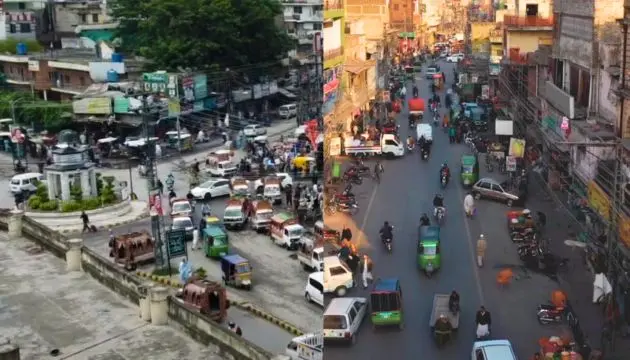
Federal Minister Hanif Abbasi unveils digital ticketing, freight expansion, and infrastructure upgrades to revive Pakistan Railways.
Islamabad: FederalMinister for Railways Hanif Abbasi announced on Sunday that 11 passenger trains will be outsourced as part of Pakistan Railways’ wider modernization agenda aimed at improving efficiency, services, and revenue.
Speaking to journalists, Abbasi said the state-run enterprise, long criticized for stagnation, is now entering a phase of transformation. Ticketing has already been digitized, allowing passengers to book through 16 banks, Easypaisa, and Ufone Bank. To tackle fare evasion, ticket checkers will soon be equipped with handheld devices, a move expected to save nearly Rs1 billion annually.
The ministry has also shifted to an e-office system to streamline internal operations. Freight operations, Abbasi emphasized, will be prioritized to generate additional revenue that will be reinvested into passenger facilities.
On the infrastructure front, work is progressing on the 480-kilometer Rohri–Karachi track upgrade, with support anticipated from the Asian Development Bank. Further projects are also being coordinated with provincial governments in Sindh, Punjab, and Balochistan.
Abbasi reiterated that these reforms are intended to restore public confidence in Pakistan Railways while aligning the sector with modern, sustainable practices.
One of the most essential things to avoid fraud, disputed titles, and forged documentation in Pakistan is to check property ownership. In 2025, digitised land record systems in Punjab, Sindh, and Khyber Pakhtunkhwa enable buyers, sellers, and overseas Pakistanis to quickly, securely, and without unnecessary visits to government offices perform an online property check. For complete details and step-by-step guidance, keep reading.
Why Property Ownership Verification Matters?
Real estate in Pakistan is booming, but so are scams. Fake registries, double selling, and disputed inheritances are still common. This is why knowing how to check property ownership in Pakistan online is crucial. With digital land record systems now active in Punjab, Sindh, and Khyber Pakhtunkhwa, you can confirm details of your property without relying solely on agents or middlemen. Now with technology, a few clicks can save you millions.
How to Check Property Ownership in Pakistan Online
Here’s a step-by-step guide to make your property check online stress-free:
1. Check Property Ownership in Punjab – Land Records Management Information System (LRMIS)
Visit the official Punjab Land Records Authority (PLRA) portal.
Enter the property number or your CNIC for a property check online.
Instantly view details like the owner’s name, property type, and location.
This system is highly reliable and frequently used by buyers, sellers, and banks.
2. Check Property Ownership in Sindh – Board of Revenue Sindh (BOR)
In order to check property ownership online in Sindh, visit the Sindh Board of Revenue’s website.
Select your district, taluka, and deh (village/area).
Enter survey number or property details.
Get ownership records instantly.
This feature is especially helpful for Karachi residents dealing with complex urban land issues.
3. Khyber Pakhtunkhwa (KP) – Land Records Portal
KP has also digitised its land records, allowing citizens to check property ownership details online.
Log in to the KP Land Records portal.
Use CNIC or property details to verify ownership.
4. Overseas Pakistanis – NADRA -Linked Services
If you’re abroad and wondering, “How to check property ownership online in Pakistan?” Good news! Some provincial land systems are linked with NADRA databases, making it easier for overseas Pakistanis to verify properties from anywhere in the world.
How to Check Legal Property Online: Key Tips
Doing a property online check is not just about finding an owner’s name. To avoid future disputes, keep these tips in mind:
Always verify ownership through official portals, not just photocopied documents.
Match the CNIC details of the seller with online property records.
Cross-check mutation entries (intiqal) and registry numbers.
For commercial properties, use the best legal property check online tools provided by provincial land authorities.
Remember, an extra 10 minutes of verification can protect your investment for decades.
Benefits of Online Property Verification
Still wondering why you should learn how to check property ownership online? Here are the big wins:
Transparency: No room for fraud when ownership details are just a click away.
Accessibility: Whether in Karachi, Lahore, or abroad, anyone can do a property check online in Sindh or Punjab with ease.
Time-Saving: No more running from office to office.
Security: With blockchain-backed services (like in Punjab), data is tamper-proof.
The Future of Property Management in Pakistan
As digital platforms expand, property verification is becoming part of a larger ecosystem. Today, you can not only check property ownership online but also manage your rentals, pay property taxes, and even use property management software.
Companies are already offering services that combine property-ownership verification with digital property-management tools, making life easier for landlords, buyers, and tenants alike.
Chakor Ventures: Check Property Ownership, Simple and Secure Method
Instead of panicking over fake files, Ali logged into the Punjab Land Records portal, entered the seller’s CNIC, and instantly confirmed ownership, saving himself from a risky deal. In 2025, real estate in Pakistan is digital-first.
Whether you need to check a property online in Sindh, Punjab, or KP, the process is simple and secure if you use the right portals. Before signing any deal, always verify ownership because in real estate, trust begins with proof.
At Chakor Ventures, we make this journey easier by guiding you through every step of property ownership and management, ensuring your investments are safe, secure, and profitable.
FAQs | Check Property Ownership
How can I check property ownership online in Pakistan? You can verify ownership through provincial portals like Punjab Land Records Authority (PLRA), Sindh Board of Revenue, or KP’s land record systems by entering the seller’s CNIC or property details.
Is online property verification available in all provinces? Yes, most provinces, including Punjab, Sindh, and KPK, have digital land record systems, making property checks online easy and secure.
What documents are needed for an online property check? Typically, you need the seller’s CNIC or property number to confirm legal ownership on the respective land record portals.
Why should I use Chakor Ventures for property verification? Chakor Ventures guides investors through online verification, ownership checks, and property management to ensure your investments are safe, secure, and profitable.
It involves overseeing all operational aspects of a real estate investment, from tenant screening and rent collection to handling repairs, legal compliance, and financial reporting. Whether you’re in Lahore, Islamabad, or Faisalabad, hiring one of the top companies in Pakistan can save you from headaches and maximize returns.
Why Property Management Matters in Pakistan?
A trustworthy property manager brings professionalism, transparency, and peace of mind. Here’s how they help:
Time-Saving and Stress Reduction
Property managers handle rent collection, repairs, tenant queries, and paperwork, freeing you from daily hassles so you can focus on other priorities.
Higher-Quality Tenants and Faster Rentals
With professional marketing and strict tenant screening, they fill vacancies quickly and secure reliable renters who pay on time and care for your property.
Legal and Regulatory Compliance
Experts stay updated on property laws, rental agreements, and tax rules, keeping you compliant and protecting you from costly disputes or penalties.
Pakistan’s real estate sector still battles unethical listings and tedious paperwork. A professional manager cuts through this noise and reduces risks.
What Do Property Management Companies Do?
Here’s a breakdown of core services:
Task
Role
Maintenance and Repairs
Coordinate inspections and trustworthy contractors.
Lease Agreements and Disputes
Draft and enforce lease terms; resolve landlord-tenant issues.
Rent Collection and Financial Reporting
Ensure timely payments and transparent financial tracking.
Marketing and Tenant Placement
Promote vacancies and attract quality tenants fast.
How Technology Enhances Property Management in Pakistan
Just like online banking has replaced the need to visit a branch, is evolving with digital tools that simplify operations.
Globally, leading platforms like AppFolio and Buildium provide tenant portals, automated rent collection, maintenance tracking, and accounting integrations.
Advanced solutions such as Yardi and MRI Software serve larger portfolios with features like analytics and lease automation.
In Pakistan, homegrown tools are also making an impact. Solutions like e-Land, a cloud-based property management software, are gaining traction by offering landlords and managers streamlined operations tailored to local needs.
This digital shift is transforming it into a faster, smarter, and more transparent process.
Choosing the Best CRM and Software
When selecting the best commercial property management software or the best CRM for it, consider:
Portfolio size: SMBs benefit from AppFolio or Buildium; large portfolios may need Yardi or MRI.
Usability: Intuitive interfaces mean fewer headaches.
Integration: Seamless linking with accounting systems and tenant portals matters.
Pricing: Compare tiers and avoid hidden fees.
Real-Life Scenario: How Property Management Works
Let’s say you invest in a Lahore apartment. You hire a property management firm. They:
Vet tenants via background checks.
Draft a legal lease and collect a security deposit.
Implement the software to automate rent reminders.
Schedule quarterly inspections and document the maintenance work.
Provide monthly financial statements and tax-ready reports.
Your property runs efficiently, your tenants stay happy, and your bottom line grows.
Chakor Ventures: Your Partner in Smarter
In Pakistan’s evolving real estate market, it is not a luxury but a necessity. From handling tenants and maintenance to using advanced software, the right support ensures your investments remain secure, compliant, and profitable.
At Chakor Ventures – the best real estate developer in Pakistan, we go beyond property development to help you manage smarter, making your real estate journey stress-free, sustainable, and rewarding. A smart choice today with Chakor Ventures means steady passive income tomorrow.
FAQs
What does property management involve? It covers tenant placement, rent collection, maintenance, legal compliance, and financial reporting for real estate.
Why hire a company? They save time, reduce vacancy, maintain property value, and ensure legal and financial oversight of your investment.
Which software is best for it? For small to mid-sized portfolios, consider AppFolio or Buildium. For large enterprises, Yardi or MRI Software offer advanced analytics and automation.
Are there local software solutions in Pakistan? Yes, tools like e-Land offer localized cloud-based property and landlord management solutions tailored for Pakistan’s market.
Rising inflation, monsoon rains, and design hurdles push back completion of city’s flagship road project.
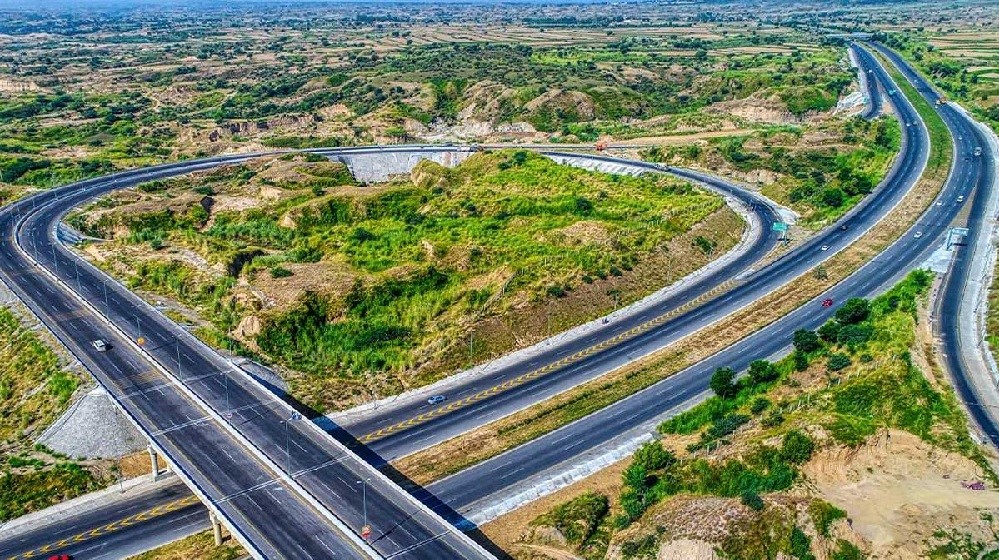
Rawalpindi: The much-awaited Rawalpindi Ring Road project is facing another major setback, with its December 2025 completion deadline now unlikely to be achieved. Officials confirmed that inflation, soaring material costs, and heavy monsoon rains have slowed progress and pushed project expenses significantly higher.
Initially budgeted at PKR 32.9 billion, the project cost is now projected to rise by 40–50%. Nearly 70% of the 38.3-kilometer stretch has been completed, but continuous rainfall in recent weeks has hindered construction. Authorities plan to submit a revised PC-I to adjust for escalating costs, which will be reviewed by the Central Development Working Party (CDWP) and later forwarded to the Executive Committee of the National Economic Council (Ecnec) for approval.
Another challenge is linking Thalian traffic to the motorway, where congestion remains unresolved. While the National Highway Authority (NHA) intends to expand lanes, its scheme has yet to progress. To ease pressure, the Frontier Works Organization (FWO) has volunteered to finance a one-kilometer merging road itself.
Despite cost hikes and delays, officials emphasized the project’s priority status, highlighting its role in reshaping regional connectivity through five planned interchanges at Baanth, Chak Beli Khan, Adiala Road, Chakri Road, and Thalian.
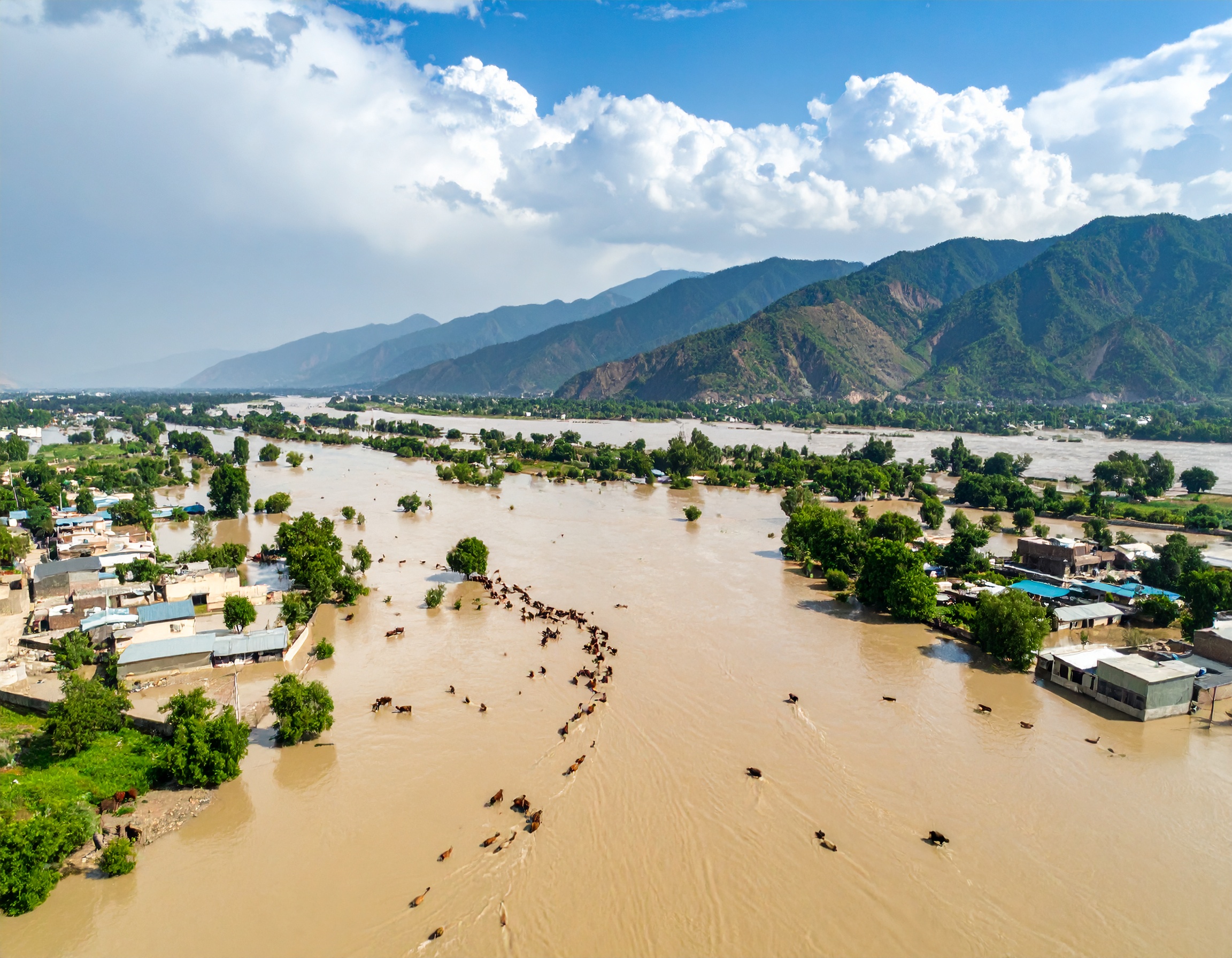
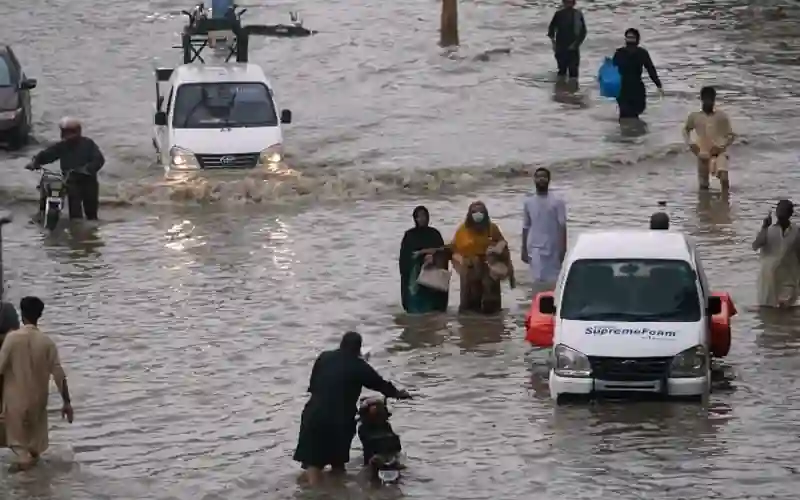
Urban flooding in Pakistan refers to water accumulation in cities due to rainfall exceeding the capacity of drainage systems. The urban flooding meaning differs from traditional river floods: it is primarily a man-made disaster exacerbated by unplanned development, waste mismanagement, and weak governance.
Globally, urban flooding is on the rise as climate change alters rainfall patterns. For Pakistan, this issue is magnified by rapid population growth and a lack of sustainable urban planning. Despite contributing less than 1% to global greenhouse gas emissions, Pakistan is ranked among the top five countries most vulnerable to climate change (World Bank, 2022).
Why Does It Matter in Pakistan?
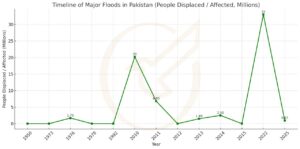
Urban flooding directly affects millions of citizens annually. It disrupts mobility, damages infrastructure, halts businesses, spreads waterborne diseases, and disproportionately impacts low-income communities. In Karachi alone, monsoon floods cause billions in economic losses each year. Nationwide, the 2022 Pakistan flooding displaced 33 million people, with urban centers among the worst affected (UN OCHA, 2022).
Thus, answering questions like “Which Pakistani city is vulnerable to urban flooding in monsoon?” becomes critical to adaptation planning. Karachi, Lahore, Rawalpindi, Peshawar, and Quetta are all high-risk zones.
Climate Change and Urban Flooding in Pakistan
Global and Regional Perspectives
Climate change has intensified the frequency of extreme weather events such as storms, cyclones, droughts, and floods. South Asia is particularly vulnerable, with erratic monsoon patterns and rapid glacial retreat in the Himalayas threatening millions of people.
According to Pakistan’s climate data and reports from the World Bank and NDMA:
Rising Temperatures
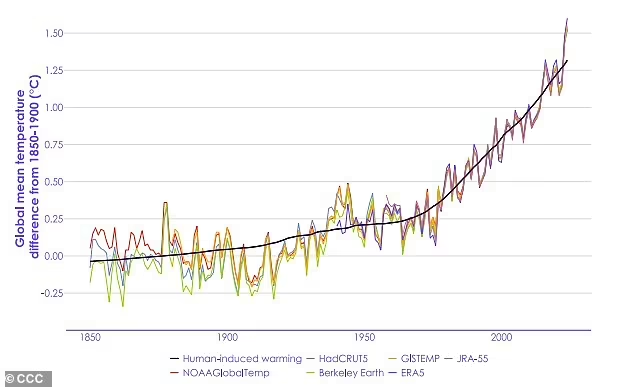
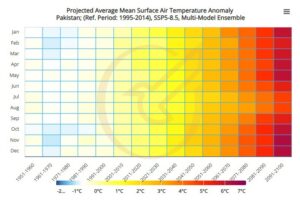
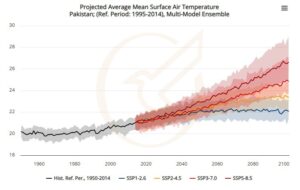
Pakistan’s average annual temperatures have risen by about 0.5°C since the 1960s (World Bank, 2022). While this figure may seem small, even minor shifts in long-term climate averages can have dramatic impacts.
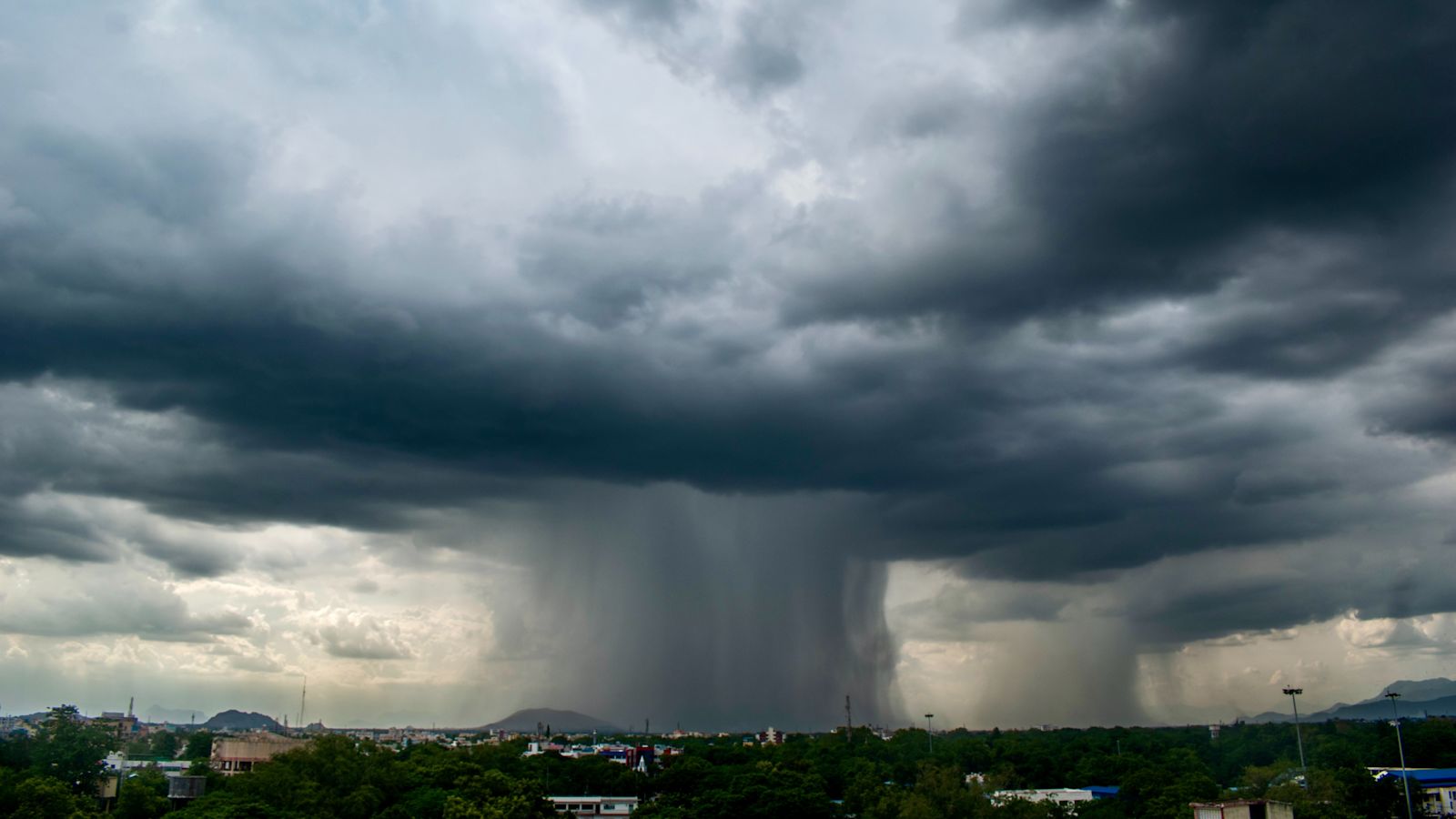
Higher temperatures increase evaporation rates, meaning more moisture is retained in the atmosphere, which later falls as intense, concentrated rainfall events — one of the leading drivers of flash flooding and cloud bursts in northern Pakistan.
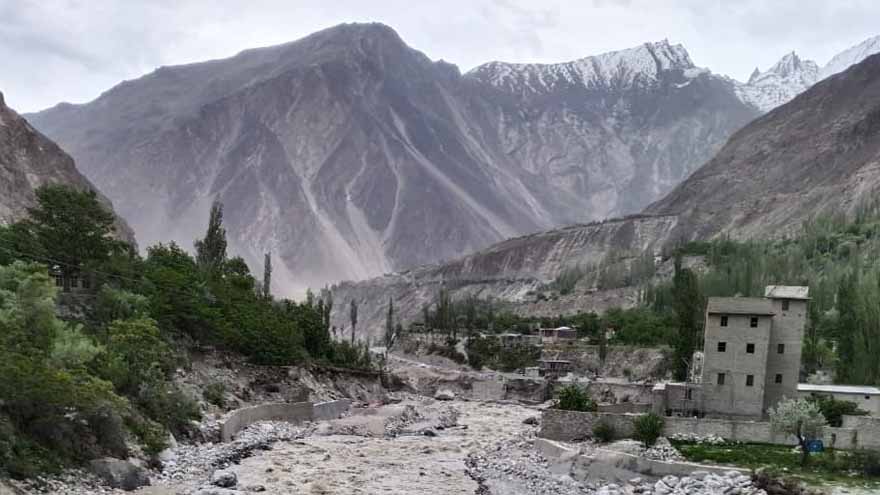
Heat also accelerates glacial melt in the Himalayas and Karakoram ranges, destabilizing natural reservoirs. This has already resulted in Glacial Lake Outburst Floods (GLOFs), which directly affect urban settlements downstream.
Projected Warming by 2050
By 2050, Pakistan’s average temperature is projected to rise by 1.3–1.5°C (World Bank, 2022; NDMA, 2025).
This warming will not be uniform: urban centers like Karachi, Lahore, and Multan are expected to face more frequent heatwaves, while high-altitude regions such as Gilgit-Baltistan will experience accelerated glacial retreat.
Warmer conditions also expand the breeding range of disease vectors, meaning urban flooding will coincide with heightened public health risks (dengue, malaria, cholera).
Erratic Rainfall Patterns Historically, Pakistan’s monsoon season followed a predictable cycle between July and September. However, rainfall patterns have become increasingly erratic and unpredictable in recent decades (NDMA, 2025).
Cities such as Karachi and Lahore often receive months’ worth of rain in just a few days, overwhelming drainage systems. For instance, in 2020, Karachi received nearly 484 mm of rain in 72 hours, the heaviest downpour in 90 years.
Conversely, some years bring below-average rainfall, leading to urban droughts and water shortages. This duality — excessive flooding in some years, scarcity in others — makes urban planning extremely challenging.
Increasingly Vulnerable Populations
Climate projections indicate that flood-exposed populations in Pakistan will increase by nearly 5 million people by 2040 (World Bank, 2022). This growth is driven not only by climate shifts but also by rapid urbanization.
Cities like Karachi, Lahore, and Rawalpindi have seen explosive growth in unplanned settlements, often constructed on or near natural floodplains.
These communities are disproportionately poor, lacking resilient housing or access to emergency services. Thus, when floods strike, they bear the brunt of displacement and economic loss.
The 2022 mega floods displaced 33 million people nationwide, with a significant portion in urban centers, demonstrating the scale of this vulnerability.
Which Region of Pakistan is Experiencing Severe Problems Due to Climate Change?
Sindh and Balochistan – Prone to Monsoon Mega Floods
Sindh and Balochistan sit at the downstream end of the Indus River Basin, making them natural catchments for monsoon floodwaters. When intense rainfall occurs in the north or along river tributaries, these provinces receive the overflow.
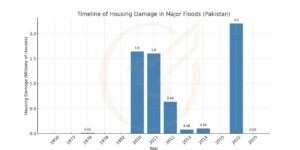
In the 2022 Pakistan flooding, Sindh was the hardest-hit region. According to the Post-Disaster Needs Assessment (PDNA), 8 million people were displaced in Sindh alone, with more than 2.2 million homes destroyed or damaged (NDMA/World Bank, 2022). Cities like Hyderabad, Sukkur, and Thatta were submerged for weeks, while Karachi narrowly escaped a similar fate due to emergency pumping and drainage measures.
In Balochistan, flooding in districts like Jaffarabad, Naseerabad, and Sohbatpur wiped out entire villages and destroyed road infrastructure, isolating communities for months.
These provinces are particularly vulnerable because:
Flat terrain slows drainage, leading to long-standing stagnant water.
High poverty levels make recovery slower, leaving millions trapped in cycles of vulnerability.
As climate change increases rainfall intensity, urban flooding in Sindh’s growing cities (Larkana, Khairpur, Hyderabad) will likely become more frequent and destructive.
Northern Pakistan hosts over 7,000 glaciers and more than 3,000 glacial lakes, out of which at least 33 are identified as “hazardous” (UNDP, 2022). Rising global temperatures are accelerating glacial melt, increasing the risk of Glacial Lake Outburst Floods (GLOFs).
A GLOF occurs when glacial lakes, formed from melting ice, suddenly burst through their unstable natural dams. The resulting torrents sweep through valleys, destroying homes, roads, and agricultural fields in minutes. These flash floods often extend downstream into urban settlements.
In Gilgit-Baltistan and Chitral (KP), GLOFs have repeatedly washed away bridges, roads, and hydropower installations, cutting off entire towns. The 2025 monsoon season brought multiple such incidents, where flash flooding disrupted the Karakoram Highway, isolating regions like Hunza and Ghizer.
Cloud bursts add another layer of risk. In August 2025, a severe cloud burst in Muzaffarabad (AJK) and Hunza (GB) killed dozens and destroyed multiple villages within minutes. These events are unpredictable, but their frequency has increased due to climate volatility.
The risk in northern Pakistan is unique: while the population density is lower than in Sindh, the strategic importance of infrastructure (KKH, CPEC routes, dams) means that damages have a ripple effect across the national economy.
Karachi and Coastal Regions – Rising Sea Levels and Storm Surges
Karachi, Pakistan’s largest city and economic hub, lies on the Arabian Sea coast, making it doubly vulnerable:
To monsoon rains and drainage failures (urban flooding Karachi).
To rising sea levels and cyclonic storm surges linked to climate change.
Over the past two decades, sea levels along Karachi’s coast have risen by 1.1 mm per year (UNDP, 2020). Combined with illegal coastal reclamation, this has increased the risk of permanent water intrusion into low-lying areas like Korangi, Ibrahim Hyderi, and Clifton’s coastal belts.
The loss of mangrove forests — Karachi has lost nearly 200 hectares in 12 years — has removed the city’s natural flood barrier, leaving it exposed to storm surges. Mangroves act as buffers, absorbing wave energy, but their destruction for land grabbing has left Karachi defenseless.
Climate models predict that by 2070–2100, over 1 million people in Pakistan could be exposed to coastal flooding annually (World Bank, 2022). Karachi will account for a major portion of this exposure.
Storm surges from tropical cyclones also pose a direct threat. The 2007 Cyclone Yemyin devastated Karachi’s coastal villages, killing hundreds. With warming seas, such events are projected to intensify.
Urban flooding in Karachi is therefore not only a product of poor drainage but also a compounding climate crisis where local governance failures intersect with global sea level rise.
Causes of Urban Floods in Pakistan in Recent Years
The causes of urban floods in Pakistan in recent years combine climatic, structural, and governance failures.
1. Cloud Bursts
A cloud burst is one of the most destructive forms of extreme rainfall. It occurs when a large amount of moisture in the atmosphere condenses rapidly and is released as torrential rain over a small geographical area in a very short time (often less than an hour). The rainfall intensity in a cloud burst can exceed 100 mm per hour, overwhelming any natural or man-made drainage system.
In Pakistan, cloud bursts have become increasingly frequent due to rising atmospheric temperatures and changing monsoon dynamics.
In Islamabad (2021), a sudden cloud burst released 116 mm of rain in under two hours, submerging major roads and sweeping away vehicles in sectors like E-11. Dozens of homes were damaged, and at least two people died in the flash flooding.
In Gilgit-Baltistan (2025), multiple cloud bursts in Hunza and Ghizer valleys triggered flash flooding and landslides, washing away sections of the Karakoram Highway (KKH). Entire villages were cut off, and casualties were reported in Muzaffarabad due to sudden torrents.
Cloud bursts are especially dangerous because they are almost impossible to predict and occur with little warning. Their frequency underscores how climate change is intensifying short-duration, high-intensity rainfall in Pakistan’s mountainous and urban regions.
2. Flash Flooding
Flash flooding occurs when intense rainfall or sudden glacial melt generates torrents of water that overwhelm rivers, streams, or urban drains within hours. Unlike seasonal river floods that develop over days, flash floods strike suddenly and are far more deadly.
The Babusar Top flooding incidents (2019, 2022) stranded thousands of tourists when roads were washed away by flash torrents. Vehicles were trapped, and landslides compounded the crisis.
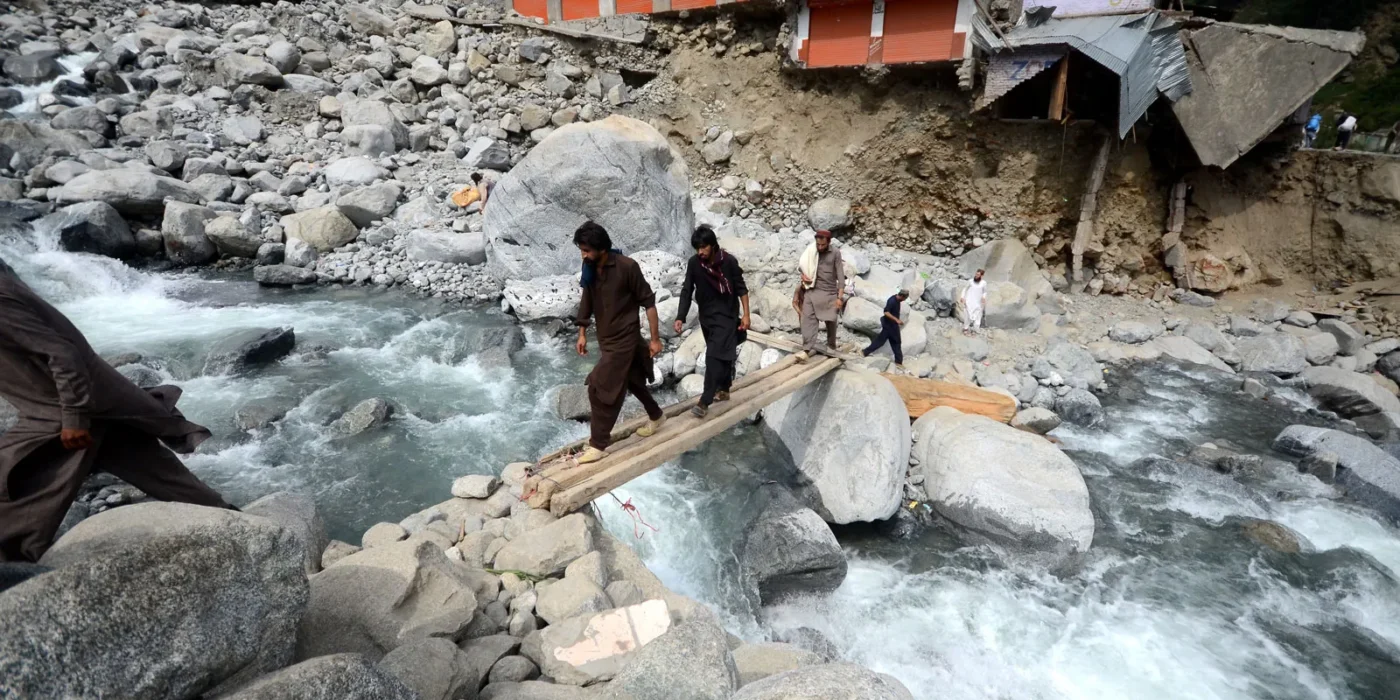
In Swat (2025), at least 18 people were swept away in the “Swat River Tragedy” when sudden surges, triggered by cloud bursts and snowmelt, struck riverside communities.
Flash flooding is particularly destructive in mountain valleys (KP, GB, AJK) where narrow gorges funnel water at tremendous speeds. In urban areas like Quetta and Peshawar, poorly maintained drains and unchecked construction worsen flash flooding after intense rainfall.
3. Inadequate Drainage Infrastructure
A core driver of urban flooding in Pakistan is the failure of drainage systems to keep pace with rapid urbanization.
Karachi’s sewerage network, much of which dates back to the British colonial era, was originally designed for a population of around 2–3 million. Today, Karachi has over 20 million residents, but its drainage system has not been expanded proportionately.
The city relies on nullahs (stormwater drains) to carry rainwater into the Arabian Sea. However, these are chronically clogged with plastic waste, debris, and sewage. When monsoon rains arrive, the nullahs overflow, inundating low-lying neighborhoods like Korangi, Saddar, and DHA Phase IV.
In August 2020, when Karachi received 484 mm of rain in three days, the city’s infrastructure collapsed. Electricity breakdowns lasted days, businesses shut down, and thousands of homes were inundated.
Lahore, Faisalabad, and Rawalpindi also face drainage problems, though on a smaller scale. The common issue is that stormwater drains are used for sewage disposal, creating chronic blockages that exacerbate urban flooding.
4. Encroachments
Encroachments on waterways represent one of the most visible human-made contributors to urban flooding.
In Rawalpindi, the historic Nullah Lai has become a dumping ground for waste and is lined with illegal settlements. Each monsoon, heavy rainfall turns Nullah Lai into a raging torrent, flooding adjacent neighborhoods.
In Karachi, the Gujjar Nullah, Mehmoodabad Nullah, and Orangi Nullah — essential for stormwater drainage — have been narrowed and blocked due to encroachments by housing colonies, shops, and even government-sanctioned projects.
Encroachment reduces the carrying capacity of drains, leading to overflow during even moderate rainfall. Although anti-encroachment drives have been launched in Karachi and Rawalpindi, they remain politically sensitive, as thousands of poor families live along these nullahs. This creates a governance dilemma: removing encroachments is essential for flood management, but it risks humanitarian backlash if not paired with resettlement programs.
5. Deforestation and Mangrove Loss
Forests and mangroves are natural barriers against flooding. They absorb rainfall, stabilize soil, and reduce runoff. Unfortunately, Pakistan suffers from one of the highest deforestation rates in Asia.
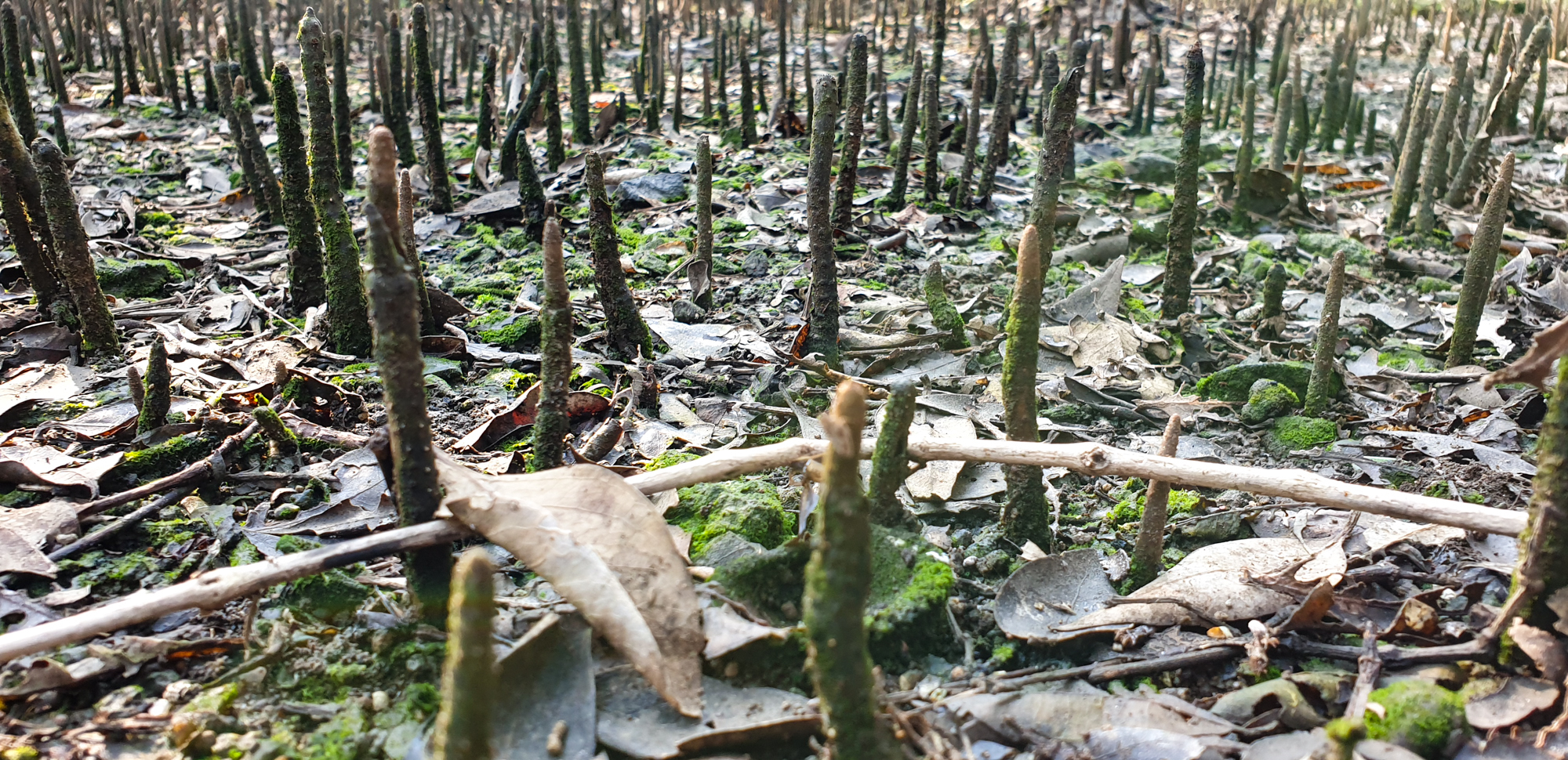
The roots of mangroves, poking through swamp mud, serve as breeding areas for fish.
Nationwide, forest cover is only 4.5%, far below the global average of 31%. In KP and GB, rapid tree cutting for timber and fuelwood has accelerated soil erosion, increasing the risk of flash floods and landslides in valleys.
In Karachi, mangrove forests along the coast have been systematically destroyed due to land grabbing, industrial expansion, and pollution. According to local climate reports, the city has lost nearly 200 hectares of mangroves in just 12 years.
This loss weakens Karachi’s natural defense against storm surges and tidal flooding, leaving coastal settlements like Ibrahim Hyderi increasingly exposed.
The destruction of forests and mangroves not only worsens flooding but also undermines biodiversity, fisheries, and livelihoods, creating a cascading socio-economic impact.
6. Unplanned Urbanization
Perhaps the most long-term driver of urban flooding in Pakistan is unplanned urbanization.
Cities like Lahore and Karachi have expanded without effective zoning or enforcement of building regulations. Wetlands, floodplains, and agricultural lands have been converted into housing colonies and shopping plazas.
Lahore’s DHA and Bahria Town expansions have replaced natural water retention zones with concrete. This has reduced groundwater recharge and increased surface runoff, overwhelming drainage during monsoon rains.
In Karachi, unregulated settlements have mushroomed along drainage channels, nullahs, and even on reclaimed land near the sea. As a result, when rainfall occurs, the water has nowhere to percolate and accumulates rapidly, causing urban flooding.
Urban planning experts warn that Pakistan’s current development model is “water-blind” — it does not consider natural water flows, stormwater management, or climate resilience. Unless planning priorities change, unplanned urbanization will continue to amplify the severity of floods.
Historical Overview of Major Urban Floods in Pakistan
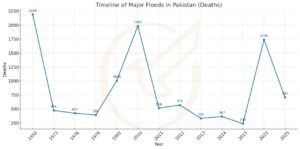
Major urban floods in Pakistan reveal a recurring cycle of devastation:
Year
What happened
Affected Provinces
Affected Areas
Deaths
People affected
Housing damage
Crops / Land
Roads / Bridges
1950 (monsoon)
Major Indus basin flooding across provinces
Undocumented
Undocumented
2,190
—
—
17,920 km² flooded
—
1973 (Aug–Sep)
Very large Indus flood
Punjab & Sindh (Indus main stem)
Historic peak flooding on the Indus between Guddu–Sukkur in 1976; 1973 & 1978 also large Indus events inundating lower Indus plains.Country InspirationADB
474
—
—
41,472 km² flooded
—
1976 (Jul–Sep)
Extreme Indus flood
Punjab & Sindh (Indus main stem)
Historic peak flooding on the Indus between Guddu–Sukkur in 1976; 1973 & 1978 also large Indus events inundating lower Indus plains.Country InspirationADB
425
~1.7 million
11,000 houses damaged (est.)
~8 million ha inundated; 18,390 villages
—
1978 (monsoon)
Widespread river flooding
Punjab & Sindh (Indus main stem)
Historic peak flooding on the Indus between Guddu–Sukkur in 1976; 1973 & 1978 also large Indus events inundating lower Indus plains.Country InspirationADB
393
—
—
30,597 km² flooded; 9,199 villages
—
1992 (7–11 Sep)
“Super Flood” of Jhelum/Chenab/Indus
AJK & northern Punjab (Jhelum/Chenab)
Worst along Jhelum/Chenab corridors in AJK & upstream Punjab (e.g., around Sialkot–Gujranwala belt); widespread landslides/embankment failures reported. (district examples representative of the corridor; primary source speaks to the corridor and provinces)
Buner — Pir Baba, Gokand, Daggar; Swat; Bajaur — Salarzai; Shangla, Mansehra, Battagram, parts of Lower Dir and Abbottabad.Dawn+1 AJK (Muzaffarabad/Neelum) and GB (Hunza, Ghizer, Gilgit, Baltistan corridor) Nasirabad / Sucha Nullah cloudburst killed members of the same family; wider flash flooding around the state capital.DawnPakistan TodayAaj English TV Hunza (Gojal / Gulmit, Morkhun) — KKH (Karakoram Highway) washed out/blocked in sections; thousands stranded; power lines near Sost affected. Gilgit District — cloudburst impacts in Haramosh Valley; Naltar Highway damaged.Dawn Baltistan side — Baltistan Highway bridge damage; Astak/Astore road blockages. Ghizer, Ghanche, Skardu, Astore, Hunza, Diamer — multiple valleys marooned; KKH closures compounded isolation. Ghizer (Ghazar) — at least 10 fatalities in one incident; KKH repeatedly disrupted by slides/floods.
707 (cumulative)
967 injured
~2,938 houses damaged (1,012 full / 1,926 partial); 1,108 livestock
—
~461 km roads, ~152 bridges damaged
Case Study 1: Karachi Flooding (2020)
In August 2020, Karachi experienced its worst urban flooding in nearly a century. The city recorded 484 mm of rainfall in just three days, the heaviest downpour in 90 years (Pakistan Meteorological Department, 2020).
Infrastructure Collapse: Entire districts such as DHA, Korangi, Saddar, and PECHS were submerged under several feet of water. With stormwater drains and sewers choked by garbage and encroachments, roads turned into rivers.
Power and Transport Breakdown: Karachi Electric’s grid collapsed, leaving millions without electricity for up to four days. Mobile networks, internet services, and public transport were crippled, isolating residents.
Economic Losses: Industrial estates in Korangi and SITE were paralyzed, costing billions in lost production and exports. Informal workers such as street vendors and rickshaw drivers lost their livelihoods overnight.
Health Impacts: Stagnant water created breeding grounds for dengue and malaria, while sewage mixing with floodwater triggered gastrointestinal illnesses.
Case Study 2: Pakistan Flooding 2022
The 2022 floods in Pakistan were among the worst climate disasters in recent global history. Triggered by record-breaking monsoon rains combined with accelerated glacial melt, they inundated one-third of the country.
Humanitarian Crisis: According to UN OCHA, 33 million people were affected, with 8 million displaced across Sindh, Balochistan, South Punjab, and Khyber Pakhtunkhwa. Over 1,700 people died and thousands were injured.
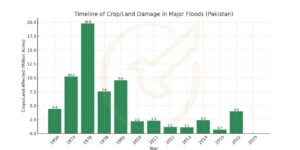
Economic Impact: Damages and losses were estimated at $30–40 billion, wiping out years of economic progress. The agriculture sector was devastated: over 4 million acres of farmland were destroyed, along with cash crops like cotton and rice, leading to food shortages and inflation.
Urban Devastation: Cities such as Hyderabad, Sukkur, Jacobabad, and Dadu remained submerged for weeks. In Balochistan, Quetta and surrounding towns were cut off due to collapsed bridges and highways. Even urban Sindh’s middle-class areas suffered unprecedented waterlogging.
Poverty and Migration: The World Bank reported that 9.1 million people were pushed below the poverty line. Many urban families displaced from Sindh’s rural areas migrated to Karachi and Hyderabad, intensifying the burden on already fragile city infrastructure.
International Response: The disaster prompted one of the largest humanitarian appeals for Pakistan, with aid coming from UN agencies, Gulf states, and Western governments. However, recovery remains incomplete years later.
Case Study 3: Babusar Top and GB Cloud Bursts (2025)
In the summer of 2025, flash floods and cloud bursts devastated northern Pakistan.
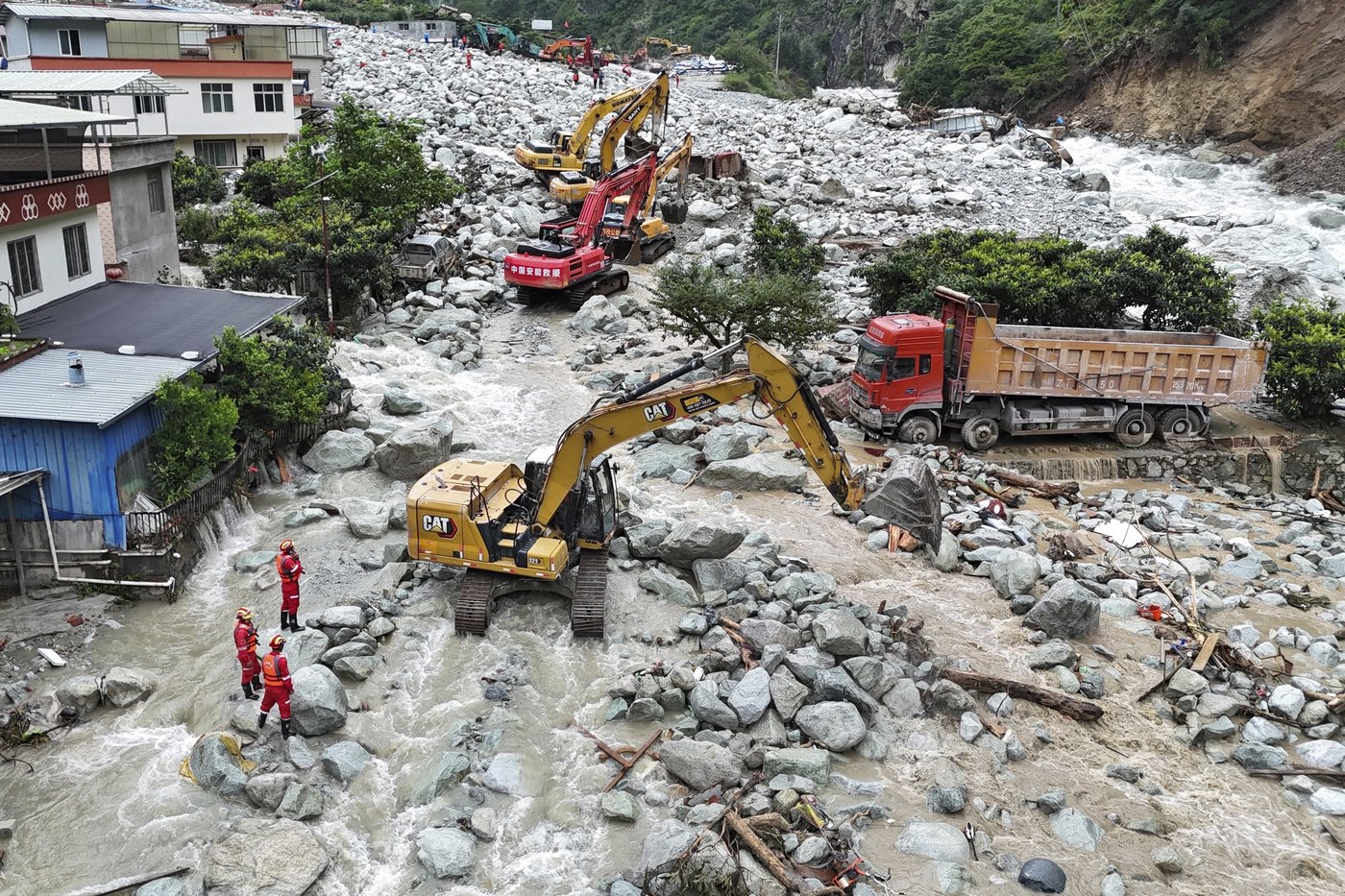
Babusar Top Flash Flooding: Torrential rains triggered landslides and floods that stranded thousands of tourists along the scenic Babusar Pass. Roads were washed away, vehicles swept downstream, and rescue operations were delayed due to road closures. The incident underscored how vulnerable tourism infrastructure is in the northern highlands.
Gilgit-Baltistan Cloud Bursts: Several districts, including Hunza, Ghizer, and Gilgit, experienced violent cloud bursts, which caused flash floods and landslides that destroyed homes, blocked the Karakoram Highway (KKH), and cut off remote valleys. Power transmission lines were also knocked out, plunging areas into darkness.
AJK Tragedy: In Muzaffarabad and surrounding valleys, a sudden cloud burst released torrents of water that swept away homes and killed dozens of people within minutes. Entire families perished, and displacement in hilly communities rose sharply.
Strategic Impact: The repeated blockages of the Karakoram Highway disrupted trade routes critical to the China-Pakistan Economic Corridor (CPEC). This highlighted the national security implications of climate disasters in the north.
Impacts of Urban Flooding in Pakistan
Economic Impacts
Urban flooding has devastating consequences for Pakistan’s fragile economy, which is already under stress from debt burdens and low industrial productivity.
2022 Floods Losses: According to the World Bank and UN OCHA, the 2022 mega floods caused between $30–40 billion in economic losses. This figure includes direct damages to housing, infrastructure, agriculture, and indirect losses from halted business activity. To put this in perspective, the losses amounted to nearly 10% of Pakistan’s GDP, wiping out years of development gains.
GDP Loss Projections: Looking forward, climate models predict that by 2050, Pakistan could face 18–20% losses in GDP due to recurring floods, heatwaves, and other climate-related disasters. Urban flooding, in particular, will affect industrial hubs and services that form the backbone of the economy.
Industrial Shutdowns: Karachi, Pakistan’s commercial capital, contributes at least 20% of the national GDP and handles over 60% of the country’s exports through its ports. When monsoon rains paralyze Karachi, as in 2020, industrial estates like Korangi, SITE, and Landhi shut down. Power cuts and waterlogging halt production, disrupt supply chains, and reduce export revenues.
Agriculture & Food Security: Floods destroy crops, leading to food shortages. In 2022, 4.4 million acres of crops were wiped out, affecting staples like rice, cotton, and wheat. This not only reduced farmer incomes but also led to soaring food prices in cities.
Urban Property & Insurance Losses: Thousands of homes in Karachi, Lahore, and Hyderabad are damaged every year. Since Pakistan has limited flood insurance, families often bear the full cost of reconstruction, leading to long-term financial insecurity.
2. Social Impacts
Urban flooding has deep human consequences, displacing communities and reshaping demographics.
Mass Displacement: The 2022 floods displaced 8 million people in Sindh alone, with a national total of 33 million affected. Urban areas like Hyderabad and Sukkur became temporary shelters for rural migrants, while Karachi absorbed tens of thousands of displaced families, further straining its fragile infrastructure.
Urban Migration & Slums: Displaced families often settle in informal settlements on the outskirts of cities. These slums lack basic services and are often built in flood-prone areas, creating a vicious cycle of vulnerability.
Poverty Increase: The World Bank estimated that 9.1 million people were pushed below the poverty line after the 2022 floods. Many urban poor lost jobs, homes, and assets, leaving them dependent on relief aid.
Education Disruption: Floods destroy schools or turn them into relief camps. In 2022, over 27,000 schools were damaged or destroyed, leaving millions of children without access to education for months.
Gendered Impacts: Women and children are disproportionately affected. During urban floods, women often lose access to maternal healthcare, while girls are pulled out of school to support families in relief camps.
3. Health Impacts
Flooding directly and indirectly worsens public health crises in Pakistan’s urban centers.
Disease Outbreaks: Stagnant floodwater becomes a breeding ground for mosquitoes, leading to outbreaks of dengue, malaria, and chikungunya. After the 2020 Karachi floods, dengue cases surged to record levels. Similarly, the 2022 floods saw a nationwide spike in vector-borne diseases.
Waterborne Illnesses: With sewage mixing into floodwater, outbreaks of cholera, typhoid, and diarrhea rise sharply. In rural Sindh and Balochistan, thousands of children fell ill due to contaminated water sources after the 2022 floods.
Mental Health Stress: Flood-related displacement and livelihood loss also contribute to rising cases of depression, trauma, and anxiety, which are rarely addressed in Pakistan’s health system.
Health Infrastructure Collapse: Floods damage hospitals and disrupt supply chains for medicines. In 2022, over 1,500 health facilities were damaged nationwide, limiting access to essential care..
4. Environmental Impacts
Flooding also accelerates environmental degradation, with long-term consequences for Pakistan’s ecosystems.
Mangrove Destruction: Karachi’s mangroves, which once covered vast stretches of the Indus delta, are shrinking rapidly due to encroachment and pollution. Over the past 12 years, nearly 200 hectares of mangroves have been destroyed, weakening the city’s natural defense against coastal flooding.
Wetland Degradation: Urban wetlands that once absorbed floodwater have been replaced by housing colonies and roads. Lahore’s wetlands in Ravi and Karachi’s marshlands have been filled in, reducing natural flood buffers.
Soil Erosion in the North: In Gilgit-Baltistan and KP, deforestation has stripped valleys of their protective cover. As a result, monsoon rains cause severe soil erosion and landslides, silting rivers and worsening floods downstream.
Biodiversity Loss: Flooding and deforestation threaten species dependent on wetlands, mangroves, and forests. Fisherfolk communities in Karachi also report declining fish stocks due to saline intrusion caused by floods.
Carbon Sink Loss: Forest loss reduces Pakistan’s capacity to act as a carbon sink, indirectly worsening climate change and making floods even more likely.
Urban Flooding in Pakistan: Issues and Challenges
1. Governance Failures NDMA, PDMAs, and city governments often overlap and lack coordination. In Karachi (2020), disputes between agencies delayed relief, showing how political rivalries undermine long-term flood planning.
2. Data Deficiency There is limited qualitative research for urban flooding in Pakistan, with outdated or missing rainfall and drainage data. Without modern flood modeling, cities cannot predict which areas are most at risk, leading to reactive rather than preventive measures.
3. Public Behavior Drains and nullahs are clogged by solid waste and sewage due to poor waste management and public dumping. This reduces drainage capacity, turning even moderate rains into major floods.
4. Climate Uncertainty Events like GLOFs and cloud bursts are unpredictable, striking with little warning. Erratic rainfall — extreme downpours in some years, droughts in others — makes consistent planning very difficult.
5. Urban Poverty Low-income families often live in high-risk informal settlements along drains and riverbeds. They lack resilient housing or safety nets, so floods not only destroy homes but also trap them in cycles of poverty and displacement.
Mitigation and Adaptation Efforts
What was the Goal of Pakistan’s Billion Tree Initiative?
The Billion Tree Tsunami (2014–2018) and 10 Billion Tree Tsunami (2019–ongoing) aimed to:
1. Reducing Deforestation
Pakistan has one of the highest deforestation rates in South Asia, with forest cover at only about 4.5% of land area. The Billion Tree Tsunami planted over a billion trees in KP and millions more nationwide. By reducing tree loss, the initiative slowed soil erosion in mountainous regions, preventing sediments from silting rivers and urban drainage systems. This directly lowers the risk of downstream flooding.
2. Restoring Watersheds
Trees play a critical role in restoring watershed health — the natural systems that collect and channel rainfall into rivers and aquifers. In northern valleys, reforestation has improved water absorption and reduced the speed of runoff during monsoon rains. This means that sudden downpours are less likely to turn into flash floods that overwhelm downstream cities like Rawalpindi or Peshawar.
3. Absorbing Rainfall and Stabilizing Soil
Forests act like sponges: their roots absorb water and stabilize soil. In areas where deforestation had left slopes barren, even small rains would cause landslides and flash floods. Reforestation efforts in KP and Gilgit-Baltistan have reduced this vulnerability, providing a buffer for urban settlements in valleys and plains. By slowing runoff, the trees help recharge groundwater while also reducing immediate flood pressure on urban areas.
4. Strengthening Climate Resilience
The program was also intended to meet international climate commitments under the Paris Agreement. By expanding tree cover, Pakistan increased its carbon sinks, which not only contributes to global emission reduction but also provides local adaptation benefits. Healthier ecosystems mean stronger resilience to climate extremes such as heatwaves, droughts, and floods.
5. Indirect Benefits for Flood Reduction
While planting trees cannot replace urban drainage systems, the Billion Tree Tsunami helps reduce the scale of flash flooding that originates in upstream valleys. For example, in Swat and Chitral, improved forest cover reduces the velocity of water rushing downstream, giving more time for cities like Nowshera or Rawalpindi to prepare. In coastal areas, mangrove restoration under the 10 Billion Tree project has also helped Karachi regain some of its natural flood barriers against storm surges.
Global Lessons: Milwaukee Flooding and Beyond
Milwaukee, Wisconsin, faced repeated episodes of urban flooding in the late 20th century, caused by aging infrastructure, rapid urban growth, and increasingly intense rainfall events. The city’s stormwater system, much like Pakistan’s, was outdated and unable to cope with the frequency and severity of modern floods. After a series of damaging floods in the 1990s and early 2000s, Milwaukee undertook major reforms in stormwater management.
Key reforms included:
Green Roofs: Buildings were incentivized to install vegetation-covered rooftops, which absorb rainfall, reduce runoff, and lower pressure on drainage networks.
Permeable Pavements: Roads, sidewalks, and parking lots were rebuilt using materials that allow water to percolate into the ground instead of creating runoff.
Rain Gardens and Wetlands: Communities and households were encouraged to design landscaped depressions to capture rainwater and slowly release it into the soil.
Predictions for 2050
According to the World Bank and NDMA:
Category
Facts / Stats
Source / Notes
Flood Loss Projections (2050)
Annual expected damage +47–49% compared to today
Pakistan National Adaptation Plan
Heatwave Exposure (2050)
+32–36% more people exposed to extreme heat
National Adaptation Plan
Labour Productivity (2050)
−7% to −10% from heat stress
National Adaptation Plan
Agriculture Yields (2050)
Overall crop yields −14% to −50%; rice −25%, sugarcane −20%
World Bank & studies
GDP Loss (2050)
Climate impacts may cut GDP by 18–20% without adaptation
World Bank CCDR
Climate Migration (2050)
Up to ~40 million South Asians displaced internally; Pakistan a hotspot
WB Groundswell
Urban Flooding (Karachi, Lahore, Peshawar)
Major infrastructure at risk from urban floods; drainage systems already failing
NAP & WB
Mangrove Loss (Karachi coast)
~200 hectares destroyed in 12 years due to land grabbing; natural flood defense lost
Local climate reporting
Deforestation (KP, GB)
Rapid upstream tree-cutting intensifies floods in Swat & other valleys
Govt. reports / media
Policy Recommendations
1. Urban Drainage Master Plans
Cities like Karachi, Lahore, and Peshawar urgently need redesigned drainage systems that reflect today’s population and rainfall realities. Karachi’s sewerage network was built for fewer than 3 million people, yet the city now has more than 20 million residents. A modern urban drainage master plan should include:
Larger stormwater drains separated from sewage lines.
Regular desilting and anti-encroachment drives.
Rainwater holding basins to prevent instant runoff.
2. Green Infrastructure
Nature-based solutions are a cost-effective complement to engineering. Expanding parks, wetlands, urban forests, and mangroves increases a city’s capacity to absorb and store rainfall.
Wetlands in Lahore can act as natural water reservoirs, easing pressure on man-made drains.
Mangrove restoration in Karachi provides a natural defense against storm surges and coastal flooding.
Green belts and urban forests also reduce the urban heat island effect, which intensifies storms.
3. Technology Integration
Pakistan lags behind in AI-based flood forecasting and real-time monitoring. Modern systems can:
Use satellite data and rainfall sensors to predict urban flooding hotspots hours in advance.
Provide SMS and app-based alerts to residents.
Map drainage networks to identify blockages before monsoon.
4. Community Engagement
No infrastructure can succeed without public cooperation. Waste dumping into nullahs is one of the biggest reasons behind urban flooding in Pakistan. Cities must:
Launch awareness campaigns on waste disposal.
Provide accessible garbage collection systems to reduce illegal dumping.
Train local communities in first-response and flood preparedness
5. Integrated Policies
Currently, Pakistan’s urban planning and climate adaptation efforts are treated as separate silos. This must change. Climate-smart policies should:
Require flood risk assessments before approving housing colonies.
Include climate resilience in building codes and infrastructure projects.
Align with international commitments like the Paris Agreement and National Adaptation Plans.
Chakor Ventures’ Tree Plantation Drive
On International Plantation Day, Muhammad Bilal Khan, Executive Director of Chakor Ventures, launched a tree plantation campaign to reinforce the company’s commitment to sustainability. He said, “Flash flooding is one of the greatest urban challenges Pakistan faces today, and tree plantation is our way of restoring natural defenses against it.”
Key Features of the Initiative:
Large-Scale Plantation: Focused on planting native and flood-resistant tree species to maximize ecological benefits.
Urban Greening: Trees planted in and around urban centers to improve water absorption, reduce heat, and stabilize soil — directly reducing the risk of flash flooding.
Public-Private Partnership: Demonstrates how corporate actors can complement government efforts like the 10 Billion Tree Tsunami.
Climate Resilience Contribution: By restoring green cover, the initiative helps absorb rainfall, strengthen watersheds, and reduce the urban heat island effect.
Why It Matters: Urban flooding in Pakistan is not just a government issue — it requires collective responsibility. Chakor Ventures’ plantation drive is a step toward building climate-smart cities, setting an example for other corporations to integrate environmental action into their business strategies.
Conclusion
Urban flooding in Pakistan has evolved from a seasonal nuisance into a national climate emergency. The major urban floods in Pakistan over the decades illustrate a worsening trajectory, where every decade brings deadlier disasters. Karachi, Lahore, and Rawalpindi remain especially vulnerable, while northern Pakistan faces catastrophic flash flooding from cloud bursts and glacial melts.
Without comprehensive reforms, Pakistan risks repeating humanitarian crises like the 2022 mega floods and the ongoing 2025 monsoon tragedies. The path forward lies in climate-smart infrastructure, governance reforms, and community-based resilience, supported by science-driven qualitative research for urban flooding in Pakistan.
References
Mustafa, Z. (2010). Climate Change and Its Impact with Special Focus in Pakistan. NESPAK Symposium.
World Bank. (2022). Climate Change in Pakistan: Facts & Figures. Washington DC.
NDMA & UN OCHA. (2022–2025). Pakistan Flooding Data & Climate Change Predictions. Islamabad.
UNDP (2022). Glacial Lake Outburst Floods in Gilgit-Baltistan.
When Ahmed finally bought his dream home in Lahore, he thought the hard part was over. But a few months later, he received a notice from the excise department: “Pay your property tax.” Like many first-time buyers, Ahmed was confused. What exactly is property tax? How is it calculated? And most importantly, how can one pay it without standing in long government office lines? If you’ve ever asked the same questions, you’re not alone. Property tax in Pakistan can feel complicated, but understanding the basics makes it much easier to manage. Let’s break it down step by step.
What is Property Tax in Pakistan?
In simple terms, property tax is a tax imposed by the government on the ownership of property, whether it’s residential, commercial, or industrial. This tax is collected by provincial excise and taxation departments, such as Excise Property Tax Punjab or Property Tax Karachi, depending on where your property is located. Think of it as your contribution to city development; the money collected through property taxes helps fund roads, streetlights, schools, sanitation, and public services.
Types of Property Taxes in Pakistan
Different property-related taxes apply in Pakistan. Here are the key ones every property owner should know:
Annual Property Tax: Paid every year to the provincial excise department. For example, property taxes in Punjab, Karachi, and Islamabad each have their own rates.
Capital Gains Tax on Property: This is charged when you sell a property. If you sell within a certain number of years after purchase, the FBR gain tax on property applies.
Advance Tax on Property Transactions: Paid at the time of purchase or transfer of property. Rates vary for filers and non-filers.
Property Excise Tax: Collected by the Excise and Taxation department of each province, e.g., Excise Property Tax Punjab.
How is Property Tax Calculated?
This is where most people get confused. The government calculates property tax based on:
Location of property (prime areas like Lahore Cantt or Islamabad G- sectors may have higher rates).
Covered area (size of the house or commercial unit).
Usage (residential vs. commercial).
Property value (as assessed by government rates).
For example, the Punjab Property Tax Calculator available on the excise website allows you to check your tax amount online by entering basic property details. Similarly, CDA Property Tax Islamabad provides an online calculator for Islamabad residents.
Property Tax for Filers vs. Non-Filers
One important thing to note: property tax for non-filers in Pakistan is always higher. The Government encourages citizens to file tax returns by offering lower rates to filers. For instance, the tax on property sales in Pakistan can almost double if you’re a non-filer.
So if you want to save money, it pays to become an active filer.
How to Check and Pay Property Tax Online
Gone are the days when you had to stand in queues at government offices. Today, you can easily check property tax online and even pay it digitally. Here’s how:
For Punjab
Visit the Property Tax Punjab Online Check portal atExcise Punjab.
Enter your property details (CNIC, property number, or unique ID).
The system will show your tax amount.
You can then make a property tax payment online through ePay Punjab or at designated bank branches.
For Islamabad (CDA Property Tax)
Head to the CDA Property Tax Islamabad portal.
Use the online calculator to determine your payable amount.
Pay through online banking or CDA partner banks.
For Karachi
The Sindh Excise Department handles the Property Tax Karachi section.
Online checking and payment options are available through the official excise website.
This digital transformation means that whether it’s Lahore, Faisalabad, or even Islamabad property tax, you can now manage everything with just a few clicks.
Why Paying Tax Matters
Many people try to avoid taxes, thinking they’re an unnecessary burden. But here’s the reality:
It ensures legal ownership and avoids disputes with the government.
It contributes to better city facilities like roads, waste management, and security.
It prevents penalties and fines for late payment.
It strengthens your credibility as a taxpayer, especially when dealing with FBR gain tax on property or selling real estate in the future.
Chakor Ventures Simplifies the Understanding of Property Tax in Pakistan
Chakor Ventures, one of Pakistan’s leading real estate developers, makes it easier for you to understand property tax by bringing authentic and reliable information. It may feel overwhelming at first, but once you know the rates, calculations, and payment methods, it becomes simple. Whether in Karachi, Lahore, or Islamabad, you can now check property tax online, calculate it easily, and pay digitally without hassle. Remember, in real estate, a safe investment is one that’s both legally and financially secure.
Non-compliance with monitoring rules may lead to suspension and blacklisting under new amendments.
Islamabad – The Federal Board of Revenue (FBR) has issued a stern warning to sales taxpayers, announcing that those who refuse tax officers access to their business premises for stock, production, or clearance monitoring will face suspension or even blacklisting.
Under the revised Sales Tax Rules 2006, FBR now has the authority to suspend a taxpayer’s registration without prior notice if evidence suggests involvement in tax evasion, fake invoicing, or fraudulent practices. Suspensions will remain effective until inquiries are completed.
The amendments emphasize uniform enforcement across Large Taxpayer Offices (LTOs) and Regional Tax Offices (RTOs). Taxpayers may face suspension for denying access under sections 40B and 40C of the Sales Tax Act or for failing to provide mandatory records to Inland Revenue Officers.
Other triggers for suspension include business activity discrepancies exceeding five times declared capital, excessive transactions with already suspended taxpayers, non-filing of returns for three months, or submitting fraudulent returns.
While enforcement has been tightened, FBR clarified that taxpayers will still be given a chance for a public hearing before any final blacklisting or further punitive action.
When Ali finally decided to buy his first home in Lahore, he thought the hardest part would be finding the right location. But during the documentation process, the property agent asked him a simple yet crucial question: “Do you have the Fard of this land?” Like many first-time buyers, Ali had heard the word Fard but didn’t know its full importance. As it turned out, this single document could either make or break his dream of becoming a homeowner. So, what is Fard? And why does it matter so much in Pakistan’s real estate? Let’s break it down.
What is Fard?
In the simplest terms, Fard (also known as Fard Malkiat) is an official document issued by the revenue department that verifies ownership of land or property. It is the proof that a person is the lawful owner of a piece of land, and without it, any transaction, whether buying, selling, or transferring, remains incomplete. Think of it as a passport to your property. Just like you can’t travel abroad without a passport, you can’t legally claim or transfer land without a Fard.
Why is Fard Important in Pakistani Real Estate?
For decades, property disputes in Pakistan have revolved around unclear ownership records. People bought plots without proper verification, only to discover later that the land was either disputed or registered under someone else’s name.
The Fard Malkiat prevents this by acting as a transparent and authentic ownership certificate. Whether you are applying for a loan against property, selling a plot, or transferring land within the family, you’ll need this document.
Types of Fard
Fard Malkiat (Ownership Proof): Confirms the owner’s title over the land.
Fard for Verification: Used when a buyer wants to check the seller’s ownership status before purchase.
Fard for Mutation: Issued when land is being transferred or inherited.
Each type serves a different purpose, but they all carry the same weight of authority.
From Print to Digital: The Rise of Online Fard
In the past, obtaining a Fard required lengthy waits, complex procedures, and multiple visits to Patwar Khanas. Many people avoided it altogether, risking legal troubles later. To resolve this, the Punjab Land Records Authority (PLRA) introduced the e-Fard system. Now, residents can easily access their property ownership documents through the Online Fard Punjab portal. This digital step has made things much easier for property buyers, sellers, and even overseas Pakistanis. No more middlemen, no more uncertainty, just a few clicks and your land ownership details are at your fingertips.
How to Get Online Fard in Punjab
Here’s a step-by-step guide for online Fard Check through the PLRA system:
Enter the required details, such as the owner’s CNIC number, property number, or Khewat number.
The system will display land ownership records instantly.
If needed, you can also request a printed copy from the nearest Arazi Record Center (ARC).
This process has made Online Fard Punjab Pakistan one of the most searched services in real estate today.
Benefits of e-Fard
Transparency: Eliminates chances of fraud and fake documents.
Accessibility: Anyone can check ownership online, even from abroad.
Time-saving: No need for repeated visits to government offices.
Legal security: Ensures safe buying, selling, or leasing of property.
Punjab Fard and the Future of Real Estate
The introduction of Punjab Fard and the digital revolution in property records is not just about convenience; it’s about building trust. When people know their investment is legally protected, more confidence enters the real estate sector. For overseas Pakistanis, in particular, this has been a game-changer. They can now check and verify their ancestral land or new investments through Fard Malkiat Online, without relying solely on relatives or agents.
Chakor Ventures is Simplifying Real Estate with Trust and Transparency
Chakor Ventures contributes by simplifying real estate knowledge for every investor in Pakistan. Fard is more than a document; it’s the legal foundation of every property transaction. Thanks to the PLRA Online Fard system, verifying land details is now faster and more reliable. Whether buying, selling, or securing a home, the Online Fard Punjab check is always the first step, as trust in real estate begins with Fard.
Beautification, pedestrianisation, and underground utility works set to transform Rawalpindi’s busiest commercial hub
The Rawalpindi Municipal Corporation (RMC) has announced the launch of a PKR 470 million beautification and pedestrianization project in Raja Bazaar, set to begin after 12 Rabiul Awal. The development will cover the one-kilometer stretch from Fawara Chowk to Hamilton Road.
The initiative aims to transform the historic marketplace into a family-friendly, tourist-attractive hub by installing benches, lampposts, public washrooms, greenery, and upgraded signboards, while also restoring old buildings. Multiple departments, including the Parks and Horticulture Authority (PHA), district administration, and RMC, will jointly oversee the project.
A key element of the plan is the underground shifting of utility lines. Iesco will spend PKR 200 million on laying new electricity cables, while SNGPL and PTCL have been allocated PKR 30 million each, and Wasa will receive PKR 5 million for water line relocation. Of the total cost, PKR 250 million will go toward utility works, while PKR 220 million will be dedicated to beautification and public facilities.
The plan also features a new traffic management system, additional parking, and a model market with modern amenities. However, local traders have voiced concerns over restricted access, declining business, and lack of consultation, warning of protests if traffic flow is not restored by August 15.
Interest-free loans of up to Rs1.5 million to help middle-income families build their dream homes
Lahore, Punjab Minister for Housing and Urban Development Bilal Yasin has announced that 2,000 middle-income families will be granted free residential plots in the first phase of the provincial government’s Apni Chhat, Apna Ghar program.
Along with the plots, beneficiaries will receive interest-free loans of up to Rs1.5 million to assist in home construction. The announcement was made during a briefing by Punjab Housing and Town Planning Agency (PHATA) Director General Sikandar Zeeshan, who revealed that over 367,000 applications have been received for the scheme. The initial screening process is underway, with transparent balloting to follow for plot allotment.
District-wise allocations include Jhelum (730 plots), Kasur (388), Faisalabad (257), Lodhran (218), and Okara (130). Smaller allocations range from 55 plots in Layyah to just 2 in Chiniot, covering 19 districts in total.
Minister Yasin stated that the initiative is designed to make poor and middle-income families landowners, ensuring they have a foundation for secure housing. He reaffirmed the government’s commitment to fair distribution, transparency, and financial support, calling the program a vital step toward reducing the housing gap in Punjab and improving living standards for thousands of families.