
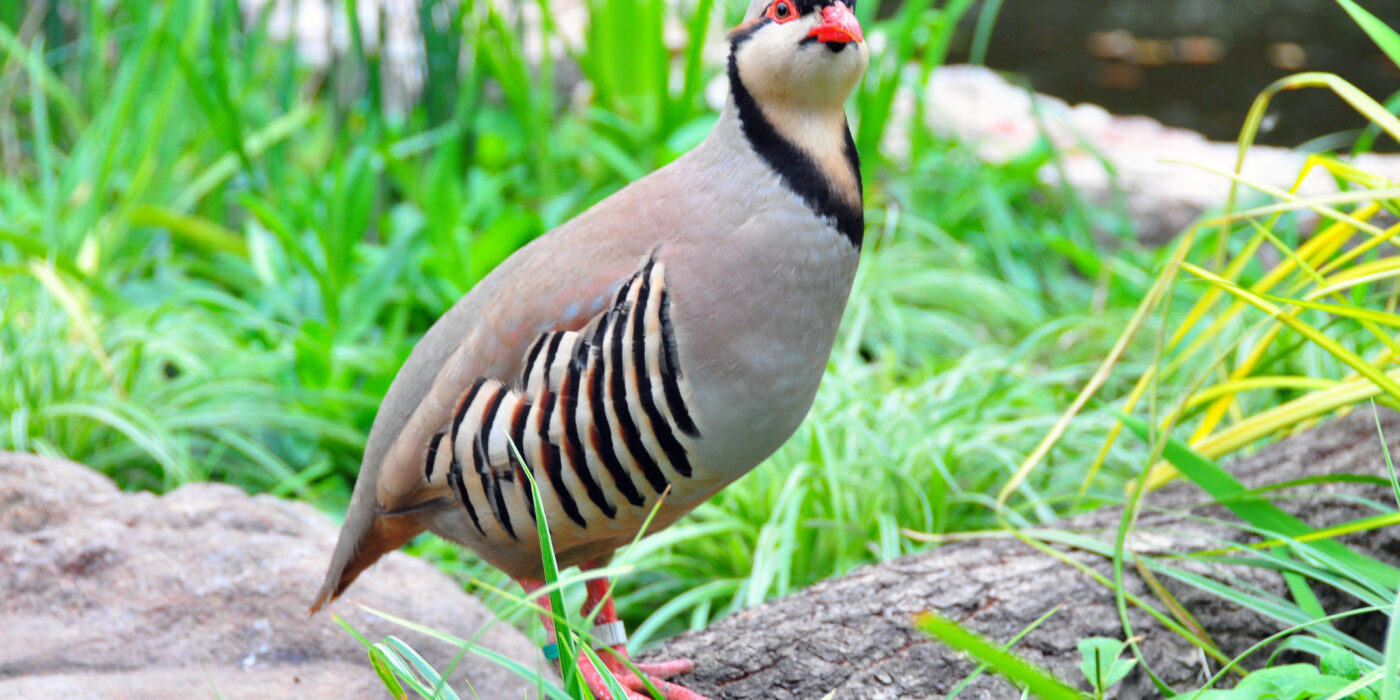

Chakor is the national bird of Pakistan, a small, plump, ground-dwelling bird found across the country’s rocky hills and mountain slopes. It is recognised for its distinct call, its bold facial markings, and the deep place it holds in South Asian folklore, where it has long been read as a symbol of devotion and quiet endurance.
This article looks at the Chakor from every angle worth knowing: its English name, its meaning in Urdu, its sound, its price in Pakistan, where it can be found for sale, and the age-old legend that ties it to the moon.
What is Chakor Called in English?
In English, the Chakor is known as the Chukar, or more formally, the Chukar Partridge. Its scientific name is Alectoris chukar. Some variations in spelling exist, “chukor” or “chakoor” among them, but Chukar Partridge remains the standard term used in ornithology and birdwatching references worldwide.
Is a Chukar a Type of Quail?
Not quite. It’s a common assumption, but the Chukar is a partridge rather than a quail. Partridges tend to be larger than quails, with stockier bodies and shorter tails.
The Chakor belongs to the pheasant family, Phasianidae, which also includes quails and true pheasants, but within that family it is classified specifically as a partridge.
Chakor Meaning in Urdu
In Urdu, the word Chakor (چکور) carries a weight that goes well beyond its meaning as a bird’s name. In Urdu and Persian literature, it has long served as a symbol of longing and devotion, appearing again and again in poetry as a figure defined by its yearning.
To ask what Chakor means in Urdu, then, is really to ask about two things at once: a real, living bird, and a literary emblem that has outlived any single verse.
What Does the Chakor Bird Look Like?
The Chukar has a grey-brown body in a soft, sandy tone, with a black band that runs across the eyes and down the throat, framing a pale face. Its legs and beak carry a reddish hue, and black-and-white barring runs along its flanks.
Photographs of the bird in the wild often reveal just how well this colouring works as camouflage, letting it disappear into the dry, rocky terrain it calls home, terrain where blending in can mean the difference between safety and exposure to predators.
Chakor Sound and Voice
The Chukar’s call is one of its most recognisable traits: a sharp, repeated “chuk-chuk-chuk” that carries easily across open, rocky ground.
It’s a fitting origin story for the English name Chukar, which mimics the sound the bird actually makes. The call shifts with the seasons, growing louder and more frequent when males take to rocky outcrops to mark territory.
Why Is Chukar the National Bird of Pakistan?
The Chakor earned its status as Pakistan’s national bird through its strong association with the country’s mountainous northern regions and its long-standing presence in local folklore and literature.
Its resilience, its ability to thrive in harsh, rocky terrain, and its symbolic weight in Persian and Urdu poetry all made it a fitting national emblem, one that speaks to something beyond biology.
At its core, the Chukar represents an idea: endurance in difficult landscapes, paired with an unwavering focus on something greater. That idea is nowhere more evident than in the bird’s most famous story.
Does Chukar Love the Moon?
According to a well-known piece of folklore, the Chukar is infatuated with the moon, gazing at it through the night, unable to look away. In Urdu and Persian poetry, “Chand aur Chakor,” the moon and the Chukar, has become a classic metaphor for devotion that can never quite be fulfilled.
It’s this legend that answers a question asked in various forms across generations: which bird stares at the moon, and why?
The story isn’t rooted in scientific observation but in centuries of literary tradition. It remains one of the central reasons the Chukar holds such a strong symbolic place in Pakistani and South Asian culture, setting it apart from the country’s other native birds.
Chicks, Breeding, and Price in Pakistan
Beyond the wild, these birds are also kept and bred in aviaries across Pakistan, both for ornamental purposes and for release into game reserves.
Pricing varies depending on the bird’s age, health, and the breeder in question, with chicks generally more affordable than mature breeding pairs.
Islamabad and Rawalpindi both have active communities of breeders and enthusiasts, along with poultry and bird markets where partridges are regularly traded. Lahore’s bird markets, among the largest in the country, see similar activity.
Anyone considering keeping the chicks should note that the bird needs open space, dry ground, and a diet suited to a ground-feeding partridge, an environment that echoes its natural mountain habitat as closely as possible.
Frequently Asked Questions
How is Chakor used in English?
In English, “Chakor” typically appears as a reference to the Chukar Partridge, most often in the context of ornithology, birdwatching, or discussions of Pakistan’s national symbols.
What is a chukar?
A chukar is a partridge species native to rocky, mountainous regions across South and Central Asia, known in Pakistan as the Chakor.
What is Chakor in Urdu?
In Urdu, Chakor (چکور) is the name for the same bird known as the Chukar Partridge in English, carrying additional symbolic weight in poetry as a figure of longing and devotion.
What is the meaning of Chakor?
It is the name of a partridge native to Pakistan’s mountains. In a literary sense, it also means devotion, most often associated with the bird’s legendary gaze toward the moon.
What is special about Chukar birds?
Their sharp call, distinctive plumage, resilience in rocky terrain, and symbolic bond with the moon in South Asian folklore set them apart from other native species.
Which bird stares at the moon?
In South Asian folklore, that bird is the Chakor, whose legendary fixation with the moon has made it a recurring symbol in Urdu and Persian verse.
What is the Chakor price in Pakistan?
Its price in Pakistan depends largely on the bird’s age and health, along with the breeder selling it. Chicks tend to cost less than mature, breeding-ready pairs.
Where can I find Chakor for sale in Islamabad?
Islamabad has an active community of bird breeders, and this bird is typically found for sale in Islamabad through local poultry markets and breeder networks in the city.
Where can I find Chakor for sale in Rawalpindi?
Yes, it can be commonly found through the same breeder circles.
Is Chakor found in Lahore?
Yes, but only in the bird markets, since its natural habitat is only the northern areas of Pakistan.
What is Chakor Foundation?
It is a charitable organisation working across Pakistan on education, healthcare, and community welfare, running initiatives such as student scholarships, school uniform drives, and solar-powered classrooms for underprivileged communities.

BBC-featured Content Specialist with a sharp eye for search intent and a proven ability to turn content into a growth engine. I leverage cutting-edge digital marketing tools to craft strategies that fuel organic traffic, amplify brand growth, and own the local SEO landscape, particularly across the competitive real estate market. I help brands dominate search rankings and convert visibility into measurable business success.
