


From Heritage Monuments to Modern Icons – A Nation’s Story in Stone and Steel
Every year, as the 14th of August approaches, Pakistanis everywhere reflect on the journey of our nation—its sacrifices, its victories, and its dreams for the future. While we often speak of independence in political and historical terms, there is another, equally powerful way to witness our nation’s story—through its architecture.
Buildings are not just physical spaces; they are expressions of who we are. They embody our values, record our history, and shape our collective vision. From the soaring domes of the Badshahi Mosque to the sleek glass façade of Citadel 7, our architecture is a bridge between past and future, tradition and progress. It tells the story of Pakistan in a language of stone, steel, and art.
Architecture and Identity: The Spirit in Our Structures
The connection between architecture and identity runs deep. Our monuments, mosques, gardens, and civic spaces are not just functional—they reflect the values and ideals of the people who built them.
The Badshahi Mosque in Lahore, commissioned in 1673, still stands as a symbol of unity and faith. Its grand scale reflects the strength of belief that bound people together centuries ago—much like the unity that inspired the Pakistan Movement. Similarly, the Pakistan Monument in Islamabad, designed in the shape of blooming petals, tells the story of a nation’s growth, struggle, and hope.
When we walk into these spaces, we are not just entering buildings—we are stepping into history. Their designs carry the values of dignity, ambition, and perseverance—values that have shaped our national character.
Architecture and Cultural Heritage: Honoring the Past
Pakistan’s architecture and cultural heritage is one of our richest treasures. It is a tangible record of who we are and where we came from. Sites like the Lahore Fort and Shalimar Gardens are more than tourist destinations—they are living archives.
The Lahore Fort’s walls hold the stories of rulers and artisans, battles and celebrations. The Shalimar Gardens, with their meticulously planned water channels and floral layouts, reflect the Mughal vision of paradise on earth. Every carving, arch, and pattern is part of a cultural code passed down through generations.

Preserving these structures is about more than maintaining old buildings—it is about keeping alive the lessons of patience, artistry, and community spirit. In a rapidly changing world, these monuments anchor us, reminding us of the craftsmanship and vision that have always been part of our identity.
Architecture and Culture: A Living Connection
In Pakistan, architecture and culture are inseparable. Our designs often blend Islamic art with local craftsmanship, creating a distinctive style that is uniquely ours. From the intricate tilework of mosques in Multan to the brick patterns of Sindh, our architecture speaks the language of our land.
Even in modern times, architects and designers continue to draw on this cultural heritage. The use of calligraphy, symmetry, and geometric patterns in contemporary spaces is a reminder that while our nation moves forward, our roots remain strong.
Architecture also has the power to drive change. Visionaries like Yasmeen Lari have shown that design can serve communities in times of crisis, building homes and shelters that are not only functional but also dignified. This is architecture at its best—serving people while reflecting their cultural and spiritual values.
Why Design Matters in Representing Emotion and History
Design is not decoration—it’s storytelling. The way a building looks, feels, and functions can shape our emotions and the way we remember history.
Consider the Badshahi Mosque: its massive courtyard and towering minarets create a sense of unity, making worshippers feel part of something larger than themselves. Or the Quaid-e-Azam Mausoleum in Karachi: its pure white marble and simple lines speak of strength, purity, and resolve—qualities we associate with the founder of our nation.
This is why design matters—it can capture the spirit of a moment, the values of a generation, and the aspirations of a people. Architecture becomes a silent but enduring witness to the nation’s story, holding within its walls the memory of our struggles and the pride of our achievements.
Citadel 7: A Modern Symbol for an Independent Future
As we celebrate Pakistan’s independence, it’s important to honor our past—but also to look forward. Our skyline is changing, and with it, the way we express our identity.
Citadel 7, a flagship corporate and commercial tower in Islamabad’s Blue Area, represents the next chapter in Pakistan’s architectural journey. Its striking 3D glass façade is more than an engineering achievement—it’s a statement of ambition, progress, and confidence in our future.
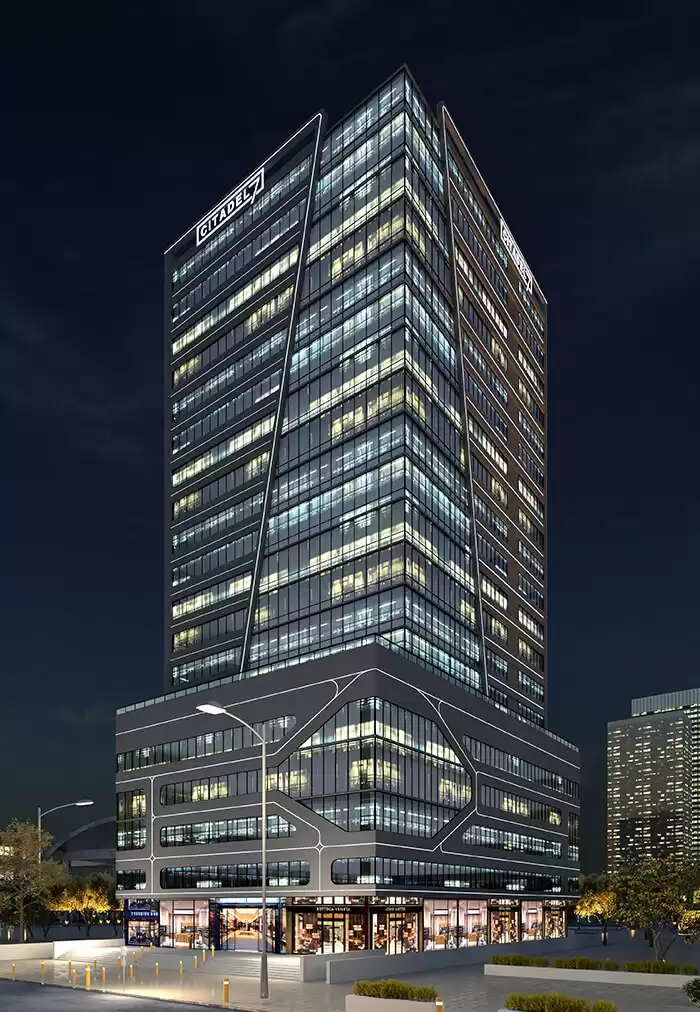
Just as heritage sites like Lahore Fort and the Badshahi Mosque defined their times, Citadel 7 aims to be a modern icon. It is designed not only to offer premium office and commercial space but also to create an environment that attracts investment, generates employment, and inspires innovation.
What makes Citadel 7 unique is how it blends modern design with cultural sensibilities. In its sleek lines and strategic location, it reflects Pakistan’s openness to the global market. In its ambition and vision, it reflects the same national spirit that built our greatest monuments.
Architecture as a Journey from 1947 to 2047
In 1947, Pakistan’s founders envisioned a nation that would stand strong on its values while embracing progress. Our architecture reflects that balance—rooted in tradition yet open to change.
From the government buildings of the early years to the iconic Faisal Mosque, and now to projects like Citadel 7 corporate tower Islamabad, we see a clear progression. Each era has added its voice to the national story. If we think ahead to Pakistan’s 100th Independence in 2047, the buildings we create today will be the heritage of tomorrow.
This makes architecture a responsibility as much as an art. It is about creating spaces that honor our culture, serve our people, and inspire our future.
A Call to Build with Purpose
As we raise our flags and celebrate another year of independence, let us remember that nation-building is not only the work of governments—it is also the work of designers, architects, and builders.
Every mosque, monument, school, office tower, and public space we create should reflect the values that define us: dignity, unity, resilience, and ambition. This is the connection between architecture and identity—and why it matters so deeply in shaping our national journey.
Our architecture tells the story of Pakistan, from the monuments of yesterday to the landmarks of tomorrow. And like our nation, it will keep rising.
This Independence Day, let us honor our heritage, celebrate our culture, and commit to building a future worthy of the dreams that gave us our freedom.
Because in every stone and steel beam, in every dome and skyscraper, the story of Pakistan lives on.
